Former CIA deputy director Michael Morell, who supports Hillary Clinton and insists that Donald Trump is being manipulated by Russian President Vladimir Putin, said that Russians and Iranians in Syria should be killed covertly to “pay the price.”
The ex-CIA chief, who worked with Clinton while she was secretary of state, told CBS This Morning co-host Charlie Rose that Iran and Russia should “pay a big price” in Syria – and by that he meant killing them.
“When we were in Iraq, the Iranians were giving weapons to the Shia militia who were killing American soldiers,” Morell said. “The Iranians were making us pay a price.”
“We need to make the Iranians pay a price in Syria, we need to make the Russians pay a price,” he continued.
When asked if that meant killing Russians and Iranians, Morell fully agreed, qualifying the answer with “covertly.”
“Tell the world about it, right?” he went on. “You don’t stand up at the Pentagon and say ‘we did this,’ but you make sure they know it in Moscow and Tehran.”
Referring to the US-backed rebels in Syria, Morell said he wanted Washington to support them in more aggressive actions, not only against Bashar Assad’s government, but against Iranians and Russians.
Morrell then went on a diatribe about how the US should “scare” Assad, including going after his national guard and “bombing his offices in the middle of the night.”
“I’m not advocating assassinating him, I’m advocating going after what he thinks is his power base and what he needs to survive. I want to put pressure on him, I want to put pressure on the Iranians, I want to put pressure on the Russians to come to that diplomatic settlement.”
The former acting director of the CIA publicly endorsed Hillary Clinton last week through an opinion piece in the New York Times, praising her qualifications as commander-in-chief and calling her rival Donald Trump a threat to national security.
After he retired from the CIA in August 2013, Morrell took a job at Beacon Global Strategies, a Washington, DC consultancy founded by Clinton aides Philippe Reines and Andrew Shapiro. There he worked with Leon Panetta, another Clinton aide and his predecessor at the helm of the CIA, who also spoke in support of Clinton at the Democratic convention in Philadelphia last month.
Last year, Morrell apologized to “every American” and finally owned up to the “mistakes” made by the CIA in Iraq, where over 4,000 US soldiers and at least 250,000 Iraqi civilians have been killed since the 2003 US invasion.
Early August marks the anniversaries of the atomic bombings on August 6 and 9, 1945, of Hiroshima and Nagasaki – dates which most often come and go with little to offer except a terrifying reminder of humanity’s capacity to destroy ourselves. Nevertheless, we’ve made it to 71 years, having tempted fate with tens of thousands of the most destructive devices ever created, escaping within a whisker of global catastrophe more times than bears thinking about.
Still, there are over 15,000 nuclear weapons in the hands of just nine nations – Russia, the US, China, France, the UK, India, Pakistan, Israel and North Korea. Double standards that divide the world into nuclear weapons haves and have nots are writ large – stark, provocative and unsustainable.
However, in this 71st anniversary year, some good news is creeping in. The stranglehold that the nuclear-armed states have held on the disarmament agenda is starting to unravel. In recent years, a groundswell of governments and civil society actors have demanded with increasing clarity and effect that humanitarian imperatives take precedence over the military doctrines of nine countries.
In a nutshell, the effects of a nuclear weapon explosion are so catastrophic that the weapons must never be used again. As a result, 127 nations and counting have signed the “Humanitarian Pledge” that commits them to efforts to “stigmatise, prohibit and eliminate” the weapons.
These are not empty words. The UN has initiated an Open-Ended Working Group (OEWG) which met in February and May this year in Geneva, and will meet for the last time from August 5 to 19, to discuss “legal provisions and norms” for a nuclear weapons free world.
The group will make recommendations to the UN General Assembly which meets later in the year, and negotiations for a treaty to ban nuclear weapons are high on the list of expected recommendations. Already, some nations are urging the commencement of such negotiations as early as 2017.
The OEWG’s dreary title is unfortunate, for its very existence is nothing short of historic. It is bringing us closer than we have ever been to stigmatising, banning and eliminating the worst of all weapons of mass destruction.
The Australian government’s role, notwithstanding its ineffectual murmurings about how bad the weapons are, has been to lead the charge in opposing the growing push for a ban treaty, arguing that, without the support of the nations with the weapons, it’s an impractical process. That’s a bit like arguing that we must consult with criminals about the sort of laws they’d agree to before we enact any.
It also misrepresents the purpose of a ban treaty, which is to delegitimise and stigmatise the weapons and change the legal landscape by which nations are judged.
Australia’s stance, of course, has everything to do with our reliance on “extended nuclear deterrence”, which is a preparedness to have US weapons destroy cities on our behalf. Just which cities, or in what circumstances, the government refuses to say.
Two other classes of weapons of mass destruction – chemical and biological – are both explicitly banned by treaty. In 2014, former UN high representative for disarmament affairs, Angela Kane, described the strong stigma that the prohibitions attract:
“How many states today boast that they are ‘biological-weapon states’ or ‘chemical-weapon states’? Who is arguing now that bubonic plague or polio are legitimate to use as weapons under any circumstance, whether in an attack or in retaliation?”
Let’s look at the example of the UK, whose leader in 2003 helped initiate a catastrophic war based on the lie that Iraq had weapons of mass destruction. On July 18 this year, the British parliament voted strongly in favour of renewing, at budget-breaking expense, the country’s own WMD program, the Trident nuclear submarines.
The new British PM, Theresa May confirmed that she would be prepared to press the button that unleashes them. No doubt she is aware that when Trident was chosen in 1980 as a replacement for its predecessor, Polaris, it was estimated to be capable of killing up to 10 million Russians.
If, however, a ban treaty were already in place, the pressure that could have been exerted for Britain to abandon these horrific weapons is likely to have been overwhelming. To vote to renew a WMD program is bad enough, but to do so when the vast majority of the world’s governments have banned these weapons because they are immoral and illegitimate could prove one step too far.
If we’re serious about a nuclear weapons free world, it is imperative that the current momentum for a ban treaty is not lost. The nuclear-armed states and their supporters such as Australia are doing their best to undermine it. From the perspective of the rest of the world however, criminals are not the best people to have control of the law.
Finally the “never again” plea from the survivors of Hiroshima and Nagasaki has a glimmer of optimism about it. We face enormous opportunities as well as challenges.
Following the Iran nuclear deal, Washington announced it would begin lifting economic sanctions against Tehran. Iranian banks were allowed to reconnect to the SWIFT communications network, which handles international payment transactions, the ban on Iranian oil exports was lifted, and Washington finally decided to unfreeze Iran’s financial assets held abroad (the assets were seized in 2012). No-one really knows the volume and structure of these assets. Some Iranian officials have put the total amount at $130 billion, while the Institute of International Finance in Washington has estimated it at $100 billion.
The foreign exchange reserves of the Central Bank, as well as the National Development Fund of Iran, account for a significant proportion of these assets. In January 2015, US Secretary of State John Kerry declared that $55 billion in frozen assets could be released to Iran. The Central Bank of Iran is using different figures, however. According to the Central Bank’s governor,Valiollah Seif, the amount in question is $32.6 billion. Either way, the amounts are considerable.
Anticipating that its foreign financial assets would be seized back in the 2000s, Iran organised for them to be moved to safer havens. From the point of view of Iranian experts, these were banks outside the jurisdiction of the US and Western Europe. Iran’s assets were withdrawn from Western banks and placed in banks in China, Japan, South Korea, Turkey and Taiwan. The Iranian experts miscalculated, however. Washington was able to get at Iran’s money even there, a fact that should also be borne in mind by Russia, against which the West can still use weapons like freezing its foreign exchange reserves.
The confiscation of Iran’s foreign exchange reserves
In April, Tehran’s joy at the unfreezing of its foreign exchange reserves proved to be short-lived. The US Supreme Court refused to return $2 billion in frozen assets to the Central Bank of Iran and ruled that the money should be sent to the families of Americans killed in terrorist attacks for which Iran is allegedly responsible. This refers to the 1983 terrorist attack in Beirut, in which 241 American soldiers were killed. The US Supreme Court found Iran’s ‘fingerprint’ in the attack that took place 33 years ago. The claim is far-fetched and has been refuted many times by both Iranian and Western experts (in 2001, Caspar Weinberger, who was the US Secretary of Defense at the time of the tragedy in Lebanon, acknowledged that there has never been any reliable information regarding those behind the attack in Beirut).
Appetite comes with eating, and the US authorities that confiscated $2 billion of Iran’s reserves also prepared another decision. The US court found Iran’s fingerprint in the events of 11 September 2001 and ordered Tehran to pay $7.5 billion in compensation to the families of those Americans killed in the attack (based on $2 million per victim). In addition, Tehran was ordered to pay $3 billion in compensation to those insurance companies that covered damages from the 2001 terrorist attack. There is no real evidence to support the claim that Iranian authorities were involved in the preparation and carrying out of the terrorist attack. Tehran is not going to comply with the US court’s decision, so the US authorities are preparing a resolution on yet another confiscation of Iran’s foreign exchange reserves to the tune of $10.5 billion.
The second target – Saudi Arabia
There is every likelihood that Iran is just the beginning, that Uncle Sam is practising on Iran. And Uncle Sam prefers the term reparations to confiscations. According to the US, it is about compensating for damages incurred by America and its citizens during a variety of military and terrorist attacks. The next victim of these reparations/confiscations is Saudi Arabia.
A bill entitled “Justice Against Sponsors of Terrorism” is currently being prepared in the US Congress that will allow the families of 9/11 victims to sue those states involved in the 2001 terrorist attack. Although the document does not mention any states, everyone knows that the bill is directed specifically at Saudi Arabia. In 2014, Saudi Arabia’s international reserves amounted to almost $750 billion. This dwindled following the collapse in oil prices, but the country’s reserves still total just short of $600 billion today. That’s some tasty morsel for Uncle Sam!
At present, relations between Washington and Riyadh are complicated and the reparations/confiscations scenario is highly likely. Riyadh has already stated that it may withdraw its foreign exchange reserves, amounting to hundreds of billions of dollars, from the US. This raises at least two issues, however. Firstly, Saudi Arabia’s foreign exchange reserves should have been withdrawn earlier when relations between the two countries were still amicable. Now, Washington could block the large-scale withdrawal of reserves and assets. Secondly, even if Riyadh had withdrawn its reserves and assets from the US, there is still the issue of where they could be safely deposited. Iran’s unfortunate experience shows that Uncle Sam’s hand can not only reach banks in Europe, but also in Japan and South Korea, China and Hong Kong, and Turkey and Taiwan.
With regard to Chinese banks, they could not have been considered a reliable refuge for Saudi Arabia’s assets anyway, at the very least because the US Congress has started discussing the possibility of introducing economic sanctions against China. The time has come for Beijing to ponder scenarios like the possible freezing of its gigantic foreign exchange reserves. China is in an extremely vulnerable position, since its foreign exchange reserves are the largest in the world: as of 1 May 2016, they stood at $3.2 trillion. In addition, China has more than $1.24 trillion in US Treasury securities (plus its foreign exchange reserves deposited in US banks). To reduce its vulnerability, China is increasing the share of gold in its reserves, since this precious metal is immune to a variety of sanctions. Saudi Arabia cannot exchange its foreign exchange reserves for gold at the same rate as China and Russia, however, because, unlike these two countries, it is not a gold-producing country, and buying large amounts of gold on the global market is problematic (demand far exceeds supply).
Tehran regards Washington’s actions as “outright theft”
At the end of April 2016, the Iranian Foreign Ministry protested to Washington regarding the confiscation of $2 billion of Iran’s foreign exchange reserves. The Iranian media has referred to Washington’s actions as “outright theft”, and Tehran has decided to move from the defensive to the offensive. In May, the Iranian Majlis approved a bill calling on the government to sue the US and demand compensation for damages incurred by Iran as a result of US actions since 1953. The history of the subversive activities against Iran begins with the overthrow of the legitimate government on 19 August 1953 organised by US and UK intelligence agencies. Further down the list is the eight-year war between Iran and Iraq (1980-1988) instigated by Washington. The Majlis is demanding that compensation be paid to families for the deaths of 223,000 Iranians, as well as to the 600,000 veterans of the war with Iraq, and has invited the government to estimate the amount of the claim. Reparations payments for losses incurred as a result of the 37 years of economic sanctions introduced by Washington in 1979 occupy a special place in the statement of claim to the US.
On the monetary evaluation of American civilisation
There is a short epilogue to this story. In May 2016, the US president completed a tour around the countries of Asia. In several of these, the US has committed crimes against humanity, inflicting colossal material and moral damage on the peoples of these countries. This refers, first and foremost, to Japan. The atomic bombings of Hiroshima and Nagasaki in August 1945 fit completely with the modern definition of a ‘terrorist act’. Experts estimate that America’s atomic bombs claimed the lives of 300,000 people. There were also the genetic effects of the atomic bombs. Washington has never apologised for these barbaric acts, and Japan has never raised the issue of compensation for the damage caused. Let us suppose, however, that the compensation for each Japanese civilian killed would be equal to the compensation calculated by the US for the 1983 terrorist attack in Lebanon ($2 million per person). In this case, Japan could demand reparation payments from the US totalling $600 billion. And that is not counting the genetic damage currently affecting around a quarter of the Japanese population or the material damage caused by the destruction of buildings and structures in the atomic blast zones.
Barack Obama also visited Vietnam. Like Japan, Hanoi remained silent and did not present the US president with reparation claims relating to US aggression in the 1960s and 1970s. Yet from the use of toxic substances alone, at least five million Vietnamese citizens have developed diseases and genetic abnormalities. Incidentally, US soldiers were also affected by these chemicals, but they ultimately managed to get some compensation from their government. Based on the amount of compensation given to these US soldiers, compensation for damages caused to the people of Vietnam would run into the hundreds of billions of dollars.
With its reparation claims against the US, Iran will hopefully create a much-needed precedent that Japan, Vietnam, and other countries where America has enforced its democracy will take advantage of in the future.
— J. Robert Oppenheimer, “father of the atomic bomb”, quoting from the Bhagavad Gita, after the explosion of the first atomic bomb, New Mexico, July 16, 1945
When Paul Tibbets was thirteen years old he flew a bi-plane over Florida’s Miami Beach dropping a promotional cargo of Babe Ruth Candy Bars directly on to the promotional target area, in an advertising stunt. It was his first solo flight and: “From that moment he became hooked on flying.”
He became a test pilot and: “one of the first Americans to fly in world War Two.” Seventeen years later he had graduated from dropping Candy Bars to dropping the world’s first atomic bomb on Hiroshima.
Thirty years later, the now retired Brigadier-General Paul Warfield Tibbets told authors Gordon Thomas and Max Morgan-Witts, for their minutely detailed and definitive book on one of the world’s greatest crimes, of the background to the venture. Most would surely conclude it was a criminal project from the start, on every level.
Tibbets told the authors:
I got called on this bomb job … I was told I was going to destroy one city with one bomb. That was quite a thought … We had, working in my organization, a murderer, three men guilty of manslaughter and several felons; all of them had escaped from prison.
The murderer was serving life; the manslaughter guys were doing ten to fifteen years; the felons three to five. After escaping they had enlisted under false names. They were all skilled technicians … They were all good, real good at their jobs and we needed ‘em. We told them that if they gave us no trouble, they would have no trouble from us.
After it was over, we called each of them in and handed them their dossiers and a box of matches and said ‘Go burn ‘em.’ You see, I was not running a police department, I was running an outfit that was unique.
The crime which the “outfit” committed was also unique, making the odd murder, manslaughter or felony on home soil pale into insignificance in comparison.
In Hiroshima, a millisecond after 8.16 a.m., on August 6th, 1945, the temperature at the core of the hundreds of feet wide fireball reached 50,000,000 degrees. Flesh burned two miles distant from it’s outer parameters.
80,000 people were killed or mortally injured instantly. The main area targeted was “the city’s principal residential, commercial and military quarters.”
The entrance to the Shima Clinic was flanked by great stone columns – “They were rammed straight down into the ground.” The building was destroyed: “The occupants were vapourised.”
Just three of the city’s fifty five hospitals remained usable, one hundred and eighty of Hiroshima’s two hundred doctors were dead or injured and 1,654 of 1,780 nurses.
Sixty-two thousand buildings were destroyed as were all utilities and transportation systems. Just sixteen fire fighting vehicles remained workable.
People standing, walking, the schoolgirls manning the communications centre in Hiroshima Castle and ninety percent of the castle’s occupants, including American prisoners of war, were also vapourised. Gives a whole new meaning to the US military’s much vaunted ‘No soldier left behind.’
The radiant heat set alight Radio Hiroshima, burnt out the tramcars, trucks, railway rolling stock.
Stone walls, steel doors and asphalt pavement glowed red hot.” Clothing fused to skin. “More than a mile from the epicenter” mens’ caps fused to their scalps, womens’ kimonos to their bodies and childrens’ socks to their legs. All the above decimations happened in the time a crew member of the US bomber, “Enola Gay”, took to blink from the flash behind his goggles. What he saw when he opened them and looked down was, he said: “a peep in to hell.1
At home base, as Hiroshima was incinerated, a party was being prepared to welcome the arsonists. “The biggest blow out” with free beer, all star soft ball game, a jitter bug contest, prizes, star attractions, a movie and the cooks working overtime to prepare a sumptuous fare.
Hiroshima’s destruction had a uranium-based detonation. Three days later on August 9th, Nagasaki was destroyed by a plutonium-based detonation to ascertain which would be the most “effective” in the new nuclear age warfare.
Not even a nod or thought had been given to the Hague Convention which had very specific legal guidelines for protection of civilians in war. One might speculate that Hiroshima also vapourised any pretention of such considerations for all time, in spite of the subsequent Geneva Convention and its additional protocols.
In May of this year, President Obama visited Hiroshima. He said:
Seventy-one years ago, on a bright cloudless morning, death fell from the sky and the world was changed. A flash of light and a wall of fire destroyed a city and demonstrated that mankind possessed the means to destroy itself.
Why do we come to this place, to Hiroshima? We come to ponder a terrible force unleashed in a not-so-distant past. We come to mourn the dead, including over 100,000 Japanese men, women and children, thousands of Koreans, a dozen Americans held prisoner.
Their souls speak to us. They ask us to look inward, to take stock of who we are and what we might become.
Obama ended his Hiroshima address with:
Those who died, they are like us. Ordinary people understand this, I think. They do not want more war. They would rather that the wonders of science be focused on improving life and not eliminating it. When the choices made by nations, when the choices made by leaders, reflect this simple wisdom, then the lesson of Hiroshima is done.
For a Nobel Peace Prize Laureate and a constitutional law expert, his words are especially cheap. The man who began his Presidency with a public commitment to build a nuclear weapons free world (speech in Czech Republic, April 5th, 2009) has, mind bendingly, committed to a thirty year, one Trillion $ nuclear arsenal upgrade.
The epitaph at Hiroshima was written by Tadayoshi Saika, Professor of English Literature at Hiroshima University. He also provided the English translation: “Let all the souls here rest in peace for we shall not repeat the evil.”
On November 3, 1983, an explanation plaque in English was added in order to convey Professor Saika’s intent that “we” refers to “all humanity”, not specifically the Japanese or Americans, and that the “error” is the “evil of war”.
The inscription on the front panel offers a prayer for the peaceful repose of the victims and a pledge on behalf of all humanity never to repeat the evil of war. It expresses the spirit of Hiroshima – enduring grief, transcending hatred, pursuing harmony … and yearning for genuine, lasting world peace.
Did President Obama have a twinge of conscience as he read it? Or did he even bother? He is surely among the most unworthy of Nobel Peace Prize Laureates. And will the rest of the world heed the words, the pledge and the spirit, before it is too late?
Gordon Thomas and Max Morgan-Witts. Ruin from the Air: The Enola Gay’s Atomic Mission to Hiroshima, August 1990
Felicity Arbuthnot is a journalist with special knowledge of Iraq. Author, with Nikki van der Gaag, of Baghdad in the Great City series for World Almanac books, she has also been Senior Researcher for two Award winning documentaries on Iraq, John Pilger’s Paying the Price: Killing the Children of Iraq and Denis Halliday Returns for RTE (Ireland.)
The Balfour Declaration is a letter from the then British Foreign Secretary Arthur Balfour to Walter Rothschild, for transmission to the Zionist Federation of Great Britain and Ireland. The critical part of this short letter said: “His Majesty’s government view with favour the establishment in Palestine of a national home for the Jewish people, and will use their best endeavours to facilitate the achievement of this object, it being clearly understood that nothing shall be done which may prejudice the civil and religious rights of existing non-Jewish communities in Palestine, or the rights and political status enjoyed by Jews in any other country.”
This was a prime example of colonial arrogance by which Britain, which was not then in occupation of Palestine, promised the Zionist Federation, which did not represent all Jews, without the consent of the indigenous inhabitants of Palestine, the Palestinians, to facilitate the creation of a homeland for Jews in Palestine. The letter was dated 2 November 1917.
Thus, November 2017 will mark the centenary of Balfour and rumours abound that the British government plans to mark it in some form. Israel’s recently arrived Ambassador Mark Regev claimed: “It’s being taken very seriously at the highest levels. We’re hoping to do a public celebration together with the British government.” The former spokesman for Israel’s prime minister talked up the possible events, saying that “senior leadership from both sides [will be] uniting to celebrate Balfour.”
Former British Prime Minster David Cameron told leaders of the Jewish community, “I want to make sure we mark it together in the most appropriate way.” He said this without any consultation with British Palestinians about whether, and how, they would wish to see the Balfour centenary commemorated. This seems to be at best misguided and, at worst, a demonstration of Britain’s double standards when it comes to the Palestine-Israel issue. Israel was not established on empty land; it has been built on the homeland of the Palestinian people. How then can it be logical for the British government not to consult the Palestinians, either in Palestine or in the UK, about the Balfour centenary?
The notion that Britain should “celebrate” the Balfour Declaration is extremely offensive to every British Palestinian I have talked to and to the Palestinian leadership. Balfour gave the green light to the Zionist movement, which perpetuated the lie that Palestine was “a land without a people for a people without a land”. The truth is that Jews, like Muslims and Christians, were citizens of many countries, including Syria and Iraq, and Palestine was inhabited by a people, the mainly Muslim but also Christian and Jewish, Palestinians. Had Israel not been created in Palestine, it is quite logical to assume that Palestine would have eventually gained independence and that Arab Jews, just like their Christian and Muslim brethren, would have continued to live in all the Arab countries in which they had thrived for centuries.
The Balfour Declaration and Britain’s League of Nations Mandate rule in Palestine were key reasons for the growth of Jewish migration to Palestine, which accelerated following the Second World War and the Holocaust. The creation of Israel as Britain rushed to abandon Palestine left the Palestinians at the mercy of murderous Zionist terror groups hell-bent on expelling many if not all of them from their homeland. The injustice felt in the Middle East at the creation of Israel also contributed to the tensions that led to Arab Jews leaving their home countries for the nascent Zionist state.
The injustice of the lack of a viable Palestinian state and the continuing refugee catastrophe continues to this day. How can Britain celebrate this? Even if Britain claims that it is not “celebrating” Balfour, but simply “marking” the document’s centenary, that will also offend Palestinians living under Israel’s military occupation in Palestine, and in the refugee camps of Jordan, Syria and Lebanon, as well as the diaspora.
If fair minded people read the text of the Balfour Declaration and then look at what happened subsequently, they will surely find it difficult to accept that the conditions implicit in the British government’s “favour” have been fulfilled. Israel brazenly flouts the “civil and religious rights of existing non-Jewish communities in Palestine” on a daily basis, and has done since its creation in 1948. Its illegal occupation continues to oppress, humiliate and generate hatred. Israel’s siege on the Gaza Strip — described by David Cameron as “a prison” — continues unabated. House demolitions in the first half of 2016 are already markedly up on 2015. Settler violence has escalated and Jewish terror has taken the lives of Palestinians in the West Bank and Jerusalem.
The fact is that Britain has not even recognised Palestine as a state following the October 2014 Parliamentary vote requesting the government to do so. Add to this that 2017 also marks the 50th anniversary of the occupation of the West Bank, East Jerusalem, Gaza and other Arab land and Israel’s refusal to end this, and it is obvious that any reasonable person would say that a “celebration” of the Balfour Declaration would be completely inappropriate. If you do something shameful, as Britain did, from a Palestinian perspective, then you would do far better to apologise for it than to mark or celebrate it.
The argument for a celebration of Balfour is that the Jewish community in Britain see the creation of Israel as a major achievement in which the declaration played a major part. However, not all British Jews share this view. Has the government consulted widely even within the Jewish community about possible Balfour events? There is no evidence that it has. If it does mark the centenary in some way then it should know that there will be many Jews in Britain siding with the oppressed Palestinians to mark the Catastrophe (Nakba) that the creation of the state of Israel represents to them. Discussions among Palestinian groups in Britain and supporters of justice for Palestine are ongoing in order to formulate a suitable response to the governments’ intentions.
Meanwhile, the Palestinian leadership has finally stirred itself and threatened to sue Britain for the Balfour Declaration. What that really means and to which court the Palestinians would make a case remains unknown. It may be yet prove to be another example of the Palestinian leadership making grandiose claims which lead to nothing and are then retracted. This, though, remains to be seen.
As we approach 2017 with Israel entrenching its military occupation of Palestine and senior politicians articulating their rejection of a Palestinian state, Britain should avoid inflaming the situation by marking Balfour in any way. A more helpful act would be to establish an inquiry into Britain’s role in the creation of Israel and dispossession of the Palestinian people. Its role would be to establish the facts and to assess how justice can be brought to the Holy Land as the Balfour centenary approaches. This would be far better than “celebrating” what is indeed a dark chapter of Britain’s colonial history.
Building on an over five-year, almost entirely fictional narrative about a popular uprising in Syria, recent developments on the ground in Aleppo have triggered a new propaganda blitz complete with a new set of provable lies. The following are ten facts about Aleppo that must be accepted by any objective, informed and rational observer regardless of one’s political views and opinions regarding Syria.
1) Eastern Aleppo was overrun by a foreign-backed, Al-Qaeda-led terrorist alliance in 2012. At that time, approximately 600,000 Aleppans fled eastern Aleppo for the security and safety of western Aleppo where the Syrian government maintained control.
2) Estimates of how many civilians remained in eastern Aleppo vary widely, but official estimates place the number between 100 and 150 thousand. UN estimates of up to 300,000 are almost certainly inflated and politically motivated.
3) Eighty to eighty-five percent of the armed fighters in eastern Aleppo belong to the Jabhat Al-Nusra, the official Al-Qaeda affiliate in Syria that just underwent a rebranding, complete with a new name and logo (see image above, top row, second from the left). The remaining fighters belong to twenty-two (there are constant splits, mergers, and rebranding among them) terrorist groups that all share the same jihadi ideology, methods, and objectives as Al-Qaeda.
4) The overwhelming majority of Syrian fighters in eastern Aleppo are not from Aleppo itself, belying the notion that any part of the city rose up against the government.
5) The terrorist groups in Aleppo include a large number of foreign fighters from eighty-one different countries with significant contingents from Turkey, the Gulf Arab states, North Africa, and Russia’s Chechnya and North Caucasus region.
6) Armed groups in eastern Aleppo have been deliberately shelling civilians in western Aleppo. This has led to angry protests against the Syrian government demanding an end to the shelling and the complete extirpation of the terrorist presence in eastern Aleppo.
7) This past week eastern Aleppo was finally completely encircled by the Syrian Army, effectively cutting off the terrorist groups’ supply routes from Turkey.
8) The Syrian government has offered all Syrian fighters in eastern Aleppo amnesty in exchange for laying down their weapons and surrendering to the Syrian authorities.
9) The Syrian military has also established three humanitarian corridors for civilians to exit eastern Aleppo. The Syrian government had prepared 10,000 habitable apartment units in western Aleppo for civilians fleeing in anticipation of a possible final battle. As dozens of families started to exit armed groups immediately began preventing civilians from leaving, prompting speculation they intend to use them as human shields when and if the Syrian Army begins its final entry into the eastern part of the city.
10) After completing the encirclement of eastern Aleppo the Syrian government, in a joint mission with the Russian Air Force based at Hemeimeem Air Base, began a massive humanitarian airlift into eastern Aleppo. The tragic shoot down of the Russian helicopter this week took place as it was returning from a humanitarian aid delivery.
The hysterical ‘information war’ just stopped being funny. The influential Atlantic Council has released a paper calling for Poland to ‘reserve the right’ to attack Russian infrastructure, including Moscow’s public transport and RT’s offices, via electronic warfare.
There are some ideas that are so outlandish, so outrageous, so weird that the only way they should enter the public realm is by sheer accident, or in haphazard fashion through whistleblowers and WikiLeaks data dumps.
Regrettably, however, that was not the case with the Atlantic Council’s latest paper, alarmingly entitled ‘Arming for Deterrence: How Poland and NATO Should Counter a Resurgent Russia’. The recommendations put forward in this paper are the result of a deliberate decision, and that’s what makes its contents all the more disturbing.
Heeding Tolstoy’s advice, let’s jump right into the action: Page 12, paragraph 7 and I quote: “Poland should announce that it reserves the right to deploy offensive cyber operations (and not necessarily in response just to cyber attacks). The authorities could also suggest potential targets, which could include the Moscow metro, the St. Petersburg power network, and Russian state-run media outlets such as RT.”
Holy hooliganism, Batman! That comment made me sit bolt upright, spill my coffee and check to see if I wasn’t perusing a parody piece by The Onion. No such luck. My gut reaction, however, was to ignore the hyperbole, since responding would only give the authors some satisfaction that they hit a nerve. And I must admit, they succeeded. In fact, they hit my sciatic nerve, the longest neuron transmitter in the human body that begins in the lower back and runs through the buttock and down the leg (I once underwent orthopedic surgery and the doctor, in an experimental mood, I assume, injected anesthetics directly into this hot spot, which is about the equivalent of being hit by a dozen police Tasers at once).
In other words, ignoring this shocking remark was not an option. The reasons should be obvious. Though the paper ‘merely’ suggested “offensive cyber attacks,” the Moscow Metro, which carries about 10 million commuters daily, has suffered a number of deadly attacks over the years. The last thing it really needs is an “offensive” attack of any kind.
On August 8, 2000, a bomb equivalent to two pounds of TNT detonated inside a pedestrian underpass at Pushkinskaya metro station in the center of Moscow. The attack claimed the lives of 12 and injured 150. On February 6, 2004, an explosion devastated a rush-hour carriage between the Avtozavodskaya and Paveletskaya stations, killing 41 and wounding over 100 commuters on their way to work. A marble plaque on the platform of the Avtozavodskaya Metro bears the names of the victims. On March 29, 2010, dual explosions 40 minutes apart hit the Lubyanka and Park Kultury stations during yet another morning rush hour, killing 40 and injuring 102 others.
Needless to say, Muscovites still carry a lot of emotional baggage from these tragic incidences, so for anybody to suggest the Moscow Metro (or any form of public transport, for that matter) come under some sort of attack is simply the mindless rambling of twisted minds. Although an “offensive cyber attack” (isn’t every attack “offensive” – why the need to be tautological?) does not rank in the same category as a bomb attack, for example, it is nevertheless a form of violence that could have catastrophic consequences.
Second, mentioning St. Petersburg (formerly Leningrad) – the site of a 872-day military siege by the Nazi Army (Sept. 1941 to January 1944) in which somewhere between 643,000 and 1.5 million civilians died of starvation, disease and bombardment – in the context of an attack is just stupid. Most likely it is a cheap effort by the authors to provoke an emotional response from the Russians, who take immense pride from the incomparable sacrifices made by the people of Leningrad (Perhaps even more disturbing, however, is the fact that there is a nuclear power plant 70 kilometers outside of St. Petersburg; would that fall under our author’s purview for a cyber attack?). Why would the authors deliberately rile the Russians over one of their most culturally and historically significant cities? I have some wild guesses, but more on that a bit later.
Who needs Geneva’s conventions?
I am a bit surprised that it is necessary to remind people – especially authors for an influential think-tank – as to what the Geneva Convention has to say with regards to protecting citizens. Article 51(2) of Additional Protocol I to the Geneva Conventions, explicitly states:
“The civilian population as such, as well as individual civilians, shall not be the object of attack. Acts or threats of violence, the primary purpose of which is to spread terror among the civilian population, are prohibited.”
Although I am no lawyer, that statement seems pretty straightforward. Not only the act of violence, but “threats of violence” are prohibited, and an “offensive cyber attack” – which could be severely disruptive, even deadly, in our hyper-technological societies – would certainly qualify.
The authors of the Atlantic Council piece, therefore, are skirting the margins of legality, not to mention sanity, I would say, especially when we consider that Russia has not demonstrated hostile intentions against any Eastern European country, except for those invasions that exist in the vivid imaginations of NATO planners.
Now, concerning the other “potential targets” that our ambitious authors have lined up for Poland’s punchy army, namely, “Russian state-run media outlets such as RT,” once again the authors have gone off the rails as far as the law is concerned. That is because media facilities are considered to be civilian installations and strictly off-limits to any sort of attack, “offensive cyber attacks” included.
“Radio and television facilities are civilian objects and as such enjoy general protection. The prohibition on attacking civilian objects has been firmly established in international humanitarian law since the beginning of the twentieth century and was reaffirmed in the 1977 Protocol I and in the Statute of the International Criminal Court,” advises Marco Sassoli, Antoine Bouvier and Anne Quintin in a case study regarding the protection of journalists.
There is yet another problem with this particular paper that became apparent just days after its publication. First, let us reconsider the gratuitous advice the authors have for the Polish authorities (who will hopefully take a pass on this think-tank junk): “Poland should announce that it reserves the right to deploy offensive cyber operations (and not necessarily in response just to cyber attacks).” That parenthetical comment at the end is not my addition; it appears in the original. So what exactly would qualify Russia’s civilian infrastructure for being on the receiving end of some sort of Polish attack via electronic warfare? The authors do not tell us. I guess they just want to keep everybody in the dark, so to speak.
In any case, the comment is problematic and could have serious unforeseen consequences at least as far as already strained Russian-Polish relations go. After all, there always remains the risk that there will be, in some theoretical future, an “offensive cyber attack” of unknown origin on the Moscow Metro, St. Petersburg power grid or at RT offices.
Needless to say, such an unexpected turn of events would not look very good for the Polish authorities – even if they are innocent of such an aggression. It would look much worse, of course, should an “offensive cyber attack” result in injury or death to any citizens in Russia (It needs emphasized at this point that the possibility exists of some third-party deliberately initiating a cyber attack in the hope of aggravating tensions between Russia and Poland, which would give NATO the justification it desperately needs for its dwindling relevance in a post-Cold War world).
Under a section entitled “Policy declarations”, the authors give the Polish authorities another misguided suggestion: “Poland should make clear policy declarations regarding its behavior in the event of Russian incursions and on targeting within Russia.” The last part of that sentence is unclear and could be interpreted as two distinct events: 1. “The event of Russian incursions”, and 2. “Targeting within Russia” – bereft of any initial Russian incursion.
Meanwhile, the term “offensive cyber attacks” appears in another section of the paper where the authors remark: “NATO has tied its own hands by declaring that it would not use all tools available to it, such as refraining from using offensive cyber operations. Holding back from offensive cyber operations is tantamount to removing kinetic options from a battlefield commander.” Using and comparing these two terms in the same sentence is troubling. As Timothy Noah wrote in Slate, kinetic means“dropping bombs and shooting bullets—you know, killing people.”
Ironically, just days after this nonsense burst asunder from the busy bowels of US ‘thintankdom’, the Russian Security Service (FSB) reported that computer networks of some 20 Russian state, defense, scientific and other high-profile organizations were infected with malware used for cyber-espionage, describing it as a professionally coordinated operation.
“The IT assets of government offices, scientific and military organizations, defense companies and other parts of the nation’s crucial infrastructure were infected,” the FSB said in a statement as cited by the Russian media.
Who writes this stuff?
The disturbing advice put forward in this paper is more understandable when we know the background of the authors.
Gen. Sir Richard Shirreff, NATO’s Deputy Supreme Allied Commander Europe from 2011 to 2014, is now partner at Strategia Worldwide Ltd. He recently published “2017: War with Russia”, the plot of which is pretty much self-explanatory.
It is hard to top the late fiction writer Tom Clancy when it comes to presenting (Soviet) Russia as the world’s preeminent villain, but Shirreff certainly gives the author of “The Hunt for Red October” a run for his money.
NATO, according to Shirreff, will be at war with Russia by May 2017 (Surprise – just in time for the one-year anniversary of Shirreff’s Russophobic thriller. Oh, happy sales!). Russian forces will invade the Baltic States and threaten to employ nuclear weapons if NATO attempts a military response. “A hesitant NATO will face catastrophe… the day of reckoning for its failure to match strong political statements with strong military forces finally arrives,” his trembling fingers typed.
Amazing what a democratic referendum by the good people of Crimea to join the Russian Federation can do to some people’s overactive imaginations.
Sadly, the primary motivator for such attacks on Russia boils down to the most primal motivator of them all: the profit motive. As a partner at Strategia Worldwide Ltd, which provides clients with “a comprehensive approach to corporate risk management… in complex, dangerous and difficult environments,” according to its sleek website, Shirreff’s groundless predictions about Russian aggression against its neighbors will probably draw more customers through Strategia’s front door. Or boost book sales. Either way, it doesn’t bode well for EU-Russian relations when rabble-rousers can get away with hawking phantom fears and libelous lies for filthy lucre.
But this non-fiction story gets better. Let’s give a big round of applause to the other contributor author, Maciej Olex-Szczytowski, who is described as an “independent business adviser, specializing in defense.” In 2011-12 he was Special Economic Adviser to Poland’s Foreign Minister, Radoslaw Sikorski.
But the biography missed the really juicy part of Olex-Szczytowski’s resume.
“Maciej Olex-Szczytowski is Adviser on Poland to BAE Systems, Europe’s largest company in the Defence Sector. A commercial and investment banker by training, he has led some €50 billion worth of transactions in Central Europe, and has provided advice to numerous corporations and governmental entities in the region.”
Well now all of the warmongering jibes against Russia is starting to make some sense, at least from a business portfolio perspective.
Imagine. We have a former general turned business executive who is predicting that Russia will – for some inexplicable reason – invade the Baltic States (I can only presume for its excellent pastries and liquors) in 2017, teaming up with a banker who oversees the sale of tens of billions of dollars in military hardware to the EU, now advising Poland to “reserve the right” to launch an “offensive cyber attack” against Russian civilian infrastructure.
No conflict of business interests there, right? Nah! It is individuals like these, for whom the entire planet is one big business opportunity, and to hell with the risk of accidentally kick-starting a beast called Armageddon, who are the real regional aggressors.
Hopefully the Polish authorities are wise enough to see through this thinly veiled and very revolting business plan and politely reject the self-interested suggestions of Richard Shirreff and Maciej Olex-Szczytowski. With friends like these two, who needs enemies? After all, it will be Poland that will be forced to pay the piper the price of ruined relations with Russia, not the European military industrial complex, which will only reap a windfall.
On his visit to Hiroshima last May, Obama did not, as some had vainly hoped he might, apologize for the August 6, 1945 atomic bombing of the city. Instead he gave a high-sounding speech against war. He did this as he was waging ongoing drone war against defenseless enemies in faraway countries and approving plans to spend a trillion dollars upgrading the US nuclear arsenal.
An apology would have been as useless as his speech. Empty words don’t change anything. But here was one thing that Obama could have said that would have had a real impact: he could have told the truth.
He could have said:
“The atom bombs were not dropped on Hiroshima and Nagasaki ‘to save lives by ending the war’. That was an official lie. The bombs were dropped to see how they worked and to show the world that the United States possessed unlimited destructive power.”
There was no chance that Obama would say that. Officially, the bombing “saved lives” and therefore, it was worth it. Like the Vietnamese villages we destroyed in order to save them, like the countless Iraqi children who died as a result of US sanctions, the hundreds of thousands of agonizing women and children in two Japanese cities remain on the debit side of the United States accounts with humanity, unpaid and unpunished.
“It Was Worth It”
The decision to destroy Hiroshima and Nagasaki was a political not a military decision. The targets were not military, the effects were not military. The attacks were carried out against the wishes of all major military leaders. Admiral William Leahy, chairman of the Joint Chiefs of Staff, wrote in his memoirs that “the use of this barbarous weapon at Hiroshima and Nagasaki was of no material assistance in our war against Japan. The Japanese were already defeated and ready to surrender…” General Eisenhower, General MacArthur, even General Hap Arnold, commander of the Air Force, were opposed. Japan was already devastated by fire bombing, facing mass hunger from the US naval blockade, demoralized by the surrender of its German ally, and fearful of an imminent Russian attack. In reality, the war was over. All top U.S. leaders knew that Japan was defeated and was seeking to surrender.
The decision to use the atom bombs was a purely political decision taken almost solely by two politicians alone: the poker-playing novice President and his mentor, Secretary of State James F. Byrnes.[1]
President Harry S. Truman was meeting with Churchill and Stalin in the Berlin suburb of Potsdam when secret news came that the New Mexico test of the atomic bomb was a success. Observers recall that Truman was “a changed man”, euphoric with the possession of such power. While more profound men shuddered at the implications of this destructive force, to Truman and his “conniving” Secretary of State, James Byrnes, the message was: “Now we can get away with everything.”
They proceeded to act on that assumption – first of all in their relations with Moscow.
In response to months of U.S. urging, Stalin promised to enter the Asian war three months after the defeat of Nazi Germany, which occurred in early May 1945. It was well known that the Japanese occupation forces in China and Manchuria could not resist the Red Army. It was understood that two things could bring about Japan’s immediate surrender: Russia’s entrance into the war and U.S. assurance that the royal family would not be treated as war criminals.
Both these things happened in the days right after the bombing of Hiroshima and Nagasaki.
But they were overshadowed by the atom bomb.
And that was the point.
That way, the U.S. atom bombs got full credit for ending the war.
But that is not all.
The demonstrated possession of such a weapon gave Truman and Byrnes such a sense of power that they could abandon previous promises to the Russians and attempt to bully Moscow in Europe. In that sense, the bombs on Hiroshima and Nagasaki not only gratuitously killed hundreds of thousands of civilians. They also started the Cold War.
Hiroshima and the Cold War
A most significant observation on the effects of the atomic bomb is attributed to General Dwight D. Eisenhower. As his son recounted, he was deeply depressed on learning at the last minute of plans to use the bomb. Shortly after Hiroshima, Eisenhower is reported to have said privately:
“Before the bomb was used, I would have said yes, I was sure we could keep the peace with Russia. Now, I don’t know. Until now I would have said that we three, Britain with her mighty fleet, America with the strongest air force, and Russia with the strongest land force on the continent, we three could have guaranteed the peace of the world for a long, long time to come. But now, I don’t know. People are frightened and disturbed all over. Everyone feels insecure again.”[2]
As supreme allied commander in Europe, Eisenhower had learned that it was possible to work with the Russians. US and USSR domestic economic and political systems were totally different, but on the world stage they could cooperate. As allies, the differences between them were mostly a matter of mistrust, matters that could be patched up.
The victorious Soviet Union was devastated from the war: cities in ruins, some twenty million dead. The Russians wanted help to rebuild. Previously, under Roosevelt, it had been agreed that the Soviet Union would get reparations from Germany, as well as credits from the United States. Suddenly, this was off the agenda. As news came in of the successful New Mexico test, Truman exclaimed: “This will keep the Russians straight.” Because they suddenly felt all-powerful, Truman and Byrnes decided to get tough with the Russians.
Stalin was told that Russia could take reparations only from the largely agricultural eastern part of Germany under Red Army occupation. This was the first step in the division of Germany, which Moscow actually opposed.
Since several of the Eastern European countries had been allied to Nazi Germany, and contained strong anti-Russian elements, Stalin’s only condition for those countries (then occupied by the Red Army) was that their governments should not be actively hostile to the USSR. For that, Moscow favored the formula “People’s Democracies” meaning coalitions excluding extreme right parties.
Feeling all-powerful, the United States sharpened its demands for “free elections” in hope of installing anti-communist governments. This backfired. Instead of giving in to the implicit atomic threat, the Soviet Union dug in its heels. Instead of loosening political control of Eastern Europe, Moscow imposed Communist Party regimes – and accelerated its own atomic bomb program. The nuclear arms race was on.
“Have Our Cake and Eat It”
John J. McCloy, labeled by his biographer Kai Bird as the informal “chairman of the U.S. establishment”, told Secretary of War Henry Stimson at the time that: “I’ve been taking the position that we ought to have our cake and eat it too; that we ought to be free to operate under this regional arrangement in South America, at the same time intervene promptly in Europe; that we oughtn’t to give away either asset…”[3] Stimson replied, “I think so, decidedly.”
In short, the United States was to retain its sphere of influence in the Western Hemisphere, claimed by the Monroe Doctrine, while depriving Russia of its own buffer zone.
It is necessary to recognize the sharp distinction between domestic policy and foreign policy. The nature of the Soviet internal regime may have been as bad as it is portrayed, but when it came to foreign policy, Stalin scrupulously respected deals made with the Western allies – abandoning, for instance, the Greek Communists as they were crushed by the Anglo-Americans after the war. It was the United States that reneged on the deals made at Yalta, which were then stigmatized as sellouts to “communist aggression”. Stalin had absolutely no desire to promote communist revolution in Western Europe, much less to invade those countries. In fact his failure to promote world revolution was precisely the basis of the campaign against “Stalinism” by Trotskyists – including Trotskyists whose devotion to world revolution has now shifted to promotion of US “regime change” wars.
There is a prevailing Western doctrine that dictatorships make war, and democracies make peace. There is no proof of that whatsoever. Dictatorships (think of Franco Spain) may be conservative and inward-looking. The major imperialist powers, Britain and France, were democracies. Democratic America is far from peaceful.
As the Soviet Union developed its own nuclear arsenal, the United States was unable to interfere effectively in Eastern Europe and fell back on lesser enemies, overthrowing governments in Iran and Guatemala, getting bogged down in Vietnam, on the theory that these were surrogates for the Soviet communist enemy. But now that the Soviet Union has collapsed, abandoning Russia’s buffer zone in Eastern Europe, there appears to be a resurgence of the sort of confidence that overcame Truman: a euphoria of limitless power. Why else would the Pentagon undertake a trillion dollar program to renew America’s nuclear arsenal, while stationing troops and aggressive military equipment as close as possible to the Russian border?
In his 1974 book about his relations with his brother Dwight, The President Is Calling, Milton Eisenhower wrote: “Our employment of this new force at Hiroshima and Nagasaki was a supreme provocation to other nations, especially the Soviet Union.” And he added, “Certainly what happened at Hiroshima and Nagasaki will forever be on the conscience of the American people.”
Alas, the evidence so far is all to the contrary. Concerned critics have been marginalized. Systematic official lies about the “necessity to save American lives” have left the collective American conscience perfectly clear, while the power of the Bomb has created a lasting sense of self-righteous “exceptionalism” in the nation’s leaders. We Americans alone can do what others cannot, because we are “free” and “democratic” and they – if we so decide – are not. Other countries, not being “democracies”, can be destroyed in order to liberate them. Or simply destroyed. This is the bottom line of the “exceptionalism” that substitutes in Washington for the “conscience of the American people” which was not aroused by Hiroshima, but asphyxiated.
The Moral Sleep
As a guest in Hiroshima, Obama pontificated skillfully:
“The wars of the modern age teach us this truth. Hiroshima teaches this truth. Technological progress without an equivalent progress in human institutions can doom us. The scientific revolution that led to the splitting of an atom requires a moral revolution as well.”
Well yes, but no such moral revolution has taken place.
“… the memory of the morning of Aug. 6, 1945, must never fade. That memory allows us to fight complacency. It fuels our moral imagination. It allows us to change.”
“Change” is an Obama specialty. But he did nothing to change our nuclear arms policy, except to beef it up. No sign of a “moral imagination” imagining the devastation that this policy is leading us toward. No imaginative ideas to bring about nuclear disarmament. Just promises not to let the bad guys get a hold of them. They belong to us.
“And since that fateful day,” Obama continued, “we have made choices that give us hope. The United States and Japan have forged not only an alliance but a friendship that has won far more for our people than we could ever claim through war.”
This is sinister. As a matter of fact, it was precisely through war that the U.S. forged this alliance and this friendship – which the United States is now trying to militarize in its “Asian pivot”. It means that we can wipe out two of a country’s cities with nuclear weapons and end up with “not only an alliance but a friendship”. So why stop now? Why not make more such “friends” in the same way, for instance in Iran, which Hillary Clinton has expressed willingness to “obliterate” if the circumstances are right.
“That is a future we can choose,” said Obama, “a future in which Hiroshima and Nagasaki are known not as the dawn of atomic warfare but as the start of our own moral awakening.”
But so far, Hiroshima and Nagasaki are very far from marking the “start of our own moral awakening”. On the contrary. The illusion of possessing limitless power removed any need for critical self-examination, any need to make a real effort to understand others who are not like us and don’t want to be like us, but could share the planet peacefully if we would leave them alone.
Since we are all-powerful, we must be a force for good. In reality, we are neither. But we seem incapable of recognizing the limits of our “exceptionalism”.
The bombs on Hiroshima and Nagasaki plunged the United States leadership into a moral sleep from which it has yet to awaken.
Notes.
[1] All of that is known to experts. The documentary proofs were all laid out by Gar Alperovitz in the 800 pages of his 1995 book, The Decision to Use the Atom Bomb. However, official lies outlive documented refutation.
Israeli occupation authorities continue to prevent the entry of 400 commodities into the Gaza Strip, a senior Palestinian official said yesterday.
Maher Al-Tabbaa, is a senior official in Gaza’s Chamber of Industry and Commerce, said Israeli occupation authorities had tightened measures against Palestinian traders, companies and businessmen.
These remarks came a day after occupation authorities said they had facilitated the movement of goods and commodities into the Gaza Strip.
Speaking to QudsNet, Al-Tabbaa said: “Israel bans all chemical raw materials needed for the industrial sector, cleaning materials, sponges, paints, welding skewers and other materials needed for making furniture.”
He noted that Israel had tightened its restrictions by withdrawing more than 1,500 travel permits from traders and businessmen.
It is still controlling the entry of cement and construction materials, he explained, paralysing the construction industry.
The National Nuclear Security Administration (NNSA) has authorized the B61-12 warhead life-extension program (LEP) to enter the production-engineering phase – the final one prior to actual production.
Established by Congress in 2000, the NNSA is a semi-autonomous agency within the Department of Energy. While the Defense Department manages the delivery systems of the nuclear force, the agency has oversight over the development, maintenance and disposal of nuclear warheads.
The first production unit of the weapon is planned for fiscal year 2020. The LEP – a joint NNSA and United States Air Force (USAF) program – will add at least an additional 20 years to the life of the system.
The decision is part of the plan to modernize the US nuclear forces, which could cost $350-$450 billion over the next decade.
The $8 billion B61-12 LEP is probably the most expensive nuclear bomb program in US history.
On July 29, the Air Force released requests for proposals for the Ground Based Strategic Deterrent (GBSD), which replaces the 1960s-era Minuteman III intercontinental ballistic missiles, and the Long Range Standoff (LRSO) weapon, which will replace the AGM-86B Air Launched Cruise Missile.
It comes at a time when members of Congress have begun to question the modernization plan, in particular over the LRSO.
Both programs have come under fire from lawmakers and analysts who assert that the weapons are too costly, duplicative and could add to global instability.
The B61-12 LEP refurbishes both nuclear and non-nuclear components to extend the bomb’s service life while significantly improving the weapon’s characteristics. The modernization includes a new tail fin assembly for greater accuracy and would allow a lower nuclear yield in attacking targets. The B61-12 will have both air- and ground-burst capability. The capability to penetrate below the surface has significant implications for the types of targets that can be held at risk with the bomb.
A nuclear weapon that detonates after penetrating the earth more efficiently transmits its explosive energy to the ground, thus is more effective at destroying deeply buried targets for a given nuclear yield. The B61-12 is designed to have four selectable explosive yields: 0.3 kilotons (kt), 1.5 kt, 10 kt and 50 kt. According to the US National Academies’ study, the maximum destructive potential of the B61-12 against underground targets is equivalent to the capability of a surface-burst weapon with a yield of 750 kt to 1,250 kt.
The yield can be lowered as needed for any particular mission. In fact, the bomb’s explosive force can be reduced electronically through a dial-a-yield system accessed by a hatch on the bomb’s body.
Even at the lowest selective yield setting of only 0.3 kt, the ground-shock coupling of a B61-12 exploding a few meters underground would be equivalent to a surface-burst weapon with a yield of 4.5 kt to 7.5 kt.
Existing US nuclear bombs have circular error probabilities (CEP) of between 110-170 meters. The B61-12’s CEP is just 30 meters.
A combination of its accuracy and low-yield makes the B61-12 the most dangerous nuclear warhead in America’s arsenal.
The smaller yields and better targeting can make the arms more tempting to use – even to use first, rather than in retaliation, knowing the radioactive fallout and collateral damage would be limited.
The B61-12 will initially be integrated with B-2, F-15E, F-16, and Tornado aircraft. From the 2020s, the weapon will also be integrated with, first, the F-35A bomber-fighter F-35, built on the technology of «stealth» (replacing the F-16) and later the LRS-B next-generation long-range bomber. The combination of a guided standoff nuclear bomb and a fifth-generation stealthy fighter-bomber will significantly enhance the military capability of NATO’s nuclear posture in Europe. The B61-12 will replace the existing B61-3, -4, -7, and -10 bomb designs. It is thought that approximately 480 B61-12s will be produced through the mid-2020s.
The implementation of the program runs contrary to President Obama’s stated pledge not to create any new nuclear weapons or ones with new military capabilities.
«The United States will not develop new nuclear warheads or pursue new military mission or new capabilities for nuclear weapons», he said on the release of Nuclear Posture Review, which, in turn, reads, «The United States will not develop new nuclear warheads. Life Extension Programs (LEPs) will use only nuclear components based on previously tested designs, and will not support new military missions or provide for new military capabilities».
American leading experts believe it to be nothing else but a new weapon.
Currently around 200 B61 bombs are deployed in underground vaults inside around 90 protective aircraft shelters at six bases in five NATO countries (Belgium, Germany, Italy, the Netherlands, and Turkey). About half of the munitions are earmarked for delivery by national aircraft of these non-nuclear states, although they all are parties to the Non-Proliferation Treaty (NPT) of 1968.
Article I of the treaty prohibits the transfer of nuclear weapons from nuclear-weapons states to other countries. Its Article II requires non-nuclear weapons states not to receive nuclear weapons.
Engaged in this nuclear sharing activity which completely destroyed the spirit of the treaty, the US and its NATO allies have no moral authority to convince other countries not to proliferate.
The shared deployment of these weapons is in large part designed to lock NATO allies into a nuclear weapon posture and weakens the credibility of their claims in international disarmament negotiations to be working towards disarmament.
The modernization of the US nuclear tactical weapons competes with resources needed for more important conventional forces and operations. Conventional forces are much more credible than tactical nuclear weapons in the fight against terrorists.
Deployment of B61-12 in Europe is comparable to a time bomb which may one day explode. The decision will inevitably spike tensions in the already strained relationship between NATO and Russia.
Moscow has already called the B61 program «irresponsible» and «openly provocative».
Russia considers US forward-based tactical nuclear weapons deployed in Europe to be an addition to the US strategic arsenal that is capable of striking deep into its territory. It will greatly complicate further arms control efforts with New Start Treaty expiring in 2021. The withdrawal of these weapons is a prerequisite for starting talks on reduction of tactical nuclear weapons. The US decision to implement the LEP makes such prospects dim at least.
NATO members to host the new weapon on their soil should realize that the move will automatically make them targets for possible pre-emptive or retaliatory attack. Countries that host foreign nuclear weapons don’t enhance their security. Withdrawing nuclear munitions would be a serious contribution to strategic stability and security in Europe.
The recent downing of a Russian Mi-8 helicopter and the death of all 5 on board over Al Qaeda-held Idlib province in Syria, represents the unenviable full circle US rhetoric has made surrounding both the Syrian conflict, and the wider “War on Terror.”
It was the United States who first created and used Al Qaeda in Afghanistan in the 1980s to down Russian aircraft and to fight Russian troops. After successfully pushing Russia out of Afghanistan and plunging it into a sociopolitical dark age, the US went on to claiming to be victimized by the monster they themselves created, perhaps most spectacularly on September 11, 2001. Today, the US finds itself back to now fully using Al Qaeda to fight a proxy war against Russia, this time in Syria.
Russian Helicopter Was on Humanitarian Mission Over Al Qaeda Territory
The Russian Mi-8 helicopter was conducting humanitarian operations. This is not according to only Russian or Syrian sources, but even opposition sources including UK-based anti-Syrian government proponent Rami Abdulrahman who refers to himself as the “Syrian Observatory for Human Rights” (SOHR).
The Syrian Observatory for Human Rights, which opposes the Syrian government and tracks the conflict from Britain through contacts in Syria, said the helicopter had crashed near the village of Saraqib in Idlib Province.
The aircraft had recently delivered aid to two Shiite villages nearby that have long been surrounded by Sunni rebels, the group said.
Qatari-state media Al Jazeera, also an admittedly pro-militant voice amid the conflict, would admit that Idlib province, Syria, is held by Al Qaeda.
Idlib is held almost entirely by a powerful coalition of hardline rebel groups, including the former al-Nusra Front, now known as the Fateh al-Sham group after renouncing its status as al-Qaeda’s Syrian affiliate.
Despite Al Jazeera’s attempts to qualify Nusra Front as having “renounced” its Al Qaeda affiliations, it is still recognized by the US, Russia and Syria as a terrorist organization.
Justifying & Celebrating Al Qaeda’s Atrocity
In the immediate aftermath of the helicopter’s downing and now ongoing since, pro-militant pundits from both the public and Western policy centers, celebrated the incident.
Former director of the Brookings Institution’s Doha Center, Salman Shaikh, repeatedly retweeted accusations that Russia’s Mi-8 was not in fact on a humanitarian mission, simply because empty rocket pods were found among the wreckage.
With SOHR insisting indeed the Russian helicopter was on a humanitarian mission, the empty rocket pods were most likely empty upon take off. So far, “experts,” including Atlantic Council’s “Digital Forensic Research Lab Senior Non-Resident Fellow” Eliot Higgins, previously an unemployed British social worker and blogger, have insinuated the Mi-8 was on a military mission, but have yet to provide any evidence.
This attempt to leverage supposed “experts” to justify the downing of a helicopter (and subsequent celebrations) engaged in humanitarian operations even in contradiction to media reports coming from both sides of the conflict, indicates just how far departed Western rhetoric has become from the principles it claims to uphold, particularly in regards to its involvement in the Syrian conflict and its backing of militant groups operating in Al Qaeda-held Idlib province.
US Aspired to Down Russian Aircraft in Syria
The downing of Russia’s Mi-8 over Idlib is not the first. Another Russian helicopter was shot down near Palmyra in early July.
Two Russian airmen killed in Syria on Friday were shot down with American weaponry, the Interfax news agency said Sunday, quoting a Russian military source.
It said insurgents from the Islamic State group hit the airmen’s Mi-25 assault helicopter with a U.S.-made TOW heavy anti-tank missile, a weapon that uses guidance from a ground station.
The possibility of terrorist organizations like the Islamic State (IS) ending up with US missiles should be no surprise. It is a “coincidence” it appears many US policymakers wanted to unfold in Syria, if a no-fly zone implemented over Syria by the US directly was not a possibility.
I might do what we did in Afghanistan many years ago, to give those guys the ability to shoot down those planes. That equipment is available.
He would elaborate further by stating:
The Free Syrian Army, just like the Afghans shot down the Russian…
It should be noted that the “guys” Senator McCain is referring to in Afghanistan were Al Qaeda. With the downing of 2 Russian helicopters at the hands of IS and Al Qaeda respectively, it appears very much like Senator McCain has (one way or another) gotten his wish, with Al Qaeda once again serving as the armed intermediary between the US and Russia.
The end result is US foreign policy coming full circle, having created Al Qaeda to fight Russia in the 1980s, then using the terrorist organization as a pretext to extend military interventionism globally, to now once again cheering them on in Syria as they down Russian aircraft amid a struggle to restore peace and stability to both Syria and the wider region.
One wonders if this irony is lost on the American people, who have been asked to sacrifice so much in the name of fighting “terrorism,” only to have those who have done the asking to ally themselves with the very terrorists in a destructive proxy war in the distant lands of the Levant.
The ICTY’s exoneration of the late Slobodan Milosevic, the former President of Yugoslavia, for war crimes committed in the Bosnia war, proves again we should take NATO claims regarding its ‘official enemies’ not with a pinch of salt, but a huge lorry load.
For the past twenty odd years, neocon commentators and ‘liberal interventionist’ pundits have been telling us at every possible opportunity, that Milosevic (a democratically elected leader in a country where over 20 political parties freely operated) was an evil genocidal dictator who was to blame for ALL the deaths in the Balkans in the 1990s. Repeat after me in a robotic voice (while making robotic arm movements): ‘Milosevic’s genocidal aggression’ ‘Milosevic’s genocidal aggression’.
But the official narrative, just like the one that told us that in 2003, Iraq had WMDs which could be launched within 45 minutes, was a deceitful one, designed to justify a regime change-op which the Western elites had long desired.
The ICTY’s conclusion, that one of the most demonized figures of the modern era was innocent of the most heinous crimes he was accused of, really should have made headlines across the world. But it hasn‘t. Even the ICTY buried it, deep in its 2,590 page verdict in the trial of Bosnian Serb leader Radovan Karadzic who was convicted in March of genocide (at Srebrenica), war crimes and crimes against humanity.
There was no official announcement or press conference regarding Milosevic‘s exoneration. We’ve got journalist and researcher Andy Wilcoxson to thank for flagging it up for us.
How very different it all was when the trial of the so-called ‘Butcher of the Balkans’, began in February 2002! Then, you‘d have to have been locked in a wardrobe not to be aware of what was going on.
CNN provided blanket coverage of what was described as “the most important trial since Nuremberg.” Of course, Milosevic’s guilt was taken as a given. “When the sentence comes and he disappears into that cell, no one is going to hear from him again,” declared US lawyer Judith Armatta from the Coalition for International Justice, an organization which had the former US Ambassador to Yugoslavia, Warren Zimmerman, as an advisory board member.
Anyone who dared to challenge the NATO line was labeled a “Milosevic apologist”, or worse still, a “genocide denier”, by ‘Imperial Truth Enforcers’.
But amid all the blather and the hype surrounding the ’trial of the century’ it soon became apparent the prosecution was in deep, deep trouble. The Sunday Times quoted a legal expert who claimed that “Eighty percent of the prosecution’s opening statements would have been dismissed by a British court as hearsay.” That, I believe, was a generous assessment.
The problem was that this was a show trial, one in which geopolitics came before hard evidence. It’s important to remember that the original indictment against Milosevic in relation to alleged Kosovo war crimes/genocide was issued in May 1999, at the height of the NATO bombing campaign against Yugoslavia and at a time when war was not going to plan for the US and its allies.
The indictment was clearly designed to exert pressure on Milosevic to cave into NATO’s demands.
The trouble for NATO was that by the time Milosevic’s trial was due to start, the Kosovo narrative had already unraveled. The lurid claims made by the US and its allies about genocide and hundreds of thousands being killed, catalogued by the great John Pilger here, had been shown to be false. In September 2001, a UN court officially held that there had been no genocide in Kosovo.
So in an attempt to beef up their weakening case against Milosevic the prosecutors at The Hague had to bring in new charges relating to the war in Bosnia, accusing ‘Slobo’ of being part of a ‘joint criminal conspiracy’ to kill/ethnically cleanse Bosnian Croats and Bosnian Muslims in pursuance of a ’Greater Serbia’ project.
In normal criminal prosecutions evidence is collected and then, if it’s deemed sufficient, charges are brought. But the opposite happened in the case of Milosevic: he was charged for political reasons and the hunt for evidence then followed.
The irony is that the former Yugoslav President had already been praised by President Clinton for his role in brokering a peace deal in Bosnia in 1995, which was signed in Dayton, Ohio.
The truth is that Milosevic was no hardcore Serb nationalist but a lifelong socialist, whose commitment was always to a multi-racial, multi-ethnic Yugoslavia.
His aim throughout his time in power was not to build a ’Greater Serbia‘, but to try and keep Federal Yugoslavia together, as the ICTY now belatedly acknowledges.
Not only was Milosevic not responsible for ethnic cleansing which took place in Bosnia, he actually spoke out against it. The ICTY noted Milosevic’s “repeated criticism and disapproval of the policies made by the Accused (Karadzic) and the Bosnian Serb leadership.” Milosevic, a man for whom all forms of racism were anathema, insisted that all ethnicities must be protected.
But in order to punish Milosevic and to warn others of the consequences if they dared to oppose US power, history had to be re-written. The pro-Yugoslavia socialist who had opposed the policies of the Bosnian Serb leadership had to be turned, retrospectively, into the villain of the Bosnian War and indeed blamed for all the bloodshed which took place in the Balkans. Meanwhile, the aforementioned US Ambassador Warren Zimmerman, whose malign intervention to scupper a diplomatic solution helped trigger the Bosnian conflict got off scot-free.
The ‘Blame it All on Slobo’ campaign saw facts simply thrown out of the window. One article, written, I kid ye not, by an Oxford University Professor of European Studies even had Milosevic as leader of Yugoslavia in 1991 (the year that Slovenia broke away). In fact the Bosnian Croat, Ante Markovic, was the leader of the country at the time.
Inevitably, Milosevic was likened to Hitler. “It was just like watching the evil strutting Adolf Hitler in action,” wrote the News of the World’s political editor, when Milosevic had the temerity to defend himself in court. “There were chilling flashes of the World War Two Nazi monster as the deposed Serb tyrant harangued the court.”
To make sure readers did get the Milosevic=Hitler point, the News of the World illustrated their diatribe with a picture of Hitler ‘The Butcher of Berlin’, in front of a concentration camp, with a picture of Milosevic ‘The Butcher of Belgrade’ superimposed on a picture of a Bosnian concentration camp. Which in fact, he had nothing to do with.
Very conveniently for the prosecution, Milosevic died suddenly in his cell in March 2006.
Going by what we had seen at the trial up to that point, it’s inconceivable that a guilty sentence could have been passed. A whole succession of ’smoking gun’ witnesses had turned out to be dampest of damp squibs.
As I noted in an earlier piece:
Star witness Ratomir Tanic was exposed as being in the pay of Western security forces, whilst ex-Yugoslav secret police chief Rade Markovic, the man who was finally going to spill the beans on Milosevic and reveal how his former master had ordered the expulsion of ethnic Albanians from Kosovo, in fact did the opposite and testified that he had been tortured to tell lies and that his written statement had been falsified by the prosecution.
In addition, as I noted here, the former head of security in the Yugoslav army, General Geza Farkas (an ethnic Hungarian), testified that all Yugoslav soldiers in Kosovo had been handed a document explaining international humanitarian law, and that they were ordered to disobey any orders which violated it. Farkas also said that Milosevic ordered no paramilitary groups should be permitted to operate anywhere in Kosovo.
When Milosevic died, his accusers claimed he had “cheated justice”. But in fact, as the ICTY has now confirmed, the injustice was done to Milosevic.
While he had to defend himself against politically-motivated charges at The Hague, the US and its allies launched their brutal, illegal assault on Iraq, a war which has led to the death of up to one million people. Last year a report from Body Count revealed that at least 1.3 million people had lost their lives as a result of the US-led ‘war on terror’ in Iraq, Afghanistan and Pakistan.
Those sorts of figures help us get Kosovo into some kind of perspective. Even if we do hold Milosevic and the Yugoslav government responsible for some of the deaths there in 1999, (in a war which the West had clearly desired and provoked) far, far, greater death and destruction has been caused by the countries who were the keenest to see the President of Yugoslavia in the dock. As John Pilger noted in 2008, the bombing of Yugoslavia was the “perfect precursor to the bloodbaths in Afghanistan and Iraq.”
Since then we’ve also had the NATO destruction of Libya, the country which had the highest living standards in the whole of Africa and the backing of violent ‘rebels’ to try and achieve ‘regime change’ in Syria.
You don’t have to be Sherlock Holmes to see a pattern here.
Before a US-led war or ‘humanitarian intervention’ against a targeted state, a number of lurid claims are made about the country‘s leader and its government. These claims receive maximum media coverage and are repeated ad nauseam on the basis that people will bound to think they’re true.
Later it transpires that the claims were either entirely false (like the Iraq WMD ones), unproven, or greatly exaggerated. But the news cycle has moved on focusing not on the exposure of the fraudulent claims made earlier but on the next aggressive/genocidal ‘New Hitler’ who needs to be dealt with. In 1999 it was Milosevic; now it’s Assad and Putin.
And guess what, dear reader? It’s the same people who defend the Iraq war and other blood-stained Western military interventions based on lies, unproven claims or great exaggerations, who are the ones doing the accusing.
As that very wise old saying goes: When you point one finger, there are three fingers pointing back to you.
Reknowned economist M. Shahid Alamoffers this excellent critique of Noam Chomsky’s defective analysis of the relative influence of Oil versus the Israel lobby over US foreign policy: … continue
This site is provided as a research and reference tool. Although we make every reasonable effort to ensure that the information and data provided at this site are useful, accurate, and current, we cannot guarantee that the information and data provided here will be error-free. By using this site, you assume all responsibility for and risk arising from your use of and reliance upon the contents of this site.
This site and the information available through it do not, and are not intended to constitute legal advice. Should you require legal advice, you should consult your own attorney.
Nothing within this site or linked to by this site constitutes investment advice or medical advice.
Materials accessible from or added to this site by third parties, such as comments posted, are strictly the responsibility of the third party who added such materials or made them accessible and we neither endorse nor undertake to control, monitor, edit or assume responsibility for any such third-party material.
The posting of stories, commentaries, reports, documents and links (embedded or otherwise) on this site does not in any way, shape or form, implied or otherwise, necessarily express or suggest endorsement or support of any of such posted material or parts therein.
The word “alleged” is deemed to occur before the word “fraud.” Since the rule of law still applies. To peasants, at least.
Fair Use
This site contains copyrighted material the use of which has not always been specifically authorized by the copyright owner. We are making such material available in our efforts to advance understanding of environmental, political, human rights, economic, democracy, scientific, and social justice issues, etc. We believe this constitutes a ‘fair use’ of any such copyrighted material as provided for in section 107 of the US Copyright Law. In accordance with Title 17 U.S.C. Section 107, the material on this site is distributed without profit to those who have expressed a prior interest in receiving the included information for research and educational purposes. For more info go to: http://www.law.cornell.edu/uscode/17/107.shtml. If you wish to use copyrighted material from this site for purposes of your own that go beyond ‘fair use’, you must obtain permission from the copyright owner.
DMCA Contact
This is information for anyone that wishes to challenge our “fair use” of copyrighted material.
If you are a legal copyright holder or a designated agent for such and you believe that content residing on or accessible through our website infringes a copyright and falls outside the boundaries of “Fair Use”, please send a notice of infringement by contacting atheonews@gmail.com.
We will respond and take necessary action immediately.
If notice is given of an alleged copyright violation we will act expeditiously to remove or disable access to the material(s) in question.
All 3rd party material posted on this website is copyright the respective owners / authors. Aletho News makes no claim of copyright on such material.

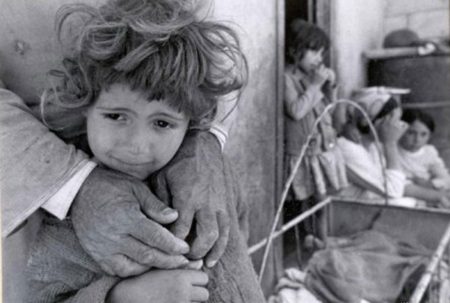

 Israeli occupation authorities continue to prevent the entry of 400 commodities into the Gaza Strip, a senior Palestinian official said yesterday.
 One of those US policymakers is US Senator John McCain (R-AZ) who would say in a 2015 interview on Fox News that:
 Aletho News

