Turkey blockades Syrian Kurdish areas surrounded by ISIS
RT – January 13, 2016
Turkey has established a strict blockade of the Kurdish regions in Syria surrounded by Islamic State (IS, formerly ISIS/ISIL), depriving Syrian Kurds of essential supplies and shooting people trying to enter Turkey from Syria, RT’s Murad Gazdiev reports.
The Turkish border with the Kurdish territories in the northern Syria, which stretches for 750 kilometers, has been fitted with two layers of barbed wire, a huge minefield, and sniper towers at regular intervals. It has only two border crossings that are closed most of the time.
“They [Turks] do not let anything across: neither food, nor humanitarian aid, nor medicine. They only let returning refugees cross,” Hadir Mustafa, the head of one of the border crossings on the Syrian side, told RT.
“The Turkish soldiers do not cooperate, they are aggressive and hostile. They push, hit people and tell them to never come back,” he added.
Murad Gazdiev reported from the border that Turkish border guards had refused to let an ambulance cross the border that was transporting a man critically injured in a terrorist act in a nearby Syrian Kurdish town, saying they needed to receive permission from Turkish provincial authorities first.
Apart from maintaining the blockade, Turkish snipers on towers also target civilians on the Syrian side. They recently shot and killed a Kurdish schoolboy, who was trying to cross the border in order to find work in Turkey.
“The Turks shot him 70 meters from the border, on the Syrian side. I saw the place myself,” the boy’s father told RT.
On Sunday, a 16-year-old girl was also shot dead as she was trying to get to Turkey from Kurdish territories in Syria, while others from her group were injured and had to be treated for gunshot wounds.
The Turkish blockade of Syrian Kurdistan is “total,” Gazdiev reports citing the locals.
“The large part of what we grow here we throw away because we can’t sell it outside,” a Kurdish fruit and vegetable seller named Beze told RT, adding that it is easier to smuggle goods through IS-controlled territories than to transport them through the Turkish border.
“Things that do not grow here also have to be smuggled in. By the time they get here they cost ten times as much,” Beze added.
At the same time, the Turkish border with jihadist-controlled territories in Syria remains open. Weapons, fighters and goods flow freely through checkpoints manned by Islamic militants.
Yemen: A very British war
By Dan Glazebrook | RT | January 11, 2016
Britain is at the heart of a humanitarian disaster of epic proportions unfolding in the Yemen.
At least 10,000 people have been killed since the Saudi bombing campaign against Yemen began in March 2015, including over 630 children. There has been a massive escalation in human rights violations to a level of around 43 per day and up to ten children per day are being killed, according to UNICEF. Seventy-three percent of child casualties are the direct result of airstrikes, say the UN.
Civilian targets have been hit again and again. Within days of the commencement of airstrikes, a refugee camp was bombed, killing 40 and maiming over 200, and in October a Medicins San Frontier [Doctors Without Borders] hospital was hit. Schools, markets, grain warehouses, ports and a ceramics factory have all been hit. Needless to say, all of these are war crimes under international law – as is the entire bombing campaign, lacking, as it does, any UN mandate.
Beyond their immediate victims, the airstrikes and accompanying blockade – a horrendous crime against a population which imports 90 percent of its basic needs – are creating a tragedy of epic proportions. In August 2015, Oxfam warned that around 13 million people were struggling to find enough to eat, the highest number of people living in hunger it had ever recorded. “Yemen after five months looks like Syria after five years,” the head of the International Red Cross commented in October. The following month, the UN reported that 14 million now lacked access to healthcare and 80 percent of the country’s 21 million population are dependent on humanitarian aid. “We estimate that over 19 million people lack access to safe water and sanitation; over 14 million people are food insecure, including 7.6 million who are severely food insecure; and nearly 320,000 children are acutely malnourished,” the UN’s Humanitarian Coordinator told reporters in November. He estimated that around 2.5 million have been made refugees by the war. In December, the UN warned that the country was on the brink of famine, with millions at risk of starvation.
Statements from British government ministers are crafted to give the impression of sympathy for the victims of this war, and opprobrium for those responsible. “We should be clear” said Foreign Secretary Philip Hammond in September 2014, “the use of violence to make political gains, and the pointless loss of life it entails, are completely unacceptable. Not only does the recent violence damage Yemen’s political transition process, it could fuel new tensions and strengthen the hand of al-Qaeda in the Arabian Peninsula – threatening the security of all of us…Those who threaten the peace, security or stability of Yemen, or violate human rights, need to pay the price for their actions.”
Indeed. So presumably, one might have thought, when the Saudis began their massive escalation of the war six months after Hammond made this statement, the British government must have been outraged?
Not quite. The day after the Saudis began ‘Operation Decisive Storm’, David Cameron phoned the Saudi king personally to emphasize “the UK’s firm political support for the Saudi action in Yemen.”
Over the months that followed, Britain, a long-term arms dealer to the Saudi monarchy, stepped up its delivery of war materiel to achieve the dubious honor of beating the US to become its number one weapons supplier. Over a hundred new arms export licenses have been granted by the British government since the bombing began, and over the first six months of 2015 alone, Britain sold more than £1.75 billion worth of weapons to the Saudis – more than triple Cameron’s usual, already obscene, bi-annual average. The vast majority of this equipment seems to be for combat aircraft and air-delivered missiles, including more than 1000 bombs, and British-made jets now make up over half the Saudi air force. As the Independent has noted, “British supplied planes and British made missiles have been part of near-daily raids in Yemen carried out by [the] nine-country, Saudi Arabian led coalition.”
Charities and campaign groups are unanimous in their view that, without a shadow of a doubt, British patronage has greatly facilitated the carnage in the Yemen. “The [British] government is fuelling the conflict that is causing unbearable human suffering. It is time the government stopped supporting this war,” said chief executive of Oxfam GB, Mark Goldring. The director of Amnesty International UK, Kate Allen, said: “The UK has fuelled this appalling conflict through reckless arms sales which break its own laws and the global arms trade treaty it once championed…. legal opinion confirms our long-held view that the continued sale of arms from the UK to Saudi Arabia is illegal, immoral and indefensible.”
For Edward Santiago, Save the Children’s country director in Yemen, the UK’s “reluctance to publicly condemn the human cost of conflict in Yemen gives the impression that diplomatic relations and arms sales trump the lives of Yemen’s children,” whilst Andrew Smith from Campaign Against the Arms Trade, has written that “UK fighter jets and UK bombs have been central to the humanitarian catastrophe that is being unleashed on the people of Yemen.” Leading lawyers including Philippe Sands have argued that Britain is in clear breach of international law for selling weapons which it knows are being used to commit war crimes.
Now it has emerged that it is not only British weapons being used in this war, but British personnel as well. According to Sky News, six British military advisors are embedded with the Saudi air force to help with targeting. In addition, there are 94 members of the UK armed forces serving abroad “carrying out duties for unknown forces, believed to be the Saudi led coalition,” according to The Week – although the government refuses to state exactly where they are.
Indeed, even British airstrikes in Syria may have been motivated in part by a desire to prop up the flagging war effort in Yemen. Questioning of Philip Hammond in parliament recently led him to admit that there had been a “decrease in air sorties by Arab allies” in Syria since Britain’s entry into the air campaign there due to the “challenges” of the Yemen conflict.
For Scottish Nationalist MP Stephen Gethins this suggests that, by stepping up bombing in Syria, Western countries were effectively “cutting them [Arab states] a bit of slack to allow them to focus on the Yemen conflict,” especially needed given that support for the Yemen campaign has been flagging from states such as Jordan, Morocco and Egypt. It is particularly ironic that British MPs’ supposed commitment to destroying ISIS in Syria is actually facilitating a war in Yemen in which ISIS is the direct beneficiary.
Finally, it is worth considering British support for the Saudi bid for membership of the UN Human Rights Council. The Council’s reports can be highly influential; indeed, it was this Council’s damning (and, we now know, fraudulent) condemnation of Gaddafi that provided the ‘humanitarian’ pretext for the 2011 NATO war against the Libyan Jamahiriya. And the Yemeni government’s recent expulsion of the UN Human Rights envoy shows just how sensitive the prosecutors of the Yemeni war are to criticism. It would, therefore, be particularly useful for those unleashing hell on Yemen to have the UN Council stacked with supporters in order to dampen any criticism from this quarter.
Britain, then, is the major external force facilitating the Saudi-fronted war against the people of Yemen. Britain, like the Saudis, is keen to isolate Iran and sees destroying the Houthis as a key means of achieving this. At the same time, Britain seems perfectly happy to see Al-Qaeda and ISIS take over from the Houthi rebels they are bombing – presumably regarding a new base for terrorist destabilization operations across the region as an outcome serving British interests.
Dan Glazebrook is a freelance political writer. His first book “Divide and Ruin: The West’s Imperial Strategy in an Age of Crisis” was published by Liberation Media in October 2013. It featured a collection of articles written from 2009 onward examining the links between economic collapse, the rise of the BRICS, war on Libya and Syria and ‘austerity’. He is currently researching a book on US-British use of sectarian death squads against independent states and movements from Northern Ireland and Central America in the 1970s and 80s to the Middle East and Africa today.
How Obama Went From the Anti-Bush to a Bush on Steroids

Sputnik – January 12, 2016
In a recent article for independent German magazine Zeiten Schrift, contributor Klaus Faissner reflected on the US president’s journey from an electrifying candidate with a savior-like quality to a tired leader tarnished by drone strikes, mass surveillance, and a relationship with the media reminiscent of the worst days of the Nixon administration.
In his article, republished and translated by foreign media translation service WhatTheySayAboutUSA.com, Faissner recalled that in the run-up to his presidency, while he was still a candidate, Barack Obama “was presented as the savior of the world – almost a Messiah.”
“He was rapturously greeted by a crowd of over 200,000 in Berlin in 2008 – even before he had been officially crowned as President of the USA. “Yes, We Can!” was the campaign slogan that electrified the crowd, even before he began speaking. The American presidential candidate gathered bigger crowds in Germany than even the Pope, rock stars, or a football game with the national team. He promised to liquidate nuclear arms, reestablish good relations with Russia, pull American troops out of Iraq and Afghanistan – and to close the US’s nefarious concentration camp at Guantanamo Bay.”
“As the US’s first black president,” Faissner reflected, “Barack Obama ought to have become the antithesis of everything that George ‘Dubya’ Bush had stood for – a president whose wars had run through the world like cancer, whilst clamping down on basic freedoms for his own people. This was the way the media presented the incoming President Obama – and the world believed the simulacrum they’d been given.”
Unfortunately, the journalist recalled, “what the press wasn’t reporting, however, was that [by the end of his first term], Obama signed more orders for drone assaults than Bush Jr. had done in the entire eight years of his presidency. These were drone strikes which caused catastrophic levels of non-combatant casualties, which America simply wrote-off under the euphemism of ‘collateral damage.'””Like his predecessor, Obama threw all his weight behind GMO agriculture; he didn’t give the slightest thought to his promises to close Gitmo; he showed no interest whatsoever in improving relations with Russia, and he worked actively on destabilizing the situation in the Middle East.”
A ‘Tense’ Relationship With Journalists
“In 2009,” Faissner recalled, “the incoming president declared his intentions for a previously unprecedented level of transparency in government and the apparatus of national administration. ‘Openness will strengthen our democracy,’ as he stressed in subsequent legislation.”
However, “now that Obama has been at the helm for nearly seven years, it’s clear that all these promises were empty piffle. No president after Richard Nixon has been so aggressively opposed to the media, as was highlighted in a piece written by the former Washington Post chief editor Leonard Downie, published in 2013 – about freedom of speech in the United States. Downie suggested the Obama administration was operating a misinformation policy, used electronic snooping on journalists, and was behind a ratcheted-up campaign of persecution against whistleblowers and journalists involved in investigation.”
“An atmosphere of fear pervaded the work of journalists, Downie wrote, with their investigations permanently occluded in secret observation by the state. Despite the administration’s promises to end the ‘unreasonable secrecy’ that typified the Bush era, Obama has in fact continued to expand it. Often entirely irrelevant documents are systematically classified ‘top secret’ to deny reporters access to them.””On top of this,” Faissner laments, “Obama administration staffers frequently take personal offense to articles criticizing government policy. To ward off the increasing frequency of such articles, the Obama administration is increasingly reaching out for the 1917 Espionage Act. Although it had only been employed three times in the first 90 years of its existence, over the period between 2009 to 2013… eight different government officials were arraigned with it, charged with passing governmental information to journalists, putting out a powerful resonance on Capitol Hill. One of those thus charged was Edward Snowden, who blew the whistle on government snooping on the whole world’s population by the National Security Agency. Bob Woodward, who broke the news of the Watergate scandal in the Nixon era, warns that any fight against critical journalists only leads in the long term to weaken the nation’s national security.”
A Unique and Powerful Surveillance System
“In reality,” Faissner warned, “Obama has set up a unique system of surveillance. It was done in such a way that people around the world have no idea that Obama’s policies are a continuation, or even a worsening of those of George W Bush. Since October 2011 government staffers in every branch of the administration have been encouraged to snitch on their colleagues. Staff in Federal departments have been obliged since 2012 to report all their contacts with the media, and moreover to report on suspicious colleagues. Michael Hayden, the former head of the CIA, said the program had been incepted to ‘block all contact.’ Even staffers of new agencies who are remote from revolutionary activities, such as Associated Press or Fox News have come under the crosshairs of the Obama administration.”
“One such journalist has been James Rosen of the Fox News television channel, who came under observation from the Justice Department, for using information he had received from a highly-placed government official. The information referred to the international community ratcheting up sanctions against Pyongyang over new nuclear weapons testing by North Korea. The Washington Post notes that the FBI monitored Rosen’s phone calls, and even screened his private email correspondence.”Moreover, Faissner suggests, “the situation worsened drastically in 2015. In a document entitled ‘Law on War’ [a set of instructions on the legitimate warfare practices approved by the US military], the Pentagon stated that journalists could be treated as ‘unprivileged belligerents,’ a status which, according to a representative from the Committee for the Protection of Journalists, ‘gives U.S. military commanders across all services the purported right to at least detain journalists without charge, and without any apparent need to show evidence or bring a suspect to trial.'”
“If the Pentagon is putting spying in the same basket as journalism, the New York Times noted, then this is a step in the same direction as totalitarian regimes. It’s hardly surprising that in the World Press Freedom Index for 2015, the USA is rated at 49 place – on a par with El Salvador, Burkina Faso and the Republic of Niger.”
‘Don’t let people die’: Turkish TV show investigated after caller’s plea for end to violence
RT | January 12, 2016
A TV show in Turkey has been accused of “terrorist propaganda” and faces an investigation after a caller lamented the deaths of civilians, including children, who have been killed in the on-going conflict between Kurdish forces and the Turkish army.
The prosecutor’s office in Bakirkoy district, Istanbul, said it was checking the recording of Friday night’s Beyaz Show broadcast on Kanal D. It is also investigating the caller, the host and those responsible for the program, according to leading Turkish newspaper Milliyet.
On January 8, well-known Turkish host Beyazit Ozturk, who had never previously brought politics into his show, received a call from a woman identifying herself as Ayse Celik, a teacher from the southeastern Diyarbakir province.
“Are you aware of what is happening in the southeast?” she asked, as quoted by newspaper Today’s Zaman.
She continued, saying that what is being shown on Turkish TV “is very different from what we are experiencing [in the region].”
“Do not remain silent. Please have some kind of sensitivity as a human. See us, hear us and please extend a helping hand to us. It is a pity. Don’t let people die, don’t let children die and don’t let mothers cry,” she said.
Ozturk initially thanked the woman for her remarks and the audience applauded.
“We have been trying to get people to hear about what is happening as much as we can. What you said has taught us a lesson. We will continue to do more. I hope your wishes for peace come true as soon as possible,” he said.
But later he backtracked and apologized for the remarks.
Following the incident Kanal D, a nation-wide Turkish television channel and part of Dogan Media Group, said they had been subjected to provocation.
“The Kanal D administration will launch all necessary legal action against this person in the face of this provocation,” the statement read.
In the meantime, the Education Ministry released a statement claiming that Celik, the caller, was not a teacher in Diyarbakır.
Turkey has repeatedly been accused of increasing censorship and a media crackdown. In December the authorities fined Twitter 150,000 Turkish lira (US$51,000) for not removing content allegedly containing “terrorist propaganda, encouraging public acts of violence and hatred,” sources in Turkey’s communication technology watchdog told media outlets.
Ankara also previously temporarily blocked Twitter, YouTube and Facebook for failing to remove content deemed illegal or banned.
In November a Turkish prosecutor asked a court to imprison the editor-in-chief of Cumhuriyet newspaper, pending trial for espionage and treason. The outlet had published photos of weapons it said were then transferred to Syria by Turkey’s intelligence agency.
Nobel Peace Prize-Winner Obama Dropped 23,144 Bombs in 2015
Sputnik – January 11, 2016
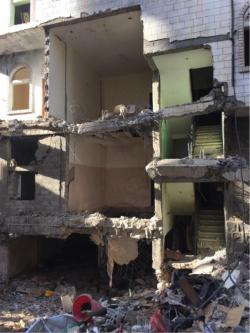 The United States in the past year dropped more than 20,000 bombs on Muslim-majority countries Iraq, Syria, Afghanistan, Pakistan, Yemen and Somalia, according to a study by the Council on Foreign Relations (CFR).
In an article published January 7, Micah Zenko, a senior fellow at CFR, states that since January 1, 2015, the United States has dropped an estimated 23,144 bombs in those six countries: 22,110 in Iraq and Syria; 947 in Afghanistan; 58 in Yemen; 18 in Somalia; and 11 in Pakistan.
“This estimate is based on the fact that the United States has conducted 77 percent of all airstrikes in Iraq and Syria, while there were 28,714 US-led coalition munitions dropped in 2015. This overall estimate is probably slightly low, because it also assumes one bomb dropped in each drone strike in Pakistan, Yemen, and Somalia, which is not always the case,” Zenko writes.
Despite dropping tens of thousands of bombs over the past 17 months, Washington’s strategy has failed to defeat Daesh and other Islamic militant groups, Zenko observed.
In Afghanistan, the Taliban control more territory than at any point since the 2001 US invasion, according to a recent analysis in Foreign Policy magazine.
Zenko notes that the primary focus of Washington’s counter-terrorism strategy is to kill extremists, and that far less attention is paid to prevent a moderate individual from becoming radicalized.
As a result, “the size of [Daesh] has remained wholly unchanged,” Zenko writes.
In 2014, the Central Intelligence Agency estimated the size of Daesh to be between 20,000-31,000 members. On Wednesday, Colonel Steve Warren, a spokesman for the US-led coalition, estimated the group at 30,000 members, despite Pentagon claims that 25,000 Daesh members have been killed in US air strikes.
At the same time, the Pentagon claims that only six civilians have “likely” been killed in the course of the bombing campaign.
US behind Yemen war continuation: Ansarullah
Press TV – January 11, 2016
The Houthi Ansarullah movement in Yemen says the United States is the real force behind the continuation of Saudi Arabia’s war on Yemen, as Riyadh has no discretion of its own over the matter.
Spokesman for the Ansarullah Movement, Mohammed Abdulsalam, said on Sunday that it is Washington that prevents Riyadh from stopping its military aggression against Yemen.
He said the ambassador to the US of the former Yemeni government – Ahmed Awad bin Mubarak – and a US envoy were behind the failure of recent talks in Switzerland that were aimed at ending the conflict in Yemen.
On December 15, an Ansarullah delegation and Hadi’s representatives began UN-brokered peace talks in Switzerland with the aim of reaching a solution to the country’s conflict.
A truce came into force in Yemen as the six-day talks opened but it was repeatedly violated by the Saudi side and Hadi loyalists.
Abdulsalam further said world nations believe that peace is possible in Yemen only if Saudi Arabia halts its aggression on the country. The kingdom began the war on Yemen in late March 2015 in a bid to undermine the Ansarullah movement and bring Hadi back to power.
More than 7,500 people have been killed and over 14,000 others injured so far. The Saudi war has also taken a heavy toll on the impoverished country’s facilities and infrastructure.
The United Nations (UN)’s special envoy for Yemen Ismail Ould Cheikh Ahmed has said peace talks are due to restart this month in a bid to end the conflict. He suggested Geneva as a location for the talks.
Britain’s sale of arms to Saudi Arabia violates international law – lawyers
RT – January 11, 2016
The British government has been accused of violating international law by enabling the export of British-made arms to Saudi Arabia, which may have been used to kill civilians.
In the face of mounting evidence that Saudi forces are breaching international law in Yemen, law firm Leigh Day has challenged the government’s export of missiles and other arms to the Gulf state.
A letter issued by the firm to the government on Sunday highlights global organizations that have branded Saudi airstrikes in Yemen illegal. Among these are the European Parliament (EP) and an array of prominent human rights groups that have been monitoring Saudi Arabia’s attacks on Yemen.
Leigh Day’s 19-page letter, which was sent to the government on behalf of Campaign Against the Arms Trade (CAAT), condemns the targeting of civilians and non-combatants in Yemen, as well as the targeting of facilities vital for sustaining basic humanitarian needs. It also criticizes the disproportionate number of civilian casualties in Yemen and an overall failure to ensure unnecessary harm to civilians is avoided.
The letter says Saudi Arabia’s airstrikes have destroyed culturally significant property in Yemen, and condemns a Saudi naval blockade, which is halting the flow of essential food and medicine into the crisis-ridden state.
Despite the gravity of these allegations, the British government has refused to suspend military licenses governing arms’ exports to the Gulf state. It has also failed to call for an inquiry into whether Saudi Arabia has violated international law.
Leigh Day called on the government to confirm whether or not it accepts there is concrete evidence that Saudi Arabia’s conduct in Yemen has breached international law. It also urged the government to verify if Secretary of State for Business, Innovation & Skills (BIS) Sajid Javid will suspend Britain’s sale of arms to Saudi Arabia until a full review of their legality is carried out.
Leigh Day also urged Javid not to authorize further export licenses for Saudi Arabia until the inquiry is completed.
The law firm asked for a full response to its letter within two weeks. Failure to do this would spark legal proceedings against the government, forcing it to explain in the high court what steps it has undertaken to ensure British arms are not being used in violation of international law.
A BIS spokesperson confirmed the department’s receipt of the letter, but told the Guardian it would not comment on the matter because of “ongoing legal action.”
Leigh Day human rights lawyer Rosa Curling said the government has a legal duty to ensure arms and technological equipment exported from Britain are used in accordance with international law.
“Given the widespread and credible evidence that the Saudi authorities are breaching their international obligations in Yemen, we can see no credible basis upon which the UK government can lawfully continue to export arms to them,” she said.
“We hope our client’s letter will cause the government to reconsider its position and suspend all licenses with immediate effect pending a proper investigation into the issue.”
Andrew Smith of Campaign Against the Arms Trade (CAAT) warns that British weapons are central to the military campaign that has “killed thousands of people, destroyed vital infrastructure and inflamed tensions in the region.”
“The UK has been complicit in the destruction by continuing to support airstrikes and provide arms, despite strong and increasing evidence that war crimes are being committed,” he said.
“These arms sales should never have been approved in the first place. The Saudi regime has an appalling human rights record and always has done.”
Leigh Day’s legal maneuver highlights Britain’s lucrative arms trade with Saudi Arabia. Almost £6 billion worth of British arms have been licensed to the Gulf state since Prime Minister David Cameron took office in 2010.
There was pressure to suspend the UK’s military exports to Saudi Arabia in July 2015, but the government flatly refused. Foreign Office minister Tobias Ellwood told parliament at the time the government had seen no credible evidence indicating the Saudi-led coalition had acted illegally.
By contrast, Amnesty International warned of the coalition’s disgraceful disregard for civilian lives. The UN also expressed similar concern.
Featured Video

Armando Mema: Finland Used as New Frontline Against Russia
or go to
Aletho News Archives – Video-Images
New Documentary
Hospital Horror
Documented in the film,“Bad Medicine”

Blog Roll
 Aletho News
- Poland and Bulgaria put brakes on Ukraine weapons funding
- Russia Reaffirms Its Support for Sovereignty, Territorial Integrity of Lebanon – Russian MFA
- Araghchi: Failure to punish aggressors against Iran endangers all nations
- Iran tells UN Security Council to stop reversing roles of ‘aggressor and victim’
- Disgraced neocons Feith & Libby: stop whining about ‘endless war’
- CENTCOM rejects Israeli claims of preparations for new Iran attacks
- Your Shopping Bag Runs Through Hormuz
- Armando Mema: Finland Used as New Frontline Against Russia
- Gestapo 2.0? Germany grants spy agencies sweeping new powers
- Franco-Palestinian group seeks court ban on Israeli real estate fair in Paris
- If Americans Knew
- An error has occurred; the feed is probably down. Try again later.
- No Tricks Zone
- New Study: Barents Sea Temperatures Were Warmer And Sea Ice Less Extensive In The 1700s Than Today
- German Authorities Start Initiative To Evaluate Public Register For Climate “Disinformation” Spreaders!
- Zonal Asymmetry of Temperature Change in the Antarctic Circumpolar Current
- New Study: The Net Fossil Fuel Contribution To Rising Atmospheric CO2 Has Been Zero For 500 Years
- Germany’s Green Energy Transition Becoming Increasingly Expensive…Another 6 Trillion Euros!
- Sudden Stratospheric Warming, Powerful El Niño Combination May Lead To Extreme Europe Cold, Energy Crisis!
- Two New Studies Find Thwaites Glacier Melt Cannot Be Driven By Human Activity Or A Warming Ocean
- E-Cars Reduce CO2 Emissions By Only 41% Compared To Internal Combustion Engine Vehicles
- Predictions Made By Renowned Climate Professor Over Past Decades Have Been Proven To Be Poor
- New Study Suggests Large Regions Of The Pacific Ocean Have Been Cooling For The Last 80 Years

