Syrian government, opposition to meet for talks in Moscow – Assad’s aid
RT | December 6, 2014
Syria’s government and opposition will hold talks in Moscow on the resolution of the Syrian crisis, advisor to the Syrian president Bouthaina Shaaban told RT Arabic.
Syria and Russia agreed that the “intra-Syrian dialogue will begin in Moscow,” Shaaban told RT Arabic during an interview in Damascus on Thursday.
She elaborated that Damascus has been in consultations with Moscow regarding “the starting point of this dialogue, its objectives, and mechanisms for its implementation, as well as the composition of its participants”.
Prospects for using Moscow as a venue for contacts between the two sides of the Syrian conflict were a focus of talks between Russian Foreign Minister Sergey Lavrov and UN Secretary General’s special envoy for Syria Staffan de Mistura on Thursday, according to the Russian Foreign Ministry. During the meeting which took place in Basel, Switzerland the two parties agreed that anti-terrorism efforts are the top priority in the intra-Syrian talks.
Last month Russia’s President Vladimir Putin met with Syrian Foreign Minister Walid al-Moualem for the first top level talks between the two countries since the start of Syrian civil war in 2011. The two discussed “bilateral relations” behind closed doors in the Black city resort of Sochi on November 26, said Kremlin spokesman Dmitry Peskov.
“The timing of the visit plays an important role. It was the first meeting with President Putin since the beginning of the crisis in Syria. This visit was symbolic and at the same time very productive,” stressed Shaaban.
The president’s political and media advisor explained that during the consultations, Moscow and Damascus agreed on the “principle approaches of stopping this war waged against us.”
“Both parties understand that for the revival of Syria it must put an end to terrorism,” she elaborated.
The social and humanitarian situation in the Arab Republic is “complex”, the Syrian top official noted. She expressed regret that some Arab and regional forces as well as those of “international terrorism” have joined against Syria in the war she believes is “inequitable.”
‘US want twenty years of war to eliminate ISIS? ’
Shaaban criticized the US for its move to create a coalition “outside the UN Security Council and outside the boundaries of international law”. She reiterated Syria’s stance on the US-led airstrike targeting IS militant positions in the Arab nation – that they are an illegal intervention and do not respect the sovereignty of Syria.
She cited President Bashar Assad’s statement that these air strikes fail to provide any tangible result, while the main fight against the terrorists is carried out on the ground.
IS militants – formerly ISIS, also known by the Arabic acronym Daʿish –have “covert international support that enables to transfer weapons and give financial aid to terrorists,” Shaaban admitted.
High-level experts work for these terrorists she stated questioning from where they came.
“Therefore, in dealing with IS militants we will rely on our own capabilities, a new coalition that is being created between Russia, Syria, and countries” that stick to their statements and promises.
“At the same time, the West, in my personal opinion, pursues other objectives, participating in the [US-led] coalition. The West, above all, is trying to save the US military industry, attracting finances of the Gulf Arab countries in order to save relevant US companies,” she said.
The top official explained that this is the reason “they say that it will take ten or even twenty years to destroy IS militants.”
“… to destroy 30,000 IS militants the US needs twenty years of war?” she questioned.
Syria which has a history amounting to 10,000 years has seen many conflicts and wars, but it will stand, while IS militants and other terrorist groups are bound to fall, Shaaban said.
Israel refuses Turkish offer to supply Gaza with electricity
MEMO | December 3, 2014
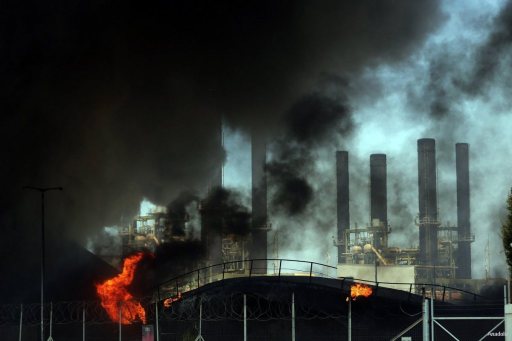
Israel has refused a Turkish offer to send a floating power-generating ship to the Gaza coast to supply the coastal enclave with electricity, Arabs48 reported yesterday.
In the wake of the recent Israeli war on the Gaza Strip, Israel targeted the sole electricity plant in the Strip and massively damaged electricity infrastructure, Turkey offered to cover the electricity shortage.
According to Israeli reports, Turkey has officially asked Israel to issue a permit for a Turkish ship carrying huge electricity generators to be stationed off the Gaza coast.
Arabs48 reported Israeli security sources saying that specialists had found that the infrastructure in the Gaza Strip is not suitable for such a connection and that is why the Turkish offer was refused.
The same sources said that other ideas to solve the electricity crisis in Gaza were proposed, including mobile generators.
Islamic Jihad slams PA-Israel security coordination as unity gov’t expires
Al-Akhbar | November 30, 2014
The national consensus government declared by Hamas and Fatah this summer has finished its interim term, Hamas spokesman said Sunday, as the Islamic Jihad movement urged the Palestinian Authority (PA) to stop security coordination with Israel.
Hamas spokesman Sami Abu Zuhri said in a press conference in Gaza City that the unity government’s six-month term had expired, and that dialogue should be resumed on a national level to discuss the future of the government.
“Any decision on whether the government should be disbanded or continued or be reshuffled must be made only through national dialogue and consensus,” Abu Zuhri said, adding that Hamas “isn’t interested in incitement, but rather seeks to maintain national unity.”
The Palestinian national unity government was formed following a reconciliation deal signed by Palestinian political rivals Hamas and Fatah in April.
The deal sought to end years of bitter and sometimes bloody rivalry between Hamas, which controls the Gaza Strip, and Fatah, which dominates the West Bank-based PA.
Palestinian parties agreed in September that the unity government would assume immediate authority over Gaza, however the government has so far failed to make any real changes on the ground in Gaza.
Abu Zuhri went on to criticize the PA for making what he called “politically motivated arrests.”
So far in November, 80 Palestinians have been detained in the West Bank for their political affiliation, he said, adding that 70 of them were still in PA custody.
“Hamas denounces the escalating violations and criminal acts by the PA security services against supporters of Hamas and the Palestinian resistance,” he added, calling on PA President Mahmoud Abbas and Prime Minister Rami Hamdallah to stop the detention campaign.
Similarly, the Islamic Jihad movement urged Abbas on Sunday to release all political detainees and refrain from detaining any Palestinian over their political affiliation.
Besides the recent wave of detentions, the movement said the security coordination between the PA and Israel has become a “real danger” to the Palestinian national unity.
Islamic Jihad spokesman Yousef al-Hasayna said in a statement that the appreciation expressed by the Israeli authorities regarding the PA’s readiness to continue coordinating with the occupation forces on the security level “is a strike to the nationalistic values of the Palestinian security services” and “is in contrast with the values and beliefs of the Palestinian people.”
“Israel is using this coordination to oppress the Palestinians and make sure no uprising will erupt in the West Bank and Jerusalem,” al-Hasayna said.
“The only one benefiting from this coordination is the Israeli occupation.”
Gaza reconstruction
Ongoing differences between Hamas and the PA have kept tensions high in Gaza.
Earlier this month, a senior United Nations official warned that another conflict will engulf Gaza unless stability in the territory is achieved rapidly.
“I do not see the national consensus government effectively governing Gaza,” Robert Turner, director of operations for the United Nations Relief and Works Agency (UNRWA) in Gaza, said.
“If we do not have political stability, a national Palestinian government, and at least an easing of the blockade, yes there will be another war,” Turner told reporters.
For 51 days this summer, Israel pounded the Gaza Strip by air, land and sea.
More than 2,160 Gazans, mostly civilians, were killed and 11,000 injured during seven weeks of unrelenting Israeli attacks in July and August.
The assault ended with an Egypt-brokered ceasefire agreement that calls for reopening Gaza’s border crossings with Israel, which, if implemented, would effectively end the latter’s years-long blockade of the embattled territory.
However, the Zionist entity had repeatedly blocked the entry of building material, prompting the UN in September to broker another deal. The reconstruction of Gaza has yet to begin.
The Palestinian Authority has estimated that the rebuilding Gaza will cost $7.8 billion.
UN chief Ban Ki-moon said during a visit to the Gaza Strip in October that the devastation he had seen was “beyond description” and “far worse” than that caused in the previous Israel-Gaza conflict of winter 2008-2009.
According to the UN, as many as 80,000 Palestinians homes were damaged or destroyed during the days of hostilities, a higher figure than was previously thought, and over 106,000 of Gaza’s 1.8 million residents have been displaced to UN shelters and host families.
Israel routinely bars the entry of building materials into the embattled coastal enclave on grounds that Palestinian resistance faction Hamas could use them to build underground tunnels or fortifications.
For years, the Gaza Strip has depended on construction materials smuggled into the territory through a network of tunnels linking it to Egypt’s Sinai Peninsula.
However, a crackdown on the tunnels by the Egyptian army after it overthrew then-President Mohammed Mursi has effectively neutralized hundreds of tunnels, severely affecting Gaza’s construction sector.
Economists in Gaza have estimated that as many as 400 trucks of equipment – from concrete to building materials and machinery – are needed every day for the next six months to meet the demand, but so far only around 75 trucks have made deliveries.
“I know there is frustration at the pace of reconstruction,” Turner said, adding that efforts were underway to fully implement a mechanism negotiated by the UN’s special coordinator in the Middle East, Robert Serry, to speed up the flow of goods.
Alaa Radwan, head of the Popular Committee for Monitoring the Reconstruction of the Gaza Strip, made a simple calculation: “Given the pace at which construction materials are currently entering Gaza, it will be at least 20 years” before the damage caused by this summer’s war is repaired.
While Hamas and people in Gaza have lamented the slow flow of goods, Turner was optimistic that the volume could be greatly increased if political stability could be brought to bear and if Egypt and Israel fully lifted their combined blockade.
“I do not believe the crossings are a problem,” Turnor said. “All the technical problems can be addressed. The question for me is that the political choke points be addressed.”
“If the political will exists… expanding the crossing to 800 trucks a day is just a matter of paying for the expansion.”
The crisis between Hamas and Fatah has been delaying the flow of reconstruction material into war-battered Gaza because the opening of border crossings, both under Israeli and Egyptian control, is conditional on PA personnel being stationed there.
According to the UN-brokered deal, all materials going into Gaza should be extremely monitored, including GPS tracking and video surveillance of their storage, to ensure nothing goes missing and ends up being used for “military purposes.”
On top of the slow pace of reconstruction and the bureaucracy, Fatah’s failure to pay employees of Gaza’s former Hamas government has further escalated tensions between the two rivals.
Moreover, the situation in Gaza was thrown into doubt early November after bombs targeted the houses of some 10 senior Fatah officials in Gaza.
Even though Hamas leaders rushed to denounce the attacks and called upon security services in Gaza to investigate into the attacks and bring those responsible for it to justice, the Fatah-led Palestinian Authority security services accused Hamas of having knowledge of the blasts before they happened.
Hamas top member, Khalil al-Hayya, however, slammed the accusations as “groundless” and “baseless,” saying whoever was behind the blasts was trying to thwart reconciliation and ensure the Palestinian Authority did not re-extend its control over Gaza.
Hayya also warned against using the incident as an excuse to avoid reconciliation, calling on all sides to uphold their responsibilities towards the national good.
(Al-Akhbar, AFP, Ma’an)
What the Fake Syria Sniper Boy Video Tells Us About Media Experts

By Maram Susli | New Eastern Outlook | November 27, 2014
Many mainstream media websites helped a fake video go viral this month. The video showing a young Syrian boy running through sniper fire to save a little girl, was exposed as a fake when the Norwegian producer Lars Klevberg made the fact public. One of the stated aims of the Norwegian film makers was to “see how the media would respond to a fake video.” This article examines how that experiment went.
The western press very quickly accepted the video as real and used it to support the US administration’s narrative on Syria. Many top US news sources began to spread the story. Even though the producer said he explicitly added big hints that the video was fake, like the children surviving multiple gun shots.
Propagating false stories on Syria, is nothing new for the western press. In the lead up to the conflict many stories were exposed as frauds, such as the Anti-government activist “Gay Girl in Damascus” which turned out to be a middle-aged American man in Scotland. Syrian Danny Abdul Dayem which was frequently interviewed by CNN was using fake gun fire and flames in his interviews.
The fake sniper video wasn’t enough to support US government narratives by itself, as the now deleted original upload didn’t suggest the identity of the snipers. So the west’s media suggested that it was Syrian military snipers that were targeting the children without any evidence. Journalists failed to mention how they reached the conclusion that an actor in Malta was shot by the Syrian military. It may be that the western press is quick to trust pro-rebel sources, as the video was uploaded by the pro-rebel Sham Times along with their own twist.
The Guardian’s headline for the video was “Syrian boy ‘saves girl from army sniper’” and the Telegraph delicately suggested the Syrian military was responsible for the fake bullets. The International Business Times stated, “the snipers, who reportedly are said to be the government forces loyal to Syrian President Bashar al-Assad.” IB Times never explicitly mentioned who reported this information. They then took it a step further and concluded the article with “the incident certainly is not the first time that Pro-Assad gunmen have targeted children”. Well it is at least not the first time the mainstream media has presented false reports as fact. In 2012, CNN claimed a bullet that killed a four year old girl in Aleppo was shot by government snipers even whilst admitting the bullet came from rebel held buildings.
Other journalists took to Twitter to make unfounded claims about army snipers targeting the boy. Vinnie O’Dowd who has done work for Channel 4 and Al Jazeera tweeted “Syrian Regime Targets kids”. Liz Sly of the Washington Post tweeted incredulously that “Soldiers kept shooting” at children.
These tweets were inline with an official State Department Twitter account @ThinkAgain_DOS which blamed Assad for the fictitious bullets in the film. This casts doubt on how deeply the US administration scrutinizes information it bases it’s policy on. In 2013 they relied heavily on video footage provided by rebels to support its planned attack on Syria in the wake the Ghouta chemical attack.
Scrutinising the Scrutinisers (Experts)
 But it isn’t just the mainstream media that was easily duped by the convenient propaganda film. The video experts that were asked to scrutinise the video, failed to recognise that the video was a fraud. The Telegraph stated that upon enquiry “experts told them they had no reason to doubt that the video is real”. International Business Times went a step further spinning the statement to “experts told The Telegraph that they have no doubts on the authenticity of the footage.”
This is very strange since both children in the film walk away after being directly and repeatedly hit by bullets. The creators of the film said he purposely scripted this as a big hint that the video is fake. The lack of scrutiny the media experts employed suggests incompetence or the same level of bias as the media that employs them.
Heather Saul of the Independent wrote that one of the ‘Middle East experts” she showed the video to was from Human Rights Watch. Indeed, Human Rights Watch European Media Director Andrew Stroehlein, showed no doubt on the authenticity of the film when he tweeted it out to his followers. The New York based human rights organisation is not new at tweeting false information, last month they used an image of the Odessa fire, where US-backed militia’s burned thirty two people to death, as an example of ‘Putin’s repressive policies’. In 2008 Venezuela expelled two HRW staff members accused of “anti-state activities” after producing a report against the Chavez government. Guardian journalist Hugh O’Shaughnessy accused HRW of using false and misleading information in the report, as well as pro-Washington bias. In 2009 HRW received financial donations from the Saudi government which may, in part, explain the anti-Syrian slant.
 HRW employed so called video expert Eliot Higgins and his colleague Daniel Kaszeta to investigate the August 21 chemical attack in Ghouta, and quickly reached the conclusion the Syrian government was behind the attack. Daniel Kaszeta was referred to as a fraud by prominent physicist and MIT Professor Theodore Postol. HRW’s CEO Kenneth Roth recently used a report by Eliot Higgins to make unfounded claims about Ukrainian rebels shooting down Malaysian flight MH17. Heather Saul did not respond to questions on whether Eliot Higgins was one of the expert she asked for advice. However the mainstream media’s most often quoted video expert, did not recognise that the video was a fraud, tweeting cautiously that he wasn’t sure if it was authentic but gave the video a reaction non the less.
However many viewers who aren’t referred to as video or Middle East experts, immediately recognised the video was a fraud and flooded social media sites Twitter and Youtube with doubts on its authenticity. If Heather Saul had used these individuals as experts rather than HRW, she would have reached the correct conclusion about the video. But perhaps it is this unbiased eye that the mainstream media avoids. The vast majority of Higgin’s conclusions support US government narratives and agendas, and that’s the kind of bias the mainstream media prefers.
Blaming the Producer
Instead of humbly accepting blame for spreading disinformation, many western journalists and their experts reacted by blaming the producer of the film. The collective rage of the entire mainstream media forced the film’s producer to delete any trace of this 30,000 dollar experiment. Some journalists took to Twitter to express their rage at being exposed as easily duped by convenient propaganda.
The experts that were fooled by the video also strongly protested. HRW posted a complaint that the fake video “eroded the public trust in war reporting”, in other words blind trust in HRW analysis and war propaganda. Eliot Higgins posted an open letter to the producer of the film on his website Bellingcat, condemning the film.
GlobalPost referred to the film as ‘irresponsible and dangerous’ but not because it could be used to promote wars and make false accusations. What the real danger to the mainstream media and their experts seems to be, is that as a result of the film’s exposure as a fraud, future video claims may now have to be properly scrutinized and the public may not be so unquestioning in future. However it is the journalists’ lack of scrutiny that is truly what is irresponsible and dangerous. Had the director not admitted the film was fake, these journalists more than likely would have kept promoting the story as an example of Syrian Army war crimes.
Maram Susli also known as “Syrian Girl,” is an activist-journalist and social commentator covering Syria and the wider topic of geopolitics.
Civilians killed in US drone attacks: Rights group
Press TV – November 28, 2014
A rights group says many civilians have been targeted and killed in US drone attacks in Pakistan and other countries where such raids are carried out, Press TV reports.
The UK-based rights group Reprieve revealed that civilians have been killed in Pakistan and other places before militants were targeted by US assassination drones.
Reprieve has presented several cases on how ruthlessly the US Central Intelligence Agency (CIA) has killed civilians but declared them militants through dubious reports in the media, which regularly cite anonymous Pakistani and US officials.
In one such case, the CIA killed 221 people, including over 100 children, in Pakistan in search of just four militants. This is while three of the militants are reportedly still alive and the fourth one has died of natural causes.
In another example, the report pointed out that on average each militant was targeted and reported killed more than three times before they were actually killed.
To kill one militant, sometimes “more than 300 people have been killed,” said Mirza Shazad Akbar, Reprieve’s representative in Pakistan.
“A former US drone operator said that by looking at the monitor and looking at people’s movement, he could actually tell who is a bad person and who is a good person… This is the extent of… the [US] flawed intelligence,” Akbar added.
But this is just the tip of the iceberg of the scale of tragedy in Pakistan’s tribal areas, where more than 3,800 people have been killed with the same pattern of the so-called precise surgical drone strikes.
The US carries out targeted killings through drone strikes in several Muslim countries, such as Afghanistan, Yemen, Pakistan and Somalia. Washington claims the targets of the drone attacks are militants, but local officials and witnesses maintain that civilians have been the main victims of such raids over the past few years.
The United Nations and several human rights organizations have identified the US as the world’s number-one user of “targeted killings,” largely due to its drone attacks in Pakistan and Afghanistan.
US helping Israel boycott Geneva summit on occupied territories – diplomatic sources
RT | November 27, 2014
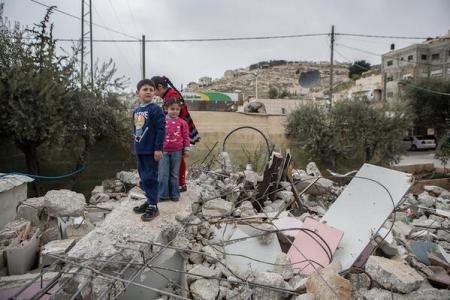
Switzerland is under diplomatic pressure from Israel, the US, Canada and Australia, which are trying to prevent an international conference in Geneva from taking place in mid-December on Israel’s occupation of Palestinian territories, Haaretz reports.
Delegations from nearly 200 countries are expected to head to Geneva to discuss the situation in the West Bank, Gaza Strip and East Jerusalem. Yet, according to Haaretz, Israeli and Western diplomats are ready to go for broke to prevent the gathering from taking place.
Switzerland, as the main sponsor of the summit, is bearing the brunt of diplomatic pressure from all sides.
Israeli authorities told the media outlet that Palestinians and Arab states are also pressing Swiss officials to send out letters of invitation to the conference within a matter of days, the Israeli daily reported on Wednesday.
It was in early April when Israel announced plans of constructing 700 new houses in occupied East Jerusalem, a move that pushed Palestinian Authority President Mahmoud Abbas to ask 15 international conventions to join them in the name of the Palestinian state.
One of those was the Fourth Geneva Convention (signed 1949, came into force 1950), which specifically addresses protection of civilians in war zones and territories under military occupation.
Washington finally accepted that its efforts to extend peace talks between Israel and the Palestinians have been torpedoed. Several weeks later, Palestinians and the Arab League sent an official request to Switzerland to hold an international conference of the Fourth Geneva Convention signatory states on the issues of the Israeli occupation of the West Bank and East Jerusalem, together with the damage caused by Israel’s armed forces to civilians in Gaza.
The last time the signatories to the Fourth Geneva Convention gathered in regard to the Israeli-Palestinian conflict was in 2001, after the outbreak of the second intifada. That conference was boycotted by Israel and the United States.
After that summit there have been four fruitless attempts to gather the Fourth Geneva Convention on the issue of Israeli-Palestinian relations. Even the bloody Israeli military Operation Cast Lead in the Gaza Strip in 2009 failed to raise broad international support for holding such a conference, according to the Swiss Foreign Ministry at the time.
The necessity to call the new conference has been not evident this time, too, so Swiss diplomats asked every Fourth Geneva Convention signatory separately whether the time had come to hold a summit.
What the Swiss diplomats have proposed is a three-hour conference at an ambassadorial level, no discussions and no media coverage except for a final press statement. The conference is set to be focused on implementation of the international humanitarian law in troubled Israeli-Palestinian relations.
“We made it clear we didn’t want a political event or debate club, or a conference that would blame or criticize one of the sides,” a Swiss diplomat said.
However small the scale of the proposed event is, Israel strongly objected to it. Israeli diplomats reportedly conducted negotiations in Bern and Geneva, trying to persuade Swiss counterparts to call off the initiative and threatening to boycott it anyway.
“They told us that holding the conference would help a one-sided Palestinian move intended to make Israel look bad and attack it in an international forum,” the Swiss diplomat said.
The US and Canada told Switzerland they are going to boycott the conference, too.
“We strongly oppose the convening of the High Contracting Parties to the Geneva Conventions and have made our opposition unmistakably clear,” a spokesman for the US State Department, Edgar Vasquez, told Haaretz.
It is true that the conference will have no authority to make any binding decisions, yet its work could engender further international criticism of Israel’s settlement policy on the occupied Palestinian territories.
Besides that, once Israeli diplomats received an updated draft of the conference’s proposed contents, they found out that the updated draft text had been phrased in a politicized way, directly naming Israel and going into detail on the issue of West Bank settlements.
Israeli Foreign Minister Avigdor Lieberman has reportedly been ringing colleagues around the globe, attempting to talk them into declaring a boycott to the conference. Part of this work has been delegated to Israeli ambassadors worldwide.
With all due support on the part of the US, Canada and Australia, these efforts are likely to be in vain, and the Swiss diplomacy is decisive to go on with the plan and announce the conference officially soon.
The Fourth Geneva Convention prohibits harming those uninvolved in a conflict, be they civilians, wounded soldiers or POWs, as well as obliging the occupying side to maintain human rights and decent living conditions of an occupied civilian population.
Israel joined the convention, but has never ratified it legislatively. The Israeli government regards the West Bank and East Jerusalem as ‘disputed’, not occupied, areas, therefore considering Israeli settlements as not violating the treaty.
Turkey aware of militants crossing border to Syria – Report
Al-Akhbar | November 25, 2014
A video published on Al-Mayadeen’s website on Tuesday revealed that up to 100 civilians and militants cross the Syrian-Turkish border daily under the surveillance of the Turkish army, which never interferes.
The footage made public by the news channel shows an unsupervised stretch of the border, specifically that separating the Syrian governorate of Aleppo and the Turkish provinces of Gaziantep and Kilis.
One Syrian who appears in the video said that there were a number of individuals who coordinate with the Turkish army and were responsible for organizing the movement of civilians, militants and smuggled goods across the border.
The footage echoes a similar report in October, where a foreign Islamist fighter who joined the Syrian rebel ranks in 2012 told Reuters that the Turkish borders “were wide open” and armed rebels “used to get in and out of Turkey very easily. No questions were asked. Arms shipments were smuggled easily into Syria.”
The border has become a safe haven for militants to move freely and smuggle weapons and aid inside Syria into the regions they occupy. According to the Al-Mayadeen report, some Turkish officers are also involved in smuggling arms into Syria.
Residents of the Turkish towns on the border reported living in chaos. They recalled an incident when Turkish reporters were attacked with knives by a group of militants and were later threatened by the Turkish government if they didn’t keep quiet regarding the attack.
In October, Press TV’s correspondent in Turkey, Serena Shim, was killed in a “suspicious car accident” near the Turkey-Syria border, days after she told Press TV she had obtained images of militants infiltrating into Syria through the Turkish border in trucks belonging to the World Food Organization and other NGOs.
Amid fierce clashes between the Islamic State of Iraq and Syria (ISIS) militants and Kurdish forces in the key Syrian town of Kobane last month, Saleh Moslem, head of the Kurdish Democratic Union Party (PYD), accused Ankara of supporting ISIS, saying it had turned a blind eye when 120 ISIS militants crossed into Kobane through the Turkish borders.
The Syrian government consistently accused Turkey, a NATO member and one of Washington’s key allies in the region, of playing a major role in fueling the armed crisis in Syria by opening its borders and allowing free access to foreign jihadists into Syria.
Damascus has repeatedly accused Turkey of harboring, financing, training, and arming militants since violence erupted in March 2011.
The Syrian government sent letters to the United Nations time and again attacking Turkey’s “destructive” role in the Syrian conflict.
In 2013, Syria’s foreign ministry said in letters addressed to the UN Security Council and to Secretary General Ban Ki-moon that “Turkey supports and publicly justifies terrorist, destructive acts against Syria” and “has turned its territory into camps used to house, train, finance and infiltrate armed terrorist groups, chief among them the al-Qaeda network and the al-Nusra Front.”
Again in 2014, Syria’s Permanent Representative to the UN Bashar al-Jaafari submitted a letter to Ban Ki-moon in which the Syrian government criticized “Turkey’s role in supporting terrorism in the region.”
Jaafari said that Turkish authorities allowed thousands of foreign terrorists, extremists and mercenaries from across the world to enter Syria and provided armed groups with funds, weapons and other forms of support, which is a “blatant violation of international agreements on counter-terrorism.”
In October, Jaafari reiterated his remarks against Turkey and its regional allies, days after US Vice President Joe Biden unwittingly revealed – then later apologized without denying his claims – that Turkey, Saudi Arabia and the United Arab Emirates were all actively involved in arming and funding terrorist groups in Syria.
Turkey has repeatedly rejected all accusations.
Pro-Israel activists ask MPs to halt non-violent BDS protests
MEMO | November 24, 2014
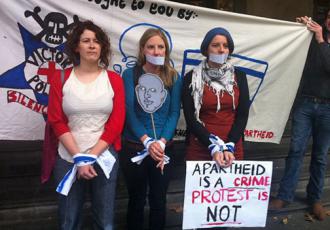 Zionist activists have urged British MPs to implement new legislation that police could use to stop non-violent, pro-BDS protests.
Manchester-based group North-West Friends of Israel have urged politicians to give police more power to stop boycotts of businesses by pro-Palestine solidarity activists.
As cited in a report by The Jewish Chronicle, the group’s co-chair Anthony Dennison wants the Public Order Act amended “to allow police to halt non-violent protests, if they disrupted ‘the lawful right of customers and shops to trade’.”
Dennison commented: “Peaceful protest can be intimidating, if demonstrators are stood outside a shop, holding placards with horrible images, are customers really going into that shop?”
UK approved $11mn Israeli arms sales before Gaza war: Report
Press TV – November 24, 2014
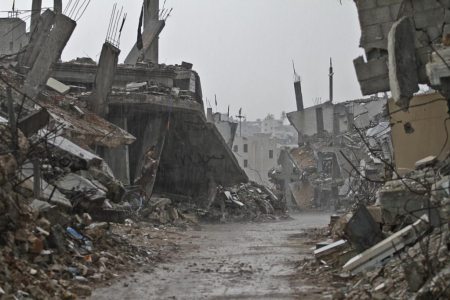
A new report has revealed Britain’s approval of arms sales to Israel worth nearly USD 11 million (£7 million) in the six months before the regime’s latest aggression against the Gaza Strip.
The Sunday report by The Independent newspaper raised fresh concerns about the use of British-made weapons and equipment by the Israeli army during the 50-day war on Gaza that killed more than 2,100 Palestinians and wounded 10,000 others in July-August.
Citing government figures, it added that the sales included components for drones, combat aircraft and helicopters along with spare parts for sniper rifles.
The figures also show that the British government has issued 68 export licenses for exports of military-use items to Israel between January and June.
“The Independent can reveal that ministers in the Department for Business Innovation and Skills (BIS) have also ordered a fresh review of military export licenses to Israel granted prior to the outbreak of the conflict after officials found 12 instances where arms containing British components may have been used in Gaza” by the Israeli army, it added.
“The refusal of the government to suspend these licenses caused a split in the coalition and led to the resignation of Foreign Office minister Baroness Warsi, who described Britain’s stance during the Israeli land and air assault as ‘morally indefensible’,” the British daily said.
Andrew Smith of the Campaign Against Arms Trade (CAAT) confirmed to the newspaper that “right up until the eve of the bombing, the UK was supporting licenses for the same kinds of weapons that (Secretary of State for Business, Innovation and Skills) Vince Cable’s own review found are likely to have been used against the people of Gaza.”
“Unfortunately it would not have been the first time UK weapons were used by Israel. The public was rightly shocked by this summer’s bombardment. That is why the UK must announce an embargo on all arms sales to Israel and an end to military collaboration.”
Katy Clark, a Labour party lawmaker, also said, “It is now abundantly clear that not only did the UK refuse to condemn Israeli military action,” but also it actively allowed UK companies to arm the Israeli military throughout the latest war on the beleaguered enclave.
Last month, the British government ordered the new review of licenses after campaigners began proceedings in the High Court to challenge its decision not to suspend the 12 licenses after Downing Street insisted Israel had a “legitimate right to self-defense.”
In August, The Independent revealed that arms export licenses worth $70 million had been granted to 130 British defense manufacturers since 2010 to sell military equipment to the Tel Aviv regime.
These range from bulletproof garments to naval gun parts and armored vehicles.
Dutch government refuses to reveal ‘secret deal’ into MH17 crash probe
RT | November 20, 2014
The Dutch government has refused to reveal details of a secret pact between members of the Joint Investigation Team examining the downed Flight MH17. If the participants, including Ukraine, don’t want information to be released, it will be kept secret.
The respected Dutch publication Elsevier made a request to the Dutch Ministry of Security and Justice under the Freedom of Information Act to disclose the Joint Investigation Team (JIT) agreement, along with 16 other documents. The JIT consists of four countries – the Netherlands, Belgium, Australia and Ukraine – who are carrying out an investigation into the MH17 disaster, but not Malaysia. Malaysian Airlines, who operated the flight, has been criticized for flying through a war zone.
Part of the agreement between the four countries and the Dutch Public Prosecution Service, ensures that all these parties have the right to secrecy. This means that if any of the countries involved believe that some of the evidence may be damaging to them, they have the right to keep this secret.
“Of course [it is] an incredible situation: how can Ukraine, one of the two suspected parties, ever be offered such an agreement?” Dutch citizen Jan Fluitketel wrote in the newspaper Malaysia Today.
Despite the air crash taking place on July 17 in Eastern Ukraine, very little information has been released about any potential causes. However, rather than give the public a little insight into the investigation, the Dutch Ministry of Security and Justice is more worried about saving face among the members of the investigation.
“I believe that this interest [international relations] is of greater importance than making the information public, as it is a unique investigation into an extremely serious event,” the Ministry added, according to Elsevier.
Other reasons given for the request being denied included protecting investigation techniques and tactics as well as naming the names of officials who are taking part in the investigation. The Ministry said it would be a breach of privacy if they were revealed. “If the information was to be released then sensitive information would be passed between states and organizations, which would perhaps they would be less likely to share such information in the future,” said the Ministry of Security and Justice.
Dutch MP Pieter Omtzigt, who is a member of the Christian Democratic Party, has made several requests for the information to be released to the public. “We just do not know if the Netherlands has compromised justice,” he said in reaction to the ministry’s decision. The MP was surprised that this agreement was even signed, never mind kept secret.
Malaysia is the only country to have directly negotiated with the anti-Kiev militias in the East of Ukraine, while the country’s Ambassador to the Netherlands said he was unhappy that Malaysia had not been included within the JIT. Dutch Prime Minister Mark Rutte flew to Kuala Lumpur on November 5, but Malaysia says it still did not receive an invitation to join.
“We must first be included in the JIT, otherwise it would be hard for us to cooperate in the investigation. The parties inside the investigation must include us in the team, right now we are just a participant,” said the Malaysian Inspector-General of Police Khalid Abu Bakar in Kuala Lumpur on Wednesday, which was reported by the New Straits Times.
A preliminary report by the Dutch Safety Board, which was released September said the MH17 crash was a result of structural damage caused by a large number of high-energy objects that struck the Boeing from the outside.
Dutch investigators added that “there are no indications” that the tragedy was triggered “by a technical fault or by actions of the crew.”
Featured Video

Genocide-linked firm handles Britons’ NHS data
or go to
Aletho News Archives – Video-Images
New Documentary
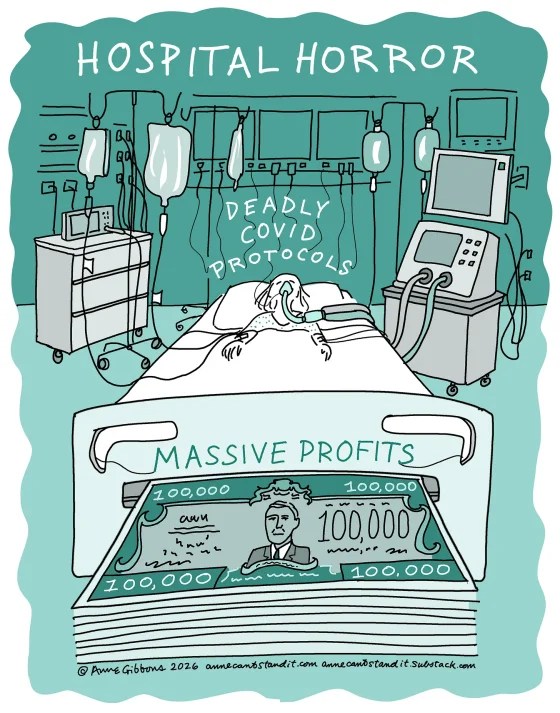
Hospital Horror
Documented in the film,“Bad Medicine”
Blog Roll
 Aletho News
- Israel Revives The ‘Iranian Assassination Threat Against Trump’ Deception In A Desperate Bid To Restart The War
- US rewrites history to dodge blame for illegal war on Iran: Foreign Ministry spokesperson
- TURBO CANCER DATA from Ontario, Canada (OHIP Insurance Billing Data)
- Iran warns France not to fall for Israeli false-flags operations
- Poland and Bulgaria put brakes on Ukraine weapons funding
- Russia Reaffirms Its Support for Sovereignty, Territorial Integrity of Lebanon – Russian MFA
- Araghchi: Failure to punish aggressors against Iran endangers all nations
- Iran tells UN Security Council to stop reversing roles of ‘aggressor and victim’
- Disgraced neocons Feith & Libby: stop whining about ‘endless war’
- CENTCOM rejects Israeli claims of preparations for new Iran attacks
- If Americans Knew
- An error has occurred; the feed is probably down. Try again later.
- No Tricks Zone
- New Study: Barents Sea Temperatures Were Warmer And Sea Ice Less Extensive In The 1700s Than Today
- German Authorities Start Initiative To Evaluate Public Register For Climate “Disinformation” Spreaders!
- Zonal Asymmetry of Temperature Change in the Antarctic Circumpolar Current
- New Study: The Net Fossil Fuel Contribution To Rising Atmospheric CO2 Has Been Zero For 500 Years
- Germany’s Green Energy Transition Becoming Increasingly Expensive…Another 6 Trillion Euros!
- Sudden Stratospheric Warming, Powerful El Niño Combination May Lead To Extreme Europe Cold, Energy Crisis!
- Two New Studies Find Thwaites Glacier Melt Cannot Be Driven By Human Activity Or A Warming Ocean
- E-Cars Reduce CO2 Emissions By Only 41% Compared To Internal Combustion Engine Vehicles
- Predictions Made By Renowned Climate Professor Over Past Decades Have Been Proven To Be Poor
- New Study Suggests Large Regions Of The Pacific Ocean Have Been Cooling For The Last 80 Years

