Iraq’s Sudani walks a tightrope after Syria’s fall
By Khalil Harb | The Cradle | December 27, 2024
In the aftermath of significant strategic setbacks for West Asia’s Axis of Resistance, Iraq has emerged as the focal point of an escalating regional crisis. But for many Iraqis, the scale of the brewing storm has not been immediately apparent.
The trajectory has been unmistakable: from the assassination of Hezbollah secretary-general Hassan Nasrallah on 27 September, to Israel’s ominous “threat message” to Iraq on 18 November, culminating in the fall of the Syrian government and its far-reaching repercussions.
The challenges Iraq faces today extend far beyond its borders. Iraqi Prime Minister Mohammed Shia al-Sudani is proceeding with extreme caution, akin to crossing an active minefield. His administration is weighed down by internal pressures, security threats, and regional dynamics while also contending with foreign demands, including resisting calls from the US and its allies to dismantle the Popular Mobilization Units (PMU) – the Iraqi military backbone in the fight against ISIS.
These forces are seen as a key pillar of Iraq’s security architecture and a counterweight to Iranian influence in the region, despite the support some of the factions within the PMU umbrella receive from Tehran.
Dr Hussein al-Moussawi, a senior media official with the PMU’s Al-Nujaba Movement, tells The Cradle that both the Shia religious authority and Iraqi people “did not and will not accept any compromise on the dissolution of the Popular Mobilization Units,” accusing the US “occupation” of trying to extend its presence in Iraq, which “[they] will not accept.”
Baghdad’s regional role
An Iraqi government source also reveals to The Cradle that Iraq shares its deepening concerns with neighbors such as Saudi Arabia, Jordan, the UAE, and Egypt. Following the upheaval in Gaza, Lebanon, and Syria, many Iraqis fear their country might be next in the chain of regional destabilization.
According to the source, Washington conveyed a message to Tehran through Swiss intermediaries, warning of a major strike – potentially targeting a nuclear facility – in early 2025.
Meanwhile, a UN official based in Paris shared with The Cradle that the Axis of Resistance underestimated the scale of the current offensive against the region, failing to comprehensively initiate the Unity of Fronts strategy.
Initially viewed as a reckless Israeli gambit, the attacks on Gaza and Lebanon have since revealed themselves as being part of a broader, opportunistic, western-backed strategy to reshape the balance of power in West Asia.
In Iraq, the signs of heightened tension are visible everywhere. Along the 600-kilometer border with Syria, the Iraqi army and PMU maintain a vigilant presence, deploying armored brigades, thermal cameras, and watchtowers to prevent a repeat of the 2014 ISIS invasion.
A PMU leader confirms to The Cradle that its leadership decided early on that it would not cross the border to support Syrian forces – first, because the Syrian army itself was not deployed for the fight, and second, because then-president Bashar al-Assad had restricted the activities of allied forces in recent years. Those restrictions increased as the Gaza war escalated and as Assad began to mortgage his country’s fate to both the Russians and his newfound Gulf state relationships.
The vigilant Iraqi presence on the Syrian border is matched with Baghdad’s close monitoring of Turkiye’s force build-up in the Suruj area near Kobani (Ain al-Arab) accompanied by tanks and heavy artillery. They are also watching the incursion of Israeli forces into Syria’s Quneitra governorate, descending from the Golan Heights to reach the Yarmouk Basin in Deraa governorate, along the opposite side of Rashaya, Hasbaya, and the Lebanese western Bekaa, toward the Masnaa Crossing – the only currently operating border crossing between Syria and Lebanon.
Compounding this are revelations that the actual number of US troops in Iraq and Syria is significantly higher than previously disclosed, with thousands stationed in the region to counter Iranian influence and provide logistical support to their Kurdish allies. Worse yet are the unconfirmed leaks that Sudani is not only prepared to accept the extension of US troops’ presence in Iraq beyond the 2026 withdrawal deadline, but may also allow Americans to enhance their Iraq–Syria border monitoring missions.
While the Pentagon officially reported a total of 3,400 US soldiers in the two countries – 900 in Syria and 2,500 in Iraq – it now states the figure is at least 4,500, with 2,000 soldiers in Syria as a rear operations base to support US forces in Iraq.
Sudani’s defensive diplomacy
Sudani’s recent diplomatic maneuvers underline the gravity of the situation. An informed Iraqi source discloses to The Cradle that following the Israeli threat, Sudani convened leaders from Iraq’s Coordination Framework and the State Administration Coalition to discuss potential responses.
The same source adds that US intermediaries later delivered a second Israeli message, listing targets that might be struck if drone attacks launched from Iraq were not halted. Although opinions within Iraq’s political and security circles diverged, the PMU leadership leaned toward de-escalation, prioritizing Iraq’s stability.
Despite this, Iraqi resistance factions have carried out several operations, often aligning with attacks by Yemen’s Ansarallah-aligned armed forces. These acts of defiance, however, have not deterred Baghdad from seeking a delicate balance.
For instance, the Iraqi government has resisted Iranian requests to transit forces through Iraq to Syria, citing the risks of further destabilization. According to sources close to the PMU, this approach reflects a calculated effort to shield Iraq from the spiraling Syrian crisis and preserve its fragile sovereignty.
As one Iraqi politician close to the resistance factions explains to The Cradle:
“Sudani’s performance is good, and the Iraqi opinion is present in the decision, and we are trying to spare Iraq the repercussions of what is happening in Syria. We certainly do not want the same fate, and Iraq is strong. We are with the government in all its decisions because they are in the interest of Iraq, and we have authorized it to take what steps are necessary. We are following Sudani’s movements, and we see that Iraq has begun to regain its regional health, and has become present in the region, and we support him in this.”
On 11 December, Sudani landed in Amman to meet with Jordan’s King Abdullah II, one of the most apprehensive Arab leaders regarding the situation in Syria. Shortly after, he traveled to the Al-Mualla resort to meet Saudi Crown Prince Mohammed bin Salman.
By 13 December, US Secretary of State Antony Blinken made an unannounced visit to Iraq, emphasizing US priorities in controlling Iraq’s borders with Syria and preventing the continued flow of Iranian arms to Lebanon. This flurry of diplomacy illustrates Iraq’s central role in regional and foreign security calculations.
PMU as a ‘wall of defense’
Sudani’s diplomatic outreach extended beyond these high-profile meetings. According to an Iraqi source, before the opposition’s attack on Syria escalated, the Iraqi prime minister dispatched PMU head Faleh al-Fayyadh to Ankara and Damascus to mediate between the two sides. However, this effort failed, leaving Sudani with no leverage to pacify armed factions or mitigate potential Iranian pressure.
An Iraqi government source denies any formal assurances or threats from the US regarding Syria but confirms to The Cradle that prior warnings had been issued to resistance leaders. For example, Qais Khazali, the Secretary-General of Asa’ib Ahl al-Haq, has reportedly relocated to Iran as a precaution.
But other sources say that Sudani’s government did receive US warnings for Iraqi forces to stay out of the Syrian battle in support of the former Assad government, a position that was ultimately supported by Iraq’s main political forces and blocs, including maverick Sadrist Movement leader Muqtada al-Sadr.
However, this support will have its limits and red lines; one of these is the PMU, and the other is the US occupation. Al-Nujaba’s Moussawi emphasizes that the PMU, alongside other Iraqi forces, remains an essential bulwark against both internal and external threats and rejects any compromise on the PMU’s existence, describing it as a “wall of defense” for Iraq amid escalating regional tensions.
Moussawi also reiterates Iraq’s continued support for the Palestinian cause and accuses the US of prolonging its occupation under dubious pretexts. He warns that Iraqis, particularly the resistance factions, are fully aware of these tactics and remain resolute in opposing any foreign military presence:
“The resistance remains stronger than ever and will adapt to the evolving challenges to defend Iraq’s sovereignty and interests.”
The stakes for Iraq could not be higher. For Sudani, the mission is not just to shield Iraq from the chaos engulfing its neighbors but also to establish it as a stabilizing force in an increasingly turbulent region. Achieving this will demand diplomacy and resilient leadership, as well as an unyielding defense of Iraq’s sovereignty against relentless geopolitical pressures and the unquenchable ambitions of the expansionist, US-backed Israelis – a task in which the continued existence of the PMU remains non-negotiable.
In America It’s Another Week to be Proud of!
By Philip Giraldi • Unz Review • December 26, 2024
Something good happened in Washington last week, suggesting that the year might actually end on a high note without Joe Biden starting World War 3 and opening up all the country’s prisons for the on-the-street rehabilitation of the inmates where they will undoubtedly learn new skills. The good thing was the signing by Biden of a bill, perhaps with a little bit of help from his friends to make sure he spelled his name correctly, to make the Bald Eagle the official bird of the United States of America. The Eagle has been around the American Republic virtually since its foundation, appearing on the Great Seal and on various documents and even on currency, but it has never been officially dubbed the national bird.
All honor of place is due to the great bald eagle, but one might recall that Benjamin Franklin once suggested that the best choice for the national bird would be the wild turkey. And Biden still has time for mischief, including possibly ennobling turkeys or even the issuance of a pardon to himself for ignoring the United States Constitution for four years. And Joe might well choose to go preemptive by pardoning Hillary Clinton for all those classified emails and other documents that somehow disappeared from her home and office ten years ago. But apart from that, it is somehow reassuring to be able to keep repeating “only three more weeks of Biden and Harris” even though the potential for more damage to the Bill of Rights remains enormous.
Joe is well remembered for his open borders invitation which has produced huge crowds of happy American voters who were clearly not delighted to share the burden of millions of uneducated and unskilled foreigners who have demonstrated their ability to burn to death women sleeping on subway trains in New York City just to see what a flaming human body looks like. Oh, and the new Americans have to be housed and fed by the existing population as the process grinds on, but that is what the Democrats running nearly all the major US cities have come to expect from a cowed population that now understands that opposing government policies puts one on the FBI enemies list.
Joe and his stalwart band of liars have also connived in pulling together two wars in which the United States had no actual interest, arming and funding both Ukraine and Israel. Israel has said thank you by adroitly engaging in genocide against the Palestinian people while Kiev is somewhat clumsily occupied in trying to draw the US and NATO into open warfare against Russia, which would become a nuclear World War 3, so there is still time Joe! And then there is the new war going on in Syria where the US armed and trained militias are fighting similarly armed and trained militias controlled by the Turks, who are poised to divide what once was a place called Syria with the Israelis. The Zionists have for many years been planning to exterminate Lebanese and Syrians as well as Palestinians to create a Greater Israel.
But Joe and his buddies apparently are not satisfied with having started two wars when there are so many other places that need a stern dose of the old “rules based international order” to get their houses in order. China is number one on the list as it is outperforming the United States and the Europeans economically. And one can always use the excuse that it is threatening good old Taiwan to crank up a shooting war. And then there is Iran, everyone’s favorite when it comes to “who is next on the list?” Israel has eliminated Hezbollah and Syria, with US connivance and approval, to open the door to destroying the Iranian non-existent nuclear weapons program. Both Biden and Israeli Prime Minister Benjamin Netanyahu have been openly discussing that option as it would mean bombing Iran’s military bases as well as its technical research facilities. Donald Trump has been involved in similar discussions with Netanyahu.
How the attacks on Iran might play out is interesting to contemplate and might follow something like the model of what happed to Syria. Recent reports indicate that something unexpected took place during an Israeli bombing attack directed against a Syrian strategic military site located near the city of Tartus. Israel has been bombing Syria constantly since the government of Bashar al-Assad fell and it has particularly targeted any sites or weapons warehouses that the new government can use to defend itself or establish its territorial integrity. The bombing in question used what many suspect to be a tactical nuclear weapon in an effort to completely obliviate the Syrian military installation that houses scud surface-to-surface missiles among other high-level ordnance. A huge explosion was noted on seismographs located five hundred miles away, as far as Iznik in Turkey. The blast might have been caused by the detonation of the many weapons stored in the facility, but the suspicion grows that Israel, protected as always by Washington even when it commits mass murder or defies international conventions on banned weapons, continues to believe that it can do and get away with anything.
Even if Biden does not open any new doors to further deploy the US military, there is considerable danger that he will succeed in locking new President Donald Trump in the conflicts currently going on. Trump is not averse to using force when it is what he considers the best option. He has lately said some ridiculous things, arguing that the United States considers the “ownership and control of Greenland” to be an “absolute necessity” for maintaining American “national security” and “freedom throughout the world.” This has naturally riled the people who actually live in Greenland who now are wondering how they are blocking freedom globally.
The statement on Greenland came after Trump in a conversation at Mar-a-Lago demoted Prime Minister Trudeau of Canada by giving him the title of “Governor”, calling Canada the 51st State of the United States “union,” which would “save on taxes and military protection.” Trump also has threatened to take over the Panama Canal and tweeted “we’ll see about that!” in response to the President of Panama’s declaration that every inch of the Panama Canal belongs to Panama. Trump then posted up a graphic on his website featuring “Welcome to the United States Canal!” above a picture of the American flag flying over a lock in the Panama Canal. Trump has also allegedly privately considered invading Mexico in order to combat the drug cartels on the US border and using American soldiers to block illegal immigrants seeking to cross.
Trump’s ignorance over who is doing what in the Middle East is astonishing but largely derives from his own personal and family attachment to Zionism and more particularly to his reliance on billionaire Jewish donors. The serial appointments of pro-Israel nominees to the key cabinet posts where decisions impacting Israel will be made for the next four years both will shape policy and guarantee that Trump stays on track with Israel, just as Joe Biden did when surrounded by his own Jewish neocons. Trump has already vowed that there will be “hell to pay” in the Middle East if the remaining Israeli hostages held in the Gaza Strip are not released by his January 20th inauguration.
Likewise, Israeli government officials, including Netanyahu, cannot wait for current Secretary of State Antony Blinken to be replaced by Florida congressman Marco Rubio. Blinken has been a complete tool of Israel but he projects a certain timidity. Rubio shows no such restraint and is very clear on what he believes to be true. He recently called Hamas “animals” and made clear that they are “100% to blame” for everyone killed in Israel and in Gaza during the current war. The moment he assumes control, there will be the “maximum pressure” that Trump often cites on Hamas to surrender or face the consequences. The Trump administration will supply Israel with bunker-busting bombs and whatever else is needed to kill anyone perceived to be an enemy of the Jewish state. Trump’s nominee for defense secretary, Pete Hegseth, has said, “If you love America, you should love Israel.” He will back that up by delivering on Israel’s military needs as defined by Netanyahu.
So there you go! The old year is ending on both a bang and a whimper. Joe Biden still has plenty of opportunity to raise hell and tie Trump to certain policies, particularly when it comes to continuing “useless” wars. Trump for his part will enter office owned by Israel and led by the nose by his belligerent cabinet. The actual needs and interests of the American people will be, as usual, invisible to the politicians and lost in the shuffle.
Philip M. Giraldi, Ph.D., is Executive Director of the Council for the National Interest, a 501(c)3 tax deductible educational foundation (Federal ID Number #52-1739023) that seeks a more interests-based U.S. foreign policy in the Middle East. Website is councilforthenationalinterest.org, address is P.O. Box 2157, Purcellville VA 20134 and its email is inform@cnionline.org.
Massive Israeli attacks pummel Yemen’s main airport, Sanaa pledges ‘response in kind’

Al Mayadeen | December 26, 2024
The Israeli occupation launched a large-scale attack on Yemen while the leader of the Ansar Allah movement, Sayyed Abdul Malik al-Houthi, was delivering his speech.
A source told Al Mayadeen on Thursday that the Israeli aggression on Sanaa and Hodeidah targeted civilian facilities and was carried out with the US and UK’s coordination and support.
The source also said that targeting civilian facilities is evidence of the occupation’s failure to have a clear target list within the country, stressing that this “will not change the course of the war and will be met with a similar response.”
Al Mayadeen’s correspondent, in turn, also confirmed that the Israeli occupation’s aggression targeted a gathering of travelers, including patients, at the Sanaa International Airport terminal, and also targeted airport control towers.
Significantly, sources told Al Mayadeen, that the Israeli aggression on Sanaa International Airport took place during the presence of two UN personnel in the airport: the WHO’s Director and the UN’s resident coordinator.
Moreover, the sources reported that the UN airplane’s co-captain had been injured and was transported to a hospital after the Israeli aggression on the airport, adding that two other airport employees were also killed as a result of the attack.
The source emphasized that the Israeli entity should “not lie in wait for a response from Sanaa because its military operations will continue.”
Al Mayadeen’s correspondent then added that the Israeli airstrikes hit Sanaa International Airport in the northern part of the capital, as well as two airstrikes on the Hiziz Central Power Plant south of Sanaa.
The correspondent further noted power outages in parts of Hodeidah Province due to the Israeli attack on the Ras Kathib Central Power Plant in the northern part of the coastal city on the Red Sea in western Yemen.
Additionally, our correspondent underscored that the Israeli occupation’s aggression on Hodeidah was executed with the US Navy’s participation through their warships.
Yemen likely to intensify operations against ‘Israel’: Israeli media
Meanwhile, Israeli media outlets reported that officials in “Israel” expect an increase in attacks from Yemen, especially after this assault.
Channel 14 confirmed that the attack targeted three central sites: Sanaa Airport, a power plant in Sana’a, and the Hodeidah port, noting that “this is not an ordinary attack, but the opening of a battle that could be prolonged.”
Israeli Channel 14’s correspondent also mentioned that Israeli aircraft disabled Sanaa International Airport by destroying the control towers and also disrupted the Hodeidah seaport.
According to Israeli Channel Kan, this was “Israel’s” fourth attack on targets in Yemen, adding that the United States had been informed of the operation.
In response, Ansar Allah’s spokesperson, Mohammed Abdulsalam, condemned the targeting of Sanaa International Airport and other civilian infrastructure, describing it as a Zionist crime against the entire Yemeni people.
He pointed out that if the Zionist enemy thinks its crimes will stop Yemen from supporting Gaza, it is mistaken, affirming that Yemen will not abandon its religious and humanitarian principles.
Manufacturing rebels: How the UK and US empowered HTS
By Kit Klarenberg | The Cradle | December 26, 2024
On 18 December, The Telegraph published an extraordinary investigation into how the UK and US trained and “prepared” fighters in the Revolutionary Commando Army (RCA), a “rebel” force that collaborated with Hayat Tahrir al-Sham (HTS) in the mass offensive toppling of Syrian president Bashar al-Assad weeks earlier.
In an unprecedented disclosure, the outlet revealed that Washington not only “knew about the offensive” well in advance, but also had “precise intelligence about its scale.” Washington’s now-confirmed “effective alliance” with HTS was described as “one of many ironies” emerging from the decade-and-a-half-long proxy war.
The Telegraph suggested this collaboration was inadvertent – simply a symptom of how Syria’s grinding, protracted civil war gave birth to “a bewildering array of militias and alliances, most of them backed by foreign powers.”
US support of HTS: A ‘necessary’ alliance
Alliances were fluid, with groups often splintering, merging, and shifting allegiances. Fighters frequently found themselves switching sides, blurring lines between factions. Yet, ample evidence indicates the UK and the US maintained deliberate, long-standing ties with the dominant rebels of HTS.
For instance, in March 2021, President-elect Donald Trump’s former lead Syria envoy, James Jeffrey, gave a revealing interview to PBS, during which he disclosed that Washington secured a specific “waiver” from then-secretary of state Mike Pompeo to assist HTS.
While this did not permit direct funding or arming of the UN/US-designated terrorist organization, the waiver ensured that if US-supplied resources “somehow” ended up with HTS, western actors “[could not] be blamed.”
The fungibility of weapons on the Syrian battlefield was something Washington counted on heavily. In a 2015 interview, CENTCOM spokesman Lieutenant Commander Kyle Raines was quizzed about why Pentagon-vetted fighters’ weapons were showing up in the hands of the Nusra Front (precursor to HTS). Raines responded: “We don’t ‘command and control’ these forces – we only ‘train and enable’ them. Who they say they’re allying with, that’s their business.”
This legal loophole enabled Washington to “indirectly” support HTS, ensuring the group did not collapse while maintaining its designation as a terrorist organization – a status complete with a now-rescinded $10 million bounty on leader Abu Mohammad al-Julani, who now goes by his real name Ahmad al-Sharaa.
Jeffrey rationalized this strategy, calling HTS “the least bad option” for preserving “a US-managed security system in the region,” and thus worth “[leaving] alone.” HTS’s dominance, in turn, gave Turkiye a platform to operate in Idlib. Meanwhile, HTS sent unmistakable messages to their US patrons, pleading:
“We want to be your friend. We’re not terrorists. We’re just fighting Assad.”
‘Safe haven’
Since Assad’s fall, officials in London have markedly taken the lead in legitimizing the HTS-led interim administration as Syria’s new government. The group was added to the UK’s list of proscribed terrorist organizations in 2017, its entry stating HTS should be considered among “alternative names” for the long-banned Al-Qaeda.
While UK Prime Minister Keir Starmer declared it “too early” to rescind the group’s designation, British officials met HTS representatives on 16 December – despite the illegality of such meetings.
This likely signals an impending, highly politicized western rehabilitation of HTS. Throughout Syria’s dirty war, UK intelligence waged extensive psychological operations to promote “moderate rebels,” crafting atrocity propaganda and human-interest stories.
These efforts were ostensibly aimed at undermining groups like HTS, ISIS, and Al-Qaeda. Yet leaked documents from UK intelligence reveal how HTS remained intertwined with Al-Qaeda post-2016, directly contradicting media narratives.
In other words, throughout the decade-and-a-half-long crisis, HTS was officially considered on par with the most fundamentalist, genocidal elements in the country.
British documents also make a total mockery of the common refrain that HTS severed all ties with Al-Qaeda in 2016. A 2020 file described how Al-Qaeda “co-exists” with HTS in occupied Syrian territory, using it as a launchpad for transnational attacks.
The document warned that HTS’s domination created a “safe haven” for Al-Qaeda to train and expand, fueled by instability. British psyops against HTS spanned years but ultimately failed. Instead, leaked files lament HTS’s growing influence, territorial gains, and rebranding as an alternative government.
“[Al-Qaeda] remains an explicitly Salafi-Jihadist transnational group with objectives and targets which extend outside Syria’s borders. [Al-Qaeda’s] priority is to maintain an instability fuelled safe haven in Syria, from which they are able to train and prepare for future expansion. HTS domination of north west Syria provides space for [Al-Qaeda] aligned groups and individuals to exist.”
British-backed propaganda benefiting HTS
British intelligence psyops attempting to hinder HTS were in operation from the group’s founding until recently. Yet, they appear to have achieved nothing. Numerous leaked files reviewed by The Cradle bemoan how HTS’s “influence and territorial control” had “dramatically grown” over the years.
Its successes allowed the extremist group “to consolidate its position, neutralize opponents, and position itself as a key actor in northern Syria.” But HTS’s “domination” was secured in part by the group rebranding itself as an alternative government.
HTS-occupied territory was home to a variety of parallel service providers and institutions, including hospitals, law enforcement, schools, and courts. The group’s domestic and international propaganda specifically promoted these resources as a demonstration of an “alternative” Syria awaiting rollout across the entire country.
Ironically, many of these structures and organizations – such as the infamous White Helmets, who also operated in ISIS-run territories – were direct products of British intelligence, created for regime change propaganda purposes. Moreover, they were aggressively promoted by London at enormous expense.
Repeated references are made in leaked UK intelligence documents to the importance of “[raising] awareness of moderate opposition service provision,” and providing domestic and international audiences with “compelling narratives and demonstrations of a credible alternative to the [Assad] regime.” There is no consideration evident in the files that these efforts might be assisting HTS greatly in its own efforts to present itself as a “credible alternative” to Assad.
Nonetheless, it is acknowledged that Syrians in occupied territory would accommodate HTS “particularly if [they are] receiving services from it.” Even more eerily, the documents note, “HTS and other extremist armed groups are significantly less likely to attack opposition entities that are receiving support” from the UK government’s Conflict, Stability, and Security Fund (CSSF).
This was the mechanism through which Britain’s Syrian propaganda war and organizations like the White Helmets and extremist-linked Free Syrian Police were financed.
These UK-run governance structures and opposition elements, which were allegedly intended to “undermine” HTS, operated in areas controlled by the group safe from violent reprisals for their foreign-funded work, as they “demonstrably provide key services” to residents of occupied territory.
There is also the darker prospect that HTS was well aware these “opposition entities” were bankrolled by British intelligence, and they were unmolested on that very basis.
Coordinated offensive
As The Telegraph‘s report explains, “the first indication that Washington had prior knowledge” of HTS’s offensive was when its RCA proxies were given a rousing pep talk by their US handlers three weeks prior.
At a secret meeting at the US-controlled Al-Tanf air base close to the borders of Jordan and Iraq, the militants were told to scale up their forces and “be ready” for an attack that “could lead to the end” of Assad. A quoted RCA captain told the outlet:
“They did not tell us how it would happen. We were just told: ‘Everything is about to change. This is your moment. Either Assad will fall, or you will fall.’ But they did not say when or where, they just told us to be ready.”
This followed US officers at the base, swelling the RCA’s ranks by unifying the group with other UK/US-trained, funded, and directed Sunni desert units and rebel units operating out of Al-Tanf under joint command.
According to The Telegraph, “RCA and the fighters of HTS … were cooperating, and communication between the two forces was being coordinated by the Americans.” This collaboration proved to be of devastating effect in the “lightning offensive,” with RCA rapidly seizing key territory across the country upon explicit US orders.
RCA even joined forces with another rebel faction in the southern city of Deraa, which reached Damascus before HTS. RCA now occupies roughly one-fifth of the country, pockets of territory in Damascus, and the ancient city of Palmyra.
Hitherto “heavily defended” by Russia and Hezbollah, Moscow’s local base has now been taken over by RCA. “All members of the force continued to be armed by the US,” receiving salaries of $400 monthly, nearly 12 times what Syrian Arab Army (SAA) soldiers were paid.
It is uncertain whether this direct financing of the RCA and other extremist militias that toppled the Assad government continues today. What is clear, though, is that the UK and US supported HTS from the group’s inception, even if “indirectly.” In turn, this covert backing played a pivotal role in positioning HTS financially, geopolitically, materially, and militarily for its “lightning” swoop on Damascus and assumption of government today.
Reinforcing the interpretation that this was the objective of London and Washington all along, following Assad’s ouster, Starmer promptly declared that the UK would “play a more present and consistent role” in West Asia as a result.
While western and certain regional capitals may celebrate the apparent success of their lavishly funded, blood-soaked campaign to dismantle decades of Baathism, British intelligence had long cautioned that the outcome would grant Al-Qaeda an even larger “instability-fueled safe haven” for “future expansion.”
‘Israel’ Struggles to Deter Threat by Yemen’s Ansarullah
Al-Manar | December 24, 2024
Facing the escalating challenges from Yemen’s Ansarullah revolutionary group, the Zionist entity weighs its options, with no clear resolution yet to the significant threat posed by the intensified actions in support of Gaza over the past year.
Zionist officials and experts are deliberating strategies to counter these threats, with recent military responses proving ineffective at best, Al-Akhbar Lebanese newspaper reported on Monday.
Ansaruallah, having pledged its support to the Palestinian resistance, has disrupted maritime activity by targeting commercial ships heading to Israeli ports through the Bab al-Mandab Strait, the Gulf of Aden, and the Arabian Sea. This strategy aims to pressure Israel to stop its genocidal war on Gaza.
Israel initially relied on US intervention, citing limited resources due to the Israeli Occupation Forces (IOF) spreading themselves thin across the northern and southern fronts.
However, US responses have remained tactical, with strikes limited to retaliation for disruptions to trade and supplies, their insufficiency as deterrence is highlighted by a recent friendly fire incident that destroyed one of their own jets.
Remarking on the US aggression, Yemen’s Defense Minister Mohammed Nasser Al-Atifi warned Washington that the country was capable of sinking the US’s naval fleets, and was in possession of weapons yet to be revealed.
Despite Israeli airstrikes on Yemen, analysts agree these efforts have failed to deter Ansarullah, Al-Akhbar’s Yahya Dbouk wrote. The group has intensified its operations, reiterating its support for Gaza and vowing further action unless ‘Israel’ halts its genocide against Palestinians.
Israeli experts suggest alternative strategies, including targeting Yemeni leadership in Sanaa, weapon production facilities, and economic hubs such as ports and energy sites, as well as bombing Saada for its symbolism in the Yemeni public’s consciousness according to Dbouk, who added that proposals to strike Sanaa and Saada aim to weaken Ansarullah’s influence and mobilize opposition forces within Yemen.
As he considered that these measures are seen as unlikely to achieve decisive results, the Lebanese writer noted that Tel Aviv has also considered reviving the Saudi-Emirati led war against Yemen with Zionist support.
However, doubts remain about its feasibility, given the previous failures of the coalition to secure a military victory during the war waged by the Saudi-led coalition on the Arab impoverished country since March 2015, according to the author.
Another debated approach involves targeting Iran, viewed as Ansarullah’s so-called “primary supporter”, Dbouk reported, noting that this strategy, however, raises questions about the Zionist entity’s capacity to address broader regional threats in wartime.
On the other hand, a ceasefire in Gaza has been proposed as a potential solution to ease Yemeni attacks. Ansarullah themselves have said on multiple occasions that as long as the war on Gaza continues, so will the attacks from Yemen and the maritime trade disruptions.
Such option “seems likely to break quickly, due to a possible failure in the second phase of a potential swap deal between Gaza and ‘Israel’, which is widely believed in Tel Aviv will never see the light,” Dbouk wrote.
The Zionist entity continues to weigh its options, with no clear resolution yet to the significant threat posed by Ansarullah and its broader implications for regional security.
Frustrated by Incessant Missile Attacks, Israel Threatens to Start Assassinating Houthi Leaders
By Ilya Tsukanov – Sputnik – 24.12.2024
Israeli terror bombing attacks targeting Yemen’s port and energy infrastructure and a year-long US-led naval deployment in the Red Sea at Tel Aviv’s urging have failed to deter Ansar Allah (better known as the Houthis) from launching increasingly impactful drone and missile attacks.
Israeli Defense Minister Israel Katz has threatened to start targeting the Houthis’ leaders.
“We will inflict a devastating blow to the Houthi terrorist organization in Yemen,” Katz said.
“Just as we took care of Sinwar in Gaza, Haniyeh in Tehran and Nasrallah in Beirut, we will deal with the heads of the Houthis in Sanaa or anywhere in Yemen,” Katz warned, referring to the leaders of Hamas and Hezbollah assassinated by Israel this year. “We will act both against their infrastructure and against them to remove the threat.”
Katz also took a pot shot at Iran, whom the US and Israel have regularly accused of backing the Yemeni militia, warning that “whoever sponsors the Houthi terror in Hodeidah or Sanaa will pay the full price.”
Iran, which has long denied providing direct military support for the Houthis, said Tuesday that the militia’s operations have forced Israel and the US to alter their calculations.
“Even under the heaviest bombardments from the American-Israeli coalition, they target the heart of the occupied territories with their homemade missiles,” Foreign Minister Abbas Araghchi said at a press conference in Tehran. “The Yemenis have proven they need no external assistance. Despite dire economic and military conditions, they have stood firm and resisted,” he added.
The Israel Defense Forces reported early Tuesday morning that they had intercepted a Houthi missile outside Israel’s airspace. Sirens wailed across central Israel amid fears of the missile reaching its target, with over two dozen people injured (one seriously) while running for cover in the panic.
Houthi official Hezam al-Asad vowed the group would continue its attacks “until the aggression against our people in Gaza stops.”
On the diplomatic front, Israeli Foreign Minister Gideon Sa’ar on Monday instructed Israel’s diplomats in the EU and the UK to label the Houthis as a terrorist organization (currently, only Israel, the US, several Gulf states, Australia, Canada, New Zealand and Malaysia do so).
“The direct threat to freedom of navigation in one of the world’s busiest shipping lanes is a challenge to the international community and the world order. The first and most basic thing is to define them as a terrorist organization,” Sa’ar said in the directive.
On Tuesday, Sa’ar sent a letter to US UN Ambassador Linda Thomas-Greenfield asking her to convene an emergency session of the Security Council to condemn the Houthis for their “flagrant violation of international law.”
In addition to their drone and missile campaign, the Houthis have done major damage to Israel’s merchant shipping fleet by imposing a partial blockade of the Red and Arabian Seas targeting Israeli-linked and Israel-allied shipping.
A Houthi missile penetrated Israel’s much-touted missile defenses Saturday, injuring 16 people in Jaffa, just south of Tel Aviv. The IDF probe into the incident found that the warning system “was activated late for reasons that cannot be detailed.”
Another Houthi missile landed a direct hit in Tel Aviv last week, again overwhelming air defenses, with the militia characterizing the attack as their “natural and legitimate” right to respond to Israeli aggression.
The militia also scored a major PR victory against Israel’s US allies last week, reporting the shootdown of an F/A-18 jet during an attack on the USS Harry Truman supercarrier. The Pentagon said the jet was downed in a friendly fire incident. Whatever the case, the Houthis have confirmed kills of nearly a dozen US Reaper drones, and are known to have downed a number of US and NATO-made helicopters and fighter jets from the mid-2010s onward in their war against a US-backed Gulf State coalition.
Sednaya: Investigating Syria’s most notorious prison
The Cradle | December 24, 2024
When militants from Hayat Tahrir al-Sham (HTS), led by former Al-Qaeda leader Abu Mohammad al-Julani – who now goes by his real name Ahmad al-Sharaa – finally toppled Bashar al-Assad’s government on 8 December 2024, they quickly released the prisoners in Sednaya.
A flood of new media reports about the horrors of the prison quickly emerged.
But which reports about the crimes of Assad’s government are true, and which are fabricated as part of a new propaganda campaign to legitimize Julani’s rule and whitewash the opposition’s similar past atrocities?
Vast underground prison complex?
On 9 December, one day after Assad’s fall, The Guardian journalist William Christou was among the first journalists to reach Sednaya.
Christou claimed that a day after Julani’s forces had taken control of the prison, a door had been found leading to a “vast underground complex, five stories deep, containing the last prisoners of the Assad regime, who were gasping for air.”
He reported rumors that there “were 1,500 prisoners trapped underground that needed rescuing; perhaps your loved ones are among them.”
As a result, hundreds of panicked Syrians rushed to the prison, located 30 kilometers outside Damascus, to search for loved ones missing from the war. Due to the crowds, “Cars were ditched by the roadside and people began to walk,” Christou wrote.
In subsequent days, numerous fake videos professing to show prisoners in the underground complex went viral, while CNN journalist Clarissa Ward faked the discovery of a prisoner in a detention facility in Damascus.
“We came to see the prisons under the ground,” one woman wandering the halls of Sednaya told The Cradle during its visit to the prison.
She said her brother had been missing since 2018. She first went to the Mezzeh military prison in Damascus, and now she was looking for any sign of him at Sednaya.
However, despite efforts by the White Helmets and Turkish rescue organizations, no secret underground complex holding thousands of prisoners has been found.
During its visit to Sednaya, The Cradle was able to walk freely through the facility and verified that there is just one underground basement level containing small individual isolation cells and an adjoining toilet.
Human slaughterhouse?
In the days after Assad’s fall, more and more western journalists visited Sednaya and filed reports. Virtually all begin by citing a 2017 investigation by Amnesty International, which called the prison a “human slaughterhouse.” The investigation claimed up to 13,000 civilians were executed in mass hangings over a four-year period.
The US State Department tried to reinforce the findings of the Amnesty report by claiming the bodies of the executed were burned in a “crematorium” located in a building adjacent to the main prison.
However, the State Department gave zero proof of the crematorium, and no one has claimed to find it since the prison was opened.
Further, Amnesty’s report acknowledges the number killed was just an “estimate” (between 5,000 and 13,000) based on testimony from alleged former guards and prisoners taken by the rights group in Turkiye. The report said the mass execution process was “secret” but then somehow claimed to reveal its intimate details.
The report also ignores that the Syrian government was detaining people during this period in the context of facing an Al-Qaeda-led insurgency, including from the Nusra Front and ISIS.
When The Cradle asked a Syrian who is supportive of the opposition about his view of the Sednaya issue, he noted that the prison is Syria’s “Guantanamo.” In other words, the prison is reserved for high-security prisoners from Islamist armed groups detained on terrorism charges.
This is evident by the famous Sednaya prison uprising in 2008, in which primarily Islamist prisoners revolted against their guards.
But Amnesty claims that the prisoners were held in Sednaya and mass executed “as part of an attack against the civilian population.”
Iraqi and US forces have also long held large numbers of Al-Qaeda militants in prisons in Iraq, such as at Abu Ghraib. However, the fact that the Syrian government was holding Al-Qaeda militants in its prisons is somehow ignored by Amnesty and others.
Psychological operations
Another question is whether the testimony of the former alleged prisoners and guards given to Amnesty in 2017 and to western media outlets after the prison was opened in 2024 is reliable.
A Spanish journalist who visited Sednaya in the days after Assad’s fall told The Cradle that he was suspicious of the testimony given to him by alleged former prisoners. Fixers associated with Julani’s new government had arranged the interviews, he said, and some of the details of their testimony seemed too fantastic to be true. “But there was no way to verify if they were true or not,” the journalist said.
As a case in point, recent western media reports almost all include interviews with Omar al-Shogre, an alleged former Sednaya prisoner who was the star witness of the 2017 Amnesty report.
However, a close review of Shogre’s testimony shows it was clearly fabricated.
For example, he told Amnesty the guards would regularly force the prisoners to rape each other while being escorted from their cells to the bathroom.
“As we walked to the bathroom, [the guards] would select one of the boys, someone petite or young or fair. … They would then ask a bigger prisoner to rape him … No one will admit this happened to them, but it happened so often,” Shogre claimed.
However, during its visit to Sednaya, The Cradle observed that each cell has its own toilet and sink. In one cell, The Cradle observed items of clothing hanging on lines above the sink to dry after washing. There was no possibility that the guards were escorting prisoners out of their cells to go to the bathroom, as Shogre’s scenario claims.
Over the years, Shogre has made many wild and completely implausible claims, which further undermine his credibility.
The Nation wrote that according to Shogre, “Guards would deliberately execute a prisoner right before serving inmates their only meal of the day, often placing the corpse’s head over the platter of food, so that it would bleed into the daily mound of bread and potatoes.”
The former prisoner’s fabrications have long been part of a broader propaganda campaign to impose crushing sanctions on Syria.
Shogre works for the Syrian Emergency Task Force (SETF), a group established and funded by the US government to facilitate the overthrow of the Syrian government. SETF provided alleged non-lethal aid to US-backed Free Syrian Army (FSA) groups that fought the Syrian army starting in 2011.
While working for the SETF, Shogre advocated for the US Congress to impose the Caesar sanctions on Syria, which helped strangle his home nation’s economy and resembled the US sanctions on Iraq, which led to the deaths of hundreds of thousands of children in the 1990s.
The Caesar sanctions were themselves named after a psychological operation claiming that a Syrian military photographer had smuggled 55,000 photographs out of the country, documenting the torture and killing of some 11,000 detainees by the Syrian government.
But as journalist Rick Sterling observed, Human Rights Watch (HRW) acknowledged that almost half of the photos do not show people tortured to death by the Syrian government. Instead, they show dead Syrian soldiers and victims of car bombs and other violence from the opposition groups. Such deaths are normal for any government to document in a time of war.
Syria’s missing
Despite the propaganda surrounding Sednaya, there are many indications that the Syrian government detained large numbers of Syrians during the war who were either tortured to death or shot and killed.
While in a restaurant in Damascus shortly after Assad’s fall, The Cradle witnessed two employees, a father and his son, emerge from the back room in tears. They told the owner and fellow staff that they had just received word that the names of their three uncles, taken by the government and missing since 2014, had been found in the records at Tishreen military hospital, confirming their deaths.
One reason that many Syrians may have been detained and disappeared is because Syrian intelligence operated in many ways like a mafia. The feared ‘mukhabarat’ often abused their power to extract bribes from Syrians in many aspects of everyday life.
One Syrian from Damascus told The Cradle that there was little rule of law in Syria. Instead, Syrians lived by the “rule of the phone numbers.” Your privileges and ability to protect yourself depended on whether you had the phone number of someone powerful to call if the local security agents tried to extort you, or worse.
Those with money or political connections were often released, including those detained on terrorism charges, while others continued to rot in prison. As a result, many were tortured and killed.
Writing for Al-Akhbar in 2013, journalist Qassem Qassem stated it is an “undeniable fact” that the Palestinian filmmaker from the Yarmouk Palestinian camp in Damascus, Hassan Hassan, was “killed in the regime prisons.” He said that Hassan was not a terrorist or “takfiri,” and “never carried a gun nor blew himself up with an explosive vest,” but was killed anyway.
The “Repentance” prison
But in addition to those who disappeared or were tortured by the government, the armed opposition groups also tortured and disappeared huge numbers of people.
When asked about the issue of those gone missing in Assad’s prison, one Syrian from Aleppo told The Cradle that the militant groups fighting the former president ran mafia-style kidnapping rings of their own.
“The opposition, since the start of the war, has killed tens of thousands of Syrians, and the ones they didn’t bury in mass graves, they sent, in parts, to several families when the ransoms weren’t paid. Try also asking them where the missing are.”
While walking through Sednaya prison, The Cradle spoke with a man who was looking for his missing son – a commander in a militant opposition group called Burkan al-Sham in the eastern Ghouta area of Damascus.
The man said he and his son were accused of being Syrian government agents by another armed opposition group, the Saudi-backed Jaish al-Islam.
Led by Zahran Alloush, the son of a prominent Salafist preacher in Ghouta, the group was described by the UK foreign office as part of the “moderate armed opposition.”
The man told The Cradle that he and his son were both held at Jaish al-Islam’s “Tawba,” or “repentance,” prison in the town of Duma, in the Ghouta region. He said they were tortured in ways “worse than in Sednaya.”
The father said he was later released, but his son remains missing. He later heard rumors his son had ended up in a government prison in Mezzeh. After looking there and finding nothing, he came to Sednaya to search.
Pro-opposition Enab Baladi reported in 2017 that while there is a large network of activists in Duma, there are no accurate statistics on the number of detainees in Tawba.
Abu Khaled, a 31-year-old media activist from Duma, told the outlet he was surprised by the absence of such reports.
“Random arrests take place all around Eastern Ghouta,” he stated. These prisons, especially Tawba, “are as bad as those of the Syrian regime, and, according to former prisoners, many detainees stay in prisons for months without trial.”
“A man’s body was recently returned to his family three days after his arrest,” pro-opposition Syria Direct reported in 2017. “Jaish al-Islam directly threatened them, telling them that if they spoke to the media or published pictures of the body, they would all be killed.”
Julani’s prisons
Abu Mohammad al-Julani’s Nusra Front also imprisoned and tortured many Syrians. We know this from the testimony of Theo Padnos. A freelance journalist from the US, Padnos was kidnapped by the FSA in 2012 and handed over to Nusra. He remained a hostage for two years before Qatar paid a large ransom to release him.
While imprisoned at the Eye Hospital, the Nusra guards beat and shocked the journalist with an electric cattle prod. Other prisoners were hung by their wrists from ceiling pipes. Their feet mimicked the riding of a bicycle in the air.
When Julani’s Nusra conquered Idlib province in 2015 and formed a National Salvation government, the group established new prisons where torture was also common.
An opposition media activist, Jawdat Malas, was imprisoned by the group in a dark and dirty cell, Enab Baladi reported.
For hours every day, he would be tortured until his body was heavily bruised. “I reached a point where I was constipated. My whole body was dark blue,” he said. “Other detainees were taking care of me. I had no idea what I did wrong. I was terrified.”
In April 2020, Syrians for Truth and Justice (STJ) issued a report stating that women were detained and killed in Idlib, including for “insulting deity,” “espionage” for the benefit of the Syrian army, and “adultery.”
Conclusion
No one in Syria now knows what the future holds. But what is sure is that Syrians have suffered from more than a decade of horrific war and economic sanctions. Violence has been inflicted on Syrian civilians by the former government under Bashar al-Assad, but also by the foreign-backed extremist groups who functioned as tools of the US and its allies to topple Assad. Most crucial to recall is that the vast majority of this violence occurred after 2011, when the US launched its covert war on Syria on Israel’s behalf.
Yemeni forces target USS Truman, down F-18, thwarting attack on Sanaa
Sputnik – 22.12.2024
Fighters of the Yemeni Ansar Allah (Houthi) group have repelled joint US-UK air forces attack, shooting down a US Navy F/A-18 fighter jet during their attack on USS Harry S. Truman aircraft carrier in the Red Sea, the group’s military spokesman, Brig. Gen. Yahya Saree said on Sunday.
“During the operation an F/A 18 jet was shot down attempting to repel the attack [on the US aircraft carrier],” Saree said on air of Almasirah TV channel.
Eight cruise missiles and 17 unmanned aerial vehicles were involved in the operation, the spokesman said.
He pointed out that the majority of fighter jets left Yemen’s air space and headed for the neutral waters of the Red Sea trying to repel the attack on the carrier. USS Harry S. Truman left its positions after the strikes, Saree said.
In early December, the Houthis attacked a destroyer and three army supply vessels of the United States with missiles and drones in the Gulf of Aden and the Arabian Sea.
Earlier in the day, the Associated Press, citing CENTCOM, reported that a US Navy F/A-18 jet was downed by friendly fire over the Red Sea during an attack on Houthi targets. Both pilots ejected safely, with one sustaining minor injuries.
The Israeli Hit List – Iran Remains
If Americans Knew | December 18, 2024
The seven countries that the U.S. continues to meddle with and antagonize have a shared history and connection: Israel and the Zionists who pushed for the Jewish state want them to be destabilized, weakened, or eliminated. Jeffrey Sachs is a world-renowned economics professor, bestselling author, innovative educator, and global leader in sustainable development. Sachs serves as the Director of the Center for Sustainable Development at Columbia University, where he holds the rank of University Professor, the university’s highest academic rank. From 2001-18, Sachs served as Special Advisor to UN Secretaries-General Kofi Annan (2001-7), Ban Ki-moon (2008-16), and António Guterres (2017-18). Alison Weir is the founder of If Americans Knew and president of the Council for the National Interest, which works for “U.S. Middle East policies that represent the highest values of our founders and our citizens and that work to sustain a nation of honor, decency, security, and prosperity.” Weir is also author of the book, Against Our Better Judgment: The Hidden History of How the U.S. Was Used to Create Israel.
Source videos:
Jeffrey Sachs on Piers Morgan  • “WHY Are We Doing Netanyahu’s Bidding…
Alison Weir’s speech February 2017 • Israel-Palestine: Essential facts on …
Alison Weir – Iraq Tribunal: The Israel Connection – 2022 • Iraq Tribunal: The Israel Connnection…
Alison Weir’s speech September 2019 • Alison Weir Visits Clovis Community C…
Donald Trump on the invasion of Iraq 2016 • Does Trump think George W. Bush lied …
General Wesley Clark on Democracy Now • Gen. Wesley Clark reveals 2001 plan t…
General Wesley Clark’s speech at the Commonwealth Club of California • Gen. Wesley Clark reveals 2001 plan t…
Benjamin Netanyahu in Congress 2002 • Israeli Perspective on Conflict with …
The fall of Syria: A NATO, Zionist and Gulf state operation
By David Miller | Al Mayadeen | December 21, 2024
The day after the ceasefire with Hezbollah was announced on 26 November the so-called Syrian rebels launched their offensive.
But this was not just an isolated coincidence. Not only were fighters attacking Syria from the North, but two other fronts were opened at the same time showing clear co-ordination.
From the North East the Kurdish Syrian Democratic Forces (or SDF) attacked.
And from the South, there is a relatively new grouping called the Southern Operations Room.
Who were these groups and who is backing them?
First, in the North, were two groups. The first is the Syrian National Army the rebranded name for former constituents of the Free Syria Army, a collection of militias most of which have been supported directly in the past by the US.
Then there is Hay’at Tahrir al-Sham the rebranded name of the Nusra Front, the former Al Qaeda franchise. It is reportedly the strongest and largest so-called rebel group in Syria. Its leader Abou Mohammed al Jolani, has been successively the deputy leader of Islamic State in Iraq, the founder of the Nusra Front in Syria, a defector to Al-Qaeda who then rebranded HTS as something separate from Al-Qaeda. This is even admitted by the mainstream media as in this report from NBC:
When Syria’s vicious civil war erupted in 2011, Abu Bakr al-Baghdadi, leader of the Islamic State of Iraq (ISI), sent Jolani to Syria to establish the Al-Nusra Front, a branch of Al Qaeda. Their conflict escalated two years later. Jolani rejected Baghdadi’s calls to dissolve the Nusra Front and merge it with ISI to form ISIS. Instead, he pledged allegiance to Al Qaeda, which later disassociated itself from ISIS. The Nusra Front then became Al Qaeda’s Syria affiliate and later battled ISIS for supremacy in the battle against Assad.
Both HTS and the SNA are being supported directly by Turkiye.
Turkiye obviously has its own interests but as a NATO member, it is under the leadership of the US. Jolani is himself effectively a US asset as well. Here is Aaron Zelin the chronicler of Takfiri groups for Zionist regime asset WINEP:
HTS and its leader, Abu Muhammad al-Jolani, have sought to garner support from the United States and other Western governments over the past years in a bid to get themselves removed from terrorist lists. Although that has yet to occur, their overtures did not fall on deaf ears, at least during the Trump administration.
Zelin quotes a spring 2021 interview with Frontline by former US special representative James Jeffrey, which noted that he had “engaged with the group via backchannels while serving in President Trump’s State Department. He also noted that Washington had stopped targeting Jolani in August 2018.” In his view, “HTS was the least bad option of the various options on Idlib, and Idlib is one of the most important places in Syria, which is one of the most important places right now in the Middle East.”
In his long interview, Jeffrey also noted that
- We got Mike Pompeo to issue a waiver to allow us to give aid to HTS
- I received and sent messages to HTS
- Messages from HTS: “We want to be your friend. We’re not terrorists. We’re just fighting Assad.”
- The US was “supporting indirectly the armed opposition”
- “It was important to us that HTS not disintegrate”
- It was important “to ensure that nobody somewhere in the terrorist bureaucracy would decide to take a shot at [Jolani]… that would have been bad.”
- “Our policy was, … to leave HTS alone.”
- “Syria, … is the pivot point for whether [there can be] an American-managed security system in the region.”
- [The] Abraham Accords, … was, … encouraged by what we were doing in Syria and elsewhere.”
- And the fact that we haven’t targeted [HTS] ever, the fact that we have never raised our voice to the Turks about their cohabitation with them … “It’s just like [Turkiye] in Idlib. We want [Turkiye] to be in Idlib, but you can’t be in Idlib without having a platform, and that platform is largely HTS. Now, … HTS is a U.N.-designated official terrorist organization. Have I ever or has any American official ever complained to [Turkiye] about what [they’re] doing there with HTS? No.”
- HTS “are the least bad option”
In the North East of Syria, Kurdish fighters of the Syrian Democratic Forces are a proxy for the US, which is in occupation of Syrian oil fields there. US officials refer to this part of Syria as being “owned” by the US with its “local partner” the SDF. The US has a smallish number of troops there and appears to depend on the roughly 100,000 Kurdish forces who enable them to steal almost all of Syria’s oil.
In the south of Syria, a seemingly new grouping emerged. The Southern Operations Room, reportedly a merger of a coalition of Sunni and Druze groups, announced its creation on December 6. Staggeringly they were reportedly the first to reach Damascus. According to reports, these fighters would appear to be related to the previous Southern Operations groupings created by Jordanian & US intelligence agencies.
The CIA covert operation Timber Sycamore was run out of Amman in Jordan and involved the transfer of weapons, including from Saudi Arabia to the Jordanian intelligence agency for onward transmission to Syrian rebel groups. The agency is known as the General Intelligence Directorate. In fact, as Salon reported in 2016, “the CIA essentially created the GID to help shield the Jordanian monarchy from internal and external threats.” Fighters from the Southern Operations Room were the first to reach Damascus on the 7th of December and may have been involved in the widely seen footage of armed rebels removing large numbers of boxes from the Syrian Central Bank.
So, all four of the supposedly disparate “rebel” forces would appear to be backed directly or indirectly, by the US, even though some (especially HTS/SNA and the Kurdish SDF) seem to have contending interests in some areas.
The HTS forces are famously murderously sectarian, and more evidence of this quickly emerged. At a geopolitical level, they are directly helping the Zionists to continue the genocide. Let’s remember that the Zionists have been undertaking continuous strikes on Syria over the last year. The “rebels” even appeared to credit the Zionists with successfully supporting their march on Damascus, In advance of the ceasefire announcement they carried out further attacks, which are continuing. The Zionists themselves were quite open about how useful the alleged ‘uprising’ is.
“From Israel’s perspective, the rebel advance in northern Syria further isolates Iran and Hezbollah”, said Avi Melamed, a former Israeli intelligence official and Arab affairs adviser to Prime Minister Ehud Olmert.
Many of the weapons Hezbollah used against “Israel” in the recent war were transferred to them via Syria, according to Marco Moreno, a former senior officer in the IOF’s Human Intelligence Unit 504.
The rapid advance of HTS and the SNA has been enabled by Israeli strikes against Resistance groups that support the Syrian government.
According to Melamed: “This ongoing Israeli pressure, coupled with the rebel offensive, weakens the ‘Axis of Resistance’ and challenges Iran’s hegemonic ambitions.”
The extraordinary speed of the ending of the Assad government begs all sorts of questions about what happened and the significance of the events.
It is no surprise that “Israel”, the US, Turkiye and other supporters of Western power should celebrate, but the significant outpouring of positive sentiment from Muslims was perhaps more surprising.
The failure to appreciate the geopolitics of it all and to apparently blithely accept the victory of takfiri terrorists is disturbing for those who see the importance of Muslim unity.
More will likely become clear in the future, but for now, we can say that it appears that an agreement was reached between Russia, Iran, some Gulf states and the US. This allowed the Assad family to exit with some apparent guarantees on an orderly transition, including an order from the Syrian government side for the Army to stand down, and commitments from some of the opposition about avoiding looting and attacks on minorities, desecration of religious shrines and the like. The deal will also reportedly allow Russia to maintain its air and Naval base in Syria, but it is not clear how that will turn out.
The apparent support for the so called “revolution” in sections of the Muslim community in the UK and elsewhere is an indication of the success of propaganda and misinformation much of it from the West and the Zionist entity.
Despite myriad assertions, it is not true that the Palestinian armed factions opposed Assad. With the exception of the Hamas Political Bureau between 2012 and 2020, every Palestinian Resistance faction supported Assad including the PFLP, PFLP-GC, DFLP, PIJ, PLA, Liwa Al Quds, and Fatah al-Intifada. It is true that elements of the Hamas politburo (in Qatar – particularly Khaled Mesh’aal), was always closer to the Qatari/Turkish line and broke with Assad from 2012-20.
However, the targeting of Hamas leaders by the Zionist entity has been based particularly on those who support the Axis of Resistance, because they are the ones perceived as a threat. The most obvious example is Yahya Sinwar. Some of them still remain. Those at the sharp end of confronting the Zionist genocide knew more than anyone, how much their supplies of weapons and other equipment depended on Assad’s support.
From the other side, it’s also true that Bashar al-Assad, was made repeated offers by King Abdallah of Saudi Arabia and others to accrue huge personal benefits if he gave up on Palestine and Lebanon, and cut ties with the Resistance. He refused. Even up until the last days of his rule, the UAE’s Islamophobic Zionist dictator Mohammed bin Zayed made Bashar an offer on behalf of the US to cut the Axis of Resistance in return for the US keeping him in power. He refused.
He was made such offers because Syria was the backbone of Palestine and the Lebanese Resistance, without which both will find it very difficult to recover from a logistical perspective. The arms, money, and intelligence that are essential to fighting guerrilla warfare on a serious scale require state support, and Syria under Bashar was the land bridge for all of those supplies reaching Lebanon and Palestine. Which is why they were assiduously bombed by the Zionists.
David Miller is an investigative researcher, broadcaster, and academic. He is the founder and co-director of the lobbying watchdog Spinwatch and editor of Powerbase.info.
Scandalous detention of Iranians by US to extort information
Press TV – December 21, 2024
Two Iranian nationals have been recently arrested in the United States and Italy on allegations of involvement in equipping drones allegedly used in attacks on American forces—a claim Iran has strongly rejected as baseless.
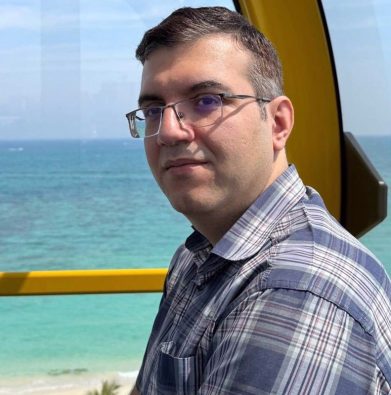
On the evening of December 16, Mohammad Abedini Najafabadi, 38, a mechanical engineering graduate from Sharif University of Technology, was detained by Italian police at Milan Airport while preparing to travel to Switzerland. The arrest, carried out at the request of the United States, has cut off all direct contact with him.
Meanwhile, Mahdi Mohammadsadeghi, 42, a US resident, was arrested in Massachusetts around the same time.
According to reports, the arrests of the two individuals are allegedly linked to a January 28 drone attack carried out by Iraqi armed groups against a US military outpost in Jordan known as Tower 22.
The attack killed three American soldiers and injured 47 others. The FBI claims that the equipment used in the drone attack was supplied by these two individuals.
A university peer of Mohammad Abedini told Tasnim News Agency that Abedini is an Iranian national and the CEO of Sanat Danesh Rahpooyan Aflak (SDRA), a company in Iran specializing in precision measurement equipment.
The company’s products have diverse applications, including medical and sports technologies.
Abedini also headed a Swiss-based company, Illumove SA, which focused on motion capture equipment manufacturing. All activities of these companies were conducted under the legal and financial oversight of the Swiss government.
The unnamed source explained that due to their advanced technology, the equipment produced by these companies has multipurpose uses. Once legally sold in Iranian markets, the products can be purchased and utilized by any individual or entity.
However, the US government has fabricated charges, claiming the equipment was used in drones involved in the aforementioned attack, leading to the arrest and prosecution of these individuals.
He emphasized that the lack of formal communication with the Iranian embassy and the denial of access to Abedini constitutes a clear case of abduction.
“Even if the allegations were proven, the appropriate course of action would have been to prevent his entry into Europe or the United States, not to detain him based on unsubstantiated claims,” he said.
Since two days ago, Iran’s Ministry of Foreign Affairs, through its consulate in Italy, has launched extensive efforts to secure Mohammad Abedini’s release or at least obtain information about his condition. It is hoped that these efforts will yield results before any judicial action is taken against him.
Washington trained, armed extremist groups to topple Syrian government: Report
Press TV – December 20, 2024
The United States prepared and bolstered an armed group in southern Syria weeks prior to the offensive that ousted President Bashar al-Assad, a Western media report says.
In the first indication that Washington had prior knowledge of the offensive, the group known as Revolutionary Commando Army (RCA) revealed it had been told to scale-up its forces and “be ready” for an attack that could lead to the end of the Assad government, the Telegraph reported.
The RCA fighters, trained by Britain and the US, were told “this is your moment” during a briefing by US Special Forces stationed in the Arab country before Assad was toppled on December 8, the report noted.
The RCA fighters said Washington had prior knowledge of the offensive, which was mainly led by Hayat Tahrir al-Sham (HTS). The RCA was told to increase its forces and prepare for a major attack that could “end” the Syrian government.
Capt Bashar al-Mashadani, an RCA commander said in the weeks preceding the offensive, the RCA’s ranks were expanded by smaller “freelance” units, all of which were briefed at the US al-Tanf air base.
“They did not tell us how it would happen,” al-Mashadani told the Telegraph from a former Syrian army air base on the outskirts of the city of Palmyra.
“We were just told: ‘Everything is about to change. This is your moment. Either Assad will fall, or you will fall.’ But they did not say when or where, they just told us to be ready.”
The RCA is an armed group established by defected Syrian Arab Army (SAA) troops and is headquartered in the al-Tanf area, near the Syria-Jordan-Iraq border area, in southern Syria.
US forces are also stationed in the al-Tanf area, where they claim to be fighting the Daesh Takfiri terrorist group in the region.
‘On the US payroll’
According to the British newspaper, the RCA remains on the US’s payroll, as Washington claims to require their assistance to prevent the resurgence of Daesh. All members of the force continued to be armed by the US and to receive their salary of $400 a month.
The group has now filled a major void vacated by the former government forces, taking over one-fifth of the country’s territory and pockets north of the capital.
Among the chief targets of the US-backed operation was Palmyra, known for its ancient ruins.
Palmyra was among the main objectives of the US-backed operation, according to the Telegraph. Fighters who captured the Russian-controlled air base in Palmyra were reportedly told to prepare to take such action in early November.
The sources also said that Americans coordinated communication between RCA and HTS during the offensive. The HTS and its leader, Abu Mohammad al-Joulani, are terror-listed by the US.
The report indicates not only that Washington knew about the offensive led by HTS, but that it had precise intelligence about its scale.
It would therefore be only one of many ironies if the US has been in an effective alliance with a group like HTS, which was al-Qaeda’s affiliate in Syria, the report said.
A senior delegation of US diplomats on Friday arrived in Syria to speak directly to the representatives of HTS, which is designated a terrorist group by Washington.
Featured Video

Iran FM Araghchi: “Hormuz Will No Longer Be the Same”
or go to
Aletho News Archives – Video-Images
From the Archives
Sam Husseini: The entire US establishment helped lie their way into the Iraq war
By Slava Zilber | American Herald Tribune | October 14, 2019
Sam Husseini is a senior analyst with the Institute for Public Accuracy, independent journalist and contributor to The Nation and FAIR.
Slava Zilber: Sam, three years ago, you appeared on Talk Nation Radio with David Swanson and spoke about the case of the GCHQ whistleblower Katharine Gun. You pointed out that the people involved in the spying on the UN and the people authorizing the Iraq War were not held accountable:
“Virtually everybody who went along with the war, whether it is Kerry or Clinton, of course, the Bush administration themselves has falsified their own records in terms of why, what they did, when they did, why they did it, to the extent that they’ve been scrutinised at all.”
You also address it in a recent article. And recently, Joe Biden has been lying about his position on the Iraq War. How can such an important issue escape meaningful scrutiny? … continue
Blog Roll
 Aletho News
- Iran FM Araghchi: “Hormuz Will No Longer Be the Same”
- EU facing trillion-euro debt hole while seeking more cash for Kiev
- How US, Europe, Persian Gulf states exhausted missile stockpiles, splurged billions to defend Israel
- Up in arms… Koreans reject U.S. empire’s plan to make South Korea the next Ukraine
- Iran, Turkey, Pakistan, Saudi Arabia could advance region-led security framework in Tehran: FM spox
- Netizens condemn Japanese drama for projecting Japan’s wartime atrocities onto Chinese characters
- Racist Seinfeld Dances for Joy as Bibi Unveils His New Map
- A West Bank War for Netanyahu’s Election Campaign, Could It Backfire?
- Yemen denounces European Parliament’s ‘hypocritical’ push to blacklist Ansarullah
- Qalibaf: UAE’s UN bid aims to ‘clear the runway’ for ‘Greater Israel’, whitewash genocide
- If Americans Knew
- An error has occurred; the feed is probably down. Try again later.
- No Tricks Zone
- Sudden Stratospheric Warming, Powerful El Niño Combination May Lead To Extreme Europe Cold, Energy Crisis!
- Two New Studies Find Thwaites Glacier Melt Cannot Be Driven By Human Activity Or A Warming Ocean
- E-Cars Reduce CO2 Emissions By Only 41% Compared To Internal Combustion Engine Vehicles
- Predictions Made By Renowned Climate Professor Over Past Decades Have Been Proven To Be Poor
- New Study Suggests Large Regions Of The Pacific Ocean Have Been Cooling For The Last 80 Years
- Germany’s Green Energy Debacle: High Energy Costs Force Kahla Porzellan to Close After 182 Years!
- New Study: 50 Years Of The Most Aggressive ‘Net Zero’ Policies Can Only Affect The Global Climate By 0.03°C
- US September “Heat” Was No Record…Many Records Set Decades Ago
- Latest European Green Energy Debacle; Portugal’s Largest Flagship Solar Park Insolvent!
- Green Energy Debacle: German Expert Professor Fritz Vahrenholt Warns Of Severe Economic And Social Consequences

