Israeli hit squad that killed Hamas commander ‘had Irish passports’
The Belfast Telegraph | February 6, 2010
Members of a hit squad that assassinated a top Hamas military commander used Irish passports to enter and leave Dubai, it’s been claimed.
The suspected Israeli hit team, including at least one woman, entered the United Arab Emirates using Irish documents, police authorities said.
Mahmoud al-Mabhouh (50), held responsible by Israel for the abduction and murder of two Israeli soldiers in 1989, died in mysterious circumstances on January 20 in a Dubai hotel room.
The Irish Department of Foreign Affairs spokesman said yesterday: “We are aware of the media reports and we are in contact with authorities locally to try and determine the truth of the reports.”
Al-Mabhouh was said to have been shocked with an electric weapon held to his legs and then suffocated or poisoned.
Iran and Hamas have blamed Israel for the killing, but Israeli news media claimed al-Mabhouh had many enemies and could have been killed by other Arab factions.
Up to seven people were said to have been involved in al-Mabhouh’s killing, four of whom used Irish passports to enter Dubai and who later fled to a “European country” after the killing, according to police sources in Dubai.
Declining to reveal their identities, an official said UAE security personnel were co-ordinating with Interpol to have them extradited.
Al-Mabhouh had been out for most of the day and returned to his room only after 9pm, police said.
Pathologists were said to have determined the cause of death as asphyxiation, probably with a pillow found near the body and stained with blood. A room cleaner found his body the next day.
He had travelled to Dubai under another name.
The victim was said to have been in charge of weapons procurement for Hamas and was on a mission in Dubai.
His brother said it was not the first attempt on his life. Six months ago, he was rushed to hospital in Dubai in a coma and treated for poisoning.
Mr Mabhouh’s funeral was held in Damascus, where he had lived for 20 years with his wife and children.
In 1986, US officials, including Oliver North, reportedly used Irish passports to travel to Iran to offer missiles for hostages.
NYT’s Israel Editor’s Sticky Situation
Ethan Bronner’s Conflict With Impartiality
By ALISON WEIR | February 5, 2010
Ethan Bronner is the New York Times Jerusalem bureau chief. As such, he is the editor responsible for all the news coming out of Israel-Palestine. It is his job to decide what gets reported and what doesn’t; what goes in a story and what gets cut.
To a considerable degree, he determines what readers of arguably the nation’s most influential newspaper learn about Israel and its adversaries, and, especially, what they don’t.
His son just joined the Israeli army.
According to New York Times ethics guidelines, such a situation would be expected to cause significant concern. In these guidelines the Times repeatedly emphasizes the importance of impartiality.
This is considered so critical that the Times devotes considerable attention to “conflict of interest” (also called “conflict with impartiality”) problems, situations in which personal interest might cause a journalist to intentionally or unconsciously slant a story.
The Times notes that family affiliations may cause such a conflict; as an example, it explains that a daughter’s high position on Wall Street could be problematic for a business reporter.
In situations where such a familial affiliation is considered significant, the journalist may be moved to a different area of reporting.
Ethan Bronner’s situation, therefore would appear to be sticky, at the very least. It is difficult to imagine that a son fighting for the foreign nation an editor is charged with covering does not constitute such a potential conflict with impartiality. Apart from Mr. Bronner signing up with the Israeli military himself, it is difficult to imagine a clearer example of familial partisanship.
Yet, to date, Bronner and the Times have refused to address his situation. Foreign Editor Susan Chira (who may also have family allegiances to Israel) has declined to comment, other than refer people to her curt response to Electronic Intifada, which had asked her whether it was true that Bronner’s son was in the Israeli military:
“Ethan Bronner referred your query to me, the foreign editor. Here is my comment: Mr. Bronner’s son is a young adult who makes his own decisions. At The Times, we have found Mr. Bronner’s coverage to be scrupulously fair and we are confident that will continue to be the case.”
If that were, indeed, the case for Bronner’s reporting, there would undoubtedly be less concern from outside observers. There are numerous instances of accurate reporting by both Israeli and Palestinian journalists; familial and personal affiliation do not necessarily or always result in flawed journalism.
However, while both Chira and Bronner may believe he has been “scrupulously fair” in the years that he has been the paper’s top editor on Israel-Palestine (before assuming his current position as Jerusalem bureau chief in March 2008, he had been deputy foreign editor overseeing the region for four years), a number of studies and analyses contradict this contention.
* In 2005 a study by If Americans Knew found that the Times had covered Israeli children’s deaths at a rate over seven times greater than it had reported on Palestinian children’s deaths – even though Palestinian children’s deaths had occurred first, in far greater numbers, and there was considerable evidence that Palestinian young people were being killed intentionally by official Israeli forces.
* Princeton Professor Emeritus Richard Falk and media critic Howard Friel undertook a meticulous analysis of the Times‘ coverage of the issue; the title of their book indicates their findings: “Israel-Palestine on Record: How the New York Times Misreports Conflict in the Middle East.” Among others things, Falk and Friel discovered that the Times had failed to report the essential fact that all Israeli settlements are illegal under international law.
* A 2006 study published in the Electronic Intifada revealed that during the previous six years there had been 80 reports by respected international organizations detailing human rights violations in the Israeli-Palestinian conflict. Of these, 76 had been primarily critical of Israel, and four had been primarily critical of Palestinians. The study found that the Times had reported on two of the reports for each, giving readers an exceedingly distorted view of the real situation.
* In a recent announcement expressing concern at Bronner’s apparent conflict of interest, media watchdog Fairness and Accuracy in Reporting (FAIR) stated that “Bronner’s reporting has been repeatedly criticized by FAIR for what would appear to be a bias toward the Israeli government,” detailing specific examples.
Shifting the Blame
Several years ago the San Francisco Jewish Bulletin published an article exploring Jewish student journalists’ views on how to report on Israel-Palestine. Several said that they would find it difficult to report negative aspects about Israel, one interviewee saying that he would try to avoid printing such news. If that proved impossible, he said, he would then try to find a way “to shift the blame.”
New York Times‘ news coverage often seems to follow this pattern. When the Gaza massacre of December-January is reported, Gazan rockets are inevitably mentioned. However, the fact that these largely home-made projectiles have killed far fewer Israelis in the eight years they have been used (under 20) than Israeli forces killed in a few minutes during the invasion is virtually always omitted. Likewise left out is the fact that their use began only after Israeli forces had invaded Gaza on a number of occasions, killing and injuring numerous civilians.
The Times consistently reports Israeli actions as retaliatory, despite the fact that, according to an MIT study, in at least 96 percent of ceasefires and periods of calm it was Israeli forces that had first resumed violence. In the conflict that began in fall of 2000, Israeli forces killed over 140 Palestinians before a single Israeli in Israel was killed, 91 Palestinian children (major cause of death, gunfire to the head) before a single Israeli child was killed.
An example of Bronner’s Israel-centric reporting is a November, 2009 report on prisoners. Bronner notes that the Israeli soldier captured by Palestinians (the only Israeli prisoner held by Palestinians) is “bespectacled and boyish-seeming,” while failing to mention that many of the over 7,000 Palestinians prisoners held by Israel are equally bespectacled and boyish-seeming – in fact, 300+ are not just boyish, they are children.
While Bronner includes personal information about the Israeli prisoner, he includes very few facts about Palestinian prisoners; for example, that hundreds have never been charged with a crime and that those whom Israel has found “guilty” were tried in military courts under military law in a military occupation of Palestinian land that much of the world deems illegal. While Bronner’s story contains considerable mention of “terrorism,” it fails to report that Israeli forces killed over a thousand Gazan civilians; Palestinians killed one Israeli civilian.
Interestingly, connections to the Israeli military may not be rare for journalists covering the Middle East for US media.
The husband of NPR’s longtime correspondent for the region, Linda Gradstein, was a sniper in the Israeli army (and may still be a reserve officer). “Pundit” Jeffrey Goldberg, who appears throughout the media, immigrated to Israel, became an Israeli citizen, and served in the Israeli military. (It is unknown whether he is still in the Israeli reserves; it is possible he received a dispensation from this requirement.)
The New York Times’ other major correspondent from the region, Isabel Kershner, is an Israeli citizen. While there is universal compulsory military service in Israel, we have been unable to confirm that Kershner herself and/or her family members have been or are in the Israeli military.
Breaking the silence
Recently, the Israeli organization “Breaking the Silence” published 96 testimonies by female Israeli soldiers. They describe a pervasive pattern of violence, harassment, theft, and humiliation practiced by Israeli forces against Palestinian men, women, and children. Below are excerpts:
“We caught a five-year-old… the officers just picked him up, slapped him around and put him in the jeep. The kid was crying and the officer next to me said ‘don’t cry’ and started laughing at him. Finally the kid cracked a smile – and suddenly the officer gave him a punch in the stomach. Why? ‘Don’t laugh in my face’ he said.”
“…it’s boring, so we’d create some action. We’d get on the radio, and say they threw stones at us, then someone would be arrested… There was a policewoman, she was bored, so okay, she said they threw stones at her. They asked her who threw them. ‘I don’t know, two in grey shirts, I didn’t manage to see them.’ They catch two guys with grey shirts… beat them. Is it them? ‘No, I don’t think so.’ Okay, a whole incident, people get beaten up. Nothing happened that day.”
“…two of our soldiers put him [a Palestinian child] in a jeep, and two weeks later the kid was walking around with casts on both arms and legs…they talked about it in the unit quite a lot – about how they sat him down and put his hand on the chair and simply broke it right there on the chair.”
An officer described soldiers shooting to death a nine-year-old as he was trying to run away: “They shot in the air, as they say – shot in the air in the lungs…”
In their testimonies, these soldiers emphasize that mistreatment of Palestinian civilians is widespread, routine, and known to everyone. Both the Israeli and the Palestinian press have published excerpts.
Yet, New York Times Bureau Chief Ethan Bronner has so far failed to report this information about Israeli forces.
And his son has just joined up.
Alison Weir is executive director of If Americans Knew and a board member of the Council for the National Interest (CNI). For more information on Ethan Bronner and his upcoming speaking tour on college campuses, join IAK’S email list. Alison can be reached at contact@ifamericansknew.org
SOURCES.
The New York Times Company Policy on Ethics in Journalism. This also states: “Companywide, our goal is to cover the news impartially… and to be seen as doing so. The reputation of our company rests upon that perception…”
“Susan Chira, New York Times Foreign Editor, confirms, excuses Bronner’s conflict of interest,” Israel-Palestine: The Missing Headlines,” Jan. 27, 2010
“New York Times fails to disclose Jerusalem bureau chief’s conflict of interest
Report,” The Electronic Intifada, January 25, 2010
“New York Times’ Ethan Bronner’s Conflict of Interest: Conversation with Bronner and Alternative News Sources” AlisonWeir.org, January 26, 2010
“Off the Charts: Accuracy in Reporting of Israel/Palestine – The New York Times,” If Americans Knew, 2005
“Israel-Palestine on Record: How the New York Times Misreports Conflict in the Middle East,” Richard Falk, Howard Friel; ZNET Interview, May 31, 2007
“The New York Times Marginalizes Palestinian Women and Palestinian Rights,” Electronic Intifada, Nov. 17, 2006
“Does NYT’s Top Israel Reporter Have a Son in the IDF?” FAIR, January 27, 2010
“Killing Palestinians doesn’t count: Is a ceasefire breached only when an Israeli is killed?” CounterPunch, January 29, 2009
“Reigniting Violence: How Do Ceasefires End?” Huffington Post, January 6, 2009
B’TSELEM – The Israeli Information Center for Human Rights in the Occupied Territories
“The Coverage–and Non-Coverage–of Israel-Palestine,” The Link, July-August 2005, Vol 38, Issue 3
“Jewish journalists grapple with ‘doing the write thing’” Jewish Bulletin of Northern California, Nov. 23, 2001
“Prisoner Swap Appears Near in the Mideast,” Ethan Bronner, New York times, Nov. 23, 2009
“Political prisoners in Israel-Palestine,” If Americans Knew
Addameer Prisoners’ Support and Human Rights Association
“Israel, Hamas in mutual gestures on prisoners,” Reuters, Sept. 30, 2009.
“Female soldiers break their silence,” YNET, Jan. 20, 2010 (According to its website, “Ynetnews is part of the prominent Yedioth Media Group, which publishes Yedioth Ahronoth – Israel’s most widely-read daily newspaper)
“Testimonies of Israeli Female Soldiers Regarding Violations Against Palestinian Civilians,” International Middle East Media Center, January 30, 2010
“BREAKING THE SILENCE: Women Soldiers’ Testimonies,” 136-page booklet by the Israeli Breaking the Silence organization
Israel threatens force over Iran nuclear standoff
AFP – 4 February 2010
JERUSALEM – Israeli Strategic Affairs Minister Moshe Yaalon raised on Wednesday the possibility of using force to stop Iran from developing nuclear weapons, something Tehran vehemently denies it is seeking.
“Iran’s plan will probably be stopped by a regime change or, if there is no other choice, by a recourse to force to deprive Iran of its nuclear arms production capabilities,” Yaalon told a security conference in Herzliya, northern Israel.
“It is important to continue to make clear to the extremist regime in Iran that all options remain on the table and that ignoring the demands of the international community will probably end in bitter tears for Iran,” he added.
Yaalon also called on the international community to impose even harsher sanctions on Iran over its nuclear programme.
Iran is already under three sets of sanctions imposed by the United Nations Security Council for its refusal to stop enriching uranium, a process that can produce fuel for nuclear reactors but also fissile material for an atomic bomb.
Earlier on Wednesday, Iranian President Mahmoud Ahmadinejad raised the possibility Tehran might come to an agreement with world powers over its enrichment programme.
“It is important to make Iran understand that the leaders of the international community are determined to the point of putting this matter at the top of their list of priorities, even if they have to pay an economic or even military price.”
Israel, the United States and a number of other Western countries accuse Iran of using what it claims is a purely civilian nuclear energy programme as a cover for developing atomic weapons. Iran denies that.
Yaalon’s reference to force was not new. Both the United States and Israel have consistently refused to rule out the use of force if diplomatic efforts to rein in Tehran are unsuccessful.
Israel has already acted in similar circumstances.
In 1981, Jewish warplanes bombed an Iraqi nuclear plant outside Baghdad. The prime minister Menachem Begin said the attack was necessary because the facility was about to become operational and would have permitted the regime of Saddam Hussein to manufacture nuclear weapons.
Pro-Israel Lobbies Work on Europe
By David Cronin | Inter Press Service | February 2, 2010
Defenders of Israel’s aggressive stance have for many years been recognised as a powerful force shaping United States foreign policy. A less well-known fact is that the pro-Israel lobby has been making a concerted effort to strengthen its presence in Europe.
The lobby’s determination to make an impression on European Union policy-makers was exemplified by a new booklet published on Jan. 28.
Titled ‘Squaring the Circle?: EU-Israel Relations and the Peace Process in the Middle East’, the booklet advocates that EU should “rebalance its priorities” and pursue closer relations with Israel regardless of whether progress is made in resolving the conflict with the Palestinians.
Unlike the plethora of publications on EU affairs that quickly fade into obscurity, there are good reasons to believe that this one will not go unnoticed in the corridors of power.
First, it was published by the Centre of European Studies, the official think-tank for the network of Christian Democrat and conservative parties that dominate European governments.
Secondly, its author, Emanuele Ottolenghi, has already demonstrated his capability to catch the eyes of politicians by penning several pamphlets for Labour Friends of Israel, a group that boasts of the top figures in Britain’s ruling party among its members.
Ottolenghi is the director of the Transatlantic Institute. Also styling itself as a think-tank, this Brussels-based institute was set up by the American Jewish Committee (AJC) in 2004.
“The AJC is the foreign policy wing of the Israel lobby,” says Muhammad Idrees Ahmad, a researcher in Scotland’s University of Strathclyde, who monitors the activities of hawkish pro-Israel groups for the website neoconeurope.eu “The two places that it has decided to focus on most are Latin America and Europe. This is because it has a sense that American power might be in decline.”
The AJC has been successful in convincing the EU that many criticisms of Israel can be considered as a general slur on Jews. In 2005, the EU’s Monitoring Centre on Racism and Xenophobia (which has been subsequently renamed the Fundamental Rights Agency) published a working definition on anti-Semitism, admitting that it had been drawn up in consultation with the AJC and the like-minded Anti-Defamation League.
According to this definition says that criticisms of Israel, which contend that the establishment of that state was a “racist endeavour” or which compare Israel’s attacks on the Palestinians to the behaviour of the Nazis during the Second World War, should be considered as anti-Semitism. Ottolenghi’s new booklet invokes that definition to call on the EU to declare campaigners critical of Israel ineligible for funding from those sections of Union’s budget dealing with the promotion of human rights and democracy. It is “curious,” he argued that EU financial support has gone to non-governmental organisations (NGOs) “whose work depicts Israel as a racist society and an apartheid regime.”
“In other words, EU Commission money is helping certain NGOs spread a message that, according to another EU agency, is considered to be anti-Semitic and thus against EU values,” he wrote.
Ottolenghi has been active, too, in urging the EU to adopt a tough line against Iran’s nuclear ambitions. His book ‘Under a Mushroom Cloud,’ which was published last year, posited the theory that Arab leaders are unconcerned by how Israel had developed nuclear weapons of its own decades before Iran started work on its nuclear programme.
“Arab leaders sleep soundly under the shadow of Israel’s nuclear umbrella; it is Iran’s nuclear quest which gives them nightmares,” Ottolenghi wrote. “They know – they have always known – that Israel’s military prowess serves its survival and does not seek to impose a political diktat on its neighbours. The same cannot be said of Iran, with its hegemonic ambitions, and its desire to refashion the region.”
Yet since the book was published Arab governments sponsored a resolution on Israel passed by the International Atomic Energy Agency (IAEA). The resolution noted that Israel is the only state in the region that has not signed the Nuclear Non-Proliferation Treaty, a 1968 agreement designed to curb the spread of nuclear weapons. This was the first such call directed at Israel approved by the IAEA, an official body of the United Nations, in 18 years.
Along with the AJC, several other pro-Israel lobby groups have opened new offices in Brussels over the past decade. These include the European Jewish Congress and B’nai B’rith. Another group, the European Friends of Israel (EFI), has been formed as a cross-party alliance of members of the European Parliament (MEPs).
During Israel’s offensive against Gaza last year, the EFI circulated briefing papers that defended the killing of Palestinian civilians. According to the EFI, it was impossible for Israel to avoid civilian deaths because Hamas, a Palestinian resistance movement, had ordered its members “to discard uniforms and dress in regular clothes that made them indistinguishable from the civilian population”.
Michael Gahler, a German Christian Democrat MEP who describes himself as pro-Israel, said that such lobby groups have “always been very influential” in Europe. Gahler argued, though, that the groups should not ignore the widespread opposition in Europe to Israeli actions in the occupied Palestinian territories. “They should be here and listen,” he told IPS. “They should not only be a loudspeaker.”
Luisa Morgantini, a former vice-president of the European Parliament and a veteran Palestinian solidarity activist, said that all forms of racism and anti-Semitism must be opposed.
But Morgantini also suggests that pro-Israel groups are exploiting the history of Jewish suffering in Europe to dissuade its modern-day politicians from taking robust action against Israeli oppression in Palestine. “They are using the holocaust as blackmail,” she said. “It is time for us to stop this blackmail.”
Report Sees Bonanza for U.S., Iran if Sanctions Scrapped
By Abid Aslam | November 24, 2008
WASHINGTON, (IPS) – Think of it as a stimulus package without deficit spending: Were the United States to normalise trade relations with Iran and were the Islamic Republic to liberalise its economy, Washington could cut its fuel costs and add tens of billions of dollars to its economy, say U.S. exporters.
Such moves could lower world oil prices by as much as 10 percent, the National Foreign Trade Council (NFTC) says in a report aimed at the incoming administration of President-elect Barack Obama.
Obama, who is to take office in January, has signaled willingness to explore new approaches to his country’s long standoff with Iran. During his election campaign, opponents lambasted Obama for favouring appeasement at a time when Washington seeks to tighten the screws on Tehran for its alleged support of terrorism and nuclear ambitions.
Few, if any, expect a radical shift in U.S. policy under Obama but presidential transitions always are seen as opportunities for some degree of change.
In this case, says NFTC president Bill Reinsch, the lobby seeks to persuade the incoming administration that “broad unilateral sanctions intended to change the behaviour of problematic regimes often miss that target, but do succeed in generating a number of significant economic consequences.”
According to the NFTC, if the United States were to scrap its unilateral sanctions and, in turn, Iran were to lift prohibitions against foreign investment, particularly in its oil sector, the Middle Eastern nation could boost its crude oil production by about 50 percent and lower world prices by about 10 percent. This would cut the cost of U.S. oil imports by 38 billion — 76 billion dollars a year.
The pro-trade group further estimates that economic liberalisation in Iran would boost that country’s overall trade by up to 61 billion dollars, adding 32 percent to its gross domestic product (GDP). In turn, U.S. non-oil trade and trade in services with Iran also would shoot up, by about 46 billion dollars or 0.4 percent of U.S. GDP.
“Opening Iran’s marketplace to foreign investment could also be a boon to competitive U.S. multinational firms operating in a variety of manufacturing and service sectors,” says the NFTC study.
The Bush administration, which recently has worked through the United Nations to force Iran to stop enriching uranium, last month imposed sweeping new unilateral sanctions designed to cut off key Iranian military and banking institutions from the U.S. financial system.
Israel and the United States say Iran is enriching uranium in order to build nuclear weapons. Tehran has repeatedly said its purposes are peaceful. Washington also has placed Iran on its list of states sponsoring terrorism, chiefly militant factions in Iraq, Afghanistan, Lebanon, and the Gaza Strip.
Under U.S. law domestic and foreign firms are barred from investing more than 20 million dollars in Iran. For its part, Tehran has taken over the operation of its strategic oil and gas sector, which accounts for roughly 40 percent of the national economy. Governments that have voiced support for the U.S. stance have not curbed their firms’ involvement in Iran. Washington has not prosecuted non-U.S. companies for allegedly breaking the law. Federal lawmakers have been weighing measures to force authorities here to pursue foreign sanctions violators.
The NFTC has long opposed unilateral sanctions and has assailed as futile the Iran measures already in place and those under consideration by legislators.
“As with all economic embargoes, the efficacy of the sanctions in forcing political change is controversial,” write report authors Dean DeRosa and Gary Hufbauer, both economists. “In economic terms, however, both sides lose from the geopolitical standoff.”
Hufbauer has spent decades analysing the use of sanctions. In a report earlier this year, he and colleagues at the Peterson Institute for International Economics think tank examined more than 200 cases over the past one hundred years, including those against Iran. They found that the economic restrictions had contributed to achieving foreign policy goals only about one-third of the time. Most of these instances involved only partial success.
Critically, the study released in July found that sanctions tended to work when aimed against friendly and democratic countries, but not when they were brought to bear on adversaries and autocrats. In recent years, the record for multilateral sanctions has been better than that for unilateral U.S. sanctions, it added.
Not that the alternatives have been attractive. Said Hufbauer and colleagues: “Our success rate of one-third overall indicates that in about two-thirds of the cases the foreign policy goal was not achieved or, if it was achieved, other means were decisive — usually military force.”
http://www.ipsnews.net/news.asp?idnews=44832
Clare Short: Blair testimony at Iraq Inquiry ‘ludicrous’
Press TV – January 31, 2010
Police guard protesters outside the Iraq Inquiry on January 29, 2010, as former premier Tony Blair gives his evidence.
Two days after former British premier Tony Blair gave his evidence before the country’s independent inquiry into the Iraq war, a former cabinet minister has described his testimony as “ludicrous.”
Clare Short told the BBC’s Andrew Marr Show that it was fallacious to suggest that al-Qaeda would team up with “rogue states,” after the September 11 attacks.
Short, who quit the cabinet soon after the invasion of Iraq in March 2003, defended Prime Minister Gordon Brown, saying he had been “marginalized” when the decision to go to war was made.
Brown was chancellor of the exchequer when Blair ordered the country’s troops to join the US-led invasion.
The incursion was based on a now notorious dossier claiming the Iraqi dictator Saddam Hussein had weapons of mass destruction.
Short said Brown’s political priorities laid elsewhere at the time and that he neither opposed nor supported the invasion but was “preoccupied” by other concerns.
During his six-hour testimony, an unrepentant Blair said he still believed he had made the right decision and would do so again, if it meant deposing Saddam, whom he described as a “monster.”
He said he believed the executed dictator “threatened not just the region but the world,” and that the terror attacks on September 11, 2001, had “dramatically” changed British and US position towards that threat.
Notably, Blair steered away from Iraq towards new alleged threats, including Iran.
He argued that the Islamic Republic’s nuclear program, which Tehran has repeatedly affirmed is for peaceful purposes such as electricity generation, was dangerous.
Blair urged world leaders to take on a tough stance towards Iran.
On January 12, a Dutch inquiry into Netherland’s support of the 2003 invasion said the US and Britain had rushed to war without sufficient legal backing under international law.
The commission’s 551-page report said UN resolutions prior to the outbreak of the war did not provide a legitimate mandate for the attack.
‘Iran, Iraq have signed 100 economic agreements’
Press TV – January 31, 2010
Iran and Iraq have signed one hundred memorandums of understanding since 2003 to boost their economic cooperation, an Iranian official says.
The plenipotentiary envoy of the Trade Promotion Organization of Iran (TPOI) to Iraq noted that the high number of agreements reflects the two countries’ determination to enhance the level of their economic ties.
“Iran has exported $15 billion of goods to Iraq since the fall of Saddam Hussein,” Mehr news agency quoted Kheirollah Khadem as saying.
Khadem noted that Iran has formed a committee under the supervision of the Iranian President’s Office to review and implement initiatives to enhance the level of economic ties between the two neighboring countries.
He added that Iran also plans to further activate the Arvandroud Special Economic Zone near the border with Iraq to facilitate trade between the two countries.
Our Last Port Is Freedom
Sending a Flotilla in the Spring to Break the Siege of Gaza
By Free Gaza Team | 28 January 2010
 [Istanbul, Turkey] Today the Free Gaza Movement and the Turkish Relief Foundation (IHH), announce a joint venture, sending 10 boats in the spring of 2010 to the besieged Gaza strip. Organizations from Greece, Ireland and Sweden have also promised to send boats to join the flotilla with the Free Gaza movement and Turkey.
Mr. Bulent Yildirim, chairman of the IHH said, “We sail in the spring to Gaza, and our last port is freedom; freedom for the 1.5 million Palestinians denied the right to rebuild their society. We will never stop sailing until Israel’s siege is lifted.”
Two cargo ships will be part of the flotilla, one donated by the Malaysia-based Perdana Foundation and one from IHH. Both will be laden with building supplies, generators and educational materials that Israel prohibits from entering Gaza since their brutal attack on the civilian population a year ago.
The many passenger boats accompanying the cargo ships will carry members of Parliament from countries around the world as well as high-profile journalists and human rights workers.
According to the chair of the Free Gaza Movement, Huwaida Arraf, “The illegal blockade on Gaza and Israel’s continued intransigence make a mockery of international law. If our governments will not take a stance to stop Israel’s abuse of the Palestinian people, global civil society is showing that we will.”
Since 1992, the Turkish Relief Foundation (IHH) has provided humanitarian assistance to civilians who have been victims of war or natural disasters all over the world. One of IHH’s main objectives is to take necessary steps to prevent any violations against civilian basic rights and liberties. IHH aims at providing relief help so communities can resume their daily life and stand on their own feet, as well as strengthening leadership and institutions of communities that have been made dependent on aid. http://www.ihh.org.tr
Press release available also in Arabic, Spanish, French and Italian, other translations available soon.
Contact:
* IHH, Ahmet Emin +90 530 341 19 34
* Free Gaza Movement, Eliza Ernshire +44 754 011 22 94
Israel’s voice on Britain’s Iraq Inquiry accuses critics of “anti-Semitism”
By Nureddin Sabir | Redress Information & Analysis | 29 January 2010
Britain inquiry into the Iraq war has been dealt a severe blow by a pro-Israel activist on the inquiry committee who has given an interview to a Jewish settlers’ radio accusing his critics of “anti-Semitism”.
The Iraq Inquiry, led by former civil servant John Chilcot, was set up by British Prime Minister Gordon Brown in June 2009 in order to “identify lessons that can be learned from the Iraq conflict”. It began its deliberations in November.
On 22 November 2009, as the inquiry, was preparing to convene, a former British ambassador, Oliver Miles, wrote an article in the Independent on Sunday newspaper expressing concern at the fact that two out of the five members of the inquiry’s committee, Martin Gilbert and Lawrence Freedman, were “strong supporters of Tony Blair and/or the Iraq war”. He also pointed out that both Gilbert and Freedman were Jewish, and that “Gilbert at least has a record of active support for Zionism”.
Writing in the Independent newspaper a week later, Richard Ingrams wondered whether the Zionists’ links to the Iraq invasion would be brushed aside. Referring to Oliver Miles’s article and to an extraordinary attack on Miles by The Times, in which the paper described his comments as “disgraceful”, Ingrams said:
The ambassador’s comments and the attention paid to them by The Times may be helpful in the long run, if only by drawing attention to the Israeli dimension in the Anglo-US invasion of Iraq in 2003, a dimension that hitherto has scarcely been mentioned. Yet it is a fact that the campaign to overthrow Saddam Hussein was initiated, well before 9/11, by a group of influential American neo-cons, notably Perle, Feith and Wolfowitz (once described by Time magazine as “the godfather of the Iraq war”) nearly all of whom were ardent Zionists, in many cases more concerned with preserving the security of Israel than that of the US.
Given that undeniable fact, the pro-Israeli bias of Sir Martin Gilbert and Sir Lawrence Freedman, both of them supporters of the 2003 invasion, is a perfectly respectable point to raise. It is equally legitimate to ask if at any point the panel will investigate or even refer to the US neo-cons and their links to Israel. Call me snide if you like, but I very much doubt they will.
On 28 January 2010, BBC Radio 4’s “Today” programme reported that Martin Gilbert, whom it described as a “proud practising Jew and Zionist”, had expressed “deep unease” at the previous November’s articles by Miles Oliver and Richard Ingrams.
The radio broadcast extracts from an interview given by Gilbert to an internet radio station run by Jewish settlers in the occupied West Bank in which he described Oliver’s and Ingrams’s articles as “really unpleasant”. He referred to people who questioned the wisdom of including pro-Israel activists in an inquiry whose purpose was to investigate an Israeli-instigated war as “these anti-Semites”. And he said that “more leading figures” should “speak out against” what he described as the “crude anti-Israel feelings” in Britain.
| Listen to BBC correspondent Tim Franks’s report on the allegations of “anti-Semitism” made by Israel’s voice on the Iraq Inquiry panel, Martin Gilbert |
In the interview with the settlers’ radio station, Martin Gilbert appeared to be aware of the logic behind concerns regarding the role of Israel lobbyists and agents of influence in the Anglo-US invasion of Iraq in 2003. As an eminent scholar, he should therefore understand why the British public should be worried that an active supporter of Israel on the Iraq Inquiry might not be impartial or rigorous in scrutinizing the conduct of those who launched the aggression against Iraq at the behest of pro-Israel activists like himself. Instead, he chose to divert attention with the smokescreen of “anti-Semitism”.
This subterfuge casts serious doubt about the integrity of the Iraq Inquiry. It means that if Israel lobbyists played a part in pushing Britain to join the US aggression against Iraq, this would probably be overlooked by the Israeli activists on the inquiry, who make up 40 per cent of the panel.
It also means that the Iraq Inquiry has not only been severely compromised, but was in fact doomed before it even started.
German firm cancels deal with Iran port due to Israeli pressure
By Barak Ravid | Haaretz | January 25, 2010
After heavy diplomatic pressures from the Israeli government, a German construction company on Monday canceled its end of a contract to renovate the Bander Abbas Port in Iran.
Israel’s ambassador to Berlin told Chancellor Angela Merkels’ top aides, as well as foreign ministry officials, that Iran has been exporting weapons from that port bound for Hezbollah in Lebanon and Hamas in the Gaza Strip.
Ambassador Yoram Ben Ze’ev stressed that the Gaza-bound weapons ship “Francop,” which was recently apprehended by the Israel Defense Forces in the Mediterranean, had been dispatched from that Iranian port.
A political official said that the Israeli embassy received word just over a week ago of a deal in the works between the Hamburg Company, which is partly owned by the German government, and the Iranian agencies.
Ben Ze’ev stressed that Israel viewed the contract as German assistance to an Iranian arms deal with terror organizations, and a violation of United Nations resolutions.
At Israel’s request, German officials contacted the company owners and hinted that ir preferred the deal be terminated. Several days later, the company announced that it would withdraw from the contract.
President Shimon Peres arrived in Berlin on Monday ahead of international Holocaust Memorial Day on Wednesday, during which he is scheduled to address the German parliament in Hebrew.
The president will also speak to Merkel regarding Germany’s financial ties with the Islamic country.
What is the endgame in Gaza?
By Ahmed Moor | January 24, 2010
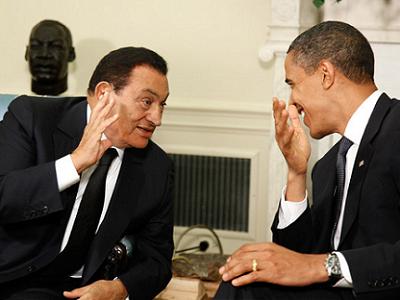
I want to focus attention on an issue that hasn’t gotten enough press. The Mubarak regime is building a subterranean steel wall on the border with Gaza. Conservative estimates put the depth of the wall at 18 meters (nearly 60 feet). The BBC reports that American engineers designed the wall panels, which were constructed in America.
30-meter-deep holes are being bored into the ground on the Palestinian side of the wall. Egypt will pump salt water from the Mediterranean Sea into the earth to destroy the tunnels – the lifeblood of the besieged Gazan Palestinians. Soil quality will be degraded and the Coastal aquifer, Gaza’s source of potable water, may well be destroyed.
The deranged Obama-Netanyahu-Mubarak cabal seems to be possessed of a biblical rage. Dare to defy the divine edict? We will crush your men, women and children underfoot. Refuse to starve? We will raze your cities, poison your wells, and salt the earth. Their grandiosity – think of it, they’re building an 18-meter-deep steel wall (!) for 11 kilometers – beggars belief, and beggars Gazans.
Protests have erupted across the Arab world and Europe targeting Egyptian embassies and consulates; I attended one yesterday in Beirut. But the Egyptian regime isn’t responsive to popular pressure, so a group of activists here in Lebanon have begun a movement to draw attention to the Egyptian company assembling the wall – Arab Contractors. Our hope is that as details emerge, other companies can be targeted. I reported on our first press conference for Electronic Intifada…
Ahmed Moor is a Gaza-born Palestinian-American freelance journalist living in Beirut.
Featured Video
No Vote, No Representation, No State: Democracy, Israeli Style
or go to
Aletho News Archives – Video-Images
From the Archives
Sanctions, War and the Policy of Dual Containment
By SASAN FAYAZMANESH | March 17, 2008
It is now nearly three decades since the Unites States adopted the policy of dual containment of Iran and Iraq. While much has been written about the containment of Iraq, there has been very little in-depth analysis of this policy when it comes to Iran. In a book that is going to be released on March 31, 2008, entitled The United States and Iran: Sanctions, Wars and the Policy of Dual Containment (Routledge), I attempt to address this shortcoming by investigating when and why the US policy of containment of Iran came about, how it evolved, and where it stands today.[1] To the extent that Israel has been involved in US policy making, the study will also include the role that Israel has played in the containment of Iran. Also, since the fate of Iran has been inextricably linked to that of Iraq, occasionally the investigation will overlap with the containment of Iraq.
The policy of dual containment of Iran and Iraq originated during the Carter Administration, but it was not until the Clinton Administration that the expression “dual containment” became popular. … continue
Blog Roll
 Aletho News
- How Israel destabilizes the Middle East: Denying sovereignty and the right to exist
- Europe’s Establishment Is Embracing War – and Losing Voters
- NATO chief advocates war of aggression
- No Vote, No Representation, No State: Democracy, Israeli Style
- Zionist Bought Senate Blocks Information About American Citizens Killed By Israel
- While Gaza dominates the UN, these are the people keeping it alive
- New Report: “Scholasticide and Genocide in Gaza: Assessment, Testimonies and Legal Analysis”
- ‘THAAD Delusion’: Iran war exposes US missile shield limits – The Atlantic
- Moscow issues warning to NATO over Russian exclave
- Yes, the Iran war has destroyed Trump’s presidency
- If Americans Knew
- Israeli former leaders and security chiefs threaten legal action over ‘Jewish terrorism’
- Israel map in LA Times ad includes all land from the river to the sea
- Inside Lebanon’s 200-page dossier on Israeli war crimes
- Flydubai, genocide, settler violence, Trump abuse of power to deport – Daily Update
- Counting Antisemitic Incidents: What the ADL Audit Reveals — and Obscures
- Mamdani releases plan to combat antisemitism and hate crimes in New York City
- Iran’s Revolutionary Guards Publish Letter to the American People
- DMFI launches $1 million ad campaign supporting Virginia’s Elaine Luria
- US Senate blocks resolution seeking report on Americans killed by Israel
- Israeli Attacks Kill Ten Palestinians in Gaza
- No Tricks Zone
- Green Energy Debacle: German Expert Professor Fritz Vahrenholt Warns Of Severe Economic And Social Consequences
- Two More Paleo Reconstructions Affirm Meters-Higher Sea Levels Across Ireland, Brazil 7000-6000 Years Ago
- New Study: Earth And Venus Surface Warmth Largely Explained By Convection And Lapse Rate, Not CO2 Or Radiation
- 2025 Nature Paper Claiming Worsening Global Drought Gets RETRACTED …Heavily Flawed
- New Study: ‘Global Drought Shows No Detectable Recent Acceleration Under Climate Warming’
- Economic Masterminds: German Socialists Suggest Taxing Productivity Gains Stemming From Using AI
- The South China Sea Has Not Been Cooperating With The Climate Change Narrative
- Energy Crisis: Germany Enters Heating Season With Historically Low Gas Reserve Fill Levels
- New Study: The Antarctic Ice Sheet Gained Mass From 2020-2024 Due To Staggering Snow And Ice Accumulation
- Study: Ocean Heating Rates From Thousands Of Years Ago ‘Dwarf’ Modern Ocean Heating Rates

