Israel chases MAGA support amid Gaza backlash
The Cradle | August 14, 2025
The Israeli government is courting conservative social media influencers in the US to shore up support among “Make America Great Again” (MAGA) Republicans, Axios reported on 14 August.
Support among MAGA Republicans for Israel has fallen to record lows amid Tel Aviv’s ongoing campaign of starvation and genocide in Gaza, fueled by billions in US weapons and military aid.
Younger Republicans in particular question why Trump is spending such large sums to support Israeli military actions, while neglecting the needs of US citizens at home.
The Israeli campaign involved sending 15 MAGA influencers on a propaganda tour to Israel this week. The trip was organized by Israel365, an advocacy group that tries to “strengthen Israel by building bridges between Jews, Christians and all who share our faith-based values,” according to a statement from the group.
Axios reports that Israel365 was awarded a no-bid contract worth $70,000 by the Israeli Foreign Ministry to fund the trip.
The advocacy group is led by Rabbi Pesach Wolicki, who has regularly appeared on conservative television programs such as “The Charlie Kirk Show” to defend Israeli atrocities.
“Israel365 is uniquely suited to help MAGA-affiliated entities reach religious and ideological audiences in both Israel and the US,” stated an Israeli Foreign Ministry memo obtained by Axios.
Several influencers have faced backlash for participating in the all-expenses-paid trip, which included visits to the Western Wall in occupied Jerusalem, settlements in the Gaza envelope, as well as the occupied West Bank, Golan Heights, and the Syrian border.
Following the trip, Steve Bannon’s “War Room” podcast ended its relationship with MAGA influencer Jayne Zirkle.
Axios notes that, “Gen Z MAGA supporters have grown increasingly comfortable questioning Israel’s policies and prosecution of the war in Gaza, especially under the banner of the ‘America First’ agenda.”
Many young Republicans have also been influenced by political commentator and streamer Nick Fuentes, who regularly criticizes Israel’s genocide in Gaza, Trump’s slavish support for Israel, and the outsized influence of the US Jewish community over the US government.
Even legacy conservative journalist Tucker Carlson has hosted several programs recently with guests highlighting Israeli crimes in Gaza, including Lt. Col. Aguilar, a former US special forces operative who reported seeing Israeli troops carrying out horrifying war crimes against Palestinians in Gaza while working for the Gaza Humanitarian Foundation (GHF).
Iran overcomes heavy US sanctions and war with Israel, takes over key energy export markets
Inside China Business | August 12, 2025
China is a top buyer of Iranian crude, taking 90% of its crude exports. But Iran has recently passed Saudi Arabia, the UAE, and Qatar as the top producer and exporter of NG products, bringing in billions more. Ambitious expansions of their petrochemical industry are also ongoing. Iranians report little difficulty in business operations among different currencies, despite the US Treasury Department’s blacklisting of key energy suppliers, and firm control over the SWIFT systems.
Closing scene, Beihai, Guangxi
Resources and links: Iran Defies US Sanctions With Surging Exports of Liquefied Petroleum Gas https://www.bloomberg.com/news/articl…
Bloomberg, Iranian Oil Production Booms Amid the Bombs https://www.bloomberg.com/opinion/art…
S&P Global, Iran’s petrochemicals defy sanctions as exports, output on the rise https://www.spglobal.com/commodity-in…
Iran announces 15 petrochemical projects to expand domestic production to nearly 80 MMtpy https://www.hydrocarbonprocessing.com…
The US-Israeli plot to partition Syria’s West
By Abdullah Suleiman Ali | The Cradle | August 13, 2025
“When you look at the map of Syria, I mean, it looks like a flat Rubik’s cube because of the way that the country is divided up, and what we are talking about is mainly the governance of the western part of the country.”– Senator James Risch during a Senate Foreign Relations Committee hearing on 13 February
It began with a seemingly offhand statement by US Senator James Risch, chair of the Senate Foreign Relations Committee, just weeks ahead of the March coastal massacres in Syria against the Alawite minority.
“My idea,” he expounded, “is we need to focus on this western part and continue to look at the others. But the first objective is if you do not get a handle on this you are not going to get a handle on the rest of the country.”
Testifying before the Committee on US policy post-former Syrian President Bashar al-Assad, managing director of the Washington Institute for Near East Policy, Michael Singh, responded:
“I think that we can focus on what is happening in western Syria, deal with the government there, while also trying to encourage and maybe facilitate this process of coming together among these groups.”
But these remarks have since crystallized into a structured, multi-front operation now moving steadily toward execution. The “Western Syria” project has now shed any ambiguity, emerging as a concrete blueprint that fuses sectarian engineering with foreign military coordination, aimed at carving out new realities on both sides of the Syrian–Lebanese border – under Tel Aviv’s supervision.
A plan spanning Syria and Lebanon
The scheme extends deep into Lebanon, where an orchestrated campaign against Hezbollah is intended to disarm the resistance movement while redeploying armed Syrian factions from Lebanon to the coastal strip. The right-wing Israeli government, acting as both sponsor and chief architect, directs the plan through two named coordinators –General “Yael” and Captain “Robert.”
Marketed publicly as a mission to safeguard minorities, especially Christians, the plan’s hidden mechanism is to stage attacks on churches, monasteries, and heritage landmarks across the coast. These provocations are designed to inflame sectarian tensions, creating the pretext for an Israeli-led intervention.
One of the earliest signs emerged in Tartous, where internal security announced the arrest of a cell accused of plotting to attack the Mar Elias Maronite Church in Safita, not to be confused with the suicide bombing of the Mar Elias Greek Orthodox Church in Damascus in June. The revelation – delayed by three weeks – sparked suspicions of Israeli infiltration of Syrian security structures.
Internal Security Forces Chief in Tartous, Abdelal Mohammad Abdelal, said the plot was foiled in a “high-level security operation” after extensive surveillance and was based on “precise intelligence indicating that an outlaw group affiliated with remnants of the deposed regime was surveilling Mar Elias Maronite Church in the village of Khreibet, in the Safita countryside.”
However, many saw it as a calculated move to unsettle Christian communities and justify external involvement.
Two days before that announcement, partisan media channels circulated an unverified statement claiming the formation of a so-called “Christian Military Council” under the name Elias Saab – a figure absent from any credible public record.
The declaration spoke of organizing Christian fighters who had defended their communities against extremist factions like Hayat Tahrir al-Sham (HTS), who are now integrated into the state’s security forces.
It called for uniting fighters from Mhardeh, Al-Suqaylabiyah, Sadad, Maaloula, and Tartous under one legal and military umbrella, documenting crimes against Christians for presentation to international bodies, ensuring their representation in any political settlement, and opposing partition while defending a unified, secular Syria.
While this narrative has circulated in partisan outlets, there is no independent verification of its authenticity or the council’s existence. Its sudden appearance, timed just before heightened tensions in the coastal region, has fueled speculation about its role as a manufactured proxy front to justify foreign involvement under the guise of ‘minority protection.’
The US-Israeli scheme takes shape
On 5 August, in the US capital, the government relations and strategic advisory firm Tiger Hill Partners announced it would serve as the official representative of the “Foundation for the Development of Western Syria.”
Specializing in government relations and strategic lobbying, Tiger Hill pledged to advocate for Christians, Druze, Alawites, Kurds, and “moderate Sunnis” while working with US policymakers to shape Syria’s political transition. The one-year contract, valued at roughly $1 million, was filed publicly and framed as a mission to ensure minority rights remain central to Washington’s Syria policy.
In late July, a coastal faction calling itself “Men of Light – Saraya al-Jawad” made its debut. The group’s statement attacked Abu Mohammad al-Julani (Ahmad al-Sharaa), Qatar’s emir, and Turkiye’s president, while offering thanks to Egypt, Israeli journalist Eddy Cohen, and notable expatriate Alawite, Druze, and Christian figures – including Sheikh Hikmat al-Hijri, Mazloum Abdi, and Patriarch John al-Yaziji. Although ridiculed for its unusual tone, its appearance dovetailed with coordinated moves behind the scenes.
That coordination became more visible on the 17 July, when the Tel Aviva Hotel in Israel hosted a closed meeting between government officials, Syrian Alawites, and Syrian Druze figures. The attendees included seven long-exiled Alawites and Druze linked to Sheikh Muwafaq Tarif’s circle – the Druze leader in Israel – both Syrian and Israeli nationals. A second meeting followed on the 21st–22nd, just before Saraya al-Jawad’s unveiling and the release of its operational footage.
An Alawite–Druze alliance
On 6 August, Eddy Cohen, an Israeli journalist and commentator on Arab affairs, announced on his Arabic-language Facebook page the preparation of an Alawite–Druze alliance in the US. Observers have paired this with an alleged leaked audio recording of a Syrian woman – said to be related to a former senior officer with Israeli ties – speaking to another participant in the Tel Aviv meetings.
In the recording, she reportedly described coordination between a secular Syrian expatriate network and Israeli intermediaries, noting specifically that one of the councils involved held shares in Tiger Hill. The recording also alleged plans to covertly deploy some 2,500 foreign fighters into Syria, dispersing them across Homs and the coastal region.
Despite the project’s determined momentum, domestic and external actors are moving to block it, even offering intelligence support to the Sharaa administration despite disputing its legitimacy. This counter-effort has already thwarted the Safita church attack and prevented a major bombing in Damascus.
A partition map in the making
As one credible regional security source informs The Cradle:
“Israel seeks to exploit Syria’s sectarian and ethnic divisions to use minorities as political and military tools, serving its plan to partition the country and open two strategic corridors: an eastern one linking Suwayda to Hasakah, and a western one running from Syria’s coast to Afrin, securing multi-front influence and encircling the Turkish axis from within.”
“Western Syria” may remain in the shadows or step fully into the open, but its trajectory is unmistakable: a deliberate dismantling of Syria’s territorial cohesion, draped in the language of minority protection and enforced through foreign-backed militias and political fronts.
For Damascus, Beirut, and the wider region, this is no distant or hypothetical threat, but an active campaign already reshaping the map to the advantage of outside powers.
How real is the U.S. rhetoric of a ‘Unified Syria’?
By Erkin Oncan | Strategic Culture Foundation | August 7, 2025
The recent statements by the U.S. Special Envoy for Syria, Thomas Barrack, may at first glance appear to reflect diplomatic commitment, but developments on the ground and the U.S.’s covert alliances reveal that this rhetoric is largely a propaganda maneuver.
Speaking to the Associated Press, Barrack emphasized that the “deaths and massacres” on both sides of the conflict in southern Syria are unacceptable, stating: “I believe the current Syrian government, which is a new government with very few resources to address the emerging issues, is doing the best it can.”
However, if we are to speak of “territorial integrity” in the context of a new Syria, it is clear that the U.S.’s de facto policy in Syria actually serves to strengthen structures that weaken the country’s territorial unity. On the ground, the U.S. has established a fragile balance between Syria’s new government and the Syrian Democratic Forces (SDF). While this balance may give the appearance of localized stability in the short term, it carries the potential to pave the way for Syria’s long-term fragmentation. These entities are ideologically, ethnically, and politically at odds, with starkly conflicting expectations for a new Syria.
Red Lines in the Damascus—SDF Talks
The Damascus administration’s plans to integrate the SDF into the New Syrian Army, dismantle its autonomous structure, and transfer control of northeastern resources (oil, borders, educational institutions) to the Syrian state are clear.
The SDF, meanwhile, although it continues its contacts with the new Syrian administration, maintains a series of “red lines”: preserving autonomous administration, integrating its forces into the army independently of the central command, receiving a share of resources, and maintaining control over the borders.
In this scenario, the U.S. — a power that has provided extensive military and political support to both sides over time — appears to be attempting to “gloss over” this deeply uncertain process with diplomatic statements and messages of goodwill.
Israel’s Proxy Strategy
Israel, which has effectively “entered” the Syrian arena through the Suwayda clashes, likely sees the criticisms voiced by its greatest ally’s special envoy as a mere formality. Israel’s main strategy here is to sever southern Syria from Damascus and create new zones of control via proxy forces under the pretext of border security.
In other words, while there is rhetorical emphasis on a “Unified Syria,” what is being built on the ground is an increasingly entrenched multi-structure reality. A possible agreement between the SDF and HTS (Hay’at Tahrir al-Sham), for example, is not just about two armed groups sitting at the negotiating table; it encapsulates the conflicting interests of regional and global actors.
The negotiations between the SDF and HTS do not only involve these two actors; the balance includes the intervention of the U.S., Israel, and Turkey. Turkey, operating on the assumption that these negotiations will proceed parallel to the PKK’s disarmament process, seeks to secure its “share” in the governance of the new Syria.
The SDF, which received the most comprehensive support from the U.S. during the Trump era, is aware that such direct military and political backing may not continue under the Democrats. Furthermore, Washington’s regional priorities have shifted. Therefore, the SDF is striving to secure a balanced but strong position against HTS, with the primary goal of ensuring its continued existence. It is among the claims reported in Israeli and regional media that the group has engaged in a series of meetings not only with the U.S. but also with Israel.
Israel, for its part, is determined to exploit the “power vacuum” emerging in the new Syria to the fullest extent. What began under the guise of border security has now merged with Israel’s structural expansionist policy. Should Israel decide to “accelerate” its operations in Syria, it is well aware that Damascus may not be able to mount a serious resistance.
Is the Damascus Government Falling Short?
The new government led by Shara has so far failed to demonstrate the capacity to bear the role of “new leadership.” It faces a governance crisis, ethnic massacres that have sparked international condemnation, ongoing clashes with Israel, and severe economic issues.
Thus, the Damascus government finds itself compelled to “find middle ground” with the SDF, the U.S., and even Israel in order to secure its hold on power.
Within this equation, the perception of Iran as the “primary threat” on a regional level offers significant clues about the future of current power struggles.
The “Iran Threat” Will Determine the Balance
Despite suffering a severe blow with the fall of the Assad regime, Iran remains one of the strongest actors in the region. The SDF’s potential to serve as an “independent balancing force” against Iran perfectly aligns with the interests of the Tel Aviv—Washington axis. Therefore, in negotiations between the SDF and Damascus, the scenario in which the SDF’s demands gain weight and the central government’s power is curtailed is highly probable.
Despite the U.S.’s diplomatic calls for “unity,” the SDF’s de facto autonomy, its capacity to continue negotiations with Damascus thanks to current power balances, and the U.S.—Israel strategy of positioning against Iran all stand in the way of any real unification of Syria. Under current circumstances, it is nearly impossible for the new Syrian government under Shara to evolve into a stable and functioning structure. Ongoing military, political, and economic crises, coupled with the overarching “main threat is Iran” strategy, necessitate the continuation of the existing fragmented structure.
In conclusion, Washington’s rhetoric of a “Unified Syria” is largely propagandistic when viewed in light of the multilayered web of interests and covert alliances on the ground. With the U.S. and Israel seeking to expand the anti-Iran front, the scenario in which the SDF continues to play a strong role outside the framework of the central government remains the most likely outcome.
The US wants Lebanon, Gaza and Iraq to disarm and will fail
By Robert Inlakesh | Al Mayadeen | August 7, 2025
The US Trump administration not only believes it can disarm Hezbollah, the PMU, and Hamas, but that they will all do so voluntarily. To add to this delusional approach, they continue to demonstrate that by abandoning their weapons, the people of the region will be subjected to endless instability.
Washington based think-tanks are pushing for the dismantlement of the Iranian-led Axis of Resistance through disarmament, the policy being clearly designed to isolate the Islamic Republic in order to also force it into capitulation. However, the approach to achieving this goal is so incredibly out of touch that it may achieve the very opposite results.
Using its Arab Regime allies, particularly the Gulf States, to apply pressure, US envoy Steve Witkoff has attempted to demand of Hamas that it fully disarm. This has been combined with calls from the Pentagon and Secretary of State, Marco Rubio, for Iraq to dismantle the Popular Mobilization Forces and prevent them from integrating fully within the fold of Baghdad’s security apparatus. Then we have the attempt to disarm Hezbollah in Lebanon, an effort led by US envoy Tom Barrack.
Starting with Gaza, the request in and of itself is simply not serious. The al-Qassam Brigades of Hamas would never simply disarm without any guarantees or processes to ensure the protection of the people of the Gaza Strip.
In fact, if we look at the resistance in its entirety in Gaza, they fight as one unit that is inseparable from the people’s popular will. Hamas is no longer just a political party, the al-Qassam Brigades armed wing of Hamas is now the resistance of a people suffering through a genocide.
Also, the Palestinian people have the example of the West Bank and what the situation looks like when the resistance is disarmed and abandons the struggle. When Israeli settlements expand, annexation orders are imposed, and ethnic cleansing begins, there will be nobody to even fight back.
The lessons taught to the Palestinian factions in Gaza were learnt in 1982. When the Israelis invaded Lebanon, killing around 20,000 Lebanese and Palestinians, the Palestine Liberation Organization (PLO) eventually decided to hand over its weapons and its leadership to flee to Tunisia.
Almost immediately afterwards, a series of bloody civilian massacres took place against Palestinian refugees and the Shia Lebanese, killing thousands at a time when no considerable resistance force existed to fight back. Then, the Israelis occupied southern Lebanon.
Hezbollah was born in 1985 out of this experience, as an organic southern resistance which would eventually expel the occupiers in 2000. After the 2006 defeat inflicted on the Zionist regime, the Israelis dared not launch any major aggression against Lebanon for the best part of 17 years.
In the case of Iraq, the Popular Mobilization Units (PMU) were formed in order to put down the Daesh insurgency and liberate the country from a wave of Takfiri death squads. It is a massive force today which exists as a protective mechanism that deters the return of such groups from the country.
Attempting to disband the PMU in Iraq is impossible by force and would lead to a civil war style situation, which could end up resulting in Iraqi groups securing even greater power and popular support inside of the country.
In the case of Lebanon, the fall of Syria’s former government and the way the US has so far handled the situation, has taught the diverse population valuable lessons. Even if the Lebanese leadership will work alongside the US in an attempt to seize Hezbollah’s weapons, it is clear to the populace that disarmament leaves Lebanon open to invasion from Syria and places the country at the will of the Zionist Entity.
If we look over to neighboring Syria, immediately upon the fall of Bashar al-Assad’s regime, the Zionists invaded and have been attacking at will inside Syria ever since, with no resistance whatsoever. The new regime in Damascus even works alongside the Israelis as they steal more of its land, instead choosing to allow their allied militias to butcher minority communities throughout Syrian lands.
Everything we have seen occur across the region over the past 22 months, with the full support of the United States, teaches the Arab public that capitulation spells the end of their nations and leaves them vulnerable to endless abuses.
It appears, however, that officials and pro-war think-tanks in Washington are not capable of grasping what the reality on the ground truly looks like and how this could very quickly spiral out of control; and not in the US’ favor. None of these groups which form the Axis of Resistance are going to abandon their own people by simply handing over their weapons, especially given the overtly stated intentions of their enemies.
Super PAC Targeting Massie Funded By Three Israel-Backing Billionaires
By Tyler Durden | Zero Hedge | August 3, 2025
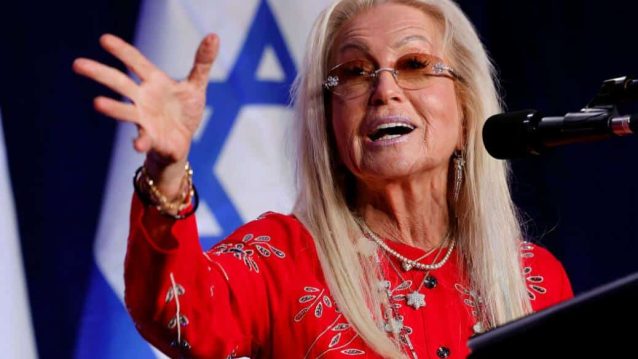
Though it sports a Kentucky- and MAGA-branded name, the new Super PAC launched solely to support a primary challenge against popular Republican Congressman Thomas Massie is funded entirely by three Israel-backing billionaires from Nevada, New York and Florida, according to disclosure filings posted on Thursday.
The super PAC was launched in June, just days after President Trump threw a social media tantrum over Massie’s condemnation of Trump’s commitment of US forces to Israel’s war on Iran. Massie has long been a thorn in Trump’s side on domestic issues too, from opposing the $2 trillion, Trump-backed Covid-19 “relief package” in 2020 to voting against this year’s Big Beautiful Bill. However, Massie’s opposition to US involvement in Israel’s war seemed to have been the last straw. Trump assigned his top political operatives Tony Fabrizio and Chris LaCivita to start and run the super PAC. LaCivita told Axios the entity will spend “whatever it takes” to oust Massie.
The PAC’s only three donors have two things in common: they’re billionaires, and they’re ardent supporters of Israel. According to the PAC’s first funding disclosure filed with the Federal Election Commission on Thursday, it has received:
- $1 million from New Yorker hedge fund manager Paul Singer, who has also funded a Israel-favoring US think tank and other pro-Israel organizations, and urged Trump to withdraw from the Iran nuclear deal
- $250,000 from Floridian hedge fund manager John Paulson
- $750,000 from the Preserve America Super PAC, which has also been led by La Civita and primarily funded by Nevadan Miriam Adelson and earlier, her late husband Sheldon Adelson
The PAC is called “MAGA Kentucky,” a name that’s misleading on two levels. Not only are its funders not Kentuckians, their principal motive for destroying Massie is his opposition to US bankrolling of Israel and participation in its wars. That is anything but a MAGA motive. As Trump recently told a prominent Jewish donor, “My people are starting to hate Israel.”
MAGA Kentucky has already started running misleading attack ads that cherry-pick items from the sprawling Big Beautiful Bill and accuse Massie of voting “against” them, and also accuse him of “siding” with Iran’s ayatollah.
In addition to opposing aid to Israel, Massie has also voted against legislation designed to stop Americans from criticizing Israel. The Antisemitism Awareness Act would use an expansive definition of antisemitism to expose universities to federal enforcement action if students voiced opposition to Zionism — a political philosophy — or compared the actions of Israel’s government to those of Nazi Germany.
In April, Massie introduced the Dual Loyalty Disclosure Act, which would require candidates for federal office to disclose any non-American citizenships they hold. Advocates of Israel swiftly accused him of antisemitism, but Massie said his measure doesn’t target any specific country. “We swear an oath to the Constitution, and the question is, if you’re a citizen of two countries, which oath are you taking more seriously, or can you take them both seriously?” Massie asked Fox’s Will Cain.
First elected to Congress in 2012 and consistently advocating for fiscal discipline, the right of armed self-defense, and a non-interventionist foreign policy, Massie has built a large and loyal national following among the libertarian right and other conservatives, with many regarding him as the congressional successor to the iconic Ron Paul. In his latest aggravation of Trump and House Speaker Mike Johnson, Massie is leading the drive to compel the release of Epstein investigative files. He has introduced a discharge petition that’s predicted to secure enough signatures to force a vote on the Epstein Files Transparency Act (EFTA H.Res. 581), which he introduced with Democratic California Rep. Ro Khanna.
With Georgia GOP Rep Marjorie Taylor Greene recently introducing an amendment to remove military aid to Israel from the defense bill, and accusing Israel of committing genocide in Gaza, don’t be surprised to see a “MAGA Georgia” PAC created to oust her, too — funded by a similar cast of Israel-first characters. In the meantime, the drive to take out Massie is having unintended consequences:
Iraq’s PMF law seen as test of sovereignty amid US objections
Al Mayadeen | August 3, 2025
Iraqi Popular Mobilization Authority chief Faleh al-Fayyad affirmed on Sunday that the vote on the draft Popular Mobilization Forces (PMF) law represents a “national responsibility tied to the dignity of those who answered the call of the religious authority and defended Iraq’s sovereignty.”
In a message addressed to members of Iraq’s parliament, al-Fayyad described the moment as one that reflects loyalty to the history and sacrifices of PMF fighters, many of whom played key roles in the defeat of ISIS.
“Passing this law is not just a legislative step. It is an affirmation of the rights of those who wrote Iraq’s glory with their blood, and a recognition from the people for those who bore arms to defend Iraq and its unity,” al-Fayyad said.
Draft law guarantees rights of PMF fighters
The legislation seeks to enshrine the rights of PMF personnel and provide a legal framework governing their structure, responsibilities, and benefits. According to Al Mayadeen’s Baghdad correspondent, the law aims to better regulate the Popular Mobilization Authority’s operations and grant it stronger legal recognition under Iraqi law.
However, the law has drawn criticism from Washington. US Senator Marco Rubio reportedly expressed “deep concern” about the legislation during recent talks with Iraqi Prime Minister Mohammad Shia al-Sudani.
Rubio claimed the law would “entrench Iranian influence and empower armed groups that undermine Iraqi sovereignty,” reflecting US unease with Iraq’s growing military independence and refusal to marginalize the PMF, which has long been a target of US pressure.
PMF integral to Iraq state institutions
Al-Fayyad last year said the adoption of the service and retirement law for the PMF is the first sign of loyalty to the fighters, stressing that what has been achieved was in the spirit of Resistance and not in the spirit of a job.
Speaking at a conference marking the 10th anniversary of the founding of the PMF, al-Fayyad said, “The PMF did not achieve what it did in the spirit of paying for fighting, as we are not mercenaries.”
While stressing that he “does not underestimate the other armed forces formations,” al-Fayyad emphasized the uniqueness of the PMF as “an entity that arose from a legitimate basis and was built on volunteerism and self-motivation,” stressing that this “identity must be preserved.”
Al-Fayyad stressed, “Bearing very heavy burdens from both close and distant quarters to maintain this entity as one representing the spirit of jihad [fighting against the enemies] and rising above partial classifications and political categorizations, above parties and above any other designation,” explaining that “the Popular Mobilization is the present shield of the nation in every confrontation and battle.”
‘America First’ clashes with ‘Israel First’ as Trump threatens Canada over Palestine recognition
MEMO | August 1, 2025
Donald Trump has provoked outrage among parts of his own political base after threatening to block a trade deal with Canada in retaliation for Ottawa’s decision to formally recognise the State of Palestine. The US president posted on Truth Social: “Canada has just announced that it is backing statehood for Palestine. That will make it very hard for us to make a Trade Deal with them. Oh’ Canada!!!”
Trump’s statement was widely interpreted as prioritising Israeli interests over domestic economic concerns, prompting fierce backlash from some right-wing influencers. Prominent conservative commentator Matt Walsh posted on X: “This is ridiculous. If a trade deal with Canada is beneficial to the American people then it should go forward regardless of Canada’s stance on Palestine. The benefit of the American people should be the guiding principle here.”
Walsh’s post drew thousands of responses, many supportive, but others accused him of failing to grasp America’s “special alliance” with Israel. However, critics have pointed out that it is Canada, not Israel, that is bound to the US through comprehensive economic and military treaties.
Along with the UK and France, Canada is one of Washington’s oldest and closest allies. By contrast, US-Israel ties, while historically deep, are often framed as ideologically and politically driven, bolstered by domestic lobbying pressure rather than national interest.
Observers say the incident highlights a deepening divide in US politics: on one side, a growing segment of voters who either support Palestinian rights or advocate for an “America First” foreign policy that avoids foreign entanglements; on the other, a political elite that consistently prioritises Israeli interests, often regardless of public opinion or national cost.
Despite mounting evidence of Israeli war crimes in Gaza and a global shift toward recognising Palestinian statehood, including by key Western allies, US lawmakers remain overwhelmingly aligned with Israel.
This split is becoming more pronounced as influential voices on the right, once assumed to be pro-Israel by default, now openly question the costs of that allegiance.
‘Compensation for war and security guarantees’: Iran sets conditions for US nuclear talks
The Cradle | July 31, 2025
Iranian Foreign Minister Abbas Araghchi said in an interview published on 31 July that Tehran is seeking financial compensation for Israel’s war, an explanation on why Iran was attacked during negotiations, and security guarantees for any resumption of nuclear talks with Washington.
Araghchi told the Financial Times that Iran will not accept going back to “business as usual” after Israel launched its unprovoked war on the country in mid-June.
“They should explain why they attacked us in the middle of … negotiations, and they have to ensure that they are not going to repeat that [during future talks]. And they have to compensate [Iran for] the damage that they have done,” Araghchi added.
He said he has exchanged messages with US envoy Steve Witkoff since the war ended, and that Witkoff has tried to convince him to return to negotiations.
“The road to negotiation is narrow but it’s not impossible. I need to convince my hierarchy that if we go for negotiation, the other side is coming with real determination for a win-win deal. We need real confidence-building measures from their side. My message [to Witkoff] is not that complicated. I said the recent aggression proved there is no military solution for Iran’s nuclear program, but a negotiated solution can be found,” the Iranian diplomat added.
Israel started its war on Iran on 13 June in the middle of nuclear talks between Tehran and Washington. Iran responded with successive barrages of ballistic missiles until the war came to an end on 24 June.
The US joined the war on 23 June with a bunker-buster attack on Iranian nuclear facilities, to which Tehran responded with a missile attack on its Al-Udeid base in Qatar.
Iranian nuclear facilities were heavily damaged, and western intelligence assessments have revealed that the Islamic Republic’s nuclear program has not been “obliterated” as Washington has claimed.
According to Araghchi, a new enrichment site that Tehran had revealed right before the war – in response to the International Atomic Energy Agency (IAEA) board vote against it – was also struck.
This is the first acknowledgment of an attack on this particular site.
“As far as I know, the preparations were made [for enrichment], but it was not active when it was attacked,” Araghchi said.
Araghchi’s comments come after recent threats by Israel to restart the war against Iran. Defense Minister Israel Katz said late last month that attempts by Tehran to move forward with its nuclear program will be met with force.
The Iranian foreign minister has said that a deal with Washington is not possible if the US returns to its previous “zero enrichment” demand, and that Iran will not back down from enrichment.
He has also reiterated Iranian warnings of a harsher retaliation to any renewed attack.
“If aggression is repeated, we will not hesitate to react in a more decisive manner and in a way that will be IMPOSSIBLE to cover up,” Araghchi said earlier this week, referring to Israeli censorship of coverage on sites targeted by Iran.
Tucker Carlson & Darryl Cooper: Jeffrey Epstein and the culture of corruption
If Americans Knew | July 25, 2025
Tucker Carlson and podcaster Darryl Cooper discuss the Jeffrey Epstein case and its roots in a convoluted culture of corruption at the top of our political system. These are excerpts from an almost three-hour interview streamed live on July 17, 2025.
See the full interview: iakn.org/rottenDC
Wall Street Journal article: iakn.org/WSJEpsteinCalendar
Glen Greenwald video on Epstein’s ties to Israeli intelligence: iakn.org/EpsteinMossad
Darryl Cooper is the creator of The Martyr Made Podcast, and is the co-host of The Unraveling w/Jocko Willink, and Provoked w/Scott Horton. He lives with his family on his farm in Idaho.
What Explains Washington’s and Israel’s Opposition to Questioning Ghislaine Maxwell?
By Paul Craig Roberts | Institute for Political Economy | July 24, 2025
Attorney Alan Dershowitz allegedly is on the Epstein client list, but he calls for the release of the Epstein files and for the release of Ghislaine Maxwell under “use immunity,” which compels her to testify. In other words Dershowitz wants to clear his name by getting to the bottom of the Epstein Saga.
The saga is that Epstein was a Mossad spy financed by Israel out of the billions of dollars that Israel extracts from American pocketbooks each year. Epstein’s job was to implicate the American ruling establishment in sex crimes that enabled Israel to blackmail Washington into conforming US Middle East policy with Israel’s policy.
That done, Washington destroyed at the expense of American lives, money and reputation five counties for Israel.
Now Netanyahu wants Americans to destroy Iran for Israel. Can Washington refuse when Netanyahu has the blackmail information accumulated by Epstein for Mossad?
The problem is that neither Washington nor Netanyahu want Ghislaine to testify.
How long will it be before we hear that Ghislaine has committed suicide in her suicide proof prison cell?
Featured Video

Racist Seinfeld Dances for Joy as Bibi Unveils His New Map
or go to
Aletho News Archives – Video-Images
TV Drama Review
Japanese drama projects Japan’s wartime atrocities onto Chinese characters

Global Times | October 25, 2026
By portraying Chinese characters as perpetrators of ruthless violence while casting Japanese Self-Defense Forces (SDF) intelligence operatives as defenders, the season 2 of the Japanese drama Vivant has recently drawn criticism from Chinese netizens, who argue that its depiction turns historical reality on its head while ignoring Japan’s wartime atrocities.
The TBS drama series – a spy suspense story in which an alleged unofficial intelligence unit of the SDF operates across the globe — has attracted a passionate fanbase. Its currently airing season 2 opened with a household rating of 18.8 percent, the highest for a TV drama this year, according toa commentary article by Japanese media Toyo Keizai.
What draws attention is the portrayal of the enemies in the series, the article noted. Scenes in which the Chinese organization subjects kidnapped members of the SDF unit to brutal torture are repeated with unrelenting intensity.
It is rare for Japanese TV dramas to explicitly portray a real-life country as the enemy, the article noted.
Japanese Prime Minister Sanae Takaichi also made a reference to the drama, saying that she has been recording Vivant and hopes to binge-watch it over the year-end and New Year holidays, according to Japanese media outlets.
China’s CCTV News report on Sunday revealed that the drama features scenes in which Chinese personnel cut off the fingers of and stab Japanese intelligence operatives in the abdomen. Such acts bear striking similarities to the torture inflicted on Chinese nationals by invading Japanese troops during the World War II.
The drama distorts the truth by attributing these atrocities to modern Chinese characters. Beneath the surface, it subtly glorifies Japan’s cross-border overseas operations, blurs the functional boundaries of the SDF and implicitly promotes an expansionist narrative, per CCTV News. … continue
Blog Roll
 Aletho News
- Up in arms… Koreans reject U.S. empire’s plan to make South Korea the next Ukraine
- Iran, Turkey, Pakistan, Saudi Arabia could advance region-led security framework in Tehran: FM spox
- Netizens condemn Japanese drama for projecting Japan’s wartime atrocities onto Chinese characters
- Racist Seinfeld Dances for Joy as Bibi Unveils His New Map
- A West Bank War for Netanyahu’s Election Campaign, Could It Backfire?
- Yemen denounces European Parliament’s ‘hypocritical’ push to blacklist Ansarullah
- Qalibaf: UAE’s UN bid aims to ‘clear the runway’ for ‘Greater Israel’, whitewash genocide
- Pakistan reopens Iran border after boosting security: Report
- Why are so many Brazilians voting for Flávio Bolsonaro?
- Democrats Put Anti-Russia Agenda Ahead of American Workers
- If Americans Knew
- An error has occurred; the feed is probably down. Try again later.
- No Tricks Zone
- Sudden Stratospheric Warming, Powerful El Niño Combination May Lead To Extreme Europe Cold, Energy Crisis!
- Two New Studies Find Thwaites Glacier Melt Cannot Be Driven By Human Activity Or A Warming Ocean
- E-Cars Reduce CO2 Emissions By Only 41% Compared To Internal Combustion Engine Vehicles
- Predictions Made By Renowned Climate Professor Over Past Decades Have Been Proven To Be Poor
- New Study Suggests Large Regions Of The Pacific Ocean Have Been Cooling For The Last 80 Years
- Germany’s Green Energy Debacle: High Energy Costs Force Kahla Porzellan to Close After 182 Years!
- New Study: 50 Years Of The Most Aggressive ‘Net Zero’ Policies Can Only Affect The Global Climate By 0.03°C
- US September “Heat” Was No Record…Many Records Set Decades Ago
- Latest European Green Energy Debacle; Portugal’s Largest Flagship Solar Park Insolvent!
- Green Energy Debacle: German Expert Professor Fritz Vahrenholt Warns Of Severe Economic And Social Consequences

