COVID SHOTS FLAGGED FOR PARALYTIC SYNDROME
The Highwire with Del Bigtree | June 2, 2022
By Megan Redshaw | The Defender | June 27, 2022
Health officials in the U.K. this month identified the country’s first polio outbreak in 40 years, and believe the outbreak was caused by a strain of polio found in the oral polio vaccine.
Health officials in Britain warned parents on June 22 to ensure their children have been vaccinated against polio after multiple closely related versions of the virus that cause the disease were found in sewage water at the London Beckton Sewage Treatment Works — the largest water treatment plant in the U.K.
“The Global Polio Laboratory Network has confirmed the isolation of type 2 vaccine-derived poliovirus (VDPV2) from environmental samples in London, United Kingdom, which were detected as part of ongoing disease surveillance,” the World Health Organization (WHO) states on its website.
The U.K. Health Security Agency (UKHSA) said it believes the virus was “vaccine-derived,” meaning it came from someone who received the live polio vaccine. That person then passed the virus to individuals in London, who shed the virus into their feces.
The viruses’ genetic sequences suggest “there has been some spread between closely linked individuals in north and east London,” the UKHSA said.
The virus was isolated from environmental samples collected between February and May, and no related cases of paralysis have been detected, the WHO said. “Additional sewage samples collected upstream from the main waste-water treatment plant’s inlet are being analyzed.”
People vaccinated with the live oral polio vaccine (OPV) shed traces of the virus in their stool — which eventually end up in sewage wastewater, NPR reported. Scientists believe a person brought the virus into London and then spread it to others who were unvaccinated.
“We are urgently investigating to better understand the extent of this transmission,” Vanessa Saliba, an epidemiologist who consults for the UKHSA, said in the statement.
The risk to the general public is thought to be “extremely low” but the agency encourages anyone not fully vaccinated to receive a polio vaccine.
WHO approves Gates’ oral polio vaccine for emergency use
The WHO on Nov. 13, 2020, granted Emergency Use Listing (EUL) to a new novel oral polio vaccine called nOPV2, designed to treat the type of polio outbreak occurring in the U.K.
Based on the WHO’s review of data and research available on nOPV2, the Strategic Advisory Group of Experts on Immunization (SAGE) recommended Gates’ nOPV2 become the “vaccine of choice” for responding to type 2 polio outbreaks caused by OPV.
The Bill & Melinda Gates Foundation provided 100% of the funding for the development and clinical trials of the vaccine.
The Global Polio Eradication Initiative (GPEI) states on its website:
“The Bill & Melinda Gates Foundation has funded all development and clinical trials of nOPV2 to date, working closely with GPEI partners throughout the process to ensure resources are going toward a tool that could prove critical to helping end all forms of polio.
“Based on promising data from clinical trials, and the public health emergency that cVDPV2 [vaccine-derived poliovirus type 2] constitutes, the Foundation is funding at-risk production of 160 million doses of nOPV2 to ensure it can be deployed immediately following the issuance of WHO’s interim Emergency Use Listing (EUL) recommendation for use.”
“The emergency use listing, or EUL, is the first of its kind for a vaccine” designed to “pave the way for potential listing of COVID-19 vaccines,” the WHO said on its website.
On December 31, 2020, the WHO issued its first EUL listing for a COVID-19 vaccine. According to the WHO, the agency granted the listing for the Pfizer Comirnaty vaccine.
The EUL is a regulatory pathway that allows the WHO — whose second-largest financial donor is the Gates Foundation — to distribute an unlicensed product for a “Public Health Emergency of International Concern,” which the organization claims polio has been since 2014.
The EUL allows vaccines and medicines to be made available more quickly to address health emergencies, without long-term phase 3 data, and is the same mechanism used for distribution of Zika, Ebola and COVID-19 vaccines.
According to the WHO, in “very rare cases,” the administration of OPV results in vaccine-associated paralytic polio associated with a “reversion of the vaccine strains to the more neurovirulent profile of wild poliovirus.”
In addition to causing vaccine-associated paralytic polio, vaccine strains have the capacity to cause disease of the nervous system and to transmit from person to person resulting in infectious poliomyelitis.
Based on the WHO’s review of data and research available on nOPV2, the Strategic Advisory Group of Experts on Immunization (SAGE) recommended Gates’ nOPV2 become the “vaccine of choice” for responding to type 2 polio outbreaks caused by OPV.
According to the Global Polio Eradication Initiative (GPEI), the nOPV2 was developed to address vaccine-derived poliovirus type 2 outbreaks, which “can emerge when the weakened strain of the vaccine virus circulates in under-immunized populations and, with time, can genetically revert into a form that causes paralysis.”
In other words, “under-immunized” populations — not the OPV — are to blame for the vaccine-related polio strains.
In an email to The Defender, Dr. Brian Hooker, Ph.D., P.E., Children’s Health Defense chief scientific officer and professor of biology at Simpson University said:
“Once again, Big Pharma, fueled by the Gates Foundation, has created a huge problem that only they can solve. The introduction of the new OPV in the U.K. has predictably led to polio virus in the sewage (i.e., where poliovirus propagates) and now the “only solution” is to inject U.K. citizens with the nPOV2 to prevent the spread of OPV-induced polio. If this isn’t a scam, I don’t know what is!”
The U.K.’s Medicines and Regulatory Health Products Agency (MHRA) on June 17 said in a tweet: “An exciting new global study, co-authored by our lead scientist Javier Martin, shows that new polio vaccine nOPV2 is an effective tool in reducing the risk of Vaccine-Derived Polio Viruses.“
The tweet linked to a study published by the Centers for Disease Control and Prevention (CDC) advocating for the use of Gates’ nOPV2 vaccine.
Between the launch of nOPV2 in March 2021 and late May 2022, more than 350 million doses had been administered across 18 countries.
The GPEI confirmed, as of May 30, 16 other countries are “ready to use nOPV2” and an additional 17 are in the midst of preparations.
WHO, GPEI and other organizations pushing Gates-funded vaccine
According to UNICEF, the GPEI is a public-private partnership led by national governments with six core partners: Rotary International, the WHO, the CDC, UNICEF, the Gates Foundation and Gavi, the Vaccine Alliance.
The Gates Foundation, in addition to funding the nPOV2 vaccine, GPEI and the WHO, also funds Rotary International, UNICEF, Gavi and the CDC Foundation.
The entity in charge of monitoring vaccine adverse events following administraton of nPOV2 is the WHO’s own Global Advisory Committee on Vaccine Safety (GACVS).
“The GACVS Sub-Committee on nOPV2 Safety will advise WHO and its Member States on safety outcomes following the use of initially pre-licensed type 2 novel oral poliovirus vaccine, during the EUL period, prior to the availability of Phase III clinical trial results,” according to GPEI.
In essence, the Gates Foundation funded the creation, development and clinical trials for the new nPOV2 polio vaccine, funds the organizations that administered millions of doses to be given under EUL without any long-term data, funds the organizations implementing its roll-out and surveillance and funds the entity monitoring adverse events associated with nPOV2’s use.
The Gates Foundation is also a funder of NPR and NPR’s blog, which have published numerous articles on VDPV2 and paved the way for Gates’ nPOV2 vaccine as the solution.
Oral polio v. inactivated polio vaccines
According to the WHO, the original OPV uses a mixture of “live attenuated poliovirus strains of each of the three serotypes,” selected for their ability to mimic the immune system’s response following infection with wild polioviruses, but with a reduced chance of spreading to the central nervous system.
To achieve the desired immune response, three or more doses of OPV are required spaced out over a period of time.
The U.S. and some western countries use an inactivated (killed) polio vaccine (IPV) developed by Dr. Jonas Salk and first used in 1955.
Scientists claim the inactivated virus poses no risk of spread, although the Vaccine Adverse Event Reporting system shows two reported cases of poliomyelitis reported following vaccination with IPV.
The U.S. stopped using OPV in 2000 because it caused paralytic polio.
According to NPR, countries in Africa, the Middle East and parts of Asia are experiencing a rise in cases of vaccine-derived polio. These countries mostly use the OPV developed by Albert Sabin and first used in 1961.
Gates’ nOPV2 vaccine is a modified version of Sabin’s existing OPV vaccine.
“The spread of vaccine-derived polio virus from OPV vaccine in multiple countries throughout Africa and Asia resulted in 1,612 cases of paralytic polio from 2017 through 2020,” Dr. Liz Mumper, pediatrician and former medical director of the Autism Research Institute told The Defender.
“Since these polio virus samples are in wastewater in a developed country, those who have access to clean water should not be at risk,” Mumper said. “However, the media is raising alarms. This is a setback for the Global Polio Eradication Initiative.”
According to the CDC, three cases of paralytic polio caused by the OPV vaccine have been reported in the U.S. since the vaccine was discontinued in 2000.
The CDC’s Vaccine Adverse Event Reporting System, or VAERS, shows 66 reports of polio following administration of the OPV.
VAERS also shows 14 reported cases of poliomyelitis following vaccination with IPV. Historically, VAERS has been shown to report only 1% of actual vaccine adverse events.
Megan Redshaw is a staff attorney for Children’s Health Defense and a reporter for The Defender.
© 2022 Children’s Health Defense, Inc. This work is reproduced and distributed with the permission of Children’s Health Defense, Inc. Want to learn more from Children’s Health Defense? Sign up for free news and updates from Robert F. Kennedy, Jr. and the Children’s Health Defense. Your donation will help to support us in our efforts.

Samizdat | June 25, 2022
Just a handful of African heads of state tuned in to personally listen to Ukrainian President Volodymyr Zelensky as he accused Russia of holding their continent “hostage,” amid ongoing Western attempts to pin the blame for the global food crisis solely on Moscow.
Few details emerged from Zelensky’s virtual meeting with the African Union, held behind closed doors on Monday, more than two months after the Ukrainian leader first tried to arrange a conference with the continent’s leaders. Out of 55 nations only four were represented by heads of state, while the rest sent subordinates, according to the BBC. However, Le Journal de l’Afrique claimed only a handful of ambassadors and ministers were actually present.
“They are trying to use you and the suffering of the people to put pressure on the democracies that have imposed sanctions on Russia,” Zelensky told the African Union representatives, adding that “Africa is actually a hostage… of those who unleashed war against our state.”
Following the conference call, the President of Senegal and AU Chairperson, Macky Sall, indicated that Africa’s position of neutrality over the conflict remains unchanged. Roughly half of African states refused to support the UN General Assembly’s resolution to condemn Russia’s actions in Ukraine, and no country on the continent has so far joined the sanctions.
“Africa remains committed to respect for the rules of international law, the peaceful resolution of conflicts and freedom of trade,” he said in a tweet, thanking Zelensky “for his friendly address to the virtual meeting of the AU Extended Bureau.”
During his meeting with Russian President Vladimir Putin in Sochi earlier this month, President Sall said Western sanctions against Russia threaten Africa with a food security crisis. Last week he noted that the exclusion of Russian banks from international payment systems makes it harder for African states to pay for grain, while Europeans made exceptions for gas and oil that they need. This Friday, he joined a BRICS+ video conference, where Putin also criticized the West for its “cynical attitude” towards the food supply of the developing nations.
The EU has repeatedly expressed concerns over the prospect of a food crisis if Ukrainian grain cannot reach its traditional markets.
On Friday, German Foreign Minister Annalena Baerbock echoed Zelensky’s “hostage” claims, accusing Moscow of “deliberately” using global hunger as “a weapon.” Simultaneously, foreign ministers of the G7 denied that anti-Russia sanctions have any impact on the global food crisis.
Ukraine, a major grain producer, has been unable to export its grain by sea due to the ongoing conflict, with an estimated 22 to 25 million tons of grain currently stuck at the country’s ports. Western nations have accused Russia of blocking the ports, while Moscow has repeatedly stated it will guarantee safe passage for grain shipments if Kiev clears its ports of its own mines. It also suggested exporting the grain through the Russian-controlled ports of Berdyansk and Mariupol.
By Yves Engler | June 19, 2022
In a world of vast injustice, one cannot expect a government’s foreign policy to be principled or consistent. But there should at least be some limit to hypocrisy.
On June 16 Justin Trudeau spoke with Rwandan president Paul Kagame about this week’s Commonwealth Summit in Kigali. Half the government’s readout about the discussion was devoted to opposing a foreign invasion. It read, “the two leaders exchanged views on Russia’s invasion of Ukraine and noted that the invasion was contrary to foundational principles of the Commonwealth. Prime Minister Trudeau reiterated that the invasion was an affront to the fundamental principles of sovereignty, territorial integrity, self-determination, and international law, and expressed that it is important for the Commonwealth summit to provide an opportunity for member countries to stand up for democracy and denounce Russia’s invasion of Ukraine.”
Recently, Rwandan-backed rebels instigated fighting that has caused over 170,000 Congolese to flee their homes since November. Reportedly, Rwanda has deployed 500 troops to assist the M23 rebels. According to the UN, M23 is planning an attack on the major eastern city of Goma in the coming days. On Friday Rwandan forces killed a Congolese soldier on the border between the two countries and Congo has closed the border.
Highlighting the hypocrisy of Trudeau discussing foreign invasion with Kagame, former Congolese presidential candidate and long-time UN worker, Angèle Makombo, tweeted, “No kidding Prime Minister Justin Trudeau, you spoke with Paul Kagame about ‘Russia’s illegal invasion of Ukraine’? Did you also care about raising the issue of Rwanda’s aggression of Congo and its dire impacts on the Congolese people and Africa Great Lakes subregion?”
The M23 is a “Rwandan sponsored” force, reported the Globe and Mail previously. A 2012 UN report concluded that officials in Kigali organized, armed and “coordinated” M23’s military activities in the mineral rich eastern Congo. The M23 is the successor to the Rwanda-backed rebel force lead by Laurent Nkunda, who grew to prominence after Rwanda invaded.
In 1996 Rwandan forces marched 1,500 km to topple the regime in Kinshasa. Two years later they re-invaded after the Congolese government it installed expelled Rwandan troops. This led to an eight-country war between 1998 and 2003, which left millions dead. A January 2008 study by the International Rescue Committee blamed the conflict and its destabilizing impact for 5.4 million Congolese deaths over a decade. In October 2010, the UN Office of the High Commissioner for Human Rights released a report on the Congo spanning 1993 to 2003 that charged Rwandan troops with engaging in mass killings “that might be classified as crimes of genocide.”
Aside from the mayhem he’s unleashed in the Congo, Kagame oversees a brutal dictatorship. Opposition media is entirely suppressed and opponents rot in jail. Top officials and other dissidents that flee have repeatedly been assassinated across east and southern Africa. A year and a half ago, the regime kidnapped its most famous opponent Paul Rusesabagina, who is the namesake for the Hollywood film Hotel Rwanda. A Belgian citizen and US Green card holder, Rusesabagina was snatched from Dubai and flown to Rwanda where he languishes in jail.
Trudeau’s dalliance with Kagame isn’t new. In 2018 Toronto-based Rwandan dissident David Himbara wrote, “the romance between the two and among their respective ministers has blossomed beyond belief.” In February 2020 the PM’s press people released a photo of him laughing with the Rwandan president. On at least five occasions since 2018 Trudeau has been photographed with Kagame during one-on-one meetings on the sidelines of different international summits. At one of those meetings the PM “affirmed the importance of strong and growing bilateral relations” between Canada and Rwanda. Ottawa provided $39 million in assistance to Rwanda last year.
While the media, opposition and government have spent much of the past week complaining/apologizing about a low-level Canadian diplomat attending an irrelevant social function put on by the Russian Embassy, the prime minister deepens Canada’s ties to Africa’s most bloodstained ruler.
For Trudeau it appears as if only invasions of European countries matter.
As Kagame renews his brutal war on the Congo, Trudeau wants us to believe his aim is to uphold international law and oppose foreign invasion.
The hypocrisy is staggering.
MEMO | June 22, 2022
Tanzania’s Maasai people have faced a violent crackdown from police over the past two weeks, amid plans to evict them from their ancestral homeland in parts of the Serengeti National Park to make way for trophy hunting and conservation zones.
Human rights organisations and the Maasai people have accused Tanzanian police of using teargas, live bullets and beating protestors who oppose the planned development in the Ngorongoro district near the village of Ololosokwani.
So far, at least 700 Maasai villagers have fled across the border to neighbouring Kenya as refugees, while dozens have been wounded by police. The response by the Tanzanian authorities has been condemned by the African Commission on Human Rights and Peoples’ Rights who called on the government to halt the ongoing forcible evictions and to open independent investigations into the violence against the Maasai people who should be consulted and allowed to review plans to establish the conservation area.
According to a report by Al Jazeera last week, the protests erupted after police began to demarcate 1,500 square kilometres (540 square miles) of land to make way for the reserve, to be operated by a UAE-owned company.
The government denies accusations that it is trying to evict the Maasai from their ancestral land, and has claimed they will still have access to 2,500 square kilometres of it.
The East African Court of Justice is to rule on a legal challenge to the planned evictions, but is likely to rule in favour of the controversial move, which could displace up to 70,000 people but will be a major contribution to the country’s vital tourism sector.
By Lucas Leiroz | June 22, 2022
Apparently, Volodymir Zelensky’s popularity in Ukraine is very low. The Ukrainian leader called for a virtual diplomatic meeting with African heads of state, but the event failed completely. Almost all African leaders declined to participate, hampering Zelensky’s plans to make the meeting a pro-Kiev propaganda stage. Meanwhile, the Russian government’s popularity is growing in Africa, where citizens take the streets in support for the special military operation in Ukraine and ask for Russian help in combating terrorism.
On June 20, the Ukrainian president met with representatives of the African Union in order to discuss matters concerning the current conflict situation in Eastern Europe and the role of Africa on the world arena. Of the fifty-five heads of state invited to the meeting, only four attended. The other countries sent only diplomats or ministers, with the heads of state and government not willing to attend, even with the meeting being virtual.
The heads of state who attended the meeting were Macky Sall of Senegal, Alassane Ouattara of Côte d’Ivoire, Mohammed el-Menfi, President of the Libyan Council, and Denis Sassou Nguesso of Congo. It is important to note that Sall is the current president of the African Union, which is why his presence was essential for the event to take place. Therefore, his attendance does not necessarily mean an expression of his real desire – even more considering his recent conversations with Russian President Vladimir Putin and the effort to increase Russia-Africa cooperation.
The virtual meeting was operated in secret, behind closed doors. According to official sources, Zelensky reiterated the Ukrainian position on the conflict, calling the Russian operation an unjustified “aggression”. He also commented on the current food crisis affecting Africa as a result of the conflict’s impact on the grain market. According to Zelensky, the African continent is Russia’s “hostage” because food shortages would be the result of such “aggression” and would only end when Russia decided to retreat.
Commenting on the event, Macky Sall took the most neutral and impartial stance possible, demonstrating that the Africa Union did not adhere to Zelensky’s appeals, but was concerned only with African states’ interests and the proper functioning of international law.
“Africa remains committed to respecting the rules of international law, the peaceful resolution of conflicts and the freedom of trade”, he said in a publication in his Twitter account.
It is interesting to note how Zelensky’s attempt to convince African leaders to adhere to the Kiev-Western narrative absolutely failed. Not only did most African heads of state refuse to listen to the Ukrainian leader, but there was no adherence to the pro-Kiev speech on the part of those who attended the conference. For the African Union, the meeting was just a diplomatic formality, with no real gains or changes in position – which reveals that Zelensky’s plans did not work as expected.
This failure, however, was predictable for any realistic analyst. For African leaders, it is really hard to believe the fallacious narrative that Ukraine is a simple “victim” of an “unjustified aggression”. African countries are used to centuries of Western interventionism and violence and the peoples of this continent react to this with strong distrust of everything that Western nations support. As Zelensky is the ally of the US and Europe, he will likely be viewed with suspicion by countries that suffer so much from Western colonialist mentality and praxis.
In addition, there are other factors that need to be mentioned. Zelensky’s arguments that the food crisis is caused exclusively by Russia are no longer able to convince public opinion and state authorities. It is evident that, more than the conflict itself, the crisis has been caused by the sanctions against Russia, which motivates emerging countries to be enthusiastic about the end of these sanctions. Also, there are many reports that Kiev is exporting grain to the US and Europe in exchange for weapons, which is unacceptable.
Furthermore, there has recently been a strong wave of popular support for the operation in Ukraine from citizens of several African countries, especially in the regions most affected by terrorism. After the abandonment that Africa has suffered from the West in terms of security policies and defense cooperation, seeking Russian support has become the greatest hope for the members of the African Union, which is why recently there have been popular demonstrations in support of all Moscow’s actions, alongside requests for help to solve Africa’s internal problems.
In fact, in international relations, nothing matters more than cooperation. Zelensky will not be able to garner African support if he does not show interest or conditions to cooperate with Africa. Kiev currently has nothing to offer African countries, as it is economically broken and militarily virtually neutralized. On the other hand, Russia shows itself as a pillar for African food security and as a hope against terrorism in the continent. It is absolutely expected that in this context the African Union will decline its ties with Kiev and seek to approach the side that offers the best opportunities for cooperation.
Lucas Leiroz is a researcher in Social Sciences at the Rural Federal University of Rio de Janeiro; geopolitical consultant.
Rich, privileged (white) eco-fanatic says her group is thinking about “how to blow up” huge African oil pipeline!
By P Gosselin – No Tricks Zone – 14. June 2022
Most of Europe’s climate activists come from rich families, who lavish in all the amenities the fossil fuel economy offers. No exception to this are Sweden’s Greta Thunberg, and Luisa “Longhaul” Neubauer of Germany.
Not only are they spoiled rich, leading pampered lives, but they’re also becoming dangerously fanatic it appears and even feel entitled to tell poor countries what they can and cannot have.
Recently Longhaul Luisa, spokesperson for Fridays for Future Germany, posted Sunday on Instagram with her Fridays for Future mates joking how right now they are planning on how to blow up” an African oil pipeline that will immensely improve the lives of among the world’s most needy.
“Of course we are thinking about how to blow up” the longest crude oil pipeline in the world, she professed on Instagram on Sunday.
Much needed Uganda-Tanzania pipeline
In the posted video, Neubauer is referring to the East African Crude Oil Pipeline (EACOP). The EACOP is currently under construction and, once completed, will transport crude oil from Uganda to Tanzania. It will be around 1,400 kilometers long and deliver around 216,000 barrels of oil per day.
White activists kicking Africans in the face?
We assume that Luisa and her crazed FFF radical group would be content to see poor Africans be denied even just a tiny fraction of the pampered life she herself is privileged to follow. She tells of the pipeline in the video: We’re going to stop that one.”
Press TV – June 8, 2022
Ukraine has rejected calls from Russia to de-mine its ports around the Black Sea to resume grain shipments, accusing Moscow of trying to “attack” the port of Odessa, the largest seaport in the crisis-stricken country.
Sergiy Bratchuk, a spokesman for Odessa’s regional administration, in a statement on Wednesday, noted that Russia “dreams of parachuting troops” into the city and that Moscow’s army “wants to attack” Odessa.
“The moment we clear access to the port of Odessa, the Russian fleet will be there,” Bratchuk said. He had earlier said that any exports from Odessa must be “escorted by NATO countries.”
His remarks followed a statement by Russian Foreign Minister Sergei Lavrov on Wednesday about de-mining the Ukrainian ports.
“To solve the problem, the only thing needed is for the Ukrainians to let vessels out of their ports, either by de-mining them or by marking out safe corridors, nothing more is required,” Lavrov said.
Speaking alongside Turkey’s Foreign Minister Mevlut Cavusoglu, Lavrov said the main problem was that Ukrainian President Volodymyr Zelensky had “categorically refused” to resolve the issue of the mined ports.
“If they’ve now changed their position, then on our side there are no complications, let’s see how the preliminary agreements we discussed yesterday and today can be put into practice,” Lavrov stressed.
Defense ministers of Russia and Turkey discussed a potential grain export corridor from Ukraine on Tuesday, according to reports.
Russia’s Sergei Shoigu and Turkey’s Hulusi Akar evaluated “all measures that can be taken regarding the safe shipment of grains, sunflower, and all other agricultural products,” according to the Turkish ministry.
Turkey, a NATO member, shares a sea border with both Russia and Ukraine in the Black Sea. Ankara has offered its services to accompany maritime convoys from Ukrainian ports.
Ukraine, one of the world’s biggest exporters of grain, has not been able to export the commodity since the onset of the conflict in the country in late February. Kiev and the West accuse Russia of creating the risk of global famine by shutting Ukraine’s Black Sea ports.
The West has also accused Russia of blocking Ukrainian grain exports from the Black Sea.
Russia, however, says no action was required on the Russian side because it had already made the necessary commitments to solve the problem.
Moscow has also denied responsibility for the international food crisis, blaming Western sanctions.
The West’s unprecedented sanctions against Russia have sent the prices of grain, cooking oil, fertilizers, and energy skyrocketing.
In a separate statement on Wednesday, the Kremlin said that for Russian grain to be delivered to international markets, sanctions on the country must be lifted.
Kremlin spokesman Dmitry Peskov said there have been “no substantive discussions” about lifting the sanctions.
Russia and Ukraine together produce virtually 30 percent of the global wheat supply.
President Vladimir Putin of Russia also reassured earlier this week that his government would “guarantee” peaceful passage to ships leaving Ukraine’s ports.
Ukraine, which is a major exporter of corn, barley, sunflower oil, and rapeseed oil, used to export most of its goods through its main ports on the Black and Azov seas. But it has been forced to export by train or via its small Danube River ports since February.
Since the war in Ukraine, wheat and corn prices have jumped 41 percent and 28 percent, respectively,
Experts warn that rising food prices and shortages in the fragile emerging markets in Africa and West Asia could lead to a humanitarian disaster.
Last month, the Russian Ambassador to the United States Anatoly Antonov said difficulties in the global food market have been building up for a long time, but “the crisis was further exacerbated due to the introduction by Washington and its satellites of illegitimate sanctions against Russia.”
Russia launched a military operation in Ukraine in late February, following Kiev’s failure to implement the terms of the Minsk agreements and Moscow’s recognition of the breakaway regions of Donetsk and Luhansk.
At the time, Russian President Vladimir Putin said one of the goals of what he called a “special military operation” was to “de-Nazify” Ukraine.
By Ramzy Baroud | MEMO | May 31, 2022
The distance between Ukraine and Mali is measured in thousands of kilometres, but the geopolitical distance is much closer. So close, in fact, that it appears as if the ongoing conflicts in both countries are the direct outcomes of the same geopolitical currents and transformation underway around the world.
After the Malian government accused French troops of carrying out a massacre in the West African country, on 23 April the Russian Foreign Ministry declared its support for Malian efforts, pushing for an international investigation into French abuses and massacres in the country. “We hope that those responsible will be identified and justly punished,” said the ministry.
In their coverage of the conflict in Mali, Western media have largely omitted the Malian and Russian claims about French massacres; instead, they gave credence to French accusations that the Malian forces, possibly with the help of “Russian mercenaries”, have carried out massacres and buried the dead in mass graves near the recently evacuated French army base in Gossi, in order to blame France.
Earlier in April, Human Rights Watch called for an “independent, credible” inquiry into the killings, though it negated both accounts. It suggested that a bloody campaign had indeed taken place, targeting mostly “armed Islamists” between 23 and 31 March.
Media whitewashing and official misinformation aside, Mali has indeed been a stage for much bloodletting in recent years, especially since 2012, when a militant insurgency in the north threatened the complete destabilisation of an already unstable and impoverished country. There were reasons for the insurgency, including the sudden access to smuggled weapon caches originating in Libya following the West’s war on Tripoli in 2011. Thousands of militants who were pushed out of Libya during the war and its aftermath found safe havens in the largely ungoverned Malian northern regions.
With that in mind, though, the militants’ success — they managed to seize nearly a third of the country in just two months — was not entirely linked to western arms. Large swathes of Mali have suffered from prolonged governmental neglect and extreme poverty. Moreover, the Malian army, often beholden to foreign interests, is much hated in these regions due to its violent campaigns and horrific human rights abuses. No wonder the northern rebellion found so much popular support in these parts.
Two months after the Tuareg rebellion in the north, a Malian officer and a contingency of purportedly disgruntled soldiers overthrew the elected government in Bamako, accusing it of corruption and of failure to rein-in the militants. This paved the way for France’s military intervention in its former colony in the guise of “fighting terrorism”.
The French war in Mali, starting in 2013, was disastrous from the Malians’ point of view. It neither stabilised the country nor provided a comprehensive scheme for pacifying the rebellious north. War, human rights violations by the French themselves, and more military coups followed, most notably in August 2020 and May 2021.
However, its intervention was fruitful from France’s viewpoint. As soon as French troops began pouring into Mali, France began to tighten its control over the Sahel countries, including Mali, leading to the signing of two defence agreements, in 2013 and 2020. That’s where the French West African “success story” ends.
Although Paris succeeded in digging itself in deeper, it gave no reason to the Malian people or government to support its actions. As the French became more involved in the life of Malians, ordinary people throughout the country, north and south, detested and rejected them. This shift was the perfect opportunity for Russia to offer itself as an alternative to France and the West. The arrival of Russia on this complex scene allowed Bamako to engineer a clean break from its total reliance on France and its Western, NATO allies.
Even before France formally ended its presence in the country, Russian arms and military technicians were landing in Bamako. Attack helicopters, mobile radar systems and other Russian military technology quickly replaced French arms. It is no wonder that Mali voted against the UN General Assembly resolution to suspend Russia from the Human Rights Council.
As a result of the Ukraine war and western sanctions starting in late February, Russia has accelerated its political and economic outreach, particularly in the Global South, with the hope of lessening the impact of the west-led international sanctions. In truth, though, Moscow’s geopolitical quest in West Africa began earlier than the Ukraine conflict, and Mali’s immediate support for Russia following the war was a testament to Moscow’s success in the region.
France officially began its withdrawal from Mali last February, but Paris and other European capitals have been increasingly aware of what they perceive to be a “Russian threat” in West Africa. How, though, can the West fight back against this threat, real or imagined, especially in light of the French withdrawal? The further destabilisation of Mali is one option. It was, perhaps, no coincidence that Bamako declared on 16 May that it had thwarted a military coup in the country, claiming that the coup leaders were soldiers “supported by a Western state”, presumably France. If the “coup” had succeeded, would this have meant that France — or another “western country” — was plotting a return to Mali on the back of yet another military intervention?
Russia, meanwhile, cannot afford to lose a precious friend like Mali at this critical time of western isolation and sanctions. In effect, this means that Mali will continue to be the stage for a geopolitical cold war that could last for years. The winner of this war could potentially claim the whole of West Africa, which remains hostage to global competition well beyond the national boundaries in the region.
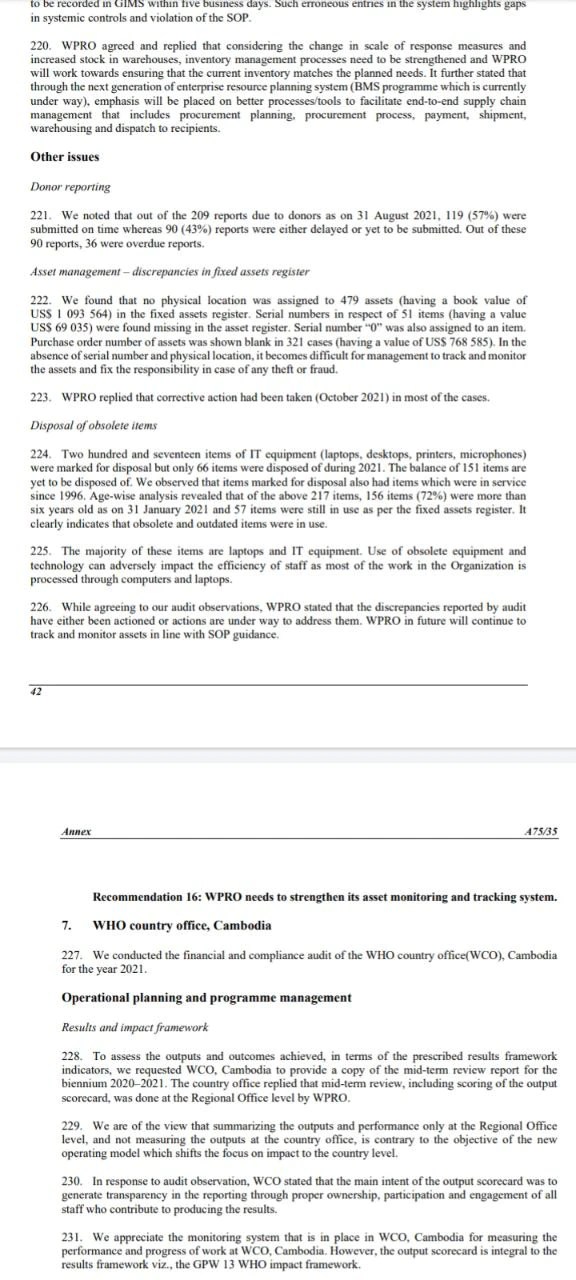
Meanwhile India discovers irregularities in WHO financial audit
By Shabnam Palesa Mohamed | Take Back Power | May 27, 2022
Africa Day, 25 May, has made an impact. In a rare show of African power and solidarity, several African member states objected to proposed International Health Regulations amendments, discussed at the World Health Assembly 75 this week – a move many believe might shake up the World Health Organization’s dominance.
A well placed source shared: “The resolution on IHR amendments was not passed at the WHA, as African countries were concerned that there was inadequate consultation amongst member states, and the process was being rushed. Botswana read the statement on behalf of the 47 AFRO members and I was personally present.”
According to Reuters, “if Africa continues to withhold support, it could block one of the only concrete reforms expected from the meeting, fraying hopes that members will unite on reforms to strengthen the U.N. health agency’s rules as it seeks a central role for itself in global health policy.”
The IHR seeks to define and detail WHO members’ obligations around public health emergencies and other health matters. The United States government proposed 13 controversial IHR amendments, which give the WHO DG Tedros unilateral power to declare actual or potential health emergencies and expect a response in 48 hours.
The draft proposal yet to be formally decided also aims to change article 59 of the IHR, and would accelerate the implementation of future amendments.
Bear in mind, a few countries at the WHA submitted draft resolutions to the IHR, which would need, at least according to the WHO process, four months to be considered. These countries are Australia, Bosnia and Herzegovina, Colombia, European Union and its Member States, Japan, Monaco, Republic of Korea, United Kingdom of Great Britain, Northern Ireland and the United States of America.
The African #WHA75 delegation expressed reservations about these IHR amendments, saying all reforms should be tackled together as part of a “holistic package” at a later stage.
“The African region shares the view that the process should not be fast tracked…,” Moses Keetile, deputy permanent secretary in Botswana’s health ministry, told the assembly on Tuesday on behalf of the Africa region.
“We find that they are going too quickly and these sorts of reforms can’t be rushed through,” said a concerned African delegate in Geneva. The U.S. mission in Geneva did not respond to a Reuters request for comment.
BRIMI emerges: Brazil, Russia, Iran, Malaysia and India
Brazil and Russia form part of the BRICS initiative with Brazil, Russia, India, China and South Africa. Iran and Malaysia are reported to have also expressed reservations to the proposed IHR amendments, while Russia and Brazil seem set to make big moves on international health policies, or possibly even exit the WHO. Meanwhile, India raised audit concerns on irregularities with WHO financials.
A civil society World Health Assembly monitor shared “Just for your interest, from the external audit done by India team, who yesterday during the financial comittee stated that they feel very disappointed that their audit has been ignored by WHO.”
Time line, duplication, and waste of funding resources
The IHR amendments discussions are parallel to talks on a potential new pandemic treaty (#PandemicAccord) , raising concerns over duplication and waste of funding handed to the WHO.
Given the trajectory, it appears that both the IHR amendments and the new pandemic accord, if successful, will converge on the world in 2024, unless countries decide to curtail the WHO’s power and take charge of their health.
This 2024 date was highlighted in the working group on IHR amendments: “Delegates welcomed the final report of the Working Group on strengthening WHO preparedness and response to health emergencies which, among other things, proposed a process for taking forward potential amendments to the IHR (2005). They agreed to continue the group, with a revised mandate and name (the “Working Group on IHR amendments” (WGIHR)) to work exclusively on consideration of proposed IHR amendments. Member States also requested the Director-General to convene an IHR Review Committee to make technical recommendations on the proposed amendments that may be submitted. The Working Group will propose a package of targeted amendments for consideration by the Seventy-seventh Health Assembly.”
“Several developing countries have said that the WHO has too many platforms for negotiation, and it is simply not manageable,” said Nithin Ramakrishnan, consultant for the Third World Network.
US senators start to push back on WHO overreach
According to the Daily Caller
Republican senator Ron Johnson … introduced legislation Thursday that would push back against the World Health Organization’s (WHO) overreach and ensure the Senate has power over its pandemic treaty.
The Daily Caller first obtained the legislation, titled the No WHO Pandemic Preparedness Treaty Without Senate Approval Act, which was spearheaded by Johnson and has 15 cosponsors. The bill mentions the WHO creating an intergovernmental negotiating body (INB) and, if passed, would require any agreement produced by the INB to be submitted to the Senate as a treaty in an effort to provide more transparency on the administration.
The lawmakers believe they need to start fighting to prevent the WHO from creating an INB.
“The World Health Organization, along with our federal health agencies, failed miserably in its response to COVID-19. Its failure should not be rewarded with a new international treaty that would increase its power at the expense of American sovereignty. What the WHO does need is greater accountability and transparency,” Johnson told the Daily Caller prior to officially introducing the legislation.
“This bill makes clear to the Biden administration that any new WHO pandemic agreement must be deemed a treaty and submitted to the Senate for ratification. The sovereignty of the United States is not negotiable,” Johnson continued.
Also in the US, Senator Sen. Rick Scott, R-Fla., is introducing legislation aimed at curtailing the power of the World Health Organization (WHO). This is welcome but ironic, as the amendments were proposed by the US Department of Health and Human Services. The bill, introduced Thursday, would prevent U.S. officials from being bound to orders or Republican directives given by the WHO or it’s branches. “In addition, it would require U.S. officials to oppose changes to the WHO charter until the House and the Senate agree to adopt the change in a joint resolution of Congress.”
Fact checkers spinning denial of sovereignty threat
Meanwhile, there is a clear spin attempt from establishment media against opposition to the IHR amendments and the WHO in general. A FactCheck article states “The World Health Organization can make recommendations after the declaration of a global emergency, but it has no control over any nation’s decisions. Yet conservatives in the U.S. falsely claim that amendments proposed by the Biden administration to existing global health regulations, and a new WHO pandemic treaty, will threaten U.S. sovereignty.”
It is not clear whether the writer fully understands the implications of the proposed IHR amendments, a new #PandemicAccord, sanctions for non-compliance, or the clear erosion of personal autonomy, national sovereignty, and democratic values.
The WHO and the IHR were spotlighted at the World Council for Health’s successful Better Way Conference, and a video presentation by WHO expert Dr Astrid Stuckelberger will soon be released. Dr Stuckelberger reminded the audience that the WHO is a small part of a much bigger UN/WEF machine.
Two years after the disastrous mismanagement of Coronavirus, it’s time the world thinks about and acts on a better way for health than giving power away to the WHO, which ignores its own standards on necessity, reasonableness, and proportionality.
That time is now. KeNako.
or go to
Aletho News Archives – Video-Images

Global Times | October 25, 2026
By portraying Chinese characters as perpetrators of ruthless violence while casting Japanese Self-Defense Forces (SDF) intelligence operatives as defenders, the season 2 of the Japanese drama Vivant has recently drawn criticism from Chinese netizens, who argue that its depiction turns historical reality on its head while ignoring Japan’s wartime atrocities.
The TBS drama series – a spy suspense story in which an alleged unofficial intelligence unit of the SDF operates across the globe — has attracted a passionate fanbase. Its currently airing season 2 opened with a household rating of 18.8 percent, the highest for a TV drama this year, according toa commentary article by Japanese media Toyo Keizai.
What draws attention is the portrayal of the enemies in the series, the article noted. Scenes in which the Chinese organization subjects kidnapped members of the SDF unit to brutal torture are repeated with unrelenting intensity.
It is rare for Japanese TV dramas to explicitly portray a real-life country as the enemy, the article noted.
Japanese Prime Minister Sanae Takaichi also made a reference to the drama, saying that she has been recording Vivant and hopes to binge-watch it over the year-end and New Year holidays, according to Japanese media outlets.
China’s CCTV News report on Sunday revealed that the drama features scenes in which Chinese personnel cut off the fingers of and stab Japanese intelligence operatives in the abdomen. Such acts bear striking similarities to the torture inflicted on Chinese nationals by invading Japanese troops during the World War II.
The drama distorts the truth by attributing these atrocities to modern Chinese characters. Beneath the surface, it subtly glorifies Japan’s cross-border overseas operations, blurs the functional boundaries of the SDF and implicitly promotes an expansionist narrative, per CCTV News. … continue
 Aletho News If Americans Knew No Tricks Zone
