Is Canada Huawei Arrest Attempt to Sabotage Trump Xi Talks?
By F. William Engdahl – New Eastern Outlook – 19.12.2018
The arrest of the CFO of the China’s largest telecoms equipment company, Huawei, carries hallmarks of deep state or behind-the-scenes sabotage designed to rupture recent progress between US President Trump and China President Xi Jinping on strategic issues. Here are some elements of the case that smack of insider sabotage from the US side, with complicity of Five Eyes member Canada.
After months of trade tariff clashes between USA and China, US President Donald Trump met with China President Xi Jinping during the Buenos Aires G-20 Summit. There the two issued a positive joint statement in which it was stated that the US on January 1 will impose a “cease-fire” and freeze current tariffs at 10% on the $200 billion of Chinese imports to the US, not raising it to 25% as scheduled. For his part, Xi agreed to resume buying US soybeans and other agriculture and energy products to cut the trade imbalance. Most interesting and little-discussed in western media coverage, on the US request, Xi also agreed to list the controversial chemical Fentanyl as a Controlled Substance, meaning that people selling Fentanyl to the United States will be subject to China’s maximum penalty under the law.
As well, they agreed to immediately begin negotiations on key US issues including forced technology transfer, intellectual property protection, non-tariff barriers, cyber intrusions and cyber theft, services and agriculture to be completed within 90 days or face resumption of the planned 25% tariff raise.
The offer by Xi to control Fentanyl, one of the most deadly synthetic drugs that has caused tens of thousands of deaths in the USA, was notable. According to U.S. law enforcement and drug investigators, China is the main supplier of fentanyl to the United States. There criminal organizations mix the Fentanyl powder with heroin. Also according to the US DEA, China companies ship Fentanyl to key points in Canada and Mexico. From Mexico it is usually repackaged by the Mexican drug cartels and smuggled into the US.
Canada Surprise?
In other words China had agreed to open strategic issues in bilateral relations that could have major positive implications for resolving the trade conflicts and other issues not public. On December 5 in Vancouver Canadian authorities arrested Meng Wanzhou, the CFO and board member of China’s Huawei Technologies Co Ltd. She is also daughter of the founder and CEO.
The arrest, reportedly on charges of illegal activities in regard to US sanctions on Iran, is unprecedented. In August the US President signed an order banning Huawei hardware in US government communications networks on grounds of national security. Huawei is at the heart of China’s vigorous effort to dominate the emerging 5G communications networks. The company is today the world’s second largest smartphone maker after Samsung and ahead of Apple and the world’s largest manufacturer of telecom network equipment with $92 billion in sales. US President Trump in August authorized a ban on the company’s hardware in US government networks, citing national security concerns – particularly in relation to the rollout of 5G networks.
That there have been growing conflicts between China and Washington over Huawei is clear. What is bizarre about the Canadian arrest of Meng, now on bail and awaiting extradition to the US, is the fact that it took place on the same day Trump and Xi in Buenos Aires were engaged in critical trade talks. According to Trump National Security adviser, John Bolton, the President was not informed beforehand of the Canadian arrest plan.
Whatever the case with many charges of hidden espionage devices embedded in Huawei technology, or Iran sanctions violations, the Canadian arrest of CFO Meng Wanzhou is having explosive consequences inside China. The CCP People’s Daily, in an editorial, wrote on December 9, “To treat a Chinese citizen like a serious criminal, to roughly trample their basic human rights, and to dishonor their dignity, how is this the method of a civilized country? How can this not make people furious?”
In an unusual step, in the midst of the fray, Donald Trump announced that if necessary to conclude positive China trade talks, he would be ready to intervene with the US Justice Department into the controversy. On December 12 in a Reuters interview Trump stated, “Whatever’s good for this country, I would do. If I think it’s good for what will be certainly the largest trade deal ever made – which is a very important thing – what’s good for national security – I would certainly intervene if I thought it was necessary.”
Beijing Response
So far there are more unanswered questions than answers. However, it appears that Beijing is being extremely careful not to allow the affront–ordinarily a huge face loss for the Chinese to have one of their national champion company senior people treated so–to disrupt relations with the Trump Administration. Rather than retaliate by going after the many top US executives in China, it arrested a former Canadian diplomat in Beijing on suspicion of “endangering national security,” as well as a Canadian entrepreneur with business ties to North Korea.
The connections of that former Canadian diplomat are more than interesting.
Michael Kovrig previously worked as a Canadian diplomat in Beijing, Hong Kong and the United Nations. Chinese national security police took him into custody on December 10 in Beijing. Kovrig is officially listed as “North East Asia adviser” for something called the International Crisis Group.
The International Crisis Group is an NGO with a knack for being involved in key conflict zones such as Myanmar. The magazine Third World Quarterly in a peer-reviewed article in 2014 accused the ICG of “manufacturing” crises.
It was founded by Trump nemesis and Hillary Clinton supporter, George Soros. The Trustees of Kovrig’s employer, the International Crisis Group, include some very notable names. One is of course founder and funder, George Soros. Another trustee is a Canadian billionaire, Frank Guistra. Make a note of the name as it is likely to appear in the news in coming weeks as details emerge of FBI and other US investigations into illegal or shady dealings of the tax-exempt Clinton Foundation. Frank Giustra President & CEO, Fiore Financial Corporation, is a big donor to the Clinton Foundation where he also sits on the board.
His Giustra Foundation works with Elevate Social Businesses, formerly Clinton Giustra Enterprise Partnership, the International Crisis Group, Global Refugee Sponsorship Initiative, and other partners. Guistra’s UrAsia Energy Ltd. appears in the investigation of the infamous Uranium One scandal during Hillary Clinton’s term as Secretary of State, which some believe is the real “Russiagate” scandal. Soon we will know more as litigation in the US proceeds.
In sum, it appears that Xi Jinping has chosen a highly interesting target for retaliation in the Canadian arrest of Huawei’s CFO. To date it appears that, if it were the aim of certain dark networks in US and Canadian governments and intelligence to sabotage any constructive USA-China dialogue by the unprecedented arrest of the Huawei senior executive, it may have backfired. The next weeks will tell more.
Let’s Boycott Israel and Its Friends
If you want change, begin to play hardball

By Philip Giraldi • Unz Review • December 18, 2018
In his recent article “Averting World Conflict with China” Ron Unz has come up with an intriguing suggestion for the Chinese government to turn the tables on the December 1st arrest of Meng Wanzhou in Canada. Canada detained Mrs. Meng, CFO of the world’s largest telecoms equipment manufacturer Huawei, at the request of the United States so she could be extradited to New York to face charges that she and her company had violated U.S. sanctions on Iran. The sanctions in question had been imposed unilaterally by Washington and it is widely believed that the Trump Administration is sending a signal that when the ban on purchasing oil from Iran comes into full effect in May there will be no excuses accepted from any country that is unwilling to comply with the U.S. government’s demands. Washington will exercise universal jurisdiction over those who violate its sanctions, meaning that foreign officials and heads of corporations that continue to deal with Iran can be arrested when traveling internationally and will be extradited to be tried in American courts.
There is, of course, a considerable downside to arresting a top executive of a leading foreign corporation from a country that is a major U.S. trading partner and which also, inter alia, holds a considerable portion of the U.S. national debt. Ron Unz has correctly noted the “…extraordinary gravity of this international incident and its potential for altering the course of world history.” One might add that Washington’s demands that other nations adhere to its sanctions on third countries opens up a Pandora’s box whereby no traveling executives will be considered safe from legal consequences when they do not adhere to policies being promoted by the United States. Unz cites Columbia’s Jeffrey Sachs as describing it as “almost a U.S. declaration of war on China’s business community.” If seizing and extraditing businessmen becomes the new normal those countries most affected will inevitably retaliate in kind. China has already detained two traveling Canadians to pressure Ottawa to release Mrs. Meng. Beijing is also contemplating some immediate retaliatory steps against Washington to include American companies operating in China if she is extradited to the U.S.
Ron Unz has suggested that Beijing might just want to execute a quid pro quo by pulling the licenses of Sheldon Adelson’s casinos operating in Macau, China and shutting them down, thereby eliminating a major source of his revenue. Why go after an Israeli-American casino operator rather than taking steps directly against the U.S. government? The answer is simple. Pressuring Washington is complicated as there are many players involved and unlikely to produce any positive results while Adelson is the prime mover on much of the Trump foreign policy, though one hesitates to refer to it as a policy at all.
Adelson is the world’s leading diaspora Israel-firster and he has the ear of the president of the United States, who reportedly speaks and meets with him regularly. And Adelson uses his considerable financial resources to back up his words of wisdom. He is the fifteenth wealthiest man in America with a reported fortune of $33 billion. He is the number one contributor to the GOP having given $81 million in the last cycle. Admittedly that is chump change to him, but it is more than enough to buy the money hungry and easily corruptible Republicans.
In a certain sense, Adelson has obtained control of the foreign policy of the political party that now controls both the White House and the Senate, and his mission in life is to advance Israeli interests. Among those interests is the continuous punishment of Iran, which does not threaten the United States in any way, through employment of increasingly savage sanctions and threats of violence, which brings us around to the arrest of Meng and the complicity of Adelson in that process. Adelson’s wholly owned talking head National Security Adviser John Bolton reportedly had prior knowledge of the Canadian plans and may have actually been complicit in their formulation. Adelson has also been the major force behind moving the U.S. Embassy to Jerusalem, has also convinced the Administration to stop its criticism of the illegal Israeli settlements on Arab land and has been instrumental in cutting off all humanitarian aid to the Palestinians. He prefers tough love when dealing with the Iranians, advocating dropping a nuclear bomb on Iran as a warning to the Mullahs of what more might be coming if they don’t comply with all the American and Israeli demands.
Meanwhile another Israeli, Haim Saban has performed similar work with the Democrats, contributing $5 million to their coffers, making him the top donor to the party. Saban has said that he is a “one issue guy, and my issue is Israel.”
Of course, one might reasonably argue that America’s problem with Jews who are passionately attached to Israel funding and controlling the major political parties is self-generated, that no one should be allowed to fund any political party to such an extent that one obtains control over policies. But that is an argument that will have to be directed at the Supreme Court, which permitted corporations to be treated as persons with its Citizens United ruling, allowing virtually unlimited money to flow into political PACs as a First Amendment right.
The lopsided wag-the-dog relationship with Israel is so dangerous to actual American interests in so many ways that the United States is now approaching a precipice and might soon find itself plummeting to ruin. Israel, not Russia, constantly interferes in the functioning of America’s remaining democracy. Fighting Israel’s wars and protecting it from any criticism have debased the value of being an American citizen and literally impoverished the country under a mountain of debt. The U.S. has been victimized by terrorism, much of which can be traced back to Israeli roots, and Washington is now isolated globally as the United States has become more and more like Israel, a militarized state, politically corrupt and abandoning basic liberties.
How does one right the sinking ship? For starters, the Ron Unz formula for correcting the problem with China provides an excellent roadmap. Israel and its friends do not have a grip on congress, the White House and the media because they are wonderful warm people that others find to be sympathetic. It is difficult even to imagine a scintillating conversation with a malignant toad like Sheldon Adelson. Israel’s ability to corrupt and misdirect is all based on Jewish money, a process in which Zionist oligarchs buy their way to power and access. So the solution is to hit back where it really hurts – boycott Israel and Israeli products and do the same for the companies that are the sources of income for the American Jews who are the principal supporters of the Zionist project.
The United States Congress is currently moving to make it illegal to openly advocate boycotts of Israel or even to inquire about doing so, while 25 states have already also done the same to a greater or lesser extent. Last week a speech therapist in Texas was fired from a job she had held for nine years because she refused to sign an oath affirming that she would not boycott Israel. It is a measure of Jewish power in the U.S. that American politicians choose to provide cover for Israel’s misdeeds even if it means the end of the First Amendment and free speech. But punitive steps intended to intimidate any and all critics of Israel aside, there is no reason why consumers cannot exercise judgement over what they buy and what they are supporting through their spending. If you want to visit Las Vegas, by all means go, but don’t patronize the casinos and hotels owned by Sheldon Adelson, which include The Venetian and Sands Resort.
Democratic party major donor Haim Saban, meanwhile, is a producer of Hollywood children’s entertainment, including the lucrative Power Rangers. You can stop your children from watching his violent programming and tell the network’s advertisers why you are doing so. And then there are businessmen including Bernard Marcus, who is a co-founder of Home Depot and a major supporter of Israel, and Robert Kraft, owner of the New England Patriots. No one really has to spend $1000 to go to a football game, particularly if the owner is a good friend of Benjamin Netanyahu, and if you need something for your home or are seeking entertainment, choose to spend your dollars somewhere else. Readers can do the homework for the businesses and services that they normally patronize. If outspoken advocates for Israel own the company, take your dollars elsewhere.
As it is nearly impossible in the United States to vote for a politician who is in any way critical of Israel, those who are opposed to the terrible damage that the Israelis and their domestic lobby are doing to the U.S. can instead vote with their purchasing power. It does not afford the same pleasure as “throwing the bums out,” but there will be considerable satisfaction in being able to strike back against a powerful lobby that is so hubristic and insensitive to any criticism that it has become completely tone deaf.
Apart from domestic considerations, observers have noted that Israeli treatment of the Palestinians has been worse than apartheid under South Africa yet South Africa was subjected to multiple boycotts and bans on its participation in international fora, to include even sporting competitions. It is past time to do the same to Israel, which has been shooting dead hundreds of unarmed Palestinians for months now without paying any price at all. Boycotting Israel internationally is a good start. It is non-violent and proportionate and it just might be an idea that will spread and finally bring about some payback for what Prime Minister Benjamin Netanyahu and his cabal of war criminals have done and continue to do. As the end of 2018 approaches, it would be something to look forward to if 2019 just might turn out to be the year of the international Israel Boycott.
Philip M. Giraldi, Ph.D., is Executive Director of the Council for the National Interest, a 501(c)3 tax deductible educational foundation that seeks a more interests-based U.S. foreign policy in the Middle East. Website is http://www.councilforthenationalinterest.org, address is P.O. Box 2157, Purcellville VA 20134 and its email is <a:inform@cnionline.org” title=”mailto:inform@cnionline.org” href=”mailto:inform@cnionline.org”>inform@cnionline.org</a:inform@cnionline.org”>.
Averting World Conflict with China
The PRC Should Retaliate by Targeting Sheldon Adelson’s Chinese Casinos
By Ron Unz • Unz Review • December 13, 2018
As most readers know, I’m not a casual political blogger and I prefer producing lengthy research articles rather than chasing the headlines of current events. But there are exceptions to every rule, and the looming danger of a direct worldwide clash with China is one of them.
Consider the arrest last week of Meng Wanzhou, the CFO of Huawei, the world’s largest telecom equipment manufacturer. While flying from Hong Kong to Mexico, Ms. Meng was changing planes in the Vancouver International Airport airport when she was suddenly detained by the Canadian government on an August US warrant. Although now released on $10 million bail, she still faces extradition to a New York City courtroom, where she could receive up to thirty years in federal prison for allegedly having conspired in 2010 to violate America’s unilateral economic trade sanctions against Iran.
Although our mainstream media outlets have certainly covered this important story, including front page articles in the New York Times and the Wall Street Journal, I doubt most American readers fully recognize the extraordinary gravity of this international incident and its potential for altering the course of world history. As one scholar noted, no event since America’s deliberate 1999 bombing of China’s embassy in Belgrade, which killed several Chinese diplomats, has so outraged both the Chinese government and its population. Columbia’s Jeffrey Sachs correctly described it as “almost a US declaration of war on China’s business community.”
Such a reaction is hardly surprising. With annual revenue of $100 billion, Huawei ranks as the world’s largest and most advanced telecommunications equipment manufacturer as well as China’s most internationally successful and prestigious company. Ms. Meng is not only a longtime top executive there, but also the daughter of the company’s founder, Ren Zhengfei, whose enormous entrepreneurial success has established him as a Chinese national hero.
Her seizure on obscure American sanction violation charges while changing planes in a Canadian airport almost amounts to a kidnapping. One journalist asked how Americans would react if China had seized Sheryl Sandberg of Facebook for violating Chinese law…especially if Sandberg were also the daughter of Steve Jobs.
Indeed, the closest analogy that comes to my mind is when Prince Mohammed bin Salman of Saudi Arabia kidnapped the Prime Minister of Lebanon earlier this year and held him hostage. Later he more successfully did the same with hundreds of his wealthiest Saudi subjects, extorting something like $100 billion in ransom from their families before finally releasing them. Then he may have finally over-reached himself when Washington Post columnist Jamal Khashoggi, a Saudi dissident, was killed and dismembered by a bone-saw at the Saudi embassy in Turkey.
We should actually be a bit grateful to Prince Mohammed since without him America would clearly have the most insane government anywhere in the world. As it stands, we’re merely tied for first.
Since the end of the Cold War, the American government has become increasingly delusional, regarding itself as the Supreme World Hegemon. As a result, local American courts have begun enforcing gigantic financial penalties against foreign countries and their leading corporations, and I suspect that the rest of the world is tiring of this misbehavior. Perhaps such actions can still be taken against the subservient vassal states of Europe, but by most objective measures, the size of China’s real economy surpassed that of the US several years ago and is now substantially larger, while also still having a far higher rate of growth. Our totally dishonest mainstream media regularly obscures this reality, but it remains true nonetheless.
Provoking a disastrous worldwide confrontation with mighty China by seizing and imprisoning one of its leading technology executives reminds me of a comment I made several years ago about America’s behavior under the rule of its current political elites:
Or to apply a far harsher biological metaphor, consider a poor canine infected with the rabies virus. The virus may have no brain and its body-weight is probably less than one-millionth that of the host, but once it has seized control of the central nervous system, the animal, big brain and all, becomes a helpless puppet.
Once friendly Fido runs around foaming at the mouth, barking at the sky, and trying to bite all the other animals it can reach. Its friends and relatives are saddened by its plight but stay well clear, hoping to avoid infection before the inevitable happens, and poor Fido finally collapses dead in a heap.
Normal countries like China naturally assume that other countries like the US will also behave in normal ways, and their dumbfounded shock at Ms. Meng’s seizure has surely delayed their effective response. In 1959, Vice President Richard Nixon visited Moscow and famously engaged in a heated “kitchen debate” with Premier Nikita Khrushchev over the relative merits of Communism and Capitalism. What would have been the American reaction if Nixon had been immediately arrested and given a ten year Gulag sentence for “anti-Soviet agitation”?
Since a natural reaction to international hostage-taking is retaliatory international hostage-taking, the newspapers have reported that top American executives have decided to forego visits to China until the crisis is resolved. These days, General Motors sells more cars in China than in the US, and China is also the manufacturing source of nearly all our iPhones, but Tim Cook, Mary Barra, and their higher-ranking subordinates are unlikely to visit that country in the immediate future, nor would the top executives of Google, Facebook, Goldman Sachs, and the leading Hollywood studios be willing to risk indefinite imprisonment.
Canada had arrested Ms. Meng on American orders, and this morning’s newspapers reported that a former Canadian diplomat had suddenly been detained in China, presumably as a small bargaining-chip to encourage Ms. Meng’s release. But I very much doubt such measures will have much effect. Once we forgo traditional international practices and adopt the Law of the Jungle, it becomes very important to recognize the true lines of power and control, and Canada is merely acting as an American political puppet in this matter. Would threatening the puppet rather than the puppet-master be likely to have much effect?
Similarly, nearly all of America’s leading technology executives are already quite hostile to the Trump Administration, and even if it were possible, seizing one of them would hardly be likely to sway our political leadership. To a lesser extent, the same thing is true about the overwhelming majority of America’s top corporate leaders. They are not the individuals who call the shots in the current White House.
Indeed, is President Trump himself anything more than a higher-level puppet in this very dangerous affair? World peace and American national security interests are being sacrificed in order to harshly enforce the Israel Lobby’s international sanctions campaign against Iran, and we should hardly be surprised that the National Security Adviser John Bolton, one of America’s most extreme pro-Israel zealots, had personally given the green light to the arrest. Meanwhile, there are credible reports that Trump himself remained entirely unaware of these plans, and Ms. Meng was seized on the same day that he was personally meeting on trade issues with Chinese President Xi. Some have even suggested that the incident was a deliberate slap in Trump’s face.
But Bolton’s apparent involvement underscores the central role of his longtime patron, multi-billionaire casino-magnate Sheldon Adelson, whose enormous financial influence within Republican political circles has been overwhelmingly focused on pro-Israel policy and hostility towards Iran, Israel’s regional rival.
Although it is far from clear whether the very elderly Adelson played any direct personal role in Ms. Meng’s arrest, he surely must be viewed as the central figure in fostering the political climate that produced the current situation. Perhaps he should not be described as the ultimate puppet-master behind our current clash with China, but any such political puppet-masters who do exist are certainly operating at his immediate beck and call. In very literal terms, I suspect that if Adelson placed a single phone call to the White House, the Trump Administration would order Canada to release Ms. Meng that same day.
Adelson’s fortune of $33 billion ranks him as the 15th wealthiest man in America, and the bulk of his fortune is based on his ownership of extremely lucrative gambling casinos in Macau, China. In effect, the Chinese government currently has its hands around the financial windpipe of the man ultimately responsible for Ms. Meng’s arrest and whose pro-Israel minions largely control American foreign policy. I very much doubt that they are fully aware of this enormous, untapped source of political leverage.
Over the years, Adelson’s Chinese Macau casinos have been involved in all sorts of political bribery scandals, and I suspect it would be very easy for the Chinese government to find reasonable grounds for immediately shutting them down, at least on a temporary basis, with such an action having almost no negative repercussions to Chinese society or the bulk of the Chinese population. How could the international community possibly complain about the Chinese government shutting down some of their own local gambling casinos with a long public record of official bribery and other criminal activity? At worst, other gambling casino magnates would become reluctant to invest future sums in establishing additional Chinese casinos, hardly a desperate threat to President Xi’s anti-corruption government.
I don’t have a background in finance and I haven’t bothered trying to guess the precise impact of a temporary shutdown of Adelson’s Chinese casinos, but it wouldn’t surprise me if the resulting drop in the stock price of Las Vegas Sands Corp would reduce Adelson’s personal net worth were by $5-10 billion within 24 hours, surely enough to get his immediate personal attention. Meanwhile, threats of a permanent shutdown, perhaps extending to Chinese-influenced Singapore, might lead to the near-total destruction of Adelson’s personal fortune, and similar measures could also be applied as well to the casinos of all the other fanatically pro-Israel American billionaires, who dominate the remainder of gambling in Chinese Macau.
The chain of political puppets responsible for Ms. Meng’s sudden detention is certainly a complex and murky one. But the Chinese government already possesses the absolute power of financial life-or-death over Sheldon Adelson, the man located at the very top of that chain. If the Chinese leadership recognizes that power and takes effective steps, Ms. Meng will immediately be put on a plane back home, carrying the deepest sort of international political apology. And future attacks against Huawei, ZTE, and other Chinese technology companies would not be repeated.
China actually holds a Royal Flush in this international political poker game. The only question is whether they will recognize the value of their hand. I hope they do for the sake of America and the entire world.
Huawei CFO Detained in Canada to Face Fraud Charges in US
Sputnik – December 7, 2018
Canadian prosecutors said Friday that the US is seeking the extradition of Huawei Chief Financial Officer (CFO) Meng Wanzhou on suspicion of engaging in conspiracies to defraud multiple financial institutions and contravene US sanctions on Iran.
It isn’t clear how many charges she faces, but each one carries a maximum sentence of 30 years behind bars.
Meng, the Chinese telecommunication giant’s CFO and deputy board chair, was arrested in Vancouver on Saturday but the US Department of Justice did not announce the arrest until Wednesday. Canada’s Globe and Mail broke the story, based on law enforcement sources, that she had been arrested for violating US sanctions against Iran.
A gag order, or as it is called in Canada, a publication ban, was imposed on Meng’s case. Several media outlets have challenged the gag in court. That ban was eventually lifted by a judge in Vancouver, BBC reports.
The court is still considering whether it will grant Meng bail. The Canadian government prosecutor has told the judge Meng has substantial resources in China and is a flight risk.
The prosecutor alleged that Meng deceived American lawyers regarding the connection between the company SkyCom and Huawei. Using SkyCom as a secret proxy, Huawei sold products to Iran in breach of US sanctions between 2009 and 2014.
Huawei is the second-largest telecommunications equipment manufacturer in the world, Sputnik News reported.
The US has introduced a number of measures to curb the flow of technology from Huawei and another telecom manufacturer, ZTE Corp, believing that the Chinese government have could used the tech for surveillance in the past year. Huawei products have also been banned by the Pentagon from being sold on US military bases.
‘Arrogant jingoist policy’: Lavrov blasts Washington’s request to arrest Huawei CFO
RT | December 7, 2018
Washington’s “revolting” policy of stretching its own criminal laws to other countries’ territories has to end, Russia’s Foreign Minister Sergei Lavrov said as Huawei’s top executive faces extradition to the US.
Lavrov slammed America’s habit of applying its laws “extraterritorially” and dubbed it “revolting to the vast majority of normal states and normal people.”
The minister’s outrage follows the recent arrest of Huawei’s chief financial officer, Meng Wanzhou in Vancouver, Canada.The businesswoman, who is also the daughter of the company’s founder, was apprehended on Sunday at the request of the US, and is now facing extradition. The charges levied against Meng remain unknown, but it is believed they relate to possible violations of US sanctions placed on Iran.
Talking to reporters at an OSCE event in Milan, Lavrov said that Washington’s approach has no support in the world and alienates the US’ own partners.
Chinese diplomats protested Meng’s arrest, saying that she didn’t violate any US or Canadian laws.
The Foreign Ministry’s spokesperson, Geng Shuang, demanded that Washington and Ottawa clarify the reasons behind the executive’s detention and “immediately” release her. Chinese officials also said that the arrest itself “seriously harmed the human rights of the victim.”
Mixed US Midterms Results Offer Chance for Peace Agenda With Russia, China
Sputnik – 09.11.2018
WASHINGTON – The mixed results of the US midterm congressional elections resulting in a divided Congress give President Donald Trump the chance to revive the agenda for improving relations with Russia and pull out of foreign wars that he was elected on in 2016, analysts told Sputnik.
With several results not yet in, the Democrats looked likely to have a majority of around 13 to 15 seats in the House of Representatives while the Republicans extended their Senate majority from 51 out of 100 seats to 54 or 55.
Trump Faces Post-Election Foreign Policy Opportunity
Trump now had room for maneuver on his foreign policy agenda, but it remained to be seen whether he would take advantage of it, political commentator and professor John Walsh said.
“Let us see whether Trump can now return to his original agenda of ‘getting along’ with Russia and China: That is the big question,” Walsh said.
During his 2016 presidential election campaign, Trump challenged the foreign policy consensus of US hegemony, Walsh recalled.
“If you look at his agenda, he wishes to make the United States less the imperial nation and more a normal nation albeit the number one among them. Let us see how this goes,” Walsh said.
Even if Trump was blocked from achieving this goal, he had dramatically changed the issues and terms of debate on US foreign policy in national politics, Walsh pointed out.
“Whether he succeeds or not, Trump indicates a turn away from empire not out of humility, but out of the recognition of reality. Let us hope he can carry this as far as possible whether or not he succeeds completely… The farther he goes, the farther we are from war and even nuclear Holocaust,” Walsh said.
Whether Trump ultimately succeeds or fails, his success so far signals a recognition — whether profound or dim — that the US unipolar moment is over, Walsh emphasized. “Let us praise the passage of that ugly moment,” Walsh said.
The losses suffered by Trump’s Republican Party in the midterm elections were relatively minor and fell within the normal rhythms of US politics, Walsh observed.
“There was entirely too much drama about the midterms. An incumbent in his first term always suffers a loss in the House of Representatives. That is what we saw. And as predicted long ago, the Republicans held the Senate: Surprise,” Walsh said.
Trump was likely to face more plots to undermine him from the US security and political establishments, Walsh cautioned.
“Now let us see what the Deep State will do. They can impeach him in the House but not convict him in the Senate should they choose to go that route,” he said.
Trump Likely to Be Stalled on Domestic Front
On the domestic front, the best Trump could hope for was a deadlocked Congress, California State University Chico Professor Emeritus of Political Science Beau Grosscup said.
“[In] domestic dynamics, Trump will continue to be Trump but his ‘green light’ and enabling House committee system is no longer there,” Grosscup said. “Expect Trump to play the victim (aided by the House Republican Party) when Democrats even mention investigation or impeachment.”
On the legislative front, Republican efforts to cut social security in the name of debt that had been generated due to previous enormous concessions to Wall Street would be stalled, Grosscup predicted.
Trump would also carry reduced political influence or coattails to help candidates supporting him into the 2020 presidential elections, Grosscup said.
See also:
2018 US Midterms: Why Trump Says They Were a ‘Tremendous Success’
US Blocks $199Mln in Assets Belonging to Iran, Syria, N Korea in 2017 – Treasury
Sputnik – 07.11.2018
WASHINGTON – The United States blocked nearly $200 million in assets belonging to Syria, Iran, and North Korea in 2017 as a result of the sanctions imposed on the three countries, the Treasury Department said in its annual report to Congress released on Wednesday.
“Approximately $199 million in assets relating to the three designated state sponsors of terrorism in 2017 have been identified by OFAC as blocked pursuant to economic sanctions imposed by the United States,” the report said.
The statement comes days after the US fully reinstated sanctions against Iran, including measures that curb Tehran’s oil industry. At the same time, the United States temporarily exempted eight nations — China, Greece, India, Italy, Japan, South Korea, Taiwan and Turkey — from the sanctions on importing oil from Iran.
In May, US President Donald Trump announced that the United States would withdraw from the Iran nuclear agreement, officially known as the Joint Comprehensive Plan of Action, and reimpose sanctions against Tehran that were previously lifted under the accord, including secondary restrictions.
The first round of the US sanctions was reimposed in August, while the second round, targeting over 700 Iranian individuals, entities, banks, aircraft and vessels, came into force this week.
US Withdrawal from INF Treaty: Implications for Asia Pacific
By Arkady SAVITSKY | Strategic Culture Foundation | 23.10.2018
One of the motives behind the US withdrawal from the INF Treaty is its desire to acquire first-strike capability against Russia from Europe, while keeping intact its strategic nuclear arsenal. Another motivation is the need to keep China, America’s fiercest geopolitical challenger, in its crosshairs by forcing it to alter its foreign, defense, and trade policies in order to tip the balance in Washington’s favor. The capability to knock out key infrastructure sites with precision intermediate-range strikes deep inside China, not just in the coastal provinces, is one way to make Beijing more tractable on key issues and force a rollback of its global influence. In April, Adm. Harry Harris, the commander of US Pacific Command, told the Senate Armed Services Committee that the US should renegotiate the INF Treaty to better compete with China. The admiral knew what he was talking about.
China has developed the DF-26 “aircraft carrier-killer” ballistic missile that has now rendered the old US strategy ineffective. Zachary Keck of the National Interest believes the DF-26 intermediate-range ballistic missile could stop the US Navy in its tracks without firing a shot. That threat has to be countered and one way to do it is by knocking it out with land-based, highly accurate missiles. Such systems are cheaper than aircraft carriers and can do the job without exposing thousands of servicemen to the missile threat if used for a first strike. China has been testing a new nuclear-capable, air-launched ballistic missile constructed on the basis of the DF-21 that will help that country improve its warfighting capabilities. Beijing also boasts land-based mobile missile systems (LBMMS) with DF-10 cruise missiles that have a maximum range of 1,500 to 2,000 km. China has to defend itself, and fielding these systems is the only way that it can counteract America’s huge sea, space, and air advantages.
Actually, the process of encircling China with intermediate missiles is going to kick off with the deployment of the Aegis Ashore ballistic missile-defense (BMD) systems Japan has decided to buy. The batteries will be installed in the prefectures of Akita and Yamaguchi. Using the MK-41 launcher, the Aegis Ashore can fire intermediate-range Tomahawk missiles. The deal is a blatant violation of the INF Treaty that Washington accuses Moscow of not complying with.
After a long period of indecision, the US approved the sale of military equipment to Taiwan in September, drawing China’s ire. Last summer, the State Department requested that US Marines be sent to Taiwan under the pretext of safeguarding America’s de facto embassy there. National Security Adviser John Bolton is known for his support of the idea of stationing US troops on Taiwanese soil. Bolton wants to see the China policy revisited. He argues that Taiwan is closer to the Chinese mainland and the disputed islands in the South China Sea than either Okinawa or Guam — giving US forces “greater flexibility for rapid deployment throughout the region should the need arise.” If the ongoing escalation continues, the US could wind up deploying intermediate-range missiles on that friendly island.
Other targets include North Korea and the Russian Far East, especially the Vilyuchinsk naval base on the Kamchatka Peninsula that is home to a fleet of ballistic missile submarines.
Locating and destroying mobile land-based missiles, either from the air or from the ground, is an extremely challenging mission. Fast-flying ballistic delivery technology and stealthy cruise missiles are effective against a wide variety of targets, even if sophisticated air defenses are in place to protect them. The states in the region that are unfriendly to the United States would see their biggest military advantage erode away.
Intermediate-range weapons can accomplish the same missions as strategic weapons. With the high-precision technology the US possesses today, even conventional missiles could inflict damage comparable to that of nuclear strikes. Its ground-based assets boast large magazines and can have numerous reloads at the ready. In theory, the US could impose an arms-control agreement with China on its own terms, using theater weapons as its negotiating leverage. All the countries unfriendly to the US, such as China and North Korea, as well as Russia’s Far East area, will be within the range of fast-hitting, hard to counter, intermediate-range missile systems.
Moreover, with the arms race escalating in the Asia Pacific region, the US could involve itself in some lucrative deals selling conventional intermediate-range missile systems to the countries in that area, such as Japan. A conventional version of some of these weapons will be in high demand, bringing in substantial profits and spurring US economic growth.
So, the US is encouraging an arms race in the Asia Pacific region. It has adopted a policy of encirclement with its potential enemies in the crosshairs of its intermediate-range weapons. It will have the option of destroying key sites with conventional warheads. This policy will inevitably force Russia and China closer together. The militarization of the region will further accelerate. Those targeted by the US will be incentivized to develop weapons systems that can reach the continental US. No one will win and everyone will lose. There is still time to reverse the US decision to leave the INF Treaty.
China says Washington canceled military talks, not Beijing
Press TV – October 4, 2018
China has rejected an allegation by the United States that Beijing has canceled security talks with Washington planned for this month, saying that US officials have “distorted the facts.”
An unnamed US official had told Reuters on Sunday that China had canceled the security meeting between American Secretary of Defense James Mattis and his Chinese counterpart, alleging that China had been unable to make its defense secretary available for the scheduled talks.
On Wednesday, Beijing effectively said that that assertion was a lie.
“Such an argument completely distorts the fact with ulterior motives and is extremely irresponsible,” said China’s Foreign Ministry spokeswoman Hua Chunying in a statement. “The Chinese side expresses strong dissatisfaction.”
Hua said Washington had recently told Beijing that it hoped to postpone the talks.
“The facts are that the United States a few days ago told China it hoped to postpone the second round of the China Diplomatic and Security Dialogue,” she said, adding, “We request [that] related parties stop this sort of behavior of making something out of nothing and spreading rumors.”
Earlier, on Tuesday, Hua said China and the US had previously agreed in principle to hold the dialogue in mid-October.
The security meeting’s first round was held in Washington last year, and its second round was scheduled to take place in Beijing.
Military tensions have surged between China and the US in recent weeks.
Washington often angers Beijing by sending warplanes and warships to territory claimed by China but disputed by other regional countries. The US says that with those deployments, it is practicing what it calls its right to freedom of navigation.
On Tuesday, China condemned that practice.
Additionally, the US has used its domestic laws to impose sanctions on China over Beijing’s decision to purchase military equipment from Russia, including advanced S-400 missile defense systems.
By applying its domestic laws to influence relations between China and Russia, the US is effectively in breach of their sovereignty.
The US has also initiated a trade war with China and has accused it of seeking to influence the US congressional mid-term elections, something that Beijing has strongly denied.
Declassified docs reveal how Pentagon aimed to nuke USSR and China into oblivion
RT | September 2, 2018
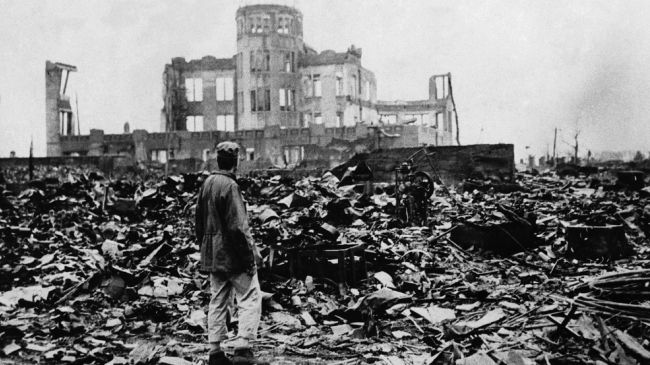
Plans for a nuclear war devised by the US Army in the 1960s considered decimating the Soviet Union and China by destroying their industrial potential and wiping out the bulk of their populations, newly declassified documents show.
A review of the US general nuclear war plan by the Joint Staff in 1964, which was recently published by George Washington University’s National Security Archive project, shows how the Pentagon studied options “to destroy the USSR and China as viable societies.”
The review, conducted two years after the Cuban Missile Crisis, devises the destruction of the Soviet Union “as a viable society” by annihilating 70 percent of its industrial floor space during pre-emptive and retaliatory nuclear strikes.
A similar goal is tweaked for China, given its more agrarian-based economy at the time. According to the plan, the US would wipe out 30 major Chinese cities, killing off 30 percent of the nation’s urban population and halving its industrial capabilities. The successful execution of the large-scale nuclear assault would ensure that China “would no longer be a viable nation,” the review reads.
The Joint Staff had proposed to use the “population loss as the primary yardstick for effectiveness in destroying the enemy society with only collateral attention to industrial damage.” This “alarming” idea meant that, as long as urban workers and managers were killed, the actual damage to industrial targets “might not be as important,” the George Washington University researchers said.
The 1964 plan doesn’t specify the anticipated enemy casualty levels, but – as the researchers note – an earlier estimate from 1961 projected that a US attack would kill 71 percent of the residents in major Soviet urban centers and 53 percent of residents in Chinese ones. Likewise, the 1962 estimate predicted the death of 70 million Soviet citizens during a “no-warning US strike” on military and urban-industrial targets.
The Pentagon continues to rely heavily on nuclear deterrence, and – just like in the 1960s – the US nuclear strategy still regards Russian and Chinese military capabilities as main “challenges” faced by Washington. The latest Nuclear Posture Review, adopted in February, outlined “an unprecedented range and mix of threats” emanating from Beijing and Moscow. The document, which mentions Russia 127 times, cites the modernization of the Russian nuclear arsenal as “troubling” for the US.
The existing nuclear strategy also allows the US to conduct nuclear strikes not only in response to enemies’ nuclear attacks, but also in response to “significant non-nuclear strategic attacks” on the US, its allies and partners.
The newest US Nuclear Posture Review was heavily criticized by Russia and China. Moscow denounced the strategy as “confrontational,” while Beijing described the Pentagon’s approach as an example of “Cold-War mentality.”
Featured Video
The Truth About the Trump Shootings with Ken Silva
or go to
Aletho News Archives – Video-Images
From the Archives
Trans ‘milk’ as good as the real thing – NHS
RT | February 18, 2024
The drug-induced nipple secretions of trans women are as good as mothers’ breast milk for babies, the University of Sussex Hospitals NHS Trust claimed in a letter to campaigners made public in a report by British think tank the Policy Exchange on Sunday.
The healthcare trust’s medical director, Rachel James, argued that the off-label prescription drug cocktail men transitioning to female take in order to produce milk was “similar to the natural hormones which encourage lactation to develop when the baby is newly born.”
“The evidence which is available demonstrates that the milk is comparable to that produced following the birth of a baby,” James wrote in the letter, sent to Children of Transitioners last August.
Biological men who wish to lactate must first take hormones to grow milk glands and then take high doses of either domperidone or metoclopramide to stimulate milk production. Neither drug is approved for this use, though they are occasionally prescribed off-label to biological women who have trouble lactating.
However, domperidone’s own manufacturer, Janssen, warns patients the drug “may cause unwanted side effects affecting the heart in a breastfed baby” and “should be used during breastfeeding only if your physician considers this clearly necessary.” … continue
Blog Roll
 Aletho News
- Seyed M. Marandi: U.S. Strike Imminent – Toward Total War in the Middle East
- Russia Voted Under Fire. Washington Is Loading the Tankers.
- 12 Things Your Oncologist Was Trained Not to Tell You
- Anthrax Attacks Paved Way for COVID-Era ‘Junk Drugs and Vaccines’
- How Real Is the Impact of Western Sanctions on Israel?
- France, You Are Guilty: How Paris Turned Western Sahara into the Maghreb’s Powder Keg
- 2025 Nature Paper Claiming Worsening Global Drought Gets RETRACTED …Heavily Flawed
- Your Milk Is Not the Problem
- The Truth About the Trump Shootings with Ken Silva
- ARE PATIENTS BEING PROPERLY INFORMED ABOUT OZEMPIC?
- If Americans Knew
- Salah Sarsour’s Legal Team Says DHS Has Not Met Its Burden to Prove He Is Deportable
- An analysis of tax forms by The Intercept show Kraft’s charity and LLC have donated to Friends of the IDF and AIPAC’s super PAC.
- Israeli attacks kill four Palestinians in Gaza – Daily Update
- Inside Gaza’s death trap of collapsing, bombed-out buildings
- The everyday items Israel bans from Gaza every day
- Inside the siege, the ruined buildings of Gaza – Daily Update
- Debunking The Claim That Macklemore Has A “History Of Antisemitism”
- CPJ demands release of arrested Palestinian-US journalist near Bethlehem
- Robert Kraft: The Billionaire Friend of Netanyahu Pulling The Strings Behind the Macklemore/Ed Sheeran Blow Up
- Columbia Administered Fund Gives Big Money to Pro-Israel Groups
- No Tricks Zone
- 2025 Nature Paper Claiming Worsening Global Drought Gets RETRACTED …Heavily Flawed
- New Study: ‘Global Drought Shows No Detectable Recent Acceleration Under Climate Warming’
- Economic Masterminds: German Socialists Suggest Taxing Productivity Gains Stemming From Using AI
- The South China Sea Has Not Been Cooperating With The Climate Change Narrative
- Energy Crisis: Germany Enters Heating Season With Historically Low Gas Reserve Fill Levels
- New Study: The Antarctic Ice Sheet Gained Mass From 2020-2024 Due To Staggering Snow And Ice Accumulation
- Study: Ocean Heating Rates From Thousands Of Years Ago ‘Dwarf’ Modern Ocean Heating Rates
- Climate Extremists Target, Attack Large-Scale Power Grid Infrastructure In Germany!
- New Study: Antarctic Ice Melt Has Contributed Less Than 1 Centimeter To Sea Level Rise In The Last 30 Years
- Fear Of Debate: Alarmist German Climate Scientist Calls On Mainstream Media To Discredit Skeptic Voices
 Aletho News