Russia could challenge NATO’s historical air dominance – media
By Ahmed Adel | July 15, 2024
Business Insider reported that NATO had never faced an adversary of Russia’s calibre after World War II, and it would have been difficult for the alliance to establish air superiority over Russian forces. The warning comes as experts have explained the sombre reality that the F-16 fighter jets, a key aircraft in many NATO air force fleets, provided to Kiev will not be a “magic bullet” that Ukrainian President Volodymyr Zelensky and his Western allies expect them to be.
“Russia could challenge NATO’s historical air dominance,” reported the media on July 13 after explaining that this is a change from the scenario that emerged after the Cold War when the West had a clear advantage. “Russia would be a very different opponent. It has the territory and industry to build and field massive and sophisticated air defenses that an opponent may struggle to destroy.”
“The US and its allies, even with fleets of fifth-generation stealth fighter jets, likely would find it difficult to establish the same level of air dominance they’ve largely had since the end of World War II,” the New York-based outlet said.
According to experts cited by the portal, Western aviation has never had the experience of combating air defence systems at a level similar to that of Russia’s. During the conflict in Ukraine, the Russian military proved that it could establish extremely difficult air defence areas for the enemy with powerful radars, electronic warfare systems and missiles.
“The Russians could attempt a surprising and impactful opening attack,” the article warned. “For example, the Russians could target vulnerabilities like satellites to try to disrupt the space-based communications and navigation NATO airpower depends upon.”
The worry that Russia could establish air superiority over NATO, particularly over the bloc’s 30 European members, became a more serious consideration after Russian forces methodically obliterated Ukraine’s air force. Russia so impressively dismantled the Ukrainian air force that the Kiev regime is desperately seeking F-16 fighter jets from Western allies to replenish its fleet, even though experts are saying that the aircraft is now obsolete and unlikely to survive the conflict.
“As soon as the Ukrainians encountered Russian-controlled air space, the F-16’s value would diminish markedly, as would its likelihood of survival,” Harrison Kass wrote for the National Interest. “In a conflict with a great power, China for example, the F-16 would remain on the backbench.”
This is a telling revelation considering the US still uses over 900 F-16s, NATO members, including Turkey, Greece, Poland, and Romania, use hundreds more, as well as US non-NATO allies Israel, Taiwan and South Korea. In effect, the F-16 would be rendered almost useless against Russia given that the Eastern European country’s military is ranked second, one above China, according to the 2024 PowerIndex.
Kass warns Kiev that the good performance of the F-16 fighter jets in Iraq and Afghanistan does not say anything about their capabilities against Russian air defences.
After stressing that “the F-16 fighting falcon era is coming to a rapid end,” Kass concludes that the US-made fighter jet “will not offer a magic bullet for Zelensky” and will merely “buy a little more time.”
Russian President Vladimir Putin has warned that the F-16s supplied to Kiev will be destroyed just like other Western military equipment. Russian Foreign Minister Sergey Lavrov also warned that their appearance in Ukraine will not change anything on the front and that they will be destroyed in the same way as other types of weapons.
Nonetheless, in 2023, several NATO states agreed to supply the Ukrainian armed forces with the fighter jets and launched training programs for Ukrainian pilots. On July 10, US Secretary of State Antony Blinken said that the US and its allies are “underway” in sending the promised F-16 fighter jets to Ukraine.
As Europe and the US are not interested in a viable, pragmatic, and lasting peace agreement in Ukraine which recognises Russian interests in the region and establishes a lasting solution, they are actively prolonging the fighting despite not only the humanitarian consequences but even the weakening of their own military. Whilst NATO members are distracted with training Ukrainian pilots to use fighter jets that are effectively obsolete in any combat with a great power, Russia, as Business Insider has acknowledged, has successfully challenged the air dominance NATO largely enjoyed since the start of the Cold War despite the introduction of fifth-generation fighter jets.
Ahmed Adel is a Cairo-based geopolitics and political economy researcher.
Possible consequences and prospects of Vladimir Putin’s visit to DPRK
By Konstantin Asmolov – New Eastern Outlook – 12.07.2024
The consequences of the visit of the Russian leader to North Korea and the documents signed there are so significant that they can propel the trend of global turbulence. How have Seoul, Beijing and Washington reacted to such a rapprochement between Moscow and Pyongyang and what will be Moscow’s response to the steps taken by Seoul and its allies?
Seoul’s response
Until a certain point, Seoul was ‘the friendliest of the unfriendly countries’ – the Russian president recently noted in a positive way. As Vladimir Putin said on June 5, 2024, within the framework of the International Economic Forum in St Petersburg, “Russia highly appreciates the refusal of ROK to directly supply lethal weapons to Ukraine”.
However, such a demonstrative rapprochement between Pyongyang and Moscow cannot be ignored by Seoul, especially since the content of the Treaty (which contains a military component along the lines of the Soviet-North Korean treaty of 1961) has turned out to match the worst expectations of South Korean analysts.
Even before the visit, South Korean diplomats hinted to the author that Seoul would definitely respond to such a level of cooperation between Moscow and Pyongyang, at least for domestic political and reputation reasons. This response would most likely entail boosting Seoul-NATO cooperation to a similar level. The United States, along with its allies and systemic right-wing politicians, are putting pressure on President Yoon Suk Yeol to take a more anti-Russian stance, especially on the Ukrainian track; Seoul is constantly being convinced that since Pyongyang has been ‘proven’ to be aiding Russia, South Korea has the right to provide similar support to Ukraine, despite all possible risks of retaliatory measures and a significant cooling of relations with Moscow.
In a statement on June 20, 2024, former Ambassador to Russia and current National Security Adviser to the President Chang Ho-jin noted: “Four ships, five organisations and eight individuals from third countries, as well as Russian and North Korean organisations involved in the supply of weapons and oil transshipment between Russia and North Korea, are on the list of independent sanctions… We have also included 243 new items to the list of sanctioned goods exported to Russia, bringing the total number to 1,402 items…We plan on reconsidering the issue of military support for Ukraine, as the government has so far maintained the position that it will not supply lethal weapons to this country”.
Chang’s statement, on the other hand, could not but evoke a threatening reply from Moscow. Vladimir Putin almost immediately declared that the supply of lethal weapons to Ukraine would be a “very big mistake” and that Moscow would in this case make “the appropriate decisions, which the current leadership of South Korea will most likely not appreciate”. However, the Russian president expressed hope that such a thing would not happen.
There was also a natural exchange of reprimands. On June 21, 2024, First Vice Minister of Foreign Affairs of ROK Kim Hong Kyung summoned Russian Ambassador Georgy Zinoviev to convey Seoul’s official position on the Comprehensive Strategic Partnership Agreement between Russia and DPRK from June 19. The vice minister called on Russia to “immediately cease military cooperation with North Korea and comply with UN Security Council resolutions”. He made it clear that ROK, along with the international community, will “resolutely resist any actions that threaten its security”.
Zinoviev said that cooperation between Russia and DPRK is not directed against third countries, complies with the principles and norms of international law and is aimed at strengthening peace and stability on the Korean peninsula. Russia is ready to continue to make political and diplomatic efforts to form an architecture of long-term peace and stability based on the principle of indivisible security”, the ambassador stressed.
Meanwhile Seoul slowly began to backtrack. On June 23, 2024, in a speech on the KBS channels, Chang Ho-jin made it clear that the question of whether South Korea will supply lethal weapons to Ukraine will depend on Russia; if it starts sending high-precision modern weapons to North Korea, then nothing will stop South Korea from helping Ukraine. Among the options under consideration are 155 mm artillery shells and air defence systems.
In essence, the parties formally voiced to each other the long-known, informal red lines: South Korea is not to be engaged in direct supplies of weapons and military equipment to Ukraine and Russia is not to be engaged in the development of the North Korean military potential. It is important for Seoul to prevent the supply of dangerous modern weapons and technologies to the North, and North Korean shells (which are allegedly provided to the Special Military Operation) are a nuisance, but not yet a disaster.
It is worth remembering that, despite his high position, Chang still does not have the right to speak on behalf of the state unlike the president, the prime minister and the foreign minister. If such statements were to come from them as well, then it would indeed be a cause for concern. For now, though, one should wait and see, considering how, on the eve of his visit to the United States, Yoon Suk Yeol stated that the Republic of Korea could start supplying weapons to Ukraine if the Russian Armed Forces were to commit an atrocity.
Thus, the point of no return in relations between Moscow and Seoul has not yet been passed, but we are close. The author hopes for the best, as Moscow and Seoul understand that when crossing the ‘red’ line, Russia will also have to take action in response and South Korea may lose its status as ‘the friendliest of the unfriendly’.
China’s position
The reaction to the visit by the Chinese media and government agencies was between neutral and positive; they did [not] provide any statements of judgement and simply noted that this was an important and serious event. The Chinese Foreign Ministry called the DPRK’s desire to develop relations with Russia normal, and the Global Times noted that this cooperation could perhaps even make the United States afraid.
Western media actively wrote that China was not happy with the rapprochement between Russia and the DPRK that Putin’s visit to North Korea and Vietnam was actually anti-Chinese in nature and that having a parallel 2+2 dialogue shows China’s desire to be friends with Seoul, showing its tough stance to Pyongyang.
This is not exactly true. Firstly, coordination between Moscow and Beijing on the Korean issue has always been and is very close. A look at the joint statements on the Korean issue made during Putin’s visit to China is enough to prove this. This means that the essence of Moscow and Pyongyang’s agreements with Beijing was probably discussed in advance.
Secondly, on June 18 negotiations did indeed take place in Seoul. They were attended by senior officials from the foreign and defence ministries of ROK and China in a 2+2 format.
Before the start of the talks, the official representative of the Ministry of Foreign Affairs of the Republic of Korea, Lim Soo-suk, believed that “issues of cooperation between Russia and North Korea will be discussed, since dialogue is taking place simultaneously with the scheduled visit of the Russian president to North Korea”. Professor of the Hankuk University of Foreign Affairs Kang Jung-young said that “having this dialogue is in itself is a clear signal to North Korea that China will not support Pyongyang’s attempts to create a trilateral bloc with Beijing and Moscow”.
The Korean approach to the 2+2 format is as follows: representatives of Seoul expressed deep concern to their Chinese colleagues about the visit of the Russian president to DPRK and the deepening of ties between Moscow and Pyongyang amid rising tensions on the Korean peninsula. They stressed that the Russian leader’s visit to North Korea should not undermine peace and stability in the region or lead to the strengthening of military cooperation between the two countries. Additionally, ROK called on China to play a constructive role in ensuring peace, stability and security on the Korean peninsula, emphasising that the deepening of Russian-North Korean military cooperation and its consequences run in contradiction to Beijing’s interests. In turn, China confirmed its unchanged position on the Korean peninsula, expressing its readiness to take an active part in solving the problems of the region.
A ‘bloc’ as a limiting factor
Almost immediately after the signing of the comprehensive strategic partnership agreement between the Russian Federation and North Korea, the Russian president noted that there were no fundamentally new points in it and that the document was similar to the 1961 treaty, including Article 4 on ‘automatic military intervention’. According to Putin, the provisions of the new Agreement stipulate that military assistance is provided only in case of aggression, and therefore ROK has nothing to worry about, since there are no known plans of the South to attack the North. The Russian president also expressed the opinion that the Agreement would to some extent limit the threat of the crisis on the Korean peninsula entering a ‘hot phase’.
The author supposes that the cooperation between Moscow and Pyongyang within the framework of a possible military bloc reduces the likelihood of conflict on the Korean peninsula rather than increases it. The fact that the opposing sides are two serious military blocs reduces the likelihood of an escalation of the conflict, as it could too easily escalate to become nuclear, and neither Moscow nor Pyongyang are suicidal.
One more detail: on the one hand, article 4 of the Agreement is harsher than article 5 of the NATO treaty. On the other, it clearly indicates that a state of war is required for comprehensive assistance, and if we recall the 1961 treaty, then it is worth paying attention to the events of 1968 when Moscow clarified to Pyongyang in which situations military assistance would be cancelled.
We should likely expect a confrontation similar to the Cold War. There will be an arms race, muscles will be flexed, loud statements and minor incidents will take place, but the parties are well aware of the red lines and do not intend to cross them. Being prepared for war, including the development of preemptive strike plans as a way of self-defence in a critical situation, is not the same as the desire to initiate a conflict.
The fate of UNSC sanctions
The demonstrative liquidation of UN Security Council sanctions, which was expected in the West, has still not taken place. Both Putin’s article and the additional decree emphasise cooperation in the fields of education, healthcare and science and maintain that the unjust sanctions should be lifted.
For now, though, Moscow says it will comply with the sanctions it previously voted for.
It is likely that the lifting of sanctions may occur following the next round of escalation because regardless of whether there were actually arms deals or not, the West will still blame Moscow and Pyongyang for colluding and take retaliatory measures.
The appearance of a North Korean labour force in Russia is a sign that a de jure or de facto decision to ignore a part of the sanctions has been made. Price, quality, safety and keeping a low profile are the strengths of North Korean builders, and talks of their employment have been going on for a long time.
Summa summarum, there is a lot of uncertainty in the future and the situation is similar to that described in the book ‘The Guns of August’ by Barbara Tuchman: nobody wanted war, so war was inevitable. However, it cannot be said that the visit of the President of the Russian Federation to the DPRK has significantly aggravated the situation.
Konstantin Asmolov, PhD in History, Leading Research Fellow at the Korean Studies Center of the Institute of China and Contemporary Asia of the Russian Academy of Sciences.
Kremlin comments on Türkiye’s SCO bid
Türkiye’s obligations to the US-led military bloc are not consistent with the Eurasian organization’s values, Moscow has said.
RT | July 12, 2024
Türkiye’s bid to become a full member of the Shanghai Cooperation Organization (SCO) is not compatible with its membership in NATO, Kremlin spokesman Dmitry Peskov said on Friday.
Last week, Turkish President Recep Tayyip Erdogan attended a summit of the Eurasian mutual defense group, in which his nation has observer status. While returning home from Kazakhstan, he told journalists that Ankara wants to “further develop” ties with the SCO and its founding members Russia and China. During the NATO leaders’ summit in the US this week, he said Türkiye wants to join the SCO as a permanent member.
Asked by journalists when Turkish accession could be expected, Peskov said there was a problem with such a proposal.
“There are certain contradictions between Turkish commitments and [its] position on fundamental issues as a NATO member and the worldview formulated in the founding documents of the SCO,” he explained.
The expansion of the SCO is of interest to many nations and remains on its agenda, but there is no specific timeline for accepting new members, he added. Commenting later during a press call on bilateral relations with Türkiye, Peskov said Russia was “open for attempts to reach agreements based on a certain worldview.”
Moscow perceives NATO as a hostile, aggressive military organization, which serves US geopolitical interests and is currently conducting a proxy war against Russia in Ukraine.
Despite being a NATO member state, Türkiye has maintained a neutral stance on the Ukraine conflict, refusing to impose economic sanctions on Russia and serving as an intermediary between Moscow and Kiev on several occasions. Ankara helped to mediate a nascent peace deal in the early months of the hostilities, which Kiev eventually ditched in favor of continued fighting. The Russian government believes that the US and its allies, particularly the UK, forced Ukraine to reject the proposal.
The SCO was founded in 2001 and currently has ten full members: Russia, China, India, Iran, Kazakhstan, Kyrgyzstan, Pakistan, Tajikistan, Uzbekistan, and Belarus. Kazakhstan holds the rotating presidency this year and hosted the leaders of member states on July 3 and 4 in Astana.
One of the key pledges to which SCO members subscribe is not to seek the improvement of their own national security at the expense of the national security of other parties. NATO policy does exactly that, according to its critics, including Russia.
Russia Rules Out All Nuclear Talks With US Until Washington Adopts a ‘Sane’ Approach
By Kyle Anzalone | The Libertarian Institute | July 8, 2024
A top Russian diplomat stressed that the Kremlin is unwilling to engage with the White House on arms control issues due to the Biden administration’s Russophobic stance. Deputy Foreign Minister Sergei Ryabkov argued that President Donald Trump left the Intermediate-Range Nuclear Forces Treaty (INF Treaty) to provoke China.
In an interview with The International Affairs published on Monday, Ryabkov explained Moscow’s position on arms control talks with Washington. “We do not have the foundation right now and we are not even close to shaping one in order to launch a tentative dialogue, not talks even, in this field. This is a result of Washington’s destructive policy course,” he stated.
“Until [the US] clearly show some change for the better in their policy, at the very least, demonstrate that this boundless and unabashed Russophobia has been set aside and is replaced with a slightly more sane approach,” he said, adding, “until this happens, there simply can be no dialogue on strategic stability.”
Since the end of the Cold War, Washington has abandoned a series of agreements that limited the US and Russia’s conventional as well as nuclear arsenals. Additionally, the Kremlin left the New Start Treaty in response to the White House’s support for Kiev.
The deterioration of the global arms control agreement has coincided with a rise in spending on nuclear weapons and arms overall. Both Beijing and Moscow view the launchers as highly provocative. Ryabkov argued Trump left the INF Treaty to build intermediate-range missiles to intimidate China.
“Americans needed to withdraw from the treaty in order to create such systems to intimidate the People’s Republic of China,” Ryabkov said. “And it is no coincidence that we have recently had a sharply intensified discussion about when and where the Americans might begin to deploy their medium-range weapons in the Asia-Pacific region.”
Recently, Washington and Moscow have taken steps to use arms limited by the INF Treaty. The agreement barred land-based missiles, and launchers, with a range of 300-3,400 miles. The US has deployed a covert launcher for intermediate-range missiles to Denmark and the Philippines for war games.
On Friday, Russian President Vladimir Putin said Moscow would begin producing weapons that the INF Treaty outlawed. “We need to start production of these strike systems and then, based on the actual situation, make decisions about where — if necessary to ensure our safety — to place them,” he stated.
Hungarian PM Orban Heads to China After Ukraine, Russia and Azerbaijan Visits

Sputnik – 07.07.2024
BUDAPEST – Hungarian Prime Minister Viktor Orban is on his way to China, where he is scheduled to arrive in the early hours of July 8, Hungarian news outlet 444.hu reported on Sunday, citing sources familiar with the situation. Prior to China, Orban went to Kiev, Moscow and Azerbaijan.
“After Kiev, Moscow, and Azerbaijan, according to our information, Viktor Orban is heading to China. As far as we know, the Hungarian Prime Minister will arrive in the Asian country at dawn on Monday,” the report said.
Orban visited Russia on Friday to hold talks with Russian President Vladimir Putin. Hungary’s prime minister described his visit as a continuation of his “peace mission” after a visit to Kiev, which took place on Tuesday. He has also announced more “equally surprising” meetings coming up next week. Some EU leaders have been critical of the Hungarian leader’s recent international engagements.
What Will Iran’s Foreign Policy Be Under New President Pezeshkian?
Sputnik – 06.07.2024
Masoud Pezeshkian has emerged as the winner of the presidential runoff in Iran this week, receiving 54 percent of the votes.
The newly elected President of Iran Masoud Pezeshkian spoke to Sputnik on the eve of the election about the main priorities of Iran’s foreign policy, which include: strengthening relations with Russia and China; Iran’s active presence in BRICS and the Shanghai Cooperation Organisation; restoration of the Joint Comprehensive Plan of Action (JCPOA) and the lifting of sanctions.
“Russia is a friend and partner of Iran, and I consider it a priority to deepen and expand relations with Russia and China, as well as intensify foreign policy activities in the Asian direction in general,” Pezeshkian said. “And we, of course, at all levels – bilateral, regional and international – will continue our efforts to expand interaction with the Russian Federation.”
According to him, Iran “opposes the policy of unidirectionality” and supports “the principle of multipolarity.”
“One of the priorities of my foreign policy program is regional cooperation, and for this purpose, Iran will expand its presence in BRICS and the SCO, as well as strive for more active cooperation with the Eurasian Economic Union to more fully realize the potential of trade and economic relations with the member countries of these organizations,” Pezeshkian explained.
Regarding the JCPOA, Pezeshkian pointed out that it is “an international agreement approved by the UN,” and that the United States’ unilateral withdrawal from this agreement “caused serious damage to Iran and the Iranian people.”
“As the Russian side has repeatedly emphasized, Iran has fulfilled its obligations, and we see our task as returning the other participants to this agreement as soon as possible and achieving the lifting of sanctions. I am confident that the friendly governments of Russia and China will support Iran and assist it in resolving this issue,” he added.
Chinese embassy dismisses US allegations of bases in Cuba as slander
Al Mayadeen | July 2, 2024
In response to ongoing allegations by the US regarding Chinese military bases in Cuba, the Chinese Embassy in Washington vehemently refuted these claims, labeling them as slanderous and malicious.
The remarks come after US think-tank Center for Strategic and International Studies (CSIS) published a report using satellite imagery to identify four alleged Chinese listening stations in Cuba, including one located near Guantanamo Bay.
“The US side has repeatedly hyped up China’s establishment of spy bases or conducting surveillance activities in Cuba. Such claims are nothing but slander. The Cuban side has already made a clarification,” Chinese Embassy spokesperson Liu Pengyu told Sputnik on Tuesday.
Liu stressed the need for the US to halt its ongoing effort to make malicious accusations against China without delay.
Additionally, Liu highlighted that the US maintains a leading role in global surveillance operations, which encompass monitoring its allies as well.
Washington is Sprinting (Not Sleepwalking) Into War With China
By Joseph Solis-Mullen | The Libertarian Institute | July 2, 2024
The narrative that America is “sleepwalking” toward war with China is a dangerously misleading myth. Far from a somnambulant stumble, the United States is being deliberately led by national security and military elites into a conflict with China, with Congress eagerly tripping over itself to out-hawk each other. The motivation? A toxic blend of defense industry contributions and a misguided sense of geopolitical dominance.
Since becoming president, Joe Biden’s pronouncements have starkly reversed the longstanding U.S. policy of “Strategic Ambiguity” concerning Taiwan. Historically, this policy served to keep both China and Taiwan guessing about American intentions, thus maintaining a precarious balance and deterring rash actions from either side. However, Biden’s statements have ushered in an era of “Strategic Clarity,” unequivocally asserting that the United States would intervene militarily if China were to invade Taiwan. This stance is a profound shift, especially given that the U.S. has no treaty obligation to defend Taiwan, and Congress has not granted the president the authority to engage militarily in such a conflict—at least not yet.
Moreover, the presence of U.S. military personnel on Taiwan and on the Kinmen islands, the latter a mere few miles from the Chinese mainland, underscores this aggressive posture. This deployment is not a defensive measure but a provocative act, practically begging for a confrontation. It signals to China that the United States is not merely interested in protecting Taiwan’s sovereignty but is actively preparing for potential hostilities.
Escalated arms sales to Taiwan further exacerbate the situation. Washington’s increased military aid and sophisticated weaponry to Taipei are perceived by Beijing as an unmistakable threat, pushing the region closer to the brink of war. These actions are complemented by Washington’s broader strategy of economic warfare against China, including tariffs, sanctions, and efforts to decouple the two economies. This economic aggression, designed to weaken China’s global standing, only serves to heighten tensions and fuel the fire of conflict.
Washington’s belligerence extends beyond Taiwan, with the United States promising to intervene in various territorial disputes between China and its neighbors. The South China Sea is a hotbed of such conflicts, with the Philippines’ claims over certain shoals leading to live clashes in recent months. The U.S. backing of these claims, regardless of their merit, is a clear signal of its intent to challenge China’s regional influence aggressively.
Adding to this volatile mix, Kurt Campbell, the architect of Obama’s “Pivot to East Asia” policy, recently declared that the era of positive engagement with China is over. This “Pivot” was always a transparent move to begin containing China, but Campbell’s recent statements mark a shift toward outright confrontation. Both the former and current heads of U.S. Indo-Pacific Command have also in the past year bluntly stated that they are preparing for an immediate war with China, further illustrating the calculated and deliberate nature of Washington’s actions.
This orchestrated march toward conflict is not driven by some irrational fear or a defensive need to protect American interests. Instead, it is a strategic choice made by the U.S. leadership to assert dominance in the Asia-Pacific region. This approach disregards the catastrophic potential of such a conflict, which could easily escalate into a global disaster, if not total annihilation.
It is crucial to understand that this is not a one-sided issue where China is the sole aggressor. Unlike the U.S., China is not conducting military exercises in the Gulf of Mexico or deploying troops near American borders. Instead, it is the United States that is aggressively poking around the South China Sea and positioning itself as a hegemonic force in a region far from its shores.
Media portrayal of the situation as a sleepwalk toward war is not just inaccurate but dangerous. It obscures the calculated and provocative actions of the United States, misleading the public into believing that conflict is an inadvertent outcome rather than a deliberate strategy. The reality is that Washington is not passively drifting into war but sprinting headlong into it, driven by a blend of military ambition and geopolitical strategy.
In conclusion, the responsibility for the escalating tensions and the imminent threat of conflict with China lies squarely with Washington. The U.S. is actively choosing a path of confrontation, one that threatens not just regional stability but global peace—in a recent visit Xi Jinping said as much to the European Commission President Ursula von der Leyen, saying he felt Washington was trying to “goad” China into starting a war over Taiwan; it being a serious red line for Beijing, that may just be what happens (see: Ukraine).
It is imperative that Washington’s aggressive stance is recognized for what it is by the American public: a reckless and potentially world-destroying gamble that serves the interests of a few at the expense of many. Only by acknowledging this can we hope to steer away from the brink of disaster and seek a more peaceful and sustainable approach to international relations.
Turkish, Syrian officials to meet in Baghdad for rapprochement: Report
Press TV – June 30, 2024
Turkish and Syrian officials are expected to meet in the Iraqi capital Baghdad for potential rapprochement between their respective countries, and restoration of diplomatic relations which were severed more than 12 years ago.
Syria’s al-Watan daily newspaper, citing informed sources who asked not to be named, reported that the upcoming meeting will be the first step on the path of a long process of negotiations that would result in political understandings.
The sources added that Ankara has called on Moscow and Baghdad to prepare the ground for Turkish diplomats to sit at the negotiating table with the Syrian side without any third party or members of the press present.
Al-Watan noted that the initiative for Turkey-Syria rapprochement, and restoration of their diplomatic ties has received broad support from Arab states, especially from Saudi Arabia and the United Arab Emirates, as well as from Russia, China and Iran.
On Friday, Turkish President Recep Tayyip Erdogan said there is no reason for his country not to forge renewed ties with neighboring Syria.
“There is no reason not to establish (relations with Syria),” Erdogan told reporters after Friday prayers in Istanbul.
He emphasized that Ankara has no plans or goals to interfere in Syria’s internal affairs.
“Just as we once developed relations between Turkey and Syria, we will act together in the same way again,” he added.
Turkey severed its relations with Syria in March 2012, a year after the Arab country found itself in the grip of rampant and deadly violence waged by foreign-backed militants, including those allegedly supported by Ankara.
The process of normalizing ties between Ankara and Damascus kicked off on December 28, 2022, when the Russian, Syrian and Turkish defense ministers met in Moscow, in what was the highest-level meeting between the two sides since the outbreak of the Syria conflict.
Since 2016, Turkey has conducted three major ground operations against US-backed militants based in northern Syria.
The Turkish government accuses the US-backed Kurdish People’s Protection Units (YPG) militants of bearing ties with the Kurdistan Workers’ Party (PKK) militant group.
Syria considers the Turkish presence on its soil to be illegal, saying it reserves the right to defend its sovereignty against the occupying forces.
Syrian President Bashar al-Assad has tied rapprochement with Turkey to Ankara’s ending its occupation of the northern parts of the Arab country and its support for militant groups wreaking havoc and fighting against the Damascus government.
Magazine Depth and Shields
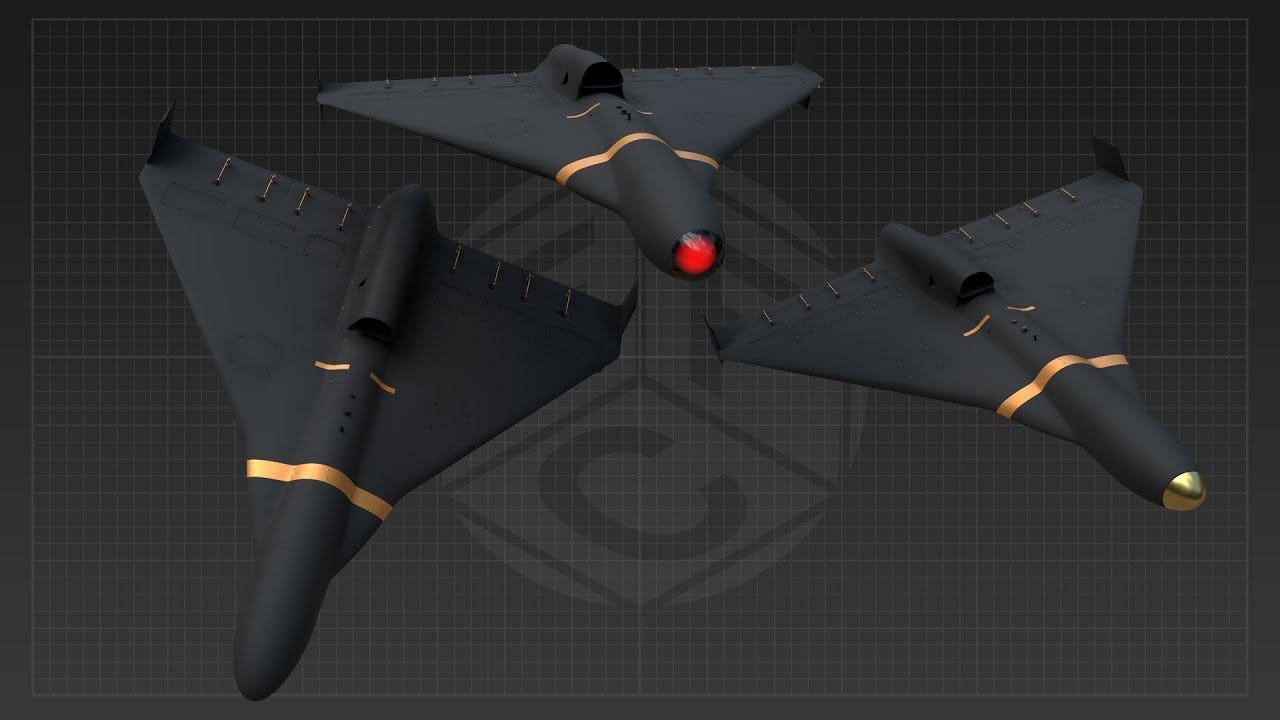
Iranian Shahed Drones – Three Variants
By William Schryver – imetatronink – June 26, 2024
In addition to the already-in-progress wars in Ukraine, Gaza, and the Red Sea, we are now staring down the barrel of yet another — rumored to be imminent in southern Lebanon.
There is no doubt Israel (just like its great benefactor, the United States) is, in the context of a “big war”, capable of executing several damaging strikes against a potential peer or near-peer adversary.
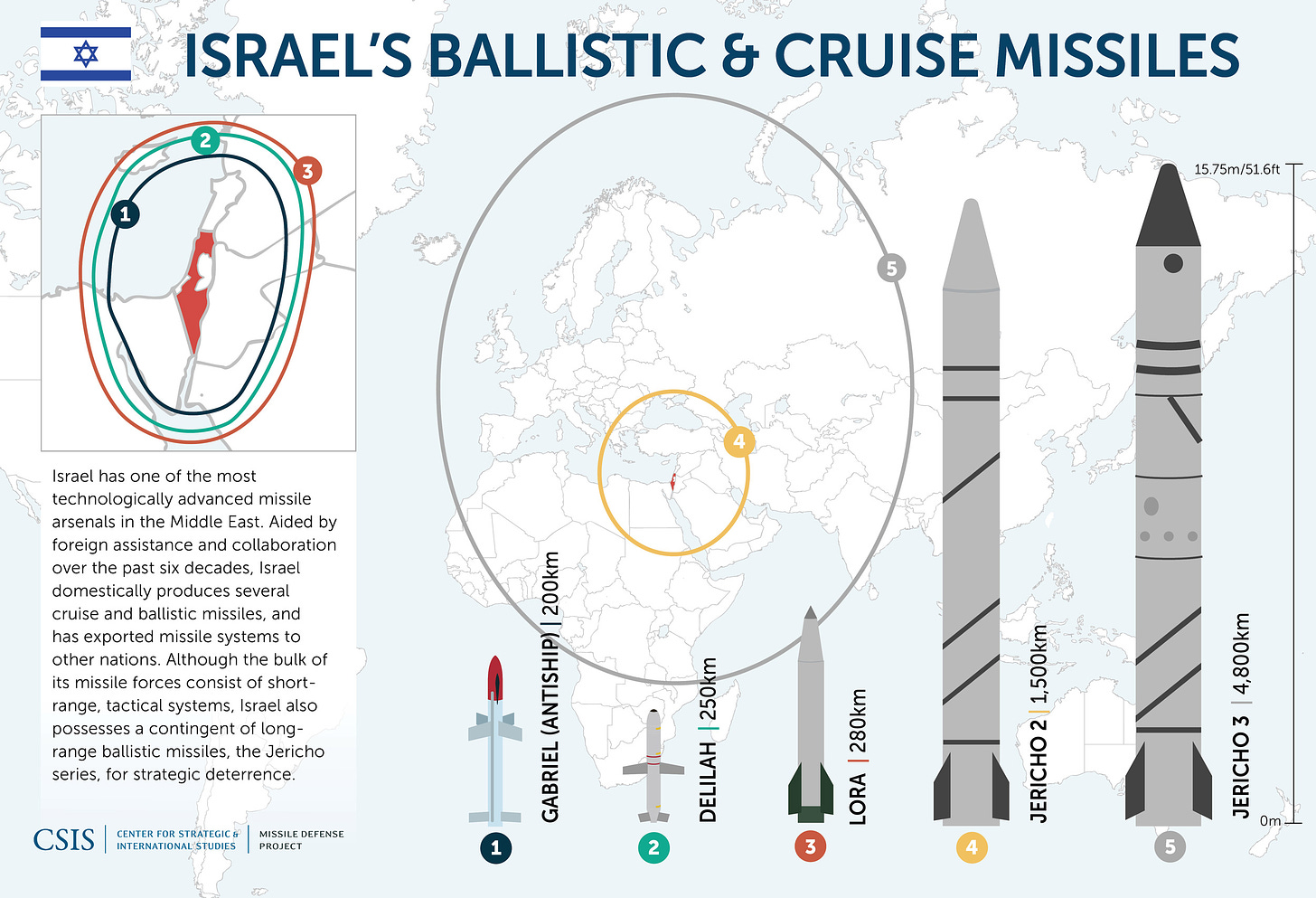
Israeli Ballistic and Cruise Missiles and Ranges
But, throughout the imperial domain, there are fatal weaknesses that exist right now, and which cannot be turned into strengths at any point in the near- or medium-term.
The first is what military types call “magazine depth”: munitions stockpiles sufficient to offensively overwhelm, defensively defeat, and strategically outlast the enemy.
Neither the United States, nor any of its largely impotent client nations, possess “magazine depth” sufficient to prosecute anything more than a relatively brief campaign against their potential peer adversaries: Russia, China, Iran — and all or any of their lesser-power partners.
The second problem is a corollary of the first. It is what I will term “shields”: the capacity to defeat a decisive proportion of the strikes one’s enemy can launch against you.
Neither the United States, nor any of its largely impotent client nations — by their own admission — possess anything even approximating comprehensive and effective “shields” against the quantity and quality of the types of strike weapons its potential adversaries can launch against them.
NATO sources themselves recently confessed that they only have about 5% potential air defense coverage against Russian missile strikes.
Now, of course, many will reflexively argue that, for example, the US could, with a massive “shock and awe” first-strike air campaign, effectively disarm Russian counterstrike capabilities.
This is patently ridiculous wishful thinking.
No one who actually understands the parameters of the military equation believes this to be true. And one need only examine the results of the months-long campaign against the lowly Yemenis to see confirmation of this incontrovertible fact.
Earlier this year we witnessed the Iranians launch a relatively modest missile strike against Israel, whose defenses were massively reinforced by American air and naval assets.
Using maybe 300 antiquated long-range strike drones and cruise missiles as decoys, the air defense response of both the US and Israel was massively attrited. And then, with a mere dozen or so seriously capable ballistic missiles, the Iranians blew right through the interception attempts of both the multiple land-based Patriot systems and a US guided-missile destroyer positioned off the eastern Mediterranean coast.
The Patriot systems were a total bust, and the Israelis summarily retired them in the immediate aftermath of the Iranian strike.
The US destroyer is reported to have launched eight top-shelf SM-3 missile defense interceptors (quite likely its entire “magazine depth”) at the incoming Iranian strike package.
They might have damaged one of the 12-15 incoming Iranian missiles.
The others hit with precision comparable to the 5-meter CEP Iran achieved in its 2020 strikes against the US airbase at Ayn al-Asad in Iraq.
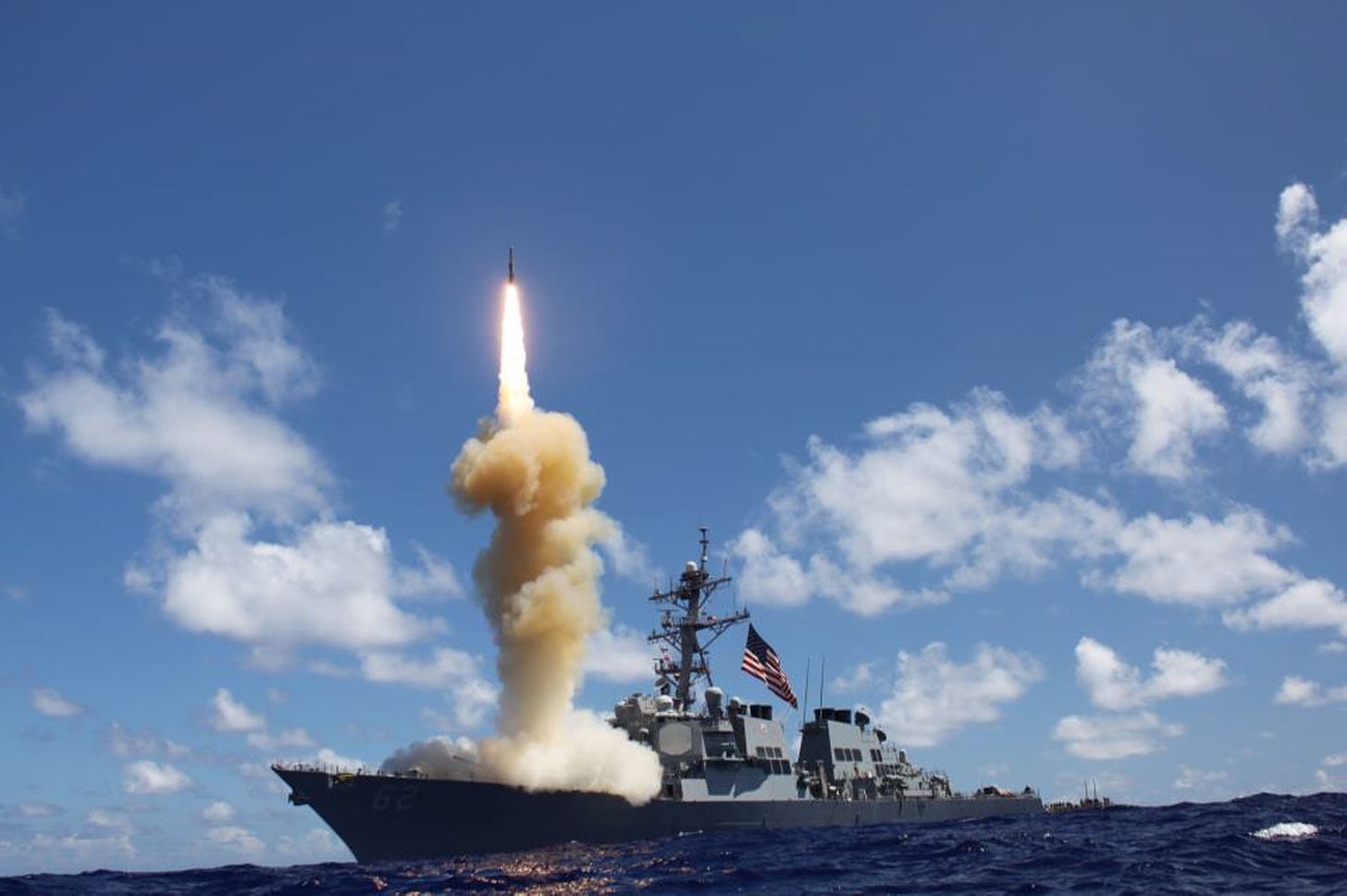
SM-3 Missile Interceptor Launched from a US Guided-Missile Destroyer
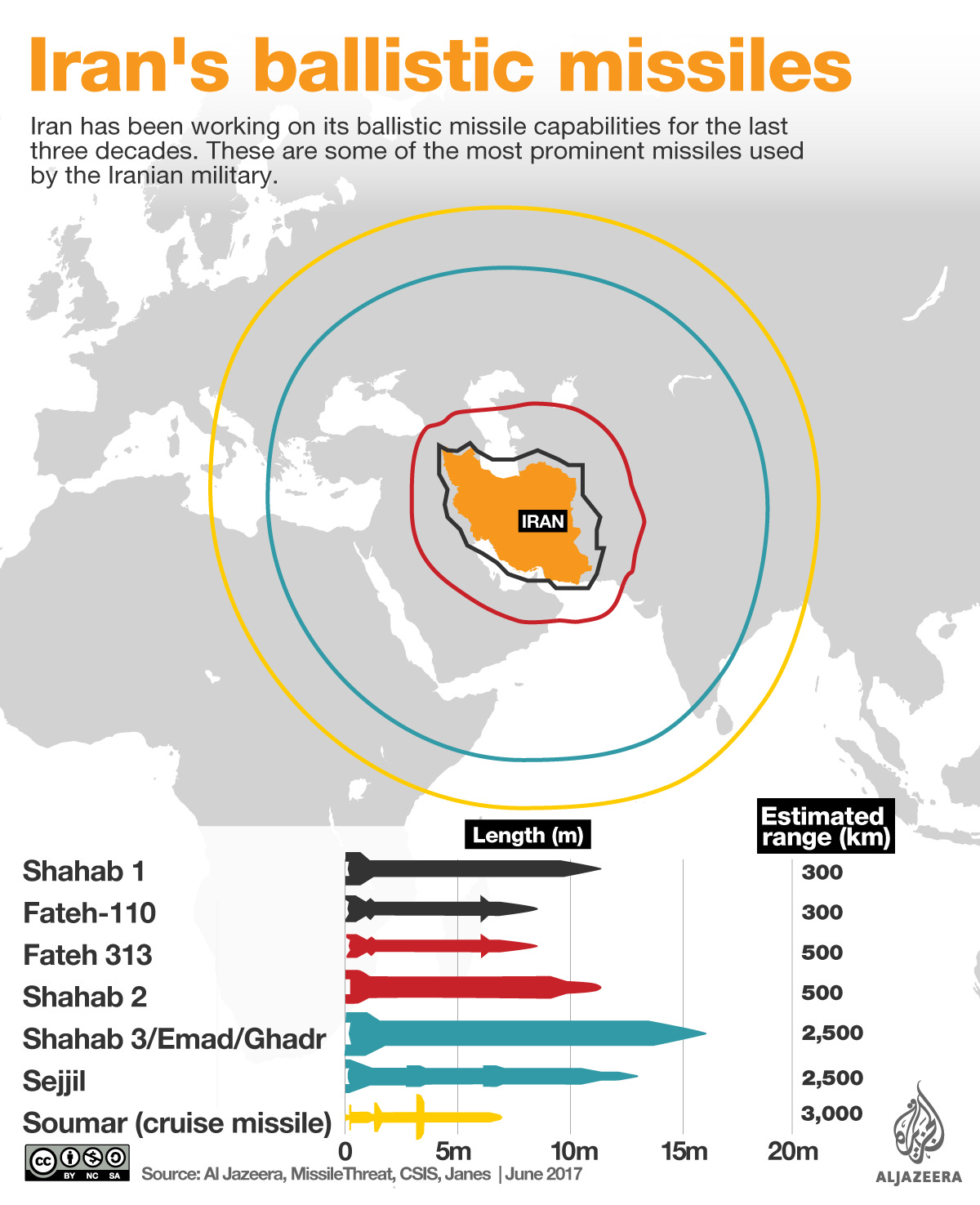
Iranian Ballistic Missiles and Ranges
Had Iran, at that moment in time, opted to follow up with an even larger strike consisting of several hundred of its best ballistic missiles, the US and Israeli defenses would have been penetrated to an overwhelming degree. It would have put to shame the opening-night show of the Americans’ 1991 “shock and awe” cruise missile attack against Baghdad.
Fortunately the Iranians didn’t press the matter, and let their modest yet impressive demonstration of strength suffice for the time being.
In recent months, Iran’s close partner Hezbollah — which is reputed to possess at least 100,000 missiles and drones of various types — has been routinely penetrating Israel’s once-vaunted “Iron Dome” missile defense system.
Indeed, Hezbollah has almost appeared to be mocking the Israelis’ impotence at times.
In any case, the Iron Dome has been revealed to be acutely vulnerable to penetration by Hezbollah drones and missiles.
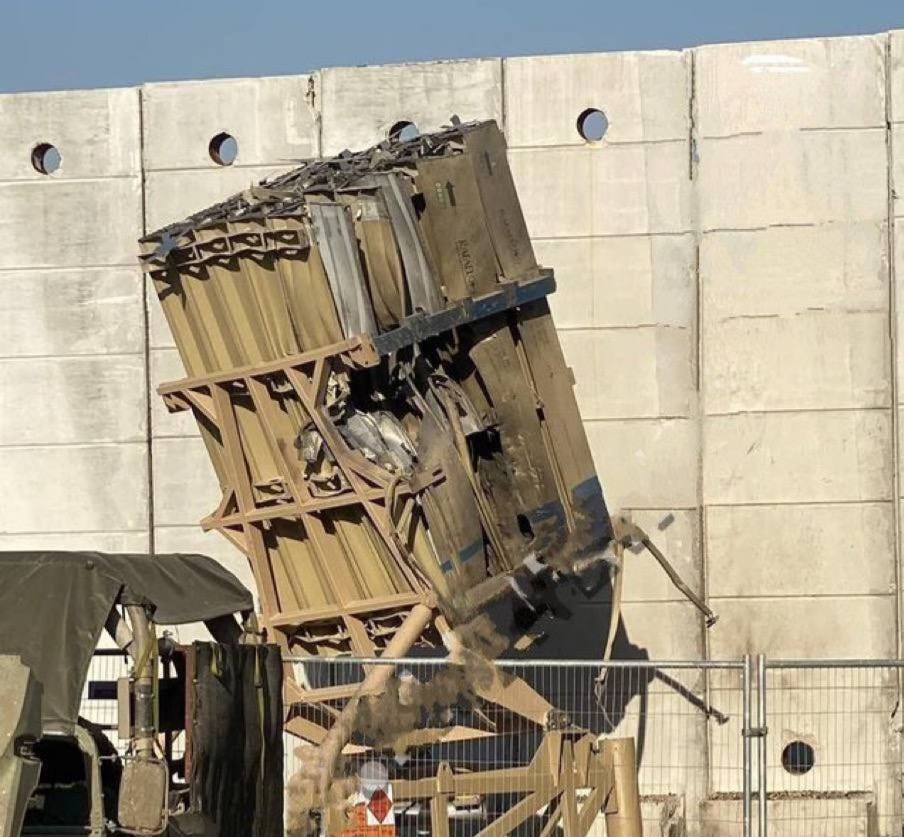
Israeli Iron Dome Launcher Destroyed by Hezbollah Drone Strike
It is not known with precision how many missiles and drones of various types Iran possesses. But it is reasonable to assume that their “magazine depth” is considerably larger than that of Hezbollah.
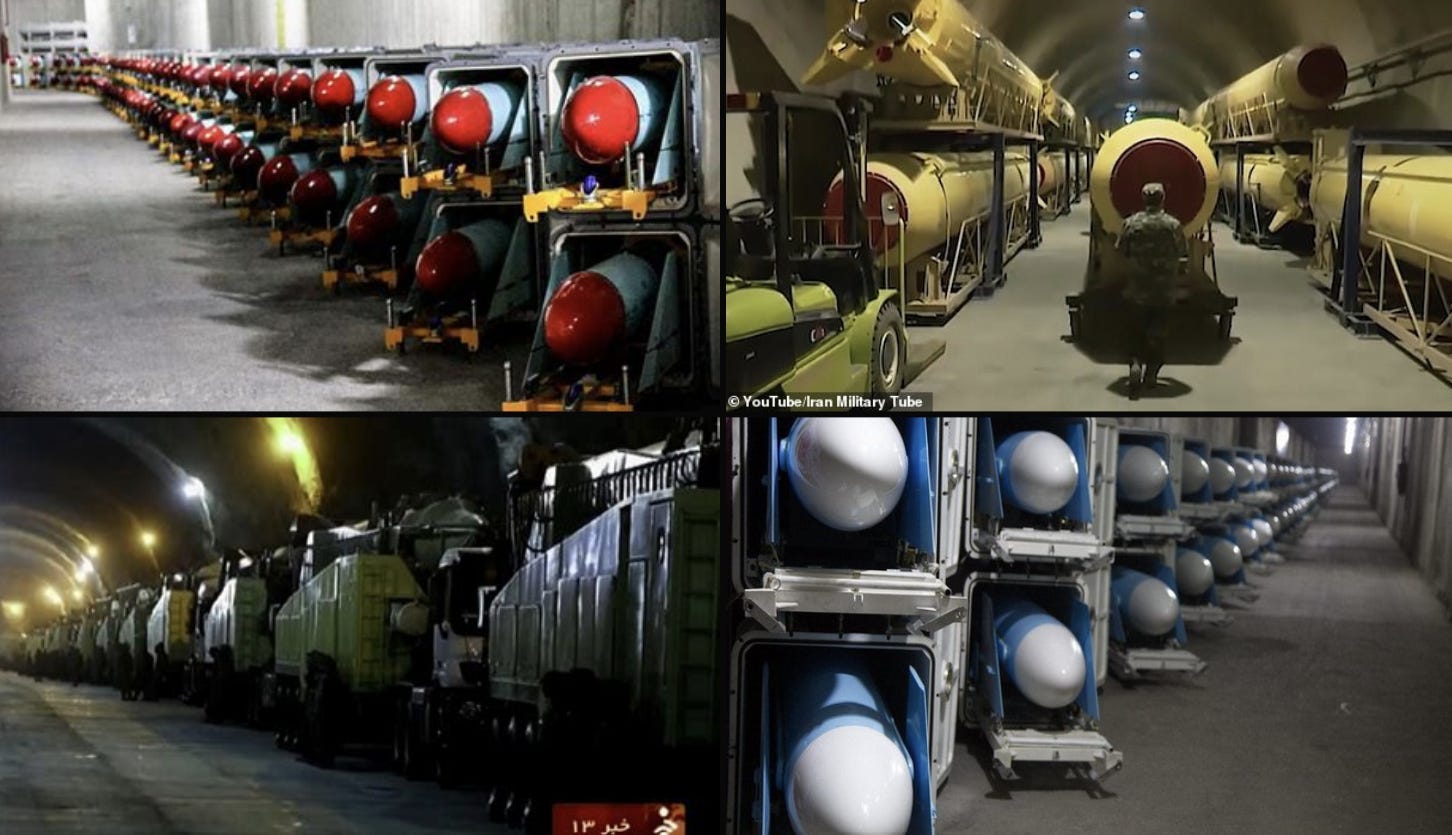
Iranian Missiles
It is also not known with precision how many missiles and drones of various types Russia possesses. But it is reasonable to assume that their “magazine depth” is considerably larger — and exceedingly more potent — than that of Hezbollah and Iran combined.
Even more importantly, the Russians have, over the course of the war in Ukraine, demonstrated an unprecedented capability to routinely shoot down the best strike missiles the US and its NATO vassals have been able to launch against them.
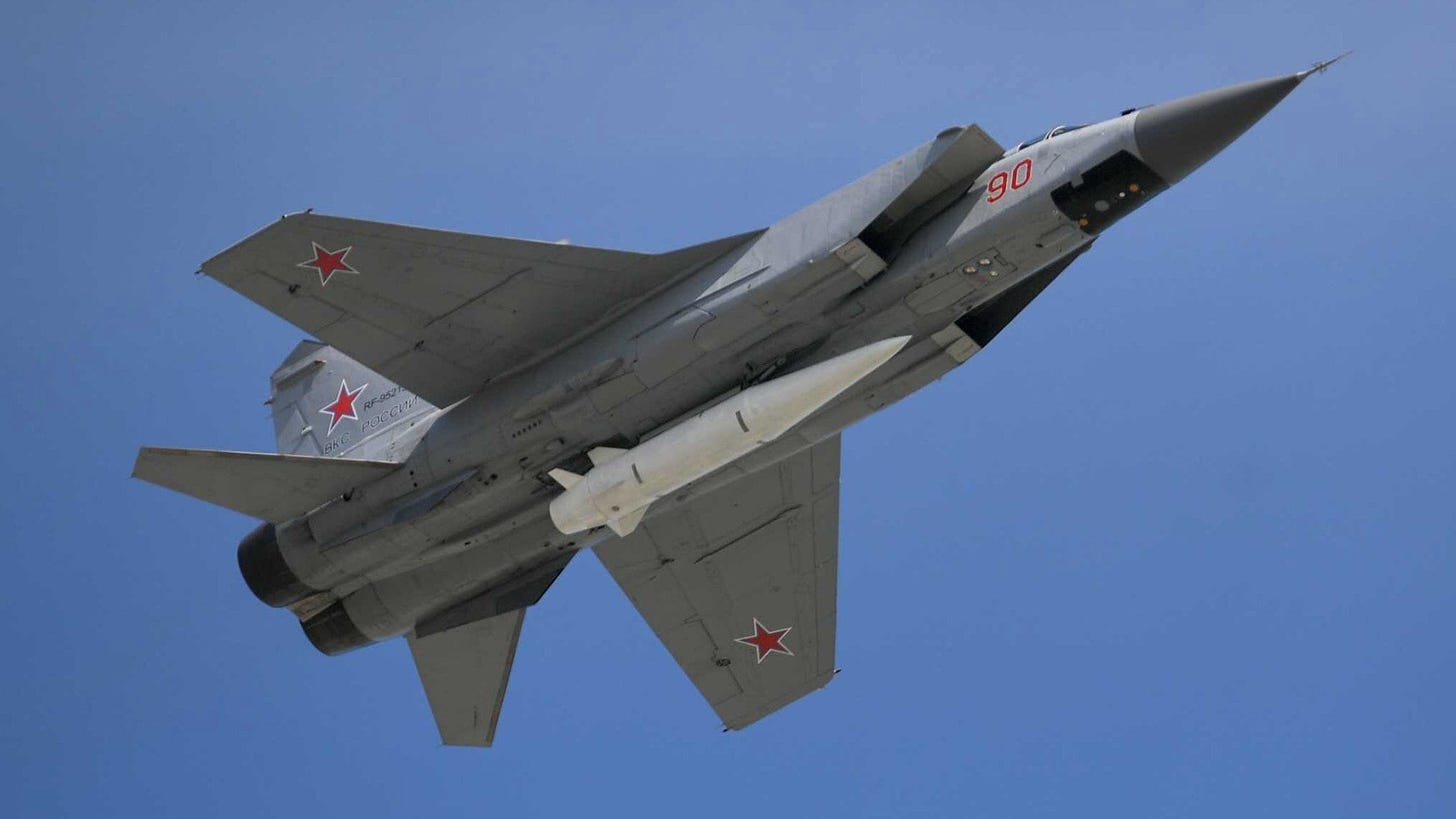
Russian MiG-31 Carrying a Hypersonic Kinzhal Missile
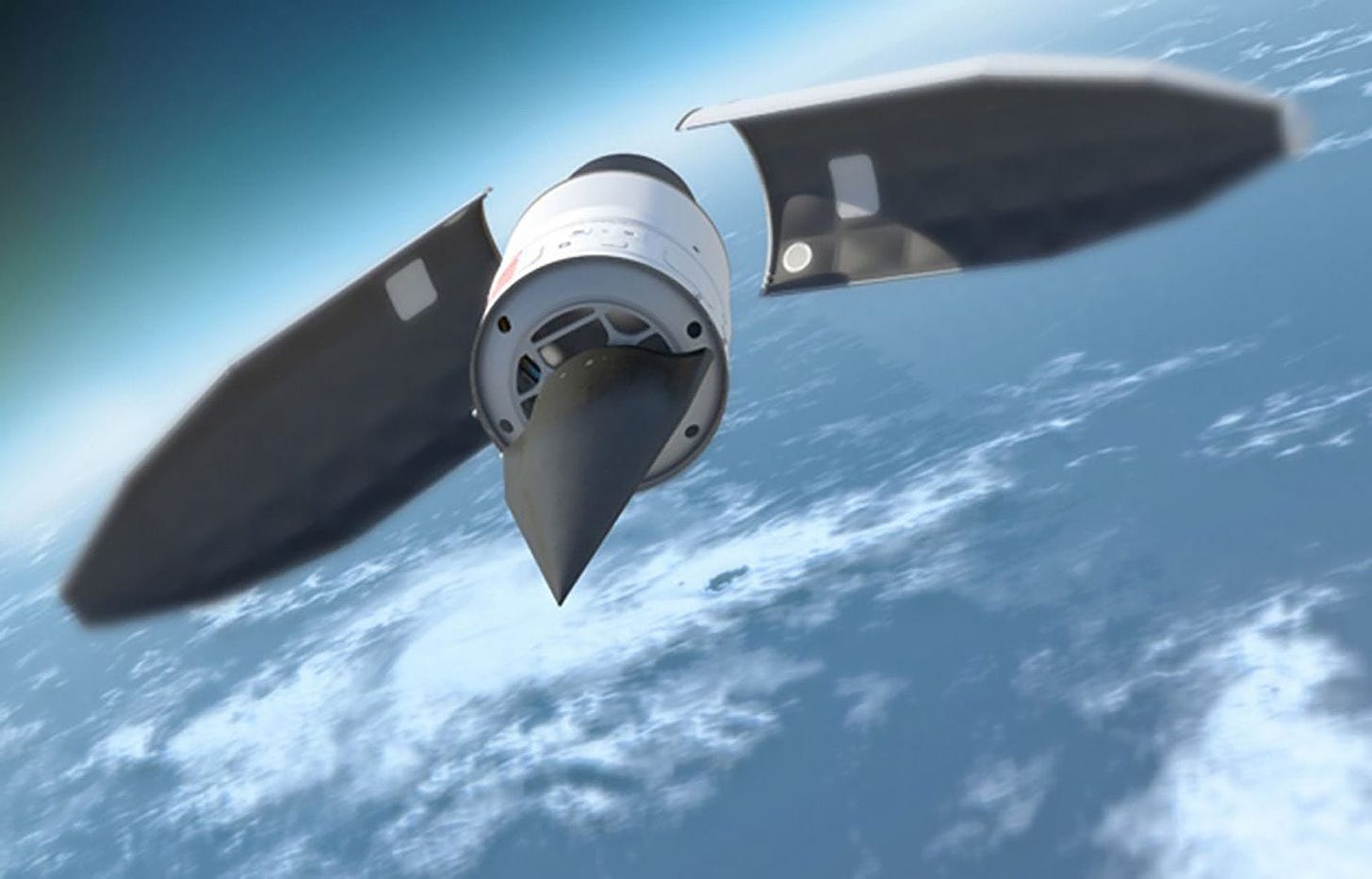
Russian Avangard Hypersonic Missile
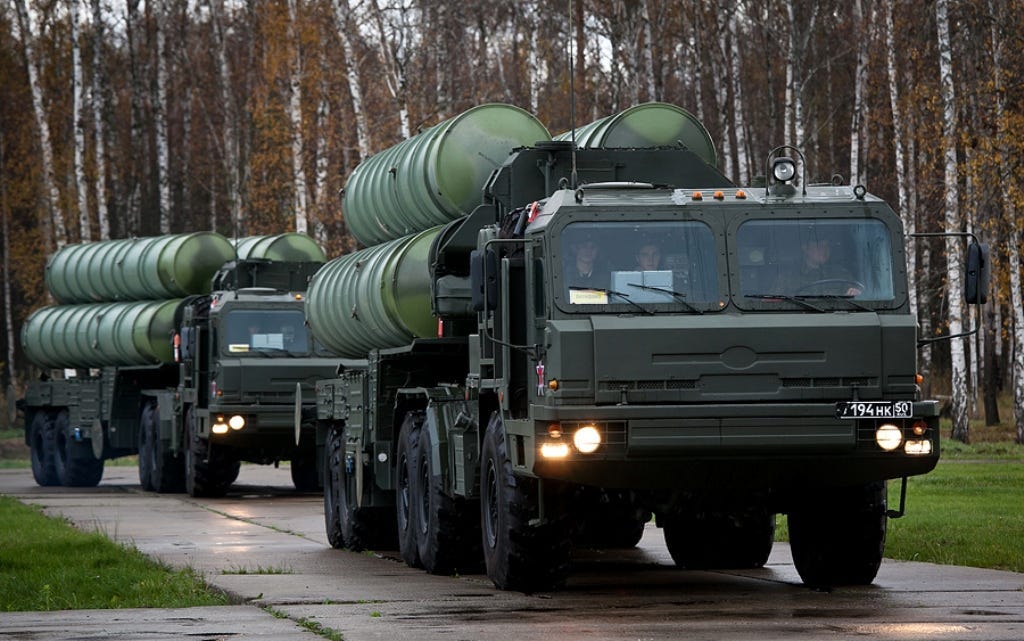
Russian S-400 Air Defense System
Lastly, it is not known with precision how many missiles and drones of various types China possesses. But it is reasonable to assume that their “magazine depth” is at least an order of magnitude larger than Hezbollah, Iran, and Russia combined.
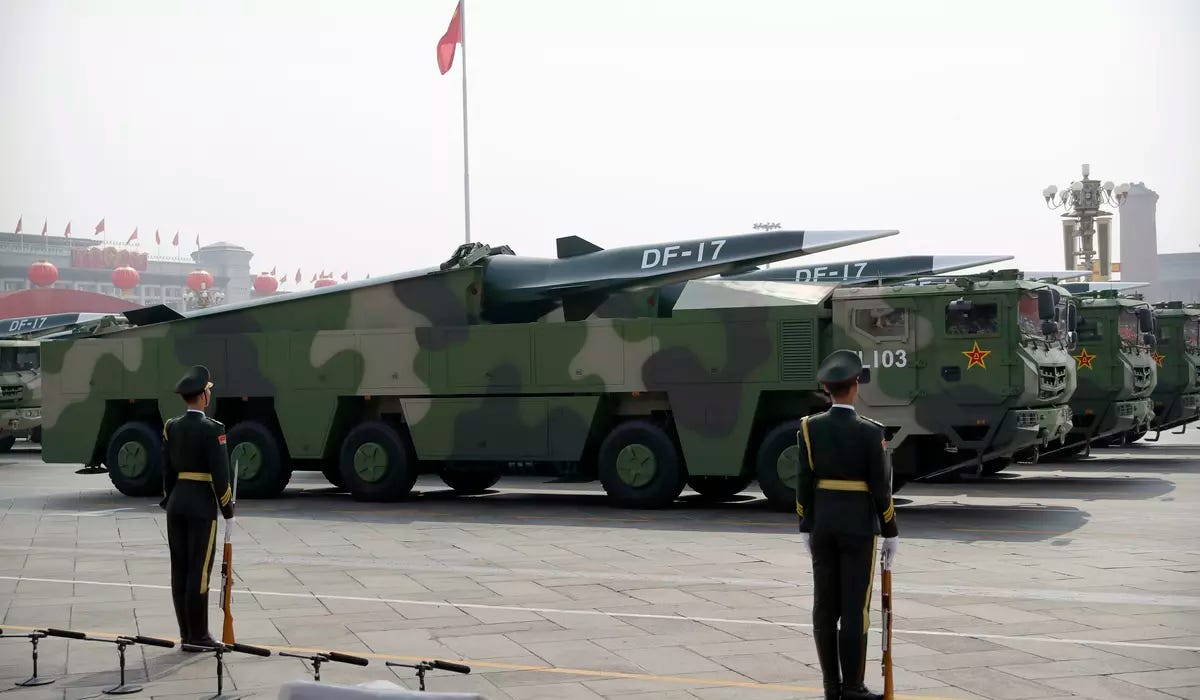
Chinese DF-17 Hypersonic Missiles
Of course, I’ve not yet made any mention of North Korea, who has now been formally received into the Russia, China, Iran mutual-defense partnership. People love to mock Kim Jong-Un and his people, but the empire underestimates them at their peril.
The Israelis can talk tough about making war against Hezbollah and its friends, but if they actually attempt it, it will end very, very badly for them.
The Americans and their almost laughably impotent allies can talk tough about making war against Russia or China, but if they actually attempt it, it will end catastrophically for them.
Then we’ll really have a dangerous situation on our hands.
US condemned for attempting to sow discord between China and Russia, North Korea
Global Times | June 24, 2024
Experts have rebuked the US for trying to sow discord between China and Russia, and North Korea, noting that the closer relationship between the two Chinese neighbors is based on current realities, as their mutual support can break through Western blockades.
The remarks came after US Air Force General C.Q. Brown, chairman of the Joint Chiefs of Staff, told reporters during an overseas trip on Sunday that the newly-signed strategic partnership agreement between Russia and North Korea could create friction with China, according to Reuters.
Reuters, citing anonymous analysts, claimed the pact, signed on Wednesday, “could undercut Beijing’s leverage over its two neighbors and any heightened instability could be negative for China’s global economic and strategic ambitions.”
Chinese experts refuted the claims.
“In fact, China is pleased to see strengthening friendly cooperation between these two neighboring countries,” said Lü Chao, an expert on the Korean Peninsula issue at the Liaoning Academy of Social Sciences. He believes the mutually supportive ties between Russia and North Korea are expected to contribute to regional security and the peace and stability of Northeast Asia.
China’s relations with both Russia and North Korea share a common goal of maintaining peace and stability in Northeast Asia, and their comprehensive cooperation is reasonable, Lü said.
The top leaders of the Democratic People’s Republic of Korea (DPRK) and Russia signed the Treaty on Comprehensive Strategic Partnership following their summit in Pyongyang on Wednesday, the Xinhua News Agency reported Thursday.
Russia and North Korea have agreed on mutual support in the event of external aggression, Russian media reported on Wednesday, citing Russian President Vladimir Putin. Russia does not rule out military-technical cooperation with North Korea in accordance with a newly signed comprehensive strategic partnership agreement, RIA Novosti reported, citing Putin at a press briefing following talks with North Korea’s top leader Kim Jong Un in Pyongyang.
In response to the development, Lin Jian, a spokesperson for the Chinese Foreign Ministry, said at a Thursday press conference that “the agreement between the DPRK and Russia is related to their bilateral cooperation. I have no comment on it.”
The closer relationship between North Korea and Russia is based on current realities, Chinese experts pointed out.
Currently, both Russia and North Korea face severe pressure from the US-led Western clique, including economic sanctions. In this situation, it is natural for the two countries to come together, especially since they have mutually beneficial aspects, such as Russia’s assistance in energy and food supplies to North Korea, according to Lü.
At the same time, some US and other Western politicians and media outlets are hyping “some kind of military alignment or military bloc” in Northeast Asia.
Such rumors also were debunked by Chinese experts.
The US is determined to implement its so-called Indo-Pacific Strategy in the region, creating a camp confrontation mentality, they said.
“China opposes any trend towards regional camps. But the US is fabricating this division,” Lü remarked.
He warned that the Western portrayal of a camp formation could further exacerbate tensions on the Korean Peninsula.
The expert explained that China has always advocated a fair and just stance on the Korean Peninsula issue, maintaining a fair and just position towards both North and South Korea, which has been widely recognized.
Lin said that on the Korean Peninsula issue, China’s position is consistent. “We always believe that upholding peace and stability on the Peninsula and advancing the political settlement of the Peninsula issue serve the common interests of all parties and hope various parties will make constructive efforts to this end,” Lin said.
Plan to establish US Marine regiment in Guam ‘to escalate camp confrontation, stir up regional tensions’
Global Times | June 23, 2024
The US Marines plan to deploy to Guam a littoral regiment capable of a flexible and rapid response in a “few years,” media revealed on Saturday, which Chinese observers said is aimed at preparing for great power competition, blatantly exposing the US’s combat intentions against China.
On Saturday, Japanese media outlet Kyodo News reported that General Eric Smith, commandant of the US Marine Corps, told a press conference in Washington that the Marine Littoral Regiment is “designed as a counter to PRC aggression,” to protect Japan, South Korea and the Philippines.
Smith said the regiment, due to be based on Guam, “will have responsibility to rapidly deploy inside the first island chain into the Philippines in order to spread the battlespace out and to protect those strategic lines of communication that emanate from Japan, back to the Philippines, back to Hawaii.”
The island chain refers to an area that includes Japan as well as the island of Taiwan and the northwest Philippines.
In the event of potential conflicts with China, such as China advancing its cause of national reunification, or conflicts erupting between China and the Philippines or Japan over territorial disputes, the US may use these deployments to strike against China, Chinese observers noted.
“This demonstrates the US’ relentless preparation to compete with China, with a clear Cold War mentality,” Zhang Junshe, a Chinese military expert, told the Global Times on Sunday.
The plan to establish a littoral regiment in Guam again demonstrated that the US is engaging in camp confrontation, seeking to rally countries like Japan and the Philippines, as well as to strengthen its control over these allies through military deployments and cooperation, enticing them to join the US’ chariot and making these countries work for its anti-China strategy, Zhang said.
This will undoubtedly add fuel to the fire and stir up regional tensions, Zhang warned, noting that the US wants to benefit from the chaos, such as selling more military equipment.
Kyodo reported that the new regiment in Guam will be the third of its kind that is capable of long-range detection and engagement using mobile missile batteries, as well as deploying small groups of marines to remote islands. The first unit was activated in March 2022 on Marine Corps Base Hawaii and the second was set up in Okinawa in November last year.
This exposed the US attempt to adopt a strategy of dispersion of its military forces, as the commandant of the US Marine Corps confirmed that the relocation of US Marines from Okinawa to Guam will begin in December.
Some observers believe that the US military forces’ shift from Okinawa to Guam is a strategic retreat, indicating a lack of security in Okinawa.
But Zhang sees it differently.
“Strategically, the US military is not retreating from Okinawa; it may withdraw its forces, but some weapons and firepower will remain in place. On the one hand, the US is instigating conflicts, while on the other hand, it does not want its forces to suffer losses. Therefore, it is pushing countries like the Philippines and Japan to be firmly tied to its warship as cannon fodder,” Zhang remarked.
Zhang also revealed the ongoing competition between the US Army and the Marine Corps for roles, funds and functions. He noted that the deployment of these assets is not actually the Marine Corps’ expertise, but should instead be a focus of the US Army.
The US Marine Corps primarily focuses on amphibious operations, but now there is a need for the corps to undergo a tactical transformation toward littoral operations, emphasizing land-sea integration. This in itself will bring about significant changes to the Marine Corps’ functions, which presents a considerable challenge, said another Chinese military expert, who requested anonymity.
If the Marine Corps insists on transformation, these disputes with the US Army will intensify, making the regiment’s implementation more challenging, some military experts warned. They believe that in reality, it is impractical for the regiment to target China.
Featured Video

Houthis Keep Advancing as the Red Sea Crisis Deepens
or go to
Aletho News Archives – Video-Images
From the Archives
15 Saudi ‘hijackers’ were CIA agents working for US: Scholar
Press TV – April 13, 2016
Fifteen of the 9/11 “hijackers” from Saudi Arabia were CIA agents working for the United States government, which was seeking to destroy the Middle East for Israel and to double the American military budget, says Dr. Kevin Barrett, an American academic who has been studying the events of 9/11 since late 2003…. continue
Blog Roll
 Aletho News
- Russia Just Struck the Eyes of NATO’s War Machine in Ukraine
- Russia summons UK charge d’affaires over Kiev drone support
- NATO member warns bloc seeking pretext for war with Russia
- Macgregor: We Haven’t Seen the Worst of the Iran War Yet
- ‘We are not like everyone else’ laws that bind other nations do not apply to Israel, says Likud lawmaker
- Report: Saudi Arabia seeks allies’ assistance as missiles deplete amid war on Yemen
- Fuel Crisis Deepens: Pakistan Warns Tanker Attack in Red Sea Would Be an ‘Act of War’
- ‘Bucha massacre’ a false flag orchestrated by UK – Moscow
- China Rejects Outside Pressure on Trade Ties After New US Russia Sanctions Bill
- Houthis Keep Advancing as the Red Sea Crisis Deepens
- If Americans Knew
- Why do we let Zionists decide what we can and can’t say?
- US welcomes Israeli, Iranian delegations to UN, but not Palestinians – Daily Update
- Biden’s Genocide Accomplices Targeted by New Accountability Campaign
- AIPAC’s Network Has Already Spent $67.2 Million to Shape the Midterm Elections
- Jewish Supremacist Manufacturing a Civilizational Threat to License Bigotry
- US bans Palestinian president from speaking at the UN
- Israeli Forces Detain Journalist Alaa al-Rimawi amid Widespread West Bank Raids
- Even a pro-Israel Congress member has put a hold on 40,000 one-ton bombs to Israel
- As Gaza crumbles, Israel preps new ground invasion – Daily Update
- ‘We are not like everyone else’ laws that bind other nations do not apply to Israel, says Likud lawmaker
- No Tricks Zone
- New Study: ‘Global Drought Shows No Detectable Recent Acceleration Under Climate Warming’
- Economic Masterminds: German Socialists Suggest Taxing Productivity Gains Stemming From Using AI
- The South China Sea Has Not Been Cooperating With The Climate Change Narrative
- Energy Crisis: Germany Enters Heating Season With Historically Low Gas Reserve Fill Levels
- New Study: The Antarctic Ice Sheet Gained Mass From 2020-2024 Due To Staggering Snow And Ice Accumulation
- Study: Ocean Heating Rates From Thousands Of Years Ago ‘Dwarf’ Modern Ocean Heating Rates
- Climate Extremists Target, Attack Large-Scale Power Grid Infrastructure In Germany!
- New Study: Antarctic Ice Melt Has Contributed Less Than 1 Centimeter To Sea Level Rise In The Last 30 Years
- Fear Of Debate: Alarmist German Climate Scientist Calls On Mainstream Media To Discredit Skeptic Voices
- End-Of-August Arctic Sea Ice Extent Hasn’t Fallen In 20 Years, Official Data Show!
 Aletho News