US Pressured Dutch Chipmaker ASML to Halt Sales to China
By Chimauchem Nwosu – Sputnik – 02.01.2024
A Netherland-based multinational microchip maker ASML Holding NV has halted scheduled shipments of production equipment to China at the behest of the United States.
That came days before the implementation of export controls on advanced ultraviolet lithography machines, sources familiar with the matter revealed to the press.
ASML is the sole producer of deep ultraviolet (DUV) lithography machines vital for the semiconductor industry, which is booming in China — much to the chagrin of politicians in Washington.
Under Biden’s government the US is stepping up attempts to hold back Beijing’s rapid development in the advanced semiconductor sector, with its allies also constraining chip tech exports.
Last year, Huawei Technologies debuted the Mate 60 Pro smartphone, featuring the indigenously-produced Kirin 9000S chip. The development was seen by the US as a challenge to Apple’s iPhone 15, which is powered by next-generation chips produced using ASML’s immersion lithography and was launched in 2023.
ASML confirmed that the Dutch authorities had restricted the export of specific lithography systems to China. Addressing media reports, the Dutch chipmaker mentioned ongoing talks with the US regarding export restrictions, offering no more details.
As the news broke, the stock values of Chinese chipmakers saw dips in their stock values. Semiconductor Manufacturing International (SMIC), a key supplier of Huawei’s 7-nanometer processors, saw its stock fall by three percent in Hong Kong on Tuesday. Hua Hong Semiconductor suffered a similar slump, dropping by 2.8 percent.
ASML, Europe’s most valuable technology firm, remained relatively stable at €679.80 at 9:32 a.m. in Amsterdam trading after falling by as much as 1.8 percent earlier.
US National Security Adviser Jake Sullivan contacted the Dutch government late last year about the ASML’s supply of the immersion deep ultraviolet lithography machines to China. Dutch officials told the White House to speak directly to the European chip giant.
Deliveries of some Chinese orders of the machines, each priced in the tens of millions of dollars, were reportedly canceled although the precise number remains undisclosed.
A representative from the Chinese Foreign Ministry denounced the US for meddling in China’s affairs, labeling it as a demonstration of American “hegemony” imposing artificial restrictions on other nations.
The official also called upon the Dutch authorities to “respect the spirit of the contract and world order, to safeguard the mutual benefits of the two countries.”
Under former president Donald Trump in 2019 the US pressured the Dutch government to block ASML, the sole producer of deep ultraviolet lithography machines vital for semiconductor production, from selling to China.
The Biden administration followed suit by pressuring the Netherlands to tighten export controls on ASML’s second-tier DUV machines to China from January 1 this year. In response, Beijing increased its imports of the restricted machines.
Chinese customs figues show imports of lithography machines into the country surged fivefold to $3.7 billion from July to November 2023.
In Q3 2023, China accounted for nearly half of ASML’s sales, representing 46 percent, which marked a significant increase from 24 percent in Q2 and just 8 percent in Q1 ending in March. This surge came as regional companies hastened their machine imports in anticipation of forthcoming export controls.
In October, ASML’s departing CEO, Peter Wennink, alerted shareholders that the imposed constraints might affect around 15 percent of their sales in China. He has voiced opposition, fearing these actions might prompt China to forge its own technological solutions.
“The more you put them under pressure, the more likely it is that they will double up their efforts,” Wennink told a news outlet.
China, Iraq begin construction of new city near Baghdad
The Cradle | December 29, 2023
Iraq broke ground on 29 December on 30,000 housing units near Baghdad, as part of a $2 billion project in partnership with Chinese firms to build five new cities across Iraq, Bloomberg reported on 29 December.
The government of Prime Minister Mohammad Shia al-Sudani is seeking to build 250,000 to 300,000 housing units for poor and middle-class families. The new city on the outskirts of Baghdad will include universities, commercial centers, schools and health centers and should be completed in four to five years.
Contracts to build the housing units were awarded to East China Engineering Science and Technology Co., Ltd. and China National Chemical Engineering Co., Ltd along with their Iraqi partner Shams al-Binaa.
Contracts to build four more cities are expected to be awarded soon and another 10 will be announced next year, including in Karbala, Anbar, Nineveh and Babel governorates.
Chinese firms have increased their presence in Iraq in recent years, in part due to a deal between Baghdad and Beijing.
In 2019, Iraq signed a 20-year contract, agreeing to supply Chinese firms with 100,000 barrels per day (bpd) of crude oil, with the revenue earmarked for funding various development projects in Iraq undertaken by Chinese firms.
Following the deal, Chinese firms built 1,000 schools, developed the Nasiriya city airport, erected power plants, and completed several other infrastructure projects.
China has accelerated its investment in Iraq and other West Asian nations as part of its Belt and Road Initiative (BRI) announced in 2013.
China seeks to maintain stability in West Asia, given the region’s energy resources and geo-strategic location, to safeguard Beijing’s energy imports and shipment of manufactured goods to foreign markets.
Pentagon hyping of ‘decisive year’ in ‘Indo-Pacific’ exposes military hegemony, Cold War mentality toward China
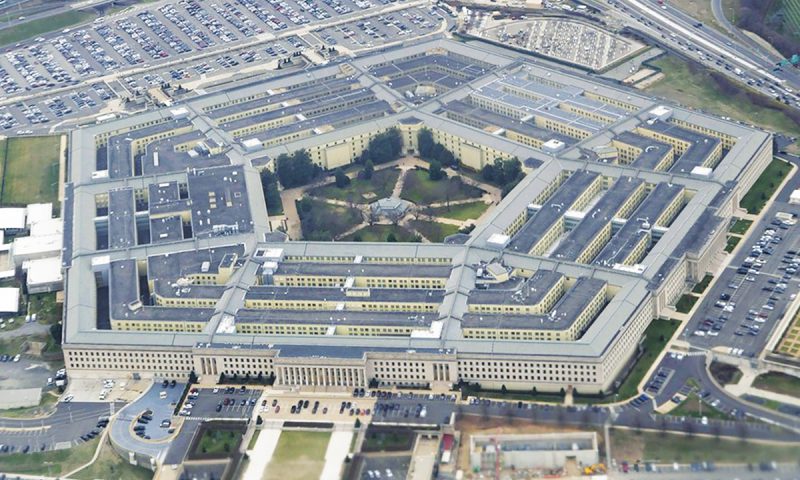
By Liu Xuanzun | Global Times | December 28, 2023
The US Department of Defense’s hyping of 2023 being a “decisive year” in the “Indo-Pacific region” is filled with Cold War mentality and exposes its aggressiveness toward China, analysts said on Thursday, after the Pentagon on Wednesday released a fact sheet summarizing its work in the region.
“In this decisive decade, 2023 will be remembered as a decisive year for implementing US defense strategy in Asia,” US Secretary of Defense Lloyd Austin said in a news release by the Pentagon on Wednesday.
Taking the form of a fact sheet, the Pentagon release rounded up some of its “achievements” in the past year with allies and partners to make the US forces’ posture in the “Indo-Pacific region” “more mobile, distributed, resilient, and lethal,” including forward stationing key US military units to Japan, sending more submarines and warplanes to Australia, gaining access to four new military bases in the Philippines, concluding a defense cooperation agreement with Papua New Guinea, and increasing strategic asset rotations such as submarines and bombers to the Korean Peninsula.
The Pentagon outlined its billions of dollars of investments in procurement and development in military capabilities as well as in the Pacific Deterrence Initiative, its support of Japan’s decision to acquire missiles that can strike another country, an AUKUS nuclear-powered submarine and defense industrial base cooperation with Australia as well as bolstering of India’s defense modernization plans.
It also summarized some of its exchanges with countries in the region, including joint exercises with the Philippines, Indonesia, India, Japan, Australia and South Korea.
While the Pentagon did not mention China by name, most of the actions mentioned in the fact sheet target China, observers said.
“If you put the locations named in the list on a map, you can clearly see the US military is forming a strategic encirclement taking advantage of footholds in the form of its allies and partners,” a Chinese military expert who requested anonymity told the Global Times on Thursday.
Many of the so-called achievements are very sensitive and can lead to or have already resulted in serious consequences, the expert said, citing as examples the danger of Japan abandoning its post-war “self-defense only” principle, the AUKUS nuclear-powered submarine plan risking nuclear proliferation, and the US’ support for the Philippines inciting the Southeast Asian country to repeatedly provoke China over Chinese islands and reefs in the South China Sea, causing tensions in the region.
These aggressive moves are reflections of the US’ Cold War-mentality and its pursuit of military hegemony through bloc confrontation, which will only harm peace and stability in the region and the world, the expert said.
China Advocates Solving Red Sea Tensions Through Dialogue – Defense Ministry
Sputnik – 28.12.2023
BEIJING – Beijing advocates solving pressing regional problems, including the current tensions in the Red Sea, through dialogue and political consultations, Chinese Defense Ministry spokesman Wu Qian said on Thursday.
Earlier in December, US State Department spokesman Matthew Miller said Washington would like Beijing to join the US-led multinational operation to secure the Red Sea amid a surge in Houthis’ attacks on cargo ships.
“China has always stood for maintaining the security of international waterways, sought to address both symptoms and root causes, and advocated resolving pressing regional problems through dialogue, consultations and political means,” Wu told a press briefing.
The Red Sea is an important channel of international trade of goods and energy commodities, the spokesman said, adding that it was in the common interests of the international community to ensure security and stability in the region.
In November, Yemen’s Ansar Allah rebel movement, also known as the Houthis, announced its intention to attack any ships associated with Israel, urging other countries to recall their crews from the vessels. The Houthis vowed to continue the attacks until Israel ends its military actions in the Gaza Strip.
On December 19, US Secretary of Defense Lloyd Austin announced the establishment of a multinational operation to secure the Red Sea, saying that the United Kingdom, Bahrain, Canada, France, Italy, the Netherlands, Norway, the Seychelles, and Spain would take part in the mission, although Madrid has not officially confirmed its participation yet. The Houthis vowed to attack any ships that join the US-led maritime coalition.
Empty Quiver
By William Schryver – imetatronink – December 21, 2023
As the sun sets here at the Winter Solstice of 2023, I would like to draw attention yet again to what, in my estimation, is one of the most strategically significant battlefield humiliations inflicted upon NATO over the course of the Ukraine War: the progressively comprehensive defeat of their precision-guided strike missile inventory — ATACMS, HARMS, JDAMS, GMLRS fired from HIMARS, cruise missiles (Storm Shadow and SCALP).
The Russians have demonstrated that they can routinely shoot down ANY species of strike missile the US/NATO can field against them — not all of them all of the time, but most of them most of the time.
And they get better and better at it as time goes on.
Indeed, over the past few months it is increasingly becoming “all of them most of the time”.
As Russian Defense Minister Sergei Shoigu reported earlier this week:
“We are using air defence systems in a comprehensive manner during the special military operation. This significantly improved their responsiveness and strike range. Over the last six months, we have shot down 1,062 of NATO’s HIMARS rockets, short-range and cruise missiles, and guided bombs.”
No other military on the planet has previously attested this level of capability. The US does not have it, and is at least a decade away from developing it.
And, it is important to bear in mind that the precision-guided systems the US and its NATO allies have provided for Ukraine are representative of the best their own militaries could deploy in a conflict with Russia.
The current front-line inventory of US tactical ballistic missiles and sea- and air-launched cruise missiles would present no greater technical challenge for Russian air defenses than what they have already seen and defeated in the Ukraine War.
The significance of this battlefield development defies exaggeration. It alters the war-fighting calculus that has been assumed for many decades.
Against Russia at least, the Pentagon must know that the success of a large conventional strike missile package is far from assured. There is no doubt some damaging hits would be inflicted, but Russian retaliatory capacity would not be appreciably affected, and the subsequent Russian counterstrike against NATO targets would be devastating — for the simple reason that US/NATO air defenses are not even remotely as effective as their Russian counterparts. In fact, they are rookie league in comparison. They would be as utterly befuddled as was the Patriot system in Kiev the night the Russians launched a very modest attack against it.
It would also be logical to assume that China, if not as fully proficient as Russia in every respect, is very likely not far behind.
It is also increasingly apparent that Iran has made great strides in the same direction.
As I have noted repeatedly in recent months: for the declining empire and its decrepit vassals, there are no easy wars left to fight.
If US can clear way for ‘cease-fire in Gaza’, Red Sea problem would be solved
By Yang Sheng | Global Times | December 19, 2023
The US-led joint patrol in the Red Sea following Houthi militia attacks against ships heading toward Israel shows that the Palestinian-Israeli conflict in Gaza is not only affecting the whole region, but also the international community. Chinese analysts pointed out that the root cause of the trade route problem is the ongoing conflict in Gaza, and only a sustainable cease-fire and allowing humanitarian aid to enter Gaza via land and sea routes can solve the problem in the Red Sea.
China will pay close attention to the situation, and Chinese naval vessels that conduct UN authorized anti-piracy missions in the region will keep performing their duty, analysts said, adding that China will stick to the priority of realizing a cease-fire and clear the way for humanitarian aid for the people in Gaza, rather than joining the US to conduct any military operations without UN authorization to escalate the crisis in Gaza.
The US and a host of other nations are creating a new force to protect ships transiting the Red Sea that have come under attack by drones and ballistic missiles fired from Houthi-controlled areas of Yemen, Defense Secretary Lloyd Austin announced Tuesday in Bahrain, the AP reported.
The UK, Bahrain, Canada, France, Italy, Netherlands, Norway, Seychelles and Spain have joined, Austin said. Some of those countries will conduct joint patrols while others will provide intelligence support in the southern Red Sea and the Gulf of Aden.
The Houthi militia attacked two commercial ships in the Red Sea with naval drones on Monday. The recent attacks have caused concerns about the impact on the passage of oil, grain and other goods on what is an important global trade route, and have pushed up the cost of insuring and shipping goods through the Red Sea, Reuters reported.
The Shanghai-based news website The Paper reported on Tuesday that following other international shipping companies including Denmark’s Maersk and France’s CMA, Chinese shipping giants like COSCO and Orient Overseas Container Line (OOCL) also suspended transport through the Red Sea.
Ma Xiaolin, dean of the Institute for Studies on the Mediterranean Rim at Zhejiang International Studies University, told the Global Times on Tuesday that the trade route via the Red Sea is truly important for China as it connects Europe, Asia and Africa, so China will pay close attention to the situation.
“However, although China has naval vessels in the region, their mission is about anti-piracy, rather than intervening in regional issues and other countries’ internal affairs. Only a solution to the ongoing crisis in Gaza can effectively solve the problem in the Red Sea,” Ma said.
On December 9, Al Jazeera reported that the armed group in Yemen claimed that “it will target all ships heading to Israel, regardless of their nationality, and warned all international shipping companies against dealing with Israeli ports.”
“If Gaza does not receive the food and medicines it needs, all ships in the Red Sea bound for Israeli ports, regardless of their nationality, will become a target for our armed forces,” the group’s spokesperson said in a statement on Saturday, according to Al Jazeera.
Song Zhongping, a Chinese military expert and TV commentator, told the Global Times on Tuesday that the “Houthis are specifically targeting Israel, so it’s unlikely it will attack Chinese vessels. China doesn’t need to be too worried about the situation and the Chinese warships in the region will stick to their plan.”
“China will keep making efforts to realize a sustainable cease-fire and clear the way for humanitarian aid to get into the Gaza Strip. This is the real priority that needs to be done,” Wang Jin, an associate professor at the Institute of Middle Eastern Studies at Northwest University, told the Global Times on Tuesday.
If Washington and its allies want to solve the Red Sea problem, they should play a responsible role in the UN Security Council to pass a cease-fire resolution and to put concrete efforts into improving the humanitarian situation in Gaza, which would be more effective than sending warships to conduct joint patrols, experts said.
The humanitarian situation in Gaza remains severe. According to Reuters on Tuesday, Israeli missiles and air strikes on the Rafah area in southern Gaza struck three houses killing at least 20 Palestinians, Gaza health officials said on Tuesday. Tens of thousands of displaced Palestinians have crammed into Rafah on Gaza’s border with Egypt to escape Israeli bombardments.
The lack of unity in the UN that is mainly caused by the US is another key reason why the situation is far from easing. The UN Security Council delayed until Tuesday morning a vote on an Arab-sponsored resolution calling for a halt to hostilities in Gaza to allow for urgently needed aid deliveries to a massive number of civilians as members intensified negotiations to try to avoid another veto by the US, the AP reported.
Wang Wenbin, a spokesperson for the Chinese Foreign Ministry, said at a routine press conference on Tuesday that “the UN General Assembly has adopted two resolutions with an overwhelming majority. We hope the US will listen to the voice of the international community, stop single-handedly blocking Security Council resolutions, and play its due role to promote an immediate cease-fire and prevent an even larger humanitarian catastrophe.”
Latest China-EU summit exposes Brussels’ complete lack of sovereignty
By Drago Bosnic | December 20, 2023
Earlier this month, China and the European Union concluded a bilateral summit, the first one since 2019. One usually wouldn’t expect that four years could change much, but that was precisely the case during the recent meeting. While the previous summit was largely focused on questions of economic cooperation and calls for the improvement of overall relations, this one was much more (geo)political, with the EU reiterating a near-carbon copy of American talking points. Although Brussels’ sovereignty and independence were always highly questionable, its subservience during this year’s meeting was more obvious than ever before. Beijing was faced with an implicitly hostile attitude that made it virtually impossible to accomplish any breakthroughs. Expectedly, China wasn’t the one making unreasonable demands.
As previously mentioned, the 2019 summit dealt with closer economic cooperation that also included technological cooperation (particularly in terms of 5G development), while the (geo)political side of things was limited to largely ceremonial calls for the ease of tensions in the South and East China Seas, as well as “continued support for the Minsk Accords”. However, as we all know now, the EU’s commitment to both has been patently false. Worse yet, the troubled bloc is now openly engaged in America’s so-called “China containment” strategy, while its much-touted “commitment” to the Minsk Accords is laughable at best, given that top European leaders openly admitted that this was just a ruse to give the Kiev regime enough time to prepare for war against Russia.
And yet, Chinese President Xi Jinping still tried to keep the atmosphere as friendly as possible and even stated that the EU was a “key partner”, reiterating the importance of trade and technological cooperation between Beijing and Brussels. He also said that China and the EU had no reason to consider each other “rivals”. However, Xi Jinping’s peaceful overtures were not only ignored, but openly rejected, echoing the identical behavior of the United States in recent years. Instead of dealing with its mounting problems, the troubled bloc insisted that the Asian giant should prevent the mythical “Uyghur genocide”. This was also followed by threats of tariffs for Chinese electric vehicles, while Germany, the EU’s top member, effectively banned Huawei from the development of its 5G network.
In addition, European Commission President Ursula von der Leyen complained that Brussels’ trade deficit with Beijing doubled, amounting to $390 billion in 2022. Von der Leyen accused China of economic protectionism and excess production that supposedly undercuts European manufacturers. Somewhat ironically, the EU’s complaints and blame games were almost identical to those of former president Donald Trump, when his administration kept accusing Beijing of the same practices. It should be noted that the troubled bloc heavily criticized Trump precisely for these statements (among many other things), but was now repeating exactly the same talking points. Obviously, the political West is simply ignoring the history of the development of China’s economic system.
Namely, while Beijing always had a strong production economy (more precisely, the strongest in the world since at least 2014), the likes of the US and EU have shifted their economic base to tertiary industrial sectors, severely undercutting their ability to compete with China. The Asian giant has an extremely robust economy that includes a fine balance between primary and secondary industries, while the tertiary sector is growing at an astonishing rate. Realizing that it won’t be able to compete with China fairly, the political West is now trying to find excuses to prevent or at the very least slow down Beijing’s unprecedented development. However, it should be noted that the Asian giant never had any ambitions of global domination, much unlike its Western rivals and their vassals and satellite states.
China is now faced with the prospect of having to contend with not only the US’s “containment” strategy (QUAD, AUKUS), but also with the EU’s meddling in its backyard, as well as calls for the globalization of NATO and the formation of its Asia-Pacific variant. Instead of focusing on the economic aspects of its relations with Beijing, Brussels kept insisting on (geo)political matters, including those that are outside of China’s control. Namely, von der Leyen and European Council President Charles Michel urged Xi Jinping and Chinese Premier Li Qiang to put pressure on Russia and President Vladimir Putin. As evidenced by Xi Jinping’s recent statements, this request was completely ignored, demonstrating China’s continued commitment to keeping close Russia ties.
The EU insisted that the “diplomatic solution” to the Ukrainian conflict was necessary and threatened China with “consequences” if it ever decided to sell weapons to Russia or “assist” Moscow with circumventing sanctions. Needless to say, none of these requests apply to the troubled bloc itself, as the EU is “allowed” to send weapons to the Neo-Nazi junta, as well as to steal Russian foreign exchange (forex) assets. However, this unrivaled hypocrisy (the sheer magnitude of which can hardly be described with words) didn’t stop there, as European “leaders” once again brought up the aforementioned myth of the “Uyghur genocide” and accused China of alleged “human rights abuses” in its northwestern province of Xinjiang. They also threatened consequences if Beijing intervened in Taiwan.
Xi Jinping’s and Li Qiang’s attempts to nudge the talks more toward economic topics were ignored by von der Leyen and Michel. What China even suggested was the cooperation between its Belt and Road Initiative (BRI) and the EU’s Global Gateway, a project that the troubled bloc envisioned as a rival undertaking. To call the summit a failure would be a gross understatement. Virtually every Chinese offer of cooperation was not only rejected, but was also met with completely unreasonable demands that had nothing to do with economic relations. Political considerations were the only thing the EU was interested in. All this only demonstrated and confirmed that Russia’s concerns about the political West’s crawling aggression are not unfounded and that China should be worried about the same.
Drago Bosnic is an independent geopolitical and military analyst.
The dangers NATO names and makes
By Radhika Desai | CGTN | November 28, 2023
NATO Secretary-General Jens Stoltenberg stated in his pre-ministerial press conference on the eve of the NATO Foreign Ministers’ meeting in Brussels on November 28 and 29, that the almost 75-year-old organization faces “the most dangerous world in decades.”
However, little that the military alliance does seems designed to diminish those dangers. Instead, by holding out the hope of prevailing in these conflicts, most of which it has been instrumental in causing in carefully selected theaters outside itself, it is exacerbating them.
There is, upper-most on the world’s mind, the six-week-old Israel-Hamas conflict. While U.S. officials routinely invoke the danger that it will spiral out of control into a Middle Eastern war and even a World War III, rather than damping it down, the U.S. and NATO seem hell-bent on stoking it further. They back Israel militarily, financially, and diplomatically (with NATO members routinely vetoing or abstaining from numerous UN Resolutions calling for even a pause in the conflict) so one-sidedly that NATO governments face veritable revolts, not only on the streets but in its own ranks and those of the normally loyal national media.
The U.S. and NATO’s hopes of victory against Middle East countries are vain and hubristic. This is already clear from their failure to win the war in Ukraine. With defeat all but announced, the search for scapegoats is already on in Kyiv. If, after 20 months of war, billions in aid and armaments, boomeranging sanctions and unrelenting propaganda the war could not be won, the addition of new wars can hardly bring victory closer.
Finally, Stoltenberg referred to “growing global competition,” a code word for the aggression towards China into which the U.S. is trying to dragoon its NATO allies. It has, in recent years, entailed the revitalization of the Quad of Japan, Australia, India and the U.S., the launching of the AUKUS alliance between Australia, the United Kingdom and the U.S. and the shift from “Asia Pacific” to “Indo-Pacific” to designate the U.S. concerns and commitments beyond its western sphere with India positioned as a key U.S. and Western ally in the region.
It has also entailed unprecedented explicit mention of Asian objectives in NATO communiques since the Madrid Summit in 2022, and the attendance of leaders and ministers of Japan, the Republic of Korea, Australia and New Zealand as regular guests at NATO meetings and summits.
However, this strategy is far from assured. Quite simply, China’s winning, development- and growth-based diplomacy continues to engage all these countries and even NATO members with considerable success. While enervated and financialized Western economies offer only subjection, political and financial, China’s vibrant economy, productive and technological dynamism and benign international [ism] offer/exert an economic gravity that leaves no country untouched.
There are many reasons why NATO is being too hubristic and vain: It is too used to being the top dog, too many of its governments have invested too much into these wars and potential wars and it needs achievements to celebrate next July, not failures. But, as became clear in U.S. President Joe Biden’s speech a few days ago, when he once again delusionally called his country the “indispensable nation,” he wishes to fight the next election as a war president and then some: with wars on two and possibly three fronts.
Given his abysmal ratings, that is the thin thread on which his victory hangs.
Radhika Desai, a special commentator on current affairs for CGTN, is a professor of political studies at the University of Manitoba in Canada.
US F-35 Still Underperforms Rival Jets as Taxpayer Bill Hits $1.7 Trillion – Experts
Sputnik – 16.12.2023
WASHINGTON – The F-35 fighter jet continues to lag Chinese and Russian counterparts in terms of effectiveness despite costs soaring to exorbitant levels, forcing the US to seek more war to justify the investment, experts told Sputnik.
Earlier this week, the US Government Accountability Office (GAO) in an audit sponsored by Congress said the $1.7 trillion F-35 program’s costs continued to soar out of control, rising another $44 billion 17 years after it first flew and eight years after it entered service. The aircraft continues to be plagued by issues with technology upgrades including cockpit electronics software, the Pentagon has said.
“The cost of this aircraft, continually rising and hard to justify financially, is a stunning example of what the corporate defense industry has wrought in its domination of Congress and of the Executive Branch,” former Pentagon analyst and retired US Air Force Lieutenant Colonel Karen Kwiatkowski told Sputnik. “A new war anywhere in the world means new and long-term contracts, and provides high paying jobs for a small sector of the country.”
As a result, the former Pentagon analyst said the US political establishment is seeking to foment conflicts regardless of the best interests of the United States.
Kwiatkowski said the F-35 was designed to deliver “a continuous and growing paycheck” to the defense contractors who conduct a lifetime of extensive repairs on the aircraft.
“One plane, all missions, and guaranteed profits. As older and more battle hardened US air combat capabilities are retired and shifted to the F-35, the rest of the world may in fact be chuckling instead of shaking in their boots,” she said.
REMAINS OUTGUNNED BY CHINA, RUSSIA
Kwiatkowski said the US Air Force recognizes the shortfalls of the program such as inability to operate far from logistics support, lessons that would be applied if the F-35 was deployed to defend Taiwan or in a war in the Pacific theater.
“In a battlespace where the F-35 is part of an offensive combined arms campaign, far from home… F-35 would not remain in the fight for long,” the former Pentagon analyst said.
F-35 availability rates, she added, would be far below the current 55% due to both inherent reliability and durability issues. Plus, it is still unknown whether the aircraft has the ability to successfully operate in an active hostile environment, Kwiatkowski said.
Retired US Army Lieutenant Colonel Earl Rasmussen, former vice president of the Eurasia Foundation, said the F-35 is impressive when it is operational but it will likely face problems when facing Russia’s Sukhoi Su-57 or China’s J-20.
“While the F-35 may have an advantage in a perfect environment, war is not a perfect environment. Operational effectiveness may cause challenges and a degradation of sensor and network communication capabilities will likely put the F-35 at a disadvantage in a one-to-one engagement with both the SU-57 and J-20,” Rasmussen said.
The Russian Su-57 and the Chinese J-20 and J-31 have advantages with respect to speed, range, agility and lethality, he added.
“The Chinese J-20 is faster, has longer range, and carries more weapon systems,” Rasmussen said. “The Russian Su-57 while lacking in stealth capabilities is faster, has a longer range, and is more agile with significantly more maneuverability than the F-35. The SU-57 carries a wide variety of armaments to include cruise missiles giving it a great stand-off capability and the ability to engage targets from a range of 300 km [180 miles].”
Iran, China, Saudi Arabia urge swift action to stop Israel’s war machine in Gaza
Press TV – December 15, 2023
Iran, China and Saudi Arabia have jointly demanded urgent action to end Israel’s atrocities in the besieged Gaza Strip, and provide sustainable relief to the Palestinians.
China’s Deputy Foreign Minister Deng Li hosted Deputy Foreign Minister for Political Affairs Ali Bagheri Kani of Iran and Saudi Vice Minister of Foreign Affairs Waleed bin Abdulkarim El-Khereiji in Beijing on Friday for the first time within the framework of the joint committee of the three countries.
In a statement, the trio expressed opposition to the forced displacement of the Palestinians, and underscored that any future arrangement about Palestine must embody the will of its people and support their right to establish their state and self-determination.
The diplomats also voiced concern about the current critical circumstances in Gaza.
The three officials agreed on the next meeting to be held in Saudi Arabia in June.
Also in the meeting, the diplomats discussed the progress in relations between Saudi Arabia and Iran, including the reopening of the respective embassies in Riyadh and Tehran.
The Iranian and Saudi diplomats expressed appreciation for China’s influential part in the rapprochement between Tehran and Riyadh and reaffirmed their full commitment to implementing the Beijing Agreement.
India Jumps on Washington’s ‘China Containment’ Bandwagon
By Salman Rafi Sheikh – New Eastern Outlook – 15.12.2023
China’s fast-expanding global influence – especially, in the context of the Gaza war – has already emerged as a key issue for Washington. The US is already in a state of denial, and China’s rising global status is turning into too big an issue for New Delhi to handle without entering into a formal anti-China alliance being put together by the US. Therefore, there is an added incentive for New Delhi to reinforce its alliance with the US in an even more anti-China way. This was the major development out of the fifth annual US-India “2+2 dialogue” held on November 10, 2023, in India. As a result, India is reinforcing Washington’s global position on almost all key flashpoints, ranging from Ukraine, and Palestine to the Indo-Pacific region.
The joint statement that came out of New Delhi points in this direction. The statement noted both countries as “natural and trusted partners” seeking “to promote a resilient, rules-based international order with respect for international law, including the UN Charter, sovereignty and territorial integrity” and taking steps to develop a joint approach to “developments in the Indo-Pacific, Middle East, Ukraine among other regions. The ministers expressed mutual deep concern over the war in Ukraine and its tragic humanitarian consequences”.
The joint vision is a prelude to a strategic alliance between New Delhi and Washington. For decades, India championed ‘non-alignment’. But, in the wake of profound shifts in the world due to the two ongoing military conflicts in Eastern Europe (Ukraine) and the Middle East (Palestine), the geopolitical landscape is shaking badly, forcing a great many countries to adjust their positions.
The fact that India is essentially reinforcing Washington’s position against China (and even Russia vis-à-vis Ukraine) means that India is also supporting Washington against two of its key competitors with a view to neutralising their bid to make the world multipolar. This is the key part of India’s shifting foreign policy. Where India might have previously sensed a place for itself in a multipolar world, that dream remains far from close to being realised within today’s polarised global context. Its reason is that the struggle between the US and China, on the one hand and between Russia and NATO, on the other hand, has strengthened US rivals far more than it has benefitted the US. The fact that China is gaining influence means the gap between India and China is, instead of shrinking, fast expanding. China’s economy is already five times larger than India’s, with a GDP of US$ 17.7 trillion versus India’s GDP of US$ 3.2 trillion. The same goes for both countries’ military power.
It makes sense for India to, at least for now, drive its growth and rise within a bipolar world. And, to achieve that, New Delhi has decided to shake hands with Washington. It needs to have Washington on its side in order to neutralise what New Delhi sees as China’s hegemonic rise in Asia and beyond.
With a view to presenting a competition to China, both Washington and New Delhi are also targeting Afghanistan, where the Taliban appear to have developed strong working ties with Beijing. Notably, the logic of Beijing’s normalised ties with the Taliban is underpinned by non-interference in questions and issues of Afghanistan’s politics and society under Taliban rule. While short of recognition, the Taliban’s ties with Beijing – and the fact that Kabul has been successful in largely preventing terror attacks on Chinese interests in Afghanistan – has strengthened the group’s claims to power. For China, these ties matter because Afghanistan is a strategic territory within Beijing’s BRI projects. Therefore, China became the first country to appoint a formal ambassador to Kabul in October, and both countries are already talking about opening the Wakhan Corridor to boost trade and ultimately open a new territorial link between China and Central Asia via Afghanistan.
However, the US and India see these developments differently. Whereas Washington sees it as yet another diplomatic success for China and a step towards the consolidation of its Silk Roads projects, for India, Beijing’s success means that its hopes for developing any ties with the Taliban have shrunk significantly. There is, therefore, an incentive for New Delhi to join hands with Washington to attack the Taliban because it cannot possibly compete with China in Afghanistan. It is for this reason that Afghanistan featured prominently in the meeting. The joint statement basically sought to de-legitimise the Taliban (to internationally complicate China’s terms of engagement with the group) when it said that,
“The Ministers called on the Taliban to adhere to their commitment to prevent any group or individual from using the territory of Afghanistan to threaten the security of any country, and noted UNSC Resolution 2593 (2021), which demands that Afghan territory not be used to threaten or attack any country or to shelter or train terrorists, or to plan or finance terrorist attacks”.
The statement also targeted the Taliban’s handling of human and women’s rights. This growing convergence could have crucial implications for the future of Asia. India’s growing willingness to toe the US line could significantly militarise Asia. New Delhi is all set to host the next meeting of the QUAD, a group comprising India, the US, Australia, and Japan. Although it is not yet a military alliance, it appears to be moving in this direction due to the recent emphasis we have seen on the security aspect in the “2+2 dialogue”. To quote the joint statement,
“The Ministers reaffirmed the importance of a free, open, inclusive and resilient Indo-Pacific and renewed their shared desire to consolidate their dialogue and collaboration through the Quad. They emphasized the important role of the Quad as a force for global good for the peoples of the Indo-Pacific.”
Being seen as a “force for global good” only implies the idea that the US and India see a lot of geopolitical potential in the alliance in terms of achieving a common global objective, i.e., keeping the US-led “rule-based” international order intact. While the US has long been pushing for making the QUAD a military alliance, India’s close embrace of the US will significantly facilitate this possibility.
Salman Rafi Sheikh is a research-analyst of International Relations and Pakistan’s foreign and domestic affairs.
Analyst: US Claims to Desire Peace With China ‘Nullified’ by ‘Extraordinarily Belligerent’ Behavior
By Fantine Gardinier – Sputnik – 06.12.2023
The US is pushing the Philippines into adopting a belligerent stance in a small territorial dispute with China as part of longstanding plans to weaken Beijing by starting a war in the South China Sea, an essential sea lane to the Chinese economy, a regional expert told Sputnik.
The monthslong standoff over Second Thomas Shoal in the South China Sea has continued to simmer as China and the Philippines challenge the other’s claim of sovereignty over the submerged coral reef and the United States inserts itself into the dispute.
On Monday, Beijing said that the American littoral combat ship USS Gabrielle Giffords “illegally intruded” in the waters near the shoal, which the US Navy claimed was “conducting routine operations in international waters … consistent with international law.”
Such maneuvers are called “Freedom of Navigation Operations” (FONOPS) and are designed to show US contempt for what it considers the “excessive” maritime claims of other nations according to the UN Convention on the Law of the Sea (UNCLOS), a treaty the US has never ratified.
“The US deliberately disrupted the situation in the South China Sea, seriously violated China’s sovereignty and security, seriously undermined regional peace and stability, and seriously violated international law and basic norms governing international relations, fully demonstrating that the US is the biggest threat to peace and stability in the South China Sea,” the southern command of the People’s Liberation Army said in a statement on the episode.
KJ Noh, a scholar, educator and journalist focusing on the Asia-Pacific, and a member of Veterans for Peace, told Sputnik on Tuesday that the US had thrown its weight behind Manila in the dispute in the hopes of turning what should be a small, peacefully-resolved territorial dispute into a casus belli with Beijing, allowing it to deal a mortal blow to the Chinese economy.
Noh referred to a recently published article in a Hong Kong-based newspaper highlighting how the US is violating international law in its purported push to “stop China from violating international law.”
“So what Alex Lo in the South China Morning Post is pointing out is that the US always talks the talk that, you know, that it is following the ‘rules-based international order’ – which is essentially US hegemony, it has nothing to do with international law. And at the same time, it is always criticizing and decrying China’s violations of the UNCLOS, the United Nations Convention on the Law of the Sea. And what Alex Lo is pointing out is that as the US encircles China with myriad bases and weaponizes them in order to create this massive threat projection platform, it is breaking the law, left, right and center.”
“And so, for example, he points out that in the Cocos Islands, which are possessed by Australia, the understanding is that the caucus islands are not supposed to be militarized. But even as we speak, the Australians are turning it into a platform to launch both submarines and planes. And so this is in direct violation of the understanding that Australia has with the United Nations.”
“And then the other very, very egregious violation is the Chagos Archipelago. Now, once again, you know, the Chagos Islands, the UK forced the Chagos Islanders off – essentially did an ethnic cleansing threatening them with genocide – and then force them off the islands and turned it into a base which it turned over to the United States. And this land, the Chagos Islands, should be given back to the Chagos Islanders. This was the ruling of the legitimate international courts, and the US and the UK have refused to do that.”
“And so all of this goes to show that the United States claims that the United Nations Convention on the Law of the Sea applies to China, but in fact all the rulings and all the agreements that are part of international law the US routinely violates in order to escalate to war against China. So this is just a very, very good example of pointing out the extraordinary hypocrisy of the United States as it prepares for war.”
“The US actions are continually ratcheting up, continual escalation, continually accelerating the material conditions for war. All of this is direct preparation for war. And so whatever the US says in public or in diplomatic venues means nothing. It’s completely nullified by these extraordinarily belligerent – and as Alex Lo points out illegal – actions that the US is currently engaging in.”
“As the US escalates to war with China, the South China Sea, along with Taiwan Island in the East China Sea, and then the Korean Peninsula, will be the three main battlegrounds. The US is preparing these for kinetic war and in order to prepare this for kinetic war, the idea is to choke off the South China Sea. And once thier shooting war starts in the South China Sea, it doesn’t matter if the US wins it or not, just the disruption to trade and traffic will be enough to bring China down. China’s economy will shrink by 25 to 35% because $5.3 trillion worth of goods and most of China’s oil travels through the South China Sea. So this is the game plan.”
“And what they are doing is they’re weaponizing the Philippines as its key provocateur against China. And so inside that larger context, what the Philippines has done is they’ve run aground a rusting ship, the Sierra Madre, on the Second Thomas Shoal, which China claims – and that entire area that China claims, it’s actually contested between four countries, and these contestations would have been resolved peacefully, except for that the United States got involved on the part of the Philippines and then created this fraudulent tribunal by which it now claims that it has legitimate rights.”
“So since the Philippines has run aground a rusting ship on the Second Thomas Shoal in order to squat it, essentially they’re claiming squatter’s rights and they leave a bunch of sailors in there for months at a time. These sailors cannot get off the ship, you know, the reef is not self-sustaining, it’s mostly submerged. And the Chinese want them to leave and they want them to get that junked ship off the Thomas Shoal. It’s like if you were to leave your junked car on my lawn in order to claim it as yours. I mean I think you might be a little bit upset there.”
“So this is the essential contestation that’s happening. The Chinese assert that the Sierra Madre should be removed and the Philippines should not squat in that area, and the US is threatening to use this as a kind of casus belli that, you know, if China does anything against the Philippines, then the US will use the mutual defense treaty to get involved. So it’s a very delicate situation and essentially the US is trying to provoke war in the South China Sea.”
“We have to understand geostrategic and global war in terms of choke points: who controls the choke points determines who has strategic advantage. And in this case, the US is trying to gain or leverage strategic advantage by initiating a shooting war in the South China Sea. The US doesn’t have to win it, all you need is the congestion, that congestion will damage China. That’s the game plan that’s mapped out by Rand in their 2015 war document.”
Featured Video

Macgregor: We Haven’t Seen the Worst of the Iran War Yet
or go to
Aletho News Archives – Video-Images
From the Archives
15 Saudi ‘hijackers’ were CIA agents working for US: Scholar
Press TV – April 13, 2016
Fifteen of the 9/11 “hijackers” from Saudi Arabia were CIA agents working for the United States government, which was seeking to destroy the Middle East for Israel and to double the American military budget, says Dr. Kevin Barrett, an American academic who has been studying the events of 9/11 since late 2003…. continue
Blog Roll
 Aletho News
- Israel seeks ‘compensation’ from Washington over Saudi F-35 sale
- Saudi crown prince seeks dialogue with Ansarullah after Yemeni blows: Report
- Damascus rejects Saudi request for Syrian fighters to counter Yemen: Report
- South Korea says will not send troops to join terrorist US war on Iran
- Russia Just Struck the Eyes of NATO’s War Machine in Ukraine
- Russia summons UK charge d’affaires over Kiev drone support
- NATO member warns bloc seeking pretext for war with Russia
- Macgregor: We Haven’t Seen the Worst of the Iran War Yet
- ‘We are not like everyone else’ laws that bind other nations do not apply to Israel, says Likud lawmaker
- Report: Saudi Arabia seeks allies’ assistance as missiles deplete amid war on Yemen
- If Americans Knew
- Debunking The Claim That Macklemore Has A “History Of Antisemitism”
- CPJ demands release of arrested Palestinian-US journalist near Bethlehem
- Robert Kraft: The Billionaire Friend of Netanyahu Pulling The Strings Behind the Macklemore/Ed Sheeran Blow Up
- Columbia Administered Fund Gives Big Money to Pro-Israel Groups
- Deportation Case of Palestinian Activist Salah Sarsour Tests First Amendment
- ‘We Will Not Forget’: Palestinians Mark 44 Years since Sabra and Shatila
- Why do we let Zionists decide what we can and can’t say?
- US welcomes Israeli, Iranian delegations to UN, but not Palestinians – Daily Update
- Biden’s Genocide Accomplices Targeted by New Accountability Campaign
- AIPAC’s Network Has Already Spent $67.2 Million to Shape the Midterm Elections
- No Tricks Zone
- New Study: ‘Global Drought Shows No Detectable Recent Acceleration Under Climate Warming’
- Economic Masterminds: German Socialists Suggest Taxing Productivity Gains Stemming From Using AI
- The South China Sea Has Not Been Cooperating With The Climate Change Narrative
- Energy Crisis: Germany Enters Heating Season With Historically Low Gas Reserve Fill Levels
- New Study: The Antarctic Ice Sheet Gained Mass From 2020-2024 Due To Staggering Snow And Ice Accumulation
- Study: Ocean Heating Rates From Thousands Of Years Ago ‘Dwarf’ Modern Ocean Heating Rates
- Climate Extremists Target, Attack Large-Scale Power Grid Infrastructure In Germany!
- New Study: Antarctic Ice Melt Has Contributed Less Than 1 Centimeter To Sea Level Rise In The Last 30 Years
- Fear Of Debate: Alarmist German Climate Scientist Calls On Mainstream Media To Discredit Skeptic Voices
- End-Of-August Arctic Sea Ice Extent Hasn’t Fallen In 20 Years, Official Data Show!
 Aletho News