Egypt to try 67 people for assassinating top prosecutor
Press TV – May 9, 2016
Egyptian authorities have referred dozens of people to trial over the last year’s assassination of the country’s top prosecutor.
Prosecutor General Nabil Sadek sent 67 people to the criminal court on Sunday, without mentioning the exact date of the trial.
Sadek said in a statement that all the defendants were members of the outlawed Muslim Brotherhood movement, who “conspired” with members of the Palestinian resistance movement Hamas to assassinate Public Prosecutor Hisham Barakat in a bomb attack in the Cairo suburb of Heliopolis in late June 2015.
In March, Egyptian Interior Minister Magdy Abdel Ghaffar told a news conference in Cairo that both Muslim Brotherhood and Gaza-based Hamas were involved in the assassination.
The Hamas, however, has strongly rejected the allegation, calling it as “baseless.”
“Hamas calls on all parties in Egypt not to involve Palestinian factions in their internal differences,” Hamas spokesman Sami Abu Zuhri said in a press release on March 7, hours after Ghaffar’s comments.
There have been no credible claims of responsibility for the bombing that killed the 64-year-old state prosecutor just outside his house on June 29.
Israeli journalist: Sisi would accept a Palestinian state in Sinai
MEMO | April 27, 2016
An Israeli journalist has called on Israeli Prime Minister Benjamin Netanyahu to exploit the readiness of Egyptian President Abdel Fatah Al-Sisi to concede Egyptian land in return for money to solve the conflict with the Palestinians, Arabi21 reported yesterday.
Haggai Segal, the editor of the Israeli newspaper Makor Rishon, wrote: “Al-Sisi’s concession of Tiran and Sanafir islands shows that Arabs do not revere the land. Al-Sisi conceded the two islands for money.”
The journalist, who is very close to Netanyahu, added: “Two years ago, Al-Sisi showed his willingness to accept the establishment of a Palestinian state in Sinai. This makes us expect reaching an agreement with Al-Sisi and the Palestinian Authority (PA) regarding this in return for a respectable sum of money.”
“We have to measure the idea of establishing a Palestinian state in Sinai based on the equation: land for shekels.”
Segal was a member of a terrorist Jewish organisation that planned to destroy Al-Aqsa Mosque in the 1980s. He also carried out a number of explosions that killed and wounded scores of Palestinians, including heads of West Bank municipalities.
Two years ago, Israeli Army Radio revealed that Al-Sisi suggested the creation of a Palestinian state in Sinai in return for Palestinian concession of the West Bank.
Both Egypt and the Palestinian Authority denied the report, however many Israeli officials, including the Education Minister Naftali Bennett, confirmed the proposal had been put forward.
Meanwhile, former Israeli ambassador to Cairo Zvi Mazel said Al-Sisi recognises the size of the economic crisis his regime is currently facing and is therefore “ready to concede Egypt’s respect and dignity and ignore the constitution for financial support.”
Egypt’s press syndicate says “thugs” are hired to attack its members
MEMO | April 21, 2016
Egypt’s press syndicate denounced on Wednesday recent “repeated” attacks against its members while they carried out their journalistic work and called on the interior ministry to investigate the issue.
The syndicate said that attacks on journalists are carried out by “thugs” who are “protected” by security bodies in the state.
The word “thugs” is used in Egypt to describe those who violate the law. Human rights organisations have repeatedly alleged that security forces use “thugs” to disperse protests and arrest suspects. But the interior ministry denies such accusations.
The press syndicate, one of Egypt’s oldest professional syndicates, said on Wednesday in a statement that “thugs, protected by the security [apparatuses] assaulted journalists and photojournalists” outside a court building in the Cairo neighbourhood of Zeinhom on Tuesday as they covered judicial proceedings regarding 25 protesters who were arrested on Friday during the “Friday of Land” protests.
The “Friday of Land” protests were staged by activists in protest against the Egyptian government’s decision to hand over two Red Sea islands to Saudi Arabia.
The press syndicate says in its statement that “thugs” also chased away family members who gathered outside the court in solidarity with the detained protesters.
This attack “is not the first of its kind in recent times”, the press syndicate added in its statement.
US Energy Envoy Flies to Kuwait, Qatar, Egypt and Israel for Discussions
Sputnik — 18.04.2016
WASHINGTON – The US government has sent Special Envoy Amos Hochstein to Kuwait, Qatar, Egypt and Israel to discuss falling oil prices after the failure of the Doha energy talks, the US Department of State announced in a media note on Monday.
“Special Envoy and Coordinator for International Energy Affairs Amos J. Hochstein will be travelling to the region to meet with key interlocutors in Jerusalem, Cairo, Kuwait City and Doha,” the note stated.
As global oil prices remain near record lows, and the United States emerges as a global exporter of liquefied natural gas, Hochstein will be seeking to strengthen US relationships with partners in the region as well as discuss strategies for addressing the market realities of the energy sector, the note explained.
Hochstein will discuss energy security issues in Israel, power generation issues in Egypt and plans to investment in developing new oil fields and build additional oil refineries in Kuwait, the State Department pointed out.
In Qatar, Hochstein will give a speech emphasizing US support for liquefied natural gas development and its role in reducing global carbon emissions, the note said.
A Few Black Caucus Members Have Some Questions About Israel
A Black Agenda Radio commentary by Glen Ford | April 6, 2016
Black Georgia Congressman Hank Johnson has written a letter that puts him in the cross-hairs of the Israel lobby – and he’s managed to bring eight other members of the House with him, including three colleagues from the Congressional Black Caucus. Johnson teamed up with Vermont Senator Patrick Leahy, a longtime – and usually very lonely – critic of Israel’s treatment of Palestinians. The senator is the author of the Leahy Law, which requires the United States to cut off military aid “to any unit of the security forces of a foreign country if the Secretary of State has credible information” that the unit has “committed a gross violation of human rights.” Congressman Johnson believes this language applies to Israel and to military and police units in Egypt. Together, the two countries account for more than 75 percent of total U.S. military assistance to foreign states: $3.1 billion a year to Israel, and $1.5 billion to Egypt. Israeli Prime Minister Benjamin Netanyahu is demanding that the U.S. increase its annual gift to the Zionist State’s military to $4.5 billion.
Congressman Johnson’s letter urges Secretary of State John Kerry to do as the Leahy Law requires, and make a determination if Israel and Egypt have engaged in gross violations of human rights. The letter calls Kerry’s attention to specific cases of extrajudicial killings of Palestinians and the use of torture by Israeli security forces, and it cites the Egyptian military regime’s 2013 massacre of as many as a thousand unarmed civilians at Rab’aa Square, which Human Rights Watch describes as “the world’s largest killing of demonstrators in a single day in recent history.”
In addition to Senator Leahy, Hank Johnson convinced eight other House Democrats to sign his letter, including Black Caucus members Andrè Carson, of Indiana, Eddie Bernice Johnson, of Texas, and Eleanor Holmes Norton, the congressional Delegate from Washington, DC.
The crimes of Egypt’s military regime have shocked the world, but Washington has no problem with mass murder, which is why the Egyptian military has been a U.S. client for the past 40 years.
And, there is, of course, not a chance in hell that Secretary of State Kerry will certify that Israel is a gross human rights violator – despite the fact that the entire history of the apartheid Zionist state is an affront to the very notion of civilization. Just two weeks ago, an Israeli soldier was caught on video cold-bloodedly shooting a wounded and helpless Palestinian in the head. A poll showed 66 percent of Israeli Jews have good feelings about the soldier’s behavior, and 57 percent don’t even want the government to investigate the murder. This is the kind of barbaric society that is bred by apartheid – a society that should be recognized as inherently evil by every member of the Congressional Black Caucus. But, only three Black congresspersons joined Hank Johnson in questioning why the U.S. spends billions to arm the last apartheid state on Earth. In 2014, every single Black congressperson, including Hank Johnson, voted in support of Israel even as it was slaughtering more than 2,000 Palestinians in Gaza. Four signatures on a letter will never erase the shame they have brought upon Black America through their support for the most racist regime in the world.
Glen Ford can be contacted at Glen.Ford@BlackAgendaReport.com
Egyptian satellite provider Nilesat stops services to Lebanese Al-Manar
Press TV – April 6, 2016
 Egyptian satellite provider Nilesat has stopped airing Lebanese news channel Al-Manar following similar moves targeting Lebanon by Saudi Arabia and its allies.
Taking the measure on Tuesday, Nilesat alleged that Al-Manar had “violated the contract by broadcasting shows that provoke sectarian strife and sedition.”
The company is also to stop its operations in Lebanon as of Wednesday when its contract expires.
Saudi-based satellite provider Arabsat had stopped broadcasting Al-Manar in December 2015, a month after it took Al Mayadeen TV, another Lebanon-based channel, off air.
Late last week, Saudi-owned Al Arabiya TV shut its offices in the Lebanese capital, Beirut, and dismissed the local staff over “security reasons.”
Saudi Arabia has been adopting a raft of measures against Lebanon in reaction to the latter country’s refusal to side with Riyadh against Iran.
It has been targeting Lebanese resistance movement Hezbollah, which has been fighting Saudi-backed extremism inside both Lebanon and Syria.
Earlier in the year, Lebanese Foreign Minister Gibran Bassil refused to back a motion crafted by Saudi Arabia against the Islamic Republic, prompting Riyadh to retract a $4-billion aid pledge to Lebanon and demand an apology, which Lebanon refused to give.
The motion had sought to condemn Tehran over January attacks on vacant Saudi diplomatic premises. The attacks occurred during otherwise peaceful protests against Saudi Arabia’s execution earlier of prominent Shia cleric Sheikh Nimr al-Nimr.
Saudi Arabia has also ordered its citizens not to travel to Lebanon and imposed sanctions on four Lebanese firms and three individuals it accuses of having links to Hezbollah.
There are also reports that Saudi Arabia may expel the Lebanese nationals working on its territory.
Some local media reports in Lebanon have, meanwhile, said the Saudis may be applying pressure to secure the release of a member of the royal family held in Lebanon since last October on drug charges.
Abdul-Mohsen al-Waleed Al Saud was detained in Beirut after authorities seized two tons of amphetamine Captagon pills before they were loaded onto his private plane.
Soros Disruption: American-Style
By Wayne MADSEN – Strategic Culture Foundation – 20.03.2016
Eastern Europeans and Arabs are all-too-familiar with the political street hooliganism sponsored by global «provocateur» George Soros and his minions. Lately, middle-class Americans have had a taste of the type of violent protest provocations during the current US presidential campaign that have previously been visited upon governments from Macedonia and Moldova to Syria and Libya.
Recently, Donald Trump campaign rallies have seen highly-coordinated and well-planned political demonstrations in Chicago, Cleveland, St. Louis, Dayton, and other cities. The rallies were disrupted by highly-coordinated and well-planned protesters waving freshly-printed protest signs before awaiting television cameras. Such «rent-a-mob» actions are trademark signs of the involvement of George Soros and the «godfather» of political street violence, Gene Sharp, in disrupting the normal political process.
One of the favored methods proposed by Sharp and embraced by Soros-financed groups is the taunting of individuals. Sharp’s advice to taunt speakers is being played out in the US presidential campaign: «instead of predominantly silent and dignified behavior… people may mock and insult officials, either at a certain place or by following them for a period». Sharp suggests that taunting individuals, such as presidential candidates, be combined with a refusal to disperse when either asked or ordered to do so. Sharp claims that these methods are «non-violent». However, when the US Secret Service, charged with protecting presidential candidates from assassination or bodily harm, order protesters to leave a campaign venue and there is a subsequent refusal to do so, violence is a certainty.
Soros and Sharp honed their street revolution tactics on the streets of Belgrade in the Bulldozer Revolution that overthrew Serbian president Slobodan Milosevic on October 5, 2000. Two Soros-financed and Sharp-inspired groups, OPTOR! and the Center for Applied Nonviolent Action and Strategies (CANVAS), as well as their leader Srdja Popovic, a so-called «pro-democracy» agitator, have all been unmasked as US intelligence assets. Popovic has received funding from the CIA-linked US Institute of Peace, a creation of neo-conservatives to advance the type of undemocratic political street disruptions first seen in Serbia and that soon expanded to Ukraine, Georgia, Egypt, Venezuela, Russia, Macedonia, and other countries. Today, Soros-inspired political violence has targeted Trump rallies across the United States.
Popovic first began to infiltrate American politics by ostensibly supporting the Occupy Wall Street movement. As his ties to the CIA and Goldman Sachs later showed, his intent and that of his financiers were to derail the anti-capitalist popular movement.
Several veteran «agents provocateurs» of the Occupy Wall Street movement who are now part of the Bernie Sanders presidential campaign have been enlisted by groups like Unbound Philanthropy, an immigrant rights group, to disrupt Trump rallies. Together with the Soros-financed group Black Lives Matter, these professional street hooligans have carefully, and in compliance with the Sharp model, staged their demonstrations to achieve maximum media coverage while achieving the maximum level of disruption to the primary election process.
Unbound Philanthropy is funded by Obama’s deep-pocketed friend and frequent vacation host in Hawaii, William Reeves, a former JP Morgan executive who now heads up BlueCrest Capital. In some cases, the political protesters masquerade as Trump supporters by wearing pro-Trump shirts and hats in order to gain access to Trump campaign venues. This methodology of disruption employs another Sharp tactic, that of using false identities. Coupled with the tactic of «non-violent harassment» of individuals, the use of employing false identities to gain admittance to Trump rallies, followed by coordinated protests in the form of placard-waving «stand-ins», are textbook examples of Sharp tactics being employed with the financial support of Soros and his gang, which includes Reeves and pro-immigration Hispanic groups and Black Lives Matter. Many of the anti-Trump street actions are coordinated by MoveOn.org, another group financed principally by Soros and the Hyatt Hotels’ Pritzker family of Chicago. One member of the Pritzker family, Penny Pritzker, serves as the Secretary of Commerce in the Obama administration.
MoveOn.org, which has endorsed Sanders, is actually using its protests at Trump rallies as a fundraising gimmick. It promises to disrupt future Trump campaign rallies and it will use every weapon in the Sharp/Soros handbook.
Another Sharp/Soros tactic employed against Trump is the «speak-in». During a Trump campaign appearance in Dayton, a pro-Bernie Sanders protester jumped a barrier and rushed the stage in an attempt to grab the microphone from Trump. The Secret Service tackled the protester who was arrested by police. The protester previously took part in a 2015 protest at Wright State University in Dayton where he dragged a US flag on the ground. Destruction of property, including US flags, is another hallmark disruption tactic proposed by Sharp.
The Sharp definition of a «speak-in» is a «special form of nonviolent intervention… when actionists interrupt a meeting… or other gathering for the purpose of expressing viewpoints on issues which may or may not be related directly to the occasion». Soros classifies the action as «social intervention», with «psychological and physical aspects». Regardless of Sharp’s definition of such actions as «nonviolent», the Secret Service does not take lightly anyone lunging at a presidential candidate, especially after the assassination of candidate Robert F. Kennedy in Los Angeles in 1968 and the shooting and attempted assassination of candidate George Wallace in 1972. Soros’s operatives are dangerously playing with fire by bringing such violence-tinged street protest tactics to the American presidential political scene.
The stench of Popovic and Soros in the street operations against Trump, who has railed against Wall Street’s «free trade agreements» and neo-conservative «wars of choice», can be seen in the links between the street protest groups and corporate giants like Goldman Sachs.
Popovic and his CANVAS non-governmental organization (NGO) has received funding from a former Goldman Sachs executive named Muneer Satter.
Satter happened to work at Goldman Sachs with fellow corporate executive Heidi Cruz, the wife of Trump’s opponent for the Republican presidential nomination, Senator Ted Cruz of Texas. Although Satter retired from Goldman Sachs in 2012 he continues to serve as vice chairman of the Goldman Sachs Foundation. In 2012, the year that Satter retired from Goldman Sachs, the firm loaned more than $1 million to Cruz’s Texas US Senate campaign.
Satter also happens to be close to both President Barack Obama and anti-Trump GOP operative Karl Rove. Satter has donated to both Obama and Rove’s Crossroads political action committee. Satter was also the national finance co-chair of Mitt Romney’s 2008 and 2012 presidential campaigns.
This year, Satter joined the Senator Marco Rubio campaign as Illinois Finance Committee co-chairman. Such background players, Heidi Cruz and her Goldman Sachs friend Satter, as well as Rove, Romney, Reeves, Soros, the Pritzkers, and Popovic – a Central Intelligence Agency-linked foreign interloper in the United States political system – are the actual movers and shakers behind America’s presidential election. Their jobs and those of other deep-pocketed political financiers like Paul Singer, Haim Saban, Sheldon Adelson, Michael Bloomberg, Sam Zell, and Norman Braman, are to ensure that no «unfiltered outsiders» ever become the President of the United States. These and other wealthy backroom political maestros owe their undemocratic but massive political influence to insider politicians residing at 1600 Pennsylvania Avenue in Washington. They will do everything in their power to prevent an «unfiltered» candidate from becoming the next American president.
Cruz Thinks That Egypt’s President El-Sisi is Doing a Great Job
teleSUR | March 11, 2016
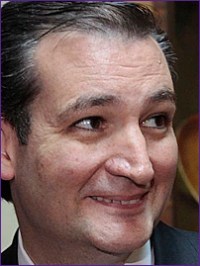 If we were unclear what kind president Ted Cruz would be if he won the race to the White House, his recent comments on who he considers a good role model leave little room for doubt.
The Texas Senator expressed his admiration for the Egyptian President, Abdel Fattah el-Sisi, who has imprisoned thousands of journalists and protesters and has unleashed a brutal police force, as an “example” of a Muslim ally.
“Let me give you an example of a Muslim, for example, we ought to be standing with,” Think Progress reports Cruz said at a campaign rally in Miami. “President el-Sisi of Egypt, a president of a Muslim country who is targeting radical Islamic terrorists,” he added.
But Cruz is no fair-weather friend to the blood-stained Egyptian president, he mentioned his admiration for el-Sisi last year.
“Why don’t we see the president of the United States demonstrating that same courage [as el-Sisi] just to speak the truth about the face of evil we’re facing right now?” Cruz asked during the first Republican presidential debate last year.
In February, charges were dropped against a four-year-old in Egypt. He had been sentenced to life for four counts of murder, eight counts of attempted murder, vandalizing state property during protests in January 2014, when the boy was 16-months-old.
‘Human rights abusers’ invited to ‘non-lethal’ weapons show, condemned by activists
RT | March 7, 2016
Activists have denounced a Home Office sponsored security fair, warning that Britain is selling tear gas and other crowd control tools to some of the world’s most oppressive regimes.
Among the governments invited to take part in the fair in Farnborough, Hampshire, 30 miles southwest of London, are Bahrain, Saudi Arabia, Israel, United Arab Emirates (UAE), Egypt and Turkey, the Guardian reported on Saturday.
Police and security officials from 79 countries are expected to participate in the fair later this week, according to the list, which was released under a Freedom of Information request.
Since Prime Minister David Cameron took office in 2010, the UK has approved 126 licenses connected with the sale of tear gas and other irritants, according to the Campaign Against the Arms Trade (CAAT).
Also approved were 75 licenses for crowd control ammunition such as rubber bullets, 79 for “acoustic” crowd control – known as sound grenades – and 259 licenses for riot shields.
CAAT spokesman Andrew Smith told the paper: “There are serious questions to be asked about the impact of the so-called ‘non-lethal’ arms industry. These risks become even more important when these weapons are being sold to human rights abusers and dictatorships.”
“A number of the countries in attendance routinely practice torture, arbitrary detention and other appalling acts of violence. The UK should not be arming these regimes and selling them the means to oppress and kill.”
“[The event] undermines the UK’s claims to be promoting human rights while strengthening the position of repressive regimes.”
Defending the trade show, the Home Office said: “A thriving security industry is vital to help cut crime and protect the public and so it is important these products and services can be showcased and expertise shared.”
Described by organizers as “the perfect place to see the latest security equipment and technology in a secure environment,” the Security and Policy fair will be held behind closed doors, with all visitors “pre vetted to strict Home Office criteria.”
Featured Video
“Historic Russia”: The Land Putin Will Not Give Back
or go to
Aletho News Archives – Video-Images
Book Review
Why the War on Conspiracy Theories Is Bad Public Policy
By Kevin Barrett • Unz Review • February 1, 2019
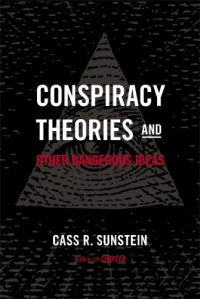 A Review of Conspiracy Theories and Other Dangerous Ideas by Cass Sunstein (based on an earlier paper co-authored with Adrian Vermeule); In Defense of Troublemakers: The Power of Dissent in Life and Business by Charlan Nemeth; and Conspiracy Theories and the People Who Believe Them, edited by Joseph E. Uscinski
On January 25 2018 YouTube unleashed the latest salvo in the war on conspiracy theories, saying “we’ll begin reducing recommendations of borderline content and content that could misinform users in harmful ways—such as videos promoting a phony miracle cure for a serious illness, claiming the earth is flat, or making blatantly false claims about historic events like 9/11.”
At first glance that sounds reasonable. Nobody wants YouTube or anyone else to recommend bad information. And almost everyone agrees that phony miracle cures, flat earthism, and blatantly false claims about 9/11 and other historical events are undesirable.
But if we stop and seriously consider those words, we notice a couple of problems. First, the word “recommend” is not just misleading but mendacious. YouTube obviously doesn’t really recommend anything. When it says it does, it is lying. … continue
Blog Roll
 Aletho News
- BRITAIN’S WARNING: PREPARE FOR WAR
- “Historic Russia”: The Land Putin Will Not Give Back
- How the Cambridge Analytica scandal still haunts Mark Zuckerberg
- The Ongoing Cancellation Campaign Against a Dissenting Academic in Norway
- Yemen and ‘the Houthis’: Challenging Sami Hamdi’s Narrative
- No, Christians did not invent Zionism
- AIPAC-led lobbying network opens branches in Cypriot, Greek parliaments
- Araghchi blasts ‘parasitic’ alliance as US taxpayers pay for Israel’s war on Iran
- Easy fix for Europe’s chaos? Stop fueling war against Russia
- Putin’s key remarks on peace talks and Europe’s ‘schizophrenia’
- If Americans Knew
- An error has occurred; the feed is probably down. Try again later.
- No Tricks Zone
- Two New Studies Find Thwaites Glacier Melt Cannot Be Driven By Human Activity Or A Warming Ocean
- E-Cars Reduce CO2 Emissions By Only 41% Compared To Internal Combustion Engine Vehicles
- Predictions Made By Renowned Climate Professor Over Past Decades Have Been Proven To Be Poor
- New Study Suggests Large Regions Of The Pacific Ocean Have Been Cooling For The Last 80 Years
- Germany’s Green Energy Debacle: High Energy Costs Force Kahla Porzellan to Close After 182 Years!
- New Study: 50 Years Of The Most Aggressive ‘Net Zero’ Policies Can Only Affect The Global Climate By 0.03°C
- US September “Heat” Was No Record…Many Records Set Decades Ago
- Latest European Green Energy Debacle; Portugal’s Largest Flagship Solar Park Insolvent!
- Green Energy Debacle: German Expert Professor Fritz Vahrenholt Warns Of Severe Economic And Social Consequences
- Two More Paleo Reconstructions Affirm Meters-Higher Sea Levels Across Ireland, Brazil 7000-6000 Years Ago

