GAZA – The Islamic Jihad Movement on Tuesday announced its rejection of the Palestinian National Council (PNC) meeting set to be held in Ramallah and considered it a prelude to the exclusion of Palestinian resistance factions from any future national project.
In a statement on Tuesday, the Movement said that the statements made about the current arrangements for holding a PNC meeting will entrench the internal division.
According to statements by a number of Fatah representatives lately, the Palestinian Authority (PA) president, Mahmoud Abbas, decided unilaterally to hold a PNC meeting in Ramallah in September.
Islamic Jihad called on Fatah Movement and the PA to abide by the understandings reached in Cairo and in the PNC preparatory committee meetings in Beirut.
Hamas Movement as well as the Popular and Democratic Fronts for the Liberation of Palestine expressed earlier their rejection of Fatah’s call for a PNC meeting in Ramallah.
August 16, 2017
Posted by aletho |
Ethnic Cleansing, Racism, Zionism | Gaza, Hamas, Palestine |
Leave a comment
TEHRAN – Hamas is a national liberation movement and Moscow does not consider it a terrorist organization, Russian Ambassador to Tehran Levan Dzhagaryan said Tuesday.
Reporting from Tehran, a PIC news correspondent said Dzhagaryan told Hamas representative in Iran, Khaled al-Kaddoumi, that Hamas is a national resistance movement and one of the Palestinians’ main legitimate representatives.
The Russian ambassador reiterated his country’s support for the Palestinian cause and people.
Al-Kaddoumi briefed the Russian envoy on the Israeli violations in Occupied Jerusalem and the crimes committed against the Palestinian people and holy sites.
August 1, 2017
Posted by aletho |
Ethnic Cleansing, Racism, Zionism, Illegal Occupation | Hamas, Israel, Jerusalem, Palestine, Russia |
Leave a comment

Israel arrested Hamdan Temraz, 61, deputy director of the United Nations Department of Safety and Security in Gaza, while he was on his way to a work meeting. Four days later the UN still had not issued a statement about this.
The UN has recently come under increased pressure from the United States and Israel.
US Ambassador to the UN Nikki Haley announced to an adoring AIPAC audience in March that she had pressured the UN to remove an official report showing that Israel was guilty of ‘apartheid.’
All 100 US Senators signed a letter in April noting that the US is the largest single donor to the UN and demanding that the UN end its allegedly unfair treatment of Israel.
On July 14th UN Secretary-General António Guterres issued a statement condemning the killing of two Israeli policeman by three assailants (who were then killed by Israeli forces), announcing: “This incident has the potential to ignite further violence. All must act responsibly to avoid escalation.”
Yet, Secretary-General Guterres issued no such statement two days earlier when Israeli forces invading the Palestinian city of Jenin killed two young Palestinians.
Now the UN Secretary-General is saying nothing about Israel’s imprisonment of a UN official from Gaza as he tried to travel to a meeting.
Richard Silverstein reports in Tikun Olam:
This is getting old. Israel has once again arrested a United Nations official based in Gaza as he attempted to cross into Israel to attend a work meeting there. An Israeli security source has confirmed to me the linked story above and the Shin Bet arrest. The news is under gag order in Israel and no media there may report the story. This conveniently insulates the Israeli public from the news that their supposedly democratic nation has arrested human rights personnel from the most reputable NGO in the world. It also allows the Shin Bet time to build yet another fraudulent case against yet another Palestinian official doing international humanitarian relief work in Gaza.
Since Israelis can’t know this information, I’m going to tell them here. The arrested man is Hamdan Temraz, 61, who is the deputy director of the United Nations Department of Safety and Security (UNDSS) in Gaza. He was arrested at the Erez crossing on July 12th despite having a valid entry permit.
The Palestinian human rights group, al Mezan released this statement to the Palestine Information Center, protesting the latest Israeli outrage:
The Center explained that such Israeli practices are aimed at blocking the work of the international organizations in the Gaza Strip, pointing out that 8 employees working in these organizations have been arrested since the beginning of 2014.
It affirmed that hundreds of employees are denied the permits required to enter or exit Gaza to be able to follow up their organizations’ work, not to mention the Israeli incitement campaigns they are exposed to.
I find it odd that a UN employee has been in an Israeli prison for four days and there has been no statement from the international body. Is this how they come to the defense of their staff when it’s under threat in a police state? I left a phone message with the UN press office seeking a statement, but have not heard from them so far.
It’s no coincidence that last month, Netanyahu called for the UN to dismantle UNWRA, the major relief organizations in Gaza. He appealed directly to U.S. ambassador, David Friedman aka “The Settler’s Friend.” This rehashes a common Israeli narrative in which evil Hamas co-opts everyone and everything to do its dirty terrorist work in the enclave. The U.S. is far the largest donor supporting UNWRA, providing $350-million annually to support the millions of Gazans who are unemployed and undernourished due to the decade-long Israeli siege. Israel hopes that the new Trump regime will realize its ambitions to restrain or suppress the aid work in Gaza, which serves to remind the world of Israel’s ongoing assault against its innocent civilian population.
Last summer, Israel arrested two Palestinians in Gaza. Waheed Borsh worked for the UN Development Program and Mohammed el-Halabi for the Christian relief group, World Vision. Both were accused of exploiting their NGO status to undertake covert activities on behalf of Hamas. In the latter case, el-Halabi was accused of funneling international relief funds to the Islamist group. In every instance, the NGOs undertook full, comprehensive investigations and uncovered no evidence to support the Israeli charges. But since Israel functions as a police state as far as Palestinians are concerned, guilt and conviction were assured. Therefore, in order not to spend decades behind bars, each copped a plea that offered a lesser sentence.
This charade permits Israel to bolster its fake claim that the international relief organizations aren’t that at all–but rather thinly concealed support groups for militant international terrorists. This, in turn, satisfies the Israeli government’s core far-right constituency, which can tell itself how much the world hates us and how justified it is in utilizing maximum force in “defending” itself from enemies lurking virtually everywhere.
So here’s how it will go with Temraz. He will be accused of taking advantage of his position directing security for the UN agency by permitting Hamas to do something that somehow jeopardizes Israeli security. Perhaps he allowed the militants to build tunnels under UN facilities. Perhaps he offered materials to Hamas to build tunnels. Or even better: he provided the fake IDs the Haram al Sharif attackers used to gain entrance to the Muslim holy site. Who knows what they can devise? The thing is, these Shabak agents aren’t very imaginative. Nor do they need to be. No one reviews the cases they bring for credibility. No judge cares to do so. He or she would rapidly find themselves on the road to career oblivion if they did. So any half-assed concoction can send a man away for a decade or more simply because some agent has to make his quota and throw the fear of god into both Palestinians and the relief agencies servicing Gaza. What a seamy mess of a national security regime this is.
July 17, 2017
Posted by aletho |
Ethnic Cleansing, Racism, Zionism, Subjugation - Torture | Gaza, Hamas, Human rights, Israel, Palestine, United Nations |
Leave a comment
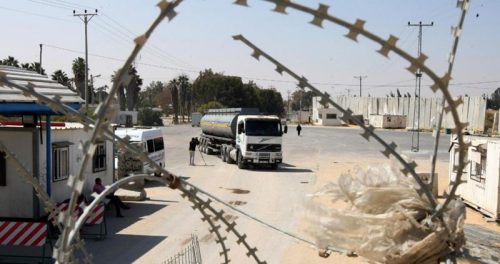
The United Nations has often provided valuable reports on the situation in the Palestinian Occupied Territories (although in at least one case the UN removed such a report following pressure from Israel and the United States – see this, this, and this).
The UN’s latest report on the region, “Gaza Ten Years Later,” contains much valuable, factual information. However, parts of the report exhibit a troubling lack of proportionality. This flaw is then maintained in quoted comments on the UN report by National Public Radio journalist Daniel Estrin.
Below is the NPR news story on the UN report, with comments in Italics that discuss some of its statements:
U.N. Says Gaza Is ‘De-Developing’ Even Faster Than Expected, by Merrit Kennedy, NPR
Five years ago, the U.N. warned that Gaza is expected to be unlivable by 2020. A new report now says conditions are deteriorating there even faster than it forecast.
“What needed to happen has not happened, and the indicators are accelerating instead of slowing down,” Robert Piper, the U.N. Coordinator for Humanitarian Aid and Development Activities in the Occupied Palestinian Territory, told NPR’s Daniel Estrin.
“In a nutshell, Gaza continues to de-develop in front of our eyes,” Piper adds. “From health care, to unemployment, to energy, to access to water, across all of these fields, Gaza’s 2 million people are seeing faster and faster decline in their living conditions.”
The population of Gaza, a 130-square-mile strip of land on the Mediterranean, is growing faster than projected, while infrastructure and services haven’t been able to keep up. The population is now forecast to reach 2.2 million people in 2020, up from the 2012 projection of 2.13 million.
The UN report, and the NPR discussion, correctly highlight the rapid pace at which Gaza is moving toward humanitarian disaster. However, as the discourse continues, a moral equivalence fallacy begins to emerge. Daniel lists three sources of Gaza’s trouble:
“Many of the problems stem from the Hamas takeover of Gaza 10 years ago, Israel and Egypt’s blockade of Gaza and the Palestinian Authority’s recent reduction of electricity to Gaza to pressure its rival Hamas,” Daniel reports.
What’s wrong with this picture?
Undoubtedly, Hamas’ feud with the PA is part of the problem; so are the electricity shortage and the closed crossing to Egypt. But placing these factors on par with Israel’s now ten-year-long blockade ignores the facts—some of which are spelled out in the UN report:
Israel retains full control of all movement of people and goods to and from Gaza by sea, air and land, with the exception of a 12 km strip of border with Egypt…Following the expulsion of the PA by Hamas in the summer of 2007, the Israeli Government declared Gaza “hostile territory” and, again citing security concerns, announced a number of new sanctions and restrictions on the access and movement of people and goods, ultimately amounting to a blockade by sea, air and land. Many of the restrictions imposed then, are still in place. (Italics added)
It is worth taking a moment to discuss the question of Hamas, which continues to be a scapegoat for Gaza’s ongoing crisis. Hamas’ complicated rivalry with, and appropriation of power from, Fatah and the PA–and its reputation as a terrorist organization–need to be challenged.
Hamas won a democratic election in Gaza and the West Bank (in spite of the US spending $2.3 million to support Fatah and Israeli obstruction), and was promptly discredited by the US and the EU. Israel commenced sanctions only 3 days after the election. These reactions were nothing short of collective punishment by world superpowers, simply because the “wrong” party won. The charge that Hamas is nothing but a terrorist group, and Palestinians elected Hamas leaders to destroy Israel, shows a profound misunderstanding of Hamas and its rise to power.
Neve Gordon explained in this excellent 2006 article that “the organization’s popularity in the Occupied Territories actually stems from its being seen as the voice of Palestinian dignity and the symbol of the defense of Palestinian rights at a time of unprecedented hardship, humiliation, and despair…In other words, Hamas was elected not only because it is considered an alternative to the corrupt Palestinian Authority, but also because Israel created the conditions that made it an indispensable social movement.”
Back to the de-development of Gaza. In his discussion of the Gaza crisis, Daniel also neglects to mention the three assaults by Israel in 2008, 2012, and 2014. The UN report does mention them, but the description is problematic:
In addition to the impact of the violent Hamas takeover and ensuing Israeli measures imposed in 2007, three rounds of armed hostilities between Israel and Hamas – with the most devastating round in 2014 – have dealt repeated blows to the Gazan economy and damaged essential infrastructure.
These words may be technically accurate: yes, Hamas took over Gaza amid violence; yes, Israel imposed “measures” in 2007; yes, there have been three rounds of “armed hostilities”—but the statement is egregiously inequitable. It is absurd to suggest that the Hamas takeover was equally as damaging to Gaza as the three deadly assaults by Israel were. And the portrayal of the hostilities as though between two equal, evenly-matched armies when Israel has the latest weaponry and Gaza is essentially unarmed, is patently false. Here is a more precise description of the lopsided outcome of the hostilities, found further along in the UN report:
The first major round of hostilities broke out on 27 December 2008 and lasted for more than three weeks. During this time, nearly 1,400 Palestinians and 13 Israelis18 were killed and some 60,000 homes were damaged or destroyed…The second major escalation of hostilities began on 14 November 2012 and lasted for one week, in which 174 Palestinians, including 107 civilians, and six Israelis, of which three were civilians, were killed, and some 10,000 homes damaged. The latest, and most devastating round of hostilities, took place between 8 July and 26 August 2014. During these 51 days, 2,251 Palestinians, including at least 146 civilians, and 71 Israelis, of whom five were civilians, were killed, and 171,000 homes were damaged.
The death toll after three “rounds of hostilities” was 3,825 Palestinians and 90 Israelis. The total number of homes damaged was 241,000—all Palestinian. In addition, schools, hospitals, and power plants were decimated. This is not a description of the aftermath of “war,” but of blitzkrieg.
The NPR story goes on to mention in passing Israel’s regulation of the border—without acknowledging the seriousness of the closure and how it affects any attempts at reconstruction. He even equates Israel’s meddling with Egyptian actions, although Egypt shares only a 7-mile border vs. Israel’s which is 32 miles long and a much greater object of hostility. Here is the statement:
Israel maintains tight control over the movement of people and goods from all sides of Gaza, aside from the 7-mile-long border Gaza shares with Egypt, which is rarely open.
The UN report describes more fully the impact the closure is having on efforts to rebuild over the last three years. This is not just “tight control”—it is crippling restriction on building materials and other critical supplies:
[Restrictions] imposed on the Strip continue to significantly impact the daily lives of Gaza’s inhabitants and the efforts of the international community to implement humanitarian and development projects. Israel considers many materials needed for these projects to be ‘dual-use’ and posing security concerns, thus subjecting them to severe import restrictions. These include construction materials, raw material for the productive sectors, including wood and pesticides, medical equipment and water pumps necessary to deal with seasonal flooding.
It is worth noting that Israeli limitation of imports included (in 2010, and is mostly still in place) wood for construction, cement, iron, tarps (for roofs on huts), fishing rods, farm animals, many spare parts for farming equipment, notebooks, pens, pencils, and toys.
The NPR report then moves on to the topic of water:
By the end of 2017, the U.N. projects Gaza’s only water aquifer will be depleted. The damage could be irreversible by 2020 due to salt water entering the aquifer. That would be “catastrophic,” the report says, and the “living and health conditions of the people of Gaza can only further deteriorate, exposing the population to water-borne illnesses, and other threats.”
The U.N. had previously said that the aquifer would be depleted by 2016, earlier than the current projection. Piper says this small piece of positive news is more akin to “re-arranging the deck chairs on the Titanic than really having much to celebrate.”
This is objectively true—although the image of “deck chairs on the Titanic” makes the Gaza situation sound more like a movie trailer than a humanitarian crisis. Let’s add some detail from the UN report to shed light on the reality:
Access to safe drinking water in Gaza through the public water network plummeted [after 2000]…As a result, reliance on water tanks, containers and bottled water rose from 1.4% to 89.6%…Having to rely on water trucking comes at a high cost on consumers, as trucked water is 15-20 times more expensive than water from the network. This particularly impacts the most vulnerable who are often poor and unemployed and do not have access to piped network water. Trucked water is also unregulated and unreliable in terms of quality.
This gives us a clearer picture of not only the expense but also the continued risk posed as the public water network becomes unusable. People of Gaza pay a premium for water that may or may not be safe.
Israel has an obligation to the people of Gaza which should be part of any conversation about the crisis. A number of prominent human rights organizations have determined that whether Gaza is considered occupied, in armed conflict with Israel, or under Israel’s control, international law demands that Israel solve the water crisis.
NPR then moves on to waste water, describing the nightmare scenario that is happening today:
At the same time, the amount of poorly treated sewage dumped into the sea is increasing, now equivalent to 43 Olympic size pools daily. That is expected to increase by almost 10 percent by 2020, which could have “significant environmental consequences,” the report warns.
The U.N. says new water treatment facilities need to be constructed to address the water crisis. However, Israel is limiting imports on many of the materials needed for construction because it says they could be used for military purposes.
Electricity is another critical need in Gaza. The NPR report continues:
And any future new [sewage treatment] plants would require a steady electrical supply, which at the moment is highly uncertain.
In fact, “an 11-year-old child has not experienced more than 12 hours of electricity in a single day in his/her lifetime,” according to the report. It says that in the most pessimistic 2020 estimate, only 25 percent of Gaza’s electricity demand would be met.
The economy of Gaza, its employment figures, and health care provisions are also notable. NPR reports:
The economy in Gaza has significantly declined in the last decade, with per capita GDP decreasing by 5.3 percent between 2006 and 2016. The report describes Gaza’s economic trajectory as “de-development,” even as the occupied West Bank has seen 48.5 percent growth in per capita GDP between 2006 and 2016.
Gaza’s unemployment rate is at more than 40 percent, according to the latest figures. It’s particularly severe for 20-24 year olds, at 60.3 percent, and for women, at 64.4 percent.
The number of doctors, nurses and hospital beds has also not been able to keep pace with the growing population. The report says, “while the population has doubled since 2000, the number of functioning primary health care clinics has decreased from 56 to 49.”
Given these “unacceptable” conditions, Piper acknowledges that for some, Gaza would already be deemed unlivable. “For many of us, we’d say that threshold is well and truly passed,” he said. “How do you manage in these sorts of conditions?”
In the report, Piper states: “It is profoundly unjust and inhuman to put Gaza’s civilians through such an ordeal.” He calls them “the victims of various policies by many different actors.”
When there is a victim, there is also a perpetrator. Gaza’s often goes almost unnamed. We must not forget who it is or rest until the humanitarian crisis is averted.
But at least NPR reported on the humanitarian crisis in Gaza, unlike most other mainstream news organizations, including the New York Times, ABC, CBS, NBC, CNN, MSNBC and Fox News.
RELATED:
On 50th Anniversary of Israeli Occupation, Palestinian Opinions Largely Ignored
The Illusion of Balance: NPR’s coverage of Mideast deaths doesn’t match reality
July 16, 2017
Posted by aletho |
Deception, Ethnic Cleansing, Racism, Zionism, Mainstream Media, Warmongering, Subjugation - Torture | Gaza, Hamas, Israel, NPR, Palestine, United Nations |
Leave a comment
A leading Israeli writer revealed yesterday an Israel-Egypt-UAE plan to install Mohamed Dahlan as the leader of the Palestinians in the Gaza Strip instead of Mahmoud Abbas.
In an opinion piece in Haaretz, Zvi Bar’el said that while Hamas would remain in control of security and not be demilitarised, at least “Israel would have a partner in Gaza who supports reconciliation” with the Zionist state.
Dahlan, he pointed out, is the Palestinian president’s “political rival” and if the plan succeeds it is expected that Abbas would be “pushed into a dark corner”, leaving the former Fatah official free to move against him. The endgame could see Dahlan installed as Abbas’s successor at the top of the Palestinian Authority, Fatah and the PLO.
According to Bar’el, Egypt will ease the siege of Gaza by opening the Rafah Border Crossing for people and goods. The UAE, meanwhile, will fund a power station on the Egyptian side of the border near Rafah; a port is also a possibility. Dahlan is very close to the governments in Cairo and Abu Dhabi.
“It’s still too early to assess whether this plan will be fully implemented,” he wrote, “and if Hamas will agree to place Dahlan at the head of the Gaza government, a step that could all but sever Gaza from the West Bank, especially given the long feud between Abbas and Dahlan.” On the other hand, the writer pointed out, if the plan does come to fruition, it could make an Israeli-Egyptian dream come true. A “state of Gaza” could become a reality with Dahlan at its head, something that, for Israeli Prime Minister Benjamin Netanyahu’s government, is “the plan’s key”.
If the plan succeeds, said Bar’el, it would “neutralise” the role of Qatar and Turkey in Gaza. He described Israel’s policy of “what’s good for Hamas is bad for Israel, and what helps Gazans strengthens Hamas” as a “failed concept”. Instead, he clearly believes that this “new strategy” which places the people of Gaza first should be given serious consideration.
Observers point out that it is significant that Bar’el refers to “Gazans” and “people of Gaza” rather than Palestinians in Gaza. “This,” said one, “tries to convince the world that ‘Gazans’ are somehow not Palestinians and all actually belong in the Gaza Strip. The reality is that most of the residents of Gaza do not originate there; they come from places inside what is now Israel and are refugees by design, not choice.”
“The Gaza Strip” is a relatively recent term, he added. “It’s only been used since the Nakba of 1948, prior to which the land was simply part of historic Palestine.”
Read also:
Hamas delegation reaches ‘understandings’ with Egypt and meets Dahlan reps
Dahlan behind differences between Egypt and Fatah
June 29, 2017
Posted by aletho |
Ethnic Cleansing, Racism, Zionism, Timeless or most popular | Egypt, Gaza, Hamas, Israel, Palestine, Qatar, Turkiye, UAE, Zionism |
Leave a comment
BETHLEHEM – The Israeli air force launched at least two airstrikes on the besieged Gaza Strip early Tuesday, with the Israeli army saying the attacks targeted two Hamas military infrastructures and were in response to a rocket fired from Gaza late Monday, which allegedly landed in an open area in Israel’s Shaar Hanegev Regional Council that borders northeastern Gaza, causing no injuries or damages.
No injuries were reported as a result of the airstrikes.
Palestinian news agency Wafa cited local sources in Gaza, saying that strikes hit multiple locations across the small Palestinian territory, including northwest of Gaza City, east of the Gaza Valley area, and Nasr neighborhood in the southern Gaza Strip city of Rafah.
The strikes left material damages to a number of homes, the report said.
Separately, Wafa reported that the Israeli army attacked agricultural land east of the Gaza Valley with artillery missiles and another agricultural area east of Deir al-Balah in the central Gaza Strip, reporting no injuries.
“Since the terror organization Hamas is the ruler of the Gaza Strip, it is responsible for any attempt to harm the State of Israel,” the Israeli army said in a statement following the early morning aerial attack.
However, in a statement, the Hamas movement accused Israel of fabricating claims of rocket fire to justify the attack. “The Israeli claim of a rocket being fired from Gaza and issuing a statement on behalf of ISIS to justify the escalation and an attack of resistance positions are part of a dangerous and transparent Israeli game.”
The statement referred to reports in Israeli media that claimed a Salafist group in Gaza affiliated to the so-called Islamic State claimed responsibility for the alleged rocket fire.
Hamas has not claimed responsibility for any rocket attacks since a ceasefire was declared after the 2014 war, and the movement has attempted to clamp down on armed activity by smaller political groups that do launch rockets from the territory.
Israeli officials have nonetheless accused Hamas of “preparing” for another war with Israel and have threatened retaliatory measures against the Gaza Strip as a whole.
The attacks came as Palestinians in the besieged coastal enclave are being forced to cope with just a few hours of electricity a day since Israel agreed to a Palestinian Authority request to dramatically cut electricity supplies to territory.
The Gaza Strip marked the ten-year anniversary of Israel’s siege of the small Palestinian enclave this month, with the humanitarian situation there continuing to alarm rights groups that have denounced the Gaza’s inhuman conditions as “unparalleled in the modern world.”
June 27, 2017
Posted by aletho |
Deception, Ethnic Cleansing, Racism, Zionism, False Flag Terrorism | Gaza, Hamas, Israel, Palestine, Zionism |
Leave a comment
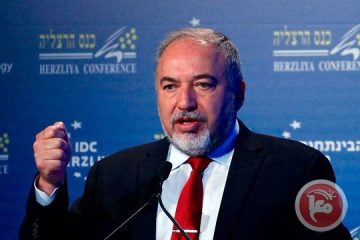
BETHLEHEM – During a speech at Israel’s Herzliya conference, aimed at discussing the country’s national policies, ultraright Israeli Defense Minister Avigdor Lieberman rejected the possibility of Palestinian refugees from historic Palestine, which Israel was built on, being able to return to their lands within the 1967 borders, a right that is upheld by United Nations Resolution 194.
“We will not agree to the return of a single refugee to within the ‘67 borders,” Lieberman reportedly said. “There will never be another Prime Minister who makes propositions to Palestinians like Ehud Olmert did,” he added, referring to a 2008 peace proposal introduced by the former prime minister.
The right of return for Palestinian refugees is a central demand among Palestinians and their leadership. The demand also represents a powerful symbolic connection to their lands and homes they were displaced from, as many Palestinians still possess original keys to their homes that were consumed by the state of Israel 69 years ago.
According to Israeli media, Lieberman also said that an end to the decades-long Israeli-Palestinian conflict would “not solve the problems – it will make them worse,” and noted that Israel should first “reach a regional agreement with moderate Sunni states, and only then an agreement with the Palestinians.”
He also went on to question the legitimacy of Palestinian citizens of Israel being part of the Israeli parliament, the Knesset, noting that the Joint List political bloc — representing parties led by Palestinian citizens of Israel in the Knesset — refused to acquiesce to Zionist ideologies.
“The only place they don’t want to leave is Israel. Why? Because it’s good for them here,” he said, referring to Palestinian citizens of Israel, making up approximately 20 percent of the population, whose families lived on the lands of historic Palestine before the creation of the state of Israel.
According to the Palestinian Central Bureau of Statistics (PCBS), 66 percent of Palestinians who were living in British-Mandate Palestine in 1948 were expelled from historic Palestine and displaced from their homes and lands during the creation of Israel, referred to as the Nakba, or catastrophe, among Palestinians.
On the topic of Gaza, Lieberman reportedly said “I don’t think we need to get into it. It won’t end soon,” before calling the dire humanitarian situation in the besieged Palestinian territory an “intra-Palestinian crisis,” echoing statements made by US Ambassador to the UN Nikki Haley who placed full blame of the dire humanitarian situation in the besieged Gaza Strip on Hamas, and absolved Israel of any responsibility for the ongoing crisis.
Lieberman also accused Palestinian President Mahmoud Abbas of attempting to influence Hamas to go to war with Israel by exacerbating the crisis in Gaza by cutting Palestinian Authority (PA) payments for electricity supplied to Gaza from Israel.
“Abbas is going to increase cuts and soon stop the payment of salaries in Gaza and the transfer of fuel to the strip as a two-pronged strategy: Hurt Hamas and drag it to war with Israel,” he reportedly said.
Lieberman’s statements came amid an attempted renewal of the Israeli-Palestinian peace process by right-wing US President Donald Trump.
Most recently, on Wednesday evening, a meeting was held between Abbas and Trump’s son-in-law and senior advisor Jared Kushner in the central occupied West Bank city of Ramallah to discuss reviving peace talks with Israel.
Executive Committee Member of the Palestine Liberation Organization (PLO) Wasel Abu Yousif said in statement at the time that reviving a political process requires certain determinants based on international law: a time limit for ending the 50-year Israeli occupation of the Palestinian territory must be set to establish a Palestinian state along the 1967 borders with East Jerusalem as its capital, and Palestinian refugees must be granted the right of return to the homes and villages from which they were expelled.
However, Israeli leaders have been public on their rejection of the Palestinian Authority (PA) taking over East Jerusalem, which was officially annexed by Israel in 1980, and have regularly voiced their opposition to the return of Palestinian refugees or even the halting of illegal Israeli settlement expansions in the occupied Palestinian territory.
Naftali Bennett, Israel’s right-wing education minister, has also introduced a bill in the Israeli parliament that would prevent any future divisions of Jerusalem, by mending Israel’s Basic Law on Jerusalem to necessitate the approval of 80 of the 120 Knesset members to make any changes to the law, instead of the regular majority vote.
“The purpose of this law is to unify Jerusalem forever,” Bennett reportedly said, adding that his legislation would make it “impossible” to divide Jerusalem.
While the PA and the international community do not recognize the legality of the occupation of East Jerusalem, Gaza, and the West Bank since 1967, many Palestinians consider that all historic Palestine has been occupied since the creation of the state of Israel in 1948.
A growing number of activists have criticized a two-state solution to the Israeli-Palestinian conflict as unsustainable and unlikely to bring durable peace given the existing political context, proposing instead a binational state with equal rights for Israelis and Palestinians.
June 23, 2017
Posted by aletho |
Civil Liberties, Ethnic Cleansing, Racism, Zionism, Timeless or most popular | Gaza, Hamas, Human rights, Israel, Jerusalem, Palestine, West Bank, Zionism |
Leave a comment
Qatar says it has evidence showing the same “neighboring” countries that are leading a boycott campaign against Doha had a hand in the alleged hacking of its state news agency, an incident that triggered an unprecedented diplomatic crisis in the Persian Gulf region.
Attorney General Ali bin Fetais al-Marri Ali bin Fetais al-Marri told a press conference in Doha on Tuesday that the hacking incident originated in “neighboring countries,” without naming them.
“We have evidence to show that iPhones originating from the countries laying siege to us have been used in this hacking. We have enough evidence to point the finger of blame at these countries,” Marri said.
Last month, the Qatar News Agency (QNA) released comments attributed to Emir Sheikh Tamim bin Hamad Al Thani, describing Iran as an “Islamic power,” praising the Palestinian resistance movement Hamas and criticizing US President Donald Trump.
Qatar said hackers had broken into the QNA website and published the fake news, but the denial did not convince the Riyadh regime and its Persian Gulf Arab allies.
Elsewhere in his remarks, the Qatari attorney general said it was “very soon” to give specific phone numbers for those he said were responsible for the hacking.
He also noted that Qatari investigators had traced the internet service providers used to the Saudi-led allied countries.
“We have sent the information to the countries concerned and we are awaiting their response,” Marri pointed out, adding, “As far as we are concerned, the case is very clear.”
Following the hacking report, Saudi Arabia, the United Arab Emirates, Bahrain and Egypt severed diplomatic ties and cut off transport links with Qatar in early June, accusing Doha of supporting terrorism, an allegation rejected by the Qatari government.
They put 12 organizations and 59 people associated with Qatar on a terror sanctions list.
Marri said the blacklist was “baseless” and stressed that Qatar would legally pursue those who had done harm to it.
Qatar has long been at odds with other Arab countries about the Muslim Brotherhood, which the UAE and Egypt regard as a terrorist group.
Back in March, 2014, Saudi Arabia, the UAE and Bahrain temporarily recalled their ambassadors from Doha after alleging that it has been interfering in their domestic affairs. The diplomatic relations resumed eight months later when Qatar ordered some Muslim Brotherhood members to leave the country.
The recent dispute, however, is said to be the worst to hit the Persian Gulf since the formation of the Persian Gulf Cooperation Council (GCC) in 1981.
Observers say the fresh rift surfaced in the wake of Qatar’s break with past policies and its leaning toward Russia and Iran.
Qatar’s Foreign Minister Sheikh Mohammed bin Abdulrahman Al Thani said lately that Doha would not “surrender,” vowing to keep “the independence of our foreign policy.”
June 21, 2017
Posted by aletho |
Deception | GCC, Hamas, Middle East, Qatar, Saudi Arabia |
Leave a comment
GAZA – Head of the Palestine Scholars Association, Dr Marwan Abu Ras, lauded Qatar’s pro-Palestine position and stressed Palestinians’ support for the government and people of Qatar.
“We are here today, in the blockaded Gaza Strip, to tell the world that our sole enemies are the Israeli colonizers who forced us out of our own and only lands,” said Abu Ras. “It is high time Arabs and Muslims combined forces in the face of the Israeli occupation.”
“We, Palestine Scholars, hail all those who have rallied round the Palestinian people and Gaza. We are most grateful to Qatar which has left its stamp in every street and at every home in besieged Gaza,” he said.
“Our homes have been lit, infrastructure rehabilitated, and hospitals equipped thanks to Qatar,” added Abu Ras as he paid tribute to the Qatari government and NGOs.
He slammed the Israeli occupation and all the other parties who have been involved in underway schemes to tighten grip around Gazans’ neck and famish the Palestinians.
June 18, 2017
Posted by aletho |
Ethnic Cleansing, Racism, Zionism, Solidarity and Activism | Gaza, Hamas, Palestine, Qatar, Zionism |
Leave a comment
 GAZA – The Popular Front for the Liberation of Palestine (PFLP) has mourned the three Palestinian young men who were killed by Israeli soldiers after they carried out a commando operation in Occupied Jerusalem on Friday.
In a statement, the PFLP affirmed that two of those young men were its members, describing them as ex-detainees Baraa Ibrahim Atta, 18, and Osama Ahmed Atta, 19.
The PFLP said the operation was in retaliation to Israel’s crimes and its practices against the Islamic holy sites.
In a related context, senior Hamas official Ezzat al-Resheq categorically denied any ties between the three young men who carried out the Jerusalem operation and the ISIS, affirming that two of them were from the PFLP and one from Hamas.
Resheq accused the Israeli intelligence of being behind the fabricated news saying that the ISIS claimed responsibility for the operation.
He stressed that the Jerusalem operation was one of the individual initiatives made by the Palestinian people in their intifada (uprising) against Israel’s assaults on the holy sites, especially the Aqsa Mosque.
IMEMC News – June 17, 2017
 Three Palestinians were shot dead, on Friday evening, after stabbing and opening fire on Israeli soldiers, killing one and mildly wounding another, in Sultan Suleiman Street, near Bab al-Amoud (Damascus Gate), in occupied Jerusalem.
Israeli daily Haaretz said two Palestinians were shot and killed after attacking Police officers with knives and guns, and that a third Palestinian was shot and killed after stabbing an Israeli border policewoman, causing critical wounds that led to her death. Another Israeli officer was wounded in the attack.
The slain Israeli officer has been identified as Hadas Malka, 23; Israeli daily Haaretz said the officer was stabbed while trying to reach for her gun.
The police and the soldiers fired many live rounds, killing the three Palestinians, and wounding two Palestinian bystanders; one suffered a moderate injury, and the other was mildly wounded.
The three slain Palestinians have been identified as Bara’ Ibrahim Saleh, 18, Adel Hasan Ankoush, 18, and Osama Ahmad Ata, 19, all from Deir Abu Mashal village, west of Ramallah, in central West Bank.
Following the incident dozens of Israeli soldiers and officers were deployed in the area, closed all the gates leading to Jerusalem’s Old City, and assaulted many Palestinians, especially in the areas leading to the Al-Aqsa Mosque.
Update: The soldiers also assaulted many Palestinains, and clashed with local youths, wounding many with live fire and rubber-coated steel bullets.
One of the wounded Palestinians was shot with a live round in his spine, and another round in his kidney, while the soldiers chased the ambulance to the Al-Makassed Hospital in Jerusalem, but were unable to invade it, after dozens of Palestinians clashed with them, and prevented them from entering the hospital.
——–
In addition, dozens of soldiers surrounded and completely isolated Deir Abu Mashal village. Local sources said the soldiers imposed a strict siege on the village.
The soldiers warned that they will shoot and kill any Palestinian who is seen walking outside at night, and that the siege will continue until further notice.
June 17, 2017
Posted by aletho |
Ethnic Cleansing, Racism, Zionism | Hamas, Israel, Jerusalem, Palestine, Zionism |
Leave a comment
Israeli officials must have been tripping over each other in their rush to endorse the Saudi-led blockade on Qatar. “The Sunni Arab countries, apart from Qatar, are largely in the same boat with us since we all see a nuclear Iran as the number one threat against all of us,” said Israel’s former defence minister Moshe Ya’alon. The blockade represented a “new line drawn in the Middle Eastern sand,” tweeted US-born former Israeli ambassador Michael Oren, while revelling in the regional turmoil. “No longer [is it] Israel against Arabs but Israel and Arabs against Qatar-financed terror,” he added.
Defence minister Avigdor Lieberman described the crises as an opportunity for Israel and “certain” Gulf states. “It is clear to everyone, even in the Arab countries, that the real danger to the entire region is terrorism,” he insisted. The extreme right-winger added that the Saudi-led bloc had cut ties with Qatar “not because of Israel, not because of the Jews, not because of Zionism,” but “rather from fears of terrorism.”
Rejoicing over the punishment of a country which Israeli officials describe as a “pain in the ass” raises all sorts of questions, not least the connection between the siege imposed on Qatar and US legislation introduced by Republican Congressman Brian Mast to impose sanctions with respect to foreign support for “Palestinian terrorism”, and other purposes.
Introducing the bipartisan Bill (H.R. 2712 Palestinian International Terrorism Support Prevention Act of 2017) Representative Joshua Gottheimer said, “I’m proud to lead on this effort to weaken Hamas, a heinous terrorist network responsible for the death of far too many innocent civilians, both Israeli and American”. According to him, “Our bipartisan bill will ensure that anyone who provides assistance to this enemy of the United States and our vital ally Israel will face the strength and determination of our country.”
In their findings, the sponsors mentioned that Hamas had received significant financial and military support from Qatar. The sponsors cited the press conference at the Sheraton Doha in Qatar, where Hamas launched its new Document of General Principles and Policies, dubbed the movement’s new charter. “While this document was meant to convey a more moderate face to the world by referencing the 1967 borders,” the bill alleges that the “Hamas’ document, [which] neither abrogates nor replaces the founding charter… still calls for a continuation of terrorism to destroy Israel.”
The bill, which sets out to authorise sanctions on any foreign entity or government that provides support to Hamas, goes on to say that, “It shall be the policy of the United States to prevent Hamas, the Palestinian Islamic Jihad (PIJ), or any affiliate or successor thereof from accessing its international support networks.”
While noting the implications of the legislation, it is worth remembering that most of the proposals in this new bill are actually redundant, except for the section on Qatar. As the Arab Centre Washington DC – a research organisation furthering political, economic and social understanding between Arabs and the US — points out, the proposed law introduces sanctions already covered under existing legislation. Hamas and the PIJ are both designated as Foreign Terrorist Organisations (FTOs) and Specially Designated Global Terrorist entities (SDGTs) by the US State and Treasury Departments respectively. With that in mind, it is already illegal for US entities or institutions to support such groups. Thus, the sanctions proposed in this bill that pertain to US jurisdiction are superfluous.
Furthermore, the Arab Centre points out, formally targeting Iran is also unnecessary because Tehran has already been declared a state sponsor of terror by the State Department and prohibitions against arms export, financial and technical services and US aid to Iran are already in place. This only leaves Qatar, which would be the only new target under this legislation. The stealthy manner of the attack on Qatar did not hide the true intention of supporters of the Bill. “I am proud” said Gottheimer, “to support the Palestinian International Terrorism Support Prevention Act that will make countries like Qatar pay a price for their support for terrorism. In the fight against terrorists there is no middle ground. If you support terrorism, justice will eventually be served.”
So what has that got to do with Israel? While Israel has been unable to join the Saudi-led move to impose a blockade on Qatar directly, it hasn’t stopped it from taking part in substantial lobbying behind the scenes, with the UAE, to get what in reality is an anti-Qatar piece of legislation passed and carry out the necessary groundwork for a blockade of this magnitude.
It is alleged that the bill’s sponsors in the House include a number of lawmakers who have received substantial donations from pro-Israeli lobbyists as well as from those advocating on behalf of Saudi Arabia. Indeed, it is reported that ten US legislators sponsoring the anti-Qatar Bill have received more than $1m over the last 18 months from lobbyists and groups linked to Israel, Saudi Arabia and the United Arab Emirates.
Author and commentator Trita Parsi believes that the similarities between the US-allied Arab nations’ “terror list” and the H.R. 2712 bill show growing cooperation between Gulf Arab states and Israel. “The coordination between hawkish pro-Israel groups and the UAE and Saudi Arabia has been going on for quite some time,” Parsi told Al-Jazeera. What is new, he continued, is seeing pro-Israel groups such as the Foundation for Defence of Democracies “coming out with pro-Saudi [articles] and lobbying for them [the Saudis] on Capitol Hill.”
The cultivation of a political narrative to support the siege was also reported earlier this month by The Intercept. It said that emails released by a group called “Global Leaks” had shown that the UAE ambassador to the US, Yousef Al-Otaiba, and the foundation — a pro-Israel neoconservative think tank — have been working together on demonising Qatar. The emails obtained by The Intercept show FDD and UAE collaboration with journalists who published articles accusing Qatar and Kuwait of supporting “terrorism”.
It is no surprise then that the main reason given for this blockade makes little sense. For Saudi Arabia and the UAE to accuse Qatar of supporting terrorism is like the pot calling the kettle black. If there was any substance to the allegation, then the US would not have endorsed a recent arms deal with Qatar and nor would Washington maintain a major military base there. The stated reasons for the blockade have no merit whatsoever. Moreover, the blockade of Qatar cannot be examined in isolation from efforts that have been underway in the US to suppress Palestinian resistance in the name of fighting terrorism. Neither Qatar nor any of the Gulf countries benefit from this standoff whatsoever; for the main beneficiary, we must look to Israel.
June 16, 2017
Posted by aletho |
Ethnic Cleansing, Racism, Zionism, Wars for Israel | Hamas, Israel, Palestine, Qatar, Saudi Arabia, United States |
Leave a comment
Terrorism supporters in Washington and Riyadh close ranks against Qatar
The United States has been using lies to go to war since 1846, when Americans who believed in manifest destiny sought to expand to the Pacific Ocean at the expense of Mexico, acquiring by force of arms California and what were to become the southwestern states. In 1898 the U.S. picked up the pieces of a dying Spanish Empire in a war that was driven by American imperialists and the yellow dog reporting of the Hearst Newspaper chain. And then came World War 1, World War 2, and Korea, all avoidable and all enabled by deliberate lying coming out of Washington.
More recently, we have seen Vietnam with its Gulf of Tonkin fabrication, Granada and Panama with palpably ridiculous pretexts for war, Iraq with its nonexistent weapons of mass destruction, Afghanistan with its lies about bin Laden, Libya and its false claims about Gaddafi, and most recently Syria and Iran with allegations of an Iranian threat to the United States and lies about Syrian use of barrel bombs and chemical weapons. And if one adds in the warnings to Russia over Ukraine, a conflict generated by Washington when it brought about regime change in Kiev, you have a tissue of lies that span the globe and bring with them never-ending conflict to advance the American imperium.
So lies go with the American Way of War, but the latest twist and turns in the Middle East are bizarre even by Washington’s admittedly low standards of rectitude. On the 5th of June, Saudi Arabia led a gaggle of Arab and Muslim nations that included the United Arab Emirates, Egypt and Bahrain to cut off all diplomatic, commercial and transport links with Qatar, effectively blockading it. Qatar is currently isolated from its neighbors, subject to sanctions, and there have even been Saudi threats of going to war against its tiny neighbor. Salman al-Ansari, the president of the Saudi American Public Relation Affairs Committee, even tweeted: “To the emir of Qatar, regarding your alignment with the extremist government of Iran and your abuse of the Custodian of the two sacred mosques, I would like to remind you that Mohammed Morsi [of Egypt] did exactly the same and was then toppled and imprisoned.”
It is the second time the Saudis have moved against Qatar. Two years ago, there was a break in diplomatic relations, but they were eventually restored. This time, the principal allegation being directed against Qatar by Riyadh is that it supports terrorism. The terrorist groups that it allegedly embraces are Hamas, Hezbollah and the Muslim Brotherhood, Morsi’s affiliation. Hezbollah and Hamas are close to Iran which is perhaps the real reason for their being singled out as many would call them resistance movements or even legitimate political parties rather than terrorists. And the Iran connection is critical as Qatar has been under fire for allegedly saying nice things about trying to respect and get along with Tehran, undoubtedly somewhat motivated by its joint exploitation with Iran of a vast gas field in the Persian Gulf.
Qatar’s ownership of al-Jazeera also has been a sore point with the Saudis and other Gulf states as its reporting has often been critical of developments in the region, criticisms that have often rankled the Saudi monarchy and the Egyptians. It has been accused of spreading propaganda for “militant groups.” One of the Saudi demands to permit Qatar to again become a “normal” Arab Gulf state would be to close down the network.
The terrorism claims by the Saudis are, of course, hypocritical. Both Qatar and Saudi Arabia are well known as sponsors of Salafist terrorism, including the funding and arming of groups like ISIS and the various al-Qaeda franchises, to include al-Nusra. Much of the money admittedly comes from private individuals and is often channeled through Islamic charities, but both Qatar and Saudi Arabia have been extremely lax in their enforcement of anti-terror and money laundering regulations. In a 2009 State Department memo signed off on by Hillary Clinton it was stated that “donors in Saudi Arabia constitute the most significant source of funding to Sunni terrorist groups worldwide.” Qatar, meanwhile, has been described as a “permissive environment for terrorist financing.”
The Saudis also have considerable blood on their hands by way of their genocidal assault on neighboring Yemen. In addition, the Saudi Royal House has served as the principal propagator of Wahhabism, the virulently fundamentalist version of Islam that provides a form of religious legitimacy to terror while also motivating many young Muslims to join radical groups.
The falling out of two Gulf Arab regimes might be a matter of relatively little importance but for the unnecessary intervention of President Donald Trump in the quarrel. He has taken credit for the burgeoning conflict, implying that his recent visit to the region set the stage for the ostracizing of Qatar. His twitter on the affair, posted on June 6th, read “So good to see the Saudi Arabia visit with the King and 50 countries already paying off. They said they would take a hard line on funding extremism, and all reference was pointing to Qatar. Perhaps this will be the beginning of the end to the horror of terrorism!” And he again came down on Qatar on June 9th during a press conference.
Trump’s tweets might well be regarded as simply maladroit, driven by ignorance, but they could also provide a glimpse of a broader agenda. While in the Middle East, Trump was bombarded with anti-Iranian propaganda coming from both Israel and the Saudis. An escalation of hostilities with the intention of starting an actual war involving the United States to take down Iran is not unimaginable, particularly as the Israelis, who have already endorsed the Saudi moves, have been arguing that option and lying about the threat posed by Tehran for a number of years.
A war against Iran would be very popular both with the U.S. congress and the mainstream media, so it would be easy to sell to the American public. The terrorist attack in Tehran on June 6th that killed 17 is being blamed in some Iranian circles on the Saudis, a not unreasonable assumption. ISIS has claimed responsibility for the attack but it must also be observed that both the Saudis and Israelis have good connections with the terrorist group. But if the possibility of a possible Saudi hand is true or even plausibly so, it guarantees a rise in tension and an incident at sea could easily be contrived by either side to escalate into a shooting war. The United States would almost inevitably be drawn in, particularly in light of Trump’s ridiculous comment on the tragedy, tweeting that Iran is“falling victim to the evil they promote.”
There is also other considerable collateral damage to be reckoned with as a consequence of the Trump intervention even if war can be avoided. Qatar hosts the al-Udeid airbase, the largest in the Middle East, which is home to 10,000 U.S. servicemen and serves as the Combined Air and Space Operations Center for Washington and its allies in the region and beyond. Now the United States finds itself squarely in the middle of a fight between two alleged friends that it doesn’t have to involve itself in, an intervention that will produce nothing but bad results. Backing Saudi Arabia in this quarrel serves no conceivable American interest, particularly if the ultimate objective is to strike at a non-threatening Iran. So the fallback position is to lie about what the support for the aggressive Saudi posturing really means – it is alleged to be about terrorism, which is always a popular excuse for government overreach.
And the ultimate irony is that when it comes to terrorism the United States itself does not emerge without fault. As early as 2011, the U.S. was arming Syrian dissidents from the arsenals in Libya, flying in weapons to Turkey to hand over to the rebels. Many of the weapons, as well as those provided to Iraqi forces, have wound up in the hands of ISIS and al-Nusrah. U.S. advisers training rebels have conceded that it is impossible to determine the politics of many of those receiving instruction and weapons, an observation that has also been made by the Obama White House and by his State Department.
So watch the lies if you want to know when the next war is coming. If the House of Saud, the Israelis and Donald Trump are talking trash and seem to agree about something then it is time to head for the bomb shelter. Will it be Iran or an escalating catastrophe in Syria? Anything is possible.
June 13, 2017
Posted by aletho |
Deception, Fake News, Mainstream Media, Warmongering, Timeless or most popular | Hamas, Hezbollah, ISIS, Middle East, Qatar, Saudi Arabia, United States |
Leave a comment