Netanyahu Does Something Stupid Again
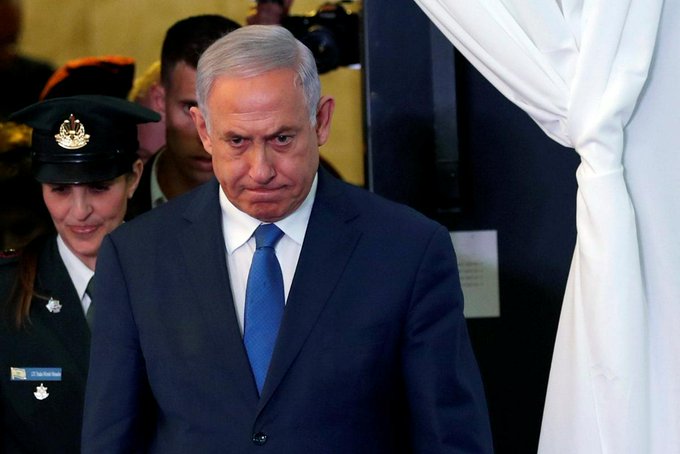
Israeli PM Benjamin Netanyahu arrives to review an honor guard with his Ethiopian counterpart Abiy Ahmed in Jerusalem September 1, 2019. Credit: Ronen Zvulun/ Reuters/ Twitter)
By Jeremy Salt | American Herald Tribune | September 2, 2019
With general elections coming up on September 17, Benyamin Netanyahu made a calculated gamble last week and lost.
The attempt to assassinate someone by drone in Beirut failed. Two drones were sent into the largely Shia suburb of Dahiya, where Hizbullah’s political, media and welfare offices are based. The first drone, for surveillance, crashed on to the roof of a Hizbullah media office, causing damage inside but no human casualties. This forced the Israelis to abort the entire mission. They themselves destroyed the second drone, for assassination, according to the veteran Middle East correspondent Abdul Bari Atwan. The target for murder was clearly a senior Hizbullah figure or – as some have speculated – a representative of the Iranian government. Israel certainly did not send a drone to Beirut just to put a hole in the roof of a building.
As this was the first attack on Beirut since 2006, when Israel jets pulverized Dahiya day after day, Hizbullah threatened retaliation. It never says when, how or where it will strike back but this time it retaliated almost immediately, destroying an Israeli APC (armored personnel carrier) at a military outpost across the armistice line.
That Netanyahu would launch such an attack without taking precautions to ensure the safety of civilians and military personnel in the north would have played badly before the public had not the government covered its tracks by firing a flurry of missiles into Lebanon and claiming in a media barrage that while the APC was indeed hit by the ‘terrorists’ no-one suffered even a scratch, as Netanyahu eventually claimed.
It may be some time, it may be never, that the truth comes out but the story pitched by the Israeli government and military has all the elements of high comedy, not sophisticated, more Bud Abbott and Lou Costello than Lenny Bruce. First the Israelis said the vehicle that was struck was a military ambulance, with no-one inside it. Then they admitted it was an APC, but again no-one was inside, as they had all gone somewhere else half an hour earlier, whether for a smoke, a meal or a pee we don’t know.
Likud minister Yoav Galllant said no-one had been hurt in the missile strike, even as footage was being shown of wounded soldiers being flown by helicopter to an army hospital but he was speaking out of turn, so the government said.
In fact, noone had been hurt. This was no more than a decoy operation. Israel wanted Hizbullah to think it had scored some kind of victory, so it dressed up store dummies as soldiers and had them carried away on stretchers. It turned out that Israel just wanted to fool Hizbullah. That was the point of the whole exercise. Ha ha, Hasan, the joke’s on you. Noone had been hurt after all. “The staged evacuation seems to have worked” wrote the veteran Zionist propagandist David Horowitz.
The fact that settlers in the north had been sent scurrying into their bomb shelters by the Hizbullah missile strike was soon overtaken by glowing reports of farmers back in the fields and children back in the classroom as usual now that the cross-armistice line missile fusillade had died down.
Readers will decide how much of this malarky they can believe. For most, probably none of it. Behind the propaganda smokescreen lies a core truth, which is that Netanyahu, Israel’s nincompoop-in-chief, launched a failed mission into Beirut, rather reminiscent of his failed attempt to kill the senior Hamas figure Khalid Mishael in 1997. The would-be assassins were arrested, and the panicked, sweating Netanyahu, close to nervous collapse, saved from his own folly only by the intervention of the Jordanian king.
The drone attack in Beirut was designed to deliver an election victory but backfired badly and had to be covered up as quickly as possible with what seems on the surface to be a complete cock and bull story.
The APC held eight men. If they had been inside when it was struck by Hizbullah’s missile, all would have died or would have been badly wounded, as Hizbullah claimed they were. If they were killed or wounded, Netanyahu, approaching the end of an election campaign, would have had to prevent the public from knowing, even to the ludicrous extent of telling it that the wounded soldiers shown in video footage were actually store dummies dressed up as wounded men. The truth – if there were casualties – would have doomed his re-election prospects.
The drone attacks on Beirut included a strike on a PFLP (Popular Front for the Liberation of Palestine) base in the Bika’a valley. Other drone attacks on the same day were launched against Hashd al Sha’abi (Popular Mobilization Forces) units and regular Iraqi army bases in north Iraq close to the Syrian border. Iraqi intelligence believes the attacks were launched from the Kurdish region of northeastern Syria, controlled by the largely Kurdish Syrian Democratic Forces (SDF), the US puppet militia. In the same time frame, the Zionists also attacked a military position close to Damascus.
These simultaneous attacks on three countries call to mind the rabid dog running around snapping at anyone who comes close. There was no immediate provocation for any of these missile strikes and drone attacks but in Israel’s case there never has to be. The Israelis say Hizbullah’s missile retaliation brought the two sides to within 30 minutes of another war, and they say another one is coming anyway. This can hardly be news to anyone. Hizbullah has enough precision missiles to devastate Israel and the longer the Israelis wait the more it will have, so unfortunately another war is only a matter of time and perhaps a much shorter time than people might think.
Even though Israel has been flying drones over Lebanon for decades, an attack in central Beirut is unusual. It might not be the first, however: Lebanon’s former Prime Minister, Rafiq Hariri, may have been assassinated in 2005 by a missile fired from an Israeli drone, and not killed by a car bomb, the generally accepted explanation. The UN investigation into Hariri’s death was grossly prejudicial, especially in the case of the reports filed by the first lead investigator, Detlev Mehlis, and came to nothing anyway. The charges against Lebanese suspects were dropped, at which point the UN tribunal switched its suspicions to Hizbullah, without having any prior evidence. This investigative route has ended in a dead end as well. The one chief suspect never investigated, even though standing out above all the others because of its long track record of murder and mayhem in Lebanon, is Israel.
In 2010 Hasan Nasrallah revealed that Hizbullah had intercepted Israel’s electronic communications and had captured images of an Israeli drone tracking Hariri across Beirut and into the mountains every day for three months. Along with an AWACS (Airborne Warning and Control System) plane, an Israeli drone was hovering over the precise point on the corniche road when Hariri was assassinated.
Looking at the evidence, Thierry Meyssan has argued that a highly refined missile fitted with a warhead based on a ‘nano’ amount of enriched uranium may have been used rather than a car bomb (‘Revelations on Rafik Hariri’s Assassination,’ Voltaire Network, November 29, 2010).
However, whether drone missile or car bomb, Nasrallah implicated Israel in the murder. If the question cui bono is to be asked the answers are clear. It was immediately assumed in the ‘west’ that Syria must have been responsible, given the often difficult relationship between Hariri and the Syrian government, but the only beneficiaries of the assassination were Israel and its rightwing proxies in Lebanon.
Israel violates Lebanon’s air space as a matter of course. Over the years it has overflown Lebanon many thousands of time. It frequently flies across Lebanon to attack Syria. At the international level, no sanctions have ever been introduced to stop it, just as no sanctions have ever been introduced to stop it doing anything it wants to do. This will continue until the big war comes along, and then all those who could have done something to head it off but did nothing will be throwing up their hands in horror.
Apart from flights aimed at bombing targets in Lebanon or Syria, Israel’s aerial intrusions would have other purposes, including intimidation of the Lebanese civilian population and the unrest this might generate.
Most probably it would also want to draw Hizbullah out and, through retaliation to one of its attacks, see if it has missiles capable of bringing down its aircraft. A lost plane and pilot would be worth the cost of knowing. As the neutralization of Israeli air power must be a primary objective of Hizbullah and Iran, Hizbullah probably does have such weapons, but Israel is going to have to wait until the next war to find out.
Israeli artillery shells southern Lebanon, drone drops incendiary devices along border
Press TV – September 1, 2019
Israeli artillery units have struck the southern part of Lebanon shortly after an Israeli drone violated the Lebanese airspace, and dropped incendiary material that sparked a fire in a forest at the border.
Lebanon’s official National News Agency reported that Israeli forces launched several 155-millimeter shells on the Jabal al-Rous area in the occupied Shebaa Farms and Kfarshouba Hills on Sunday afternoon.
The report added that the Israeli forces opened fire from their posts in the al-Zaoura area in Syria’s occupied Golan Heights.
An Israeli unmanned aerial vehicle, meanwhile, dropped incendiary devices on a forest in the border area of Bastara.
The Lebanese army said in a statement that the drone entered Lebanese airspace at 11:15 a.m. local time (0815 GMT) on Sunday, and dropped an unspecified number of devices, causing fires in some areas.
It added that the army would continue to follow up on Israeli violations of Lebanese airspace with the United Nations Interim Force in Lebanon (UNIFIL).
Images published by the private LBCI television network showed smoke rising from a tree-covered hill, reportedly caused by the weapons.
Tensions have been high recently between Israel and the Lebanese resistance movement Hezbollah in connection with the Israeli attacks on August 25 in Syria and Lebanon. Hezbollah has pledged to retaliate.
Hezbollah’s Secretary-General Sayyed Hassan Nasrallah said on Saturday evening that the resistance movement was determined to give a response to Israel over its recent drone incursion into Lebanon.
“The need for a response is decided,” he said during a televised speech ahead of the Islamic lunar calendar month of Muharram – the 10th day of which marks the martyrdom anniversary of Imam Hussein, the third Shia Imam and Prophet Muhammad’s grandson.
The Hezbollah chief added that the response was about “establishing the rules of engagement and… the logic of protection for the country. Israel must pay a price,” he said.
“Israel should know that the Lebanese air space is not open to her,” Nasrallah said, adding that the Israel attack could open the door to assassinations if left unanswered.
Nasrallah noted that the response to the Israeli attack could come from anywhere in Lebanon and not only from the Shebaa Farms south of the country, where Hezbollah normally stations most of its military equipment.
“The response will come from Lebanon. We will choose the place and time,” he said.
On August 26, Hezbollah said Israel had sent two drones into Lebanon on a bombing mission the previous weekend.
According to the resistance movement, the first drone had fallen on a building housing Hezbollah’s media office in the suburb of Dahieh. The second drone, which appeared to have been sent by Israel to search for the first one, had crashed in an empty plot nearby after being detonated in the air, it added.
Following the drone raids, Nasrallah vowed in a televised speech that fighters of the resistance movement would counter any further violation of the Lebanese airspace by Israeli drones.
Israel Uses Its Firepower, Far and Wide
By Paul R. Pillar | LobeLog | August 27, 2019
Israel recently has been expanding its military attacks across much of the Middle East, hitting multiple countries. The aggressive campaign far outpaces anything any adversaries of Israel have been doing to it, or even trying unsuccessfully to do to it.
Over the past two years Israel has used combat aircraft to conduct scores of attacks in Syria. Israel has stayed silent about most of this campaign of bombardment, but when it speaks it says the targets it hits are associated with Iran. The most recent widening of Israel’s assaults have involved Lebanon, including drone attacks on facilities in suburban Beirut associated with Hezbollah—a departure from the cease-fire established after the last Israeli-Hezbollah war.
The most dramatic geographic widening of the Israeli assault came last month with multiple attacks, reportedly conducted with F-35s, in Iraq—which, of course, does not even border Israel. Among the targets hit was one facility that is 500 miles from Israel but only about 50 miles from the Iranian border.
It is difficult to identify anything being fired in anger in the opposite direction that justifies such an expansive Israeli military campaign. In January of this year, Israel’s missile defense system intercepted a missile heading for the Israeli-occupied Golan Heights, but that is about as close as anyone in Syria, Lebanon, or Iraq has come lately to inflicting damage on Israel. Planned or failed attempts to inflict such damage all appear aimed at retaliating for Israel’s own attacks. Israel claimed that sorties it conducted this past weekend in Syria had thwarted an Iranian attempt to launch attack drones against Israel. That claim is unconfirmed, but it is quite plausible that, as suggested by Israeli sources, Iran was indeed planning such an operation to retaliate for the Israeli attacks last month in Iraq. One searches in vain for hostile operations that are unprovoked and not attempted tit-for-tat responses to Israel’s own actions.
The escalated Israeli military campaign exhibits some longstanding attributes of Israeli policies and practices. One is to assert a right to seek absolute security even if that means absolute insecurity for everyone else. The mere possibility of someone harming Israel is taken as sufficient reason to inflict certain harm on someone else. Israeli Prime Minister Benjamin Netanyahu, in commenting on the most recent Israeli operations in Syria, said that Israel “won’t tolerate attacks on its territory.” Evidently that means asserting the privilege of attacking anyone else’s territory, even if those countries have not already attacked Israel.
Domestic politics figures into such matters, in Israel as elsewhere. With an Israeli election looming, Netanyahu has a political reason to use aggressive operations to bolster his image as a tough-minded guardian of Israeli security.
The operations also are part of the larger anti-Iran theme that the Israeli government uses to keep a regional rival weak, preclude any rapprochement between that rival and the United States, blame someone other than itself for all the ills of the region, and distract international attention from subjects involving Israel that Netanyahu’s government would rather not talk about. The Israeli government wants to retain Iran permanently as a perceived threat, loathed and isolated, rather than to negotiate away any issues or problems involving Iran. Netanyahu demonstrated this when, after years of sounding an alarm about a possible Iranian nuclear weapon, he opposed the very agreement that closed all possible paths to such a weapon. His government demonstrated it again this week when it opposed President Trump’s expressed willingness to meet and negotiate with Iranian President Hassan Rouhani.
Israel’s heightened military aggressiveness has multiple bad consequences, in addition to being an affront to the sovereignty of multiple regional states. It pours gasoline on fires in places that need de-escalation, not escalation. It is certain to provoke more attempts at retaliation. Hezbollah Secretary-General Hassan Nasrallah was quite explicit in promising such retaliation in response to the recent Israeli attacks in Lebanon.
Given the close U.S. association with Israel, the Israeli attacks disadvantage the United States in its own relations with the affected states, in the form of increased resentment and lessened willingness to cooperate with Washington. This type of reaction is appearing today in Iraq, as a result of the Israeli attacks there. The episode has been the occasion for a powerful bloc in the Iraqi parliament to call for the withdrawal of all U.S. troops from Iraq and for shouts of “Death to America” to accompany “Death to Israel” at the funeral of one of those killed in the attacks.
No benefits offset these harmful consequences. It is useful to recall the previous time, before last month, that Israel attacked Iraq: the bombing of an Iraqi nuclear reactor in 1981. Far from setting back the Iraqi development of a nuclear weapon, the attack energized and accelerated what until then had been a semi-moribund program. Armed attacks on states have a way of provoking that sort of reaction.
U.S. policy has failed to recognize these realities. Following the attacks in Iraq, the Pentagon did issue a statement—in the course of denying direct U.S. involvement—that “we support Iraqi sovereignty and have repeatedly spoken out against any potential actions by external actors inciting violence in Iraq.” But such mild language will hardly deflect Israel from its present course when Secretary of State Mike Pompeo calls Netanyahu and, according to the official State Department statement, “expressed support for Israel’s right to defend itself from threats posed by the Iranian Revolutionary Guard Corps and to take action to prevent imminent attacks against Israeli assets in the region.”
It is not just current U.S. policy that fails to recognize realities, but also wider discourse in the United States about troubles in the Middle East. A question that needs to be pondered carefully is, “Who is destabilizing the Middle East?” Stoked by the Trump administration’s own unrelenting campaign of hostility toward Iran, the stock and overly simple answer has been, “Iran.” That is an insufficient answer even when excluding Israel from the picture. And Israel does get excluded, and excused, for the variety of reasons—ranging from religious doctrine and historical legacies to the inner workings of domestic U.S. politics—for the strong U.S. favoritism toward Israel.
It may be too much to ask for consistency rather than hypocrisy in such matters, but the rest of the world easily perceives the hypocrisy. It at least would be honesty to acknowledge that the U.S. approach toward the region has been shaped not by which players are or are not destabilizing the region, but instead by U.S. fondness for some players rather than others.
Paul R. Pillar is Non-resident Senior Fellow at the Center for Security Studies of Georgetown University and an Associate Fellow of the Geneva Center for Security Policy. He retired in 2005 from a 28-year career in the U.S. intelligence community. His senior positions included National Intelligence Officer for the Near East and South Asia, Deputy Chief of the DCI Counterterrorist Center, and Executive Assistant to the Director of Central Intelligence.
Paraguay Labels Hamas, Hezbollah ‘Terrorist Groups’; Israel Applauds
teleSUR | August 19, 2019
Israeli Prime Minister Benjamin Netanyahu praised Paraguay’s decision Monday to label Palestinian organization Hamas and Lebanese militant group and political party Hezbollah, as “international terrorist organizations,” a move that comes shortly after Argentina first blacklisted Hezbollah.
“I welcome the decision of Paraguayan President Mario Abdo to define Hezbollah and Hamas as terrorist organizations,” Netanyahu said in a statement before he added that Israel is “working so that more countries will also take this important step.”
Paraguay announced its decision on Monday to designate the Lebanese group, along with the political faction of Hamas that governs Gaza in Palestine, as terrorist groups. The South American country’s presidency detailed that Hamas and Hezbollah will be ranked “international terrorist organizations” and al-Qaeda and the Islamic State group “global terrorist organizations”. The difference between the labels was not made clear.
With this resolution, the country “recognizes and reaffirms its commitment to redouble efforts to prevent and combat violent extremism”, the presidency stated.
Several states have already listed both groups as terrorists, among them Israel, the United States, and Canada. Washington designated Hezbollah as a terrorist organization in 1997. However, the U.S. has been recently leading a fierce campaign in the backdrop of its warmongering against Iran and has been pushing more and more countries to designate the Hezbollah (which is backed by Iran) as a terrorist group.
Argentina was the first Latin American country to take the step, gaining recognition from Washington’s neoconservatives, including U.S. Secretary of State Mike Pompeo.
Following Argentina’s move, a group of Republican lawmakers called on Pompeo to pressure Brazil and Paraguay to act the same and to designate Hezbollah.
“Argentina, Brazil, and Paraguay are in a unique position to take meaningful strides in the fight against terrorism at the hands of Hezbollah,” said Republican Senator Marsha Blackburn in a statement at the time.
“We must recommit to ensuring that Hezbollah and other Iranian proxies are denied the resources they need to escalate their campaign of global terrorism,” added Ted Cruz, another Republican senator and co-signatory of the letter to Pompeo.
Hezbollah and Hamas leaders say their movements are resistance movements. The Palestine Islamic Resistance Movement (Hamas) was created out of the military occupation of the West Bank, Jerusalem, and Gaza, while the Lebanese Party of God (Hezbollah) rose to oppose the presence of Israel in the south of Lebanon.
The pressure exercised on Israel to leave the south of Lebanon (2000) and Gaza (2005) produced massive popular support which resulted in victories in both municipal and national elections. Both armed groups shifted since then towards increasingly passive policies, though at the same time they continue to be condemned to ostracism by Israel, the U.S. and Europe.
Last month, Trump’s administration imposed sanctions on Hezbollah political officials, including members of the Lebanese parliament, accusing the group of threatening the “economic stability and security of Lebanon and the wider region.”
RELATED:
Iran Delenda Est
By Stephen J. Sniegoski • Unz Review • July 25, 2019
After Carthage had been significantly weakened by Rome in the Second Punic War (218 to 201 BC), Cato the Elder, a leading Roman senator, is said to have ended all his speeches with the words: “Carthago delenda est!” (“Carthage must be destroyed!”). This destruction ultimately took place in the Third Punic War (149–146 BC). A somewhat similar situation exists today in the United States, where war hawks demand that Iran–which in no way could effectively attack the United States, or even conquer America’s Middle East so-called allies—be stripped of its ability to protect itself.
Of course, what makes the American situation different from ancient Rome’s is that Rome sought to eliminate Carthage for its own interests whereas the United States is largely acting to advance the military interests of Israel (and to a lesser extent Saudi Arabia) because of the immense power of the Israel lobby in the United States. In short, the destruction of Iranian power would enable Israel to solidify its dominance of the Middle East.
An insightful article by James North notes: “Iran in 2019 is no danger to U.S. interests anywhere. . . . The U.S. is squeezing Iran mainly because Israel wants it to. . . . Iran is the only regional power that is deterring him [Netanyahu] from completely annexing the West Bank. Iran is also a major supporter of Hamas, the resistance movement in Gaza.”
As North points out: “Israel wants the Iranian government destroyed, and Netanyahu has been instigating the United States for years to attack Teheran.” Obviously, Israel does not want any country in the Middle East to be able to contest its hegemonic power, which it maintains by virtue of its influence on the U.S. government and through its possession of top- level military weapons—especially its nuclear arsenal—the threatened use of which would likely cause the United States to intercede on Israel’s behalf to prevent a nuclear holocaust.
Support for Israel does not mean that American presidents have done everything sought by the Israel lobby, especially when it required outright war. Bush the Younger, for example, did not make war on Iran after defeating Saddam’s Iraq in 2003, although that was what Israel and its American supporters sought. And President Obama’s nuclear deal with Iran [Joint Comprehensive Plan of Action (JCPOA)] in 2015 to prevent its development of nuclear weapons was vehemently opposed by Israel and its American myrmidons because they regarded it as far too favorable toward Iran, especially since it would terminate sanctions that had been placed upon it.
While Iran is not allowed to develop nuclear weapons, a 2019 report by Stockholm International Peace Research Institute (SIPRI) described Israel’s nuclear arsenal as consisting of: “30 gravity bombs capable of delivering nuclear weapons by fighter jets; an additional 50 warheads that can be delivered by land-based ballistic missiles; and an unknown number of nuclear-armed, sea-launched cruise missiles that would grant Israel a sea-based second-strike capability.” Considering this completely unbalanced nuclear-arms situation, it would be reasonable to assume that Iran is threatened far more by Israel than Israel is by Iran. But that is not how the Alice-in-Wonderland U.S. media and politicians present the situation.
Israel and its American supporters wanted an overall diminution of Iranian military power—not just a restraint on nuclear power—which they contended would be enhanced by the increased wealth accruing to Iran due to the nuclear deal’s elimination of existing sanctions. Obama, however, held that he had maintained Israel’s military superiority over Iran. As Avi Schlaim, an Israeli historian, wrote: “Obama has given Israel considerably more money and arms than any of his predecessors. He has fully lived up to America’s formal commitment to preserve Israel’s ‘qualitative military edge’ by supplying his ally with ever more sophisticated weapons systems. His parting gift to Israel was a staggering military aid package of $38bn for the next 10 years. This represents an increase from the current $3.1 to $3.8bn per annum. It is also the largest military aid package from one country to another in the annals of human history.”
Donald Trump ran in the 2016 U.S. presidential election as something of a non-interventionist, especially promising to stay out of conflicts in the Middle East. Trump stated that “[w]e will stop racing to topple foreign regimes that we know nothing about, that we shouldn’t be involved with. Instead, our focus must be on defeating terrorism and destroying ISIS, and we will. Almost two year later, Trump would continue to repeat his non-interventionist promise when he stated on December 19, 2018, that “[w]e have defeated ISIS in Syria, my only reason for being there during the Trump Presidency.” However, from the beginning of Trump’s presidential campaign, his expressed non-interventionist position was negated by his staunch support for the interests of Israel.
Trump made the renegotiation of the Iran nuclear deal—a deal he described as disastrous—as one of his main foreign affairs campaign promises. Moreover, hardline supporters of Israel loomed large in his campaign team, such as son-in-law Jared Kushner, David M. Friedman, and Jason D. Greenblatt. And Trump selected Michael Flynn, a strong critic of Iran, who was a senior adviser to Trump during his presidential campaign and also his first national security adviser. Flynn’s pro-Israel credentials loomed large since he had coauthored a book, The Field of Fight: How We Can Win the Global War Against Radical Islam and Its Allies, with staunch neocon Michael Ledeen.
Trump’s advisers would become even more pro-Israel and anti-Iran with the addition of John Bolton, who played a significant role in bringing about the war on Iraq in 2003, as national security adviser in April 2018, and Mike Pompeo who became Secretary of State in April 2018. Both of these key figures have pushed for an attack on Iran.
Like many evangelical Christians, Pompeo is more supportive of Israel than most Jews. He has said that it is “possible” that Trump is meant to save the Jewish people, like Esther in the Old Testament, who used her wiles to prevent a massacre of Persian Jews.
Trump announced the U.S. withdrawal from the nuclear deal with Iran on May 8, 2018. This carried out his campaign promise and was something he could do unilaterally since the nuclear deal was a non-binding political agreement, not a treaty ratified by the U.S. Senate. Trump alleged that Iran was violating the agreement though there was no evidence for this. The International Atomic Energy Agency (IAEA), which was authorized to verify and monitor the nuclear deal, had repeatedly found Iran to be in compliance, and the Trump administration had not officially disputed IAEA’s assessment when the United States was still a member of the JCPOA.
After pulling out of the nuclear agreement, the United States was in the strange position of demanding that Iran still abide by it. Furthermore, the United States levied a series of sanctions which quickly had a devastating impact upon the Iranian economy.
On May 21, 2018 , almost two weeks after the United States exited from the nuclear deal, Secretary of State Pompeo, in a speech to the conservative Heritage Foundation, presented 12 demands (he would shortly add one more, human rights) for inclusion in any new nuclear treaty with Iran, most of which being unrelated to nuclear weapons. These requirements included: terminating support for any alleged terrorist groups—which meant groups hostile to Israel and Saudi Arabia, such as Hamas, Hezbollah, and the Houthis; removal of all forces under Iranian command in Syria, even though Iran played a significant role in defeating the Jihadi rebels there; disarming and demobilizing Shiite militias in Iraq, even though these militias played a major role in defeating ISIS; ending the Islamic Revolutionary Guard Corps’ support for alleged terrorists from the perspective of Israel and Saudi Arabia; ceasing Iran’s threatening behavior against its neighbors such as Israel, Saudi Arabia, and the United Arab Emirates; and ending threats to international shipping and cyberattacks. The totality of these requirements would have left Iran unable to defend itself against its enemies. In short, Pompeo’s demands could only be accepted by a government of a thoroughly defeated country. His demands emulated Rome’s treatment of Carthage after the Second Punic War before it was obliterated following the Third Punic War.
While the neocons and Israel firsters in his administration are pushing for war with the Iran, Trump acts as if he wants to avoid such a conflict. He certainly had the opportunity to launch war with Iran after it downed a U.S. surveillance drone—a massive RQ-4A Global Hawk costing around $130 million–over the Strait of Hormuz, which the United States claimed was in international waters. Whether this was true of not, the U.S. government has had a history of going to war over questionable, or outright false claims, such as the sinking of the U.S.S. Maine that led to the Spanish-American War; the alleged attack on an American ship in Gulf of Tonkin, which caused a much greater involvement in the Vietnam War; and the claim that Iraq had WMD, which ultimately led to the U.S. invasion of that country.
According to reports, Trump’s advisers were divided on how to respond. Bolton, Pompeo, and the CIA director, Gina Haspel, sought a military response, which Pentagon officials opposed. Trump initially called for a military strike on Iran in response but then aborted the mission at the last moment because, he claimed, it would lead to a large number of Iranian casualties, which was disproportionate to what Iran had done.
One interesting explanation for the non-attack put forth by the website Moon of Alabama provides some information that indicates that Trump planned a fake attack and instructed members of his administration to ask the Iranians for permission to bomb an area of their country that would not do any real damage. The Iranians, however, rejected this setup. While Trump’s explanation might seem questionable, given the myriad of leaks that have come out of his administration, it is hard to believe that this aforementioned strategy would be discussed, much less be proposed to Iran.
Trump realizes that war with Iran would not lead to any easy victory for the U.S. and would cause a devastating impact on the world oil market. He not only would want to avoid this situation per se but would grasp the likelihood that a war with Iran would entail a morass that would almost guarantee his defeat in the 2020 election, for it is quite clear that most Americans are opposed to such a war.
But how does this approach affect Israel and its American minions? Philip Weiss, a staunch Jewish critic of Israel, contends: “Trump’s climbdown represents a real defeat for the Israel lobby. Clearly Israel and its rightwing supporters wanted an attack on Iran and they did not get it.” But as I pointed out earlier, the Israel lobby does not get everything it wants especially when its plan might embroil the United States in a large war.
But what about Trump’s need for funds from large pro-Israel donors for the 2020 election? Last-minute funds from multi-billionaire Sheldon Adelson were quite likely the key to Trump’s hairbreadth victory in the 2016 election. Would he get support from Adelson and other pro-Zionist billionaires if he does not make war on Iran as they desire?
As pointed out earlier, if the United States were enmeshed in war with Iran, Trump would almost be guaranteed to lose the 2020 election no matter how much money Adelson and his fellow pro-Israel plutocrats contribute to his campaign. Also, this group will not be as crucial for Trump in the 2020 election because he has already amassed a large war chest, which was lacking in 2016. Moreover, Republican funders who provided monetary support to other Republican candidates in the 2016 primary election would have these funds available for Trump in 2020 since almost all would prefer Trump over any Democrat.
Furthermore, even if Trump does not make war on Iran, he has provided benefits to Israel and the Adelsons that the Democrats are not likely to offer. For example, Trump has moved the U.S. embassy to Jerusalem, recognized Syria’s Golan Heights as part of Israel, and, of course, placed heavy sanctions on Iran.
Moreover, Trump awarded the Presidential Medal of Freedom to Adelson’s wife, Miriam, and she has reciprocated, writing: “Would it be too much to pray for a day when the Bible gets a ‘Book of Trump,’ much like it has a ‘Book of Esther’ celebrating the deliverance of the Jews from ancient Persia?”
Given what Trump has already done for Israel and the Adelsons, it would be quite reasonable that the couple would believe that Trump would take a more militant stance toward Iran, even making war, in his second administration when he would not have to worry about re-election. Also, there is no evidence that any Democratic candidate for the presidency would do as much for Israel.
The fact of the matter is that by pulling out of Obama’s nuclear agreement and threatening sanctions on all countries that attempt to deal with Iran, the United States has already seriously weakened Iran, forcing it to greatly reduce its funding of Syrian groups and even its closest ally Hezbollah.
As an article in the Washington Post of May 18, 2019, points out: “Hezbollah, the best funded and most senior of Tehran’s proxies, has seen a sharp fall in its revenue and is being forced to make draconian cuts to its spending, according to Hezbollah officials, members and supporters.
“Fighters are being furloughed or assigned to the reserves, where they receive lower salaries or no pay at all, said a Hezbollah employee with one of the group’s administrative units. Many of them are being withdrawn from Syria, where the militia has played an instrumental role in fighting on behalf of President Bashar al-Assad and ensuring his survival.”
In addition to this diminution of support, Israel has been bombing Iranian targets in Syria. And Syria is of vital importance to Iran. Leading figures in Iran have referred to Syria as “a golden ring of resistance against Israel” and Iran’s “35th province.” Assad’s Syria has provided a conduit for arms from Iran to reach Hezbollah and, to a lesser extent, Hamas. With Iranian arms those groups play a critical role in Iran’s strategy to deter, and if necessary, retaliate against an Israeli attack on it. However, a weakened Hezbollah would not be able to effectively attack Israel, much less provide substantial help to Iran in combat with the United States.
But how long will the Iranian populace be willing to have their government supply its allies as their own standard of living continues to plummet due to the U.S. sanctions? Iran is not a totalitarian state, such as North Korea where the population is virtually under total control. There is considerable evidence that while the great bulk of the Iranian population is willing to undergo great sacrifice in defense of their own country, they are not willing to do the same in support of Iran’s allies. And a significant number of Iranians are already critical of these ties.
If the United States continues to rely on sanctions but does not attack Iran militarily, it could cause Iran to give up supporting its proxies, who themselves would have become weaker as a result of diminished support from Iran.
Although the current Iranian government could support some type of compromise peace, it certainly would not concede to the harsh demands put forth by Pompeo. Iranian Foreign Minister Mohammad Javad Zarif told NBC News that “room for negotiation is wide open” once the United States removes its stringent sanctions, but another Iranian official, presumably at the behest of Ayatollah Khamenei, who is the actual ruler of Iran, added that negotiations would not include Iran’s missiles.
What has been the result of Trump’s treatment of Iran? There has yet to be a Carthaginian peace that Israel and its American supporters would like. Iran will remain a power that could resist Israel. However, the sanctions have weakened Iran and its allies, which should mean that Iran will not be as aggressive as it has been, and thus Israel’s position in the Middle East has improved for the time being. Nonetheless, it is not apparent how long this will continue. And undoubtedly Israel and its American supporters will continue to believe, or at least pretend to believe, that Israel still faces annihilation unless the United States does more for it.
Nasrallah: Banned in the West but Mandatory Viewing in Israel
By Tim Anderson | American Herald Tribune | July 22, 2019
In his speech on the 13th anniversary of the defeat of the Israeli invasion of Lebanon in 2006, Hezbollah Secretary General Sayyed Hassan Nasrallah warned Tel Aviv of the consequences of its constant urging of war against Iran. The Zionist state would be swept up in any such
war and would suffer “a terrible defeat”, he said.
In the upside-down world of western war propaganda, Nasrallah’s warning is portrayed as a ‘terrorist threat’, while Israel’s repeated attacks on Syria and constant urging of war against Iran are presented as self-defense. In this way, war in the entire Middle East region is normalized, for western audiences.
In an apparent paradox, Nasrallah’s voice of resistance is banned in many western countries. Facebook, for example, will automatically block any link to the Hezbollah news site, al Manar. However, in Israel Nasrallah’s words are carefully reported and studied.
There is a good reason for this. The USA and Britain, in particular, want to prohibit Nasrallah’s clear and insistent logic of resistance to the colony in Palestine; while Israel wants colonists to remain up to date on the latest detail from their northern nemesis. Of course, Nasrallah’s speeches carry a fair degree of morale-building rhetoric, of his confidence in victory and so on. But he speaks with the unique credibility of a commander in chief, as well as that of a strategic analyst. When he speaks of inflicting damage on Israel, his southern neighbors know that Hezbollah has done that before, driving zionist forces out of Lebanon throughout the 1990s and again in 2006.
No other resistance commander speaks so plainly and in such detail. Iran’s legendary General Qasem Soleimani, for example, rarely makes any public statements.
This latest message led with the warning over the war against Iran, and specified the vulnerabilities of Israel. Showing a map of occupied Palestine, Nasrallah emphasized the capabilities of the Lebanese resistance and the close proximity of all Israel’s military, logistic and industrial facilities. Hezbollah now has tens of thousands of accurate missiles and its retaliation would focus on the north and on the north coast.
Zionist leaders, recognizing that Hezbollah is now well embedded in the Lebanese government, seem to have abandoned any attempt to distinguish the resistance party from Lebanon. On more than one occasion Minister Yisrael Katz has threatened to send Lebanon back “to the stone age”. This is part of Israel’s (obsessive but futile) campaign to remove Iranian presence from both Syria and Lebanon. In December 2017 Katz threatened “This time, all of Lebanon will be a target … we will return Lebanon to the Stone Age.” Nasrallah responded in kind. Al Manar’s summary of the long speech (‘Sayyed Nasrallah confident of victory: we will pray in al Quds!’, 16 July) emphasized the devastating impact of Hezbollah’s retaliation against Israel.
Lebanon’s resistance forces are prepared for a counter-invasion of Galilee (northern Palestine) and would focus attacks on the coastal strip from Netanya to Ashdod, which included the main airport, arms depots, military facilities, petrochemical plants, power facilities and ports. Israel would suffer a “terrible defeat” and would be “on the verge of vanishing”. Nasrallah repeated his earlier statements about the weakness of Israeli ground forces. In other themes, Nasrallah said the Kushner plan for Palestine was doomed to failure, that with looming victory, Hezbollah had withdrawn many of its forces from Syria and, in Lebanon, the resistance backed internal de-escalation and stability.
In her report on the speech, Dr. Marwa Osman (‘Nasrallah’s surprises for Israel’, 21 July) pointed out that the resistance leader’s central message was a deterrence to the Netanyahu regime’s drive for war on Iran. The Zionist fear of Iran is logical. A bloc led by Tehran remains the main existential threat to Israeli expansion and apartheid.
Iran has told Washington that any attack on its territory will lead to counter attacks on US forces and proxies in the region. The Hezbollah leader has now made explicit the scope of the response of the Lebanese
resistance, on multiple targets in occupied Palestine.
Nasrallah’s Surprises for Israel
By Marwa Osman | American Herald Tribune | July 21 ,2019
Hezbollah Secretary-General Sayyed Hassan Nasrallah sent messages of “reassurance” to the Lebanese interior that the country was “not weak” in exchange for warning messages to the American axis, when he appeared for an interview on Al Manar Channel on July 12.
The date of the interview of the Secretary-General, Mr. Hassan Nasrallah, on Al-Manar TV, was not exclusively linked to the 13th anniversary of the outbreak of the July 2006 war. Nasrallah chose to address public opinion at a sensitive regional and international time as the possibility of war is being talked about more than ever in light of the recent developments in the Strait of Hormuz. The message that Nasrallah wanted to convey, seems clear: If you are willing to become a partner in the war against Iran, then you shall not be excluded from that “fire”, because “when you start a war against Iran, you open the war in the entire region.” So, the “advice” to the countries of the region was that “it is our responsibility to work to prevent the US war on Iran.”
“If the UAE were destroyed when the war broke out, would that be in the interests of the rulers and the people of the Emirates?” asked Nasrallah, while emphasizing that Israel must understand that in the event of any war in the region, it will not remain on the sidelines and that Iran can bomb it with ferocity and force.
However, despite tensions in the region, Nasrallah said, “What prevents the United States from going to war is that its interests in the region are at stake.” Trump canceled the military strike on Iranian military positions, in response to Tehran downing a US spy drone that violated Iranian airspace, “because Iranians sent a message to Americans through a third country telling them that if any target was bombed in Iran, then US presence in the region will be bombed as well.”
The words of Nasrallah reflect the concept that Iran, despite the siege and the sanctions it is facing, will not retreat. “Iran will not negotiate directly with America, and will not negotiate under the pressure of sanctions.” The latter will “strengthen domestic production, move them to a faster track in the application of the resistant economy, and strengthen relations with neighboring countries and the world.” However, Iran does not close doors to international efforts, “in a way that preserves interests and dignity.” Even the Islamic Republic, “was always ready for dialogue with Saudi Arabia and calling for it, but the answer was more [Saudi] belligerence.”
Iran’s policy of deterrence also applies in the face of the Zionist entity. 13 years after the 33-day war, “the resistance in Lebanon today is stronger than ever. The deterrence lies between a popular force and a country that considers itself a superpower in the region. This equation is recognized by the enemy with its leaders, officials and media.” Nasrallah said today that the enemy is more afraid of resistance than ever before, speaking of the development of its human and military capabilities. “We may or may not have missiles to shoot down planes, these are areas of constructive ambiguity against the enemy,” Nasrallah said.
In contrast to the Lebanese development, “the Israelis failed to restore confidence after the July war, despite everything that was done, and the acquisition of sophisticated weapons from the US, and all the military drills they conducted. The Secretary-General of Hezbollah advised the Israelis not to use expressions like “we will send back Lebanon to the Stone Age”, because it is not only the northern part of Israel that falls in the range of Hezbollah’s missiles, but also ” the most important point is the coastal strip from Netanya to Ashdod, where the heart of the entity relies, and the bulk of the illegal settlers reside, along with all basic governmental institutions.
Nasrallah asked “If there is resistance with tens of thousands of missiles capable of attacking that area, can our enemy handle this? That will be the real Stone Age. The enormous destruction is the minimum that will happen.” This state of major deterrence will prevent Israelis from resorting to war, according to Nasrallah, who is very optimistic that “it is true that our lives are in the hands of Allah, but according to the sense of logic, I will get to pray in al-Quds.”
Nasrallah stressed that Hezbollah did not withdraw from Syria, “There are no areas we have completely evacuated. We are still in all the regions where we were, but we have reduced our presence, so there is no need to keep all our elements there. ” However, if “the need arises, they will return and maybe with greater numbers, despite sanctions and austerity.”
In his interview, Nasrallah discussed the so-called American “deal of the century“, saying that “it does not have the elements of success, and it has a set of factors to blow it from within.” And what stands behind it is the unity of the Palestinian position, the steadfastness of Iran, which is basically the only remaining logistical support for Palestine, the failure of the project in Syria, the victory in Iraq and Yemen, the strength of the axis of resistance, and the absence of an Arab lever for the deal. Saudi Arabia could have played this role, had it not been for its failure in Yemen. ”
Nasrallah also revealed that the Trump administration is seeking to open channels of communication with Hezbollah through intermediaries, as the US also is trying to impose itself as a mediator in the demarcation of land and sea borders with our enemy. “The term ‘demarcation’ is wrong,” he said. “The land border is originally planned, and these borders are required.” As for sea, the link between the sea and land routes is of utmost importance. He also stressed that the oil wealth will be protected by the resistance, «Lebanon is not weak. It is enough for us to say, this is our land and this is our water, and we want to sign deals with companies [to start drilling for oil], and the Israeli will not dare to enter it.”
The messages sent by Hezbollah Secretary-General Hassan Nasrallah to the Israeli enemy last week reached Tel Aviv and imposed itself as a priority on the politicians and the media, and then the settlers, prompting the head of the enemy government to devote his speech at the beginning of the Council of Ministers to respond to it.
It is estimated Nasrallah’s words exceeds this time the usual influence on the Israelis based exclusively on internal accounts, that is, between Lebanon and the enemy, to exceed the regional accounts that are more present compared to the past due to the tension and escalation in the region.

It is clear from Netanyahu’s own speech last week that Nasrallah’s “map speech”, where he touched on specific areas in occupied Palestine and promised to destroy them in the event of a war, is placed at the top of Israel’s official agenda and was also marked by a very impressive Israeli media attention with a special discussion table in each TV channel, with the participation of a large number of Israeli experts and commentators, according to their specialties.
It was clear that the interview proved to the Israelis the mistake of betting on the restrictions they erroneously assume against Hezbollah, and can be a starting point for the wrong calculations, which are distributed as follows:
– Lebanese restrictions, including positions and voices issued from within in Lebanon that disparage Hezbollah and its protective role, which in essence is not limited to protectionism emanating from the Lebanese arena, but also, and from an advanced position, from outside Lebanese borders.
– US sanctions, which assume that Tel Aviv is restricting Hezbollah’s decisions and reducing its margin of maneuver, and pushing it to retreat in the face of Israel’s attacks. It is also similar to betting on the possibility of Hezbollah retreating as a result of the shrinking of Hezbollah’s financial resources. (In this case they need to reread the history of Hezbollah)
– Israel’s constant intimidation techniques which clearly are not working, like promising destruction and the targeting of humans and stone, and taking back Lebanon to the “Stone Age”.
These Israeli considerations left out the most important consideration of all. This consideration is the main motivation for the resistance: confronting the existential threat, whether in retaliation or attack mode, all the way from Beirut to Tehran and what lies between them. It is a consideration that will make all other Israeli faux considerations disappear at the decision-making table in Tel Aviv.
Any military aggression against Iran will drag entire Mideast into chaos: Nasrallah
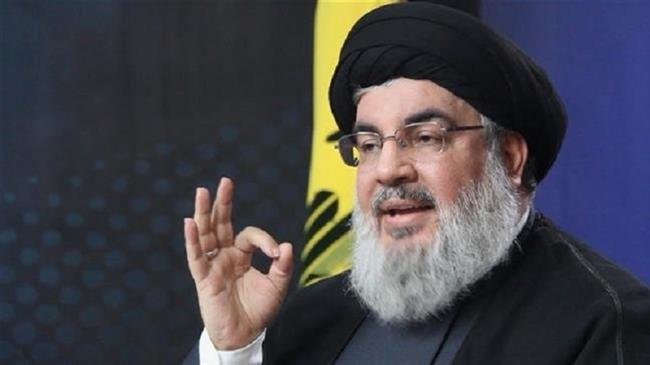
Press TV – July 19, 2019
The secretary general of the Lebanese Hezbollah resistance movement has warned the US that any military aggression against Iran will drag the entire Middle East into disarray, stressing that Washington will definitely not be the one who determines the end of such a scenario.
“As Leader of the Islamic Revolution (Ayatollah Seyyed Ali Khamenei) has said, the US is not capable of imposing a military war on Iran. The White House knows that if a war against Iran happens, the entire region will get entangled, and the US will not be the one who finishes it,” Sayyed Hassan Nasrallah said in a meeting with the visiting Iranian parliament speaker’s special advisor on international affairs, Hossein Amir-Abdollahian, in Beirut on Friday.
Tensions have been running high between Tehran and Washington since last year, when US President Donald Trump unilaterally withdrew the US from the 2015 multilateral nuclear deal, officially known as the Joint Comprehensive Plan of Action (JCPOA), and unleashed the “toughest ever” sanctions against the Islamic Republic.
Recently, the US has taken a quasi-warlike posture against Iran and stepped up its provocative military moves in the Middle East, among them the June 20 incursion of an American spy drone into the Iranian borders.
The Islamic Revolution Guards Corps (IRGC) shot down the advanced US-made RQ-4 Global Hawk over Iran’s territorial waters off the coastal province of Hormozgan after the unmanned aircraft breached the country’s airspace on a spying mission.
Nasrallah then described resistance as the sole and most efficient option in the face of the Israeli regime’s crimes, acts of aggression and excessive demands.
He also lauded Iran’s political and democratic plan for a referendum among all historic residents of Palestine, inclusive of Muslims, Christians and Jews, as realistic and logical.
“The occupying Zionists, however, are the most irrational creatures on the earth, and do not understand anything other than the discourse of resistance,” the Hezbollah chief noted.
He further termed Trump’s controversial proposal for “peace” between the Israeli regime and Palestinians, dubbed “the deal of the century,” as hollow, stating that the Zionists are the root cause of corruption and insecurity in the region.
Nasrallah also highlighted that Hezbollah bears no grudge against Jews, warning members of the religious community not to play in the hands of Zionists’ land grab policies.
The Hezbollah secretary general emphasized that the anti-Israel resistance front is now in its best form even though the US and the Israeli regime continue with their fiendish moves in the region.
“Americans are seeking to impede the purge of the last remnants of terrorists in Syria, and are prolonging the (Syrian) crisis through various means in a bid to prevent the return of Syrian refugees to their homeland. They will fail in their interventionist policies in the region though,” Nasrallah concluded.
Amir-Abdollahian, for his part, congratulated Hezbollah’s victory during the 33-day war in July 2006, and discussed latest regional and international developments besides bilateral political and parliamentary relations between Tehran and Beirut with the Hezbollah chief.
US Imposes Sanctions on Hezbollah Senior Leader Over 1994 Terror Attack in Argentina
Sputnik – July 19, 2019
Hezbollah’s top figure, Salman Raouf Salman, stands accused of the bombing of a Jewish centre perpetrated 25 years ago in Argentina’s capital Buenos Aires.
The United States has introduced sanctions on a senior Hezbollah leader, a Colombian-born Lebanese national Salman Raouf Salman, over his complicity in terrorist attacks, according to the US Treasury. The top Hezbollah operative is accused of coordinating the bombing of a Jewish community centre in Argentina’s capital, Buenos Aires in 1994.
The Treasury’s Office of Foreign Assets Control (OFAC) said it added Salman Raouf Salman to its specially designated nationals list.
Treasury undersecretary of terrorism and financial intelligence Sigal Mandelker stated that Salman has continued to orchestrate terrorist operations in the Western Hemisphere for Hezbollah since the attack in Buenos Aires.
On Thursday, Argentina’s authorities designated the Lebanese-based Hezbollah movement as a terrorist organisation and decreed a freeze of all financial assets belonging to the group.
The move coincided with the 25th anniversary of the violent attack on the Mutual Israelite Association of Argentina community centre in Buenos Aires in 1994 that left 85 people dead and hundreds injured. Hezbollah denied any role in the attack.
Iran and Hezbollah Stand Ready for War
By Jeremy Salt | American Herald Tribune | July 18, 2019
Individually or collectively the construct known as ‘the West’ has had its foot on the neck of the Middle East and North Africa for more than two centuries. Occasionally the foot has been lifted but never voluntarily, only when ‘the West’ was no longer capable of holding it in place. Examples are France’s unwilling retreats from Syria in 1946 and Algeria in 1962, and Britain’s final loss of control over Egypt following the failure of the ‘tripartite aggression’ of 1956, otherwise known as the Suez War.
When they came to Palestine the Zionists packaged themselves as standing on the ramparts of civilization against barbarism. As ‘Western civilization’ had always been spectacularly uncivilized in its treatment of black and brown people, the Zionists were standing on the ramparts of Western barbarism, not civilization.
An existential moment seems to be approaching in Middle Eastern history. The so-called West has dominated the region and North Africa since Napoleon landed a French army in Egypt in 1798. Since then, few countries that have escaped invasion, occupation, subversion and the overthrow of governments.
The record is seamless, continuing with the destruction of Iraq, Libya and Syria and the current confrontation with Iran. Ever-tightening sanctions imposed since the 1979 revolution are designed to implode the country from within, with military attack repeatedly threatened by the US and Israel.
Unless and until this long historical cycle of violence across the region is broken, the Middle East seems doomed to suffer its repetition endlessly. At this juncture of history, however, the West is not what it used to be and is no longer capable of imposing its will on the Middle East except at tremendous cost to itself.
The former imperial powers, Britain and France, are now no more than satraps of one power, the US, a single imperial power in noticeable decline. The costs of its wars alone have been enormous. Since 2001 it is estimated to have spent $5.6 trillion on wars in the Middle East and Afghanistan and on combatting ‘terrorism’ in other arenas.
This is money every American knows – and Donald Trump said in 2016 that he knew – is needed for urban redevelopment and the upgrading of broken infrastructure and inadequate social services across the country. Furthermore, there is no American public appetite for more wars in the Middle East.
Conversely, as imperial decline approaches the point of imperial exhaustion, the determination of the ‘axis of resistance’ is strengthening. It is now speaking back to the West and Israel in the same dominant language that the west has always used, which of course is the language of force. In the mainstream media, this will be called ‘defiance’ rather than what it is, which is the rising determination of the people of the Middle East to determine their own future and finally shake off the fetters of external domination. The message being sent forth by both Iran and Hezbollah is that if the collective West and/or Israel dare attack again they will be ready for them.
The message being sent forth by both Iran and Hezbollah is that if the collective West and/or Israel dare attack again they will be ready for them.
This is not empty talk. Hassan Nasrallah, Hezbollah’s Secretary-General, always means what he says and only says what he means. No-one follows his statements more closely and takes them more seriously than the Israeli military command. He is an enemy who has earned their respect.
In June Iran’s Revolutionary Guard shot down a $200 million RQ-4 high altitude drone, the biggest and most sophisticated in the US drone fleet. Although the US had only recently designated the Revolutionary Guard as a “foreign terrorist organization,” and although it claimed, falsely, that the drone had been flying over international waters, it did not retaliate. Trump claimed that he called an attack off when he learned that it would cause 150 civilian casualties. In fact, the real reason seems to have been that Iran passed on the message through a third party that if the US attacked it would immediately strike at US targets in the Gulf.
John Bolton and Benyamin Netanyahu have been pushing hard for war, against strong resistance within the US administration. If they succeed, Iran has warned that it will immediately close the Strait of Hormuz to all shipping and retaliate against US military bases and other targets in the gulf. Any war started in the gulf will quickly spread across the region, involving Israel. Conversely, any war started by Israel against Lebanon and Hezbollah will quickly spread to the gulf.
The effects will be felt around the world with an infinitely worse effect on the global economy than the energy crisis which followed the 1973 war, when Israel was caught napping in the occupied Sinai and would have lost the war but for Anwar Sadat’s betrayal of his Syrian wartime ally, Hafez al Assad and but for emergency arms shipments flown directly to Israel’s Sinai front by the US.
Hassan Nasrallah is showing such confidence that it has to be assumed that he knows something about Hezbollah’s weaponry that we don’t and Israel probably does not either. Very probably it is the capacity to seriously degrade Israel’s air power. This is an issue Iran and Hezbollah have been working on for decades, as it is the key to the outcome of any future war.
Hezbollah is far stronger now than it was when it humiliated Israel in 2006. It can fire enough missiles simultaneously to overwhelm Israel’s anti-missile systems. They can reach any corner of enemy territory. If Hezbollah is also capable of shooting down aircraft, Israel faces the prospect of starting another war it cannot win, with far worse consequences than it has ever faced in its history.
Israel has had one outstanding victory since 1948. This was in 1967 when it attacked Egypt and Syria, rendering their ground forces useless by destroying their air ccover before going on to occupy the Golan Heights and the rest of Palestine. It was this war that gave rise to the myth of Israeli invincibility, exploded only six years later when Egyptian forces crossed the Suez Canal and routed the occupying Israeli forces.
Israel’s 1982 war on Lebanon was more of an onslaught on a defenseless civilian population, a prelude to its massacres by air and artillery in Gaza. Close to 20,000 people, overwhelmingly civilians, were killed in Lebanon before it was over. Given the combination of airpower, artillery, armor and the number of ground troops (80,000 to 100,000) Israel simply swamped lightly-armed Palestinian and Syrian resistance.
Israel’s occupation of southern Lebanon lasted for more than two decades before being ended by Hezbollah in 2000. Since 1985 Hezbollah had vastly improved its capacities at all levels, including electronic warfare, enabling it to intercept Israeli communications and ambush and destroy even elite units. Unable to defeat Hezbollah and facing a rising tide of anti-war sentiment at home, the Israeli government finally decided to cut and run, virtually overnight.
Frustrated, Israel struck back in 2006, only to be thwarted again in an even more humiliating defeat. Its reserves were so poorly disciplined that commanders hesitated to send them into battle, but even elite forces such as the Golani Brigade were outfought by Hezbollah’s part-time soldiers. Even with total command of the air Israel proved incapable of seizing and holding territory only a few kilometers north of the armistice line. Thoughts of advancing across the Litani river and taking on the professional core of Hezbollah’s fighting forces had to be abandoned.
The US held the door open for Israel week after week, giving it the time it said it needed to finish off Hezbollah. Suffering one setback after another, however, Israel was not up to the task. After 34 days it had had enough and retreated, leaving behind the wreckage of dozens of armored vehicles, including the supposedly invulnerable Merkava tank, destroyed by Hezbollah’s Sagger anti-tank missiles. Hezbollah had also taken the war to sea, crippling an Israeli warship in an apparent missile strike.
The unpalatable truth for the Israeli military command was that its ground forces had been outsmarted and outfought along Hezbollah’s first line of defense in the south. Even with its air power Israel proved incapable of moving beyond this line.
In the years since 1982, as the weaknesses behind the myth of the ‘invincible’ Israeli armed forces have been gradually exposed, the enemies Israel has vowed so often to obliterate have been catching up, reaching the point of armed capacity where Nasrallah says Israel is too frightened to attack again.
He has mocked it for taking 13 years to discover tunnels Hezbollah had dug from Lebanon. In a recent interview with Al Manar television station, marking the 13th anniversary of the 2006 war, he taunted Israel by showing a map of all the strategic targets Hezbollah will hit along the coastal strip if Israel dares to go to war again. They include Ben-Gurion airport, petrochemical plants, arms depots and the ports of Tel Aviv and Ashdod (Palestinian Isdud).
Nasrallah referred to “game-changing” offensive weapons that could bring Israel to “the verge of vanishing.” They include drones and precision missiles but when asked whether Hezbollah also had anti-aircraft missiles he would not say, referring only to a policy of “constructive ambiguity.”
Hezbollah claims that it can reach any part of Israel with its missiles and is capable of inflicting massive destruction of civilian and military targets. A land invasion has also been planned, with Nasrallah saying Hezbollah has “several scenarios” for the penetration of Galilee by its forces.
Since 2006 Israel has repeatedly threatened to destroy Lebanon in the next war. The template would be Dahiyeh, the largely Shia suburb of Beirut, which Israel sought to obliterate from the air in 2006. Military, intelligence and political figures have all threatened that the next time around the ‘Dahiyeh strategy’ would be applied to the entire country. One Israeli ‘ defense official’ says that in the next war Lebanon will “experience” a level of destruction not seen since the Second World War. “ …. We will crush it and grind it to the ground.” (David Kenner, ‘Why Israel fears Iran’s presence in Syria,’ The Atlantic, July 22, 2018).
Nevertheless, behind the bluster and threats lies fear. No one but Hezbollah and perhaps Iran really knows the size and capacity of Hezbollah’s missile arsenal but US and Israeli estimates put the number at between 100,000-130,000. Hezbollah is capable of firing 1200-1500 missiles a day. In recent years Israel’s developing nightmare has been that these weapons would be launched in sufficient numbers and with sufficient accuracy to destroy civilian and military infrastructure and paralyze daily life. In fact, as Nasrallah’s confident remarks indicate, that point seems to have been reached.
Just as Hezbollah is ready for the next war so is Iran. The target of European subversion and intrigue since the 19th century, Iran has been threatened and punished with economic sanctions, assassination and subversion since it dared to take hold of its own future in 1979. Telegraphing their punches in advance, the US and Israel have repeatedly threatened it with obliteration.
The scholar Sayed Mohammad Marandi has written on Iran’s position in the face of these continuing threats (‘Iran faces US aggression and European hypocrisy but this time it’s ready,’ Middle East Eye, July 12, 2019). Basically, Iran has had enough. Writes Professor Marandi: ‘Repeated threats of nuclear holocaust and genocide by Israel’s Prime Minister Netanyahu and Trump are deeply embedded in western civilization’s centuries-old tradition of colonization, mass slaughter and moral absence.”
Given the west’s record “there is no reason to expect that a declining and desperate empire will conduct itself in a civilized manner today.” Iran’s preparations include the development of a formidable arsenal of missiles, the acquisition of weaponry needed to fight a sea war in the gulf and the construction of underground military facilities.
Retaliation by Iran would involve the destruction of oil and gas facilities as well as oil tankers and other shipping on both sides of the Strait of Hormuz. Finally, “western establishment politicians and pundits seem to thrill at sending nations back to the stone age. But be sure that if there is war, this time around Iran and its allies will make sure they come along for the ride.”
As Professor Marandi, as President Rouhani and Ayatollah Khamenei have all made clear, and as Nasrallah has made clear, these current targets of the west are prepared to fight back with all the weapons at their disposal. This is not a question of the Iranian government or Hezbollah merely being punished but being destroyed, at a time, however, that the West – as led by the US – has never been in a weaker position to impose its will without incurring incalculable military and economic costs to itself.
If John Bolton and Benyamin Netanyahu get the war they want, Iran and Hezbollah, knowing that the object is their destruction, will strike back with full force from day one. The devastation on both sides would be massive, with the possible use of nuclear weapons part of the picture. A climactic point seems to be approaching fast in the history of the Middle East.
The Only Strategic Rationale for America’s Involvement in Syria Finally Revealed
By Elias Samo | Strategic Culture Foundation | July 6, 2019
“Washington lacks a clear strategy in Syria “; those were the recent words of Robert Ford, the last American ambassador to Syria who served prior to and during the first few years of the Syrian uprising from 2010 to 2014. A man of Ford’s intricate knowledge of the Syrian/American political dynamic is surly knowledgeable enough to assess America’s policy towards Syria. He goes on to say, “It is hard to explain the fundamental American mission in Syria… Is it to fight Daesh? Or is it to help promote a Kurdish autonomous district in Northeastern Syria… Or is it to resist Iranian encouragement?” It is partially all three; however, oddly enough, Mr. Ford avoids the obvious top priority and strategic rationale for America’s involvement in Syria: The Protection of Israel.
To alleviate this dereliction by the executive branch for not presenting a clear strategy in Syria, as the former ambassador asserts, the Congress took it upon itself to identify American strategic interests in Syria and make recommendations to Trump. However, it is legitimate to ask: what do American congressmen know about Syria to qualify them to determine American strategic interests in the country? It is very unlikely for American congressmen to know much about Syria; they are dictated the Israeli narrative and that is all they need to know.
Irrespective of who or what motivated the congressmen to seek information to develop a framework for American strategic interests in Syria and eventually send a letter signed by nearly four hundred congressmen- roughly seventy five percent of the total number of congressmen from both chambers and both parties- to the president about their findings and their recommendations, the congressmen called upon United States Institute of Peace (USIP) to establish a Syria Study Group (SSG) to provide them information about Syria to comprehend the situation and formulate recommendations to Trump.
The SSG was established in February 2019 and gave its interim report to Congress May 1, 2019; the report consists of detailed seven single-spaced typewritten pages.
Subsequent to the SSG submitting of its interim report to Congress on May 1, the four hundred congressmen Letter was sent to the president on May 20. It would be natural to assume that the Letter is a condensed reflection of what the interim report contained and recommended; that was not the case. The elaborate and detailed interim report dealt with a multitude of issues centered around American national security. Ironically, the Letter to the President focused on the sources of threats to Israeli security: terrorism, Syria, Lebanon (Hezbollah), Iran, Turkey and Russia. Just a note regarding the difference in emphasis in the two documents. In the seven – page single spaced interim report Israel is mentioned nine times, it is mentioned twenty one times in the two page Letter.
The first paragraph of the Letter states “[…] we recommend several specific steps to advance our regional security priorities, including assisting our ally, Israel, in defending itself in the face of growing threats, including on its northern border.” The reference to northern border is Syria and Lebanon. As for Syria, it suffices to note that Israel occupied the Syrian Golan for fifty two years and annexed it recently with Trump’s blessings. Syria has not fired a shot at Israel in decades while Israel has fired hundreds of shots at Syria just recently; there are no Syrian boots on the ground in Israel, while there are Israeli boots on the ground in Syria. So much for the threat to Israel emanating from Syria. As for the Lebanese scenario, it is similar to that of Syria, albeit on a smaller scale, with one addition: Hezbollah which Israel views as a source of imminent threat. However, it suffices to note that it is Israel which has been the source of violent onslaughts against Hezbollah. The Letter, in the succeeding paragraphs, elaborates further on the acquisition by Syria and Hezbollah of large and more threatening sophisticated weapons to threaten the security of the regional, nuclear super power: Israel. Need one point out the ridicule?
In the third paragraph, the Letter asserts: “While our nation has encouraged more stable and inclusive political systems in the Middle East, the regime in Tehran has spread its influence and destabilized its neighbors for its own gain.” To say this is an outrageous distortion of the truth would be an understatement. There is not a sane Iraqi, Syrian, Lybian, Yemeni and most Muslim Arabs who would vouch to such a distortion. In fact, internationally, the US and Israel are viewed as sources of threat to international peace and security; both have boots on foreign ground but no foreign boots on their ground.
Russia receives a jab at the fourth paragraph for its role “[…] to ensure the survival of the Assad regime.” It adds “Furthermore, in providing Damascus with advanced weapons like the S-300 anti-aircraft, Moscow is complicating Israel’s ability to defend itself from hostile action emanating from Syria.”
The last part of the Letter contains three recommendations which are interrelated and converge on the core of the Letter; the security of Israel:
- Underscore Israel’s right to self-defense.
- Increase pressure on Iran and Russia with respect to activities in Syria.
- Increase pressure on Hezbollah.
Beyond any conceivable doubts, the Letter was dictated by Israelis or their advocates in Washington, signed and submitted by the 400 congressmen to Trump; the height of hypocrisy. What is dismaying is that hardly any voices of protest were raised in American society at large or the political or intellectual segments about the fact that four hundred congressmen, who are elected by Americans to serve American interests, at a time when the US is bogged down in the Arab region, sign and submit a letter to the US President concerned almost exclusively with Israel’s Security.
These congressmen had an opportunity to make a coherent recommendation on US policy in the Arab region in the interest of American National Interest, but instead chose to make recommendations to safeguard the wellbeing and security of a foreign state: Israel.
US Sanctions Hezbollah Elected Parliamentarians
Al-Manar | July 9, 2019
The US Treasury placed two Hezbollah members of Lebanon’s parliament on its sanctions blacklist on Tuesday — the first time Washington has taken aim at the party’s elected politicians.
The Treasury named the head of the Loyalty to Resistance parliamentary bloc Hajj Mohammad Raad and MP Amin Sherri to a ‘terror-related’ blacklist, claiming that Hezbollah uses its parliamentary power to advance its alleged ‘violent’ activities.
Also placed on the blacklist was Hajj Wafiq Safa, Hezbollah top security official.
Hezbollah is a Lebanese resistance group that defends the nation against the Israeli and takfiri enemies. Because of its huge popular representation, it managed to have a 13-member parliamentary bloc, mainly tasked with securing the socioeconomic rights of the citizens and advocating the resistance political principles.
The US administration, which supports the Zionist entity and the Arab dictators against the will of most of the Muslims and Arabs, has always viewed Hezbollah resistance as an enemy, blacklisting both its military and political wings.
Featured Video
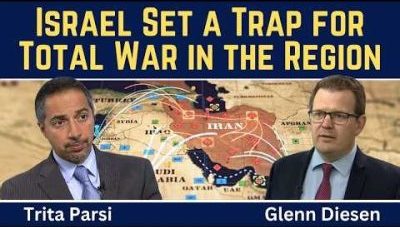
Trita Parsi: Israel Set a Trap for Total War in the Region
or go to
Aletho News Archives – Video-Images
From the Archive
Zionism’s Violent Legacy
By Donald Neff | Washington Report On Middle East Affairs | January 1996
On January 4, 1948, Jewish terrorists drove a truck loaded with explosives into the center of the all Arab city of Jaffa and detonated it, killing 26 and wounding around 100 Palestinian men, women and children.[1] The attack was the work of the Irgun Zvai Leumi – the “National Military Organization,” also known by the Hebrew letters Etzel – the largest Jewish terrorist group in Palestine. The Irgun was headed by Revisionist Zionist Menachem Begin and had been killing and maiming Arabs, Britons and even Jews for the previous ten years in its efforts to establish a Jewish state.
This terror campaign meant that at the core of Revisionist Zionism there existed a philosophical embrace of violence. … continue
Blog Roll
 Aletho News
- Trita Parsi: Israel Set a Trap for Total War in the Region
- Trump’s Iran war is on an Israeli leash
- Saudi oil boss issues global supply warning
- Riyadh Says Its Oil System Is Intact. The Numbers Say Otherwise.
- Trump and Netanyahu Want to “Finish the Job” on Iran
- US ‘one-sided dictation’ not Iran’s beliefs makes rational talks impossible: Baghaei
- Iran’s Next Strike May Not Explode. It Could Shut You Down /Col Doug Macgregor
- Iran: US political targets legitimate if assassinations return
- Iraq shuts key border crossing with Iran under US pressure: Report
- Undersea Internet cables could be targeted in retaliation for attacks on Iran: IRGC deputy chief
- If Americans Knew
- The Israel Lobby’s Changing Fortunes
- AIPAC has become such a political liability that it’s shifting to a more “nimble” approach to buying politicians
- At least 160 Israeli settler attacks in 2 weeks
- Will Gaza’s Ancient Christian Community Disappear Forever?
- Israel’s vision of regional security rests on keeping Arab states weak
- Heidi Levine recounts how Palestinian youths helped save her in settler attack
- DAILY UPDATE: Latest essential news on Palestine, Israel, & region
- Trump’s Intensifying Sabotage of the ICC, for Israel’s Sake
- Israeli military detain US and UK volunteers in West Bank including Democratic NY politician Brad Lander
- Americans at National Conservatism Conference held in Israel this year criticize Israel
- No Tricks Zone
- E-Cars Reduce CO2 Emissions By Only 41% Compared To Internal Combustion Engine Vehicles
- Predictions Made By Renowned Climate Professor Over Past Decades Have Been Proven To Be Poor
- New Study Suggests Large Regions Of The Pacific Ocean Have Been Cooling For The Last 80 Years
- Germany’s Green Energy Debacle: High Energy Costs Force Kahla Porzellan to Close After 182 Years!
- New Study: 50 Years Of The Most Aggressive ‘Net Zero’ Policies Can Only Affect The Global Climate By 0.03°C
- US September “Heat” Was No Record…Many Records Set Decades Ago
- Latest European Green Energy Debacle; Portugal’s Largest Flagship Solar Park Insolvent!
- Green Energy Debacle: German Expert Professor Fritz Vahrenholt Warns Of Severe Economic And Social Consequences
- Two More Paleo Reconstructions Affirm Meters-Higher Sea Levels Across Ireland, Brazil 7000-6000 Years Ago
- New Study: Earth And Venus Surface Warmth Largely Explained By Convection And Lapse Rate, Not CO2 Or Radiation

