Hezbollah slams Saudi’s bid to buy silence on Yemen

Deputy head of Hezbollah’s Executive Council Sheikh Nabil Qaouq
Press TV – April 19, 2015
An official of Lebanon’s Hezbollah resistance movement has blasted Saudi Arabia’s bid to silence the group’s vocal opposition to its Yemeni aggression, saying Saudi money could not buy Hezbollah’s silence.
“Those who are waging an aggression against Yemen today have also mistaken their calculations and approach towards Hezbollah,” said the movement’s deputy head of executive council, Sheikh Nabil Qaouq, as quoted in a Sunday report by Lebanese Naharnet news website.
He further suggested that the Saudi regime was attempting to silence the group’s vocal opposition to its aggression against its neighbor adding, “They were betting on our silence and on neutralizing us, but they failed to realize that we do not fear threats and that we cannot be sold or bought.”
According to the report, Qaouq went on to emphasize that “Saudi money” can purchase “countries, the UN Security Council, presidents, princes and ministers” but “cannot buy Hezbollah’s silence.”
The development comes as Hezbollah’s Secretary General Sayyed Hassan Nasrallah and other leaders of the movement are locked in a rhetorical battle with the US-backed Saudi kingdom over Riyadh’s military attacks against Yemen.
“Saudi Arabia can threaten figures, dignitaries, scholars and Arab countries, but it cannot threaten the resistance,” Qaouq said, adding, “Their problem with us is that we cannot be bought or sold and we do not fear intimidation. It also lies in the growing role, status and influence of Hezbollah in the regional equations.”
Saudi Arabia’s air campaign against the Ansarullah fighters of the Houthi movement started on March 26 – without a United Nations mandate – in a bid to restore power to the country’s fugitive former president, Abd Rabbuh Mansur Hadi, a staunch ally of Riyadh.
According to reports, some 2,600 people, including women and children, have so far lost their lives in the attacks.
Hezbollah likens Saudi aggression on Yemen to Israeli atrocities in Gaza

Hezbollah Deputy Secretary General Naim Qassem
Press TV – April 16, 2015
Lebanese resistance movement Hezbollah has blasted the ongoing Saudi military aggression against Yemen, comparing the move to the Israeli atrocities in the besieged Gaza Strip.
“What Saudi Arabia is committing [in Yemen] is identical to what Israel commits in Gaza,” Hezbollah Deputy Secretary General Naim Qassem said in a Thursday interview with France 24.
Israel has blockaded the Gaza Strip for over seven years, causing a humanitarian crisis in the Palestinian enclave. The Israeli regime has also launched three wars on Gaza, the latest of which came in summer 2014, when nearly 2,200 Palestinians were killed and over 11,100 others injured. The 50-day war ended with an Egyptian-brokered truce.
Qassem said the Saudi war “is about attacking infrastructure and shelling civilians.”
Referring to a recent UN Security Council resolution adopted against Yemen’s Houthi movement, the Hezbollah official said, “The Security Council decision in Yemen is unjust, because it looks at one part of the problem, and not at the whole [picture].”
“The Security Council should have stopped the Saudi aggression against Yemen and treated the issues related to the civilians and the wounded and the destruction of infrastructure,” he said.
Political solution
Qassem also called for a political solution to the crisis in Yemen.
“It (the UN) was supposed to set the steps for a dialogue to reach a political solution. This, the Security Council has not done,” the Hezbollah official said.
During an interview with the Associated Press on Monday, Qassem slammed Saudi Arabia’s indiscriminate bombardment of Yemen as genocide.
Saudi Arabia’s military campaign against Yemen started on March 26 – without a UN mandate – in an attempt to restore power to fugitive former President Abd Rabbuh Mansur Hadi, a close ally of Riyadh. It has drawn widespread condemnation from international rights groups.
Civilians and Yemeni infrastructure have been the target of the Saudi aggression against Yemen.
According to Yemeni sources, around 2,600 people have been killed in the Saudi military campaign over the past three weeks.
The humanitarian situation in Yemen is rapidly deteriorating. Many international aid organizations have sought clearances to dispatch medical and other humanitarian supplies by air and sea to civilians in need.
U.S. Congress Torpedoes the Iran Deal
By Kaveh L. Afrasiabi | Iran Review | April 15, 2015
The buzz word in Washington around the Iran Nuclear Review Bill that was approved unanimously by a Senate committee is “compromise,” parroted even by the White House spokesperson who has let it known that President Obama will endorse it despite some reservations. But, in reality, “compromise” is a code word for “concession,” i.e., appeasement of the anti-Iran hawks in U.S. Congress, as well as Israel.
The big question is, of course, what is behind Obama’s flip flop, notwithstanding his repeated warnings to U.S. Congress to stay out of Iran negotiations or face his veto power? The answer to this question should search beyond the facade of executive versus legislative ‘turf war’ on the Iran nuclear issue and touch the underlying root cause — in U.S.’s geostrategic interest to keep the furnace of Iran nuclear standoff alive instead of extinguishing it.
Indeed, why let a good thing go, perhaps some Washington ‘insiders’ are asking quietly, given the multiple benefits of the nuclear crisis — in sustaining U.S.’s hegemony in Persian Gulf, containing the Iranian power, and appeasing Israel’s need to keep the limelight on Iran indefinitely.
Thus the U.S.’s perpetual self-sabotage of the Iran deal, following last November’s last minute change of heart by Obama, who refused to sign onto an agreement that his own negotiation team had reached. Obama’s excuse then was reportedly that it was premature in light of a new Congress and he had to wait to size up the situation. It now appears that Obama has done that and reached the point that signing any deal with Iran is a bad deal, just as Iran hawks and the pro-Israel lobbyists have been saying for a long time. In other words, Obama’s acceptance of the Iran bill is but a definite sign that the chicken has to roost and, indeed, the emperor has no clothes.
But, of course, without critical lenses, the Iran Nuclear Review Act appears as relatively benign and an exercise in constitutional checks and balances, which is why the polls indicate the majority of American people are in favor of a Congressional role in the Iran deal. It is only when one reads the bill’s fine prints and pays close attention to its details that the real intention of its sponsors to torpedo the nuclear talks becomes apparent.
This is basically an intrusive legislation that impacts the content of negotiations by, for example, creating an issue linkage between nuclear and non-nuclear, e.g., terrorism, issues and conditioning Congress’s approval of the deal on the executive branch’s certificate of Iran’s compliance with the demand to stop funding terrorist groups.
Essentially, this means a revised script for the nuclear talks and the imposition of brand new ‘parameters’ such as terrorism, that have not been part of the intense negotiations; the latter are solely focused on the nuclear issue and, yet, must now due to this bill, expand the requirements for compliance by Iran — to U.S.’s arbitrary demands.
Another aspect of the bill that is equally problematic is that it raises the necessity of White House’s certification that the atomic agency is satisfied with Iran’s compliance on the “possible military dimension” issues which, as we know, raise the prospect of IAEA demands to access Iran’s secret military bases, a taboo from the vantage point of Iran’s military and civilian leadership. In fact, the Supreme Leader in his recent speech drew a red line and categorically opposed any suggestion that Iran would accommodate the West on this matter.
Hence, Iran’s stern negative reaction to the latest developments in U.S. Congress and Obama’s inexcusable turn-around from a critic to an admirer of the Iran bill is a given, raising the prospect that the bill can be a show-stopper and spell doom for the nuclear negotiations. The path ahead is now made doubly more complicated and the new hurdles by U.S. Congress act as so many powerful torpedoes aiming to sink the ship of diplomacy.
Kaveh Afrasiabi, PhD, is a former political science professor at Tehran University and the author of several books on Iran’s foreign policy. His writings have appeared on several online and print publications, including UN Chronicle, New York Times, Der Tagesspiegel, Middle East Journal, Harvard International Review, and Brown’s Journal of World Affairs, Guardian, Russia Today, Washington Post, San Francisco Chronicle, Boston Globe, Mediterranean Affairs, Nation, Telos, Der Tageszeit, Hamdard Islamicus, Iranian Journal of International Affairs, Global Dialogue.
US removes Iran and Hezbollah from list of terror threats
MEMO | March 18, 2015
An annual security report submitted recently to the US Senate by James Clapper, director of National Intelligence, removed both Iran and Hezbollah from the list of terrorism threats to the United States for the first time in years.
The unclassified version of the “Worldwide Threat Assessment of the US Intelligence Communities” dated 26 February, noted Iran’s efforts to fight “Sunni extremists”, including elements affiliated with the Islamic State group who were perceived to constitute the “preeminent terrorist threat to American interests worldwide”.
Last year’s report described the global terrorist activity of Lebanon’s Shia Hezbollah group to have increased in recent years to “a level we have not seen since the 1990s”, however this year’s report mentioned the group only once saying it faces a threat from ISIS and Al-Nusra Front near Lebanon’s orders.
Meanwhile, despite removing Tehran from the list, the report described it as source of cyber-attacks and a regional threat to the United States because of its support for Syrian regime President Bashar Al-Assad and its hostile policies against Israel.
Washington and ISIS: The Evidence

By Tim Anderson | teleSUR | March 8, 2015
Reports that US and British aircraft carrying arms to the Islamic State group – better known as ISIS – have been shot down by Iraqi forces have been met with shock and denial in western countries. Few in the Middle East doubt that Washington is playing a ‘double game’ with its proxy armies in Syria, but some key myths remain important amongst the significantly more ignorant Western audiences.
A central myth is that Washington now arms ‘moderate Syrian rebels’, to both overthrow the Syrian Government and supposedly defeat the ‘extremist rebels’. This claim became more important in 2014, when the rationale of US aggression against Syria shifted from ‘humanitarian intervention’ to a renewal of Bush’s ‘war on terror’.
A distinct controversy is whether the al-Qaida-styled groups (especially Jabhat al-Nusra and ISIS) have been generated as a sort of organic reaction to the repeated US interventions, or whether they are actually paid agents of Washington.
Certainly, prominent ISIS leaders were held in US prisons. ISIS leader, Ibrahim al-Badri (aka Abu Bakr al-Baghdadi) is said to have been held for between one and two years at Camp Bucca in Iraq. In 2006, as al-Baghdadi and others were released, the Bush administration announced its plan for a ‘New Middle East’, a plan which would employ sectarian violence as part of a process of ‘creative destruction’ in the region.
According to Seymour Hersh’s 2007 article, ‘The Redirection’, the US would make use of ‘moderate Sunni states’, not least the Saudis, to ‘contain’ the Shia gains in Iraq brought about by the 2003 US invasion. These ‘moderate Sunni’ forces would carry out clandestine operations to weaken Iran and Hezbollah, key enemies of Israel. This brought the Saudis and Israel closer, as both fear Iran.
While there have been claims that the ISIS ‘caliph’ al-Baghdadi is a CIA or Mossad trained agent, these have not yet been well backed up. There are certainly grounds for suspicion, but independent evidence is important, in the context of a supposed US ‘war’ against ISIS. So what is the broader evidence on Washington’s covert links with ISIS?
Not least are the admissions by senior US officials that key allies support the extremist group. In September 2014 General Martin Dempsey, head of the US military, told a Congressional hearing ‘I know major Arab allies who fund [ISIS]’. Senator Lindsey Graham, of Armed Services Committee, responded with a justification, ‘They fund them because the Free Syrian Army couldn’t fight [Syrian President] Assad, they were trying to beat Assad’.
The next month, US Vice President Joe Biden went a step further, explaining that Turkey, Qatar, the UAE and Saudi Arabia ‘were so determined to take down Assad … they poured hundreds of millions of dollars and tens, thousands of tons of weapons into anyone who would fight against Assad … [including] al-Nusra and al- Qaida and extremist elements of jihadis coming from other parts of the world … [and then] this outfit called ISIL’. Biden’s admissions sought to exempt the US from this operation, as though Washington were innocent of sustained operations carried out by its key allies. That is simply not credible.
Washington’s relationship with the Saudis, as a divisive sectarian force in the region, in particular against Arab nationalism, goes back to the 1950s, when Winston Churchill introduced the Saudi King to President Eisenhower. At that time Washington wanted to set up the Saudi King as a rival to President Nasser of Egypt. More recently, British General Jonathan Shaw has acknowledged the contribution of Saudi Arabia’s extremist ideology: ‘This is a time bomb that, under the guise of education. Wahhabi Salafism is igniting under the world really. And it is funded by Saudi and Qatari money’, Shaw said.
Other evidence undermines western attempts to maintain a distinction between the ‘moderate rebels’, now openly armed and trained by the US, and the extremist groups Jabhat al-Nusra and ISIS. While there has indeed been some rivalry (emphasised by the London-based, Muslim Brotherhood-aligned, Syrian Observatory of Human Rights), the absence of real ideological difference is best shown by the cooperation and mergers of groups.
As ISIS came from Iraq in 2013, its Syrian bases have generally remained in the far eastern part of Syria. However Jabhat al-Nusra (the official al-Qaida branch in Syria, from which ISIS split) has collaborated with Syrian Islamist groups in western Syria for several years. The genocidal slogan of the Syrian Islamists, ‘Christians to Beirut and Alawis to the Grave’, reported many times in 2011 from the Farouk Brigade, sat well with the al-Qaida groups. Farouk (once the largest ‘Free Syrian Army’ group) indeed killed and ethnically cleansed many Christians and Alawis.
Long term cooperation between these ‘moderate rebels’ and the foreign-led Jabhat al-Nusra has been seen around Daraa in the south, in Homs-Idlib, along the Turkish border and in and around Aleppo. The words Jabhat al-Nusra actually mean ‘support front’, that is, support for the Syrian Islamists. Back in December 2012, as Jabhat al-Nusra was banned in various countries, 29 of these groups reciprocated the solidarity in their declaration: ‘We are all Jabhat al-Nusra’.
After the collapse of the ‘Free Syrian Army’ groups, cooperation between al-Nusra and the newer US and Saudi backed groups (Dawud, the Islamic Front, the Syrian Revolutionary Front and Harakat Hazm) helped draw attention to Israel’s support for al-Nusra, around the occupied Golan Heights. Since 2013 there have been many reports of ‘rebel’ fighters, including those from al-Nusra, being treated in Israeli hospitals. Prime Minister Netanyahu even publicised his visit to wounded ‘rebels’ in early 2014. That led to a public ‘thank you’ from a Turkey-based ‘rebel’ leader, Mohammed Badie (February 2014).
The UN peacekeeping force based in the occupied Golan has reported its observations of Israel’s Defence Forces ‘interacting with’ al-Nusra fighters at the border. At the same time, Israeli arms have been found with the extremist groups, in both Syria and Iraq. In November 2014 members of the Druze minority in the Golan protested against Israel’s hospital support for al-Nusra and ISIS fighters. This in turn led to questions by the Israeli media, as to whether ‘Israel does, in fact, hospitalize members of al-Nusra and Daesh [ISIS]’. A military spokesman’s reply was hardly a denial: ‘In the past two years the Israel Defence Forces have been engaged in humanitarian, life-saving aid to wounded Syrians, irrespective of their identity.’
The artificial distinction between ‘rebel’ and ‘extremist’ groups is mocked by multiple reports of large scale defections and transfer of weapons. In July 2014 one thousand armed men in the Dawud Brigade defected to ISIS in Raqqa. In November defections to Jabhat al-Nusra from the Syrian Revolutionary Front were reported. In December, Adib Al-Shishakli, representative at the Gulf Cooperation Council of the exile ‘ Syrian National Coalition’, said ‘opposition fighters’ were ‘increasingly joining’ ISIS ‘for financial reasons’. In that same month, ‘rebels’ in the Israel-backed Golan area were reported as defecting to ISIS, which had by this time began to establish a presence in Syria’s far south. Then, in early 2015, three thousand ‘moderate rebels’ from the US-backed ‘Harakat Hazzm’ collapsed into Jabhat al-Nusra, taking a large stock of US arms including anti-tank weapons with them.
ISIS already had US weapons by other means, in both Iraq and Syria, as reported in July, September and October 2014. At that time a ‘non aggression pact’ was reported in the southern area of Hajar al-Aswad between ‘moderate rebels’ and ISIS, as both recognised a common enemy in Syria: ‘the Nussayri regime’, a sectarian way of referring to supposedly apostate Muslims. Some reported ISIS had bought weapons from the ‘rebels’.
In December 2014, there were western media reports of the US covert supply of heavy weapons to ‘Syrian rebels’ from Libya, and of Jabhat al-Nusra getting anti-tank weapons which had been supplied to Harakat Hazm. Video posted by al-Nusra showed these weapons being used to take over the Syrian military bases, Wadi Deif and Hamidiyeh, in Idlib province.
With ‘major Arab allies’ backing ISIS and substantial collaboration between US-armed ‘moderate rebels’ and ISIS, it is not such a logical stretch to suppose that the US and ‘coalition’ flights to ISIS areas (supposedly to ‘degrade’ the extremists) might have become covert supply lines. That is precisely what senior Iraqi sources began saying, in late 2014 and early 2015.
For example, as reported by both Iraqi and Iranian media, Iraqi MP Majid al-Ghraoui said in January that ‘an American aircraft dropped a load of weapons and equipment to the ISIS group militants at the area of al-Dour in the province of Salahuddin’. Photos were published of ISIS retrieving the weapons. The US admitted the seizure but said this was a ‘mistake’. In February Iraqi MP Hakem al-Zameli said the Iraqi army had shot down two British planes which were carrying weapons to ISIS in al-Anbar province. Again, photos were published of the wrecked planes. ‘We have discovered weapons made in the US, European countries and Israel from the areas liberated from ISIL’s control in Al-Baqdadi region’, al-Zameli said.
The Al-Ahad news website quoted Head of Al-Anbar Provincial Council Khalaf Tarmouz saying that a US plane supplied the ISIL terrorist organization with arms and ammunition in Salahuddin province. Also in February an Iraqi militia called Al-Hashad Al-Shabi said they had shot down a US Army helicopter carrying weapons for the ISIL in the western parts of Al-Baqdadi region in Al-Anbar province. Again, photos were published. After that, Iraqi counter-terrorism forces were reported as having arrested ‘four foreigners who were employed as military advisers to the ISIL fighters’, three of whom were American and Israeli. So far the western media has avoided these stories altogether; they are very damaging to the broader western narrative.
In Libya, a key US collaborator in the overthrow of the Gaddafi government has announced himself the newly declared head of the ‘Islamic State’ in North Africa. Abdel Hakim Belhaj was held in US prisons for several years, then ‘rendered’ to Gaddafi’s Libya, where he was wanted for terrorist acts. As former head of the al-Qaida-linked Libyan Islamic Fighting Group, then the Tripoli-based ‘Libyan Dawn’ group, Belhaj has been defended by Washington and praised by US Congressmen John McCain and Lindsey Graham.
Some image softening of the al-Qaida groups is underway. Jabhat al-Nusra is reported to be considering cutting ties to al-Qaida, to help sponsor Qatar boost their funding. Washington’s Foreign Affairs magazine even published a survey claiming that ISIS fighters were ‘surprisingly supportive of democracy’. After all the well published massacres that lacks credibility.
The Syrian Army is gradually reclaiming Aleppo, despite the hostile supply lines from Turkey, and southern Syria, in face of support for the sectarian groups from Jordan and Israel. The border with Lebanon is largely under Syrian Army and Hezbollah control. In the east, the Syrian Army and its local allies control most of Hasaka and Deir e-Zour, with a final campaign against Raqqa yet to come. The NATO-GCC attempt to overthrow the Syrian Government has failed.
Yet violent destabilization persists. Evidence of the covert relationship between Washington and ISIS is substantial and helps explain what Syria’s Deputy Foreign Minister Fayssal Mikdad calls Washington’s ‘cosmetic war’ on ISIS. The extremist group is a foothold Washington keeps in the region, weakening both Syria and Iraq. Their ‘war’ on ISIS is ineffective. Studies by Jane’s Terrorism and Insurgent database show that ISIS attacks and killings in Iraq increased strongly after US air attacks began. The main on the ground fighting has been carried out by the Syrian Army and, more recently, the Iraqi armed forces with Iranian backing.
All this has been reported perversely in the western media. The same channels that celebrate the ISIS killing of Syrian soldiers also claim the Syrian Army is ‘not fighting ISIS’. This alleged ‘unwillingness’ was part of the justification for US bombing inside Syria. While it is certainly the case that Syrian priorities have remained in the heavily populated west, local media reports make it clear that, since at least the beginning of 2014, the Syrian Arab Army has been the major force engaged with ISIS in Hasaka, Raqqa and Deir eZour. A March 2015 Reuters report does concede that the Syrian Army recently killed two ISIS commanders (including Deeb Hedjian al-Otaibi) along with 24 fighters, at Hamadi Omar.
Closer cooperation between Iran, Iraq, Syria and Lebanon’s Hezbollah is anathema to Israel, the Saudis and Washington, yet it is happening. This is not a sectarian divide but rather based on some clear mutual interests, not least putting an end to sectarian (takfiri) terrorism.
It was only logical that, in the Iraqi military’s recent offensive on ISIS-held Tikrit, the Iranian military emerged as Iraq’s main partner. Washington has been sidelined, causing consternation in the US media. General Qasem Suleimani, head of Iran’s Quds Force is a leading player in the Tikrit operation. A decade after Washington’s ‘creative destruction’ plans, designed to reduce Iranian influence in Iraq, an article in Foreign Policy magazine complains that Iran’s influence is ‘at its highest point in almost four centuries’.
Select references
Mahdi Darius Nazemroaya (2006) Plans for Redrawing the Middle East: The Project for a ‘New Middle East’
Seymour Hersh (2007) The Redirection
http://www.newyorker.com/magazine/2007/03/05/the-redirection
Al Akhbar (2011) Syria: What Kind of Revolution?
http://english.al-akhbar.com/node/540
The New Yorker (2013) Syrian Opposition Groups Stop Pretending
http://www.newyorker.com/news/news-desk/syrian-opposition-groups-stop-pretending
RT (2014) Anyone but US! Biden blames allies for ISIS rise
Iraqi News (2015) American aircraft dropped weapons to ISIS, says MP
Washington Post (2015) Syrian rebel group that got U.S. aid dissolves
David Kenner (2015) For God and Country, and Iran, Foreign Policy
Reuters (2015) Syrian air strike kills two Islamic State commanders
http://www.reuters.com/article/2015/03/07/us-mideast-crisis-syria-islamicstate-idUSKBN0M30F720150307
‘ISIL fight’ spells lucrative arms deals: UK arms maker
Press TV – February 21, 2015

British arms maker BAE Systems boasts lucrative weapons deals as the result of the so-called anti-ISIL fight
British arms manufacturer BAE Systems has boasted hiking demand for its support services of war machines, citing growing engagement of its Arab clients in the so-called anti-ISIL battle.
Speaking to journalists after posting the weapon maker’s 2014 spending, BAE’s Chief Executive Officer Ian King described the rise in demand as a “call to arms” and said, “You cannot let any performance degrade at this time when people are dependent on these assets,” RT reported Friday.
King further said the rise of the ISIL terror group as well as the persisting conflict in Ukraine would mean that governments will keep military spending high on their agenda despite degrading defense budgets due to austerity measures.
“We have a lot of bidding activity going on at the moment and a lot of support activity going on,” he said.
The report comes as some Middle Eastern states, including Saudi Arabia, Qatar, Jordan, Bahrain, have joined the so-called anti-ISIL alliance led by the United States.
This is while some of the parties to the same coalition have been among the staunch supporters of the Takfiri groups operating against Syria over the past few years.

“For the first time in the Middle East, the big Middle East countries are deploying their assets against IS[IL],” King said. “Urgent operational requirements are high, support arrangements are high. It is high up on people’s agendas.”
According to the report, BAE’s support service to Saudi Arabia is its third largest market after Britain and the US. However, there is no evidence that the Saudis have engaged in any strikes against the ISIL terrorist group, which is widely believed to be financed by the US-backed kingdom and its other Persian Gulf rulers.
US admits ISIL established by its allies
The development comes after a former US military official admitted earlier this week that Washington’s Middle Eastern allies established the ISIL as part of a strategy to eliminate the Lebanese Islamic resistance group Hezbollah.
“ISIS got started through funding from our friends and allies,” said retired US general Wesley Clark on Tuesday, using another acronym for ISIL, adding the only group that would fight Hezbollah is ISIL because they are “zealots” and resemble a “Frankenstein.”
‘BAE prosperity at expense of human rights’
Critics, however, insist that BAE’s emerging prosperity comes at the expense of human rights and ethical trading. BAE weaponry is also thought to have fallen into the hands of the ISIL terrorists.
Speaking to RT, Andrew Smith of Campaign Against Arms Trade (CAAT) described the remarks by BAE’s chief as “tasteless.”
“This is yet another tasteless reminder that arms companies like BAE depend on war and conflict in order to make a profit. BAE isn’t concerned about human rights or democracy; many of the governments it sells weapons to are among the most oppressive in the world,” he said.
CAAT had also emphasized in the past that the British government is highly in favor of international weapons trading.
Iran slams UN Security Council indifference to Israel’s airstrike on Golan
Press TV – February 7, 2015
Iran has criticized the United Nations Security Council for failing to take action against the Israeli regime over its recent deadly airstrike on the occupied Golan Heights in Syria, Press TV reports.
“The Security Council remains indifferent in making any position on condemning the aggressor while it was a clear violation of international law,” Iran’s Ambassador to the UN Gholam Hossein Dehqani told Press TV.
“Once again the Security Council allowed that regime to get away with the crime it committed and failed to condemn the aggression which was done by Israel,” he added.
The Iranian envoy said the Israeli regime’s impunity does not serve peace and security in the world and would lead to the deaths of more innocent people.
Dehqani’s comments come in the wake of an Israeli airstrike in Syria on January 18 that claimed the lives of six Hezbollah members, including 25-year-old Jihad Mughniyeh, the son of slain top Hezbollah commander Imad Mughniyeh, and a general of Iran’s Islamic Revolution Guards Corps (IRGC).
Media reports that Israel carried out the terror attack in the strategic southwestern city of Quneitra in Golan Heights with the help of Takfiri terrorists, particularly the al-Nusra Front.
Israel has carried out numerous airstrikes in Syria over the past couple of years. The Syrian army has repeatedly seized huge quantities of Israeli-made weapons and advanced military equipment from the foreign-backed militants inside Syria.
However, the UN has so far failed to take any action over the attacks, which have been condemned by Damascus as violation of its sovereignty.
The Golan Heights have been under the Israeli occupation since the 1960s. The Tel Aviv regime captured the Syrian territory during the Six-Day War of 1967 and annexed the region in 1981.
Lieberman: Third Lebanon war, fourth Gaza operation inevitable
Press TV – February 1, 2015
Israel’s foreign minister has described as “inevitable” a third war with Lebanon and a fourth aggression in the besieged Gaza Strip in the wake of a recent retaliatory attack by Hezbollah.
“A fourth operation in the Gaza Strip is inevitable, just as a third Lebanon war is inevitable,” Avigdor Lieberman said in an interview with Israel’s Ynet on Sunday.
“There’s no doubt the rules of the game have been changed, what Hezbollah forced upon us. We don’t respond, but rather decide to contain this incident,” Lieberman said, adding that the Lebanese resistance movement is “more determined.”
The Israeli official also said that another war on the Gaza Strip was on the horizon, adding that Hamas was already rebuilding its military capacities.
“We saw 10 rockets being fired at the sea last week. We see every week how they’re rebuilding [their arsenal],” he said, referring to the Palestinian resistance movement.
Hezbollah killed two Israeli soldiers and destroyed at least nine Israeli military vehicles in a retaliatory attack on a military convoy in northern occupied territories on January 28. Tel Aviv said a 20-year-old sergeant and a 25-year-old captain were killed.
Following the attack, Hezbollah said the move was in retaliation for Israel’s January 18 attack on the Syrian section of Golan Heights, where six Hezbollah members and an Iranian commander lost their lives.
Jihad Mughniyeh, the son of martyred Hezbollah top commander, Imad Mughniyeh, was among those killed in the attack.
CIA, Mossad Behind Killing of Imad Mughniyeh, Washington Post Confirms
Al-Akhbar | January 31, 2015
A report from the Washington Post on Friday confirmed that the CIA and Israel’s spy agency Mossad were behind an elaborate plot to kill Hezbollah commander Imad Mughniyeh in a 2008 car bomb attack in Syria.
Citing former intelligence officials, the newspaper reported that US and Israeli spy agencies worked together to target Mughniyeh on February 12, 2008 as he left a restaurant in the Syrian capital Damascus.
He was killed instantly by a car bomb planted in a spare tire on the back of a parked car, which exploded shrapnel in a tight radius, the Post said.
On January 19, Jihad, Mughniyeh’s 24-year-old son, was also killed by Israeli forces in Syria, along with five Hezbollah members and and an Iranian general in a helicopter airstrike near the city of Quneitra.
The bomb that killed Mughniyeh, built by the United States and tested in the state of North Carolina, was triggered remotely by Mossad agents in Tel Aviv who were in communication with the CIA operatives on the ground in Damascus.
“The way it was set up, the US could object and call it off, but it could not execute,” a former US intelligence official told the newspaper.
The CIA declined to comment to the Post about the report.
According the newspaper, the authority to kill required a presidential finding by George W. Bush. Several senior officials, including the attorney general, the director of national intelligence and the national security advisor, would have had to sign off on the order, it added.
The newspaper said that during the Iraq war, the Bush administration had approved a list of operations aimed at Hezbollah, and according to one official, this included approval to target Mughniyeh.
“There was an open license to find, fix and finish Mughniyeh and anybody affiliated with him,” a former US official who served in Baghdad told the Post.
According to the newspaper, American intelligence officials had been discussing possible ways to target the Hezbollah commander for years, and senior US Joint Special Operations Command agents held a secret meeting on the issue with the head of Israel’s military intelligence service in 2002.
“When we said we would be willing to explore opportunities to target him, they practically fell out of their chairs,” a former US official told the Post.
Though it is not clear when the agencies realized Mughniyeh was living in Damascus, a former official told the newspaper that Israel had approached the CIA about a joint operation to kill him in Syria’s capital.
The agencies collected “pattern of life” information about him and used facial recognition technology to establish his identity after he walked out of a restaurant the night he was killed.
In 2013, an Al-Akhbar investigation into the 2008 assassination revealed that Mossad, under the leadership of Meir Dagan at the time, was responsible for the operation, which took around six weeks to implement, from A to Z.
Mossad and CIA have repeatedly planned and carried out assassinations on Hezbollah’s senior commanders and members in Lebanon and Syria.
In 2013, Hezbollah commander Hassan al-Laqqis was assassinated in the suburbs of Beirut, an attack that the resistance group said was orchestrated by Israeli intelligence.
On Friday, Hezbollah Secretary-General Hassan Nasrallah spoke about the latest attack on Hezbollah members in Quneitra, stressing that Israel had “planned, calculated and took a premeditated decision to assassinate” Hezbollah fighters.
(AFP, Al-Akhbar)
Featured Video
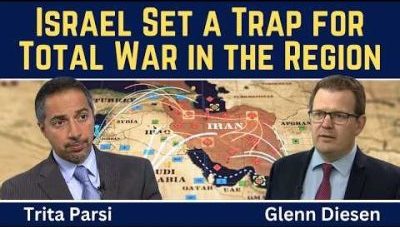
Trita Parsi: Israel Set a Trap for Total War in the Region
or go to
Aletho News Archives – Video-Images
From the Archive
Zionism’s Violent Legacy
By Donald Neff | Washington Report On Middle East Affairs | January 1996
On January 4, 1948, Jewish terrorists drove a truck loaded with explosives into the center of the all Arab city of Jaffa and detonated it, killing 26 and wounding around 100 Palestinian men, women and children.[1] The attack was the work of the Irgun Zvai Leumi – the “National Military Organization,” also known by the Hebrew letters Etzel – the largest Jewish terrorist group in Palestine. The Irgun was headed by Revisionist Zionist Menachem Begin and had been killing and maiming Arabs, Britons and even Jews for the previous ten years in its efforts to establish a Jewish state.
This terror campaign meant that at the core of Revisionist Zionism there existed a philosophical embrace of violence. … continue
Blog Roll
 Aletho News
- Trita Parsi: Israel Set a Trap for Total War in the Region
- Trump’s Iran war is on an Israeli leash
- Saudi oil boss issues global supply warning
- Riyadh Says Its Oil System Is Intact. The Numbers Say Otherwise.
- Trump and Netanyahu Want to “Finish the Job” on Iran
- US ‘one-sided dictation’ not Iran’s beliefs makes rational talks impossible: Baghaei
- Iran’s Next Strike May Not Explode. It Could Shut You Down /Col Doug Macgregor
- Iran: US political targets legitimate if assassinations return
- Iraq shuts key border crossing with Iran under US pressure: Report
- Undersea Internet cables could be targeted in retaliation for attacks on Iran: IRGC deputy chief
- If Americans Knew
- The Israel Lobby’s Changing Fortunes
- AIPAC has become such a political liability that it’s shifting to a more “nimble” approach to buying politicians
- At least 160 Israeli settler attacks in 2 weeks
- Will Gaza’s Ancient Christian Community Disappear Forever?
- Israel’s vision of regional security rests on keeping Arab states weak
- Heidi Levine recounts how Palestinian youths helped save her in settler attack
- DAILY UPDATE: Latest essential news on Palestine, Israel, & region
- Trump’s Intensifying Sabotage of the ICC, for Israel’s Sake
- Israeli military detain US and UK volunteers in West Bank including Democratic NY politician Brad Lander
- Americans at National Conservatism Conference held in Israel this year criticize Israel
- No Tricks Zone
- E-Cars Reduce CO2 Emissions By Only 41% Compared To Internal Combustion Engine Vehicles
- Predictions Made By Renowned Climate Professor Over Past Decades Have Been Proven To Be Poor
- New Study Suggests Large Regions Of The Pacific Ocean Have Been Cooling For The Last 80 Years
- Germany’s Green Energy Debacle: High Energy Costs Force Kahla Porzellan to Close After 182 Years!
- New Study: 50 Years Of The Most Aggressive ‘Net Zero’ Policies Can Only Affect The Global Climate By 0.03°C
- US September “Heat” Was No Record…Many Records Set Decades Ago
- Latest European Green Energy Debacle; Portugal’s Largest Flagship Solar Park Insolvent!
- Green Energy Debacle: German Expert Professor Fritz Vahrenholt Warns Of Severe Economic And Social Consequences
- Two More Paleo Reconstructions Affirm Meters-Higher Sea Levels Across Ireland, Brazil 7000-6000 Years Ago
- New Study: Earth And Venus Surface Warmth Largely Explained By Convection And Lapse Rate, Not CO2 Or Radiation

