Hillary Clinton’s Memoir Deletions, in Detail
By Ming Chun Tang | The Americas Blog | May 26, 2016
As was reported following the assassination of prominent Honduran environmental activist Berta Cáceres in March, former Secretary of State Hillary Clinton erased all references to the 2009 coup in Honduras in the paperback edition of her memoirs, “Hard Choices.” Her three-page account of the coup in the original hardcover edition, where she admitted to having sanctioned it, was one of several lengthy sections cut from the paperback, published in April 2015 shortly after she had launched her presidential campaign.
A short, inconspicuous statement on the copyright page is the only indication that “a limited number of sections” — amounting to roughly 96 pages — had been cut “to accommodate a shorter length for this edition.” Many of the abridgements consist of narrative and description and are largely trivial, but there are a number of sections that were deleted from the original that also deserve attention.
Colombia
Clinton’s take on Plan Colombia, a U.S. program furnishing (predominantly military) aid to Colombia to combat both the FARC and ELN rebels as well as drug cartels, and introduced under her husband’s administration in 2000, adopts a much more favorable tone in the paperback compared to the original. She begins both versions by praising the initiative as a model for Mexico — a highly controversial claim given the sharp rise in extrajudicial killings and the proliferation of paramilitary death squads in Colombia since the program was launched.
The two versions then diverge considerably. In the original, she explains that the program was expanded by Colombian President Álvaro Uribe “with strong support from the Bush Administration” and acknowledges that “new concerns began to arise about human rights abuses, violence against labor organizers, targeted assassinations, and the atrocities of right-wing paramilitary groups.” Seeming to place the blame for these atrocities on the Uribe and Bush governments, she then claims to have “made the choice to continue America’s bipartisan support for Plan Colombia” regardless during her tenure as secretary of state, albeit with an increased emphasis on “governance, education and development.”
By contrast, the paperback makes no acknowledgment of these abuses or even of the fact that the program was widely expanded in the 2000s. Instead, it simply makes the case that the Obama administration decided to build on President Clinton’s efforts to help Colombia overcome its drug-related violence and the FARC insurgency — apparently leading to “an unprecedented measure of security and prosperity” by the time of her visit to Bogotá in 2010.
The Trans-Pacific Partnership
Also found in the original is a paragraph where Clinton discusses her efforts to encourage other countries in the Americas to join negotiations for the Trans-Pacific Partnership (TPP) trade agreement during a regional conference in El Salvador in June 2009:
So we worked hard to improve and ratify trade agreements with Colombia and Panama and encouraged Canada and the group of countries that became known as the Pacific Alliance — Mexico, Colombia, Peru, and Chile — all open-market democracies driving toward a more prosperous future to join negotiations with Asian nations on TPP, the trans-Pacific trade agreement.
Clinton praises Latin America for its high rate of economic growth, which she revealingly claims has produced “more than 50 million new middle-class consumers eager to buy U.S. goods and services.” She also admits that the region’s inequality is “still among the worst in the world” with much of its population “locked in persistent poverty” — even while the TPP that she has advocated strongly for threatens to exacerbate the region’s underdevelopment, just as NAFTA caused the Mexican economy to stagnate.
Last October, however, she publicly reversed her stance on the TPP under pressure from fellow Democratic presidential candidates Bernie Sanders and Martin O’Malley. Likewise, the entire two-page section on the conference in El Salvador where she expresses her support for the TPP is missing from the paperback.
Brazil
In her original account of her efforts to prevent Cuba from being admitted to the Organization of American States (OAS) in June 2009, Clinton singles out Brazilian President Luiz Inácio Lula da Silva as a potential mediator who could help “broker a compromise” between the U.S. and the left-leaning governments of Venezuela, Ecuador, Bolivia and Nicaragua. Her assessment of Lula, removed from the paperback, is mixed:
As Brazil’s economy grew, so did Lula’s assertiveness in foreign policy. He envisioned Brazil becoming a major world power, and his actions led to both constructive cooperation and some frustrations. For example, in 2004 Lula sent troops to lead the UN peacekeeping mission in Haiti, where they did an excellent job of providing order and security under difficult conditions. On the other hand, he insisted on working with Turkey to cut a side deal with Iran on its nuclear program that did not meet the international community’s requirements.
It is notable that the “difficult conditions” in Haiti that Clinton refers to was a period of perhaps the worst human rights crisis in the hemisphere at the time, following the U.S.-backed coup d’etat against democratically elected president Jean-Bertrand Aristide in 2004. Researchers estimate that some 4,000 people were killed for political reasons, and some 35,000 women and girls sexually assaulted. As various human rights investigators, journalists and other eyewitnesses noted at the time, some of the most heinous of these atrocities were carried out by Haiti’s National Police, with U.N. troops often providing support — when they were not engaging in them directly. WikiLeaked State Department cables, however, reveal that the State Department saw the U.N. mission as strategically important, in part because it helped to isolate Venezuela from other countries in the region, and because it allowed the U.S. to “manage” Haiti on the cheap.
In contrast to Lula, Clinton heaps praise on Lula’s successor, Dilma Rousseff, who was recently suspended from office pending impeachment proceedings:
Later I would enjoy working with Dilma Rousseff, Lula’s protégée, Chief of Staff, and eventual successor as President. On January 1, 2011, I attended her inauguration on a rainy but festive day in Brasilia. Tens of thousands of people lined the streets as the country’s first woman President drove by in a 1952 Rolls-Royce. She took the oath of office and accepted the traditional green and gold Presidential sash from her mentor, Lula, pledging to continue his work on eradicating poverty and inequality. She also acknowledged the history she was making. “Today, all Brazilian women should feel proud and happy.” Dilma is a formidable leader whom I admire and like.
The paperback version deletes almost all references to Rousseff, mentioning her only once as an alleged target of NSA spying according to Edward Snowden.
The Arab Spring
By far the lengthiest deletion in Clinton’s memoirs consists of a ten-page section discussing the Arab Spring in Jordan, Libya and the Persian Gulf region — amounting to almost half of the chapter. Having detailed her administration’s response to the mass demonstrations that had started in Tunisia before spreading to Egypt, then Jordan, then Bahrain and Libya, Clinton openly recognizes the profound contradictions at the heart of the U.S.’ relationship with its Gulf allies:
The United States had developed deep economic and strategic ties to these wealthy, conservative monarchies, even as we made no secret of our concerns about human rights abuses, especially the treatment of women and minorities, and the export of extremist ideology. Every U.S. administration wrestled with the contradictions of our policy towards the Gulf.
And it was appalling that money from the Gulf continued funding extremist madrassas and propaganda all over the world. At the same time, these governments shared many of our top security concerns.
Thanks to these shared “security concerns,” particularly those surrounding al-Qaeda and Iran, her administration strengthened diplomatic ties and sold vast amounts of military equipment to these countries:
The United States sold large amounts of military equipment to the Gulf states, and stationed the U.S. Navy’s 5th Fleet in Bahrain, the Combined Air and Space Operations Center in Qatar, and maintained troops in Kuwait, Saudi Arabia, and the UAE, as well as key bases in other countries. When I became Secretary I developed personal relationships with Gulf leaders both individually and as a group through the Gulf Cooperation Council.
Clinton continues to reveal that the U.S.’ common interests with its Gulf allies extended well beyond mere security issues and in fact included the objective of regime change in Libya — which led the Obama administration into a self-inflicted dilemma as it weighed the ramifications of condemning the violent repression of protests in Bahrain with the need to build an international coalition, involving a number of Gulf states, to help remove Libyan leader Muammar Gaddhafi from power:
Our values and conscience demanded that the United States condemn the violence against civilians we were seeing in Bahrain, full stop. After all, that was the very principle at play in Libya. But if we persisted, the carefully constructed international coalition to stop Qaddafi could collapse at the eleventh hour, and we might fail to prevent a much larger abuse — a full-fledged massacre.
Instead of delving into the complexities of the U.S.’ alliances in the Middle East, the entire discussion is simply deleted, replaced by a pensive reflection on prospects for democracy in Egypt, making no reference to the Gulf region at all. Having been uncharacteristically candid in assessing the U.S.’ response to the Arab Spring, Clinton chose to ignore these obvious inconsistencies — electing instead to proclaim the Obama administration as a champion of democracy and human rights across the Arab world.
Caceres’ Relatives: No Confidence in Official Investigation
teleSUR | May 3, 2016
Relatives of Berta Caceres, Indigenous and environmental leader murdered in Honduras March 3, reaffirmed their distrust of the public prosecutor after having been excluded from the investigation, regarding the arrest of four suspects Monday.
“They excluded us from the investigation process from the beginning, we have no way of knowing whether the arrests are the result of exhaustive proceedings, nor do we know whether these include the masterminds at all levels,” they said in a statement.
They also stated that the alleged involvement of active and retired military linked to the company DESA demonstrates the involvement of state agents in the murder of Caceres.
Children and other relatives of Berta Caceres learned of the arrests through the media “and not through the channels they are entitled to by law,” the statement said.
The Honduran Office of the Public Prosecutor reported that 10 coordinated raids were carried out Monday in connection with Caceres’ homicide in the capital Tegucigalpa, as well as in La Ceiba, and Trujillo.
The four suspects are scheduled to appear in court in the following days, the OPP added.
Caceres’ death prompted massive international condemnation and led to huge protests in Honduras, a country that currently has the one of highest murder rates in the world.
Honduran Journalist Survives 2 Murder Attempts in One Day

Honduran radio journalist Felix Molina | Photo: Facebook / Felix Molina
teleSUR | May 3, 2016
Prominent Honduran radio journalist and critic of the country’s 2009 military coup Felix Molina has been wounded after suffering an assassination attempt on the eve of World Press Freedom Day and the two-month anniversary of the murder of another renowned Honduran figure, Indigenous leader Berta Caceres.
“I declare myself a survivor of the insecurity that the majority of the country faces,” Molina said in a statement released by the local human rights organization Cofadeh on Tuesday from the University School Hospital in Tegucigalpa where he is being treated for injuries from the attack.
Molina was the victim of a double attempt on his life on Monday. In the second attack, he suffered four bullet wounds, two in each leg, while taking a taxi in the capital city.

Photo: Facebook / Cofadeh
Hours earlier, he had reported on his Facebook account that two youth had pulled a gun on him while he rode in a taxi, asking him to hand over his phone. One of the attackers shouting at the other to shoot, but the driver sped away before the trigger was pulled.
Medical professionals reported that after receiving treatment, Molina’s life was not in danger due to the non-fatal location of the gunshot wounds.
“It is not my intention to speculate on this act, but with the repeat of the attack on the same day I think this was not a simple telephone theft but rather a direct attack against me,” Molina continued in his statement to rights defenders from the hospital, adding that he awaited a thorough and fair investigation. “If it is that, I am the most interested to know because I want to continue practicing journalism without fear, and continue living without fear.”
Human rights defenders were quick to point out that the attempt on Molina’s life was not an isolated event but part of the systematic repression and intimidation against activists and journalists that has sharply increased since the U.S.-backed military coup that hurled the country into crisis.
The human rights defense network of the western Honduran department of Lempira released a statement through Cofadeh holding the Honduran government responsible for the attack on Molina.
Human rights defender and prominent resistance activist Gilberto Rios wrote on social media that it is urgent to spread the news of the attack nationally and internationally.
“It is important that the world knows that is happening in Honduras everyday,” Rios wrote. “Freedom of expression is a precious right and there are not many journalists that identify with popular causes. No more assassinations of journalists!”
In the immediate aftermath of the 2009 U.S.-backed coup in Honduras, Molina was a pivotal source of information amid a media blackout around the coup and repression against massive protests taking over the streets. Through his radio program Resistencias, aired on Honduras’ Radio Globo, and other alternative media, he has reported on pro-democracy and resistance movements from the front lines of struggle, despite receiving death threats.
The human rights situation in Honduras has drastically deteriorated since the 2009 coup, and the country has become one of the most dangerous countries in the region for media workers, second only to Mexico.
Since the 2009 coup that ousted President Manuel Zelaya, 59 journalists have been assassinated in Honduras. Four have been murdered since the beginning of 2016.
RELATED:
‘They Want to Silence Us:’ Honduran Journalist Handed 10 Years
59 Journalists Murdered in Honduras Since Clinton-Backed Coup
Hillary Clinton Justifies her Support for 2009 Coup in Honduras
 (Photo – Gage Skidmore on Flickr)
teleSUR – April 11, 2016
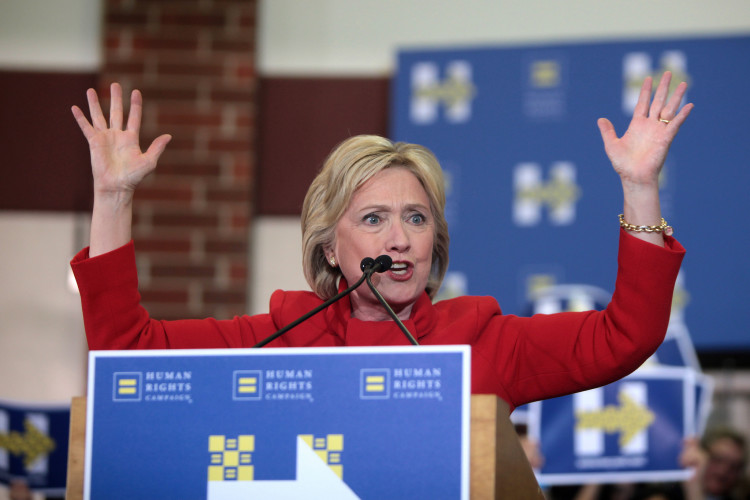
Democratic presidential frontrunner Hillary Clinton did not express any regret Monday about her support for the 2009 coup in Honduras, despite the deteriorating human rights situation, recently highlighted with the murder of prominent Indigenous activist Berta Caceres.
In fact, in an interview with the New York Daily News, in her opinion, the U.S. aid to military and police forces in Central America will eventually pay off just like Plan Colombia.
Plan Colombia was established under the administration of Bill Clinton in 1999 under the guise of fighting the war on drugs. The U.S. aid package, totalling almost US$2 billion, gave 78 percent of the funds to the Colombian military and police for counternarcotics and military operations against the rebel forces.
Despite a long list of studies and evidence that shows that Plan Colombia contributed to human rights abuses by security forces and the rise of paramilitary forces, Clinton took most of the credit for the current peace talks between the government and the FARC rebels, suggesting Plan Colombia brought peace to Colombia.
“I didn’t like the way it looked or the way they did it but (the coup leaders) had a very strong argument that they had followed the constitution and the legal precedence,” she said in an interview with the New York Daily News.
Democratically-elected president Manuel Zelaya was forcibly put on a plane and sent out of the country by the Honduran military in June 2009.
Clinton justified the move despite opposing advice from her top aides, who urged her to declare it a military coup, and to cut off U.S. aid, as some emails leaked in July revealed.
She admitted that the coup leaders “really undercut their argument by spiriting (Zelaya) out of the country in his pajamas, where they sent the military to take him out of his bed and get him out of the country.”
Nevertheless she strongly rejected the idea of cutting U.S. aid for Honduras, claiming this would have harmed the Honduran people, although it is mainly directed to the country’s security forces. It is used to keep the drug war within Honduran borders – as well as to keep Central American migrants running away from drug violence from reaching the United States.
59 Journalists Murdered in Honduras Since Clinton-Backed Coup
teleSUR – April 11, 2016
Since the 2009 U.S.-backed coup that removed President Manuel Zelaya, 59 journalists have been assassinated in Honduras, with four of them being murdered just in 2016 alone.
The most violent year until now has been 2015, with 218 alerts registered and 12 journalists assassinated.
In April 2015, the Honduras National Congress approved the Journalist Protection Law, which included measures like providing police protection when a journalist receives a threat. The law also planned the creation of a center monitoring threat follow-ups, although the government has not yet approved the budget.
In four years of former President Profirio Lobo’s government, 30 journalists were murdered, while in the current government headed by President Juan Orlando Hernandez, 22 journalists have been assassinated in the two years and three months since he took office. These two post-coup presidencies have been accused of systematic human rights abuses and corruption.
The Attorney General’s office has only processed six cases, while only four people have been prosecuted and sent to jail. There has not been any investigation into who ordered these crimes and the motivations behind each one.
A ‘Silent Coup’ for Brazil?
By Ted Snider | Consortium News | March 30, 2016
Brazil keeps its coups quiet (or at least quieter than many other Latin American countries). During the Cold War, there was much more attention to overt military regime changes often backed by the CIA, such as the overthrow of Guatemala’s Jacobo Arbenz in 1954, the ouster of Chile’s Salvador Allende in 1973 and even Argentina’s “dirty war” coup in 1976, than to Brazil’s 1964 coup that removed President João Goulart from power.
Noam Chomsky has called Goulart’s government “mildly social democratic.” Its replacement was a brutal military dictatorship.
In more modern times, Latin American coups have shed their image of overt military takeovers or covert CIA actions. Rather than tanks in the streets and grim-looking generals rounding up political opponents – today’s coups are more like the “color revolutions” used in Eastern Europe and the Mideast in which leftist, socialist or perceived anti-American governments were targeted with “soft power” tactics, such as economic dislocation, sophisticated propaganda, and political disorder often financed by “pro-democracy” non-governmental organizations (or NGOs).
This strategy began to take shape in the latter days of the Cold War as the CIA program of arming Nicaraguan Contra rebels gave way to a U.S. economic strategy of driving Sandinista-led Nicaragua into abject poverty, combined with a political strategy of spending on election-related NGOs by the U.S.-funded National Endowment for Democracy, setting the stage for the Sandinistas’ political defeat in 1990.
During the Obama administration, this strategy of non-violent “regime change” in Latin America has gained increasing favor, as with Secretary of State Hillary Clinton’s decisive support for the 2009 ouster of Honduran President Manuel Zelaya who had pursued a moderately progressive domestic policy that threatened the interests of the Central American nation’s traditional oligarchy and foreign investors.
Unlike the earlier military-style coups, the “silent coups” never take off their masks and reveal themselves as coups. They are coups disguised as domestic popular uprisings which are blamed on the misrule of the targeted government. Indeed, the U.S. mainstream media will go to great lengths to deny that these coups are even coups.
The new coups are cloaked in one of two disguises. In the first, a rightist minority that lost at the polls will allege “fraud” and move its message to the streets as an expression of “democracy”; in the second type, the minority cloaks its power grab behind the legal or constitutional workings of the legislature or the courts, such as was the case in ousting President Zelaya in Honduras in 2009.
Both strategies usually deploy accusations of corruption or dictatorial intent against the sitting government, charges that are trumpeted by rightist-owned news outlets and U.S.-funded NGOs that portray themselves as “promoting democracy,” seeking “good government” or defending “human rights.” Brazil today is showing signs of both strategies.
Brazil’s Boom
First, some background: In 2002, the Workers’ Party’s (PT) Luiz Inacio Lula da Silva came to power with 61.3 percent of the vote. Four years later, he was returned to power with a still overwhelming 60.83 percent. Lula da Silva’s presidency was marked by extraordinary growth in Brazil’s economy and by landmark social reforms and domestic infrastructure investments.
In 2010, at the end of Lula da Silva’s presidency, the BBC provided a typical account of his successes: “Number-crunchers say rising incomes have catapulted more than 29 million Brazilians into the middle class during the eight-year presidency of Luiz Inacio Lula da Silva, a former trade unionist elected in 2002. Some of these people are beneficiaries of government handouts and others of a steadily improving education system. Brazilians are staying in school longer, which secures them higher wages, which drives consumption, which in turn fuels a booming domestic economy.”
However, in Brazil, a two-term president must sit out a full term before running again. So, in 2010, Dilma Rousseff ran as Lula da Silva’s chosen successor. She won a majority 56.05 percent of the vote. When, in 2014, Rousseff won re-election with 52 percent of the vote, the right-wing opposition Brazilian Social Democratic Party (PSDB) went into a panic.
This panic was not just because democracy was failing as a method for advancing right-wing goals, nor was the panic just over the fourth consecutive victory by the more left-wing PT. The panic became desperation when it became clear that, after the PT had succeeded in holding onto power while Lula da Silva was constitutionally sidelined, he was likely returning as the PT’s presidential candidate in 2018.
After all, Lula da Silva left office with an 80 percent approval rating. Democracy, it seemed, might never work for the PSDB. So, the “silent coup” playbook was opened. As the prescribed first play, the opposition refused to accept the 2014 electoral results despite never proffering a credible complaint. The second move was taking to the streets.
A well-organized and well-funded minority whose numbers were too small to prevail at the polls can still create lots of noise and disruption in the streets, manufacturing the appearance of a powerful democratic movement. Plus, these protests received sympathetic coverage from the corporate media of both Brazil and the United States.
The next step was to cite corruption and begin the process for a constitutional coup in the form of impeachment proceedings against President Rousseff. Corruption, of course, is a reliable weapon in this arsenal because there is always some corruption in government which can be exaggerated or ignored as political interests dictate.
Allegations of corruption also can be useful in dirtying up popular politicians by making them appear to be only interested in lining their pockets, a particularly effective line of attack against leaders who appear to be working to benefit the people. Meanwhile, the corruption of U.S.-favored politicians who are lining their own pockets much more egregiously is often ignored by the same media and NGOs.
Removing Leaders
In recent years, this type of “constitutional” coup was used in Honduras to get rid of democratically elected President Zelaya. He was whisked out of Honduras through a kidnapping at gunpoint that was dressed up as a constitutional obligation mandated by a court after Zelaya announced a plebiscite to determine whether Hondurans wanted to draft a new constitution.
The hostile political establishment in Honduras falsely translated his announcement into an unconstitutional intention to seek reelection, i.e., the abuse-of-power ruse. The ability to stand for a second term would be considered in the constitutional discussions, but was never announced as an intention by Zelaya.
Nevertheless, the Supreme Court declared the President’s plebiscite unconstitutional and the military kidnapped Zelaya. The Supreme Court charged Zelaya with treason and declared a new president: a coup in constitutional disguise, one that was condemned by many Latin American nations but was embraced by then-Secretary of State Hillary Clinton.
This coup pattern reoccurred in Paraguay when right-wing Frederico Franco took the presidency from democratically elected, left-leaning Fernando Lugo in what has been called a parliamentary coup. As in Honduras, the coup was made to look like a constitutional transition. In the Paraguay case, the right-wing opposition opportunistically capitalized on a skirmish over disputed land that left at least 11 people dead to unfairly blame the deaths on President Lugo. It then impeached him after giving him only 24 hours to prepare his defense and only two hours to deliver it.
Brazil is manifesting what could be the third example of this sort of coup in Latin America during the Obama administration.
Operation Lava Jato began in Brazil in March of 2014 as a judicial and police investigation into government corruption. Lava Jato is usually translated as “Car Wash” but, apparently, is better captured as “speed laundering” with the connotation of corruption and money laundering.
Operation Lava Jato began as the uncovering of political bribery and misuse of money, revolving around Brazil’s massive oil company Petrobras. The dirt – or political influence-buying – that needed washing stuck to all major political parties in a corrupt system, according to Alfredo Saad Filho, Professor of Political Economy at the SAOS University of London.
But Brazil’s political Right hijacked the investigation and turned a legitimate judicial investigation into a political coup attempt.
According to Boaventura de Sousa Santos, Professor of Sociology at the University of Coimbra in Portugal and Distinguished Legal Scholar at the University of Wisconsin-Madison, although Operation Lava Jato “involves the leaders of various parties, the fact is that Operation Lava Jato – and its media accomplices – have shown to be majorly inclined towards implicating the leaders of PT (the Workers’ Party), with the by now unmistakable purpose of bringing about the political assassination of President Dilma Rousseff and former President Lula da Silva.”
De Sousa Santos called the political repurposing of the judicial investigation “glaringly” and “crassly selective,” and he indicts the entire operation in its refitted form as “blatantly illegal and unconstitutional.” Alfredo Saad Filho said the goal is to “inflict maximum damage” on the PT “while shielding other parties.”
Neutralizing Lula
The ultimate goal of the coup in democratic disguise is to neutralize Lula da Silva. Criminal charges — which Filho describes as “stretched” — have been brought against Lula da Silva. On March 4, he was detained for questioning. President Rousseff then appointed Lula da Silva as her Chief of Staff, a move which the opposition represented as an attempt to use ministerial status to protect him from prosecution by any body other than the Supreme Court.
But Filho says this representation is based on an illegally recorded and illegally released conversation between Rousseff and Lula da Silva. The conversation, Filho says, was then “misinterpreted” to allow it to be “presented as ‘proof’ of a conspiracy to protect Lula.” De Sousa Santos added that “President Dilma Rousseff’s cabinet has decided to include Lula da Silva among its ministers. It is its right to do so and no institution, least of all the judiciary, has the power to prevent it.”
No “presidential crime warranting an impeachment has emerged,” according to Filho.
As in Honduras and Paraguay, an opposition that despairs of its ability to remove the elected government through democratic instruments has turned to undemocratic means that it hopes to disguise as judicial and constitutional. In the case of Brazil, Professor de Sousa Santos calls this coup in democratic disguise a “political-judicial coup.”
In both Honduras and Paraguay, the U.S. government, though publicly insisting that it wasn’t involved, privately knew the machinations were coups. Less than a month after the Honduran coup, the White House, State Department and many others were in receipt of a frank cable from the U.S. embassy in Honduras calling the coup a coup.
Entitled “Open and Shut: the Case of the Honduran Coup,” the embassy said, “There is no doubt that the military, Supreme Court and National Congress conspired on June 28 in what constituted an illegal and unconstitutional coup.” The cable added, “none of the . . . arguments [of the coup defenders] has any substantive validity under the Honduran constitution.”
As for Paraguay, U.S. embassy cables said Lugo’s political opposition had as its goal to “Capitalize on any Lugo missteps” and “impeach Lugo and assure their own political supremacy.” The cable noted that to achieve their goal, they are willing to “legally” impeach Lugo “even if on spurious grounds.”
Professor de Sousa Santos said U.S. imperialism has returned to its Latin American “backyard” in the form of NGO development projects, “organizations whose gestures in defense of democracy are just a front for covert, aggressive attacks and provocations directed at progressive governments.”
He said the U.S. goal is “replacing progressive governments with conservative governments while maintaining the democratic façade.” He claimed that Brazil is awash in financing from American sources, including “CIA-related organizations.” (The National Endowment for Democracy was created in 1983, in part to do somewhat openly what the CIA had previously done covertly, i.e., finance political movements that bent to Washington’s will.)
History will tell whether Brazil’s silent coup will succeed. History may also reveal what the U.S. government’s knowledge and involvement may be.
Hillary is a Neocon
She has the record and the vision
Hillary is a Neocon – 03/15/2016
 “For this former Republican, and perhaps for others, the only choice will be to vote for Hillary Clinton. The party cannot be saved, but the country still can be.” —Robert Kagan
 “I have a sense that she’s one of the more competent members of the current administration and it would be interesting to speculate about how she might perform were she to be president.” —Dick Cheney
 “I’ve known her for many years now, and I respect her intellect. And she ran the State Department in the most effective way that I’ve ever seen.” —Henry Kissinger
Nobody Beats This Record
- She says President Obama was wrong not to launch missile strikes on Syria in 2013.
- She pushed hard for the overthrow of Qadaffi in 2011.
- She supported the coup government in Honduras in 2009.
- She has backed escalation and prolongation of war in Afghanistan.
- She voted for the 2003 invasion of Iraq.
- She skillfully promoted the White House justification for the war on Iraq.
- She does not hesitate to back the use of drones for targeted killing.
- She has consistently backed the military initiatives of Israel.
- She was not ashamed to laugh at the killing of Qadaffi.
- She has not hesitated to warn that she could obliterate Iran.
- She is not afraid to antagonize Russia.
- She helped facilitate a military coup in Ukraine.
- She has the financial support of the arms makers and many of their foreign customers.
- She waived restrictions at the State Department on selling weapons to Saudi Arabia, Algeria, Kuwait, United Arab Emirates, Oman, and Qatar, all states wise enough to donate to the Clinton Foundation.
- She supported President Bill Clinton’s wars and the power of the president to make war without Congress.
- She has advocated for arming fighters in Syria.
- She supported a surge in Iraq even before President Bush did.

Colombia, Honduras Are Most Unequal Countries in Latin America
teleSUR – March 10, 2016
Latin America has five of the world’s most unequal countries, with Honduras and Colombia being the region’s top two, according to statistics released by the World Bank Wednesday.
Using data from December, the World Bank calculated that Latin America is not the poorest region in the world, but is home to some of the world’s most unequal countries.
Among them are Honduras (6), Colombia (7), Brazil (8), Guatemala (9) and Panama (10), which all rank within the world’s top 10 most unequal countries.
The results were found by calculating each country’s Gini coefficient, what measures the income distribution in each nation, whereby nations approaching 0 have total equality and those approaching 100 have total inequality.
Colombia’s Gini coefficient ranked at 53.5, the same as 2012, while Honduras’ was 53.7 and plummeting dramatically, according to news reports.
In the current situation, the top 10 percent of Colombia’s richest people earn four times more than the bottom 40 percent of the population. Additionally, 77.6 percent of land in the country is owned by only 13.7 percent of the country’s inhabitants.
In Honduras, 64.5 percent of the population is living in poverty while 42.6 percent live in extreme poverty (less than US$2.5 a day), according to World Bank statistics.
The Honduras Killing Field

Slain Honduran environmental activist Berta Caceres
By Dennis J Bernstein | Consortium News | March 8, 2016
An apparent resurgence of death-squad violence in Honduras, including the March 3 murder of prominent Honduran indigenous rights activist Berta Cáceres, is a harsh reminder of Secretary of State Hillary Clinton’s role in defending a 2009 coup that ousted leftist President Manuel Zelaya and cleared the way for the restoration of right-wing rule in the impoverished Central American nation.
Caceres, the recent winner of the prestigious Goldman Environmental Prize, was murdered in her hometown of La Esperenza, Intibucá, in the highlands near the Salvadoran border. Her good friend and close associate, Gustavo Castro, was shot twice but survived the assassination and is now being held against his will by the Honduran Government.
Castro held Cáceres in his arms as she lay dying and played dead to avoid his own execution. He has since been forcibly stopped from leaving Honduras.
The Honduran Government has characterized the killing of Cáceres as a common burglary gone bad, but her friends and close associates reject the government claims as preposterous and part of an emerging cover-up.
In a statement, COPINH, the indigenous rights group that Cáceres was closely associated with, characterized her close-range murder as an assassination. In a press release the day after the murder, the group talked about the multiple death threats that Caceres faced prior to her slaying.
“In the last few weeks, violence and repression towards Berta, COPINH, and the communities they support, had escalated,” COPINH stated. “In Rio Blanco on February 20th, Berta, COPINH, and the community of Rio Blanco faced threats and repression as they carried out a peaceful action to protect the River Gualcarque against the construction of a hydroelectric dam by the internationally-financed Honduran company DESA.
“As a result of COPINH’s work supporting the Rio Blanco struggle, … Berta had received countless threats against her life and was granted precautionary measures by the Inter-American Commission for Human Rights. On February 25th, another Lenca community supported by COPINH in Guise, Intibuca was violently evicted and destroyed.”
Cáceres received the Goldman Environmental Prize after she led a high-profile, peaceful campaign to stop one of the world’s largest dam builders from pursuing the Agua Zarca Dam, which would have effectively cut off the ethnic Lenca people from water, food and medicine. When Caceres won the Goldman Prize last year, she accepted in the name of “the martyrs who gave their lives in the struggle to defend our natural resources.”
Friends, co-workers, intellectuals and activists are outraged by the killing and many track this and many other murders of activists in Honduras back to the tenure of Hillary Clinton as Secretary of State. They say Clinton’s lead role in supporting the 2009 oligarch-backed coup that drove the elected progressive President Zelaya from power. Zelaya’s ouster opened the door to a restoration of right-wing rule and out-of-control “free trade.” Honduras soon became the murder capital of the world.
When the Honduran military removed Zelaya from power, the international community – including the United Nations, the Organization of American States and the European Union – condemned the coup and sought Zelaya’s restoration. But Secretary of State Clinton allied herself with right-wing Republicans in Congress who justified Zelaya’s removal because of his cordial relations with Venezuela’s leftist President Hugo Chavez.
In her memoir, Hard Choices, Clinton took credit for preventing Zelaya from returning to Honduras, as if it were a major victory for democracy instead the beginning of a new era of death-squad violence and repression in Honduras.
“We strategized on a plan to restore order in Honduras,” Clinton wrote, “and ensure that free and fair elections could be held quickly and legitimately, which would render the question of Zelaya moot.” In other words, rather than support the right of the elected president to serve out his term, Clinton allowed his illegal ouster to lead to an interim right-wing regime followed by elections that the Honduran oligarchs could again dominate.
Since then, the violence in Honduras has spiraled out of control driving tens of thousands of desperate Hondurans, including unaccompanied children, to flee north to the United States where Clinton later supported their prompt deportation back to Honduras.
On Tuesday, I spoke with Beverly Bell from Other Worlds who worked closely with Berta Cáceres and Gustavo Castro. She was deeply concerned about the safety of Castro and other close associates of Cáceres. She described the situation as follows:
“One person saw the assassination, Gustavo Castro Soto, coordinator of Otros Mundos Chiapas / Friends of the Earth Mexico. A Mexican, Gustavo had come to Berta’s town of La Esperanza to provide her with peace accompaniment, and spent the night at her house on her last night of life. Gustavo himself was shot twice and survived by feigning death. Berta died in his arms.
“Gustavo was immediately detained in inhumane conditions by the Honduran government for several days for ‘questioning’. He was then released and accompanied by the Mexican ambassador and consul to the airport in Tegucigalpa. He was just about to go through customs when Honduran authorities tried to forcibly grab him. The Mexican government successfully intervened, and put Gustavo into protective custody in the Mexican Embassy.”
But according to Bell, the matter didn’t end there: “The Honduran government issued a warning that Gustavo may not leave the country. In a gross violation of international sovereignty, the Honduran government has reclaimed Gustavo from the Embassy, taking him back to the town of La Esperanza for questioning.”
In a March 6 note to close friends, Gustavo Castro wrote, “The death squads know that they did not kill me, and I am certain that they want to accomplish their task.” Shortly after the murder of Berta Cáceres, I interviewed her close friends Beverly Bell, Adrienne Pine and Andres Conteris.
The interviews follow in two parts below, first the interview with Beverly Bell and Adrienne Pine, an associate professor at American University and a Fulbright Scholar who has been doing research in Honduras for nearly two decades. She is the author of Working Hard, Drinking Hard: On Violence and Survival in Honduras.
The second interview is with Conteris, a producer with Democracy Now! Spanish language programming, who lived for years in Honduras and was there throughout the military coup in 2009. He worked as a human rights advocate in Honduras from 1994 to 1999 and is a co-producer of “Hidden in Plain Sight,” a documentary film about U.S. policy in Latin America and the School of the Americas.
DB: Beverly let me start with you. … There was more than one person shot, correct, Beverly Bell?
BB: There were actually three people shot … in addition to Berta, who was shot fatally. Her brother was also shot and a third person, who will be familiar with many of your listeners, and that is Gustavo Castro, who is the coordinator of the social and economic justice group, Otros Mundus, “other worlds” in Spanish, in Chiapas, who has also worked very closely with Berta for years. He spent the night in Berta’s house, as part of a peacekeeping team, which Berta had had for many years now, off and on, because her life has always been so at risk.
And he was shot in the ear, he is okay from that, but the concern that you mention is Gustavo went down this morning to give his testimony to the local court, and he is a very inconvenient witness to them. … So there is an international alert out right now to guarantee Gustavo Castro free passage back to Mexico, together with his wife.
DB: Now, that’s a double-edged sword, because if they hold him, he’s in danger, his life is in danger. And if they release him, his life is in danger. His life is in danger as being a witness to the murder, right?
BB: That’s absolutely correct. In Honduras, pretty much anybody’s life is in danger for anything that relates to peace, to justice, to indigenous rights, to participatory democracy, and notably to opposing the role of the U.S. We are working with peace accompaniment teams right now to try and guarantee Gustavo’s safe passage to Mexico, if the government doesn’t let him go. …
DB: We know that the United States government, Hillary Clinton played a key role in overthrowing the duly elected president, leading us down this path of regular mass murder of human rights activists, and anybody who resists sort of free trade government so what can we say? Has the U.S. expressed its deep concern about the killing?
BB: Yes, cynically and sickly, the U.S. came out … lamenting the murder of Berta Cáceres. And yet, we know that the U.S. has funded to the tune, well this year alone of more than $5,500,000 in military training and education. We know that many of the people who have threatened Berta’s life over the years have been trained at the School of the Americas.
We know that the U.S. government has stood fiercely by the horrible succession of right-wing governments that followed the overthrow of the democratically elected government of Zelaya. And as you mentioned, Hillary Clinton was deeply involved in that. In fact, she even bragged about it in her recent book.
DB: I know, that is shocking that she is proud, this self-declared human rights activist and sophisticated diplomat was proud to brag in her book that she played the key role in keeping Zelaya from going back and assuming his legitimately won presidency. So this is your, as we have called her before, the deposer in chief. And, on that note, let’s bring into the conversation anthropologist Adrienne Pine, who has spent many years, written extensively about Honduras. Adrienne I know that you’re at an airport now, but let me get your initial response to what happened here.
AP: Well, with Bertita, it’s hard to talk about her in the past tense. She’s one of the most amazing activists and advocates I’ve ever met. And also, one of the most compassionate, wonderful people. The fact that they would kill her really sends a message. I mean this is an intentional message that all Hondurans, I think, would understand as such that nobody is safe. Berta, has a sort of, what those of us in the international solidarity community had considered…she had just some sort of protection because she was so well known, because she had won the Goldman prize.
And, of course, we have learned since the coup, the U.S. supported military coup, and I think Beverly laid that out very well, we’ve learned that the international protective measures actually don’t count for much, in Honduras. But this is really ramping up of the criminalization of activism that has occurred since the U.S.-supported military coup in 2009, and it really speaks to the incredible impunity that reigns right now in what is in fact a military dictatorship, a U.S.-supported military dictatorship. That, I think you’re right, it would not have been possible without the direct intervention of Hillary Clinton, as Secretary of State.
Berta Cáceres blood is on Hillary Clinton’s hands.
DB: And, of course, Donald Trump could not have been more violently right-wing when it comes to what happened in Honduras. He could have never out-done her. Because she was more sophisticated, and understood better how to solidify the right-wing, representing corporate America, and make sure that things continued ever since the Monroe Doctrine. Let me come back to you, if I could, I’m getting a little bit angry, Beverly Bell. Let me ask you to talk a little bit about Berta. How you met her, when’s the last time you spoke with her?
BB: I spoke with her, I guess, a couple of months ago, and it was the same content as so many of our conversations have been over the last 15 years, or so, that we’ve worked with each other, which was yet another threat. And how we were going to get protection for her, from what was a long, long, long journey of hideous oppression. She has been terrorized, she just a week or two ago, she and a whole team of people who were at the site of a river which the Honduran government and a multi-national corporation had been trying to dam, but which had been blocked by the organization that she headed, the Council of Popular and Indigenous Organizations of Honduras or COPINH.
A bunch of them were put into a truck and taken away. And it was certainly shaky hours there for a while until they emerged free. So just to answer your question, I have worked with Berta, very, very closely for about 15 years. I’m sitting right now in a house in Albuquerque where she used to live with me. We have fought together, like so many others, against the World Bank, against the U.S. government, against so-called free trade accords, against Inter-American Development Bank, against the Honduran government, against the Honduran oligarchy.
Basically Berta has stood for pretty much anything that any of your listeners would believe is right. She has been at the forefront for decades of the movement for indigenous rights, for indigenous sovereignty, for the environmental protection of land and rivers, for women’s rights, for LGBQ rights in a country that has grossly persecuted and assassinated LGBQ activists. She is, as Adrienne said, just the most extraordinary person, certainly one of the most that I have ever known and it is impossible to speak of her in the past tense.
And, in fact, I have refused to because Berta’s spirit has impacted so many people around the world. If you could be in my in-box today and see the countries from which condolences and denunciations have come, it’s amazing who she has touched, and that spirit will live on in the fight of all of us, for justice, for indigenous rights, for a world that is not tyrannized by the U.S. government, by trans-national capital, and by the elites of various countries.
DB: I’m sure, Beverly Bell, her spirit will be on the tongues and in the hearts of many women as they celebrate, if you will, International Women’s Day. … I’m sure she had some plans for that. It’s an amazing assassination. It’s troubling. Adrienne Pine, when is the last time you saw Berta? What did she mean to you?
AP: It’s so hard for me to accept. I think, like Beverly said she was somebody who I stood with side by side on more times than I could count … protesting the U.S. military base. We’ve been tear gassed together. And she’s helped me through a number of very dangerous situations. It’s hard. It’s hard to lose somebody who was not just such an amazing leader, but also such a good friend, and not just to me but to so many people.
Bertita lives on, with all of us. And I think the most important thing right now if you look at the social network…Beverly is right. My in-box is exploding with condolences, as well. And if you look at the social networks right now, Honduras is ready to rise up, at the murder of somebody who was so dear, so beloved by so many people. And I think one of the things that’s special about Berta which Beverly also mentioned is that she has a much longer trajectory than many of the activists, in Honduras. I mean, she has been on it for many decades fighting the forces that only recently following the coup the massive number of Hondurans came out to join her to fight the forces of corporatization, destruction of indigenous land, the violence of the patriarchy as Beverly mentioned. I mean she has been right all along.
And people in Honduras are furious. There are lots of different protests around the country that have been organized. There’s a protest in Washington, D.C. tomorrow, at the State Department, that’s been organized. And I think it’s going to be pretty big. She’s just moved people around the world, so deeply. And I think if Honduras is giving a signal that nobody is safe in Honduras then around the world we need give a signal that this regime cannot stand, any longer. And the U.S. has to stop supporting it.
DB: And, Adrienne, say a little bit more about the way in which she resisted. … I mean, it’s important for people to understand that in the face of so many threats…the idea that she won the Goldman Environmental prize here, given out here with huge fanfare in San Francisco. I mean, it really is clearly a message to everybody on the ground. But say a little bit more about what she meant to the people on the ground, how she worked with people. What were some of the actions that she helped to organize? You mentioned some protests and demonstrations, but is there one issue? This was about this dam. I guess resisting this dam was huge in Honduras. It means a lot to the corporate 1%, and a lot to the people who were resisting it.
AP: Well, absolutely. I mean the Aqua Zarca Dam, that Berta and her organization, COPINH. managed to successfully stop was an incredible victory for the Lenca people, and for the people of Honduras against the corporatization that is part and parcel of the U.S.-supported military coup of 2009, which was fundamentally a neo-liberal coup, and which vastly increased vulnerability of the already most marginalized groups, that Berta herself was part of, the indigenous groups of Honduras.
And so as somebody who had been organizing to resist this kind of government and corporate intrusion on sovereign indigenous lands and waters for decades, Berta was a natural leader. After the coup, when those forces became even stronger, against the participatory democracy, in Honduras, and Berta really stood alone in that. She was a woman leader among mostly male leaders.
And you’ve got a social movement that has traditionally been male led and there were a whole lot of feminists during the resistance movement that stood up against that. But Berta was just amazing. She held her own in very male-dominated forum, and it was through her inclusive insistence on fighting the patriarchy alongside the fight against the predatory violence of capitalism and neo-liberal capitalism, and U.S. militarism.
I mean, she tied it altogether in a way that very few Honduran leaders have managed to do. And yet she was uniquely not about her ego. I mean, she was somebody who gave so much to so many people. And I think that’s why in the protests people weren’t afraid to go up to her. She would … it’s hard to put into words. I mean I’m devastated by this loss and I’m not the primary mourner. I think there are thousands of people today who are devastated just as much as I am.
DB: And back to you Bev Bell. So maybe describe a little bit from your perspective what this loss looks like.
BB: As Adrienne said it’s huge. There are two indigenous movements in Honduras, and both of them have really been about the construction of indigenous identity. Which is to say that both the Garifuna people, that is the afro-indigenous people who reside on the Atlantic coast, and the Lenca people of which Berta was one, had had their indigenous identity stamped out. And Berta, and remarkably another woman, Miriam Miranda, who has also been terrorized and persecuted, who was head of the Garifuna indigenous movement had been able to shape together, with so many other people whom they pulled into participatory leadership, as Adrienne said.
They really were not about the sort of top down leaders that we see, well certainly in the U.S. government, but also in so many social movements, and in the NGO context in the U.S. They really were about empowering everybody, and led with humility. It’s huge. There is not anyone else in COPINH who is anywhere close to the capacity or the stature of Berta.
Most campesinos indigenous peoples are denied the right to education. They’re denied a lot of things that would allow them to also become leaders. That Berta who grew up in a very, very humble home, was able to become a leader was remarkable and really was due to her mother who was a fierce fighter. She was the mayor of the town, and the governor of the state, in a time when women were neither of those things.
And Berta grew up, for example, listening to underground radio from Cuba and Nicaragua that they had listened to, secretly, during the revolutions there. She was very engaged in the revolution in El Salvador. She has just had an incredible history that is really unparalleled. So the loss is huge. It’s irreparable, and as we said it’s not just a loss for Honduras, but for social movements everywhere, because Berta was all over.
I mean, she just met with the Pope in Italy, a couple of weeks ago. She was a leader in global social movements, not just Honduran ones, and not just indigenous ones. However, it is important to say and I know that Berta would say this: That the social movements in Honduras are strong. She loved to say that Honduras is known for two things. First, for having been the military base for the U.S.-backed Contra, and secondly for Hurricane Mitch. But in fact Honduras holds another fact which is that it is home to an extraordinary movement of feminists, of environmentalists, of unionists, of many sorts of people. And they are much stronger because of the life of Berta Cáceres. And that is not hyperbole. She single-handedly helped shape the strength of that social movement. But they will live on, and they are a part of the legacy of Berta Cáceres.
DB: Well, I know Adrienne it’s not going to be the last word on this subject. But, for the moment, what do you think you’re going to be doing in the context of fighting this fight, and standing with your friend and friends, where you’ve worked so long…how you’ve worked so long within Honduras. I swear there’s a traffic jam between my heart and my mind here, but final words, from you for now.
AP: You know I think we need to stand by the people of Honduras, who have been given a clear message that their lives are at risk, if they stand up for their own rights. And in part, a big part of what that means is standing up for democracy here in the United States. And if we had had a democratic system, and if we had been able to decide for ourselves as a people if we wanted to allow that coup to stand, I don’t think that would have happened.
And instead Hillary Clinton who is now running for president, is…and she proudly made sure that that coup would stand. I think we need to fight here at home for democracy, just as strongly as it is fought in Honduras, and in solidarity with people around the world. I mean, this is a call to action. We have to honor Berta’s life, by continuing to fight, and fighting even stronger. …
DB: It’s a tragedy that is has to be in this context and I hope we can continue this dialogue about these important issues and I’m sure there are going to be many people on the ground who are going to need these microphones, who are going to need the support of all of us, to resists this policy that was really instituted by Hillary Clinton, as Secretary of State.
ANDRES THOMAS CONTERIS
DB: We are now joined by Andres Conteris who is the founder of Democracy Now en Espanol, and who was in Honduras during the 2009 coup, all through the coup. We spoke to him many times, several times from the palace as the coup was in progress. …
AC: It’s a very difficult day because of the news that we’re talking about, and the horrible assassination of dear Bertita.
DB: Tell us a little bit about your time with her, your impression of what her work was like, what she was like?
AC: Well, I’m very glad to follow both Beverly and Adrienne, who have spoken very eloquently about Berta’s life. I go back a little bit further because I lived in Honduras from 1994 to 1999. And when I met Berta was in May of 1997. I can recall it very clearly. And it has to do very much with the context of what just happened today, in Honduras.
At that time there was a horrible assassination of an indigenous leader, in Honduras. He was part of the nation of the Chorti, the Mayan Chorti people. It’s 1 of 8 different indigenous communities in the nation, in Honduras. … His name was Candido Amador. He was assassinated in May of 1997 and what Berta, and her partner, Salvador, at the time, and other indigenous leaders did is, they gathered all indigenous nations in Honduras at that time, and they organized the most amazing pilgrimage to the capital.
And, Dennis, it was so awesome to be there at the time, and to see the stalwart nature in which these people were willing to risk everything, and leave their communities, and not even know how they would get back home. And go and camp in front of the presidential palace. It was incredible. And that is the context in which I met Berta. And she was such a leader of her people. And the entire indigenous peoples that gathered together, and collaborated with one another very closely to resist this kind of repression, that slaughtered Candido Amador at that time.
And what happened, Dennis, was truly amazing. The President, because he was going to go to receive this human rights prize had to do everything to get rid of them. And he ordered a military eviction, a forced, militarized, brutal repression against the indigenous who were camped out in front of his presidential palace. But they refused to leave the capital. And they only moved 2 miles away, and then just continued to camp out there.
And that put him, the president, in a dilemma whereby he was then forced to negotiate. And this is where Berta’s skills just really came forward. She was part of a negotiation of an accord that the president signed. And representatives from each of the indigenous nations also signed it. And what they did is they put together what they called a commission of guarantees or a guarantors commission, which was an signed by international leaders and human rights leaders in order to guarantee the compliance of this accord.
I was invited by Berta and Salvador to be part of that guarantors commission. And as part of it, then, in the following months one of the clear memories that I have is that the government, of course, was not living up to the agreements that it had promised for education, for electrification, for health. And most of all, for land for the indigenous people. And they were not living up to these accords. And so I was part of non-violent training of the indigenous who were rising up. And they engaged in occupations of embassies, like the Costa Rican embassy for one. And they also did a blockade of the tourist attraction that is most popular in Honduras which are the Mayan ruins.
And I spent the night with the Chorti people and with Berta Cáceres, in front of those ruins, blocking them so that tourists could not go, so the government would be forced to negotiate in a much more honest way, with the indigenous. And that is how I knew Berta, living her life in her country. She was always there accompanying her people. She would make sure that everyone had enough to eat and she would not tend to herself until she knew …
Well what Berta would do is just make sure that the people were really as cared for as much as possible. And this she showed in so many clear ways. But one thing that needs to be said is that she was not only a leader of her people, a leader in the environmental movement, a strong model for women, a strong model for indigenous leaders, but she was an amazing mother herself. She’s a mother of four children, and one of whom I was just with last week. It’s her oldest, her name is Olivia.
And I was there in the town La Esperanza where Berta was assassinated. And Olivia is turning out to be the spitting image of her mother, in so many ways. She’s 26 years old. She’s the age now when I met Berta in 1997. And Olivia is now basically becoming one of the women leaders, one of the indigenous leaders that is leading her people. And it’s just incredible and impressive to see that.
I remember joking with Olivia just last week about her mother, Berta, being concerned for her during the coup, because she was at the university protesting the violent military coup. And, Berta, of course, was concerned, as a mother for her daughter. And her daughter said “Hey, you lived out in El Salvador, for instance, the revolution. Give me a chance to live out my revolution during my age.”
So, of course, Berta wanted to do that but she also is a mother and she’s got two children who are studying medicine in Buenos Aires. Another, a daughter, who is in Mexico City, studying. And then her oldest daughter, Olivia, is there in La Esperanza working with indigenous people and organizing them.
DB: A huge, huge loss, that the family is probably devastated. We know that people are rising up right now in Honduras and the loss to the community is hard to evaluate.
AC: It’s really unspeakable. I’ve not been able to talk to Mama Berta, who is Berta’s mother, who I saw last week. Mama Berta, as Beverly shared was the Mayor of La Esperanza, the Governor of the Department…but also Mama Berta is this incredible midwife. She helped to give birth to probably over 1,000 people over the decades. And she is an incredible woman herself. And I cannot imagine how devastated she is right now, with this incredibly horrible, horrible news. …
One other thing before I go, and it’s important to point out that there’s a petition going around on social media to sign to make sure that the U.S. Congress guarantees an international investigation into this brutal murder and also, Senator [Patrick] Leahy has already signed a statement with regard to this assassination. You know, Berta was in Washington, D.C. and met with over 30 members of Congress, many of whom she met personally including Senator Boxer.
So Berta’s name is familiar in Washington. And so this should be a very important event that causes change in U.S. policy towards Honduras, which I’m so glad both Adrienne and Bev mentioned the complicity of Hillary Clinton in the coup in Honduras. And not pressuring, at all, this horrible regime of Juan Orlando Hernandez, who is very, very complicit in the horrible human rights violations against LGBT, against women, against journalists, and against Indigenous and against others in the country.
It’s been documented that Honduras is near the murder capital of the world, outside of hot wars going on. And it’s very much related to the militarized situation that this man, Juan Orlando Hernandez, who came to power in an illegitimate way. Hillary Clinton did not denounce that, she did not denounce the coup strong enough.
DB: Did not denounce? … She made sure that the coup was sustained and it is really troubling Andreas, on the one hand her work as deposer in chief sent people running out of the country, and turned it into the murder capital. …
Dennis J Bernstein is a host of Flashpoints on the Pacifica radio network and the author of Special Ed: Voices from a Hidden Classroom. You can access the audio archives at www.flashpoints.net.
Honduran protesters clash with police over activist killing
Press TV – March 5, 2016
Fresh protests have broken out in Honduras during a mourning ceremony for an indigenous environmental activist who was recently shot dead after receiving numerous death threats.
More than 1,000 people converged on Friday at the memorial service for renowned environmentalist Berta Caceres as her coffin was turned over to her family at a labor union headquarters.
The ceremony, however, turned into a protest rally, with the participants shouting “Justice!”
Reports say clashes erupted between the protesters and security forces, who intervened to disperse the crowd.
The demo came less than a day after rock-throwing students clashed with riot police at the University of Honduras in the capital Tegucigalpa amid outrage over the government’s failure to protect the high-profile activist who had repeatedly been threatened with assassination.
She was shot dead in the early hours of Thursday at her home in the western town of La Esperanza.
A 45-year-old mother of four, Caceres gained prominence for leading the indigenous Lenca people in a struggle against a hydroelectric dam project that would have flooded a massive region of native lands and cut off water supplies to hundreds of local people.
She continued with her efforts against the project despite receiving numerous death threats, winning the 2015 Goldman Environmental Prize.
The family of Caceres has accused government officials of trying to mask her death as a random murder, insisting that she was assassinated due to her efforts against environmental destruction by major mining and hydroelectric companies.
Meanwhile, the Civic Council of Indigenous and People’s Organization (COPINH), which was founded by Caceres, revealed that other members had received death threats from “hit men” allegedly hired by energy company DESA, whose hydroelectric project is being opposed by the group.
“In the past six months, Berta had been the target of constant, intensifying threats, shots fired on her car, and verbal and written threats from the army, the police, the mayor (in the project site) and DESA,” the COPINH said.
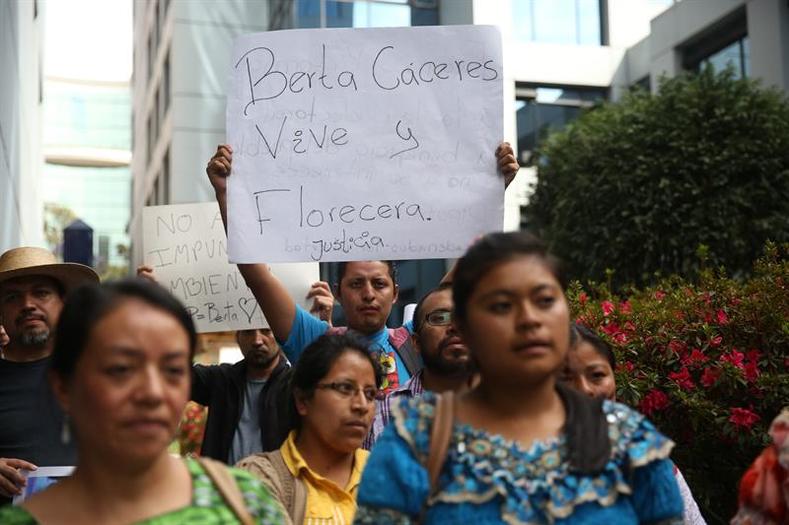
Demonstrators in Guatemala City carry a sign reading “Berta Caceres lives and will flourish” after news of her assassination and in solidarity with Honduran movements on March 3, 2016. Photo:EFE
UN Supports Sovereignty for Palestine and Slams Israel
Resolution severely criticises the “Occupying Power”
By Stuart Littlewood | Dissident Voice | January 1, 2016
Can this be true?
Something important and, freedom lovers may think, rather wonderful seems to have happened at the United Nations, and it went largely unreported in mainstream media. The UN General Assembly approved a draft resolution ‘Permanent sovereignty of the Palestinian people in the Occupied Palestinian Territory, including East Jerusalem, and of the Arab population in the occupied Syrian Golan over their natural resources’ (document A/70/480).
It was adopted by 164 to 5 against (Canada, Israel, Marshall Islands, Federated States of Micronesia, United States), with 10 abstentions (Australia, Cameroon, Côte d’Ivoire, Honduras, Papua New Guinea, Paraguay, South Sudan, Togo, Tonga, Vanuatu).
What’s so wonderful? The draft resolution pulls no punches and must have thoroughly annoyed the insatiable state of Israel, which has evil designs on the natural resources – oil, gas and water – belonging to its neighbours. The resolution is long but nicely crafted, and is reproduced here pretty much in its entirety as an aide-memoire of Israel’s long history of contemptuous disregard for its obligations.
The General Assembly,
Recalling its resolution 69/241 of 19 December 2014, and taking note of Economic and Social Council resolution 2015/17 of 20 July 2015,
Recalling also its resolutions 58/292 of 6 May 2004 and 59/251 of 22 December 2004,
Reaffirming the principle of the permanent sovereignty of peoples under foreign occupation over their natural resources,
Guided by the principles of the Charter of the United Nations, affirming the inadmissibility of the acquisition of territory by force, and recalling relevant Security Council resolutions, including resolutions 242 (1967) of 22 November 1967, 465 (1980) of 1 March 1980 and 497 (1981) of 17 December 1981,
Recalling its resolution 2625 (XXV) of 24 October 1970,
Reaffirming the applicability of the Geneva Convention relative to the Protection of Civilian Persons in Time of War, of 12 August 1949, to the Occupied Palestinian Territory, including East Jerusalem, and other Arab territories occupied by Israel since 1967,
Recalling, in this regard, the International Covenant on Civil and Political Rights and the International Covenant on Economic, Social and Cultural Rights, and affirming that these human rights instruments must be respected in the Occupied Palestinian Territory, including East Jerusalem, as well as in the occupied Syrian Golan,
Recalling also the advisory opinion rendered on 9 July 2004 by the International Court of Justice on the legal consequences of the construction of a wall in the Occupied Palestinian Territory, and recalling further its resolutions ES-10/15 of 20 July 2004 and ES-10/17 of 15 December 2006,
Recalling further its resolution 67/19 of 29 November 2012,
Taking note of the accession by Palestine to several human rights treaties and the core humanitarian law treaties, as well as to other international treaties,
Expressing its concern about the exploitation by Israel, the occupying Power, of the natural resources of the Occupied Palestinian Territory, including East Jerusalem, and other Arab territories occupied by Israel since 1967,
Expressing its grave concern about the extensive destruction by Israel, the occupying Power, of agricultural land and orchards in the Occupied Palestinian Territory, including the uprooting of a vast number of fruit-bearing trees and the destruction of farms and greenhouses, and the grave environmental and economic impact in this regard,
Expressing its grave concern also about the widespread destruction caused by Israel, the occupying Power, to vital infrastructure, including water pipelines, sewage networks and electricity networks, in the Occupied Palestinian Territory, in particular in the Gaza Strip during the military operations of July and August 2014, which, inter alia, has polluted the environment and negatively affect the functioning of water and sanitation systems and the water supply and other natural resources of the Palestinian people, and stressing the urgency of the reconstruction and development of water and other vital civilian infrastructure, including the project for the desalination facility for the Gaza Strip,
Expressing its grave concern further about the negative impact on the environment and on reconstruction and development efforts of the thousands of items of unexploded ordnance that remain in the Gaza Strip as a result of the conflict in July and August 2014,
Recalling the 2009 report by the United Nations Environment Programme regarding the grave environmental situation in the Gaza Strip, and the 2012 report, “Gaza in 2020: A liveable place?”, by the United Nations country team in the Occupied Palestinian Territory, and stressing the need for follow-up to the recommendations contained therein,
Deploring the detrimental impact of the Israeli settlements on Palestinian and other Arab natural resources, especially as a result of the confiscation of land and the forced diversion of water resources, including the destruction of orchards and crops and the seizure of water well by Israeli settlers, and of the dire socioeconomic consequences in this regard,
Recalling the report of the independent international fact-finding mission to investigate the implications of the Israeli settlements on the civil, political, economic, social and cultural rights of the Palestinian people throughout the Occupied Palestinian Territory, including East Jerusalem,
Aware of the detrimental impact on Palestinian natural resources being caused by the unlawful construction of the wall by Israel, the occupying Power, in the Occupied Palestinian Territory, including in and around East Jerusalem, and of its grave effect as well on the economic and social conditions of the Palestinian people,
Stressing the urgency of achieving without delay an end to the Israeli occupation that began in 1967 and a just, lasting and comprehensive peace settlement on all tracks, on the basis of Security Council resolutions 242 (1967), 338 (1973) of 22 October 1973, 425 (1978) of 19 March 1978 and 1397 (2002) of 12 March 2002, the principle of land for peace, the Arab Peace Initiative and the Quartet performance-based road map to a permanent two-State solution to the Israeli-Palestinian conflict, as endorsed by the Security Council in its resolution 1515 (2003) of 19 November 2003 and supported by the Council in its resolution 1850 (2008) of 16 December 2008,
Stressing also, in this regard, the need for respect for the obligation upon Israel under the road map to freeze settlement activity, including so-called “natural growth”, and to dismantle all settlement outposts erected since March 2001,
Stressing further the need for respect and preservation of the territorial unity, contiguity and integrity of all of the Occupied Palestinian Territory, including East Jerusalem,
Recalling the need to end all acts of violence, including acts of terror, provocation, incitement and destruction,
Taking note of the report prepared by the Economic and Social Commission for Western Asia on the economic and social repercussions of the Israeli occupation on the living conditions of the Palestinian people in the Occupied Palestinian Territory, including East Jerusalem, and of the Arab population in the occupied Syrian Golan, as transmitted by the Secretary-General,
-
Reaffirms the inalienable rights of the Palestinian people and of the population of the occupied Syrian Golan over their natural resources, including land, water and energy resources;
-
Demands that Israel, the occupying Power, cease the exploitation, damage, cause of loss or depletion and endangerment of the natural resources in the Occupied Palestinian Territory, including East Jerusalem, and in the occupied Syrian Golan;
-
Recognizes the right of the Palestinian people to claim restitution as a result of any exploitation, damage, loss or depletion or endangerment of their natural resources resulting from illegal measures taken by Israel, the occupying Power, and Israeli settlers in the Occupied Palestinian Territory, including East Jerusalem, and expresses the hope that this issue will be dealt with within the framework of the final status negotiations between the Palestinian and Israeli sides;
-
Stresses that the wall and settlements being constructed by Israel in the Occupied Palestinian Territory, including in and around East Jerusalem, are contrary to international law and are seriously depriving the Palestinian people of their natural resources, and calls in this regard for full compliance with the legal obligations affirmed in the 9 July 2004 advisory opinion of the International Court of Justice and in relevant United Nations resolutions, including General Assembly resolution ES-10/15;
-
Calls upon Israel, the occupying Power, to comply strictly with its obligations under international law, including international humanitarian law, and to cease immediately and completely all policies and measures aimed at the alteration of the character and status of the Occupied Palestinian Territory, including East Jerusalem;
-
Also calls upon Israel, the occupying Power, to bring a halt to all actions, including those perpetrated by Israeli settlers, harming the environment, including the dumping of all kinds of waste materials, in the Occupied Palestinian Territory, including East Jerusalem, and in the occupied Syrian Golan, which gravely threaten their natural resources, namely water and land resources, and which pose an environmental, sanitation and health threat to the civilian populations;
-
Further calls upon Israel to cease its destruction of vital infrastructure, including water pipelines, sewage networks and electricity networks, which, inter alia, has a negative impact on the natural resources of the Palestinian people, stresses the urgent need to advance reconstruction and development projects in this regard, including in the Gaza Strip, and calls for support for the necessary efforts in this regard, in line with the commitments made at, inter alia, the Cairo International Conference on Palestine: Reconstructing Gaza, held on 12 October 2014;
-
Calls upon Israel, the occupying Power, to remove all obstacles to the implementation of critical environmental projects, including sewage treatment plants in the Gaza Strip and the reconstruction and development of water infrastructure, including the project for the desalination facility for the Gaza Strip;
-
Calls for the immediate and safe removal of all unexploded ordnance in the Gaza Strip and for support for the efforts of the United Nations Mine Action Service in this regard, and welcomes the efforts exerted by the Service to date;
-
Encourages all States and international organizations to continue to actively pursue policies to ensure respect for their obligations under international law with regard to all illegal Israeli practices and measures in the Occupied Palestinian Territory, including East Jerusalem, particularly Israeli settlement activities and the exploitation of natural resources;
-
Requests the Secretary-General to report to the General Assembly at its seventy-first session on the implementation of the present resolution, including with regard to the cumulative impact of the exploitation, damage and depletion by Israel of natural resources in the Occupied Palestinian Territory, including East Jerusalem, and in the occupied Syrian Golan, and decides to include in the provisional agenda of its seventy-first session the item entitled “Permanent sovereignty of the Palestinian people in the Occupied Palestinian Territory, including East Jerusalem, and of the Arab population in the occupied Syrian Golan over their natural resources”.
This is strong stuff. But given the UN’s record will the action ever suit the words?
Astonishingly, the Israel-adoring UK government voted for it. Let us make a mental note of those 5 countries – Canada, Israel, Marshall Islands, Federated States of Micronesia, United States – which claim to be freedom loving but are evidently bent on denying the poor Palestinians theirs. And the birdbrained 10 – Australia, Cameroon, Côte d’Ivoire, Honduras, Papua New Guinea, Paraguay, South Sudan, Togo, Tonga, Vanuatu – which are so lackadaisically uncommitted to the principle of universal human rights that they sat on the fence. Maybe international civil society would like to prod them with a sharp BDS stick to concentrate their minds.
At least one country, happily, is taking a tough line – Brazil, which, says the BBC, has yet to approve the appointment four months ago of Israel’s new ambassador. Not only is the new man, Dani Dayan, a former chairman of the Yesha Council which promotes illegal Israeli settlements on stolen Palestinian lands, but Israeli prime minister Netanyahu broke the news of the appointment on Twitter before telling Brazil, according to reports.
As even Netanyahu must know, the transfer by an occupier of part of its own population into territory it occupies is considered a war crime, so why should Brazil play host to a foreigner with such a vile record? Israel is threatening to downgrade relations to “secondary level” if Brazil does not give approval to the appointment. And Israeli deputy foreign minister Tzipi Hotovely says that Dayan would not be replaced if his appointment isn’t accepted.
Since Brazil is Israel’s largest trading partner in South America you’d think the Israelis would watch their manners. The Brazilians, hopefully, won’t allow themselves to pushed around by Tel Aviv’s insufferable thugs.
Featured Video
No Threat Can Force Iran’s Surrender /Trita Parsi & Lt Cl Daniel Davis
or go to
Aletho News Archives – Video-Images
From the Archives
What is the Israeli Lobby in Australia Doing in Interfaith Dialogue?
By Ali Kazak | Dissident Voice | October 11, 2015
For years Israel and its lobby around the world have been trying to normalise their relations with Arabs and Muslims without solving the Palestine Question.
One of the methods they resorted to in the last few years is using human rights and community organizations such as interfaith dialogue and Multiculturalism to achieve this objective and to: isolate the Palestinians, marginalise the Palestine question, end Israel’s isolation, and prevent criticism of Israel, knowing that these organisations will be the first to stand against Israel’s violations, racial and religious discrimination.
The group responsible for this task in Australia is The Australia/Israel & Jewish Affairs Council (AIJAC); its Director of International & Community Affairs, Jeremy Jones is in charge of lobbying religious community organizations, specifically Muslims and Christians. Consequently he convened the Faith Communities for Reconciliation, founding participant in the Australian Partnership of Religious Organisations and the Australian National Dialogue of Christians, Muslims & Jews.
AIJAC is a private political propaganda group. It is recognised as the main Israeli lobby in Australia. It coordinates its activities and works intimately with the Israeli embassy in Canberra and different institutions in Israel. It is privately funded by some Jewish businessmen. It monitors closely Australian politicians, the media, ethnic and religious groups, (especially Arabs and Muslims), unions and academics on their stands towards Israel and the Palestine question. … continue
Blog Roll
 Aletho News
- Envoy warns UN on Trump’s threat to ‘obliterate’ Iran’s civilian infrastructure
- The Larak Corridor: Iran’s Rial Gate With No US, No Israel, and No Way Around
- ‘Economic terrorism’: Steel facilities hit again in US-Israeli strike
- ‘War Crime’: Iran condemns attacks on Arak, Ardakan nuclear sites
- Two-thirds of Americans want quick end to Iran war even if goals unmet
- Trump to Give “Important Update on Iran” Wednesday in Prime-Time Speech
- Theodore Postol: Iran’s Missiles & Drones Were Underestimated
- Iran To Target Military Industrial-Tech Complex That Facilitated Gaza Genocide
- Collapsing Empire: The Resistance Disarms ‘Israel’
- Suicide Should Not Be a Government Service
- If Americans Knew
- Israel wants US to bomb more of Iran’s civilian structures (113,000 is not enough) – Not a ceasefire Day 173
- Ann Coulter Rips Into Fox News for Iran War Coverage
- Joe Kent Urges Americans To Call White House and Congress To Object To Sending Troops Into Iran
- DNC Resolution to Reject AIPAC Funding Puts Democratic Leaders in the Hot Seat
- Swedish foundation to build 400 schools as over 650,000 Gaza children remain without education for 2 years
- Israeli army admits photshopping image of slain Lebanese journalist
- This is how Israel is systematically killing health workers under the cover of war in Lebanon
- Carrying life under fire: Israeli invasion of Lebanon leaves pregnant women facing deadly risks
- Champagne all around for the new death penalty (for Palestinians) law – Not a ceasefire Day 172
- Why are Palestinian books struggling to be seen on Amazon?
- No Tricks Zone
- New Study Finds Warming Saves Lives…Cold Temperatures 12 Times More Deadly Than Excess Heat
- German Science Blog Accuses PIK Climate Institute Of Hallucinating Climate Tipping Points
- Devastating Assessment Of Comirnaty Vaccine By Former Senior Pfizer Europe Toxicologist
- New Study: CO2 Is ‘Effectively Negligible’ As An Explanatory Climate Change Factor Since 2000
- Former Pfizer Toxicologist Dr. Helmut Sterz Tells Bundestag Hearing Pfizer Vaccine Should Have Never Been Approved
- Energy Expert: Germany’s Nuclear Phaseout Was A “500 Billion Euro Mistake”
- New Research: South Australia’s Mid-Holocene Sea Surface Temperatures Were 4°C Warmer Than Today
- Storing Green Energy To Last Germany 10 Days Would Require A 60-Million Tonne Battery
- New Studies: UK Sea Levels Were 4 Meters Higher Than Today During The Mid-Holocene
- Destructive Green New Deal: German Energy And Metal Group Warns Of Drastic Crisis
 Aletho News