Israeli soldier confesses to killing US elderly man in West Bank
Al Mayadeen | May 22, 2024
A self-proclaimed soldier from “Israel’s” infamous Netzah Yehuda battalion has admitted that his unit killed 78-year-old Palestinian-American, Omar Asad, in January 2022, according to recordings obtained by The Grayzone.
However, after announcing plans to sanction the battalion, the Biden administration withdrew the decision without offering further explanation.
“Four of these units [Israeli units] have effectively remediated these violations, which is what we expect partners to do,” the US State Department claimed.
The fifth unit appears to be Netzah Yehuda, an all-male unit of Orthodox Jewish nationalists that operates exclusively in Ramallah of the occupied West Bank and is accused of crimes, including sexual assault and beating at least three older men to death while they were lying on the ground while in custody.
Netzah Yehuda soldiers detained Asad and left him outdoors in harsh conditions, bound and blindfolded until he died. Instead of punishment, all the soldiers got was a slap on the wrist, and compensation was paid to Asad’s family.
A report by Washington DC-based human rights organization, DAWN, found that at the time of the killing, the commander of the unit, Lt. Col. Mati Shevach, was promoted to Deputy Commander of the Kfir Brigade, which oversees the Netzah Yehuda formation.
Spokesperson Vedant Patel responded during an April 29 State Department press briefing to questions regarding why the administration had hesitated to sanction the battalion.
“This is an ongoing process,” Patel said, further claiming, “I’m not going to speak to it more specifically, but consistent with the memorandum of understanding that we have with the government of Israel, we are engaging with them, consulting with them as it relates to not just this broader process but additional information that they’ve shared.”
The Grayzone obtained the glorified account of the killing of Asad, which according to the self-described soldier’s account, the unit brutalized Asad as punishment for supposedly interfering with a raid.
“This geezer who’s like trying to interfere with our operation, we’re going to like, f*** with him for a night,” the soldier said, as he called Arabs “murders, criminal animals” and boasted about killing and torturing Palestinians, likening himself to Americans who photographed themselves with dead Japanese soldiers during World War II, “doing funny things with their bodies.”
“Yeah, I enjoy it because they’re our enemy,” he expressed.
Read also: IOF units ‘remediated’ after rights violations, no Leahy sanctions
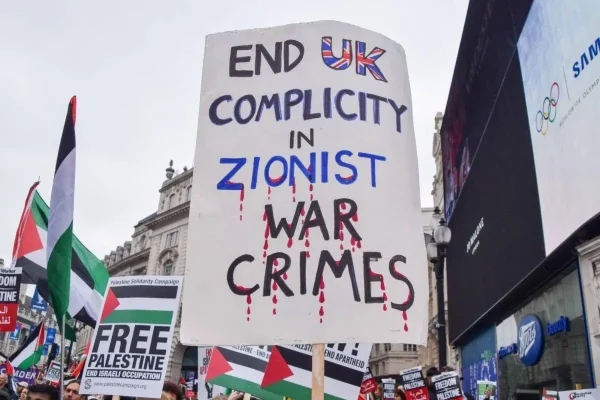
NGO updates complaint to Met Police on UK ministers’ complicity in Israel war crimes
MEMO | May 22, 2024
An NGO has submitted a complaint to the United Kingdom’s Scotland Yard against Israel’s use of “starvation as a weapon of war” and targeting of Palestinian civilians in the Gaza Strip, in what is the latest such complaint regarding war crimes in Gaza to be reported to British police.
According to the London-based International Centre of Justice for Palestinians (ICJP), it submitted a complaint to Scotland Yard’s War Crimes Team regarding Israel’s suspected use of “starvation as a method of warfare” and for ‘wilfully causing great suffering’ to Palestinians.
Although filed in the UK, both crimes are illegal under British and international law, including under the Rome Statute and the International Criminal Court Act 2001. Using starvation as a weapon of war also violates the Geneva Convention, a major keystone of contemporary international law.
The 60-page complaint – which was added to by a further 800 pages of evidence – includes accounts collected by ICJP’s investigation and legal teams, which include former British police detectives who collected the evidence to the standards of British police forces.
The evidence reportedly includes that collected from first-hand eyewitnesses, expert reports and expert evidence from nineteen medical professionals who have worked within the besieged Gaza Strip since October, when Israel began its ongoing offensive.
According to ICJP’s Director, Tayab Ali, “Complicity comes in many forms, whether that be providing political cover, encouraging criminal acts, supplying weapons or, as in the case of starvation, withholding funds from agencies that provide life sustaining humanitarian aid”.
The extensive complaint notably builds upon and expands an existing complaint issued by the ICJP back in January this year, which named four British government ministers for alleged complicity and criminal responsibility in Israeli war crimes. This latest update, however, further implicates a fifth senior government minister as an alleged perpetrator of those crimes.
Due to the war crimes’ illegality under British law and subsequent ability to be prosecuted in the UK, Scotland Yard’s War Crimes Investigation Team will now reportedly consider the complaints leading up to an ultimate decision on whether to open a formal criminal investigation on the matter. If that proceeds, there is the possibility that police will then question, arrest, and prosecute the alleged perpetrators and those complicit.
READ ALSO: Boris Johnson accused of obstructing investigations into war crimes in Gaza
Norway, Spain, Ireland to formally recognize Palestinian statehood
The Cradle | May 22, 2024
Norway, Ireland, and Spain announced on 22 May that they will formally recognize Palestine as a state next week, drawing the ire of Israel as the country immediately recalled its ambassadors to Dublin and Oslo.
“There cannot be peace in [West Asia] if there is no recognition … In the midst of a war, with tens of thousands killed and injured [in Gaza], we must keep alive the only alternative that offers a political solution for Israelis and Palestinians alike: Two states living side by side, in peace and security,” Norwegian Prime Minister Jonas Gahr Store said on Wednesday.
Shortly after Oslo’s announcement, Irish Prime Minister Simon Harris said his country would also recognize a Palestinian state.
“Today, Ireland, Norway, and Spain are announcing that we recognize the state of Palestine,” Harris said at a news conference. “I’m confident that further countries will join us in taking this important step in the coming weeks,” he added.
Foreign Minister Micheal Martin said via social media that the recognition will become official on 28 May.
Spanish Prime Minister Pedro Sanchez followed suit, announcing Wednesday that the country’s council of ministers would also recognize an independent Palestinian state on 28 May. He also accused his Israeli counterpart Benjamin Netanyahu of putting the two-state solution in “danger” with his policy of “pain and destruction” in Gaza.
In response to the news, Tel Aviv immediately recalled its ambassadors to Ireland and Norway and pledged to recall its envoy to Spain. The foreign ministry also summoned the ambassadors from the three European nations to “reprimand” them.
Israeli foreign minister Israel Katz called the show of support for Palestinians a “folly,” adding that recognizing Palestinian statehood “[sends] a message to the Palestinians and the world: Terrorism pays.”
Palestinian officials welcomed the announcement by three European nations, with Hamas calling it an “important step.”
“We welcome the announcement by Norway, Ireland, and Spain of recognition of the State of Palestine, and we consider it an important step on the path to consolidating our right to our land and establishing our independent Palestinian state with Jerusalem as its capital,” the statement by the Palestinian resistance says.
“Historical moments in which the free world triumphs for truth and justice after long decades of Palestinian national struggle, suffering, pain, occupation, racism, murder, oppression, abuse and destruction to which the people of Palestine were subjected,” the Secretary-General of the Palestinian Liberation Organization (PLO) said via social media.
Nine European countries — Bulgaria, Poland, the Czech Republic, Romania, Slovakia, Hungary, Sweden, Malta, and the Greek Cypriot administration — have already recognized Palestine as a state.
Report: Israel systematically abuses jailed Palestinian leader Marwan Barghouti

MEMO | May 20, 2024
Jailed Palestinian leader, Marwan Barghouti, has been subjected to violations and torture, and spends days in a narrow, dark cell in solitary confinement, without any means to treat wounds he sustained as a result of being dragged with his hands tied behind his back, the Guardian revealed on Saturday.
The newspaper pointed out that books, newspapers and a television that he used to be able to access have been confiscated since October.
“The lights that flicker in his cell each evening are intended to make sleep near impossible,” it said.
His lawyer Igal Dotan, who visited Barghouti in Israel’s Megiddo Prison two months ago, told the paper that “mentally he’s a very strong person, but physically his condition is deteriorating, you can see it. He’s struggling to see out of his right eye, as a result of one of the assaults.”
“He has lost weight – he doesn’t look good. You wouldn’t recognise him if you compare his current appearance with the famous photos of him,” he said.
Barghouti told his lawyers that in March he was dragged to an area of the prison without security cameras and assaulted. He recalled bleeding from the nose as he was dragged across the floor by his handcuffs, before he was beaten unconscious.
Dotan counted bruises in at least three places on Barghouti’s body when he visited weeks later, adding that he probably has a dislocated shoulder from the assault and is in constant pain, but prison officials have refused a full medical examination of his injuries.
Since October, he has been transferred to three different detention facilities, and held in solitary confinement in each.
In Ayalon Prison “he was beaten on several occasions,” said Dotan, including an incident where guards swore at him while Barghouti was “dragged on the floor naked in front of other prisoners.”
What do pro-Palestine student protesters at Brazilian universities want?

By Eman Abusidu | MEMO |May 20, 2024
As pro-Palestine protests continue at US and European universities, thousands of students at Latin America’s most prestigious university, the University of São Paulo (USP), have joined the movement against Israel’s genocide in the Gaza Strip. The Brazilian students from various faculties have set up tents in the History and Geography Building of the Faculty of Philosophy and Human Sciences, flying a giant Palestinian flag and chanting “Free Palestine” as they call for an “immediate ceasefire”.
The protests by USP students are being organised by the Student Committee in Solidarity with the Palestinian People of USP (ESPP-USP), as well as Brazilian student union and other popular organisations which express their support within and beyond the university campus.
The students are demanding that the university should divest from Israeli companies and those which benefit from the Israeli occupation of Palestine.
They also want an academic boycott of Israeli institutions with the renunciation of current academic agreements or any other ties and an end all academic relationships with Israeli institutions.
In particular, they are putting pressure on the USP’s Faculty of Philosophy and Human Sciences to suspend agreements with the University of Haifa in occupied Palestine. A petition has also been drafted demanding that Brazilian institutions, universities and the government should sever relations with Israel. As far as the students taking part in the protests are concerned, the university’s agreements with Israeli universities and organisations, such as “Israel Corner”, help to develop the technology used in the Israeli offensive against the Palestinians in Gaza.
The Israeli Federation of São Paulo has expressed its dissatisfaction with these demonstrations and sees them as hate speech against Jews. Such allegations by Israel and its supporters are entirely predictable.
One of those taking part in the protest, João Conceição, explained the students’ demands to MEMO :
“We demand the immediate cancellation of the seven academic agreements that USP has signed with Israeli universities and the Israeli Consulate in São Paulo,” said Conceição. “President Lula and the Brazilian government need to break all relations with Israel, whether diplomatic, military or commercial. The solidarity with the Palestinian people must be within and beyond the university walls, in light of the ongoing genocide.”
He pointed out that the demonstrations at USP draw attention to the fact that the humanitarian tragedy in Gaza is the result of the ongoing genocide and massacre of the Nakba for over 76 years. “We believe that breaking relations with Israel is the practical answer that can leave Israel in international isolation as a global outcast.”
According to Conceição, the governments of Latin America have done very little in real terms, because, “The majority of them have direct or indirect associations with Zionist entities, and they are committed to the Israeli and international bourgeoisie to defend what is happening today in Gaza.” He was critical of Lula’s stance. “He speaks harshly and compares what happens in Palestine to the Holocaust, but the actions on the ground are different.”
Brazilian activist and member of the country’s Boycott, Divestment and Sanctions (BDS) movement, Fabio Bosco, said that the student demonstrations are very important to gain public support for Palestine and send a message to the Palestinian people that they are not alone in their struggle for liberation.
“The protests at American universities, for example, are very positive and are cornering the US President, Zionist Joe Biden. Furthermore, they serve as a symbol of solidarity and humanity for the entire world,” noted Bosco. “Lula da Silva acknowledged that there is an ongoing genocide in Gaza and supported South Africa’s action against Israel at the International Court of Justice, and yet he maintained diplomatic relations with the occupation state and has bought Israeli military goods.”
He suggested that the main thing that the Latin American countries can offer to Gaza is to break economic and diplomatic relations and thus isolate the “criminal” Zionist entity. “We hope that the example set by the students in São Paulo inspires students across the country and expands solidarity activities with the Palestinian people within trade unions and social movements.”
The protests at the University of São Paulo are expected to be the first of many on the USP campus and other Brazilian universities to challenge any promotion related to the Israeli apartheid regime. Palestine solidarity movements are growing in strength within Brazilian universities despite the Zionist presence in Brazil. Palestinian and Brazilian activists have in the past succeeded in forcing the cancellation of the Israeli Universities Festival. It is hoped by activists that other successes will follow.
Greece to deport nine European nationals over pro-Palestinian protest
MEMO | May 20, 2024
Nine protesters from Germany, Britain, France, Italy and Spain are set to be deported from Greece after being arrested during a pro-Palestinian demonstration at the University of Athens School of Law last week, their lawyers said on Monday.
Police last week detained a total of 28 Greek and foreign protesters occupying the building, Reuters has reported. The charges include disrupting the operation of a public entity and assistance in damaging foreign property, according to court documents. The protesters have denied any wrongdoing.
Evidence included leaflets, Palestinian flags, two smoke flares, gas masks, helmets, paint cans and banner poles, along with a statement uploaded on a website in Greek and English urging others to join the protest.
The Greek protesters were released pending trial on 28 May, but the nine foreign nationals — one man and eight women, aged 22 to 33 — were held in custody pending an administrative decision on their deportation.
The foreigners’ lawyers said that deportation orders had been issued, which would prevent the defendants attending their own trial. Lawyers Ioanna Sioupouli and Anny Paparoussou said that their clients, who live and work in Greece, planned to appeal. Lawyer Vassilis Papadopoulos, representing a 33-year-old Spaniard, called the decision “arbitrary and illegal”.
Pro-Palestinian supporters have staged several protests in Greece since Israel launched its military offensive in Gaza, ostensibly against Hamas, last October.
Greece scrapped legislation in 2019 that prohibited police from entering universities, as the conservative government said it was used as a cover for lawlessness. The Academic Sanctuary Law, a legacy of the crackdown on a 1973 student revolt by the military junta of the time, was designed to protect protesting students and freedom of ideas. Critics decried its abolition as a clampdown on democracy.
One civilian killed as Ukrainian drone strikes minibus – governor
RT | May 19, 2024
One person has been killed and “many” others wounded in a Ukrainian drone strike on a minibus carrying civilians in Russia’s Kherson Region, Governor Vladimir Saldo said on Sunday.
The attack took place in the village of Radensk on Sunday morning, Saldo wrote on Telegram. The UAV targeted a vehicle with workers on their way to harvest strawberries, he added.
“The explosion killed one person. There are many wounded, who are receiving necessary medical assistance,” the governor said.
Russian regions have seen several attacks on buses by Ukrainian drones since the start of this month.
On May 6, seven people were killed and dozens wounded after UAVs targeted two minibuses carrying farmers near the village of Beryozovka in Belgorod Region.
Two days earlier, two people were injured when a drone struck a bus in the village of Voznesenka, also in Belgorod Region.
Russia’s Defense Ministry said on Sunday that “a number of attempts by the Kiev regime to carry out terrorist attacks” on Russian territory with the use of US-supplied ATACMS missiles and drones were prevented overnight.
Nine ATACMS were shot down by air defenses over Crimea, while a total of 57 drones were intercepted in the Krasnodar Region, the ministry said. Three UAVs were destroyed in Belgorod Region, it added.
Another Palestinian journalist killed in Gaza, death toll climbs to 145 since Oct. 7
Press TV – May 19, 2024
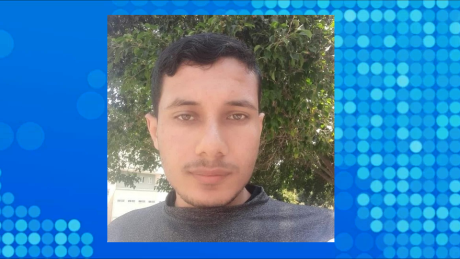
The government media office in the Gaza Strip says one more Palestinian journalist has been killed in an Israeli airstrike on the blockaded coastal territory, taking the death toll to 145 since last October when resistance fighters launched a large-scale operation against the occupying regime.
Journalist Abdullah al-Najjar lost his life on Saturday when Israeli fighter jets carried out an airstrike against a neighborhood in the Jabalia refugee camp in the northern Gaza Strip.
Earlier in the day, Palestinian medical sources said at least 28 people, including women and children, were killed in Israeli continuous raids on the camp.
Palestinian security sources added that Israeli warplanes targeted several residential houses and a shelter center for displaced people in the area with missiles.
The raids caused large explosions in the Jabalia refugee camp, which had been witnessing a ground invasion for several days.
Israeli forces in Gaza killed Palestinian journalist Mahmoud Juhjouh along with his wife and children on Thursday.
Local Palestinian media reported that Juhjouh was killed in the Sheikh Radwan neighborhood of Gaza City, when a bomb struck his family home.
The journalist worked for the Palestine Post Network.
According to reports, Jahjouh had been forcibly displaced several times due to Israeli bombardment, and had finally returned to his home after Israeli forces withdrew from areas in northern Gaza.
The United Nations has raised concern over the “extraordinarily high numbers of journalists and media workers who have been killed, attacked, injured and detained” in recent months.
“We pay special tribute to the courage and resilience of journalists and media workers in Gaza who continue to put their own lives on the line every day in the course of duty, while also enduring enormous hardship and tragic loss of colleagues, friends and families in one of the bloodiest, most ruthless conflicts of our time,” UN experts said in a statement.
Israel launched the war on Gaza on October 7 after Palestinian resistance groups carried out a surprise retaliatory operation into the occupied territories.
Concomitantly with the war, the regime has been enforcing a near-total siege on the coastal territory, which has reduced the flow of foodstuffs, medicine, electricity, and water into the Palestinian territory into a trickle.
So far during the military onslaught, the regime has killed at least 35,386 Gazans, most of them women, children, and adolescents. Another 79,366 Palestinians have sustained injuries as well.
Brussels should remember that Europeans are sovereign, not the EU treaties or the Eurocrats
BY GRZEGORZ ADAMCZYK | REMIX NEWS | MAY 17, 2024
In an interview with Tygodnik Solidarność weekly, Prof. Ryszard Piotrowski, a constitutional lawyer from the University of Warsaw, expressed his concerns over the legal challenges posed by the implementation of the European Green Deal. He believes that these challenges threaten the legal identity and autonomy of both the European Union and Poland.
The professor emphasized the foundational role of dialogue in Polish law, noting that European laws are becoming increasingly incomprehensible and detached from the real needs of European citizens.
He argued that the perception of Europeans as subordinates to the European Parliament and the European Council, rather than as sovereigns over the treaties, poses a significant threat. “The sooner we understand that we, as Europeans, are not servants to the treaties and the European Parliament, the better it will be for Europe,” he stated.
He also questioned whether the Green Deal’s objectives align with the Polish constitution, which mandates environmental protection guided by the principle of sustainable development. According to him, the current shape of EU climate policy contravenes this principle by jeopardizing overall economic growth and thereby the security of citizens.
Piotrowski additionally highlighted that the Green Deal threatens essential social rights guaranteed by the Polish constitution, such as housing, energy, and communication security.
“We have a right to energy security, and its violation threatens democracy itself because democracy without a socio-economic dimension is devoid of meaning,” said the professor. Furthermore, he noted that the Green Deal also threatens the principle of subsidiarity, which aims to empower citizens and their communities.
Adding to the urgency of his concerns, Professor Piotrowski pointed out that the implementation of the Green Deal might weaken Poland’s defensive capabilities at a time when a military conflict looms near its eastern border. He criticized Europe’s stance on the conflict in Ukraine, arguing that despite European treaties pledging to promote peace, the current approach could lead to tragic consequences for Europe.
“Contrary to what European treaties stipulate and what they commit Europe to, it has chosen to speak of war instead of striving for peace. Such actions have always ended tragically for Europe,” the professor warned.
US university president placed on leave for accepting demands of Palestine supporters
MEMO | May 17, 2024
Sonoma State University’s President, Mike Lee, has been placed on administrative leave for announcing an agreement with pro-Palestinian activists to pursue an academic boycott of Israeli institutions and divestment strategies.
California State University Chancellor Mildred Garcia said yesterday that Mike Lee was put on leave for accepting the demands of protesting students without obtaining “proper approvals.”
She added in a statement published on the website of the University of California, to which Sonoma University is affiliated: “For now, because of this insubordination and consequences it has brought upon the system, President Lee has been placed on administrative leave.”
This decision is considered the harshest disciplinary action imposed on the president of any of the US universities that have witnessed anti-war protests.
Since April, US, Canadian, British, French and Indian universities have witnessed protests rejecting the Israeli war on Gaza and demanding university administrations stop their academic cooperation with Israeli academic institutions.
Protesters also demand that their universities withdraw their investments from companies that support the occupation of Palestinian territories and arm the Israeli army.
In New York riot police were sent into campuses to disperse protesters and remove encampments set up in support of Palestinians in Gaza.
Belgium’s Ghent university severs ties with 3 Israel institutions
MEMO | May 17, 2024
Belgium’s University of Ghent (UGent) is severing ties with three Israeli educational or research institutions which it says no longer align with UGent’s human rights policy, Reuters reports its rector saying.
Pro-Palestinian protesters in Ghent have been demonstrating against Israel’s military offensive in Gaza and have been occupying parts of the university since early this month.
The university’s rector, Rik Van de Walle, said in a statement that ties were being cut with Holon Institute of Technology, MIGAL Galilee Research Institute and the Volcani Centre, which carries out agricultural research.
“We currently assess these three partners as (very) problematic according to the Ghent University human rights test, in contrast to the positive evaluation we gave these partners at the start of our collaboration,” Van de Walle said.
Partnerships with MIGAL Galilee Research Institute and the Volcani Centre “were no longer desirable” due to their affiliation with Israeli ministries, an investigation by the University of Ghent found, and collaboration with the Holon Institute “was problematic” because it provided material support to the army for actions in Gaza.
A spokesperson for the university said the move would affect four projects.
The three Israeli institutions did not immediately comment.
The protesters told Belgian broadcaster VRT they welcomed the decision but regarded it as only a first step. They said they would continue their occupation of parts of the university “until UGent breaks its ties with all Israeli institutions”.
The actions mirror those of students in the United States and elsewhere in Europe, calling for an immediate permanent ceasefire and for schools to cut financial ties with companies they say are profiting from what they regard as the oppression of Palestinians.
Featured Video

EUROPE FEARS RUSSIA’S NEXT MOVE / Ian Proud
or go to
Aletho News Archives – Video-Images
New Book
New Book: No Autoimmunity The Body Doesn’t Attack Itself
Lies are Unbekoming | September 24, 2026
 The label for Humira, once the best-selling drug in the world, lists its risks in plain print. One of them, in the label’s own words, is new “autoimmune” disease.
A drug prescribed for a condition labelled autoimmune carries a warning that it can cause a condition labelled autoimmune. That contradiction sits in every box, on a folded paper almost nobody reads.
My new book starts there.
No Autoimmunity: The Body Doesn’t Attack Itself
For seventy years, “your body is attacking itself, and we don’t know why” has ended the conversation for people diagnosed with multiple sclerosis, lupus, rheumatoid arthritis, Hashimoto’s, Type 1 diabetes, Crohn’s and psoriasis. More than eighty conditions now carry the autoimmune label. The diagnosis comes with a prescription for life. It almost never comes with a question about cause.
This book asks the question and answers it from the framework’s own records: its drug labels, its journals, its regulatory filings, and its own experiments. … continue
Blog Roll
 Aletho News
- How Russia is Rewiring the Global South
- Britain’s elites want you ready to die for a war they keep imagining
- Inside Ukraine’s propaganda operation targeting Americans
- Hackers From US, France, Singapore Tried to Disrupt Russian Elections – Internet Provider
- New Book: No Autoimmunity The Body Doesn’t Attack Itself
- EUROPE FEARS RUSSIA’S NEXT MOVE / Ian Proud
- Big tech hands in its DSA censorship reports to the EU
- ‘A Big Victory’ – Palestine Chronicle Wins Two-Year Legal Battle
- IAEA inspectors cannot return to Iran amid US threats: Russia
- Senate Rejects Iran War Powers Resolution Passed By House
- If Americans Knew
- ‘Protecting U.S. Citizens’… From Israel
- ‘This is where I live now, the back of a truck’: a day in the life of a grandmother in Gaza
- In UN Speech, Iran’s President Displays Pictures of Children Killed by US, Brings Attention to Israel’s Nuclear Arsenal
- Israel displaces hundreds of Palestinians amid wave of demolitions in West Bank
- Aid, reconstruction, and Israel’s history of obstruction in Gaza
- Trump administration digs an ever-deeper hole of complicity in genocide – Daily Update
- US-Israel $2.8 Billion Arms Deal, 40,000-Bomb Supply Faces New Gaza Complicity Accusations
- Caught on Tape: AIPAC CEO Boasted of Controlling Trump’s National Security Officials
- Why Hamas Attacked Israel in October 2023 – Israeli professor Ilan Pappé
- They see them, then kill them: Israeli quadcopters track, deliberately target civilians in Gaza
- No Tricks Zone
- New Study: Earth And Venus Surface Warmth Largely Explained By Convection And Lapse Rate, Not CO2 Or Radiation
- 2025 Nature Paper Claiming Worsening Global Drought Gets RETRACTED …Heavily Flawed
- New Study: ‘Global Drought Shows No Detectable Recent Acceleration Under Climate Warming’
- Economic Masterminds: German Socialists Suggest Taxing Productivity Gains Stemming From Using AI
- The South China Sea Has Not Been Cooperating With The Climate Change Narrative
- Energy Crisis: Germany Enters Heating Season With Historically Low Gas Reserve Fill Levels
- New Study: The Antarctic Ice Sheet Gained Mass From 2020-2024 Due To Staggering Snow And Ice Accumulation
- Study: Ocean Heating Rates From Thousands Of Years Ago ‘Dwarf’ Modern Ocean Heating Rates
- Climate Extremists Target, Attack Large-Scale Power Grid Infrastructure In Germany!
- New Study: Antarctic Ice Melt Has Contributed Less Than 1 Centimeter To Sea Level Rise In The Last 30 Years

