Australian Sumud Flotilla activists file ICC war crimes case against Israel over torture, sexual violence
The Cradle | June 1, 2026
Australian activists who took part in the Global Sumud Flotilla for Gaza filed a formal submission with the International Criminal Court (ICC) on 30 May, accusing Israel of war crimes based on documented evidence of torture and sexual violence sustained during their abduction and imprisonment.
The legal filing, submitted by 11 Australian survivors of the Flotilla and their legal team, is supported by dozens of survivor testimonies, video evidence, medical records, and sworn statements.
This evidence details severe beatings and sexual abuse following the 18 May interception of an international aid mission carrying food and medicine to the besieged Gaza Strip in an attempt to break the Israeli blockade of the enclave.
One specific account included in the submission describes an Australian humanitarian worker being forcibly injected with an unidentified substance by Israeli captors.
The submission also incorporates video evidence, including footage posted to social media by Israeli National Security Minister Itamar Ben Gvir, who boasted of the ill treatment and showed handcuffed activists on their knees being taunted by Israeli soldiers.
The Global Sumud Flotilla reports that at least 67 participants suffered injuries during their imprisonment that required medical evaluation, with 12 individuals requiring hospitalization.
One survivor, Australian filmmaker Juliet Lamont, in an interview with Double Down News, recounted being dragged into a shipping container she called a “torture tunnel” where she was placed in a stress position, hands restrained behind her back, and ankles shackled in the dark before being “vaginally raped by one of the male soldiers,” while “other people had guns inserted inside them.”
She added that a 70-year-old woman’s ribs had been broken as “howls of torture and pain” would emit from the same chamber she had been tortured in.
This legal action follows the UN adding Israel to a 2026 blacklist for parties guilty of committing sexual violence in conflict zones. UN Secretary-General Antonio Guterres cited documented “patterns of sexual violence” against detainees, leading to the designation of the Israeli Prison Service on the blacklist.
While Israel’s ambassador to Australia and other Israeli officials have denied these claims, asserting that participants were treated according to established procedures, the Australian government previously sanctioned Minister Ben Gvir for his “shocking and unacceptable” treatment of the detainees.
Returning survivors have expressed outrage at the Australian federal government, noting that Prime Minister Anthony Albanese has declined multiple requests to meet with them.
Flotilla participant Isla Lamont highlighted the contrast of being granted a hearing at the ICC while being ignored by domestic leadership, stating that “If Australian survivors can be heard in The Hague but not in Canberra, something has gone badly wrong”.
The flotilla organizers are now calling for independent international investigations, arms embargoes, and the enforcement of arrest warrants for the officials responsible.
French activists are also pursuing their own separate legal complaint on the “humiliation, rape, and acts of torture” they endured, explicitly declining to cooperate with the French Foreign Ministry’s request for a criminal probe due to their government’s continued diplomatic support for Israel throughout the genocide in Gaza.
Two US political commentators banned from UK for criticizing ‘Israel’
Al Mayadeen | June 1, 2026
The UK government has blocked two prominent left-wing US political commentators, Hasan Piker and Cenk Uygur, from entering the country, reportedly over remarks concerning “Israel”.
Piker, a political streamer with 1.9 million YouTube subscribers, and Uygur, co-founder of The Young Turks, said they had been denied entry to the UK. He said in a social media post that he was prevented from boarding a flight to London to attend SXSW London and deliver a speech at Oxford.
“I’ve been banned from the UK. I tried to get on a flight to London to attend SXSW London and give a speech at Oxford. I’ve been banned for criticizing “Israel”. Are we free anymore?” he wrote, adding: “This is oppression of Western citizens by our own governments on behalf of a different country.”
Uygur also commented publicly on the decision, saying the move reflected political pressure linked to criticism of “Israel”.
Labour government bans Hasan Piker and Cenk Uygur
The UK Home Secretary Shabana Mahmood reportedly decided to ban Uygur from entering the UK, citing concerns that his presence could “risk exacerbating antisemitism due to his rhetoric.”
Piker, who is known online as HasanAbi and previously worked with The Young Turks, said the UK had also revoked his visa “at the behest of Israel.” He wrote: “The West is betraying liberal values for a genocidal fascist foreign government. Soon we will all become Israel.”
During a video uploaded to YouTube, Piker said he had been scheduled to attend events with Jeremy Corbyn, Zack Polanski, and Yanis Varoufakis.
He also read from a letter sent by the UK government, which stated: “Your UK ETA has been cancelled. This means you cannot travel to the UK without a visa. This is because your presence in the UK is not considered to be conducive to the public good. You cannot appeal this decision.”
Western weaponization of censorship
“Israel” and its Western allies have repeatedly sought to silence journalists who expose Israeli occupation and war crimes by branding critical reporting as “terror propaganda” or anti‑Israeli incitement, rather than engaging with the documented violence on the ground.
Al Mayadeen’s experience is illustrative: Israeli authorities banned the channel’s broadcasts in occupied Palestine under emergency “security” regulations, seized its equipment, and accused its reporters of serving “enemy” interests and “pretending to be journalists”.
This aggressive censorship is reinforced in Western media ecosystems, where leaked testimonies describe unwritten rules against words like “genocide” and structural pressure on reporters and scholars to self‑censor criticism of “Israel” for fear of being smeared as “anti‑Semitic” or apologetic for “terror”, producing a climate in which speaking honestly about occupation is treated as a greater offense than the atrocities themselves.
Moreover, US and UK authorities have increasingly mirrored “Israel’s” own tactics by banning or criminalizing voices that challenge its actions, turning criticism of a foreign state into a de facto speech offense. In the UK, this has meant not only designating Palestine Action a “terrorist” organization but also arresting thousands of supporters and documenting nearly 1,000 cases where students, workers, and artists faced investigations, suspensions, or event cancellations for pro‑Palestine advocacy.
Across the Atlantic, US officials have backed or tolerated these crackdowns while pursuing their own arrests and visa actions against pro‑Palestine student leaders, signalling a transatlantic consensus that views solidarity with Palestinians and sharp scrutiny of the Israeli lobby and war crimes as a security problem to be contained rather than protected political speech
Hamas: EU hits Gaza leaders with sanctions but ‘turns blind eye’ to Israel’s atrocities
Press TV – May 30, 2026
Hamas has condemned the European Union’s sanctions, slamming the bloc for “turning a blind eye” to Israel’s violations of international law while targeting Palestinian resistance groups and leaders.
“We condemn the decision by the European Union Council to broaden sanctions against the Hamas and Islamic Jihad movements and to include a number of their political leaders on its lists,” the Gaza-based resistance group said in a statement on Saturday.
Hamas added the sanctions are unjust and entirely biased in favor of the occupation’s narrative, reflecting a policy of double standards in dealing with the Palestinian cause.
“This decision comes as [Israel] continues to commit crimes of genocide, starvation, and forced displacement against our people and violates the ceasefire agreement, while the European Union turns a blind eye to these documented violations of international law and chooses to sanction political leaders who defend their people’s legitimate rights,” read the statement
“The attempt to criminalize the Palestinian resistance will not change the fact that our people are under occupation, their resistance is a legitimate right guaranteed by all laws and humanitarian norms,” the group highlighted.
Hamas noted that the targeting of political leaders confirms that these sanctions come as a response to pressure from the occupation and are not based on standards of justice.
The movement called on the EU to review its biased policies, cease providing political cover for Israel, and work to hold its leaders accountable instead of prosecuting the victims.
“We affirm that these measures will not undermine the will of our Palestinian people or their commitment to their legitimate national rights, especially freedom, self-determination, ending the occupation, and establishing the Palestinian state with Jerusalem as its capital,” the group stated.
The EU on Friday said that it had listed ten members of Hamas’ top political leadership body as subject to a travel ban and asset freeze, prohibiting making funds or economic resources available to those named, either directly or indirectly.
Since launching its genocidal assault on Gaza on October 7, 2023, Israel has killed more than 72,000 Palestinians and wounded at least 172,000 others, the majority of them women and children.
The Israeli war has also devastated Gaza’s civilian infrastructure, destroying hospitals, schools, sports facilities, power plants, water networks and residential neighborhoods across the besieged territory.
The widespread destruction and continuing blockade have displaced much of Gaza’s population, leaving Palestinians trapped in the besieged territory and heavily dependent on humanitarian aid that enters only in limited quantities.
“Balancing” Act at the New York Times
Nicholas Kristof Wrote About Israel’s Sexual Torture of Prisoners, the Next Day Isabel Kershner Penned More Unverified Rape Allegations Against Hamas
By Robin Andersen | ScheerPost | May 30, 2026
The New York Times attempted to ‘balance’ Nicholas Kristof’s documentation of the systematic rape of Palestinians by Israeli forces with yet another unverified rape ‘investigation’ claiming that Hamas had weaponized sexual violence on October 7. It was written by the paper’s pro-Israel Jerusalem-based reporter, Isabel Kershner.
Nicholas Kristof’s New York Times Op-ed piece titled The Silence That Meets the Rape of Palestinians, published on May 11, was based on documentation and grueling victim testimonies of rapes that Palestinians have experienced at the hands of Israeli security forces. Brutal and sadistic acts of sexual torture are described in a piece that triggered enormous attention even though human rights organizations have been documenting these same crimes for years now.
The Israeli human rights group B’Tselem has documented Israel’s sexual torture of Palestinian men, women and children calling the “Israeli prison system a network of torture camps.” Save the Children reported in July 2024 that Palestinian children in Israeli detention were facing “disease, increasing starvation, [and] abuse including sexual violence.” A Palestinian women’s rights organization warned that their documented 75 cases of rape and sexual violence against Palestinian women amounted to about 1% of what was actually happening in Israeli detention. Euro-Med Human Rights Monitor’s extensive report published on April 13, 2026, emphasized that the sexual torture was so bad it amounted to “another genocide behind walls.” They identified its purpose as a “systematic destruction of the body and identity.” The report emphasized the scope of “criminal responsibility,” by the collusion of state institutions that were creating impunity.
In a discussion about Kristof’s piece, Francesca Albanese, who has also documented brutal Israeli torture sites, told Al Jazeera’s UpFront that she had given a long interview about sexual torture to the New York Times as early as February 2024, but nothing came of it. Albanese went on to say she didn’t understand why the Times piece should have been “more important” than the extensive documentation of human rights monitors. But when Kristof finally acknowledged that Palestinians were being tortured and raped by trained dogs, (corroborated by a soldier) in Israeli prisons, it made headlines in the US and sent shock waves through Israel’s hasbara apparatus.
The agenda setting New York Times is a “paper of record,” with a journalism staff of 3000, about 7 percent of all journalists working in the US. The paper has also been a reliable source of pro-Israel messaging for years, especially after October 7, so when a well-respected human rights journalist wrote such an op-ed in its pages it was a public relations disaster for Israel and its propaganda machine went into high gear to counter the bad press. Zionists and genocide supporters protested in front of the Times building. Netanyahu was so outraged that he threatened to bring a defamation lawsuit against the paper. The Israel Foreign Ministry called the piece “blood liable” and accused Nicholas Kristof of writing “an endless stream of baseless lies and propaganda” that turned the “victims into the accused.”
It should come then, as no surprise that the paper attempted to “balance” Kristof’s essay by publishing a piece the very next day, on May 12, about another “two-year investigation” by Israel, that “concluded” that sexual violence by Hamas was widespread on October 7. Isabel Kirshner’s piece attempted to breathe new life into the thoroughly discredited and debunked original Times’ front-page ‘investigation’ titled Screams Without Words. Screams was first published on December 28, 2023, just as the South African legal case against Israel’s genocide was being presented to the International Court of Justice, and it served as a significant denial and justification for Israel’s genocidal violence at the time. Screams without Words can be described accurately (and has been) with the same words used by Israel’s Foreign Ministry to falsely describe Kristof’s piece; “an endless stream of baseless lies and propaganda.”
The timing of the now infamous rape story of 2023, along with its extravagant claims to evidence not found in the front-page article, had much to do with why, almost immediately, the piece drew critical attention from media analysts, independent investigative reporters, and human rights organizations. Withering criticisms of the story included an essay in Medium, calling it “crappy journalism,” saying it offered a “lesson on selection, slanting, and charged language, and why using words in these ways constitutes a poor substitute for solid evidence and reasoning.” An Egyptian feminist non-governmental organization (NGO) Speak Up, called the article a “disgraceful investigation,” and shamed the Times for claiming to provide readers with definitive evidence, while actually offering no evidence at all. Independent US investigators such as Electronic Intifada, The Grayzone, The Intercept, Mondoweiss and others, roundly debunked the fictionesque inventions continued within it. Sixty journalism professors wrote to the New York Times calling on the paper to commission an independent review of the article. It was “troubling to professors of journalism to see such a shoddy article be published without a retraction or an investigation,” Professor Deepa Kumar told Democracy Now!
The timing, the definitive assertions without evidence, the reliance on already discredited sources, the sensational writing replete with lurid content, the omissions, half-truths, misdirections, and the way the paper manipulated the family of a young Israeli female victim killed at the rave, all point to a case of journalism malpractice at the New York Times. “Screams Without Words” is an example, not of journalism, but of the power of persuasive myths and war propaganda.
The Complicit Lens: US Media Coverage of Israel’s Genocide in Gaza
The paper’s 2026 version of the Hamas rape story was penned by one of the Times’ most reliably pro-Israeli reporters, Isabel Kershner, and this new ‘investigation’ once again takes seriously, discredited Israeli sources that Kershner claims to be independent and reliable. At the center of the piece is Cochav Elkayam-Levy, a key Israeli source after October 7. Elkayam-Levy and her organization were central to Western media coverage after October 7, when she repeatedly presented the rape allegations against Hamas. However, as MintPress News reported, Israeli media later reported that “Elkayam-Levy and her commission had misled donors, exaggerated evidence collection efforts, and spread misinformation related to October 7 claims. The controversy surfaced shortly after she received the prestigious Israel Prize.” In Kersner’s new piece, extravagant claims are made about the thorough nature of the investigation, describing all the visual evidence now assembled. But Kershner isn’t allowed to publish the evidence. She writes; “The commission’s archive is closed to the public because of the graphic nature of much of the material, it said, and to protect the privacy of victims and their families.” The Times is asking its readers to trust the Israelis, Isabel Kershner, and the paper itself with its abysmal track record on this topic. Kershner does not mention the fact that early last year, Israel blocked a UN probe into possible Hamas sexual crimes of October 7, because according to Haaretz, they wanted to avoid an inquiry into the abuse of Palestinians in Israeli prisons.
Isabell Kershner at the New York Times
Kershner has been providing positive reporting for Israeli Security Force for years now. With Kirshner, polishing the image of the IDF is a family affair. The Jerusalem-based correspondent whose husband worked with the Israeli military complex says on her Times’ profile page, that says she “strives to be accurate, honest and fair.” Yet she failed to mention that her husband Hirsh Goodman, was working as a senior research associate at a national security think-tank, the Institute for National Security Studies (INSS). INSS’s website boasted about the group’s “strong association with the political and military establishment.” Goodman’s job, at least in part, entailed “shaping a positive image of Israel in the media.” An examination of articles that Kershner wrote or contributed to from 2009 to 2012 by FAIR revealed that she overwhelmingly relied “on the INSS for think tank analysis about events in the region.” The Times has not disclosed Kershner’s connections to INSS.
Reporting on INSS, Haaretz cited published papers that backed the “Dahiyah Doctrine,” an Israeli military doctrine that called for disproportionate force to be used on civilian infrastructure in Gaza and Lebanon during operations against Hamas and Hezbollah. Since Ovtober 7, this doctrine has been extensively followed. Writing for FAIR, Alex Kane reported that the Dahiyah Doctrine was applied in 2008–09 during Israel’s invasion of Gaza, and goes on to explain that “Goodman’s job within that context was spin.” Because disproportionate violence resulting in many civilian casualties could lead to charges of war crimes, Goodman understood that “Israel must devise a strategy to impact positively on international and Arab public opinion and overall disseminate its message more effectively.” INSS messaging was certainly disseminated effectively in the New York Times, “From 2009–12, Kershner wrote or contributed to 17 articles that quoted officials from the INSS, far more than other comparable think tanks.
Though Kershner never used her husband as a direct source, as a Society for Professional Journalism (SPJ) ethics expert Kevin Smith, told FAIR, this is basic ethics 101, these relationships are not healthy for unbiased news coverage. “You cannot expect trust or to maintain credibility from the public when, before they read a word of your copy, you have engaged in an act of deception by not disclosing your potential conflicts.”
In her post-October 7 coverage, Kershner’s hand in promoting the Israeli military can be easily detected in her writing. In an article from January 2024, well into Israel’s genocidal violence in Gaza, Kersner wrote; “Israeli Women Fight on Front Line in Gaza, a First.” Kershner continued, “After a long struggle for acceptance, Israel’s female combat soldiers are pushing new boundaries after rushing into battle on Oct. 7.” We learn that a woman now “commands a company of 83 soldiers, nearly half of them men. It is one of several mixed-gender units fighting in Gaza, where female combat soldiers and officers are serving on the front line for the first time since the war surrounding the establishment of Israel in 1948.” There are also two all-women tank crews on the ground in Gaza. Kershner calls women’s new role in the military, a progressive victory over “ultraconservative rabbis and religiously observant soldiers” by “feminists, secularists and critics of the country’s traditionally macho culture.”
Even as she writes the story, she seems to acknowledge that it serves a PR role for the military, by bolstering the new positive image of the IDF. She asserts that women “combat soldiers have become symbols of progress and equality, appearing on magazine covers and featured in television news profiles.”
Writing from a feminist peace perspective, Joyce Chediac notes that Palestinian women’s groups have called the genocide a feminist issue and are urging all those who value women’s rights to support a ceasefire. As Kershner lauded women in Israel’s army, Joyce Chediac questioned their role in the violence:
Are the two tanks operated by women among those involved in the storming of Al-Khair hospital in Khan Yunis, arresting their staff, and preventing ambulances from rescuing the wounded? Are the women in combat for the first time among the snipers shooting Palestinians dead as they search for food or water for their families? Are they guarding the bulldozers now flattening huge swarths of Khan Yunis, forcing pregnant women to give birth in freezing tents because their homes were destroyed and they are blocked from hospitals?
Chediac concludes that, “equal gender opportunity to commit genocide is a cruel and obscene mockery of women’s rights.” Providing cover for Israel’s military does not advance the rights of women, it sets them back. The concept that female military power is progressive has helped sugarcoat the genocidal violence and atrocities carried out by the Israeli military.
Testimony gathered by B’Tselem in 2024, confirms that female soldiers have been involved in mistreating detained prisoners in Israel’s system of torture camps. A 39-year-old mother of five from Gaza City told B’Tselem, “On December 31st we were taken out of the cage and dragged to a bus, like animals. The bus started driving and the whole way, the female soldiers guarding us wouldn’t let us lift our heads. They swore at us, hit us on our hands, and took pictures of us. After some time, the bus stopped. We were taken off of it… A female soldier grabbed us by the head and ordered us to kiss the Israeli flag. Another female soldier bashed my head against the side of the bus.”
Balancing legitimate reporting that includes reliable witness testimony confirmed by multiple human rights investigations over a period of years cannot be not done by publishing unverified allegations from discredited sources. Alan MacLeod noted a recuring media pattern here that applies to the New York Times’ reporting on Israel; “whenever scrutiny intensifies around Israeli abuses against Palestinians, major Western outlets redirect attention toward unverified claims against Hamas to justify Israel’s genocide in Gaza.”
Balancing Kristof’s rare acknowledgment of Israeli war crimes with reporting by a pro-Israel, biased journalist citing discredited sources repeating unverifiable allegations was a shameful, and failed, attempt to appease the state of Israeli as it expands its crimes of war and occupation into Lebanon for a Greater Isreal. The Times would do better to simply report the truth and stop catering to hasbara and the false narratives that facilitate Israel’s on-going genocidal violence.
Material in this piece was drawn from Chapter 4, “A Compromised Media Landscape,” and from Chapter 8, “The New York Times Rape Story: War Propaganda and Trauma Porn,” in The Complect Lens: US Media Coverage of Israel’s Genocide in Gaza, by Robin Andersen
Robin Andersen is professor emerita of media studies at Fordham University and an award-winning author of a dozen single- and co-authored books. Her work examines film, television, and media coverage of war, the environment, politics, and elections. She edits the Routledge Focus Book Series on Media and Humanitarian Action, serves as a Project Censored Judge, and contributes to the annual State of the Free Press. Andersen is on the Board of Directors of Fairness and Accuracy in Reporting (FAIR), where she also writes regularly, and is an Izzy Award Judge for the Park Center for Independent Media. Her writing has appeared in CounterPunch, LA Progressive, The Progressive, Salon, Common Dreams, and ScheerPost, among others.
German politician blasts ‘totalitarian madness’ of sanctions on pro-Palestinian journalist
RT | May 29, 2026
Germany’s implementation of EU sanctions against a pro-Palestinian journalist whom Brussels has accused of fueling discord on Russia’s behalf has descended into “totalitarian madness,” German opposition politician Sahra Wagenknecht has said.
Wagenknecht has called for financial restrictions imposed on Huseyin Dogru and his Berlin-based family to be lifted. On Tuesday, Dogru said Comdirect bank had frozen the assets of his elderly mother, citing what it described as a “control relationship over the funds by [her] son.” His wife’s bank account was targeted in March, while his father is reportedly under investigation by the authorities.
“This is how dictatorships treat opposition figures,” the left-wing BSW party founder told Berliner Zeitung on Thursday.
“The EU’s scandalous overreach against a German journalist and the German government’s complicity in breaking the law and collective punishment must finally stop,” she added. “If the Federal Office for the Protection of the Constitution were doing its job, this totalitarian government extremism would actually be a case for them.”
EU portrays pro-Palestinian advocacy as serving Russia
Dogru is a Turkish-German journalist who previously worked with the media outlet Redfish, which received funding from Ruptly, a video agency Western governments have labeled as being part of Russia’s “propaganda” infrastructure.
The EU imposed personal sanctions on Dogru in May 2025, accusing him of “systematically spreading false information about politically controversial topics, with the intention of sowing ethnic, political and religious discord” in Germany and claiming that his work aligned with Russian objectives.
Dogru says Brussels and Berlin are targeting him over his pro-Palestinian activism. Even Council of Europe Human Rights Commissioner Michael O’Flaherty criticized Germany over the issue, warning in April that “freedom of expression has been restricted disproportionately, regarding debates on Palestinian rights or legitimate criticism of the Israeli government.”
‘Civil death’ without charges
The German financial restrictions severely limit what Dogru, a father of three young children, can legally do to support his family. He is barred from carrying out donation-funded journalism or accepting solidarity aid, as the government considers such payments an attempt to circumvent sanctions. His assets have been frozen, with only around €500 ($590) per month permitted for expenses. His travel has also been restricted.
Dogru’s supporters say he has effectively been subjected to a “civil death” despite no formal charges being filed against him. A campaign urging the EU to lift the sanctions was launched last week on the anniversary of their introduction.
Wagenknecht is among the signatories of the petition, which argues that Dogru is facing state censorship in violation of the German constitution and EU laws.
After Western governments made combating what they call “Russian disinformation” a major policy priority, Moscow argued that the campaign reflected an attempt to preserve narrative control amid the rise of alternative online media.
A Nation of Suspects
By Andrew P. Napolitano | Ron Paul Institute | May 28, 2026
Some of the recent legal challenges to the use of surveillance by the Department of Homeland Security upon Americans have resulted in the revelation of truly terrifying behavior by the government, in direct defiance of the Fourth Amendment to the Constitution. We now know that the federal government spies on innocent Americans without suspicion and without warrants.
The spying seems to fall into several categories. The National Security Agency, which is in the Department of Defense, employs about 60,000 domestic spies. These are the folks who want us to believe that they go through the trouble of making applications to the Foreign Intelligence Surveillance Court for warrants to spy on foreigners.
Actually, from time to time they do go to this court, but their travels there — where judges are frisked upon entering and leaving the courthouse by the NSA agents who appear before them — serve as fig leaves for their massive warrantless spying on Americans. The FISA Court is unconstitutional because it issues warrants based on probable cause of communicating with a foreign person, rather than on probable cause of crime as the Fourth Amendment requires.
The courts have ruled consistently since the 1960s that spying — surveillance, as the feds call it — is a search, and the capture of data from a surveillance is a seizure.
The Fourth Amendment protects all persons in America — not just Americans — from warrantless searches and seizures of their “persons, houses, papers, and effects.” There are some well-recognized exceptions to this constitutional baseline, such as evidence that will quickly vanish or be seriously degraded, but those exceptions do not apply here as the NSA captures in real time all keystrokes on all digital devices and all fiber optic data transmitted into, out of and within the United States.
The judges of the FISA Court surely know that the Department of Justice lawyers and NSA agents who appear before them are going through a charade, and the court has been made a part of it. The charade is the pretense that all spying is done pursuant to the warrants that FISA Court judges issue. Former NSA agents have revealed publicly that this is hardly the case.
Nevertheless, the lowered standard from probable cause of crime to probable cause of communicating to a foreign person was crafted by Congress — in another of its many moments heedless of the Constitution. After a few years of this, the FISA Court began to issue warrants for spying on the Americans who communicate with foreigners, out to the sixth degree. A sixth grader can do the math, as this leads to hundreds of millions of Americans whose communications are captured.
A second category of spying is employed by the DHS. The DHS — now a 250,000-person strong federal police department nowhere countenanced by the Constitution — has sophisticated software that can read fingerprints at 15 feet and irises at 15 inches. So, if you wave goodbye or good riddance to an ICE agent, and he holds up his mobile phone, and you are in the federal system for any benign reason, he has captured your bank, health, legal and commercial records on the spot. If he talks to you in your car and is within 15 inches of your face, he can capture the same data.
As if all this were not enough, the feds and local police use a device called a Stingray, which mimics the signal sent to all mobile devices as if the device were being used to communicate. But the communication is just one way, as the Stingray will tell the government where the person possessing the mobile device is at any given moment. This, too, is a seizure of private personal information — the contents of the computer chip in your mobile device — which the Fourth Amendment characterizes as an “effect.”
And then there is the FBI, which now uses zero-click software. This permits agents without warrants or even approval of their superiors to engage in computer hacking without having to trick the hacked victim into clicking on a link. Computer hacking is a felony.
All of this surveillance is unconstitutional, dangerous and commonplace. It consists in the use of surveillance and law enforcement tools without articulable suspicion.
For 600 years, articulable suspicion — the lowest evidentiary standard we have — has been the baseline for all government behavior that targets an individual. Articulable suspicion is the fact-based ability to state why a person — not a group — should be targeted and for what crime. This is the same standard that must be met when police stop someone in public.
Anything less than articulable suspicion is a fishing expedition; stated differently, a general warrant. General warrants — which were used by British agents on American colonists — permitted the agents to stop anyone, to search anywhere and to seize anything without articulable suspicion. The Fourth Amendment outlawed them.
How did we get from a Constitution that assumes that the individual is sovereign, our rights are natural and inalienable, and the government may only legally do what the governed have affirmatively authorized it to do to where we are today? The answer is fear. Fear is the great tool for authoritarians — fear of foreigners, fear of war, fear of crime, fear of drugs, fear of terror. When people are afraid, they will allow the government to take liberty in return for a promise of safety.
Of course, liberty once surrendered is never returned. But liberty is individual, not collective. You can surrender your liberty and your neighbors can surrender theirs, but none of you can surrender mine. These values are what animated Thomas Jefferson in the Declaration and James Madison in the Bill of Rights. Those animations seem like ancient history today. On the eve of America’s 250th anniversary, the Founders would not recognize this country of no values where everyone is a suspect.
To learn more about Judge Andrew Napolitano, visit https://JudgeNap.com.
COPYRIGHT 2026 ANDREW P. NAPOLITANO
DISTRIBUTED BY CREATORS.COM
The Popular Scapegoats: How Israel Is Pushing Its New ‘Bad Apples’ Hasbara Strategy
By Robert Inlakesh | Palestine Chronicle | May 28, 2026
A revived attempt to scapegoat a handful of Israeli officials for the crimes of its entire regime structure has again taken off, especially in light of the recent diplomatic fallout over Israeli Security Minister Itamar Ben-Gvir’s public humiliation of Gaza aid flotilla activists. The idea behind this Hasbara campaign is to normalize Israel’s actions.
When Itamar Ben-Gvir posted the video of him mocking the brutal treatment that foreign activists were being subjected to – after being kidnapped in international waters – entitling it “welcome to Israel”, it understandably triggered a diplomatic firestorm. However, the Western leaders who summoned their envoys in response haven’t dared to address the treatment of the activists, including their own citizens, since.
All of this begs the question as to how much authenticity came along with these stances. One point of note is that even Israeli Prime Minister Benjamin Netanyahu joined in with the chorus of condemnation, as did his Foreign Minister Gideon Sa’ar and others. Since that time, at least 15 activists who were part of the latest Global Sumud Flotilla have accused the Israeli military of committing different forms of sexual assault against them, including rape.
The widespread weaponization of sexual violence by the Israeli military and security forces is no new phenomenon, yet it has occurred at a markedly higher frequency over the past few years, and it is something that has solely occurred to international peace activists. Instead, the Israelis have been proven to have implemented a systematic campaign of sexual violence against Palestinians, in particular those who are held hostage in military detention centers and civilians who have been detained in Gaza.
UN and human rights reports, eye witness testimonies, victim accounts, even video and photographic evidence, have all been presented to support the conclusion that sexual violence, including rape, has been used in unprecedented ways against the Palestinian civilian population. Despite all of this, the only mainstream corporate media outlet in the West that dared report on the issue was the New York Times, in a piece that addressed the issue years too late.
These same Western governments have not followed up the summoning of their envoys with any solid action, nor have they made a deal about the testimonies of sexual assault against activists who were kidnapped in international waters. Now, a coordinated media push, within which the Israeli President, Isaac Herzog, has recently participated, seeks to play the “bad apples” public relations strategy.
Smotrich and Ben-Gvir have become popular scapegoats, used to hide a society behind them that supports almost everything they do, even if they seek to be more well hidden. The overwhelming majority of the Israeli public supported their military committing genocide.
In fact, things are so bad that the 10 Israeli soldiers who were accused of gang raping a Palestinian hostage have now become celebrities in their society. Israeli comedians make jokes about the rape of Palestinians with dogs, Israeli politicians openly defend such despicable behavior, and there were even the infamous “right to rape” protests when soldiers were temporarily detained for the acts they committed.
The gang rape incident was not just alleged; it was caught on film and leaked. In the end, all of the Israeli soldiers who committed the violent rape got off scot free. The Israeli military’s top lawyer, who had leaked the video of the incident, something that forced the arrest of the perpetrators, ended up getting arrested herself, resigning from her job, and then made at least two suicide attempts following a string of death threats.
Itamar Ben-Gvir did not sexually assault those 15 activists; it wasn’t Bezalel Smotrich who convinced Israeli society to turn gang rapists into heroes and place them on public television shows. Israel has a citizen army and is a society built around a military culture.
When others try to scapegoat Benjamin Netanyahu, something that you will hear from Western liberals and mainstream Democrats, this, too, is disingenuous. According to polling data, a plurality of Israelis dislike the current Premier, which means it isn’t him that is to blame for the vast majority of Israeli citizens supporting the genocide in Gaza, or even worse, advocating publicly for even harsher means of dealing with Palestinian civilians.
It’s also not only Netanyahu that has openly supported the notion of achieving the “Greater Israel” project, his so-called “moderate” opponent, Yair Lapid, has himself publicly advocated the exact same policy– the only difference is that the opposition leader seeks to be more strategic about stealing territory all the way up to and including Iraq.
The reality is, these Western leaders are fully complicit with the Israelis. They only withdrew their summoned diplomatic envoys because Ben-Gvir’s video embarrassed them, robbing them of the ability to lie and cover up Israel’s blatant crimes against the international activists. It took no courage and it would have been more genuine of them to have endorsed the Israeli Security Minister’s actions.
Why? Because many of these nations that summoned their envoys are openly part of the so-called “Civil Military Coordination Center” (CMCC) that was set up to enforce the Gaza ceasefire and prevent violations of it. Instead, these nations have joined a center that watches Israeli war crimes – including the mass murder of over 900 Palestinians during the ceasefire – in real time, refusing to even leave the center in protest, let alone take any action. They are all directly complicit in the genocide.
What this whole ordeal has proven is just how low Western governments and their stenographers in the media will go in order to cover up the crimes of the Israeli regime. No matter what, they refuse to take a stand. If they had grown a backbone, it could have deterred many of the horrors we see playing out today.
– Robert Inlakesh is a journalist, writer, and documentary filmmaker. He focuses on the Middle East, specializing in Palestine.
Defining Dissent: How the Federal Crackdown on Anti-Semitism Redefines the Boundaries of Speech
The Lancaster Patriot | May 21, 2026
A dual-track federal offensive aimed at combating anti-semitism is rapidly altering the landscape of American public discourse, civil rights enforcement, and immigration policy.
The strategy is unfolding simultaneously across both the executive and legislative branches. On May 19, 2026, the Department of Justice (DOJ) Task Force to Combat Anti-Semitism officially launched a 15-city “National Awareness & Action Tour.” Concurrently, Senators Jacky Rosen (D-NV) and James Lankford (R-OK) introduced the bipartisan Jewish American Security Act, a comprehensive bill that seeks to mandate strict Title VI frameworks on college campuses, boost nonprofit security funding to $1 billion, and force social media platforms to disclose their moderation algorithms.
At the core of this sweeping nationwide push is a highly controversial legal mechanism: the codification of the International Holocaust Remembrance Alliance (IHRA) “working definition” of anti-semitism into federal civil rights investigations. By linking this specific definition to Title VI of the Civil Rights Act, federal agencies are increasingly treating political criticism of the State of Israel as potential instances of unlawful discrimination.
The Executive Foundation: EOs 13899 and 14188
The DOJ’s new 15-city tour serves as the public enforcement rollout of two pivotal executive actions spanning two administrations: Executive Order 13899, signed in 2019, and Executive Order 14188, signed on January 29, 2025.
Together, these orders dictate how the federal government defines, monitors, and punishes anti-semitism. EO 13899 explicitly instructs federal departments—including the Department of Education and the DOJ—to “consider” the IHRA definition when adjudicating discrimination complaints. EO 14188 escalated these measures by ordering agencies to utilize “all available and appropriate legal tools” to prosecute violators and aggressively targeted campus protests.
Crucially, EO 14188 directs federal agencies to leverage immigration laws (specifically 8 U.S.C. 1182(a)(3)) to investigate, block entry, or initiate deportation proceedings against foreign students and visa holders who “endorse or espouse terrorist activity” during political demonstrations. It also tasks universities with actively monitoring and reporting the activities of non-citizen students and staff to federal authorities.
The Litmus Test: What Now Counts as a Civil Rights Violation?
Because the IHRA framework is now the operational standard for federal civil rights compliance, public scrutiny has shifted heavily toward the specific “contemporary examples” of anti-semitism outlined in the text.
Under this framework, actions and statements that historically fell under protected political speech, theological debate, or historical revisionism are now systematically flagged for federal review. The specific criteria include:
1. The Nazi Comparison Ban
The IHRA framework explicitly classifies “drawing comparisons of contemporary Israeli policy to that of the Nazis” as an act of anti-semitism.
- The Impact: In practice, this guideline establishes a unique legal standard for the State of Israel. While political commentators, historians, and activists routinely draw analogies between various global governments and 20th-century authoritarian regimes (such as comparing U.S., Russian, or Chinese policies to Nazi or fascist systems), doing so specifically in reference to Israeli military or domestic policy can now trigger a federal civil rights investigation, risking a university’s federal funding.
2. The “Racist Endeavor” Test
The definition labels anti-semitic any claim that “the existence of a State of Israel is a racist endeavor.”
- The Impact: This standard directly intersects with academic and political discussions regarding the geopolitical founding of modern states. Under this rule, analyzing or criticizing the historical displacement of populations during the 1948 foundational period of Israel, or arguing that the state’s structural laws inherently favor one ethnic group over another, transitions from a matter of political theory into a potential violation of federal civil rights law.
3. Placing Historical Atrocities Outside Normal Inquiry
The framework flags “accusing the Jews as a people, or Israel as a state, of inventing or exaggerating the Holocaust.”
- The Impact: The inclusion of the word “exaggerating” introduces an unprecedented legal boundary around historical analysis. Scholars note that every major historical event—including wars, genocides, and revolutions—is subject to ongoing demographic debates, revisions of casualty numbers, and critiques regarding how governments politically leverage historical trauma. Under the federal framework, subjecting this specific historical atrocity to standard revisionist or critical analysis can be interpreted as a civil rights offense.
4. The Codification of Theological Interpretation
The IHRA definition includes “using the symbols and images associated with classic antisemitism (e.g., claims of Jews killing Jesus or blood libel) to characterize Israel or Israelis.”
- The Impact: This provision brings traditional Christian theology and historical textual interpretation into the crosshairs of federal oversight. For centuries, various Christian denominations have maintained specific theological positions regarding the New Testament accounts of first-century Jewish authorities and the rejection of Jesus Christ. If a religious group or individual applies these traditional covenantal critiques or biblical interpretations to the actions of the modern, secular State of Israel, those statements can now be legally categorized as anti-semitic harassment.
5. The “Double Standard” Mandate
The definition includes “applying double standards by requiring of [Israel] a behavior not expected or demanded of any other democratic nation.”
- The Impact: Legal experts have pointed out the extreme ambiguity of this clause. Because there is no objective legal metric to determine whether a protest group or political candidate is demanding “more” from Israel than they do from other nations, this clause gives federal investigators vast discretion to classify selective foreign policy criticism as a discriminatory act.
The Chilling Effect on Domestic Dissent
The combination of the DOJ’s 15-city tour and the newly introduced Jewish American Security Act marks a systemic shift in how the state monitors local communities. The stated objectives of the DOJ tour include “increasing reporting of antisemitic incidents by local officials” and embedding federal oversight directly into K-12 public schools and teacher unions.
Critics from across the ideological spectrum—ranging from civil liberties lawyers to anti-war activists—warn that these measures create a de facto speech code. By utilizing the machinery of the state to insulate a foreign government, its lobbying apparatus, and billions of dollars in annual U.S. foreign aid from severe public criticism, the federal government has effectively created a protected political class under the guise of civil rights enforcement.
Ex-Mossad chief threatened ICC prosecutor over Israel war crimes probe
Press TV – May 26, 2026
Former chief prosecutor of the International Criminal Court (ICC), Fatou Bom Bensouda, says former head of the Israeli spy agency Mossad, Yosef Meir Cohen, had threatened her over her investigation into Israeli war crimes against Palestinians.
Bensouda, who served as the ICC’s chief prosecutor from 2012 to 2021, revealed on Tuesday that Cohen pressured her to abandon a war crimes investigation targeting leaders of the occupying regime.
She stated that between 2017 and 2021, Cohen met with her twice, once in Munich and once in New York City, where he explicitly demanded that she halt the probe.
According to Bensouda, Cohen subjected her to “threats and pressure,” which also extended to members of her family.
She added that she did not receive sufficient support from ICC member states to withstand Israel’s pressure. The situation later escalated, she said, to include indirect threats against her family, including the tracking of her husband and the collection of information about him in an attempt to influence her decisions.
Bensouda reported the Israeli threats to Dutch authorities but said she did not receive adequate protection.
She stressed that the ICC must continue its work despite pressure from the United States and Israel, insisting that justice should not be shaped by political interests.
On November 21, 2024, the ICC issued arrest warrants for Israeli prime minister Benjamin Netanyahu and former war minister Yoav Gallant over war crimes and crimes against humanity committed against Palestinians during the regime’s genocide in Gaza, which began on October 7, 2023.
On February 6, 2025, the administration of US President Donald Trump sanctioned several ICC officials over the court’s investigations into war crimes committed by US forces in Afghanistan between 2001 and 2021, as well as war crimes committed by Israel in Gaza since October 2023.
Trump advances his Arctic strategy
Washington will have many difficulties implementing its plans for the Arctic
By Lucas Leiroz | May 26, 2026
US interests in the Arctic continue to pose a significant threat to the European security architecture. Washington continues to advance its plans to expand its military and economic presence in the Arctic, despite the proven inability of the current American naval apparatus to conduct operations in the region efficiently. In practice, the irresponsibility with which the US conducts its Arctic policy could lead to a serious escalation of tensions in the near future.
According to recent reports, the US and Denmark are finally reaching an understanding on the Greenland issue. The Danish government has allegedly given permission for the US to proceed with a plan to build two military bases on Greenlandic territory. This will allow Washington to control specific territorial zones in the region, expanding its influence in the Arctic without having the burden of a formal annexation of Greenland.
The measure, if confirmed by Danish authorities, will certainly face strong opposition from the local population. The current situation of Greenland is unpopular among native Greenlanders, who do not want their homeland administered by a European country – nor by the US. Without the political power necessary to fight for independence, the locals end up having their future defined in negotiations between Europeans and Americans, in which they do not participate.
However, despite the disapproval of the local people, it is likely that the US will be able to impose its presence in the region in a reasonably peaceful manner. Local citizens do not have sufficient political power to prevent these moves, leaving them only with formal disapproval. Furthermore, regardless of how this process unfolds in practice, the final result will be the expansion of the American military presence in the Arctic zones, which will bring an atmosphere of tension and insecurity to the Greenlandic people.
Still, Greenland is just one of the regions where the US plans to enter in order to increase its Arctic presence. Washington is also reportedly planning to occupy the Norwegian island of Svalbard, which would have even more significant impacts on regional security. Despite Norwegian sovereignty, the island is regulated by an international treaty that guarantees Russia the right to economic exploration of the region, which is why, even today – despite sanctions – Moscow maintains activities in Svalbard.
Militarizing Svalbard would be a terrible move, as well as a violation of international law. The treaty regulating the island prohibits its militarization, and there is a historical Russian presence that cannot be ignored. Furthermore, even if the US does not use the island for public military purposes, the mere expansion of the American presence in a European Arctic region – so close to Russia – would be enough to substantially escalate regional tensions.
However, in both Greenland and Svalbard, the US will face the same problem: its logistical weakness in Arctic environment. Washington has historically ignored the Arctic, focusing on other regions of the world for its military and economic expansion. The result has been a significant lag in US Arctic technologies. The country does not have a significant icebreaker fleet, which severely diminishes its ability to operate in the Arctic. For decades, the Arctic has been seen by American experts as an inhospitable region of low strategic value, leading the country to not give due attention to its military and economic potential.
In recent military exercises in the Arctic, the US has proven incapable of conducting complex operations due to the low quantity and quality of its icebreakers. While the country is attempting to rehabilitate its Arctic strategy and produce high-quality equipment for the region, it is practically impossible for the US to achieve any status as an “Arctic superpower” in the near future. In practice, Washington is only beginning to take an interest in the region, but its possibilities for action are extremely limited.
In fact, instead of seeking to expand its Arctic presence aggressively and unilaterally, the US should simply engage in joint peaceful cooperation projects in the Arctic – especially with Russia, which is the country that currently possesses the most advanced Arctic technology in the world. Unfortunately, warmongering and pro-hegemonic sectors have gained considerable influence in the Trump administration in recent months, which explains his irresponsible decisions on several recent issues.
If Trump manages to regain control of his own government and contain the pressure from pro-war sectors, the US may in the future engage in fruitful international cooperation in the Arctic. Without this, however, the Americans will remain unable to explore the economic and strategic potential of the region for a long time.
Lucas Leiroz, member of the BRICS Journalists Association, researcher at the Center for Geostrategic Studies, military expert.
You can follow Lucas on X (formerly Twitter) and Telegram.
Villains of Judea: Abe Foxman
Foxman turned the ADL into a powerhouse but left behind a legacy of surveillance scandals, political vendettas, and selective outrage.

José Niño Unfiltered | May 24, 2026
When Abraham Foxman died on May 10, 2026, tributes poured in from presidents, prime ministers, and Jewish leaders worldwide, yet his legacy remains defined as much by controversy as by accomplishment.
Foxman described himself as “a passionate supporter of the State of Israel” and spent his career building the ADL into a roughly $60 million per year organization that defined mainstream American Jewish advocacy on antisemitism, civil rights, and the Jewish state.
Foxman was born Avraham Chanoch Hanach Fuksman on May 1, 1940, in Baranovichi, then under Soviet occupation, now Belarus. When German forces entered Vilnius in June 1941 and began subjecting the Jewish population to forced labor and deportation, his parents placed their 15-month-old son in the care of his Polish Catholic nanny Bronisława Kurpi. Kurpi baptized the child into the Catholic Church, gave him the Polish Christian name Henryk Stanisław Kurpi, and raised him as a Catholic in Vilnius for four years. He learned to pray the rosary, attended church every Sunday, and genuinely believed he was Catholic.
His parents survived the war. After bitter custody battles—Kurpi initially refused to release him, telling the Fuksmans, “I raised him, and he belongs to me, and he is Catholic”—the family escaped to a displaced persons’ camp in Vienna in 1947 and arrived in the United States in 1950.
Foxman settled in Brooklyn, attended the Yeshivah of Flatbush, earned a Bachelor of Arts from the City College of New York, and received his J.D. from New York University School of Law. He joined the ADL in 1965 as a legal assistant and rose quickly through the organization’s ranks. When longtime director Nathan Perlmutter died of cancer in July 1987, Foxman became National Director.
Under Foxman’s 28-year leadership, the ADL built a formidable research arm monitoring white advocacy groups, neo-Nazis, and other dissident groups. The ADL expanded its international reach with consultations across Europe, Russia, the Middle East, Asia, and Latin America. Foxman was appointed to the council of the U.S. Holocaust Memorial Museum by President Ronald Reagan in 1987 and was re-appointed by Presidents George H.W. Bush, Bill Clinton, and Joe Biden—making him, as the USHMM confirmed, “the only member of the Museum’s governing Council to be appointed by four presidents from both parties.”
With Foxman at the helm, the ADL also advocated for LGBTQ rights, including protesting the Supreme Court’s 2000 ruling in Boy Scouts of America v. Dale—which held 5-4 that the Boy Scouts could exclude a gay scoutmaster on First Amendment associational grounds. The organization also developed diversity training for law enforcement agencies and advocated for policies promoting mass migration.
Foxman operated at the center of American Jewry. The ADL and AIPAC were close partners in White House meetings and lobbying coordination. Foxman was a key participant in the Conference of Presidents of Major American Jewish Organizations and worked closely with the American Jewish Committee on public advocacy.
Further, Foxman was one of the most internationally active American Jewish leaders of his era. In March 2012, releasing the ADL’s survey of ten European countries, Foxman warned that antisemitism in Europe remained a dangerous reality. “In Hungary, Spain and Poland the numbers for anti-Semitic attitudes are literally off-the-charts and demand a serious response from political, civic and religious leaders,” he stated—findings based on poll data showing 63% of Hungarians, 53% of Spaniards, and 48% of Poles holding antisemitic views.
Foxman held consultations in Russia on “problems of ethnic hatred, violence, terrorism and promoting democracy,” attended Limmud FSU conferences engaging Russian-speaking Jewish youth, and remained deeply concerned about antisemitism in post-Soviet states. He consistently condemned Arab and Palestinian resistance and Hamas’s liberation agenda. He insisted that much criticism of Israel crossed into antisemitism, arguing: “If the only nationalism that you find apartheid in is Jewish nationalism, then you’re an anti-Semite.”
Retiring in 2015, Foxman warned that antisemitism was “the worst that it has been since World War II, and it is global”—saying he “never thought anti-Semitism would still be a clear and present danger to Jews around the world.” In 2024, he delivered an address at the ADL’s “Never Is Now” conference stating that antisemitism is “a disease without an antidote and without a vaccine.”
Foxman viewed Iran under President Mahmoud Ahmadinejad as an existential threat. In a 2007 speech to the ADL National Commission, he declared: “The greatest threat to the Jewish people and closest thing to dangers of the 1930s and 1940s is a potent cocktail consisting of the ideology of hate from an Iran with a potential nuclear weapon. This is an existential threat to Israel from an irrational regime that must be taken with the utmost seriousness.” When Iranian Supreme Leader Ali Khamenei posted content questioning the Holocaust on Twitter in 2014, Foxman responded: “Once again, the injection of Holocaust denial by an Iranian leader shows the world how such deep-seated hatred exists at the helm in Iran. We have seen the Ayatollah spew his vehement animosity toward Jews before on other national occasions in Iran and these statements once again show the bigotry and hypocrisy of this regime.”
Weeks before his death, Foxman backed the U.S.-Israel war on Iran. On February 28, 2026—the day the war broke out—he posted on social media: “Thank you President Trump and Prime Minister Netanyahu for standing up to evil and jihadist extremism. The world hopefully will be a better and safer place in the future.”
Foxman’s willingness to take controversial public stands was no late development. He led or supported numerous high-profile campaigns throughout his career. When Nation of Islam spokesperson Khalid Abdul Muhammad delivered a speech at Kean College in November 1993 referring to Jews as “bloodsuckers” and calling for the genocide of white people, Foxman’s ADL ran a full-page ad in The New York Times reprinting Muhammad’s statements. This mobilization directly contributed to Congress issuing a bipartisan condemnation of the speech in February 1994.
Foxman regularly addressed antisemitic or borderline remarks by public figures. In September 2003, during pre-release controversy over The Passion of the Christ, he asserted that Gibson’s remarks were painting “the portrait of an anti-Semite”—though he walked back the characterization the following day, and by February 2004 told ABC’s Diane Sawyer that Gibson was not an anti-Semite and the film was not antisemitic. Foxman co-authored the 2013 book Viral Hate: Containing Its Spread on the Internet with attorney Christopher Wolf, who served as national chair of the ADL Civil Rights Committee, addressing how antisemites and racists exploited the internet.
Foxman produced several other books warning about the alleged scourge of antisemitism. Never Again? The Threat of the New Anti-Semitism appeared in 2003. The Deadliest Lies: The Israel Lobby and the Myth of Jewish Control came out in 2007 as a direct rebuttal to John Mearsheimer and Stephen Walt’s The Israel Lobby and U.S. Foreign Policy, which Publishers Weekly described as “a rebuttal of a pernicious theory about a mythically powerful Jewish lobby.”
Not all of Foxman’s tenure at the ADL would be remembered in such favorable terms. In April 1993, San Francisco police and the FBI executed searches at ADL offices in California and discovered that the organization had been running an extensive domestic intelligence operation for decades. The operation centered on Roy Bullock, an undercover operative and art dealer who had collected files on more than 12,000 individuals and 950 organizations for more than three decades. His targets included not just white advocates and neo-Nazis but also Arab American groups, the American Civil Liberties Union, the African National Congress, Central America solidarity organizations, Greenpeace, the Earth Island Institute, approximately 20 San Francisco area labor unions, anti-apartheid activists, and Jewish peace groups. Bullock had also sold information to South African intelligence for $16,000.
Foxman denied any improper activity while testifying that the ADL had a right to do “whatever it must” to monitor antisemitism and threats to Jews. Critics across the political spectrum condemned the operation as a massive breach of civil liberties.
One of the most sustained controversies of Foxman’s career involved his refusal to unequivocally recognize the Armenian genocide. Critics, including the Armenian National Committee of America, accused Foxman of “genocide denial” motivated by the ADL’s desire to maintain good relations with the Turkish government. The backlash was severe. A dozen Massachusetts communities and the Massachusetts Municipal Association withdrew from the ADL’s “No Place for Hate” program. The ADL’s 2007 statement that the “consequences” of Ottoman actions were “tantamount to genocide” was widely rejected as insufficient because it circumvented the “intent” required under the 1948 UN Genocide Convention. Foxman also sent a letter to Turkish Prime Minister Erdoğan expressing regret over the difficulty his position caused for the Turkish government. It was not until May 2014 that Foxman publicly and unambiguously used the word “genocide” in remarks at Suffolk University Law School’s commencement, after years of sustained pressure.
The Armenian Genocide controversy was not the only multi-decade fight to mark Foxman’s career. Foxman engaged in a 22-year campaign against paleoconservative commentator Pat Buchanan. After Buchanan’s 2011 book Suicide of a Superpower was published, Foxman called him “a racist and an anti-Semite.” Buchanan was suspended from MSNBC in January 2012 and fired in February, and he publicly credited Foxman with playing a role in his dismissal. The ADL published a formal report titled “Patrick Buchanan: Over the Line.” Buchanan described Foxman as leading efforts to “blacklist” him, working “behind closed doors, with phone calls, mailed threats, and off-the-record meetings.” In a similar vein, Justin Raimondo, founder of Antiwar.com, was one of the most sustained libertarian critics of the ADL and Foxman. Raimondo argued that the ADL used antisemitism accusations to suppress foreign policy debate.
Whatever his American critics made of him, Foxman moved comfortably among Israel’s top political leadership across multiple governments. Foxman met with multiple Israeli prime ministers, some of whom made direct appeals to President Bill Clinton for the Marc Rich pardon. Foxman cooperated with World Jewish Congress leader Edgar Bronfman on major campaigns including Holocaust-era Swiss bank restitution. While the primary negotiation was led by Bronfman and the World Jewish Congress, the ADL under Foxman was a coalition partner in pressing Swiss banks to settle Holocaust-era claims, which resulted in a $1.25 billion settlement in 1998.
Foxman made a well-documented intervention in favor of fugitive financier Marc Rich’s pardon from President Clinton. The ADL had received $250,000 from Rich over a period of 16 years, including a $100,000 pledge made just before Foxman traveled to Paris. In February 2000, Foxman met at a Paris restaurant with Avner Azulay, head of the Marc Rich Foundation, and Zvi Rafiah, an Israeli arms consultant, and it was Foxman himself who proposed the strategy of recruiting Denise Rich to approach Clinton for a pardon. “I told them maybe they should consider trying to get a pardon,” Foxman said. “I told them, ‘Why don’t you reach out to Denise Rich… and have her approach the president and see about a pardon.’”
He wrote Clinton on December 7, 2000, urging a pardon on the grounds that “we are a country that was founded on the belief in second chances.” New York Times columnist William Safire called for Foxman to resign, writing that Rich’s $250,000 to the ADL had “induced its national director to lobby President Bill Clinton for forgiveness and thereby bring glee to the hearts of anti-Semites.”
Abraham Foxman was the consummate architect of a specific brand of ethnic activism, relentlessly searching for every angle to advance Jewish institutional interests and cement a landscape where the concerns of world Jewry were elevated above all others. Yet, even as he built these formidable structures of influence, he unwittingly accelerated the very forces he claimed to fight.
His career served as a catalyst for a tide of grassroots resentment against World Jewry that has only surged since October 7, 2023. Like many of his kin who sought to reshape Western nations in their own image, Foxman dedicated his life to the systematic erosion of gentile civilization for the benefit of his tribe.
Now that he has exited the stage, he leaves behind a nation awakening to the nature of his subversion. May he face that eternal justice that human institutions could not provide, aware that the tide has finally turned against the Jewish supremacist agenda he spent his entire life promoting.
Featured Video
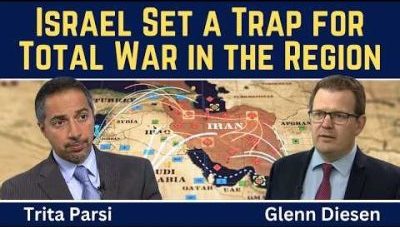
Trita Parsi: Israel Set a Trap for Total War in the Region
or go to
Aletho News Archives – Video-Images
From the Archive
Zionism’s Violent Legacy
By Donald Neff | Washington Report On Middle East Affairs | January 1996
On January 4, 1948, Jewish terrorists drove a truck loaded with explosives into the center of the all Arab city of Jaffa and detonated it, killing 26 and wounding around 100 Palestinian men, women and children.[1] The attack was the work of the Irgun Zvai Leumi – the “National Military Organization,” also known by the Hebrew letters Etzel – the largest Jewish terrorist group in Palestine. The Irgun was headed by Revisionist Zionist Menachem Begin and had been killing and maiming Arabs, Britons and even Jews for the previous ten years in its efforts to establish a Jewish state.
This terror campaign meant that at the core of Revisionist Zionism there existed a philosophical embrace of violence. … continue
Blog Roll
 Aletho News
- Trita Parsi: Israel Set a Trap for Total War in the Region
- Trump’s Iran war is on an Israeli leash
- Saudi oil boss issues global supply warning
- Riyadh Says Its Oil System Is Intact. The Numbers Say Otherwise.
- Trump and Netanyahu Want to “Finish the Job” on Iran
- US ‘one-sided dictation’ not Iran’s beliefs makes rational talks impossible: Baghaei
- Iran’s Next Strike May Not Explode. It Could Shut You Down /Col Doug Macgregor
- Iran: US political targets legitimate if assassinations return
- Iraq shuts key border crossing with Iran under US pressure: Report
- Undersea Internet cables could be targeted in retaliation for attacks on Iran: IRGC deputy chief
- If Americans Knew
- The Israel Lobby’s Changing Fortunes
- AIPAC has become such a political liability that it’s shifting to a more “nimble” approach to buying politicians
- At least 160 Israeli settler attacks in 2 weeks
- Will Gaza’s Ancient Christian Community Disappear Forever?
- Israel’s vision of regional security rests on keeping Arab states weak
- Heidi Levine recounts how Palestinian youths helped save her in settler attack
- DAILY UPDATE: Latest essential news on Palestine, Israel, & region
- Trump’s Intensifying Sabotage of the ICC, for Israel’s Sake
- Israeli military detain US and UK volunteers in West Bank including Democratic NY politician Brad Lander
- Americans at National Conservatism Conference held in Israel this year criticize Israel
- No Tricks Zone
- E-Cars Reduce CO2 Emissions By Only 41% Compared To Internal Combustion Engine Vehicles
- Predictions Made By Renowned Climate Professor Over Past Decades Have Been Proven To Be Poor
- New Study Suggests Large Regions Of The Pacific Ocean Have Been Cooling For The Last 80 Years
- Germany’s Green Energy Debacle: High Energy Costs Force Kahla Porzellan to Close After 182 Years!
- New Study: 50 Years Of The Most Aggressive ‘Net Zero’ Policies Can Only Affect The Global Climate By 0.03°C
- US September “Heat” Was No Record…Many Records Set Decades Ago
- Latest European Green Energy Debacle; Portugal’s Largest Flagship Solar Park Insolvent!
- Green Energy Debacle: German Expert Professor Fritz Vahrenholt Warns Of Severe Economic And Social Consequences
- Two More Paleo Reconstructions Affirm Meters-Higher Sea Levels Across Ireland, Brazil 7000-6000 Years Ago
- New Study: Earth And Venus Surface Warmth Largely Explained By Convection And Lapse Rate, Not CO2 Or Radiation

