There’s no protection from genocide in the colonial framework of international law

Palestinian children wait to get water amid clean water and food crisis due to Israeli attacks and imposed blockade in Rafah, Gaza on March 16, 2024. [Yasser Qudaih – Anadolu Agency]
By Ramona Wadi | MEMO | March 19, 2024
The entire Palestinian population in Gaza has been declared “acutely food insecure” by the Integrated Food Security Phase Classification. “The famine threshold for household acute food insecurity has already been far exceeded,” explained the IPC.
Very belatedly, the EU’s Foreign Policy Chief Josep Borrell has declared that Israel is provoking famine in Gaza, and that Israel is using starvation as a weapon of war. What happens now that Borrell has spoken? Palestinians spoke out long before this catastrophe, remember, and — quite intentionally — not a single EU diplomat listened.
What’s more, the statistics seemed to have influenced US Secretary of State Antony Blinken enough to make a statement acknowledging the famine as having affected all Palestinians in Gaza. “This only underscores both the urgency, the imperative, of making this [humanitarian aid] the priority,” Blinken said during a press conference in Manila, the capital of the Philippines. “We need more, we need it to be sustained, and we need it to be a priority if we’re going to effectively address the needs of people.” Of the US halting its weapons exports to Israel, or joining forces to stop Israel’s genocide in Gaza, not a single syllable, never mind word, was uttered.
Israel’s response, of course, was to weaponise starvation even further. As Al Jazeera reported yesterday, the settler-colonial state asked the International Court of Justice (ICJ) to refrain from issuing emergency orders as requested by South Africa, describing these as “an abuse of procedures”. South Africa’s legal recourse of 6 March, declared Israel’s lawyers, is “wholly unfounded in fact and law, morally repugnant, and represents an abuse both of the Genocide Convention and of the court itself.”
And there you have it in a nutshell: Israel’s twisted logic. The slightest measures to prevent genocide are “morally repugnant.” That tells you all you need to know about Israeli morality. It is probably only a matter of time before the apartheid state deems genocide to be in accordance with international law as long as it suits its own colonial interests.
Israel’s intention is for famine to work as a weapon of genocide.
It blocks and hinders the entry of humanitarian aid, and its illegal settlers block the border crossing to prevent aid trucks getting past. Israel does nothing to stop this. The meagre amount allowed through was weaponised as a death trap, as Israeli soldiers massacred Palestinians for merely attempting to take some food home. This morning, Israel killed Major Raed Al-Banna and his family in an air strike. Al-Banna was involved in taking humanitarian aid into northern Gaza.
On the sidelines of its massacres, Israel has told the ICJ that it “has real concern for the humanitarian situation and innocent lives, as demonstrated by the actions it has and is taking,” with reference to Gaza.
It beggars belief that Israel’s quest for normalising all of its actions has reached such a level of contempt for international laws and conventions that it is allowed to waste the court’s time by lying so blatantly. The international community’s complacency, as if its only power rests in waiting for statistical updates to include in their speeches, is equally horrendous.
The genocide in Gaza is exposing all that is wrong with the colonial concept of human rights and international law, both of which only exist as foundations to protect the violators and collaborators. There is clearly no protection from genocide for its victims in the colonial framework of international law.
Germany: Green Party demands TikTok ban of popular AfD party
By Denes Albert | Remix News | March 19, 2024
To keep people away from Alternative for Germany (AfD) content, the Green-affiliated campaign network Campact wants to ban the AfD from TikTok. With the AfD the second most popular party in the country, part of the party’s appeal may be tied to its popularity on TikTok, where it is more popular than all the other German parties and has twice as many followers as all other parties combined.
The ruling left-liberal government is desperate to stop the AfD, including using anti-democratic means. While the government works towards banning the party entirely, a part of this all-out effort against AfD means cutting it off from the marketplace of ideas, where the other parties are outright losing.
Campact is working to collect signatures in this effort, calling for the AfD to be banned from TikTok. They will deliver this petition to representatives of the company’s headquarters in Berlin.
The reason given is: “The right-wing extremist slogans reach children and young people in particular.” The Green-backed organization claims this is “dangerous.”
The campaign network is aiming to obtain 200,000 signatures before it delivers its petition to the Berlin branch of the short-form video platform. However, Campact has overshot this mark, earning around 250,000 signatures in what it describes as a campaign against “hatred and agitation.”
AfD’s popularity is a major problem for rival parties on the platform, where AfD features over 409,000 followers, while the Social Democrats (SPD), the Left Party, Free Democrats (FDP), the Christian Democrats (CDU), and the Greens only have a combined total of 220,000 followers. AfD videos are also wildly popular in comparison, earning twice the number of views of all other parties combined.
The former campaign manager of the Green Party and an influential political advisor, Johannes Hillje, is warning about the party’s success.
“The TikTok generation is threatening to become an AfD generation,” he said to Der Spiegel. He said that AfD’s strong showing in state elections is tied to younger people voting for the party, which is due in part to the AfD’s successful TikTok strategy.
Teens and young people are also openly backing the AfD on TikTok. Notably, this week, a freedom-of-speech scandal erupted after reports that a 16-year-old, Loretta B., posted comments on TikTok supportive of the AfD party. When three officers pulled her out of her school in Mecklenburg-Vorpommern, it resulted in a major scandal and warnings of a repressive police state. The scandal has made international news, with billionaire Elon Musk even defending the girl on X.
Remix News’ TikTok channel faces a shadowban on TikTok after earning millions of views. The account featured numerous warnings for news content and multiple suspensions, showcasing TikTok’s willingness to ban or shadowban news platforms and opinions. However, AfD’s channel has so far avoided such censorship.
Supreme Court Appears Wary of Blocking Biden Admin-Big Tech Censorship Collusion
By Tom Parker | Reclaim The Net | March 18, 2024
During oral arguments in a major First Amendment case on Monday, the Supreme Court expressed reservations about restricting interactions between the Biden administration and social media platforms. This concern emerged during the Murthy v. Missouri (formerly Missouri v. Biden) case, which delves into the extent of governmental influence over online content.
Brian Fletcher, Principal Deputy Solicitor General of the United States, presented oral arguments for the petitioners in the case, Biden’s Surgeon General Vivek H. Murthy and several other current and former members of the Biden administration.
The respondents in the case, the States of Missouri and Louisiana, and several other individuals who were subject to social media censorship, allege that the federal government had pressured platforms to block or downgrade posts on various topics, including some related to Covid and the Hunter Biden laptop story.
Several lower courts agreed with the respondents, with a district judge describing the Biden administration’s Big Tech-censorship collusion as “Orwellian” and the Fifth Circuit Court of Appeals finding that the Biden admin likely violated the First Amendment when pushing for social media censorship.
During the oral arguments today though, the justices displayed skepticism towards a broad prohibition on governmental communications with social media platforms. They raised concerns that such a ruling could unduly restrain the government’s ability to address pressing issues.
Fletcher defended the Biden admin’s actions and framed them as the government exercising its right to “speak for itself by informing, persuading, or criticizing private speakers.” He argued that the government is entitled to communicate with social media companies to influence their content moderation decisions, as long as these interactions do not veer into coercion. According to Fletcher, the litmus test for legality should be the presence or absence of threats from the government, asserting that using the bully pulpit for exhortations is a right protected under the First Amendment.
Fletcher also tried to argue for the significant power and autonomy of social media companies, noting their capability to resist governmental pressures.
The solicitor general of Louisiana, Benjamin Aguiñaga, representing one of the Republican-led states behind the lawsuit, argued that the government’s actions amounted to coercion, effectively leading to censorship by social media platforms. He highlighted a significant shift in the focus of government-led content moderation. Initially aimed at tackling foreign interference and misinformation, these efforts increasingly targeted speech by American citizens, particularly around the contentious topics of the 2020 election and the pandemic.
Justice Ketanji Brown Jackson challenged Louisiana Solicitor General Benjamin Aguiñaga’s viewpoint. “And so I guess some might say that the government actually has a duty to take steps to protect the citizens of this country. And you seem to be suggesting that that duty cannot manifest itself in the government encouraging or even pressuring platforms to take down harmful information. So, can you help me? Because I’m really worried about that.”
Justice Amy Coney Barrett also voiced concerns, questioning whether the FBI could legally request social media platforms to remove content, such as posts revealing personal information about officials.
Aguiñaga’s argument was that such actions could potentially suppress constitutionally protected speech.
The oral arguments went off into the weeds and into the nuances of what constitutes “coercion” by the government in its interactions with social media platforms, rather than directly addressing the core text of the First Amendment. This focus on “coercion” rather than the First Amendment’s explicit wording – prohibiting the “abridging” of the freedom of speech, or of the press – played into the Biden administration’s hands.
Justices Kavanaugh and Kagan drew a comparison between the case and the interactions that often occur between administration officials and news media. They proposed that efforts by officials to shape media coverage should be seen as constructive dialogue, not necessarily an attempt at censorship, and suggested such actions don’t violate the First Amendment’s provisions.
Kagan challenged the lawyer from Louisiana to demonstrate that the removal of the contentious posts was the result of government intervention rather than actions taken by the social media companies themselves.
“What distinguishes this as an act of the government rather than a decision made by the platforms?” Kagan inquired.
The discussion among the justices also ventured into the standing of the plaintiffs – Missouri and Louisiana, accompanied by five individuals – to bring the lawsuit. They questioned whether these parties had experienced a direct injury that would justify their legal challenge. Furthermore, the justices expressed doubts about the appropriateness of a wide-ranging injunction that would bar various officials from contacting social media platforms as a remedy to the alleged issue.
Justice Sonia Sotomayor specifically addressed concerns regarding the approach taken by the plaintiffs in presenting their case. Directing her comments to Aguiñaga, Justice Sotomayor criticized the framing of their argument. She pointed out that the plaintiff’s brief seemed to leave out crucial information, thereby altering the context of certain claims, a point which she found particularly troubling.
Chief Justice John G. Roberts Jr. appeared to concur with the notion that the federal government’s diverse array of agencies, which often lack a unified stance, weakens the argument of coercion. During a dialogue with the attorney from Louisiana, he observed, “It’s not monolithic.” He then posed a question that implied this multiplicity of voices in the federal government could substantially diminish the idea of coercion: “That has to dilute the concept of coercion significantly. Doesn’t it?”
While the justices mostly appeared skeptical of prohibiting the federal government from pressuring social media platforms to censor speech, there were some moments where they questioned the Biden admin’s arguments.
Justice Sotomayor pressed Fletcher to give her specifics on how the injunction that prohibits officials from coercing or significantly encouraging a platform’s content-moderation decisions would harm the government.
Fletcher responded by claiming that the injunction would prevent the Federal Bureau of Investigation (FBI) from flagging foreign “disinformation” to platforms, prevent White House officials from criticizing the platform’s practices on “misinformation,” and prevent officials complaining about or flagging various other types of legal content on social media.
Justice Samuel Alito also noted that two lower courts have found or accepted that some examples of Big Tech censorship that were highlighted in this case were “traceable to the government’s actions.”
He added: “We don’t usually reverse findings of fact that had been endorsed by two lower courts.”
Additionally, Justice Alito expressed skepticism about the White House and other federal officials constant “pestering” of Facebook and other social media platforms.
“And I thought, wow, I cannot imagine federal officials taking that approach to the print media,” Justice Alito said. “I thought, you know, the only reason why this is taking place is because the federal government has got Section 230 and antitrust in its pocket, and it’s…to mix my metaphors, and it’s got these big clubs available to it. And so it’s treating Facebook and these other platforms like their subordinates.”
After the hearing, the New Civil Liberties Alliance (NCLA), one of the legal groups representing the respondents in this case, urged the justices to recognize that the Biden admin’s censorship pressure violated the First Amendment.
“Our clients, who include top doctors and scientists, were censored for social media posts that turned out to be factually accurate, depriving the public of valuable perspectives during a public health crisis,” Jenin Younes, Litigation Counsel at the NCLA said. “We’re optimistic that the majority will look at the record and recognize that this was a sprawling government censorship enterprise without precedent in this country, and that this cannot be permitted to continue if the First Amendment is to survive.”
Israel Is Starving Gaza
By Steven Sahiounie | Strategic Culture Foundation | March 16, 2024
At least one UNRWA staff member was killed after Israel targeted a food distribution center in Rafah, in southern Gaza, on March 13. Another 22 UNRWA workers were injured in the attack by the Israel Defense Forces (IDF).
On March 14, the IDF released a statement to the U.S. media CBS news, that the IDF has precisely targeted a ‘Hamas Operations Unit’ based on intelligence, which the IDF claims were distributing humanitarian aid to ‘terrorists’.
UNRWA confirmed that the aid distribution center attacked was on a list of UN supported facilities across Gaza which are by international law to be safe for civilians and aid workers alike. By Israel attacking known humanitarian sites, such as food centers, schools and clinics, the IDF is declaring that there is nowhere safe in Gaza, or in southern Gaza, where Israeli Prime Minister Benjamin Netanyahu had instructed all civilians to gather for safety.
The UN has warned that the people in Gaza are close to famine from lack of food aid during the current and ongoing bombardment of civilian homes and infrastructure.
Over 30 people have died recently from lack of food and water, and many were children.
Open Arms
On March 12, a Spanish ship, ‘Open Arms’, left Cyprus for Gaza. It is expected to arrive on Friday, March 15 carrying 200 tons of aid.
This desperate attempt to stave off famine in Gaza is the brain-child of Spanish-American celebrity chef, José Andrés, founder of the non-profit World Central Kitchen (WCK).
WCK has Palestinians building a jetty in Gaza, utilizing rubble and materials from bombed buildings, which will play a role in offloading the food and supplies. This jetty is a temporary structure and is not related to the pier the U.S. is planning.
“I had no doubt that we could open the maritime route. The most difficult thing was the diplomatic side of it, and the easiest thing was getting to Gaza,” said Andrés.
Andrés is an advisor to the White House, and held countless meetings in Israel, Egypt and Jordan to obtain the necessary permits, while also obtaining support from Cyprus, King Abdullah II of Jordan and the United Arab Emirates, which has co-financed the mission together with WCK.
After arrival, the 130 pallets of aid will go into trucks to be delivered to the 60 kitchens that the WCK has set up in the Gaza Strip, and to other aid distribution points.
Who shut the gates?
Israel controls all land crossings into Gaza, which has seven border crossings, six with Israel and one with Egypt. However, only the crossing at Rafah, with Egypt, is partially open.
The quickest and most efficient way to delivery aid to Gaza is by land and the gates that exist. But, Israel restricts aid and supplies from entering in Gaza. All of the aid agencies report that their donations sit in parked trucks, filled to overflowing, but unable to enter Gaza because the IDF has locked the gates and refuses to open them.
Israel maintains that they will not allow any aid into Gaza which could be used by Hamas. The aid agencies have repeatedly asked for a list of restricted items so that they can make sure their cargoes meet the criteria. However, Israel refuses to publish or distribute a list of restricted items. Instead, the IDF uses the aid as a weapon of war, intent on starving the civilians. The IDF claim that if they find one item in a cargo load which meets their undisclosed definition of prohibited items, they will not allow the entire cargo to enter. In one very famous case, the item was a single pair of small scissors to be used to cut the tape in conjunction with bandages.
Doctors Without Borders, MSF, reported they have been repeatedly prohibited from importing electricity generators, water purifiers, solar panels and other medical equipment.
Land routes
On March 12, for the first time in three weeks, the UN’s World Food Program sent in six aid trucks to feed 25,000 people through a gate in the security fence. This is but a drop in an ocean of need, and is not sustainable.
Some Arab nations, such as Morocco have sent supplies destined for Gaza to Israel’s Ben Gurion airport.
All the experts agree, that land routes which already are established are the most efficient delivery method of aid to Gaza. But, it is Israel alone standing in the way, and this is their political objective.
Cargo trucks typically carry 20 tons, and the flow of trucks prior to the current conflict was about 500 a day. But, even that amount of daily arrivals would not meet the needs of the 2.3 million people in Gaza.
UNRWA accusations
Israel began a political campaign to discredit and destroy UNRWA, by accusing the agency of complicity with Hamas in the October 7 attack on Israel.
With an accusation only, Israel was able to convince 16 donor countries to pull their funding, and have asked the UN General Assembly to disband the refugee agency, which would affect not only the people in Gaza, but also those in the Occupied West Bank. The agency is 75 years old, serves almost six million refugees, and now has had more than $437 million funds frozen.
Spain announced a donation of $22 million on Thursday, and Canada and Sweden reported on Saturday that they would resume funding to the agency in light of unfounded claims, and the risk of famine.
The UN has opened an investigation, while UNRWA defends itself against Israel’s accusations, and accuses Israel of torturing its employees to force false testimonies that the IDF used as the basis of their accusations. Initially, the UN fired 12 UNRWA workers after the IDF claim.
Philippe Lazzarini, the head of UNRWA, says that he has received no evidence of agency workers in conspiracy with Hamas. However, 150 UNRWA employees have died while working in Gaza, and 3,000 have been left homeless.
Palestinians in the Occupied West Back were arrested, blindfolded, thrown to the ground, and beaten by the IDF while the soldiers shouted, “UNRWA, Hamas! UNRWA, Hamas!”
After Israeli officials accused the UNRWA staff, the Biden administration cut-off the funding to the refugee agency.
On March 12, the U.S. State Department spokesperson Matthew Miller, said, “UNWRA plays a critical role in delivering humanitarian assistance to Palestinian civilians that no other agency is positioned to assume.”
Biden’s pier
U.S. President Biden announced plans for the sea corridor, saying the U.S. military would help construct a temporary pier on Gaza’s Mediterranean coast to facilitate the docking of aid ships. The USS General Frank S. Besson is sailing with the supplies needed for building the pier.
Experts are baffled by the suggestion that a pier should be used to deliver aid, when seven land crossings already exist, and stress that Biden can get them all open with just one phone call to Netanyahu. If Israel were made aware that their continued military aid from the U.S. is dependent on allowing food deliveries to the Palestinians in Gaza, that would open the gates at once.
Ceasefire talks
Ceasefire talks, which include a release of hostages in Gaza, have been ongoing in Cairo, but Qatari foreign ministry spokesman Majed al-Ansari said that, although talks continued, “we are not near a deal.”
Airdrops
Both the Kingdom of Jordan and later the U.S. have undertaken airdrops of supplies into Gaza. However, this is not efficient and can be compared to filling a swimming pool while using a teaspoon.
Israeli position on Gaza
On March 12, Netanyahu reiterated his plan to destroy Hamas by a planned ground invasion into Rafah.
“We will finish the job in Rafah while enabling the civilian population to get out of harm’s way,” he said in a video address to AIPAC, the powerful pro-Israeli lobbying group which experts say controls the U.S. foreign policy with Israel, the Middle East, and controls the U.S. Congress on issues involving Israel and Jews in the U.S.
The prospect of a Rafah invasion has sparked global alarm because it is crowded with almost 1.5 million mostly displaced people, and recently Biden has called it a ‘Red Line’, but without specifying what repercussions Israel would face from White House anger.
EU position on Gaza
On March 12, the EU’s top diplomat, Josep Borrell, told the UN Security Council that the Gaza humanitarian crisis “is man-made.”
“If we look at alternative ways to provide support, it’s because the land crossings have been artificially closed,” he said, charging that “starvation is being used as a weapon of war.”
Borrell identified the lack of delivery of aid to Gaza as a result of all the land routes being closed by Israel.
“We are now facing a population fighting for their own survival,” he said.
“Starvation is being used as a war arm and when we condemned this happening in Ukraine, we have to use the same words for what is happening in Gaza,” said Borrell.
UK position of Gaza
The UK’s Foreign Secretary, Lord David Cameron, has urged Israel to open the major port of Ashdod – one of the country’s three main cargo ports located just south of Tel Aviv – to seaborne aid deliveries destined for Gaza.
U.S. position on Gaza
AIPAC’s historic hold on the White House and Congress has prevented Biden or others from taking firm action which would result in the aid trucks being allowed into Gaza, and the avoidance of famine. Biden is painted in the U.S. media as a caring person, concerned with humanitarian laws being broken in Gaza by Netanyahu, but he is impotent to take action, which he holds in his hands.
Number of dead
Whether there is a ceasefire, or not, and regardless of whether food and supplies are ever delivered to Gaza, one thing we know is the number of dead and injured continues to rise after more than five months of Israeli attacks from the land, sea and air. The latest number is more than 31, 180 people killed, and most of them women and children.
Big Tech Alliance Targets Covid-19 “Misinformation,” Links it to “Extremism,” Calls for Content Censorship
By Cindy Harper | Reclaim The Net | March 16, 2024
Big Tech alliance Global Internet Forum to Counter Terrorism (GIFTC) research “partner” Global Network on Extremism and Technology (GNET) has published an article revisiting the pandemic, always, of course, in the context of “misinformation.”
GIFTC’s founding members are Microsoft, Facebook, X (Twitter), and YouTube (Google), while “general members” include these four and pretty much every tech company you’ve ever heard of, from Amazon and Airbnb to BitChute and Giphy.
GIFTC has previously come under criticism for censorship practices without oversight, whereas GIFTC now goes after “Covid misinformation” – including by conflating it with extremism, and is urging “interventions to address the spread of problematic content.”
The piece claims that its goal is to understand the mechanisms that allow for “problematic information” to disseminate across platforms and then spread between the world’s regions, all for the sake of being able to stop that “diffusion.”
It looks into things like the geographical location of different participants in the “diffusion,” their cultural and linguistic similarities, as well as thematic similarity of content (such as religious and political themes).
The study also clearly positions itself ideologically when it, in passing, refers to former US and Brazilian presidents Trump and Bolsonaro as having “extremist predispositions.”
With that in mind, the choice of topics – the pandemic, misinformation, as well as “methodology and findings” become easier to understand.
Regarding the first, the authors chose to look into Facebook groups and organizations and individuals like Doctors for Truth and microbiologist Didier Raoult, collectively accused of sharing “false and misleading content” about coronavirus, vaccines, masks, hydroxychloroquine, etc., in one form or other.
And, the goal is to find out what helped this information travel from “Global North” to “Global South.”
Soon enough, what’s supposed to be countered thanks to the findings from this “research” is referred to as extremism in online networks, suggesting that Covid “misinformation” qualifies.
Because the “findings” show that interplay tied to language, culture, and themes covered by content shared by various groups is not easy to untangle and go after, the recommendation is to come up with “targeted network-informed interventions” that would prevent information flowing from one part of the world to another.
“By identifying key factors influencing tie formation, policymakers, and platform moderators can implement targeted interventions to mitigate the spread of extremist content,” those behind the article said.
13th Palestinian inmate dies in Israeli jail since 13 since Oct. 7
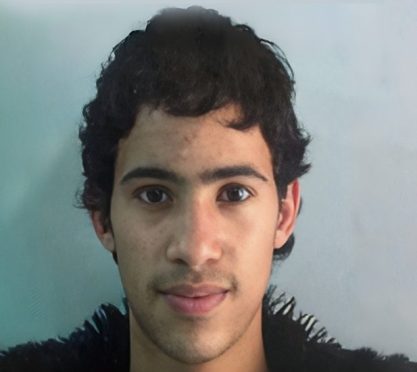
Deceased Palestinian prisoner Juma Abu Ghanima (Photo via social media)
Press TV – March 16, 2024
Independent and non-governmental rights organizations say another Palestinian prisoner has died in Israeli jails.
The latest death has brought to 13 the number of detainees who have lost their lives due to torture and medical negligence in Israeli jails ever since the regime launched its genocidal war against Gaza on October 7 last year.
The Commission of Detainees and Ex-Detainees Affairs and the Palestinian Prisoner’s Society (PPS) announced on Saturday the death of 26-year-old Juma Abu Ghanima in the Negev desert prison.
PPS pointed out that Israel Prison Service (IPS) officials transferred Abu Ghanima from his cell in Eshel Prison to a hospital in a serious health condition. His situation worsened drastically and he died five days later.
The independent rights organization held the IPS, which continues to exercise various forms of torture and systematic medical negligence against Palestinian detainees, fully responsible for the death of the young Palestinian man.
According to the official Palestinian news agency WAFA, Abu Ghanima was arrested in January for his resistance to the Israeli occupation of Palestinian territories.
The Commission of Detainees and Ex-Detainees Affairs and the Palestinian Prisoner’s Society stated that at least 250 Palestinian prisoners have died in Israeli prisons since the Israeli occupation of the West Bank, including East al-Quds, in 1967.
The total number of Palestinian detainees being held in Israeli prisons has soared to 9,100, including 3,558 administrative detainees.
Human rights organizations say Israel violates all the rights and freedoms granted to prisoners by the Fourth Geneva Convention. They say administrative detention violates their right to due process since the evidence is withheld from prisoners while they are held for lengthy periods without being charged, tried, or convicted.
Palestinian detainees have continuously resorted to open-ended hunger strikes in an attempt to express outrage at their detention. Israeli jail authorities keep Palestinian prisoners under deplorable conditions without proper hygienic standards. Palestinian inmates have also been subject to systematic torture, harassment, and repression.
The EU adopts a ‘Media Freedom’ law, where ‘freedom’ doesn’t mean what you think it does
By Rachel Marsden | RT | March 16, 2024
The EU’s new Media Freedom Act has now been voted into law, with 464 votes for, 92 against, and 65 abstentions.
There are some news outlets whose coverage of the vote I’d like to see. Like RT’s, where you’re reading this right now. But anyone who’s viewing this from inside the European Union’s bastion of democracy and freedom is likely doing so via a VPN connection routed through somewhere outside the bloc, to circumvent its press censorship.
Nothing in this new law suggests that this will change, or that there will be increased access to information and analysis for the average person. Such improved freedoms might lead to people making up their own minds rather than having various flavors of a similar narrative served up for mass consumption. As has become par for the course in so-called Western democracies, inconvenient facts and analysis will still be dismissed as “disinformation” and criticism of the establishment still qualified as an effort to sow division – as though dissent itself wasn’t supposed to be proof of a healthy and vibrant democracy.
So, now that we’ve gotten out of the way any hope of lifting the EU’s top-down censorship in the absence of due process, exactly what kind of lip service does this new law pay to the lofty notion of media freedom?
No spying on journalists or pressing them to disclose their sources. Well, unless you’re one of the countries that lobbied to be able to keep doing this – like France, Italy, Malta, Greece, Cyprus, Sweden, and Finland – so basically, a quarter of EU countries. Oh, but they have to invoke national-security concerns in order to do so. Which, as we know, they’re very discerning about. Like, they didn’t at all implement a virtual police state and extend its powers under the guise of fighting a virus with which French President Emmanuel Macron kept saying they were “at war.” Nor did Amnesty International point out the sweeping “Orwellian” trend across Europe, at least as far back as 2017, of exploiting domestic terrorist attacks to permanently embed what were supposed to be extraordinary powers into criminal law, via measures like “overly broad definitions of terrorism.” So, no doubt they’ll be equally reasonable when slapping the “national security threat” label on a journalist whose work they want to peek at.
At least now, under this new law, they do have to fully inform any targeted journalist of the steps being taken against them.
Another thing that changes is that there’s to be a centralized database into which “all news and current affairs outlets regardless of their size will have to publish information about their owners,” according to an EU press release. May we propose a first candidate for that? The NGO Reporters Without Borders has praised this new law as a “major step forward for the right to information within the European Union.” The same NGO also just launched a “Svoboda” (Russian for “freedom”) satellite package eventually consisting “of up to 25 independent Russian language radio and television channels” aimed at Russia, Ukraine, and the Baltics. The launch took place at the EU parliament, in the presence of EU “values and transparency” commissioner (yes, that’s a real title), Vera Jourova, who has said in support of the new media law that “it is a threat to those who want to use the power of the state, also the financial one, to make the media dependent on them.” But she has also said about this new Russia-targeting initiative that the EU state needs to “use all possible means to ensure that their work, that facts and information can reach Russian-speaking people.” This is the same person who advocated in favor of banning Russia-linked media outlets in the EU.
Anyway, you first, guys. Show everyone else how it’s done. Also, does this mean that all financial interests in the form of advertising spending will also have to be declared by corporate media? Because state-backed media platforms are already transparent; it’s the much more discretionary interests underpinning the more commercial platforms that tend to be much less obvious to audiences. Audiences may not know or understand, for example, why a particular corporate media outlet might focus on a particular nation state with softball interviews, travel pieces, and fluffy documentaries, and treating it with kid gloves in news coverage, when in reality the same country is pumping a ton of ad revenues into the place.
In any case, Queen Ursula von der Leyen’s battalion of bureaucratic desk jockeys is set to grow in ranks now with a new “European Board for Media Services” coming online as a result of the new law. Because freedom isn’t going to police itself, pal.
The name itself Media Freedom Act really is the first clue that it’s probably not all that much about freedom. Kind of like how the “European Peace Facility” fund is used to buy weapons, or the “election” of the handpicked EU Commissioner is really just what any normal country would call a confirmation vote.
It’s a pretty safe bet that whenever the EU kicks the virtue-signaling into overdrive, using feel-good language to sell it, the reality is probably the opposite of what’s advertised.
Rachel Marsden is a columnist, political strategist, and host of independently produced talk-shows in French and English.
The frenzy to ban TikTok is another National Security State scam
By Michael Tracey | March 15, 2024
On November 20, 2023, Rep. Cathy McMorris Rodgers (R-WA), chair of the House Energy and Commerce Committee, wrote in a joint letter to the CEO of TikTok that the platform was guilty of “stoking anti-Semitism, support, and sympathy for Hamas” after the October 7 attack on Israel. “This deluge of pro-Hamas content is driving hateful anti-Semitic rhetoric and violent protests on campuses across the country,” McMorris Rodgers charged. A year ago, in March 2023, she had already declared: “TikTok should be banned in the United States of America.”
This week the plan came to fruition, with McMorris Rodgers and her colleagues orchestrating what could be best described as a legislative sneak attack: suddenly the House of Representatives, a notoriously dysfunctional body — particularly this Congressional term, with all the Republican leadership turmoil — took decisive, concerted, expedited action to pass legislation banning TikTok before most of the public would have even gotten a chance to notice. The bill was introduced March 5, 2024, advanced by a unanimous committee vote on March 7, 2024, then approved for final passage March 13, 2024. Almost nothing ever passes Congress at such warp-speed.
McMorris Rodgers facilitated the unanimous 50-0 vote out of the Energy and Commerce committee, a development which took many in DC off-guard, even those keenly attuned to the TikTok policy issue. As someone familiar with the process explained to me, before introducing the bill, the key sponsors “wanted to keep it quiet all around,” as they correctly surmised that once the details of the bill gained wider public exposure, opposition would mount — just as happened in March 2023 when a precursor bill got derailed after public awareness grew of provisions delegating enormous new powers to the President to control speech online.
This week, last-minute opposition continued to grow even during the final floor debate Wednesday morning, thanks to the quick-thinking of Rep. Thomas Massie (R-KY), who organized the opposition and later reported that the number of Republican House members voting no may have tripled as a result of the 40-minute floor debate he triggered — a rarity in the annals of Congress.
Republican opposition was still paltry though — just 15 voted no, compared with 50 Democrats. Even among the few no votes, some, like Matt Gaetz, made sure to clarify that on principle he was totally in favor of banning TikTok — he just objected to the particulars of this bill. The fact that Trump tentatively came out against the bill would also likely have been a factor for Gaetz, who likely would not have been so keen to stake out a different position from Trump on a major national policy issue. Whatever his precise stance, Trump has evidently not taken a major lobbying interest, as he has before with other legislative items. The little he’s said about the TikTok bill has been lukewarm and muddled — which makes sense given that it was Trump who first attempted to ban TikTok by executive fiat in 2020, and got held up by the courts. This current bill enumerates the powers Trump had unsuccessfully sought and codifies them in federal statute as a newly-assigned, discretionary presidential authority.
There is also the issue of what someone familiar told me was the “technical assistance” provided by the “Intelligence Community” during the reportedly “quiet” formulation of this bill — led by Rep. Mike Gallagher (R-WI) and Raja Krishnamoorthi (D-IL). The ranking member counterpart of McMorris Rodgers on the Energy and Commerce committee, Frank Pallone (D-NJ), said unnamed members of the so-called Intelligence Community had “asked Congress to give them more authority to act,” and this bill was intended to grant that request. As such, the bill was expressly crafted to enhance the power of the “Intelligence Community” to restrict Americans’ ability to consume and express speech online — as always, in the alleged name of “national security.”
The purveyors of TikTok-related fear within this vaunted “Community of Intelligence” also prefer to keep the underlying evidence for their claims hidden from public view, opting for highly confidential briefings with compliant members of Congress, most of whom emerged from these secret Pow-Wows in the past week excitedly eager to vest the Executive Branch with extensive new powers to Keep Us Safe from designated foreign foes. And not just China, as with the TikTok prohibition — but also an enormous array of other potential “applications,” which encompass everything from mobile apps to websites, that can be claimed as “foreign adversary controlled,” with “adversaries” defined as the standard rival bloc of China, Russia, North Korea, and Iran.
To fight this great civilizational battle against China and its satellite states, the citizens of America must gratefully accept the abridgment of their own speech, and patriotically acquiesce to the government seizing the power to block a massive range of potential online applications and websites, so long as they can be claimed by the President to be “directly or indirectly” controlled by an official foreign adversary. What it means to be “controlled by a foreign adversary” is so malleable per the legislative text that it can include “a person” who is “subject to the direction or control of a foreign person or entity,” whatever that might mean in today’s parlance, when spurious charges of “Russian asset” and “Chinese influence” can be flung left and right like nothing. Given the subjective discretion that would necessarily have to be exercised in the making of such a determination, the president is being vested here with a huge amount of subjective, unilateral discretion.
There is likely a lesson to be gained from the March 2023 version of TikTok-related banning frenzy, which lost momentum when the details of the main legislative proposal became more widely known. Surmising that opposition could very well mount again, the House sponsors decided this time around to preempt the inconvenience of open debate, and hustle through the bill on a “quietly” expedited schedule before the provisions became widely known, which could prompt the always-annoying phenomenon of constituents contacting their representatives to express an opinion on the issue. This deliberate evasion of public scrutiny was unfortunately necessary for national security.
Another running theme in this mad legislative dash is the extent to which the Israel/Gaza war and hysteria over the October 7 attacks was a main driver. In November 2023, Israeli president Isaac Herzog blamed TikTok for “brainwashing” Americans who didn’t understand that Israel was pulverizing Gaza to defend not just Israeli security, but also the freedom of Americans to “enjoy decent, liberal, modern, progressive democratic life.” Apparently this logic would make more sense to people age 18-29 if they didn’t spend so much time on TikTok.
The heads of the Jewish Federations of North America, an agglomeration of American Jewish philanthropic interests, concurred with the need to terminate TikTok in a March 6 letter timed almost perfectly to the bill’s introduction just the previous day. Writing to Rodgers and Pallone, the authors said: “Our community understands that social media is a major driver of the rise in anti-Semitism, and that TikTok is the worst offender by far.”
“We have a major, major, major generational problem,” complained Jonathan Greenblatt, head of the Anti-Defamation League, in leaked audio of a private meeting last year. “And so we really have a TikTok problem.”
In this telling, the “TikTok problem” seems to boil down to TikTok’s insufficient alignment with US geopolitical interests, and the inability of the US government to exert the same coercive pressure on TikTok that it’s been able to exert on the likes of Google, Facebook/Meta, Microsoft, Twitter/X, and so on. TikTok therefore makes for a scapegoat on which to blame the increasingly “anti-Israel” and “pro-Hamas” attitudes of the youth, who supposedly absorb these malign beliefs in between synchronized dance videos, recipe tips, and makeup guides.
While it’s always difficult to assign precise causality in a multi-variable confluence of factors, here’s what we do know. There was a growing clamor to ban TikTok for the past several years. A bicameral legislative push was made almost exactly one year ago, in March 2023, but got derailed after public awareness grew of the main proposal’s speech-curtailing and executive-empowering provisions. Then after October 7, another round of scapegoating burst onto the scene, with TikTok furiously singled out and blamed by American and Israeli officials for fomenting impermissible discontent with Israel’s war of pulverization against Gaza — the naive youth could only view Israel’s military action in a negative light if they were having their brains nefariously infiltrated by the Chinese Communist Party. Certainly if they watched CNN, MSNBC, or FOX NEWS instead, their brains wouldn’t be turned to microwaved mush, and they’d be super well-informed and not at all propagandized.
“China is our enemy, and we need to start acting like it,” blustered Rep. Chip Roy (R-TX) on the floor of the House before the vote this week. “I am proud to partner with Representatives Gallagher and Krishnamoorthi on this bipartisan bill to ban the distribution of TikTok in the US.”
I’m sorry, but I don’t recall ever agreeing to the proposition that China (or any other country) is my “enemy,” and I certainly would never have agreed to relinquish my core civil liberties to wage this allegedly existential battle. I have no particular fondness for the Chinese government’s speech-suppression practices, but the issue posed by this pending legislation is the power of the US government to control the speech of Americans. Being a citizen of the US, not China, that strikes me as the more pressing concern.
USAID’s “Disinformation Primer:” Documents Reveal Censorship Promotion Across Sectors
By Didi Rankovic | Reclaim The Net | March 15, 2024
The authorities in the US are once again caught red-handed promoting censorship, this time via the US Agency for International Development (USAID).
USAID is normally used by the US government to spread its influence around the world, but now, according to documents from a case against the State Department’s Global Engagement Center (GEC), the agency also actively participates in analyzing and spreading various censorship methods.
The lawsuit in question was filed by America First Legal (AFL), alleging that the State Department, via GEC, engages with private media to advance what the non-profit believes is government/private sector censorship and propaganda collusion.
Now, USAID’s controversial activities have also been exposed thanks to the lawsuit, which revealed that one of the agency’s bureaus, the Center on Democracy, Human Rights, and Governance (DRG) has come up with a “Disinformation Primer” – a 97-page document marked as being “for internal use only.”
The Disinformation Primer – in fact, a censorship primer, to sum up the Foundation for Freedom Online watchdog’s interpretation of the strategy – was “up and running” only one month after Joe Biden got sworn in, in February 2021.

The extensive “primer” seeks to exert influence on how private tech, but also media companies can increase the level of existing censorship; the already existing engagement with private entities is at the same time commended by USAID.
Other targets, more in line with USAID’s overall activities, include foreign governments, specifically education departments, and funding sources. Inevitably, more “partners” are NGOs, non-profits, and think tanks, often themselves with ties to the government.
Some of the censorship techniques that USAID likes and recommends are Advertiser Outreach, which is designed to cut off media and accounts on social platforms from ad revenue, if their speech is what’s known as “disfavored” (by those in power).

Another is propping up legacy media as these outlets steadily lose trust, with things like “prebunking” and the Redirect Method, developed by Google, which “relies on advertising using an online advertising platform such as Google AdWords, targeting tools and algorithms to combat online radicalization that comes from the spread and threat of dangerous, misleading information.”
One striking quote from the document is that gaming sites and gamers should be prevented from forming “interpretations of the world that differ from ‘mainstream’ sources.”
Worth noting is that this censorship, propaganda and indoctrination “handbook” – aimed at curtailing citizens’ freedom of expression and thought – was made using taxpayer money.
Why the TikTok Ban is So Dangerous
Did they tell you the part about giving the president sweeping new powers?
By Matt Taibbi | Racket News | March 15, 2024
It’s funny how things work.
Last year at this time, Americans overwhelmingly supported a ban on TikTok. Polls showed a 50-22% overall margin in support of a ban and 70-14% among conservatives. But Congress couldn’t get the RESTRICT Act passed.
As the public learned more about provisions in the bill, and particularly since the outbreak of hostilities in Gaza, the legislative plan grew less popular. Polls dropped to 38-27% in favor by December, and they’re at 35-31% against now.
Yet the House just passed the “Protecting Americans from Foreign Adversary Controlled Applications Act” by a ridiculous 352-64 margin, with an even more absurd 50-0 unanimous push from the House Energy and Commerce Committee. What gives?
As discussed on the new America This Week, passage of the TikTok ban represents a perfect storm of unpleasant political developments, putting congress back fully in line with the national security establishment on speech. After years of public championing of the First Amendment, congressional Republicans have suddenly and dramatically been brought back into the fold. Meanwhile Democrats, who stand to lose a lot from the bill politically — it’s opposed by 73% of TikTok users, precisely the young voters whose defections since October put Joe Biden’s campaign into a tailspin — are spinning passage of the legislation to its base by suggesting it’s not really happening.
“This is not an attempt to ban TikTok, it’s an attempt to make TikTok better,” is how Nancy Pelosi put it. Congress, the theory goes, will force TikTok to divest, some kindly Wall Street consortium will gobble it up (“It’s a great business and I’m going to put together a group to buy TikTok,” Steve Mnuchin told CNBC), and life will go on. All good, right?
Not exactly. The bill passed in the House that’s likely to win the Senate and be swiftly signed into law by the White House’s dynamic Biden hologram is at best tangentially about TikTok.
You’ll find the real issue in the fine print. There, the “technical assistance” the drafters of the bill reportedly received from the White House shines through, Look particularly at the first highlighted portion, and sections (i) and (ii) of (3)B:

As written, any “website, desktop application, mobile application, or augmented or immersive technology application” that is “determined by the President to present a significant threat to the National Security of the United States” is covered.
Currently, the definition of “foreign adversary” includes Russia, Iran, North Korea, and China.
The definition of “controlled,” meanwhile, turns out to be a word salad, applying to:
(A) a foreign person that is domiciled in, is headquartered in, has its principal place of business in, or is organized under the laws of a foreign adversary country;
(B) an entity with respect to which a foreign person or combination of foreign persons described in subparagraph (A) directly or indirectly own at least a 20 percent stake; or
(C) a person subject to the direction or control of a foreign person or entity described in subparagraph (A) or (B).
A “foreign adversary controlled application,” in other words, can be any company founded or run by someone living at the wrong foreign address, or containing a small minority ownership stake. Or it can be any company run by someone “subject to the direction” of either of those entities. Or, it’s anything the president says it is. Vague enough?
As Newsweek reported, the bill was fast-tracked after a secret “intelligence community briefing” of Congress led by the FBI, Department of Justice, and the Office of the Director of National Intelligence (ODNI). The magazine noted that if everything goes as planned, the bill will give Biden the authority to shut down an app used by 150 million Americans just in time for the November elections.
Say you’re a Democrat, however, and that scenario doesn’t worry you. As America This Week co-host Walter Kirn notes, the bill would give a potential future President Donald Trump “unprecedented powers to censor and control the internet.” If that still doesn’t bother you, you’re either not worried about the election, or you’ve been overstating your fear of “dictatorial” Trump.
We have two decades of data showing how national security measures in the 9-11 era evolve. In 2004 the George W. Bush administration defined “enemy combatant” as “an individual who was part of or supporting Taliban or al Qaeda forces, or associated forces that are engaged in hostilities against the United States.” Yet in oral arguments of Rosul et al v Bush later that year, the government conceded an enemy combatant could be a “little old lady in Switzerland” who “wrote a check” to what she thought was an orphanage.
Eventually, every element of the requirement that an enemy combatant be connected to “hostilities against the United States” was dropped, including the United States part. Though Barack Obama eliminated the term “enemy combatant” in 2009, the government retained (and retains) a claim of authority to do basically whatever it wants, when it comes to capturing and detaining people deemed national security threats. You can expect a similar progression with speech controls.
Just ahead of Monday’s oral arguments in Murtha v. Missouri, formerly Missouri v. Biden — the case so many of us hoped would see the First Amendment reinvigorated by the Supreme Court — this TikTok bill has allowed the intelligence community to re-capture the legislative branch. Just a few principled speech defenders are left now. Fifty Democrats voted against the bill, which is heartening, although virtually none argued against it on First Amendment grounds, whis is infurating. Pramila Jayapal had a typical take, saying the ban would “harm users who rely on TikTok for their livelihoods, many of whom are people of color.”
Contrast that with Kentucky Senator Rand Paul, who went after members of his own party, singling out Republicans encouraging a governmental power grab after years of fighting big tech abuses not just at TikTok but other platforms. These people claim to be horrified, he said, but actions speak louder than words.
“Look at their legislative proposals,” he said, noting many want to “set up government agencies and panels” on speech, effectively saying “If you’re not putting enough conservatives on there, by golly we’re going to have a government commission that’s going to determine what kind of content gets on there.”
These, he said, are “scary ideas.”
He’s right, and shame on papers like the New York Post that are going after Paul for having donors connected to TikTok. Paul has been consistent in his defense of speech throughout his career, so the idea that his opinion on this matter is bought is ludicrous. It’s a relief to be able to expect at least some adherence to principle on this topic from him or fellow Kentuckian Thomas Massie, just as we once could expect it from Democrats like Paul Wellstone or Dennis Kucinich.
I don’t often do this, but as Walter pointed out in today’s podcast, this bill is so dangerous, the moment so suddenly and unexpectedly grave, that we both recommend anyone who can find the time to call or write their Senators to express opposition to any coming Senate vote. It might help. Yes, collection of personal information and content manipulation by the Chinese government (or Russia’s, or ours) are serious problems, but the wider view is the speech emergency. As the cliché goes, forget the furniture. The house is on fire. Let’s hope we’re not too late.
German teen pulled out of classroom and questioned by police for TikTok post stating Germany is her home
BY THOMAS BROOKE | REMIX NEWS | MARCH 15, 2024
Three police officers stormed a German high school last month and took a 16-year-old girl out of class to question her about a TikTok video she posted in which she called Germany her home and not just a place on a map.
The incident occurred on Feb. 27 at the Richard Wossidlo High School in Ribnitz-Damgarten, Mecklenburg-Western Pomerania.
In an interview with the German news outlet Junge Freiheit, the mother of the student explained how her daughter had been suspected of spreading “unconstitutional content on social media.”
The school principal had been made aware of her TikTok account and “informed the police about a possible criminal matter,” Marcel Opitz, the press spokesman for Stralsund police station, told the site.
The offensive content is understood to have been two posts. The first included a joke about how the Smurfs and Germany have something in common; they are both blue — an apparent reference to support for the Alternative for Germany (AfD) party whose primary color is blue. The AfD is now a mainstream party across Germany and sits second in national polls, much to the irritation of the German political and media establishment.
The second post saw the German teen seemingly innocuously refer to Germany as her home and not just a place on a map.
The 16-year-old was subsequently apprehended at her school in front of classmates and given what the police explained to Junge Freiheit when asked what they described as a “risk of harm” talk by officers.
“I am horrified,” the girl’s mother said. “This is such violent, if I may say so, Stasis shit, I would never have believed what was done to my daughter here possible in my entire life.
“My daughter posted a Smurfs video on TikTok a few months ago. It said that the Smurfs and Germany have something in common: The Smurfs are blue and so is Germany. That was probably a funny AfD advertising post. And then, she once posted that Germany is not a place, but a home.”
The mother explained how, according to her daughter, “three police officers suddenly appeared in the classroom and picked her up,” escorting her away “like she’s a criminal… That’s what made me so incredibly angry.”
The girl was reportedly told by police that “for her own protection” she should “refrain from posting such posts in the future,” but accepted that she had not committed a criminal offense.
However, the state interior minister, Christian Pegel, said he had “no problems” with the police’s behavior of coming to the girl’s classroom and pulling her, saying their approach to the threat was “proportionate.”
“I believe that proportionality was maintained,” he stated.
When the mother questioned the school principal and told him to contact her first if he thought there was a problem, he “told me that he wasn’t allowed to do that, he was told to inform the police immediately.”
Both the school and its principal declined to issue a statement to the German press on the matter, but the issue has now been brought by the AfD to the state parliament.
“This scandalous incident reveals that our schools are being used more and more to sniff out attitudes,” said Enrico Schult, the party’s education policy spokesman. “If there was actually an order from the Ministry of Education about this, it must have political consequences.
“A headmaster should stand in front of his students and at least take the parents into his confidence first, instead of calling three police officers because he receives an anonymous denunciation email about a student,” he added.
Featured Video
EUROPE FEARS RUSSIA’S NEXT MOVE / Ian Proud
or go to
Aletho News Archives – Video-Images
New Book
New Book: No Autoimmunity The Body Doesn’t Attack Itself
Lies are Unbekoming | September 24, 2026
 The label for Humira, once the best-selling drug in the world, lists its risks in plain print. One of them, in the label’s own words, is new “autoimmune” disease.
A drug prescribed for a condition labelled autoimmune carries a warning that it can cause a condition labelled autoimmune. That contradiction sits in every box, on a folded paper almost nobody reads.
My new book starts there.
No Autoimmunity: The Body Doesn’t Attack Itself
For seventy years, “your body is attacking itself, and we don’t know why” has ended the conversation for people diagnosed with multiple sclerosis, lupus, rheumatoid arthritis, Hashimoto’s, Type 1 diabetes, Crohn’s and psoriasis. More than eighty conditions now carry the autoimmune label. The diagnosis comes with a prescription for life. It almost never comes with a question about cause.
This book asks the question and answers it from the framework’s own records: its drug labels, its journals, its regulatory filings, and its own experiments. … continue
Blog Roll
 Aletho News
- Merz regime wants ‘secret police’ – opposition
- Israeli settlers terrorize West Bank Palestinians with state-provided drones: Report
- They see them, then kill them: Israeli quadcopters track, deliberately target civilians in Gaza
- Debunked: Trump’s egregious UNGA claims on war against Iran crumble under scrutiny
- Europe was part of the infrastructure of US aggression against Iran: Deputy FM
- New evidence on the Bucha Massacre
- Italy and France debunk reports CIA issued ‘Russian drone threat’ warning
- How Russia is Rewiring the Global South
- Britain’s elites want you ready to die for a war they keep imagining
- Inside Ukraine’s propaganda operation targeting Americans
- If Americans Knew
- Trump betrayed voters with his campaign lies and prioritized a foreign country once he took office
- Netanyahu calls Israel’s war in Gaza ‘opposite of genocide’ in UN speech to near-empty hall
- Settler Kidnappings: Torture, Sexual Abuse and Terrorisation of Palestinian Abductees as Israel Deepens Annexation of West Bank
- Gaza winter nears as 162,000 tents become unusable, raising fears of humanitarian crisis
- Netanyahu says, “It’s the opposite of genocide”; UN says Gaza economy is world’s ‘most severe crisis on record’ – Daily Update
- Israel’s US-Backed Assault on Gaza Has Created the ‘World’s Most Severe Economic Crisis on Record’: UN
- ‘Protecting U.S. Citizens’… From Israel
- ‘This is where I live now, the back of a truck’: a day in the life of a grandmother in Gaza
- In UN Speech, Iran’s President Displays Pictures of Children Killed by US, Brings Attention to Israel’s Nuclear Arsenal
- Israel displaces hundreds of Palestinians amid wave of demolitions in West Bank
- No Tricks Zone
- New Study: Earth And Venus Surface Warmth Largely Explained By Convection And Lapse Rate, Not CO2 Or Radiation
- 2025 Nature Paper Claiming Worsening Global Drought Gets RETRACTED …Heavily Flawed
- New Study: ‘Global Drought Shows No Detectable Recent Acceleration Under Climate Warming’
- Economic Masterminds: German Socialists Suggest Taxing Productivity Gains Stemming From Using AI
- The South China Sea Has Not Been Cooperating With The Climate Change Narrative
- Energy Crisis: Germany Enters Heating Season With Historically Low Gas Reserve Fill Levels
- New Study: The Antarctic Ice Sheet Gained Mass From 2020-2024 Due To Staggering Snow And Ice Accumulation
- Study: Ocean Heating Rates From Thousands Of Years Ago ‘Dwarf’ Modern Ocean Heating Rates
- Climate Extremists Target, Attack Large-Scale Power Grid Infrastructure In Germany!
- New Study: Antarctic Ice Melt Has Contributed Less Than 1 Centimeter To Sea Level Rise In The Last 30 Years

