You can support the truckers at TruckerLawyer.ca.
As of this writing, I’m told the police are making arrests in Ottawa. I assume this means they’re arresting truckers.
The Ottawa city government has declared a state of emergency. It’s now a crime for anyone on the scene to give food, fuel, or aid of any kind to the truckers.
The truckers and people all over Canada want freedom and peace. The government wants peace without freedom.
The government wants vaccine mandates and passports, and the ability to declare lockdowns and other fascist measures at any time.
No debate on “the science,” no need to justify the COVID measures, no legal cases taking up Constitutional limits on government power. Just: OBEY.
So that’s what the government is. That’s who they are. That’s who Trudeau is.
We might feel shock at what the government is doing to the truckers, but we shouldn’t be surprised. No one should have expected the government of “obey us” to just sit back and let this convoy happen and proceed, with so many Canadians supporting it.
No one should be surprised that rebellion against “obey us” governments is breaking out across the world.
Let’s get out ahead of what could happen in the coming days and weeks—-
No one with a conscience should back away if governments and their media front men throw around words like “insurrection” and “incitement” and “terrorism.” THESE ARE CONTROL WORDS.
They’re meant to paralyze people. They’re crude smears. The implication would be, anyone who is “a trucker” or a “supporter” wants to overthrow the entire government—rather than replace the fascists.
“Overthrow” was the official characterization of the January 6 Capitol break-in, in the US. “Well, led by a guy wearing a helmet and horns, a mob was going to take over the Congress.”
I see. Sure. And Trump, wearing a military uniform, having gained control over the PENTAGON, was going to swagger into the Capitol, declare martial law, and run the US with his junta.
Thereafter, The Rebels, commanded by a cigar-smoking fatigues-wearing Tony Fauci, encamped in the Catskills, would valiantly try to win back The Republic and the Constitution.
The truckers want freedom and peace, and their own right to earn a living. The Canadian government wants peace without freedom for everyone, and they’re ready to use force to force the peace.
If serious violence breaks out in Ottawa, the government will be behind it.
Violence shouldn’t make people back away from supporting the truckers.
Perhaps you noticed that the George Floyd protests and riots and the looting and burning and violence in many US cities didn’t make anyone on the political Left back away from supporting the rioters.
Did the government call those supporters insurrectionists or terrorists?
You might hear this from people “who are really in the know”: “You see, the whole convoy was a PLAN to cause violence, and then anyone who’s against the mandates and supports the truckers would be labeled a terrorist…”
Without real evidence, that formulation could be used to reject ANY form of mass protest on ANY issue. You may as well say ALL OF LIFE IS A FALSE FLAG, and therefore, we should do nothing and support nothing.
If serious violence does break out in Ottawa, a typical shaming operation will launch: “You people who supported the truckers—you’re responsible for this. You thought the truckers were honorable. But they were always breaking the law. They were stirred up by a mob mentality, by you who won’t accept the reality of the pandemic and what we all have to do to return to normal life…”
Guilt by association, except it turns out the people we’re associated with—the truckers—did nothing wrong.
Again, if anyone has actual evidence to the contrary, evidence that shows there was a plan to launch a convoy that would dead-end in violence, and cause the world to shake its head and say, “THIS is what the protesters and the anti-vaxxers were about all along, they’re all crazy…”, then present that evidence.
I say this, because in the coming days, we could see and hear more of such talk.
What I see in this convoy is honor, justice, the struggle for freedom.
Remember: The convoy is a hell of a lot more than the truckers.
It’s all the Canadians who are supporting it. So if a trucker is there simply because he wants to make a living, but he can’t cross the border unless he shows a vaccine passport, and he doesn’t want to take the vaccine, and that’s the sum of his protest; fine.
And if some trucker turns out to be bad actor, so what?
GET OUT AHEAD OF ALL THIS.
Get all these things straight in your mind, because if the presence of many people and trucks in Ottawa endures, you’re going to be WORKED by some experienced PR pros; worked to change your thoughts and opinions and feelings.
That’s their job. That’s how they operate.
Stand firm. Stay strong.
Make your voice heard.
Violence is always a government’s hole card. They play it, and then they say the rebels caused it or made it necessary. They splash the violence on the news, because they know it scares many people, who then retreat.
Don’t retreat.
Violence serves another purpose. People want it to stop, so they look to the current political leadership to stop it. They join forces with the fascists who started or triggered the violence.
Don’t fall for that.
If among all the truckers, there are a few bad actors who are government agents, and they do initiate violence, the news will highlight them to the max. This is pure Orwell 1984 stuff. Put pictures of the faces of “the killers” on the screen, over and over, with anchor voiceover telling the public what to see and think and feel. With the goal of stimulating outrage.
Outrage against everyone who supports the truckers or won’t take the vaccine or is opposed to the mandates.
Don’t buy that op.
Stay strong. Stand firm.
Remember what this is. A fight for freedom.
Here’s something else that could happen. The government suddenly announces a new wave of COVID cases. And the blame is directed at the throngs of unmasked truckers and their supporters out in the streets. Super-spreaders. The news, of course, would play that up. By accusation and indirect suggestion, the public will be told THIS IS EXACTLY WHAT THE PUBLIC HEALTH OFFICIALS FEARED.
The unmonitored numbers of irresponsible persons rebelling against common sense are responsible for KILLING ordinary law-abiding citizens.
That’s a straight con. During the past two years, it’s been played many times.
Don’t be fooled. Case numbers can be rigged at the drop of a hat. That’s been going on since the beginning of the “pandemic.”
Stand firm.
The pandemic story was planned with the sole purpose of canceling freedom.
Yours, mine, everybody’s.
Don’t give in.
Don’t allow yourself to be manipulated.
No matter what.
One more suggestion. Play out, in your mind, a worst-case scenario: The convoy WAS planned by bad actors with the intent to discredit actual freedom fighters and people who refuse the vaccine and oppose the COVID mandates and restrictions. Go ahead. Make a mind-movie of that.
Where does that lead you? What’s the bottom line?
It’s SO WHAT?
Because all the people on the streets and in the trucks ARE for freedom; and if the outcome is planned government-caused violence, that means NOTHING about what we’re fighting for. That discredits NOTHING.
If we stay strong.
If we stand up.
If we make our voices heard.
I could write 10,000 more words about a parallel event to the convoy, but I’ll keep it short. The parallel event was the January 6 rally in Washington after the Presidential election, the rally that had nothing to do with the Capitol break-in. Where hundreds of thousands of people gathered.
There were a number of ideas in the minds of all those people: a stolen election; freedom from lockdowns and other fascist COVID restrictions; opposition to the vaccine; opposition to the self-appointed thought-police of America…
In my opinion, Trump didn’t deserve that massive show of loyalty. Not at all. I’ve explained why in other articles. But the people who were there—they were the important ones. Regardless of who planned the break-in and for what reasons. THEY, the hundreds of thousands, wanted freedom. And still do.
The US government is trying to figure out every possible way to discredit and cancel them. Now.
This is the bigger picture.
Keep your eye on it.
I know. I’m not supposed to bring up the January 6 rally. People who want freedom are supposed to forget that. Hush hush. Because THAT event has been slammed mercilessly and discredited and made into a foul horror show.
But I don’t care. All over the world, the same pattern has been repeating. The people who want to live out in the open and throw off their chains are being painted as criminals. For whatever reasons can be cooked up.
And no, not all protests are the same or are launched for exactly the same reasons. But at the core, the impulse and the foundation are there: WE’RE TAKING IT BACK. FREEDOM.
This isn’t Qanon crap or Trumpism or racism or craziness or any hustle.
This is real.
The big smear, guilt by association, and all the other ops aren’t going to fool us.
If we don’t back down.
If we stand firm.
If we don’t quit.
If we make our voices heard.
No matter what.
Jon Rappoport is the author of three explosive collections, THE MATRIX REVEALED, EXIT FROM THE MATRIX, and POWER OUTSIDE THE MATRIX.
February 7, 2022
Posted by aletho |
Civil Liberties, Deception, Solidarity and Activism | Canada, Covid-19, COVID-19 Vaccine, Human rights, United States |
Leave a comment
Once again, thanks so much for your enthusiastic response. Reading all of your reports, and comparing them to my own experience, is as always enormously instructive.
There are, of course, the long-familiar patterns: Those in the countryside are vastly more relaxed about Corona than those in the cities. Offices are better than schools and universities, and the private sector is better than the government. Smaller countries as a rule have the most fanatical restrictions. The more direct experience a population has with SARS-2 infection, the more demand for restrictions is diminished. Even if exposure remains low, exhaustion with containment measures can become a political force in its own right. The first things to go, are the non-pharmaceutical interventions – the capacity limits, the mask mandates, enforced closures. Vaccines are the citadel at the centre; the rules surrounding vaccination are generally the last to fall.
I’ve tried to pick representative reports from across the world. You’ll find them below, lightly edited, often truncated for length. Once again, I’ve erred on the side of keeping your notes anonymous.
Philippines and Malaysia
The view from Asia has always been interesting. Corona has been far less deadly in this region of the world, and yet beyond Japan many countries there have nevertheless imposed drastic restrictions, in response to what is, from the standpoint of mortality, not much worse than a bad influenza.
One reader reports on the Philippines, where all remains fairly grim:
A vaccine mandate has been in force for all workers in private and public sectors since the end of October, and unfortunately the opt-out option of weekly PCR testing is financially impossible for many Filipinos, many of whom are drastically poor. This latest round of insanity brought with it restrictions on the unvaccinated and a de facto vaccine passport system. The president told local officials (‘barangay captains’) to make a list of unvaccinated individuals in their communities and restrict their movements, and the unvaccinated were also banned from public transport (a “no vax card, no ride” policy). Stores, malls, and restaurants–anywhere indoors–also required individuals to show their vax card for entry, and as a result most Filipinos have begun wearing their laminated cards around their necks on a lanyard. Naturally, all of these measures made no difference: “cases” in the metro Manila region reached all-time highs despite the 108% vaccination rate in some areas. Every single person I know here who got the booster got covid immediately after, like clockwork. You already know how they rationalized that.
Now that we are back to Level 2, I expected that most of these measures would be rolled back and things would return to the way they were the last time we were in Level 2, in November, but that doesn’t seem to be happening. While the unvaxxed are no longer consigned to their homes and can use public transportation again, most stores seem to be reluctant to roll back the ‘no vax, no entry’ policy. Yet, at the same time, the government has finally ended the mandatory, facility-based quarantine policy for vaccinated travelers entering the country, and reduced the home quarantine protocol for vaccinated individuals testing positive for covid. It goes without saying that the vaccine mandate for private and public workers is still in place. Masking is a religion in metro Manila, and masks must be worn at all times when leaving your home. Indeed, it was only in November that the government removed the mandatory face shield. Because Filipinos are a highly compliant people, adherence to masking protocols has been well above 90% for the duration of the covid crisis, and the hope that the mask mandate will be relaxed, even outdoors, anytime in the near future is unthinkable. “The mask will be with us forever,” President Duterte declared after removing the face shield requirement in November.
There are some rays of hope. The government rollout of vaccines for children under 12 has been consistently delayed. The government blames supply issues, but there have been lawsuits seeking an injunction against the child vaccine rollout, and resistance to the vaccine has been strong here, particularly in the provinces outside of metro Manila. It’s true that life is more normal outside of the capital region–few people follow the mask mandate, and life carries on more normally in the countryside. Of note are TV advertisements, many of which had masked actors for the longest time, but these have become fewer and fewer. I think even in metro Manila patience is starting to wear thin, with the rules being enforced with decreasing zealousness and more people disregarding what the government nanny-ishly calls ‘the minimum health protocols’. My hope is that the government will see the writing on the wall with other countries and change direction (they like to follow what the US does when it suits them), but I don’t think that will happen anytime soon. I think in the end, the war in this country will only be won through attrition. A
A depressed reader sends a brief report from the other side of the South China Sea, where things seem hardly better:
Sad to say nothing has changed in Malaysia.
People still wearing masks inside and out, we still have to scan everywhere and we still have morons on the TV telling us that we need to get vaccines to stop the deadly covid.
Air Travel is open within the country for vaccinated only
They are denying the vaccines do any harm at all, no official acknowledgement that they are anything but “safe and effective”.
It’s pretty sickening and I hope this otherwise lovely country will wake the f up soon…
Australia
I have many, many Australian readers – I had no idea. There, a lot depends on what state you live in, as one correspondent notes:
Australia has gotten a lot of bad press on containment but few people overseas understand that Australia is a Federation of States. There are two states in particular that were highly contained: Victoria (which is slowly opening up) and Western Australia (which is getting worse). Unfortunately some overseas media outlets report what Western Australia is doing as “Australian” measures which isn’t true. About the only power the Federal Government has here that is pandemic related is border control. All other measures are put in place by the Governments of the 6 states (and two Federal territories).
[…]
I am a resident of New South Wales. Life here is almost completely back to normal. In mid December all rules were relaxed, including mask mandates, check ins and social distancing. Unfortunately we took a backward step as Omicron hit and now have indoor mask mandates, check ins and social distancing until at least late February.
Testing is rampant. Rapid tests have been selling for up to $500 a kit and over Christmas there was a huge surge in voluntary PCR testing – the Government provides free testing centres here and lines were up to 5 hours long. Now however you can confirm a positive case with an at home test, log it on a website and self isolate for 7 days at home. All of this is an honour system – it isn’t strictly enforced although in theory fines if caught can be large. I haven’t heard of any fines being issued.
My experience on the ground is that all these “mandates” are barely enforced. A large shopping mall near my house just removed the QR codes from their entrance, despite check ins being mandated. Prior to that everyone was ignoring it anyway. I didn’t ever see anyone scan in and I walk through that mall twice a day to and from work.
Not everyone wears masks and many people who do wear it under their nose or on their chin until police show. The police do seem to do random walk arounds in shopping centres enforcing the mask mandates. But they can’t be everywhere so it becomes a game of whack a mole for them.
Masks outdoors still show up on 20-30% of people. I saw one double masked couple with young kids for the first time ever last week. But masks outside are the exception and not mandatory.
You are supposed to show vaccine status in restaurants. I’m vaccinated but have never been asked. Since mid December I haven’t seen any restaurants ask for vaccine status. Businesses (at least my local coffee shop and Italian restaurant) tend to be of the opinion that it’s hard enough at the moment and they aren’t going to enforce the government’s rules for them and risk an unhappy customer. They’ve never been checked by police, and I’d say at worst they would get a warning from police if caught.
It seems almost everyone has had Omicron or knows people who have now and the general feeling is that there is no point to any further restrictions, although people are very pro vaccines and boosters generally and seem to think the vaccines are the reason for the mildness of the variant symptoms. People are getting very mild symptoms and word of that is spreading quickly. It’s not a death sentence which people were seemingly scared into thinking by the media the past two years. Media here ran hyperbolic headlines on every death of a person under 50 and interviewed young people in hospital with covid regularly to push the message this was dangerous for everyone. Friends of ours were petrified of their kids getting covid for two years and they are now starting to come around to the fact that if they do get it it isn’t a problem.
The media has moved on as well.
It’s as close to normal as I’ve experienced here since the beginning of the pandemic mostly due to attitudes changing in the public and it seems our State Premier is very much of the opinion life needs to return to normal. I would think we’ll be like the UK here in NSW by March at the latest.
Things are worse in Melbourne (Victoria), as another reader notes – while confirming things are starting to turn around:
We live in Melbourne, Australia, where we have had some pretty severe restrictions for at times only a handful of positive tests. We are still restricted in many ways, but people are beginning to behave as though they have adapted to our totalitarian government and loss of freedom. The acceptance of the rules, even though they are vindictive and contradictory, is extraordinary. […]
The fear is obvious with at least half the people wearing masks outside, although that is no longer mandatory. At times we were meant to wear masks to go for a walk, although joggers and cyclists were exempt. Masks are mandatory in all indoor spaces for everyone 8 and over, including in schools. Most people comply, although many use them as chin warmers. The peer pressure on children to comply with mask wearing is immense.
Vaccines are mandatory, with some sectors such as health care, aged care and teaching, making the third shot mandatory. We have very high compliance rates with vaccines, although it seems the uptake of the third is slow. I’m not vaccinated, but only a handful of my friends and family aren’t. Many are vaxed because they needed to work, and sadly many are because they wanted their ‘freedom’, but we know many who genuinely believe the vaccines and masks will protect them from the virus. Some people are afraid of the virus, refusing to visit elderly relatives in aged care, not hugging parents who are going through chemotherapy, and still not going ahead with outdoor family events. Some of our friends refuse to meet with us. I have had people surprised at my decision not to be vaxed, assuming I would at least do so for my grandchildren.
Unvaxed are allowed into general retail, but not bars, restaurants and cafes. We are also barred from all local government buildings, gyms and sporting venues. There are still restrictions on the number of people in all indoor spaces. Dancing is still banned. Some borders are still closed, even to the vaxed. We can move between some states, but not others. The restrictions on travel are perhaps what people find the most annoying.
QR coding is mandatory for every business, including open air carparks and other ridiculous places, but this seems to be the one area where people are less compliant, I suspect because it is annoying and some businesses are not enforcing the rule. However, there are some places that are, such as optometrists, doctors and dentists. The healthcare sector seems to have gone completely mad.
School has gone back with face to face teaching, but children are supposed to be tested twice a week for four weeks with rapid antigen tests. Testing stations have been overwhelmed as Omicron has swept through the population, and rapid antigen tests have become difficult to find. Many people get tested because they think it is the right thing to do.
New Zealand
Many New Zealanders sent reports on the changing political environment there, where a burning political issue now surrounds the border closures, which have left many citizens stranded abroad, unable to return unless they can secure a scarce place in one of the managed isolation and quarantine hotels:
The pressure on the New Zealand government to allow New Zealanders back into their own country is higher than ever. Currently, to get back in, a citizen must enter a lottery for a place in MIQ (managed isolation and quarantine hotels). Tens of thousands of citizens are unable to get places each time.
The unfairness of the system is worsened by celebrities getting places in MIQ.
For details, see:
https://www.groundedkiwis.com/
Every week there are devastating stories in the New Zealand media about New Zealand citizens being unable to get home to New Zealand to see dying loved ones or get urgent medical care.
This story seemed to tip things over as it had all the right ingredients for media coverage: a pregnant unmarried New Zealand citizen in Afghanistan being shown more empathy by the Taliban than by her own government.
https://www.nzherald.co.nz/nz/covid-19-omicron-charlotte-bellis-an-open-letter-on-miq/U4WQGYTJHUP36AGVOBN3F6PJSE/
The New Zealand government has now offered her a place in MIQ after initially refusing. It took coverage on CNN, Fox, BBC etc. Hundreds of other pregnant women in her position who were denied MIQ spots didn’t have this support.
Tomorrow the government is expected to announce when New Zealand citizens will be able to freely return to their home country. Our borders have been closed since March 2020.
Another reader reports on growing frustration with New Zealand’s pointless containment policies:
– very negative sentiment towards the NZ government on the way it has dealt with a pregnant kiwi mum holed up in Afghanistan. MIQ requirements are looking to be removed come the end of February (except for us stupid unvaxxed folk)
– broader containment frustration towards the government is growing, with more individuals sniffing a rat with the governments rhetoric around Omicron being dangerous and booster shots are the way to go etc. We have spoken to a number of individuals who had taken the first two, but refusing the third as they were promised they only had to take two only and are suspect on governments push for the booster regarding time-frames between 2nd and 3rd reducing from 6 to 5 months and now to 3 months.
– speaking to two other veterinary colleagues the other day; 1 is becoming even more entrenched in the needs for boosters, ‘quoting bbc’ as clearly stating vax Omicron infection rates are 1% of that of the unvaccinated (I kid you not). The other colleague (fully vaxxed) intriguingly enough mentioned his concerns around the vaccine immunity evasion and what he was seeing being reported overseas.
– local govt (National Party), not wanting to stir the pot, are clamping down further on rhetoric around the need for mandatory vaccination which is frustrating the local National Party voters.
– In large, businesses are angry that restrictions (such as mask mandates) are becoming even more strict as of today with dining, and due to the fearmongering, shoppers/diners are staying away in groves.
– Vaccine injuries: the biggest area where the vaccinated are starting to question the Ministry of Health, with people either becoming injured or knowing a number of individuals who have been injured with these ‘rare’ injuries (largely cardiac)
– finally – genuine and ongoing anger from the unvaccinated with regards to restrictions on places of worship (25 max for unvaccinated or 100+ for vaccinated) and nonsensical mandates with Omicron.
– People hanging out for end Feb and particularly middle of the year when the borders are expected to open up to visa-friendly countries. We are quietly optimistic that, like the UK (and other countries), vaccine pass mandates will be removed come July and we will be able to get back to earning a living.
– finally – tremendous amount of concern by tax payers over how much money govt has borrowed during this pandemic and what future tax needs will look like in order to repay the debt. Coupled with this, inflationary pressures (particularly construction costs), possible market crash and health care and education concerns due to lost nurses/doctors and teachers are all playing on people’s minds.
South Africa
Elsewhere in the southern hemisphere, containment shows every sign of drawing to a close:
We just underwent a remarkable policy change here in South Africa. No more isolation for asymptomatic positives or contacts. Symptomatic isolation period reduced to 7 days. Social distancing rules scrapped in schools.
https://sacoronavirus.co.za/2022/01/31/cabinet-approves-changes-to-adjusted-alert-level-1-covid-19-regulations/
Masks are still technically mandated everywhere (even outdoors, unless exercising), but almost no one wears them outside. Indoor compliance is still ~100% in major cities, though it gets much looser in more rural areas. Also a fair amount of noses popping out and no one cares. I’ve heard anecdotally that some gyms have scrapped social distancing and mask rules after the announcement, though this is not yet legal to my knowledge. School rules are getting more relaxed quickly.
Most (though not all) people I encounter seem totally aware it’s all mostly nonsense at this stage, though the containment die hards definitely still exist. When Omicron hit I saw a brief rise in N-95s though am not sure if this was locals or tourists. They seem to be mostly out of fashion again as the 4th wave has passed.
Czechia
A reader in Czechia provides fascinating details on the underground “Free Spaces” scene that has taken shape there, since the unvaccinated were excluded from most public venues:
Today [3 February] the Czech Supreme court overturned entry requirements to restaurants, pubs, hotels, spas, etc.
The new government seems to have been taken by surprise, reserving comment until it has had time to consider the ruling. Of course I’m not suddenly going to start patronizing establishments where I wasn’t welcome yesterday.
The prohibited entry for the vax free, to just about anywhere but the supermarket, has created an interesting new sub culture of venues and restaurants throughout the city.
Until December 31st Prague was the loneliest place in the world for my husband and me, and then we went to a meet up for supporters of the Czech resistance movement. The relief of being among like-minded people, without constantly having to defend a position or explain a reality, was immense. We also met there people who we’d met before but suddenly they were kindred spirits, we had no idea they felt the way we did. It stopped being such a lonely city. Having relocated from South Africa three years ago, after three successful tours in central Europe on the jazz circuit and many more confirmed, we were looking forward to our most productive and creative decade yet and enjoyed the company of some of the finest musicians in Europe. And then it all died, for most of us. The uncertainty has cancelled 80% of cultural activity as we used to know it, and restrictions have had us feeling like we’re living in an insane asylum.
From the beginning of this covid era we were pretty sure that it was all bullshit and that there were way bigger things going on backstage, and month by month we were proved correct. Every month we lost one more of our civil liberties, eventually unable to eat in restaurants, grab coffee in mall food courts, attend galleries, theatres or any public events. All establishments, public and private, were required to check for the “green pass”, and they did.
The jazz clubs were slow to reopen last summer, and then only on weekends, badly patronized due to mass media induced fear throughout the country. We started playing monthly house concerts in our loft apartment, hoping to play our new repertoire to maybe 10 people, throw in some vino, make a night of it. From the first concert we had more people than we’d ever hoped, and it continues. We played our first house concert of the year this last Saturday and could have filled the place three times over. People are desperate to live their lives again. The unvaccinated are in good company here. And never has a drop of wine been spilled, a glass been broken or a toilet seat been peed on. By now even those who had been holding out for the safer Novavax have decided it’s just not necessary, or worth it. An underground network of Free Spaces, the Volná Zóna, has sprung up, and we’ve discovered a whole new world of pubs, eateries and venues which we never would have considered before, filled with smiling, maskless, people.
Down in the streets people are generally compliant. They wear their masks in shops and on public transport, occasionally you’ll see masked people walking outdoors. It doesn’t strike them as ridiculous that once they’ve sat down at the mall coffee bar they’re safe from covid and can remove the mask. There is so much about this which provides endless disbelief to anyone with the capacity to think rationally. The expats are some of the most self-righteous about it all, particularly the Americans, who wouldn’t recognize tyranny, and don’t. They’re following the science, and doing the right thing. Most of my music students are American liberals in their 30s, young professionals. They assume I’m fully vaccinated and that I test regularly, as if the state paid for my tests the way it does for theirs. Testing is required here twice a week if you see anyone in your workplace. The state only pays for the tests of the vaccinated. This really burns, since I am a Czech and pay taxes. I operate on the basis that if I’m not feeling ill then I’m not ill. As a species we’ve survived with thousands of viruses and constant testing is insanity.
My vaccinated friends are obsessed with testing. They test before any social event. The positive numbers are through the roof, everyone’s in fear, as if seasonal flu was something unheard of. My husband and I tested positive two weeks ago. It was bad flu. The Prague hygiene services called us several times to make sure we understood and followed isolation protocols. With tens of thousands of positive cases each day they still keep control, it’s impressive, if completely ridiculous. I’m not in favour of testing but my motives were petty. If an establishment asked for my green pass I could show it to them, having recovered from covid, and then tell them where to shove it, that I had no interest in patronizing a place which required it. Today’s ruling might change that, it could steal my fun and joy, because I’m really not suddenly going to throw my money at a place where I wasn’t welcome yesterday.
By now it’s clear that the various governments are insistent on vaccination because of the crazy contracts they signed with the pharmaceuticals. The Czech government owes pharma 900 million crowns each month. What would happen if each government just decided not to pay? What would or could Pfizer and the like do? Especially considering the immunity they enjoy from responsibility for the tens of thousands of adverse reactions? Perhaps I’m being naïve, but then the circus really has invaded every part of our lives.
Romania
I’m happy to provide this blog’s first report on conditions in Romania:
I’m a doctor in Romania. Here’s some of the info you asked […] I see you don’t have much out of this shithole East EU country, so we should fix that, yes?
Friends, and what they think:
From early 2020-2021 and expert trusting, to 2022 widespread polarization is starting to occur. We’re used to be an obedient nation towards authority, but you better be somewhat competent, or shit hits the fan and tables can be turned quite fast. So in the present, there are largely 3 sides. One neutral, that hates doing what the experts say, but eventually does. One somewhat liberal (think old days liberal) that considers the pandemic rules as necessary for our place inside the EU and maybe even NATO. This side is wagging the finger 24/7 at the opposite pole of anti-vaxxers and “anti-EU propagandists, likely financed from Russia”, nationalists and various other MAGA-equivalent populist types. It’s getting more and more polarized.
Local politicians:
Opposition party, progressive, pro-restrictions. Opposition party (second largest now), nationalist, anti-restrictions. Coalition of liberals and socdems in power, largely neutral, pro-EU, so pro EU derived regulations. They don’t want to antagonize the public too much. Always come with conflicting info and always fight between themselves. Big mess. Large fight incoming as the pass expires for millions today, because of the need for a booster. That means it gets much harder for many to travel in EU for work. Green pass will remain active for 2 doses inside the country… for a while. But for EU travel, it’s done without gigavaxxing.
Testing:
Limited in scope. Large Omicron outbreaks, country-wide. Record number of cases, 30%+ positivity. 90% without symptoms. Big contrast with previous Delta wave, which peaked at 600 deaths/day and was quite the disaster (witnessed with my own eyes in hospital). These days it’s 50-ish/day.
Vaccine coercion:
Less pronounced compared to Greece, Austria etc. I get the feeling some politicians would like to copy them. Others would instead go the way of UK. Lots of confusion. Obedience to EU comes first.
Law/mandates:
Inside mask are supposed to be mandatory. Most people wear masks in stores. Access to malls and restaurants is green pass-ed with QR code, and it is enforced in places. About 50% wear masks outside too. There’s an amorphous mess of confusion. There is generally no paranoia and ultra-progressive shaming for masks, people are somewhat indifferent, but consider that if they make the effort to wear one inside, you should do too, out of politeness. I haven’t worn one outside since April 2021 even as it was mandated at times during large waves.
In conclusion, it’s a big mess and we will likely follow whatever EU majority is doing eventually. Only exception would be government being replaced with the 20% nationalist party, which is unlikely to happen.
Finland
I am pleased to present this immensely detailed report from Finland, where containment has officially ended, and enthusiasm for vaccines and other restrictions is fading:
First a bit of background. Historically, Finns are a quasi-colonial folk, having first lived under the rule of Swedish kings and then Russian czars for centuries. Doing things obediently to appease the prevalent imperial power runs in our psychosocial heritage – although we managed to gain some socio-cultural independence when we wrested ourselves free from our eastern neighbours in the aftermath of the Russian revolution in 1917. Still, despite prevailing Western liberal democratic values, obedience and propriety are ingrained in our psyches as some kind of social virtues. Making a fuss of oneself or standing out in a crowd are definitely not characteristic for Finns.
Additionally, Finns are very rule-oriented and compliant-minded people; trust in societal institutions has traditionally been extremely high. One could say that Finns are very naïve in this sense, up to a level that others would call stupidity. This has made it relatively easy to uphold containment policies: mask wearing, for example, doesn’t need to be enforced as people basically do it out of courtesy, with a keen sense of following instructions properly.
Accordingly, as for corona containment, Finland has been a quite compliant country: we’ve gone through the lockdowns and the masking & vaccine campaigns in all the same basic aspects as other average European nations, and completely without major riots or demonstrations. But because of our geography and sparsely spread out population, we never got hit quite hard, and were spared the most severe policies or coercive measures. The covid rule has mostly relied on recommendations, although some of them worded as though to seem like actual legal requirements.
We’ve also never taken the pandemic-political initiative of done anything exceptional (unlike Sweden, for example). For every step of policy, we’ve come at least two weeks, sometimes months, later than most European countries. Additionally, the constitutional checks of Finnish legislation prevented the most insane policies – as in actual mask mandates or 2G passports – from being pushed through. (Although the constitution was also violated in certain places.)
Still, we’ve lived under the same kind of media propaganda with the same clichés and talking points, and suffered the same mental and intellectual repression as other places worldwide. Containment ideology was the word of the day, until just a few weeks ago.
Back in December, the situation still seemed quite dire. Because of approaching Omicron, we went into another lockdown for Christmas. Restaurants and venues closed, online working and distancing recommended. New measures and laws for passports were being drafted as the booster campaign commenced.
But in January, things started unraveling. The first to collapse was test and trace. As cases spiked, it became instantly clear that the tracing infrastructure was completely inadequate for handling the situation. The system was swiftly flooded and backlogs grew to weeks. Quarantines and isolation orders were left unissued (and unenforced). People catching infections and experiencing symptoms were unable to book PCR-tests due to inadequate personnel. (Rapid lateral flow testing never became a thing in Finland.) It became impossible to get official certifications for quarantine pay or sick leave. Uncertainty and frustration followed, coupled with the obvious observation that double- and triple-vaccinees were also catching infections just as easily as the Untouchables.
Looking back, the actual inflection point of the cirucs came on the second week of January, as schools were about to start. Our Second Health Minister and de facto corona dictator-hysteric Krista Kiuru, who has been running containment policy heavily influenced by the local zero covid cult, decided that opening schools was a bad idea. Apparently this was her personal obsession, as no official plans for renewed school closures or distance learning were in place at the time.
So on 7th of January, she unexpectedly held a press conference, in which she warned that school reopening would basically result in massive amounts of infections and deaths, alongside with huge amounts of serious “long covid”-cases for children. She had even mobilized her own “research group” on long covid, who (with scant evidence) presented figures of about 50% of infected people getting long covid and suffering serious long-term consequences. The whole thing was, frankly, ludicrous.
This horror-show blew the lid off the whole thing. Parents were just not ready for another bout of “distance learning” – having their kids at home 24/7, making work and normal domestic life next to impossible. The whole thing was quickly shot down by frustrated families, followed by the press exposing the long covid scaremongering as baseless, and the government hastily explaining that schools would reopen normally.
In order to save face, the Health Ministry drew up a random plan for the frequent testing of school kids (2xweek) and promptly ordered some millions of home test kits. The plan was wildly unrealistic and idiotic. No one could expect kids at this point to start testing twice a week, and the policy proposal experienced a quick and certain death. The tests, taking their sweet delivery time, arrived a week ago, and will have no use whatsoever. Millions of taxpayer euros were wasted on these biotech fortune cookies which will now sit in a government warehouse until “some function” for them can be discovered. We can’t wait to hear what it could possibly be.
Anyway, after the reopening of schools, it quickly became apparent for the majority of the citizenry that (almost) everyone would catch the bug, no matter what. As infections hit, for most people it became clear that vaccination status did not matter, and neither did most containment measures help much. With the massive wave of infections, most regional and local medical authorities let go of quarantine and isolation protocols, since they only led to crippling (and needless) worker shortages and huge costs in sick leave pay, mostly for healthy people. For most workplaces, corona became just the flu, practically overnight.
After this lid was blown off, all kinds of repressed ideas started pouring out. Angry voices started to gain traction. The media has made a series of flip-flops in recent weeks. Prominent critics of containment measures can now be shown on national TV. High-ranking doctors are publicly demanding that corona should be removed from the list of “societally dangerous diseases”, a move that would effectively end all restrictions and measures immediately. (This is basically accepted as inevitable, but the government doesn’t want to do it “just yet”. Wonder why.)
Even official experts are changing their tone. The semi-independent Institute of Health and Welfare (THL), which works under the Health Ministry (STM), has now issued recommendations for ending all restrictions. The politicians have no choice but to gnash their teeth and repeat the lines of “not just yet” and “we have to be careful”, which are getting more and more ludicrous by the day. The ministers and bureaucrats of the Health Ministry are now in semi-open warfare against their own “expert institute”.
Testing is still done, but the rates are plummeting, as infections are now for most purposes treated just as a flu. I personally have no idea who goes to the PCR’s anymore, except maybe people trying to avoid extra vaccinations by getting a certificate.
Demands for a complete reopening are being raised in all quarters; especially restaurant owners and cultural workers are livid about the bureaucratic nonsense still spouted by the regional authorities under the auspice of the Health Ministry. Restaurants still have a set of arbitrary restrictions in place – you must close at 9 pm, but if you serve food you can be open until 11 pm, for example. A rebellion is brewing and is about to blow up very soon – especially as the Scandinavian countries Denmark, Norway and Sweden are now lifting all their restrictions without conditions. We are still waiting and being “careful”. Frustration is building up.
Still, the prevalent mood on the ground is mostly obedience. Mask wearing is still the norm, at least in my neighbourhood in near-central Helsinki. I think it is mostly done out of a sense of duty and a desire to “protect the health care system”, or something else along the same collectivist lines. There are also class lines emerging: in middle-class environments such as art galleries, mask wearing can be hysterically enforced, whereas in working-class locales and rural areas, people mostly don’t care.
I’d wager that beside a bunch of hysterics and a somewhat sizeable minority of older citizens, most people are not afraid of the disease anymore. They play “pandemic” because the government still says so – mostly out of a sense of propriety. They are waiting for permission in order take their muzzles off.
Vaccination uptake, on the other hand, is plummeting. Precipitously.
I suppose this is partly explained by the fact that huge amounts of the double-jabbed who got infected, and who don’t see any point in getting boosted anymore (despite official propaganda). And young people especially have been turned off from extra vaccines altogether. Scepticism towards boosters is prevalent, also in my immediate circle, which is mostly left-leaning cultural intelligentsia and 30-40-year olds. Nobody obviously wants to come out as being hesitant, but booster-themed updates on social media have been very scarce… I believe the booster rate will stabilize at about 50% of the whole population. Without further blackmail, uptake will be extinguished. Needless to say, the completely unvaccinated (myself included) are not going to budge one centimeter.
Vaccinations for 5-11 year olds were started after New Year, but enthusiasm for those seems to quickly have died out. One can sense a growing uneasiness about kids getting the jab, also in normie families. Now that Sweden announced that it is not recommending the vaccine for small kids, I’d suppose children will be left alone, thank God. Except by the hard-core Covidian parents, of course.
The real hot topic of the moment (and one would suspect, the real reason behind all the governmental prevaricating) are the vaccine passports. The thing is, Finland never got around to really using them. They were introduced in September as “corona passports” (basically 3G), just barely passing legislative and constitutional hurdles. They were then used for a couple of months, mostly in restaurants, bars and cultural venues. Then Omicron hit, and they were put “on hold” – which was a way of saying that they had no effect whatsoever for containing infections.
Meanwhile, the government had drafted a set of laws to expand this “passport lite” into a full-blown tool for medical authoritarianism. Workplace passports, 2G vaccine passports, expanded possibilities for passport use – everything was in the pipeline. The new legislature was set to be brought to the Parliament in February – despite massive grassroots criticism. The plan of the government seems to have been to bring the passports back from the “hold” position, expand them to all corners of society, French-style, and then promise opening up using these renewed passports as an “alternative” to restrictions.
But now, since the blow-out of January and the Omicron collapse, this project has been shot full of holes. Popular sentiment is turning against the passports, as they are now increasingly seen as useless (since infections are obviously not curtailed by vaccines) and freedom-restricting (duh). Even the Institute of Health and Welfare came out officially advising against their use in any form. Prominent constitutional scholars have given statements saying that all passport laws are now unconstitutional and should be repealed immediately. A sizeable chunk of the population still thinks the passports would be nice, but this is mostly because they want to uphold their priviledges as vaccinated Good Citizens. All actual arguments for the passports are failing.
Because of this, the government has been forced to half let go of the passports. They still try to argue for “developing legislation” for them because of possible “new variants”, but this is showing itself as an increasingly political project without any actual legal or scientific support. Even the Justice Minister has now spoken against passports. We’ll have to see what shenanigans the covid dictators and bureucrats pull up. (Re this, Ursula von der Leyen is making a suprise trip to Finland on Firday to meet up wiht Prime Minister Sanna Marin – a pet Young Global Leader. Possibly she’ll goad her on how to proceed with this pan-European surveillance and control project.)
Were the passports reinstated in any form, I suspect there’ll be an actual revolt. Too many people are adamantly opposed to any kind of mandates on vaccines, and the passport system goes against the popular sentiment of equality under the law and civil liberties. Of course, there are those – leftist and social democratic intellectuals included – who see no problem with the passports. They seem increasingly tone-deaf, though. I hope this project will be buried, since the now exposed social fault-lines will only be deepened by these kind of autocratic measures.
Sweden (and Denmark)
In Sweden, it’s also over, as another reader reports:
I live in the south of Sweden, very close to the border of Denmark. The two countries have nurtured a love/hate relationship for a long time, but actually I think we’ve influenced each other during this two-year period of the pandemic. I think Sweden’s open society influenced Denmark to get back to normal last autumn. And then when Denmark removed all restrictions in the beginning of September 2021, Sweden followed a couple of weeks later. Now, when Denmark is once again removing its restrictions, Sweden will follow suit soon (there’s strong rumors all restrictions will be lifted here on Feb 9).
Corona truly feels over now. Me, my wife and our extended family all had it a couple weeks ago. My wife and I are unvaxed, while the rest of the family is double vaxed – no real difference in outcome, everyone had it more or less mild (although with some lingering fatigue). Still, some people I know will probably get the third dose, because they think it will protect them against omicron, or being reinfected in the future. But the whole solidarity vaccine argument has collapsed, and now it feels more like a personal choice – like it should have been from the start. Everyone knows that the vaccines don’t really work, but some people will cling to them in an almost ritualistic way, cause this talisman is the only thing they have left. But less and less people are trying to force others into getting the vax nowadays.
Barring some unforeseen incident, I totally expect all Nordic countries to fully go back to normality in the coming month. Denmark has surely helped speed up this path to normality. Sure, every country will do their own little ritual and open up at different times, but we will all get there in the end. Then I hope the rest of Europe will follow, and that the containment stronghold of Germany, Austria, Italy and France will soon collapse. It’s only a matter of time.
Malta
This report from Malta confirms my theory of the small country effect, but even there, it looks like attempts to force vaccination are failing:
We live in Malta for the last 3,5 years and this country is one of the most pro vaxx pro mask countries I’ve even seen… people very scared and never ever doubt/ challenge what they listen to […]
First of all lockdowns: Only non essentials were closed at some point in 2020 and the gov (which btw is shaken by huge scandals – Daphne Caruana Galicia & FATF grey listing for AML deficiencies) just suggested that people stay indoors – people fckin stayed indoors with just the suggestion. You would only see expats outside. Maltese were locked in voluntarily!!
Masks: they guys are simply nuts: they will wear masks in lonely walks on the beach or while waking alone on the promenade. I’m the only one that goes to pick up my son from school maskless – 99,99% wear bloody masks. […]
Vaccines: oh this is a big one…they have like 95%+ double dosed and close to 50% boostered. Parents are literally waiting for their kids to become 5 years + 1 days so they can vaxx/ booster them. It. Is. Nuts.
Very low educational level in general, most young generations got vaxxed to travel (14 days quarantine upon your arrrival if unvaxxed…) but over 30-35 they do it because they were told to… some of them even believing the “new mrna technology” and its benefits! Very very few people actually do their own research and investigate… huge 🐑…
The department of Information stopped posting stats on FB about vaxx vs unvaxx after the daily case rose over 1000 in a population of 500K… same for hosp admissions (around 100 people and 10 in ICU) and deaths (where they say a 70yo died while having been tested positive – lol), they won’t disclose, meaning they are all vaxxed…
Vaxx pass: they tried to do it Sept 2021 but the whole industry of hotel resto and bars All said “no” despite the majority of the country being vaxxed because they understood they would be destroyed…
The gov tried a second time this January for the vaxx pass, after huge numbers with Omicron but the party lasted only 2 weeks as businesses lost both personnel (usually young expats working) and customers and mass complained to the gov again (!) that they are facing economic destruction due to their policies! So the mandate for vaxx pass in restos finishes on Feb 7…
France
France, Germany and Italy have emerged as the vaccine hardliners in the EU. A French reader writes in:
Here in France people are submissive and obedient, they don’t ask too many questions even if, when questioned, they don’t give much credit to the official word. And yet in my company they all go for the third dose of vaccine in order to be able to keep the pass.
Two of my colleagues had heart problems after the second dose, they have just had the third, and are complaining of pain again. my brother-in-law went to the hospital and had tests done but they could not explain his symptoms. For lack of a better word, he was diagnosed with meningitis but they are not even sure. Many are sick for 2, 3 days or more after the injection. The government has somehow managed to force people to get the shot even when they don’t want to. The result is that those who are vaccinated hope to “enjoy” a normal life and are not at all interested in the fate of the non-vaccinated. At the same time, they wear the mask more than before because the virus is still circulating a lot and many people are getting sick. Their reaction in this case is to say to themselves: “It’s a good thing I got the vaccine because otherwise it would have been worse”. They don’t even realize that the vaccine may have made their situation worse.
On the non-vaccinated side, there are those like me who see the problems caused by these medical experiments, but are even more worried about the tyranny to come. A small minority of the non-vaccinated, however, are ready to crack because the pressure on them is so great.
The presidential elections are approaching, and most of the candidates have come out in favor of the pass and segregation. Only the extremes are opposed to it, and even then it is a well-controlled opposition, perfectly studied to avoid success. The same goes for all the so-called legal attempts by opportunistic lawyers who have captured the anger of the people.
Belgium (Flanders)
Meanwhile, across the border, in Belgium, there are some signs of hope:
Still very divided and many people still trust the media and authorities want the best and will quit the nonsense as soon as they can.
Meanwhile, many people have stopped reading and watching the news and just hope and mostly expect for everything to be normal again soon. They already mostly behave as of everything is normal. They mostly just accept the measures but do not take them too seriously. I know of many bars and restaurants where a pass is not needed but everyone keeps quiet about it so as not to cause trouble.
No one is paying attention to strict mask wearing or distancing or maniacal hand washing or not visiting friends and loved ones anymore.
Everyone thinks it normal to ventilate, or else they expect to get mildly sick and get it over with and finally have immunity.
My own parents are only seventy and fully vaxed and boostered, will not hear about anything counter narrative but are slowly turning and even saying they do hope this third injection was the end of it.
Many friends who are forty and fifty somethings have opted not to get the booster and accept whatever comes of it.
Our government is openly contemplating obligatory vaccinations and has extended the use of the Corona safety tickets or vaccine passes as they are known around the world, indefinitely.
They have a coded system that sets the bar quite low for its use.
The codes are yellow, orange and red and each colour represents stricter measures to be implemented according to cases and hospitalisations.
The bar is so low that our prime minister has said he didn’t expect it to go green any time soon.
And even if it goes green, the CST will only be in the drawer temporarily, to come out again with every new wave.
Meanwhile our health authority ‘Zorg Vlaanderen’ has started the most blatant and cringy propaganda campaign to have 5 to 12 year olds vaccinated. ‘So they are able to play again’.
Vaccinating children is actually against the official advice of our ‘Hoge Gezondheidsraad’ and the ‘Commissie voor Bioethiek’. It’s just politics. Our Pfizer doses have clearly already been ordered an paid for.
Professors are protesting these campaigns targeted at youngster and their parents openly, but if you do not read alternative news, then you – as a well-meaning parent – are led to believe injecting your young children is the only right thing to do!
Our neighbors have vaccinated their young children. They are highly educated. I am quite angry at them for being so ignorant and blind and trusting.
It is all very depressing. So much so that my husband and I are leaving the country for a new life in Central America.
We are hoping to provide refuge for people whose eyes will soon open. Hopefully the agenda does not eventually reach absolutely every country and/or hopefully it can be stopped.
Netherlands
A Dutch reader reports on growing scepticism among colleagues:
In the Netherlands, the government seems to have overplayed its hand trying to push through ‘2G’ measures, where the unvaccinated would no longer have testing as an option at venues. I work at a research institute. Most of the conversations I have about what the government is doing are with my colleagues. I was never sure what they would think: academic types are often very pro-containment, but they have also been trained to think critically and look at data, so you never know. Although I have only been to the office 4 times this year, all of the 6 colleagues I have spoken to are against these measures. Most of them also say that after the booster, they will not be getting another COVID vaccine. They’ve had enough. That said, some colleagues are at home and frightened, but they are a minority. I can’t say whether this is representative of the whole institute: I meet regularly with other pro-freedom colleagues, and in their departments, they seem to say that a lot of people think the unvaccinated pose a threat. Yet when they speak their minds, they at least find they are not alone (with some team leaders sharing similar concerns). Funnily enough, even my sister (who works at a government vaccination centre) also does not want another dose after her booster either. About 10-20% of people I see outdoors wear masks. Indoors and on public transport, where there is a mandate, this is about 80-90%, with a good 30-40% not covering their noses. The government recently recommended FFP2 masks, which I see about 20% of people wearing. About half of supermarket employees I see either wear their masks incorrectly or not at all. Other than that, I can’t say what exactly my friends think as it’s not something we discuss a lot, but it’s starting to feel a lot more socially acceptable to be against the government measures. In fact, in many circles it seems to be almost socially unacceptable to support them at this point.
Switzerland (Zermatt)
Once you get outside of the EU, things become more reasonable. Switzerland was never that crazy:
This is a bit specific as it’s a ski resort and not very representative but also interesting in that we have very large numbers of foreigners from all over the world, perhaps moreso than a more ‘ordinary’ resort in, say, France or Austria.
In the main no-one cares anymore. Some weirdoes wear masks in the street but in general everyone is rapidly forgetting. Corona came through last winter and amongst the seasonnaires there was some pissing around with LFTs and so on but in the main we wanted to work, ski and party so unless we felt really unwell we just got on with it. It was the Xmas period as well with high demand and plenty of money to be made so no-one wanted to miss out on that for ten days or whatever it is here. My flatmate earned a 1,300CHF tip for working over Xmas and New Year for the same family and even though he wears (wore until I mocked him for it) an FFP2 on open chairlifts he wasn’t going to miss out on that.
We have to wear them in shops and restaurants as well as show vaxx passports in bars etc but this is frequently poorly-policed and there are ways around it. The Swiss are naturally compliant so for a devious Englishman like me with a natural dislike of tin Hitlers it’s easy to swerve just for the fun of doing so.
That said, I had a run-in with some Yank weirdoes the other day. I was in a gondola leaving the base station for a long 30-minute run to the top. It was freezing and all the windows are supposed to be open. I went to shut one and the Yank opposite immediately protested, and rudely. He and his wife insulted me for being English and arrogant (yawn) before the Australian next to me huffed and puffed about Brits bombing the planet. I reminded him Australia sent troops to Iraq, Afghanistan and even Vietnam to which he replied that he hadn’t had anything to do with it (?!). They then got off at the next station in high dudgeon. Needless to say, to ski here they would either be wealthy tourists or working in finance in Zurich or Geneva i.e. wealthy laptop wankers who were all on WFH money.
Unlike last season in Verbier where the atmosphere around corona, masks and following the rules was spiteful and poisonous now no-one can be bothered. I often enjoy walking into areas that are explicitly mask-wearing zones and waiting until someone prods me into compliance. Last year it would’ve been seconds and a random member of the public, now it’s staff only and even they seemed bored by the whole thing.
Spain and Italy
Friend of the blog, Lorenzo Casaccia, reports on Spain, where containment is all but over, save for an increasingly ignored outdoor mask mandate; and Italy, which has instead chosen the hard-line path of France and Germany:
I am an Italian living in Barcelona & I also have a deep relationship with Southern California for professional reasons. It has been interesting to feel immersed in multiple realities.
About 10 days ago, the Catalunya “health minister” Argimon gave a great interview to the Catalan radio (sadly, it is all in catalan), which was positively shocking to me. Remember, at that point in time Catalunya had embraced the “Covid pass” system and media was still hammering on daily counts. He noticed there had been 800,000 reported Covid cases in the previous month in Catalunya (total population is about 7.5 millions) and “it was not bad news” as hospitals were ok and those were all people developing some form of immunity. He also added he wanted to phase out the whole “case counting” thing from April onwards and hinted to the fact the Covid pass was totally useless, with some criticism to France & Italy’s handling of the health pass.
Lo and behold, things moved quite fast afterwards – whether because of influence from the UK, or because people suddenly got enlightened or internal “competition” with Madrid (which was very light on restrictions throughout) I have no idea.
The Covid pass has now been fully scrapped, having openly said “it does nothing to curb infections”. There are no restrictions on bars, restaurants, clubs. The Catalan government now wants also to suspend the quarantine system in schools altogether, as well as to unmask all students – obviously two major things.
There is still an outdoor mask mandate (which is under control from the central Spanish government): I never respected it even once and now I see fewer and fewer people respecting it. I have never seen anyone enforce it either. Overall, very positive: to sum up, it seems Catalunya is moving in the direction of UK & the Nordics instead than trailing Italy/France/Germany (as often is the case for many other things)
This brings me to talk about Italy where the contrast is becoming quite stark.
Italy tightened up their “green pass” multiple times during the Omicron wave. Due to some obscure bureaucratic delays, some of the measures entered into effect on February 1st only, while many other countries were instead relaxing.
As of now, in Italy you need a “green pass” not only for all bars & restaurants (including outdoor seating & including getting a coffee standing at the bar), but also for all shops except supermarkets, all postal offices, most public offices and all public transport. This means an unvaccinated 12 year old cannot get on a bus to go to school nor can go and buy a book at a bookstore. Yes, you cannot make this stuff up, and it is unbelievable to me people do not talk about this more (I have been traveling to Tibet and Xinjiang and trust me I have seen places with very pervasive checkpoints systems).
A more relaxed version of the same pass, which you can get with a negative test, is needed to work. The pass expires in 6 months from the 2nd dose, and it never expires after the 3rd dose.
Whether this means Italy will have this pass forever, or for many more months, is anyone’s guess. On one hand, this level of derangement will presumably have some repercussions on tourism eventually, especially when “tourist competitors” (like I just described Catalunya) do things very differently. On the other hand, the Italian government has made such a big deal of their war on the “no vax” that talk shows deal with nothing else all the time and their exit strategy is very unclear
As things appear to be somewhat similar in France and Germany in terms of these Covid passes, I think it will be interesting to observe whether the “pass system” gets normalized at the core of the European Union or not. There seems to be a rift and from a political perspective this is very interesting to observe, and of course somewhat scary.
England and Scotland
Many, many English readers wrote with their experiences in a country that has officially ended containment. Here’s one report:
In the UK it seems to be basically over. A few people still wear masks around the supermarket etc. but not a majority where I live, no-one even really seems to talk about it any more. I think the spell got broken over Christmas when the gov’t stopped just short of imposing another lockdown to prevent the dreaded Omicron and everyone saw that the sky didn’t fall in. Case/hospitalisation/death numbers still get reported every night on the TV news but there tend not to be separate standalone stories about Covid earlier in the programmes any more. I think we’re cancelling the vaccine passports that were introduced for nightclubs and large public events also. It’s fading into the background.
Helping with that is the new biggest story, running now for a couple of months – that Johnson (or civil servants within 10 Downing Street) repeatedly held gatherings with alcohol while restrictions were in force. Supposedly they were ’socially distanced’ or ‘work meetings’ so technically within the rules, but I don’t think anyone actually takes that seriously (or would even care if it were true). I’m astonished we’ve not seen more anger from people who lost loved ones but were prevented from being with them at the end, or who couldn’t attend funerals, while the PM’s office was holding leaving drinks. Literally, they had leaving drinks for some bureaucrat or other the night before the Queen sat alone at the funeral of her husband of over 70 years. Perhaps because she at least was seen to be sharing in their hardship, people don’t feel the government’s behaviour to be quite so much of a kick in the teeth. It does look like it might end up bringing down Johnson’s government, however.
In any case it’s totally taken the wind out of the sails of anyone pushing for more restrictions, as it shows quite clearly that the ‘risks’ of Covid weren’t particularly worrying to those at the top. This is a real relief to me – just as the ‘Partygate’ story was beginning to come out, Johnson attempted to distract attention by bringing in new restrictions (return to mandatory masking in shops and public transport etc.) and declaring that we needed to have a ’national conversation’ on mandatory vaccination. This was shortly after the Austrian and Italian governments had decreed it would be mandatory for their entire populations. So maybe 3 months ago I was having to seriously think about what I might be willing to endure in order to stay unjabbed. Fortunately, that idea’s sunk without trace – literally, I don’t think anyone with any kind of political or media platform has even mentioned it since that speech. Also, when they did bring back mandatory masks I just didn’t bother. Never had any trouble.
The biggest recent Covid news here would be the cancellation of the vaccine mandate for healthcare workers that was due to take effect on the 1st of April (i.e. anyone remaining unvaccinated by this point would have to get their first shot very very soon or lose their job in 2 months’ time). Having spent 2 years introducing ever more creative measures to protect the NHS, politicians seem to have belatedly realised that firing up to 10% of the NHS’s total headcount all at once would rather undercut their own narratives.
I think there’s a divide (or at least a gradient) in the UK similar to that in the US – urban areas and particularly their more affluent residents take Covid far more seriously than those elsewhere. I went to London recently to see a friend and was wondering what would happen when I got on the Tube maskless. It’s no longer a legal requirement to wear them on public transport in the UK but masking is supposedly still required in London, on pain of refusal of travel. Certainly that was the message being put out over the PA systems in every station and on every train. However, I’d say around 30% of my fellow passengers were also maskless, which was heartening. Didn’t notice any Meaningful Looks from the conspicuously masked either.
All in all I think the panic has run its course. Some people have a bit of a lingering sense that they were taken for fools but no-one really wants to talk about it. Those who want to wear masks do so, no-one seems to particularly care either way. Vaccination and booster rates remain sluggish in younger age groups but even that isn’t really talked about any more. Fingers crossed, we’ve made it to the other side.
And there’s this report from Edinburgh, providing more evidence that universities will be the last places to back down:
I’m a university academic in Edinburgh, and as such am not hugely social, but I have noticed some changes in behaviour recently. We are, at time of writing, still required to wear masks in most indoor places (with some weird exemptions for certain people, “like those leading religious services or carrying out some receptionist duties” to quote the BBC). I stopped wearing a mask at all about 6 months ago and have only been challenged 4 or so times, the last one being over 3 months ago, and all of them backing down when I say I’m unable to wear them. My main barometer is the bus, which I use near-daily: usually I am the only non-masked person but since Christmas I have noticed I’m now among 2 or 3 on some trips. I’ve also noticed more and more non-maskers in supermarkets, although cafes, bars, and restaurants remain areas of compliance-flaunting. At work I’ve noticed that even senior staff will relax their masking (exposing their nose or taking it off entirely) when talking to me, but whether it’s a case of taking advantage of my overt lack of anxiety to relax themselves or because of some compulsion towards social mirroring I’m not sure.
In terms of the mood, my compliant friends are mostly in a state of automatic function within the new parameters: some of them test every 2 weeks as recommended, some don’t; all would isolate themselves if they tested positive; they don’t ask about my vaxx status and I don’t tell. If I talk about the nonsensical “rules” and my opinion of them their responses take the form of “they may be a bit silly, but it’s not that inconvenient, you are making your own life harder and being upset for no reason”. From what I can tell from social media the vocal leftie minority (the ones who were dumbfounded that Corbyn lost the election because they thought they and their friends were a representative sample of the UK, that sort) are swimming in SNP koolaid and take their level of continued fear of covid as a point of pride and a part of their identity. They follow the rules to the letter and express anger at those who don’t (I’ve seen one of them in my gym who wears a mask at all times, even though this isn’t required) whereas Mere Abiders comply in principle so they can get back to doing what they want to do (a friend who runs a dance class asks that students self-test before class but doesn’t check). The Affeared look back on the past restrictions with nostalgic pride, if not a disappointment that we didn’t do more sooner, Mere Abiders don’t comment on past restrictions but express a dilute nostalgic pride if squeezed. My sense is that Abiders are the majority, though there are definitely more Affeared in Scotland than England. I have hope that as people entropically bump up against what they are told are barriers by the Stern TV Woman and find that they are just guidelines they will realise that life is much more pleasant when they resume doing the things they used to like doing, and I have seen encouraging signs of this taking place. I am deeply relieved that vaxx passes have so far been a non-starter in the UK; they just abandoned their plans to fire unvaxxed NHS staff, so for now it’s just nightclubs and some large events that require it and their vagueness on whether a negative test will suffice suggests to me that it probably does most of the time. Family friends who work for the NHS experienced intense pressure to vaxx but I’m not sure if this is still the case. Overall British politeness reigns: things like your vaxx status, your testing history, and your opinions on the “rules” typically fall into the Personal Question category, so there is wiggle-room in socially acceptable space.
Turkey
An American in Turkey reports on the vaccination coercion measures there:
I moved to Istanbul in 2011 after 15 years in SF Bay & Seattle. Turkey instituted a HES/QR code system since Spring 2020 to access shopping centers, some bars, large events, public offices (excluding post office). Our public transportation passes also include this information. Being unvaxxed, I could not fly or use intercity transport without a pcr test so I stayed local, rented a car for travel. This has recently reverted back to the HES system, though Turkish Airlines / domestic flights were pressured to stick with jab/pcr requirement.
Turks largely trust authorities, especially doctors/scientists and many are proud that the Biontec billionaires are German Turks. The more ‘progressive’ folks here including most teachers have bought in to the narrative. Sceptics tend to be more religious, or perhaps from a small population of anarchist types.
I did not return to my high school teaching job this year because it was clear to me they would be mandating jabs (or 2x weekly PCR testing at my private school, 1x more broadly), and masks + other creepy NMIs. Jab/PCR mandate has been terminated so I will likely return next year. I pray they will phase out the masks before August. I am 50/50 that I got COVID in February 2020. It was certainly one of the more dramatic illnesses I’ve experienced and as a teacher I tend to contract multiple ‘bugs’ each year. I have been in excellent health ever since and I never wear a mask unless asked. Police don’t seem to bother people about these issues, from my experience, only private security types.
My Turkish wife (36) got COVID in August and was going to be forced to vaccinate for her TRT state media job after 6 months, but thankfully the government dropped the requirement just in time for her to avoid the stab. Many of her young colleagues were forced to get the jab to keep their jobs. Most of her family avoided the vax, got infected; one aunt had a terribly rough go but she is on her feet again, cooked her first meal after 6 months in and out of hospital.
Turkey now is reputed to be one of the more open countries and remains a great travel destination. Locally, chain grocery stores still require masks and of course shopping centers. I live in a conservative area. About 70% of pedestrians continue to wear masks on the street, ~50% even at the seaside. A lot of university students are disturbingly compliant, as are too many expats. I fear the HES/QR system is here to stay but perhaps they will dial it down if/when pandemania subsides.
Aside: I flirted with a move back to the states but when I visited this summer I was profoundly disturbed by the slavish, insane behavior of my family and friends. Even in conservative Idaho where my father still lives, I had my life threatened by a university math professor, progressive cultist acquaintance, who insisted that my healthy body was a threat to his covid recovered and double jabbed mother. Outside in the summer air. I was effectively told I couldn’t be part of the family unless I joined the jab cult […]
I can really second this observation. I’ve not been back to the United States for many years, but I’m still in touch with a few former colleagues there. They’ve all become very extreme in their vaccine hygiene obsessions, in a way that is jarring to hear, even though I’ve spent the entire pandemic in Germany, where restrictions have been far more extreme.
Canada
Many Canadians wrote in with their personal experiences of the trucker convoy. Here’s one report:
I live in a mid-sized city in Southwestern Ontario, roughly 6 hours from Ottawa, in good traffic. On Thursday, I drove up with a friend to Ottawa to see the convoy as it rolled into town. Up the 401 (the busiest highway in North America and the critical artery that ties Southwestern Ontario together), we saw crowds of people waving flags, holding signs with supportive messages for the convoy, and cheers on every overpass. Anytime that we were near a tractor-trailer as it rolled under a bridge, the crowds packed on top hooped and hollered—even though there was no way to tell if that truck was part of the convoy!
On Thursday night, Ottawa was still relatively quiet, although there were a lot of Canadian flags flying from pickups and SUVs. Regular folks who got in their cars, pickups, SUVs, and vans beat the convoy to Ottawa on Thursday night and early Friday morning.
Around 10 AM on Friday, January 28, the HONKING began. Day 1 of The HOONKENING. People in pickups, cars, SUVs, vans were starting to pile into town, and they began jamming up roads in the downtown core, most importantly Wellington St, the street the Parliament buildings sit on. As far as I can ascertain, the first big trucks arrived from the Southwestern Ontario leg a couple of hours later. They, too, piled up on Wellington St and other roads in the downtown core and held their horns down.
Seemingly, entire hotels in Downtown Ottawa were booked out by protestors. I walked the streets of downtown with a group of friends on Friday night. Despite the temperature hovering somewhere around -27℃, the city was one giant block party. Folks were screaming at the top of their lungs for “FREEEEEEEEDOM!!!!” firecrackers and fireworks popped off intermittently, HOONKING was incessant. One woman was running around with her shirt off, wearing body paint that said “My Body, My Choice,” while a burly gent wielded dual Canadian flags wearing nothing but his underwear and some steel-toes.
People actually had fun in this country for the first time in two years.
I entered the lobby of the Ottawa Marriott hotel, and the best way I can describe the scene is by likening it to the Taliban takeover of the American embassy in Kabul last year. Gents were guzzling wine straight from the bottle, smokes were lit, and no one was wearing a mask except for the cowed security guard standing by the door, head down, having been defeated earlier that day by the sheer overwhelming numbers.
We moved up the floors, and every suite had a raucous party underway. I got up to the 26th floor and stepped out onto the balcony to see the whole street below packed with crowds of people streaming between the trucks, still honking, echoing up into the sky. Ottawa was occupied.
I managed to retreat to a quiet place on the outskirts of town and lay down to rest. But, the party did not stop. It stretched into the morning of Saturday, halted for an hour or so around 8 AM so people could grab some breakfast, and then revved right back up again. Everyone in the downtown core converged on Parliament like moths to a light. Parliamentary Security put barriers up at every entrance except one, creating a chokepoint everyone had to pass through. However, the numbers proved decisive again, and they soon gave up any attempts at screening the crowd.
This was also when the Western leg arrived in town, further causing massive traffic jams and effectively forcing pedestrian travel in the downtown core.
The scene was much the same on Sunday, except the focus shifted from the Hill itself to a truck parked across Wellington St equipped with a flatbed and a booming sound system. Maxime Bernier, the leader of the People’s Party of Canada (the only political party that has fought against covid restrictions since the beginning and the first organized group, in general, to do so), spoke and got huge applause from the crowd.
Many people headed home on Sunday night, and the crowd had noticeably thinned on Monday, yet Wellington St was still loaded with trucks. On Tuesday, when I left, all but the most hardcore truckers had left the city. The group still present at the Hill intend to stay there for two to four years if necessary!
Since returning to my home city, I have noticed that mask compliance has absolutely cratered, though it was never high here, to begin with. I would estimate about 2 out of every ten people still walk around with their cuck muzzle. Many businesses that have capacity limits in Ontario, such as gyms, spas, and restaurants, now openly defy them.
In Saskatchewan, the Premier announced that his province would scrap every covid-related restriction and measure within the month, including the vaccine passport. In Québec, the psychopath in charge, who has perhaps been one of the most gleefully-dictatorial politicians in the Western world throughout the dystopia, announced that he is scrapping the proposed “unvaccinated tax.”
In Australia, the USA, and Europe, I have also heard reports of similar convoys taking inspiration from Canada that will drive to their respective capitals and demand an end to measures in their countries.
Recently, a smaller convoy has blockaded a critical border crossing in Alberta, where many goods pass into and out of Canada and the United States. The police did not mobilize heavily in Ottawa or attempt much of anything. However, the RCMP stationed at the Alberta border blockade are spooked and discussing violent actions against the truckers.
Given that Trudeau fled Ottawa like Louis XVI, well in advance of the convoy’s arrival, and that no one in Ottawa attempted to storm Parliament despite outrageous corporate media incitation and blanket-designations of racism, white supremacy, and all the other –isms, it makes sense why the police stood by. But now that a critical economic node is threatened, action is taken. We’ll see what happens.
Here’s another:
Hello from the centre of the trucker protest. I live 4 km from Parliament Hill [downtown Ottawa]. I have walked the streets of the protest on two occasions for about 4 hours each. Yesterday and today I ferried several drivers to my house for showers and conversation. I put one up for the night and will continue to try to be of service.
The Mass Psychosis Media continues to call these people racists and announce without evidence that they are destructive and violent. The Prime Minister in Hiding has called them ‘racists and misogynists with unacceptable views’. His only response to any question is vaccines. I have seen nothing but smiling polite and thoughtful people who may hold some very different views on many issues than I do but are united over the one issue of the protest, which is that vaccines should be a choice. The unvaccinated ones that I have spoken with have long lists of personal anecdotes about adverse reactions and tales of absurd regulations and restrictions from across this huge country. […]
The Liberal Party government and the left of centre party, the New Democratic Party (the one I used to vote for) that keeps their minority in power, claim that this [is] a small fringe group of right wing extremists. The right wing politicians are capitalizing on their frustration and gaining their support by giving them a voice, but most are hard-working people who don’t want anything to do with politics. The implementing of a requirement for compulsory inoculation for truck drivers crossing into Canada from the US touched off a protest supported by jabbed and unjabbed alike. They have the support everyone who has lost a job by the same restrictions on all government workers, Provincial or Federal no matter what kind of working conditions they have. My daughter-in-law works alone in the forest, tending to a fish spawning channel. A friend’s son, a financial analyst who has always worked from home. Both have lost their employment. Farmers have now joined the protest. For every one who is on the Hill, including myself , there are at least a dozen who would be there with them if they could. The coordination that has gone into making sure everyone is well taken care of is very impressive.
This morning a heavy equipment mechanic was strolling among the trucks offering repairs. The downtown hotels are ignoring their mask requirements, allowing drivers to use the public washrooms and happily booking rooms that have been empty for almost two years.
There are widely trumpeted complaints from people who are not in this small capital city, that it has been ‘paralyzed’. A few blocks near the houses of parliament are blocked by trucks. The rest of the city is experiencing nothing worse then the usual tie-ups from road construction and snowbanks. Relations with the police have been excellent and there is always a clear lane for emergency vehicles. At least there was until the city officials ordered large snow removal vehicles to block intersections. Did I say that we have a lot of snow that needs clearing? Blame it on the truckers.
The occupied area is the where the high-rise office buildings of government agencies and banking and other corporate headquarters are located. This area has been a ghost town for two years and the logistics of getting workers up the lifts with social distancing is an impossibility. These people have been working from home and the local radio station even did a story two weeks ago on a failing shoe repair business, a shop that used to be crammed with people sitting in their socks while the cobbler fixed their footwear.
The government is doubling down. Parliament has hardly sat during the pandemic and just returned from extended lockdown Christmas break on Monday. The conservatives tossed out their moderate leader this morning and have probably chosen an interim one while I am writing this.
It is very difficult to find information on what events are scheduled on the Hill or what danger the protesters now face. Facebook pages have to be rebuilt every day because they are taken down almost immediately. A GoFundMe campaign has raised over 10 million dollars and local fundraisers at the community level have raised unknown amount more. […]
United States
I had many, many reports from my valued American readers. I decided to pick those from places where containment is still going strong.
New York has become a very dismal place, and it’s much worse for schoolchildren and the unvaccinated:
I live in the Riverdale section of the Bronx with my husband and two sons. Perhaps it’s because we aren’t vaccinated, but it doesn’t seem to me that there is much of a Corona collapse going on. My husband had a life threatening vaccine injury about 10 years ago and is therefore not a candidate to receive any vaccines. He travels into Manhattan for work, where he received a medical exemption from the NYC employer vaccine mandate. However, because he cannot eat out in any NYC restaurant he is not able to meet friends out for a meal, take a business lunch in the City, or attend work-related benefits.
As for my sons and I, we’ve had COVID and while not settled science, I decided we would count on our natural immunity for the time being until I am comfortable with the safety record of the COVID vaccines. Both of my sons are in Catholic school. My youngest attends a Catholic elementary school in our neighborhood. The kids are still masked and all parents and kids are required to wear masks as soon we enter the block alongside of the building, receive temperature checks outside the door before entering the school building in the morning, and still have staggered drop off and pickup times so there aren’t too many kids outside the school building at once. In addition, the kids are still not allowed to play in the schoolyard afterschool as it is considered a large gathering. […] My son, who is 8, often complains that the kids “tattle” if their masks falls, or if some of the kids are not following the COVID rules. In the beginning of the year, the kids were told that they were not allowed to talk during lunch since they would not have their masks on. From what I am told, the practice of prohibiting talking is common in the NYC public schools. […]
A report from Cambridge, Massachusetts confirms that New York is in no way unique:
Life in Cambridge, MA, still feels pretty dismal. Masking rate indoors at stores is 100%. Probably half or more people are muzzled outdoors, too.
Kids always have it the worst, and mine are still muzzled all day and enjoy silent lunches, all facing the same direction. A court appeal to get the masks off kids failed, with the judge likening masks to snow pants. https://www.childrenshealthrightsofma.org/post/massachusetts-judge-upholds-school-mask-mandate-compares-masks-to-snow-pants
Cambridge is of course home to the most strident Covidians, but I sense the mood shifting, and some weariness with all of the restraints.
Boston’s new mayor came into office and immediately passed a vaccine requirement to access restaurants, museums, gyms, etc. There have been many protests about it, and the restaurant trade association says they are losing money. I love seeing @wutrain, the evil mayor, get mercilessly called out on Twitter every day.
In a shocking but great turn of events, the towns neighboring Boston-Cambridge and Somerville–did NOT adopt vaccine passports, and there was a huge grassroots mobilization against them.
A few towns out from Cambridge is a lot more chill and normal, but we do take our Covidian-ness seriously.
I sense massive cracks in the narrative. It feels like the Titanic is still afloat but gaining water.
Several university students wrote with their experiences. At Dartmouth College, in New Hampshire, things have de-escalated from absolutely crazy to merely somewhat crazy:
I’m a student at Dartmouth College, an Ivy League university in Hanover, New Hampshire. I saw your request for stories detailing the collapse of containment policies, and I think the Ivy League (and Dartmouth in particular) would make for a great case study.
When Covid hit in March 2020, the Ivy League was the first athletic conference to cancel all of its athletic contests, setting a precedent for other American universities to follow. This trendsetting continued into the new school year, with restrictions at its schools ranking among the strictest of any schools that actually let their students back on campus. Despite its remote location, Dartmouth was no exception. Last year, fall term saw the bucolic campus turned into a police state. Scores of freshmen who were caught socialising got kicked off campus for the remainder of that term and the following one too. Campus police would raid dorm parties in search of any groups larger than two people, and break up groups of more than ten students gathering outdoors. In one instance the actual police even raided a house party ten miles away in another town, then reported every student caught to the Judicial Affairs Office, who promptly sent them all home. This was all while cases among the 2000 students allowed on campus numbered in the single figures or low double figures for the majority of the term, if I remember correctly.
The rules became increasingly relaxed over the course of the ensuing winter, spring, and summer terms this past year. In the fall, things were nearly completely normal, with masks being required indoors but that was pretty much it.
This winter has seen the Omicron variant spread like wildfire among students, faculty, and staff. In response, Dartmouth has reimposed restrictions on socialising on fraternities and sororities, but these are unevenly enforced. Public announcements from the administrators heading the university’s Covid response have a detached and unconcerned air about them, as though they accept at last the inevitability of the virus. However, boosters were mandated for all students by the end of January, so they haven’t fully seen the light yet. It remains to be seen if masks will disappear from classrooms – professors are some of the most neurotic people when it comes to Covid, as they are also some of the most fervent believers in credentialism. Their graduate degrees got them where they are, after all.
Overall, I am hopeful for the future. Dartmouth students are more than exasperated with nonsensical rules and overbearing administrators. All college students, except for the most progressive and hysterical among them, are ready to move on and make up for lost experiences. With luck, more positive developments will follow.
Another report on conditions at a school in Indiana, where Corona hysteria is increasingly isolating the university from the surrounding community:
I am a graduate student working on a STEM PhD in Indiana. There is a large university in my area with a lot invested in the public continuing to ‘trust the science,’ so there are still many coronaphobic people double-masking (with two N-95s!) and publicly shaming others who aren’t boosted enough. Those people are mostly involved in the university in some way, and they clearly do not fit in to the local culture of moving on from COVID. […]
This discrepancy between the university and town is helping to deprogram some of the boosted, at least in the short term. One of my coworkers in the university (a recent Ph.D. graduate and probably the most trust-the-science true-believer I know) remarked to me one day that continuing COVID precautions on the university campus was obviously pointless since everyone (including him) just crossed the street to do what they wanted off campus. He recognized that since the political atmosphere in the nearby town had shifted away from isolation and masking, it made sense to just eliminate those restrictions in the university too.
Over the long term, I don’t see any Narrative Collapse at all. My aforementioned coworker made it clear that he wants universal mandates and restrictions, he just doesn’t see the point in doing them halfway. My peers here are graduate students and newly-minted PhDs with excellent credentials, and they will be the technocrats of tomorrow. They will sit on committees to ‘manage the climate emergency’ and ‘fix the misinformation problem,’ and they will advise politicians with their myopic opinions. They will look for the next crisis.
Many of them clearly relish the power given to the scientific establishment over the past two years, and they will grab that power for themselves as soon as possible. The coworker I already mentioned thinks that cows should be banned because of global warming. Another told me that he thinks anyone who refuses any sort of yearly booster or vaccine for any disease should be mandated to wear masks indefinitely “so that we know who to avoid and shame.” Another highly educated peer is trying to get “the trifecta” of all three available US shots, and literally get the J&J shot, followed by Pfizer and then Moderna boosters. I think he believes that the shots each develop different antibodies, so he’d be protected from more strains.
They did not come to these opinions through careful logic or research, and thus I don’t see any reason why they would abandon these opinions as they climb the political ladder of academia and government science.
The cat is out of the bag. COVID showed them that it’s possible to have immense power as an academic, and they’ll reach for it. Hide your cows.
February 6, 2022
Posted by aletho |
Civil Liberties, Science and Pseudo-Science, Solidarity and Activism, Timeless or most popular | Covid-19, COVID-19 Vaccine, Human rights |
Leave a comment
Since seasonal flu was renamed covid over two years ago, medical tyranny became the new abnormal on thousands of US college and university campuses nationwide.
Rights guaranteed by international and US constitutional law no longer apply.
Health and freedom-destroying mandates replaced them.
The higher education experience I enjoyed long ago is gone since medical tyranny took over.
Yalies are enduring some of the worst of what no one should tolerate under virtual surveillance state standards.
A university hotline was established to make “confidential (snitching) reports.”
It largely relates to assuring “compliance with (draconian flu/covid) health and safety standards” that harm and don’t protect.
According to your.yale.edu, it’s to enforce compliance with all things flu/covid to include:
Destruction of normal campus interactions by mandated social distancing.
The same goes for masking.
What Yale calls “personal protective equipment (sic)” risks potentially serious respiratory harm while providing nothing beneficial.
So-called “cleaning and disinfecting standards” are best achieved by old-fashioned soap, water and other good personal hygiene practices.
Yale’s hotline for snitching on non-compliers to any of the above and whatever else relates to flu/covid operates “24 hours a day, seven days a week, every day of the year.”
The Washington Free Beacon (WFB) discussed one example of how Yale’s surveillance state operates.
On a Saturday night at 9:30 PM, a student in what appeared to be a deserted campus library went maskless to relax.
Alone with no one around, there was no reason to wear what’s required by university rules when others are nearby.
Somebody spotted, filmed and reported him.
In response, he got the following Office of the Dean notice, saying:
“The Compact Review Committee (CRC) is reviewing a report that your conduct failed to meet the commitments you agreed to in the Yale Community Compact.”
“The CRC has received the enclosed report from Melanie Boyd, Dean of Student Affairs, Yale College (flu/covid) Health and Safety Leader…”
“You have until (24 hours from this notice to) provide the CRC with any relevant information you would like the Committee to consider in its evaluation.”
“(F)ailure to do so could lead to disciplinary action with the Yale College Executive Committee.”
“The CRC will review the matter and decide whether your conduct poses a risk to the health and safety of yourself or other community members.”
Days after receiving the above notice, he received the following reply:
The so-called CRC “determined that your conduct posed a risk to the health and safety of yourself or other community members (sic).”
“Should you continue to engage in behavior that violates the Yale Community Compact, you will be placed on Public Health Warning and may face more serious outcomes, including the removal of permission to be on campus.”
On the same evening that the reprimanded student went maskless with no one around him in a near-deserted campus library, “1,000 maskless students gathered for Yale’s annual holiday dinner,” the WFB reported.
A video of the event showed the maskless attendees.
Apparently unsnitched on or for whatever other reason(s), no disciplinary actions were reported.
According to what students told the WFB, “rules increasingly feel like overkill.”
Enforcing them is “spotty.”
So far, there’s been no “organized opposition.”
Mass surveillance state Yale discourages it.
What one unnamed student called “a silenced majority (reflects fear of) administrative consequences” for openly addressing what harms health and denies students the full academic experience they deserve.
Other colleges and universities instituted their own surveillance state practices.
Northwestern University with campuses in Evanston, IL and Chicago is one.
Harvard is another. “Speak up,” it urged!
“Simple. Anonymous. 24/7.”
“Keep Harvard a safe place to live, learn and work (sic)” — by making it unsafe and unfit for students, faculty and staff.
By imposing draconian health and freedom-destroying mandates.
At Yale, no official guidelines were published to explain what alleged offenses merit what punitive actions.
The same is likely true on other campuses with draconian rules in place.
Most important is that kill shots and all else flu/covid have nothing to do with protecting and preserving health.
They aim to destroy public health and what remains of fundamental freedoms.
We’ve been lied to and mass deceived for over two years.
For students, academic life as it should be is gone.
For working-age individuals required to be jabbed and masked et al, destroying health and freedom is a condition of employment where these draconian standards were implemented.
The same applies to where free access to other public places are restricted or otherwise impeded.
I mentioned the following once before in an earlier article:
What’s going on reminds me of a comic routine performed on television long ago by famed entertainer/tightwad-impersonating Jack Benny (1894 – 1974).
Approached by a thug impersonator and told “Your money or your life,” Benny responded:
“I’m thinking it over.”
There’s nothing to think over about draconian flu/covid mandates.
It’s crucial to shun what’s designed to destroy health and freedom — on the phony pretext of providing protection not gotten.
February 5, 2022
Posted by aletho |
Civil Liberties | Covid-19, COVID-19 Vaccine, Human rights, United States |
Leave a comment

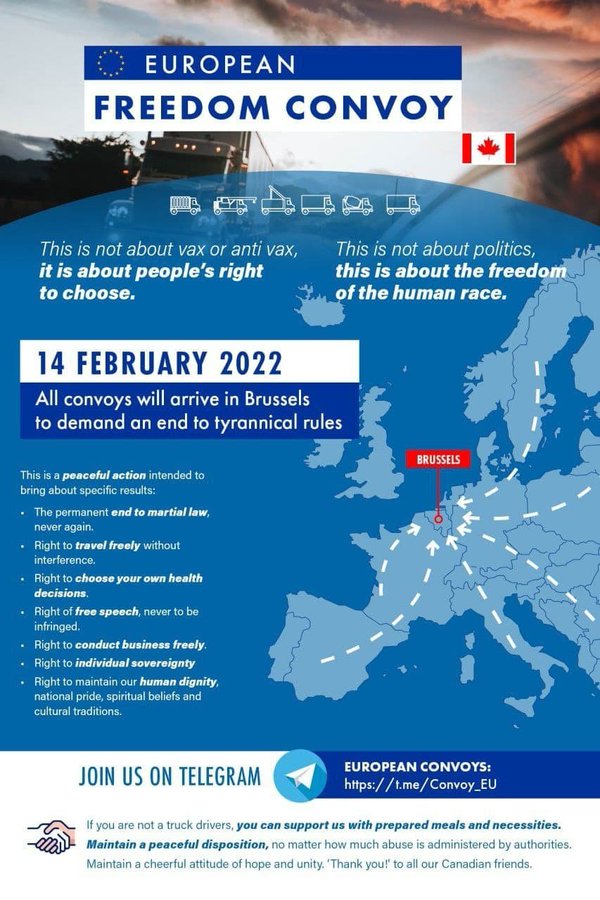
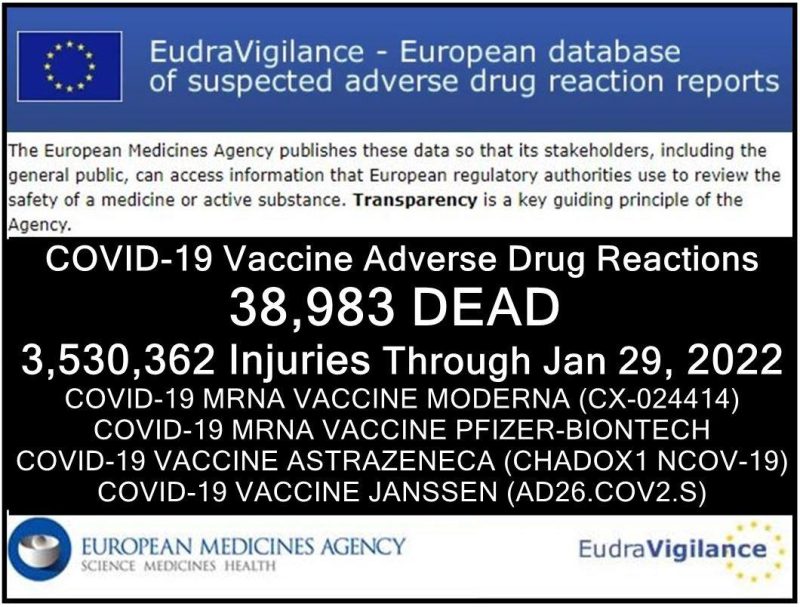
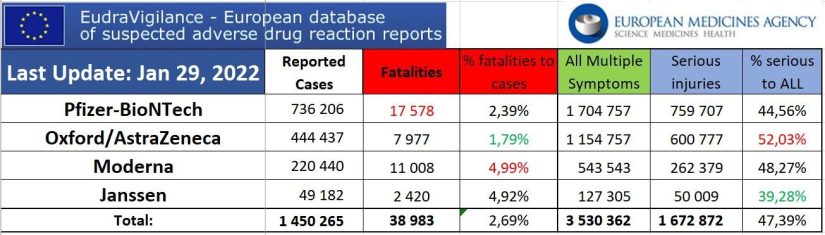
 Aletho News
