Egyptian detainees complain of torture
Mada Masr | March 22, 2015
The Freedom to the Brave group published on Saturday a leaked letter from detainees in the Abu Zaabal Prison in which they complain they were subjected to torture and beating over the past few days.
“All the political prisoners were tortured and the cells were raided by masked central security forces which created panic,” the letter read. “We were attacked with batons and dogs, which led to several injuries and others passed out due to tear gas.”
Fifteen detainees were reportedly taken from their cells and tortured for three hours in front of the others. They were stripped of their clothes and forced to utter profanities, the detainees claimed.
The letter was written by detainees who were arrested on the fourth anniversary of the January 25 revolution for staging protests.
According to Ali Halabi, an activist who has been following the case of the January 25 detainees, it all began when prison forces attacked Ahmed Gamal Zeyada, a journalist, and other detainees tried to protect him.
“After that the cells were raided by masked forces with dogs and they destroyed the property of detainees as well as torturing them,” he told Mada Masr.
The detainees were then kept in the disciplinary room in their underwear for four days.
Reports of torture weren’t limited to Abu Zaabal Prison, but similar cases in Borg al-Arab Prison were reported as well. According to families of detainees, attacks go well beyond verbal assaults, which even the families are subjected to.
“The detainees and even their families are treated badly during visiting hours,” Mostafa al-Attar, brother of detainee Karim al-Attar told Mada Masr. “As soon as we arrive at the prison, security forces start treating us like sheep, ordering us to move from one place to another using profanities.”
Attar said that the detainees are held in confined spaces and are subjected to searches every few days, when their blankets may be burned and possessions destroyed.
“We know they are subjected to much more than that,” Attar said. “They don’t tell us, but they always look broken and they often cry suddenly.”
Kamal Abbas, member of the National Council for Human Rights, told Mada Masr that the council has received numerous reports from different prisons, especially Abu Zaabal and the appeals prisons. Such information includes forcing detainees to stand for hours.
The National Council for Human Rights issued a report last week saying that the Interior Ministry is hindering their visits to prisons, adding that it is prepared to join the prosecution in Shaimaa al-Sabbagh’s case.
“The Interior Ministry has been deliberately obstructing our visit to the prisons for over four months,” Abbas said, “and it denies any reports of torture.”
The council is required to obtain approval for visits from the general prosecution, and the Interior Ministry is required to arrange the visits.
However, Abbas says these rules are ineffective. “Is it realistic for the Ministry of Interior to facilitate a visit for us to ascertain whether or not it is torturing detainees?” he asked.
Abbas explained that the council has long called on previous and current governments to abide by the constitution, which stipulates that visits are by notification and not authorization.
The council’s last visit, Abbas said, was to the January 25’s fourth anniversary detainees. He confirms they had been subjected to torture and beating when they arrived at the prison.
Mada Masr contacted media and human rights officials at the Interior Ministry for comment to no avail.
The Golden Age of Black Ops
Special Ops Missions Already in 105 Countries in 2015
By Nick Turse | TomDispatch | January 20, 2015
In the dead of night, they swept in aboard V-22 Osprey tilt-rotor aircraft. Landing in a remote region of one of the most volatile countries on the planet, they raided a village and soon found themselves in a life-or-death firefight. It was the second time in two weeks that elite U.S. Navy SEALs had attempted to rescue American photojournalist Luke Somers. And it was the second time they failed.
On December 6, 2014, approximately 36 of America’s top commandos, heavily armed, operating with intelligence from satellites, drones, and high-tech eavesdropping, outfitted with night vision goggles, and backed up by elite Yemeni troops, went toe-to-toe with about six militants from al-Qaeda in the Arabian Peninsula. When it was over, Somers was dead, along with Pierre Korkie, a South African teacher due to be set free the next day. Eight civilians were also killed by the commandos, according to local reports. Most of the militants escaped.
That blood-soaked episode was, depending on your vantage point, an ignominious end to a year that saw U.S. Special Operations forces deployed at near record levels, or an inauspicious beginning to a new year already on track to reach similar heights, if not exceed them.
During the fiscal year that ended on September 30, 2014, U.S. Special Operations forces (SOF) deployed to 133 countries — roughly 70% of the nations on the planet — according to Lieutenant Colonel Robert Bockholt, a public affairs officer with U.S. Special Operations Command (SOCOM). This capped a three-year span in which the country’s most elite forces were active in more than 150 different countries around the world, conducting missions ranging from kill/capture night raids to training exercises. And this year could be a record-breaker. Only a day before the failed raid that ended Luke Somers life — just 66 days into fiscal 2015 — America’s most elite troops had already set foot in 105 nations, approximately 80% of 2014’s total.
Despite its massive scale and scope, this secret global war across much of the planet is unknown to most Americans. Unlike the December debacle in Yemen, the vast majority of special ops missions remain completely in the shadows, hidden from external oversight or press scrutiny. In fact, aside from modest amounts of information disclosed through highly-selective coverage by military media, official White House leaks, SEALs with something to sell, and a few cherry-picked journalists reporting on cherry-picked opportunities, much of what America’s special operators do is never subjected to meaningful examination, which only increases the chances of unforeseen blowback and catastrophic consequences.
The Golden Age
“The command is at its absolute zenith. And it is indeed a golden age for special operations.” Those were the words of Army General Joseph Votel III, a West Point graduate and Army Ranger, as he assumed command of SOCOM last August.
His rhetoric may have been high-flown, but it wasn’t hyperbole. Since September 11, 2001, U.S. Special Operations forces have grown in every conceivable way, including their numbers, their budget, their clout in Washington, and their place in the country’s popular imagination. The command has, for example, more than doubled its personnel from about 33,000 in 2001 to nearly 70,000 today, including a jump of roughly 8,000 during the three-year tenure of recently retired SOCOM chief Admiral William McRaven.
Those numbers, impressive as they are, don’t give a full sense of the nature of the expansion and growing global reach of America’s most elite forces in these years. For that, a rundown of the acronym-ridden structure of the ever-expanding Special Operations Command is in order. The list may be mind-numbing, but there is no other way to fully grasp its scope.
The lion’s share of SOCOM’s troops are Rangers, Green Berets, and other soldiers from the Army, followed by Air Force air commandos, SEALs, Special Warfare Combatant-Craft Crewmen and support personnel from the Navy, as well as a smaller contingent of Marines. But you only get a sense of the expansiveness of the command when you consider the full range of “sub-unified commands” that these special ops troops are divided among: the self-explanatory SOCAFRICA; SOCEUR, the European contingent; SOCKOR, which is devoted strictly to Korea; SOCPAC, which covers the rest of the Asia-Pacific region; SOCSOUTH, which conducts missions in Central America, South America, and the Caribbean; SOCCENT, the sub-unified command of U.S. Central Command (CENTCOM) in the Middle East; SOCNORTH, which is devoted to “homeland defense”; and the globe-trotting Joint Special Operations Command or JSOC — a clandestine sub-command (formerly headed by McRaven and then Votel) made up of personnel from each service branch, including SEALs, Air Force special tactics airmen, and the Army’s Delta Force, that specializes in tracking and killing suspected terrorists.
And don’t think that’s the end of it, either. As a result of McRaven’s push to create “a Global SOF network of like-minded interagency allies and partners,” Special Operations liaison officers, or SOLOs, are now embedded in 14 key U.S. embassies to assist in advising the special forces of various allied nations. Already operating in Australia, Brazil, Canada, Colombia, El Salvador, France, Israel, Italy, Jordan, Kenya, Poland, Peru, Turkey, and the United Kingdom, the SOLO program is poised, according to Votel, to expand to 40 countries by 2019. The command, and especially JSOC, has also forged close ties with the Central Intelligence Agency, the Federal Bureau of Investigation, and the National Security Agency, among others.
Shadow Ops
Special Operations Command’s global reach extends further still, with smaller, more agile elements operating in the shadows from bases in the United States to remote parts of Southeast Asia, from Middle Eastern outposts to austere African camps. Since 2002, SOCOM has also been authorized to create its own Joint Task Forces, a prerogative normally limited to larger combatant commands like CENTCOM. Take, for instance, Joint Special Operations Task Force-Philippines (JSOTF-P) which, at its peak, had roughly 600 U.S. personnel supporting counterterrorist operations by Filipino allies against insurgent groups like Abu Sayyaf. After more than a decade spent battling that group, its numbers have been diminished, but it continues to be active, while violence in the region remains virtually unaltered.
A phase-out of the task force was actually announced in June 2014. “JSOTF-P will deactivate and the named operation OEF-P [Operation Enduring Freedom-Philippines] will conclude in Fiscal Year 2015,” Votel told the Senate Armed Services Committee the next month. “A smaller number of U.S. military personnel operating as part of a PACOM [U.S. Pacific Command] Augmentation Team will continue to improve the abilities of the PSF [Philippine Special Forces] to conduct their CT [counterterrorism] missions…” Months later, however, Joint Special Operations Task Force-Philippines remained up and running. “JSOTF-P is still active although the number of personnel assigned has been reduced,” Army spokesperson Kari McEwen told reporter Joseph Trevithick of War Is Boring.
Another unit, Special Operations Joint Task Force-Bragg, remained in the shadows for years before its first official mention by the Pentagon in early 2014. Its role, according to SOCOM’s Bockholt, is to “train and equip U.S. service members preparing for deployment to Afghanistan to support Special Operations Joint Task Force-Afghanistan.” That latter force, in turn, spent more than a decade conducting covert or “black” ops “to prevent insurgent activities from threatening the authority and sovereignty of” the Afghan government. This meant night raids and kill/capture missions — often in concert with elite Afghan forces — that led to the deaths of unknown numbers of combatants and civilians. In response to popular outrage against the raids, Afghan President Hamid Karzai largely banned them in 2013.
U.S. Special Operations forces were to move into a support role in 2014, letting elite Afghan troops take charge. “We’re trying to let them run the show,” Colonel Patrick Roberson of the Afghanistan task force told USA Today. But according to LaDonna Davis, a spokesperson with the task force, America’s special operators were still leading missions last year. The force refuses to say how many missions were led by Americans or even how many operations its commandos were involved in, though Afghan special operations forces reportedly carried out as many as 150 missions each month in 2014. “I will not be able to discuss the specific number of operations that have taken place,” Major Loren Bymer of Special Operations Joint Task Force-Afghanistan told TomDispatch. “However, Afghans currently lead 96% of special operations and we continue to train, advise, and assist our partners to ensure their success.”
And lest you think that that’s where the special forces organizational chart ends, Special Operations Joint Task Force-Afghanistan has five Special Operations Advisory Groups “focused on mentoring and advising our ASSF [Afghan Special Security Force] partners,” according to Votel. “In order to ensure our ASSF partners continue to take the fight to our enemies, U.S. SOF must be able to continue to do some advising at the tactical level post-2014 with select units in select locations,” he told the Senate Armed Services Committee. Indeed, last November, Karzai’s successor Ashraf Ghani quietly lifted the night raid ban, opening the door once again to missions with U.S. advisors in 2015.
There will, however, be fewer U.S. special ops troops available for tactical missions. According to then Rear-, now Vice-Admiral Sean Pybus, SOCOM’s Deputy Commander, about half the SEAL platoons deployed in Afghanistan were, by the end of last month, to be withdrawn and redeployed to support “the pivot in Asia, or work the Mediterranean, or the Gulf of Guinea, or into the Persian Gulf.” Still, Colonel Christopher Riga, commander of the 7th Special Forces Group, whose troops served with the Combined Joint Special Operations Task Force-Afghanistan near Kandahar last year, vowed to soldier on. “There’s a lot of fighting that is still going on in Afghanistan that is going to continue,” he said at an awards ceremony late last year. “We’re still going to continue to kill the enemy, until we are told to leave.”
Add to those task forces the Special Operations Command Forward (SOC FWD) elements, small teams which, according to the military, “shape and coordinate special operations forces security cooperation and engagement in support of theater special operations command, geographic combatant command, and country team goals and objectives.” SOCOM declined to confirm the existence of SOC FWDs, even though there has been ample official evidence on the subject and so it would not provide a count of how many teams are currently deployed across the world. But those that are known are clustered in favored black ops stomping grounds, including SOC FWD Pakistan, SOC FWD Yemen, and SOC FWD Lebanon, as well as SOC FWD East Africa, SOC FWD Central Africa, and SOC FWD West Africa.
Africa has, in fact, become a prime locale for shadowy covert missions by America’s special operators. “This particular unit has done impressive things. Whether it’s across Europe or Africa taking on a variety of contingencies, you are all contributing in a very significant way,” SOCOM’s commander, General Votel, told members of the 352nd Special Operations Group at their base in England last fall.
The Air Commandos are hardly alone in their exploits on that continent. Over the last years, for example, SEALs carried out a successful hostage rescue mission in Somalia and a kidnap raid there that went awry. In Libya, Delta Force commandos successfully captured an al-Qaeda militant in an early morning raid, while SEALs commandeered an oil tanker with cargo from Libya that the weak U.S.-backed government there considered stolen. Additionally, SEALs conducted a failed evacuation mission in South Sudan in which its members were wounded when the aircraft in which they were flying was hit by small arms fire. Meanwhile, an elite quick-response force known as Naval Special Warfare Unit 10 (NSWU-10) has been engaged with “strategic countries” such as Uganda, Somalia, and Nigeria.
A clandestine Special Ops training effort in Libya imploded when militia or “terrorist” forces twice raided its camp, guarded by the Libyan military, and looted large quantities of high-tech American equipment, hundreds of weapons — including Glock pistols, and M4 rifles — as well as night vision devices and specialized lasers that can only be seen with such equipment. As a result, the mission was scuttled and the camp was abandoned. It was then reportedly taken over by a militia.
In February of last year, elite troops traveled to Niger for three weeks of military drills as part of Flintlock 2014, an annual Special Ops counterterrorism exercise that brought together the forces of the host nation, Canada, Chad, France, Mauritania, the Netherlands, Nigeria, Senegal, the United Kingdom, and Burkina Faso. Several months later, an officer from Burkina Faso, who received counterterrorism training in the U.S. under the auspices of SOCOM’s Joint Special Operations University in 2012, seized power in a coup. Special Ops forces, however, remained undaunted. Late last year, for example, under the auspices of SOC FWD West Africa, members of 5th Battalion, 19th Special Forces Group, partnered with elite Moroccan troops for training at a base outside of Marrakech.
A World of Opportunities
Deployments to African nations have, however, been just a part of the rapid growth of the Special Operations Command’s overseas reach. In the waning days of the Bush presidency, under then-SOCOM chief Admiral Eric Olson, Special Operations forces were reportedly deployed in about 60 countries around the world. By 2010, that number had swelled to 75, according to Karen DeYoung and Greg Jaffe of the Washington Post. In 2011, SOCOM spokesman Colonel Tim Nye told TomDispatch that the total would reach 120 by the end of the year. With Admiral William McRaven in charge in 2013, then-Major Robert Bockholt told TomDispatch that the number had jumped to 134. Under the command of McRaven and Votel in 2014, according to Bockholt, the total slipped ever-so-slightly to 133. Outgoing Defense Secretary Chuck Hagel noted, however, that under McRaven’s command — which lasted from August 2011 to August 2014 — special ops forces deployed to more than 150 different countries. “In fact, SOCOM and the entire U.S. military are more engaged internationally than ever before — in more places and with a wider variety of missions,” he said in an August 2014 speech.
He wasn’t kidding. Just over two months into fiscal 2015, the number of countries with Special Ops deployments has already clocked in at 105, according to Bockholt.
SOCOM refused to comment on the nature of its missions or the benefits of operating in so many nations. The command would not even name a single country where U.S. special operations forces deployed in the last three years. A glance at just some of the operations, exercises, and activities that have come to light, however, paints a picture of a globetrotting command in constant churn with alliances in every corner of the planet.
In January and February, for example, members of the 7th Special Forces Group and the 160th Special Operations Aviation Regiment conducted a month-long Joint Combined Exchange Training (JCET) with forces from Trinidad and Tobago, while troops from the 353rd Special Operations Group joined members of the Royal Thai Air Force for Exercise Teak Torch in Udon Thani, Thailand. In February and March, Green Berets from the 20th Special Forces Group trained with elite troops in the Dominican Republic as part of a JCET.
In March, members of Marine Special Operations Command and Naval Special Warfare Unit 1 took part in maneuvers aboard the guided-missile cruiser USS Cowpens as part of Multi-Sail 2014, an annual exercise designed to support “security and stability in the Indo-Asia-Pacific region.” That same month, elite soldiers, sailors, airmen, and marines took part in a training exercise code-named Fused Response with members of the Belizean military. “Exercises like this build rapport and bonds between U.S. forces and Belize,” said Air Force Lieutenant Colonel Heber Toro of Special Operations Command South afterward.
In April, soldiers from the 7th Special Forces Group joined with Honduran airborne troops for jump training — parachuting over that country’s Soto Cano Air Base. Soldiers from that same unit, serving with the Afghanistan task force, also carried out shadowy ops in the southern part of that country in the spring of 2014. In June, members of the 19th Special Forces Group carried out a JCET in Albania, while operators from Delta Force took part in the mission that secured the release of Army Sergeant Bowe Bergdahl in Afghanistan. That same month, Delta Force commandos helped kidnap Ahmed Abu Khattala, a suspected “ringleader” in the 2012 terrorist attacks in Benghazi, Libya, that killed four Americans, while Green Berets deployed to Iraq as advisors in the fight against the Islamic State.
In June and July, 26 members of the 522nd Special Operations Squadron carried out a 28,000-mile, four-week, five-continent mission which took them to Sri Lanka, Tanzania, and Japan, among other nations, to escort three “single-engine [Air Force Special Operations Command] aircraft to a destination in the Pacific Area of Responsibility.” In July, U.S. Special Operations forces traveled to Tolemaida, Colombia, to compete against elite troops from 16 other nations — in events like sniper stalking, shooting, and an obstacle course race — at the annual Fuerzas Comando competition.
In August, soldiers from the 20th Special Forces Group conducted a JCET with elite units from Suriname. “We’ve made a lot of progress together in a month. If we ever have to operate together in the future, we know we’ve made partners and friends we can depend upon,” said a senior noncommissioned officer from that unit. In Iraq that month, Green Berets conducted a reconnaissance mission on Mount Sinjar as part an effort to protect ethnic Yazidis from Islamic State militants, while Delta Force commandos raided an oil refinery in northern Syria in a bid to save American journalist James Foley and other hostages held by the same group. That mission was a bust and Foley was brutally executed shortly thereafter.
In September, about 1,200 U.S. special operators and support personnel joined with elite troops from the Netherlands, the Czech Republic, Finland, Great Britain, Lithuania, Norway, Poland, Sweden, and Slovenia for Jackal Stone, a training exercise that focused on everything from close quarters combat and sniper tactics to small boat operations and hostage rescue missions. In September and October, Rangers from the 3rd Battalion, 75th Ranger Regiment deployed to South Korea to practice small unit tactics like clearing trenches and knocking out bunkers. During October, Air Force air commandos also conducted simulated hostage rescue missions at the Stanford Training Area near Thetford, England. Meanwhile, in international waters south of Cyprus, Navy SEALs commandeered that tanker full of oil loaded at a rebel-held port in Libya. In November, U.S. commandos conducted a raid in Yemen that freed eight foreign hostages. The next month, SEALs carried out the blood-soaked mission that left two hostages, including Luke Somers, and eight civilians dead. And these, of course, are only some of the missions that managed to make it into the news or in some other way onto the record.
Everywhere They Want to Be
To America’s black ops chiefs, the globe is as unstable as it is interconnected. “I guarantee you what happens in Latin America affects what happens in West Africa, which affects what happens in Southern Europe, which affects what happens in Southwest Asia,” McRaven told last year’s Geolnt, an annual gathering of surveillance-industry executives and military personnel. Their solution to interlocked instability? More missions in more nations — in more than three-quarters of the world’s countries, in fact — during McRaven’s tenure. And the stage appears set for yet more of the same in the years ahead. “We want to be everywhere,” said Votel at Geolnt. His forces are already well on their way in 2015.
“Our nation has very high expectations of SOF,” he told special operators in England last fall. “They look to us to do the very hard missions in very difficult conditions.” The nature and whereabouts of most of those “hard missions,” however, remain unknown to Americans. And Votel apparently isn’t interested in shedding light on them. “Sorry, but no,” was SOCOM’s response to TomDispatch’s request for an interview with the special ops chief about current and future operations. In fact, the command refused to make any personnel available for a discussion of what it’s doing in America’s name and with taxpayer dollars. It’s not hard to guess why.
Votel now sits atop one of the major success stories of a post-9/11 military that has been mired in winless wars, intervention blowback, rampant criminal activity, repeated leaks of embarrassing secrets, and all manner of shocking scandals. Through a deft combination of bravado and secrecy, well-placed leaks, adroit marketing and public relations efforts, the skillful cultivation of a superman mystique (with a dollop of tortured fragility on the side), and one extremely popular, high-profile, targeted killing, Special Operations forces have become the darlings of American popular culture, while the command has been a consistent winner in Washington’s bare-knuckled budget battles.
This is particularly striking given what’s actually occurred in the field: in Africa, the arming and outfitting of militants and the training of a coup leader; in Iraq, America’s most elite forces were implicated in torture, the destruction of homes, and the killing and wounding of innocents; in Afghanistan, it was a similar story, with repeated reports of civilian deaths; while in Yemen, Pakistan, and Somalia it’s been more of the same. And this only scratches the surface of special ops miscues.
In 2001, before U.S. black ops forces began their massive, multi-front clandestine war against terrorism, there were 33,000 members of Special Operations Command and about 1,800 members of the elite of the elite, the Joint Special Operations Command. There were then also 23 terrorist groups — from Hamas to the Real Irish Republican Army — as recognized by the State Department, including al-Qaeda, whose membership was estimated at anywhere from 200 to 1,000. That group was primarily based in Afghanistan and Pakistan, although small cells had operated in numerous countries including Germany and the United States.
After more than a decade of secret wars, massive surveillance, untold numbers of night raids, detentions, and assassinations, not to mention billions upon billions of dollars spent, the results speak for themselves. SOCOM has more than doubled in size and the secretive JSOC may be almost as large as SOCOM was in 2001. Since September of that year, 36 new terror groups have sprung up, including multiple al-Qaeda franchises, offshoots, and allies. Today, these groups still operate in Afghanistan and Pakistan — there are now 11 recognized al-Qaeda affiliates in the latter nation, five in the former — as well as in Mali and Tunisia, Libya and Morocco, Nigeria and Somalia, Lebanon and Yemen, among other countries. One offshoot was born of the American invasion of Iraq, was nurtured in a U.S. prison camp, and, now known as the Islamic State, controls a wide swath of that country and neighboring Syria, a proto-caliphate in the heart of the Middle East that was only the stuff of jihadi dreams back in 2001. That group, alone, has an estimated strength of around 30,000 and managed to take over a huge swath of territory, including Iraq’s second largest city, despite being relentlessly targeted in its infancy by JSOC.
“We need to continue to synchronize the deployment of SOF throughout the globe,” says Votel. “We all need to be synched up, coordinated, and prepared throughout the command.” Left out of sync are the American people who have consistently been kept in the dark about what America’s special operators are doing and where they’re doing it, not to mention the checkered results of, and blowback from, what they’ve done. But if history is any guide, the black ops blackout will help ensure that this continues to be a “golden age” for U.S. Special Operations Command.
Copyright 2015 Nick Turse
French gov preparing to outlaw ‘conspiracy theories’

By Brandon Martinez | Non-Aligned Media | March 20, 2015
In addition to its new law against ‘condoning terrorism,’ the French regime also plans to outlaw ‘conspiracy theories’ and prevent French citizens from accessing websites deemed conspiratorial.
On Jan. 27 France’s President Francois Hollande told a Jewish-Zionist audience at a Holocaust Memorial ceremony:
“We need to act [against the dissemination of conspiracy theories] at the European level, and even internationally, so that a legal framework can be defined, and so that Internet platforms that manage social networks are held to account and that sanctions be imposed for failure to enforce [censorship].”
As a first step in the crackdown on theories not consonant with government propaganda and lies, the French regime banned five websites.
Non-Aligned Media holds that the Ottawa shooting, the Sydney Siege, the Charlie Hebdo attack and the recent assault in Copenhagen were all staged-managed PR events designed to validate a government crackdown on terrorism-skeptics.
The British, Australian and Canadian governments have all forwarded similar pleas to silence skeptics of war on terror mythology and the official interpretations of 9/11, 7/7 and other false flag events which bear Israeli and Western fingerprints.
Britain’s David Cameron in particular equated 9/11 and 7/7 skeptics with ISIS terrorists during a speech at the United Nations.
After the October 22 Ottawa shooting in Canada, Sun News, a neocon Fox News clone outlet, dubbed the phrase ‘terrorist truthers’ to describe anyone not sufficiently sheep-like.
Copyright 2015 Non-Aligned Media
Tunisia museum attack: Who’s behind it, what are their goals?
RT | March 19, 2015
Groups like IS, which could be behind the Bardo Museum shootings, have a long history of collaborating with the West and may have attacked tourists just to maintain their anti-Western façade, says independent political analyst Dan Glazebrook.
RT: Do you think that the Western tourists were targeted on purpose?
Dan Glazebrook: Yeah, I think so. The thing is with ISIS and these groups – they have a long history of collaborating with the West. It’s fundamental to their appeal that they kind of try to present themselves as anti-Western. If you look over the last several years, they’ve been singing from the same song-sheet – whether it’s on Libya, the fight against Gaddafi; Syria, the fight against Assad. We’ve had revelations about fighters’ passage to Syria to go and fight against Assad being facilitated by MI5, by British intelligence. This all came out in the hearings in Mozambique last year. So these guys are on the same page, they are helping to fulfill the West strategic aims of destabilization in the area. … The thousands and thousands people they’ve killed, the vast majority of them have been other Muslims and non-white people. From time to time they have to kill some Europeans and some Westerners in order to maintain this façade of somehow being opposed to the West, whilst they continue to carry out and facilitate the West’s strategic aims.
RT: A large number of Islamic State fighters reportedly come from Tunisia. Why is that?
DG: It was estimated at one point that the actual majority of foreign fighters in Syria were of Tunisian origin, over 3,000… They’ve also fought in Libya; they’ve fought in terrorist campaigns in Algeria. There are many different reasons; part of it is a kind of extremist backlash against the extremist secularism of the previous President [Zine El Abidine] Ben Ali and his predecessor [Habib Bourguiba]. But I think a lot of it is just simply to do with the economics and finances. There is very high unemployment in Tunisia. It is rumored that you can get up to $27,000 a year for going to fight for ISIS… Billions of dollars were put into these sectarian militias to build up these groups by Saudi Arabia and the USA as a bulwark against the resistance axis of Syria, Iran, and Hezbollah. These billions of dollars are still slushing around.
‘Attack might be publicizing Ansar al-Sharia’s merger with ISIS’
Brian Levin, director of the Center for the Study of Hate and Extremism, also commented on the Tunis museum attack.
RT: No one has claimed responsibility for the attack yet. Who in your view is most likely to be behind it?
Brian Levin: The most likely would probably be Ansar al-Sharia which is a radical Salafist terrorist group which started in Tunisia shortly after the Tunisian revolution in January, 2011. It was formed three months later by a fellow named Abu Ayadh. That is the most likely suspect, although, ISIS affiliates are present in neighboring Libya as well.
RT: Do you think the attackers were pursuing any particular goal with this terrible assault?
BL: Yes, I would think that if it is Ansar al-Sharia or if Ansar al-Sharia is using this to publicize some kind of merger with ISIS – this would be the time and the place to do it. Tunisia, as I said, in an area where ISIS has been exporting its brand of radicalism. That is one thing – Tunisia is Western friendly and it has got a strong economy.
RT: Earlier, a warning for tourists had been issued calling on them not to visit certain areas. Is this kind of attack in Tunisia a rare event and just how dangerous is the country for travelers?
BL: There have been advisories put out about travel to Tunisia. Its biggest industries are in fact tourism and minerals. It is a democratic society and it is Western friendly. Its economy is strong [but] it relies on these exports and tourism. And an attack like this could really hurt the economy in a place where there is fragility with respect to the economic situation. Remember again, Tunisia was the success story of the Arab Spring. This is the time and the place where groups like ISIS and Ansar al-Sharia are trying to make radicalism an imprint there and in the neighboring countries as well.
RT: The EU foreign policy chief Federica Mogherini has said that IS was behind the attack. Do you believe that that is likely?
BL: It could be in a sense to the extent that these actors had the same goal… Ansar Al-Sharia is allying itself with the al-Qaeda affiliates in North Africa. The fact of the matter is it very well could be ISIS. ISIS does have an imprint in North Africa. One of the things that ISIS had wanted to do even when it was just AQI [al-Qaeda in Iraq] back in 2004, they wanted to export their terrorism to places like Jordan, and now has an imprint in places like Libya which neighbors Tunisia.
Read more 17 tourists, 2 locals slain in Tunis museum attack
France moves to legalize warrantless data surveillance
RT | March 19, 2015
In effort to boost its intelligence gathering, France is pushing for a law to allow authorities to spy on the digital and mobile communications of anyone linked to a “terrorist” enquiry without any judicial authorization.
The government presented the draft law to parliament on Thursday.
“Facing an increasing jihadist threat, we have to further enhance the effectiveness of the surveillance against terrorists,” Prime Minister Manuel Valls said at a news conference two months after 17 people died in a series of terrorist attacks in Paris.
“Today, one of the two people who arrived in Syria has been detected before his departure, so we have to … tighten the net of surveillance of radicalized and dangerous individuals.”
Valls said the text of the draft provided the intelligence services the means enough to fight terrorism, yet respecting individual freedoms – a view, not supported by many human rights organizations and lawyers.
The draft law would give the intelligence services the right to perform “security interceptions” of e-mails and phone conversations, to install radio beacons in a suspect’s cars, as well as microphones and cameras in their home. It could also be able to track what a suspect types on a computer keyboard with the use of special software, and also force internet service providers to hand over data to the security services.
However the prime minister underlined that the draft “is not a French-style Patriot Act,” referring to the anti-terrorism laws introduced in the US after the 9/11 tragedy in 2001 that strengthened security controls. The future law only legitimizes the actions, already common among the intelligence services, so Valls added that “There will be no more grey zone,” as cited by Reuters.
Human rights watchdogs and lawyers have slammed the project as “devastating” for individual freedom. The Paris Bar Association also expressed their disapproval over the “text made without any prior coordination with the judiciary.”
Nils Muiznieks, human rights commissioner of the Council of Europe, said on Thursday, “I am concerned about the strict security approach that characterizes the discussions and the text of the legislation aimed at intensifying the fight against terrorism.”
Amnesty International stated that it “is concerned that several of these measures may pave the way for violations of international and regional human rights standards that are binding on France, in particular those regarding the rights to freedom of expression and to private life.”
In January, following the attacks in Paris where 17 people were killed, Manuel Valls revealed plans to boost anti-terrorism strategies. The prime minister announced that France will employ 2,680 extra anti-terror operatives with a €425 million increase in funding.
UK-Iraq abuse inquiry refuses to consider CIA torture report
Reprieve | March 19, 2015
The body tasked with investigating British abuses in Iraq has said it will not request as evidence the US Senate’s report on CIA torture, in the case of two Pakistani men tortured and rendered by the UK and the US.
Yunus Rahmatullah and Amanatullah Ali were captured and tortured by British operatives in Iraq in 2004, before being rendered to the US-run Bagram prison in Afghanistan. They were held incommunicado for a further decade before their release to Pakistan in 2014.
The Iraq Historic Allegations Team (IHAT), which is investigating the men’s allegations, has refused a request from human rights organization Reprieve that it obtain a full copy of the US Senate’s report on CIA torture. Mr Rahmatullah and Mr Ali were rendered on a CIA flight, and it is believed that the full report would contain evidence of the two men’s physical condition after UK troops handed them over to US forces, as well as the timing of their rendition; information that could corroborate the men’s claims.
IHAT has claimed that its decision not to request a copy of the CIA report is a private ‘operational’ matter. Reprieve, which is assisting the two men, has initiated a challenge to that decision, amid concerns that the body is failing properly to investigate the men’s ordeal.
The controversial executive summary of the CIA torture report, published late last year, revealed wide-ranging torture and rendition activities by the US and its allies in the initial years of the ‘War on Terror’.
Kat Craig, legal director at Reprieve, which is assisting the two men, said: “Yunus Rahmatullah and Amanatullah Ali suffered a horrific, 10-year ordeal of torture and detention at the hands of the UK and US. These men deserve answers and justice – and the CIA torture report is a crucial piece of evidence in that effort. IHAT’s refusal to request a copy of that report is therefore inexplicable. Who should the victims of torture and rendition look to for accountability, if they are let down like this at every turn?”
French comedian sentenced for ‘defending terrorism’ in Facebook remark
By Brandon Martinez | Non-Aligned Media | March 18, 2015

The popular French comedian Dieudonne has been found guilty by a French court of ‘defending terrorism,’ making the comic one of dozens convicted of the Orwellian speech offence since the Charlie Hebdo shooting.
The charges stem from a Facebook comment Dieudonne made in the aftermath of the shooting, saying “I feel like I am Charlie Coulibaly,” a play on the ludicrous catch phrase “I am Charlie.”
Haaretz reports that the Paris court sentenced Dieudonne to a suspended sentence of two months in jail.
The French state has been criticized for its blatant double standards as it relates to free speech. Government ministers voiced support for Charlie Hebdo’s right to publish anti-Muslim cartoons, but concurrently issue orders for the arrest of people critical of Jews and Israel.
France’s President Manuel Valls is said to be under Jewish influence. Valls says he is “eternally linked” with Israel because his wife is Jewish.
Copyright 2015 Non-Aligned Media
US Muslim tortured in UAE for 106 days struggles to prove FBI hand
RT | March 18, 2015
A US citizen, who was put on a no-fly list, declared a threat to national security and tortured in an UAE prison after refusing to become an FBI informant, is having a hard time proving it happened at the behest of the US authorities, his lawyer told RT.
Yonas Fikre is an Eritrean born American citizen who immigrated as a refugee to the US when he was 13 from neighboring Sudan. He became a US citizen and in 2006 settled in Portland, Oregon. His problems began soon after 2010 when he went back to Khartoum, where he still had relatives, to start an electronics import business.
In Sudan he was summoned to the US Embassy on false pretenses and was told by two FBI agents from Oregon that they wanted to ask him a few questions about his mosque in Portland. When Fikre demanded a lawyer and hesitated to answer questions about people he had prayed at the mosque with but barely knew – the agents told him he was placed on a no-fly list. Although there was “absolutely no factual justification” for that, his lawyer, Thomas Nelson, told RT.
Fikre was told he would be taken off the list if he agreed to work for the FBI as an informant. He eventually agreed to answer their questions, but not work for the feds. A couple of weeks later, Fikre says he received a letter from one of the FBI agents, telling him threateningly: “While we hope to get your side of issues we keep hearing about, the choice is yours to make. The time to help yourself is now.”
Taking threats into account, he still managed to fly to his relatives in Sweden. He concluded that he was not in fact deemed a serious threat and the FBI agents had been bluffing, although he wondered whether had he flown to a close US ally such as Britain that this would also have been the case.
He got a chance to find that out after he went to the UAE, one of the US’s closet allies in the Middle East, and was suddenly arrested by the local police.
Fikre was held and tortured in UAE prison for 106 days from June to September 2011. During this time he was continually beaten and repeatedly asked about events in Portland, Oregon – the same questions that the FBI asked him earlier.
“During the torture he was always blindfolded, and so he could not see who was doing the interrogating and who else was in the room, although he was aware that there were others. With the exception that he could occasionally look underneath the blindfold and see pants, trousers, shoes and dress of that sort. Sometimes there was Western dress, sometimes there was Arabic dress,” his lawyer explained to RT.
After eventually being released – without any charges – Fikre managed to return to Sweden and over the next three years managed to prove that he had been tortured while in custody in the UAE, although he and his legal team are convinced they can not prove that this was at the behest of the US authorities.
“During the course of 3 years there, the Swedish authorities investigated what happened to him and they came to a conclusion that Yonas indeed had been tortured. Their problem was that they had a hard time proving that it was the FBI or the American authorities that instigated and performed the torturing. It was not a question of whether the torture occurred, it was a question of whether they can prove that the Americans were behind it,” he explained.
Although there is overwhelming circumstantial evidence, Thomas Nelson says they are having hard time proving the US authorities took part in the torture.
“It’s one of those difficult things because when the most powerful nation on earth wants to hide something, it can do it very easily. We have litigation going on here where, we’re going to try and chase down those avenues and to prove who was involved, what they did and how they did it,” Nelson said.
The lawyer added that legally one of the major problems lawyers face in issues like this is that it’s very difficult to bring a foreign state as a defendant into the United States court system. He also said that another reason that litigation against the US authorities has been unsuccessful is because the US has been “very effective in scaring and creating fear both in the judiciary and in the general public about Muslims.”
Nablus family says Israeli soldiers stole money during home raid
Ma’an – 18/03/2015
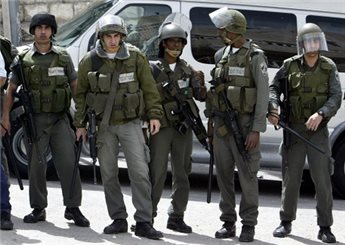
NABLUS – A Palestinian family has accused Israeli forces of stealing money and jewelry from their family home near Nablus during a military raid Sunday.
Family members of Wisdam Nassar from the village of Madama south of Nablus told Ma’an they realized Tuesday that 5,000 shekels ($1,200) and jewelry worth 12,000 shekels ($3,000) were gone after Israeli forces raided the home.
Israeli forces raided the village at 2 a.m. early Sunday and ransacked several homes for inspection, according to the family.
The family said they had notified the Palestinian security services of the robbery.
An Israeli army spokeswoman told Ma’an she was not aware of any theft that might have occurred and would look into the incident.
Israeli forces confiscated an estimated $2.9 million worth of cash and property from Palestinian homes, charities, and businesses during Operation Brother’s Keeper in the summer of 2014, according to a report by Geneva-based human rights organization Euro-Mid Observer.
The operation involved a three-week campaign of mass arrests throughout the occupied West Bank by Israeli forces, allegedly searching for those responsible for the deaths of three Israeli teenagers killed while hitchhiking in a Jewish settlement near Bethlehem.
Spokespople for the Israeli government justified confiscations during this time by claiming their planned use to fund or support terrorism.
The Euro-Mid Observer reported, however, that Israeli authorities neither provided evidence nor judicial permission for the confiscations.
NYPD says cops won’t be sanctioned for altering Wikipedia entries
RT | March 17, 2015
Two veteran New York City cops discovered to have altered Wikipedia entries related to high-profile police brutality cases from police headquarters won’t be punished, according to the commissioner.
New York Police Department Commissioner Bill Bratton made the announcement Monday and said the two officers – whose names will not be released – do not currently work in the police headquarters, and are assigned to two different units.
“Two officers, who have been identified, were using department equipment to access Wikipedia and make entries,” NYPD commissioner Bill Bratton told reporters. “I don’t anticipate any punishment, quite frankly.”
The officers might be reprimanded for using their employer’s computers for unrelated work and are expected to be spoken to by Internal Affairs Bureau investigators.
The Wikipedia alterations were made to entries concerning some of the city’s most controversial police brutality cases, including Eric Garner, Sean Bell and Amadou Diallo, all of whom were killed by officers.
Mayor Bill de Blasio said at the same press conference “city computers” are “supposed to be for city business. This was not authorized business.”
Most NYPD computers don’t allow access to the internet, an anonymous source told DNAinfo. Currently, the NYPD doesn’t have a policy specific to Wikipedia, but it is in the process of reviewing its social media rules. Police officials told local news source DNAinfo that they did not direct the changes made to Wikipedia.
Since Wikipedia is publicly accessed and edited by volunteers, it is not appropriate for NYPD officers to edit references they believe are inaccurate. Wikipedia users have removed some of the changes to the entries.
Capital New York reported Friday that as many as 85 IP addresses registered at NYPD headquarters have logged hundreds of edits to Wikipedia entries on victims of police brutality, dating back 10 years.
The NYPD only maintains records that can trace computer use for one year, but they were able to uncover that the two veterans had made alterations on the “Death of Eric Garner” page on Wikipedia shortly after a Staten Island grand jury decided not to indict NYPD Officer Daniel Pantaleo for his death.
Garner, who was placed in a chokehold, was killed by police last year during an arrest that was captured on video by an onlooker. One of the edits altered “Garner raised both his arms in the air” to “Garner flailed his arms about as he spoke.”
Featured Video

Liberty Cannot Exist Inside a Panopticon
or go to
Aletho News Archives – Video-Images
From the Archives
Left-leaning despisers of 9/11 Truth movement: Do you really believe in miracles?
David Ray Griffin | Global Research | 06 Jul 2010
An Open Letter to Terry Allen, Noam Chomsky, Alexander Cockburn, David Corn, Chris Hayes, George Monbiot, Matthew Rothschild, and Matt Taibbi.
[1]According to several left-leaning critics of the 9/11 Truth Movement, some of its central claims, especially about the destruction of the World Trade Center, show its members to be scientifically challenged. In the opinion of some of these critics, moreover, claims made by members of this movement are sometimes unscientific in the strongest possible sense, implying an acceptance of magic and miracles. … Full article
Blog Roll
 Aletho News
- White House envoy declares kinetic action against Yemen ‘fruitless’
- Ukraine deployed thousands of microdrones in Iraqi Kurdistan: Tasnim
- Iran calls for emergency UNSC meeting over Trump’s ‘brazen’ bomb talk, Israeli threats
- Iranian sources reveal details of Russia-China Hormuz proposal
- Plan for more US-Israel integration puts our military tech at risk
- Another Round Against Iran Will Break What Is Left of the Gulf
- SVR Report on Ukraine’s Mexican Drug Gang Links Could Pressure Zelensky, Won’t Change US Policy
- British Government Employees Were Fact-Checking the News at the BBC. Nobody Told You.
- Albania on fire: who’s behind the riots?
- Egypt’s Civil Democratic Movement rejects involvement in regional war
- If Americans Knew
- Mysterious bot accounts reportedly spread fake ‘man on the street’ videos for Michigan Senate candidate
- Israeli Defense Minister Katz Says Over 60 Lebanon Villages Have Been Destroyed
- Why Is Israel Running TV Ads in Iowa Ahead of the Midterms?
- Hind Rajab’s Alleged Killer Is in the United States. HRF Demands His Arrest.
- US Officials Face Fresh Pressure After Another American ‘Brutalized’ by Israeli Settlers in West Bank
- Israel-Backed Palestinian Militias Terrorize Displaced Families in Gaza
- FBI subpoenas pro-Palestine activists over Israeli weapons plant disruption
- Fourth winter arrives in wartorn Gaza, too early – Daily Update
- More on how Bari Weiss is using CBS on behalf of Israel
- What the UK Is Doing to Pro-Palestine Novelist Sally Rooney Is an Act of Orwellian Villainy
- No Tricks Zone
- Predictions Made By Renowned Climate Proifessor Over Past Decades Have Been Proven To Be Poor
- New Study Suggests Large Regions Of The Pacific Ocean Have Been Cooling For The Last 80 Years
- Germany’s Green Energy Debacle: High Energy Costs Force Kahla Porzellan to Close After 182 Years!
- New Study: 50 Years Of The Most Aggressive ‘Net Zero’ Policies Can Only Affect The Global Climate By 0.03°C
- US September “Heat” Was No Record…Many Records Set Decades Ago
- Latest European Green Energy Debacle; Portugal’s Largest Flagship Solar Park Insolvent!
- Green Energy Debacle: German Expert Professor Fritz Vahrenholt Warns Of Severe Economic And Social Consequences
- Two More Paleo Reconstructions Affirm Meters-Higher Sea Levels Across Ireland, Brazil 7000-6000 Years Ago
- New Study: Earth And Venus Surface Warmth Largely Explained By Convection And Lapse Rate, Not CO2 Or Radiation
- 2025 Nature Paper Claiming Worsening Global Drought Gets RETRACTED …Heavily Flawed

