What is Going On in Spain?
The End of an Era and the Beginning of Podemos
By VICENTE NAVARRO | CounterPunch | January 9, 2015
Something is happening in Spain. A party that did not exist one year ago, Podemos, with a clear left-wing program, would win a sufficient number of votes to gain a majority in Spanish Parliament if an election were held today. Meanwhile, the leaders of the group G-20 attending their annual meeting in Australia were congratulating the president of the Spanish conservative-neoliberal government, Mr. Mariano Rajoy, for the policies that his government had imposed. (I use the term “imposed” because none of these policies were written in its electoral program.) These included: (1) the largest cuts in public social expenditures (dismantling the underfunded Spanish welfare state) ever seen since democracy was established in Spain in 1978 and (2) the toughest labor reforms, which have substantially deteriorated labor market conditions. Salaries have declined by 10% since the Great Recession started in 2007, and unemployment has hit an all-time record of 26% (52% among the youth). The percentage of what the trade unions defined as “shit work” (temporary, precarious work) has increased, becoming the majority of new contracts in the labor market (more than 52% of all contracts), and 66% of unemployed people do not have any form of unemployment insurance or public assistance.
These measures have created an enormous problem of lack of domestic demand, a major cause of the long-term recession. It has been only recently that very limited growth has appeared, due primarily to the decline in the price of gasoline, a devaluation of the euro, and a tentative commitment by the European Central Bank (ECB) to buy public bonds. The Spanish government did not have anything to do with any of these events, although it claims now that the short recovery is a result of its neoliberal policies.
These neoliberal policies were promoted by the European Union (EU) establishments (European Council, European Commission, and ECB) and by the International Monetary Fund. They were carried out in Spain with the support and encouragement of financial capital, major business enterprises, and their political instrument, the Popular Party (PP), now in government. It seems that the right-wing in Spain was finally getting what it had always wanted: the reduction of salaries and the weakening of social protection with a dismantling of the welfare state. Those policies are what the international elites of the G-20 who met in Australia were presenting as a model for all countries to follow, championing Spain as a model country.
The Historical Causes of These Events
I have written extensively about the reasons why Spain, Portugal, Greece, and Ireland are in deep trouble. I refer readers to one of these articles (“Capital-Labor: The Unspoken Causes of the Crises,” www.vnavarro.org, Economic Section). Let me briefly summarize it. All these countries, referred to rather unkindly in the Anglo-Saxon economic literature as PIGS (Portugal, Ireland, Greece, and Spain), have had ultra-right-wing dictatorships (fascist or fascistoid), except Ireland, governed by a very conservative party close to the Church. These dictatorships were the result of military coups (in the case of Spain, supported by Hitler and Mussolini in 1936) against democratically elected governments that had initiated meaningful reforms affecting the privilege of the oligarchy, i.e., the agricultural, financial, and (in the case of Catalonia and Basque Country in Spain) industrial bourgeoisie, in addition to the Catholic Church and the Army. The Spanish fascist coup established one of the most brutal repressions that has ever taken place in Western Europe during the 20th century. For every political assassination that Mussolini carried out, Franco’s dictatorship had 10,000. Even today, there are more than 120,000 people who were assassinated during the dictatorship whose bodies have yet to be found. After Cambodia, Spain has the second-largest number of people who have disappeared for political reasons without any trace of their bodies being found. Franco’s dictatorship was a class dictatorship against the working population. That dictatorship was responsible for the enormous economic and cultural underdevelopment in Spain. When the military coup took place in 1936, Spain’s Gross National Product (GNP) per capita was similar to Italy’s. In 1978, when the dictatorship ended and the democracy was established, Spain’s GNP per capita was only 62% of Italy’s. That was the economic cost of having a fascist dictatorship.
The Transition from Dictatorship to Democracy
When the dictator died in 1975, the dictatorship had lasted 40 years. The apparatus of the state, a coalition of fascist forces known as El Movimiento Nacional and the Opus Dei (a religious sect of the Catholic Church), as well as the Army and the Catholic Church, had wanted to continue the dictatorship under the leadership of Franco’s deputy Admiral Carrero Blanco. But this admiral had been killed by ETA, creating a vacuum in the leadership of the dictatorship.
Meanwhile, the antifascist resistance had been growing considerably, with strong and wide social agitation, led primarily by the working class in the major cities of Barcelona, Bilbao, and Madrid and in specific areas of Spain such as the mining region in Asturias (the Appalachia of Spain). The working class clearly was asking for change. From 1975 to 1978, Spain had the largest number of labor strikes (despite these being forbidden) in Western Europe. This labor unrest shook up the Spanish establishment, which included large sectors of the Spanish bourgeoisie who did not consider the continuation of the dictatorship as a viable option. They wanted to be integrated in the EU, and even the Eurozone, and the dictatorship represented an obstacle to achieving that goal. King Juan Carlos, who had been appointed by Franco, was leading the demand for state changes that would guarantee the continuation of the Spanish financial and industrial establishments under a different political regime. He appointed Adolfo Suarez, who had been the general secretary of Movimiento Nacional, as president of the country, with the mandate to establish changes in the Spanish state. These changes were aimed primarily at integrating the Social Democratic Party (PSOE) into the state apparatus and marginalizing the Communist Party (PCE), which had been the main force in the antifascist struggle.
Before dissolving, the Movimiento Nacional had imposed a series of conditions. One was that the electoral law would be designed to make it impossible for the Communist Party to have a major parliamentarian representation. The law was approved and later modified during the democratic period, although it continued to discriminate against the working class in urban centers (where most of the communist votes existed). As a consequence, whereas a conservative city like Salamanca needs 32,000 votes to elect a member of the Spanish Parliament, Barcelona (a city historically aligned to the left) needed 150,000 votes. The new electoral law did favor bipartidismo, i.e., the permanence of a two-party system—the conservative neoliberal (PP) and socialist party (PSOE) that control the whole state apparatus, under the hegemony of the PP.
The Dominance of the Conservative Forces in the State
In this way, the right-wing establishment had full control of all the branches of the state and all the media (press, radio, and television). The democratic forces (led by the Communist party), however, had just left the clandestinity and/or come back from exile. Thus, the transition took place under very difficult conditions for the left. There was no equilibrium between right-wing and left-wing forces. The product of that disequilibrium was the Spanish Constitution and the democratic institutions, clearly influenced by conservative establishments. It solidified the structure of power that existed during the dictatorship. Banking continued to be the major player in the economic life of the country. And the major industries (established primarily in Barcelona, Bilbao, and Madrid) that were powerful during the dictatorship continued to be equally powerful, with new additions: the privatization of major public enterprises—from energy to communications—which were now controlled by the elites of the political parties, particularly by the Partido Popular (PP), which appointed friends of the president of the government and of the party to top positions in these newly privatized businesses. As in Russia, the major businesses that used to be controlled by the party apparatus were now controlled by the same individuals, as part of the new plutocracy.
The major inheritor of the Spanish dictatorship is the governing party, the PP, a coalition of post-fascist groups (such as the Alliance Popular, with ultra-right-wing ideology), liberal associations (“liberal” in Europe means very right-wing forces representing the major business community, with antagonisms toward labor), and conservative (such as Christian democratic institutions close to the Catholic Church). The PP also has a large post-fascist, chauvinist, and anti-migrant component, which explains why Spain does not have a major chauvinist movement, since this movement is already within the PP.
The Social and the National Question
One major consequence of the right-wing domination of the state has been the poverty of the welfare state and the very poor conditions of the labor markets. Unemployment has been a constant in Spain, and the public social expenditures per capita are among the lowest in the EU-15 (the group of richest countries in the EU). These situations have become even worse because of the crisis.
Another consequence was the continuation of a vision of Spain, inherited from the dictatorship and previous monarchic regimes, which denied its plurinationality. Instead, the Spanish Constitution recognized only one nation, the Spanish nation, denying the historical demand of the left-wing parties—the Socialist and the Communist—that saw Catalonia, Basque Country, and Galicia as other nations within Spain. Both parties had, during the clandestine time, called for the right to self-determination for the different nations of Spain. This demand was put aside, however, during the transition due to the opposition of the Monarch and the Army. Since 1978, when the new Constitution was established and democracy started, the socialist party (PSOE) has fully accepted the uninational vision of Spain.
Europe, from a Dream to a Nightmare: The Integration of Spain in the Euro
During the dictatorship, Europe had been a dream for the anti-fascist democratic forces, struggling against the fascist regime under very difficult conditions. Democracy and the welfare state were then identified with Europe, and they were considered to be the objective to be reached when democracy was established. Europe was what Spanish democratic forces had always wanted. Europe was the dream to be realized later on. It has become, however, a nightmare. Why?
The design of the euro was the starting point of the nightmare. It was formulated by financial interests to give financial capital a strong command of the governance of the euro. It is not by chance that the ECB is physically located in front of the Bundesbank, the German Central Bank, in Frankfurt. The Bundesbank is basically the spokesperson of German financial capital, the center of the European financial system.
The ECB, however, is not a central bank: It is a lobby for the banks, primarily the German ones. The ECB prints money but it does not help the states: It does not buy states’ public debt, making them dependent on the financial markets (i.e., the private banks). The ECB lends money to the private banks at very low interest rates. And the banks buy public debt at extremely high interest. It is a killing for the private banks! These are the causes of the enormous growth of the Spanish public debt (of which, German banks own 20% of all the public debt owed by foreign banks, which is 50% of all Spanish public debt). Consequently, the second item in the Spanish budget, after social security, is payment of public debt interests. Germany has 700,000 million euros it lent to the PIGS (200,000 to Spain). This was the reason the EU lent up to 100,000 million euros to Spain (el Rescate Bancario) with the understanding that Spain must pay back the debt to German banks. Meanwhile, public debt in Spain is increasing to an unpayable level.
But there was another reason the euro hurt the Spanish state. The Maastricht criteria had indicated that the public deficit of the state could not be higher than 3% of the GNP. Since it was 6%, it had to be cut. And it was cut, not by increasing taxes or correcting tax fraud (Spain’s tax fraud is among the highest in the Eurozone, with 80,000 million euros evaded, 80% of which is done by the banks, large fortunes, and large enterprises whose sales are more than 150 million euros a year, representing 0.12% of all enterprises) but by reducing public expenditures (in particular, public social expenditures). Spanish entry into the Eurozone took place at the cost of weakening the Spanish welfare state, used primarily by the popular classes.
Why the Cuts?
The reduction of salaries and of the number of people receiving salaries, as well as the reduction of public expenditures, meant an enormous decline of domestic demand and, as a result, of economic growth. The waning of salaries meant increased indebtedness of families and of small and medium enterprises. Debt increased enormously. This meant that banking also increased enormously (Spain has one of the largest banking sectors in Europe, proportionally three times as large as in the United States). But the low profitability of the productive economy meant a large increase of banking investments in speculation, causing huge bubbles, the most important of which was the housing bubble.
When the bubble was occurring, there was a feeling of euphoria among the political establishment. None other than the governing socialist leader, José Luis R. Zapatero, felt that, in a time of such exuberant growth, taxes should be reduced. His slogan was “Reducing taxes should be an objective of the left!” He reduced taxes enormously, primarily on capital and high incomes. He announced his slogan in 2005. He passed the Tax Reform Act with the tax cuts in 2006. And in 2007, when the bubble exploded, a huge hole appeared in state revenues: 27,000 million euros. According to economists of the statistical office of the Ministry of Finances, 70% of this hole was due to the tax cuts and only 30% to the decline of economic activity at the beginning of the Great Recession.
This is how the cuts started, under the false argument that the country needed to face austerity measures because it was spending too much. Actually, when the crisis started, the Spanish state was on surplus. In reality, Spain’s public expenditure is far too low, much lower than its economic level of development would call for. The cuts demonstrate the class nature of those interventions. Socialist Zapatero froze public pensions to save 1,500 million euros, when he could have obtained much more money, 2,500 million, by recovering the property taxes that he had abolished, reversing the lowering of inheritance taxes (2,300 million), or reversing the reduced taxes of individuals making 120,000 euros a year (2,200 million). These cuts were expanded later by conservative-liberal Rajoy, who cut 6,000 million from the National Health Service, stressing, as Zapatero said before, that “there were not alternatives,” the most frequently used sentence in the official narrative. There were alternatives, however. He could have reversed the lowering of taxes on capital to large corporations that he had approved, obtaining 5,500 million. The economists Vicenç Navarro, Juan Torres, and Alberto Garzón wrote a book There are Alternatives (Hay Alternativas: Propuestas para Crear Empleo y Bienestar Social en España). The book showed, with clear and convincing numbers, that there were alternatives. The book became a major bestseller in Spain and was widely used by the indignados movement.
The Indignados Movement
These cuts of public social spending and the three labor market reforms carried out first by the socialist (PSOE) government, and later by the liberal conservative-liberal (PP) government, angered people, since not one of these measures had any popular mandate. None of those policies had been mentioned in the electoral program of the governing parties. The supposedly democratic representative institutions have acted on behalf of financial and large-employer interests, who were achieving the policies they always wanted—the decline of salaries and the dismantling of social protections—and presenting these policies as the only possible ones, since “there were no alternatives.” This message was also promoted by the European Council, European Commission, and ECB (plus the IMF). This is how the European dream became a nightmare.
In response to this nightmare, the indignados movement appeared and quickly spread all over the country. Its slogans, such as “They, the political class, do not represent us” became widely popular. Consequently, state institutions started losing legitimacy very quickly. The state responded with enormous repression. That did not stop the indignados, however. Many of their leaders were young—very affected by the crisis.
The indignados movement demanded a second transition, calling for an end to the 1978 regime (the political system established in 1978 when the dictatorship ended) and for the establishment of a new democratic order, explaining the need to substitute existing representative institutions with new ones, complemented by other forms of democratic participation such as referendums and/or popular assemblies. The goal was to establish an authentic democratic system with systems of direct forms of citizen participation such as referendums, plus indirect forms of participation such as representative democracy, requiring political parties that were much more democratic than they are today.
This movement had an enormous impact, and its starting movement (a major manifestation in Plaza del Sol) was a protest against the slogan “There are no alternatives.” In fact, the leadership of the indignados showed the book Hay Alternativas in front of the police who were trying to control the demonstration. The photograph of thousands of people showing the book was widely distributed within the movement and published in the press. Their major slogan was to question the claim that “there are no alternatives,” showing that there were indeed alternatives, and to question the legitimacy of the state, which was imposing policies that did not have any popular mandate.
The New Political Party: Podemos
Such a movement wanted to go beyond simply a protest movement to be perceived as the conscience of the country. The indignados became aware that they had to intervene in the political arena, and this is how Podemos appeared. The leaders of Podemos were drawn from individuals who had played a leading role in the indignados movement. Some are junior faculty in the Department of Political and Social Sciences in the largest public university in Spain, Complutense. Many have been active in the youth movements of the Spanish Communist Party. Regardless of where they come from, they all felt that the root of the problem was the control of the state by a caste of politicians, based primarily in the major parties—the liberal-conservative party (PP) and the socialist (PSOE)—who were closely related and tied to the major financial and banking corporations that have corrupted state institutions. They called for the establishment of a democratic state and a democratic Europe, “a Europe of the people, not the Europe of the bankers.”
They presented themselves in the elections to the European Parliament and the great surprise is that they received a much larger vote than they had expected. But the most important event was that all the polls showed a fantastic growth of their electoral support, to a point that in the last poll, it became clear that they could become the governing party, a situation that they never felt would be possible, and so fast. Podemos’s message, “Vote against the caste: Throw all of them out,” was highly successful. It was clear that the majority of people were fed up with the political and media establishments.
Their problem was the party did not have a structure. That created an urgent need to develop an organization, based on an assembly-like type of structure within a frame developed by the leadership. To prepare its program, they asked the economists Vicenç Navarro and Juan Torres (authors of the Hay Alternativas book) to prepare an outline of the economic program that the Podemos government should carry out. This outline would be the basis for a full discussion within the Party. The title Democratizar la Economía para Salir de la Crisis Mejorando la Equidad, el Bienestar y la Calidad de Vida: Una Propuesta de Debate para Solucionar los Problemas de la Economía Española (The Need to Democratize the Economy in Order to End the Crisis and Improve Justice, Well-Being and Quality of Life: A Proposal to Initiate a Debate to Resolve the Problems of the Spanish Economy) described the intention of the document. It was very widely distributed by Podemos, under the new title Un Proyecto Económico para la Gente (An Economic Project for the People). It had an enormous impact.
The presentation of the proposal by Pablo Iglesias and the authors of the document became the major event of the day in Spain. The hostility of the mainstream and economic media, as well as the intellectuals and spokespersons of the major governing parties (PP and PSOE) became enormously aggressive against that document and its authors. And in Europe, the President of the Bundesbank, the German Central Bank, indicated that the proposals put forward in the document will be very harmful to the Spanish and the European economies. Never before had a document created such a hostile response from the financial, economic, political, and media establishments. However, it created considerable positive responses at the street level in Spain and contributed substantially to change the character of the economic debate, because it challenged frontally the neoliberal ideology.
The economic document was not a budget for the future Podemos government, but rather the strategic lines to be followed. The analysis of the causes of the crisis focused on the enormous growth of inequalities responsible for the financial, economic, and political crisis. It puts at the center of the analysis the conflict of capital (under the hegemony of financial capital) against labor. That has led to an enormous decline of domestic demand caused by the decline of wages, increase in unemployment, and cuts of social public expenditures. The proposals, therefore, aimed at reversing that growth of inequalities by increasing domestic demand (via salaries and employment growth) and by expanding public expenditures and investments (in particular, the social infrastructure). It also underlined the need to expand public banking, as a way of providing credit to families and to small and middle-sized enterprises. It also proposed reducing the working week to 35 hours and reducing the age of retirement from 67 to 65, reversing policies approved by the PP and the PSOE. The impact of the program would strengthen labor at the cost of capital. Also, it showed the great need to correct gender inequalities as a way to increase employment. It also suggested how all the proposals could be funded, asking for substantial changes in the fiscal policies of the country and the reduction of tax fraud.
Why the Success of Podemos?
It is easy to answer this question. There is enormous anger toward what Podemos calls “la casta,” the cast. That includes the governing elites in the political establishment who have developed close complicities with the major financial and non-financial corporations that dominate the political and media institutions of the country. The call for “throwing all of them out” awakens general support among the majority of the Spanish people.
In addition, Podemos uses a language that people relate to, redefining class struggle as the conflict between those on the top and everyone else, a narrative that mobilizes a transversal support. A third reason for its wide appeal is that Podemos makes the calls for democracy center in its strategy, redefining democracy to include different forms of democracy such as referendums (defined as the right to decide, el derecho a decidir) together with indirect or representative forms of democracy. It is because of this commitment to democracy that it has accepted the right of self-determination for the different nations that exist in Spain, breaking with the vision of Spain as a uninational state. This understanding of Spain as a plurinational state has been a historic demand of all left-wing parties (including the PSOE), abandoned during the Transition by the socialist party because of the King (appointed by Franco) and the Army. The enormous popular demand by the Catalan population for the right of self-determination (not to be confused with the call for independence: 82% of Catalans support the first, 33% support the second) has created enormous tension with the central government and today is very unpopular. Podemos has become the first party in Catalonia, by popular support, according to the polls (if there were elections for the Spanish Parliament).
The success of Podemos has become a major threat to the Spanish (and to the European) establishment. Today, the Spanish financial, economic, political, and media establishments are on the defensive and in panic, having passed laws that strengthen the repression. The heads of the major banks in Spain are particularly uneasy. Mr. Botín, president of the major bank Santander, indicated four days before he died (a few weeks ago) that he was extremely worried, indicating that Podemos and Catalonia were very threatening to Spain. He, of course, meant his Spain. And he was right. The future is quite open. As Gramsci once indicated, it is the end of a period without a clear view of what the next one will be. Europe, Spain, and Catalonia are ending an era. This is clear. What still is unclear is what will come next. We will see.
Barcelona, 28th December 2014.
Vicente (Vicenç in Catalan) Navarro, is professor of Public and Social Policy in The John Hopkins University USA and the Pompeu Fabra University Catalonia, Spain. He is also the Director of the JHU-UPF Public Policy Center in Barcelona, Spain.
Former Chilean Secret Police Agents Sentenced to Prison
teleSUR | January 8, 2015
A Chilean judge sentenced 23 former agents from Chilean dictator Augusto Pinochet’s secret police to prison on Thursday for their role in the forced disappearance of a left-wing activist following the 1972 coup that overthrew Salvador Allende’s government.
Among those sentenced was General Manuel Contreras Sepulveda, who was in charge of the notorious National Intelligence Directorate (DINA).
This is only the latest sentence for Contreras, who has been found guilty in numerous other cases of human rights violations. He has been sentenced to serve a total of 400 years for his crimes.
Six of those sentenced today will serve thirteen year terms, while another fifteen will serve ten years. Two others, who played an accomplice role, will serve four years.
Bernando de Castro, who was a member of the President Allende’s Socialist Party of Chile, was disappeared after being arrested by the DINA. The dictatorship deliberately targeted opposition activists.
De Castro was disappeared alongside four others who have yet to be found. Their forced disappearance was part of a cover-up coordinated between the Chile’s secret police forces known as “Operation Colombo.”
As part of the cover-up, magazines sympathetic to the dictatorship published articles claiming that 119 political prisoners had been killed in “internal purges” of the Revolutionary Left Movement, which had launched an armed struggle against the Pinochet dictatorship.
The Justice system in Chile has been working to process claims by victims of the dictatorship, however only 10 percent of Pinochet’s former agents are serving prison sentences.
Abbas’ Big Bluff on War Crimes Bid against Israel
Palestinians at the Hague
By Jonathan Cook | Dissident Voice | January 8, 2015
Intense pressure from Israel and the US last week on members of the United Nations Security Council narrowly averted Washington’s embarrassment at being forced to veto a Palestinian resolution to end the occupation.
The Palestinians’ failure to get the necessary votes saved the White House’s blushes but at a cost: the claim that the US can oversee a peace process promising as its outcome a Palestinian state is simply no longer credible.
Looming is the post-peace process era. Its advent appears to have been marked by Palestinian leader Mahmoud Abbas’ decision in the immediate wake of the Security Council vote to join the International Criminal Court (ICC) in the Hague.
Israel furiously opposes the move, justifiably fearful that its politicians, military commanders and settler-leaders may now be put on trial for war crimes.
But the Palestinian leadership has long been apprehensive about such a move too. Abbas has spent years postponing the decision to sign the Rome Statute, which paves the way to the ICC.
Israeli statements at the weekend implied that Abbas’ reticence signalled a concern that he might expose himself to war crimes charges as well. Israel had “quite a bit of ammunition” against him and his Palestinian Authority, said one official menacingly.
In truth, the Palestinian president has other, more pressing concerns that delayed a decision to move to the legal battlefield of the Hague.
The first is the severe retaliation the Palestinians can now expect from the US and, even more so, from Israel. Israeli prime minister Benjamin Netanyahu began by halting the transfer of tax revenues Israel collects on the Palestinians’ behalf. Israel is also preparing to lobby the US Congress to enforce legislation that would halt aid to the PA in the event of it launching an ICC action. More punishments are due to be announced.
In selecting the “nuclear option”, as Israeli analysts characterised it, Abbas has also left himself empty-handed in future diplomatic confrontations – and for no obvious immediate gain. War crimes allegations may take years to reach the court and, even then, be stymied by pressures the US will bring to bear in the Hague, just as it currently does in the Security Council.
But most problematic of all, as Abbas knows well, a decision to pursue war crimes trials against Israel threatens the PA’s very existence.
The PA was the offspring of the two-decade-old Oslo accords, which invested it with two temporary functions. It was supposed to maintain stability in the parts of the occupied territories it governed while serving as Israel’s interlocutor for the five years of negotiations that were supposed to lead towards Palestinian statehood.
It has excelled in both roles. Under Abbas, the PA has been doggedly faithful to the idea of the peace process, even as Netanyahu spurned meaningful talks at every turn.
Meanwhile, the PA’s security forces – in coordination with Israel’s – have kept the West Bank remarkably quiet even as Israel expanded and accelerated its settlement programme.
But as Avigdor Lieberman, Israel’s foreign minister, argued on Sunday, the Palestinians’ move to the Hague court is further proof that the Oslo accords have expired.
Without a peace process, or any Israeli commitment to Palestinian statehood, why would the PA continue to cooperate on security matters with Israel, let alone consider such coordination “sacred”, as Abbas termed it last year? If the accords are seen to be dead, the impression can only grow that the PA is nothing more than Israel’s security contractor, assisting in its own people’s oppression.
Until now, that reality had been partially obscured by Abbas’ image as the Palestinian peace-maker. But if the process is indeed over, the contradictions in the PA’s role will be dramatically on show.
Right now, Palestinian security forces are committed to coordinating with the very people the PA is intending to indict as war criminals. And by maintaining calm in the West Bank, the PA is furthering the building of the very settlements the Rome Statute defines as a war crime.
Abbas is in a bind. If he ends coordination and goes on the offensive, why would Israel allow the PA to continue functioning? But if his security forces continue to collaborate with Israel, how can he retain credibility with his people?
This leaves the Palestinian leader with only two credible strategic options – aside from dissolving the PA himself.
The first is to adopt a sophisticated model of armed resistance, though the PA has specifically rejected this in the past and is poorly equipped for it compared with militant factions like Hamas.
The other is to accept that Palestinian statehood is a lost cause and adopt a new kind of struggle, one for equal civil rights in a single state. But the PA’s rationale and bureaucratic structure preclude that. It is in no position to lead a popular struggle.
That is why Abbas will continue pursuing a Palestinian state through the UN, as he promised again at the weekend, undeterred by the realisation that it is unlikely ever to come to fruition.
The door to the Hague may be open, but Abbas is in no hurry to venture through it.
Gazans shiver in ruined homes, tents after brutal storm
Al-Akhbar | January 8, 2015
Gazans who survived a brutal summer war are now struggling with the worst storm of the winter, as freezing rain and gale-force winds battered the besieged Gaza Strip on Thursday.
At least ten Palestinians were injured in the Gaza Strip after a winter storm, dubbed “Huda,” hit the embattled coastal enclave, Gaza’s civil defense department said.
More than 96,000 homes were destroyed or damaged during the latest Israeli assault on Gaza, which killed more than 2,300 Palestinians during 50 days in July and August.
Gazans are now living by candlelight and wood fire because of electricity shortages, and rely on sandbags to stop their ruined homes from flooding. Some Gazans have sought shelter in the Sheikh Shaaban cemetery outside Gaza City, living in makeshift hut and tents.
Wael al-Sheikh, 37, lost his home last summer during an Israeli airstrike and now lives with his two sons in a tent pitched among the ruins. But with no access to electricity, it is impossible to fend off the cold.
Fearing that the winds of 80 kilometers per hour would simply blow their makeshift home away, they have sought refuge with relatives.
Imad Mutlaq’s home was also largely destroyed in the war, leaving the wind whistling through the cracks in the walls.
“We have no electricity or heating,” he said, describing the first night of the storm as “difficult.”
Thirty-year-old Mohammed Ziyad, a father of two young sets of twins, is trying to put on a brave face.
During a previous storm, the ground floor of the building where they live flooded, but this time he said the family was well prepared.
“We have stocked up on milk and nappies in case we find ourselves stuck indoors,” he said.
With or without a proper roof over their heads, everyone is facing the same problem: the chronic electricity shortages which has plagued the tiny, impoverished strip that is home to 1.8 million people.
Gaza’s sole power station, which was damaged during the war, is struggling with a severe lack of fuel and is only able to supply the enclave with six hours of power per day.
Raed al-Dahshan, head of Gaza’s civil defense, said his staff were facing “a difficult situation which was compounded by a lack of infrastructure” to help those suffering from the storm.
Gaza is also prone to severe flooding, exacerbated by a chronic lack of fuel that limits how much water can be pumped out of flood-stricken areas. The fuel shortages are a result of the eight-year-old Israeli blockade, which limits the import of other kinds of machinery related to pumping and sewage management that could help Gazans combat the floods. The most recent war has exacerbated the crisis.
In early November, flooding from days of torrential rains forced hundreds of Gaza City residents to flee their homes, as a massive week long storm flooded the city’s streets and homes with water and sewage.
Dispute over reconstruction funds
The Hamas resistance movement on Tuesday accused the Palestinian Authority(PA) of interfering with money earmarked for the reconstruction of the Gaza Strip.
In a statement, Hamas spokesman Sami Abu Zuhri said some ministers of the Palestinian national consensus government “admitted that the money allocated for Gaza reconstruction was being added to the PA budget.”
This confession, he said, “proves that the real reason behind the delay in reconstruction of Gaza is that the PA has been messing with the reconstruction money and exploiting the suffering of Gaza’s people.”
For 51 days this summer, Israel pounded the Gaza Strip – by air, land and sea – with the stated aim of ending rocket fire from the coastal enclave.
More than 2,310 Gazans, 70 percent of them civilians, were killed and 10,626 injured during unrelenting Israeli attacks on the besieged strip.
According to the UN, the Israeli military killed at least 495 Palestinian children in Gaza during “Operation Protective Edge.” The al-Mezan Center for Human Rights puts the number at 518, while the Palestinian Center for Human Rights puts it at 519. All three figures exceed the total number of Israelis, both civilians and soldiers, killed by Palestinians in the last decade.
The Palestinian Ministry of Health reported that 3,106 Palestinian children were injured in the war. The UN estimates that 1,000 children will suffer a permanent disability as a result of their injury.
Moreover, the UN said as many as 1,500 children have been orphaned by Israeli attacks that killed their parents, while 6,000 children will have a parent with a lifelong disability.
In addition, 145 Palestinian families had three or more members killed in a single Israeli attack, for a total of 735 lives lost.
The assault ended with an Egypt-brokered ceasefire agreement that called for reopening Gaza’s border crossings with Israel, which, if implemented, would effectively end the latter’s years-long blockade of the embattled territory.
However, Israel had repeatedly blocked the entry of building material, prompting the UN in September to broker another deal. The reconstruction of Gaza has yet to begin.
The Palestinian Authority has estimated that the rebuilding Gaza will cost $7.8 billion.
UN chief Ban Ki-moon said during a visit to the Gaza Strip in October that the devastation he had seen was “beyond description” and “far worse” than that caused in the previous Israel-Gaza conflict of winter 2008-2009.
According to the UN, over 106,000 of Gaza’s 1.8 million residents have been displaced to UN shelters and host families.
(AFP, Anadolu, Al-Akhbar)
Egypt to raze Rafah city
MEMO | January 8, 2015
Egyptian authorities have decided to raze the city of Rafah, in Sinai, in order to establish a buffer zone with the besieged Gaza Strip, North Sinai governor Abdel-Fattah Harhoor said in a press conference yesterday.
1,220 homes are to be demolished in Rafah in the coming days.
2,044 families will be affected.
“The establishment of a buffer zone requires the complete removal of the city and, in fact, it will be completely destroyed,” Harhoor said.
He said that a new Rafah will be established, and until that happens, “each family whose home will be demolished will receive $210 as a down payment to rent a house”.
Cairo claims its buffer zone is intended to fight terrorism in Sinai and prevent cross border attacks on Israel.
97 Journalists Killed in Mexico in Past 4 Years
teleSUR | January 7, 2015
According to a new study released by the National Commission on Human Rights (CNDH) Wednesday, 97 journalists have been killed in Mexico in connection with their work since 2010.
The new research also revealed 22 cases of disappearances and 433 attacks against journalists and media offices since 2005. Investigations into the crimes have been carried out in very few cases.
The CNHD has criticized the Mexican government for their lack of action regarding violence against journalists in the country. It also emphasized the importance of guaranteeing freedom of expression in the country to ensure the free flow of news and information, which means guaranteeing the right of journalists to work in a safe environment.
“The state is first required to become a guarantor of freedom of expression, since the institutions must assume their primary responsibility and give validity to democracy in our country,” said the organization.
Police officers accused of fatally shooting 2 brothers in Suez

Mada Masr | January 6, 2015
Two police officers in Suez face charges of premeditated murder for allegedly shooting two brothers to death on Monday morning. The prosecution has ordered the suspects into custody for four days pending investigations, the privately owned news site Youm7 reported on Tuesday.
Mohamed and Ahmed Seoudi were driving their motorbike to work around 8 am on Monday morning when they came upon a police patrol force, their uncle Gharib Mehled told Mada Masr. The two men purportedly then swerved onto a small side street “to avoid the usual police harassment” when one officer followed them, then shot them both in the head at close range.
“They were respectable young men, and their motorbike was registered and carried the license plate number 23235 SUEZ, contrary to rumors that it was not licensed,” Mehled argued.
One of the men was 26 and was supposed to get married in two months, while his 22-year-old brother was a wrestling champion who trained in an army establishment, as proven by his identification card, the uncle asserted.
A Facebook user by the name Mahmoud Shawky was allegedly present at the scene of the crime and posted photos of the two men after they were shot.
“One of them was an army soldier on vacation and the other was a roman wrestling champion,” Shawky wrote in mourning.
“By nature, people in Egypt are scared when they see the police instead of feeling safe. The [victims] ran away, so they were shot in the head out of mere suspicion,” he added.
In another post, Shawky claimed that after the victims were shot, the officer kicked their bodies until he was sure they were dead.
“Running away was definitely wrong, but they didn’t deserve to be executed on the spot,” Shawky wrote.
The Suez prosecution office confiscated the bullets that killed the victims and ordered an autopsy to determine the cause of death. Meanwhile, the victims’s family gathered at the Suez morgue to protest the incident, the privately owned newspaper Al-Masry Al-Youm reported.
On Monday night, funeral proceedings for the two men turned into a demonstration that headed toward the security directorate. … Full article
Good Cop Blew Whistle on Corrupt Superior, She Was Fired for It. He got Worse, Was Just Arrested
Former cop says she wasn’t surprised when she found out that her prior superior was just arrested for sexual assault, while on duty.
By Cassandra Rules | The Free Thought Project | January 6, 2015

Dallas, TX– Officer David Kattner, a 26 year veteran of the Dallas Police Department was arrested in late December for sexually assaulting a woman on three separate occasions while in uniform and in his police vehicle.
The evening of his arrest, the officer had called the woman and told her where to meet him. The affidavit states that he had her perform a sex act on him while one of his hands was on his weapon and the other hand was down her pants, after showing her outstanding warrants and telling her he knew where her daughter lives. The woman believed this to be a threat to her and her daughter’s safety and complied.
The detectives were already on the scene and were aware the assault was taking place as it happened. Instead of stopping the attack, they waited until it was over and questioned the woman, who they describe as “a known prostitute,” as she went to leave the scene.
The 44 year old officer is currently on paid leave and out on bond as the investigation into his second degree felony continues. Oddly, the department refused to release any photo of the officer or his mugshot, stating they will not release it during the “on-going investigation” despite it already having been published in D Magazine in 2007.
The department is asking for any additional victims to come forward, and unfortunately it is likely there are many, due to the department’s own negligence.
Back in 2006, a then rookie officer named Shanna Lopez was terminated after she came forward and told one of her trainers that Kattner and three other Central police officers had systematically mistreated prostitutes, WFAA reports.
http://c.brightcove.com/services/viewer/federated_f9?isVid=1&isUI=1
“Those are real people,” Lopez said. “Each and every one of those people were not only degraded and humiliated and targeted and hunted on a nightly basis for years.”
Rookie officers go through several months of field training, and Lopez’ first trainer was Kattner. She alleges that she witnessed him filling out blank citations on prostitutes for minor violations like jaywalking before even leaving the station each evening.
Lopez explains that he was “seeding the field” with class C citations that would later become warrants. Kattner kept a notepad in his shirt pocket with the names of prostitutes and street-level criminals he regularly saw, as he needed to keep information such as their addresses and date of birth handy to complete the illegal citations.
From February 2006 through July 2006 over a quarter of the citations written by Kattner and three of his buddies were issued “at large” or “refused to sign.”
She describes Kattner and the two others as being obsessed with prostitutes, who were easy targets for them.
She explained to D Magazine in June of 2007 an evening where she was out with Kattner and an officer Nelson who had just taken a prostitute into the back of his police vehicle for a game he called “64 questions,” meant to demean the women.
“Give me the four reasons why you hate to f— niggers.” “Give me the four reasons you hate to f— spics.” “What are the three things you like to do every day?” he would ask.
After releasing the woman, Nelson told Lopez, “They know the routine. They do what we tell them. You break them down like that, and they’ll do anything you want. They’ll come when you snap your fingers.”
Eventually she brought what was happening up to a subsequent trainer, who explained that they cannot do that, and that it is illegal to write citations for people you never stopped or detained.
“He was like, why would he use that to write tickets, because usually you have someone in your custody and you write a ticket and there they go. I was like, ‘I don’t know; he’d write four or five tickets a night before we’d ever leave the station and then write a few more when we would be at Lew Sterrett while I’d be typing up my jail report, turn them in at the end of the night .’ He said he was the number one ticket writer at Central.”
The trainer told a sergeant what Lopez told him, and that’s when she claims everything changed and she began to be treated as though she was incompetent. She was called into a meeting with her current trainer and Sergeant Deborah Ann Branton where she was intensely scolded and told she has done nothing right. It was boggling, as she had received praise previously.
“I’ve heard you’ve been going around talking about illegal arrests and other activities by other officers,” Lopez recalls Sergeant Deborah Ann Branton saying.
Branton then proceeded to ask her if she ever tape-recorded any of the conversations. Unfortunately, Lopez had not. After she left the meeting she overheard Branton saying “This should be easy. Gayle did a good job of documenting it.”
Shortly before being terminated, Lopez was confronted by Kattner outside of Central Patrol.
“He said he had heard that I was going around saying he was writing tickets to people that don’t exist,” Lopez told WFAA. “He was like, ‘I will hunt you down and hurt you.’”
Lopez was terminated without proper explanation in October of 2006, despite having a glowing record and even receiving a commendation two days before her demotion in August.
After Lopez came forward another whistleblower came forward and two of Kattner’s buddies were fired, a third suspended, over their ticket writing scheme. Kattner faced zero repercussions.
According to WFAA, Lopez also was allowed to reapply to the department after signing a 10-page settlement agreeing not to sue the department over her earlier termination. She was rejected for rehire after background investigators wrote a detailing memo claiming — among other things — that she associated with gang members and street criminals and had dated a neighbor who was a gang member.
The December 17, 2007 memo stated that gang unit officers had obtained sworn affidavits attesting to those facts. But those affidavits were dated January 9, 2008 — more than three weeks after the date of that memo. Police officials told News 8 that they are looking into the date discrepancy.
Lopez denies the allegations detailed in the memo. She believes the department never had any intention of rehiring her.
It is truly unfortunate that honesty and being a decent human within the ranks is such dangerous business. The thin blue line makes calling out corruption something that can be done by only the truly brave and heroic, which many departments seem to be lacking. It is also unfortunate that the officers who are protected by their peers face no consequences and thus have no reason to modify their behavior.
Last month we reported on a heroic officer in Buffalo, NY who was punched in the face and fired after she stopped a fellow cop from choking a handcuffed man. The officer who assaulted her and the handcuffed man kept his job. He went on to later assault two other officers and was indicted for civil rights violations against four black teenagers.
Its time to start placing the discipline where it is deserved.
Fraternal Order of Police lobbies for new federal hate crime law
Police State USA | January 5, 2015
The 300,000-member Fraternal Order of Police (FOP) is demanding that the U.S. Congress and President Barack Obama “act now” to expand the federal hate crimes statute and add police officers as a protected class.
In a recent press release, the police union boasts that it has spent years lobbying for more federalization of crime and punishment. The presser cites a handful of recent incidents, nationally, in which police officers were attacked while on the job.
“Enough is enough! It’s time for Congress to do something to protect the men and women who protect us,” said union president Chuck Canterbury.
The federal government’s 1969 hate crime law has been expanded several times and already criminalizes [attempted] bodily injury against anyone based on race, religion, ethnicity, nationality, gender, sexual orientation, gender identity, and disability. Penalties for committing a “hate crime” extend to up to 10 years in federal prison.
The FOP proposal would add the basis of “uniform” to the current list.
 There are two main principled reasons to oppose all federal hate crime legislation. First, is the basic legal tenet that all people should be treated equally in the eyes of the law. The judicial process should not be dependent upon the demographics of the victim or defendant. This is the reason that “Lady Justice” wears a blindfold while holding the Scales of Justice. Violence against anyone — regardless of the identities or beliefs of those involved — should be prohibited equally and impartially in a fair and just system.
Secondly, the federal government has no legitimate authority to create such laws. The U.S. Constitution — specifically Article 1, Section 8 — offers no mention of the federal government having the ability to prohibit crimes of violence between citizens for any reason. Crimes such as assault and murder are properly prohibited at the state-level and are enforced by state or local agencies — not the FBI. To broaden the scope of federal law enforcers is a mistake and a move toward more centralized authoritarianism.
Readers are advised to oppose the Fraternal Order of Police’s agenda to nationalize crime statutes and create legally protected classes of citizens.
Mass surveillance breeds self-censorship in democracies – report
RT | January 5, 2015
A study published by a top US literary organization on Monday, found that an increasing number of writers in democratic countries are censoring themselves due to fears about government surveillance.
The study entitled “Global chilling: The impact of Mass Surveillance on International Writers” surveyed 772 writers in 50 countries and concluded that writers and journalists are self-censoring for fear of reprisal.
A similar report published in November 2013 found that writers were “worried about mass surveillance, and were engaged in multiple forms of self-censorship as a result.”
A full report from writers around the world will be issued in the spring of 2015. As writers are considered to be the “canaries in the coalmine” therefore they are likely to give an accurate picture of the impact of surveillance on privacy and freedom of expression.
Writers living in democratic countries were found to be nearly as concerned as those living in non-democratic states with long histories of mass surveillance.
It found that while 61 percent of writers living in the countries labeled as ‘Not Free’ by Freedom House avoided writing or speaking about a certain topic because of government surveillance this was now true of 34 percent of writers in ‘Free’ countries.
“Writers are concerned that expressing certain views even privately or researching certain topics may lead to negative consequences,” the study concluded.
It also found that writers outside the US shared many of the same fears and uncertainties, particularly in the countries in the Five Eyes alliance of Australia, Canada, New Zealand, the UK and US.
One respondent said he “hesitated – and thought to answer very honestly – these questions.”
There was also a sharp decline in how writers viewed the US as a haven for free expression, with 36 percent of writers surveyed in so-called ‘Free’ countries believing that their own country offers better protection for freedom of expression than the US.
The Pen document ends with recommendations that the US government stops dragnet monitoring and the collection of US citizen’s communications. It also advises that collection of digital metadata be suspended and advises greater judicial, legislative and executive oversight of US intelligence agency programs.
It also pointed out that the US has to respect the privacy and rights to free expression of foreign citizens either in or out of the US.
“As the United Nations has repeatedly stated, the International Covenant on Civil and Political Rights, to which the US is a party, requires it to respect the human rights to privacy and free expression of all individuals affected by its surveillance programs,” the report says.
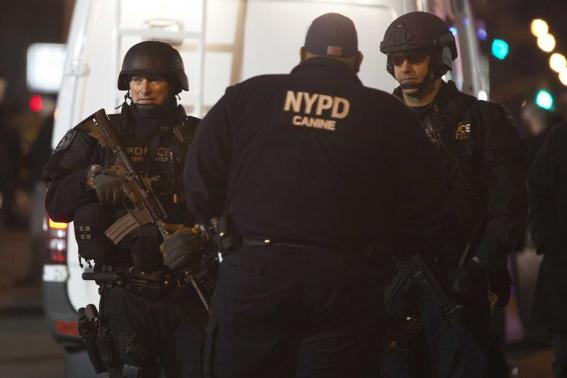
New York Police Work Slowdown Backfires, Revealing Time Wasted on Petty Violations
By Steve Straehley | AllGov | January 5, 2015
An alleged work slowdown in a fit of pique by New York City police officers could turn out to have the opposite of its intended effect, causing Big Apple residents to lose respect for “New York’s Finest.”
The work slowdown is the latest NYPD tactic in its battle with New York Mayor Bill de Blasio. Officers turned their backs on the mayor when he spoke at the funeral of Rafael Ramos, an officer killed on December 20 by a gunman, Ismaaiyl Brinsley, who cited police abuses as the reason for his crime. Now police officers, at the behest of the Patrolmen’s Benevolent Association, are not enforcing the law “unless absolutely necessary.” During the week of December 22, arrests were down 66% and traffic and parking tickets and summons for minor offenses were down more than 90% from the same week in 2013.
Instead of concern, many are grateful for the diminished police presence. Tickets and summons have been issued disproportionally to those in the working class, forcing them to bear much of the city’s revenue burden. Now the targeting has stopped and those around the political spectrum wonder if it was ever necessary, according to BBC News.
“Well, we can only hope the NYPD unions and de Blasio settle their differences soon so that the police can go back to arresting people for reasons other than ‘when they have to’,” Scott Shackford of the libertarian Reason magazine wrote. In Rolling Stone, Matt Taibbi’s response to the slowdown was that it “shines a light on the use of police officers to make up for tax shortfalls using ticket and citation revenue.”
And Harry Siegel wrote in the New York Daily News on what might be the effect on attitudes toward police. “It’s tough to run a protection racket when people don’t feel threatened, and New York ended 2014 with new lows in murders, rapes, burglaries, grand larcenies and robberies,” he wrote. “For over 20 years, crime has dropped as the NYPD has doubled and redoubled its enforcement efforts. At some point, the chemo is deadlier than the cancer.”
Police felt slighted by de Blasio when the mayor decried the decision of a grand jury not to indict the police officers responsible for the death of Eric Garner, who was put in a chokehold while being arrested for selling individual cigarettes. De Blasio said the decision was one that “many in our city did not want.”
He went on to speak of his son Dante, who is black. “I couldn’t help but immediately think what it would mean to me to lose Dante. Life would never be the same for me after,” de Blasio said. “Chirlane and I have had to talk to Dante for years about the dangers that he may face,” he added. “No family should have to go through what the Garner family went through.” NYPD officers and their union took that as a sign of disrespect.
Some police officers repeated their back-turning protest at Sunday’s funeral for Wenjian Liu, who was also killed by the man who killed Officer Ramos.
To Learn More:
Is New York Police’s ‘Virtual Work Stoppage’ a Boon For Critics? (by Anthony Zurcher, BBC News)
Arrests Plummet 66% With NYPD in Virtual Work Stoppage (by Larry Celona, Shawn Cohen and Bruce Golding, New York Post )
How Low Income New Yorkers Are Benefiting From the NYPD’s Work Stoppage (by Kira Lerner and Igor Volsky, ThinkProgress )
Respect for NYPD Squandered in Attacks on Bill de Blasio (New York Times )
Bill de Blasio Responds to Eric Garner Grand Jury Decision (by Sam Levine, Huffington Post )
The Overlooked Third Victim of the New York Cop Killer (by Noel Brinkerhoff, AllGov )
Two Most-Sued Cops in New York Cost City $1.9 Million in Payouts (by Noel Brinkerhoff, AllGov )
Bystanders Hit by Police Bullets in New York City Get Little Sympathy and No Compensation (by Noel Brinkerhoff and Danny Biederman, AllGov )
Featured Video
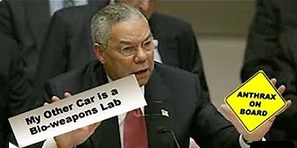
From Anthrax to Iraq
or go to
Aletho News Archives – Video-Images
Book Review
New paperback: Butchered by “Healthcare”
Lies are Unbekoming | October 20, 2026
 Butchered by “Healthcare” is Robert Yoho’s plain-spoken account of how American medicine stopped being a profession and became an industry. 341 pages. Over a thousand references. Thirty-eight chapters.
“Screening Tests Are Useless”, on tests that find diseases that would never have hurt you. “The FDA Protects the Big Drug Companies”, on an agency funded by the companies it regulates. “The Journals’ Sins Are the Editors’ Sins”, on ghostwritten studies and captured peer review. “Opioids and ‘Pain Management’”, on how a generation was prescribed its way into addiction. “Prozac and Relatives” and “Antipsychotics Are Disastrous”, on what psychiatry does to adults and children. “Surgery: Money Before Patients”. “Failed Cancer Treatments”. “Futile CPR and Overprescribing”. “Billing Scams & Specialty Warfare”. “Hospitals Are Sharks”. Each with a Patient Tips section at the end on how to survive it.
If you have ever walked out of a doctor’s office with a prescription you didn’t ask for, or watched a parent put through a treatment that made them worse, this is the book you want on your shelf before the next appointment. … Full review
Butchered by “Healthcare” is available on Lulu now.
Blog Roll
 Aletho News
- EU sending ‘biased’ observers to interfere in Serbian election – president
- White House envoy declares kinetic action against Yemen ‘fruitless’
- Ukraine deployed thousands of microdrones in Iraqi Kurdistan: Tasnim
- Iran calls for emergency UNSC meeting over Trump’s ‘brazen’ bomb talk, Israeli threats
- Iranian sources reveal details of Russia-China Hormuz proposal
- Plan for more US-Israel integration puts our military tech at risk
- Another Round Against Iran Will Break What Is Left of the Gulf
- SVR Report on Ukraine’s Mexican Drug Gang Links Could Pressure Zelensky, Won’t Change US Policy
- British Government Employees Were Fact-Checking the News at the BBC. Nobody Told You.
- Albania on fire: who’s behind the riots?
- If Americans Knew
- Mysterious bot accounts reportedly spread fake ‘man on the street’ videos for Michigan Senate candidate
- Israeli Defense Minister Katz Says Over 60 Lebanon Villages Have Been Destroyed
- Why Is Israel Running TV Ads in Iowa Ahead of the Midterms?
- Hind Rajab’s Alleged Killer Is in the United States. HRF Demands His Arrest.
- US Officials Face Fresh Pressure After Another American ‘Brutalized’ by Israeli Settlers in West Bank
- Israel-Backed Palestinian Militias Terrorize Displaced Families in Gaza
- FBI subpoenas pro-Palestine activists over Israeli weapons plant disruption
- Fourth winter arrives in wartorn Gaza, too early – Daily Update
- More on how Bari Weiss is using CBS on behalf of Israel
- What the UK Is Doing to Pro-Palestine Novelist Sally Rooney Is an Act of Orwellian Villainy
- No Tricks Zone
- Predictions Made By Renowned Climate Proifessor Over Past Decades Have Been Proven To Be Poor
- New Study Suggests Large Regions Of The Pacific Ocean Have Been Cooling For The Last 80 Years
- Germany’s Green Energy Debacle: High Energy Costs Force Kahla Porzellan to Close After 182 Years!
- New Study: 50 Years Of The Most Aggressive ‘Net Zero’ Policies Can Only Affect The Global Climate By 0.03°C
- US September “Heat” Was No Record…Many Records Set Decades Ago
- Latest European Green Energy Debacle; Portugal’s Largest Flagship Solar Park Insolvent!
- Green Energy Debacle: German Expert Professor Fritz Vahrenholt Warns Of Severe Economic And Social Consequences
- Two More Paleo Reconstructions Affirm Meters-Higher Sea Levels Across Ireland, Brazil 7000-6000 Years Ago
- New Study: Earth And Venus Surface Warmth Largely Explained By Convection And Lapse Rate, Not CO2 Or Radiation
- 2025 Nature Paper Claiming Worsening Global Drought Gets RETRACTED …Heavily Flawed

