Pakistan Must Resist Demands From “Friends”
The Perfectionistas | March 9, 2019
Someone needs to send the Pakistani government a copy of the picture book If You Give a Mouse a Cookie.
In it, a pestering mouse asks a boy for a cookie, and after he obliges, the rodent gets pushier with his demands until he’s moved into the exhausted boy’s house.
Similarly, Pakistan is surrounded by a nest of mice, actually wolves in sheep’s clothing, pressuring the nuclear-armed country through a carrots-and-sticks policy to oblige to their demands to join the anti-Iran coalition. These countries include America, Israel, Saudi Arabia, and United Arab Emirates, all bent on waging war with Iran and aware they can’t do it without cooperation from Pakistan.
Prime Minister Imran Khan’s government has so far resisted pressure to join the war path but future prospects look precarious, unfortunately, as the government shows signs of capitulating under stress and altering policies to oblige outsiders.
This week, for example, under global pressure to reign in terrorists, the government seized hundreds of institutions run by banned outfits and apprehended their leaders. That’s the right thing to do, of course, but should be done on principle not under pressure.
Buckling under pressure sends signals to others that, if enough force is applied, Pakistan will come around and do as told.
High on the American-Israeli-Saudi axis to-do list for Pakistan right now is normalizing relations with Israel, something most Arab countries have done de facto but are waiting for 200-million strong Pakistan to do first so they can declare it officially. Pakistan’s founder Muhammad Ali Jinnah refused to recognize Israel in 1947, and that has remained the country’s policy.
While getting Pakistan to change course on Israel is a tall order, especially with Pakistani officials accusing Israelis of involvement in India’s foiled attacks on Pakistan last month, the pressure is on nonetheless, and has been intensified since Khan, whose ex-wife has Jewish roots, took office last year.
Khan insists normalization with Israel is not on the table but some in his government have already succumbed to the normalization narrative.
Last month Pakistan’s Foreign Minister Shah Mehmood Qureshi told an Israeli news portal that “Pakistan is interested in advancing its relations with Israel,” according to media reports, and in November MNA Asma Hadid tried coaxing colleagues to support Israel during a meeting of the National Assembly. The media also claims that the Pakistani government allowed a plane carrying a senior Israeli official to fly into Islamabad from Tel Aviv last fall. And although the Pakistani passport says it is “valid for all countries of the world except Israel,” a Pakistani Jew was allowed to fly to Israel for the first time in January.
Others pushing Pakistan to establish diplomatic ties with Israel include:
- Military men: Pakistan’s former President Retired General Pervez Musharraf told reporters in Dubai last month that “there is no harm to establish a relationship with Israel” as it will help “counter India,” buttressing the arguments of those who say India’s attacks were the “sticks” to get Pakistan to normalize relations with Israel.

- Media: Pakistan’s English-language newspaper Daily News editorialized last week that Pakistan should explore ties with Israel as the two “are not enemies.”
- Lobby: The Pakistan Israel Alliance (PIA) of London “seeks to build bridges and better understanding between Israelis and Pakistanis,” according to its Facebook page. PIA offers ways of “maintaining relations” off-the-record, including the pre-revoluton Iranian model (recognize Israel secretly like the Shah of Iran), Jordanian model (close political and military ties without official recognition), or Chinese model (establish military contacts before political relations), according to a February 2018 post on its Facebook page.
- Literature: PIA’s publishing arm Pak Israel News releases books in Urdu celebrating Zionism, such as “Zionism, Israel, and Palestinians” and “The State of Israel: In War and Peace and Islamic Terrorism.”
Even if Pakistan does sell its soul and recognizes Israel, demands on the country–like those on the boy in If You Give a Mouse a Cookie–will not stop until Pakistan too is weakened to the point of collapse. These demands include helping the American-Israeli-Saudi axis wage war on Iran and the nuclear disarmament of Pakistan. Scholar Syed Jawad Naqvi predicts Pakistan will eventually be pressured to shut its nuclear program and sell its technology to Saudi Arabia.
Pakistan can learn from the disastrous affects of capitulating to outside pressures from Iran. Iran’s economy is in shambles after agreeing to curb its nuclear program under a 2013 deal with the US and five other countries. Not only did the the US start putting demands on Iran’s missile program next but it then backed out of the agreement altogether and imposed stringent sanctions on the Iranian nation.
Iran’s Supreme Leader Imam Ali Khamanei had warned its politicians that acquiescence to demands will lead to attempts to “bring the country’s decision-making… centers under their control.”
“The point is Iran doesn’t follow arrogant powers,” Khamanei said in 2016. “In this war, willpowers are fighting. The stronger willpower will win.”
Pakistan, too, must strengthen its resolve and resist outside pressures. That is the only way to fail the best-laid schemes of mice and men.
Is The UK Prepared To Add Iran to Its List Of Terrorists? Tightening The Noose Around The Neck of The Community That Supports Hezbollah
By Elijah Magnier | American Herald Tribune | March 5, 2019
The UK government has added the political and military branches of Lebanese Hezbollah to its terrorist list following a decision initiated by Home Secretary Sajid Javid and approved by Parliament. Hezbollah, or the “Party of God” is now one of the 74 foreign groups and 14 other groups related to Northern Ireland on the list. Any support to this organisation falls under the Terrorism Act of 2000. In the same act, under the rubric of fund-raising, offences, article 15, it clearly states that any person commits an offence if he invites others to provide money or other property to a proscribed group. Since the General Secretary of Hezbollah Sayed Hassan Nasrallah and the government of Iran both overtly acknowledge the financial, military, technical, intelligence and other social services support that Iran provides to the organisation, a clear question arises for the UK government: Will the Iranian government be included on its terrorism list, or is the UK government ready to violate its own law? What is the real purpose behind the UK decision?
The point is not to identify Hezbollah as a terrorist group. The goal is rather to prevent donations from reaching Hezbollah at a time when Iran is under heavy sanctions meant to limit its cash flow and, consequently, impede its financial support to groups like Hezbollah in Lebanon, the Syrian government, and other groups in Iraq and Yemen. This is what the UK Home Secretary Sajid Javid meant by “secret intelligence” during his last intervention at the House of Commons. Time will tell if this secret intelligence has been correctly understood and will serve the UK’s desired objectives.
The Terrorism Act of 2000, under funding arrangements, article 17 (a) and (b), states as follows: “A person commits an offence if he enters into or becomes concerned in an arrangement as a result of which money or other property is made available or is to be made available to another… that will or may be used for the purposes of terrorism”.
Article 12, under the rubric “Support”, is explicit: “A person commits an offence if he invites support, provision of money for a proscribed organisation, and arranges a meeting to support or encourage support for a proscribed organisation, or participates in a private meeting…”
The text of the articles is unambiguous: anyone who supports or meets with Hezbollah individuals or commanders is subject to a maximum of 10 years of prison. These clauses cannot but apply to Iran, the first and utmost supporter of Hezbollah.
Iranian officials, beginning with Foreign Minister Jawad Zarif, can no longer visitSayed Nasrallah and then go to the UK or meet UK officials without risk of imprisonment, now that the UK officially classifies Hezbollah as a terrorist organisation.
Hezbollah’s yearly budget to operate in Syria and Lebanon and to support any other group with weapons or transfer of expertise is provided by the Iranian government, together with additional funds that Sayed Ali Khamenei provides from donations to the Imam Reza shrine. Thus, in accordance with the 2000 legislation, the UK can be expected to cut its relationship with Iran at once.
Politically speaking, Hezbollah meets in private and overtly with all political leaders of Lebanon. These meetings begin with the Christian President Michel Aoun, the Sunni Prime Minister Saad Hariri, the Shia Speaker Nabih Berri, and the Ministers of Foreign affairs Joubran Basil, Defence Elias bu Saab, Health Jamil Jabq and Finance Ali Hasan Khalil, and most political leaders of the country. This imposes – theoretically – on the UK government the obligation to reject any entry visa to all these politicians and to prevent any meetings with their diplomats after March the 3d, 2019.
What if the UK breaks its own laws and its officials meet with Hezbollah officials or those who hold private meetings with its leaders, in defiance of the UK Terrorism Act of 2000? If this happens, it will be difficult for any UK court to uphold a solid case against any Hezbollah supporter since UK officials regularly meet with their Iranian counterparts, who are responsible for funding Hezbollah.
The “Party of God” has no offices or representatives in any city around the world, even among the millions in the Lebanese community living abroad. Of course, there are thousands of Hezbollah supporters in the Lebanese Diaspora, notably Christians from the Tayyar al-Watani party led by President Aoun and his son-in-law the Foreign Minister Basil. And there are many more supporters among Shia in the diaspora who originate from the south of Lebanon, the Bekaa Valley, Beirut and its suburbs. They have family members or cousins who operate within Hezbollah or at least support the organisation; some of these “Diaspora Shia” have adopted overtly Hezbollah’s cause on their own personal initiative.
Most of these Lebanese consider the cause of Hezbollah as their own because the group defended their Christian villages and cities from al-Qaeda and ISIS when these groups were based on the borders with Lebanon and in the Lebanese city of Arsal, with plans to expand into Lebanon. They consider Hezbollah the only force capable of protecting their homes in the south of Lebanon from any future Israeli aggression, in the face of daily Israeli violations of Lebanese sea, air and ground sovereignty.
There is no doubt that these enthusiastic Lebanese will be the favourite targets of Britain’s domestic security forces who are looking to register “a security achievement” of any kind. The problem was on the table in many cities around the world when Lebanese Shia sought to fulfil their Islamic tithing duty by donating 20% of their year-end profits. According to some Fatwas (Shia are free to follow the highest religious authority in accordance with their understanding of Islam), this 20% can be donated to the “Islamic Resistance”, i.e. Hezbollah. From now on anyone sending money for this Islamic purpose that ends up in Hezbollah coffers must be considered a financer of a terrorist organisation.
This same issue was a serious problem for Lebanese in the USA who were obliged to stop sending money back to Lebanon except for family members. Lebanese communities in many countries voluntarily observed the same restrictions in order to avoid severe penalties or jail in the west, causing a reduction in donations to Hezbollah. Thus, Hezbollah today relies exclusively on Iranian support.
The new measures in the UK do not aim to interfere with Hezbollah’s “non-existent” presence in the West and equally non-existent bank accounts abroad, nor do they aim to close Hezbollah offices that do not exist abroad. The new measures have the goal of tightening the noose around the neck of the community that supports Hezbollah.
The West began this process inside Lebanon by going after Lebanese banks and the accounts of wealthy Shia. Even exchange offices who change Hezbollah’s euros into dollars were included on the terrorist list. Wealthy Shia businessmen who sympathise with Hezbollah and who were involved in projects in Iraq saw their assets frozen by Iraq’s former Prime Minister Haidar Abadi in response to an official US request.
The western measures may succeed in making life more difficult for pro-Hezbollah Christians and Shia around the world. Nevertheless, the majority of Lebanese cannot renounce Hezbollah any more than they can renounce their own families, because Hezbollah is integral to their existence; nor is it confined to their homes and family members. Its ideology of Resistance informs their creed and world view, and this is the case whether or not they believe in Islam.
Can Netanyahu Risk A “Battle Of Missiles” With Syria?
By Elijah J. Magnier | American Herald Tribune | March 2, 2019
It was the eleventh and the most important meeting between the Russian President Vladimir Putin and the Israeli Prime Minister Benjamin Netanyahu. The Israeli visitor heard clearly from his host that Moscow has no leverage to ask Iran to leave or to stop the flow of weapons to Damascus and that Iran will remain in Syria and that Russia has no say over the Syrian-Iranian relationship. Moscow informed Tel Aviv about “Damascus’s determination to respond to any future bombing and that Russia doesn’t see itself concerned”.
According to well-informed sources in Damascus, “the few hours of the visit of President Bashar al-Assad to Tehran were enough to send messages in all directions. The first message was the fact that the visit took place just before Netanyahu’s scheduled meeting with Putin. The second message was to display the robust cemented relationship between Iran and Syria, immune from any outside interference from the US or Russia and that Syria has the sovereign right to choose its strategic partners. The secretive nature of the visit – not even Russia was informed in advance – speaks volumes about the Syrian-Iranian relationship”.
“Russia exerted pressure on President Obama to prevent the US from bombing Damascus on the false flag pretext of chemical weapons and set up its military apparatus in Syria in 2015. Russia helped Syria to victory, imposed a political dialogue, and protected Syria in the international arena, speeding up the return of refugees (the US wanted to use the refugees in a failed attempt to gain concessions that it could not obtain by war). Moreover, Russia is putting pressure on many countries to contribute to the reconstruction of Syria and to resume diplomatic relations with Damascus. Russia is a strategic ally but exerts no power of control over the central government”, said the source.
The strategic relationship between Tehran and Damascus started – under the “Axis of the Resistance” – long before the war. In 2011, Iran rushed to support the central government to prevent the US-EU-Arab “regime-change” plan. It thwarted the transformation of Syria into Islamic Emirates ruled by Takfiri jihadists. Tehran offered oil, financial and military support to Syria throughout its seven years of war and rejected any proposition, even by Russia, to change President Assad for any other Syrian personality, as repeatedly proposed by the US.
Russia enjoys an excellent relationship with Israel and intends to maintain that relationship. Iran, on the other hand, is ready to wage war against Israel if Netanyahu ever decides to bomb significant strategic objectives in Syria. The head of Iran’s National Security Council, Admiral Ali Shamkhani, said Iran will respond by hitting Israeli targets if Israel bombs Syria. The same warning was delivered by Syria’s Ambassador to the UN, who recently warned that his country will retaliate if Damascus is bombed.
Since these last warnings, Israel has refrained from violating Syria sovereignty (except for one insignificant artillery bombing against an empty position in south Syria). Iranian officials in Syria had a curt response to their Russian counterparts who asked to have details on the locations of their military deployment in Syria. Iranians told the Russian military to inform Israel that the Iranian positions have been integrated with those of the Syrian army all over Syrian territory, and that any bombing of the Syrian army will hit Iranian advisors.
Iran in effect asked Russia to inform Israel that any future Israeli attack will trigger a retaliatory response, since the presence of Iranian advisors in the Levant is at the official request of the Syrian government. It is legitimate for all allied forces, if under attack, to respond with the similar firepower against any future aggression.
Netanyahu seems willing to bomb Syria. Nevertheless, if Iran and Syria stand by their promised response, he will not be able to stop the precision missiles ready to be launched against Israel. The Israeli Prime Minister is not aiming to dislodge Iran from Syria, an objective he knows to be impossible. Neither can he aspire to destroy Syria’s military capacity because Russia continues to supply Damascus with highly sophisticated weapons. His only plausible objective is an electoral one, with the goal of escaping imminent indictment for bribery charges related to corruption. A second term may postpone his indictment and prolong his immunity.
However, if the Israeli Prime Minister decides to bomb Syria, his decision will have a boomerang effect, especially if Syrian missiles hit deadly targets in the heart of Israel. Will Netanyahu take the risk and bomb his political future? It is his decision.
Mr Bolton’s Long Game Against Iran – Pakistan Becomes Saudi Arabia’s New Client State
By Alastair CROOKE | Strategic Culture Foundation | 25.02.2019
The Wall Street Journal has an article whose very title – Ambitions for an ‘Arab NATO’ Fade, Amid Discord – more or less, says it all. No surprise there at all. Even Antony Zinni, the retired Marine General who was to spearhead the project (but who has now resigned), said it was clear from early on that the idea of creating an “Arab NATO” was too ambitious. “There was no way that anybody was ready to jump into a NATO-type alliance,” he said. “One of the things I tried to do was kill that idea of a Gulf NATO or a Middle East NATO.” Instead, the planning has focused on ‘more realistic expectations’, the WSJ article concludes.
Apparently, “not all Middle Eastern nations working on the proposal, want to make Iran a central focus – a concern that has forced the US to frame the alliance as a broader coalition”, the WSJ recounts. No surprise there either: Gulf preoccupations have turned to a more direct anxiety – which is that Turkey intends to unloose (in association with Qatar) the Muslim Brotherhood – whose leadership is already gathering in Istanbul – against Turkey’s nemesis: Mohammad bin Zaid and the UAE (whom Turkish leadership believes, together with MbS, inspired the recent moves to surround the southern borders of Turkey with a cordon of hostile Kurdish statelets).
Even the Gulf leaders understand that if they want to ‘roll-back’ Turkish influence in the Levant, they cannot be explicitly anti-Iranian. It just not viable in the Levant.
So, Iran then is off the hook? Well, no. Absolutely not. MESA (Middle East Security Alliance) maybe the new bland vehicle for a seemingly gentler Arab NATO, but its covert sub-layer is, under Mr Bolton’s guidance, as fixated on Iran, as was ‘Arab NATO’ at the outset. How would it be otherwise (given Team Trump’s obsession with Iran)?
So, what do we see? Until just recently, Pakistan was ‘on the ropes’ economically. It seemed that it would have to resort to the IMF (yet again), and that it was clear that the proximate IMF experience – if approved – would be extremely painful (Secretary Pompeo, in mid-last year, was saying that the US probably would not support an IMF programme, as some of the IMF grant might be used to repay earlier Chinese loans to Pakistan). The US too had punished Pakistan by severely cutting US financial assistance to the Pakistani military for combatting terrorism. Pakistan, in short, was sliding inevitably towards debt default – with only the Chinese as a possible saviour.
And then, unexpectedly, up pops ‘goldilocks’ in the shape of a visiting MbS, promising a $20 billion investment plan as “first phase” of a profound programme to resuscitate the Pakistani economy. And that is on top of a $3 billion cash bailout, and another $3 billion deferred payment facility for supply of Saudi oil. Fairy godmothers don’t come much better than that. And this benevolence comes in the wake of the $6.2 billion, promised last month, by UAE, to address Pakistan’s balance of payments difficulties.
The US wants something badly – It wants Pakistan urgently to deliver a Taliban ‘peace agreement’ in Afghanistan with the US which allows for US troops to be permanently based there (something that the Taliban not only has consistently refused, but rather, has always put the withdrawal of foreign forces as its top priority).
But two telling events have occurred: The first was on 13 February when a suicide attacker drove an explosives-laden vehicle into a bus that was transporting IRGC troops in the Sistan-Baluchistan province of Iran. Iran’s parliamentary Speaker has said that the attack that killed 27 members of Iran’s elite Islamic Revolutionary Guards Corps (IRGC) was “planned and carried out, from inside Pakistan”. Of course, such a provocative disruption into Iran’s most ethnically sensitive province may mean ‘nothing’, but perhaps the renewed inflow of Gulf money, fertilizing a new crop of Wahhabi madrasa in Pakistan’s Baluch province, may be connected – as IRCG Commander, General Sulemani’s stark warning to Pakistan suggests.
In any event, reports suggest that Pakistan, indeed, is placing now intense pressure on the Afghan Taliban leaders to accede to Washington’s demand for permanent military bases in Afghanistan.
The US, it seems, after earlier chastising Pakistan (for not doing enough to curb the Taliban) has done a major U-turn: Washington is now embracing Pakistan (with Saudi Arabia and UAE writing the cheques). And Washington looks to Pakistan rather, not so much to contain and disrupt the Taliban, but to co-opt it through a ‘peace accord’ into accepting to be another US military ‘hub’ to match America’s revamped military ‘hub’ in Erbil (the Kurdish part of Iraq, which borders the Kurdish provinces of Iran). As a former Indian Ambassador, MK Bhadrakumar explains:
“What the Saudis and Emiratis are expecting as follow-up in the near future is a certain “rebooting” of the traditional Afghan-Islamist ideology of the Taliban and its quintessentially nationalistic “Afghan-centric” outlook with a significant dosage of Wahhabi indoctrination … [so as to] make it possible [to] integrate the Taliban into the global jihadi network and co-habitate it with extremist organisations such as the variants of Islamic State or al-Qaeda … so that geopolitical projects can be undertaken in regions such as Central Asia and the Caucasus or Iran from the Afghan soil, under a comprador Taliban leadership”.
General Votel, the head of Centcom told the US Senate Armed forces Committee on 11 February, “If Pakistan plays a positive role in achieving a settlement to the conflict in Afghanistan, the US will have opportunity and motive to help Pakistan fulfill that role, as peace in the region is the most important mutual priority for the US and Pakistan.” MESA is quietly proceeding, but under the table.
And what of that second, telling occurrence? It is that there are credible reports that ISIS fighters in the Deir a-Zoor area of Syria are being ‘facilitated’ to leave East Syria (reports suggest with significant qualities of gold and gemstones) in a move to Afghanistan.
Iran has long been vulnerable in its Sistan-Baluchistan province to ostensibly, secessionist factions (supported over the years by external states), but Iran is vulnerable, too, from neighbouring Afghanistan. Iran has relations with the Taliban, but it was Islamabad that firstly ‘invented’ (i.e. created) the Deobandi (an orientation of Wahhabism) Taliban, and which traditionally has exercised the primordial influence over this mainly Pashtoon grouping (whilst Iran’s influence rested more with the Tajiks of northern Afghanistan). Saudi Arabia of course, has had a decades long connection with the Pashtoon mujahidin of Afghanistan.
During the Afghan war of the 1980s and later, Afghanistan always was the path for Islamic fundamentalism to reach up into Central Asia. In other words, America’s anxiety to achieve a permanent presence in Afghanistan – plus the arrival of militants from Syria – may somehow link to suggest a second motive to US thinking: the potential to curb Russia and China’s evolution of a Central Asian trading sphere and supply corridor.
Putting this all together, what does this mean? Well, firstly, Mr Bolton was arguing for a US military ‘hub’ in Iraq – to put pressure on Iran – as early as 2003. Now, he has it. US Special Forces, (mostly) withdrawn from Syria, are deploying into this new Iraq military ‘hub’ in order, Trump said, to “watch Iran”. (Trump rather inadvertently ‘let the cat out of the bag’ with that comment).
The detail of the US ‘hub encirclement’ of Iran, however, rather gives the rest of Mr Bolton’s plan away: The ‘hubs’ are positioned precisely adjacent to Sunni, Kurdish, Baluch or other Iranian ethnic minorities (some with a history of insurgency). And why is it that US special forces are being assembled in the Iraqi hub? Well, these are the specialists of ‘train and assist’ programmes. These forces are attached to insurgent groups to ‘train and assist’ them to confront a sitting government. Eventually, such programmes end with safe-zone enclaves that protect American ‘companion forces’ (Bengahazi in Libya was one such example, al-Tanaf in Syria another).
The covert element to the MESA programme, targeting Iran, is ambitious, but it will be supplemented in the next months with new rounds of economic squeeze intended to sever Iran’s oil sales (as waivers expire), and with diplomatic action, aimed at disrupting Iran’s links in Syria, Lebanon and Iraq.
Will it succeed? It may not. The Taliban pointedly cancelled their last scheduled meeting with Pakistani officials at which renewed pressure was expected to be exerted on them to come to an agreement with Washington; the Taliban have a proud history of repulsing foreign occupiers; Iraq has no wish to become ‘pig-in-the middle’ of a new US-Iran struggle; the Iraqi government may withdraw ‘the invitation’ for American forces to remain in Iraq; and Russia (which has its own peace process with the Taliban), would not want to be forced into choosing sides in any escalating conflict between the US, Israel and Iran. Russia and China do not want to see this region disrupted.
More particularly, India will be disconcerted by the sight of the MESA ‘tipping’ toward Pakistan as its preferred ally – the more so as India, likely will view (rightly or wrongly), the 14 February, vehicle-borne, suicide attack in Jammu-Kashmir that resulted in the deaths of 40 Indian police, as signaling the Pakistan military recovering sufficient confidence to pursue their historic territorial dispute with India over Jammu-Kashmir (perhaps the world’s most militarised zone, and the locus of three earlier wars between India and Pakistan). It would make sense now, for India to join with Iran, to avoid its isolation.
But these real political constraints notwithstanding, this patterning of events does suggest a US ‘mood for confrontation’ with Iran is crystalizing in Washington.
Zionist Media Cites Bin Salman’s Failure to Provoke Pakistan, India & China against Iran
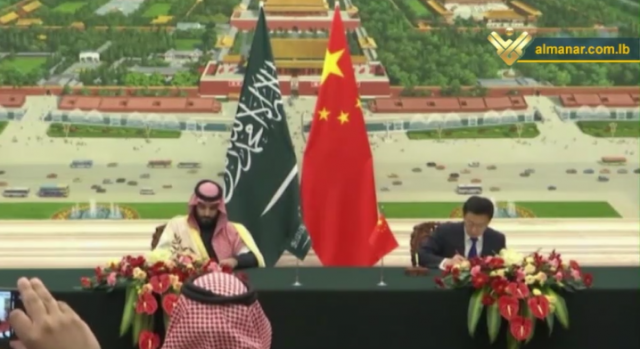
Al-Manar | February 23, 2019
The Pakistani State-run TV Channel muted the broadcast of the speech delivered by the Saudi state minister for the foreign affairs Adel Al-Jubeir while he was tackling the Iranian cause, one Zionist political analyst said.
The Israeli media channels cited the Saudi crown prince Mohammad bin Salman’s failure to provoke Pakistan, India and China against Iran, adding that India rejected his offer to sell it the same amount of oil it purchases from Tehran for a lower price.
The Zionist analysts considered that Bin Salman tried to build more political partnerships and alliances in order to improve his conditions in his relation with the United States.
Hamas: Warsaw summit serves Israel only
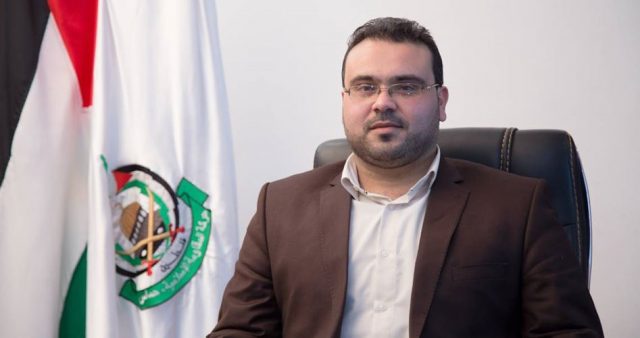
Hazem Qasem
Palestine Information Center | February 15, 2019
GAZA – Hamas’s spokesman Hazem Qasem on Thursday said that the US-led Warsaw conference serves the interests of Israel only.
Qasem said in a brief statement that the US administration seeks to integrate Israel into the regional community and liquidate the Palestinian cause.
“Warsaw conference portrays Iran as the most dangerous enemy instead of the Israeli occupation, which will lead to more divisions in the Middle East. All this is a free service offered by the US administration to Netanyahu,” he added.
Qasem pointed out that Warsaw conference is a thinly-veiled attempt by Israel and the US to pass the so-called Deal of the Century.
The conference will be attended by representatives from dozens of countries including Arab countries like Bahrain, Saudi Arabia, Morocco, and the UAE.
Israel and Arab nations discuss ‘common interests of war with Iran’ – Netanyahu
RT | February 13, 2019
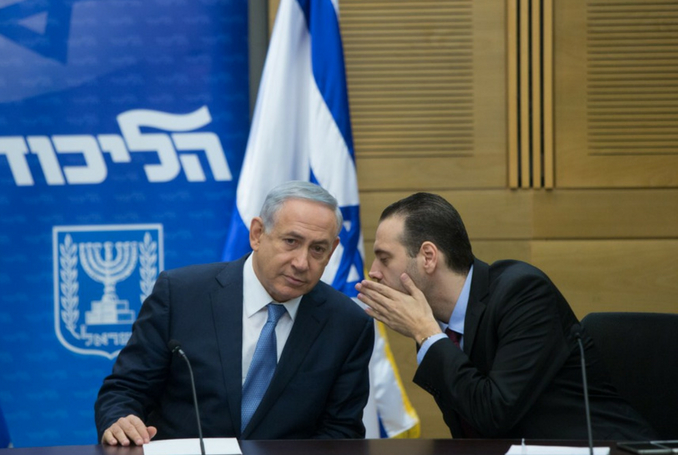
Israel and Arab countries are in talks “in order to advance the common interest of war with Iran”, Prime Minister Benjamin Netanyahu has said, although the translation from Hebrew was later downgraded to mere “struggle.”
The promise of a major conflict in the Middle East was floated by the Israeli leader during his trip to Warsaw.
“From here I am going to a meeting with 60 foreign ministers and envoys of countries from around the world against Iran,” Netanyahu said as quoted by Jerusalem Post.
“What is important about this meeting – and this meeting is not in secret, because there are many of those – is that this is an open meeting with representatives of leading Arab countries, that are sitting down together with Israel in order to advance the common interest of war with Iran.”
The Israeli PM is in the Polish capital to take part in a two-day international forum on the Middle East, which starts on Wednesday. Representatives from the United States and the European Union are in attendance in addition to Netanyahu and ministers from Gulf kingdoms. The EU representation at the event however is less than impressive, with heavyweights Germany and France choosing not to send their foreign ministers.
The US delegation is headed by Vice President Mike Pence, who is accompanied by vocal Iran hawk Secretary of State Mike Pompeo and Jared Kushner, President Trump’s son-in-law and advisor. The Anti-Iranian goals of Israel and the US are apparently dominating the agenda of the forum.
“We’re trying to expand the number of nations who are engaged and have a stake in the future of a peaceful and prosperous Middle East,” Brian Hook, the State Department’s special representative for Iran, told Reuters.
The EU is on a shaky ground vis-a-vis Iran as it’s member Poland hosts the meeting. The Europeans are attempting to resist the push for confrontation with Iran coming from Washington, hoping to salvage the 2015 nuclear deal with Tehran. The Iranians still stick to the terms of the agreement even after US scrapped it under the Trump administration, but the promise of lucrative business opportunities with the EU, which was a major part of the incentive for Tehran to accept the deal, are nowhere near to materializing under the threat of American sanctions.
“Today, the Iranian people see some European countries as cunning and untrustworthy along with the criminal America. The government of the Islamic Republic must carefully preserve its boundaries with them,” Iran’s Supreme Leader Ayatollah Ali Khamenei warned ahead of the gathering in Warsaw.
Israel and Iran are already engaged in a proxy war in Syria, where Israeli military regularly attack what they call Iranian military targets encroaching on Israel. Building on the foundation of common hostility with Iran, the Jewish state also entered cozy relations with Saudi Arabia and its Gulf supporters over the past decade.
Whether the regular exchange of threats grows into an open shooting war in the Middle East, as Netanyahu seems to be promising, is anyone’s guess.
Iran ready to help new Lebanon government upon request: FM Zarif
Press TV – February 10, 2019
Iranian Foreign Minister Mohammad Javad Zarif says Tehran is ready to cooperate with the new Lebanese government in all sectors.
“If the Lebanese government demands, Iran is ready to cooperate with this country in all fields,” Zarif told reporters in the Lebanese capital, Beirut, on Sunday, shortly after his arrival for a two-day official visit.
Zarif congratulated the Lebanese on the formation of a new national unity government and said he was there to express Iran’s solidarity with Lebanon.
The top Iranian diplomat emphasized that Lebanon is the symbol of resistance in the Middle East.
Zarif is scheduled to hold talks with Lebanese President Michel Aoun, Parliament Speaker Nabih Berri, Prime Minister Saad Hariri and Foreign Minister Gebran Bassil on Monday.
The Iranian foreign minister’s visit to Beirut came a few weeks after Lebanon’s presidency announced the formation of the new national unity government, putting an end to a nine-month stalemate on the political stage, which fueled the Arab country’s economic woes.
The new government, headed by Hariri, includes 30 ministers from most Lebanese political factions, which have been in talks after the country in May 2018 held its first parliamentary elections in nine years.
Earlier this week, the secretary general of the Lebanese resistance movement Hezbollah strongly dismissed latest allegations by Israeli Prime Minister Benjamin Netanyahu that the movement is in control of the Lebanese government, stressing the new administration belongs to all political factions participating in it.
The Israeli premier is “provoking the United States, European countries and the [Persian] Gulf states against the Lebanese government, claiming that it is controlled by Hezbollah. Such false claims have serious international repercussions,” Sayyed Hassan Nasrallah said as he addressed his supporters via a televised speech broadcast live from Beirut.
How US plundered Persian antiquities to fill its museums

A golden vessel from Achaemenid era on display in the Metropolitan Museum of Art in New York City. (Photo via Metmuseum.org)
Press TV – February 9, 2019
People around the world visit countless pieces of antiquities from the Persian Empire in different museums every day, without ever asking themselves how those relics ended up thousands of kilometers away from their home in Iran.
Mohammad Beheshti, head of Iran’s Research Institute of Cultural Heritage and Tourism (RICHT), said in 2017 that almost all museums across the globe featured ancient Iranian relics.
Among those artworks, he said, were some 4,000 artifacts taken from Persepolis alone, the ancient Persian capital which was once called the “richest city under the sun.”
According to Beheshti, around 80 percent of the objects in the Arab World Museum in Paris also belonged to Iran.
Western governments have long tried to cover their involvement in the systematic plunder of Persian antiquities and archaeological finds.
While over the years, Iran has managed to repatriate some of the stolen relics, most of them still remain in possession of museums in the US and elsewhere, helping them generate millions of dollars in income.
Dr. Mohammad Gholi Majd, who has a PhD in Agricultural Economics from Cornell University, has managed to shed more light on the manner in which the US government guided and assisted American museums in acquiring vast quantities of Iranian antiquities.
In his 2003 book “The Great American Plunder of Persia’s Antiquities 1925-1941,” Majd uses recently declassified US State Department records and other available sources to document this process.
Majd also describes “the looting of Persia’s mosques and shrines, the transfer of these religious artifacts to London, and the subsequent acquisition of some of the objects by such museums as the Metropolitan of New York,” according to one online review.
The author explains that the importance of the antiquities story in American-Persian relations has remained unrecognized and much more needs to be done in this regard.
You can find out more about Dr. Majd and his work in the links below:
Maduro Denies Hezbollah Ties, Mocks Pompeo’s Charge As “Proven Lies”
By Tyler Durden – Zero Hedge – 02/09/2019
One day after US Secretary of State Mike Pompeo claimed Hezbollah was “active” and operating inside of Venezuela, embattled President Nicolas Maduro responded in a televised speech in Caracas slamming Pompeo’s allegation which had also hinted at Iranian connections as”lies that have been proven false.”
According to Maduro, “Hezbollah is a legal political party within Lebanon’s political life. Hezbollah is primarily a political party, with ministers, deputies, and elected officials.”
“We do not have, nor have we had any political relations with the Hezbollah political party. There are many Lebanese living in Venezuela,” he continued during the Friday statement, as translated by Al-Masdar News journalist Renato Velez. Acknowledging the historic roots of Arab communities in Latin America and Venezuela, he continued, “Long live the Lebanese, Syrian and Palestinian Arab colonies in Venezuela.”
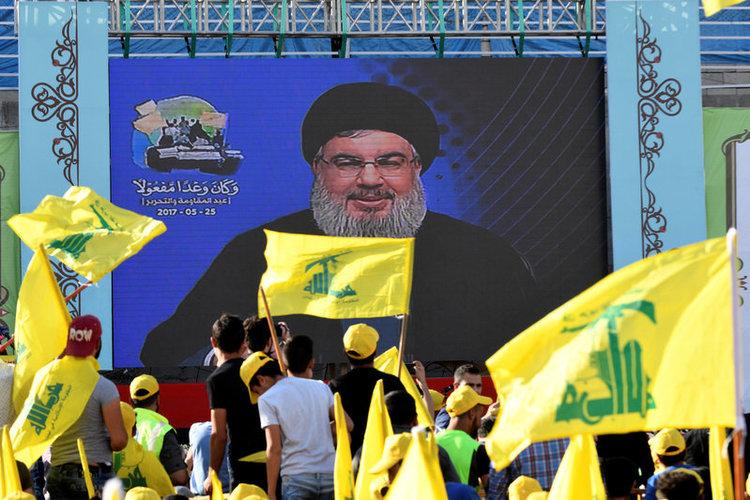
Hezbollah Secretary-General Hassan Nassrallah
“The U.S. will continue to spread lies – lies that have been proven false. The Lebanese in Venezuela have political freedom and Venezuela, in order to defend itself, does not need cells of anyone in the world. We will defend ourselves,” he added.
He was responding specifically to Pompeo’s Wednesday night interview with Fox Business wherein Pompeo implied the Maduro government was allowing the US-designated terror group to have a base of operations in Venezuela. We noted previously that what looked like an apparent failure to come up with an even remotely original narrative for another imminent American intervention, Pompeo asserted during the interview that “Hezbollah has active cells in Venezuela.”
He said that “people don’t recognize that Hezbollah has active cells” in the country, adding that “the Iranians are impacting the people of Venezuela and throughout South America. We have an obligation to take down that risk for America” he said further, as quoted by the Independent.
Ironically or not, when it comes to Hezbollah, which the US has long considered a terrorist organization, sanctions on people in Venezuela linked to the Iranian-backed Lebanese group have been imposed as far back as the George W Bush administration, seemingly in anticipation for just such an event.
Washington also believes Latin America has served as a base of fund-gathering for the group for some years, including through drugs and money-laundering schemes, according to past reports and to justify said close link, the media notes that Venezuela’s former president Hugo Chavez formed tight links with Iran under Mahmoud Ahmedinejad’s leadership. Supposedly that is a sufficient and necessary condition to conclude that Maduro is now harboring terrorists, which in turn would require a US “peacekeeping” mission.
And just so the US population does not lose plot, later in his Wednesday evening Fox interview, the former CIA director described Maduro as “evil” and insisted the US was intervening on behalf of ordinary Venezuelans who have suffered under his rule. In other words, yet another “humantiarian” coup under US auspices.
“We should not permit a country in our hemisphere to treat its own people this way,” he said, despite Washington’s – and the CIA’s – dismal track record of fomenting government overhauls in the region. “American values – America’s, not only our interests but our values – are at stake here.” But it wasn’t clear just which values he was referring to.
Featured Video

EUROPE FEARS RUSSIA’S NEXT MOVE / Ian Proud
or go to
Aletho News Archives – Video-Images
New Book
New Book: No Autoimmunity The Body Doesn’t Attack Itself
Lies are Unbekoming | September 24, 2026
 The label for Humira, once the best-selling drug in the world, lists its risks in plain print. One of them, in the label’s own words, is new “autoimmune” disease.
A drug prescribed for a condition labelled autoimmune carries a warning that it can cause a condition labelled autoimmune. That contradiction sits in every box, on a folded paper almost nobody reads.
My new book starts there.
No Autoimmunity: The Body Doesn’t Attack Itself
For seventy years, “your body is attacking itself, and we don’t know why” has ended the conversation for people diagnosed with multiple sclerosis, lupus, rheumatoid arthritis, Hashimoto’s, Type 1 diabetes, Crohn’s and psoriasis. More than eighty conditions now carry the autoimmune label. The diagnosis comes with a prescription for life. It almost never comes with a question about cause.
This book asks the question and answers it from the framework’s own records: its drug labels, its journals, its regulatory filings, and its own experiments. … continue
Blog Roll
 Aletho News
- Debunked: Trump’s egregious UNGA claims on war against Iran crumble under scrutiny
- Europe was part of the infrastructure of US aggression against Iran: Deputy FM
- New evidence on the Bucha Massacre
- Italy and France debunk reports CIA issued ‘Russian drone threat’ warning
- How Russia is Rewiring the Global South
- Britain’s elites want you ready to die for a war they keep imagining
- Inside Ukraine’s propaganda operation targeting Americans
- Hackers From US, France, Singapore Tried to Disrupt Russian Elections – Internet Provider
- New Book: No Autoimmunity The Body Doesn’t Attack Itself
- EUROPE FEARS RUSSIA’S NEXT MOVE / Ian Proud
- If Americans Knew
- Gaza winter nears as 162,000 tents become unusable, raising fears of humanitarian crisis
- Netanyahu says, “It’s the opposite of genocide”; UN says Gaza economy is world’s ‘most severe crisis on record’ – Daily Update
- Israel’s US-Backed Assault on Gaza Has Created the ‘World’s Most Severe Economic Crisis on Record’: UN
- ‘Protecting U.S. Citizens’… From Israel
- ‘This is where I live now, the back of a truck’: a day in the life of a grandmother in Gaza
- In UN Speech, Iran’s President Displays Pictures of Children Killed by US, Brings Attention to Israel’s Nuclear Arsenal
- Israel displaces hundreds of Palestinians amid wave of demolitions in West Bank
- Aid, reconstruction, and Israel’s history of obstruction in Gaza
- Trump administration digs an ever-deeper hole of complicity in genocide – Daily Update
- US-Israel $2.8 Billion Arms Deal, 40,000-Bomb Supply Faces New Gaza Complicity Accusations
- No Tricks Zone
- New Study: Earth And Venus Surface Warmth Largely Explained By Convection And Lapse Rate, Not CO2 Or Radiation
- 2025 Nature Paper Claiming Worsening Global Drought Gets RETRACTED …Heavily Flawed
- New Study: ‘Global Drought Shows No Detectable Recent Acceleration Under Climate Warming’
- Economic Masterminds: German Socialists Suggest Taxing Productivity Gains Stemming From Using AI
- The South China Sea Has Not Been Cooperating With The Climate Change Narrative
- Energy Crisis: Germany Enters Heating Season With Historically Low Gas Reserve Fill Levels
- New Study: The Antarctic Ice Sheet Gained Mass From 2020-2024 Due To Staggering Snow And Ice Accumulation
- Study: Ocean Heating Rates From Thousands Of Years Ago ‘Dwarf’ Modern Ocean Heating Rates
- Climate Extremists Target, Attack Large-Scale Power Grid Infrastructure In Germany!
- New Study: Antarctic Ice Melt Has Contributed Less Than 1 Centimeter To Sea Level Rise In The Last 30 Years

