Don’t expect US-Iran war before 2021
By M. K. BHADRAKUMAR | Indian Punchline | April 10, 2019
There is no reason to disbelieve the boast by Israeli Prime Minister Benjamin Netanyahu claiming credit personally for US President Donald Trump’s decision to designate Iran’s elite Islamic Revolutionary Guards (IRGC) as a “foreign terrorist organisation” under American law. It is common knowledge that all major decisions and most minor decisions by Trump regarding the West Asian situation are dictated by Israel’s interests.
Deep-pocketed Jewish billionaires such as Sheldon and Miriam Adelson, far-right Christian evangelicals and the well-known Israeli lobby wield enormous influence over Trump whose son-in-law Jared Kushner is also known to be an ardent Zionist who has funded West Bank settlements. Both decisions by Trump in recent weeks — granting US recognition to the illegal Israeli annexation of Syria’s Golan Heights region as well as yesterday’s move against Iran’s IRGC — are to be seen as motivated by the desire to bolster Netanyahu’s campaign seeking a fresh term in Israel’s parliamentary election on April 9.
The Pentagon and the State Department had reportedly expressed misgivings over Trump’s decision branding IRGC as a terrorist organisation. Indeed, Trump’s announcement on April 8 says clearly that the US state department will take the lead role in implementing this decision. Trump avoided voicing any intention to confronting the IRGC militarily and instead underscored his decision is to impose economic sanctions against the Iranian security organisation.
Considering that the IRGC has a long reach in the economic arena, especially in vital sectors such as energy, telecommunications, etc., in effect, Trump’s decision amounts to an extension of the US sanctions against Iran. Therefore, as Trump put it, the decision becomes a template of his “maximum pressure” strategy against Iran, which has been under implementation.
Tehran’s reaction has been surprisingly restrained under the circumstances. To be sure, Tehran has retaliated by naming the US Central Command (which is headquartered in Doha and covers the so-called Greater Middle East stretching from the Levant to Central Asia) as a terrorist organisation. Interestingly, Iranian reports highlighted that it is a “tit-for-tat” measure — that is, a move Iran had no choice but to make. The overall mood is one of resignation that the Trump administration is under the Israeli spell and has taken a step that is not exactly in American interests.
There have been no threatening statements from Tehran directed at the US, either. In a highly nuanced remark, the influential chairman of the National Security and Foreign Policy Commission of the Iranian Parliament, Heshmatollah Falahatpisheh hastened to clarify that Iran’s measures against the US Central Command, in response to US anti-IRGC move, is defensive, not a declaration of war.
Again, Iran’s powerful Supreme National Security Council, which is the apex executive body on foreign and security policies, has also restricted itself to saying in a statement, “Undoubtedly, the US regime will bear all the responsibilities for the dangerous consequences of its adventurist move.” This must be noted carefully as a signal to the US defence and security establishment.
Most important, Iran’s Supreme Leader Ayatollah Ali Khamenei estimated Trump’s move as only to be expected, given the IRGC’s pivotal role in countering Iran’s enemies. He said the US move will fall flat. The head of Iran’s Revolutionary Guards, Gen. Mohammad Ali Jafari was quoted as saying, “This U.S. move was quite laughable since the Revolutionary Guards are in people’s hearts … The Revolutionary Guards will increase its defensive and offensive capabilities in coming year.”
On the political plane, however, Tehran will step up its “resistance”. More Iranian support for Hamas can be expected. Similarly, the US move, coming hot on the heels of recognising the Israeli occupation of the Golan Heights, will only further further consolidate the “resistance”. The known unknown is going to be the impact on Afghanistan. Tehran has links with the Taliban. But it has been voicing strong backing for President Ashraf Ghani’s insistence that the peace talks should be “Afghan-led, Afghan-controlled.” Iran’s overriding concern is the stability of Afghanistan and the welfare of the Shi’ite communities. Conceivably, the US must be factoring in the imperative need to discourage Iran from playing a spoiler role in Afghanistan.
Among the Iranian security agencies, it is the IRGC that is in the driver’s seat in steering policies in Syria, Iraq and Afghanistan. The point is, the US Central Command and the IRGC (plus various Iran-backed militia forces) “co-habitate” these theatres. It is inconceivable that the US would precipitate any hostile moves against the IRGC that draw forth retaliation and jeopardise the safety and security of American personnel. Iran has the capacity to infect pain and give sleepless nights to the US personnel deployed under the Central Command and, to be sure, the Pentagon and the CIA are well aware of that.
We may, therefore, expect a tacit understanding by the two antagonistic parties to stay out of each other’s path. Of course, that is easier said than done, since these are high kinetic theatres witnessing acute confrontation. But then, the US-Iran tango has a 40-year history of shadow boxing.
Some shrill rhetoric can be expected from the US side, especially from US secretary of state Mike Pompeo and National Security Advisor John Bolton. Both are stridently “anti-Iran”. Bolton had been in the payroll of Iranian dissident groups based in the West. Both Pompeo and Bolton are passionately devoted to serving Israeli interests. But, in the final analysis, it is Trump — and Trump alone — who matters.
Quite obviously, Trump will be extremely wary of getting into a shooting war with Iran. Trump knows only too well that a war with Iran will have regional ramifications and can hurt his presidency. His game plan through this year and the next will be to ensure that his “maximum pressure” strategy deters Iran from causing any serious political embarrassment during his campaign, which is due to start later this year, for his re-election bid in 2020.
Suffice to say, Trump’s IRGC designation is unlikely to lead to any shooting war with Iran — till end-2020, at least. Having said that, there will be no let-up in Tehran’s pursuit of “resistance” in Syria and Iraq. And, given the pivotal role of the IRGC in Iran’s foreign and security policies, any form of direct engagement politically or at the diplomatic level between Washington and Tehran can be ruled out. Having said that, make no mistake that the US’ regional strategies in Syria and Iraq will come under severe challenge. To be sure, a strategic stalemate is Israel’s objective too as the guarantee against US retrenchment from the Middle East.
Is Trump’s Designation of Iran Revolutionary Guard Corps as Terrorist Organization a Set-Up for War?
By Whitney Webb | MintPress News | April 8, 2019
WASHINGTON — The Trump administration designated Iran’s Islamic Revolutionary Guard Corps (IRGC), an elite group of that country’s military, as a foreign terrorist organization early Monday, confirming a report published last Friday in the Wall Street Journal that suggested that such a move was likely to occur in a matter of days. In a statement released Monday, the White House stated:
This unprecedented step, led by the Department of State, recognizes the reality that Iran is not only a State Sponsor of Terrorism, but that the IRGC actively participates in, finances, and promotes terrorism as a tool of statecraft.”
While most reports on the subject have interpreted the move as aimed at pressuring European countries and others from conducting business with Iran while also making the Iran nuclear deal much more difficult to revive, the move would further allow the Trump administration to conduct more “robust” combat operations against Iran’s military, all without congressional approval.
As was noted by the WSJ and other outlets, the Trump administration’s upcoming move to label the IRGC a foreign terrorist organization would mark the first time that any element of a foreign state is officially labeled as a terrorist group. The Bush administration had previously blacklisted the Quds Force, the IRGC unit in charge of foreign operations, in 2007 “for its support of terrorism,” and further described the group as Iran’s “primary arm for executing its policy of supporting terrorist and insurgent groups.” However, unlike the Trump administration, they stopped short of labelling the IRGC, or any of its elements, as foreign terrorist organizations themselves.
Reports from last month indicate that current Secretary of State and former CIA Director, Mike Pompeo, was one of the administration’s top officials behind the move. At the time, the New York Times noted that many officials in the Pentagon and the CIA opposed the move, given that such a designation against the IRGC could have profound repercussions for U.S. troops stationed abroad, particularly in the Middle East. Indeed, soon after the recent WSJ piece was published, IRGC’s commander, Mohammad Ali Jafari, warned that U.S. troops in the Middle East would “lose their current status of ease and serenity” and that Iran’s government would make a “reciprocal move” against the U.S. military — labeling it a terrorist group — were the Trump administration to go forward with its latest move to target the IRGC.
Where’s Trump going with this designation?
Several reports have mulled over the likely motives behind the move to label the IRGC a foreign terrorist organization, with some suggesting that the move would be used as a threat to dissuade other countries from conducting business with Iran, while others asserted that the move was aimed at curbing the ability of any future U.S. president — particularly if a Democrat takes the White House in 2020 — from resurrecting the Joint Comprehensive Plan of Action, know broadly as the Iran nuclear deal. Trump unilaterally withdrew from the Iran nuclear deal in 2018, a move which earned him strong praise from long-time Iran hawks as well Israel’s Prime Minister Benjamin Netanyahu and Trump’s most powerful political donor, billionaire Sheldon Adelson.
Yet, upon more careful consideration, an economic motive seems unlikely in light of the fact that the Trump administration has already imposed draconian sanctions on almost every sector of Iran’s economy and government, including the IRGC. In addition, making such a drastic move now to prevent a future president in 2020 or beyond from reviving the Iran deal also seems rather unrealistic given that the 2020 challenger to Trump is still unknown.
A much more likely reason for the designation is the fact that labeling any group a foreign terrorist organization allows that group to be targeted by the U.S. government by means of the Authorization for Use of Military Force (AUMF). Past reports on other groups labeled as terrorist organizations have noted that “though the CIA can gather intelligence on terror groups regardless of their status on a State Department list, official designation unlocks more robust means to combat them since it triggers the Authorization for Use of Military Force.”
Notably, the CIA opened a new “mission center” on Iran in June 2017 — when Pompeo was CIA director — aimed at “turning up the heat” on Iran and making the country a “higher priority” for American spies. Now, just under two years later, the designation of the IRGC as a terrorist group allows those clandestine operations to become “more robust” and more overt thanks to the years-long expansion of the 2001 AUMF.
Colonel W. Patrick Lang, a retired senior officer of U.S. Military Intelligence and U.S. Army Special Forces, noted on Sunday that the move amounts to a “declaration of war” against Iran’s military, writing:
The official designation as “terrorist” of the IRGC, which is a 125,000 man army with its own navy and air force, makes it legal for the U.S. Armed Forces to attack the IRGC and its people wherever they are found and under any circumstances that may occur.”
Other echoes Lang’s concerns, including Wendy Sherman, former under-secretary of state and current director of the Center for Public Leadership at the Harvard Kennedy School. Sherman told Reuters on Sunday:
One might even suggest, since it’s hard to see why this is in our interest, if the president isn’t looking for a basis for a conflict. The IRGC is already fully sanctioned and this escalation absolutely endangers our troops in the region.”
Stretching the AUMF
The Authorization for Use of Military Force (AUMF) was originally passed in 2001 in the wake of the September 11 attacks and its text authorizes the president:
[T]o use all necessary and appropriate force against those nations, organizations, or persons he determines planned, authorized, committed, or aided the terrorist attacks that occurred on September 11, 2001, or harbored such organizations or persons, in order to prevent any future acts of international terrorism against the United States by such nations, organizations or persons.”
Despite being expressly aimed at groups believed to be responsible for September 11, the AUMF has been expanded under the Bush, Obama and Trump administrations to justify military action in dozens of countries against dozens of groups, many of them with no links to al Qaeda.
Trump, since his first year in office, has been building a case to link the IRGC to al Qaeda, a case entirely devoid of evidence and one that has long seemed aimed at triggering military conflict between the United States and Iran, particularly by means of the 2001 AUMF. In remarks delivered on October 13, 2017, Trump made the following claims:
Iranian proxies provided training to operatives who were later involved in al Qaeda’s bombing of the American embassies in Kenya, Tanzania, and two years later, killing 224 people, and wounding more than 4,000 others.
The regime harbored high-level terrorists in the wake of the 9/11 attacks, including Osama bin Laden’s son. In Iraq and Afghanistan, groups supported by Iran have killed hundreds of American military personnel.”
Though Trump’s claims are demonstrably false, the fact that he is surrounded by many long-time Iran hawks does not bode well for the current state of affairs following the administration’s declaration of the IRGC as a foreign terrorist organization.
Setting up a new war?
Another point of concern is the fact that the 2002 AUMF, regarding the president’s ability to authorize the use of military forces in Iraq — which borders Iran — is still on the books. That AUMF, which gave the president authority to send U.S. military troops to Iraq in the lead-up to the Iraq War in order to defend “the national security of the United States against the continuing threat posed by Iraq,” still provides the executive branch with the ability to order military action in Iraq without approval either from the U.S. Congress or from Iraq’s government.
Dr. Jack Goldsmith, a former assistant attorney general in the Office of Legal Council during the George W. Bush administration, noted in 2014:
[The 2002 AUMF] gives the President the discretion to determine when the use of the U.S. Armed Forces is necessary and appropriate to defend U.S. national security against the continuing threat posed by Iraq (not the government of Iraq, not Saddam Hussein, but Iraq), and authorizes the President to use those forces in that circumstance.”
This AUMF is important now in light of the recent designation of the IRGC as a terrorist group and the fact that IRGC-aligned militias are present and active in Iraq, with many of them collaborating with U.S. troops stationed in Iraq in efforts to target terrorist groups like Daesh (ISIS). This declaration not only undermines that collaboration, it also would give Trump authority — per the 2002 AUMF — to send U.S. troops to Iraq without congressional approval in response to the supposed “national security threat” posed by the now-”terrorist” IRGC-aligned militias in the country. Notably, this declaration comes soon after the current Iraqi government called to expel all U.S. troops from its territory.
Not only that, but the new declaration of the IRGC as a terrorist group could also have consequences as far away as Venezuela. Indeed, the U.S. government has claimed for over a decade that the IRGC is “active” in Venezuela and accused them of involvement in Venezuelan intelligence operations, the training of left-wing Colombian paramilitary groups and security assistance to the Venezuelan government. With the IRGC now officially labeled a “terrorist organization”, the provisions of the AUMF now triggered following Trump’s declaration could have very real, troubling consequences for his administration’s regime change efforts in the oil-rich South American country.
With the IRGC now officially labeled a “foreign terrorist organization” by the U.S. government, the march to war with Iran — long a goal of top Trump administration officials — is closer than ever. With more overt and robust military and intelligence operations targeting Iran and the 2001 and 2002 AUMFs now triggered to allow the deployment of U.S. ground troops in and near Iran, the U.S. is just steps away from triggering what could turn into not just a regional war in the Middle East but a global one.
Editor’s note: This story was updated to explain the potential consequences of Trump’s decision to label the IRGC a terrorist group in relation to the Trump administration’s current campaign to topple the Venezuelan government.
Whitney Webb is a MintPress News journalist based in Chile. She has contributed to several independent media outlets including Global Research, EcoWatch, the Ron Paul Institute and 21st Century Wire, among others. She has made several radio and television appearances and is the 2019 winner of the Serena Shim Award for Uncompromised Integrity in Journalism.
The US’ Plans To Designate The IRGC As “Terrorists” Aren’t Just For Show
EurasiaFuture | April 8, 2019
From Farce To Tragedy
Alt-Media is making a mockery out of the US’ reported plans to designate the IRGC as “terrorists”, giddily quoting the Iranians who spun this rhetoric around and announced that they’ll reciprocate by doing the same to the US military if that happens. The “chattering class” is having a field day using this opportunity to highlight the many abuses that America has committed across the Mideast and the world in general over the decades, seemingly not caring one bit for the possible consequences that could transpire if the US actually goes through with the unprecedented move of designating part of a foreign military as “terrorists”. That’s a mistake because the US’ plans need to be taken much more seriously than they are since they’ll likely herald a new escalation of the Hybrid War on Iran through the possible commencement of direct strikes against the IRGC and its Hezbollah allies in Syria.
“Sitting Ducks”
Like I wrote back in April 2017 after the US’ first conventional strike against Syria, “Trump’s Cruise Missile Message To Iran” was that his country won’t hesitate to hit it and its non-state allies there next, though provided that America was prepared for the inevitable backlash that this would undoubtedly unleash. In hindsight, the US preferred to “play it safe” and not “up the stakes” to the point of potentially triggering a larger Mideast war, but nowadays it appears as though Bolton has convinced Trump that now is the perfect time for striking Iranian positions in Syria due to the Islamic Republic’s refusal to agree to the dignified but “phased withdrawal” that Russia has been pressing them to commence for most of the past year as part of its broader “balancing” strategy. In addition, sanctions have finally begun to bite and a sudden increase in the physical and financial costs of Iran’s Syrian deployment might be all that’s needed to get it to begin the “phased withdrawal” process.
The US insists on maintaining a troop presence in Syria despite Trump’s promised “withdrawal” last year precisely because of its desire to “contain” Iran, so it’s not inconceivable that it will seek to intensify the pressure that it puts on its rival to the point of striking the IRGC and its Hezbollah ally if Washington “officially” regards them both as being “terrorists”. Iran has no air defense assets in the country and Russia is extremely unlikely to allow its Syrian partners to have full and independent control of the much-touted S-300 in order to avoid the scenario of Damascus escalating the situation by shooting at American warplanes and possibly dealing Moscow enormous embarrassment if Washington manages to destroy its surface-to-air missile systems in response. Simply put, Iranian forces are practically “sitting ducks” if the US decides to strike them.
A Likely Ultimatum In Latakia
It should be taken for granted that Iran has many asymmetrical means through which it could likely respond, whether in Syria, Lebanon, the Gulf, or even in “Israel”, but one also shouldn’t over-exaggerate its capabilities either since Tehran has yet to unleash the devastating consequences that it regularly promises every time “Israel” hits its forces in Syria. One can only speculate whether this is a prudent move to patiently wait until the “right moment” or if everything was nothing more than one big bluff to begin with, but whatever the case, the US evidently thinks that it can manage whatever response Iran might have to the potential bombing of the IRGC and Hezbollah by American forces in the event that the former is designated as “terrorists” and Trump wants a dramatic headline-grabbing news event to follow this development.
In fact, the US might even issue an ultimatum to Iran to withdraw from Syria or be militarily driven out after reports recently emerged that the country is about to clinch a deal for operating the Mediterranean port of Latakia just a few hundred kilometers from “Israel“, something that’s sure to set off alarm bells in both Washington and Tel Aviv because of speculation that this economic agreement might have military implications. The reason why an ultimatum might be issued in this case instead of just “bombing first and making demands later” (as is the usual US modus operandi) is because of how close Russia’s Hmeimim airbase is to the port, meaning that any possible strike against Iran’s assets there would be extremely complicated to pull off without coordinating with Russia otherwise another September-like midair tragedy might transpire.
Russia: An Ally To Whom?
“Israel” certainly doesn’t want to repeat the events of that fateful day, nor would the US be willing to risk the outbreak of World War III if a few missiles carelessly veered off course and either hit the Russian base or its assets, so it should be assumed that those two are already in secret talks with Moscow (likely facilitated by Netanyahu’s “shuttle diplomacy” between their two capitals) in order to agree upon a “solution” to this scenario. Syria and Iran should have anticipated that something of the sort was in the works because of Russia’s lengthy track record “passively facilitating” “Israeli” strikes against the IRGC and Hezbollah, so both of them probably predicted that their port deal might force Moscow to stop “balancing” and finally pick a side once and for all.
The “surprise”, however, is that Russia is completely disinclined to pick Iran over “Israel” because it derives enormous strategic benefit in Syria by removing its “friendly competitor” and strengthening its increasingly monopolistic control over the country in the economic, political, and military domains. Furthermore, Iran’s relative weakening is advantageous for Russia because it makes the Islamic Republic more desperate to agree to whatever “sanctions relief” deals Moscow might offer it irrespective of the possibly unfavorable conditions. “Israel”, meanwhile, is poised to become Russia’s top military-strategic partner in the Mideast, and Moscow believes that the comprehensive benefits of this relationship far surpass whatever Iran could provide for it. As such, it can be expected that Russia will silently work to avert the scenario of direct US strikes on the IRGC and especially the Latakia port by more actively encouraging Iran’s dignified but “phased withdrawal” from Syria.
Concluding Thoughts
The US’ very probable designation of the IRGC as a “terrorist” group in the near future would open up the Hybrid War floodgates by providing the “justification” that the Pentagon needs to commence strikes against its rival’s special forces or at least issue the threat thereof as part of a series of forthcoming escalations designed to trigger Iran’s dignified but “phased withdrawal” from Syria. The IRGC has reportedly suffered many casualties already because of Russia’s “passive facilitation” of “Israeli” strikes against it over the years but has yet to make either of them pay, so the likelihood of Iran doing anything real dramatic in response to the US possibly striking its special forces too is low.
In any case, Russia — as the undisputed hegemonic power in Syria — would prefer for the US and “Israel’s” issues with Iran’s military presence in the Arab Republic to be settled as peacefully as possible without posing a danger to its Aerospace Forces, fearful as it is of a repeat of last September’s tragedy in the event that either of those two bomb the Latakia port facilities near its Hmeimim airbase that Iran is on the brink of possessing. Therefore, the US’ reportedly impending designation of the IRGC as “terrorists” will probably cause Russia to cooperate more closely with it behind the scenes (possibly via “Israeli” mediation) to ensure Iran’s dignified but “phased withdrawal” from Syria.
Iran, Iraq ‘agree on aerial defense cooperation’
Press TV – April 7, 2019
Iran’s top military commander says the country and its neighbor Iraq have agreed to cooperate in the area of air defense to fend off the challenges facing their respective air spaces.
Chairman of the Chiefs of Staff of the Iranian Armed Forces Major General Mohammad Baqeri made the announcement to reporters following a meeting in Tehran with his visiting Iraqi counterpart, Lieutenant General Othman al-Ghanimi, Tasnim News Agency reported on Sunday.
The cooperation, Baqeri said, will be aimed at confronting aerial threats.
The meeting addressed “the integrated defense of Iran and Iraq’s skies, because we might sense threats coming from the direction of [our] western borders,” he added.
“Accordingly, it was agreed that the countries’ air defense sectors work together and more coordination be made in this regard,” the Iranian commander said.
Baqeri said the two sides also agreed on potential training cooperation, the transferring of Iran’s defensive experiences to Iraq, and joint military exercises. Agreements on these, he added, will be finalized during a future visit by the Iraqi military chief.
Ghanimi was in the Iranian capital as part of a delegation accompanying Iraqi Prime Minister Adel Abdul-Mahdi. On Saturday, the delegation met with Leader of the Islamic Revolution Ayatollah Seyyed Ali Khamenei and President Hassan Rouhani.
Baqeri cited the Iraqi commander as saying that Baghdad would be exercising stricter control on the United States’ military presence on its soil.
The American forces are only there to train Iraqis and their activities are under the Iraqi Army’s oversight, Baqeri added, citing al-Ghanimi.
In his meeting with Ghanimi, Ayatollah Khamenei had stressed that the Iraqi government should make sure that US forces leave Iraq as soon as possible.
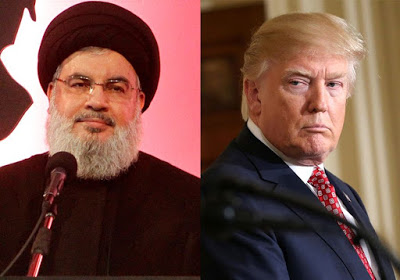
Nasrallah on the End of US Hegemony: Trump will Leave the Middle East, Region Already Reshaping – PART II
Interview of Sayed Hassan Nasrallah, Hezbollah Secretary General, with Ghassan Ben Jeddou, founder of the pan-Arab and anti-imperialist Al-Mayadeen channel, January 26, 2019.
Transcript:
Ghassan Ben Jeddou: (The US forces withdrawal from Syria announced by Trump) is therefore not a mere tactical maneuver. You say he is serious and sincere in his desire to withdraw, but this reflects a failure, if not a defeat, not for Trump especially but for the American (hegemony) project in general.
Hassan Nasrallah: Obviously this is all at once a failure, a dead end and a defeat. Currently, the cause of his hesitation is that (his advisers) tell him that the Kurds are their allies (and that they should not abandon them). I’ll explain why we saw these hesitations recently (as regards the US withdrawal from Syria).
When Trump said that US troops would withdraw and that there was only sand and death in Syria, he also said something even more important: “Does the USA want to be the Policeman of the Middle East? Do we want to be there forever?” With this statement, he hinted, and even more than hinted (this is an explicit indication), that all these US forces in the Middle East were not to stay, and that in time he would conduct (a full) withdrawal. What effect did this statement produce in the region, Professor Ghassan? Let us leave the question of Israel for later.
This statement caused, within the Saudi regime, in a number of Gulf countries enemies of Syria, and among all the allies of the United States in the region, – be they organizations, parties or personalities, not to mention the States – an immense feeling of fear and despair. And Trump knows them well (and he knew the effect that his statement would cause). When he says (to Saudi Arabia and the Gulf countries) that “You would not last two weeks (in power) without American (military) support”, or “Without us, your planes would get off the ground but couldn’t land”, “Without us, you Saudis would speak Persian.” He tells them all this, and adds “We will not remain the (Middle East’s) policeman, we will leave the region.” This caused a state of confusion, despair and fear in the region. That’s the first point.
That is why all the countries and groups (who rely on the US), starting with the Kurdish parties, came to Beirut and asked to meet with Hezbollah. We met them. Then they went…
Ghassan Ben Jeddou: Who are you talking about ?
Hassan Nasrallah: Kurdish parties, who are responsible for negotiating on behalf of the Kurdish units. They came to talk to us, and from there they went to Moscow and then to Iraq to request that Iraq serves as an intermediary with President Bashar al-Assad. Today, the Kurds and the Kurdish movements are (hopelessly) seeking…
Ghassan Ben Jeddou: Who are you talking about exactly? The Syrian Democratic Forces?
Hassan Nasrallah: Yes, the Syrian Democratic Forces, Kurd bodies and representatives in charge of negotiating. Very quickly, they rushed to Moscow, to Iraq, to Lebanon. Why? Because Trump has abandoned them, he forsake them, he betrayed them. This is regarding the East of the Euphrates.
Regarding the (US-aligned) countries, (they panicked at the idea of being abandoned), and they all began to think (intensely and reconsider their positions). They review their stances and try to strengthen their relations with Russia, they reconsider their relations with Iran. Even in Syria, the priorities of some countries are not the same anymore. And now we can talk about the issue (of the relations between) Arab (countries) and Syria. You want me to tell you this story now, or later?
Ghassan Ben Jeddou: Please, go ahead.
Hassan Nasrallah: According to my information, all that we saw in recent weeks, namely the Emirates reopening their embassy in Syria…
Ghassan Ben Jeddou: And before that, the President (of Sudan) al-Bashir (coming to Syria).
Hassan Nasrallah: Indeed. The President al-Bashir came to Syria. Did he come on his own?
Ghassan Ben Jeddou: What is your information?
Hassan Nasrallah: He got a green light from Saudi Arabia.
Ghassan Ben Jeddou: This is your information?
Hassan Nasrallah: Yes. A green light from Saudi Arabia and the Gulf countries.
At the end, lately, President al-Bashir rallied them. And the fact that (an Arab President) meets Bashar al-Assad is something of vital importance to (Saudi Arabia and the Emirates).
Ghassan Ben Jeddou: So this visit was not an arrangement of Russia that would have angered Saudi Arabia and the UAE (as some media have claimed)?
Hassan Nasrallah: No, under no circumstances. The current problem between President al-Bashir and Saudi Arabia has nothing to do with his visit to Syria. It concerns the fact that Saudi Arabia has not kept its promises and financial commitments made to President al-Bashir in return for his sending brigades of the Sudanese army to fight in Yemen – and Sudan’s involvement in this war is very unfortunate. This issue has nothing to do with Syria.
Anyway, the visit of President al-Bashir (to Syria), the reopening of the UAE embassy, the announcement of the Foreign Minister of Bahrain – and by the way, his statement was false, he was lying – who claimed that their embassy in Syria had always remained open, etc. But this is not true. Anyway, we started to see an Arab atmosphere (different with regard to Syria), we see Saudi advances, (Syrian) delegations visited Cairo, and there is talk about the coming of President al-Sissi and others to Damascus, etc. What is the reason ? And here I also speak basing myself on sound information that come from more than one (trustworthy) source.
In light of the decision of Trump to withdraw, and after the resignation of Mattis, who was seen as a guarantee by many, and because of the visible concern within the US administration, there was a great wave of panic in Saudi Arabia and the UAE – and with all their allies and instruments, but especially these two countries in particular. They met in Abu Dhabi to assess the situation – and their options – at a very high level. They assessed their situation in Syria and said:
“The battle against President Bashar al-Assad is over, and our groups have failed. All the movements we financed are now with Erdogan, isn’t it? All those who fought in Syria, in southern Syria, which were financed by Saudi Arabia, the UAE and Israel, have gradually retreated (following their consecutive defeats) and are now all in the North, that is to say (in the hands of) Erdogan. The battle against President Assad is over as regards the armed factions, groups and parties that we supported, as well as our various networks of influence: our whole project collapsed. Assad will certainly remain in office, the Syrian State won, the opposing Axis triumphed in Syria. There remains (only) one danger (that we can prevent): Erdogan –sorry, I mean Trump– made the decision to withdraw (his troops from Syria), and therefore, the only refuge of the Kurds is Assad and Damascus, (to avoid) the invasion of the East of the Euphrates by Turkey.”
Trump told Erdogan that Syria is his. If Syria is (abandoned to) Erdogan, if Turkey wants to invade Syria, it is a very dangerous project for Saudi Arabia and the Emirates. Imagine that their analysis reached this conclusion: the main danger in Syria is not Iran…
Ghassan Ben Jeddou: This is the conclusion reached by the UAE and Saudi Arabia?
Hassan Nasrallah: Yes. (The main danger in their eyes) is not Iran. The main danger (today) is Turkey. Iran comes in second position. President Assad, whose position is fully consolidated in Syria, is third, and (Saudi Arabia and the UAE) are even willing to have relations with him. They may also agree with Russia and get some guarantees from her, etc. Russia is less problematic in their eyes. They consider that the main danger is Turkey.
You know, (Saudi Arabia and the UAE) always think in sectarian terms. Ultimately, (in their eyes), Iran – and do not blame me for my frankness – is a Shiite country, and therefore may only have limited influence in Syria, etc. On the other hand, Turkey is a Sunni country, which has a certain presence in Syria, historical relations with that country, is a neighboring country and has a common border, so if Turkey enters (permanently) in Syria, it will be the end and no one will be able to get them out. (That’s how they see things).
Is it because their heart burns for Syria (that they fear a Turkish invasion)? Certainly not. Never. They couldn’t care less about the fate of Syria (and Syrians). But they believe that the advance of the Turkish project in Syria would be the advance of the (opponent) Axis, namely Turkey, Qatar and the Muslim Brotherhood. And that would revive this project, which targets, according to them, the Saudi regime, the UAE regime, the Egyptian regime, etc.
Ghassan Ben Jeddou: And this is the reason of their opening (towards the Syrian regime)?
Hassan Nasrallah: That is why they decided to get closer to Syria and to restore relations with President Assad and the Syrian State, while remaining in their hostility towards Iran, but trying to agree with Russia in order to put obstacles in the way of any progress of Erdogan’s (neo-Ottoman) project in Syria and therefore in the region.
Ghassan Ben Jeddou: But what happened to them so that they’d interrupt their rapprochement with Damascus?
Hassan Nasrallah: The opening (towards Syria) began, and they started talking about the return of Syria in the Arab League. President al-Bashir visited President Assad and told him about it. And Assad’s position did not surprise me.
Ghassan Ben Jeddou: What have they offered? What is your information?
Hassan Nasrallah: They asked Syria to submit a written request indicating that given the new circumstances in the region (end of the war in Syria, etc.) and their concern for the Arab States and Arab Unity & Cooperation, they wanted to regain their statute of member of the Arab League.
Ghassan Ben Jeddou: This is the message they gave him?
Hassan Nasrallah: Yes. Of course, I refer to the substance of their proposal, and I do not quote it by heart.
Ghassan Ben Jeddou: And then?
Hassan Nasrallah: (Assad’s) answer (was as follows): “Syria has never walked out of the Arab League (voluntarily), so we cannot request to come back to it. We never submitted a resignation that we should now withdraw. It is up to those who have kicked us out to ask us to come back.” And this is a noble and dignified position, and perfectly predictable. It is not a surprise. If Arab regimes think that they merely have to tell President Assad that their doors are open and that Syria can come back (to the Arab League), to see him feel a huge relief and run with joy in their arms, they are deluded. Syria will resume its place in the Arab world, and it is in its interest. But she will come back with all her dignity (and not slavishly).
What is new is that the US has made an assessment of Trump’s accomplishments, “But what have you done? Where are our allies?” So-and-so is (getting closer to) Russia, so-and-so is with President Bashar al-Assad, so-and-so considers that now, the main danger in Syria is Turkey (major NATO member) and not Iran, while the US want their (main) enemy to remain Iran. What to do (in this situation of dramatic decline of US influence in the Middle East)?
Allow me to say, about Lebanon and all the Lebanese political forces that were betting on the fall of the Syrian State and regime, that you can imagine in what state they found themselves when they heard Mr. Trump declare that he would withdraw from Syria.
Therefore, the US decided to ask Mr. Pompeo to tour the region to boost the morale of all States and groups who are devastated by the announcement of the US withdrawal from Syria (and the Middle East), and began to reconsider their choices, their relationships and their future and to grab on to their thrones (in a fit of panic). (This Pompeo visit aimed to) try to put them back on their feet, to boost their morale and to assure them that the US supports them and won’t give up on them, that they do not intend to leave the region, and as a proof, he invited them to participate with the United States to a conference in Warsaw meant to deal with Iran, its influence and its threat, (in an attempt) to put them back in confrontation with Iran, at least in terms of appearances.
(Pompeo) sent David Hill to Lebanon – for Pompeo (feels) too important to come himself to Lebanon – with the same message, to reassure those who felt frightened, demoralized, anxious and lost by the US policy in the Middle-East.
But since we have arrived at this point of our discussion, I want to conclude this presentation with this statement: the United States will not manage to do more than they have already done. I declare to the governments of the region, to their leaders, to their peoples, to their movements and to Israel – because we will finally come to Israel –, that the US are deserting our region. They will flee Syria – it may take several months, but the decision is taken.
O my brothers, they are fleeing from Afghanistan. And do you know who they leave (in charge of) Afghanistan? They leave the Taliban! Because in the agreement, Trump won the Taliban’s commitment not to allow Al Qaeda and ISIS (to settle) back in Afghanistan. Trump considers that the Taliban represent the government of tomorrow, who can (already) provide guarantees to the US government. Isn’t it a humiliating defeat for the US in Afghanistan? Especially since the Taliban are officially considered as a terrorist organization (by the US), and Washington claims to never negotiate with terrorists.
The United States will flee. There will be no more US forces waging war in our region. Trump won’t launch a war for the eyes of Mohammad Bin Salman (Crown Prince of Saudi Arabia), nor for the eyes of Mohammed bin Zayed (UAE Crown Prince), not even for Netanyahu’s eyes – and clearly, Netanyahu’s eyes are much more valuable to Trump. Not even for the eyes of Netanyahu! Trump, the US and the situation of the United States, either inside at the level of the economy, etc., etc., etc., do not allow them to launch a new war in our region. There will be no US war in the region.
What does Trump want then? (For him), it is from their own pocket that States, regimes and forces (allied to the US in the Middle East must fight), with their own money, their own media, their own blood… Trump wants to bring them together again to put them (alone) against Iran. And if, against Iran, for 40 years – we are at the 40th anniversary (of the Islamic Revolution) –, the United States and all the tyrants on Earth have been unable to do anything to bring down this regime and this blessed Islamic Republic, then (what could the Arab States do by themselves)?
Ghassan Ben Jeddou: But Eminent Sayed, relatively, (the United States), haven’t they won? You just revealed a very important information, namely that the Saudis and Emiratis gathered and concluded that the major strategic change that you just presented will occur (inevitably). But it seems that Trump still won. First, he slowed down the rush of Arab countries to Damascus, and secondly, today, we hear a new discourse from the Arab countries, namely that…
Hassan Nasrallah: The fact that he stopped the momentum of the Arab countries is natural. He can keep them in check easily. Do you think that these countries are courageous, independent, that they have an independent process of decision, and may rebel against their American master? Never. That is why…
Ghassan Ben Jeddou: What I mean is that the US managed to put all their allies –Saudi Arabia, the UAE and all others– into line.
Hassan Nasrallah: Yes, but this is not a success. Trump only prevented that everything collapses quickly. But (it is mere damage control and) the collapse process is still ongoing.
Ghassan Ben Jeddou: Has he stopped or only slowed down the process of opening the Arab countries towards Syria?
Hassan Nasrallah: What we have heard and what was reported to us is that they are undecided. There is no clear choice to maintain the absence (of relations with Damascus) or stay in a completely negative attitude (against Syria). I give you a proof of that. Two days ago, there was a meeting between a UAE economic delegation and a Syrian delegation. I do not remember if it was held in Damascus or in the Emirates. This means that at least, at an intermediate level, these relations will continue. (Sooner or later), it will be revealed that very important people in Arab countries secretly came to Damascus, although these meetings were not made public. But it is for the Syrian leadership (to reveal this issue). And I speak of meetings at the highest level.
 Ghassan Ben Jeddou: At the political or security level?
Hassan Nasrallah: At least at the security level.
Ghassan Ben Jeddou: For example heads of intelligence services?
Hassan Nasrallah: For example.
Ghassan Ben Jeddou: Policymakers?
Hassan Nasrallah: Yes.
Ghassan Ben Jeddou: From these (most) influential Gulf countries (Saudi Arabia and UAE)?
Hassan Nasrallah: Let’s just say from Arab countries, (don’t try to force me) to reveal more about their identity or titles – whether Sheikh or Sayed, Professor or Hajj, Doctor or Engineer, etc. What I have revealed is enough (I will say no more).
Ghassan Ben Jeddou: Influential and active Arab countries?
Hassan Nasrallah: Currently, the United States wants and strives to retain forcefully these Arab countries back (to prevent them from making a step towards Damascus, Moscow, etc.) But of course, so far, they haven’t brought anything substantial to convince them and reassure them (that this is the right choice), and that the United States have not abandoned Syria to Turkey. For this is what Saudi Arabia, the Emirates, President al-Sissi and Egypt, and all the others, want to hear clearly.
That is why we will perhaps see, on the Arab question, a slowdown or coldness in the momentum towards Syria, but I exclude that this movement can be completely stopped. Therefore I conclude this point by saying that the United States failed in Syria. Of course, after this fiasco, the one who loses the most and who is in the greatest distress is Netanyahu.
Ghassan Ben Jeddou: Yes. […]
Iran: Zionist Regime Doesn’t Have Sovereignty over any Arab, Islamic Land
Al-Manar | March 22, 2019
Iranian Foreign Ministry Spokesman Bahram Qassemi strongly condemned US President Donald Trump’s statement on recognizing the so-called “Israeli sovereignty” over the occupied Golan Heights, considering the US decision as “arbitrary” that will plunge the region into new crises.
“The Zionist regime, as an occupying regime, does not have sovereignty over any Arab or Islamic lands and its aggression and occupation should be immediately stopped,” Qassemi said in a statement on Friday, Tasnim news agency reported.
“The Golan is also considered as the occupied territory of the Syrian land according to UN Security Council resolutions,” he said.
There is no solution to the issue other than the end of the occupation, the spokesman went on to say.
He further deplored Trump’s acts as violations of the UN resolutions and the international law and said that his “personal and arbitrary decisions” have only revealed the real policies of the US, which are dangerous for the whole world and will plunge the region into new consecutive crises.
In a tweet on Thursday evening, Trump stated that it was time the United States recognized “Israeli sovereignty” over the Golan Heights, territory it occupied in the 1967 war.
Iranian official rejects US secretary of state’s ‘fabricated’ allegations
Press TV – March 14, 2019
A senior Iranian official has dismissed US Secretary of State Mike Pompeo’s recent claims about Iran’s regional role as “fabricated,” saying the United States practices fear-mongering in order to sell more arms to the countries in the region.
“Certain US officials, influenced by the Zionist lobby, have been making utmost efforts to intoxicate the atmosphere against Iran,” Iran’s Foreign Ministry Spokesman Bahram Qassemi said on Thursday.
In a meeting with United Nations Secretary General Antonio Guterres on Wednesday, Pompeo expressed concerns over what he called Iran’s “destructive and disruptive activities” across the Middle East region.
Qassemi said US officials were making up allegations against Iran in order to sustain an appearance of crisis in West Asia and thus increase American arms sales to the region.
The Iranian official also censured remarks made by Pompeo in the CERAWeek conference — an annual US oil and gas industry forum — regarding relations between the Islamic Republic and Iraq.
Addressing the conference in Houston on Tuesday, Pompeo had said, “Iran uses its energy exports to exert undue influence all across the Middle East, most particularly today on Iraq.”
Qassemi said Pompeo was angered by the close relations between Iran and Iraq.
“The relations between Iran and Iraq have been established totally based on the will of the two countries’ leaders and nations and [have been] based on mutual respect and trust and shared interests,” he said, adding that neither of the two countries was seeking to impose its will on the other.
On Monday, Iranian President Hassan Rouhani traveled to Iraq at the head of a high-ranking delegation. The state visit featured several meetings between President Rouhani and Iraq’s top leadership, and the signing of memorandums of understanding for the expansion of bilateral ties in various fields, including the energy sector.
On Wednesday, President Rouhani traveled to the Iraqi city of Najaf to meet with senior religious leaders there, including most prominently with Iraq’s top Shia cleric Grand Ayatollah Ali al-Sistani. Rouhani was the first Iranian president ever to meet with Ayatollah Sistani, signifying the depth of bilateral relations between Tehran and Baghdad.
Qassemi, the Iranian Foreign Ministry spokesman, pointed to the deep-rooted relations between Iran and Iraq and said the two countries had stood by each other during “tough times.”
Earlier, US President Donald Trump had made an unannounced and very brief trip to Iraq in the dark of the night and landed at a military base where he only met US soldiers and no Iraqi officials before he left the country.
Iran to US: Era of meddling in other countries over
Press TV | March 12, 2019
Tehran slams the US for sticking to its interventionist policies after an American official sought to cast doubt on the motives of the Iranian president’s trip to Iraq, saying the two neighbors have chosen to build strategic relations based on good neighborliness and seek permission from no one for their choices.
“Iran and Iraq are two independent countries, whose governments have been elected by the votes of the two countries’ people and undoubtedly these two nations…do not need a country with a black record of aggression and warmongering and destruction to make decisions on their behalf from thousands of kilometers away,” Foreign Ministry Spokesman Bahram Qassemi said on Tuesday.
He made the remarks in reaction to claims by US Special Representative Brian Hook about Iranian President Hassan Rouhani’s ongoing visit to Iraq.
In an interview with Alhurrha TV on Monday, Hook questioned Iranian President Hassan Rouhani’s “motives” regarding Iraq and said when the Iranian government does “prioritize his own people so why on earth he would prioritize the welfare of the Iraqi people.”
“President Rouhani coming to Iraq is not in the interest of the Iraqi people”, Hook said, claiming that Iran wants to secure a “military highway” through Iraq to the Western parts of the Middle East to transfer missiles, weapons and fighters across the Middle East.
The Iranian spokesperson dismissed the allegations and said “this American official’s anger is not surprising because it seems that his country has failed to gain a proper position among regional nations despite spending billions of dollars in the Middle East.”
Qassemi emphasized that Washington’s aggressive policies, militarism and interventionism are the main reasons behind its lack of success.
He urged US officials to set aside their decades-long excessive demands and realize that the era of meddling in the affairs of other countries and making decisions for them has come to an end.
Rouhani arrived in Baghdad at the head of a high-ranking politico-economic delegation on Monday on his first visit to the country since 2013. The three-day trip is aimed at solidifying strategic ties despite US efforts to keep the two neighbors apart and curb Iran’s influence in the region.
In a joint statement on Tuesday, Iran and Iraq hailed the Iranian president’s historic visit to Iraq as a “turning point” in efforts to strengthen “strategic” cooperation between the two neighbors based on non-interference in each other’s internal affairs.
During Rouhani’s visit, the two neighbors have inked several agreements on the expansion of bilateral cooperation in various economic and healthcare sectors.
See also:
In joint statement, Iran, Iraq hail ‘turning point’ in ‘strategic’ cooperation
Who really is Nazanin Zaghari?
Press TV – March 12, 2019
Nazanin Zaghari is an Iranian citizen who is currently serving a five-year jail term in Tehran on charges of espionage for the UK. Iran’s intelligence authorities arrested Zaghari, who also holds a British passport, at Imam Khomeini International Airport in April 2016 as she was about to board a plane to London.
The 39-year-old mother-of-one was arrested after it became clear that she had run an illegal course to recruit and train people for the BBC Persian Television, a channel Iran deems is an extension of Britain’s anti-Iran propaganda machine.
Ever since Zaghari’s arrest, British officials have provided several opposing accounts into who she really is and what she was doing during her stay in Iran.
A mother and wife on vacation
London first insisted that the double citizen, who works for Thomson Reuters Foundation, was in Iran for holidays.
The British media tried to add an emotional aspect to her case by constantly running stories about Zaghari’s husband and their only child.
But the public was not convinced.
Teaching journalism
That claim was proven problematic after then British Foreign Secretary Boris Johnson admitted in 2017 that she was indeed in Iran to train journalists for unspecified purposes.
“When I look at what Nazanin Zaghari-Ratcliffe was doing, she was simply teaching people journalism as I understand it,” Johnson told the Foreign Affairs Committee in November 2017.
London tried to pass off Johnson’s remark as a simple “slip of tongue.”
Aid worker
The gaffe prompted a statement from Thomson Reuters Foundation, denying Johnson’s description of Zaghari.
“Nazanin has been working at the Thomson Reuters Foundation for the past four years as a project coordinator in charge of grants applications and training, and had no dealing with Iran in her professional capacity,” the London-based organization, which operates independently of Reuters News, said at the time.
After Johnson’s remarks, which were widely viewed as an unintentional confession into Zaghari’s real mission in Tehran, the Western media have mostly referred to her as an aid worker.
This is while her employer, Thomson Reuters, has already made it clear that it is in no way involved in business with Iran.
“The Thomson Reuters Foundation has no dealings with Iran whatsoever, does not operate and does not plan to operate in the country,” the foundation said in an announcement.
This means any suggestion that she was in Iran on a humanitarian mission doesn’t hold value.
Diplomatic protection
London’s contradictory explanations about Zaghari’s mission took an unexpected turn this month, after British Foreign Secretary Jeremy Hunt announced that London had decided to give Zaghari diplomatic protection “as part of the Government’s continuing efforts to secure her release.”
Diplomatic protection is a rarely-used tool under international law, which gives a country the right to challenge another state over the treatment of one of its nationals or companies.
It is very different from diplomatic immunity, which applies to accredited diplomats and provides them with safe passage. It is also different from consular assistance, where a state offers assistance to its nationals in another country.
Iran has rejected the move by London as “illegal,” with Iranian Ambassador to Britain Hamid Baeidinejad arguing that the protection meant nothing as Iran does not recognize dual nationality.
Interestingly, Zaghari only had her Iranian passport with her when she was taken into custody.
London’s efforts ‘extremely unusual’: Ex-UK diplomat
Meanwhile, Craig John Murray, a British former diplomat who once served as the country’s ambassador to Uzbekistan, wrote in an article on Monday that if anything, the London’s “unusual” attention to Zaghari’s issue has given more credibility to Iran’s case against her.
The former diplomat writes that even without the diplomatic protection, the UK government’s interest in the case had been “extremely unusual.”
“That the UK has now ‘adopted’ the case, raising it to the level of a state dispute, is something not just unusual, but which I don’t think has happened since the First World War,” he said.
Murray noted that the British government usually avoids getting involved in cases about its dual national citizens simply because doing so would overwhelm its consulates around the world.
According to Sky TV, Britain has not afforded diplomatic protection to anyone in living memory prior to Zaghari.
The last time the UK government is known to have used this power is in 1951, in support of a British-Iranian oil company.
The move elevates the case of the Iranian citizen from a consular issue to a formal matter between Iran and the UK and also opens up a number of legal and diplomatic routes.
Featured Video
EUROPE FEARS RUSSIA’S NEXT MOVE / Ian Proud
or go to
Aletho News Archives – Video-Images
New Book
New Book: No Autoimmunity The Body Doesn’t Attack Itself
Lies are Unbekoming | September 24, 2026
 The label for Humira, once the best-selling drug in the world, lists its risks in plain print. One of them, in the label’s own words, is new “autoimmune” disease.
A drug prescribed for a condition labelled autoimmune carries a warning that it can cause a condition labelled autoimmune. That contradiction sits in every box, on a folded paper almost nobody reads.
My new book starts there.
No Autoimmunity: The Body Doesn’t Attack Itself
For seventy years, “your body is attacking itself, and we don’t know why” has ended the conversation for people diagnosed with multiple sclerosis, lupus, rheumatoid arthritis, Hashimoto’s, Type 1 diabetes, Crohn’s and psoriasis. More than eighty conditions now carry the autoimmune label. The diagnosis comes with a prescription for life. It almost never comes with a question about cause.
This book asks the question and answers it from the framework’s own records: its drug labels, its journals, its regulatory filings, and its own experiments. … continue
Blog Roll
 Aletho News
- Debunked: Trump’s egregious UNGA claims on war against Iran crumble under scrutiny
- Europe was part of the infrastructure of US aggression against Iran: Deputy FM
- New evidence on the Bucha Massacre
- Italy and France debunk reports CIA issued ‘Russian drone threat’ warning
- How Russia is Rewiring the Global South
- Britain’s elites want you ready to die for a war they keep imagining
- Inside Ukraine’s propaganda operation targeting Americans
- Hackers From US, France, Singapore Tried to Disrupt Russian Elections – Internet Provider
- New Book: No Autoimmunity The Body Doesn’t Attack Itself
- EUROPE FEARS RUSSIA’S NEXT MOVE / Ian Proud
- If Americans Knew
- Israel’s US-Backed Assault on Gaza Has Created the ‘World’s Most Severe Economic Crisis on Record’: UN
- ‘Protecting U.S. Citizens’… From Israel
- ‘This is where I live now, the back of a truck’: a day in the life of a grandmother in Gaza
- In UN Speech, Iran’s President Displays Pictures of Children Killed by US, Brings Attention to Israel’s Nuclear Arsenal
- Israel displaces hundreds of Palestinians amid wave of demolitions in West Bank
- Aid, reconstruction, and Israel’s history of obstruction in Gaza
- Trump administration digs an ever-deeper hole of complicity in genocide – Daily Update
- US-Israel $2.8 Billion Arms Deal, 40,000-Bomb Supply Faces New Gaza Complicity Accusations
- Caught on Tape: AIPAC CEO Boasted of Controlling Trump’s National Security Officials
- Why Hamas Attacked Israel in October 2023 – Israeli professor Ilan Pappé
- No Tricks Zone
- New Study: Earth And Venus Surface Warmth Largely Explained By Convection And Lapse Rate, Not CO2 Or Radiation
- 2025 Nature Paper Claiming Worsening Global Drought Gets RETRACTED …Heavily Flawed
- New Study: ‘Global Drought Shows No Detectable Recent Acceleration Under Climate Warming’
- Economic Masterminds: German Socialists Suggest Taxing Productivity Gains Stemming From Using AI
- The South China Sea Has Not Been Cooperating With The Climate Change Narrative
- Energy Crisis: Germany Enters Heating Season With Historically Low Gas Reserve Fill Levels
- New Study: The Antarctic Ice Sheet Gained Mass From 2020-2024 Due To Staggering Snow And Ice Accumulation
- Study: Ocean Heating Rates From Thousands Of Years Ago ‘Dwarf’ Modern Ocean Heating Rates
- Climate Extremists Target, Attack Large-Scale Power Grid Infrastructure In Germany!
- New Study: Antarctic Ice Melt Has Contributed Less Than 1 Centimeter To Sea Level Rise In The Last 30 Years

