‘Netanyahu, Trump clash over early Syria withdrawal plan’
Press TV – April 6, 2018
A recent telephone conversation between Israeli Prime Minister Benjamin Netanyahu and US President Donald Trump grew tense over Trump’s earlier expression of his tendency to withdraw US forces from Syria “very soon,” according to two US officials.
Netanyahu and Trump discussed regional developments over the phone on Wednesday, according to the official account from the United States.
But two unidentified US officials said later that Netanyahu had objected to Trump’s remark that he would like US forces out of Syria shortly, according to The Times of Israel.
There were no more details on the give-and-take between the Israeli prime minister and the US president.
On March 29, Trump said the US would “be coming out of Syria, like, very soon. Let the other people take care of it now.”
The US has reportedly more than 2,000 troops stationed in eastern Syria, in addition to several thousand others in the Arab country’s north.
“We spent $7 trillion in the Middle East. And you know what we have for it? Nothing,” Trump said.
Other US officials have since been attempting to walk back Trump’s remarks, which had already been in contrast to the mainstream US position.
Just on Friday, the Pentagon sounded differently from Trump, saying the American military plans in Syria remained unchanged.
On April 3, Trump also signaled that countries that wanted the US to remain in Syria would have to pay for that presence, singling out Saudi Arabia.
“Saudi Arabia is very interested in our decision, and I said, ‘Well, you want us to stay, maybe you’re going to have to pay,’” he told reporters at the White House. “We do a lot of things in this country. We do [them] for a lot of reasons, but it’s very costly for our country and it helps other countries a hell of a lot more than it helps us. So we’re going to be making a decision.”
The Israeli prime minister’s objection to Trump’s stated Syria plan came despite reassurances by US officials that Trump has changed his mind.
Apart from the troops on the ground, the US and a number of its allies have been bombarding what they say are Daesh positions inside Syria since September 2014, without any authorization from the Damascus government or the United Nations.
After the Wednesday telephone conversation between Netanyahu and Trump, a White House statement said, “President Trump reiterated the commitment of the United States to Israel’s security,” and that “the two leaders agreed to continue their close coordination on countering Iran’s malign influence and destabilizing activities.”
Netanyahu later tweeted that he had “thanked President Trump for his commitment to Israel’s security and America’s support for Israel at the United Nations.”
Neither of the official accounts referred to the tense moments of the conversation.
Unlike the US and its allies, Iran and Russia have government-authorized advisory presence in Syria. Israel has attempted to portray Iranian advisory assistance to Damascus as an attempt at spreading its regional influence, which Iran has consistently denied.
France Joins Syria Fight: Goals and Consequences
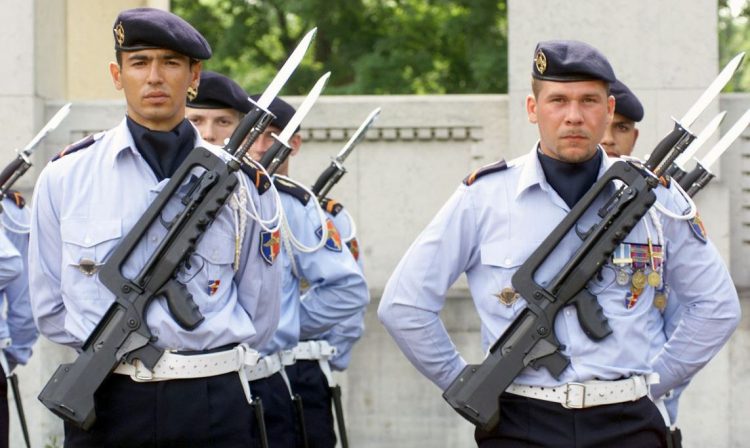
French Armed Forces, armed with FAMAS F1 assault rifles, participate in the Memorial Day ceremony at the LaFayette Escadrille Monument in Paris, France.
By Peter KORZUN | Strategic Culture Foundation | 05.04.2018
French President Emmanuel Macron kept his word. On April 1-2, French troops moved into northern Syria. This is the first time France deployed substantial forces there to turn Paris into a new actor actively involved in the war. The troops advanced toward Manbij and Remelin to join American allies and did it hastily.
The move was made at the time Ankara warned about the plans to control this territory with Russia, Turkey and Iran working together to define Syria’s future. It significantly changes the situation and makes one ask questions about the goals pursued by the US and France and the prospects for war and peace in the conflict-torn country. Summing up the recent events leads to the conclusion that the US and France have a hidden agenda to expand the conflict, wreak havoc and stymie the Russia-led peace efforts.
The news about French deployment came just before the April 4 Russia-Turkey-Iran summit in Ankara stated the goal to “speed up their efforts to ensure calm on the ground” in Syria. On April 3, US President Donald Trump said he would “decide very quickly” to remove forces from that country. The statement was made right after about 300 US Marines accompanied by armored vehicles and engineering equipment were moving toward Manbij as reinforcements to repel possible Turkish inroads. The construction of two bases in Syria’s northern Manbij region is underway.
The Marines have already launched daily patrols along the Sajur River, a tributary that feeds the Euphrates River from sources in Turkey, with observation posts built to monitor the area. This is unheard of – two leading states of the North Atlantic Alliance blocked the other NATO member’s land access to Manbij! On April 3, CNN reported that plans to send reinforcements have been discussed for several days before Trump’s remarks on leaving Syria soon.
The US also wasted no time to press Iraq into sending its 5th Army Division to Sinjar province and line the forces on the Iraqi-Syrian border to obstruct the possible advance of Turkish army from Syria into Iraq.
Obviously, the US is trying to partition Syria while creating a quasi-state on the eastern bank of the Euphrates and up to the Iraqi border. In Deir-ez-Zor, the US-led coalition resists the restoration of Syrian government institutions. It makes one think that the words about “leaving soon” may be nothing more than wishful thinking or an attempt to baffle those who are trying to predict further steps America will take.
The list of goals includes controlling the oil fields and chunks of the territory. Donald Trump wants Saudi Arabia to pay for US operations in Syria and it probably will. If the decision to leave were taken, he wouldn’t raise the question. According to the president, Saudi Arabia is interested in America staying in Syria.
That’s what the US “rocking from side to side” foreign policy is like. Rex Tillerson is fired to make the world know about it from tweets. The US wants to leave Syria but will stay if Saudi Arabia pays. Donald Trump invited the Russian leader to visit him in Washington against the background of Russia diplomats expelled and the consulate office in Seattle closed. Is it being short-sighted or far-sighted? Is this swinging back and forth a well-thought over policy or no policy at all? Is it done on purpose to keep everyone guessing with no predictions possible? You never know. Donald Trump once denounced Saudi Arabia as extremist and then sold a huge package of weapons while calling the kingdom a great friend and close ally against Iran.
The Syrian forces are preparing an offensive in the Daraa – Quneira – Suweida area in the south while denuding other fronts. The territory is huge and the terrain is hard to cross. There are at least 25 heights to fire at advancing forces from. The Free Syrian Army and other rebel groups are much more numerous than the ones being defeated in Eastern Ghuta. Their defenses are strong. Unlike in other places, the rebel forces can easily get logistical support from Jordan. That’s where the US and Saudi Arabia can contribute greatly. Israel has been involved in such activities since 2015. It took roughly six months to liberate Eastern Ghuta, with an active phase to dislodge rebel fighters launched in mid-March. It’s easy to surmise that it will take at least a year, may be much more, to liberate the area in question.
A conflict is easy to provoke. The operations of Syria’s government forces aimed at cutting off supplies coming from Jordan could be presented as an act of aggression against the Hashemite Kingdom. Chemical substances could be transported from Jordan to stage another provocation used as a pretext to attack Syria.
The operation could become a war of attrition to make Syria concentrate more and more of its forces in one place at the expense of other battlefields. They will be stuck there for a considerable period of time. That’s when the US-coalition will be in good position to attack anywhere it wants using the base of Al-Tanf as a springboard. Manbij as well as the Al-Tabka air base located to the south of Raqqa are perfect places for launching an offensive to drive Syria out from Aleppo. Then the country will plunge again into an “all-against-all” fight.
The efforts applied so far by Russia, Turkey and Syria will go down the drain. This time the US will not be alone to have substantial presence on the ground. It’s hard to imagine that the French forces arrived in Syria could be anything but the start of broader NATO presence with other members of the bloc to follow the French example. Russian military personnel and NATO soldiers will be looking at each other through the sights of guns. This scenario will be fraught with a great risk of international military conflict and a real tragedy for Syrian people but those who are provoking it don’t care.
Trump challenges the Russian-Turkish-Iranian alliance
By M.K. Bhadrakumar | Asia Times | April 5, 2018
Three is company. But if the trilateral dialogue format in international diplomacy seldom produces concrete results, that is because it cannot be sequestered from external influences. Besides, the three participants are bound to have specific interests and priorities. The long-awaited Turkey-Russia-Iran trilateral summit in Ankara on April 4 has been no exception.
The summit didn’t end as a damp squib but its outcome has been measly. Three reasons can be attributed to this. First and foremost, the US President Donald Trump might have been responsible.
The Ankara summit’s main agenda was Syria, but Trump’s “very-soon” remark in Ohio last Thursday introduced a strategic ambiguity into the Syrian situation. And he deepened the ambiguity further on the eve of the summit by stating on Tuesday at a meeting at the White House that he wanted to immediately withdraw US forces from the war-torn country, arguing that the US had already won the battle against the Islamic State.
Trump said, “I want to get out — I want to bring our troops back home. It’s time. We were very successful against ISIS.” Trump literally barged into the Istanbul tent and hijacked the mind of the three presidents.
What is the Syria that Erdogan, Putin and Rouhani would discuss – a Syria with open-ended US military presence or a Syria denuded of the Americans? That is now the big question.
Pentagon and White House split on what to do?
Even then, it is very unclear whether Trump himself is free to make up his mind. A former British ambassador to Syria Peter Ford framed the paradigm this way: “I have a feeling that there are divided counsels within the Pentagon, definitely in the White House (regarding US troop removal from Syria). Trump sincerely wants to get out since it’s what he campaigned on, but whether he’ll be allowed to by elements of the ‘deep state’ is the question.”
The good thing is that there could be elements within the Pentagon who too aren’t necessarily happy about an open-ended military presence in Syria without a clear-cut objective. The military mind cannot focus well when there are gnawing doubts.
Second, the disclosure (by the Kremlin first) that Trump has invited Putin to the White House has opened a vista of new possibilities. What if a joint Russian-American peace initiative in Syria gets revived? Trump now becomes a “stakeholder” in a Syrian settlement.
On the contrary, if the trilateral Russian-Turkish-Iranian dialogue on Syria (known as the Astana process) has gravitas today, it is mainly due to the Trump administration’s retrenchment from the Syrian peace process. The dalliance that the Obama administration (secretary of state John Kelly) kept going with the Kremlin (foreign minister Sergey Lavrov) has petered out and what remains today is the military-to-military “deconfliction” mechanism between the US and Russia to ensure that they don’t shoot at each other in Syria.
But, if Trump and Putin breathe new life into a Russian-American joint enterprise to choreograph a Syrian settlement, the Astana process gets relegated to the backburner. Participants at the Ankara summit agreed to hold the next meeting in Astana in mid-May, but much water might flow under the bridge by then.
Decision on Iran deal due by May 12
Third and finally, the fate of the Joint Comprehensive Plan of Action (JCPOA) remains the “known unknown.” Trump is due to make a decision on the Iran nuclear deal by May 12. And the geopolitics of the Middle East could change dramatically, depending on what he decides to do – especially if Trump were to pull the US out of the JCPOA.
The conventional wisdom is that changes at the US State Department and the National Security Council presage a more hawkish US foreign policy toward Iran. But there are weighty arguments too as to why Trump may not sound the death knell of the JCPOA and opt instead to simply give the nuclear deal a fresh lease of life, as he has done twice already.
To be sure, depending on the state of play in US-Iranian relations, the geopolitics of the Middle East could change and Syria is the theatre where this could see visible impacts in the near-term. So it was notable that Iranian President Hassan Rouhani didn’t go for Trump’s jugular at the Ankara summit. Iran also refrained from pushing any fresh initiatives and seemed more or less happy with a passive role – biding its time and brooding, as it were.
Given the above, what did the summit actually achieve? For a start, trilateral dialogue is always primarily a statement. What emerges from yesterday’s summit on the Bosporus is that the western influence in Syria (and the Levant) is inexorably on the wane. The summit underscored that the three countries intend to reinforce their influence in Syria.
Having said that, while the summit flagged the intention of the three countries to deepen cooperation, they also have divergent goals. For instance, the Turkish priority was that Russia and Iran continued to acquiesce with its military operation. Erdogan stated at the joint press conference, “Turkey will not stop until all regions under PYD/PKK (Kurdish militia) control, including Manbij, are secured… Turkey values Russia and Iran’s solidarity with its Afrin operation, we will establish grounds for peace in Afrin.” Rouhani and Russian President Vladimir Putin neither nodded agreement nor dissented.
The single most important outcome of the summit where all three countries have shared interest is in their forceful affirmation of the unity and territorial integrity of Syria and their rejection of “all attempts to create new realities on the ground under the pretext of combatting terrorism.”
The bottom line is that Russia, Turkey and Iran have a strong convergence of interests in the termination of the US military presence in Syria. Paradoxically, here again the Trump factor comes in. Their brittle alliance faces an existential threat if Trump somehow realizes his dream of bringing the US troops in Syria back home “where they belong.”
Iran: Israel must be forced to join NPT
Press TV – April 3, 2018
Iranian Ambassador to the United Nations Gholamali Khoshroo has stressed that the Tel Aviv regime’s warlike policies are hampering efforts to denuclearize the Middle East.
“Forcing Israel to join the Non-Proliferation Treaty and putting all of its nuclear activities and facilities under the safeguard of the International Atomic Energy Agency must be one of the commission’s main recommendations,” said Khoshroo while addressing the disarmament committee in New York on Monday.
He further called for an increase in international action aimed at protecting global peace and security in the face of the nuclear arms race.
Khoshroo noted that all nuclear weapons must be destroyed before they are used to destroy the human race.
Israel is estimated to have 200 to 400 nuclear warheads in its arsenal. The regime, however, refuses to either accept or deny having the weapons.
It has also evaded signing the NPT amid staunch endeavor by the United States and other Western states on international levels in favor of its non-commitment to the accord.
India doesn’t need a working relationship with US Central Command
By M K Bhadrakumar | Indian Punchline | March 23, 2018
The Indian media reported that following the 2+2 talks in Washington last week at the level of the foreign and defence secretaries of India and the US, a “path-breaking” decision has been firmed up to station a naval attaché at the US Naval Forces Command (NAVCENT) in Bahrain. The Defence Ministry officials in Delhi have reportedly said that the Indian attaché’s mandate will be to ‘ensure that the US and Indian navies are on the same page’ and to ‘ensure better coordination and logistic support for warships and aircraft carriers of the two countries.’
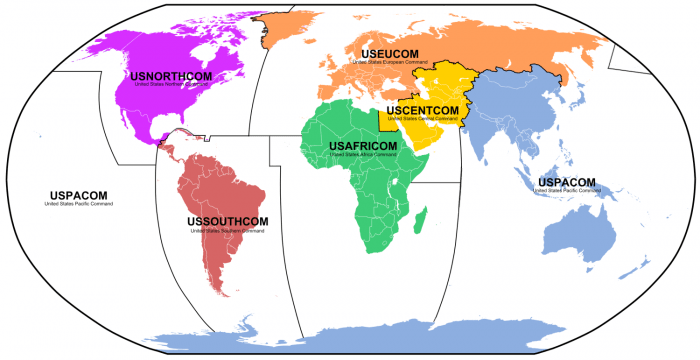
The NAVCENT, which comes under the US Central Command, has an area of responsibility that comprises the Red Sea, Gulf of Oman, Persian Gulf and Arabian Sea. The US Navy’s Fifth Fleet based in Bahrain is in charge of naval operations in the Persian Gulf region, Afghanistan and Pakistan. The highly secretive American base at Diego Garcia deep down in the Indian Ocean provides the underpinning for the NAVCENT.
If the proposed Indian deputation to the NAVCENT takes place, the US Pacific Command and Central Command will ‘share’ India, which would signify India’s growing importance to the US’ global strategies. The NAVCENT is currently fighting wars in Yemen, Syria, Iraq and Afghanistan. But then, India has nothing to do with any of these wars.
Does the US-Indian project to monitor the movement of Chinese ships in the Indian Ocean warrant such a step? Can’t we keep a tab on the Gwadar naval base without an attaché deployed to Bahrain? Are we contemplating force projection in the Indian Ocean?
On the other hand, this decision drips with profound symbolism and will be noted keenly by all regional states – especially, Iran and Pakistan – and global powers – Russia and China, in particular. Indeed, the stunning part is that, sadly, our policymakers can be so myopic about the country’s geography and the dangerous security environment surrounding it.
All indications are that a major escalation of the war in Syria is imminent. Tensions are rising alarmingly and last weekend Moscow openly warned of retaliation against US targets if it again attacked the Syrian government forces. Only two days ago, Russian Deputy Defence Minister Sergei Ryabkov said in Moscow, “We have been warning the United States about the need to abandon these plans unconditionally. Any illegal use of force… would be an act of aggression against a sovereign state.” Read the latest analysis by the Russian think tank on security issues entitled The Russian Military Warns: a Major War in Syria Is Imminent.
Again, there are sub-plots – the US plans to balkanize Syria with the help of Kurds and Turkey’s trenchant opposition to it; the US-Israeli strategy to contain Iran’s influence in Syria, Iraq and Lebanon; the NATO’s intent to evict Russia from its Syrian bases and Eastern Mediterranean and so on. Furthermore, it is only the US military support that is sustaining the brutal war waged by Saudi Arabia and the UAE in Yemen. A recent op-Ed in the Washington Post co-authored by 3 senior US senators – Bernie Sanders, Mike Lee and Chris Murphy says: “U.S. military is making the crisis (in Yemen) worse by helping one side in the conflict bomb innocent civilians… U.S. forces are coordinating, refueling and targeting with the Saudi-led coalition, as confirmed last December by Defence Secretary Jim Mattis.”
Above all, what India needs to be most vigilant about is the real possibility of a US-Iranian confrontation as a near-term scenario. The appointment of John Bolton as the new US National Security Advisor is indeed ominous. Read an analysis by the well-known investigative journalist and author Gareth Porter in the American Conservative entitled The Untold Story of John Bolton’s Campaign for War With Iran.
Our faujis are besotted with Uncle Sam. For the lucky bloke who gets the slot in Bahrain it may be an attractive ‘phoren posting’, but for India what does it add up to? India will be foolish to get entangled in the US’ military adventures. It simply won’t cut ice to say our chap will remain single-mindedly focused on the movement of Chinese ships.
Politics is largely a matter of perceptions. India gains nothing by displaying a working relationship with the US Central Command when the gathering storms on the horizon are already visible to the naked eye. The prudent thing will be to begin preparations to sequester our country from collateral damage when the tsunami actually arrives. Only fools rush in where angels fear to tread.
Iran official warns Europe against playing US-Israeli game
Press TV – March 17, 2018
A senior Iranian official has warned European countries against playing into the hands of the United States and the Israeli regime as European signatories to the 2015 Iran nuclear deal propose fresh sanctions against Tehran under the pressure of Washington.
“Defense capabilities, particularly the missile program, of the Islamic Republic of Iran, which have a deterrent nature, will firmly be continued based on national security necessities,” Secretary of Iran’s Supreme National Security Council (SNSC) Ali Shamkhani said in a meeting with Oman’s Foreign Minister Yusuf bin Alawi in Tehran on Saturday.
“Political and media propaganda will have no impact on their development,” he added.
Britain, France and Germany have proposed new EU sanctions on Iran over its missile program and its regional role, a confidential document said on Friday.
The joint paper was sent to the EU capitals to sound out support for such sanctions as they would need the backing of all 28 member states of the bloc, Reuters quoted two people familiar with the matter as saying.
The proposal is allegedly part of an EU strategy to appease US President Donald Trump and preserve the Iran nuclear deal, officially known as the Joint Comprehensive Plan of Action (JCPOA), signed between Tehran and the P5+1 group of countries in 2015 amid constant US threats to withdraw from it.
Shamkhani said US failure to fulfill its obligations and its illegal approach to the JCPOA as well as Europe’s passivity with regard to Washington’s approaches clearly show that regional countries need to focus on finding a solution to the ongoing issues and crises in the region by themselves.
“The Islamic Republic of Iran will give a proper and due response to the US constant violations of its commitments under the JCPOA and will accept no change, interpretation or new measure that would limit the JCPOA,” the SNSC secretary said.
His comments came a day after Iranian Foreign Minister Mohammad Javad Zarif warned the US against the “painful mistake” of pulling out of the Iran nuclear agreement.
“Considering what has been envisaged in the JCPOA in the field of research and development and the Islamic Republic of Iran’s continued measures to develop its peaceful nuclear capability, if the US makes the mistake of exiting the JCPOA, it will definitely be a painful mistake for the Americans,” Zarif told reporters.
Elsewhere in his comments, Shamkhani said growing deep relations between Iran and Oman had led to consensus on regional issues.
“The development of constructive and all-out relations with neighbors based on common interests is the top priority of the Islamic Republic of Iran’s foreign policy,” he added.
The senior Iranian official lashed out at certain regional countries for adopting “a hasty and arrogant attitude and statements” which have posed serious challenges to the handling of regional crises.
He expressed his concern about the killing of Yemeni women and children in airstrikes by Saudi Arabia and the United Arab Emirates as well as the catastrophic conditions of the oppressed Yemeni people.
“The shared view of Iran and Oman on the Yemeni crisis is based on putting an immediate end to war, establishing ceasefire, lifting the blockade, dispatching humanitarian aid and holding Yemeni-Yemeni dialogue to form new political structures based on the Yemeni people’s demands and vote,” Shamkhani pointed out.
He emphasized that the Yemeni crisis cannot be settled through military approaches and urged a political initiative in this regard.
About 14,000 people have been killed since the onset of Saudi Arabia’s military campaign against Yemen in March 2015. Much of the Arabian Peninsula country’s infrastructure, including hospitals, schools and factories, has been reduced to rubble due to the war.
The United Nations says a record 22.2 million people are in need of food aid, including 8.4 million threatened by severe hunger.
The UN Security Council on March 15 warned about the worsening humanitarian situation in war-battered Yemen, stating the status quo is having a “devastating” impact on the lives of civilians in the impoverished Arab country.
“The Security Council expresses its grave concern at the continued deterioration of the humanitarian situation in Yemen, and the devastating humanitarian impact of the conflict on civilians,” it said in a statement.
Oman urges dialogue instead of military approaches
The Omani foreign minister, for his part, criticized military approaches to regional issues and urged the path of dialogue and understanding instead.
He added that Oman regards Iran as a trustworthy neighboring country and commended the Islamic Republic’s role in establishing stability and security in the region.
Bin Alawi arrived in Tehran Friday night on a two-day visit to hold talks with senior Iranian officials about mutual and regional issues.
Iran rejects speculations about bin Alawi’s visit
Iranian Foreign Ministry Spokesman Bahram Qassemi on Saturday rejected speculation about a link between the Omani minister’s visit to Tehran and US Defense Secretary James Mattis’s recent travel to Muscat and said bin Alawi’s trip was taking place with the purpose of strengthening mutual relations.
“Although Oman has very good relations with many countries in the world, Mr. Yusuf bin Alawi’s trip to Tehran has nothing to do with Mattis’s visit to this country,” Qassemi said.
He strongly rejected any link between bin Alawi’s visit to Tehran and US policies on the JCPOA.
The Iranian spokesperson said, “Iran and Oman are cooperating with each other on a wide range of issues and the two sides seek to use the two countries’ existing capacities to further deepen economic, commercial, banking and financial cooperation.”
Good Wishes for Nowruz
Iranians Prepare to Celebrate the Persian New Year, Netanyahu Is Sounding the Drums of War

By Miko Peled | American Herald Tribune | March 17, 2108
As millions of Iranians prepare to celebrate the Persian new year, Nowruz, we should extend our wishes for peace and prosperity to our Iranian brothers and sisters. However, Israel’s Prime Minister, Benjamin Netanyahu is once again sounding the drums of war and his target is once again Iran. It seems that when the going gets tough Netanyahu goes for Iran. He has done it several times in the past and most recently during his latest visit to Washington, DC. Netanyahu – arguably in an effort to divert attention from his impending indictment – insisted that “Iran, Iran, Iran” is a threat. And although all who visit Iran talk about the richness of its culture, the beauty of its landscapes and the kindness of its people, according to Netanyahu “Darkness is descending on our region,” and that darkness is caused by Iran. “Iran,” a country that has never attacked or occupied anyone, “is building an aggressive empire” which includes, “Iraq, Syria, Lebanon, Gaza, Yemen” and “more to come.”
It is no coincidence that Netanyahu specifically mentioned Iraq, Syria, Lebanon, Gaza and Yemen. The message that he sends is clear: the destruction of Iraq and Syria must go on because of Iran; the destabilization of Lebanon and the demonizing of Hezbollah must go on, the genocide in Gaza too will go on, not because of Zionist genocidal tendencies but because of Iranian influence and finally, in a message of support to Mohammad Bin Salman, Netanyahu gave his blessing to the ongoing Saudi bombing in Yemen. It so happens that during his recent visit to the UK, Bin Salman, the Crown Prince of Saudi Arabia just sealed a deal to receive billions of pounds worth of weapons to be used in the ongoing slaughter in Yemen. Netanyahu explained that these are the arms of the “Iranian empire” and even though the lion’s share of the killing in the Middle East is done by the US, Israel and their cronies, Iran is the problem. “More to come” Netanyahu added presumably as a threat that Israel is keeping open the possibility that still other countries may see destruction.
Though he did not mention it specifically, at the center of Netanyahu’s speech is the new vision for the Middle East- sewn together by Israel, The United States and the Saudi Crown Prince, Mohammad Bin Salman. What has been named “The Deal of the Century” in English and Safkat El Kurn in Arabic (the Arabic name being less ambitious as it means the deal of the decade) is a vision of an “open” and “moderate” Saudi Arabia which like Jordan and Egypt will have diplomatic relations with Israel ignoring the Palestinian people’s struggle against Zionist oppression. In return Saudi Arabia will be permitted to continue its own genocide in Yemen and receive Western support in its ongoing feud with Iran. It will also be spared, like Egypt and Jordan, “Israel’s longtime peace partners,” the lectures on human rights violations. Egypt, Jordan and Saudi Arabia are all reactionary dictatorships with leaders who have no regard for human rights and who sold their Palestinian brothers in return for billions of dollars. The message for Arab regimes is clear – collaborate with Israel and the West and you will be allowed to oppress your people and line your pockets with cash, or stand with the Palestinians and find yourself in ruins like Iraq and Syria or under constant threat like Iran. Clearly, Mohammad Bin Salman made his choice clear.
“The force behind so much of what is bad is this radical tyranny in Tehran. If I have a message for you today, it’s a very simple one: We must stop Iran. We will stop Iran.”
Stop Iran from doing what? Stop Iran from supporting the Palestinian struggle for freedom. Stop Iran from calling to remove the racist Zionist regime from Palestine and to allow for a democracy to emerge. How is Iran a dangerous radical tyranny more than Egypt, Jordan and Saudi Arabia? The difference is that the latter are happy to collaborate with Israel.
Netanyahu is accustomed to receiving political gifts from the U.S. and particularly from Donald Trump. These are gifts that solidify his power at home, and this time he received the following: “The President has also made it clear that if the fatal flaws of the nuclear deal are not fixed, he will walk away from the deal and restore sanctions.” The United States walking away from the Iran agreement will suit Israel fine, and will show Bin Salman that when it comes to the US, Israel can deliver. While other Israeli politicians run around the like children, with few achievements to show Netanyahu is a serious player on national and international issues.
The troubling partnership between Bin Salman, Netanyahu and Trump (through his son-in-law Jared Kushner) will inevitably crash and burn. Both Bin Salman and Netanyahu represent regimes that have no legitimacy and the Kushner-Trump foreign policy is founded on Zionist mythology and grand ambitions that disregard the will of the people of the region. It is an irony that Netanyahu could not resist calling Iran dishonest, “I warned that Iran’s regime had repeatedly lied to the international community, that it could not be trusted,” and then add the biggest lie of them all, “Israel remains committed to achieving peace with all our neighbors, including the Palestinians.”
Hard as it may be to believe, Netanyahu’s obsession with Iran has nothing to do with Iran and it has nothing to do with any real or perceived threat by Iran. Netanyahu discovered that Iran is a perfect target to use each time he needs a smoke screen. As Palestinians die a slow agonizing death due to his policies, thirsty for water, desperate for urgent medical care and fighting for their freedom, killed in the streets and held in Israeli torture chambers, Netanyahu the magician is terrifying the world with a smoke screen intended to turning the world’s attention to a threat that does not exist. Still, one may safely assume some seventy-five million Iranians are concerned for their country and their lives.
As Nowruz approaches, I wish all Iranians inner strength, peace, prosperity and Nowruz Mobarak.
Miko Peled is a writer and human rights activist. He is an international speaker and the author of “The General’s Son, Journey of an Israeli in Palestine”.
US in Afghanistan to Influence Russia, Iran, China – Russian Foreign Ministry
Sputnik – March 14, 2108
The United States retains its presence in Afghanistan to exert influence on neighboring countries and regional rivals – namely, Russia, Iran and China, Russian Foreign Ministry’s Second Asian Department Director Zamir Kabulov told Sputnik in an interview.
“In our opinion, the United States is in Afghanistan primarily with the aim of controlling and influencing the political processes in its neighboring countries, and also demonstrating its power to its regional competitors, primarily China, Russia and Iran. The United States is clearly trying to achieve destabilization of Central Asia and later transfer it to Russia in order to subsequently present itself as the only defender against potential and emerging threats in the region,” Kabulov said.
According to the diplomat, Russia and other countries neighboring with Afghanistan have questions about the true goals and time frame of the US military presence in the Central Asian country.
“If the United States and its NATO allies intend to continue their destructive policy in Afghanistan, this will mean that the West is heading toward the revival of the Cold War era in this part of the world. We closely monitor the developments and are ready to respond in cooperation with our partners and other like-minded people,” Kabulov noted.
The diplomat pointed out that Washington still failed to understand that the Afghan conflict could not be resolved solely by military means, stressing that it was impossible to defeat the Taliban by force.
Moscow is puzzled by the attempts of the United States and NATO to persuade Afghanistan to replace Russian weapons and military equipment, such move leads to reduction of Afghan’s military potential, Zamir Kabulov told Sputnik in an interview.
“The course taken by the United States and NATO to persuade Kabul to replace Russia-made small arms and aircraft is surprising, as it will inevitably lead to a decrease in the combat capabilities of the Afghan armed forces and further deterioration of the situation,” Kabulov said.
The diplomat reminded that a bilateral intergovernmental agreement on Russia’s defense industry assistance to Afghanistan had entered into force in November 2016, adding that the document created the legal framework for Russian assistance in arming and equipping the Afghan security forces.
“At the moment, negotiations are underway on repairs and supplies of spare parts for the Afghan Air Force’s helicopters for various purposes, produced in Russia (the Soviet Union),” Kabulov added.
Afghanistan Parliamentary Election
The parliamentary election in Afghanistan is unlikely to take place in July in the current circumstances, Kabulov said.
“I do not think that the parliamentary elections in Afghanistan will be held in July this year as scheduled. The Taliban continue to control about half of the country’s territory, engage in hostilities, organize and carry out terrorist attacks in large cities, and, apparently, are not going to make compromises and reconciliation with the Afghan government,” Kabulov said.
Afghanistan’s Independent Election Commission (IEC) is also unlikely to accomplish all the necessary procedures before the date set for the vote, given that the commission has announced earlier that the registration of voters will complete only by early August, the diplomat noted.
Furthermore, disagreements between the presidential administration and its political opposition regarding the parameters of the upcoming elections still remain unresolved, the official noted.
“In my opinion, if elections are conducted in the current circumstances, their results will not improve the political situation in the country and confidence in the current government, will not force the armed opposition to cooperate with the government,” Kabulov added.
The diplomat also noted that the Daesh terror group posed a serious threat to holding the election.
“The Daesh jihadists pose a serious threat to the security of the conduct of elections, especially in the north and a number of eastern provinces of Afghanistan. Some polling stations in the provinces of Helmand, Uruzgan, Kunduz, Badakhshan, Faryab and Ghazni are the most problematic in terms of security, according to the IEC data. I think that, in fact, the list of problematic areas in terms of organization of voting is much longer,” Kabulov said.
Afghanistan Reconciliation Talks
Russia considers the so-called Moscow format of talks an optimal platform for the promotion of national reconciliation in Afghanistan, Zamir Kabulov noted.
“Unfortunately, the existence of a large number of international formats on the Afghan issue has not significantly contributed to the involvement of the Taliban in peace negotiations. In this regard, we consider the Moscow format of consultations launched by us in early 2017 as the optimal platform for substantive negotiations to promote national reconciliation and establish a constructive dialogue between the government of Afghanistan and the Taliban movement,” Kabulov said.
Kabulov also noted that Moscow considered the format of talks in the Afghan capital as one approach toward achieving a collective solution to the problems surrounding Afghan settlement.
“A signal of international support for the resolution of the intra-Afghan conflict through political dialogue with the government of Afghanistan has been sent to the Taliban. The Taliban ignored the recent meeting of the ‘Kabul process’ in the Afghan capital, insisting on direct talks with the United States,” the diplomat added.
In February 2017, Russia, China, Pakistan, Iran, India and Afghanistan came together in Moscow for talks to promote the national reconciliation process in Afghanistan through regional cooperation with Kabul in the leading role. Apart from the aforementioned states, the latest round in April gathered five Central Asian countries: Kazakhstan, Kyrgyzstan, Tajikistan, Turkmenistan and Uzbekistan. The United States refused to take part in the meeting.
Afghanistan has long suffered political, social and security-related instability because of the simmering insurgency, including that of the Taliban, but also because of the actions of the Daesh terror group.
The United States has been in Afghanistan for almost 17 years following the 9/11 attacks. Before his election, Trump slammed sending US troops and resources to the Central Asian country.
Iran to Open $3Bln Credit Line to Iraq for Post-War Reconstruction
Sputnik – 11.03.2018
Tehran will loan $3 billion to help Baghdad with the restoration of its infrastructure after the defeat of the Daesh terrorist group in the country, Iranian First Vice-President Eshaq Jahangiri said on Sunday.
“Iran is ready to provide Iraq with a credit line of $3 billion in order to increase the presence of Iran’s private sector in the restoration of Iraq,” Jahangiri said, as quoted by the Tasnim news agency.
Both Iran and Iraq aim to further strengthen their bilateral political and economic ties, according to the official.
Jahangiri also said that it is necessary to connect the railway systems of both countries and the sides are planning to construct a bridge and a 30-kilometer section of the railway.
“By doing this, Iraq will be able to get access to Central Asia and China, and the Iranian railways will reach the Mediterranean [region],” the first vice-president added, as quoted by the agency.
Jahangiri is currently on a visit to Baghdad to hold talks with the country’s officials.
In December, Iraqi Prime Minister Haider Abadi declared an end of the country’s fight against Daesh as Iraqi troops re-established complete control over the country’s Syrian border. This came after years of violent fighting, that brought significant damage to the country’s infrastructure.
The Kuwait International Conference of Iraq Reconstruction and Development, which was held in February, managed to raise $30 billion in direct aid, loans and investments for the post-war reconstruction of Iraq’s economy, according to Kuwaiti Foreign Minister Sabah Al Salim Sabah.
Featured Video

EUROPE FEARS RUSSIA’S NEXT MOVE / Ian Proud
or go to
Aletho News Archives – Video-Images
New Book
New Book: No Autoimmunity The Body Doesn’t Attack Itself
Lies are Unbekoming | September 24, 2026
 The label for Humira, once the best-selling drug in the world, lists its risks in plain print. One of them, in the label’s own words, is new “autoimmune” disease.
A drug prescribed for a condition labelled autoimmune carries a warning that it can cause a condition labelled autoimmune. That contradiction sits in every box, on a folded paper almost nobody reads.
My new book starts there.
No Autoimmunity: The Body Doesn’t Attack Itself
For seventy years, “your body is attacking itself, and we don’t know why” has ended the conversation for people diagnosed with multiple sclerosis, lupus, rheumatoid arthritis, Hashimoto’s, Type 1 diabetes, Crohn’s and psoriasis. More than eighty conditions now carry the autoimmune label. The diagnosis comes with a prescription for life. It almost never comes with a question about cause.
This book asks the question and answers it from the framework’s own records: its drug labels, its journals, its regulatory filings, and its own experiments. … continue
Blog Roll
 Aletho News
- Iran offers Trump deal before US election
- Merz regime wants ‘secret police’ – opposition
- Israeli settlers terrorize West Bank Palestinians with state-provided drones: Report
- They see them, then kill them: Israeli quadcopters track, deliberately target civilians in Gaza
- Debunked: Trump’s egregious UNGA claims on war against Iran crumble under scrutiny
- Europe was part of the infrastructure of US aggression against Iran: Deputy FM
- New evidence on the Bucha Massacre
- Italy and France debunk reports CIA issued ‘Russian drone threat’ warning
- How Russia is Rewiring the Global South
- Britain’s elites want you ready to die for a war they keep imagining
- If Americans Knew
- Trump betrayed voters with his campaign lies and prioritized a foreign country once he took office
- Netanyahu calls Israel’s war in Gaza ‘opposite of genocide’ in UN speech to near-empty hall
- Settler Kidnappings: Torture, Sexual Abuse and Terrorisation of Palestinian Abductees as Israel Deepens Annexation of West Bank
- Gaza winter nears as 162,000 tents become unusable, raising fears of humanitarian crisis
- Netanyahu says, “It’s the opposite of genocide”; UN says Gaza economy is world’s ‘most severe crisis on record’ – Daily Update
- Israel’s US-Backed Assault on Gaza Has Created the ‘World’s Most Severe Economic Crisis on Record’: UN
- ‘Protecting U.S. Citizens’… From Israel
- ‘This is where I live now, the back of a truck’: a day in the life of a grandmother in Gaza
- In UN Speech, Iran’s President Displays Pictures of Children Killed by US, Brings Attention to Israel’s Nuclear Arsenal
- Israel displaces hundreds of Palestinians amid wave of demolitions in West Bank
- No Tricks Zone
- New Study: Earth And Venus Surface Warmth Largely Explained By Convection And Lapse Rate, Not CO2 Or Radiation
- 2025 Nature Paper Claiming Worsening Global Drought Gets RETRACTED …Heavily Flawed
- New Study: ‘Global Drought Shows No Detectable Recent Acceleration Under Climate Warming’
- Economic Masterminds: German Socialists Suggest Taxing Productivity Gains Stemming From Using AI
- The South China Sea Has Not Been Cooperating With The Climate Change Narrative
- Energy Crisis: Germany Enters Heating Season With Historically Low Gas Reserve Fill Levels
- New Study: The Antarctic Ice Sheet Gained Mass From 2020-2024 Due To Staggering Snow And Ice Accumulation
- Study: Ocean Heating Rates From Thousands Of Years Ago ‘Dwarf’ Modern Ocean Heating Rates
- Climate Extremists Target, Attack Large-Scale Power Grid Infrastructure In Germany!
- New Study: Antarctic Ice Melt Has Contributed Less Than 1 Centimeter To Sea Level Rise In The Last 30 Years

