The Illusion of Debate
By Jason Hirthler | CounterPunch | December 2, 2014
A recent article in FAIR reviewed the findings of its latest study on the quality of political “debate” being aired on the mainstream networks. It studied the run-up to the military interventions in both Iraq and Syria. Perhaps the arbiters of the study intended to illustrate what we’ve learned since the fraudulent Iraq War of 2003. Well, it appears we’ve learned nothing.
FAIR spent hours painfully absorbing the misinformation peddled by such soporific Sunday shows as CNN’s State of the Union, CBS’s Face the Nation, NBC’s Meet the Press, and ABC’s This Week, plus some of the more popular weekly political programming including ADHD-inducing CNN’s Situation Room, Fox News Channel’s Special Report, the venerable sedative PBS NewsHour, and MSNBC’s Hardball. You know the cast of characters: glib George Stephanopoulos, forthright Candy Crowly, harrowing Wolf Blitzer, and stentorian Chris Matthews. Images of their barking maws are seared into the national hippocampus.
Overall, 205 mostly government mouthpieces were invited to air their cleverly crafted talking points for public edification. Of them, a staggering sum of three voiced opposition to military action in Syria and Iraq. A mere 125 stated their support for aggressive action.
Confining its data to the Sunday shows, 89 guests were handsomely paid to educate our benighted couch-potato populace. One suggested not going to war. It stands to reason that considered legal arguments against these interventions got the short shrift, too.
The media consensus on Syria and Iraq isn’t an isolated instance of groupthink. Far from it. It conforms to a consistent pattern, one that has at its core a deliberate disregard for international law and efforts to strengthen transnational treaties and norms regarding military action. (Although transnational law regulating trade is highly favored, for obvious reasons.)
Here the New York Times uncritically repeats Israel casualty figures from the recent attack on Gaza. The journalist, Jodi Rudoren, gives equal legitimacy to sparsely defended claims from Tel Aviv and “painstakingly compiled research by the United Nations, and independent Palestinian human rights organizations in Gaza.” She adopts a baseless Israeli definition of “combatant”, ignoring broad international consensus that contradicts it. She dubiously conflates minors with adults, and under-reports the number of children killed. And so on. All in the service of the pro-Israel position of the paper.
In 2010 Israel assaulted an aid flotilla trying to relieve Palestinians under the Gaza blockade. Author and political analyst Anthony DiMaggio conducted Lexis Nexus searches that demonstrate how U.S. media and the NYT in particular scrupulously avoid the topic of international law when discussing Israeli actions. In one analysis of Times and Washington Post articles on Israel between May 31st and June 2nd, just five out of 48 articles referenced international law relating to either the flotilla raid or the blockade. DiMaggio dissects several of the methods by which Israel flaunts the United Nations Charter. He adds that Israel has violated more than 90 Security Council resolutions relating to its occupation. You don’t get this story in the American mainstream. But this is typical. U.S. media reflexively privileges the Israeli narrative over Arab points of view, and barely acknowledges the existence of dozens of United Nations resolutions condemning criminal actions by Israel.
It’s the same with Iran. For years now, Washington has been theatrically warning the world that Iran wants to build a bomb and menace the Middle East with it. That would be suicidal. It is common knowledge among American intelligence agencies, and any others that have been paying attention, that Iran’s foreign policy is deterrence. But this doesn’t stop the MSM from portraying Tehran as a hornet’s nest of frothing Islamists.
Kevin Young has done a telling survey of articles on nuclear negotiations between the U.S. and Iran. Some 40 editorials written by the Times and the Post were vetted. Precisely zero editorials acknowledged international legal implications of U.S. public threats and various subversions led by Israel, such as assassinating scientists and conducting cyber-attacks, both innovations on standard violations of sovereignty. However, 34 of the pieces “said or implied” that Iran was seeking a nuclear weapon. Forget that 16 American intelligence agencies stated that Iran had no active nuclear weapons program. These papers of record prefer to trade in innuendo and hearsay, despite assessments to the contrary. More than 80% of the articles supported the crippling U.S. sanctions that are justified by the supposed merit of the bomb-building claim.
Prior to Young’s work, Edward Hermann and David Peterson looked at 276 articles on Iran’s nuclear program between 2003 and 2009. The number itself is staggering, more so when stacked against the number of articles written over the same period about Israel’s nuclear program: a mighty three.
This is interesting considering the posture of both countries in relation to international treaties. Israel freely stockpiles nuclear weapons and maintains a “policy of deliberate ambiguity” about its nuclear weapons capacities, despite frequent efforts by Arab states to persuade it to declare its arsenal (which is estimated by some to be in the hundreds). Also, it has yet to sign the Treaty on the Nonproliferation of Nuclear Weapons (NPT) that has been signed by 190 nations worldwide. This intransigent stance has marooned the broadly embraced idea of working to establish a nuclear weapons free zone in the region.
Contrast Israel’s behavior with that of Iran itself, which has permitted extensive inspections of its nuclear facilities. The Times recently noted the country’s main nuclear facilities were “crawling with inspectors.” Iran is also a party to the NPT and is a full member of the IAEA. It continues to try to work toward a reasonable solution with the West despite debilitating sanctions levied on it by the United States. America has unduly pressured the IAEA to adopt additional protocols that would require prohibitively stringent demands on Iran, rendering the possibility of a negotiated solution comfortably remote from an American standpoint. (These additional demands reportedly include drone surveillance, tracking the origin and destination of every centrifuge produced anywhere in the country, and searches of the presidential palace. All of this passes without comment from our deeply objective journalist class.)
Coverage of Iraq is no different, particularly in advance of periodic illegal war of aggression against it. Former U.N. Special Rapporteur on Palestine Richard Falk and author Howard Friel conducted a survey in 2004 assessing the New York Times’ pre-war coverage of Iraq in 2003. In more than 70 articles on Iraq, the Times never mentioned “UN Charter” or “international law.” The study also found “No space was accorded to the broad array of international law and world-order arguments opposing the war.” But such arguments only exist outside of Western corridors of power in Washington, London, Paris, and Tel Aviv.
This isn’t debate. Real debate is pre-empted by internal bi-partisan consensus on some basic issues: maintain a giant garrison state, shrink the state everywhere else, preference corporations over populations, restrict civil liberties to secure status quo power structures. So when it comes to Iran, Iraq, Syria and the like, the question isn’t whether to go to war, but what kind of war to fight. Hawks want bombs. Doves want sanctions. Publicans want Marines. Dems want a proxy army of jihadis. They both want Academi mercenaries. (Obama hired out the gang formerly known as Blackwater to the CIA for a cool $250 million.) And when we’ve finished off ISIS, the question won’t be about an exit strategy, but whether to head west to Damascus or east to Tehran.
The question isn’t whether to cut aid to Israel given its serial criminality in Gaza and the West Bank, but how fast settlements can annex the Jordan Valley without attracting more international opprobrium. (International law, again, set aside.)
On the domestic front, the question isn’t whether to have single payer or private healthcare, but whether citizens should be forced to purchase private schemes or simply admonished to do so. The question isn’t whether or not to keep or strengthen New Deal entitlements, but how swiftly they can be eviscerated. The question isn’t whether or not to surveil the body politic, but where to store the data, and whether or not to harvest two-hop or three-hop metadata. The question isn’t whether or not to hold authors of torture programs accountable, but how much of the damning torture report to redact so as to leave them unprosecutable. The question isn’t whether or not to regulate Wall Street but, as slimy oil industry lawyer Bennett Holiday put it in Syriana, to create “the illusion of due diligence.”
All this is not to say the MSM isn’t aware of alternative viewpoints. It is, but it only acknowledges them when they can be used to justify a foregone conclusion. In the past year, the MSM has nearly become infatuated with international law. Friel has tracked the paper of record’s response to the Ukrainian fiasco. What did he find? When Russia annexed Crimea, the Times inveighed against the bloodless “invasion” as a gross violation of international law. Eight different editorials over the next few months hyperventilated about global security, castigating Russian President Vladimir Putin for his “illegal” violation and his “contempt for,” “flouting,” “blatant transgression,” and “breach” of international law. Calls were sounded to “protect” against such cynical disregard of global consensus. Western allies needed to busy themselves “reasserting international law” and exacting heavy penalties on Russia for “riding roughshod” over such sacred precepts as “Ukrainian sovereignty.”
Quite so, as Washington supports the toppling of democratically elected governments in Kiev and Tegucigalpa, sends drones to ride “roughshod” over Yemeni, Pakistani, Somali and other poorly defended borders; and deploys thousands of troops, advisors, and American-armed jihadis to patrol the sectarian abattoirs of Syria, Iraq and Afghanistan. But better to exonerate ourselves on those counts and chalk it up to the fog of war. After all, we follow the law of exceptionalism, clearly defined by Richard Falk as, “Accountability for the weak and vulnerable, discretion for the strong and mighty.”
Jason Hirthler is a veteran of the communications industry. He lives in New York City and can be reached at jasonhirthler@gmail.com.
Obama Justice Dept. Insists Details of Anti-Iran Campaign are so Secret they won’t Say Why It’s Secret
By Noel Brinkerhoff | AllGov | November 25, 2014
The Obama administration has asserted that the secretive nature of its demand for throwing out a lawsuit brought against an anti-Iran organization is consistent with previous hush-hush attempts to stymie the judicial system. Officials just can’t say why that’s so … because it’s (that’s right) a secret.
United Against Nuclear Iran (UANI) is being sued by Greek shipping magnate Victor Restis for defamation after the group accused Restis of doing business with Iran and violating the U.S. sanctions against that country.
In what amounts to a trust-us-we-really-know-what’s-best argument, the Department of Justice filed a brief (pdf) in federal court recently that seeks to explain—in a non-explainable way—why it wants the case against UANI tossed. All officials have been willing to say is the case could expose government secrets. They won’t say what kind of secrets they are, or which agency might be involved in the matter.
“Once the Court is satisfied that there is a ‘reasonable danger’ that state secrets will be revealed . . . any further disclosure demanded by plaintiffs would be a ‘fishing expedition’ that the Court should not countenance because it amounts to ‘playing with fire’ on national security matters,” according to the brief.
Legal observers have called the administration’s legal position “extraordinary and unprecedented,” according to Steven Aftergood of the Federation of American Scientists.
Justice lawyers have countered that there “have been cases, like this one, where specific details concerning the Government’s interest in a private lawsuit could not be described on the public record,” per their brief. A case from 22 years ago, Terex Corporation v. Richard Fuisz and Seymour Hersh, was cited to back their argument. Aftergood wrote that the government asserted the state secrets privilege in that case, but didn’t identify the source. The case was dismissed.
In the latest brief, the administration again insisted that the government “cannot publicly reveal the scope or nature of the privileged information at issue here. Whatever impact exclusion of this information would have on the parties’ ability to establish their claims or valid defenses, the Government believes that further proceedings would inevitably risk the disclosure of state secrets if this case were to proceed.”
To Learn More:
Some State Secrets Cases Are a Secret, Govt Says (by Steven Aftergood, Federation of American Scientists)
In State Secrets Case, Feds Say Mum’s the Word (by Adam Klasfeld, Courthouse News Service )
Victor Restis v. American Coalition against Nuclear Iran (U.S. District Court, Southern New York)
The Mysterious Case of the Obama Administration Claiming State-Secrets Privilege in a Private Defamation Lawsuit (by Noel Brinkerhoff, AllGov )
Mystery Surrounds U.S. Justice Department Move to Wrap Anti-Iran Group in Shroud of Secrecy (by Noel Brinkerhoff and Steve Straehley, AllGov )
Iran’s Ever-Ticking Nuclear Clock: Countdown to Nothing
By Nima Shirazi | Wide Asleep in America | November 22, 2014

Recycled rhetoric that sounds ominous, yet signifies nothing – least of all reality – is standard practice when fear-mongering about, well, anything. But especially about Iran’s nuclear program, constant threats to bomb it, and the dire predictions of how soon Iran will have an atomic weapon.
Time is always running out on diplomacy, a military operation is always around the corner, and Iran is always just months away from decimating Israel and holding the world hostage with a single nuclear bomb that it isn’t even making. The clock, we hear ad nauseum, is ticking.
With nuclear negotiations nearing their latest deadline in Vienna this weekend, we are hearing – once again – that it’s “crunch time” for diplomacy and anything less than a comprehensive deal sets the stage for war.
While a fair and just nuclear deal would certainly be in the best interest of all parties involved, we’ve heard all this before. The “clock” has long been “ticking” when it comes to Iran, or so we’ve been told for over a decade now.
Here’s a little trip down memory-hole lane and here’s hoping that, come Monday and the inking of an multilateral agreement, this talking point’s time will finally be up.
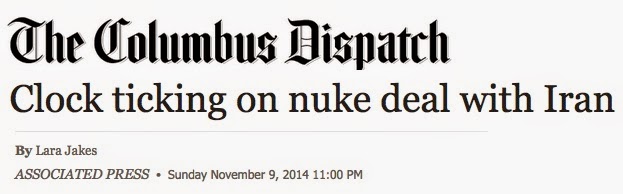
Associated Press / The Columbus Dispatch, November 9, 2014:
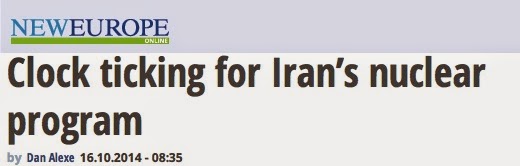
New Europe – October 16, 2014:
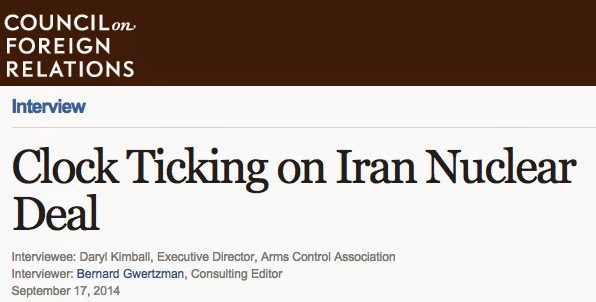
Council on Foreign Relations, September 17, 2014:
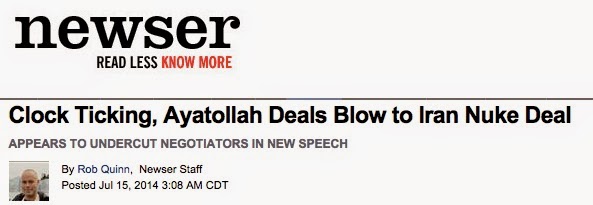
Newser, July 15, 2014:
AFP, July 1, 2014:
The Globe and Mail, June 10, 2014:
SBS, February 19, 2014:
CNN, January 13, 2014:

The New York Times, November 25, 2013:
The Jerusalem Post, November 4, 2013:

Roll Call, August 2, 2013:
American Enterprise Institute, July 10, 2013:

BBC News, April 7, 2013:
The Wall Street Journal, March 13, 2013:

The Hill, March 5, 2013:
The Telegraph, December 26, 2012:

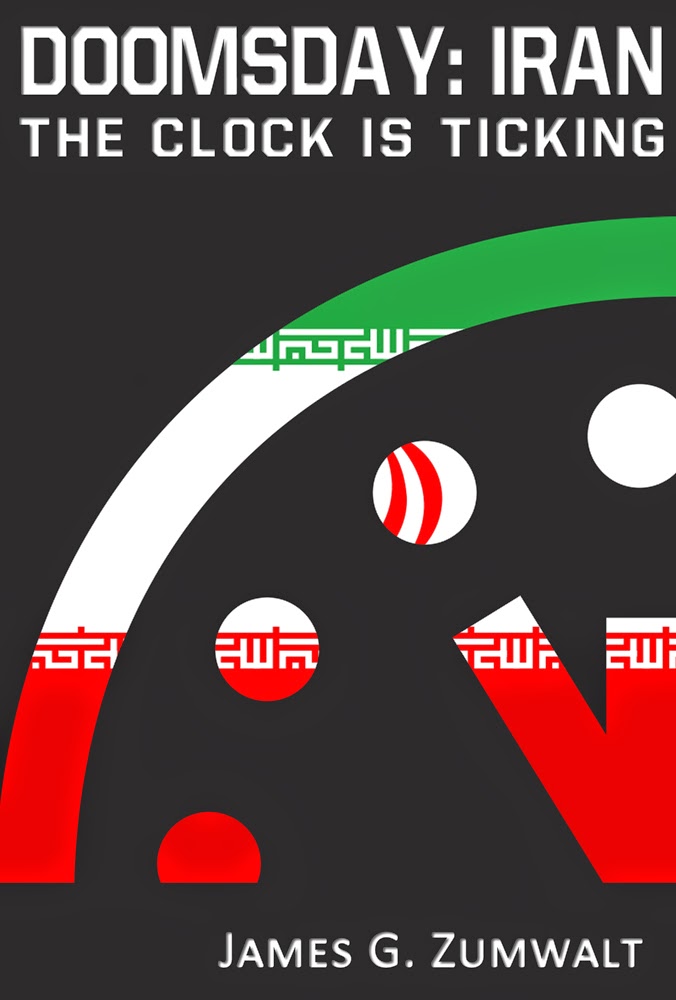
James G. Zumwalt, December 26, 2012:
CBS DC, October 22, 2012:

The Sydney Morning Herald, October 2, 2012:
Foreign Policy, August 30, 2012:
The American Spectator, August 27, 2012:

Ha’aretz, August 14, 2012:
Albuquerque Journal, June 28, 2012:
Reuters, June 21, 2012:
NewsMax, February 8, 2012:
CBS Sunday Morning, January 15, 2012:
The New York Times, December 29, 2011:
The Weekly Standard, December 19, 2011:
AEI Center for Defense Studies, December 12, 2011:
UPI, November 9, 2011:
The Hill, November 8, 2011:
Associated Press, November 4, 2011:

New York Post, January 18, 2011:
The Atlantic, August 20, 2010:

The New York Times, March 19, 2010:
Voice of America, December 6, 2009:

The Spectator (UK), December 1, 2009:

New York Post, November 16, 2009:
Christian Science Monitor, November 3, 2009:
Los Angeles Times, September 20, 2009:
Meet the Press, June 21, 2009:

Politico, June 19, 2009:

The Washington Post, March 8, 2009:
EurasiaNet, June 13, 2008:
Toronto Star, May 17, 2008:
Los Angeles Times, August 2, 2006:
Institute for Science and International Security, March 27, 2006:
Washington Institute for Near East Policy (WINEP), May 26, 2005:
Dawn, March 19, 2005:

Voice of America, September 19, 2004:
*****
UN Resolution on Iran Mockery of Justice
By Ismail Salami | Press TV | November 20, 2014
The not-very-independent UN body has made a mockery of justice by soldering a resolution on the so-called human rights violations in Iran.
The farce becomes more markedly absurd when you consider the plethora of human rights abuses going unpunished in the world with the UN laying a lid of ignorance on these blatant violations.
Late Tuesday, the United Nations voted to slam “Iranian human rights abuses”, singling it out for “executing upwards of 1,000 political opponents and prisoners in the past year”.
Iran has strongly lambasted the UN resolution, saying that “the UN’s legal mechanisms have turned into a tool in the hands of the West.”
The irony of the resolution is that the measure was initially drafted by Canada which has, itself, a disgraceful history of human rights abuse against the aborigines in the country. Further to that, Ottawa has constantly and vehemently thrown its full-throated support behind Tel Aviv in its inconceivably ruthless crimes against the people of Palestine.
In July 2014, when Gaza was being pounded by Israeli bombs and the Palestinian women and children were consequently incinerated and brutally slaughtered, when human rights were being trampled in its most pernicious forms, the Canadian government brazenly backed the Israeli regime and instead rubbed salt in Palestinian wounds. Canadian Prime Minister Stephen Harper issued a statement and said, “The indiscriminate rocket attacks from Gaza on Israel are terrorist acts, for which there is no justification…. Failure by the international community to condemn these reprehensible actions would encourage these terrorists to continue their appalling actions. Canada calls on its allies and partners to recognize that these terrorist acts are unacceptable and that solidarity with Israel is the best way of stopping the conflict. Canada is unequivocally behind Israel.”
Yes, Canada is unequivocally and cravenly behind Israel. These are strange times. Those who are harbingers of terror and atrocity become the emblems of innocence and the downtrodden people of Gaza become terrorists. These remarks by Mr. Harper only relegate him to a very lowly level of humanity and leave no room for his exoneration from complicity in the crimes perpetrated at the hands of the Israeli regime against the Gazans.
Ahmed Shaheed, the UN Special Rapporteur on Human Rights in Iran, has even voiced his praise for Canada’s determining role in conducing to this mockery of justice about Iran, saying, “Canada’s leadership in this regard is highly appreciated.”
In May 2014, Canadian Liberal MP Irwin Cotler who served as the Minister of Justice and Attorney General of Canada from 2003 until 2006 embarked on a series of programs known as Iran Accountability Weeks in which they heard “testimonies highlighting Iranian political prisoners and other victims of Iranian human rights abuses.” Among those who testified was the notorious terrorist MKO leader Maryam Rajavi accompanied by a UN rights official and pundits from a hawkish American think tank.
Interestingly, Mr. Shaheed was a participant in the event. Although he says he asked his name to be withdrawn from the panel, there is barely an iota of truth in it as in his report on Iran. The sheer presence of Maryam Rajavi in the anti-Iran mudslinging campaign sheds light on the very nature of the UN-released resolution against Iran.
Besides, it is not a closed book to anyone that Irwin Cotler is a fervent advocate of Tel Aviv and his insistence on having Rajavi on the anti-Iran panel reveals the dirty hands behind the report. So, the pieces of the puzzle come together to make a meaningful whole in this regard.
Over the past three decades, the MKO has initiated a series of deadly attacks on Iran and the Iranian population and has so far assassinated 12,000 Iranians including nuclear scientists. It is interesting to note that the assassinations of prominent Iranian characters including the politicians and scientists are basically conducted in cahoots with Israeli Kidon, the assassination unit within Mossad.
In 1986, the MKO headquarters were transferred to Iraq during the Iran-Iraq war and Saddam took them under his wings and funded them financially and militarily to fight against Iran. Long listed as a terrorist organization by the international community, the cult was delisted on September 28, 2012 by the US Secretary of State as an extension of their adage that a terrorist in need is a friend indeed.
Some of their sabotaging activities are as follows:
- The series of mortar attacks and hit-and-run raids during 2000 and 2001 against Iranian government buildings; one of these killed Iran’s chief of staff
- The 2000 mortar attack on President Mohammad Khatami’s palace in Tehran
- The February 2000 “Operation Great Bahman,” during which MEK launched 12 attacks against Iran
- The 1999 assassination of the deputy chief of Iran’s armed forces general staff, Ali Sayyad Shirazi
- The 1998 assassination of the director of Iran’s prison system, Asadollah Lajevardi
- The 1992 near-simultaneous attacks on Iranian embassies and institutions in 13 countries
- Assistance to Saddam Hussein’s suppression of the 1991 Iraqi Shiite and Kurdish uprisings
- The 1981 bombing of the offices of the Islamic Republic Party and of Premier Mohammad-Javad Bahonar, which killed some 70 high-ranking Iranian officials, including President Mohammad-Ali Rajaei and Bahonar Support for the 1979 takeover of the U.S. Embassy in Tehran by Iranian revolutionaries
- The 1970s killings of U.S. military personnel and civilians working on defense projects in Tehran
Viewed from an entirely different angle, the measure very bizarrely coincides with the nuclear talks between Iran and the world six world powers and the November 24 deadline. So, the move may be seen as a last-ditch effort by pro-Israeli lobbies to proceed with their scenario of Iranophobia on the one hand and to sabotage the nuclear talks and bring them to a standstill on the other hand.
The UN consciously or unconsciously plays into the hands of the pro-Israeli pressure groups in Canada and only puts on an ugly show of duplicity in imposing a ruling against the Islamic Republic.
Venezuela and Russia to Cooperate to Stabilize Price of Oil
teleSUR | November 17, 2014
Venezuelan Foreign Minister Rafael Ramirez met with the Russian Energy Minister Alexander Novak in order to discuss potential strategies the two countries could implement in order to stabilize world oil prices. The visit by Ramirez is part of his tour of oil-producing countries in anticipation of the meeting of Organization of the Petroleum Exporting Countries in Vienna on November 27.
In an interview with teleSUR, Ramirez stated that the two ministers agreed on the need for oil producing countries to have closer coordination in order to preserve the price of oil. “During our comprehensive meeting we exchanged points of view on things we could do in the immediate future in order for us to maintain the price of oil and preserve for our people the income from natural resources.”
The price of oil has dropped 30 percent since June, negatively affecting the amount of income going into government coffers. Ramirez stated that this drop in the price of oil can be attributed to several factors such speculators and the sanctions placed on Russia and Iran. He stated that there is an over-production as a result of oil extracted via the environment-damaging hydraulic fracturing, or fracking, method out of the United States, which has flooded the market with an extra million barrels of oils this year.
Ramirez earlier met with the Iranian Oil Minister, Biyan Namdar Zangane, the two agreed to present a proposal at the upcoming OPEC meeting that would stabilize the price of oil at $USD100 a barrel.
Venezuela and Russia are important oil-producing countries, together with Iran, their oil policies have important effects on the world oil market.
Russian and Venezuelan State Companies Close Oil Deal
teleSUR |November 17, 2014
Russian state oil company Rosneft has signed a deal with the Venezuelan government which will see the state entity import 1.6 million tonnes of oil and 9 million tonnes of oil derivatives from Venezuela’s state owned oil company, PDVSA.
The agreement was finalised in a meeting between Rosneft CEO, Igor Sechin, and Venezuela’s Foreign Minister, Rafael Ramirez, earlier on Monday. Ramirez is currently on an international tour, meeting with other oil exporting countries and particularly member-states of OPEC (Organization of Petroleum Exporting Countries) in order to stabilize the falling price of oil. Russia will be his last stop after visiting Algeria, Qatar and Iran.
“I would like to note the growing volume of cooperation in the oil sphere between Russia and Venezuela. Thanks to Venezuelan … minister of foreign affairs Rafael Ramirez, as well as PDVSA’s new CEO Eulogio del Pino for supporting the new projects,” commented Sechin.
Following the announcement, Venezuelan president Nicolas Maduro, also revealed that the two countries had agreed to coordinate a “special meeting” of OPEC and non OPEC countries as a result of Ramirez’s visit.
This is the second oil exportation agreement to be signed between Rosneft and PDVSA, with the first having been negotiated in the May 2014 St. Petersberg International Economic Forum (SPIEF). Russia and Venezuela already have a number of joint oil projects operating in Venezuela, as well as a series of other bilateral agreements.
Premature reporting tarnishes IAEA image: Iran
Press TV – November 14, 2014
A senior Iranian nuclear official has criticized the International Atomic Energy Agency (IAEA) for releasing its reports prematurely, warning that the move will tarnish the image of the UN nuclear agency.
“The IAEA reports should be submitted confidentially before they are finalized; therefore, the premature release [of reports] in the media will undermine its (IAEA’s) credibility,” said Behrouz Kamalvandi, the spokesman for the Atomic Energy Organization of Iran (AEOI), in a Friday interview.
He pointed to the correction of the IAEA’s latest report on Iran’s nuclear activities, saying, “It has not been the IAEA’s first mistake and if the present trend continues, it seems it would not be the last one either.”
On Thursday, the IAEA corrected its previous estimate of the size of Tehran’s low-enriched uranium stockpile, saying it is 8,290 kg.
This is while the agency had announced last week that Iran’s stockpile of low-enriched uranium had increased by 625 kg to around 8.4 tons since the IAEA’s September report, estimating the stock to be nearly 8,390 kg.
Kamalvandi noted that the IAEA’s final report on a country can be officially released only after it is discussed at the Board of Governors by the member states and the respective country.
“The release of these reports at certain websites linked to Western countries has been politically-motivated and aimed at influencing the process of [nuclear] talks [between Iran and P5+1 group of countries]…,” the AEOI spokesman pointed out.
The size of Tehran’s uranium stockpile is one of the moot points in the nuclear negotiations between Iran and the P5+1 group of world powers.
The IAEA correction came two days after top officials from Iran and the P5+1 group — the US, Britain, France, Russia, China and Germany – wrapped up talks over Iran’s nuclear program in the Omani capital city of Muscat on Tuesday.
The next round of nuclear talks between Iran and the world powers is set to be held in the Austrian capital, Vienna, on November 18-24.
The Endgame of the US ‘Islamic State’ Strategy
By Nicola Nasser | alarabi | November 11, 2014
Dismantling what the former US President George W. Bush once described as the Syria – Iran component of the “axis of evil,” or interrupting in Iraq the geographical contiguity of what King Abdullah II of Jordan once described as the “Shiite crescent,” was and remains the strategic goal of the US – Israeli allies in the Middle East unless they succeed first in “changing the regime” in either Damascus or Tehran.
The US, Israel and their regional allies have been on the record that the final target of their “regime change” campaign in the Middle East was to dismantle the Syria – Iran alliance.
With the obvious failure of Plan A to dismantle the self-proclaimed anti-Israel and anti-US Syrian – Iranian “Resistance Axis” by a forcible “regime change” in Damascus, a US – led regional alliance has turned recently to its Plan B to interrupt in Iraq the geographical contiguity of that axis.
This is the endgame of President Barack Obama’s strategy, which he declared on last September 10 as ostensibly against the Islamic State (IS).
This would at least halt for the foreseeable future all the signed and projected trilateral or bilateral Iranian, Iraqi and Syrian pipeline networks to carry oil and gas from Iran and Iraq to the Syrian coast at the Mediterranean.
Israeli Col. (res.) Shaul Shay, a research associate at the Begin-Sadat Center for Strategic Studies and a former Deputy Head of the Israel National Security Council anticipated in writing on last January 21 what he called the “Salafi Crescent” that is dangerously emerging to challenge the “Shia Crescent.”
“The growing involvement of Sunni Salafi jihadis in Iraq (since 2003), among the rebels in Syria (since 2011), and in Lebanon has created a ‘Salafi Crescent’ … from Diyala [in eastern Iraq] to Beirut,” he wrote.
“A positive outcome” of this Salafi Crescent “will be the decline in Iranian influence in the region,” Shay concluded.
Conspiracy theories aside, the eventual outcome is a sectarian Sunni military and political wedge driven into the Iraqi geographical connection of the Iran-Syria alliance in a triangle bordering Turkey in the north, Iran in the east, Jordan in the west and Saudi Arabia in the south and extending from north eastern Syria to the Iraqi province of Diyala which borders Iran.
Iraqi Kurdistan is already effectively an independent state and cut off from the central government in Baghdad, but separating Iran and Syria as well and supported by the same US – led anti – IS coalition.
Amid the misinformation and disinformation, the fact is that the IS threat is being used as a smokescreen to confuse and blur this reality.
The IS was conceived and delivered in an American womb. The US – drafted and enforced current constitution produced the sectarian government that is still trying to rule in Iraq. Sectarian cleansing and exclusion of Sunnis could not but inevitably create its antithesis.
The IS was the illegitimate fetus born and nurtured inside the uterus of the US – engineered political process based on a constitution legalizing a federal system based in turn on sectarian and ethnic sharing of power and wealth.
This horrible illegitimate creature is the “legacy” of the US war on Iraq, which was “conceived” in the “sin” of the US invasion of the country in 2003, in the words of the president of the Arab American Institute, James J. Zogbi, writing in the Jordan Times on last June 16.
US Senator John McCain, quoted by The Atlantic on last June 23, thanked “God,” the “Saudis and Prince Bandar” and “our Qatari friends” for creating the “monster.”
The pro-Iran government of former Prime Minister Noori al-Maliki was squeezed by the IS military advances to “request” the US help, which Washington preconditioned on the removal of al-Maliki to which Iran succumbed. The IS gave Obama’s IS strategy its first success.
However, al-Maliki’s replacement by Haider al-Abadi in August has changed nothing so far in the sectarian component of the Iraqi government and army. The US support of Iraq under his premiership boils down only to supporting continued sectarianism in the country, which is the incubator of the survival of its IS antithesis.
Moreover, the destruction of the Iraqi state infrastructure, especially the dismantling of Iraq’s national army and security agencies and the Iraqi Baath party that held them intact, following the US invasion, has created a power vacuum which neither the US occupation forces nor the sectarian Shiite militias could fill. The IS was not powerful per se. They just stepped in on a no-man land.
Similarly, some four years of a US – led “regime change” effort, which was initially spearheaded by the Muslim Brotherhood and which is still financed, armed and logistically facilitated by the US regional allies in Turkey, Qatar, Saudi Arabia as well as by allied western intelligence services, has created another power vacuum in Syria, especially on border areas and in particular in the northern and eastern areas bordering Turkey and Iraq.
US Senator Rand Paul in an interview with CNN on last June 22 was more direct, accusing the Obama administration of “arming” and creating an IS “safe haven” in Syria, which “created a vacuum” filled by the IS.
“We have been fighting alongside al Qaeda, fighting alongside ISIS. ISIS is now emboldened and in two countries. But here’s the anomaly. We’re with ISIS in Syria. We’re on the same side of the war. So, those who want to get involved to stop ISIS in Iraq are allied with ISIS in Syria. That is the real contradiction to this whole policy,” he said.
The former 16 – year member of the US Congress and two – time US presidential candidate Dennis Kucinich, writing in the Huffington Post on last September 24, summed it up: The IS “was born of Western intervention in Iraq and covert action in Syria.”
The IS could have considered playing the role of a US “Frankenstein,” but in fact it is serving as the US “Trojan horse” into Syria and Iraq. Fighting the IS was the US tactic, not the US strategy.
On record, Iranian deputy foreign minister Hossein Amir-Abdollahian said that “the best way of fighting ISIS and terrorism in the region is to help and strengthen the Iraqi and Syrian governments, which have been engaged in a serious struggle” against the IS. But this would not serve the endgame of Obama’s strategy, which targets both governments instead.
Beneficiaries of the IS “Trojan horse” leave no doubts about the credibility of the Syrian, Iranian and Russian doubts about the real endgame of the US – led declared war on the IS.
The United States was able finally to bring about its long awaited and promoted “front of moderates” against Iran and Syria into an active and “air-striking” alliance, ostensibly against the IS.
In Iraq, the IS served the US strategy in wrestling back the so called “political process” from the Iranian influence by proxy of the former premier al-Maliki. Depriving al-Maliki of a third term had proved that there is no unified Iran – backed “Shia house” in Iraq. The US has its own influence inside that “house.”
Installing a US Iraqi satellite was the strategic goal of the US – led invasion and occupation of Iraq in 2003. Instead, according to Doug Bandow, writing in Forbes on October 14, “Bush’s legacy was a corrupt, authoritarian, and sectarian state, friendly with Iran and Syria, Washington’s prime adversaries in the Middle East. Even worse was the emergence of the Islamic State.”
This counterproductive outcome of the US invasion, which saw Iran wielding the reigns of power in Baghdad and edging Iraq closer to Syria and Iran during the eight years of al-Maliki’s premiership, turned the red lights on in the White House and the capitals of its regional allies.
Al-Maliki, whom Bush had designated as “our guy” in Baghdad when his administration facilitated his premiership in 2006, turned against his mentors.
He edged Iraq closer to the Syrian and Iranian poles of the “axis of evil.” Consequently he opposed western or Israeli military attack on Iran, at least from or via Iraqi territory. In Syria, he opposed regime change in Damascus, rejected direct military “foreign intervention” and indirect proxy intervention and insisted that a “political solution” is the only way forward in Iraq’s western Arab neighbor.
Worse still was his opening Iraq up to rival Chinese and Russian hydrocarbon investments, turning Iraq a part of an Iran-Iraq-Syria oil and gas pipeline network and buying weapons from the Russian Federation.
Al-Maliki had to go. He was backed by Iran to assume his second term as prime minister in spite of the US, which backed the winner of the 2010 elections for the post, Ayad Allawi. The US had its revenge in the 2014 elections. Al-Maliki won the elections, but was denied a third term thanks to US pressure.
The IS was the US instrument to exert that pressure. US Secretary of State John Kerry during his visit to Baghdad on last June 23 warned that Iraq was facing “an existential threat.”
It was a US brinkmanship diplomacy to force al-Maliki to choose between two bad options: Either to accept a de facto secession of western and northern Iraq on the lines of Iraqi Kurdistan or accept the US conditional military support. Al-Maliki rejected both options, but he had paid the price already.
The turning point came with the fall of Iraq’s second largest city of Mosul to the IS on last June 10. Iraqi Kurdistan inclusive, the northern and western Iraq, including most of the crossing points into Syria and Jordan in the west, were clinched out of the control of Baghdad, i.e. some two thirds of the area of Iraq. Al-Maliki was left to fight this sectarian Sunni insurgency by his sectarian Iran-backed Shiite government. This was a non-starter and was only to exacerbate the already deteriorating situation.
Al-Maliki and Iran were made to understand that no US support was forthcoming to reign in the IS until he quits and a less pro-Iran and a more “inclusive” government is formed in Iraq.
The creation of the IS as the sectarian Sunni alternative against Iran’s ruling allies in Baghdad and Damascus was and is still the US tactic towards its strategic endgame. Until the time the US strategy succeeds in wrestling Baghdad from Iran influence back into its fold as a separating wedge between Iran and Syria, the IS will continue to serve US strategy and so far Obama’s strategy is working.
“America is using ISIS in three ways: to attack its enemies in the Middle East, to serve as a pretext for U.S. military intervention abroad, and at home to foment a manufactured domestic threat, used to justify the unprecedented expansion of invasive domestic surveillance,” Garikai Chengu, a research scholar at Harvard University, wrote in CounterPunch on September 19.
As a doctrine, since the collapse of the Ottoman caliphate early in the twentieth century, western powers did their best to keep Arabs separated from their strategic depth in their immediate Islamic proximity. The Syria – Iran alliance continues to challenge this doctrine.
Nicola Nasser is a veteran Arab journalist based in Birzeit, West Bank of the Israeli-occupied Palestinian territories (nassernicola@ymail.com).
Iran slams EU’s fresh bans against Iranian institutions, companies
Press TV – November 9, 2014
Iran has strongly condemned the European Union’s latest move to impose fresh sanctions on a number of Iranian institutions and companies despite the ongoing negotiations between representatives of Iran, the US and the EU in the Omani capital, Muscat.
“Under the circumstances that the nuclear negotiations are going on and efforts by the negotiating parties are underway to reach an acceptable agreement, this move by the European Union is questionable and contradicts the purpose of talks and the opposite side’s commitments,” Iran’s Foreign Ministry Spokeswoman Marzieh Afkham said on Sunday.
She added that the EU’s move to impose bans on a number of Iranian entities was a sign of “unusual insistence” on the EU’s past policies and an “astonishing move” at the current juncture.
Iran has voiced objection to the European Union through its embassy in Brussels.
Afkham’s remarks came after the Council of the European Union announced on November 7 that the bloc has imposed sanctions on Iran’s Sina Bank, Power Plants’ Equipment Manufacturing Company, Naftiran Intertrade Company (a.k.a. Naftiran Trade Company) (NICO), and Naftiran Intertrade Company Srl.
It added that an Iranian businessman, Sorinet Commercial Trust Bankers, and Sharif University of Technology should be included again on the list of persons and entities subject to restrictive measures on the basis of a new statement of reasons.
Iran’s Foreign Minister Mohammad Javad Zarif, US Secretary of State John Kerry and the EU’s representative, Catherine Ashton, kicked off trilateral talks in the Omani capital, Muscat, on Sunday to exchange views on the outstanding issues hindering a final deal on Tehran’s civilian nuclear work.
Sources close to the Iranian negotiating team say the main stumbling block in the way of resolving the Western dispute over Iran’s nuclear energy program remains to be the removal of all the bans imposed on the country, and not the number of centrifuges or the level of uranium enrichment.
Tehran wants the sanctions entirely lifted while Washington, under pressure from the pro-Israeli lobby, insists that at least the UN-imposed sanctions should remain in place.
Iran and the Expanding World Enrichment Programs
By Kaveh L. Afrasiabi | Iran Review | November 10, 2014
One of the ironies of the current nuclear negotiations between Iran and the “5+1” nations is that the latter are united in their demand from Iran to curtail its uranium enrichment program precisely at a time when they themselves are expanding their own programs, reflecting a broader trend in the world profile of uranium enrichment plant operations driven by commercial and economic interests.
This, of course, makes a perfect case for legal discrimination against Iran, which has a comparatively small enrichment program under full-scope IAEA inspections, which has repeatedly, including in its latest November 2014 Safeguard Report on Iran, confirmed the absence of any evidence of diversion from peaceful nuclear work.
The lame excuse for this discrimination is an extra-legal and arbitrary benchmark known as “breakout potential” that has been invented outside the framework of non-proliferation regime (NPT) and is based on equally problematic notion of the “dash time” to weapons-grade uranium if Iran ever wished to reconfigure its existing centrifuge cascades for military purposes, in other words a wholly projective and hypothetical scenario, irrespective of the fact that with its robust monitoring, the IAEA would quickly detect any such diversions.
The list of countries that possess the uranium enrichment technology has been on the rise and includes the following: Argentina, Brazil, China, France, Germany, India, Japan, the Netherlands, North Korea, Pakistan, Russia, England, United States, Israel and South Africa. Both Israel and North Korea are reported to have clandestine enrichment programs and are non-NPT states, and Australia is currently pursuing a new laser enrichment process known SILEX. Some of these countries, such as Argentina, have reactivated their programs in order to establish themselves as an ‘enrichment supplier country’. Others, such as Japan or Brazil, have been expanding their programs in line with their expanding nuclear energy programs. Case in point, Japan’s enrichment facility at Rokkasho is planned to be 1.5 million SWU (Separative Work Unit) per year; SWU is the output measurement in nuclear terminology. In Brazil, only one of its enrichment plants has a full capacity of 120,000 SWU/year, its total capacity is projected to rise to 250,000 SWU/year by 2015.
In case of France, whose officials routinely question Iran’s “nuclear needs,” the enrichment company Eurodif, which is partially owned by Iran since the pre- revolutionary era, has a total capacity of 10.8 million SWU/year and is not even subject to IAEA safeguards. Another facility, known as Georges Besse II, built in cooperation with the Dutch company URENCO, has a total capacity of 7.5 million SWU/year. In addition to France, URENCO operates in Netherlands, Germany, UK, and the US. URENCO’s enrichment facility in New Mexico, US, is expected to reach 5.7 million SWU/year in 2015. Yet, a clue to “Iran exceptionalism,” the proponents of “breakout” theory are rarely if ever heard expressing concerns about the breakout potential of other countries, some of whom are non-nuclear-weapons states. Without doubt, if this theory is ever applied to the others, we would hear the loud cries of a “flawed benchmark” and “false parameter” — for good reasons, since the nonproliferation standards are simply not incorporated in this theory and it operates in a vacuum of legal norms and standards. Irrespective, somehow it has become the central benchmark for negotiations with Iran! The other irony is that compared to the other countries mentioned above, who enjoy the right to enrich uranium without the slightest backlashes by the international community, Iran has a relatively small enrichment program, i.e., the Natanz facility by the time of the November 2013 Geneva agreement had over 9000 SWU/year operating capacity, even though it is designed for approximately 50,000 centrifuges and an estimated total capacity of 250,000 SWU/year. Both this and the much smaller facility at Fordo, which has a capacity for around 3000 centrifuges, are overseen by the IAEA, which as stated above, has repeatedly certified to the peaceful nature of their work.
The big question is, of course, if the time has come to end the Western discrimination against Iran and the hypocritical double standard of those nations that give themselves and their allies the license for full enjoyment of a nuclear right, which they seek to either deny to Iran or severely limit it? Iran’s Supreme Leader has recently stated that Iran’s enrichment capacity needs to expand to upwards of 190,000 SWU/year. This clearly serves as the clear guideline for Iran’s negotiators, in light of the recent statement of Mr. Abbas Araghchi on the eve of the negotiation round in Oman. This simply means that if Iran agrees to anything less it would be purely temporary and simply as a measure of Iran’s good faith to reassure the world community of its peaceful nuclear intention. But, the world must recognize that the era of discrimination against Iran is over and Iran is fully entitled to partake in the world’s expanding enrichment program under just and equitable conditions.
~
Kaveh Afrasiabi, PhD, is the author of several books on Iran’s foreign policy. His writings have appeared on several online and print publications, including UN Chronicle, New York Times, Der Tagesspiegel, Middle East Journal, Harvard International Review, Brown’s Journal of World Affairs, Guardian, Russia Today, Washington Post, San Francisco Chronicle, Boston Globe, Mediterranean Affairs, Nation, Telos, Der Tageszeit, Hamdard Islamicus, Iranian Journal of International Affairs, and Global Dialogue.
China announces $40 bn Silk Road fund
The BRICS Post | November 8, 2014
Chinese President Xi Jinping on Saturday announced China will contribute $40 billion to set up a Silk Road Fund to strengthen connectivity in the Asia-Pacific region.
Xi said the goal of the Fund is to “break the bottleneck in Asian connectivity by building a financing platform.”
The new Silk Road Fund will be used to provide investment and finance for infrastructure, industrial projects along the “Belt and Road”, Xi said, referring to China’s Silk Road Economic Belt and the 21st Century Maritime Silk Road initiatives.
He added that the fund will be “open” to investors from both within and outside Asia.
The Asian Development Bank has estimated that in the next decade Asian countries will need $8 trillion in infrastructure investments to maintain the current economic growth rate.
“The Silk Road boasts a 3-billion population and a market that is unparalleled both in scale and potential,” Xi said in September last year.
The Silk Road connected China and Europe from around 100 B.C.
The 4,000-mile road linked ancient Chinese, Indian, Babylonian, Arabic, Greek and Roman civilizations.
A new map unveiled by Xinhua shows the Chinese plans for the Silk Road run through Central China to the northern Xinjiang from where it travels through Central Asia entering Kazakhstan and onto Iraq, Iran, Syria and then Istanbul in Turkey from where it runs across Europe cutting across Germany, Netherlands and Italy.
The maritime Silk Road begins in China’s Fujian and ends at Venice, Italy.
In a landmark achievement, 21 Asian nations including China and India last month signed on a new infrastructure investment bank which would rival the World Bank.
One of the first projects of the new Bank is expected to be financing infrastructure projects along the “Silk Road Economic Belt” and the “Maritime Silk Road” re-establishment.
Meanwhile on Saturday in Beijing, the Chinese President stressed that efforts should be made to realize Asia’s connectivity by making Asian countries a priority.
“Asian countries are just like a cluster of bright lanterns. Only when we link them together, can we light up the night sky in our continent,” he said.
China will provide neighboring countries 20,000 training opportunities for connectivity professionals in the coming five years.
Experts say these new announcements will boost China’s global influence and enhance its soft power.
Apart from the AIIB, the BRICS new $100 billion Development Bank is also being headquartered in China.
“China has considerable experience in infrastructure planning and construction, and financing projects outside the country. As Finance Minister Lou Jiwei has said, China Development Bank’s commercial infrastructure loan is now far bigger than that of the World Bank and ADB combined. And surprisingly, this process started only 20 years ago,” write Asit Biswas and Cecilia Tortajada, China scholars at the Lee Kuan Yew School of Public Policy, Singapore.
TBP and Agencies
Featured Video

AIDS Inc. by Gary Null (2007)
or go to
Aletho News Archives – Video-Images
From the Archives
Clash of Civilization, Iran Part II
By Jamal Kanj – Intifada-Palestine.com – January 14, 2011
Israel’s survival kit is: perpetuate conflict, insecurity to rationalize collective hate and finally playing victim.
Devoid of conflict, Israel implodes internally; without hate, Zionism loses its justification; and playing eternal victim to continue blackmailing the West. Absence of this holy trinity, Israel ceases to exist.
From its inception, the house of Zion has mastered exploiting adversarial powers to advance Israel’s cause. For instance, their influence over the Democratic Party in the US began with President Truman’s bid for 2nd term election in 1948.
Responding to strong opposition from Secretary of State General George Marshall and Department experts urging against recognition of Israel, President Truman replied: “I’m sorry gentlemen but I have to answer to hundreds of thousands [Jewish voters] who are anxious for the success of Zionism. I do not have hundreds of thousands of [voting] Arabs among my constituents”
Zionists influence over liberal American politics was matched with the doctrinal school of Conservative theoreticians aligning the Republican Party’s platform with Israel’s objectives. The Neoconservative Zionists, coined Zioncons, invented the “Clash of Civilization” concept to fight Israel’s wars. … continue
Blog Roll
 Aletho News
- 12 Things Your Psychiatrist Was Trained Not to Tell You
- From Unipolar Universalism to Multipolar Civilizational Distinctiveness
- RSF military group defects, joins Sudanese army: State media
- Ireland goalkeeper refuses to play ‘Israel’ as squad weighs boycott
- China pushes back against US on Cuba, Iran
- Ukrainian Soldiers, Potential Mercenaries: Have Gun, Will Travel!
- Burnham’s UN debut… A masterclass in British disinformation
- Iran flights continue despite US aviation sanctions
- Global Tipping Points Lead the World Into a State of Entropy
- The day-after at the White House: USA and Xi Jinping
- If Americans Knew
- Israel forces Gazans to live in constant peril – Daily Update
- Deconstructing Netanyahu’s pants-on-fire UN rant – Daily Update
- Trump betrayed voters with his campaign lies and prioritized a foreign country once he took office
- Netanyahu calls Israel’s war in Gaza ‘opposite of genocide’ in UN speech to near-empty hall
- Settler Kidnappings: Torture, Sexual Abuse and Terrorisation of Palestinian Abductees as Israel Deepens Annexation of West Bank
- Gaza winter nears as 162,000 tents become unusable, raising fears of humanitarian crisis
- Netanyahu says, “It’s the opposite of genocide”; UN says Gaza economy is world’s ‘most severe crisis on record’ – Daily Update
- Israel’s US-Backed Assault on Gaza Has Created the ‘World’s Most Severe Economic Crisis on Record’: UN
- ‘Protecting U.S. Citizens’… From Israel
- ‘This is where I live now, the back of a truck’: a day in the life of a grandmother in Gaza
- No Tricks Zone
- New Study: Earth And Venus Surface Warmth Largely Explained By Convection And Lapse Rate, Not CO2 Or Radiation
- 2025 Nature Paper Claiming Worsening Global Drought Gets RETRACTED …Heavily Flawed
- New Study: ‘Global Drought Shows No Detectable Recent Acceleration Under Climate Warming’
- Economic Masterminds: German Socialists Suggest Taxing Productivity Gains Stemming From Using AI
- The South China Sea Has Not Been Cooperating With The Climate Change Narrative
- Energy Crisis: Germany Enters Heating Season With Historically Low Gas Reserve Fill Levels
- New Study: The Antarctic Ice Sheet Gained Mass From 2020-2024 Due To Staggering Snow And Ice Accumulation
- Study: Ocean Heating Rates From Thousands Of Years Ago ‘Dwarf’ Modern Ocean Heating Rates
- Climate Extremists Target, Attack Large-Scale Power Grid Infrastructure In Germany!
- New Study: Antarctic Ice Melt Has Contributed Less Than 1 Centimeter To Sea Level Rise In The Last 30 Years

