An Overwhelming Majority of Lebanon’s Christians Believe Hizbullah Protects Their Country
By Anthony F. Shaker | Mittag’s Journal | October 26, 2014
A recent poll by the Beirut Center for Research and Information (BCRI) found that two thirds (62.6%) of Lebanese Christians feel that, contrary to its vilification by members of the NATO alliance, Hizbullah has in fact protected their country from its most determined enemies—Israel, IS (known locally as Da‘ash), and Wahhabi-style terrorist groups linked to the Syria-Iraq conflagration.
The poll revealed also that very few of the respondents prefer UNIFIL to Hizbullah on the front line with the terrorist groups, as some domestic and regional actors have insisted. Nor do they believe the claim that the foreign “coalition” presently targeting IS in Iraq and parts of Syria seeks to “destroy” IS, as President Obama and his allies have declared.
As many as 73.1% dismiss this view entirely, which comes in the wake of endless reports in the mainstream media worldwide and growing evidence regarding Saudi, Turkish, Qatari, Israeli and NATO collaboration with anti-Syrian terrorist fronts and organizations.
Although some have interpreted the survey results as indicative of a “significant increase” in favorable attitudes—at least compared to two similar surveys in June 2013 and February 2014—there is no history of enmity between the Christian and Muslims communities, much less with Shi‘i Muslims.
During a visit to France in 2011, Maronite Patriarch Beshara Boutros Rai defended the government of President Bashar al-Assad and criticized states that had begun supplying arms to the terrorists gathering in Syria. Again in 2013, he said, “There is a plan to destroy the Arab world for political and economic interests and boost interconfessional conflict between Sunnis and Shi’ites. Some Western and East powers are fomenting all these conflicts. We are seeing the total destruction of what Christians managed to build in 1,400 years,” referring to peaceful cohabitation and historically productive relationship with Muslims.
“I have written to the Holy Father twice to describe what is happening,“ he had added. “I appeal again to the Holy Father, who only talks about peace and reconciliation.”
Hizbullah, which solidified the resistance against the Israeli occupation of South Lebanon, began largely in the Shi’a community, but then quickly expanded ties with other communities and organizations across the country. Today, it identifies its primary interests with Lebanon and does not claim to act on behalf of Shi’a Muslims only.
Strictly speaking, Lebanon’s woes are not confessional, even if they fed on endless disputes over confessionally based electoral rules and representation.
That a Wahhabi terrorist claims to speak for “Sunnis” does not by itself make for a Sunni-Shi’a divide. Nor does it define the armed conflicts that have erupted since the West began to sponsor a massive armed campaign to destroy the Syrian government and state. Few people know that this sponsorship dates, not from 2011 (when the terrorist onslaught gained traction), but from the early 1990s, after Syria insisted that Israel declare its intention to return the Golan Heights during the ”peace“ negotiations phase, a demand Israel categorically refused at the time.
The “West” (essentially, the United States, United Kingdom and France) has blacklisted Hizbullah as a “terrorist” organization and for years fought hard to pin the Hariri assassination on it, which many now believe Israel carried out, possibly even at Saudi Arabia’s behest, nearly provoking another civil war.
Hizbullah officials have repeatedly warned that a “terrorist” listing is a “big mistake,” one that will further damage the West’s standing in the region. In fact, this is no longer in doubt, given NATO’s current desperate effort to insinuate itself back into Iraq and to intervene for the first time inside Syria itself. NATO now has no choice but to tolerate Iran’s determined assistance to Iraqi military and security forces. This tolerance naturally must now be extended to Syria, where Hizbullah aims to deal decisively with the terror emanating from the Gulf, Turkey and Israel before it overwhelms Lebanon too.
Clearly, the events surrounding the Syria conflict have thrown deep doubts on Western intentions—and competence—in the Middle East. For some time, these doubts have been seeping into Western policymaking circles, diplomatically around the world, and most tellingly, inside the intelligence communities themselves.
Years ago, under a previous government just before Canada put Hizbullah on the terrorism list, Canadian security analysts and some federal cabinet ministers had cautioned against such a blanket interdiction. The former Liberal government’s decision, it had transpired, was based in the ever-quaint Washington Times, which merely quoted a professor claiming that Hizbullah leader Hassan Nasrallah had issued a worldwide call for “a suicide bombing campaign”and “don’t be shy about it.”
The “professor’s” claim happens to be in keeping with the Mickey Mouse warnings that Israel has for years been dishing out to Western countries about the Lebanese resistance. Yet, suicide bombings then, as now, are the Wahhabi terrorists’ choicest method in asymmetric warfare, not Hizbullah’s.
Developments since then have shrunk Canada’s blacklisting of Hizbullah to insignificance as an issue. This is because Canada has lost most of its diplomatic influence thanks to the deeply ideological character and the arrogant style of Conservative Prime Minister Stephen Harper.
Many Canadians have questioned the wisdom of blacklisting a party with elected members in the Lebanese parliament and government cabinet. This year marks a new watershed: few either in Canada or in the West are sure any more which side they are on according to their government.
To the Christians of Lebanon, such hesitation would have been unthinkable for the fatal consequences it entailed for them and their country.
One can only recall with nostalgia Hillary Clinton’s shrill call with the Friends of Syria: “Mr. Putin, you are on the wrong side of history!”
Dr. Anthony F. Shaker is the editor-in-chief and founder of Mittags Journal and visiting scholar at McGill University; his published works and articles are in classical Islamic philosophy and history, as well as modern politics.
Ballots or Bullets: Democracy and World Power
By James Petras | October 31, 2014
The principal reason why Washington engages in military wars, sanctions and clandestine operations to secure power abroad is because its chosen clients cannot, and do not, win free and open elections.
A brief survey of recent election outcomes testify to the electoral unattractiveness of Washington-backed clients. The majority of democratic electorates rejects candidates and parties which back the US global agenda: neo-liberal economic policies; a highly militarized foreign policy; Israeli colonization and annexation of Palestine; the concentration of wealth in the financial sector; the military escalation against China and Russia. While the US policy attempts to re-impose the pillage and dominance of the 1990s via recycled client regimes the democratic electorates want to move on toward less bellicose, more inclusive governments, which restore labor and welfare rights.
The US seeks to impose the unipolar world, of the Bush Sr. and Clinton era, failing to recognize the vast changes in the world economy, including the rise of China and Russia as world powers, the emergence of the BRIC and other regional organizations and above all the growth of popular democratic consciousness.
Failing to convince electorates by reason or manipulation, Washington has opted to intervene by force, and to finance organizations to subvert the democratic electoral process. The frequent resort to bullets and economic coercion when ballots fail to produce the “appropriate outcome” testifies to the profoundly reactionary nature of US foreign policy. Reactionary in the double sense of ends and means.
Pragmatically, the imperial centered socio-economic policies deepen inequalities and depress living standards. The means to achieve power, the instruments of policy, include wars, intervention, covert operations, are more akin to extremists, quasi-fascist, far right regimes.
Free Elections and the Rejection of US Clients
US-backed electoral parties and candidates have suffered defeats throughout most of the world, despite generous financial backing and international mass media propaganda campaigns. What is striking about the negative voting outcomes is the fact that the vast majority of adversaries are neither anti-capitalist nor ‘socialist’. What is equally striking is that all of the US clients are rightist or far-rightist parties and leaders. In other words, the polarization is usually between center-left and rightist parties; the choice is between reform or reaction, between an independent or satellite foreign policy.
Washington and Latin America: Masters of Defeats
Over the past decade, Washington has backed losing neo-liberal candidates throughout Latin America and then sought to subvert the democratic outcome.
Bolivia
Since 2005, Evo Morales, the center left leader favoring social reforms and an independent foreign policy, has won three Presidential elections against Washington backed rightist parties, each time by a greater margin. In 2008, he ousted the US ambassador for intervening, expelled the Drug Enforcement Agency (DEA) in 2008, USAID in 2013 and the Military Mission after foiling an aborted coup in Santa Cruz.
Venezuela
The United Socialist Party of Venezuela (PSUV) and its predecessor have won every Presidential and Congressional election (over a dozen) except one over the past 15 years despite US multi-million dollar funding of neo-liberal opposition parties. Unable to defeat the Chavez-led radical-reform government, Washington backed a violent coup (2002), a boss’s lockout (2002/3), and decades long paramilitary attacks of pro-democracy leaders and activists.
Ecuador
The US has opposed the center-left government of President Correa for ousting it from the military base in Manta, renegotiating and repudiating some of its foreign debt and backing regional pacts which exclude the US. As a result Washington backed an abortive police led coup in 2010 that was quickly defeated.
Honduras
During democratically elected President Manual Zelaya’s tenure in office, a center-left President, Honduras sought to pursue closer relations with Venezuela in order to receive greater economic aid and to shed its reputation as a US dominated “banana republic”. Washington, unable to defeat him at the ballot box, responded by supporting a military coup (2009) which ousted Zelaya and returned Honduras to the US fold. Since the coup Honduras has experienced more killings of popular leaders-200- than any country in Latin America.
Brazil
The center-left Workers Party has won four straight elections against US backed neo-liberal candidates beginning in 2002 and continuing through the 2014 elections. The US propaganda machine, including NSA’s spying on President Rousseff and the strategic state petrol company, Petrobras, and the international financial press went all out to discredit the reformist center-left government. To no avail! The voters preferred an ‘inclusive’ social liberal regime pursuing an independent foreign policy to an opposition embedded in the discredited socially regressive neo-liberal politics of the Cardoso regime (1994-2002). In the run-up to the 2014 elections Brazilian and US financial speculators attempted to strike fear in the electorate by betting against the currency (real) and driving the stock market into a precipitous fall.
To no avail. Rousseff won with 52% of the vote.
Argentina
In Argentina a massive popular revolt overthrew the US backed neo-liberal regime of De la Rua in 2001. Subsequently, the electorate elected the center-left Kirchner government over the rightist, US backed Menem candidacy in 2003. Kirchner pursued a reformist agenda imposing a moratorium on the debt and combining high economic growth with large scale social expenditures and an independent foreign policy. US opposition escalated with the election of his wife Cristina Fernandez. Financial elites, Wall Street, the US judiciary and Treasury intervened to destabilize the government, after failing to defeat Fernandez’s re-election. Extra-parliamentary financial pressures were matched by political and economic support for rightist politicians in preparation for the 2015 elections.
Earlier, in 1976, the US backed the military coup and political terror that led to the murder of 30,000 activists and militants. In 2014 the US backed a “financial coup” as a federal judge sided with vulture funds, sowing financial terror in international markets against a democratically elected government.
Paraguay
President Fernando Lugo was a moderate former Bishop who pursued a watered-down center-left agenda. Nevertheless, he raised issues that conflicted with Washington’s extremist agenda, including Paraguay’s membership in regional organizations that excluded the US (MERCOSUR). He appealed to the landless rural workers and he retained ties to other Latin American center-left regimes. He was deposed by Congress in 2012 in a highly dubious ‘institutional coup’, quickly supported by the White House and replaced by a straight-line neo-liberal, Federico Franco with tight links to Washington and hostile to Venezuela.
Globalizing US Threats to Democracy
US subversion of democracy when center-left political formations compete for power is not confined to Latin America – it has gone ‘global’.
Ukraine
The most egregious example is the Ukraine, where the US spent over $6 billion in over a decade and a half. Washington financed, organized, and promoted pro NATO shock troops to seize power against an elected regime (Viktor Yanukovych) which tried to balance ties between the West and Russia. In February 2014, an armed uprising and mob action led to the overthrow of the elected government and the imposition of a puppet regime totally beholden to the US. The violent putschists met resistance from a large swathe of pro-democracy activists in the Eastern region. The Kiev junta led by oligarch Petro Poroshenko dispatched air and ground troops to repress the popular resistance with the unanimous backing of the US and EU. When the rightist regime in Kiev moved to impose its rule over the Crimea and to break its military base treaty with Russia, the Crimean citizens voted, by a large margin (85%), to separate and merge with Russia.
In both the Ukraine and Crimea, US policy was directed toward imposing by force, the subordination of democracy to NATO’s drive to encircle Russia and undermine its democratically elected government.
Russia
Following the election of Vladimir Putin to the Presidency, the US organized and financed a large number of opposition “think tanks”, and NGO’s, to destabilize the government. Large scale demonstrations by well-funded NGO’s were given wide play by all the Western mass media.
Failing to secure an electoral majority and after suffering electoral defeats in the executive and legislative elections, Washington and the EU, using the pretext of Russian “intervention” in the Ukraine, launched a full scale economic war on Russia. Economic sanctions were enforced in the hopes of provoking economic collapse and a popular upheaval. Nothing of the sort occurred. Putin has gained greater popularity and stature in Russia and consolidated its ties with China and the other BRIC countries.
In sum, in the Ukraine, Crimea and Russia, facing independent elected governments, Washington resorted to a mob uprising, military encirclement and an escalation of economic sanctions.
Iran
Iran has periodic elections in which pro and anti-western parties compete. Iran has drawn the wrath of Washington because of its support for Palestinian liberation from the Israeli yoke; its opposition to the Gulf absolutist states; and its ties to Syria, Lebanon (Hezbollah) and post- Saddam Hussain Iraq. As a result, the US has imposed economic sanctions to cripple its economy and finances and has funded pro-Western neo-liberal opposition NGO’s and political factions. Unable to defeat the Islamist power elite electorally, it chooses to destabilize via sanctions in order to disrupt its economy and assassinations of scientists and cyber warfare.
Egypt
Washington backed the Hosni Mubarak dictatorship for over three decades. Following the popular uprising in 2011, which overthrew the regime, Washington retained and strengthened its ties to the Mubarak police, military and intelligence apparatus. While promoting an alliance between the military and the newly elected President Mohammed Morsi, Washington funded NGO’s, who acted to subvert the government through mass demonstrations. The military, under the leadership of US client General Abdel Fattah el-Sisi, seized power, outlawed the Moslem Brotherhood and abolished democratic freedoms.
Washington quickly renewed military and economic aid to the Sisi dictatorship and strengthened its ties with the authoritarian regime. In line with US and Israeli policy, General Sisi tightened the blockade of Gaza, allied with Saudi Arabia and the Gulf despots, strengthened its ties with the IMF and implemented a regressive neo-liberal program by eliminating fuel and food subsidies and lowering taxes on big business.
The US backed coup and restoration of dictatorship was the only way Washington could secure a loyal client relationship in North Africa.
Libya
The US and NATO and Gulf allies launched a war (2011) against the independent, nationalist Libyan government, as the only way to oust the popular, welfare government of Colonel Gaddafi. Unable to defeat him via internal subversion, unable to destabilize the economy, Washington and its NATO partners launched hundreds of bombing missions accompanied by arms transfers to local Islamic satraps, tribal, clans and other violent authoritarian groups. The subsequent ‘electoral process’ lacking the most basic political guarantees, fraught by corruption, violence and chaos, led to several competing power centers. Washington’s decision to undermine democratic procedures led to a violent Hobbesian world, replacing a popular welfare regime with chaos and terrorism.
Palestine
Washington has pursued a policy of backing Israeli seizures and colonization of Palestinian territory, savage bombings and the mass destruction of Gaza. Israel, determined to destroy the democratically elected Hamas government, has received unconditional US backing. The Israeli colonial regime has imposed racist, armed colonies throughout the West Bank, financed by the US government, private investors and US Zionist donors. Faced with the choice between a democratically elected nationalist regime, Hamas, and a brutal militarist regime, Israel, US policymakers have never failed to back Israel in its quest to destroy the Palestinian mini-state.
Lebanon
The US, along with Saudi Arabia and Israel, has opposed the freely elected Hezbollah led coalition government formed in 2011. The US backed the Israeli invasion in 2006, which was defeated by the Hezbollah militias. Washington backed the right wing Hariri-led coalition (2008 – 2011) which was marginalized in 2011. It sought to destabilize the society by backing Sunni extremists especially in Northern Lebanon. Lacking popular electoral support to convert Lebanon into a US client state, Washington relies on Israeli military incursions and Syrian based terrorists to destabilize Lebanon’s democratically elected government.
Syria
Syria’s Bashar Assad regime has been the target of US, EU, Saudi and Israeli enmity because of its support for Palestine, its ties with Iraq, Iran, Russia and Hezbollah. Its opposition to the Gulf despotism and its refusal to become a US client state (like Jordan and Egypt) has been another source of NATO hostility. Under pressure from its internal democratic opposition and its external allies, Russia and Iran , the Bashar Assad regime convoked a conference of non-violent opposition parties, leaders and groups to find an electoral solution to the ongoing conflict. Washington and its NATO allies rejected a democratic electoral road to reconciliation. They and their Turkish and Gulf allies financed and armed thousands of Islamic extremists who invaded the country. Over a million refugees and 200,000 dead Syrians were a direct result of Washington’s decision to pursue “regime change” via armed conflict.
China
China has become the world’s largest economy. It has become a leading investment and trading country in the world. It has replaced the US and the EU in Asian, African and Latin American markets. Faced with peaceful economic competition and offers of mutually beneficial free trade agreements, Washington has chosen to pursue a policy of military encirclement, internal destabilization and Pan Pacific integration agreements that exclude China. The US has expanded military deployments and bases in Japan, Australia and the Philippines. It has heightened naval and air force surveillance just beyond China’s limits. It has fanned rival maritime claims of China’s neighbors, encroaching on vital Chinese waterways.
The US has supported violent Uighur separatists, Tibetan terrorists and protests in Hong Kong in order to fragment and discredit China’s rule over its sovereign territory. Fomenting separation via violent means results in harsh repression, which in turn can alienate a domestic constituency and provide grist for the Western media mills. The key to the US countering China’s economic ascent is political: fomenting domestic divisions and weakening central authority. The democratization which Chinese citizens favor has little resonance with US financed ‘democracy’ charades in Hong Kong or separatist violence in the provinces.
Washington’s effort to exclude China from major trade and investment agreements in Asia and elsewhere has been a laughable failure. The principle US “partners”, Japan and Australia are heavily dependent on the Chinese market. Washington’s (free trade) allies in Latin America, namely Colombia, Peru, Chile and Mexico are eager to increase trade with China. India and Russia are signing off on multi-billion dollar trade and investment deals with China! Washington’s policy of economic exclusion miscarried in the first month!
In sum, Washington’s decision to pursue confrontation over conciliation and partnership; military encirclement over co-operation; exclusion over inclusion, goes counter to a democratic foreign policy designed to promote democracy in China and elsewhere. An authoritarian choice in pursuit of unachievable Asian supremacy is not a virtue; it is a sign of weakness and decay.
Conclusion
In our global survey of US policy toward democracy, center-left governments and free elections we find overwhelming evidence of systematic US hostility and opposition. The political essence of the “war on terrorism” is Washington’s world-wide long-term pernicious assault on independent governments, especially center-left democratic regimes engaged in serious efforts to reduce poverty and inequality.
Washington’s methods of choice range from financing rightist political parties via USAID and NGO’s, to supporting violent military coups; from backing street mobs engaged in destabilization campaigns to air and ground invasions. Washington’s animus to democratic processes is not confined to any region, religious, ethnic or racial group. The US has bombed black Africans in Libya; organized coups in Latin America against Indians and Christians in Bolivia; supported wars against Muslims in Iraq, Palestine and Syria; financed neo-fascist “battalions”and armed assaults against Orthodox Christians in the Eastern Ukraine; denounced atheists in China and Russia.
Washington subsidizes and backs elections only when neo-liberal client regimes win. It consistently destabilizes center-left governments which oppose US imperial policies.
None of the targets of US aggression are strictly speaking anti-capitalist. Bolivia, Ecuador, Brazil, Argentina are capitalist regimes which attempt to regulate tax and reduce disparities of wealth via moderate welfare reforms.
Throughout the world, Washington always supports extremist political groups engaged in violent and unconstitutional activity that have victimized democratic leaders and supporters. The coup regime in Honduras has murdered hundreds of rank and file democratic activists, farm workers,and poor peasants.
The US armed Islamic jihadist and ex-pat allies in Libya have fallen out with their NATO mentors and are at war among themselves, engaging in mutual bloodletting.
Throughout the Middle East, South Asia, North Africa, Central America and the Caucuses wherever US intervention has taken place, extreme right-wing groups have served, at least for a time, as Washington and Brussels’ principal allies.
Pro EU-NATO allies in the Ukraine include a strong contingent of neo-Nazis, paramilitary thugs and “mainstream” military forces given to bombing civilian neighborhoods with cluster bombs.
In Venezuela, Washington bankrolls terrorist paramilitary forces and political extremists who murdered a socialist congressional leader and dozens of leftists.
In Mexico the US has advised, financed and backed rightist regimes whose military, paramilitary and nacro-terrorist forces recently murdered and burned alive 43 teachers’ college students, and are deeply implicated in the killing of 100,000 “other” Mexicans, in less than a decade.
Over the past eleven years the US has pumped over $6 billion dollars in military aid to Colombia, funding its seven military bases and several thousand special operations forces and doubling the size of the Colombian military. As a result thousands of civil society and human rights activists, journalists, trade union leaders and peasants, have been murdered. Over 3 million small land-holders have been dispossessed.
The mass media cover up the US option for right wing extremism by describing ruling mass murderers as “center-right regimes” or as“moderates”: linguistic perversions and grotesque euphemisms are as bizarre as the barbarous activities, perpetrated by the White House.
In the drive for world power, no crime is left undone; no democracy that opposes it is tolerated. Countries as small and marginal as Honduras or Somalia or as great and powerful as Russia and China cannot escape the wrath and covert destabilization efforts of the White House.
The quest for world domination is driven by the subjective belief in the “triumph of the will”. Global supremacy depends entirely on force and violence: ravaging country after country, from carpet bombing of Yugoslavia, Iraq, Afghanistan and Libya to proxy wars in Somalia, Yemen, Ukraine to mass killings in Colombia, Mexico and Syria.
Yet there are limits to the spread of the “killing fields”. Democratic processes are defended by robust citizens’ movements in Venezuela, Ecuador and Bolivia. The spread of imperial backed terrorist seizures of power are stymied by emergence of global powers, China in in the Far East and Russia in Crimea and eastern Ukraine have taken bold steps to limit US imperial expansion.
In the United Nations, the President of the United States and his delegate Samantha Powers rant and rave, in a fit of pure insanity, against Russia as “the greatest world terrorist state” for resisting military encirclement and the violent annexation of the Ukraine.
Extremism, authoritarianism and political insanity know no frontiers. The massive growth of the secret political police, the National Security Agency, the shredding of constitutional guarantees, the conversion of electoral processes into elite controlled multi-billion dollar charades, the growing impunity of police involved in civilian murders, speaks to an emerging totalitarian police – state inside the US as a counterpart to the violent pursuit of world power.
Citizens’ movements, consequential center-left parties and governments, organized workers, in Latin America, Asia and Europe have demonstrated that authoritarian extremist proxies of Washington can be defeated. That disastrous neo-liberal policies can be reverted. That welfare states, reductions in poverty, unemployment and inequalities can be legislated despite imperial efforts to the contrary.
The vast majority of the Americans, here and now, are strongly opposed to Wall Street, big business and the financial sector. The Presidency and the Congress are despised by three quarters of the American public. Overseas wars are rejected. The US public, for its own reasons and interests, shares with the pro-democracy movement’s world-wide, a common enmity toward Washington’s quest for world power. Here and now in the United States of America we must learn and build our own powerful democratic political instruments.
We must, through the force of reason, contain and defeat “the reason of force”: the political insanity that informs Washington’s ‘will to power’. We must degrade the empire to rebuild the republic. We must turn from intervening against democracy abroad to building a democratic welfare republic at home.
Boeing reneges on Iran business pledge
Press TV – October 23, 2014
American aircraft-manufacturing giant Boeing has ended a 35-year break in business with Iran, supplying the country’s national flag carrier with a cargo of aircraft-related items.
But the sale did not include spare parts for Iranian aircraft as promised by Washington following last year’s nuclear deal between Iran and six world powers.
“During the third quarter of 2014, we sold aircraft manuals, drawings, and navigation charts and data to Iran Air,” Boeing said in its quarterly report on Wednesday.
This is the first time that the American company has sold safety items to Iran Air since the 1979 Islamic Revolution.
The business deal brought Boeing USD 120,000 in revenue, the report added.
The sales came after the US Treasury Department issued a license in April that allowed Boeing to provide “spare parts that are for safety purposes” to Iran for a “limited period of time.”
Boeing said the plane parts were purchased “consistent with guidance from the US government in connection with ongoing negotiations.”
Boeing, which is still banned from selling new aircraft to the Islamic Republic, said that it could sell more plane parts to Iran Air in the future.
“We may engage in additional sales pursuant to this license,” it added.
In February, two major US aerospace manufacturers, Boeing and General Electric, applied for export licenses in order to sell airliner parts to Iran following an interim nuclear agreement between Tehran and the P5+1 group of world powers in November 2013.
Under the deal dubbed the Geneva Joint Plan of Action, the six countries – the US, France, Britain, Russia, China and Germany – undertook to provide Iran with some sanctions relief in exchange for Tehran agreeing to limit certain aspects of its nuclear activities.
In the past decade, Iran has witnessed several major air accidents blamed on its aging aircraft due to the US sanctions that prevent Iran from buying aircraft spare parts.
Erdogan’s expansionist dreams in Syria
Press TV – October 9, 2014
The policies of the Turkish government and President Recep Tayyip Erdogan are becoming more and more dangerous both in Syria and the whole Middle East.
Ankara has not only been promoting terrorist and extremist groups, alongside its sole ally in the region, Qatar, but it is now preparing an invasion of northern Syria.
Erdogan thinks that he has the right to invade and occupy territories of Turkey’s neighbors and ignore and violate the sovereignty of these Arab countries. He has supported terrorist organizations in Syria and allowed illegal oil trading by these groups, ignored Baghdad’s sovereignty over the Iraqi Kurdistan and its resources and insulted the Egyptian president in the United Nations.
The Erdogan government has long been a key supporter of ISIL, al-Nusra Front and some other terrorist organizations. However, Ankara is now trying to use ISIL advances towards its border as a pretext to illegally send troops to occupy a part of the northern Syrian territory without the authorization of the Syrian government. This is clearly a war act.
Turkish propaganda is invoking a false excuse, the humanitarian protection for Kurds fleeing the advance of ISIL, to promote the creation of a buffer zone and a no-fly zone in Syria.
The objective of this strategy is to weaken the Syrian state and give the Ankara-backed opposition armed groups a sanctuary from which they can launch attacks on the Syrian army and where the Turkish forces can train them.
On his return from New York, Erdogan unveiled some of the plans of the Turkish leadership, which explain the situation prevailing in northern Syria. “We must look to the events in Syria, not only from the angle of terrorism, but also from the angle of the Syrian regime”, he said.
He openly called for the creation of a buffer zone and a no-fly zone in northern Syria, while criticizing Germany’s decision to provide Peshmerga Kurdish forces fighting against ISIL in Iraq with arms, claiming that they could end up in the hands of terrorist organizations, according to the Turkish classification, such as PKK.
That is, from Erdogan’s point of view, the main enemy is not ISIL but the Syrian government and PKK, which are both fighting the ISIL terrorists.
It is noteworthy to point out that the Turkish foreign minister, Mevlut Cavusoglu, has also claimed that Turkey opposes supplying the Iraqi army with weapons, because “95 percent” of the soldiers are Shiites, according to him.
Recently, Abdulkadir Selvi, journalist in the newspaper Yeni Safak, which is considered a leading pro-Erdogan outlet, said that Turkey will not take part in any air war or ground war with the coalition against ISIL in order to press the US to establish a buffer zone in Syria or allow Turkey to do so with its own warplanes and troops.
Erdogan is now using the events in the Kurdish town of Kobani to increase this pressure: If you do not allow me to send troops to Syria, Kobani will fall. This is Erdogan’s new strategy.
According to several media, Syrian Kurds are denouncing Erdogan’s plans. One of them, Binici Ibrahim, member of the Popular Democratic Party (HDP), has blamed Ankara for the situation in northern Syria due to its support for ISIL “The Turkish authorities are partly responsible for this situation. They protect ISIL, which is a terrorist organization”, Binici said, “Today they prevent young Kurds from returning to Syria to defend their territory.” “The Turkish government does not want to defend our city”, accused Mehmet Eminakma, another young HDP activist. “It crazily supports ISIL and not the Syrian people.”
Therefore, Ankara is trying to prevent young Syrian Kurds living in Turkey from returning and fighting against ISIL in order to create a humanitarian crisis and press ahead with its plans.
Facing this blackmail, the strategy of the Obama Administration is not clear. US Secretary of State, John Kerry, has said that stopping ISIL terrorists in Kobani is not a priority because “the strategic objective of the US war is to attack ISIS infrastructure”.
This could mean that Washington understands the Turkish game and is unwilling to fall into the trap.
Nevertheless, on October 8, US Secretary of State John Kerry claimed that the UK and the US were “ready to examine the Turkish idea of setting up a buffer zone in Syria to protect refugees fleeing ISIL violence.” Kerry made the announcement in a joint press conference with British Foreign Secretary Philip Hammond in Washington DC.
“The buffer zone is an idea that is out there. It is worth examining. It is worth looking at very, very closely,” said Kerry. The US Secretary of State added that creating a buffer zone will be one of the issues General John Allen, President Barack Obama’s anti-ISIL envoy, will be discussing with Turkish officials during an upcoming meeting in Turkey.
Some months ago, Turkey sent some troops to protect the Tomb of Suleiman Shah, located 33 km from the border. According to Turkish media, the convoy entered the Syrian territory without asking permission of Damascus. The excuse was some alleged links between the site and the Ottoman history. If such an argument was acceptable, dozens of countries could use a similar pretext to invade other neighbouring states.
Obstacles for a Turkish intervention
However, there are some obstacles for a possible Turkish intervention. First of all, Syrian and Arab peoples remember the Ottoman occupation and they do not want to see the Turks return. Erdogan’s policies have outraged not only Syria and Iraq but also other states of the region. In fact, Jordan’s alleged decision to suspend its participation in the airstrikes in Syria has been linked by some Arab media to Turkish actions in this country.
Other countries, such as Egypt and United Arab Emirates, do not want a Turkish intervention in Syria either. They think that Turkish government, alongside with Qatar, is trying to mobilize its allies of the Muslim Brotherhood in northern Syria and this is a clear threat for these countries, which are battling this group in their territories.
Even Saudi Arabia, despite its hostility towards the Syrian government, will not likely be happy either, as the Saudi regime does not want a more powerful Brotherhood-supporting Turkey in the region.
Secondly, Syria and Iraq have rejected any military Turkish interference. Iraqi Prime Minister Haydar Abadi reiterated on October 7 to his Turkish counterpart, Ahmed Davutoglu, that Iraq rejects any ground intervention of foreign forces in his country under the pretext of fighting ISIL. Syria has also warned that any Turkish military deployment in its territory would be an “act of aggression”.
Thirdly, Iran and Russia have clearly stated that Syria is a red line and any aggression against Syria would violate their principles and interests. Russia will certainly block any project in the UN Security Council to create a buffer or a no-fly zone. Both countries would also respond to such a Turkish action. Russia has recently sent a new warship to the Mediterranean and has held military maneuvers in the Caspian Sea alongside with Iran in order to send a signal to Turkey.
In Turkey, a large part of the population strongly rejects Erdogan’s policies in the Middle East. Major Turkish opposition parties opposed a motion by AKP (Erdogan’s party) aimed at authorizing a military intervention in Syria and Iraq. The Republican People’s Party and Freedom and Democracy Party said that such a step would be “unacceptable”.
There have also been demonstrations in Istanbul and other cities against the government’s interference in Syria and its support for ISIL. On October 5th, 10,000 people marched in Istanbul behind banners proclaiming “ISIL killer; AKP accomplice”.
For the West, Erdogan’s Turkey is becoming a serious problem too. Turkey, a NATO member, is one of the main supporters of extremism in the Middle East, and its imperialist “neo-Otoman” dreams are endangering the whole region and feeding terrorism everywhere. Thus, it is not surprising that Erdogan has become the new hero of the extremist sites and forums in Internet.
However, a Turkish intervention in Syria would have dire consequences for both Erdogan and Turkey. He will soon discover everyone is against him and such a step would renew the fear of “the Otoman resurgence” among the Arab peoples. Therefore, it would become the last nail of the coffin of the Turkish leadership’s ambitions in the Middle East.
New Horizon Conference: Meeting of Minds in Tehran
By Eric Walberg | Dissident Voice | October 8, 2014
The 2nd conference “New Horizon: the International Conference of Independent Thinkers” was held in Tehran, September 29–October 1 2014, including over 30 journalists, writers and academics from around the world presenting papers and arguing issues of world geopolitics, with a focus on the Middle East. I came from Canada, along with University of Lethbridge Globalization Studies Professor Anthony Hall, author of Earth into Property: Colonization, Decolonization, and Capitalism (2010). It was greeted in western media by hysterical denunciations; firstly, by the American Jewish Committee which accused it of “promoting hatred of Jews and Israel”, and the Anti-Defamation League which accused it of “promoting anti-Semitic propaganda”. The conference almost didn’t take place at all, having been officially cancelled, supposedly as a gesture to the West, after the new Iranian President Hassan Rouhani was elected last year. But after a flood of criticism on Iranian websites sympathetic to the organizers, the Iranian Foreign Ministry reversed itself. Nader Talebzadeh, the principle organizer, had had to lobby hard to reinstate the conference, calling the cancellation of the conference “a major mistake on the part of our government”.
“Have our leaders given in so much to the world that they are even afraid of a conference that might hurt Mr Obama’s feelings?” asked one blogger sarcastically.
The 1st New Horizon Conference in September 2012 was denounced in the West when it was addressed by the previous president Mahmoud Ahmedinejad, probably best remembered in the West for his 2005 soundbyte that Israel should be “wiped off the map”, referring to Ayatollah Khomeini’s prediction that “the regime occupying Jerusalem must vanish from the page of time.” The translation of the Persian text was later corrected but this was ignored in the West, where Ahmedinejad was further accused of “holocaust denial” for suggesting the figure of six million as the number of Jews who died in the holocaust was exaggerated, and he was mocked for suggesting that 9/11 was a conspiracy.
Indeed, most Iranians see 9/11 as involving some degree of conspiracy by the US and/or Israel, but then so do, for instance, 55% of Egyptians. So, not surprisingly, prominent at the New Horizon Conference this year was the world’s leading 9/11 conspiracy theorist, France’s Theirry Meyssan, who in 2002 published what is still considered the classic work on the topic, 9/11: The Big Lie (L’Effroyable imposture), translated into 28 languages, arguing that the attacks were organized by a faction of “the US military industrial complex in order to impose a military regime.” Meyssan also argues that the attack against the Pentagon was not carried out by a commercial airliner but by a missile. Also present was American filmmaker Art Olivier, who produced the feature film Operation Terror (2012), whose scenario followed Meyssan’s.
In a YouGov poll last year, 60% of Americans rejected the official explanation as published in the 9/11 Commission Report (2004), so Meyssan’s call for a UN investigation of 9/11 and the recent petition signed by 100,000 New Yorkers for an investigation of the collapse of World Trade Center building 7 are surely legitimate, though they have been blocked by politicians as “absolutely ridiculous” and “wild fantasies”.
Iran’s current President Rouhani was not associated directly with this year’s conference. Instead he was embroiled in a controversy with UK Prime Minister David Cameron, who both extended his hand in friendship to Rouhani at the UN General Assembly in a “historic meeting”, and then slapped him in the face from the UN General Assembly podium, attacking Iran for its “support for terrorist organizations, its nuclear program, its treatment of its people”, calling it “part of the problem in the Middle East”.
“On the contrary,” said a peeved Rouhani in his address to the UN, blaming the West and Saudi Arabia for sowing the seeds of extremism in the Middle East with “strategic blunders” that have given rise to the Islamic State and other violent jihadist groups. He also criticized the West’s sanctions on Iran’s nuclear program and reiterated his government’s desire to resolve the dispute, stating that no cooperation with the West against ISIS is possible until the sanctions are lifted. He called Cameron’s comments at the UN “wrong and unacceptable.”
Appropriately, the New Horizon Conference opened with the book launch of the Persian edition of US journalist Gareth Porter’s Manufactured Crisis: The Untold Story of the Iran Nuclear Scare (2014). Porter told me:
Through painstaking checking with experts and an IAEA official, I discovered that the documents submitted to the IAEA, which supposed showed Iranian plans to put nuclear warheads on their missiles, were fabricated by the terrorist group People’s Mojahedin of Iran and were passed on the IAEA by Mossad. They were contradictory—clearly doctored blueprints for an obsolete missile system.
Porter was awarded the UK Gellhorn Prize for investigative journalism in 2012 for exposing official lies concerning US policies in Afghanistan and Pakistan. With this latest expose, Porter did for the Iranian nuclear dossier what he and others did after 2003 in exposing the lies that prompted the US invasion of Iraq.
The sessions were varied. “The Gaza War and the BDS Movement Strategies” was addressed by Code Pink activist Medea Benjamin, who has been arrested dozens of time for her plucky protests at Congressional hearings against the war in Iraq, and who famously interrupted a speech by President Barack Obama in May 2013 protesting his continued use of drones against civilians. (She is barred from entering Canada.) Benjamin suggested a new project to highlight illegal Israeli settlements: activists hope to target one of the largest US-based real estate firms, RE/MAX, which “operates in over 90 countries, including Israel, where it sells homes complete with swimming pools in the West Bank to Israeli settlers in defiance of international law.” Every Sunday tens of thousands of “open houses” are held by RE/MAX around the world. Benjamin hopes activists will picket these open houses to embarrass RE/MAX into ceasing their West Bank activities. A session on Islam and the West, “Postsecularism and its Discontents”, emphasized the importance of ethics in Islamic civilization which makes subservience to market diktat unacceptable, and is a major stumbling block to understanding between the West and the Muslim world. “There is no teleology in western society, no guiding morality, only an obsession with materialism, with logos,” argued organizer Arash Darya-Bandari. “We believe it is necessary to control the negative tendencies in culture, such as pornography, alcohol, drugs, prostitution, to strive towards a more moral and justice society.”
“The ‘Islamic’ State Meme, its Precursors, and the US-Israel-Saudi Triangle” heard frontline reports from Meyssan and others about the intentional destruction of the Iraqi and Syrian states by the invasion of Iraq and ongoing western and Israeli support for insurgents in Syria, directly resulting in ISIS’s phenomenal success. “The West has abetted Sunni-Shia differences in the process to keep Muslims divided and allow continued western penetration and control of the growing chaos there,” charged Meyssan. Rouhani’s comment at the UN—“Certain intelligence agencies [who] have put blades in the hands of madmen, who now spare no one,”—is hard to argue with.
In the session “The Israeli Lobby in England”, Stephen Sizer, Anglican vicar and author of Christian Zionism—Road Map to Armageddon? (2004), explained that the vast majority of Zionists are not Jewish, but Christian. This prompted him in 2006 to draft what became known as the Jerusalem Declaration on Christian Zionism, signed by four of the Heads of Churches, declaring Christian Zionism a heretical belief, both immoral and a contradiction of faith. The rector of the University of Middlesex was pressured to rescind Sizer’s PhD but the examination committee wouldn’t budge. Nor has Sizer been cowed by constant harassment, including a break-in and the theft of his computer. At the same time, on his visits to Tehran, Sizer lobbies on behalf of Iranian religious minorities and always brings Persian-language New Testaments as “gifts”. “My intent is to show the Iranians that genuine Christians are not a threat to anyone, but bring the message of peace and love.”
Contrary to the shrill cries in the western media that the conference was anti-Semitic, it was unique in my experience in addressing Zionism and US imperialism forthrightly and intelligently, without a hint of racism. The issue of anti-Semitism was addressed and dismissed, as “There is no issue with Jewish people or the Jewish religion,” explained Darya-Bandari, “but rather with Zionism, that secular distortion of Judaism that itself is racist, and has been used as a pretext to dispossess and kill Palestinians.”
The American Defense League loudly attacked the conference for focusing on Zionist control of western media and the outsize influence of the Zionist Lobby in the US and around the world. So what’s wrong with that? There is more than enough documented proof of this, as I discover when I researched Postmodern Imperialism. The ADL labelled several of the delegates as anti-Semitic, including ex-US Marine Ken O’Keefe, who has led several relief convoys to Gaza, has appeared several times on BBC’s Hardtalk in support of Gaza, and famously renounced his US citizenship in view of US crimes around the world. It should be remembered that the ADL was successfully sued in the 1990s for false accusations of anti-Semitism.
The conference issued a resolution condemning ISIS, Zionism, US unconditional support of Israel, Islamophobia, and calling for activism locally to boycott Israeli goods and to promote understanding between the West and the Muslim world, and to fight sectarianism. “This was a great opportunity to meet anti-imperialist activists from around the world, to bring Russians, Poles, western Europeans, North Americans together with Iranians and other Muslims, both Sunni and Shia, in a forum without sectarianism, truly supporting peace and understanding,” said delegate Mateusz Piskorski, director of the European Centre of Geopolitical Analysis in Warsaw and former MP in the Polish Sejm.
~
Foreign Policy by Ted Cruz
Bible thumping and carpet bombing
By Philip Giraldi • Unz Review • October 7, 2014
The really interesting thing about the Junior Senator from Texas is the fact that he demonstrates that anyone who wants it badly enough can become president. It is, of course, something for which there is a precedent, when voters elected an inexperienced and largely unknown Barack Obama. Cruz shares Obama’s lack of preparation for the highest office while he is also something of a throwback to fellow Texan George W. Bush’s tradition of anti-intellectualism and lack of curiosity about how the rest of the world interacts with the United States. This is particularly unfortunate as Cruz, a conventional Republican conservative on all social issues, ironically has chosen to identify differences in foreign policy to distinguish himself from the rest of the Republican pack.
Cruz might rightly be seen by some as a nightmarish incarnation of a narrow minded conservative Christian vision of what the United States is all about, aggressively embracing a world view based on ignorance coupled with the license granted by God endowed “American exceptionalism” from sea to shining sea. His father is an Evangelical preacher and the son has successfully absorbed much of both the blinkered notions of right and wrong as well as the Elmer Gantry style, but that is not to suggest that he is stupid. By all accounts Cruz, a graduate of Princeton and of Harvard Law School, is extremely intelligent and by some accounts endowed with both extraordinary cunning and ambition. He is possessed of excellent political instincts when it comes to appealing to the constituencies in the GOP that he believes to be essential to his success.
Washington has seen presidents who were truly religious in the past but it has rarely experienced the Cruz mixture of demagoguery combined with a Biblically infused sense of righteousness which admits to no error. His Manichean sense of good and evil is constantly on display, but he is most on fire when he is speaking to his fellow conservative Christians, most recently at the gathering of the Faith and Freedom Coalition in Iowa. Cruz was one of a number of GOP speakers, which included potential presidential hopefuls Bobby Jindal and Paul Ryan, who were received tepidly while Cruz was greeted with cheering and a standing ovation before launching into his most recent theme, blaming the White House for not pressuring foreign governments to protect their Christian minorities. The enthusiastic reception was not surprising as Cruz is, after all, the “real thing” speaking “their language” fluently and the Evangelicals know it.
Cruz is intelligent enough to realize that what he is peddling is a type of narrative designed to make himself electable. What he actually believes is somewhat irrelevant except that if he is an actual zealot he might well be immune to viewpoints that run counter to his biases, dangerous in a president. A year ago Cruz grandstanded in leading the GOP dissidents’ attempt to shut down the government over the issue of Obamacare, a move that the party leadership regarded as a major “tactical error.” He was widely condemned for his performance in the media and within his own party but he made points with the constituency he was courting, the Tea Partiers.
The disturbing thing about Cruz is that his foreign policy statements are awash in what must be a willful disregard of reality, but, as with the threatened government shutdown, he apparently knows what will sell with the Bible thumping America first crowd that he is primarily targeting. His latest leitmotif which he has been hammering relentlessly is the worldwide persecution of Christians, with the clear implication that it is uniquely a Muslim problem. It is also a line that is being pursued by the Israeli government and American Jewish groups, that Prime Minister Benjamin Netanyahu is somehow a protector of Christianity. He opposes negotiations with Iran, for example, because a Christian pastor is in prison there. That several other Americans are also being held by the government in Tehran, including a former US Marine, appears to be of secondary importance and US broader regional interests do not enter into the discussion at all.
As part of his strategy to outflank his competition in the GOP, Cruz is shameless in his promotion of Israel and its interests. He did so recently by telling an audience of beleaguered Middle Eastern Christians that they had “no greater ally than Israel,” a statement so palpably out of sync with the actual experiences of those in the audience that he was booed of the stage. His response: “Those who hate Israel hate America.” Countering conservative critics of his performance Cruz subsequently wrote that “… the only time at least some of these writers seem to care about persecuted Christians is when it furthers an anti-Israel narrative for them.”
Cruz will, of course, find Israel haters wherever he looks as it constitutes a convenient way to dismiss critics without affording them a hearing. He will never concede that Israel discriminates against its Christian minority in spite of the considerable evidence that it does so. That Israel chooses to describe itself as a Jewish State, a designation that Cruz enthusiastically supports, does not ring any bells for him though he is quick to pounce on Iran for calling itself the Islamic Republic.
This willful blindness derives from the fact that Israel is central to Cruz’s foreign policy thinking. He has visited the country three times since becoming Senator. In Des Moines last week he spoke about Israel and he has referred to it from the Senate floor literally thousands of times, according to the Congressional Record. His private Senate office features a large framed photo of himself with Netanyahu. Nearly every speech Cruz makes sooner or later comes around to the issue of “standing for Israel” even when there is no logical reason to make that connection. At the recent Values Voters Summit in Washington he brought the cheering crowd to its feet by shouting “We stand for life. We stand for marriage. We stand for Israel.”
To be sure, part of the Cruz strategy comes from his recognition that no Republican can become a presidential candidate without the endorsement of Israel’s supporters. Cruz has met privately with the leaders of Jewish organizations, including Bill Kristol, editor of the neocon Weekly Standard and founder or board member of the multitude of pro-Israel alphabet soup organizations that seem to spring up spontaneously. The Weekly Standard has, not surprisingly, promoted the Cruz candidacy. Cruz also has his eye on Jewish money. He is seeking the support of Las Vegas casino mega-billionaire Sheldon Adelson, who could single handedly fund his campaign if he should choose to do so, as well as with other potential donors.
Cruz, who apparently believes he has learned something from the Vietnam and Iraq fiascos, describes his foreign policy in simple terms: have a clearly defined objective, use overwhelming force, and then get out. If viewed at face value, the formula is an antidote for prolonged and unsuccessful nation building, which would be good, but it has to be taken in the context of Cruz’s other pronouncements. He describes the world as being “on fire” and his rhetoric is uniformly belligerent. He sees “overwhelming” military intervention by the US as a God given right whenever the policy makers in Washington feel threatened and he also regards the military option as a first resort without any regard for what is going on in the country that is the target. Making a mess and leaving it is a recipe for international anarchy.
In a recent speech Cruz denounced the Administration for talking with Iranian representatives at the opening of the UN General Assembly in New York. He characterized the event as “swilling chardonnay with the Iranian government.” That the United States has very compelling interests to be working with Iran both on ISIS and on nuclear proliferation apparently escaped Cruz’s grasp, so he was left with little more than a cheap shot joke to explain his unwillingness to negotiate with a government that he and Israel have repeatedly demonized.
Regarding Russia, Cruz has called for an expansion of NATO and more sanctions without any explanation of what the strategy might be or any curiosity about where increasing pressure on Moscow might lead. As a Cuban American he is inevitably hostile towards the government in Havana. Regarding Iran, Cruz supports harsher sanctions even though it would mean an end to negotiations over that country’s nuclear program.
Cruz’s foreign policy vision has been reported to be finding a “sweet spot” between the nation building of the Democrats and the reflexive belligerency of some Republican Senators like John McCain and Lindsey Graham who have not apparently realized that the country is weary of war. In reality however, Cruz veers strongly towards McCain-like solutions, accepting military interventions while eschewing the occupation and rebuilding bits only because they are too expensive and prone to misadventure to entertain. Sadly, like other GOP hawks, Cruz does not recognize that Washington has caused many if not most international problems, that foreign nations actually have interests that should be respected or at least considered, that military solutions are rarely sustainable, and that inextricably linking the United States to a rogue nation like Israel might not actually be good policy. But such considerations count for little when a man with a mission is on his way to become President of the United States.
G-77, China condemn coercive sanctions against Iran
Press TV – September 27, 2014
The coalition of developing countries at the United Nations has categorically condemned unilateral sanctions against Iran over its civilian nuclear energy program.
In a resolution issued on the sidelines of the 69th annual session of the UN General Assembly in New York on Friday, foreign ministers of the Group of 77 plus China for the first time explicitly rejected as unacceptable the imposition of unilateral economic sanctions against Iran.
Such sanctions would have adverse consequences on the development of the Iranian nation, the resolution said, calling for the immediate removal of the bans.
The illegal US-engineered sanctions on Iran have been imposed based on the accusation that Tehran is pursuing non-civilian objectives in its nuclear energy program.
Iran rejects the allegation, arguing that as a committed signatory to the Non-Proliferation Treaty (NPT) and a member of the International Atomic Energy Agency (IAEA), it has the right to use nuclear technology for peaceful purposes.
The 133-member Group of 77 plus China strongly rejected any unilateral punitive moves such as sanctions against developing countries and called for the removal of all such measures.
The foreign ministers of the member states noted that such measures would not only undermine the UN charter-based international law, but also would leave a negative impact on the freedom of trade and investment.
They further called on the international community to take an effective collective action to stop unilateral economic sanctions against developing states.
The Group of 77 was founded on June 15, 1964, by the “Joint Declaration of the Seventy-Seven Developing Countries” issued at the conclusion of the United Nations Conference on Trade and Development (UNCTAD) in Geneva.
The Group of 77 holds a one-year and rotating presidency among Africa, Asia and Latin America. Bolivia holds the chairmanship for 2014.
Coalition of the Clueless
By Sharmine Narwani | RT | September 25, 2014
This US-engineered Coalition is in for some surprises. With few common goals, it has thrust itself into battle against the most determined players in the region and beyond.
The airwaves are still heaving with spin two days after US airstrikes against Syria.
Undoubtedly the attacks were timed to occur on the eve of the annual gathering of world leaders at the United Nations, so ‘Coalition’ partners could cluster behind the decision to bomb a sovereign state, uninvited.
The irony, of course, is that they are doing so at the UN – the global political body that pledges to uphold international law, peace and stability, and the sanctity of the nation-state unit.
The goal this week will be to keep the ‘momentum’ on a ‘narrative’ until it sinks in.
On day one, heads of state from Turkey, Jordan, Qatar, the UK and France were paraded onto the podium to drum in the urgency of American strikes against the Islamic State of Iraq and the Levant (ISIL), Jabhat al-Nusra and other militant groups inside Syria.
Every American official – past and present – in the White House rolodex was hooked up to a microphone to deliver canned sound bites and drive home those ‘messages.’ In between, video-game-quality footage of US strikes hitting their targets was aired on the hour; clips of sleek fighter jets refueling midair and the lone Arab female fighter pilot were dropped calculatingly into social media networks.
The global crew of journalists that descends annually on the UN for this star-studded political event, enthused over US President Barak Obama’s ability to forge a coalition that included five Arab Sunni states – Saudi Arabia, Qatar, Jordan, Bahrain and the UAE.
Few mentioned that these partners are a mere fig leaf for Obama, providing his Syria campaign with Arab and Muslim legitimacy where he otherwise would have none. Not that any of these five monarchies enjoy ‘legitimacy’ in their own kingdoms – kings and emirs aren’t elected after all – and two of these Wahhabi states are directly responsible for the growth and proliferation of the Wahhabi-style extremism targeted by US missiles.
Even fewer spent time dissecting the legality of US attacks on Syria or on details of the US ‘mission’ – as in, “what next?”
But with a mission this crippled at the outset, it didn’t take long for an alternative view to peek through the thick media fog.
On the ground in Syria, dead civilians – some of them children killed by US bombs – muddied the perfect script. Confused Syrian rebels – many who had called for foreign intervention to help crush the government of Syrian President Bashar al-Assad – demanded to know how these airstrikes were meant to help them.
Sunni Arabs would be radicalized by these strikes, they warned, as ideologically sympathetic citizens of the Arab coalition states took to their information channels and swore revenge for airstrikes against ISIL and al-Nusra.
The Syrian government, for the most part, remained mute – whether to save face or because they could ‘smell’ the gains coming. Contrary to Washington’s prevailing narrative, privately the story was that the US had informed the Assad government of both the timing and targets of the attacks in advance.
Sources say that the US even provided ‘guarantees’ that no Syrian military or government interests would be targeted. A Reuters exclusive claiming that the US went so far as to provide assurances to Iran, suggests this version is closer to the truth. When US airstrikes against Syria were on the table a year ago, the various parties went through a similar game of footsies. Last September, the Americans backed off – allegedly because of communications from their adversaries that even a single US missile would trigger a warfront against Israel. This time, Washington needed to know that scenario was not going to be activated, and this week they offered the necessary guarantees to ensure it.
Although the Russians and Iranians have publicly lashed out at the illegality of US strikes, they do not seem too worried. Both know – like the Syrian government – that these air attacks could be a net gain for their ‘Axis.’
Firstly, the United States is now doing some useful heavy-lifting for Assad, at no real cost to him. The Syrian armed forces have spent little time on the ISIL threat because their focus has traditionally been on protecting their interests in Aleppo, Damascus, Homs, Hama – and the countryside in these areas – as well as towns and cities around the Lebanese and Jordanian borders. That changed when ISIL staged successful attacks on Mosul and created new geopolitical urgency for Assad’s allies – which triggered some major Syrian strikes against ISIL targets.
But to continue along this path, the Syrians would have to divert energy and resources from key battles, and so the American strikes have provided a convenient solution for the time being.
Secondly, the Syrians have spent three years unsuccessfully pushing their narrative that the terrorism threat they face internally is going to become a regional and global problem. The US campaign is a Godsend in this respect – Obama has managed to get the whole world singing from the same hymn sheet in just two months, including, and this is important, the three states – Saudi Arabia, Qatar and Turkey – most instrumental in financing, weaponizing and assisting ISIL and other extremist militias inside Syria.
Syria, Iran, Russia, Hezbollah and a host of like-minded emerging powers are pleased about this new laser focus on jihadi terror and for the accompanying resource shift to address the problem.
Thirdly, the US has now been placed in the hot seat and will be expected to match words with action. For three years, Washington has overlooked and even encouraged illegal and dangerous behaviors from its regional Sunni allies – all in service of defeating Assad. With all eyes on America and expectations that Obama will fail in his War on Terror just like his predecessors, the US is going to have to pull some impressive tricks from its sleeves.
Ideally, these would include the shutting down of key border crossings (Turkey, Jordan, Lebanon); punishing financiers of terror and inhibiting the flow of funds and assistance from Washington’s regional allies; cutting off key revenue streams; tightening immigration policies to stem the flow of foreign fighters; disrupting communications networks of targeted terrorist groups; broader intelligence sharing with all regional players; and empowering existing armies and allied militias inside the ‘chaos zone’ to lead and execute ground operations.
Thus far, there are signs that some of these things are already happening, with possibly more to come.
Now for the fun part. The Syrians, Iranians and Russians do not fundamentally trust Washington or its intentions. The suspicion is that the US is on another one of its regime-change missions, displaying its usual rogue-state behavior by violating the territorial integrity of a sovereign state under false pretenses, and that it will shortly revert to targeting the Syrian government.
While they can see clear gains from the current level of US intervention – as distasteful as they find it – they are watching carefully as events unfold.
If there is the slightest deviation from the ‘guarantees’ provided by the US, this trio has plenty of room to maneuver. Iran, for one, has dallied with the Americans in both Iraq and Afghanistan and they know how to cause some pain where it counts. The Russians, for that matter, have many playgrounds in which to thwart US ambitions – most urgently in Ukraine and in Afghanistan, from which the US hopes to withdraw billions of dollars’ worth of military equipment by the end of 2014.
All understand that Washington has just assumed a risky public posture and that many, many things can go wrong. The Sunni Arab fig leaf can disappear in a nano-second if domestic pressures mount or revenge attacks take place internally. Information could leak about continued assistance to terrorist militias from one or more of its coalition partners – a huge embarrassment for Washington and its wobbly Coalition. ISIL will almost certainly act against coalition partner soft-targets, like carrying out further kidnappings and executions. Continued airstrikes will almost definitely result in a growing civilian casualty count, turning those ‘hearts and minds’ to stone. Syrian rebels could swiftly turn against the US intervention and radicalize further. Massive displacement caused by airstrikes could exacerbate the humanitarian crisis. And as in all other past US military War-on-Terror adventures, terrorism could thrive and proliferate in quantum leaps.
As Moscow-based political analyst Vladimir Frolov noted to the Washington Post : “The United States has underestimated the complexity of the situation before, so let’s just wait until they run into problems.”
The idea that US military engagement could continue for the long-term is unlikely given the myriad things that can go wrong fast. Obama is going to be reluctant to have his last two years in office defined by the hazardous Syrian conflict – after all, he was to be the president who extracted America from unessential wars.
But the most compelling reason that this Coalition will not pass the first hurdle is that its key members have entirely different ambitions and strategic targets.
Over a decade ago, these US-engineered coalitions were wealthier, less-burdened and shared common goals. Today, many of the coalition members face domestic economic and political uncertainties – and several states are directly responsible for giving rise to ISIL. How can the Coalition fight ISIL and support it, all at once?
What’s missing is a formula, a strategy, a unified worldview that can be equally as determined as the ideological adversary it faces.
Down the road, we will discover that the only coalition able and willing to fight extremism does indeed come from inside the region, but importantly, from within the conflict zone itself: Lebanon, Syria, Iraq and Iran. For starters, they are utterly vested in the outcome of their efforts – and would lead with political solutions alongside military ones. Those elusive boots-on-the-ground that everyone is seeking? They live it. Pit that group against Obama’s Coalition-of-the-Clueless any day and you know which side would win handily.
The question is, can this Coalition stomach a solution it is working so hard to avoid? Will it partner with vital regional players that were foes only a few months ago? It is doubtful. That would require a worldview shift that Washington is still too irrational to embrace.
Follow @snarwani on Twitter
Congress Votes for More War in the Middle East
By Ron Paul | September 21, 2014
Last week, the House and Senate voted to rubber stamp President Obama’s war plans for the Middle East. Both bodies, on a bipartisan basis, authorized the US to begin openly training and arming the rebels who have been fighting for three years to overthrow the Assad government in Syria.
Although the Syrian government has also been fighting ISIS and related extremist groups for three years, the US refuses to speak to the Syrians and has warned Assad not to interfere with the coming US attack on sovereign Syrian territory
President Obama promised that airstrikes alone would “degrade and destroy” ISIS, telling the US military in a speech last week that:
“The American forces that have been deployed to Iraq do not and will not have a combat mission… I will not commit you and the rest of our armed forces to fighting another ground war in Iraq.”
But of course any US troops sent into a war zone are “combat” troops. And more are on their way.
While the president was swearing that there would be no boots on the ground, Chairman of the Joint Chiefs of Staff, General Martin Dempsey, was in open disagreement. General Dempsey told the Senate Armed Services Committee last week that US forces would need to embed with Iraqi or Kurdish troops in combat situations under certain circumstances.
The limited mission the president promised just weeks ago has already greatly escalated, and now threatens to become another major regional war. In reality, however, this is just a continuation of the 24 year US war on Iraq that President George Bush began in 1990 and candidate Obama promised to end as President.
Under last week’s authorization bill, the president would have authority to train 5,000 fighters in Saudi Arabia for insertion into the civil war in Syria. This is in effect a re-arrangement of the deck chairs. To this point the training was carried out by the CIA in Jordan and Turkey. Now, the program will be moved to the Pentagon and to Saudi Arabia.
The CIA training of the rebels thus far has resulted in a direct pipeline of weapons from “vetted moderates” to the al-Qaeda affiliated al-Nusra Front and to the very ISIS that the administration claims to be fighting. In July, a full brigade of 1,000 fighters affiliated with the US-backed Free Syrian Army joined ISIS! Of course they took their US-provided weapons and training with them, some of which will certainly be used against the rapidly increasing US military personnel in the region.
That Saudi Arabia is considered a suitable place to train Syria’s future leaders must be some kind of sick joke. While ISIS was beheading two American journalists – as horrific as that is – the repressive Saudi theocracy was beheading dozens of its own citizens, often for relatively minor or religious crimes.
If we want to stop radical terrorists from operating in Syria and Iraq, how about telling our ally Saudi Arabia to stop funding and training them? For that matter, how about the US government stops arming and training the various rebel groups in Syria and finally ends its 24 year US war on Iraq.
There are 200 million people bordering the countries where ISIS is currently operating. They are the ones facing the threat of ISIS activity and expansion. Let them fight their own war, rather than turning the US military into the mercenary army of wealthy Gulf states.
EU court rescinds Iran central bank sanctions
Press TV – September 18, 2014
A top European court has struck down restrictions imposed by the European Union against the Central Bank of Iran (CBI) on an alleged charge of circumventing US-led sanctions against the Islamic Republic.
In a judgment on Thursday, the Luxembourg-based EU’s Court of Justice said it “annuls… the EU March 23, 2012 [ruling] concerning restrictive measures against Iran in so far as it listed Central Bank of Iran.”
“The reasons relied on are so vague and lacking in detail that the only possible response was in the form of a general denial,” the court ruled on Thursday, adding that “those reasons therefore do not comply with the requirements of the case-law.”
It said the charge leveled against the CBI is “insufficient in the sense that it does not enable either the applicant or the Court to understand the circumstances which led the [European] Council to consider…to adopt the contested act.”
The court also ordered the 28-nation European bloc to “bear one half of its own costs and to pay one half of the costs of Central Bank of Iran.”
At the beginning of 2012, the US and EU imposed sanctions on Iran’s oil and financial sectors with the goal of preventing other countries from purchasing Iranian oil and conducting transactions with the Central Bank of Iran.
On October 15, 2012, the EU foreign ministers reached an agreement on another round of sanctions against Iran.
Iran and the five permanent members of the UN Security Council plus Germany reached an interim deal in the Swiss city of Geneva last November, according to which the six countries accepted to ease sanctions against Iran in return for the Islamic Republic limiting certain aspects of its nuclear activities. The deal came into effect on January 20 and expired on July 20. The two sides then agreed to extend the duration of the agreement until November 24.
The two sides are scheduled to resume talks on Friday to discuss removal of sanctions against Tehran.
The Unanimity and Ubiquity of Uniqueness

By Nima Shirazi | Wide Asleep in America | September 10, 2014
To be clear:

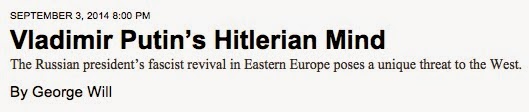





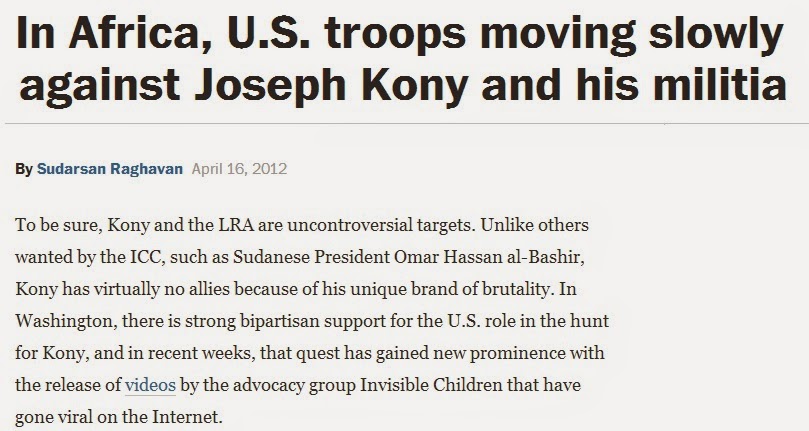


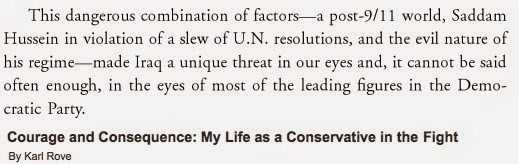


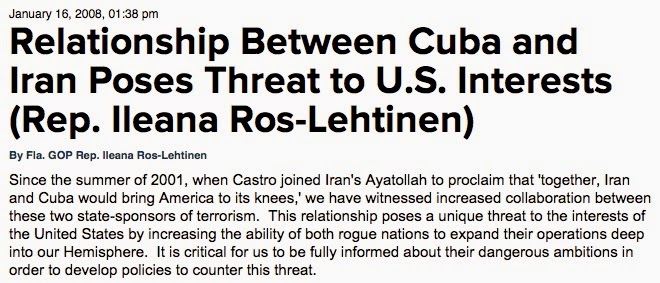



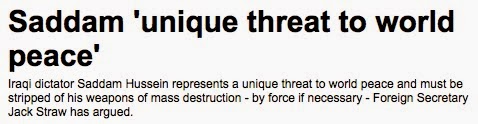









Are we clear?
Featured Video

AIDS Inc. by Gary Null (2007)
or go to
Aletho News Archives – Video-Images
From the Archives
Clash of Civilization, Iran Part II
By Jamal Kanj – Intifada-Palestine.com – January 14, 2011
Israel’s survival kit is: perpetuate conflict, insecurity to rationalize collective hate and finally playing victim.
Devoid of conflict, Israel implodes internally; without hate, Zionism loses its justification; and playing eternal victim to continue blackmailing the West. Absence of this holy trinity, Israel ceases to exist.
From its inception, the house of Zion has mastered exploiting adversarial powers to advance Israel’s cause. For instance, their influence over the Democratic Party in the US began with President Truman’s bid for 2nd term election in 1948.
Responding to strong opposition from Secretary of State General George Marshall and Department experts urging against recognition of Israel, President Truman replied: “I’m sorry gentlemen but I have to answer to hundreds of thousands [Jewish voters] who are anxious for the success of Zionism. I do not have hundreds of thousands of [voting] Arabs among my constituents”
Zionists influence over liberal American politics was matched with the doctrinal school of Conservative theoreticians aligning the Republican Party’s platform with Israel’s objectives. The Neoconservative Zionists, coined Zioncons, invented the “Clash of Civilization” concept to fight Israel’s wars. … continue
Blog Roll
 Aletho News
- 12 Things Your Psychiatrist Was Trained Not to Tell You
- From Unipolar Universalism to Multipolar Civilizational Distinctiveness
- RSF military group defects, joins Sudanese army: State media
- Ireland goalkeeper refuses to play ‘Israel’ as squad weighs boycott
- China pushes back against US on Cuba, Iran
- Ukrainian Soldiers, Potential Mercenaries: Have Gun, Will Travel!
- Burnham’s UN debut… A masterclass in British disinformation
- Iran flights continue despite US aviation sanctions
- Global Tipping Points Lead the World Into a State of Entropy
- The day-after at the White House: USA and Xi Jinping
- If Americans Knew
- Israel forces Gazans to live in constant peril – Daily Update
- Deconstructing Netanyahu’s pants-on-fire UN rant – Daily Update
- Trump betrayed voters with his campaign lies and prioritized a foreign country once he took office
- Netanyahu calls Israel’s war in Gaza ‘opposite of genocide’ in UN speech to near-empty hall
- Settler Kidnappings: Torture, Sexual Abuse and Terrorisation of Palestinian Abductees as Israel Deepens Annexation of West Bank
- Gaza winter nears as 162,000 tents become unusable, raising fears of humanitarian crisis
- Netanyahu says, “It’s the opposite of genocide”; UN says Gaza economy is world’s ‘most severe crisis on record’ – Daily Update
- Israel’s US-Backed Assault on Gaza Has Created the ‘World’s Most Severe Economic Crisis on Record’: UN
- ‘Protecting U.S. Citizens’… From Israel
- ‘This is where I live now, the back of a truck’: a day in the life of a grandmother in Gaza
- No Tricks Zone
- New Study: Earth And Venus Surface Warmth Largely Explained By Convection And Lapse Rate, Not CO2 Or Radiation
- 2025 Nature Paper Claiming Worsening Global Drought Gets RETRACTED …Heavily Flawed
- New Study: ‘Global Drought Shows No Detectable Recent Acceleration Under Climate Warming’
- Economic Masterminds: German Socialists Suggest Taxing Productivity Gains Stemming From Using AI
- The South China Sea Has Not Been Cooperating With The Climate Change Narrative
- Energy Crisis: Germany Enters Heating Season With Historically Low Gas Reserve Fill Levels
- New Study: The Antarctic Ice Sheet Gained Mass From 2020-2024 Due To Staggering Snow And Ice Accumulation
- Study: Ocean Heating Rates From Thousands Of Years Ago ‘Dwarf’ Modern Ocean Heating Rates
- Climate Extremists Target, Attack Large-Scale Power Grid Infrastructure In Germany!
- New Study: Antarctic Ice Melt Has Contributed Less Than 1 Centimeter To Sea Level Rise In The Last 30 Years

