As Kerry visits Iraq, Sadr warns of cooperation with “occupiers”
Al-Akhbar | September 10, 2014
Cleric Muqtada al-Sadr, head of a powerful movement in Iraq, said on Wednesday during a visit by US Secretary of State John Kerry that Iraq should not cooperate with “occupiers.”
“We wish for Iraq to cooperate with the neighboring countries and its allies, but not with the occupiers,” said Sadr, whose opinions hold sway over tens of thousands of militants.
Kerry, who arrived in Baghdad on Wednesday in a bid to build a coalition against Islamic State in Iraq and Syria (ISIS) in Iraq and Syria, met Iraq’s new Prime Minister Haider Abadi and said he was impressed by the premier’s plans to rebuild the Iraqi military and push broad political reforms.
Speaking in front of reporters, Kerry told Abadi he was “encouraged” by the premier’s plans for the “reconstituting” of the military and “your commitment to broad reforms that are necessary in Iraq to bring every segment of Iraqi society to the table.”
Abadi called for the international community to help Iraq fight ISIS, urging them “to act immediately to stop the spread of this cancer.”
“Of course our role is to defend our country, but the international community is responsible for protecting Iraq and protecting Iraqis and the whole region,” Abadi said at the close of his meeting with Kerry.
Abadi said there was “a role for the international community, for the United Nations” in tackling the threat of ISIS in neighboring Syria.
During Kerry’s visit, three car bombs exploded in a neighborhood in eastern Baghdad, killing 19 people and wounding at least 52 others, officials said.
They said a suicide car bombing followed by a car bomb struck near a police checkpoint in a crowded area of eastern Baghdad.
Kerry due in Saudi Arabia “to battle extremism”
Kerry will meet with ministers from 10 Arab States and Turkey in Saudi Arabia on Thursday to hold talks on joint action against ISIS.
The talks coincide with an address from President Barack Obama at the White House, where he will outline the US’ strategy to confront ISIS and address criticism that he has been slow to respond to a wave of atrocities that has shocked the world.
Britain also announced on Tuesday that it will ship $2.6 million (two million euros) worth of weapons to Kurdish forces in Iraq, to help roll back the militants’ lightning advances.
Kerry’s arrival in the region on Wednesday comes as Washington hailed the formation of the new government in Baghdad.
Iraq’s campaign to claw back territory it lost in the north and west of Baghdad in June, and US efforts to engage neighboring governments in the fightback, have been complicated by regional politics.
Saudi Arabia and the five other Gulf Arab states have had deeply strained relations with the government in Baghdad, with each side blaming the other for the jihadists’ gains.
But their foreign ministers will be among those attending Thursday’s talks in the Saudi city of Jeddah, along with top diplomats from Egypt, Jordan, Lebanon, Turkey and Iraq itself.
They will address “terrorism in the region, extremist organizations behind it and means of fighting them,” Saudi state media said.
The Arab League, which has stopped short of explicitly backing ongoing US air strikes against ISIS, also drummed up regional support for the fight.
Ahead of his visit, Kerry vowed to build “the broadest possible coalition of partners around the globe to confront, degrade and ultimately defeat (ISIS).”
“Almost every single country has a role to play in eliminating the (ISIS) threat and the evil that it represents,” he said.
Notably absent from Jeddah will be Russia, the Syrian government – which has not been consulted over possible US airstrikes on its soil – and Iran.
ISIS has taken advantage of the conflict to seize a big chunk of northeastern Syria in fighting with government forces, rival rebel groups and Kurdish militia.
Damascus views itself as a bulwark against the militants, but Washington has ruled out any cooperation.
Washington launched airstrikes against jihadists in Iraq on August 8.
Obama is prepared to authorize air strikes in Syria against ISIS, The New York Times and the Washington Post reported late Tuesday.
An opinion poll published on Tuesday suggested Americans are hawkish towards ISIS, with nearly three-quarters favoring ongoing airstrikes against the group in Iraq while 65 percent would approve extending operations into Syria.
But critics opposed to US involvement in the conflict with ISIS have pointed out that Washington in partnership with its Gulf allies, including Saudi Arabia, played a role in the formation and expansion of extremist groups like ISIS by arming, financing and politically empowering armed opposition groups in Syria.
On Monday, a study by the London-based small-arms research organization Conflict Armament Research revealed that ISIS jihadists appear to be using US military issue arms and weapons supplied to the so-called moderate rebels in Syria by Saudi Arabia.
The report said the jihadists disposed of “significant quantities” of US-made small arms including M-16 assault rifles and included photos showing the markings “Property of US Govt.”
It also found that anti-tank rockets used by ISIS in Syria were “identical to M79 rockets transferred by Saudi Arabia to forces operating under the Free Syrian Army umbrella in 2013.”
The Pentagon said on Tuesday that more strikes had been carried out over the previous two days near western Iraq’s massive Haditha dam as part of operations against ISIS forces.
After months of wrangling, Iraq’s new Prime Minister Haidar al-Abadi finally formed a government on Monday that Washington said had “the potential to unite all of Iraq’s diverse communities.”
Kerry described the new government as a “major milestone” after the divisive rule of Abadi’s predecessor, Nouri al-Maliki.
Iran – alongside the United States, the key outside power in Iraq – said it hoped the change of government in Baghdad would help turn the tide against ISIS.
“I hope that during your new mandate, complete calm will return to your country,” President Hassan Rouhani said.
In reality, the new government does not constitute quite the sea-change hailed by Washington, as the divisive Maliki becomes one of three vice presidents.
In other developments, French President Francois Hollande will visit Iraq on Friday ahead of hosting a conference in Paris on security in the country next Monday, his office said.
(AFP, Reuters, Al-Akhbar)
Arrest Kissinger for both 9/11s

Former US National Security Advisor and Secretary of State Henry Kissinger
By Kevin Barrett | Press TV | September 10, 2014
The anniversary of the September 11th attacks on New York and Washington would be a propitious day to arrest Henry Kissinger for crimes against humanity.
For while Kissinger is guilty of many war crimes, including the slaughter of millions of Vietnamese, it was on September 11th that he committed two of his most memorable outrages: The murder of Chilean President Salvador Allende and installation of the torture-loving Pinochet junta in 1973; and the explosive demolition of the World Trade Center, and massacre of nearly 3,000 people in New York and Washington in 2001.
Kissinger was undeniably the mastermind of the first 9/11. As President Nixon’s National Security Advisor in 1973, and the head of the “40 Committee” that oversaw US covert operations, Kissinger designed the coup that overthrew and murdered Allende. That operation was “Made in USA” and financed with American taxpayers’ money. Kissinger’s operatives paid lavish bribes to corrupt Chilean military officers including Pinochet, essentially hiring them to murder Allende and thousands of other honest, democracy-loving Chileans.
Kissinger’s complicity in the torture and murder of thousands of Chileans, and the destruction of democracy in Chile, is no secret. Kissinger actually confessed his intentions toward Chile on June 20th, 1970 when he famously said, “I don’t see why we need to stand by and watch a country go communist because of the irresponsibility of its own people.” (In fact, Allende was a democratic socialist, not a communist; his sin, in Kissinger’s eyes, was believing that Chile should control its own economy and resources.)
During the past two decades, many countries’ judicial officials have tried to prosecute Kissinger for the first 9/11. In 1998, Kissinger’s Chilean stooge, General Pinochet, was arrested – and spent the rest of his life under real and virtual house arrest, fighting prosecutions for crimes against humanity before he died in 2006.
Prosecutors in Chile, Argentina, Spain and France have subpoenaed Kissinger. Chilean judge Juan Guzman submitted 30 questions to Kissinger about his relationship with Pinochet but Kissinger refused to answer them. At one point Kissinger had to flee France to avoid arrest.
Though at various times he has been a wanted man in various countries, somehow Kissinger is still walking around free…and planning new war crimes. Since the coup of September 11th, 2001, Kissinger has been a leading advocate of the neoconservative plan to destroy “seven countries in five years” as Gen. Wesley Clark revealed.
Though they invaded Iraq and Afghanistan first, and then destabilized Somalia, Sudan, Libya, and Syria – all of which took longer than the planned five years – the neocons’ biggest and most important post-9/11 target has always been Iran. During the past decade Kissinger has been feuding with his fellow mummified ex-National Security Advisor, Zbigniew Brzezinski, about whether the US should attack Iran for Israel. While Brzezinski has been arguing against attacking Iran, Kissinger and his stable of Israel-loving neoconservatives have been beating the drums for war on Tehran.
Kissinger’s anti-Iran extremism was on display Saturday when he told National Public Radio that Iran is a bigger threat than ISIL. What he didn’t say is that by “threat” he meant threat to Israel, not the USA.
Kissinger’s close association with the fanatically pro-Israel, anti-Iran neoconservatives since September 11th, 2001 has surprised some observers, who traditionally viewed the former National Security Advisor as a realist rather than an ideologue.
Why did Kissinger turn neocon? Some speculate that as his mind deteriorates he is rediscovering his tribal roots and experiencing a Zionist second childhood. Evidence supporting this view includes his petulant statement to the New York Post that “In ten years there will be no more Israel.” Apparently Kissinger has fallen victim to the kind of Zionist existential anguish that lies at the root of the radicalism of such neocons as Paul Wolfowitz, Richard Perle, Scooter Libby, Douglas Feith, Dov Zakheim, and others of that ilk.
But there may be another reason for Kissinger’s succumbing to what Gilad Atzmon calls Pre-Traumatic Stress Disorder. That reason, in a nutshell, is Kissinger’s complicity in the neoconservative coup d’état of September 11th, 2001. By helping design the 9/11 shock-and-awe psychological warfare operation, Kissinger appears to have indelibly wedded his own fate to that of the neoconservative September criminals.
How do we know Kissinger was involved in the 9/11-anthrax operation? Because President Bush, acting under orders of Dick Cheney and the 9/11 perpetrator cabal, appointed Kissinger to head the 9/11 Coverup Commission. Only a person with intimate knowledge of what needed to be covered up, as well as a strong grasp on the crumbling “19 hijackers led by a dying man in a cave” cover story, could have been entrusted to head the Commission.
Since Kissinger was a known war criminal, mass murderer, and Machievellian conspirator who had orchestrated at least one September 11th coup d’état, the victims’ family members protested his appointment as Executive Director of the 9/11 Cover-up Commission. Due to public pressure, Bush was forced to fire Kissinger and replace him with another likely planner of the 9/11-anthrax operation, Philip Zelikow.
Unlike Kissinger, Zelikow was a relatively unknown war criminal. The architect of the Bush Doctrine of disguising the supreme crime of aggressive war under the “pre-emptive” euphemism, Zelikow is a self-described expert in “the creation and maintenance of public myths.” One of the likely creators of the 9/11 myth, Zelikow wrote the 9/11 Commission Report in chapter-by-chapter outline in March, 2003, before the Commission had even convened. That early draft, which is virtually identical with the Report’s final draft, was probably based on a Hollywood-style script for the 9/11-anthrax events written by Zelikow, Kissinger and others to serve as a playbook for the covert operatives who perpetrated the attacks.
During and immediately after the 9/11-anthrax false flag operation, Kissinger sat on the Defense Policy Board under key 9/11 suspect Richard “Prince of Darkness” Perle, a leading PNACer who demanded a “New Pearl Harbor” in September 2000 – and got one exactly one year later. As Perle’s senior advisor, Kissinger would have been one of the most significant architects of the 9/11-anthrax operation and subsequent cover-up.
Like Perle, who boasts of his satanic nickname “Prince of Darkness,” Kissinger revels in criminality and evil: “The illegal we do immediately. The unconstitutional takes a little longer.”
9/11-anthrax wasn’t just unconstitutional; it entailed the destruction of the Constitution in an American Reichstag Fire. It took Kissinger and his neoconservative and Israeli allies years to plan; and they have spent the past 13 years covering their tracks by “fleeing forward” into a widening circle of wars.
If the 9/11 wars ever end, and the post-2001 state of emergency is lifted, the September criminals could face prosecution. No wonder Kissinger and his neocon pals are demanding war with Iran and Russia – either one of which could likely escalate into World War III.
To save the planet, we need to arrest Henry Kissinger for his September 11th crimes: those of 2001 as well as 1973.
Syrian media slams Arab support for new US war in the region
Al-Akhbar | September 9, 2014
Syrian media accused Arab governments Tuesday of giving Washington prior agreement for military action against jihadists, with one daily calling for Damascus to form an alternative alliance with Moscow and Tehran.
The commentary comes ahead of talks in Saudi Arabia on Thursday between Secretary of State John Kerry and US regional allies on joint action to tackle the threat posed by the Islamic State group in both Syria and Iraq.
“Washington, which used the false pretext of weapons of mass destruction to enter the region militarily in 2003 and draw new geopolitical lines… is returning today under a new false pretext, the fight against terrorism,” said the Al-Baath newspaper.
“The Arabs meanwhile, are absent from every decision and are playing secondary roles,” it added.
The Baath party daily was referring to the US-led invasion of Iraq in 2003 in which notoriously the alleged chemical and biological weapons that were used to justify the overthrow of Saddam Hussein’s regime were never found.
Kerry is set to meet foreign ministers from Egypt, Jordan, Iraq, Lebanon, Turkey and the six Gulf Arab states in Saudi Arabia on Thursday.
The talks are part of US efforts to build a coalition to tackle ISIS, which has seized large tracts of territory in both Syria and Iraq, and carried out abuses including the decapitation of Syrians, Iraqis, Lebanese and two American journalists.
On Sunday, the Arab League pledged to take “necessary measures” to confront ISIS, and said it was ready for “international cooperation on all fronts.”
But Syria, and its ally Iran, will not be present at the talks in Saudi Arabia, and Damascus fears efforts to tackle ISIS will involve air strikes on its territory without its permission.
State-run newspaper Al-Thawra warned: “The United States is setting the stage to bring new wars to the region.
“Its local partners are ready to carry out its orders without even knowing the details of the American plan,” it added.
Government daily Tishrin questioned why Kerry and US Defence Secretary Chuck Hagel were coming to the region “when the Arab League has already given its prior agreement for a new war in the region organized by the United States.”
A newspaper called for the formation of an alternative “Russian-Iranian-Syrian coalition” against the jihadists to that being put together by Washington.
“Western and regional governments are excluding the nations that really want to fight terrorism,” it said, charging that the US-led coalition included nations that “support terrorism financially, military and logistically.”
Damascus considers all rebel groups fighting to overthrow President Bashar al-Assad “terrorists” and has long accused the rebels’ supporters, particularly Qatar, Saudi Arabia and Turkey, of funding “terror.”
Similarly, critics opposed to US involvement in the conflict with ISIS have pointed out that Washington in partnership with its Gulf allies, including Saudi Arabia, played a role in the formation and expansion of extremist groups like ISIS by arming, financing and politically empowering armed opposition groups in Syria.
On Monday, a study by the London-based small-arms research organization Conflict Armament Research revealed that ISIS jihadists appear to be using US military issue arms and weapons supplied to the so-called moderate rebels in Syria by Saudi Arabia.
(AFP, Al-Akhbar)
Hillary Clinton’s Friends and the Kissinger of Death
By Nima Shirazi | Wide Asleep in America | September 8, 2014
In Hillary Clinton’s predictable, self-serving, overlong, boilerplate garbage review of Henry Kissinger’s new book, published last week in the Washington Post, she – well, the communications grunt who actually wrote the review – praises a man who should be serving life in prison for war crimes.
While there is no point addressing the majority of the article, nauseating and noxious as it is, a few things stick out. The first is that Hillary Clinton is friends with a whole lot of absolutely despicable people. This is unsurprising, but still gross.
“Kissinger is a friend, and I relied on his counsel when I served as secretary of state. He checked in with me regularly, sharing astute observations about foreign leaders and sending me written reports on his travels,” Clinton writes in the review, echoing a passage from her own recent pre-presidential campaign manifesto, “Hard Choices.”
That book contains myriad references to Clinton’s “valued” and “invaluable friends,” most of whom are rich, powerful or famous public figures – often all three.
Included among these are war criminals Benjamin Netanyahu and Shimon Peres. Clinton writes that she and Netanyahu “worked together as partners and friends.” Peres, she notes in the book, is an “old friend.”
In her role as Secretary of State, Clinton routinely referred to former Israeli Prime Minister and then-current Defense Minister Ehud Barak as her “friend,” “old friend,” and “longtime friend and colleague.” In April 2010, Clinton remarked, “I have known the defense minister for more years than I care to remember. We were both very young, Ehud.”
Barak endearingly replied, “Immediately after your bat mitzvah.” A hearty chuckle was had by all.
Hillary, Hosni and Shimon
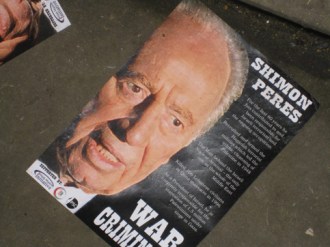 While Netanyahu has, at times, called Clinton “a great friend and a great champion of peace,” Clinton and Shimon Peres have a history of gushing over one another. In early March 2009, Clinton meet with Peres in Jerusalem, describing him as “my dear and old friend” and thanking him “for the extraordinary example that your life sets, as someone who has devoted yourself to the state of Israel, to its security, and to the cause of peace.”
Shimon Peres – who was born Szymon Perski in 1923 in what is now Belarus and immigrated to Palestine in 1934 – procured weaponry for the Haganah during Israel’s ethnic cleansing of Palestine in 1947-48. He was the architect of Israel’s illicit nuclear weapons program and forged close ties with the Apartheid regime in South Africa.
In November 1974, after visiting the leadership in Pretoria, then-Israeli Defense Minister Shimon Peres emphasized to the Knesset the “vitally important” economic, political and military ties between the South Africa and Israel, explaining that “this cooperation is based not only on common interests and on the determination to resist equally our enemies, but also on the unshakeable foundations of our common hatred of injustice and out refusal to submit to it.”
Years later, Peres was acting prime minister during the Israeli bombardment of Lebanon in 1996, including the Qana massacre, in which Israeli warplanes shelled a UN compound sheltering hundreds of displaced civilians, killing 106.
Nevertheless, Hillary Clinton fawned, “I always come away from my times with you both inspired and encouraged to think more deeply and more broadly. And I also am silently challenged by your ceaseless optimism about the future.” In earlier remarks, Clinton said to Peres, “You are an inspiration to me personally, as a person who has dedicated your entire adult life to the State of Israel.” She hailed her presence in Israel as “truly a visit among friends.”
The feelings were mutual. Peres addressed her as “our very dear Hillary,” and expressed sincere gratitude for her “understanding and sympathy and friendship.”
When she returned to Israel 18 months later, Peres hailed “her wisdom, her friendship, her carefulness and caring.” Clinton, again, described Peres as “my friend,” saying it was “a personal pleasure, privilege, and honor to be here with you.”
When the two shared a stage at the Israeli-obsessed Saban Center for Middle East Policy at the Brookings Institute in June 2012, Hillary called Peres her “longtime friend” whom she “so greatly” admires, while Peres expressed his “personal admiration, which is really tremendous” for Clinton.
Back in Jerusalem the following month, Clinton made sure to “be the first friend to wish [Peres] a very happy birthday,” and expressed “such great gratitude how much I appreciate you, our friendship, the work we have done together and the work that we will do together in the future.”
A day before Clinton’s first official visit to Israel as Secretary of State in 2009, she was in Sharm el-Sheik, Egypt. In an interview with Al Arabiya, Clinton effectively dismissed the State Department’s annual report on Egyptian human rights abuses as constructive criticism amongst chums, and declared, “I really consider President and Mrs. Mubarak to be friends of my family.”
In this context, her respect, admiration, and friendship with Kissinger makes a lot more sense.
Kissinger’s Democratic Values and Love of Legitimacy
In her sad stump speech/review of Kissinger’s book, Clinton assures readers that – though they have their differences -she, President Barack Obama, and Kissinger all share the “belief in the indispensability of continued American leadership in service of a just and liberal order.”
Justice. Liberal. Clinton. Obama. Kissinger. Right. Gotcha. But that’s not all.
The review sheds some light on these supposed “shared values” and the politically powerful’s collective view of American imperialism:
During the Cold War, America’s bipartisan commitment to protecting and expanding a community of nations devoted to freedom, market economies and cooperation eventually proved successful for us and the world. Kissinger’s summary of that vision sounds pertinent today: “an inexorably expanding cooperative order of states observing common rules and norms, embracing liberal economic systems, forswearing territorial conquest, respecting national sovereignty, and adopting participatory and democratic systems of governance.”
This system, advanced by U.S. military and diplomatic power and our alliances with like-minded nations, helped us defeat fascism and communism and brought enormous benefits to Americans and billions of others. Nonetheless, many people around the world today — especially millions of young people — don’t know these success stories, so it becomes our responsibility to show as well as tell what American leadership looks like.
Feel free to continue reading once you’ve stopped laughing and caught your breath.
Later, Clinton makes sure to note – in a glowing review of a book by Henry Kissinger, mind you – that “our devotion to human rights and democratic values” are an integral part of what “make[s] us who we are as a nation.” Adhering to such values, Kissinger apparently suggests in his new swag bag doorstop, is what leads to success.
Ok, I’ll wait.
One would be hard pressed to figure out where exactly respecting national sovereignty, an abiding commitment to democratic governance, and standing up for human rights fell into the policy prescriptions of the either the Nixon/Kissinger or Obama/Clinton administrations.
As David Corn succinctly wrote in Mother Jones, outside of Clinton’s twisted mind, Kissinger is best remembered for engaging “in underhanded and covert diplomacy that led to massacres around the globe, as he pursued his version of foreign policy realism. This is no secret.” Corn continues:
- Chile: Nixon and Kissinger plotted to thwart the democratic election of a socialist president. The eventual outcome: a military coup and a military dictatorship that killed thousands of Chileans.
- Argentina: Kissinger gave a “green light” to the military junta’s dirty war against political opponents that led to the deaths of an estimated 30,000.
- East Timor: Another “green light” from Kissinger, this one for the Indonesian military dictatorship’s bloody invasion of East Timor that yielded up to 200,000 deaths.
- Cambodia: The secret bombing there during the Nixon phase of the Vietnam War killed between 150,000 and 500,000 civilians.
- Bangladesh: Kissinger and Nixon turned a blind eye to—arguably, they tacitly approved—Pakistan’s genocidal slaughter of 300,000 Bengalis, most of them Hindus.
And there’s more. Kissinger’s mendacity has been chronicled for years. See Gary Bass’ recent and damning book on the Bangladesh tragedy, The Blood Telegram. There’s Seymour Hersh’s classic, The Price of Power. In The Trial of Henry Kissinger, Christopher Hitchens presented the case against Kissinger in his full polemical style. As secretary of state, Kissinger made common cause with—and encouraged—tyrants who repressed and massacred many. He did not serve the American values of democracy, free expression, and human rights. He shredded them.
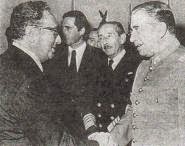
Kissinger and Pinochet
Documents declassified a year ago, upon the 40th anniversary of Salvador Allende’s overthrow in Chile (the other September 11th), “spotlight Kissinger’s role as the principal policy architect of U.S. efforts to oust the Chilean leader, and assist in the consolidation of the Pinochet dictatorship in Chile,” according to the National Security Archive at George Washington University.
Peter Kornbluh, who directs the archive’s Chile Documentation Project, has said, “These documents provide the verdict of history on Kissinger’s singular contribution to the denouement of democracy and rise of dictatorship in Chile.”
In her review, Clinton writes:
For an international order to take hold and last, Kissinger argues, it must relate “power to legitimacy.” To that end, Kissinger, the famous realist, sounds surprisingly idealistic. Even when there are tensions between our values and other objectives, America, he reminds us, succeeds by standing up for our values, not shirking them, and leads by engaging peoples and societies, the sources of legitimacy, not governments alone.
What Clinton of course doesn’t mention is that Kissinger despised legitimate, popular governments, as they too often undermined American domination and exploitation.
After Allende’s inauguration in November 1970, despite prior covert U.S. operations to derail it, Kissinger sent a memorandum to President Nixon warning of “the insidious model effect” of his democratic election.
Kissinger was convinced that the “consolidation of Allende in power in Chile… would pose some very serious threats to our interests and position in the hemisphere” and that “a successful elected Marxist government in Chile would surely have an impact on — and even precedent value for — other parts of the world” that could “significantly affect the world balance and our own position in it.”
He was particularly frustrated that “Allende was elected legally” and “has legitimacy in the eyes of Chileans and most of the world; there is nothing we can do to deny him that legitimacy of claim he does not have it.” Furthermore, Kissinger lamented, “We are strongly on record in support of self-determination and respect for free election” and that Nixon himself was “firmly on record for non-intervention in the internal affairs of this hemisphere.”
“It would thereby be very costly for us to act in ways that appear to violate those principles, and Latin Americans and others in the world will view our policy as a test of the credibility of our rhetoric,” he wrote.
Kissinger immediately outlined a strategy to topple the Allende government.
Following the successful coup and Pinochet’s installation as Chile’s dictator, Kissinger maintained that “however unpleasant they act, this government is better for us than Allende was.” Ignoring appeals to address the severe human rights abuses in Chile, he later told Pinochet himself, “In the United States, as you know, we are sympathetic with what you are trying to do here. We want to help, not undermine you. You did a great service to the West in overthrowing Allende.”
When Nixon complained that “liberal” press was giving him “crap” about the coup, Kissinger was indignant. “In the Eisenhower period, we would be heroes,” he said.
Kissinger knew this would strike chord with his audience of one. Nixon was Vice President when Eisenhower authorized the 1953 CIA-organized coup that overthrew popular Iranian Prime Minister Mohammad Mossadegh for the crime of nationalizing the nation’s oil industry and not buckling to British and American diktat. The coup consolidated U.S.-backed dictatorial power under Mohammad Reza Pahlavi, the Shah, who ruled Iran for the next quarter century.
“By restoring the Shah to power,” Nixon recalled years later, “it meant that the United States had a friend in Iran, a very strong friend, and for 25 years Iran played a role as a peace-keeper in the Persian Gulf area.”
Always valuing imperial interests over democratic and humanitarian values, Nixon made an official pilgrimage to visit the Shah in Iran shortly after the coup. Fifteen years later, as president, Nixon provided weapons systems and military assistance to the Iran on a massive scale, effectively bankrolling the Shah’s prospective $20 billion military build-up. At the time, Massachusetts Congressman Gerry E. Studds called the arms transfers “the most rapid buildup of military power under peacetime conditions of any nation in the history of the world.”
Kissinger himself mused, “[W]e adopted a policy which provides, in effect, that we will accede to any of the Shah’s requests for arms purchases from us (other than some sophisticated advanced technology armaments and with the very important exception, of course, of any nuclear weapons capability).”
In a private meeting with Kissinger on July 27, 1973 at Blair House, the Shah confirmed as much. “I have a friend in the U. S. that is ready to provide anything I need – short of atomic weapons and they are not an issue,” he said during a conversation about acquiring American fighter jets, tanks, and battleships and agreeing to arm Pakistan against India.
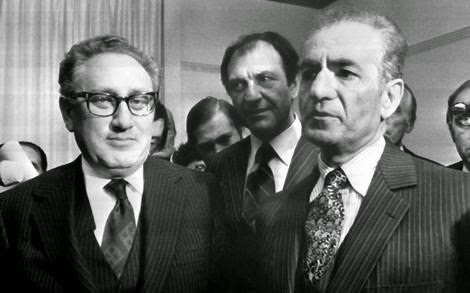
The Nixon White House – and Kissinger in particular – maintained very close relations with the Shah, in turn gaining a dutiful puppet in the region. This was especially beneficial during the 1973 OPEC oil embargo, when Arab members of the petroleum exporting consortium “cut production and stopped oil shipments to the United States and other countries that were backing Israel in the Yom Kippur War.” With the Shah in power, Iran continued production and export to the United States and its allies, including Apartheid South Africa, throughout the embargo and was rewarded handsomely by reaping the windfall of the oil shock.
When the Iranian Revolution finally forced the Shah to flee Iran, it was Kissinger and a cohort of other “influential friends” like Chase Manhattan Bank’s David Rockefeller, former statesman and World Bank president John McCloy, and National Security Adviser Zbigniew Brzezinski who intensively lobbied the Carter administration to eventually admit the Shah to the United States. Carter’s begrudging acquiescence was the main catalyst for the November 4, 1979 takeover of the U.S. Embassy in Tehran.
A month after the seizure of the embassy, Kissinger gave an interview to People Magazine. He had already visited the Shah twice since his arrival. He also insisted that Iranians had no legitimate reason to resent American foreign policy. Admitting that the Shah was “certainly authoritarian,” Kissinger praised his “reforming government” for its supposed economic, education, environmental, and medical advances.
“Not everybody who attacks us is doing so because we supplied a just grievance,” he said, adding that “it must be made clear that challenging the U.S. is not for free. There has to be some penalty for opposing us and some reward for being friendly. Unless we can reestablish that balance, this trend will continue.”
Regarding his belief that the United States was indebted to its former quisling, Kissinger told People, “I have held the position all along that the Shah was a friend of the U.S. for 37 years. Every President, starting with Truman, lauded the Shah’s friendship and his modernizing tendencies and spoke of the gratitude we owed him.” Such a partner deserved “private humanitarian asylum,” Kissinger said. “In light of the Shah’s help to our nation, I felt a duty to help.”
Despite all this, in her review of “World Order,” Clinton remarks that “Kissinger’s analyses of the Asia-Pacific and the Middle East are particularly valuable.”
Atomic Drop
While writing about Kissinger’s diplomatic philosophies and policy prescriptions, Clinton manages to praise herself a lot for her own work as Secretary of State, including what she terms taking “decisive action on challenges such as Iran’s nuclear program.”
As one might expect, this “decisive action” was actually just issuing threats, ultimatums, and imposing “crippling” sanctions upon a country over its refusal to abandon its inalienable right to a domestic nuclear energy program. It wasn’t until she left the administration that the current negotiations got underway.
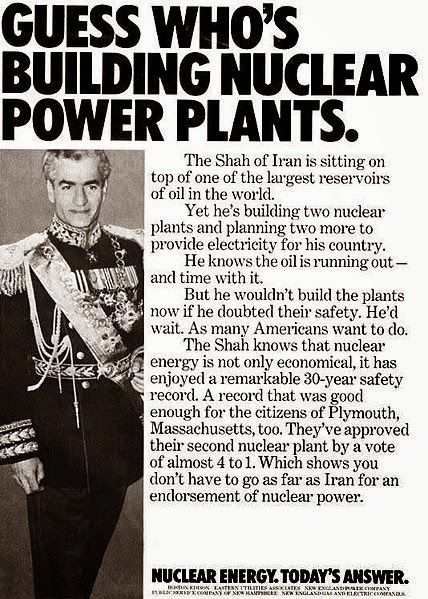
Yet bringing up such a topic in an article about Henry Kissinger is itself ironic as Iran may never have had a nuclear program to begin with were it not for him.
In 1975, during his tenure as Gerald Ford’s Secretary of State, “Kissinger signed and circulated National Security Decision Memorandum 292, titled ‘U.S.-Iran Nuclear Cooperation,’ which laid out the administration’s negotiating strategy for the sale of nuclear energy equipment projected to bring U.S. corporations more than $6 billion in revenue,” reported the Washington Post‘s Danfa Linzer in 2005.
The strategy paper, Linzer wrote, “commended Iran’s decision to build a massive nuclear energy industry,” and argued that Iran needed to “prepare against the time — about 15 years in the future — when Iranian oil production is expected to decline sharply.”
Working alongside other Ford administration officials like Donald Rumsfeld, Dick Cheney and Paul Wolfowitz, Kissinger engaged in “intense efforts to supply Iran with U.S. nuclear technology” and even “tried to accommodate Iranian demands for plutonium reprocessing.” A directive signed by Ford in 1976 offered access to “a complete ‘nuclear fuel cycle’ — reactors powered by and regenerating fissile materials on a self-sustaining basis.”
When asked by Linzer about the potential consequences and hypocrisy of such a deal in light of more recent punitive and preventive policies, Kissinger shrugged. “I don’t think the issue of proliferation came up,” he said, eventually adding, “They were an allied country, and this was a commercial transaction. We didn’t address the question of them one day moving toward nuclear weapons.”
Diplomatic Double Standards
In mid-1969, when he was Nixon’s National Security Adviser, Kissinger outlined what would soon become official American policy regarding Israel’s clandestine nuclear arsenal. Once Israeli nuclear capability came to light – outside of the Nuclear Non-Proliferation Treaty, which Israel refused to sign – the Nixon administration attempted to devise a strategy to deal with it.
A National Security Study delivered to Kissinger in May 1969 by Deputy Assistant Secretary of State for Near Eastern and South Asian Affairs Rodger Davies noted, “Israel has committed to us that it will not be ‘the first to introduce nuclear weapons into the area’, but there are grounds for believing that Israel does not construe production of a weapon to constitute ‘introduction.'” It further stated:
If the possession of nuclear weapons offered an ultimate deterrent for Israel we would perhaps be prepared to conclude that, whatever other disadvantages this development might have, its contribution to Israel’s security, especially with the prospect of continuing Arab hostility, was in the US interest.
Israel wants nuclear weapons, as was both explicit and implicit in our conversations with Rabin, for two reasons: first, to deter the Arabs from striking Israel, and second, if deterrence fails and Israel were about to be overrun, to destroy the Arabs in a nuclear Armageddon.
In a July 19, 1969 memo to the president, Kissinger introduced a new policy option, wring that “while we might ideally like to halt actual Israeli possession, what we really want at a minimum may be just to keep Israeli possession from becoming an established international fact.”
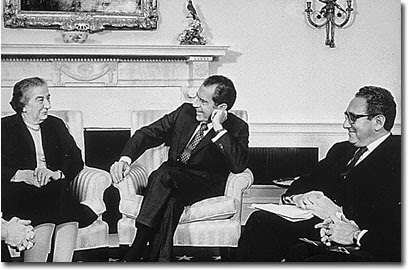
Despite the efforts of Nixon officials to place curbs on the program, they eventually “withdrew step after step from an ambitious plan to block Israeli nuclearization, until they finally acceded, in internal correspondence – the content of the conversation between Nixon and Meir is still classified – to recognition of Israel as a threshold nuclear state,” wrote Amir Oren recently in Ha’aretz, basing his report on newly-declassified documents.
The Nixon advisers concluded that, all things considered, “we cannot force the Israelis to destroy design data and components, much less the technical knowledge in people’s minds, nor the existing talent for rapid improvisation.” Thus, Davies wrote in July, two months before the Nixon-Meir meeting, the lesser evil would be to agree for Israel to “retain its ‘technical option'” to produce nuclear weapons.
“If the Israelis show a disposition to meet us on the nuclear issue but are adamant on the Jericho missiles, we can drop back to a position of insisting on non-deployment of missiles and an undertaking by the Israelis to keep any further production secret,” Davies added.
Such “nuclear ambiguity” has been both official Israeli and U.S. policy ever since President Richard Nixon meeting with Israeli Prime Minister Golda Meir in September 1969. Accordingly, Nixon formally suspended all American inspection of and visitation to Israel’s Dimona nuclear plant in 1970 and ceased demands that Israel join the Nuclear Non-Proliferation Treaty.
When President Obama first met with Netanyahu in May 2009, he confirmed the continuity of the secret agreement, a stance one Senate staffer reportedly described as “call[ing] into question virtually every part of the president’s nonproliferation agenda” by giving “Israel an NPT treaty get out of jail free card.”
The Clinton Doctrine
Hillary Clinton’s review of Henry Kissinger’s new book provided her and her public relations team an opportunity to set the stage for what seems like another inevitable run for president. It affirmed her fealty to American imperialism and hegemony, her reliance on the advice of predecessors, colleagues and friends with demonstrably more appalling records than her own, and her firm commitment to continue the failed and dangerous policies of past administrations, all while standing on the same sanctimony and entitlement that got her where she is today.
From hailing Henry Kissinger as a gritty, truth-telling idealist to her role in the Obama administration’s expansion of the American surveillance state and drone program, the question remains: is there anything about Hillary Clinton that isn’t absolutely terrible?
US sanctions contravene Iran nuclear deal: FM spokeswoman
Press TV – August 30, 2014
Iran’s Foreign Ministry has condemned the US administration’s new round of sanctions against Iranian individuals and firms, saying they contravene an interim accord reached last year between Iran and six powers.
“The move is in complete contrast with the current process of resolution of [Iran’s] nuclear issue,” Foreign Ministry Spokeswoman Marzieh Afkham said on Saturday.
On Friday, the US imposed sanctions on over 25 Iranian individuals and companies, including shipping firms, oil companies, airlines and six banks.
“The Islamic Republic of Iran rejects any one-sided and unacceptable interpretations of the Geneva [nuclear] deal by the US and strongly believes that the imposed sanctions are against the US commitments in the deal,” Afkham said.
She noted that the sanctions will have “negative and unconstructive impacts” on the process of the nuclear talks between Iran and the six powers, saying, the recent sanctions will question the “seriousness, honesty and goodwill” of Washington and other negotiating states.
The spokeswoman stated that the new US sanctions cast doubt on the negotiating parties’ “commitment to a possible final deal” that requires the lifting of all “illegal and illegitimate” sanctions against Tehran.
“While the Islamic Republic of Iran has taken confidence-building steps in compliance with its commitment to the deal…and it has been reflected in numerous reports issued by the International Atomic Energy Agency, Tehran expects reciprocal actions from the US and other member states of the P5+1,” Afkham added.
Iran and the five permanent members of the UN Security Council – Russia, China, France, Britain and the US — plus Germany are in talks to reach a final agreement aimed at resolving the standoff over Tehran’s civilian nuclear work.
The two sides signed a historic interim deal in Geneva last November. The agreement entered into force on January 20 and expired six months later. In July, Tehran and the six states agreed to extend their discussions until November 24 in a bid to work out a final accord.
The Forever Threat: The Imminent Attack on Iran That Will Never Happen
By Nima shirazi | Wide Asleep In America | August 27, 2014
“Israel has drawn up plans for a combined air and ground attack on Iranian nuclear installations if diplomacy fails to halt Tehran’s atomic program…” – Toledo Blade, March 14, 2005
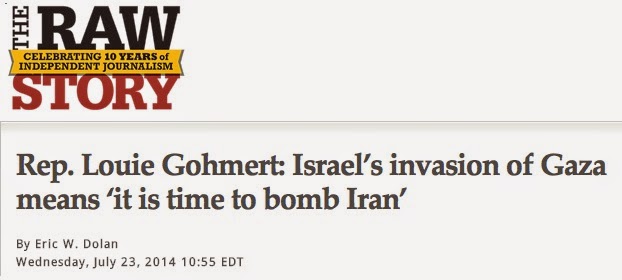
Last month, amid the Israeli bombardment of Gaza, accomplished lunatic Louie Gohmert, a Republican congressman from Texas, took to the House floor and called for Iran to be attacked.
After insisting it is “time to cut off every dime of American money going to anyone who has any kind of relationship with Hamas or those killing in the Middle East, and especially in Israel,” Gohmert added, “It is time to bomb Iran’s nuclear capabilities. It is time for the United States, if we are not going to stop Iran’s nukes, then let Israel do it. A friend will not put another friend in this kind of jeopardy.”
Never mind that Iran has no “nukes” for anyone to “stop,” since it’s not actually making any and never has made or acquired any. Never mind that Iran has been consistently complying with the prescriptions of the multilateral deal agreed to last November by Iran and six world powers. Never mind that a number of recent articles in widely-read media outlets have addressed the myriad falsehoods and myths responsible for the past three decades of fear-mongering and propaganda about Iran’s civilian nuclear program.
Still, the persistent false narrative that military strikes by either the United States or Israel may follow any potential failure to reach a deal continues to be repeated in the press. Of course, the fact that any such attack would be unequivocally illegal under international law is rarely noted in these assessments.
Pronouncements that Iran is close to having a nuclear bomb, or close to being bombed, are ubiquitous in the media. Threats against Iran – by both the United States and Israel – have been made for decades, despite routine Iranian dismissal of such rhetoric as mere bluster.
The frequency of such threats – always reported with fever-pitched alacrity by a dutiful and prostrate press – is alarming.
Not only is an American or Israeli attack on Iran always just around the bend – regardless of the state of diplomacy or intelligence assessments – but the media consistently provides fantasy scenarios by which its audience can imagine, replete with maps and graphics, just how such war crimes would take place.
Over twenty years ago, a report in the Independent (UK) published on June 23, 1994 revealed that the Pentagon had inked a deal to provide Israel with advanced F-15I fighter jets, designed to “enable the Israelis to carry out strikes deep into Iraq and Iran without refuelling.”
Three years later, on December 9, 1997, a The Times of London headline screamed, “Israel steps up plans for air attacks on Iran.” The article, written by Christopher Walker, reported on the myriad “options” Israel had in confronting what it deemed “Iran’s Russian-backed missile and nuclear weapon programme.”
Such reports have been published ever since. Of course, neither the United States nor Israel will attack Iran, regardless of the success or failure of negotiations, but such reports (often the result of strategically timed “leaks” by anonymous government officials) serve to not only intentionally torpedo diplomacy but also mislead the public into believing the absurdly false narrative surrounding the Iranian nuclear program; that is, either Iran must be bombed or it will acquire a nuclear arsenal. This is nonsense.
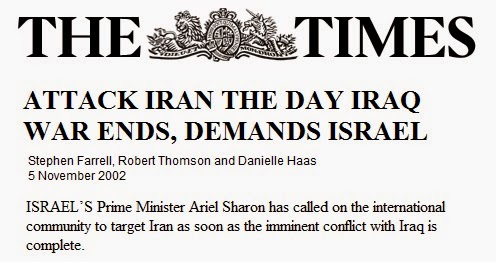
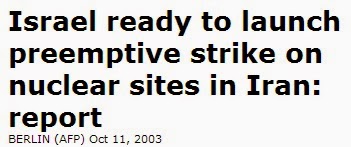
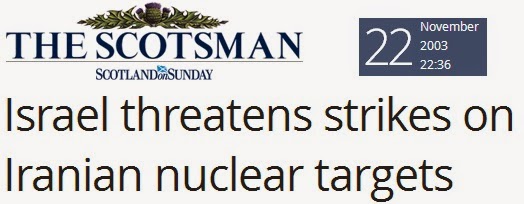
Below are some of the constant headlines we’ve seen over the past dozen years promoting such propaganda. When will this madness – this pathological obsession with the false necessity of dropping bombs and the righteous inevitability of killing people – stop?
The Times of London, November 5, 2002:
AFP, October 11, 2003:
The Scotsman, November 22, 2003:
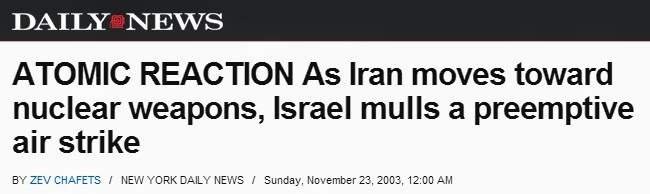
New York Daily News, November 23, 2003:
The New York Times, August 21, 2004:

Los Angeles Times, October 22, 2004:

The Jerusalem Post, January 21, 2005:

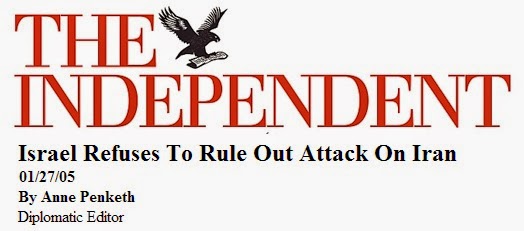
The Independent, January 27, 2005:
Toledo Blade, March 14, 2005:

Associated Press, December 4, 2005:

The Straits Times, December 17, 2005:

Associated Press, January 22, 2006:

Fox News, June 4, 2006:

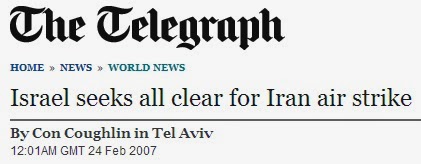
The Telegraph, February 24, 2007:
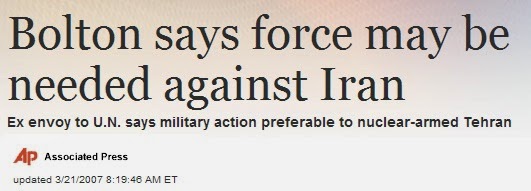
Associated Press, March 21, 2007:
Newsweek, December 19, 2007:

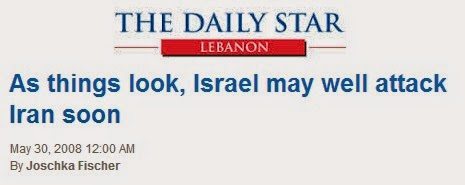
The Daily Star (Lebanon), May 30, 2008:
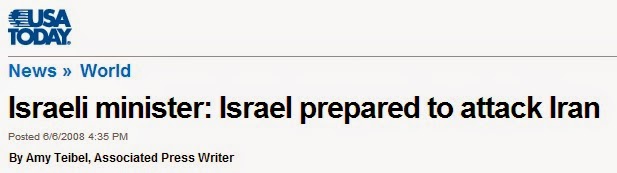
USA Today, June 6, 2008:
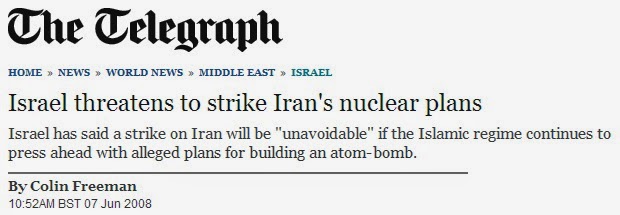
The Telegraph, June 7, 2008:
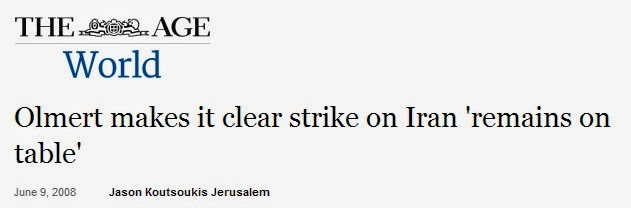
The Age, June 9, 2008:
Fox News, June 20, 2008:

The Telegraph, June 23, 2008:
ABC News, July 1, 2008:

Ha’aretz, July 2, 2008:
AFP, July 30, 2008:

Associated Press, August 7, 2008:

CBS News, August 7, 2008:
Wired, April 2, 2009:

Salon, April 14, 2009:
The Times of London, April 18, 2009:

The Wall Street Journal, June 12, 2009:
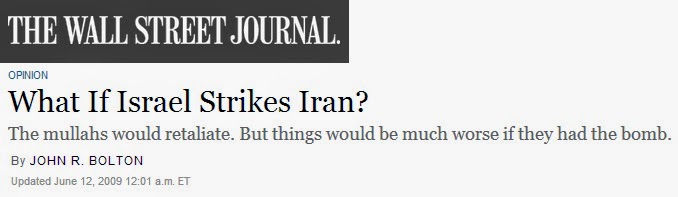
The Washington Post, July 2, 2009:
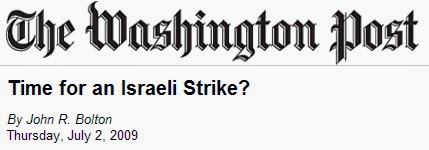
CBS News, July 27, 2009:

Los Angeles Times, August 30, 2009:

Talking Points Memo, August 31, 2009:

Fox News, September 21, 2009:

Huffington Post, September 28, 2009:
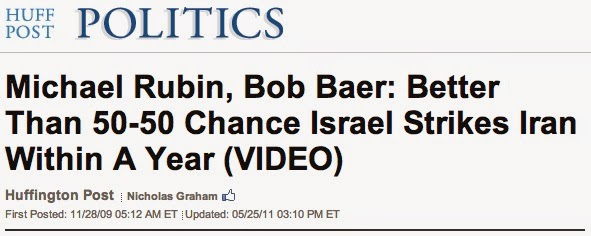
Ynet, October 9, 2009:
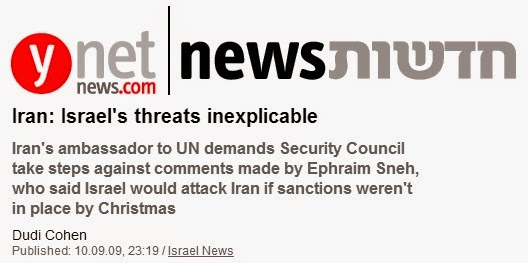
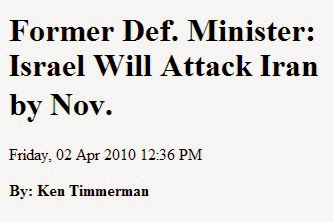
The Washington Times, October 22, 2009:
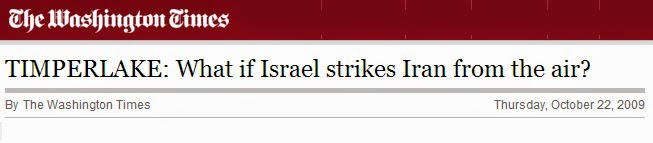
Ha’aretz, November 6, 2009:
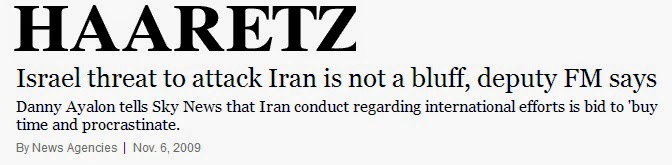
The New York Times, December 23, 2009:
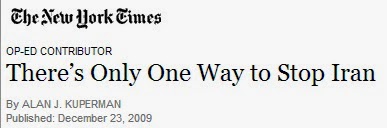
Newsmax, April 2, 2010:
The Wall Street Journal, April 21, 2010:
AFP, June 12, 2010:

TIME, July 15, 2010:

The Weekly Standard, July 26, 2010:
Christian Science Monitor, August 12, 2010:
The Spectator (UK), August 12, 2010:

Christian Science Monitor, August 13, 2010:
The Weekly Standard, August 14, 2010:

The Week, August 17, 2010:
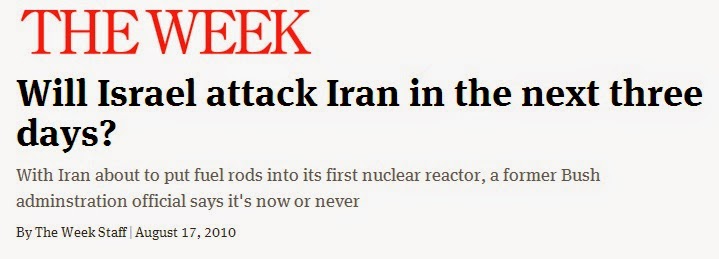
New York Daily News, August 17, 2010:

The Atlantic, August 18, 2010:

Newsmax, September 2, 2010:

The Atlantic, November 28, 2010:
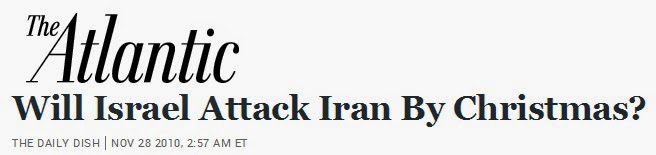
AFP, November 29, 2010:

The Australian, November 30, 2010:

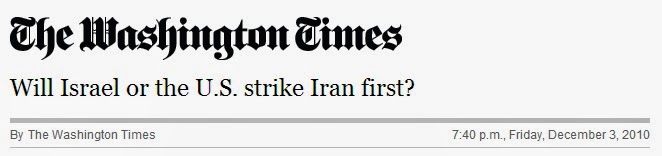
The Washington Times, December 3, 2010:
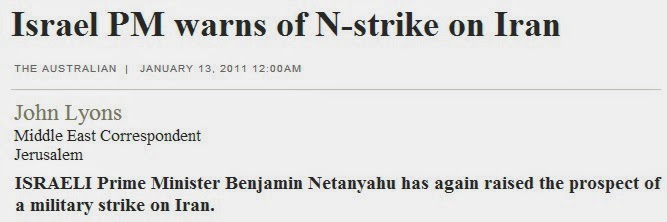
The Australian, January 13, 2011:
Associated Press, May 30, 2011:

Ha’aretz, September 28, 2011:

Associated Press, November 2, 2011:

The Daily Beast, November 2, 2011:

The Guardian, November 2, 2011:

The Telegraph, November 6, 2011:
Reuters, November 9, 2011:

Arutz Sheva, November 10, 2011:

Chicago Tribune, November 13, 2011:
Arutz Sheva, December 1, 2011:
The New York Times, January 25, 2012:
Foreign Affairs, January/February 2012:

The Washington Post, February 2, 2012:

Reuters, February 3, 2012:
Foreign Affairs, February 23, 2012:

Congressional Research Service, March 27, 2012:
CNN, March 30, 2012:
Salon/GlobalPost, May 9, 2012:
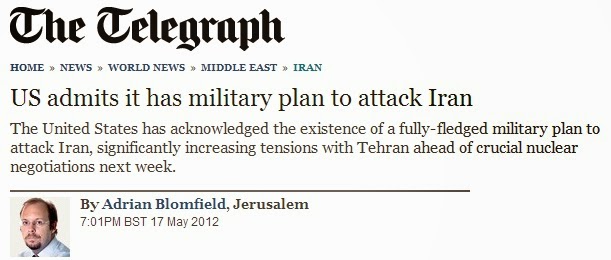
The Telegraph, May 17, 2012:
CBN News, May 24, 2012:

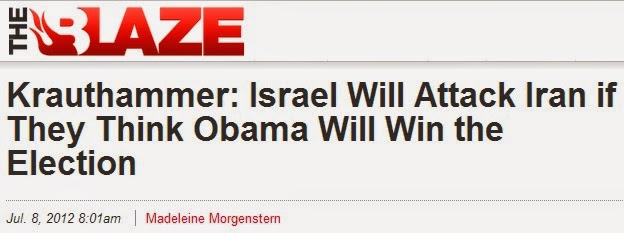
The Blaze, July 8, 2012:
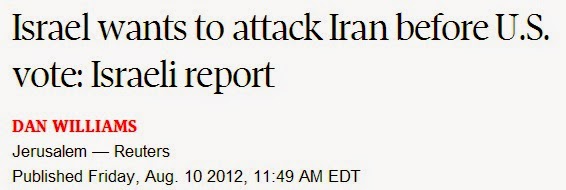
Reuters, August 10, 2012:
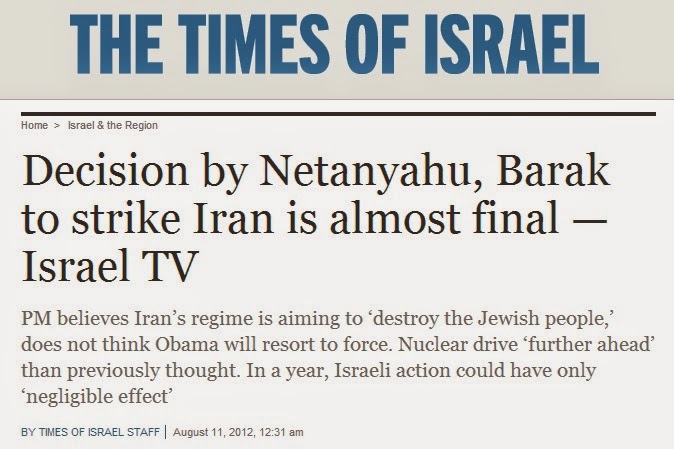
The Times of Israel, August 11, 2012:
The Daily Mail, August 21, 2012:
The Jewish Chronicle, August 27, 2012:
Forbes, September 30, 2012:

National Journal, October 9, 2012:
The Telegraph, October 9, 2012:

Voice of America, December 19, 2012:
The New York Times, January 26, 2013:

The Times of Israel, March 14, 2013:

Newsmax, April 13, 2013:
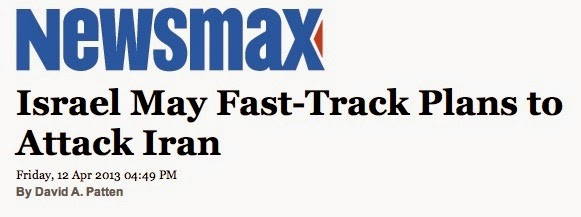
The Wall Street Journal, May 2, 2013:
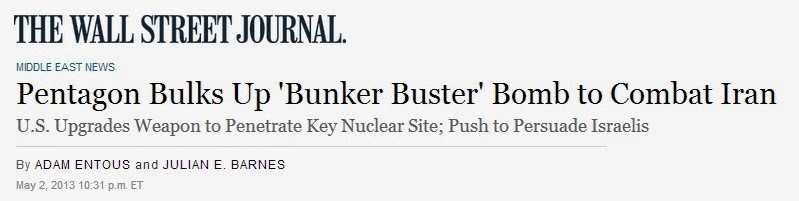
Ha’aretz, May 3, 2013:
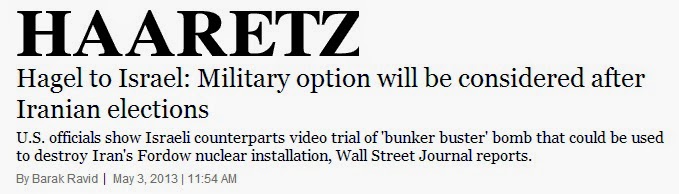
The Times of Israel, May 9, 2013:
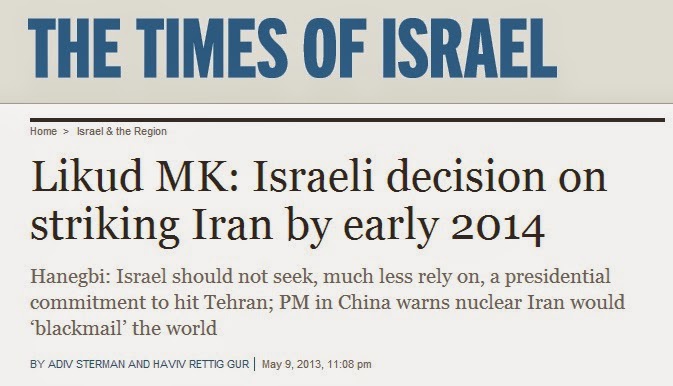
Al Jazeera English, July 17, 2013:
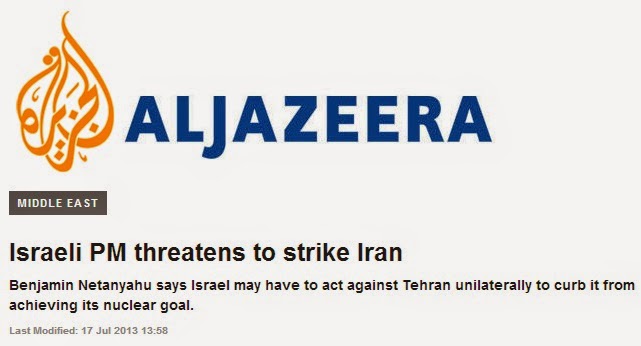
The Atlantic, August 1, 2013:
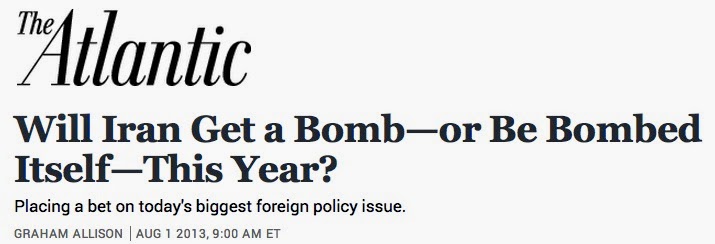
Washington Examiner, September 18, 2013:
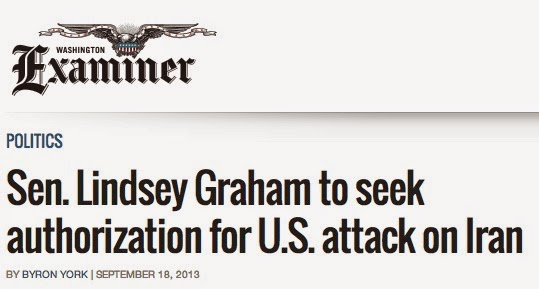
Gatestone Institute, October 7, 2013:
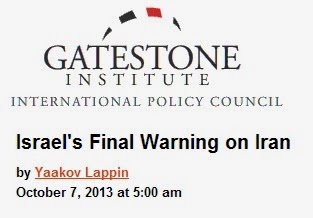
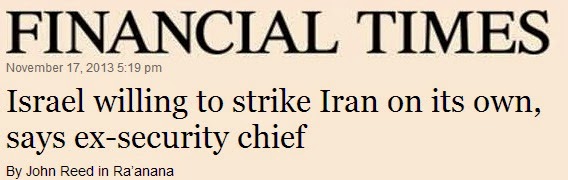
Financial Times, November 17, 2013:
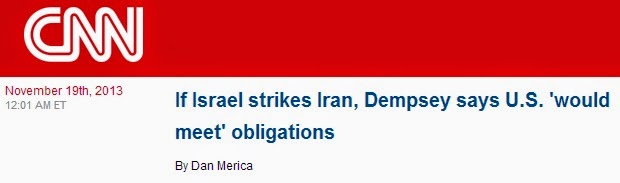
CNN, November 19, 2013:
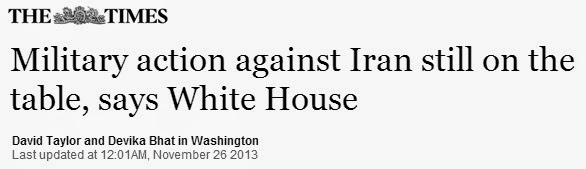
The Times of London, November 26, 2013:
Defense News, December 4, 2013:

CBS News, December 6, 2013:

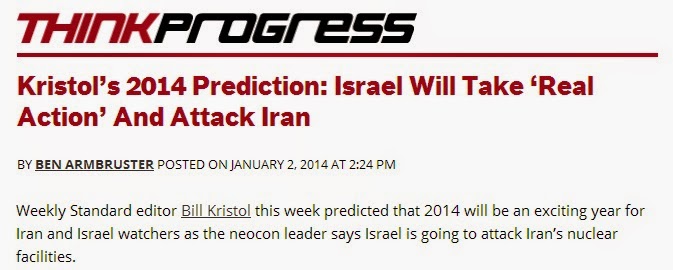
ThinkProgress, January 2, 2014:
Foreign Affairs, January 7, 2014:

Ha’aretz, March 19, 2014:

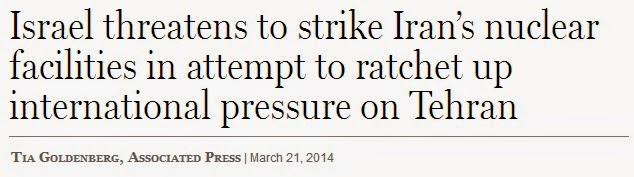
Associated Press, March 21, 2014:
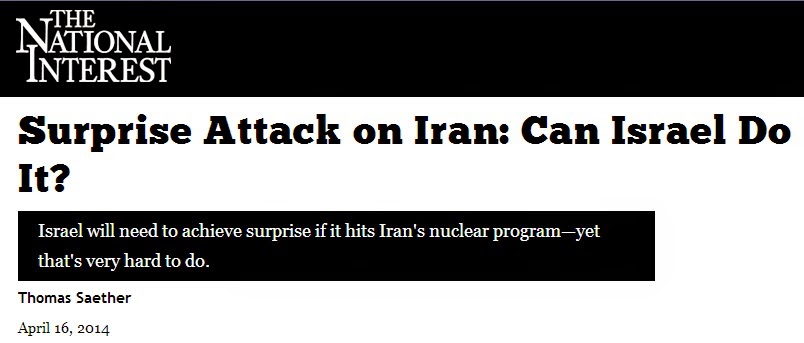
The National Interest, April 16, 2014:
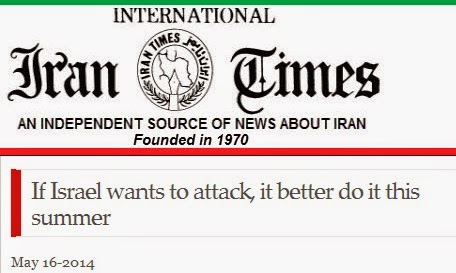
Iran Times, May 16, 2014:
Defense News, June 8, 2014:

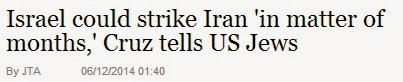
Jewish Telegraph Agency (JTA), June 12, 2014:
The Raw Story, July 23, 2014:
*****
Iran to “accelerate” arming of Palestinians after Israeli drone downed
Al-Akhbar | August 25, 2014
Tehran will “accelerate” arming Palestinians in the occupied West Bank in retaliation for Israel deploying a spy drone over Iran, which was shot down, a military commander said on Monday.
“We will accelerate the arming of the West Bank and we reserve the right to give any response,” said General Amir-Ali Hajizadeh, commander of aerial forces of Iran’s elite Revolutionary Guards, in a statement on their official website sepahnews.com.
The warning comes a day after the Guards said they had brought down an Israeli stealth drone above the Natanz uranium enrichment site in the centre of the country.
“A spy drone of the Zionist regime (Israel) was brought down by a missile… This stealth drone was trying to approach the Natanz nuclear zone,” the corps said in a statement on sepahnews.com.
(AFP)
Beware NYT’s Michael R. Gordon
Stop Him Before He Kills Again!
By John Walsh | CounterPunch | August 5, 2014
“There’s an old saying in Tennessee — I know it’s in Texas, probably in Tennessee — that says, fool me once, shame on — shame on you. Fool me — you can’t get fooled again.”
– George W. Bush
Those in the U.S. who are enthralled by relentless reports of the most demonic acts attributed to President Vladimir Putin and the rebel Eastern Ukrainian federalists a in the New York Times, NPR, ETC. would do well to look at the track record of the “reporters” dishing out this stuff. What they will find is a trail of deception that is piled with corpses of hundreds of thousands of innocents.
Principle among the purveyors of these bloodletting falsehoods is Michael R. Gordon, chief military correspondent for the NYT, serving over the decades as a trusty pipeline from the Pentagon to you. Although his name should be in profound disrepute, many opposed to war are unaware of his ignoble career or may have forgotten it. Most notoriously he is the co-author with Judith Miller of the front page NYT article planted by Dick Cheney’s minions, which claimed that Saddam Hussein had Weapons of Mass Destruction (WMD), relying on the idea that aluminum tubing being purchased by Iraq was to be used for purifying uranium.
Here is a quick reminder of that sorry episode so typical for the NYT. That article, entitled “Threats and Responses: The Iraqis; U.S. Says Hussein Intensifies Quest For A-Bomb Parts,” ran on page one of the NYT on Sunday, September 8, 2002. That same day, with the newsprint barely dry, Cheney popped up on Meet the Press citing the piece and claiming that Saddam Hussein was on his way to making nukes. Appearances on the other Sunday propaganda shows were made that same day by Colin Powell, Donald Rumsfeld, Richard Meyers (Chairman of the Joint Chiefs of Staff) and Condoleeza Rice who employed the infamous phrase used by Miller and Gordon, declaring with a straight face, “We don’t want the smoking gun to be a mushroom cloud.” On October 11, 2002, with an election staring it in the face, the Congress voted authorization for Bush to go to war. (That Constitutional requirement was unceremoniously dropped when Obama decided to make war on Libya. At least Bush took the time to lie to Congress.) As we know all too well now, the entire aluminum tube story was a lie, as was obvious at the time to anyone who read the article with the slightest care and as the Department of Energy and Department of State knew well at the time, as was later disclosed.
But unlike Judith Miller the well connected Gordon escaped punishment for these criminal fictions. And so he went on to peddle ever more lies on Iraq, being the first “journalist” to be embedded with U.S. forces of aggression and later championing the “surge” of his buddy, that great military strategist and legendary lover, David Petraeus. That bit of his career was documented in considerable detail in 2007 by the late Alex Cockburn. Cockburn summed it up thus:
“Gordon managed to dodge the fall-out from the WMD debacle he played a major part in contriving. For example, he co-wrote with Miller the infamous aluminum tubes-for-nukes story of September 8, 2002, that mightily assisted the administration in its push to war. In the latter part of 2006 he became the prime journalistic agitator for escalation in troop strength.
“On September 11, 2006, the Times ran a Gordon story under the headline, ‘Grim Outlook Seen in West Iraq Without More Troops and Aid’. Gordon cited a senior officer in Iraq saying more American troops were necessary to stabilize Anbar. A story on October 22 emphasized that “the sectarian violence [in Baghdad] would be far worse if not for the American efforts” There were of course plenty of Iraqis and some Americans Gordon could also have found, eager to say the exact opposite.”
The next year, 2007, Gordon went on to join the journalistic chorus in its effort to finger Iran as the source of new, more lethal roadside bombs used in Iraq which were called EFP’s (Explosively Formed Penetrators). This was another piece of Cheney propaganda designed to help satisfy his itch to launch a war on Iran. It was quickly exposed by another Cockburn, Andrew, Scott Horton and others. Fortunately this fiction thus exposed passed on quickly.
The point is that Gordon’s career has been not that of a reporter but a propagandist preparing us to accept the next moves of the U.S. Empire. So what is the intrepid Gordon up to these days? Unsurprisingly he is on the job covering the crisis in the Ukraine. He and the rest of the NYT are frantically peddling the wildest of lies about Ukraine, Russia and the ever evil Vlad. Here is a good example from the page one article by Gordon and others on July 18, entitled “U.S. Sees Evidence of Russian Links to Jet’s Downing.” It begins:
“The United States government has concluded that the passenger jet felled over Ukraine was shot down by a Russian-made surface-to-air missile launched from rebel-held territory and most likely provided by Russia to pro-Moscow separatists, officials said on Friday. While American officials are still investigating the chain of events leading to the destruction of Malaysia Airlines Flight 17 on Thursday, they pointed to a series of indicators of Russian involvement……” (Emphasis, jw)
Where is the evidence? The only evidence is that “officials said.” There is no indication of who the “officials” are or precisely what they said. Then there is the hedge phrase “most likely.” And finally Gordon and his co-authors tell us that the unnamed officials are “still investigating.” Finally although there is no conclusion, there are a “series of indicators.” (At the same time the Russian Ministry of Defense has released a lot of verifiable information on the incident, readily accessible on RT.com, whereas the U.S. has produced nothing other than some suspicious anecdotes on social media and a lot of speculation.) Not only should Gordon and his co-authors, Peter Baker and Mark Mazetti, the Judith Millers du jour, be summarily dismissed but also the “editors that let this trash appear as news rather than the unfounded propaganda that it is. (Mazetti and Baker should be leery of being Gordon’s accomplices. He may need a fall guy once again. Think Judith Miller, fellows.)
Let us turn to the notorious Miller and Gordon article of 2002 for comparison with Gordon’s piece on Ukraine. It begins:
“More than a decade after Saddam Hussein agreed to give up weapons of mass destruction, Iraq has stepped up its quest for nuclear weapons and has embarked on a worldwide hunt for materials to make an atomic bomb, Bush administration officials said today. In the last 14 months, Iraq has sought to buy thousands of specially designed aluminum tubes, which American officials believe were intended as components of centrifuges to enrich uranium. American officials said….” (Emphasis, jw)
Remarkable similarity! Cookie cutter prevarication, one might say. “American officials” are ever on the job and ever anonymous. And Michael R. Gordon is front and center on page one as their ever faithful, ever unquestioning transmission belt. No one can possibly think that Gordon is in the business of truth. We would be fools to believe a word he says. He fooled us once (in fact, many times). Shame on us if we let him fool us once again. His lies are laced with blood and death. We should avert our gaze from them.
John V. Walsh can be reached at John.Endwar@gmail.com.
U.S. Anti-Iran Lobby Group Accused of Mossad Ties
By Richard Silverstein | Tikun Olam | July 31, 2014
The NY Times reports a blockbuster story about the anti-Iran lobby group, United Against a Nuclear Iran. It’s an especially perfidious group supporting regime change, though it couches its approach in terms of opposing Iran’ nuclear program. Curiously, this is precisely the same way Israel’s far-right government disguises its own support for the violent overthrow of the Iranian government. Knowing that such a plan is not supported by the west including the Obama administration, they believe that they can paint Iran as enough of a threat to the world through it’s alleged plans to create nuclear weapons, that this will get them half-way to regime change.

Rami Ungar, Israeli “fixer” working either for Mossad or UANI to make problems of sanctions-busting companies “go away”
UANI specializes in “outing” companies which allegedly violate UN sanctions against Iran. The Times article revealed that the companies are usually approached by an Israeli “fixer” with close ties to the Mossad. He’s Rami Ungar, owner of an Israeli company, Ray Shipping, who’s worth $500-million.
Ungar gives them an opportunity to renounce their supposed trade with Iran. Sometimes they’re extorted for a donation to UANI as well. Though the article doesn’t mention it, I’m certain that the Mossad intermediary probes for companies that will serve Israel’s interests in its fight against Iran. Companies doing business with Iran who are willing to become Mossad assets are worth their weight in gold, since the Iranians trust them and Israel can use such trust to sabotage whatever aspect of the Iranian military or commercial interests the sanctions-buster participates in.
What brought much of this to light is a lawsuit brought by one of the ship owners who was targeted by UANI. Instead of rolling over and playing dead, Victor Restis decided to sue UANI to find out what was going on inside the bowels of this organization. Restis, who denies all charges against him made by UANI, decided to take the battle to UANI. He’s demanding to see internal documents that would show who conveyed information to the group about him, what the information said, and how it was collected. His suit also implies that the Mossad directly funds UANI, another explosive charge.
What’s especially odd about the case is that the U.S. Justice Department has threatened to intervene in the case on behalf of UANI. Clearly, the real reason they’re willing to take such an unusual step is that they’re trying to protect the Mossad. It would not only embarrass our Israeli ally[sic], it might expose the covert methods and work product of Israeli intelligence. It might allow Iran to find out what Mossad knows about it and how.
This is so unseemly because the Obama administration is protecting a foreign spy agency which aggressively steals U.S. secrets when possible. We are also protecting the Mossad as it attempts to manipulate U.S. public opinion in a witch hunt against Iran, which is a country with whom we’re trying to negotiate a rapprochement. Here is how the U.S. explained its “interest” in the case:
Government lawyers said they had a “good faith basis to believe that certain information” would jeopardize law enforcement investigations, reveal investigative techniques or identify confidential sources if released.
If we take this literally, it means the U.S. government has been in cahoots with the Mossad in this campaign against Iranian commerce. Even if it means something less than that, it certainly means that we’re protecting the Mossad as one of our “confidential sources.” The other possible interpretation is that the U.S. is investigating UANI or the Mossad for their collusion together, though the article doesn’t point in that direction at all.
UANI, though it claims to be a bi-partisan group above the political fray, is heavily laden with neocon, Bush-era personnel and board members. It’s full of U.S. intelligence officials and diplomats known as especially friendly to Israel, including Dennis Ross. Meir Dagan is also listed as an advisor. UANI appears little more than an extension of Israeli intelligence based in the U.S.
What’s Really at Stake in the Impasse Over Centrifuges
Hillary Mann Leverett on the Iran Nuclear Talks
Earlier this week, Hillary appeared on CCTV’s The Heat to discuss the Iran nuclear talks; click on video above or see here. In her segment, she focused on what really drives the divide between Tehran and the Western members of the P5+1 (the United States, Britain, and France) over Iranian enrichment—namely, the clash between the Islamic Republic’s commitment to strategic independence and Western powers’ determination that Tehran must accept their directives regarding implementation of the Nuclear Non-Proliferation Treaty (NPT) and the dynamics of Middle Eastern power politics. As Hillary notes,
“There has been progress on some significant issues—but this fundamental issue about enrichment is critically important. It gets to not just the number of centrifuges…The issue is really a question of independence.
Iran is fiercely devoted to its independence. That’s what the Islamic Revolution was all about—for Iran to be independent of foreign powers—and it wants this civilian nuclear program as part of its program for independence. So it needs to not dismantle any of its current infrastructure—which includes about 10,000 operating centrifuges—and to increase it, to a have full-fledged civilian nuclear power program.
The United States wants just the opposite. The United States has finally come around, after more than ten years of pounding its fist on the table, to admitting that maybe Iran could have a symbolic program—but that Iran needs to remain dependent on other countries…Not only does this go against the very principles of the revolution in Iran, for independence, but, in fact, Iran tried that. They bought fuel from Argentina, until the United States got angry and forced Argentina to cut it off. And they were part of a project called Eurodif, where Iran bought ten percent of that project, and then they were cut off.
So that’s the fundamental divide—whether to keep Iran dependent on the international community, or to allow them to be independent. That is going to be a very difficult bridge to cross…It’s not a matter of time; it’s a matter of mentality.”
Of course, official Washington’s hegemonic mentality—and its accompanying pretensions—are increasingly at odds with the actual distribution of power in an evolving international order. In part, this reflects the declining utility of America’s military might; to paraphrase a line from that timeless study in the exercise of power (and classic Hollywood blockbuster film), The Godfather, “the United States doesn’t even have that kind of muscle anymore—and can’t really use that much of what it still has.” As Hillary elaborates, that’s an important reason the United States is negotiating, however reluctantly, with Iran:
“It’s interesting that President Obama has refrained…since January of this year, from saying that all options are on the table, for two reasons. One, I think, in terms of allowing the negotiations to go forward, is to take the military option off the table as an offensive rhetorical device against the Iranians.
But part of this is real. This is something that, from all my trips to Iran, I understood. The Supreme Leader there, security and political analysts there, realized a few years ago that after America’s failed interventions in Iraq, Afghanistan, Libya, and Syria, we don’t have the military option on the table, and that gives room for negotiations.
So, even though I’m not optimistic there’s going to be a deal, a comprehensive deal either today or in four months (the new deadline), I do think that there’s enough incentive on both sides to continue negotiations for a very long time. And you may see in September, when the United Nations convenes in New York, you may see not only continued intensive negotiations of high-level officials, but potentially even a President Obama-President Rohani meeting—not to actually seal the deal, but to inject enough momentum to keep things going past the November congressional elections and continue to kick this can down the road.”
Hillary is similarly skeptical about the prospects for a unilateral Israeli attack against Iran:
“Even though a tragically high number of Palestinians have been killed in this current conflict [in Gaza], there is a bit of exposure of the emperor wearing no clothes, that the Israelis are not able to defeat HAMAS in Gaza. And the Iranians certainly see the Israelis having no clothes, that they don’t have the technical capability to bomb Iran’s nuclear facilities. With that, there is, again, more time for negotiations.”
Beyond the purely military dimension of America’s relative decline, the rising influence of non-Western powers—China, Russia, and, in the Middle East itself, Iran—has also helped push the United States into multilateral nuclear talks with the Islamic Republic. As Hillary explains, that’s an important reason the P5+1 is negotiating with Iran:
“The world has changed in the past ten years. Ten years ago, when the United States would say that the U.S., Israel, France, and Britain were ‘the international community,’ nobody really made that much noise. Today, they do. So today, the United States has to take the views of, particularly, Russia and China very squarely into account. They have to be at the table, and they have to buy into what the political and security order is going to look like in the Middle East—not just how many centrifuges Iran is going to have. That’s why we have the negotiations.”
Yet, even though it has been pushed into multilateral nuclear negotiations with Iran, the United States continues to take hegemonically assertive positions in the talks. Take Washington’s positions on the duration of a prospective final agreement, the number of centrifuges Iran should be “allowed” to operate under a final agreement, and limiting Iran’s alleged “breakout” capability. As Hillary describes,
“The United States wants at least a ten-year, and they’re gunning really for a twenty-year deal. That has nothing to do with proliferation. That has to do with their wanting to outwait the Supreme Leader, the Supreme Leader’s life…so that the Islamic Republic has, in their view, a prospect of collapsing into a more pro-American political order.
The Iranians are not buying into that…they’re focused more on what their practical needs are, based on when they have contracts or prospective contracts for nuclear plants, when they need the fuel, and how much fuel they need.
That gets into the number of centrifuges—and, again, this is where the Supreme Leader has spoken about numbers that are much greater than the Americans are willing to consider at this point. But he’s focused on what are the practical needs—the practical needs as told to him by the head of Iran’s atomic energy agency, who (guess what) has his Ph.D. from MIT here in the United States, and who knows what he’s doing.
So [the Iranians] are really talking about a practical needs-based approach, based on a sovereign country pursuing a technical, practical program. The United States is focused on power and influence, and on maintaining a pro-American political and security order in the Middle East…
The so-called ‘breakout issue’ is also a lot of smoke and mirrors. Again, it’s aimed at limiting Iran’s domestic, indigenous, sovereign capacity to pursue this program.
If the United States and its so-called partners were really interested in proliferation, they would accept the Iranian deal, which is to convert all—not some, but all—their enriched uranium into oxide, into powder to make into fuel. All of it. You’d solve the proliferation issue overnight, but the United States isn’t interested in that…We’re interested in constraining capacity, to constrain Iran’s power—its rising power, particularly in the Middle East—at a very volatile time for the United States.”
Hillary goes on to discuss the strategic imperative for the United States to pursue “Nixon-to-China”-style rapprochement with the Islamic Republic—and, in the process, “to change America’s strategy from one of dominance and hegemony in the Middle East to one that is a balance of power, that recognizes and deals with all the critical powers as they are, not as we would like to transform the Middle East.”
–Flynt Leverett and Hillary Mann Leverett
Featured Video

AIDS Inc. by Gary Null (2007)
or go to
Aletho News Archives – Video-Images
From the Archives
Clash of Civilization, Iran Part II
By Jamal Kanj – Intifada-Palestine.com – January 14, 2011
Israel’s survival kit is: perpetuate conflict, insecurity to rationalize collective hate and finally playing victim.
Devoid of conflict, Israel implodes internally; without hate, Zionism loses its justification; and playing eternal victim to continue blackmailing the West. Absence of this holy trinity, Israel ceases to exist.
From its inception, the house of Zion has mastered exploiting adversarial powers to advance Israel’s cause. For instance, their influence over the Democratic Party in the US began with President Truman’s bid for 2nd term election in 1948.
Responding to strong opposition from Secretary of State General George Marshall and Department experts urging against recognition of Israel, President Truman replied: “I’m sorry gentlemen but I have to answer to hundreds of thousands [Jewish voters] who are anxious for the success of Zionism. I do not have hundreds of thousands of [voting] Arabs among my constituents”
Zionists influence over liberal American politics was matched with the doctrinal school of Conservative theoreticians aligning the Republican Party’s platform with Israel’s objectives. The Neoconservative Zionists, coined Zioncons, invented the “Clash of Civilization” concept to fight Israel’s wars. … continue
Blog Roll
 Aletho News
- 12 Things Your Psychiatrist Was Trained Not to Tell You
- From Unipolar Universalism to Multipolar Civilizational Distinctiveness
- RSF military group defects, joins Sudanese army: State media
- Ireland goalkeeper refuses to play ‘Israel’ as squad weighs boycott
- China pushes back against US on Cuba, Iran
- Ukrainian Soldiers, Potential Mercenaries: Have Gun, Will Travel!
- Burnham’s UN debut… A masterclass in British disinformation
- Iran flights continue despite US aviation sanctions
- Global Tipping Points Lead the World Into a State of Entropy
- The day-after at the White House: USA and Xi Jinping
- If Americans Knew
- Israel forces Gazans to live in constant peril – Daily Update
- Deconstructing Netanyahu’s pants-on-fire UN rant – Daily Update
- Trump betrayed voters with his campaign lies and prioritized a foreign country once he took office
- Netanyahu calls Israel’s war in Gaza ‘opposite of genocide’ in UN speech to near-empty hall
- Settler Kidnappings: Torture, Sexual Abuse and Terrorisation of Palestinian Abductees as Israel Deepens Annexation of West Bank
- Gaza winter nears as 162,000 tents become unusable, raising fears of humanitarian crisis
- Netanyahu says, “It’s the opposite of genocide”; UN says Gaza economy is world’s ‘most severe crisis on record’ – Daily Update
- Israel’s US-Backed Assault on Gaza Has Created the ‘World’s Most Severe Economic Crisis on Record’: UN
- ‘Protecting U.S. Citizens’… From Israel
- ‘This is where I live now, the back of a truck’: a day in the life of a grandmother in Gaza
- No Tricks Zone
- New Study: Earth And Venus Surface Warmth Largely Explained By Convection And Lapse Rate, Not CO2 Or Radiation
- 2025 Nature Paper Claiming Worsening Global Drought Gets RETRACTED …Heavily Flawed
- New Study: ‘Global Drought Shows No Detectable Recent Acceleration Under Climate Warming’
- Economic Masterminds: German Socialists Suggest Taxing Productivity Gains Stemming From Using AI
- The South China Sea Has Not Been Cooperating With The Climate Change Narrative
- Energy Crisis: Germany Enters Heating Season With Historically Low Gas Reserve Fill Levels
- New Study: The Antarctic Ice Sheet Gained Mass From 2020-2024 Due To Staggering Snow And Ice Accumulation
- Study: Ocean Heating Rates From Thousands Of Years Ago ‘Dwarf’ Modern Ocean Heating Rates
- Climate Extremists Target, Attack Large-Scale Power Grid Infrastructure In Germany!
- New Study: Antarctic Ice Melt Has Contributed Less Than 1 Centimeter To Sea Level Rise In The Last 30 Years

