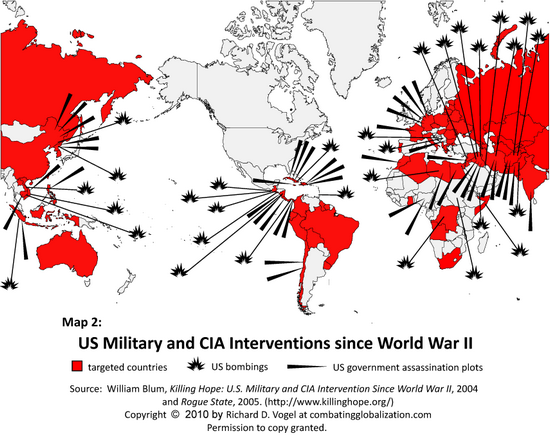
US President Barack Obama says Washington has remained and will remain committed to Israel’s security, despite Tel Aviv atrocities committed against Palestinians.
During his speech at the AIPAC Conference in Washington on Sunday, Obama said that there is no need to rely on his words to judge his commitment to Israel as the last three years of his record in office speaks for itself.
“At every crucial juncture, at every fork in the road, we have been there for Israel every single time,” Obama said.
Referring to Israel’s atrocities during its 22-day war on Gaza, Obama said that the US defended Israel against the Goldstone report, which accused Tel Aviv of war crimes against Gazans.
Noting that relations between Washington and Tel Aviv have never been so robust, Obama called Israel’s security sacrosanct.
“When Israel was isolated in the aftermath of the flotilla incident, we supported them. When the Durban conference was commemorated, we boycotted it, and we will always reject the notion that Zionism is racism,” He said.
“When resolutions are brought up at the Human Rights Council, we oppose them. When Israeli diplomats feared for their lives in Cairo, we intervened to help save them. When there are efforts to boycott or divest from Israel, we will stand against them,” Obama added.
“When the chips are down I have Israel’s back.”
The speech at the American Israel Public Affairs Conference, a pro-Israeli lobby group, is pivotal for Obama to keep Jewish voters [and campaign finance] happy in his 2012 reelection bid.
“You can’t kill and talk at the same time.” – William Luers, former U.S. Ambassador & senior State Dept. official
In 2006, after Palestinians democratically elected Hamas to the shock and chagrin of both Israel and the United States (who had insisted on the elections in the first place), a devastating economic siege was imposed on the 1.5 million residents of Gaza by Israel as punishment for the crime of Palestinian self-determination. As Dov Weisglass, adviser to then-Israeli Prime Minister Ehud Olmert, said with a chuckle, “It’s like an appointment with a dietitian. The Palestinians in Gaza will get a lot thinner, but won’t die.”
What’s so obviously funny about Weisglass’ statement is that, due to the brutal blockade that has deliberately strangled Gaza for six years, at least 61% of Palestinians in the territory are “food insecure,” of which “65% are children under 18 years;” the level of anemia in infants is as high as 65.5%, about 70% of Palestinians in Gaza live on less than $1 a day, over 80% rely on food aid, and 60% have no daily access to water, 95% of which is undrinkable anyway.
And now, apparently, Israeli officials are hoping the West will duplicate this hilarity by similarly depriving Iranians of their own means to survive.
An article published this week in Yediot Ahronot was headlined, “Israeli officials: Starve Iranians to stop nukes,” reported, “Iran’s citizens should be starved in order to curb Tehran’s nuclear program, officials in Jerusalem said Wednesday ahead of Prime Minister Benjamin Netanyahu’s upcoming trip to Washington.” The article quoted an unnamed official as saying, “Suffocating sanctions could lead to a grave economic situation in Iran and to a shortage of food. This would force the regime to consider whether the nuclear adventure is worthwhile, while the Persian people have nothing to eat and may rise up as was the case in Syria, Tunisia and other Arab states.”
The official urged, “The Western world led by the United States must implement stifling sanctions at this time…[i]n order to suffocate Iran economically and diplomatically and lead the regime there to a hopeless situation, this must be done now, without delay.”
Encouraging the willful, foreign creation of a humanitarian crisis upon a nation of 74 million human beings in the form of collective punishment with the intention of fomenting regime change is not only appalling, its prescription is criminal under international law. It goes without saying that, were anyone to suggest that Israel itself be targeted with such destructive tactics for any reason whatsoever, the mere idea would elicit accusations of utterly insane, genocidal anti-Semitism. But, of course, to Israeli officials pushing the starvation of a mostly Muslim civilian population, Iranian lives are as expendable as Palestinian lives.
How can such talk be discussed so flippantly? The answer, sadly, is obvious.
Iranians, over the past three decades, have been so dehumanized by Western politicians and media that talk of economic “strangulation” and “crippling” sanctions are not only routine but, at this point, mundane. Just last week, conservative pundit Tucker Carlson stated on Fox News that “Iran should be annihilated.” Rhetoric like this is nothing new.
On April 18, 2007, John McCain, that mavericky steward of the self-described “Straight Talk Express”, held a campaign event at Murrells Inlet VFW Hall in South Carolina, where he was asked when he thought the United States might “send an air mail message to Tehran.” His reply began with him singing “Bomb bomb bomb, bomb bomb Iran” to the tune of The Beach Boys’ “Barbara Ann.”
Shortly thereafter, ABC newsreported, “McCain campaign spokesman Kevin McLaughlin points out that the Senator’s song was not serious and the people in the room were laughing” and quotes McLaughlin as saying, “He was just trying to add a little humor to the event.” In response to critics who suggested McCain’s little ditty might be insensitive, the Arizona Senator said, “Insensitive to what? The Iranians?” and proposed his detractors “lighten up and get a life.”
McCain did this because, obviously, bombing thousands of people to death for no reason is funny, especially to a septuagenarian war veteran who was tortured in captivity for years. He was running for President after all.
A year later on April 22, 2008, while on the campaign trail, presidential-aspirant Hillary Clinton declared her intention to “totally obliterate” Iran if Iran ever launched a first-strike on Israel, despite the fact that Iran has never threatened to do so and has expressly denied any intention to ever do so.
In July 2008, on a campaign stop in Pittsburgh, John McCain reacted to a recent report that U.S. cigarette exports to Iran were increasing by cheerfully suggesting, “Maybe that’s a way of killing ’em,” before adding, “I meant that as a joke.” Again, because that’s hilarious.
On April 27, 2009, the neoconservative American Enterprise Institute held an event dedicated to discussing “the implications of the upcoming Iranian elections for the Obama administration’s policy toward Iran.” Speaking at the conference, alongside such Iran hawks as Joe Lieberman, Michael Rubin, Kenneth Pollack and Danielle Pletka, AEI resident scholar Fred Kagan addressed recently introduced legislation (by Lieberman) to impose more sanctions in order to “cripple” Iran, saying, “Look, we need to be honest about this, Iranians are going to die if we impose additional sanctions.” Later on in the discussion, Kagan insisted that, despite their inevitable “human cost”, he was in favor of such sanctions.
Clifford May, president of Likudnik think tank Foundation for the Defense of Democracies, wrote on May 6, 2010 in National Review that “[t]here is no greater threat to national and international security than the possibility that Iran’s current rulers – militant Islamists, terrorist masters, and sworn enemies of both the Great Satan and the Little Satan – may acquire nuclear weapons” and wondered if “crippling sanctions and their impact on an already ailing Iranian economy” could “change the behavior of the Iranian regime – or cause a change of regime?” His titillating answer: “There’s only one way to find out.”
The next month, Ambassador to the United Nations, Susan Rice introduced a new – and thoroughly macabre – phrase to official U.S. government discourse. Appearing on the June 9, 2010 edition of PBS Newshour, Rice told host Ray Suarez that the then-latest round of U.N. Security Council sanctions on Iran would “tighten the noose with a new inspections regime [and] new restrictions on its financing and commercial activities.”
In August 2010, California congressman Brad Sherman wrote an article for The Hill promoting even more devastating sanctions on Iran for asserting its inalienable national rights and not kowtowing to American and Israeli diktat. He wrote, “The goal of the bill is to drive Iran’s economy into a crisis and force its leaders to the negotiating table…Critics also argued that these measures will hurt the Iranian people. Quite frankly, we need to do just that.”
On November 16, 2011, when he was still in the GOP race, John Huntsman told CNN‘s Piers Morgan that sanctions alone won’t force Iran to abandon its nuclear program, explaining, “You can tighten the noose in ways that will make life a lot more difficult from an economic standpoint. But my sense is that their ultimate aspiration is to become a nuclear power, in which case sanctions probably aren’t going to get you there.”
On January 5, 2012, State Department spokesperson Victoria Nuland told press at the daily briefing that an internationally-imposed oil embargo on Iran is supported by the Obama administration because “we believe that if we work together and if we also work to increase global supply generally that this will be an important next step in the global effort to tighten the noose on their regime.”
The very next day, January 6, 2012, Maria Otero, Undersecretary of State for Democracy and Global Affairs, concluded an appearance at the Council on Foreign Relations with these remarks:
“We do see Iran as a — as a threat, as a threat with — because they support destabilization and because they have — they have really supported things that are threatening not only the region, but the world overall. So this is going to be moving forward, and we will continue to be supporting an embargo that will tighten the noose around them.”
By now, the lynching analogy has become so prevalent in the political lexicon that it’s even made its way into Congressional statements. On February 2, 2012, New Jersey Senator Robert Menendez posted a press release on his website that “hailed the Senate Banking committee’s approval and bipartisan support for the Iran Sanctions, Accountability and Human Rights Act,” which, according to Menendez, is designed to “further enhance pressure on the Iranian regime to halt its illicit nuclear weapons program.” The statement quotes Mendez as declaring,
“This legislation will thwart the work-arounds that Iran has devised to circumvent the U.S., EU and UN sanctions regimes, tighten the noose on the Iranian government, and send a message to the world that there is a choice – you can either do business with Iran or the United States, but not both.”
The following day, on February 3, 2012, Asia Times columnist David P. Goldman lamented that an illegal and unprovoked military attack (i.e. a war crime) had not been carried out on Iran by the United States back in 2005 when “surgical strikes to destroy Iran’s nuclear capacity would have been comparatively easy.” Now, however,
Senior planners at the Pentagon say privately that it would be very difficult to destroy centrifuges in bunkers, and that aerial attacks would concentrate on killing the political and military leadership as well as destroying command and control…It seems likely, however, that stopping Iran from getting nuclear weapons would be a messy and bloody business rather than a well-defined surgical operation. It is too bad the West did not have the good sense to correct the problem in 2005. However much it costs in Iranian blood and well-being, it’s still worth it.”
Yes, a human person actually wrote this. And another human person published it.
As Marsha Cohen points out in a phenomenal new piece for LobeLog, a 2009 study produced for the Center for International and Strategic Studies briefly addressed “the human and environmental human catastrophe that would result just from an attack on the Iranian nuclear power plant in Bushehr,” and determined:
Any strike on the Bushehr Nuclear Reactor will cause the immediate death of thousands of people living in or adjacent to the site, and thousands of subsequent cancer deaths or even up to hundreds of thousands depending on the population density along the contamination plume.
That these casualty figures are “worth it” for Goldman puts him in a special class of despicable along with Madeleine Albright, who determined that the deaths of over half a million Iraqi children due to Western sanctions were also “worth it.”
On February 15, 2012, Bob Menendez was back with a new statement praising Joe Lieberman and Lindsay Graham’s so-called “Non-Containment Resolution” which dangerously “rejects any United States policy that would rely on efforts to contain a nuclear weapons-capable Iran.” Menendez stated, “At this moment, Iran is the greatest threat; the great challenge to peace and security in the world,” warned of “the unquestioned military intent of Iran’s nuclear program,” and again commended the imposition of more sanctions in order to “further tighten the noose” on Iran.
It is instructive to note that Menendez, a Democrat, voted against giving George W. Bush congressional approval to attack and invade Iraq. He has proudly stood behind this decision, declaring during his successful 2006 Senate run,
“I’m proud to have voted against Bush’s war in Iraq right from the start, even when it was unpopular to do so. The Bush administration failed to make the case that Iraq was an imminent threat to our national security. Moreover, there was no conclusive evidence that Iraq possessed weapons of mass destruction. This was a war of choice, not a war of necessity. The Bush administration misled the American people with faulty premises and false promises.”
This time around, however, one has to wonder what “imminent threat” Bob Menendez believes Iran actually poses to the United States, what “conclusive evidence” of Iranian weapons of mass destruction he is privy to and what “premises” and “promises” he thinks are right and true.
On December 9, 2005, Menendez told his constituents, “I pledge to you that I will never send New Jerseyans into a war that I would be unwilling to send my own son or daughter to fight,” adding, “I’m proud of my vote [against authorizing the war in Iraq], because despite the administration’s efforts to manipulate the justifications for war, I did my due diligence. We now know that the war in Iraq has overstretched our military, drained our treasury and cost far too many of our bravest Americans.”
Considering that the Lieberman-Graham resolution, which Menendez so adamantly supports and has co-sponsored, essentially calls for war against Iran to prevent it from reaching what is now termed “nuclear weapons capacity,” it can be assumed Menendez is currently filling out recruitment papers for his children.
This new, so-called “red line” of “nuclear weapons capability” – the ability, after having mastered the nuclear fuel cycle and reached sufficient levels of nuclear expertise and scientific development, to manufacture atomic weapons if such a decision is made – makes no sense. Iran, which already has operational enrichment facilities and a functioning power plant, already has such “capability,” which is often dubbed the “Japan option” or “breakout option.” And it’s not alone. In fact, at least 140 countries “currently have the basic technical capacity to produce nuclear weapons.” Additionally, according to Green Peace, “[o]ver 40 countries have the materials and know-how to build nuclear weapons quickly, a capacity that is referred to as ‘rapid break-out.'”
Nevertheless, Senator Lindsey Graham – who clearly knows better than the U.S. intelligence community and the IAEA – decided to tell reporters that Iran is “not building a nuclear power plant for peaceful purposes. They’re marching towards nuclear weapons capability,” adding, “The end game is, sanctions can work and will work if properly applied, but in case they fail… the Iran regime will not be allowed to possess nuclear capability. And if that means military actions, so be it.”
Bloomberg News now reports that “the Joint Chiefs of Staff have prepared military options to strike Iranian nuclear sites in the event of a conflict” and quotes Air Force Chief of Staff General Norton Schwartz as telling reporters “What we can do, you wouldn’t want to be in the area.” Obviously, millions of Iranians don’t have the option of not being “in the area” considering they live there.
In an extensive interview focused primarily on Iran, conducted by Jeffrey Goldberg in the Oval Office and published in The Atlantic today, President Barack Obama defined what the constant threat that “all options are on the table” with regard to U.S. policy toward Iran:
“I think the Israeli people understand it, I think the American people understand it, and I think the Iranians understand it. It means a political component that involves isolating Iran; it means an economic component that involves unprecedented and crippling sanctions; it means a diplomatic component in which we have been able to strengthen the coalition that presents Iran with various options through the P-5 plus 1 and ensures that the IAEA [International Atomic Energy Agency] is robust in evaluating Iran’s military program; and it includes a military component. And I think people understand that.”
Despite admitting that “Iran does not yet have a nuclear weapon and is not yet in a position to obtain a nuclear weapon without us having a pretty long lead time in which we will know that they are making that attempt,” Obama nevertheless was proud of inflicting such economic, diplomatic and political hardship on Iran that, in his words, have put the Iranian government in “a world of hurt.”
Such nonchalanttalk and campaign trail knee-slappers about the “annihilation” and “obliteration,” of murder and war crimes, of tightened nooses – the execution of a death sentence – and of deliberately hurting a nation of 74 million human beings, along with chest-thumping boasts about destroying the internationally safeguarded nuclear facilities of a sovereign country, would be unequivocally condemned were it directed toward the United States or its allies.
After thirty years of warmongering, threats, and propaganda, it’s clear that American and Israeli discourse about Iran is starving for humanity.
The magnet bomb that exploded on an Israeli Embassy diplomat’s car in Delhi on February 13 seemed on the surface to be consistent with an Iranian-sponsored action.
It was carried out with same method by which Israel’s Iranian proxy, the Mujahedin-e Khalq, had assassinated an Iranian scientist in mid-January. It occurred on the anniversary of the 2008 assassination of Hezbollah operations chief Imad Mugniyeh, which Hezbollah had vowed to avenge. And it happened at the same time as what appeared to be attempted bombings in Bangkok and Tbilisi.
But a review of the evidence uncovered thus far makes the link to Iran begin to look very dubious. Instead, it points to the distinct possibility that the Israelis planned a carefully limited bomb attack that was not intended to cause serious injury to Israeli diplomatic personnel, but that would advance the larger Israeli narrative on the need to punish Iran.
The evidence surrounding that bomb itself indicates a series of decisions by the terrorist team that is fundamentally inconsistent with an Iranian-Hezbollah revenge bombing. The preliminary forensic analysis of the bomb itself had estimated it to be 250-300 grams of explosives, but sources in the investigation later reduced the estimate to 200-250 grams. The 250-gram bomb that exploded near the Delhi High Court in May 2011 did not even damage the car under which it had been placed and was characterised by Police Commissioner B K Gupta as a “low-intensity and mild blast”.
Burning questions
The main damage to the Israeli diplomat’s car was not from the explosion but from the fire, which burned so slowly that the occupants suffered no burns.
If the bomb had been filled with shrapnel of iron filings, nails or glass, or if it had been attached underneath the fuel tank or on the door next to the passenger, that bomb would have seriously injured or killed the passenger, Tal Yehoshua-Koren, the wife of the Israeli Defense Attaché. But Delhi police were able to determine that the bomb contained no such potentially deadly shrapnel. And an examination of the videos and photos of the car after the bombing revealed that the bomb had been attached instead to the rear of the vehicle, where it would have the least impact on the occupants.
Indian investigators obtained a fourth piece of evidence bearing on the intentions of the planners from their interview with Yehoshua-Koren. She told them the bomb did not go off for 30 to 40 seconds after she felt a bump from the rear of the car and saw the motorcyclist go past her window. Indian investigators had assumed that the bomb had operated on a five- or 10-second delay, like other magnet bombs with which they were familiar – only enough time for the motorcyclist to get far enough away from the blast.
Yehoshua-Koren did not get out of the car before the bomb went off, and suffered what the Israeli Defense Ministry called “moderate“ wounds – evidently from metal fragments from the rear hatch. She was nevertheless able to exit the car and get to the Israeli Embassy without any assistance.
Israeli commentary on the bombing suggested that the Iranian-sponsored terrorist team had simply proven to be ineffective in carrying out the bombing. But the combination of these four distinct indicators strongly suggests that the operation was planned so that the passenger in the car would not be injured.
Unclear patterns
Israel claimed that the evidence links the Delhi bombing to other alleged Iranian-Hezbollah plots in Tbilisi and Bangkok. Deputy Prime Minister Moshe Yaalon declared, ”It is the same pattern, the same bomb, the same lab, the same factory”.
But investigators in Delhi to concluded that the operations in Delhi and Bangkok were “unrelated“.
Despite the fact that a group of Iranian passport-holders were clearly involved with highly lethal bombs in Bangkok, there is good reason to doubt that they were working for Iran’s IRGC or Hezbollah. They spent their first three days in the country with Thai prostitutes at Pattaya. That profile suggests Iranian mercenaries, like the former kickboxer hired by Mossad to assassinate Iranian scientist Massoud Ali Mohammadi in January 2010, rather than Iranian or Hezbollah operatives.
India‘s importance
In the larger context, it is very difficult to believe that Iran would have chosen New Delhi as the location for revenge against Israel, given the importance of India as a buyer of Iranian oil and India’s delicately balanced political-diplomatic position in the larger conflict.
India had just replaced China as Iran’s single biggest crude oil customer, having increased its imports to roughly 550,000 barrels a day in January, which compensated for a drop in sales to China. And the government of Prime Minister Manmohan Singh had resisted pressure from the United States and Europe to reduce its purchases from Iran, even working with Iran to find ways to get around the planned sanctions against Iran’s National Bank. India’s Commerce Ministry was planning a large business delegation to Iran to discuss increased trade.
India had thus taken on the role of potential “spoiler” in the Western sanctions strategy against Iran. This central geopolitical reality prompted New Delhi’s “Economic Times” to ask, “Why would Iran go and poke its finger in the eye of its best customer, especially knowing full well that Israel will use even the flimsiest excuse to put the blame on it?”
Indeed, it was Israel, not Iran that stood to gain politically from the terrorist car bomb in Delhi. Israel was well aware that a terrorist bombing in Delhi that could be blamed on Tehran was a potential lever to change India’s policy toward Iran. As an Israeli official told the Wall Street Journal, if India were to adopt Netanyahu’s position that Iran was responsible for the bombing, it would take the India-Iran relationship to “a whole different level”.
Nearly two weeks before the bombing, Israel acted to ensure that Indians would assume that a terrorist attack in Delhi on that date had been carried out by Iran. A letter to the Delhi police on February 1 signed by the Israeli Deputy Chief of Mission in Delhi and the First Secretary responsible for security expressed concern that Iran and Hezbollah would take revenge on the anniversary of the Mugniyeh assassination by carrying out terrorist actions against Israelis. It also referred to the possibility of Iranian revenge for the assassination of the Iranian nuclear scientist Mustafa Ahmadi Roshan on January 11. Although the letter did not specify that an attack might take place in Delhi, Mossad chief Tamir Pardo led a delegation of intelligence officials on a visit to Delhi around the same time and turned over a list of 50 Iranian nationals with the request that they be kept under surveillance.
The Israeli letter referred to an alleged Hezbollah terror plot against Israelis that had been broken up in Bangkok in January. But the idea of a Hezbollah plan to kill Israelis in Thailand had come only from Israeli intelligence – not from any local sources. The Thai police detained Hussein Atris, a Swedish-Lebanese, in January only because Israeli intelligence officials had told them they “suspected” that he and two other Lebanese, whom they claimed were linked to Hezbollah, might carry out terrorist attacks at tourist sites popular with Israelis.
Atris admitted to owning large supplies of urea fertiliser and ammonium nitrate, which are ingredients in bombs, but Thai investigators concluded that they were not connected to any terror plot in Thailand, because of the absence of any other bomb components. The head of Thailand’s National Security Council, General Wichean Potephosree, a former chief of police, expressed doubt that Atris was a terrorist, as Israel had claimed.
After the Bangkok explosion, the Israelis renewed the claim of an Iran-Hezbollah terror threat in Bangkok, alleging that the bombs found in in all three capitals in mid-February were “exactly the same kind of devices”. But we now know that was not the case.
We may never be able to establish with certainty what happened in Delhi, Bangkok and Tbilisi earlier this month, but the evidence that has come to light thus far doesn’t support the widely accepted notion that Iran and Hezbollah were behind it. That evidence is consistent, however, with a clever Israeli “false flag” car bombing operation that would not injure the passenger but would serve its broader strategic interests: dividing India from Iran and pushing US public opinion further towards support for war against Iran.
~
Gareth Porter is an investigative historian and journalist specialising in U.S. national security policy. The paperback edition of his latest book, Perils of Dominance: Imbalance of Power and the Road to War in Vietnam, was published in 2006.
It’s hard to miss the higher cost of gas every time we fill up our cars these days, but the News Media doesn’t do a very good job of explaining why. There isn’t any mystery, though, if you read the financial press and oil industry sources: We’re paying extra for gas because of rising tensions in the Middle East and especially the scare over a possible US or Israeli attack on Iran. In effect, we’re paying a “war tax” at the gas pump, and the cost will only get higher unless we put aside the talk of war and get down to serious diplomacy to settle the differences in the region.
Here’s what the Wall Street Journal had to say recently, under the headline Oil Rise Imperils Budding Recovery:
Rising oil prices are emerging once again as a threat to the U.S. economic recovery just as it appears to be gaining momentum. Oil prices have climbed sharply in recent weeks as mounting tension with Iran has raised the threat of a disruption in global supplies. On Wednesday, oil futures on the New York Mercantile Exchange rose $1.06 to $101.80 a barrel on reports that Iran had cut off sales to six European countries in response to the European Union’s newly stepped-up sanctions.
The world market price for oil is headed upward of $110 a barrel, which could translate into $4 gasoline before too long. If an actual war breaks out, we could soon be remembering the current price at the pump as “cheap gas”.
But what about “Drill Baby Drill” to lower the price of gas – as the Republicans demand? Political rhetoric aside, the reality is that there is a world market price for petroleum which cannot be significantly lowered by marginal increases in US supply. International oil prices are rising even as US oil production has increased during the past decade. Do you think US suppliers are going to sell us domestically-produced oil at a discount lower than the world market price? Keep dreaming. That’s just not the way the oil companies do business.
For example, after the US Arctic oil fields were developed and the TransAlaska pipeline came into service – despite serious environmental objections – large amounts of Alaskan oil were exported rather than sold in the lower 48 states. Between 1996 and 2004 almost a 100 million barrels of Alaska crude were shipped to Japan, Taiwan, Korea and China. Direct export of North Slope oil was eventually banned by Congress, but refined petroleum products – gasoline, heating oil, jet fuel – continue to be shipped abroad from refineries in Alaska and the lower 48. Today Gulf Coast refineries find it more profitable to sell gasoline to Latin America instead of shipping it to the East Coast, where the law would require them to use US-flagged tankers with American crews. The US is now a net exporter of refined petroleum products, even as the rising price of gas continues to put a strain on struggling families with no alternative means of transportation.
But an even higher war tax on gas is not inevitable. Diplomacy with Iran could still diffuse the conflict before the unthinkable happens. Despite all the alarmist and warmongering rhetoric, especially from Republican presidential candidates, we are not facing an imminent nuclear threat from Iran. US intelligence agencies are unanimous in judging that Iran does not have an active nuclear weapons program at this time. In fact, the Iranians – like all the other countries in the Middle East except Israel – have signed the Nuclear Non-Proliferation Treaty and they have the right under its safeguards to produce low-enriched uranium for power plants and medical research. All of Iran’s nuclear materials are under real-time inspection by the International Atomic Energy Agency. The only nuclear weapons in the Middle East right now are the hundreds of warheads belonging to the US and Israel.
Despite this reality – and in the face of opinion polls showing Americans prefer a diplomatic solution to the Iran issue rather than a military conflict – some politicians seem determined to drive us into yet another Middle East war. Ironically, the very same politicians who are trying to make a partisan issue out of the price of gas are the ones who are pressing for policies to sharpen the regional tensions that have caused them to rise.
After the bitter experience of Iraq and Afghanistan, we should have learned enough to demand a peaceful way out of this conflict. If we fail, a new war could have unpredictable and catastrophic results throughout the region. Of course, in that case, $5 gas might be the least of our problems.
Jeff Klein is a retired local union president active with Dorchester People for Peace (info@dotpeace.org)
Two days after the high-ranking delegation of International Atomic Energy Agency (IAEA) returned from their second trip to Tehran within the past month, Yukiya Amano, the agency’s director general, released his official 11-page report. In this report, which unlike the previous one is more brief and practical, the latest developments in Iran’s peaceful activities to produce nuclear energy have been examined. While admitting to Iran’s great breakthroughs and achievements in building nuclear fuel rods – which are to be used in the Tehran Research Reactor for producing medical drugs – the report discusses some details about activities carried out in 15 Iranian nuclear power centres and emphasizes the futility of Iran-IAEA negotiations primarily because of Tehran’s refusal to allow the agency’s officials to inspect the Parchin centre. The present piece will explore and analyze the most important parts of the latest IAEA report on Iran’s nuclear program.
Analyzing Amano’s Report
1) The IAEA Secretariat’s Repeated Breaches of Its Reports’ Confidentiality
On Friday, 24 February 2012, the International Atomic Energy Agency circulated the report written by its director general, Amano, among the agency’s members. Once again, in violation of the IAEA charter, which underscores the confidentiality of the agency’s reports on member states, the full text of Amano’s report about Iran was released to the Western media outlets, so that they use it as material to wage negative propaganda against Iran. Interestingly enough and in spite of the repetition of this patent contravention, no member of the IAEA secretariat or the secretary general himself is willing to provide an explanation why such a confidential and specialist text is published on news websites even before reaching the agency’s members.
2) Parchin Site and the Media Fault-Finding
Amano’s report emphasizes the peaceful nature of those nuclear activities by Iran of which the UN nuclear watchdog has been informed and which are monitored by the agency’s experts. The IAEA, however, expects Iran to go beyond fulfilling its commitments regarding the implementation of the Non-Proliferation Treaty (NPT) and the related safeguards agreement and thus allow the IAEA inspectors to visit other sites and centers which are not connected with the country’s nuclear activities. The Islamic Republic is opposed to this request for two simple reasons.
Firstly, based upon the NPT safeguards agreement, the International Atomic Energy Agency is only supposed to oversee the declared nuclear sites and in fact is not entitled to request the inspection of a given country’s non-nuclear centers. Secondly, in 2005 the Islamic Republic of Iran allowed the IAEA experts to inspect the Parchin military center to prove its goodwill as well as its willingness to cooperate voluntarily with the agency. At the time, Mohamed ElBaradei, the then secretary general of IAEA, stressed in his report issued a while later that no trace of nuclear work has been found in Parchin. Given this explanation, what motive other than fault-finding can there be behind an attempt to visit the site once again after seven years? Of course, the IAEA officials argue that according to the NPT Additional Protocol, which Iran signed provisionally but voluntarily in 2003, they are entitled to visit any place they wish without limitation and should only inform the Iranian authorities of their plan at most 48 hours before the inspection. Accordingly, they would like Iran to give permission for a revisit to the Parchin site in order to relieve some other members of their doubts about the country’s nuclear activities.
In response to this argument, one should say that the Additional Protocol has not yet received final ratification in the Iranian parliament and the government cannot cooperate with the UN nuclear agency within its framework. Moreover, as Iran’s Ambassador to the International Atomic Energy Agency Ali Asghar Soltanieh says, Tehran has provided the agency’s delegation with the relevant evidence, informing it of the reasons why the allegations raised about Parchin are baseless. According to him,
“Regular inspections of Iran’s nuclear facilities according to the Non-Proliferation Treaty have always been carried out and continue to date. The agency’s request to visit Parchin site is different from, and the calls by the agency for the clarification of some questions and ambiguities require an agreement on a framework within which the considerations of both sides should be taken into account.” (1)
Obviously, Iran has a set of conditions for the IAEA inspection of its military centers, which should be met within the framework of a mutual agreement. In other words, the Islamic Republic and 100 other members of the agency that have not yet ratified the Additional Protocol cannot open all their military centers – which have no connection with nuclear activities – to inspectors, who indeed refuse to make any commitment to keep the results of the visits confidential.
In recent years, Iran has invariably raised the significant point that if countries take on international commitments and honour them, then in return they are given advantages and concessions to promote the level of their cooperation. If countries such as Iran should comply with international obligations enforced by global centres of power on them, but in return are not rewarded with concessions but are also subjected to increasing pressure caused by sanctions, then how could Amano and his colleagues expect these countries to find and give a logical answer to their publics about their unilateral collaborations; collaborations that have nothing for them other than increasing commitments?
Therefore, the issue of visiting the Parchin site has simply been raised to make a case for Western media to spread propaganda against the Islamic Republic and influence their audience into believing that since Iran denies permission for the inspection of requested sites, it conducts illegal activities. Such an attempt is made in spite of the fact that the atomic agency’s reports on Iran since 2003 have invariably stressed that all of Tehran’s nuclear work has been under IAEA scrutiny and no deviation from the NPT safeguards has been traced during the period. This means that one cannot question Iran’s peaceful nuclear activities simply by relying upon allegations devised by Tel Aviv or policies adopted by Washington.
3) Implementing the UN Security Council Resolutions
In his latest report, Amano has underlined Iran’s failure to implement the UN Security Council resolutions about its uranium enrichment activities, while the Islamic Republic considers these resolutions illegal and unjust, referring to numerous articles in the UN Charter, according to which sovereign states have the right to determine their own fates. Iran’s peaceful activities regarding the enrichment of uranium have all been fully under the supervision of the UN nuclear watchdog, as testified by its 30 reports, and thus in no sense threaten international peace and security. The US force and the Israeli lobbying have, however, caused seven resolutions to be passed totally unilaterally against Iran in the UN Security Council so far, of which four have imposed extensive sanctions on Iranians. Meanwhile, the United States, Canada, and the European Union have, in concert with Japan, South Korea, and Australia, slapped broader sanctions outside the framework of Security Council resolutions against the Iranian people; sanctions which have no relevance to Tehran’s efforts concerning nuclear energy production and uranium enrichment. The latest round of sanctions included an embargo on the purchase of Iranian oil and financial transactions with Iran’s Central Bank, which have caused so much trouble for international markets while they are not yet fully in force. In such unfair circumstances, how can Amano expect Iran to halt its uranium enrichment work?
Conclusion
The part of Amano’s report which highlights Iranian nuclear advancements demonstrates that in spite of wide and severe sanctions, Iran has managed to build nuclear fuel rods successfully and use them in Tehran Research Reactor to produce anti-cancer drugs. This is a very promising development, which should please all those who understand the meaning of dominance and know how delightful scientific confrontation with that monopolistic system is. Amano’s report should equally embarrass and sadden all those who contended, until recently, that Iran would never succeed in building nuclear fuel rods.
In another part of the report where Amano talks about Iran’s failure to implement the UN Security Council resolutions and its continuation of uranium enrichment, he is making a repetition of what has been repeated before. The insistence that Iran should allow the inspection of non-authorized centers according to the Additional Protocol of the Non-Proliferation Treaty will not deliver any results other than supplying the material for propaganda against the Islamic Republic. Such a behaviour is in contradiction with the charter of the International Atomic Energy Agency, whose main goals are to control and oversee the nuclear activities of member states as well as to promote the peaceful use of nuclear energy in the world.
It seems that if the IAEA manages to free itself of the pressure put upon it by domineering powers, which seek to preserve a monopoly on the production and use of high-level technology including nuclear energy know-how, it can easily reach an agreement with Iran according to a model similar to the previous modality, so that a practical solution is achieved for removing all the existing doubts and ambiguities about Tehran’s nuclear program.
The US House of Representatives’ Foreign Affairs subcommittee on terrorism has endorsed a bill obliging the State Department to brief the Congress on Iran’s activities in Latin America.
The bill, titled “Countering Iran in the Western Hemisphere Act” and approved on Thursday, had been sponsored by representatives of Republican and Democratic parties.
According to the bill, Iran has increased the number of its embassies in Latin America from five in 2005 to 11 in 2012.
If the whole Congress approves the bill, the State Department would have to inform it of Iran’s activities in Latin America within 180 days.
Iran has been seeking to expand relations with Latin American countries over the past few years, describing the endeavor as one of its major foreign policy strategies.
Major Latin American nations have also enhanced their diplomatic and trade ties with Iran in recent years while their relations with the United States have been downgraded amid popular demands for an end to dependence on Washington.
Iran’s rising popularity in Latin America has raised major concerns in Washington, which regards the region as its strategic backyard and traditional sphere of influence.
On January 6, the US warned Latin American states against expanding diplomatic and business ties with Iran, expressing concern over “Iran’s outreach to the Western Hemisphere.”
News media reported last week that Iran had flatly refused the International Atomic Energy Agency (IAEA) access to its Parchin military test facility, based on a statement to reporters by IAEA Deputy Director General, Herman Nackaerts, that “We could not get access”.
Now, however, explicit statements on the issue by the Iranian Ambassador to the IAEA and the language of the new IAEA report indicate that Iran did not reject an IAEA visit to the base per se but was only refusing access as long as no agreement had been reached with the IAEA governing the modalities of cooperation.
That new and clarifying information confirms what I reported February 23. Based on the history of Iranian negotiations with the IAEA and its agreement to allow two separate IAEA visits to Parchin in 2005, the Parchin access issue is a bargaining chip that Iran is using to get the IAEA to moderate its demands on Iran in forging an agreement on how to resolve the years-long IAEA investigation into the “Possible Military Dimensions” of the Iranian nuclear program.
In an email to me and in interviews with Russia Today, Reuters, and the Fars News Agency, the Iranian Permanent Representative to the IAEA, Ali Asghar Soltanieh, said Iran told the high-level IAEA mission that it would allow access to Parchin once modalities of Iran-IAEA cooperation had been agreed on.
“We declared that, upon finalization of the modality, we will give access [to Parchin],” Soltanieh wrote in an email to me.
In the Russia Today interview on February 27, reported by Israel’s Haaretz and The Hindu in India but not by western news media, Soltanieh referred to two IAEA inspection visits to Parchin in January and November 2005 and said Iran needs to have “assurances” that it would not “repeat the same bitter experience, when they just come and ask for the access.” There should be a “modality” and a “frame of reference, of what exactly they are looking for, they have to provide the documents and exactly where they want [to go],” he said.
But Soltanieh also indicated that such an inspection visit is conditional on agreement about the broader framework for cooperation on clearing up suspicions of a past nuclear weapons program. “[I]n principle we have already accepted that when this text is concluded we will take these steps,” Soltanieh said.
The actual text of the IAEA report, dated February 24, provides crucial information about the Iranian position in the talks that is consistent with what Soltanieh is saying.
In its account of the first round of talks in late January on what the IAEA is calling a “structured approach to the clarification of all outstanding issues”, the report states: “The Agency requested access to the Parchin site, but Iran did not grant access to the site at that time [emphasis added].” That wording obviously implies that Iran was willing to grant access to Parchin if certain conditions were met.
On the February 20-21 meetings, the agency said that Iran “stated that it was still not able to grant access to that site.” There was likely a more complex negotiating situation behind the lack of agreement on a Parchin visit than had been suggested by Nackaerts and reported in western news media.
But not a single major news media report has reported the significant difference between initial media coverage on the Parchin access issue and the information now available from the initial IAEA report and Soltanieh. None have reported the language of the report indicating that Iran’s refusal to approve a Parchin visit in January was qualified by “at that time”.
Only AFP and Reuters quoted Soltanieh at all. Reuters, which actually interviewed Soltanieh, quoted him saying, “It was assumed that after we agreed on the modality, then access would be given.” But that quote only appears in the very last sentence of the article, several paragraphs after the reiteration of the charge that Iran “refused to grant [the IAEA] access” to Parchin.
The day after that story was published, Reuters ran another story focusing on the IAEA report without referring either to its language on Parchin or to Soltanieh’s clarification.
The Los Angeles Times ignored the new information and simply repeated the charge that Iran “refused to allow IAEA inspectors to visit Parchin military base”. Then it added its own broad interpretation that Iran “has refused to answer key questions about its nuclear development program”. Iran’s repeated assertions that the documents used to pose questions to it are fabricated and were thus dismissed as non-qualified answers.
The Parchin access story entered a new phase today with a Reuters story quoting Deputy Director General Nackaerts in a briefing for diplomats that there “may be some ongoing activities at Parchin which add urgency to why we want to go”. Nackaerts attributed that idea to an unnamed “Member State”, which is apparently suggesting that the site in question is being “cleaned up”.
The identity of that “Member State”, which the IAEA continues to go out of its way to conceal, is important, because if it is Israel, it reflects an obvious interest in convincing the world that Iran is working on nuclear weapons. As former IAEA Director-General Mohamed ElBaradei recounts on p. 291 of his memoirs, “In the late summer of 2009, the Israelis provided the IAEA with documents of their own, purportedly showing that Iran had continued with nuclear weapon studies until at least 2007.”
The news media should be including cautionary language any time information from an unnamed “Member State” is cited as the source for allegations about covert Iranian nuclear weapons work. It could very likely be coming from a State with a political agenda. But the unwritten guidelines for news media coverage of the IAEA and Iran, as we have seen in recent days, are obviously very different.
~
Gareth Porter is an investigative historian and journalist specialising in U.S. national security policy. The paperback edition of his latest book, Perils of Dominance: Imbalance of Power and the Road to War in Vietnam, was published in 2006.
The United States strongly supports the idea of construction of the Turkmenistan-Afghanistan-Pakistan-India (TAPI) gas pipeline. At the same time, Washington strongly opposes meeting of Pakistan’s needs in energy resources by constructing pipeline to purchase “blue fuel” from Iran, ITAR-TASS quotes U.S. Secretary of State Hillary Clinton as saying on Wednesday.
Speaking at hearings in one of the subcommittees of Appropriations Committee of the U.S. House of Representatives, she assured that Obama administration recognizes Islamabad’s “essential energy needs”. However, construction of a gas pipeline from Iran to Pakistan, either as a separate project of Tehran, or as a joint venture of the two sides would mean a “violation of our (that is, the U.S.) legislation on sanctions” against the Islamic Republic, Clinton said.
“We all know what would be the consequences of this. And it would have particularly devastating effect on Pakistan, because its economy is already fragile. Additional pressure to which the United States would have been forced to resort, would undermine their (that is Pakistanis) economic situation even more,” Clinton added.
She said the U.S. “clearly” stated its position on this issue to Pakistan. “We urge Pakistan to seek alternatives (to purchasing natural gas from Iran),” Clinton added.
From her point of view, it is “a little inexplicable” why Pakistan now “tries to negotiate (with Iran) on the construction of the pipeline,” knowing that Washington is trying hard to “increase pressure” on Tehran in connection with its refusal to clarify nature of nuclear activities. “And there is an alternative, which we strongly support – Turkmenistan-Afghanistan-Pakistan-India the gas pipeline. We believe that this is a better alternative in terms of both predictability and avoid doing business with Iran,” U.S. Secretary of State said.
Azerbaijan’s Milli Mejlis held debates on amending the Constitution and renaming the country into the Republic of Northern Azerbaijan, a Russian expert says.
“Supporters of this idea insist that today’s Azerbaijan is just a part of the Azerbaijani state that used to exist before and was divided by Russia and Iran in the 19th century; they claim two thirds of this state still remain within Iran’s territory, and this is historic injustice,” said Alexander Krylov, chairman of the Scientific Society of Caucasian studies experts, leading research scientist of the Institute of World Economy and International Relations according to Analitika.at.ua.
“Apparently, Tehran views such statement as a bellicose action and a direct challenge to Iran. Debates in Azerbaijan’s Milli Mejlis further complicated the tensions between the neighbouring countries. Baku blames the Iranian government for activities undermining the Azerbaijani state, in particular, through the Turkic-language Iranian 2A TV channel,” the expert said.
“Azerbaijan’s authorities and politicians are particularly indignant over the channel’s claims regarding Azerbaijani statehood being groundless, and Azerbaijan being a historic part of Iran. Activists of Azerbaijan’s Islamic party charged with subversive activities against Azerbaijan in favor of Iran were arrested recently in Azerbaijan.
So, a question emerges: how far can this conflict extend? In terms of legislation, renaming of a country requires amending the Constitution; to do this, the majority of Azerbaijan’s citizens should vote for it during a nationwide referendum. So far, nothing is said about a referendum. Therefore, the problem is not the renaming of Azerbaijan but something else. Obviously, Baku uses development of this issue as a lever of political pressure on Iranian government and as a method of solving its own domestic problems,” Krylov said.
According to the expert, in case of a military resolution of the Iranian issue the U.S. and Israeli politicians are insisting on for many years, Azerbaijan’s territory may be used for striking Iran.
“In this case, the current propaganda against Iran is likely to be a part of preparation for this scenario. U.S. may attempt to use Azerbaijan as a new version of Afghan “Northern Alliance”; also, in case of large-scale changes in the borders and establishment of new countries in the regions (i.e. Kurdistan), Azerbaijan may receive vast territories,” the Russian expert stated.
The stupid Attack Iran obsession seems to have infected virtually all discussion of the Middle East.
Marc Lynch of G.W. University said something stupid… then Amnesty International said something stupid… and how about those stupid Islamic terrorist plots?
I have already written about Marc Lynch’s rather terminal and embarrassing misunderstanding of the jurisdiction of the International Criminal Court in the matter of Syria, a major problem since he presents threatening Assad and his cohorts with prosecution by the ICC as the cornerstone for his vision of coercive diplomacy.
Largely because of the insistence of the United States, the ICC does not enjoy universal jurisdiction. It cannot pursue crimes against humanity regardless of where they occur; it can only act 1) in the case of “state parties” – nations that have both signed and ratified the Rome Statute, thereby binding themselves to submit to the jurisdiction of the ICC or 2) when the UN Security Council decides that the superseding demands of world peace and security dictate that a malefactor, whether or not he or she belongs to a “state party” should be turned over to the court.
As long as Syria—a signatory but not ratifier of the Rome Statute—is shielded in the Security Council by Russia and China, Lynch’s riposte to Syrian recalcitrance, the threat of ICC prosecution, appears ludicrous.
Of course, there is always the possibility that the West will refuse to accept defeat and simply try to change the rules under which non-state-party despots are exposed to ICC jeopardy.
Andrea Bianchi and Stephanie Barbour try to do their best to expand the ICC’s reach, despite a rather sober sided piece of reporting by AP that highlights the limits to ICC jurisdiction in the matter of Syria:
“Experts said the list is likely to be more of a deterrent against further abuses than a direct threat to the Assad regime. Syria isn’t a member of the ICC so its jurisdiction doesn’t apply there, and Russia would likely block any moves in the U.N. Security Council to refer the country to the Hague-based tribunal.
“But Andrea Bianchi, a professor of international law at Geneva’s Graduate Institute, said anyone on the U.N. list might still be arrested and prosecuted if they traveled from Syria to a country that has signed up to the international court.
“‘Personally, if I were on that list I would worry,’ he said.
“Human rights group Amnesty International urged that the list be kept secret to prevent suspects from being tipped off.
“‘If in the future there is to be any potential to issue sealed arrest warrants the list has to remain confidential,’ said Stephanie Barbour, coordinator of the group’s campaign for international justice.”
Personally, if I was of the opinion that the ICC was basically an arbitrary tool against dictators that the United States and its allies doesn’t like, I guess I’d worry, too.
And if I was a professor at some Geneva institute of higher education, or a coordinator at AI, I’d be rather ashamed that I wasn’t spending some time highlighting the fact that the United States has gone even further than Syria in removing itself from the ICC’s jurisdiction.
But that’s just me.
Here in Connect-the-Dots-Istan, we were also struck by the parallels between the stupid Muslim assassin in Washington story and the stupid Iranian terrorists in Thailand, Georgia, and India story.
Foreign Policy tells us about the long and winding path to arrest of the Moroccan who tried to assassinate President Obama with a bogus suicide vest thoughtfully provided by the FBI:
A would-be suicide bomber was arrested on Capitol Hill today after accepting what he thought was an explosive vest from undercover agents. Roll Call’s Emma Dumain has the details:
“The arrest was the culmination of a lengthy and extensive operation,” the statement continued. “At no time was the public or Congressional community in any danger.”[…]
Local reports by Fox News describe the individual in custody as “a man, in his 30s and of Moroccan descent” who has been a target of a lengthy FBI investigation. Fox News reported that the suspect believed the undercover FBI agents assisting him were al-Qaida operatives.
Roll Call notes that the story is similar to that of Rezwan Ferdaus, who was arrested last September in the midst of a plot to attack the Capitol with a remote-controlled aircraft. Ferdaus was also in communication with FBI agents posing as al Qaeda members.
The case is also similar to that of Farooque Ahmed, who thought he was going to blow up the DC Metro system in 2010, Mohamed Osman Mohamud, who thought he was going to blow up a Christmas tree-lighting ceremony in Portland Oregon in 2010, David Williams, who thought he was going to blow up a Bronx synagogue in 2009, and the “Fort Dix Five,” who thought they were going to attack a New Jersey military base in 2006.
In each case, undercover FBI agents spent months communicating and providing fake resources to the suspects before springing the trap. …
The increasing frequency of these operations is bound to raise some questions about whether law enforcement agencies are pushing along the development of plots that the individuals involved might never have acted on without the long term encouragement of their “al Qaeda contacts.”
Now, I don’t have any special insights into the concurrent anti-Israeli bomb plots with Iranian principals that were simultaneously busted in Georgia, India, and Thailand, but Arshin Adib-Moghaddam wrote inCounterpunch to offer a perspective on the conspiracies:
Let’s assume that sections of the military and security apparatus in Iran are responsible for the string of bombings in Georgia, Thailand and India. What would be the motive? The argument that Iran is retaliating for the murder of five civilian nuclear scientists in Iran is not plausible. If Iran wanted to target Israeli interests, it has other means at its disposal. It is hard to imagine that the Iranian government would send Iranian operatives to friendly countries, completely equipped with Iranian money and passports – making the case against them as obvious as possible.
If the Iranian Revolutionary Guards are as professional, highly trained and politically savvy as we have been told repeatedly by Israeli politicians themselves, if they have successfully trained and equipped the cadres of Hezbollah and other movements with paramilitary wings in the region, then why would they launch such a clumsy and self-defeating operation?
And why India, Georgia and Thailand, three countries that Iran has had cordial relations with during a period when Iran is facing increasing sanctions spearheaded by the United States? A few days ago, India agreed a rupee-based oil and gas deal with Iran and resisted US pressures to join the western boycott of the Iranian energy sector. As a net importer of 12% of Iranian oil, India’s total trade with Iran amounted to $13.67bn in 2010-2011. What would be the motive for damaging relations with one of Iran’s major trading partners and regional heavyweights?
For Iran it doesn’t make sense to risk alienating India by launching an assassination attempt in the capital of the country. Similarly, Iran has good economic and political relations with Georgia and Thailand. Why would the leadership in Tehran risk a major crisis with these countries during this sensitive period when IAEA inspectors are moving in and out of Iran to investigate the country’s nuclear program?
Good, good questions. Especially when it was recently revealed that the Israeli intelligence agencies were mounting false flag operations, convincing Balochistan militants that their attacks against Iranian targets were being orchestrated by the CIA, not Mossad.
I would also not hesitate to draw the conclusion that US and Israeli security services have a sizable roster of extremist dingdongs on tap, available to incite and detain as the needs of public safety and anti-Muslim/anti-Iran diplomacy require.
PETER LEE has spent thirty years observing, analyzing, and writing on international affairs. Lee can be reached at peterrlee-2000@yahoo.com
Lebanese Defense Minister Fayez Ghosn said on Saturday that Iran was playing an important role in the region.
Before leaving Beirut’s airport for Tehran on an official visit, Ghosn said he is scheduled to exchange views with Iranian officials on expansion of mutual ties as well as cooperation between the two countries’ defense ministries. He praised Iran’s progress in different scientific, technological and industrial fields.
He added that Iran and Lebanon enjoy amicable and historical relations and Beirut favors reinforcement of mutual relations to serve the two nations.
The Lebanese defense minister said he is also to discuss with his Iranian counterpart Brigadier General Ahmad Vahidi who invited him, the existing agreement between Iranian and Lebanese defense ministries and ways of implementing it.
Today, the blogosphere was atwitter with the news that bow-tied super-douche Tucker Carlson, last night on Fox News, declared that “Iran deserves to be annihilated. I think they’re lunatics. I think they’re evil.”
Carlson’s call for genocide was revealed to the non-Fox News-watching world by ThinkProgress‘s intrepid Eli Clifton and was quickly lambasted by numerous commentators. Even Jeffrey Goldberg has weighed in.
Goldberg, who has made a career of leading the charge for illegal war, didn’t much like Carlson’s comments. Writing on his blog today, Goldberg – after noting that he is “on friendly terms” with Carlson – condemns Carlson’s murderous outburst as “the sort of rhetoric that leads to war” and states that “language like this — careless or premeditated — is inhuman and sets back America’s interests.”
This is all very noble and humane of Goldberg, but it’s also completely disingenuous and hypocritical.
A mere four sentences after Goldberg quotes Carlson as saying, “I think they’re lunatics. I think they’re evil,” Goldberg himself writes:
It should go without saying that Iran does not “deserve” to be annihilated. I wish, of course, that Iranian citizens will one day soon be free of the evil regime that rules their lives, and that Iran’s neighbors, Arabs, Jews, everyone, will be able to live without fear of Tehran’s aggressiveness.
Get it? No, not the fact that Goldberg’s glorious hope for Iranians doesn’t transfer to Palestinians who live under a two-tiered Israeli legal system, both within Israel and under occupation. And no, not the other fact that Iran’s “aggressiveness” has translated into exactly zero military invasions of other countries in roughly two hundred years. The difference is that Carlson doesn’t specifically make clear that he’s referring to the “annihilation” of the Iranian “regime,” rather than all 74 million Iranian citizens. (If he is forced into doing so, one can assume Carlson will make this very distinction when back-peddling. [UPDATE:Or not.]
Yet, unsurprisingly, Goldberg doesn’t even play by his own rules, often using the shorthand term “Iran” to refer to the country’s government.
In his much-discussed and totally wrong September 2010 blockbuster, “The Point of No Return,” Goldberg hysterically referred to “the immediate specter of nuclear-weaponized, theologically driven, eliminationist anti-Semitism,” meaning, of course, the Iranian government.
In an interview with Stephen Colbert shortly after its publication, Goldberg repeated the long-debunked claims that “Iran says they seek the destruction of Israel” and is “trying to gain nuclear weapons.” He added:
Now, obviously, Iran poses threats to other areas of the Middle East and they pose a national security threat to the United States, but for Israel, they feel because of their history, because of their location, because of their vulnerability, they feel that this is an especially urgent threat.
Goldberg also described the Iranian government as “an unstable leadership, they are a crazy leadership” and explained, in the most paternal and patronizing manner possible, that “if they give up this path, if they stop seeking nuclear weapons, good things will happen to them.”
In a totally incoherent rant published last June and amazingly headlined “Iran Wants the Bomb, and It’s Well on Its Way,” Goldberg decided to discuss “the reality-based worry that bloody-minded mullahs bent on dominating the Middle East aren’t the sort of people who should have the bomb.”
Goldberg also rehashes the baseless allegations that the Fordo enrichment plant was “exposed by Western intelligence agencies in 2009” and that “peaceful, internationally supervised nuclear program presumably would have no need for secret uranium-enrichment facilities buried inside mountains” Not only did Iran itself announce the existence of the site in accordance with its obligations under the safeguards agreement it has with the IAEA, but the site itself is under round-the-clock surveillance and subject to more intrusiveinspections than nearly any nuclear site on the planet. Additionally, one might assume that with near daily threats of and rumors about an imminent, unprovoked Israeli or American attack on Iranian nuclear facilities, even sites under safeguard (and in which the IAEA has repeatedly and consistently confirmed – multiple times a year, year after year – that there has been no diversion of nuclear material), should be defended from potential, illegal aggression. For Iran not to staunchly defend facilities and technology (in which it has invested billions) from attack would, in fact, be profoundly irresponsible, negligent, and dangerous.
On October 17, 2011, Goldberg described the Iranian government as “chaotic” and the Revolutionary Guard Corps as “protectors of Ayatollah Khomeini’s dystopian vision for a radicalized Muslim world, enthusiastic exporters of terrorism, and rulers of a state within a state” and wasted multiple paragraphs on the supposed threat to American warships in the Persian Gulf by “a couple of true believers in an explosive-laden speedboat.”
The next month, Goldberg wrote a piece for Bloomberg called “Why Obama Might Save Israel From Nuclear Iran.” In it, Goldberg claimed that the IAEA “is set to release a report…offering further proof that the Iranian regime is bent on acquiring nuclear weapons.” Well, that didn’t actually happen.
Furthermore, Goldberg once again stated that “[t]he leaders of Iran are eliminationist anti-Semites” and “mystically minded, mesmerized by visions of the apocalypse” and who “have repeatedly called for Israel’s destruction and worked to hasten that end” by backing resistance groups which, Goldberg declares, “specialize in the slaughter of innocent Jews.” In short, Goldberg sums up, “Iran’s leaders are men who deny the Holocaust while promising another.” Again, one assumes Goldberg doesn’t find his own absurd rhetoric to be “the sort…that leads to war.”
A few days later, in a blog post with the header “Is an Attack on Iran’s Nuclear Program a Bad Idea?“, Goldberg did his phony hand-wringing thing again. “As for me, well, I don’t know which one is worse: A preemptive attack, or a nuclear Iran,” he opined. “An attack would be disastrous on many levels, but I also think that a nuclear Iran would not be fully containable.”
On January 23, 2012, Goldberg declared, “It’s beyond a doubt that the Iranian regime would like to bring about the destruction of Israel.” In the same piece, embarrassingly entitled “How Iran Could Trigger Accidental Armageddon,” Goldberg concluded that “opponents of military action make a mistake in arguing that a nuclear Iran is a containable problem. It is not.” Reading this determination, one wonders whether Goldberg thinks “[t]his is the sort of rhetoric that leads to war” or not.
On February 6, 2012, Goldberg was back making his constant ridiculous and shameful analogies between Iran and Nazi Germany, replete with heavy-handed Auschwitz references, and speculating about Iranian intentions with no evidence to support his lurid claims. He wrote:
Iran represents the definitive, post-Nazi Jewish nightmare: a regime that openly argues for the destruction of Israel and is seeking nuclear weapons. The Iranian supreme leader, Ayatollah Ali Khamenei, said just last week, “The Zionist regime is a cancerous tumor that should be removed and will be removed, God willing.” The regime seems bent on building weapons that could actually bring about the obliteration of Israel and its six million Jews.
Just the other day, Goldberg once again exploited the Holocaust, through around the Nazi analogy and decided that “Iran is run by a regime whose first, defining act was of mass hostage-taking.” Anyone with even cursory knowledge of the Iranian Revolution would know that the actual “first, defining act” of the Islamic Republic would better be described as the drafting and adoption a complex constitution which was approved by popular referendum mere months after toppling the quarter-century tyranny of the U.S.-backed Shah. But for Goldberg and others like him, Iranian history began on November 4, 1979. Goldberg continued to describe Iran as “comprehensively evil” and, more generally, “evil people.”
So, according to Goldberg, when an Iranian official uses the specific term “regime” (as in, say, “this regime occupying Jerusalem must vanish from the page of time”), he secretly means “every single Jew on planet Earth,” but when Goldberg himself uses the term he’s really only describing the “crazy” or “evil” or “bloody-minded” or “eliminationist” Iranian government.
So, let’s see here. Why might Goldberg be frustrated with Tucker Carlson’s outlandish verbal diarrhea? Perhaps it’s because he’s stealing Goldberg’s thunder.
By Professor Roger Watson and Dr. Niall McCrae | The Daily Sceptic | November 15, 2021
As scholars at leading British universities over recent decades, we witnessed the replacement of critical thinking and debate by narrative: facts are discrimination and scientific method is imperialism; truth, instead, is derived from ‘progressive’ values. This educational trend may be a major contributory factor to the ease in which society has been inculcated to the Covid ‘new normal’ of masking, testing, and repeated doses of vaccines for a disease of similar risk to severe influenza.
One doesn’t need much critical reasoning to observe the flawed logic of some vaccination enthusiasts, such as people who respond to experiencing any side effects, however debilitating, by saying “at least I know it’s working”, or, after contracting the disease despite their promised inoculation (over 90% effective, according to initial drug company claims), “I’d have been worse off without the jab.” … continue
This site is provided as a research and reference tool. Although we make every reasonable effort to ensure that the information and data provided at this site are useful, accurate, and current, we cannot guarantee that the information and data provided here will be error-free. By using this site, you assume all responsibility for and risk arising from your use of and reliance upon the contents of this site.
This site and the information available through it do not, and are not intended to constitute legal advice. Should you require legal advice, you should consult your own attorney.
Nothing within this site or linked to by this site constitutes investment advice or medical advice.
Materials accessible from or added to this site by third parties, such as comments posted, are strictly the responsibility of the third party who added such materials or made them accessible and we neither endorse nor undertake to control, monitor, edit or assume responsibility for any such third-party material.
The posting of stories, commentaries, reports, documents and links (embedded or otherwise) on this site does not in any way, shape or form, implied or otherwise, necessarily express or suggest endorsement or support of any of such posted material or parts therein.
The word “alleged” is deemed to occur before the word “fraud.” Since the rule of law still applies. To peasants, at least.
Fair Use
This site contains copyrighted material the use of which has not always been specifically authorized by the copyright owner. We are making such material available in our efforts to advance understanding of environmental, political, human rights, economic, democracy, scientific, and social justice issues, etc. We believe this constitutes a ‘fair use’ of any such copyrighted material as provided for in section 107 of the US Copyright Law. In accordance with Title 17 U.S.C. Section 107, the material on this site is distributed without profit to those who have expressed a prior interest in receiving the included information for research and educational purposes. For more info go to: http://www.law.cornell.edu/uscode/17/107.shtml. If you wish to use copyrighted material from this site for purposes of your own that go beyond ‘fair use’, you must obtain permission from the copyright owner.
DMCA Contact
This is information for anyone that wishes to challenge our “fair use” of copyrighted material.
If you are a legal copyright holder or a designated agent for such and you believe that content residing on or accessible through our website infringes a copyright and falls outside the boundaries of “Fair Use”, please send a notice of infringement by contacting atheonews@gmail.com.
We will respond and take necessary action immediately.
If notice is given of an alleged copyright violation we will act expeditiously to remove or disable access to the material(s) in question.
All 3rd party material posted on this website is copyright the respective owners / authors. Aletho News makes no claim of copyright on such material.

 Aletho News