Iraq unveils $17bn infrastructure project linking West Asia to Europe
The Cradle | May 27, 2023
Iraqi Prime Minister Mohamed Shia al-Sudani on 27 May unveiled a $17 billion infrastructure project to link West Asia and Europe and make Iraq a regional transportation hub.
Once finished, the “Route of Development” project would run the length of the nation, reaching 1,200 kilometers from Turkiye’s northern border to the Persian Gulf in the south.
The project was announced by Sudani during a meeting with transport ministry representatives from Iran, Jordan, Kuwait, Oman, Qatar, Saudi Arabia, Syria, Turkiye, and the UAE.
“We see this project as a pillar of a sustainable non-oil economy, a link that serves Iraq’s neighbors and the region, and a contribution to economic integration efforts,” he said.
While more negotiations are needed, the Iraqi parliament’s transport committee stated that any country that desires “will be able to carry out part of the project,” adding that the project may be finished in “three to five years.”
“The Route of Development will boost interdependence between the countries of the region,” Turkiye’s ambassador to Baghdad, Ali Riza Guney, said, without specifying what role his country will play in the initiative.
Sudani has prioritized the repair of the country’s road network as well as the upgrade of its aging energy infrastructure.
On 25 May, Iraq’s Oil Minister Hayan Abdel-Ghani announced that Saudi Aramco is seeking to invest in Iraq’s Crutch gas field and expand its capacity to 400 million cubic feet.
Additionally, in February, the Iraqi government signed an agreement with the UAE firm Crescent Petroleum to develop two gas fields in northeastern Diyala governorate to supply local power plants.
The UAE’s private upstream oil and gas company disclosed that the Gilabat-Qumar and Khashim gas fields are expected to produce seven million cubic meters within an 18-month span.
In recent months, Baghdad has bolstered its efforts to increase its relations with Gulf states. On 19 February, Iraq and Saudi Arabia signed a Memorandum of Understanding (MoU) to share sensitive intelligence and deepen security cooperation, marking the first time the two nations have signed a security pact since 1983.
Railway of Resistance: A grand project to connect Iran, Iraq, Syria
By Mohamad Hasan Sweidan | The Cradle | May 19 2023
Sir Halford John Mackinder, one of Britain’s most prominent theorists in the field of geopolitics, discusses the significance of land connectivity between nations in his 1904 essay called The Geographical Pivot of History.
Besides introducing his notable Heartland Theory, Mackinder argued that advancements in transportation technology, such as the development of railways, have altered the balance of power in international politics by enabling a powerful state or group of states to expand its influence along transport routes.
The establishment of blocs, like the EU or BRICS, for instance, aims to enhance communication between member states. This objective has positive implications for the economy and helps reduce the risk of tensions among them.
The cost of such tensions has increased considerably, given the growing benefits and common interests achieved through strengthened ties between nations. Consequently, reinforcing connections within a specific region has a positive impact on the entire area.
Therefore, any infrastructure project between countries cannot be viewed solely from an economic standpoint; its geopolitical effects must also be highlighted.
West Asia connected by railway
In July 2018, Saeed Rasouli, head of the Islamic Republic of Iran Railways (RAI), announced the country’s intention to construct a railway line connecting the Persian Gulf to the Mediterranean Sea, the Iran-Iraq-Syria railway link. This ambitious project would run from Basra in southern Iraq to Albu Kamal on the Iraqi-Syrian border and then extend to Deir Ezzor in northeastern Syria.
Undoubtedly, this project strengthens communication between the countries of West Asia and increases the need for other powers to collaborate with this important region, which is strategically located in parts of Mackinder’s “Heartland” and Nicholas Spykman’s “Rimland” of Eurasia.
Moreover, in accordance with Mackinder’s proposition, it can be argued that this railway project holds geopolitical significance for the three involved countries – Iran, Iraq, and Syria – and for West Asia as a whole.
The concept of a railway link between Iran and Iraq emerged over a decade ago. In 2011, Iran completed the 17-kilometer Khorramshahr-Shalamjah railway, which aimed to connect Iran’s railways to the city of Basra. Subsequently, in 2014, a memorandum of understanding (MoU) was signed between Tehran and Baghdad to construct the Shalamjah-Basra line.
As per the agreement, Iran was responsible for designing and building a bridge over the Arvand River, while the Iraqi side pledged to construct a 32-kilometer railway line from the Shalamjah border to the Basra railway station within Iraqi territory.
Final destination: Syria
On 14 August, 2018, Iran announced its intention to further extend the railway from its territory to Syria, with Iraq’s participation. This move aimed to counter western sanctions and enhance economic cooperation.
The railway project would begin at the Imam Khomeini port on the Persian Gulf, located in Iran’s southwestern Khuzestan province, to the Shalamjah crossing on the Iraqi border. From there, the railway traverses through the Iraqi province of Basra, crossing Albu Kamal on the Syrian border and ending at the Mediterranean port of Latakia.
Iranian official sources stated that this railway would contribute to Syria’s reconstruction efforts, bolster the transport sector, and facilitate religious tourism between Iran, Iraq, and Syria. Iran would bear the costs of the project within its own territory, while Iraq would contribute its share up to the Syrian border.
During the visit of former Iranian President Hassan Rouhani to Iraq in March 2019, a memorandum of understanding on the project was signed between Tehran and Baghdad. However, despite the agreements, the Iraqi side has faced economic challenges and a lack of funds, resulting in a delay in the construction of the railway.

Proposed railway links between Iran, Iraq, and Syria
Three Sections
The railway project can be divided into three sections: The first section links the Imam Khomeini Port to the Shalamjah crossing on the Iraqi border. According to the Iranian Minister of Roads and Urban Development Mehrdad Bazrpash, the railway line in Iran has been completed and has reached the zero border point.
The second section will link the Shalamjah Crossing to Basra in southern Iraq, then extend to Baghdad, Anbar province, and finally, the Syrian border. The financing of this section, according to the agreement, falls under the responsibility of the Iraqi government. The commencement of this phase is expected soon.
The third section, within Syria, encompasses two routes: The northern route extends between Iraq’s al-Qaim and Syria’s Albu Kamal, then heads west towards the Syrian port of Latakia. The southern route runs from the al-Qaim crossing on the Iraqi-Syrian border to Damascus via Homs.
It should be noted that although the shortest route to Damascus is through al-Tanf, due to the presence of the illegal US occupation forces there, the longer Homs-Damascus corridor was adopted. This also ensures the passage of railways through a greater number of Syrian cities.
Economic significance
Although the rail line between Iran and Iraq will only span 32 km and cost approximately $120 million, divided equally, its significance extends far beyond its length. It will serve as the sole railway connection between the two countries and play a crucial role in improving communication throughout the wider region by linking China’s Belt and Road Initative (BRI) lines to Iraq via Iran.
Once completed, the project will enable Iraq to easily connect to Iran’s extensive railway network, which extends to Iran’s eastern border. This linkage will open pathways for Baghdad to connect with Afghanistan, Pakistan, China, the Caucasus, Central Asia, and the Far East.
Moreover, in the future, the project positions Iraq as a transit route for trade between the Arab countries of the Persian Gulf region and Central Asia, as well as Russia. Incidentally, Iran and Russia have just inked an agreement to establish a railway connecting the Iranian cities of Astara with Rasht, as part of the International North–South Transport Corridor (INSTC).
The railway line also contributes to the promotion of religious tourism among the three countries, which are home to several important Shia shrines. In September 2022, more than 21 million people from around the world, including 3 million Iranians, visited Iraq for the annual Arbaeen pilgrimage in the holy city of Karbala. This figure is likely to increase significantly with a rail link, leading to increased revenues for the Iraqi treasury.
Furthermore, the project serves as a means to bypass western sanctions and external pressures on the three countries, particularly Iran and Syria. It strengthens the independence of these nations and reduces the likelihood of foreign powers interfering in the economic relations of the project countries.
Obstacles to project implementation
Despite the signed agreements, the Tehran-Baghdad-Damascus railway project has faced mixed reactions in Iraq, leading to a lack of enthusiasm for moving forward with the rail link. Only last month, the Ministry of Transport issued a clarification regarding its rail link with Iran, stressing that the project is related to “passenger transportation only.”
Iraqi politicians have expressed concerns that the rail link with Iran could hinder their country’s Dry Canal project, which aims to connect the port of Faw in Basra province to the Turkish and Syrian borders.
They believe that the Grand Faw Port is strategically positioned as the closest point for sea cargo to Europe, potentially bringing economic benefits and employment opportunities. These concerns arise from the fear that the Imam Khomeini port in Iran could gain increased importance, diminishing the significance of the Faw Port.
But Iraqi concerns actually present an opportunity to link Iran to the Dry Canal, enhancing the strategic importance of both projects and bolstering Iraq’s position as a regional trading hub. In the near future, communication and cooperation between these neighbors will be crucial in thwarting external efforts to impede the economic interdependence of the three countries.
A promising journey
The tripartite railway link project holds immense significance as it connects these countries within a larger network, resembling the historical Silk Road that facilitated trade between the east and the west for centuries.
The railway project has the ability to initiate a major transformation in West Asia if it materializes and expands further afield to countries like Saudi Arabia, Jordan, and Lebanon.
Their participation would not only reduce tensions among regional states but also yield positive economic outcomes and bolster tourism, particularly religious tourism, and foster stronger inter-regional ties.
By connecting key players in a geopolitically strategic region, the Tehran-Baghdad-Damascus rail link has the potential to lay the foundation for a new West Asian paradigm that promotes connectivity, stability, and prosperity.
As seen by the recent Iran-Saudi and Syria-Saudi rapprochement agreements, the region is in a collaborative mood, actively seeking economic development instead of conflict. With China and Russia – two powers at the forefront of Eurasia’s biggest interconnectivity projects (BRI and INSTC) – brokering and impacting many of these diplomatic initiatives, expect railways, roads, and waterways to begin linking countries that have been at odds for decades.
Up to 4.5 Million Dead in ‘Post-9/11 War Zones’ – Study
By Will Porter | The Libertarian Institute | May 16, 2023
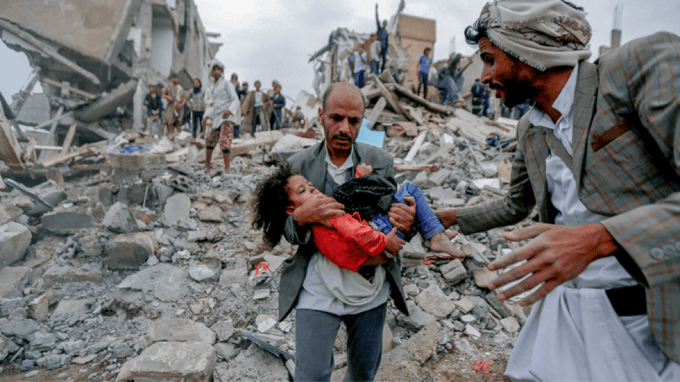
The far-reaching effects of America’s War on Terror may have contributed to the deaths of some 4.5 million people, according to new research by Brown University’s ‘Costs of War’ project. While many of the fatalities were the direct result of violent conflict, indirect causes such as economic collapse and food insecurity have taken a far greater toll.
Published on Monday, the study examines the long-term impact of the “post-9/11 wars” and the “devastating indirect toll” inflicted in Afghanistan, Iraq, Pakistan, Syria, Yemen, Libya and Somalia – all nations subject to US military intervention since 2001.
“Some of these people were killed in the fighting, but far more, especially children, have been killed by the reverberating effects of war, such as the spread of disease,” the paper said. “These latter indirect deaths – estimated at 3.6-3.7 million – and related health problems have resulted from the post-9/11 wars’ destruction of economies, public services, and the environment.”
Though the researchers acknowledged that the true total figure remains unknown, the study reviews a wide range of factors contributing to mortality. Those include economic collapse and the resulting loss of livelihood for local residents, the destruction of health infrastructure and public services, environmental contamination, as well as other cultural effects of war that can lead to further violence down the line.
“While this research does not ascribe blame to any single warring party or factor, and neither does it suggest the full death count is quantifiable, a reasonable and conservative estimate suggests that at least 4.5 million people have died in the major post-9/11 war zones,” the study concluded.
It went on to stress that “body counts are complicated and controversial,” and that tallying deaths from indirect causes is even more difficult, suggesting its figures are merely a tentative estimate based on a variety of sources.
The researchers found staggering levels of child malnutrition in some of the affected countries, with Afghanistan and Yemen topping the list. In the wake of Washington’s two-decade military occupation, more than 3 million Afghan children are now experiencing wasting, a symptom of severe, potentially life-threatening malnutrition.
Last year, Doctors Without Borders warned of a “worrying increase” in Afghanistan’s malnutrition rates, citing “the suspension of international aid” as among the primary causes. A special representative for the United Nations, Dr. Ramiz Alakbarov, described the situation as “almost inconceivable,” adding that up to 95 percent of Afghans were “not eating enough food, with that percentage rising to almost 100 percent for female-headed households.”
UN emergency aid coordinator Martin Griffiths has also attributed the crisis in Afghanistan, in part, to international sanctions and the seizure of government bank accounts following the Taliban’s sudden rise to power in the summer of 2021.
The study found that more than 2 million children in Yemen were also suffering from wasting following eight years of brutal bombings by Saudi Arabia and its allies, which have all but crippled the country’s healthcare sector. Riyadh has received indispensable support from the United States throughout the conflict despite countless reports of attacks on civilians and infrastructure, including hospitals, clinics, homes, factories, farms and bridges. A UN estimate in late 2021 suggested some 377,000 people had been killed in Yemen since the war erupted in 2015, with 70 percent thought to be children under the age of 5.
The Costs of War authors said the study aimed to “convey the scale of the suffering” in the war-torn nations, stating the “urgent need to mitigate the damage” inflicted by US military interventions and their long-term and indirect consequences. They added that additional research is needed on the subject, voicing hopes such work could “prevent further loss of life,” as America’s post-9/11 wars “are ongoing for millions around the world who are living with and dying from their effects.”
Blair knew Iraq bombing was illegal but ordered it anyway – media

Tony Blair and Bill Clinton at the National Constitution Center in Philadelphia, Pennsylvania, September 13, 2010 © AP / Matt Rourke
RT | April 17, 2023
Former British Prime Minister Tony Blair ordered the 1998 bombing of Iraq despite repeated warnings that such a move was unlawful, according to documents published by Declassified UK on Monday. Blair would follow the same template – insisting that illegal military action was legal – when the UK invaded Iraq in 2003.
The US and UK launched a four-day bombing campaign against Iraq in December 1998, after then-US President Bill Clinton accused Saddam Hussein of breaching commitments to the UN and developing weapons of mass destruction. As many as 1,400 Iraqi soldiers were killed in strikes on around 100 military facilities.
In the runup to the bombings, Blair was repeatedly told by his advisers that using force against Iraq would be illegal without a resolution from the UN Security Council, according to documents from the National Archives cited by Declassified UK, an investigative outlet that focuses on Britain’s military and intelligence agencies.
Attorney General John Morris reportedly told Blair in November 1997 that obtaining a statement from the Security Council would be “an essential precondition” to military action, while Blair’s private secretary, John Holmes, told the prime minister that British law officers and Foreign Secretary Robin Cook had a “serious problem about using force unless the Security Council declares that Iraq is in ‘material breach’ of previous resolutions.”
When the law officers refused to authorize the military to draw up targeting plans, Blair reportedly wrote to Holmes, stating that he found their argument “unconvincing.”
Blair continuously received warnings throughout 1998, the report alleged, with Cook’s private secretary writing to Holmes that February to warn that “the negative implications for international support if we resort to military action without a new resolution would be serious.”
When Blair announced military action to Parliament in November, he declared: “I have no doubt that we have the proper legal authority, as it is contained in successive Security Council resolution documents.” British officials claimed that a 1990 resolution authorizing UN members to force Hussein’s army out of Kuwait gave them permission to intervene again in Iraq, an argument that only the US, Japan, and Portugal supported.
According to the documents, Blair saw bombing Iraq as essential to maintaining his close relationship with Clinton. In a meeting with advisers in November, he supposedly said that failing to intervene would cause “extreme damage” to US-UK relations. That same day, even as his own aides maintained that intervention was illegal, Blair told Clinton that the US “could count on our support.”
Five years later, Blair would find himself in the same situation, when he falsely claimed that Hussein was harboring weapons of mass destruction and invoked earlier Security Council resolutions to justify invading Iraq. Again, Blair was warned by his attorney general that military action would defy international law, and again he pressed ahead regardless.
More than a decade later, a public inquiry found that the legal case for the invasion was “far from satisfactory,” while then-UN Secretary General Kofi Annan maintained from the outset that the war was “illegal.”
RFK Jr: ‘The Neocon Projects’ in Iraq and Ukraine Have ‘Made a Laughingstock of U.S. Military Power and Moral Authority’
By Chris Menahan | InformationLiberation | April 4, 2023
Neocon control of America has led to the collapse of American global hegemony and the shredding of our nation’s moral authority, according to Robert F. Kennedy, Jr.
“The collapse of U.S. influence over Saudi Arabia and the Kingdom’s new alliances with China and Iran are painful emblems of the abject failure of the Neocon strategy of maintaining U.S. global hegemony with aggressive projections of military power,” Kennedy said Monday on Twitter, sharing an article from Reuters on OPEC+ cutting production to spike the price of oil in defiance of the Biden regime.
“China has displaced the American Empire by deftly projecting, instead, economic power,” Kennedy continued. “Over the past decade, our country has spent trillions bombing roads, ports, bridges, and airports. China spent the equivalent building the same across the developing world.”
“The Ukraine war is the final collapse of the Neocon’s short-lived ‘American Century.’ The Neocon projects in Iraq and Ukraine have cost $8.1 trillion, hollowed out our middle class, made a laughingstock of U.S. military power and moral authority, pushed China and Russia into an invincible alliance, destroyed the dollar as the global currency, cost millions of lives and done nothing to advance democracy or win friendships or influence,” Kennedy said.
Kennedy is absolutely correct.
His point was further underlined last month when Mexican President Andres Manuel Lopez Obrador went off on the U.S. State Department for accusing Mexico of “human rights abuses” when the Biden regime is working to imprison former President Donald Trump, extradite Julian Assange and bombed the Nord Stream pipelines.
Saudi, Iran, Syria envoys meet in Oman
MEMO | April 4, 2023
The ambassadors of Saudi Arabia, Iran, Syria and Iraq held a meeting in the Gulf country of Oman on Tuesday, according to Iraqi Ambassador, Qais Saad Al-Amiri, Anadolu News Agency reports.
The diplomats exchanged views about regional affairs during the meeting hosted by Al-Amiri “in an atmosphere of optimism and familiarity among the attendees,” the Iraqi Embassy in Muscat tweeted.
Last month, Saudi Arabia and Iran announced the restoration of their diplomatic relations during talks hosted by Beijing, a deal called a diplomatic coup by China.
The two sides are expected to open embassies in each other’s capitals within two months since the deal was signed on 10 March.
Talks are also under way between Saudi Arabia and Syria to resume consular services in the two countries, according to the Saudi Foreign Ministry.
Large quantities of US weapons lost, stolen in Iraq, Syria: Report

The Cradle – March 31 2023
Hundreds of thousands of dollars in US artillery equipment, unspecified “weapons systems,” and specialized ammunition meant for US forces in Syria and Iraq have been stolen in recent years, The Intercept reported on 30 March.
According to criminal investigations files obtained under the Freedom of Information Act by The Intercept, at least four large-scale thefts and one loss of US equipment valued at some $200,000 have occurred in Iraq and Syria between 2020 and 2022. The lost items include 40mm high-explosive grenades stolen from US Special Forces.
The losses continue a previous pattern. The Intercept notes further that a 2020 audit by the Pentagon’s inspector general found that Special Operations Joint Task Force–Operation Inherent Resolve, the main unit that partners with the Kurdish-led Syrian Democratic Forces (SDF) to illegally occupy northeast Iraq, did not properly account for $715.8 million of equipment purchased for the SDF.
The recent failure to prevent the theft of, and account for, US-supplied weapons is concerning because this previously played a key role in the rise of Al-Qaeda affiliated groups, including the Nusra Front and ISIS, in Iraq and Syria.
In the spring of 2015, an extremist coalition led by the Nusra Front successfully conquered Syria’s Idlib governorate, in large part thanks to US-manufactured and supplied TOW anti-tank missiles. The missiles were originally supplied to Free Syrian Army (FSA) groups working with closely with Nusra.
When Russia intervened in the Syria conflict to prevent the fall of the government to Al-Qaeda groups – including Nusra, ISIS, and Ahrar al-Sham – a few months later, in September 2015, US officials drastically escalated TOW missile shipments to FSA units working with these groups.
When journalist Sharmine Narwani asked why US-supplied weapons allegedly meant for FSA groups were showing up in the hands of the Nusra Front, CENTCOM spokesman Lieutenant Commander Kyle Raines responded: “We don’t ‘command and control’ these forces – we only ‘train and enable’ them. Who they say they’re allying with, that’s their business.”
ISIS was also a major beneficiary of US-supplied weapons. Conflict Armament Research (CAR), a UK-based organization that tracks the supply of weapons into conflict-affected areas, reported that “Unauthorised retransfer – the violation of agreements by which a supplier government prohibits the re-export of materiel by a recipient government without its prior consent – is a significant source of [ISIS] weapons and ammunition. The US and Saudi Arabia supplied most of this material without authorization, apparently to Syrian opposition forces.”
By way of example, CAR noted that it had recovered US-supplied anti-tank missiles used by ISIS in Ramadi in February 2016. CAR confirmed that the missiles had been exported from the United States in December 2015. This indicates that the weapons were diverted to ISIS “in a matter of days or weeks after their supply.”
The people who brought you the Iraq war loudly support arming Ukraine. Where will this lead?
By Andrey Sushentsov | RT | March 30, 2023
This year’s twentieth anniversary of the illegal Iraq invasion paradoxically coincided with major international events. Xi Jinping, General Secretary of the Central Committee of the Communist Party of China, was in Moscow on the day, while a Russia-Africa Parliamentary Forum opened at the same time.
In 2003, at the height of its power, the US proclaimed its “unipolar moment” in which it would dominate unchallenged, needing no allies and tolerating no objections from adversaries. History, it was believed, had a single purpose, and they would stop at nothing to achieve it. Indeed, American military, political and economic dominance seemed total at the time, echoing the sentiments of Henry Kissinger, who a few years earlier had written “America at the Apex.” Twenty years later, we are witnessing the flowering of multi-polarity: in Moscow, the General Secretary of the Central Committee of the Communist Party of China was talking to the Russian President, two countries contributing to a change the world has not seen in a hundred years. This transience of world history shows how quickly historical cycles change, but it is also important that the US itself, through its actions in different parts of the world, is accelerating its course.
One of the most important strategic mistakes made by Washington was the invasion of Iraq. Based on a false pretext and the deliberate misleading of the international community, it led to a series of significant war crimes, a catastrophic civil war, the shattering of Iraqi statehood and enormous repercussions for the entire Middle East. Just a few years of American presence in Iraq resulted in huge numbers civilian deaths, indiscriminate use of force, and the destruction of several cities, including Mosul. During the evacuation of the Russian embassy amid the 2003 US invasion, a convoy of diplomats came under American fire and several were injured. US private military contractors, who at one point had the same presence in the country as official troops, committed a number of war crimes. The abuse of prisoners by the US military at Abu Ghraib prison near Baghdad has been well documented. When the International Criminal Court raised the question of American citizens being charged over offenses in Afghanistan and Iraq, the US responded that it would prosecute the judges who raised the issue and that they should withdraw their initiatives immediately.
Arguably the greatest crime of the US in Iraq has been to create a civil war that has resulted in a terrible number of casualties with estimates ranging from 600,000 to one million.
From 2005 to 2007, the country’s population curve flattened, despite the fact that it has always had one of the highest birth rates in the region. The dismantling of the central government triggered geopolitical processes in the region and power in the formerly Sunni-ruled country fell into the hands of the Shia Arab majority, which began a rapprochement with Shia Iran. Since then, Tehran’s strategic position in Iraq has remained significant.
Some of the consequences of the US invasion have backfired as well. For example, the fight against terror led to an increase in the influence of ISIS, an organization banned in Russia, in Iraq. Unexpectedly, Iran’s strengthened role in the country meant that 150,000 US troops were unable to control the situation in Iraq, while a few dozen Iranian diplomats in the embassy in Baghdad were quite capable of doing so. The metastasis of the Arab Spring, which began to spread to various countries in the region, was also one of the consequences of the Iraq war.
Meanwhile, US financial costs for the war are estimated at several trillion dollars. Overall, the politically unsuccessful operations in Iraq and Afghanistan have led to a decline in American influence and status in the region, as evidenced by the recent restoration of diplomatic relations between Saudi Arabia and Iran, mediated by China.
The Americans formulated a reasonable objective for the military operation as early as 2007. It was voiced by General David Petraeus at a US congressional hearing. In response to a question about American interests in the country, he said, “Our purpose is not to create a Jeffersonian democracy, our purpose is to create the conditions for our troops to withdraw.” The implication was that pulling out should not look like defeat. At the time, this reasoned objective was well in line with American interests and showed the depth of the strategic error the Americans had made in preparing for the 2003 invasion.
Today, many of those responsible for that war – and their media and academic cheerleaders – are now loudly supporting Washington’s position on Ukraine.
It’s unlikely that the impact of their actions will be any different this time.
Andrey Sushentsov is the Valdai Club program director.
Featured Video
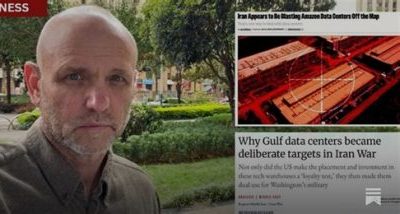
Iran spent $1 million to wipe out $30 billion in data center plans, and take down Amazon in the ME
or go to
Aletho News Archives – Video-Images
From the Archives
A short history of British torture
ICC | December 2005
When the House of Commons was debating how much to increase the time limit for detention without trial the question of torture came up. Officially this was limited to the nice considerations of whether it was all right to send people to places where torture is used and whether Britain can use information collected by the use of torture in other countries. This discussion gave an impression of democratic Britain as the home of civilised behaviour where the very idea of torture is repugnant to our legislators – unlike, say, the US with its secret CIA jails… In reality, the British state has a long history of using and developing a whole range of torture techniques. … continue
Blog Roll
 Aletho News
- Iran spent $1 million to wipe out $30 billion in data center plans, and take down Amazon in the ME
- Zionist billionaire pressure to silence Macklemore sparks exodus from Ed Sheeran tour
- House Votes to End Iran War for Third Time
- North Korea Slams US Plan for ‘AUKUS 2.0’ with South Korea and Japan
- Prolonging US-Iran Conflict Not Meeting Interests of Int’l Community – China’s Wang Yi
- EU bans former Zelensky aide from parliament
- NATO-backed Kosovo separatist ‘responsible for war crimes’
- US destroying international space law
- SCO Calls for Binding Global Deal to Prevent Arms Race in Space
- Iran & Its Allies Are Threatening Every Route for Saudi Oil
- If Americans Knew
- Groups urge Americans to support Van Hollen legislation on Israel’s killing of Americans & Palestinians
- Trump administration plans to send 40,000 tons of bombs to Israel: report
- Sanctions Target Iran’s Government, But Kill Hospitalized 23-Year-Old Woman
- An alternative view on the book “Israel’s Lobby: America in the Grip of a Foreign Power”
- Ed Sheeran’s band Beoga, other opening acts quit tour after Macklemore was dropped over his pro-Palestinian comments
- The assassination attempt on President Trump in Butler and the various Israeli connections to it
- “We Want That the Whole Land Be Jewish”
- BREAKING: Building collapse in Gaza kills at least 20 as they sleep – Daily Update
- ‘School is Life’: 1.5 Million Palestinian Children Face Fourth Year of Shattered Education
- Pentagon admits Iran war caused ammunition shortages, cost US $33.4bn
- No Tricks Zone
- Economic Masterminds: German Socialists Suggest Taxing Productivity Gains Stemming From Using AI
- The South China Sea Has Not Been Cooperating With The Climate Change Narrative
- Energy Crisis: Germany Enters Heating Season With Historically Low Gas Reserve Fill Levels
- New Study: The Antarctic Ice Sheet Gained Mass From 2020-2024 Due To Staggering Snow And Ice Accumulation
- Study: Ocean Heating Rates From Thousands Of Years Ago ‘Dwarf’ Modern Ocean Heating Rates
- Climate Extremists Target, Attack Large-Scale Power Grid Infrastructure In Germany!
- New Study: Antarctic Ice Melt Has Contributed Less Than 1 Centimeter To Sea Level Rise In The Last 30 Years
- Fear Of Debate: Alarmist German Climate Scientist Calls On Mainstream Media To Discredit Skeptic Voices
- End-Of-August Arctic Sea Ice Extent Hasn’t Fallen In 20 Years, Official Data Show!
- News-Making Nepal Region Has Had As-Warm Or Warmer Periods Than The 2000s In The 1600s, 1700s, 1800s
 Aletho News