Hezbollah: Terrorist Bombings Suspiciously Return to Iraq after Official and Public Calls for Withdrawal of US Occupation Troops
Hezbollah Media Relations | Al-Manar | January 21, 2021
Hezbollah firmly condemned the twin terrorist blasts which rocked Baghdad on Thursday and claimed dozens of martyrs and wounded after targeting a crowded market in the city.
In a statement issued on Thursday, Hezbollah considered it as suspicious that the terrorist bombings have returned to Iraq after a period of stability and amid a surge of popular and official demands for the withdrawal of the US occupation forces from the country.
The US administration responded to those calls by imposing more sanctions on the Hashd Shaabi Committee and its dear commanders in order to expose Iraq to the threats of ISIL and other terrorist groups, according to the statement.
In response to the brutal crime, the Iraqis must be alert and remain committed to, unity, independence, freedom, rejection of the US occupation, and exertion of more efforts to pursue the remnants of the terrorist groups in the country, the statement emphasized.
Hezbollah finally offered deep condolences to the Iraqi officials, people and the martyrs’ families, hoping that Holy God grants the wounded a speedy recovery and the entire Iraqi nation security as well as stability.
Iraq grants $20bn projects to Chinese companies
MEMO | January 17, 2021
Iraq has given construction projects worth $20 billion in the southern province of al-Muthanna to a consortium of Chinese companies, an Iraqi official said on Sunday, Anadolu Agency reports.
“The projects include the construction of a power station and a factory for floors and porcelain with a production capacity of 32,000 m2 per day, and a factory for ceramic walls and façades with a capacity of 36,000 m2 per day,” Adel Al-Yasiri, the head of the al-Muthanna Investment Authority, said in a statement.
He added that an initial approval has been granted to establish the projects.
“The first phase of the projects amounts to $2 billion where two sites have been prepared near the Samawah refinery for the companies to complete the remaining procedures,” he said.
Other projects include the construction of a sanitary ware factory with a capacity of 360 m3 per day, a ceramic factory for accessories with a capacity of 108,000 m2 per month, and a factory for papers and 125 million cardboards per month.
The Kurds have Once Again been Abandoned by their “American Brothers”
By Valery Kulikov – New Eastern Outlook – 28.12.2020
Yet again thrown by their “older American brothers” to the winds of fate, the Kurds in the Levant nowadays are not living through the best of times. On the border running between Syria and Iraq, a new armed conflict entailing human casualties is unfolding, one which demonstrates, among other things, a clear lack of unity among the Kurds, and that so-called Kurdistan is divided into parts ruled by various leaders, many of whom are competitors, and often almost irreconcilable enemies. Against this backdrop in the past few years, fierce battles between Kurdish formations have begun to occur more and more frequently, with the warring parties, while losing their fighters, the warring parties, concentrating their forces along the border in anticipation of new clashes.
The Syrian Kurds blame their Iraqi compatriots from the Peshmerga group for causing this conflict, including preparing for war in the Syrian Arab Republic. So, according to the position announced in ANF News by the Syrian Kurds, since October the Kurdistan Democratic Party (KDP) has been organizing provocations in South Kurdistan. The KDP, controlled by the family of Iraqi Kurdish leader Barzani, has been accused of both working closely with Turkey in various areas, including intelligence gathering, spreading propaganda, and logistics, and fueling domestic conflicts that could lead to civil war.
In October, Peshmerga proclaimed that an attack had been committed by Syrian Kurds on an oil pipeline, which resulted in oil exports from Kurdistan to Turkey being suspended.
On November 4, local media outlets reported that armed clashes broke out between Peshmerga forces and Kurdistan Workers’ Party militants in the area of Duhok, which resulted in the death of one Iraqi Kurdish fighter and injuries for three others.
On December 15, General Mazloum Abdi, who is the commander-in-chief of the Kurdish-Arab “Syrian Democratic Forces”, which was created by the United States, accused Iraqi Kurds of attacking and wounding three SDF members.
On December 16, the Iraqi Kurdistan regional authorities announced that Syrian armed groups from the YPG (which forms the backbone of the SDF) attacked bases and positions held by the Iraqi Peshmerga near the border. Syrian Kurdish leaders denied these accusations, calling them false, and leveled similar accusations toward Iraqi tribesmen themselves.
Local observers note that Iraqi Kurds are being transferred to the Syrian front with support provided by Turkish combat drones. It is worth noting that Ankara considers the YPG to be the Syrian wing of the Kurdistan Workers’ Party, which is labeled as a terrorist group in Turkey; this was used as the rationale for it to invade Rojava last October, displacing hundreds of thousands of civilians. Selahattin Demirtas, the co-chairman of Turkey’s largest Kurdish People’s Democratic Party, has been behind bars for the fourth year on charges of “supporting terrorism”. To mitigate the influence of this Kurdish movement, which is represented in the Turkish parliament, and to sow more discord in the Kurdish community, Turkey is preparing to organize a new Kurdish party with support from the country’s ruling Justice and Development Party.
 Regarding the military potential possessed by Kurdish groups in Syria and Iraq, it should be specified that both sides have virtually full-fledged armed forces that have been equipped with help from “foreign players”. Washington and Ankara are the ones helping the Iraqi Kurds. The Syrian Kurdish groups were financed, armed, and trained by the United States and its allies in the anti-terrorist coalition. At the same time, it is evident that both sides have been lent support by Washington, as well as used by it in the struggle for influence, power, and oil – both in Syria and Iraq. On top of that, the United States essentially put its seal of approval on the defeat of the Kurdistan Workers’ Party – a party recognized by them as terrorists in the European Union – in the Syrian Arab Republic and Iraq, where the main bases that the PKK has are located since their forces were defeated in Turkey.
In recent years, Trump has effectively lost interest in supporting the Kurds in the region, and even announced in October 2019 that American troops would be withdrawn from the area, and this time would not defend the Kurds. After that, Turkish aircraft started to attack the region and the positions that were held by the Kurds.
Donald Trump stated his position on the Kurds and the reason why the United States is abandoning them yet again on his Twitter page a year ago, noting in particular that the Kurds, an Iranian ethnic group, did not help the United States during WWII – including during the invasion of Normandy. It seems that the US president clearly drew on this kind of “extensive expertise” in WWII history from an article by Kurt Schlichter in the publication Townhall – which praises Trump’s policies – that stated: “The Kurds helped destroy DAESH (a terrorist group banned in the Russian Federation) … But let’s be honest: the Kurds did not come to help us in Normandy, Incheon, Khe Sanh, and Kandahar”. Well, what else can be expected for the Kurds from their “elder American brothers”?
The processes among the Kurds, which began in 2019 after another episode involving betrayal by the United States, were described in sufficient detail by The New York Times. Today, these processes have intensified, as have Turkey’s operations against the Kurds in Syria. One of the very hot spots in this regard was the city of Ain Issa in the northern part of the Raqqa Governorate, where Turkey has stepped up its shelling of Kurdish positions. For example, on the evening of December 17, the Turkish army and militants allied with it struck a powerful blow to the positions held by the predominantly Kurdish “Syrian Democratic Forces” in the area of the city of Ain Issa, attacking two nearby villages, and this forced SDF groups to abandon these positions and regroup their forces to keep the enemy from advancing any further. On the night of December 22, pro-Turkish forces ratcheted up the intensity of their strikes on the city of Ain Issa and its environs, and the Turkish military itself switched to using heavy artillery to strike the northern part of the Raqqa Governorate.
Under these conditions, representatives of the Russian and Syria military held talks on December 22 with representatives of Kurdish autonomous organizations – with participation on the part of Turkish officers – to try to ease tensions, but the parties did not reach any agreement. Representatives from the Turkish military demanded the withdrawal of all militants from the SDF, promising to stop the attacks by pro-Turkish criminal groups on Ain Issa if this occurs, although Ankara had previously denied that the militants were acting on its instruction.
The situation remains filled with tension, despite the measures taken by Russia to help foster stabilization.
The subject of Israeli hegemony over US must be addressed

By Walt Peretto | Press TV | December 25, 2020
It’s pardon season for President Trump. The likely outgoing president has issued 15 pardons that include two members of the Russian investigation and four convicted murderers who worked for the private security firm Blackwater.
These four were convicted of murdering 14 Iraqi civilians in 2007. Private security corporations such as Blackwater (since renamed Academi) have played a major role in war zones since the invasions of Afghanistan and Iraq after the false flag events of 9/11/2001. They are also suspected of participation in other domestic false flag events that include the Boston Marathon event in 2013.
These pardons by Trump will facilitate the use of private security firms in the near future both domestically and abroad. Further lockdowns in the US and crushing strains on small business may create unrest which could overwhelm municipal law enforcement and the federal government may choose to hire private security to deal with such occurrences. Overseas, tensions may increase in Syria as the new Democratic president may resurrect the goal of toppling President Assad which would likely be carried out by hiring private mercenaries which the West has done in the past.
I think these pardons by Trump send a signal to private security firms that their actions will not be hampered by long prison sentences for employees who engage in murder. Similar to municipal policing in which cops that murder are virtually never convicted. If the US does rededicate itself to regime change in Damascus, it’s hired security forces and clandestine paid terrorists don’t want restraints like convictions of murder in the courts.
Trump’s pardon of two people involved with the Russiagate fiasco makes sense since Russian collusion was never proven and the whole story was really a distraction for 4 years designed to take people’s eyes off of leaked emails involving Hillary Clinton, the Podesta brothers, Barack Obama and others that were quite damning if they were thoroughly investigated.
For four years the left-leaning media in the United States filled the news with accusations of Russian collusion in US elections and other illegal and immoral interactions between Russian officials and the Trump administration.
This also kept the eye off the elephant in the room called Israel which has seized control of the presidency, the Congress, the Judiciary, the economy through the FED, and the mainstream media.
China has provided another useful distraction from Israeli influence in America. If one honestly examines recent US presidential administrations — don’t strain to find any Chinese or Russian nationals in positions of power in the US federal government. Dual US/Israeli citizens are abundant and ubiquitous in the Trump administration and it will be similar in the Biden administration if he makes it to the White House. The subject of Israeli hegemony over the United States is a subject no one seems to want to address.
Judging from the proposed COVID Stimulus Package which allocates billions of dollars to other countries, this proves that the globalist intention is to bleed the United States dry until it submits wholly to the international cabal of psychopaths that includes Klaus Schwab and his World Economic Forum who are attempting to reset the world into a one-world system led by global organized psychopathy.
US plan to blacklist Iraqi Badr Organization as terrorist meant to protect Israel: Official
Press TV – December 13, 2020
A senior member of the Badr Organization, whose group is a part of the Iraqi Popular Mobilization Forces (PMU), also known by their Arabic name Hashd al-Sha’abi, has slammed Washington’s attempts to classify his organization as terrorist, stressing that such measures are meant to protect the Israeli regime.
“We do not care about the White House’s efforts to place the Badr Organization on the [so-called] US terror blacklist. Badr is an organization that has its own supporters and institutions. It is represented by a parliamentary faction and has more than 50 legislators in Fatah (Conquest) Alliance,” Qusay al-Anbari, a spokesman for the organization, told Arabic-language al-Ahad news agency on Saturday.
He added, “Badr Organization is a part of the Iraqi political system and nation, and will not be affected by such evil plots. Everyone knows that the United States is working to protect the Zionist regime through various means, and is fighting resistance groups to prevent them from defending Palestine and the Arab world.”
The remarks come as the US Congress is seeking to enact a new legislation that would designate the Badr Organization as a terror group, according to a copy of the bill obtained exclusively by the Washington Free Beacon newspaper.
The newspaper said that a member of the House Foreign Affairs Committee, Representative Joe Wilson, is leading such efforts.
Back on October 18, a political adviser to Iraqi officials and leading member of the State of Law Coalition said the United States is trying to eradicate Hashd al-Sha’abi by force and has even devised an action plan for such a purpose.
Saad al-Muttalibi told Arabic-language al-Nujaba television network in an interview at the time that not only had Iraqi authorities been informed of the plan, but also some political factions.
Muttalibi noted that a number of US state institutions have come to the conclusion that Hashd al-Sha’abi can only be removed from Iraq’s arena by military force.
He went on to say that Washington intends to assassinate some high-ranking Hashd al-Sha’abi commanders and instigate clashes with other Iraqi armed forces as part of preparation for the total annihilation of the PMU.
Hashd al-Sh’abai fighters have played a major role in the liberation of Daesh-held areas to the south, northeast and north of the Iraqi capital Baghdad, ever since the terrorists launched an offensive in the country in June 2014.
Back in November 2016, the Iraqi parliament approved a law giving full legal status to the fighters. It recognized the PMU as part of the national armed forces, placed the forces under the command of the prime minister, and granted them the right to receive salaries and pensions like the regular army and police forces.
On March 27, the New York Times reported that the Pentagon had ordered a secret directive, which called on US military commanders to prepare a campaign against Kata’ib Hezbollah, which is part of Hashd al-Sha’abi.
But the United States’ top commander in Iraq at the time, Lieutenant General Robert P. White, warned that such a campaign could be bloody and counterproductive.
China to bail out Iraq in multibillion dollar oil deal
MEMO | December 10, 2020
Iraq is currently deciding whether to go ahead with a multibillion dollar oil deal with China which will bail the country out as part of the effort to solve Baghdad’s worsening economic crisis. The deal comes after SOMO, Iraq’s state agency in charge of oil exports, welcomed bids from various oil traders and companies in a letter issued last month.
That resulted in “several offers” being made by various companies. These were then evaluated by Prime Minister Mustafa Al-Kadhimi, reported Bloomberg, which quoted cabinet spokesman Hassan Nadhim.
In the Iraqi government’s bid conditions, SOMO said that the successful company would purchase four million barrels of oil per month, or around 130,000 per day, with the first year’s supply being paid for up front. The deal is meant to last for five years.
In return for supplying oil to the winning bidder, Iraq will receive $2 billion for a fraction of the promised quantity of oil, with the balance paid later. The barrels of oil are effectively security for a loan.
The winning bidder turned out to be ZhenHua Oil Co., a major state-owned company in China with ties to the Chinese military. It is the latest example of China’s international lending strategy, in which state-controlled banks and trading organisations lend money to oil-rich countries struggling to keep afloat financially, such as Venezuela, Ecuador, Angola and now potentially Iraq.
If Prime Minister Al-Kadhimi signs the deal, then it would not be the first time that the company has dealt with Iraq. ZhenHua Oil, which trades around 1.3 million barrels per day of oil and other products, began a joint-venture with SOMO back in 2018 in order to help market Iraqi oil in China to increase exports. That venture was later scrapped.
Iraq’s economy and oil industry suffered greatly from the oil price crash earlier this year, after Russia and Saudi Arabia triggered an oil price war in March over a dispute over oil production.
In September, Iraq’s crude oil exports fell by six per cent and last week its oil minister acknowledged that the industry is in a critical condition due to the coronavirus pandemic.
See Also:
Iraq eyes construction deals with China in return for oil sales
Acting US Def Sec Miller Formally Announces Plans to Cut Troops in Afghanistan, Iraq to 2,500 Each
By Daria Bedenko – Sputnik – 17.11.2020
Earlier on Monday, CNN reported, citing two US officials, that Pentagon anticipated President Donald Trump to issue an order this week regarding troop withdrawal from Iraq and Afghanistan by 15 January.
Acting Defence Secretary Christopher Miller announced on Tuesday that President Trump will cut the number of American troops in Iraq and Afghanistan to 2,500 each by 15 January 2021.
“By 15 January, 2021, our forces, their size in Afghanistan will be 2,500 troops. Our force size in Iraq will also be 2,500 by that same day,” Miller told reporters during a Defence Department briefing.
The decision falls in line with Trump’s intention to finish “endless wars”, as Miller said the moves were announced to “bring the wars in Afghanistan and Iraq to a successful and responsible conclusion and to bring our brave service members home”.
“This is consistent with our established plans and strategic objectives, supported by the American people, and does not equate to a change in US policy or objectives”, Miller outlined.
Reaction to Troop Reduction Announcement
Shortly after the decision was announced, White House national security adviser Robert O’Brien said Trump hopes to bring all US troops from Iraq and Afghanistan home “safely and in their entirety” by May.
Republican Senate Majority Leader, Mitch McConnel, reacted to the announcement moments later, warning against any major changes in the US foreign or defence policy, including the troops drawdowns, in the coming months.
“It is extremely important here in the next couple of months not to have any earthshaking changes in regard to defense or for policy”, McConnell said.
Reports about the order to reduce troops in Afghanistan and Iraq emerged earlier on Monday, saying that a “warning order” to start planning the troops reduction was already released by Pentagon, despite warnings by then-Defence Secretary Esper against rapid withdrawal of the US forces from the countries.
Esper was replaced with Director of the National Counterterrorism Center Christopher Miller by Trump earlier this month.
Trump vs ‘Endless Wars’
It has been one of the key Trump’s pledges in his campaign to put an end to American “endless wars” in foreign countries, as he vowed to reduce the number of the US military forces in Iraq and Afghanistan.
In October, Trump tweeted that all US troops should be home by Christmas, with US National Security Adviser Robert O’Brien later saying that thousands of American servicemen were “on path” to, on the contrary, remain there.
In Iraq, there are estimated 3,000 US troops, and roughly 4,500 American military forces are stationed in Afghanistan.
After Washington reached a deal with the Taliban* in February, Trump began to withdraw troops from the country, with further withdrawal coinciding with September peace talks between the Taliban and the Afghan government in Qatar.
Sorry, Google and World Bank, but Middle Eastern Crops Keep Thriving
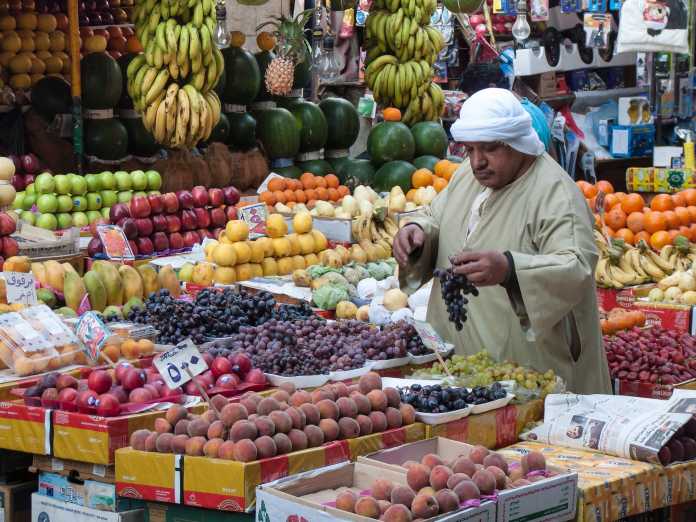
By H. Sterling Burnett | ClimateRealism | November 4, 2020
Google News today is promoting articles (see the Google-promoted PhysOrg article here, for example) about a speculative World Bank “study” claiming climate change is threatening crop production in the Middle East. The World Bank study is full of speculation but short on facts. Real-world data show crop yields per acre and total crop production are consistently and dramatically rising in each of the Middle East countries examined by the World Bank study.
In its study, titled “Water in the Balance,” the World Bank says, “[w]hile information about water scarcity at present and in the future is available there is little knowledge of what this increasing scarcity means for Middle Eastern … food security. Agriculture will suffer because of climate change and water scarcity….”
In particular the World Bank asserts water scarcity caused by climate change will reduce farm production in Iran, Iraq, Jordan, Lebanon, Syria, and Turkey. The available evidence strongly suggests that will not happen.
Had the study’s authors examined real-world data concerning crop production in the Middle Eastern countries, they would have found, even amidst substantial strife in the region, crop yields and overall production have increased dramatically. More food is being produced even as thousands of acres of agricultural lands have been abandoned during regional conflicts.
Data from the U.N. Food and Agriculture Organization show during the period of modest warming since 1989:
- Cereal crop production in Iraq increased 91 percent, even as the acreage being harvested fell 5 percent.
- Cereal crop production in Iran increased 187 percent, while the acreage harvested increased by just 2.6 percent.
- Cereal Crop production in Jordan increased 15 percent, even as the acreage harvested declined 30 percent.
- Cereal Crop production in Lebanon increased 115 percent, while acreage harvested increased 30 percent.
- Cereal Crop production in Syria increased 22 percent, even as acreage harvested declined 66 percent.
- Cereal Crop production in Turkey increased 46 percent, even though acreage harvested declined 19 percent.
It is clearly good news – and not a climate crisis – that Middle Eastern countries have increased crop production despite the fact that many of them have been embroiled in internal political strife, outright civil warfare, and external conflicts. That good news is ignored in the World Bank’s doom-and-gloom report.
Global warming lengthens growing seasons, reduces frost events, and makes more land suitable for crop production. Also, carbon dioxide is an aerial fertilizer for plant life. In addition, crops also use water more efficiently under conditions of higher carbon dioxide, losing less water to transpiration. The latter fact should have allayed the World Bank’s concern about climate change induced water shortages leading to crop failure.
The benefits of more atmospheric carbon dioxide and a modestly warming world have resulted in 17 percent more food being available per person today than there was 30 years ago, even as the number of people has grown by billions. Indeed, the last 20 years have seen the largest decline in hunger, malnutrition, and starvation in human history.
Sorry, World Bank, Google, and PhysOrg, but that does not equate to a climate crisis.
H. Sterling Burnett, Ph.D. is managing editor of Environment & Climate News and a research fellow for environment and energy policy at The Heartland Institute. Burnett worked at the National Center for Policy Analysis for 18 years, most recently as a senior fellow in charge of NCPA’s environmental policy program. He has held various positions in professional and public policy organizations, including serving as a member of the Environment and Natural Resources Task Force in the Texas Comptroller’s e-Texas commission.
Iraq Forms Committee to Develop Timeline for Withdrawal of US Troops
Sputnik – 15.10.2020
The Iraqi authorities have formed a committee that will coordinate with the United States to develop the timeline for the withdrawal of US troops from the Middle Eastern country, the Iraqi Foreign Ministry said on Thursday.
“The meeting took place at the Foreign Ministry headquarters today, Thursday, October 15, 2020, in which a technical committee emerged to undertake the task of coordinating with the US side to schedule the redeployment of US forces outside Iraq,” the Iraqi Foreign Ministry wrote in a press release.
The decision was taken during a meeting involving Iraqi Foreign Minister Fuad Hussein, National Security Adviser Qassem Al-Araji, and a range of other security officials.
The establishment of the committee follows a series of meetings between US and Iraqi officials over the summer. In August, Prime Minister Mustafa al-Kadhmi travelled to Washington for talks with US President Donald Trump, and a three-year timeline was established for the US withdrawal.
In early January, the Iraqi parliament voted to expel all foreign forces from the country following the US decision to launch a drone attack near Baghdad International Airport that killed top Iranian commander Qasem Soleimani.
Featured Video
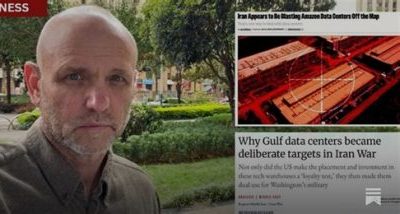
Iran spent $1 million to wipe out $30 billion in data center plans, and take down Amazon in the ME
or go to
Aletho News Archives – Video-Images
From the Archives
A short history of British torture
ICC | December 2005
When the House of Commons was debating how much to increase the time limit for detention without trial the question of torture came up. Officially this was limited to the nice considerations of whether it was all right to send people to places where torture is used and whether Britain can use information collected by the use of torture in other countries. This discussion gave an impression of democratic Britain as the home of civilised behaviour where the very idea of torture is repugnant to our legislators – unlike, say, the US with its secret CIA jails… In reality, the British state has a long history of using and developing a whole range of torture techniques. … continue
Blog Roll
 Aletho News
- Iran spent $1 million to wipe out $30 billion in data center plans, and take down Amazon in the ME
- Zionist billionaire pressure to silence Macklemore sparks exodus from Ed Sheeran tour
- House Votes to End Iran War for Third Time
- North Korea Slams US Plan for ‘AUKUS 2.0’ with South Korea and Japan
- Prolonging US-Iran Conflict Not Meeting Interests of Int’l Community – China’s Wang Yi
- EU bans former Zelensky aide from parliament
- NATO-backed Kosovo separatist ‘responsible for war crimes’
- US destroying international space law
- SCO Calls for Binding Global Deal to Prevent Arms Race in Space
- Iran & Its Allies Are Threatening Every Route for Saudi Oil
- If Americans Knew
- U.S. Makes, Israel Takes: The Real Story of U.S.-Israeli Military Cooperation
- Night raids rise in Palestine
- Tucker Carlson interviews Norman Finkelstein about Gaza
- Groups urge Americans to support Van Hollen legislation on Israel’s killing of Americans & Palestinians
- Trump administration plans to send 40,000 tons of bombs to Israel: report
- Sanctions Target Iran’s Government, But Kill Hospitalized 23-Year-Old Woman
- An alternative view on the book “Israel’s Lobby: America in the Grip of a Foreign Power”
- Ed Sheeran’s band Beoga, other opening acts quit tour after Macklemore was dropped over his pro-Palestinian comments
- The assassination attempt on President Trump in Butler and the various Israeli connections to it
- “We Want That the Whole Land Be Jewish”
- No Tricks Zone
- New Study: ‘Global Drought Shows No Detectable Recent Acceleration Under Climate Warming’
- Economic Masterminds: German Socialists Suggest Taxing Productivity Gains Stemming From Using AI
- The South China Sea Has Not Been Cooperating With The Climate Change Narrative
- Energy Crisis: Germany Enters Heating Season With Historically Low Gas Reserve Fill Levels
- New Study: The Antarctic Ice Sheet Gained Mass From 2020-2024 Due To Staggering Snow And Ice Accumulation
- Study: Ocean Heating Rates From Thousands Of Years Ago ‘Dwarf’ Modern Ocean Heating Rates
- Climate Extremists Target, Attack Large-Scale Power Grid Infrastructure In Germany!
- New Study: Antarctic Ice Melt Has Contributed Less Than 1 Centimeter To Sea Level Rise In The Last 30 Years
- Fear Of Debate: Alarmist German Climate Scientist Calls On Mainstream Media To Discredit Skeptic Voices
- End-Of-August Arctic Sea Ice Extent Hasn’t Fallen In 20 Years, Official Data Show!
 Aletho News