UN lashes out at Britain’s human rights record
RT | June 2, 2013
The UN’s torture watchdog has hit out at the British government for human rights abuses. In its harshest criticism yet of the British government, the panel warned that urgent action is needed for the country to meet international standards.
The UN Committee against Torture focused on human rights abuses during the so-called war on terror and the mistreatment of prisoners in British custody in Iraq. It also flagged up some 40 separate incidents on which the UK government must act.
The findings highlighted the British governments actions following 9/11 and the commission urged the British government to quickly establish an inquiry into whether detainees held overseas were ill-treated or tortured by British officials.
The report reads that the committee is “deeply concerned at the growing number of serious allegations of torture and ill-treatment, as a result of the state party’s military interventions in Afghanistan and Iraq.”
The UN team also slammed what they called “an escape clause” in the Criminal Justice Act (1988), which allows British officials to escape prosecution for inflicting severe pain or suffering if they can show that they had “lawful authority, justification or excuse” for doing so.
Another legal loophole the committee voiced concern about is the Intelligence Services Act (1994), which effectively insures that intelligence officers cannot be prosecuted within the UK once a warrant giving them lawful authority has been signed by a government minister.
The panel was disappointed at the failure to date to prosecute anyone for the torture of Iraqi prisoners and in particular the failure to convict anyone for the murder of Baha Mousa who died in British custody in 2003. Only one soldier received a one-year sentence for admitting inhumane treatment.
There was also concern with the government’s planned introduction of secret court procedures in July for issues that may affect national security under the Justice and Security Act. Closed Material Procedures as they are known make it easier to use hearsay evidence or evidence obtained through torture, the committee maintains. The system of Special Advocates – lawyers who are vetted and chosen by the government – “have a very limited ability to conduct a cross-examination and cannot discuss full content of confidential materials with their client thus undermining the right to a fair trial,” the report reads.
The watchdog also urged the UK government to halt the deportation of failed asylum seekers to Sri Lanka. The deportation of failed Tamil asylum seekers has led to their torture or ill-treatment on return and the UK government hasn’t changed its policy on the issue despite a ruling by the High Court in February ordering them to suspend deportations.
The government was criticized in its handling of the case of Shaker Aamer, the last remaining UK resident in Guantanamo. The committee regretted that despite the “best endeavors” of the UK to try and get him released “there are no encouraging signs of this happening soon”.
There were also accusations against the UK government on several issues connected with Northern Ireland. The Northern Irish justice system must abolish all non-jury trials the report concludes, adding that historical investigations into past misconduct, particularly of military officials, must not be delayed or suspended.
The committee asked that police officers only use tasers when they face “a real and immediate threat to life or risk or serious injury”.
There was also unease that the age of criminal responsibility in England, Wales and Northern Ireland has not been raised from 10-years, despite calls by more than 50 organizations for this to be done.
Further concerns were raised about the steady increase of the prison population over the past decade and the problem of overcrowding. To help rectify the issue the committee urged the government make wider use of non-custodial sentences.
In a further blow, committee members accused the UK delegation of being evasive when questioned about Britain’s human rights record during a two-day hearing in Geneva last month.
The British government was given a year to explain how it could improve its human rights record in 4 key areas: overseas torture, getting Shaker Aamer out of Guantanamo, stopping the forced deportation of Sri Lanka asylum seekers and setting up inquiries into past abuses in Northern Ireland.
Related article
Obama Distorts ‘Just War’ Principles
By Daniel C. Maguire | Consortium News | May 24, 2013
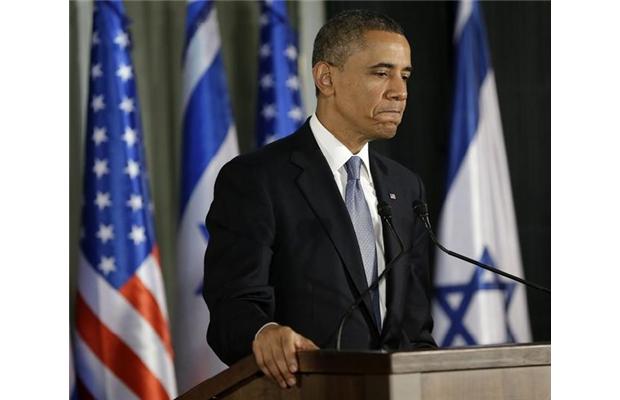 In his address on terrorism and America’s counterterrorism policy, President Barack Obama invoked the “just war” theory to justify the continued use of assassination by drones as America’s increasingly favored war policy. The President and most Americans need schooling on just what the “just war theory” (JWT) is.
JWT lays out the tests that state-sponsored violence must pass to be deemed morally defensible. JWT has its roots in the first tentative moves – in ancient Hebraic, Greek and Roman societies – away from total obliteration of the enemy, its people and its land as the goal of war. It was and is an effort to put some limits on collective violence.
According to JWT, there are six tests a war must pass to claim some moral justification. If the war fails on any of the six, that war is immoral and the killing it involves is murder.
1. A Just Cause: As ethicist David Hollenbach writes: “The only just cause is defense against unjust attack.” Aggressive, imperial or preemptive wars fail this test and open the door to international barbarism.
Drone attacks that kill “suspected terrorists” based not on due process proceedings but on “intelligence” agencies, do not pass this initial test. Those are the same agencies that gave us the fictional weapons of mass destruction in Saddam’s Iraq resulting in a decade of unjustified slaughter and havoc.
2. Declaration by Competent Authority: For the United States, proper declaration is defined in Article One, Section 8 of the U.S. Constitution which says that it is the prerogative of Congress “to declare war” and to “provide for the common Defence.” James Madison said that “in no part of the Constitution is more wisdom to be found than in the clause which confides the question of war and peace to the legislature and not to the executive department.”
The United States has not obeyed this part of the Constitution since December 1941. The constitutional requirement was alluded to at the onset of the Korean War but bypassed ever since. Instead Congress surrenders its right to declare war by giving blank check authorization to the president (whether Lyndon Johnson or George W. Bush) to go to war if he, in his royal wisdom, chooses to do so.
When President Bush was given authorization to use “force” after the 9/11 attacks, the decision to use kill-power was seen as entirely his and the wisdom of the Constitution was trashed. President Obama’s drone policy – sending unmanned aircraft around the world to kill people – continues to rely on this congressional abdication of responsibility.
The United States further defined proper declaration of war when it helped to draft and signed on to the United Nations Charter. As Richard Falk writes, that historic document outlawed state vigilantism and entrusted “the Security Council with administering a prohibition of recourse to international force (Article 2, Section 4) by states except in circumstances of self-defense, which itself was restricted to response to a prior ‘armed attack’ (Article 51) and only then until the Security Council had the chance to review the claim.”
This is called “the policing paradigm” and it would put upon states the communitarian and legal restraints imposed on use of violence by police and would also serve as a deterrent since to attack one was to attack all.
Briefing Congress before, or more often, after using state-sponsored drone violence mocks the right and abandoned duty of Congress to declare war. So does ignoring the UN Security Council.
3. Right Intention: This requirement of JWT involves honesty about the real reason for the violence and avoidance of excessive secrecy. It does not hide the truth and suppress the vox populi. It also does not substitute force for due process.
4. Non-combatant immunity: Drone warfare involves long-distance killing by remote control. It is disingenuous to say that drone usage honors non-combatant immunity. The targeted individual will rarely be found alone. The loose definition of who is and who is not a “militant” further belies the claims of sensitivity to civilian casualties.
5. Last Resort: Totally missing from President Obama’s May 23 address was the question why? Why do these targeted people hate us but don’t hate Sweden or Japan or Brazil. Why is killing them the answer when there has been little or no consideration of the grievances that lead them to engage in suicide attacks to hurt us?
Are we not stupidly striking at the bitter fruit of the tree while still nourishing its roots and thus guaranteeing more bitter fruit? If war is to be the last resort, shouldn’t we first ask what legitimate grievances animate the animosity toward our nation?
American economic supremacy has played a big part in producing a world where 82 percent of the world’s income goes to the top 20 percent, leaving the rest to face hardship or starvation. Our paltry foreign aid does little to alleviate world poverty and the world knows that.
As to the trouble zones in the Middle East, there is a question that is not permitted in our halls of political power or even in the American press. It was asked by Jesuit scholar John Sheehan who studied in the Middle East. His question: “Whenever I hear that Israel is our best friend in the Middle East I ask why is it that before Israel, we had no enemies in the Middle East?”
Our financial, political and military support for Israeli expansionism and militarism make us no friends in the Middle East or elsewhere in the world. It is also not good for Israel or for us to be Israel’s ever deferential enabler. Friends do not let friends drive off a cliff and Israel is doing just that by having started the nuclear arms race in the Middle East and with its policy of occupation and expansionism. It’s not friendly of us to keep paying for that.
In the Suez crisis of 1956, when President Dwight Eisenhower threatened cutback of aid if Israel did not retreat from its expansionism, Israeli officials agreed to retreat. When George H. W. Bush did the same in 1989 regarding settlements in Palestinian territory, the Israeli government again stopped, only to restart at the end of his term.
Tony Judt has called us Israel’s “paymaster.” When the paymaster makes demands – not feeble entreaties – the recipients listen.
6. Proportionality: War must do more good than harm, a proviso that is increasingly infeasible given the advances in weaponry. When drones are causing constant fear and dread for Pakistani children and their parents, are those elusive demons in the sky doing more good than harm? What good do we envision when we export terror into other nations’ homes?
Is it not past time to realize that our kill-power is not making us safe but sowing fear and enmity? In regard to that recognition, Obama’s May 23 speech is not reassuring.
Is American genius not up to the challenge of sensitive diplomacy, the kind that does not love its enemies but strains to understand their grievances? Are our fingers grown too rough with bludgeoning to undertake the needlepoint of peace-making diplomacy? Much of the world seems to think so.
~
Daniel C. Maguire, a professor of religious ethics at Marquette University, is author of The Horrors We Bless: Rethinking the Just-War Legacy, Fortress Press.
Related article
- PressTV: US Senate betrays US Constitution for Israel (jhaines6.wordpress.com)
US Security Company Seeks Dismissal of Abu Ghraib Torture Charges because Victims were not Allowed to Leave Iraq
By Noel Brinkerhoff and David Wallechinsky | AllGov | May 21, 2013
CACI International, a U.S. defense contractor that supported the notorious Abu Ghraib prison during the Iraq war, is trying to get a lawsuit dismissed because some of the plaintiffs have been stuck in Iraq and are unable to enter the U.S.
In Al Shimari v. CACI, four Iraqis claim the contractor helped torture them while providing interrogation services at Abu Ghraib. All of them were ultimately released without being charged with a crime. They allege that CACI subjected them to a variety of torture techniques, including “electric shocks; repeated brutal beatings; sleep deprivation; sensory deprivation; forced nudity; stress positions; sexual assault; mock executions; humiliation; hooding; isolated detention; and prolonged hanging from the limbs.”
CACI lawyers have contended the case should be dismissed on two grounds. One argument centers on the fact that three of the plaintiffs have not appeared in court.
One plaintiff living in Qatar gave a deposition in person, while two others have been prevented from leaving Iraq. They had already received boarding passes for a flight from Baghdad to the United States when airport officials stopped them from actually boarding the flight.
U.S. District Judge Gerald Bruce Lee is weighing this argument for dismissal, as well as another one put forth by CACI. The second claim is based on a recent U.S. Supreme Court ruling (Kiobel v. Royal Dutch Petroleum) that CACI attorneys say should apply to their case.
“In Kiobel, the high court found that the Alien Tort Statute—under which most of the claims against CACI were brought—is presumed not to apply to actions outside the United States,” according to Marjorie Censer of The Washington Post. Lawyers for the Iraqi plaintiffs dismissed this argument by pointing that the Kiobel ruling applied to a case in which none of the parties involved were based in the United States, whereas CACI is most definitely headquartered in the U.S.
To Learn More:
Judge Weighs Motions that could Result in Dismissal of Abu Ghraib Claims against CACI (by Marjorie Censer, Washington Post)
Al Shimari v. CACI et al. (Center for Constitutional Rights)
Taha Yaseen Arraq Rashid (Free Detainees.org)
Private Contractor Torture Cases Given Go-Ahead by Federal Court (by Noel Brinkerhoff, AllGov)
Asking Amnesty International to Oppose War
By David Swanson | War Is A Crime | May 7, 2013
Some human rights groups, especially Amnesty International, seem to have forgotten an important human right: peace. A petition has been launched to remind them.

These organizations are not the warmongers. They do tremendously great work addressing some of the symptoms of warmaking, including imprisonment and torture. But, because they avoid taking any position on war, and because of an apparent bias in favor of U.S. military intervention, they sometimes find themselves effectively promoting war and all the horrors that come with it. At Nuremberg to initiate a war of aggression was called the supreme international crime “encompassing the evil of the whole.” Yet human rights groups are often on the wrong side of the fundamental question of war.
Amnesty International (AI) promoted the babies-taken-from-incubators hoax that helped launch the 1991 war on Iraq. AI has upheld the pretense that the US/NATO occupation of Afghanistan is about women’s rights. And now Amnesty International is highlighting warmaking in Syria’s civil war by one side only:
“Our team of researchers on the ground found evidence that government forces bombed entire neighborhoods and targeted residential areas with long-range surface-to-surface missiles,” said an AI fundraising email on April 29th that made no mention of abuses committed by Syrian rebels supported by the U.S. and its allies.
This one-sided treatment by a group supposedly dedicated to all humans fuels the fires of a wider war from which the people of Syria can only suffer.
The email continued: “Amnesty has a strong track record of using our on-the-ground findings to pressure governments and the United Nations Security Council to hold those responsible for the slaughter of civilians accountable.”
Does it? When the United States kills civilians in Iraq or Afghanistan or Libya, AI’s silence has often been deafening. Shouldn’t a human rights group press for an end to the killing of all humans by all parties?
While many good individuals who work for human rights groups like AI oppose wars, these organizations officially ignore President Eisenhower’s warning and a half-century of evidence regarding the power of the military industrial complex — and they ignore the criminality of war under the U.S. Constitution, the U.N. Charter, the Kellogg-Briand Pact and other laws.
These groups accept the existence of war (when not encouraging it) and then focus on specific crimes and abuses within the larger war-making enterprise. They promote the idea that human rights are governed by two sets of laws, one in peace and another weaker set in war. Voices for the human right to peace are missing and badly needed, as “humanitarianism” and “the right to protect” are used as excuses for war and intervention.
Amnesty International opposes imprisonment without trial and other abuses unless they adhere to the “laws of war,” which is why AI is not opposing the outrageous charges leveled against Bradley Manning. Killing is opposed unless it adheres to the “laws of war.” Under this standard, we pretend not to know whether blowing families up with drones is legal or not as long as the memos purporting to legalize it are kept hidden.
Groups like Amnesty oppose particular weapons, including the development of fully autonomous weapons (drones that fly themselves). No one in their right mind would oppose that step. But surely the human right not to be blown up does not vanish if the button is pushed by a person instead of an autonomous robot. Other organizations are pushing to ban all weaponized drones from the world.
Human rights groups should join the peace movement in targeting war and militarism itself, rather than just some of its symptoms. Amnesty International and all groups favoring human rights should be asked to oppose a U.S. escalation of war on Syria.
Related articles
‘Amnesty Int’l whitewashing war for US’
Press TV – May 8, 2013
London-based human rights group Amnesty International has got a bashing from anti-war initiative RootsAction that says Amnesty is applying double standards on human rights and war with a bias in favor of the US-led military interventions.
RootsAction has launched an online petition saying Amnesty is reporting a one-sided story from Syria, refusing to make any mention of the Syrian anti-government terrorists’ crimes apparently because they are backed by the US and its allies.
“We are concerned that you seem to have forgotten to oppose all violations of human rights — by all sides — in war,” the online petition read.
“You are highlighting war-making in Syria’s civil war by one side only. This one-sided treatment by a group avowedly dedicated to all human rights is fueling the fires of a wider war from which the people of Syria can only suffer,” it added.
The group called on Amnesty to report all instances of human rights violations in the conflicts and avoid whitewashing the situation in favor of the US.
“We urge you to assertively expose and condemn all wartime violations of human rights — without downplaying or ignoring the violations committed by the U.S. government and its allies,” it said.
Amnesty has a record of making things easier for the US.
It promoted the false reports that the Iraqi soldiers removed 312 babies from their incubators and left them to die on the fold hospital floors of Kuwait city before the Persian Gulf war in 1991.
Recently, it has been also campaigning to pretend the US-led invasion of Afghanistan had to do with upholding women’s rights.
The group has, however, refused to condemn the killing of civilians by the US and its allies in Iraq, Afghanistan or Libya.
Related article
- A Contender for Dumbest Statement Ever by Amnesty USA? (alethonews.wordpress.com)
‘UK, France barring UN Syria inspection’
Press TV – April 29, 2013
Syrian Ambassador to the United Nations Bashar al-Jaafari says Britain and France are trying to undermine Damascus’s official request from the United Nation to investigate chemical weapons use in Aleppo.
Al-Jaafari said in an interview with the Lebanese NBN TV channel that the western governments seek to repeat the Iraqi scenario in Syria through questioning its sovereignty by opening its borders to undisciplined inspections by the UN under the pretext of chemical weapons use.
Al-Jaffari said the western sides do not want an investigation to take place suggesting they know full well that the anti-government militants used chemical agents in the town of Khan al-Asal, near Aleppo, and elsewhere.
The Syrian official said the comparison with Iraq is pretty clear as the UN also sent an inspection team to the country to examine weapons of mass destruction claims, but Iraq was occupied despite the fact that the inspection team did not find any WMDs.
He also rejected claims by Britain and France that chemical weapons were used in Homs four months before the Khan al-Asal incident saying they would have reported it earlier if any such attack ever existed.
The Syrian Foreign Ministry has written to the UN Secretary General Ban Ki Moon calling on the body to explain the details of a likely inspection in Khan al-Asal.
However, Britain and France have demanded the team to be also sent to other areas of the country to investigate the use of chemical weapons.
The request has been rejected by the Syrian government that says inspectors cannot have unlimited access to all regions of the country without coordination with Damascus.
The Syrian government has also called for an independent inspection of Khan al-Asal saying Damascus and the UN could discuss the details on other alleged chemical weapons uses separately, though the UN has so far refused to do so.
Related articles
- Russia accuses UN of politicizing approach to chemical weapons in Syria (voicerussia.com)
- Bashar Al-Jaafari: “West Raising Chemical Weapons Issue Part of Pressure Campaign” (syrianfreepress.wordpress.com)
Rosneft sets sights on Iraq and Venezuela
RT | April 24, 2013
Rosneft has announced joint ventures with ExxonMobil in Iraq, and with a Venezuelan national oil company. According to CEO the expansion will double the company’s share of the Russian gas market.
Igor Sechin told reporters on Tuesday that the company is considering teaming up with veteran business partner ExxonMobil in Iraq.
“We will work with anyone who offers good terms, we’ll work with ExxonMobil too,” Reuters reported Sechin as saying.
An Iraqi oil ministry delegation will arrive in Moscow on May 10 to further discuss the deal.
Since Sechin became CEO, Russia’s largest producer of oil Rosneft, has upped its game against state-controlled rival Gazprom which currently controls 70% of Russian gas exports.
His first big step was acquiring the Anglo-Russian company TNK-BP from BP for $55 billion on March 21 2013, which will give it an Arctic niche.
Sechin aims to chip away at the Gazprom monopoly, and to double Rosneft’s domestic gas market by 2020, from 9% to 19-22%, plans made clear at an investor meeting in London on Tuesday.
“We like to work with gas very much,” Sechin said at the meeting. “The domestic market is also attractive, and it suits us well.”
Sechin predicts the new mega company may reach a market capitalization of $120 billion in the next two years, which would trump Gazprom’s estimated value of $73-90 billion.
According to the Oxford Institute for Energy Studies, by 2013 Russia will even outperform its pre-crisis levels of 2008.
Rosneft expects to produce more than 40 billion cubic meters (bcm) of gas in 2013, over 60 by 2016 and 100 bcm in 2020, half of which will be produced in new projects.
The company is also on Gazprom’s heels in LNG development, as both companies are looking to expand their influence, particularly in exports to China.
Venezuelan vision
Just hours after the Iraq announcement, Venezuela’s government trumpeted a joint venture with Rosneft and PDVSA, the national oil company that dominates the Venezuelan market.
Rosneft will get a 40% share and the preliminary license is set for 25 years, and subject to extension.
The Venezuelan project will develop 342 kilometers in the Orinoco River basin, one of the richest oil reserves in the world, with an estimated 86.4 billion barrels, according to RIA Novosti.
Russian companies are involved in 5 oil projects in Venezuela, the world’s fifth largest oil exporter.
Venezuelan Oil Minister Rafael Ramirez has estimated the joint Russian-Venezuelan projects will be worth close to $50 billion by 2019.
Related articles
The Incredible Tale of Gwenyth Todd and The “Naïve” Neocons
By Maidhc Ó Cathail | Washington Report on Middle East Affairs | May 2013
GIVEN THE proliferation of crimes, both foreign and domestic, known to have been committed by the U.S. government in the aftermath of the Sept. 11 attacks, there is an understandable willingness among large swathes of the public to believe almost anything told them by someone claiming to be blowing the whistle on an increasingly rogue “world’s policeman.” And, as a rule, the more persecution the whistleblower appears to suffer for exposing the global cop’s transgressions, the greater the desire to believe her story—no matter how far-fetched it might be.
Earlier this year, an effort was made to interest a number of prominent alternative media outlets in just such a “whistleblower” story. According to the professional-sounding pitch, an American contractor named Gwenyth Todd, while advising the Bahrain-based U.S. Navy’s Fifth Fleet, had single-handedly foiled a plot involving “a few select high-ranking members of the U.S. Navy” to provoke a war with Iran. “Fearing of the powers she had obstructed, and fearing for her own safety, Todd left Bahrain moving to Australia,” wrote the anonymous promoter. “For her honesty, bravery, and service, Todd has been sought after by the U.S. Justice Department for prosecution and pursued by the FBI. Nearly all in the corporate press have chosen to ignore her case.”
But not only has Gwenyth Todd’s case not been ignored by the corporate press, it has in fact been the subject of a five-page Washington Post special by “SpyTalk” blogger Jeff Stein. Moreover, Stein’s Aug. 21, 2012 piece entitled “Why was a Navy adviser stripped of her career?” uncritically touts Todd’s conspiratorial narrative solely on the basis of interviews with Todd herself and “a half-dozen Navy and other government officials who demanded anonymity because of the sensitivity of the matter, many parts of which remain classified.” Then, six months after having her story featured by one of America’s most influential pro-Israel daily newspapers, Todd was the unlikely focus of an even more credulous Iranian state television production. In February 2013, Press TV released “Untold Truths,” a half-hour-long program that introduced her as a “Middle East specialist” and “former U.S. government consultant.” The production began with a dramatic assertion: “In 2007, the U.S. tried to wage a war against IRAN. One person stopped it. This is her story.”
In the Washington Post and Press TV versions, the alleged conspiracy to start a war with Iran is said to have occurred in Bahrain in 2007. However, in a June 2012 article, Todd’s “senior editor” at the notoriously unreliable and ostensibly “anti-Semitic” Veterans Today (VT) website—with which Todd has “long worked” and currently serves on its motley editorial board of directors—sets the narrative two years earlier, and in a neighboring country. “Gwenyth Todd of the National Security Agency, close associate of Paul Wolfowitz and Condi Rice,” wrote Gordon Duff, “back in 2005, discovered a White House plot to stage an attack on American forces in Qatar.”
Confusing matters even more, another VT colleague and enthusiastic promoter of Todd’s story, Kevin Barrett, claims in a September 2012 piece first published by Press TV, “She stopped a 2006 neocon plot to stage a false flag attack in Bahrain intended to trigger war on Iran, and had to flee for her life to Australia.”
Although Todd presents herself as an “appalled” critic of the neoconservatives and the broader Israel lobby, there are good reasons to doubt her credibility on this point as well. In a Sept. 12, 2012 radio interview with Barrett, for example, she made the extraordinary claim that 9/11 was a “setback” for the neocons because it supposedly upset their plans for regime change in Iraq. According to Todd, their plan was to restore a pre-1958 type friendly regime, ruled by Ahmed Chalabi, with Iraq then serving as a base from which to launch regime change in Iran. In that same interview, she further claimed that the neoconservative agenda for Iraq had nothing to do with Israel. As if unaware of the fact that neocon Deputy Defense Secretary Wolfowitz had once been investigated for having passed a classified U.S. document to an Israeli government official, she proffered as evidence, “Didn’t Wolfowitz admit to having affairs with Palestinian students?”
It seems highly unlikely, however, that a former top Middle East analyst such as Todd claims to be would be unfamiliar with Oded Yinon’s seminal 1982 article, “A Strategy for Israel in the 1980s.” “Iraq, rich in oil on the one hand and internally torn on the other, is guaranteed as a candidate for Israel’s targets,” observed Yinon. “Its dissolution is even more important for us than that of Syria.” And it seems even less likely that she would be unaware of “A Clean Break: A New Strategy for Securing the Realm.” That influential 1996 report, prepared by a group of mainly American neocons for then-incoming Israeli Prime Minister Binyamin Netanyahu, recommended “removing Saddam Hussain from power in Iraq—an important Israeli strategic objective in its own right.”
Five years later, these right-wing Zionist policy advisers, many then members of the Bush administration, would seize the golden opportunity presented by the 9/11 attacks to turn this hawkish blueprint for Israeli expansionism into U.S. Middle East policy.
Todd’s seeming ignorance of Israel’s longstanding strategic designs for the breakup of Iraq is even harder to believe in light of her claim to have been “personally recruited” by the “Clean Break” study group leader. In the Sept. 12 radio interview with Barrett, she recounted a conversation with Richard Perle—who, like Chalabi’s other chief booster, Wolfowitz, has also been caught passing classified material to Israel—that supposedly took place at the end of George Bush’s pre-inaugural candlelight dinner in January 2001. “Paul’s going, Paul Wolfowitz is going to be the deputy secretary of defense,” she claimed Perle told her. “You know what we are going to do in Iraq, and we need like-minded people in the Pentagon so we can make it happen.”
When the interviewer expressed amazement that she had been approached directly by the so-called “Prince of Darkness” himself, Todd not very convincingly replied: “Yes, well, when I’d met him on a couple of… I’d been in conferences with him before.”
Presumably in an attempt to explain how the reputedly Machiavellian Perle could have been so naïve as to have tried to recruit someone he’d only met at a few conferences, Todd recounted a car journey with Perle in the 1990s during which he supposedly raved about the analytic prowess of her predecessor at the Pentagon’s Turkey desk—based solely on the analyst’s rumored ability to talk to cab drivers in Turkish. Claiming to have been shocked by Perle’s “total naïveté,” Todd went on to say that she subsequently heard the exact same story from fellow Iraq war architect Bernard Lewis at the Aspen Strategy Group in 1997, when she found herself seated between “Judy” Miller and the influential pro-Israel Orientalist, whom she said has dedicated his The Emergence of Modern Turkey to “some good friends” of hers.
Notwithstanding Todd’s claims to have been persecuted for thwarting a neocon-backed false flag designed to provoke war with Iran in December 2007—or was it in 2005? or 2006, perhaps?—she was asked in November 2010 to write a report on Turkey for Australia’s leading pro-Israel foreign policy think tank. Yet this past February, a mere week after she left little doubt in a social media conversation that she was fully aware of the founder and chairman Frank Lowy’s Israeli connection, Todd first feigned ignorance and then surprise in the comments section of The Passionate Attachment blog when this writer pointed out the Lowy Institute’s widely known close ties with Israel.
And as for the alleged unwarranted pursuit by U.S. law enforcement, it may have much less to do with her claimed success in preventing war with Iran than with a mysterious sum of money of uncertain origin and unclear purpose. When questioned by the FBI in 2007 about $30,000 she had received from her daughter’s father, Robert Cabelly—who would be indicted in 2009 for conspiring to act as an illegal agent of Sudan and to violate sanctions against the government of Omar al-Bashir—Todd said she told the federal agents that the money was for “emergency surgery” in Bahrain. By a strange coincidence, this just happened to be the exact same amount she told The New York Times in February 2011 that she had once spent out of her own pocket to buy gifts for the children of the poorest Shi’i families. Todd said she had been ordered by a commanding officer, fearful of upsetting the ruling Sunni Al-Khalifa royal family, to renege on a promise made on behalf of the Navy.
Indeed, the more one looks into the incredible tale spun by Gwenyth Todd, the more likely one is to agree with the former commander of U.S. Central Command, Admiral William J. Fallon—who in 2007 vetoed a move by the Bush administation to send a third carrier group to the Persian Gulf, vowing that an attack on Iran “will not happen on my watch.” Cast as an unlikely villain in Todd’s narrative, the retired four-star admiral was asked by The Washington Post’s Jeff Stein to comment on her conspiratorial allegations; Fallon’s terse e-mail response—“B.S.”
Featured Video

The Truth About the Trump Shootings with Ken Silva
or go to
Aletho News Archives – Video-Images
From the Archives
Trans ‘milk’ as good as the real thing – NHS
RT | February 18, 2024
The drug-induced nipple secretions of trans women are as good as mothers’ breast milk for babies, the University of Sussex Hospitals NHS Trust claimed in a letter to campaigners made public in a report by British think tank the Policy Exchange on Sunday.
The healthcare trust’s medical director, Rachel James, argued that the off-label prescription drug cocktail men transitioning to female take in order to produce milk was “similar to the natural hormones which encourage lactation to develop when the baby is newly born.”
“The evidence which is available demonstrates that the milk is comparable to that produced following the birth of a baby,” James wrote in the letter, sent to Children of Transitioners last August.
Biological men who wish to lactate must first take hormones to grow milk glands and then take high doses of either domperidone or metoclopramide to stimulate milk production. Neither drug is approved for this use, though they are occasionally prescribed off-label to biological women who have trouble lactating.
However, domperidone’s own manufacturer, Janssen, warns patients the drug “may cause unwanted side effects affecting the heart in a breastfed baby” and “should be used during breastfeeding only if your physician considers this clearly necessary.” … continue
Blog Roll
 Aletho News
- Seyed M. Marandi: U.S. Strike Imminent – Toward Total War in the Middle East
- Russia Voted Under Fire. Washington Is Loading the Tankers.
- 12 Things Your Oncologist Was Trained Not to Tell You
- Anthrax Attacks Paved Way for COVID-Era ‘Junk Drugs and Vaccines’
- How Real Is the Impact of Western Sanctions on Israel?
- France, You Are Guilty: How Paris Turned Western Sahara into the Maghreb’s Powder Keg
- 2025 Nature Paper Claiming Worsening Global Drought Gets RETRACTED …Heavily Flawed
- Your Milk Is Not the Problem
- The Truth About the Trump Shootings with Ken Silva
- ARE PATIENTS BEING PROPERLY INFORMED ABOUT OZEMPIC?
- If Americans Knew
- Salah Sarsour’s Legal Team Says DHS Has Not Met Its Burden to Prove He Is Deportable
- An analysis of tax forms by The Intercept show Kraft’s charity and LLC have donated to Friends of the IDF and AIPAC’s super PAC.
- Israeli attacks kill four Palestinians in Gaza – Daily Update
- Inside Gaza’s death trap of collapsing, bombed-out buildings
- The everyday items Israel bans from Gaza every day
- Inside the siege, the ruined buildings of Gaza – Daily Update
- Debunking The Claim That Macklemore Has A “History Of Antisemitism”
- CPJ demands release of arrested Palestinian-US journalist near Bethlehem
- Robert Kraft: The Billionaire Friend of Netanyahu Pulling The Strings Behind the Macklemore/Ed Sheeran Blow Up
- Columbia Administered Fund Gives Big Money to Pro-Israel Groups
- No Tricks Zone
- 2025 Nature Paper Claiming Worsening Global Drought Gets RETRACTED …Heavily Flawed
- New Study: ‘Global Drought Shows No Detectable Recent Acceleration Under Climate Warming’
- Economic Masterminds: German Socialists Suggest Taxing Productivity Gains Stemming From Using AI
- The South China Sea Has Not Been Cooperating With The Climate Change Narrative
- Energy Crisis: Germany Enters Heating Season With Historically Low Gas Reserve Fill Levels
- New Study: The Antarctic Ice Sheet Gained Mass From 2020-2024 Due To Staggering Snow And Ice Accumulation
- Study: Ocean Heating Rates From Thousands Of Years Ago ‘Dwarf’ Modern Ocean Heating Rates
- Climate Extremists Target, Attack Large-Scale Power Grid Infrastructure In Germany!
- New Study: Antarctic Ice Melt Has Contributed Less Than 1 Centimeter To Sea Level Rise In The Last 30 Years
- Fear Of Debate: Alarmist German Climate Scientist Calls On Mainstream Media To Discredit Skeptic Voices
 Aletho News