Hezbollah Releases Coordinates of Israeli Platforms in Mediterranean: “Within Our Reach”
Al-Manar | July 31, 2022
Hezbollah’s Military Media Department released on Sunday video showing the Israeli platforms operating in the Mediterranean, warning the Zionist enemy of its attempts to plunder Lebanon’s gas and oil fields.
The video shows surveillance scenes taken from land and air, some form yesterday, for Israeli vessels at the Karish field near the Lebanese maritime borders.
Starting with Hezbollah Secretary General Sayyed Hasan Nasrallah’s warning that “procrastination is useless”, the video shows Hezbollah’s anti-ship missile readying to be launched.
The footage included detailed coordinates of Israeli platforms, showing their names and locations.
The one-minute-video, which includes subtitles in Hebrew, concluded by “within our reach”, referring to previous threats by Sayyed Nasrallah that all Israeli platforms and targets are within the reach of the Lebanese Resistance missiles.
The video was released just hours before the US’ so-called ‘mediator’ Amos Hochstein arrives in Lebanon, probably holding a message from the Zionist entity concerning the maritime border talks and gas extraction.
Sayyed Nasrallah earlier this month, warned the Israeli enemy that if Lebanon is prevented to extract oil and gas off its shore then the Zionist regime won’t be able to do so.
US judge throws out malicious anti-Semitism claim against university professor
MEMO | July 29, 2022
In a victory for the Boycott, Divestment and Sanctions (BDS) campaign against Israel, a US judge has thrown out bogus anti-Semitism claims against a professor at Pittsburgh university in a lawsuit based on the highly controversial International Holocaust Remembrance Alliance (IHRA) definition of anti-Jewish racism.
Pro-Israel groups have been advocating IHRA’s adoption for several years saying that the non-binding definition will not stifle free speech on Israel. Critics, however, have consistently warned that not only will the IHRA have a chilling effect on free speech, but it will also give ammunition to radicalised Zionist groups to pursue malicious lawsuits against critics of the Apartheid State.
Robert Ross, who teaches literary arts and social justice studies at Point Park University appears to have been the victim of such spurious and malicious lawsuits which are designed to intimidate critics of Israel as much as to instil fear in anyone advocating for Palestinian rights.
The lawsuit against Ross was filed in 2019 by Channa Newman, a professor at the university. Newman claimed that she was a target of anti-Semitism due to her Zionist beliefs. According to the Electronic Intifada, Newman’s lawsuit alleged Ross used his position to foster “a militant version” of the BDS movement and “hateful views against Israel” that “are anti-Semitic.”
Newman, who made her case using the US State Department’s definition of anti-Semitism which has very similar wording to the IHRA, further alleged that the political views of Ross, and those of his students, led to a hostile work environment for her. As is the case with the IHRA, the State Department definition includes claims that it is anti-Semitic to say Israel’s foundation was a “racist endeavour” or to apply “double standards” to Israel by requiring from it “behavior not expected or demanded of any other democratic nation.”
In his ruling, the judge asserted that if the court accepted Newman’s allegations, it would “invalidate” on its face and on civil rights grounds “an entire academic and public debate” and that it would give Newman “a veto over others engaging in that same debate.” The judge further added that Newman was effectively seeking to “compel” the speech and views of others to be consistent with hers.
“I am relieved and thrilled,” Ross told the Electronic Intifada. “The judge took the time to articulate why he’s not granting this work environment claim and that there’s nothing inherently hostile with [advocating for] BDS. In these times, we’ll take what we can get. I think it’s a victory,” he explained.
“The judge, to me, made it clear that there’s nothing legally wrong with teaching BDS, participating in BDS, or advocating for it,” Ross added. The dismissal of the hostile work environment claims, Ross added, “should be empowering, it should be a green light for other folks to engage in this movement.”
Israel fears a nightmare scenario as the crisis with Russia escalates
By Dr Adnan Abu Amer | MEMO | July 27, 2022
Israel is convinced that Moscow’s threat to close down the Jewish Agency in Russia is retaliation for the Zionist state’s positions on the war in Ukraine. In fact, Israel now fears that the crisis with Russia will escalate further, which has prompted officials in the Ministries of Foreign Affairs and Justice, and the National Security Council, to hold urgent discussions to assess the situation.
The feeling is that Israel is running out of time to deal with the crisis with Russia, because the Russian Jews in the occupation state maintain close links with their homeland. Israeli diplomats are working to guarantee that the “vital” activities and services provided by the Jewish Agency continue.
By closing the offices of the agency, Russia has dealt a severe blow to Jewish migration from the country to Israel, hence the occupation state’s concern. There is now even more tension between Moscow and Tel Aviv.
Since the beginning of the war in Ukraine, Israel’s interim Prime Minister and former Foreign Minister Yair Lapid has taken a hard line against the Russians. He was the first to join the West in issuing strong condemnations of President Vladimir Putin and accusing Moscow of “war crimes”. He also led Israel’s decision to support the condemnation of Russia at the UN. He has not spoken to Putin since taking over as prime minister, nor did the Russian leader call to congratulate him on his new role. This suggests that Russia’s closure of the Jewish Agency is purely political, an act of revenge, although it is alleged that the agency has broken Russian law.
Jewish immigrants to Israel from Russia are increasing in number, with 19,168 people making the move since the beginning of the year. In the whole of 2021, only 7,824 Jews made “aliyah”. The figures show that so far this year 48 per cent of all Jews migrating to Israel are from Russia.
Israel’s position on the war in Ukraine is not the only reason for the crisis with Russia. Another reason being talked about in Israel is the occupation state’s ongoing aggression in Syria, especially the recent attack that led to the closure of Damascus International Airport, and the attack on the port of Tartus, where there is a Russian naval base.
A third reason is related to the Russian demand for ownership of Alexander’s Court in the Old City of occupied Jerusalem, which was blocked by an Israeli court. Putin sent a personal message to former Prime Minister Naftali Bennett in this regard, but nothing happened, and things got to the point where Russian Foreign Minister Sergei Lavrov spoke about the alleged “Jewish roots” of Adolf Hitler.
It is understandable to be astonished at Israel-Russia relations right now. They once enjoyed an era of mutual interests and harmony which led to great success for Jewish capitalists in Moscow, where some occupied influential positions in the Kremlin and others owned major media outlets. It also led to the largest migration of Russian Jews, close to one million people, to Israel between 1990 and 2006. That was the largest such migration since the upheaval of the occupation of Palestine in 1948.
Israeli leaders made routine official visits to Moscow. Of all world leaders, former Prime Minister Benjamin Netanyahu visited the Kremlin more than any other between 2016 and 2020. Moreover, the strategic regional environment saw Israel boosting its desire to build bridges with Russia, as the Middle East became a very competitive arena.
Decision-making circles in Tel Aviv intensified their communication with their counterparts in Moscow, after realising the weakening of the US position in the region, especially since President Joe Biden took office and the US withdrawal from Afghanistan and Iraq. It slowly dawned on Israeli officials that Washington was leaving behind a huge vacuum.
None of this prevented Israel from following the West in its position on Ukraine, in line with the international stance and the return of a Cold War atmosphere. Israel has been trying to curry favour with both sides in the war, as it usually does, but it did not succeed this time. Hence, the deteriorating relations with Moscow. The longer the war continues, the higher the price that Israel will have to pay.
Israelis tend to agree that they do not want the current tension with Moscow to become irreversible to the point that Russia would ban Israel’s air force jets from using Syrian airspace; that would be a nightmare scenario for Tel Aviv. At the time of writing, Israel does not have a clear idea of what its reaction would be if things get to that stage, but it would push it into a corner and limit the options on its northern front.
Many Israelis believe that they will need a miracle to get Russia to reverse the decision to close the Jewish Agency. Moscow seems to be heading towards the end of Jewish migration from Russia, and orders from the highest levels have been issued in this regard. This is not a whim, but a serious initiative stemming from the Kremlin’s vision for global leadership.
Hence the Israeli worry that things will not stop at the closing down of the Jewish Agency. Other Jewish institutions that disseminate information about Israel and teach the Hebrew language may also face closure. Putin appears to have decided to escalate the crisis with Israel, and the occupation state’s efforts and achievements over the past thirty years may well be negated as a result.
Katyusha rockets hit Emirati-owned gas complex in Iraqi Kurdistan
Press TV – July 26, 2022
A number of Katyusha rockets have struck a gas complex in Iraq’s semi-autonomous Kurdistan region, in the latest attack to target the facility owned by the United Arab Emirates (UAE) energy firm Dana Gas.
“It is still not yet clear if there was any damage” in the Monday evening attack on the Khor Mor complex, said Ramak Ramadan, district chief of Chamchamal where the facility is located.
The gas complex lies between the northern Iraqi cities of Kirkuk and Sulaimaniyah, in a region administered by Kurdish authorities.
No individual or group has so far claimed responsibility for the attack.
Sadiq Mohammed, an official from the adjacent Qadr Qaram district, said in a statement to the Kurdish-language Kurdistan 24 television news network that the attack was carried out using three Katyusha rockets, without causing any casualties.
Other reports said five rockets were used in the attack.
Earlier in June, the Emirati-owned facility was targeted three separate times by rockets that did not cause casualties or damage. No one claimed responsibility for those attacks either.
A Katyusha rocket on June 25 targeted the Khor Mor gas complex.
“The rocket hit around 500 meters outside the complex,” a local official said at the time. There was no immediate claim for the attack.
Katyusha rocket attacks hit the same facility on June 22 and June 17, also without causing casualties or damage.
Energy infrastructure elsewhere in the semi-autonomous Kurdistan region has also come under attack in recent months.
Rockets struck the Kawergost refinery, northwest of the regional capital of Erbil, in April and May.
The assaults have come amid a simmering oil dispute between Kurdistan and the federal government in Baghdad.
The Iraqi government and the Kurdistan Regional Government (KRG) have been in a long-standing dispute over Baghdad’s share of Kurdish petrol, with the Iraqi government demanding full control of the region’s crude for years.
Under a deal between the two sides, the Kurdish region delivers 250,000 of its more than 400,000 barrels of daily oil output to Baghdad, in return for its share of the federal budget.
Over the past years, multiple reports have revealed that Iraqi Kurdistan is secretly selling oil to Israel at heavily discounted prices and that more than two-thirds of the occupying regime’s oil has been imported from the Kurdistan Regional Government.
London-based Al-Araby Al-Jadeed newspaper said in a report in March 2019 that Israel was buying significant amounts of Iraqi oil from certain parties and “mafias” in the Kurdistan region for prices as low as $16 or $17 dollars.
British daily the Financial Times had earlier reported that Israel had obtained 75 percent of its oil supplies from Iraqi Kurdistan.
Kurdistan’s secret dealings with Israel, which also include the region’s reported cooperation with the Israeli spy agency Mossad, come as Iraq’s parliament has recently passed a law making it illegal for the country to ever normalize its relations with the Tel Aviv regime.
The passage of the law cemented the Arab country’s invariable and age-old policy of refusing to recognize the occupying regime.
Time for Palestine to claim its stolen gas
Hezbollah threatened Israel with war if Lebanon is not allowed to exploit its share in the Karish gas field. Palestinian resistance may do the same over the “stolen gas” off Gaza.
By Yousef Fares | The Cradle | July 22 2022
The maritime border dispute between Lebanon and Israel over the Karish gas field is reminiscent of the stolen gas fields in Palestine’s Gaza Strip. With the naked eye, Gazans can only stand by and watch the Occupation’s gas drilling platforms a few kilometers off their own coast.
This situation could change though, and may depend on the way in which the resistance in Lebanon handles the conflict over Karish.
That scenario may encourage the Palestinian resistance to follow their northern neighbor’s example in threatening to target Israeli platforms if Palestinians are denied their rights to the “Gaza Marine” field.
So long as Palestinians are deprived of basic living condition rights (electricity, fuel, food and medicine shortages) by their Israeli occupiers, they would be foolhardy to ignore the game-changing potential of gas extraction off their own coastline.
However, Lebanon’s current dispute is not the only issue that has led to the Palestinian claim resurfacing. Indeed, there are other factors related to the energy crisis, and it involves the Europeans.
Not Israel’s gas to export
On 15 June, it was announced in Cairo that a memorandum of understanding (MoU) had been signed to export Israeli (stolen Palestinian) gas to the European Union (EU) through Egypt.
The MoU, which Israel and the EU described as a “historic agreement,” extends over three years and is automatically renewable for two further years. It includes transporting gas from Israel to liquefaction stations in Egypt (Idku and Damietta in the north), then shipping it to Europe, which imported 155 billion cubic meters (bcm) of gas from Russia last year.
In light of the EU’s faltering standoff with Moscow over Ukraine, Europe is seeking – among other sources – “Israeli gas” to compensate for about 10 percent of this amount, while Israel for its part is eager to increase its production of natural gas to 40 bcm (billion cubic meters) annually.
Experts estimate that most of this quantity will come from Palestinian gas extracted from “Gaza Marine 1” which is adjacent to the Strip, and “Marine 2” which is located within the maritime border area between Gaza and Israel.

Not the PA’s right
Understandably, news of the MoU angered the Palestinian resistance, especially since the Palestinian Authority (PA) in Ramallah did not take any practical steps to demand Palestinian rights in this matter.
Informed, anonymous sources have told The Cradle that the EU has bought the silence of the PA by giving it a 4 percent share of the value of the extracted gas, while most of the agreements signed between Ramallah and the extraction companies, in the past two decades, stipulated a ratio ranging from 10 percent to 27.5 percent.
There are also accusations that the PA will only collect some taxes on monthly production, in addition to accelerating EU aid to the Palestinians.
On 12 June, the European Commission approved a new aid package for the Palestinians worth 224.8 million euros, as a ‘bribe’ for the PA, with a verbal pledge to support Palestinian rights and confront Israeli policies that undermine the two-state solution, particularly in Jerusalem.
The EU also pledged to press for the allocation of part of the extracted gas for Palestinians at preferential prices in order to operate the power plants in Gaza and Jenin.
In return for these gestures, the PA committed to the charter of the “Eastern Mediterranean Gas Countries,” and will not object to any steps in the region’s energy file, specifically with regard to the start of exploration and extraction of natural gas from the Gaza Marine field and the Rantis field west of Ramallah. The PA further agreed not to raise the issue of Palestinian rights to energy in the areas under its “control.”
In this context, Israel tried to indirectly buy the restraint of the resistance in the Gaza Strip by increasing work permits for Palestinians in the occupied territories to 20,000.
Gaza’s gas
Located in Palestinian territorial waters 36 km west of the Strip in the eastern Mediterranean Sea, the Gaza Marine gas field was first discovered around 1999 by British Gas who were contracted to develop it.
Despite its discovery, gas has not been extracted from the area despite the PA’s conclusion of several agreements with foreign companies, which were aborted because Israel refused to allow the operations to proceed.
Significantly, the Gaza Marine includes approximately 8 adjacent fields and is estimated to contain 12 trillion cubic meters of gas, at an attractive depth that makes the cost of extraction low.
Pirates of the Mediterranean
Israel controls the gas fields in Palestinian waters in the north of the Gaza Strip and in the eastern Mediterranean, including the so-called Yam Tethys fields, which were proven to be Palestinian property according to maps submitted by the state of Palestine to the United Nations.
In 2019, an investigation conducted by Al-Jazeera showed that Israel drained the “Mari B” gas field in the Gaza Sea (it contained enough gas for the Strip for 15 years). An investigation by Middle East Eye concluded that the Palestinians could claim 6,600 square kilometers of marine area, five times the area they now own.
Lebanon and the Gaza Strip face similar economic difficulties brought about through different foreign tools of economic besiegement. In the case of Gaza, the blockade is direct, as Israel controls the factors impacting their standard of living and welfare. As for Lebanon, it faces US sanctions and diktats that have contributed to the country’s economic meltdown.
The way in which Lebanon’s resistance movement Hezbollah manages the Karish field file will be interesting as it is likely to influence how the Palestinian resistance choose to go about protecting and reclaiming their rights.
With gas revenues estimated at $4.5 billion annually, Ramallah’s budget – which in 2021 was set at $5.6 billion, of which $3.9 billion was provided by internal revenues – could achieve self-sufficiency. Additionally, these resources could provide a radical solution to the fuel and electricity crises in the Strip.
A meeting of minds in Beirut
Informed sources have told The Cradle they have credible reason to believe the Palestinian resistance factions will take advantage of the battle that Hezbollah Secretary General Hassan Nasrallah has threatened to ignite if Israel continues to ignore Lebanon’s right to its gas fields. Nasrallah has set a deadline – the start of September – for this access to be provided.
The sources also say that Hamas’ Political Bureau Chief Ismail Haniyeh discussed the gas file with Nasrallah during their meeting in Beirut on 23 June, and suggested that the resistance in Gaza would likely participate in any future war, especially in the face of Israel’s continued theft and deprivation of natural resources.
Haniyeh spoke of “Lebanon’s right to extract gas from its maritime borders, and to stop Israeli piracy.”
However, there are calculations which must be taken into account before the Palestinian resistance gets involved in any war. This is related to the scale of the hypothetical war and the Israeli reaction to it, as well as to the logistical capabilities of the resistance at the naval level.
Yet it is the Palestinian silence on both the official and resistance level which has angered Lebanese authorities. The Director General of Lebanon’s General Security, Major General Abbas Ibrahim, demanded that Palestinians take a coherent political stance towards what “Lebanon is negotiating regarding the gas that is in the Palestinian waters occupied by Israel.”
A military response
However, well-informed sources in the Palestinian resistance tell The Cradle that their factions have now placed the military option relating to Gaza Marine on the table, triggered by the signing of the tripartite gas agreement (between Egypt, Israel and the EU) in June.
Political analyst Ismail Muhammad believes that the Haniyeh-Nasrallah meeting resulted in a preliminary agreement, which could be implemented at the military level if necessary.
Speaking to The Cradle, Muhammad explained that “the resistance cannot miss such regional circumstances to remind of its right to Palestinian gas which has been stolen before its eyes. Just as Lebanon’s economic future depends on the extraction and sale of gas, Palestine in general, and Gaza in particular, needs such income to end the economic dependence on occupation and to liberate its political decision-making.”
Muhammad refers to the expected strategic results of any victory in the battle over the Karish and Gaza Marine fields, not just the potential economic outcomes. Extracting the right to one’s energy resources, whether by military force or by an agreement, effectively ends the Israeli-US economic blockade in both Gaza and Lebanon.
This presents “a victory for the resistance, which increases its political influence and reduces the influence of external dictates,” he added.
“This is a major battle. Winning it against the Israeli-American-Arab alliance will change the future of the region.”
Expected scenarios
There is near unanimity that there is as much a chance of a gradual military escalation as there is of reaching a fair solution to the Karish field dilemma. There are three scenarios for the role of the Palestinian resistance in the event that Hezbollah is forced to resort to force:
First, that Hezbollah initiate a gradual escalation using a qualitative weapon to strike the British/Greek drilling ship in Karish. This will deprive all parties of benefiting from the field, and return the gas file to square one.
On the other hand, Israel absorbs the blow and responds in a limited manner that does not lead to an all-out war. In this case, it is expected that the resistance in Gaza will maintain its readiness without providing guarantees of non-interference, which means that Israel will have to occupy thousands of its soldiers, along with a few squadrons of its aircraft and at least a tank battalion, to contain any reaction in Gaza.
Second, that Israel ignore Nasrallah’s threats to strike the gas platforms in “Karish and beyond Karish,” which effectively means to paralyze the entire Israeli energy sector by expanding the range of targets to include the fields of Athens, Tanin, Dolphin, Leviathan, Dalit and Aphrodite.
These fields represent the cornerstone of the energy sector, on which Israel relies to secure its gas and oil needs and provide it with financial revenues. The fields located off the shores of occupied Ashkelon and Gaza, such as Kirin, Nawa and Marin Bay – about 190 km from Gaza – also fall within the scope of Nasrallah’s “beyond Karish” equation.
Sources in the Palestinian resistance who spoke to The Cradle suggest that this scenario means a comprehensive regional war. In this case, their decision would be to “directly participate” in such a war. Although their logistical capabilities do not allow for “accurate point” hits to the gas rigs, the fire intensity provided by the suicide drones and missiles will put these fields out of action.
One source points to the Palestinian resistance’s success in targeting the Tamar natural gas field off the shores of Ashkelon and the Eilat-Ashkelon gas pipeline, which was hit by about twenty missiles, during Operation Sayf Al-Quds (Sword of Jerusalem) in May 2021.
“Israel will not be able to launch a large-scale operation against the Strip. It will not venture into an irregular war on two fronts at the same time, especially since the priority is for the Lebanese front, where there is a huge stockpile of weapons and advanced capabilities. Most probably, it will be satisfied with conventional air strikes against civilian and military targets in Gaza,” he says.
Third, the resistance also takes into account the scenario of a comprehensive war in which all the components of the Resistance Axis can participate; in Lebanon, Syria, Iraq and Yemen.
In such a conflict, the Palestinian resistance will spare no effort in igniting all the fronts, in Gaza, the West Bank and Jerusalem, and even in the 1948 occupied territories, as it will be an opportunity to change the “map of the region” and hit a “historic blow to the entire Zionist project,” even though the current international circumstances make such scenario unlikely to happen.
Palestinian pragmatism
It is evident that the resistance in Gaza views the gas crisis between Lebanon and Israel as an opportunity that must be exploited to demand legitimate Palestinian rights. The continuation of difficult living conditions in the Gaza Strip in particular, hostage to conditional Israeli facilities, is something worth sacrificing to change.
Therefore, Gaza’s participation in a war between Lebanon’s Hezbollah and Israel stems from the existence of a common interest, and not just a mutual foe.
Washington is the problem, not the solution, so why is Abbas seeking new ‘powerful’ sponsors?
By Ramzy Baroud | MEMO | July 25, 2022
To describe US President Joe Biden’s recent visit to Israel and Palestine as a “failure” in terms of activating the dormant “peace process” is to use a misnomer. For this statement to be accurate, Washington would have had to indicate that it had even a nominal desire to push for negotiations between the Israeli government and the Palestinian leadership.
Political and diplomatic platitudes aside, the current US administration has done the exact opposite, as indicated by Biden’s words and actions. Alleging that the US commitment to a two-state solution “has not changed”, Biden dismissed his administration’s interest in trying to achieve such a goal by declaring that the “ground is not ripe” for negotiations.
Given that the Palestinian Authority led by Mahmoud Abbas has repeatedly announced its readiness to return to negotiations, one can only assume that the process is being stalled due to Israel’s intransigence. Indeed, none of Israel’s top leaders or major parties champion negotiations — the so-called peace process — as a strategic objective.
However, Israel is not the only one to blame. The Americans have also made it clear that they have moved on from that political sham altogether, one which they invented and then sustained for decades. In fact, the final nail in the “negotiated solution” coffin was hammered in by the Donald Trump administration, which has simply backed every Israeli claim and shunned all legitimate Palestinian demands.
The Biden administration has been blamed habitually by Palestinians, Arabs and progressive voices within the Democratic Party for failing to reverse Trump’s prejudiced moves in favour of Israel: moving the US Embassy from Tel Aviv to Jerusalem, for example; shutting down the US Consulate in East Jerusalem; and accepting the unfounded Israeli claims regarding its jurisdiction over illegal Jewish settlements built on occupied Palestinian land. The list goes on.
Even if one assumes that the Biden administration is capable of reversing some or all of Trump’s unlawful actions, what good would that be in the greater scheme of things? Washington was, and remains, Israel’s greatest benefactor, funding its military occupation of Palestine with an annual gift of $4 billion, in addition to many other schemes, including a massive and growing budget allocated just for Israel’s Iron Dome missile defence system.
As horrific as Trump’s years were in terms of undermining a just resolution to the Israeli occupation of Palestine, Biden’s policies are but a continuation of an existing pro-Israel American legacy that surpasses that of Trump by decades.
For Israel, the “peace process” has served its purpose, which explains the infamous declaration by the CEO of the Jewish settlement council, Yesha, in the occupied West Bank in 2018: “I don’t want to brag that we’ve won… Others would say it appears that we’re winning.”
However, Israel’s supposed “victory” following three decades of a fraudulent “peace process” cannot be credited to Trump alone. Biden and other top US officials have also been quite useful. While it is understood widely that US politicians support Israel out of self-interest — they need, for example, to appease the influential pro-Israel lobby in Washington — Biden’s support for Israel has an ideological foundation. The US president was less than bashful when he repeated his famous statement at Israel’s Ben Gurion airport on 13 July: “You need not be a Jew to be Zionist.”
Consequently, it may appear puzzling to hear Palestinian officials call on the US — and Biden specifically — to put pressure on Tel Aviv to end its 55-year occupation of East Jerusalem, the West Bank and Gaza Strip.
Mohannad Al-Aklouk, the Palestinian representative at the Arab League, is just one who has repeated the same clichéd and unrealistic language of expecting the US to “exert practical pressure on Israel”, “set the stage for a fair political process based on international law”, and “meet its role as a fair sponsor of the peace process”. Strangely, Al-Aklouk truly believes that Washington, with its dismal track record of pro-Israel bias, can be the saviour of the Palestinians.
Another Palestinian official told the New Arab that PA President Abbas was “disappointed with the results of Biden’s visit” as, apparently, the Palestinian leader “expected that the US president would make progress in the peace process.” The same source added that Abbas’s authority is holding meetings with representatives from “powerful countries” to replace the US as sponsors of the negotiations.
Abbas’s political stance is confusing. The “peace process” is, after all, an American invention. It was a unique, self-serving style of diplomacy that was formulated to ensure Israel’s priorities remain centre stage of US foreign policy in the Middle East. In the Palestinian case, the “peace process” served only to entrench Israel’s colonisation of Palestine, while degrading, or completely sidelining, legitimate Palestinian demands. This “process” was also constructed with the aim of marginalising international law as a political and legal frame of reference for the Israeli occupation of Palestine.
Instead of questioning the entire “peace process” apparatus and apologising for the strategic blunder of pursuing American mirages at the expense of Palestinian rights, the Palestinian Authority is still clutching desperately to the same old fantasy, even when the US and Israel have long abandoned the political farce that they created.
Even if China, Russia or India, for example, would agree to be the new sponsors of the “peace process”, there is no reason for Tel Aviv to engage in future negotiations when it is able to achieve its colonial objectives with full support from the US. Moreover, none of these countries have, for now, much leverage over Israel, and so are unable to sustain any kind of meaningful pressure on Tel Aviv to respect international law.
Yet, the PA is still holding on, simply because the “peace process” has proved to be greatly beneficial in terms of funds, power and prestige enjoyed by a small but powerful class of Palestinians that was formulated largely after the Oslo Accords in 1993.
It is time for Palestinians to stop investing their political capital in the Biden or any other administration. What they need is not a new “powerful” sponsor of the “peace process”, but a grassroots-based struggle for freedom and liberation starting at home, one that galvanises the energies of the Palestinian people themselves. Alas, this new paradigm cannot be achieved when the priorities of the Palestinian leadership remain fixated on the financial handouts and political validation of Washington and its Western allies.
Israel warns Moscow about ‘consequences’ amid Jewish Agency row
Samizdat | July 24, 2022
The anticipated closure of The Jewish Agency in Russia will have a serious impact on Russia-Israel relations, Israeli Prime Minister Yair Lapid warned on Sunday. The quasi-governmental organization, which promotes the repatriation of Jews to Israel, has been targeted by Russia’s Justice ministry over alleged violations of local law.
“Prime Minister Lapid said in the meeting that ties with Russia are important to Israel. The Jewish community in Russia is large and important and comes up in every diplomatic discussion with the administration in Moscow,” the PM’s office said in a statement.
“Closing the Jewish Agency’s offices would be a grave event, which will have consequences on those ties.”
Earlier this week, a Moscow court said it had received a formal request from the Justice Ministry to liquidate the Russian branch of the agency.
While the exact nature of the allegations the agency faces has not been made public, Israeli media reported the organization had earlier this month received a warning from the ministry over a breach of laws related to data storage and protection. The pretrial hearing on the case, which may result in a ban on the agency, is scheduled for Thursday.
Responding to the situation around the organization, Israel expressed readiness to immediately dispatch a diplomatic delegation to Russia to “to ensure the continuation” of the group’s activities in the country. The readiness for talks was reiterated on Sunday, with the PM’s office confirming the delegation would be ready to set out for Moscow as soon as “it receives Russian approval for the talks.”
The Jewish Agency, founded in late 1920, first assisted in “repatriating” Jews to Palestinian lands, and to the state of Israel later on. In Russia, the organization maintains a large network, with its officers and partners operating in Moscow, St. Petersburg and other major cities across the country.
Israeli Soldiers Kill Two Palestinians, Injure Nineteen, In Nablus
IMEMC | JULY 24, 2022
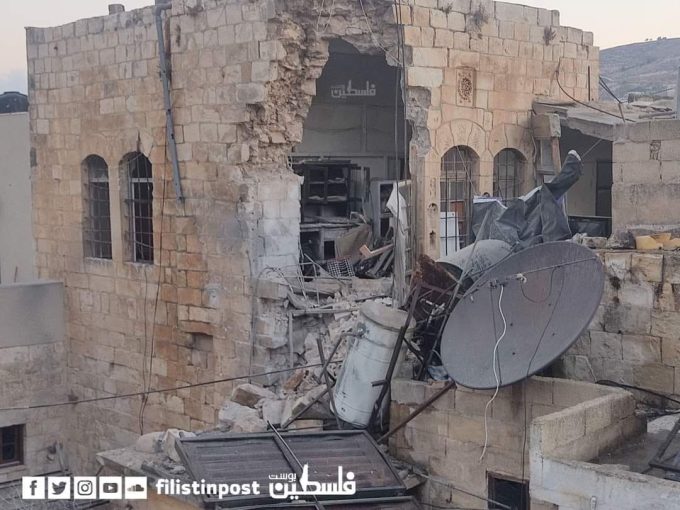
Israeli soldiers killed two Palestinians and injured nineteen, including one who suffered a serious gunshot wound to the head, in the Old City of Nablus, in the northern part of the occupied West Bank on Sunday at dawn.
The Palestinian Red Crescent Society (PRCS) has confirmed that the soldiers killed Abboud Sobeh, 29, and Mohammad al-Azizi, 22, in the al-Yasmina neighborhood in Nablus’s Old City.
The PRCS added that the soldiers shot nineteen other Palestinians, including ten who were shot with live fire, among them one who was shot in the head and is in critical condition.
The incidents took place after undercover Israeli soldiers infiltrated Nablus before many armored military vehicles invaded it from several directions, resulting in exchanges of fire between the invading soldiers and Palestinian resistance fighters.
The soldiers surrounded a home where several Palestinian resistance fighters were located and exchanged fire with them for several hours before the army fired a few missiles at the property, killing the two young men, while the five others managed to escape unharmed.
The missiles caused excessive damage to the home and several surrounding homes, buildings, and mangled cars parked on the sides of the street.

The soldiers withdrew from Nablus a few hours after killing the two Palestinians and wounding twelve, leaving massive destruction to homes and buildings.
Nablus Abu Rudeina, the spokesperson of the Palestinian President, denounced the invasion, the killing of the two Palestinians, and the injuring of the twelve and said that Israel is only interested in escalation and more violence.
US “Iran Nuclear Deal” Ploy Coming Full Circle
By Brian Berletic – New Eastern Outlook – 22.07.2022
Hopes for the Joint Comprehensive Plan of Action (JCPOA) simply known as the Iran Nuclear Deal seemed to fade further during US President Joe Biden’s recent trip to Israel where the US and Israeli governments signed a pledge to use force against Iran should it pursue nuclear weapons (weapons both the US and Israel possess).
US-based ABC News in its article, “Biden left with few options on Iran as nuclear talks stall,” would claim:
President Joe Biden made a clear promise on Iran, declaring that the country would never become a nuclear power under his watch. But during his time in the White House, the path towards upholding that promise has only become murkier.
During his trip to the Middle East, the president said he would consider using force against Iran only as a “last resort,” although Israel, the US.’s most ardent ally in the region, has pushed for the administration to issue a “credible military threat” against Tehran.
The article would mention the Iran Nuclear Deal specifically, claiming:
… while the administration initially hope to cut a “longer and stronger” deal with Iran, over a year and half of indirect negotiations has produced little movement towards restoring even the original terms of the agreement.
After a monthslong stalemate, a 9th round of talks took place in Doha, Qatar, at the end of June. A State Department spokesperson did not sugarcoat the outcome, saying “no progress was made.”
The 2018 unilateral withdrawal of America from the deal by the administration of US President Donald Trump is blamed for the deal’s failure. Yet the Trump administration’s withdrawal was predicted long before President Trump took office, and in fact, long before US President Barack Obama even signed the deal in the first place. President Biden’s recent activities are only wrapping up what was always a diplomatic ploy meant to trap Iran.
The Nuclear Deal Was Always a Trap
When President Obama signed the Iran Nuclear Deal, it was celebrated as a breakthrough in US diplomacy and a departure from the previous Bush administration’s expanding wars of aggression spanning Iraq and Afghanistan while threatening Iran next.
Signed by the United States and Iran along with other participating nations (the UK, EU, Germany, Russia, China, and France) in 2015, NBC News in their article, “What is the Iran nuclear deal?” would explain:
The Iran nuclear deal, formally known as the Joint Comprehensive Plan of Action, offered Tehran billions of dollars in sanctions relief in exchange for agreeing to curb its nuclear program.
The agreement was aimed at ensuring that “Iran’s nuclear program will be exclusively peaceful.” In return, it lifted UN Security Council and other sanctions, including in areas covering trade, technology, finance and energy.
At face value, the United States imposing sanctions on Iran to impede its development of nuclear weapons was problematic. The United States is the only nation in human history to use nuclear weapons against another nation, twice. Following the 2001 US invasion and occupation of Afghanistan and the 2003 US invasion and occupation of Iraq, the United States had military forces to Iran’s west and east. US hostilities toward Iran stretch back decades and the US State Department, regardless of administration, has made little secret that Washington seeks regime change in Tehran just as it did in Afghanistan and Iraq.
Worse still, US policymakers as early as 2009 had articulated a ploy by which the US would offer Iran a “deal” before deliberately sabotaging it and using its failure as a pretext for the long sought-after regime change war the US has wanted against Iran.
The Washington DC-based Brookings Institution, funded by the largest corporate-financier interests in the Western world as well as Western governments themselves including the US through the US State Department published the 2009 paper (PDF), “Which Path to Persia? Options for a New American Strategy Toward Iran.” In it, the Brookings Institution’s policymakers explicitly articulated options the US could pursue to achieve regime change in Iran.
These options were broken down into sections and chapters within the 170-page report and ranged from “An Offer Iran Shouldn’t Refuse: Persuasion,” to “Toppling Tehran: Regime Change,” to “Going All the Way: Invasion,” and “The Velvet Revolution: Supporting a Popular Uprising.” Everything from setting diplomatic traps to arming designated terrorist organzations were not only discussed, but in the years that followed the paper’s publication, they were implemented one after the other without success. The remaining options on the long list are military in nature involving either the US or Israel (or both) waging war directly and openly against Iran.
All that is required before doing so is a pretext, including the “offer” the US made, but Iran “refused.”
“An Offer Iran Shouldn’t Refuse”
Under “Chapter 1” titled, “An Offer Iran Shouldn’t Refuse: Persuasion,” Brookings policymakers would explain (emphasis added):
… any military operation against Iran will likely be very unpopular around the world and require the proper international context—both to ensure the logistical support the operation would require and to minimize the blowback from it.
The paper then laid out how the US could appear to the world as a peacemaker and depict Iran’s betrayal of a “very good deal” as the pretext for an otherwise reluctant US military response (emphasis added):
The best way to minimize international opprobrium and maximize support (however, grudging or covert) is to strike only when there is a widespread conviction that the Iranians were given but then rejected a superb offer—one so good that only a regime determined to acquire nuclear weapons and acquire them for the wrong reasons would turn it down. Under those circumstances, the United States (or Israel) could portray its operations as taken in sorrow, not anger, and at least some in the international community would conclude that the Iranians “brought it on themselves” by refusing a very good deal.
The Iran Nuclear Deal was doomed before it was ever signed. It was conceived wholly as a pretext for war, not as a diplomatic solution to avoid it.
False Hope Spanning Multiple US Presidencies
In many ways, Iran would be foolish not to create a sufficient military deterrence against US aggression, including the development of nuclear weapons if necessary. However, Iran nonetheless agreed to the nuclear deal’s terms and until the US unilaterally abandoned the deal in 2018, abided by it.
In fact, following the US withdrawal from the deal, Iran continued abiding by many of its conditions alongside its other signatories in the vain hope that under a new US administration it could be salvaged.
When US President Joe Biden took office, the obvious first step by Washington should have been to unconditionally rejoin the deal by removing sanctions, followed by Iran’s renewed and full compliance to the deal’s conditions. Yet the US demanded Iranian compliance first before even agreeing to negotiate Washington’s return to the deal.
It was clear long before President Obama’s signature was inked on the deal’s documents that the US would sabotage it, blame Iran, then pursue renewed and expanded aggression against Iran directly, by proxy, or both. President Trump in 2018 took advantage of America’s domestic politics and the perceived notion that US “Republicans” seek a harder line versus Iran in order to abandon the deal. Because of President Trump’s perceived trait as an “outsider” both to his own party and wider US politics, the US could shift the blame squarely on his administration. Yet the continuity of this ploy across presidential administrations is evident by the fact that upon coming into office, President Biden did not immediately and unconditionally return the US to the deal’s framework.
Instead, President Biden’s administration prevented America’s return to the deal by creating unreasonable preconditions placed entirely upon Iran. With President Biden’s statement in Israel coupled with a recent claim made by US National Security Adviser Jake Sullivan that Iran is preparing to supply Russia with drones, the US is closing the door on the deal indefinitely.
Further evidence of continuity between US administrations can be seen throughout the US-led destabilization, invasion, and occupation of Syria. The campaign was meant as one of several prerequisites laid out by the Brookings Institution’s experts in 2009 before attempting regime change against Iran directly. Ironically, as the Obama administration appeared reconciliatory toward Iran by signing the Iran Nuclear Deal, the same administration presided over the devastating proxy war targeting Iran’s key ally in the region, Syria.
Support of US aggression in Syria transcended presidencies, from the Bush administration who set the stage for it, to the Obama administration who presided over the opening phases of hostilities and occupation, to the Trump and now Biden administrations who have perpetuated a US military presence in Syria along with a policy of denying Syria its key fuel and food production regions in the east to block reconstruction. US foreign policy toward Syria and Iran should not be interpreted separately. The fate of both nations is entwined and illustrates the wider agenda the US is pursuing in the region and has been for decades regardless of US administration.
Barring a fundamental reordering of both American foreign policy objectives and a reordering of the special interests driving them, the Iran Nuclear Deal’s prospects of success will only fade further in the distance. While Tehran’s patience is admirable, Iran and its allies must prepare for the inevitable hostilities that will follow US blame against Tehran for “undermining” a deal the US never had any intention of honoring in the first place.
Brian Berletic is a Bangkok-based geopolitical researcher and writer.
‘Disloyal’ Palestinians can be stripped of citizenship and made stateless, rules Israel Supreme Court
MEMO | July 22, 2022
Palestinians can be stripped of their citizenship and made stateless; the Israeli Supreme Court ruled yesterday in a judgement that further reinforces the apartheid status of the occupation state.
Israeli citizens that are found to be in “breach of loyalty” can have their citizenship revoked, but rights groups insist that the policy will only be applied to non-Jews even if it makes them stateless.
Many countries have laws that allow revocation of citizenship, a trend that has grown over the past two decades following the start of the so called “war on terror.” Though such a policy is highly controversial because it is primarily directed at non-white populations, no government has exercised such draconian powers if it makes individuals stateless.
Under international law no government is allowed to strip citizens of their citizenship if it leads to statelessness.
Yesterday’s ruling addressed a 2008 Citizenship Law in Israel that gives the state authority the ability to revoke citizenship based on actions that constitute a “breach of loyalty”. It came following separate appeals in the cases of two Palestinian citizens of Israel who were convicted of carrying out attacks that killed Israeli citizens. The two were handed long sentences but the state sought to strip them of citizenship.
The Supreme Court denied the removal of citizenship in these two cases based on what has been described as “serious procedural flaws” but ruled that the practice itself was constitutional, even if a person became stateless as a result.
A joint statement in response to the ruling by the Association for Civil Rights in Israel (ACRI) and Adalah, an Arab rights group, reported in Reuters, called the law discriminatory and said it “will likely be used exclusively against Palestinian citizens of Israel”. Some 20 per cent of Israeli citizens are Palestinians. Nearly all are descendants of Israel’s ethnic cleansing in 1947/48 which drove the indigenous non-Jewish population out.
“There are many cases of Jews in Israel who took part in terror and not even once has the interior ministry thought to appeal to revoke their citizenship,” the ACRI’s Oded Feller told Reuters. “The only cases that were submitted to the court were of Arab citizens.”
Biden’s Middle East visit: a failed lobbying trip for Israel, not the United States

By Dr Mustafa Fetouri | MEMO | July 21, 2022
Even before landing in Israel, the first leg of his Middle East tour, President Joe Biden was already preoccupied with three issues: integrating Israel into the wider region, rallying as many countries as possible against Iran and persuading the Saudis to pump more oil into the market to ease the high prices at the pump for the American consumers. Anything else is a bonus. However, the visit failed, at least, to achieve its main objectives, both economically and politically.
By the time his visit ended on 16 July, the President did everything to help Israel, with limited success and very little else. He was, indeed, on a presidential PR trip but not for his re-election, nor for Washington’s tarnished image in the region, but for Israel. The same Israel that is being repeatedly described by the United Nations Human Rights office, Amnesty international and others as an apartheid state, imposing suffocating and discriminatory draconian laws on Palestinians under its brutal occupation. Instead of questioning the Israeli policies and practices in the occupied West Bank, Mr. Biden sought to reassure his Israeli friends that he is on their side, no matter what.
At the Jeddah Security and Development Summit, President Biden was rebuffed, albeit indirectly, as all Arab leaders present appeared to dismiss any idea of peace unless Israel ends its occupation of Palestinian land. The Summit, despite all its shortcomings, proved to him that Arabs have not yet dumped the Palestinians.
On Iran, all leaders at the Summit spoke of the need to settle Tehran’s nuclear issue peacefully, while nobody supported the idea of a military alliance that might include Israel against Iran—some form of Middle East NATO structure. Whatever Biden said in this regard remains as his administration’s position and not that of its regional allies—including Israel, which does not support the US idea of reviving the Iran nuclear deal.
No breakthrough on the issue of integrating Israel into the region, either, despite the recent wave of normalisation between different Arab countries. In fact, Saudi Arabia’s Foreign Minister, Prince Farhan bin Faisal, denied that normalisation between Israel and his country was even discussed. He also said that there is no connection between Riyadh opening its airspace to all civilian air carriers, including Israel’s, and normalisation between his country and Israel. This is another failure in Biden’s PR campaign to help Israel at the expense of the Palestinians. Saudi Arabia has been the virtual signatory to the Abraham Accords from day one but, at least for now, Riyadh does not see any reason to take any other steps in that direction.
Just before he departed Israel for Saudi Arabia, Biden and Yair Lapid signed what they called the “Jerusalem US-Israel Strategic Partnership Declaration”, renewing the US’s never-ending commitment to keeping Israel as a regional superpower. Overall, the Declaration is nothing but a repetition of the same commitments successive American administrations have been making to Israel since its creation. For example, the Declaration reads that the US commitment to Israeli superiority and security is “bipartisan and sacrosanct”, enjoying the support of both Republican and Democratic parties in the US. This has been a standard US policy, regardless of who is in the White House.
On the Palestinian issue, where the US is supposed to be the honest broker, the Declaration said that Mr. Biden, not the Israeli Prime Minster, still “supports” “a two-state solution”. But this support is meaningless if the US does not take any steps to, for example, curb the Israeli land grab policy. President Biden would have been taken more seriously if he announced how the “two-state” solution could be reached. It could also indicate how serious he is if he announced that steps taken by his Republican predecessor, Donald Trump, will be reviewed and, perhaps, reversed. Former President, Trump, recognised Jerusalem as Israel’s capital, contravening international law.
Notably the Strategic Declaration singles the US’s support to “combat” what it called “unfairly singling [Israel] in any international forum, including the International Criminal Court [ICC]”. Why, now, did the US choose to make its support for Israel against the ICC a strategic issue?
The answer is simple: for the first time in its history, Israel is being cornered by legal cases focusing on its criminal conduct against the Palestinians, who are bringing a dozen cases before the ICC. The most recent is that of the slain Al Jazeera reporter, Shireen Abu Akleh, who was shot last May. The Palestinian Authority has asked the ICC to investigate Shireen’s murder, who happened to be an American citizen of Palestinian descent.
The US intelligence community, the United Nations, rights groups and many media outlets believe an Israeli soldier fired the fatal shot that killed her. A case like this involving such a high profile reporter, if investigated by the ICC, has the potential to become a serious legal challenge for Israel. It could also turn into an international embarrassment should Washington follow through on its pledge to support Tel Aviv against the ICC. It will also test the US rhetoric about freedom of the press, free speech and accountability. Its potential fallout could push Washington to head off any action in this regard before it becomes an issue before the International Court.
It must have been an embarrassment already for President Biden, as his motorcade passed under a huge poster of Shireen on his way to Ramallah. During his news conference, with President Mahmoud Abbas, Shireen’s picture was sitting in the front row of the packed room as a reminder to him that Palestinians will not forget her and he should not forget that she is an American citizen, just like him. Mr. Biden referred to her as a “proud Palestinian” but said nothing about accountability for her death. He has already resisted 24 Democratic senators’ calls asking him for an investigation of her murder under US auspices.
The last top goal of Biden’s visit to Saudi Arabia was increased oil production by Saudis Arabia to bring down oil prices for US consumers. Here, he also failed as the Saudis reminded him that they wish to honour their commitment made to other producers within the OPEC Plus group, of which Russia is a member. Furthermore, the Saudi Foreign Minister, on 19 July in Tokyo, said “Russia is an integral part of OPEC Plus” and the group has to cooperate, otherwise “it would be impossible to properly ensure adequate supplies of oil to the international markets.” Mr. Biden hoped the Saudis would move away from Russia because of the war in Ukraine but he, again, failed to score anything against Moscow.
Other than advocating for Israel, with minimum success, the US President failed and he might be regretting the visit altogether.
Featured Video

Houthis Don’t Have to Conquer Saudi Arabia to Make It Pay
or go to
Aletho News Archives – Video-Images
From the Archives
Newly Released FBI Docs Shed Light on Apparent Mossad Foreknowledge of 9/11 Attacks
By Whitney Webb | MintPress News | May 17, 2019
NEW YORK — For nearly two decades, one of the most overlooked and little known arrests made in the aftermath of the September 11 attacks was that of the so-called “High Fivers,” or the “Dancing Israelis.” However, new information released by the FBI on May 7 has brought fresh scrutiny to the possibility that the “Dancing Israelis,” at least two of whom were known Mossad operatives, had prior knowledge of the attacks on the World Trade Center. … continue
Blog Roll
 Aletho News
- MEP blasts ‘Euro-Gestapo’ for lecturing Russia on democracy
- Syria May Send Troops to Saudi Arabia Amid War with Ansar Allah
- UK whines about losing billions to ‘Putin tax’
- Baghaei to Rubio: Distorted narratives cannot erase US record of broken commitments
- Houthis Don’t Have to Conquer Saudi Arabia to Make It Pay
- MOE: Nearly 22,000 Students and Education Workers Killed
- Guterres in Islamabad: Genocide, cowardice, and the cage of Imran Khan
- Johnson, Marandi say Yemen holds upper hand over Saudi Arabia
- False flags won’t save aggressors, Iran FM spokesman says
- The Makkah Pact Enters Into Force: The End of American Dominance or Its New Form?
- If Americans Knew
- Report claimed Mark Levin used by Israeli government to influence Trump
- Over 2,000 Gazans have died awaiting medical evacuation amid Israel’s continued siege
- How a U.S. Diplomat Suppressed and Altered Reports Critical of Israel
- 5 Palestinians Die from Israeli Strikes in Gaza as Relentless Attacks Continue
- Report: Ceasefire Slows Killing but Leaves Devastation Intact
- Country Music Singer Zach Bryan Breaks Attendance Record at Robert Kraft’s Gillette Stadium While Wearing ‘Free Palestine’ Shirt for Second Night in a Row
- Three years of death and devastation: Israel’s war on Gaza in pictures
- Why Hamas believed the status quo was more dangerous than its 7 October gamble
- Debunking Israel’s latest list of ‘terrorist’ journalists in Gaza
- In Gaza, focus is on survival, “every step is a struggle” – Daily Update
- No Tricks Zone
- New Study: 50 Years Of The Most Aggressive ‘Net Zero’ Policies Can Only Affect The Global Climate By 0.03°C
- US September “Heat” Was No Record…Many Records Set Decades Ago
- Latest European Green Energy Debacle; Portugal’s Largest Flagship Solar Park Insolvent!
- Green Energy Debacle: German Expert Professor Fritz Vahrenholt Warns Of Severe Economic And Social Consequences
- Two More Paleo Reconstructions Affirm Meters-Higher Sea Levels Across Ireland, Brazil 7000-6000 Years Ago
- New Study: Earth And Venus Surface Warmth Largely Explained By Convection And Lapse Rate, Not CO2 Or Radiation
- 2025 Nature Paper Claiming Worsening Global Drought Gets RETRACTED …Heavily Flawed
- New Study: ‘Global Drought Shows No Detectable Recent Acceleration Under Climate Warming’
- Economic Masterminds: German Socialists Suggest Taxing Productivity Gains Stemming From Using AI
- The South China Sea Has Not Been Cooperating With The Climate Change Narrative

