Israeli artillery shells southern Lebanon, drone drops incendiary devices along border
Press TV – September 1, 2019
Israeli artillery units have struck the southern part of Lebanon shortly after an Israeli drone violated the Lebanese airspace, and dropped incendiary material that sparked a fire in a forest at the border.
Lebanon’s official National News Agency reported that Israeli forces launched several 155-millimeter shells on the Jabal al-Rous area in the occupied Shebaa Farms and Kfarshouba Hills on Sunday afternoon.
The report added that the Israeli forces opened fire from their posts in the al-Zaoura area in Syria’s occupied Golan Heights.
An Israeli unmanned aerial vehicle, meanwhile, dropped incendiary devices on a forest in the border area of Bastara.
The Lebanese army said in a statement that the drone entered Lebanese airspace at 11:15 a.m. local time (0815 GMT) on Sunday, and dropped an unspecified number of devices, causing fires in some areas.
It added that the army would continue to follow up on Israeli violations of Lebanese airspace with the United Nations Interim Force in Lebanon (UNIFIL).
Images published by the private LBCI television network showed smoke rising from a tree-covered hill, reportedly caused by the weapons.
Tensions have been high recently between Israel and the Lebanese resistance movement Hezbollah in connection with the Israeli attacks on August 25 in Syria and Lebanon. Hezbollah has pledged to retaliate.
Hezbollah’s Secretary-General Sayyed Hassan Nasrallah said on Saturday evening that the resistance movement was determined to give a response to Israel over its recent drone incursion into Lebanon.
“The need for a response is decided,” he said during a televised speech ahead of the Islamic lunar calendar month of Muharram – the 10th day of which marks the martyrdom anniversary of Imam Hussein, the third Shia Imam and Prophet Muhammad’s grandson.
The Hezbollah chief added that the response was about “establishing the rules of engagement and… the logic of protection for the country. Israel must pay a price,” he said.
“Israel should know that the Lebanese air space is not open to her,” Nasrallah said, adding that the Israel attack could open the door to assassinations if left unanswered.
Nasrallah noted that the response to the Israeli attack could come from anywhere in Lebanon and not only from the Shebaa Farms south of the country, where Hezbollah normally stations most of its military equipment.
“The response will come from Lebanon. We will choose the place and time,” he said.
On August 26, Hezbollah said Israel had sent two drones into Lebanon on a bombing mission the previous weekend.
According to the resistance movement, the first drone had fallen on a building housing Hezbollah’s media office in the suburb of Dahieh. The second drone, which appeared to have been sent by Israel to search for the first one, had crashed in an empty plot nearby after being detonated in the air, it added.
Following the drone raids, Nasrallah vowed in a televised speech that fighters of the resistance movement would counter any further violation of the Lebanese airspace by Israeli drones.
Fault Lines Radio Interview With Whitney Webb (August 30, 2019)
Fault Lines Radio | August 30, 2019
Interview begins at 2:20:21
Israel Uses Its Firepower, Far and Wide
By Paul R. Pillar | LobeLog | August 27, 2019
Israel recently has been expanding its military attacks across much of the Middle East, hitting multiple countries. The aggressive campaign far outpaces anything any adversaries of Israel have been doing to it, or even trying unsuccessfully to do to it.
Over the past two years Israel has used combat aircraft to conduct scores of attacks in Syria. Israel has stayed silent about most of this campaign of bombardment, but when it speaks it says the targets it hits are associated with Iran. The most recent widening of Israel’s assaults have involved Lebanon, including drone attacks on facilities in suburban Beirut associated with Hezbollah—a departure from the cease-fire established after the last Israeli-Hezbollah war.
The most dramatic geographic widening of the Israeli assault came last month with multiple attacks, reportedly conducted with F-35s, in Iraq—which, of course, does not even border Israel. Among the targets hit was one facility that is 500 miles from Israel but only about 50 miles from the Iranian border.
It is difficult to identify anything being fired in anger in the opposite direction that justifies such an expansive Israeli military campaign. In January of this year, Israel’s missile defense system intercepted a missile heading for the Israeli-occupied Golan Heights, but that is about as close as anyone in Syria, Lebanon, or Iraq has come lately to inflicting damage on Israel. Planned or failed attempts to inflict such damage all appear aimed at retaliating for Israel’s own attacks. Israel claimed that sorties it conducted this past weekend in Syria had thwarted an Iranian attempt to launch attack drones against Israel. That claim is unconfirmed, but it is quite plausible that, as suggested by Israeli sources, Iran was indeed planning such an operation to retaliate for the Israeli attacks last month in Iraq. One searches in vain for hostile operations that are unprovoked and not attempted tit-for-tat responses to Israel’s own actions.
The escalated Israeli military campaign exhibits some longstanding attributes of Israeli policies and practices. One is to assert a right to seek absolute security even if that means absolute insecurity for everyone else. The mere possibility of someone harming Israel is taken as sufficient reason to inflict certain harm on someone else. Israeli Prime Minister Benjamin Netanyahu, in commenting on the most recent Israeli operations in Syria, said that Israel “won’t tolerate attacks on its territory.” Evidently that means asserting the privilege of attacking anyone else’s territory, even if those countries have not already attacked Israel.
Domestic politics figures into such matters, in Israel as elsewhere. With an Israeli election looming, Netanyahu has a political reason to use aggressive operations to bolster his image as a tough-minded guardian of Israeli security.
The operations also are part of the larger anti-Iran theme that the Israeli government uses to keep a regional rival weak, preclude any rapprochement between that rival and the United States, blame someone other than itself for all the ills of the region, and distract international attention from subjects involving Israel that Netanyahu’s government would rather not talk about. The Israeli government wants to retain Iran permanently as a perceived threat, loathed and isolated, rather than to negotiate away any issues or problems involving Iran. Netanyahu demonstrated this when, after years of sounding an alarm about a possible Iranian nuclear weapon, he opposed the very agreement that closed all possible paths to such a weapon. His government demonstrated it again this week when it opposed President Trump’s expressed willingness to meet and negotiate with Iranian President Hassan Rouhani.
Israel’s heightened military aggressiveness has multiple bad consequences, in addition to being an affront to the sovereignty of multiple regional states. It pours gasoline on fires in places that need de-escalation, not escalation. It is certain to provoke more attempts at retaliation. Hezbollah Secretary-General Hassan Nasrallah was quite explicit in promising such retaliation in response to the recent Israeli attacks in Lebanon.
Given the close U.S. association with Israel, the Israeli attacks disadvantage the United States in its own relations with the affected states, in the form of increased resentment and lessened willingness to cooperate with Washington. This type of reaction is appearing today in Iraq, as a result of the Israeli attacks there. The episode has been the occasion for a powerful bloc in the Iraqi parliament to call for the withdrawal of all U.S. troops from Iraq and for shouts of “Death to America” to accompany “Death to Israel” at the funeral of one of those killed in the attacks.
No benefits offset these harmful consequences. It is useful to recall the previous time, before last month, that Israel attacked Iraq: the bombing of an Iraqi nuclear reactor in 1981. Far from setting back the Iraqi development of a nuclear weapon, the attack energized and accelerated what until then had been a semi-moribund program. Armed attacks on states have a way of provoking that sort of reaction.
U.S. policy has failed to recognize these realities. Following the attacks in Iraq, the Pentagon did issue a statement—in the course of denying direct U.S. involvement—that “we support Iraqi sovereignty and have repeatedly spoken out against any potential actions by external actors inciting violence in Iraq.” But such mild language will hardly deflect Israel from its present course when Secretary of State Mike Pompeo calls Netanyahu and, according to the official State Department statement, “expressed support for Israel’s right to defend itself from threats posed by the Iranian Revolutionary Guard Corps and to take action to prevent imminent attacks against Israeli assets in the region.”
It is not just current U.S. policy that fails to recognize realities, but also wider discourse in the United States about troubles in the Middle East. A question that needs to be pondered carefully is, “Who is destabilizing the Middle East?” Stoked by the Trump administration’s own unrelenting campaign of hostility toward Iran, the stock and overly simple answer has been, “Iran.” That is an insufficient answer even when excluding Israel from the picture. And Israel does get excluded, and excused, for the variety of reasons—ranging from religious doctrine and historical legacies to the inner workings of domestic U.S. politics—for the strong U.S. favoritism toward Israel.
It may be too much to ask for consistency rather than hypocrisy in such matters, but the rest of the world easily perceives the hypocrisy. It at least would be honesty to acknowledge that the U.S. approach toward the region has been shaped not by which players are or are not destabilizing the region, but instead by U.S. fondness for some players rather than others.
Paul R. Pillar is Non-resident Senior Fellow at the Center for Security Studies of Georgetown University and an Associate Fellow of the Geneva Center for Security Policy. He retired in 2005 from a 28-year career in the U.S. intelligence community. His senior positions included National Intelligence Officer for the Near East and South Asia, Deputy Chief of the DCI Counterterrorist Center, and Executive Assistant to the Director of Central Intelligence.
NYT Presents Murder of a Palestinian Boy as ‘National Trauma’—for Jewish Israelis
By Jim Naureckas | FAIR | August 30, 2019
HBO has a series based on a real-life crime in Israel—a 2014 case involving (in the New York Times‘ words) “a Palestinian teenager snatched off a Jerusalem street by Orthodox Jews, choked, bludgeoned and burned to death in a forest at dawn.”
And how does the Times headline its report (8/27/19) on this series?
HBO Drama Revives a National Trauma for Israel
For Israel? Yes, and by “Israel,” Times Jerusalem correspondent Isabel Kershner means Jewish Israelis; in her eyes, they are the ones for whom the murder of 16-year-old Palestinian Muhammad Abu Khdeir was a “national trauma”:
It was the extraordinary coldbloodedness of the murder that made it true-crime movie material in the first place…. But Our Boys, a 10-part series that started this month on HBO, is under attack in Israel largely because of that singularity.
Some critics have accused the creators of skewing reality and ignoring what they say is the more common scourge of Palestinian terrorism against Israelis, creating a false equivalency between the two and tarnishing Israel’s image.
Let’s stop here for a reality check: There are, in fact, statistics on who’s killing whom in Israel/Palestine. The Israeli human rights group group B’Tselem reports that since January 2009, there have been 95 Israeli civilians killed by Palestinians—and at least 1,771 “Palestinians who did not take part in hostilities…killed by Israeli security forces.” (This latter number does not include Israeli assassinations—labeled as “targeted killings”—or Palestinians killed by Israeli civilians.) There have been 13 Israeli minors killed by Palestinians since 2009, and 785 Palestinian minors killed by Israeli security forces; in other words, a child killed in the conflict is 60 times more likely to be a Palestinian child than a Jewish child.
Kershner might have pointed out that the accusation that Palestinians murdering Jewish Israelis is a “more common scourge” is an absolute inversion of reality. Instead, to cite an example of “some critics” who think it’s “skewing reality” to focus on a single Palestinian death, she turns to Yair Netanyahu, the son of Israeli Prime Minister Benjamin Netanyahu, who said on Twitter (8/21/19):
The series tells the whole world how the Israelis and Jews are cruel and bloodthirsty murderers, and how the Palestinians are badly done by and oppressed.
The tweeter’s father, as prime minister since March 2009, is responsible for nearly every one of those 785 Palestinian children killed by his security services.
After quoting the younger Netanyahu, Kershner acknowledges that Palestinians watching the series “also had painful memories.” As an example, she offers the parents of the murdered boy, who no doubt felt at least as bad watching a TV show about their dead child as the prime minister’s son did.
Did somebody say “false equivalency”?
ACTION:
Please tell the New York Times not to treat the murder of a Palestinian child as chiefly a “national trauma” for Jewish Israelis.
CONTACT:
Email: letters@nytimes.com
Israel partisan Peter Berkowitz named head of State Dept Policy Planning

Peter Berkowitz flanked by Paul Singer (L) and Lawrence Mone (R) at 2018 Manhattan Institute event. Singer, chair of the Manhattan institute’s board of trustees, is a hedge fund billionaire known for supporting Israel causes. Mone is president of the institute. Its board has included numerous Israel partisans, includiing Daniel Loeb, a backer of the Emergency Committee for Israel; Weekly Standard editor William Kristol; Project for the New American Century director Mark Gerson; former American Enterprise Institute chairman Bruce Kovner; and Michael Fedak, board member of AIPAC spinoff Washington Institute for Near East Policy.
By Alison Weir | If Americans Knew | August 30, 2019
The new official in charge of the State Department’s long-term strategic thinking is yet another neoconservative with close ties to Israel.
Politico reports that the State Department’s new head of policy planning will be longtime Israel partisan and neocon Peter Berkowitz. According to Politico, the position “puts him in charge of long-term strategic thinking for the department.”
Politico reports that the announcement “came in an internal email to select State Department officials on Monday morning.” Berkowitz will specifically be in charge of the State Department’s Office of Policy Planning.
Berkowitz is extremely close to Israel. He received an M.A. degree from Israel’s Hebrew University in 1985, and currently teaches for the Tikvah Fund in Israel. He is the Co-founder and Director of the Israel Program on Constitutional Government, located in Tel Aviv. He has been on the advisory committee for the Center for Jewish Political Thought, a section within Israel’s Shalom Hartman Institute. Berkowitz has been the Tad and Dianne Taube Senior Fellow at the Hoover Institute (the Taubes donate to numerous Israeli organizations) and is on the faculty of the Hertog Foundation.
Berkowitz has written numerous articles about Israel, often for the neoconservative outlet, Weekly Standard. His fellow neocon, Stanley Kurtz, credits Berkowitz with causing South African jurist Richard Goldstone to recant after leading a fact-finding investigation whose findings Israel disliked. The investigation had determined that Israel had committed numerous war crimes in Gaza. The report’s findings were corroborated by a number of other investigations that found Israel had violated international law.
In one of his pieces, Berkowitz claimed that “No military in the history of warfare has made greater efforts in the face of grave national security threats to avoid the use of force or has tried harder, when obliged to fight, to protect noncombatants than the Israel Defense Forces. With the possible exception of the U.S. armed forces, no military has investigated itself as rigorously as the IDF. With the possible exception of the U.S. judiciary, no courts have done more to hold their military accountable than Israel’s. And with the possible exception of America, no democracy has gone further in wartime to legitimize dissent than Israel.”
Berkowitz’s contention flies in the face of documentary evidence compiled by Human Rights Watch, Amnesty International, Christian Aid, B’Tselem (also see this), the International Red Cross, Physicians for Human Rights, Reporters Without Borders, Foreign Service Journal, and even the U.S. State Department. According to Berkowitz, all of these agencies are wrong.
Berkowitz also penned a piece attacking Harvard Professor Stephen Walt and University of Chicago Professor John Mearsheimer for their essay in the London Review of Books and Harvard working paper about the Israel lobby. Berkowitz accused the professors of “myriad half-truths, gross distortions, ignorant assertions, and defective reasoning.” Mearsheimer and Walt’s findings were later published in a book by Farrar, Straus and Giroux, The Israel Lobby and U.S. Foreign Policy.
Trump had initially opposed neocons and kept them out of his administration. Although neocons are nominally Republicans, many had endorsed Hillary (and many now remain, at least on the surface, Democrats). As Trump came under escalating attack, however, he moved ever closer to billionaire campaign donor Sheldon Adelson (who funds many neocon enterprises) and eventually began naming neocons to positions of power, where they often drive policy.
Neocons in the Bush Administration promoted the disastrous war with Iraq, and Israel and its partisans are central in the demonization of Iran that has resulted in the sanctions against Iran and threats of still worse.
Alison Weir is executive director of If Americans Knew, president of the Council for the National Interest, and author of the best selling book Against Our Better Judgment: The Hidden History of How the U.S. Was Used to Create Israel.
Another Syrian Victory – and West’s Telling Silence
Strategic Culture Foundation | August 30, 2019
The liberation of Khan Sheikhoun in Idlib Province by the Syrian army and its Russian ally marks another important victory towards ending the eight-year war in Syria.
Last week saw the return to relative normalcy in the northwestern town which had been held under siege by al Qaeda-affiliated militants for over five years. Situated south of Aleppo on the road to the capital Damascus, Khan Sheikhoun was officially declared under the control of Syrian state forces on August 21 after a hard-fought battle against militants.
International journalists from Italy, Bulgaria, Greece and Russia witnessed the return of residents and efforts to resume electricity services and reopening of schools. Khan Sheikhoun was ransacked by the routed jihadi terror groups, with the typical depravity that had been seen in other liberated areas. But despite the devastation, residents were relieved to begin the task of restoration of what was previously a town renowned for its culture and beauty before the war erupted in March 2011.
The remnants left behind by the defeated militants as well as the identity of dead fighters testified to their terrorist affiliation. Many of them were foreign mercenaries. Khan Sheikhoun was a stronghold for the Hayat Tahrir al-Sham group which was formerly known as Al Nusra Front. Notwithstanding the chameleonic name, they are part of the jihadi Al Qaeda terror network which is internationally proscribed and which Western governments are officially opposed to.
The capture of the town again demonstrates the vile nature of the Syrian war as being one of foreign-sponsored aggression for regime change. In particular, the United States government and its NATO allies, Britain, France, Turkey, and others, are now known to be fully complicit in covert sponsorship of these terrorists.
Khan Sheikhoun is of particular significance because on April 4, 2017, it was dramatically reported by Western news media as being the site of a Sarin chemical weapon attack, allegedly carried out by the Syrian state forces. Three days later, on April 7, the US, Britain and France launched over 100 airstrikes on Syria in what was claimed to be “revenge” against the “Syrian regime” for allegedly committing an atrocity with chemical weapons. Syrian authorities and Russia asserted the alleged Sarin attack at Khan Sheikhoun was a false-flag provocation, fabricated by the militants with the aim of eliciting a military strike on Syria by the US and its NATO allies.
Clearly, after the liberation of the town this month, it is evident that it was a den of terrorist groups which held residents under a reign of terror. Yet for years, the Western news media had proclaimed that these fighters were “rebels” who deserved support from Western intervention. Even as Syrian forces were launching their assault on Idlib Province in recent months, the Western media were animated by shrill reports of “rebels” and civilians being killed by indiscriminate “regime” air strikes.
Tellingly, the momentous victory at Khan Sheikhoun was met with an astonishing silence among Western governments and news media.
The same duplicitous pattern has been seen before when the Syrian army and its Russian ally liberated Douma, Ghouta, Daraa, Aleppo, Maaloula and many other areas besieged by the so-called “rebels” so lionized in Western media. Syrian residents have been invariably relieved and overjoyed to have their freedom and dignity restored by the Syrian army and Russian forces. Their stories of the horror they endured under captivity are shocking from the depravity and cruelty meted out by Western-backed “rebels”.
That is why the liberation of Khan Sheikhoun, as with other locations in Syria, has had to be studiously ignored by the Western news media. Because if they really performed normal journalistic duty what the Western public would learn is that their governments and media have been complicit in huge war crimes against the Syrian nation.
It is all the more despicable therefore that the US is shifting its efforts to block the reconstruction of war-torn Syria. This week, the country is to hold the annual Damascus International Trade Fair. Delegates from some 40 nations are attending and exploring ways to regenerate the Syrian economy and to meet the challenge of reconstruction. Some estimates put minimal repair of infrastructure at a cost of $388 billion. The true figure could be in trillions of dollars.
That bill should be assigned to Washington, London, Paris, Ankara, Riyadh, Doha and Tel Aviv for the criminal aggression they collectively and stealthily inflicted on Syria.
Ahead of the Damascus trade fair, the US was warning prospective foreign investors that they could face sanctions if they did business with Syria. Russia’s foreign ministry condemned the American effort to sabotage Syria’s reconstruction.
As Russian lawmaker Valery Rashkin, who was in Syria this week, put it, the US is trying to destroy Syria through economic warfare after losing its dirty-war military agenda.
The European Union also stands condemned for continuing to impose economic sanctions on Syria. The war is over and it has been exposed as Western-backed criminal aggression. All past accusations against the Syrian state are null and void as malign propaganda. Thus, sanctions on Syria are a contemptible attack on the country by nations whose criminal complicity should actually be a matter of prosecution.
We can only wish the people of Syria well. With international solidarity from Russia, China, Iran and others, Syria will recover its former strength and pride. Syria has won a tremendous victory. The losers are the Western governments and media who have been exposed for the corrupt charlatans they are.
Lying for Israel: Why Nearly Everyone in Washington Does It
By Philip Giraldi | Strategic Culture Foundation | August 29, 2019
It is not often that one hears anything like the truth in today’s Washington, a city where the art of dissimulation has reached new heights among both Democrats and Republicans. Everyone who has not been asleep like Rip Van Winkle for the past twenty years knows that the most powerful foreign lobby operating in the United States is that of the state of Israel. Indeed, by some measures it just might be the most powerful lobby period, given the fact that it has now succeeded in extending its tentacles into state and local levels with its largely successful campaigns to punish criticism or boycotting of Israel while also infiltrating boards of education to require Holocaust education and textbooks that reflect favorably on the Jewish state.
Occasionally, however, the light does shine in darkness. The efforts by Congresswomen Rashida Tlaib and Ilhan Omar to challenge the power of the Israel Lobby are commendable and it is worth noting that the two women are being subjected to harassment by their own Democratic Party in an effort to make them be silent. President Donald Trump, meanwhile, has attempted to make them the face of the Democrats, calling them “Jew haters” and “anti-Semites” while also further claiming that they despise the United States just as they condemn Israel. This has developed into a Trump diatribe claiming that American Jews who vote for Democrats are “disloyal.” By disloyal he meant disloyal to Israel, in a sense ironically confirming that in the president’s mind Jews have dual loyalty, which, of course, at least some of them do.
And Trump has further exercised his claim to the Jewish vote by accepting the sobriquet “King of Israel” bestowed by a demented talk radio host. As Secretary of State Mike Pompeo has already asserted that Trump’s election victory was the result of divine intervention to “save Israel from Iran,” the kingship is presumably an inevitable progression. One can only imagine what will come next.
One Democratic congressman who has apparently become fatigued by all that bipartisan pandering to Israel is Ted Lieu of California. Last Thursday Lieu rebuked Trump’s US Ambassador to Israel David Friedman over his support of Prime Minister Benjamin Netanyahu’s refusal to allow Tlaib and Omar to visit the West Bank where Tlaib’s grandmother lives under Israeli occupation. Friedman had issued a statement saying that the United States “respects and supports” the Israeli action. He went on to elaborate “The Boycott, Divestment and Sanctions (BDS) movement against Israel is not free speech. Rather, it is no less than economic warfare designed to delegitimize and ultimately destroy the Jewish state. [Israel] has every right to protect its borders against those activists in the same manner as it would bar entrants with more conventional weapons.”
As Friedman was describing two thirty-something nonviolent first term congresswomen as nothing less than armed attackers about to be unleashed against the Jewish state because they support a peaceful boycott movement, Lieu apparently felt compelled to courageously respond to the ambassador, tweeting “Dear @USAmbIsrael: You are an American. Your allegiance should be to America, not to a foreign power. You should be defending the right of Americans to travel to other countries. If you don’t understand that, then you need to resign.”
Later that day, on CNN, Lieu explained his objection to Friedman’s actions, saying “Actually, I think he should resign because he doesn’t see to understand that his allegiance is to America, not to a foreign power. He should be defending the right of Americans to go abroad to other countries and to visit their relatives.”
The outrage from the mighty host of friends of Israel came immediately, with accusations that Lieu was accusing Friedman of “dual loyalty,” that greatly feared derogatory label that is somewhat akin to “anti-Semitism” or “Holocaust denial” in the battery of verbal munitions used to silence critics of the Jewish state. Indeed, Lieu was accused of employing nothing less than a “classic anti-Semitic” trope.
Under considerable pressure, Lieu deleted the tweet and then issued something of an apology, “It has been brought to my attention that my prior tweet to @USAmbIsrael raises dual loyalty allegations that have historically caused harm to the Jewish community. That is a legitimate concern. I am therefore deleting the tweet.”
But the reality is, of course, that Friedman does not have dual loyalty. He has real loyalty only to Israel, which he demonstrates repeatedly by uncritically supporting everything the kleptocratic Netanyahu regime does with nary a pause to consider actual American interests. He has supported the weekly slaughter of unarmed Gazan civilians by Israeli sharpshooters, praised the bombing of Syria, pushed for the move of the US Embassy to Jerusalem, applauded the recognition by Washington of Israeli sovereignty over the Golan Heights, and is an active supporter of and contributor to the illegal Israeli settlements on the West Bank. He has even pressured the State Department into ceasing its use of the word “occupation” when describing the situation on the West Bank. It is now “disputed.” So, it is no surprise that David Friedman, formerly a bankruptcy lawyer before he became ambassador, lines up with Netanyahu rather than with two American Congresswomen who, apart from anything else, have good reasons to travel to a country that is the largest US aid recipient in order to see conditions on the ground. To put it mildly, Friedman is a disgrace and a reflection of the character or lack thereof of the man who appointed him. If he had any decency, he would resign.
There is no benefit for the United States when an American Ambassador excuses the brutality of a foreign government, quite the contrary as it makes Washington an accomplice in what are often undeniably war crimes. Even though Congressman Lieu was clearly read the riot act and made to fly right by his own party’s leadership, it took considerable courage to speak up against both Israel and an American ambassador who clearly is more in love with the country he is posted to than the country he is supposed to represent. Of course, in never-any-accountability Washington a buffoon posing as an ambassador as Friedman does will get away with just about anything and, as the subject is Israel, there will hardly be a word of rebuke coming from anyone, to include the mainstream media. But the tweet by Lieu is nevertheless significant. Hopefully he will be among the first of many congressmen willing to put at risk their careers at times to speak the truth.
Israel: Netanyahu approved Germany-Egypt submarine deal for $142m discount
MEMO | August 28, 2019
Israeli Prime Minister Benjamin Netanyahu is facing new questions over his role in the so-called “Submarine Affair”, after reports emerged that he approved a deal between Egypt and Germany in order to secure a multi-million-dollar discount for Israel’s own naval purchases, not for “security reasons” as he previously claimed.
The affair – sometimes known by its case number 3000 – involves allegations that several of Netanyahu’s close associates lobbied senior Israeli defence officials to sign deals with German shipbuilding firm ThyssenKrupp. These associates are suspected of “skimming” millions of shekels off the top of the deals for their personal profit and are now being investigated for corruption.
These investigations revealed that one deal saw Egypt order two submarines and two anti-submarine warships from ThyssenKrupp. Though Germany does not require Israeli permission to sell its ships to other countries, it has traditionally refrained from doing so to give Israel dominance in the region.
However, on this occasion the Germany-Egypt sale reportedly went ahead without the approval of then Defence Minister, Moshe Ya’alon; instead, former Defence Ministry officials and aides to German Chancellor Angela Merkel claimed that Netanyahu had personally approved the deal.
Amidst the outcry that ensued, Netanyahu agreed to a rare TV interview to discuss the deal. “My reasons are security reasons and security reasons alone,” he told Israel’s Channel 12, “the State of Israel has secrets that only the prime minister knows and a handful of people”.
Now it has emerged that Miki Ganor – a former ThyssenKrupp sales agent in Israel and previously a state witness in Case 3000 – told corruption investigators that Netanyahu approved the sale to Egypt in exchange for a discount of half a billion shekels ($142 million) on the purchase of Israel’s sixth submarine from the German firm.
It was this discount which ensured that the Germany-Egypt deal went ahead, in the process securing a huge cut for Ganor and his associates, the Times of Israel explained, citing a report by Israel’s Channel 13 yesterday.

German Chancellor Angela Merkel greets Israeli Prime Minister Benjamin Netanyahu in Germany in February 2016
Ganor agreed to turn state witness in 2017, admitting to bribing a string of Israeli officials. He agreed to provide evidence for the prosecution in exchange for serving only one year in prison and paying a ten million shekel ($2.7 million) fine.
However, in a shock move, in March Ganor presented himself to Israel Police and asked to change his previous statement, despite standing by it during 50 meetings over the course of the investigation. Ganor instead claimed he had been pressured by the police into confessing.
The move was, however, reportedly prompted by Ganor’s discovery that signing a state witness agreement had put his name on an international banking blacklist, thereby blocking his access to tens of millions of shekels under his name in banks in Cyprus and Austria.
He was subsequently arrested for “obstructing an investigation with false information”. Later that month, Israel Police withdrew its state witness arrangement with Ganor, since recommending that he be charged with five counts of bribery and one count of receiving an illicit gift, in addition to six counts of money laundering.
However, as the Times of Israel explained, Ganor’s “testimony is still usable in court, and the part about Netanyahu’s reason for approving the submarine deal hasn’t been affected by [his] retraction of some of his testimony.”
Critics of Netanyahu have been quick to respond to the fresh allegations, particularly given the proximity of Israel’s upcoming general election, which is slated for 17 September.
De facto opposition leader and head of the Blue and White (Kahol Lavan) party, Benny Gantz, said in a statement that “it is unacceptable for the prime minister to carry out arms deals that affect the strategic balance in the region while being suspected of involving personal considerations”.
Blue and White number two Yair Lapid echoed this sentiment, accusing Netanyahu of “deflecting and lying as to why he approved the sale of advanced submarines to Egypt”. The former finance minister also called the affair the “worst corruption scandal in Israel’s history,” calling for a state inquiry into the allegations.
Netanyahu’s Likud party hit back at Blue and White – its biggest election rivals – for criticising the prime minister, labelling their statements “desperate attempts […] to revive this corpse [in order to] divert the public’s attention from the internal mess in their party”.
The prime minister does not seem to have issued his own statement on the revelations, only retweeting the Likud party’s statement.
READ ALSO:
Does FIFA really believe in human rights?
MEMO | August 28, 2019
The Palestinian Football Association (PFA) has had some good reasons to thank football’s world governing body, the Fédération Internationale de Football Association (FIFA), for its help. The PFA admission to FIFA in 1994, at the time of the Oslo Accords, was in itself a major encouragement to Palestinian football.
In 2008, FIFA was instrumental in building the national Faisal Al-Husseini Stadium in Ramallah, and has supported other investment in Palestinian football grounds through its GOAL programme. In 2012, the world body played an important background role in the release of the Palestine national team’s star player, Mahmoud Sarsak, from his three year detention under Israel’s Unlawful Combatants Law.
FIFA set up a Monitoring Committee in 2015 in response to the PFA’s complaint that at the 2013 FIFA Congress it had not been allowed to explain to member associations how severely Israeli actions in the Occupied Palestinian Territories repressed Palestinian football. These actions included obstacles to movement of players and officials nationally and internationally, restrictions on the import of equipment, injuries to and imprisonment of players, and the existence of settlement club teams based on occupied Palestinian land playing in the Israeli leagues. South Africa’s former ANC minister and footballer, Tokyo Sexwale, was asked to chair the Committee and produce a set of recommendations for FIFA to act upon.

Gianni Infantino, President of FIFA
All of these initiatives were taken under the presidency of Sepp Blatter who had carefully controlled the way that FIFA supported the Palestinians against a background of Israeli interventions. Further action was crucial, but when Gianni Infantino succeeded Blatter as FIFA president in 2016, events took a turn for the worse:
Despite strong opposition from Israel, Sexwale’s Monitoring Committee finally presented its report in 2017. It addressed the removal of the settlement clubs from Israeli leagues for contravening both FIFA statute 72.2 and international law. However, the report suffered a number of mysterious delays and was not presented in time for discussion at the 2017 Annual FIFA Congress. It was then shelved.
The PFA, sensing that Sexwale’s recommendations would be delayed or neutered, tabled its own motion with similar objectives at the 2017 Congress. By careful manipulation of the procedural rules, later endorsed by the Court of Arbitration for Sport, FIFA managed to block this motion and pass it to a subsequent meeting of the FIFA Council which duly considered it to be too political for discussion, claiming that a decision would impinge on the “final status negotiations” concerning the Occupied Palestinian Territories. The Council thus ignored international law. The Palestinian motion was also shelved. That statement by the FIFA Council concluded with an undertaking to “facilitate the movement of players, officials and football equipment in, out of, and within Palestine.” Nothing has been heard from FIFA on the fulfilment of this pledge.
This FIFA process was almost certainly influenced by a telephone call from Israeli Prime Minister Benjamin Netanyahu to Infantino just days before the 2017 Congress. The exact details of the call are not known, but Israeli interests were duly served. Crucially, FIFA had adopted a position which reflected Israeli political imperatives and ignored Palestinian rights.
Furthermore, in January 2019 the FIFA Ethics Committee forwarded to the PFA a thirty-page document, produced by an Israeli organisation called Palestine Media Watch (PMW), which criticised PFA President Jibril Rajoub and called on him to step down. The Ethics Committee’s cover letter accompanying the PMW document highlighted the main complaints, thereby giving the impression that FIFA endorsed them. These included “incitement to violence”, “glorification of terrorism”, “prohibiting football as a bridge to peace” and “using football to promote a political agenda”.

Jibril Rajoub, President of the Palestinian Football Association
PMW is actually a rather unscrupulous political organisation headed by an Israeli settler with no position in the football world, and is financed by the Israeli government. It has an appalling track record. In 2000, PMW tried to challenge the Palestinian Authority in an Israeli court and was rebuffed in no uncertain terms by the judge. In 2016, PMW called for the resignation of Jibril Rajoub from his position as President of the Palestinian Olympic Committee, based on a thirty-page document of “evidence” similar to the one sent to FIFA. The International Olympic Committee gave it short shrift.
The reality is that the PMW is dedicated to attacking Palestinian leaders and organisations. This should have been obvious to the FIFA Ethics Committee. The fact that it chose to accept and proceed with the PMW report appears to be FIFA’s way of saying that it accept Israel’s political arguments and rejects Palestinian rights.
Just last month, the Sixth Palestinian Cup finals were to be played between the winners of the Gaza and West Bank leagues. The West Bank’s Balata FC was able to travel to Gaza, and drew 1-1 with Khadamat Rafah on 30 June, but when it came to the second leg to be played in the West Bank on 3 July, thirty-one of the Gaza squad of thirty-four were refused permission to travel by the Israelis. The match was postponed and has still not been rescheduled.
Delaying tactics by the Israeli border authorities have been encountered in the past, but in each case an appeal by the PFA to FIFA was effective; the world body’s pressure on the Israeli authorities led to the players being allowed to travel. In this latest incident, though, the PFA appeal to FIFA has not been successful. It appears that FIFA has not been diligent in pressing the Israeli authorities to act, when above all else it needs to insist that the return leg is allowed to be played. It may be that the earlier Israeli entreaties to Infantino have had a continued influence, but we can be certain that, once again, Palestinian rights have been disregarded.
In conclusion, it seems that Israel’s accusations have been accepted at face value by FIFA and not regarded as politically motivated, whereas Palestinian arguments are deemed political and inappropriate for consideration. FIFA now appears to be subservient to Israeli demands.

Palestinian players forced to leave field after Israeli tear gas attack, January 2019
The recently introduced FIFA Statute No. 3 requires respect for human rights. In the case of Palestine, football’s world governing body seems to be ignoring its own rules. Over the past year, the repression of Palestinian football has worsened substantially. Specifically, games have been interrupted, the installation of pitches has been delayed, officials have been arrested and international visits have been disrupted.
The need for action is even more important now than it was in 2015. It is essential that these issues are addressed. FIFA must insist on a positive response from the Israeli authorities. If this is not forthcoming then a number of sanctions can and must be applied by FIFA. International teams, for example, can be banned from having friendlies with Israeli teams, which can also be banned from international tournaments; ultimately, the Israel FA can be suspended from FIFA until the rights of Palestinians and international law are observed.
Britain’s Red Card Israeli Racism (RCIR) campaign has joined together with the Palestine Solidarity Campaign and the international Palestinian Campaign for Academic and Cultural Boycott of Israel to lobby FIFA for effective action in accordance with its own statutes and its avowed respect for human rights. Now is the time for football’s world governing body to demonstrate that it does indeed believe in human rights, and is prepared to take action when these are abused.
READ ALSO:
Israeli Soldiers Injure Numerous Palestinians Near Jerusalem
IMEMC News – August 28, 2019
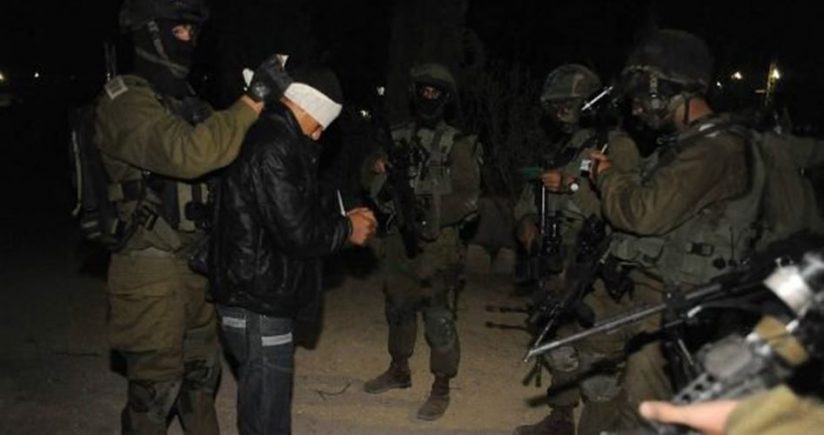
Israeli soldiers invaded the town of al-‘Isawiya, east of occupied Jerusalem, on Tuesday evening and injured several Palestinians, including a woman who was wounded in her eye, in addition to causing property damage.
Media sources said the soldiers invaded many neighborhoods in al-‘Isawiya, and fired rubber-coated steel bullets, gas bombs and concussion grenades at local protesters, and at many Palestinian cars and homes.
The sources added that one woman was injured in one of her eyes after the soldiers fired rubber-coated steel bullets at her car while driving.
The soldiers also surrounded a mosque in the town, and attacked dozens of Palestinians, in addition to firing gas bombs and rubber-coated steel bullets at them, causing many injuries.
One of the wounded Palestinians is an elderly man, who was attacked and pushed by the soldiers before they threw him onto the ground.
In addition, the soldiers surrounded the home of Mohammad Obeid, 21, who was killed by Israeli army fire on June 27th, and prevented the Palestinians from entering or leaving it, in addition to occupying rooftops of several surrounding homes.
The soldiers forced the residents to remove Palestinian flags, and posters of the slain Palestinian, in addition to detaining several young men.
The latest attacks took place less than twelve hours after the soldiers invaded the town and conducted extensive and violet searchers of homes and other property, including cars and stores.
New Zealand suspends funding to Palestinians through UNRWA
MEMO | August 28, 2019
The government of New Zealand has withdrawn and suspended funding to the United Nations’ (UN) aid agency which provides support for Palestinians.
The country’s suspension of aid and financial contribution to the United Nations Relief and Works Agency (UNRWA) is to be implemented until the release of a report by the UN’s Office of Internal Oversight Services in October, which would detail allegations of misconduct, corruption, links to terror groups, and anti-Semitism that have been levelled against the agency.
A statement released by New Zealand’s Ministry of Foreign Affairs stated that “We expect UNRWA to cooperate fully with the investigation under way and to report back on the investigation’s findings and recommendations.” It added that “The Ministry will review the findings of the UN OIOS report once the investigation is complete and, after that point, will provide advice to the Minister of Foreign Affairs on future funding.”
The move by the island nation is in stark contradiction to its recent announcements that it will provide more aid to the agency and to Palestinians, such as in November last year when it vowed to increase its support to UNRWA and in May this year when it assured its commitment to back the organisation until at least 2021.
This shift in financial policy and the withdrawal of aid comes amid an ongoing campaign to deprive the UNRWA of funding and support from a variety of Western nations, most prominently the United States (US) when the Trump administration withdrew its funding for the agency last year. The most recent cases of the suspension of funds occurred last month when the Netherlands and Switzerland also froze financial support due to reports of alleged corruption within the agency.
The sharp reduction in funding has had a direct effect on the situation of Palestinians in refugee camps in particular. Since the US withdrawal from the agency, there have emerged widespread reports of worsening conditions in the camps scattered throughout Middle Eastern countries such as Lebanon and Jordan, and the UN organisation continues to struggle financially amid the ongoing campaign against it, seeking urgent funds to maintain its work.
Behind Israel’s Bombing in Iraq’s Heartland
By Giorgio Cafiero – Consortium News – August 28, 2019
Iraq has felt the heat from escalating tensions between the U.S. and Iran this summer as the White House moves ahead with its “maximum pressure” campaign against the Islamic Republic. Also clear is that Israel and Iran’s proxy wars in the region have spilled into Iraq too. Last month, Israel carried out its first attacks on targets in Iraq since Operation Opera on June 7, 1981.
On July 19, Israel struck a target in the Salahuddin governorate, three days before another attack against Camp Ashraf, located within close proximity to Iran. According to al-Ain, the attack against Camp Ashraf killed 40 members of Iran’s Islamic Revolutionary Guard Corps (IRGC) and Iranian-sponsored Iraqi Shi’a militiamen. On Aug. 12, a blast occurred at a Popular Mobilization Units (PMU) arms depot in the Iraqi capital, allegedly carried out by an Israeli aircraft and resulting in one death and 29 injuries. Other Israeli attacks followed on the 19 and 25 of August. Several days ago, U.S. officials confirmed that Israelis were indeed behind the July 19 attack in Salahuddin governorate, which was suspected from the beginning.
Such actions highlight how Israel seeks to expand its theater of confrontation with the Iran to Iraq. Put simply, the Israelis are reacting with increasing aggression against the extent of Iranian-sponsored militias in Iraq and elsewhere in the Middle East that provide Tehran greater leverage vis-à-vis Israel.

Pompeo: Not against further Israeli strikes. (YouTube)
Important questions surround the U.S. role in these Israeli attacks against PMU targets in Iraq. It is difficult to imagine how the Trump administration could have not given Israel the green light to carry out these attacks. As Karim al-Alwei, an Iraqi parliamentarian, explained, “the U.S. controls Iraqi air space” thus “no planes, including Iraqi jets or helicopters, can overfly the area without U.S. knowledge or permission.” Only seven months ago, U.S. Secretary of State Mike Pompeo reportedly raised the topic of Iranian missiles in the hands of PMU forces in Iraq while meeting with Iraq’s Prime Minister Adel Abdul-Mahdi, stating that Washington would not be against any future Israeli military operations targeting such facilities.
Unclear is whether the Israelis used Syrian, Turkish, or Saudi airspace to reach their targets in Iraq. Regardless, it is a safe bet that the Saudi leadership, which maintains a tacit partnership with Israel largely based on a common perception of Tehran as a threat to its interests, welcomes such Israeli action in Iraq. As Saudi and Israeli officials see Iranian-sponsored Shi’a militia in Iraq, Syria, and Lebanon as a major threat, the Israeli strikes in Iraq will likely push the Israelis and Saudis even closer together.
Other Targets of Israel
Tel Aviv has dramatically increased the intensity and reach of its military campaign to weaken Tehran-backed militias in the region, waging attacks not only in Iraq, but also in Syria and Palestine too, as well as recently sending two drones into Lebanon. Into the chaos of Syria the Israelis have carried out many strikes against Iran-related targets since the civil war began in 2011. Yet by attacking targets in Iraq, Israel is showing its determination to expand the theater of its proxy war with Iran.
Although difficult to predict the long-term ramifications of these blasts in Iraq, their impact will likely be destabilizing, given Iraq’s fragile security. A major concern for officials in Baghdad is that in the days, weeks, and months ahead Iraq—as well as its airspace—could be the location of intensified violence as the U.S., Israel, and Iran challenge each other’s actions. Iraq will have a difficult time staying neutral between Washington and Tehran.
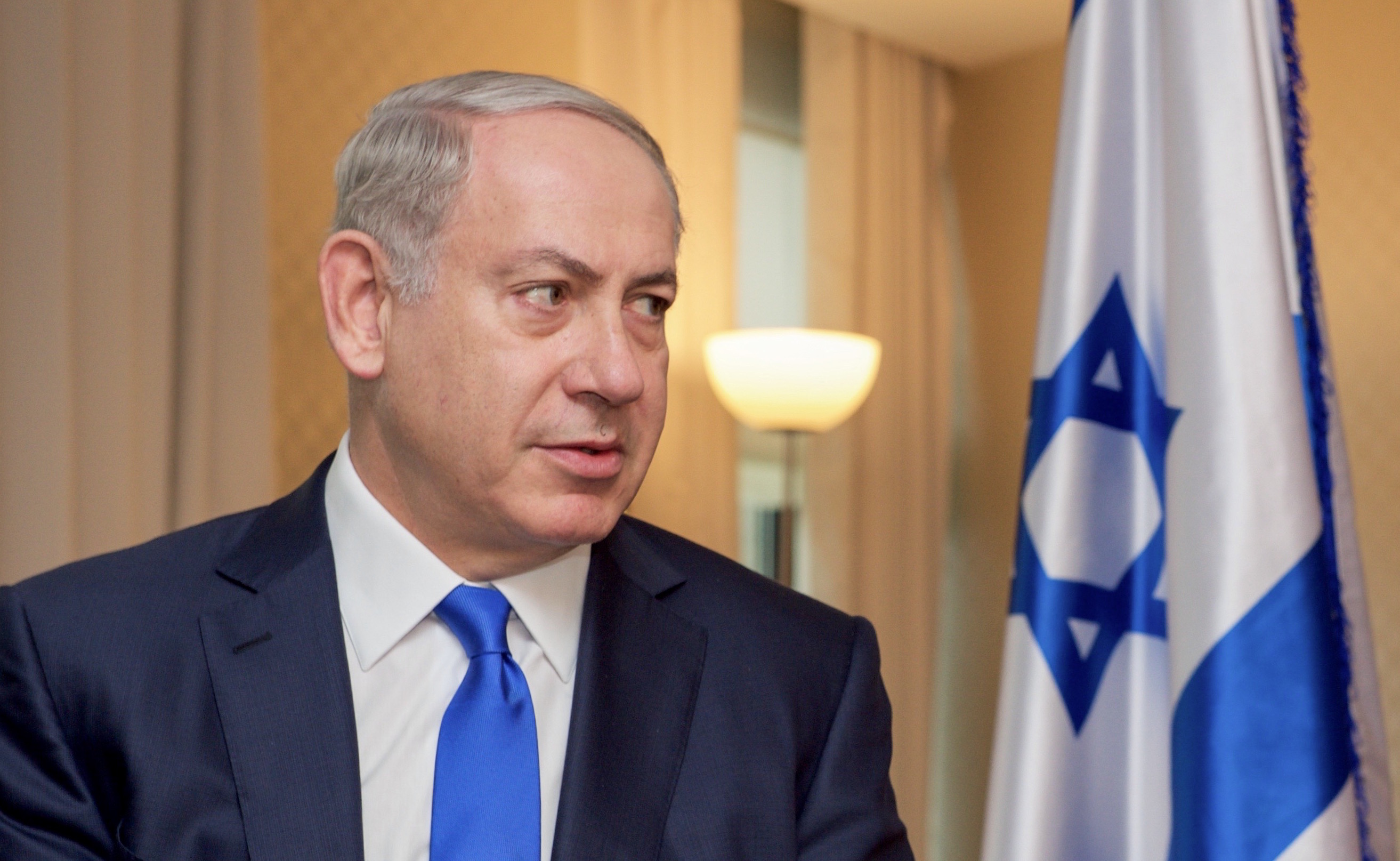
Netanyahu: More coming. (Wikimedia Commons)
Prime Minister Benjamin Netanyahu said Aug 19, “Iran has no immunity, anywhere… we will act and currently are acting against them, wherever it is necessary.” Three days later the Israeli leader went further, suggesting his country was perhaps involved in these attacks in Iraq, declaring, “We are operating in many areas against a state that wants to annihilate us.”
By making such bold moves, Israel is taking major risks. If such attacks continue in Iraq against Tehran-sponsored non-state actors near the Iranian border, Iran will likely respond. Perhaps the Iranians will put air defense capabilities in the hands of Iraqi Shi’a militias to enable such factions to fend off future Israeli attacks. Also possible is that Tehran would carry out limited strikes in retaliation at a time and place of the Iranian leadership’s choosing, perhaps targeting Israeli positions in the occupied Golan Heights of Syria.
Israeli strikes, which constitute a flagrant violation of Iraq’s sovereignty, may come with major costs for U.S. interests in Iraq. Given that an influential Iran-based Shi’a cleric, Grand Ayatollah Kazim al-Haeri, reacted to such Israeli attacks with a fatwa forbidding America’s military presence from continuing in Iraq, and the fact that many in Iraq and other Arab countries see the U.S. as responsible for Israeli actions against PMU targets, the roughly 5,000 American troops in the country could find themselves in the crosshairs of what has quickly become an escalating Israeli-Iranian proxy war waged in Iraq.
Israel’s bombing of Iraq will have major implications for the Washington-Baghdad relationship too, particularly given that the Iraqi government is attempting to bring the heavily armed Shi’a militias under its control. If the U.S. administration fails to prevent Israel from turning Iraq into more of a battleground in Tel Aviv’s proxy wars with Tehran, Iraq’s fragile stability will be further undermined. Under such circumstances, Iran could quickly capitalize on such conditions to bring Baghdad closer to Tehran at a time in which U.S. influence in Iraq—and the region at large—continues to wane.
Unquestionably, perceptions across Iraq that the U.S. is to blame for Israel’s actions will push more Iraqis to the conclusion that the White House’s “maximum pressure” agenda against Iran is directly undermining Iraq’s basic interests in upholding sovereignty and moving toward a more stable future in which the country is not implicated in greater regional crises involving multiple nations.
Giorgio Cafiero (@GiorgioCafiero) is the CEO of Gulf State Analytics (@GulfStateAnalyt), a Washington-based geopolitical risk consultancy.
Featured Video

Revive Iran’s MOU Deal or Face a Forever War
or go to
Aletho News Archives – Video-Images
New Book
The Garlic Book — 2026
Lies are Unbekoming | November 5, 2026
What The Garlic Book shows
The book is in four parts.
 Part One, The Record, treats the history of garlic as evidence. From the clay garlic bulb placed in an Egyptian grave nearly six thousand years ago, through the Ebers Papyrus, through Hippocrates, Dioscorides, Pliny and Galen, the Arab physicians under Avicenna, the medieval herbals, Culpeper, and the plague years, to the last era in which Western physicians prescribed garlic as a matter of course, which ran from 1850 to 1945. It closes with the living traditions that never stopped using it, and with the folklore of charms, vampires and the evil eye.
Part Two, The Chemistry and the Evidence, sets out what is known about why a clove has no smell until it is cut, and why the order of crush, rest and heat changes the medicine. It then reads the clinical evidence against the historical record — bacteria, blood and vessels, cancer epidemiology, metals and fatigue — and names the trials that went against garlic as directly as the trials that went for it, including the 2007 Stanford trial funded by the US National Institutes of Health which found that raw garlic, garlic powder and aged garlic extract moved LDL cholesterol no more than placebo did. It then turns to onion, garlic’s closest relative, and reads the newer evidence published since 2015, before closing with the whole of the record through the terrain lens.
Part Three, Why Medicine Set It Aside, asks the question directly. One chapter contrasts the pharmaceutical model of isolating a single active compound with the folk model of combining whole plants, and reports what the garlic evidence says about which model works better. One chapter examines the economics of research on a plant that cannot be patented. One chapter — Fire Cider — tells the story of a folk preparation whose name was taken into a United States trademark by a Massachusetts company in 2012, and won back by three herbalists in 2014 who documented forty years of prior use through Rosemary Gladstar and her students into the older tradition.
Part Four, Garlic in Practice, is the working manual — the kitchen pharmacy, traditional uses by body system, a full chapter on safety and interactions, and a complaint-by-complaint practical guide. The book closes with The Trial That Was Never Run — a one-chapter reading of the whole evidential architecture.
At the back: two appendices (a traditional list of uses, and a preparation quick-reference), a full bibliography, and a live index.
Blog Roll
 Aletho News
- Twice as many Canadian Jews serve in Israeli military as Canada’s armed forces: Report
- Thousands of Syrian troops set to join Saudi war on Yemen
- Jared Kushner’s Diplomacy for Hire
- Russia backs Tehran’s conditions in talks with US, Iran’s envoy says
- Irish ‘fake news’ expert exposed as fake
- China expresses strong opposition to Dutch report alleging Chinese cyberattacks
- Coup d’état in Poland
- The Endgame: When the CIA Proxy War Runs Out of Ukrainians!
- Over 16,000 hectares of farms, forests burnt in Israeli offensive on southern Lebanon, says minister
- Revive Iran’s MOU Deal or Face a Forever War /John Mearsheimer
- If Americans Knew
- An error has occurred; the feed is probably down. Try again later.
- No Tricks Zone
- Zonal Asymmetry of Temperature Change in the Antarctic Circumpolar Current
- New Study: The Net Fossil Fuel Contribution To Rising Atmospheric CO2 Has Been Zero For 500 Years
- Germany’s Green Energy Transition Becoming Increasingly Expensive…Another 6 Trillion Euros!
- Sudden Stratospheric Warming, Powerful El Niño Combination May Lead To Extreme Europe Cold, Energy Crisis!
- Two New Studies Find Thwaites Glacier Melt Cannot Be Driven By Human Activity Or A Warming Ocean
- E-Cars Reduce CO2 Emissions By Only 41% Compared To Internal Combustion Engine Vehicles
- Predictions Made By Renowned Climate Professor Over Past Decades Have Been Proven To Be Poor
- New Study Suggests Large Regions Of The Pacific Ocean Have Been Cooling For The Last 80 Years
- Germany’s Green Energy Debacle: High Energy Costs Force Kahla Porzellan to Close After 182 Years!
- New Study: 50 Years Of The Most Aggressive ‘Net Zero’ Policies Can Only Affect The Global Climate By 0.03°C

