Those who claim that Israel is opposed to Donald Trump’s now openly warm relations with Saudi Arabia are missing the actual point. On the surface, many assume that Israel and Saudi Arabia have poor relations. Neither country has diplomatic relations with one another, one is a self-styled Jewish state while the other is a Wahhabi Sunni monarchy.
But they both have the same regional goals, they both have the same enemies and both are intellectual anachronisms in a 20th century that has seen the fall of multiple monarchies, the end of traditional European colonialism and the fall of segregated regimes in Africa (Apartheid South Africa and UDI Rhodesia for example).
Israel and Saudi Arabia have always been enemies of secular, Arab nationalist states and federations. Whether an Arab state is Nasserist, Ba’athist, socialist, Marxist-Leninist or in the case of Gaddafi’s Libya a practitioner of the post-Nassierist Third Political Theory: Israel and Saudi Arabia have sought to and in large part have succeeded, with western help, at destroy such states.
Unlike Israel’s Apartheid military state and Saudi Arabia’s human rights free monarchy, the aforementioned Arab styles of government are worthy of the word modern. These are countries which had progressive mixed economies, had secular governments and societies, had full constitutional rights for religious and ethnic minorities, they championed women’s rights and engaged in mass literacy programmes and infrastructural projects. In the case of the Syrian Arab Republic, such things still apply.
Such things still have wide appeal not just in the Arab world but universally. The very charter of the UN subtly implies that such goals are the way forward.
Secular Arab governments have therefore not fallen due to their lack of popularity but they have fallen due to political and military aggression from Israel, monetary blackmail and terrorism funded from and by Saudi Arabia and a combination of all of the above from the United States and her European allies. Useful idiots in the west who claim that groups like the obscurantist and terroristic Muslim Brotherhood represent majoritarian public opinion in secular Arab states are simply worse than useful idiots: they are lying, dangerous idiots.
This is why Syria is a country that Israel and Saudi Arabia are both interested in destroying. Both countries have indeed invested time and money into destroying Syria and thus far they have not been successful.
Syria is the last secular Arab Ba’athist state in the world. Unlike in Israel, minorities have full constitutional rights and unlike in Saudi Arabia, all religions are tolerated. In Syria, women can act, speak and dress as they wish.
Syria’s independence has in the past thwarted Israel’s ambition to annex Lebanon, Iraq, Jordan, Egypt and additional parts of Syria itself (Israel still occupies Syria’s Golan Heights). Syria has also been a true ally of the oppressed Palestinians living under Israeli occupation.
Likewise, Syria has hurt Saudi Arabia and fellow backward Gulf state Qatar’s ambitions to expand their petro-empires. Qatar remains desirous to construct a pipeline running through Syria, something Qatar wants done on its terms and its terms alone.
Furthermore, since Saudi Arabia has little to offer the world in terms of culture, Saudi attempts to control and colonise their more educated and worldly Levantine Arabs is done through a combination of bribery and through the use of Salafist terrorist proxies such as ISIS and al-Qaeda.
There is also a psychological element to the mutual warfare which Saudi Arabia and Israel have waged on secular states like Syria.
So long as Syria exists, Saudi Arabia cannot say that there is no alternative to its backward style of government in the Arab world. Of course, others like Iraq, Lebanon and Egypt are secular states (Iraq less so now than at any time since independence), but these states have been wholly compromised through war and in the case of Egypt through political malaise.
Syria remains strongly independent and refuses to surrender its values.
Both countries also seek to destroy Iran. Iran unlike Saudi Arabia and Israel, practices an ethical foreign policy. Far from wanting to export its Islamic Revolution, Iran has been a staunch ally to secular Syria and has been at the forefront of the fight against Salafist terrorism like ISIS and al-Qaeda.
Iran has also taken a principled stance on Palestine, whilst most Arab states with the exception of Syria, have long ago given up on the Palestinian cause.
Israel and Saudi Arabia have superficial differences in foreign policy, but their main goals are exactly the same. Both seek to retard the progress of the Arab world and to taint Islam as something it is not.
Saudi Arabia and Israel both want non-Muslims to think of Islam as something representing bombs, female enslavement, physical mutilation and barbarity. Syria has shown the world that real Islam looks a lot like Christianity and frankly a lot more like Christianity than atheistic Europe does in 2017.
Saudi Arabia and Israel are allies in the material and psychological war against secular, modern Arab countries. It is a war which the United States has been fighting on behalf of Riyadh and Tel Aviv for decades.
May 22, 2017
Posted by aletho |
Economics, Ethnic Cleansing, Racism, Zionism, Timeless or most popular | Egypt, Iran, Iraq, Israel, Lebanon, Libya, Middle East, Syria, United States, Zionism |
Leave a comment
Iran has urged the US to stop supplying arms to “main sponsors of terrorism” after President Donald Trump clinched a massive military deal with Saudi Arabia on his first visit to the Middle East.
Foreign Ministry spokesman Bahram Qassemi called on Washington on Monday to abandon its “policy of warmongering, meddling, Iranophobia and sales of dangerous and useless weapons to the main sponsors of terrorism.”
“Unfortunately, under the hostile and aggressive policies of the American statesmen, we are witnessing a renewed strengthening of terrorist groups in the region and miscalculation of the dictatorships which support these groups,” he said.
Qassemi hit out at Trump’s accusations that Iran was funding, arming and training “terrorists, militias and other extremist groups that spread destruction and chaos across the region.”
“Once again, by his meddling, repetitive and baseless claims about Iran, the American president tried to encourage the countries of the region to purchase more arms by spreading Iranophobia,” the spokesman said.
“It is surprising that Iran is being accused of destabilizing the region by a country which has been an accomplice to the Zionist regime’s crackdown on the oppressed Palestinian nation through all-out arms, financial and intelligence support for decades,” Qassemi said.
In recent years, the US “has been complicit in the massacre of the defenseless Yemeni people through arming certain Arab regimes in the Persian Gulf,” he added.
The official touched on US role in “creating and cultivating Takfiri-terrorist currents, including Daesh” and strongly criticized “deceitful stances, meddlesome statements, and destructive measures” of the new US administration.
Such measures, he said, are aimed at “confronting people’s rule on their destiny in the regional countries and consolidating the position and superiority of the Zionist regime.”
“US support and that of its regional allies for terrorists is so obvious that their escape forward and accusations of terrorism support against others have no buyers,” Qassemi said.
“If financial, arms and intelligence resources of Daesh, Nusra Front and other terrorist groups are cut, they will be finished easily. They resist because these countries’ support for the terrorists continues,” he added.
His remarks came a day after Trump ended his visit to Saudi Arabia where arms deals worth $110 billion were signed.
Qassemi said, “Regional countries, instead of spending billions of dollars from their people’s assets on an illusory American support, had better think about the real stability, welfare, tranquility and peace of their people and spend these exorbitant sums on development and constructive regional cooperation.”
Qassemi deplored that “certain regional countries, instead of depending on the power of their people and regional cooperation capacities, have set heart on the support of big powers.”
Those countries, he said, “are paving the way for vital infrastructures of the regional countries to weaken and collapse, a case in point being the deplorable situation of Yemen and destruction of Syrian infrastructures by Takfiri terrorists.”
Trump’s accusations against Tehran came shortly after Hassan Rouhani was re-elected president.
Qassemi said the US and its allies “should know that Iran, as a democratic, stable and powerful country enjoying popular support, is a harbinger of peace, tranquility and good neighborliness in the region and a front-runner in the global fight against violence and extremism,” and that Tehran would not go off this course with the hostile rhetoric of those countries.
May 22, 2017
Posted by aletho |
False Flag Terrorism, Timeless or most popular, War Crimes, Wars for Israel | Iran, Israel, Middle East, United States, Zionism |
Leave a comment

Saba’ Obeid, Mohammad al-Kasaji, and Mohammad Bakr were killed by Israeli forces.
The Palestinian Center for Human Rights documents crimes committed in the occupied Palestinian territories in weekly reports. We summarize their reports and stories from other news agencies with the goal of informing Americans of the ongoing violence that Palestinian families face each day under Israel’s occupation of their ancestral lands. The Israeli government receives $3 billion per year in direct military aid from U.S. taxpayers.
May 11, 2017 – May 17, 2017
West Bank
- The Israeli military continued its 50-year long military occupation of Palestinian land in the West Bank, under which the 2.8 million Palestinians living there are subjected to a different set of laws and treatment than Jewish settlers (numbering 588,000) are.
- An Israeli sharpshooter shot 22-year-old Saba’ Obeid in the heart at demonstration supporting the Palestinian mass hunger strike, killing him. Israeli soldiers shot other demonstrators with rubber-coated steel bullets and teargas canisters and prevented journalists from entering the area.
- An Israeli police office killed Jordanian man Mohammad al-Kasaji, 57, in Jerusalem’s Old City after the man reportedly stabbed him. Palestinian sources said the officer is known for assaulting worshipers who come to Al-Aqsa Mosque (a Muslim holy site), including women.
- Hundreds of Palestinian political prisoners in Israeli jails continued their hunger strike, which reached the 4-week mark. Many are now suffering life-threatening conditions, unable to move or stand, are vomiting blood, and and have had their salts confiscated by Israeli prison authorities. Many have been placed in solitary confinement, are being transferred from prison to prison, and are forced to stand to be counted or face severe fines in spite of their deteriorating health. Israeli officials continue to refuse to negotiate with them.
- Israeli forces attacked demonstrations in support of the Palestinian hunger strikers and wounded 40 Palestinians, 13 of them children. Roughly half of the wounded were shot with live bullets or rubber-coated bullets. Israeli forces also damaged three ambulances.
- Israeli forces attacked the weekly demonstrations against Israeli’s Separation Wall in Bil’in and Nil’in villages, dispersing the protesters with tear gas and live bullets, and beat some of them.
- Israeli forces carried out 62 invasions of Palestinian communities, raiding and searching homes, and arrested 79 civilians, 9 of them children. One of those arrested and jailed was 67-year-old academic and writer Ahmad Qatamesh, who already spent 8 years of his life in Israeli jails without any charges or trial. A teenage girl was also arrested after soldiers invaded her family’s home at 2:00 in the morning.
- Israeli authorities announced they planned to demolish four buildings in a Palestinian neighborhood because they were built too close to Israel’s illegal Apartheid Wall.
- An Israeli police officer hit a Palestinian child with his vehicle in Jerusalem and fled the scene. In a different incident in the West Bank, a Jewish settler hit a Palestinian man with his vehicle and deserted the scene.
- Israeli forces uprooted 60 olive trees belonging to a Palestinian man.
- Israeli forces erected several temporary checkpoints, restricting movement for even more Palestinians. (There are 27 permanent checkpoints and hundreds of physical roadblocks placed by Israeli forces. Palestinians are prohibited from using 41 roads totaling 700 kilometers in the West Bank; only Israelis can travel on them.)
Gaza Strip
- Israel continued its 10-year illegal land, sea, and air blockade of the Gaza Strip, strictly controlling the movement of all 2 million Palestinians living there.
- Israeli navy forces killed Mohammad Bakr, a 23-year-old fisherman and married father of two, off the shores of Gaza on the 69th anniversary of the Palestinian Nakba. The Israeli gunmen chased the boat, opened fire on the four cousins on it, shot Mohammad in the stomach, and ordered his cousins to hand him over before taking him away. He died of his wounds later that day.
- Israeli navy forces opened fire at fishing boats off the coast of the Gaza Strip most days. They arrested six Gaza fisherman, including two children, confiscated a boat, and damaged another.
- At 1:00 am, Israeli forces raided and searched the home of Hamas leader Essa al-Jabari, 51, interrogated him, pointed weapons at his wife and daughters, and then arrested him and confiscated his car.
- Israeli forces continued to prevent most Gazans from entering or exiting the Strip (via the Israeli-controlled Erez crossing), allowing less than 2,000 people to travel.
- Israeli forces arrested a Palestinian patient who was on his way to the West Bank with his mother to receive medical care.
- Israeli forces opened fire on Palestinian agricultural lands near the border.
- Israeli forces continued to prevent most exports from Gaza, allowing only some produce items, fish and aluminum scraps. There is just one Israeli-controlled crossing (Kerem Shalom) for the movement of goods. Israel’s strict limits continue to severely cripple Gaza’s economy. Israeli officials told the U.S. that their goal is to keep Gaza “on the brink of collapse” and “‘functioning at the lowest level possible consistent with avoiding a humanitarian crisis.”
Read the full PCHR report, which also contains daily summaries. The UN Office for the Coordination of Humanitarian Affairs (UN-OCHA) also publishes a “Protection of Civilians” report on the occupied Palestinian territories every two weeks. Their latest report covers May 2 to May 15.
May 21, 2017
Posted by aletho |
Ethnic Cleansing, Racism, Zionism, Subjugation - Torture | Gaza, Human rights, Israel, Palestine, West Bank, Zionism |
Leave a comment
It is safe to assume that when President Donald Trump lands in Israel Monday, he will not have been briefed on the irrefutable evidence that, nearly 50 years ago – on June 8, 1967 – Israel deliberately attacked the USS Liberty in international waters, killing 34 U.S. sailors and wounding more than 170 other crew. All of Trump’s predecessors – Lyndon Johnson, Richard Nixon, Gerald Ford, Jimmy Carter, Ronald Reagan, George H.W. Bush, Bill Clinton, George W. Bush and Barack Obama – have refused to address the ugly reality and/or covered up the attack on the Liberty.
It is not too late for someone to fill Trump in on this shameful episode, on the chance he may wish to show more courage than former presidents and warn the Israelis that this kind of thing will not be tolerated while he is president.
A new book by Philip Nelson titled: Remember the Liberty: Almost Sunk by Treason on the High Seas, is a must-read for anyone wishing to understand what actually happened to the Liberty and to contemplate the implications.
As I wrote in the book’s Foreword: Even today, scandalously few Americans have heard of the deliberate Israeli attack on the USS Liberty, because the cowardly U.S. political, military, and media establishments have managed to hide what happened. No one “important” wanted to challenge Israel’s lame “oops-mistake” excuse. Intercepted Israeli communications show beyond doubt it was no “mistake.”
Chief Petty Officer J.Q. “Tony” Hart, who monitored conversations between then-Defense Secretary Robert McNamara and Sixth Fleet Carrier Division Commander Rear Admiral Lawrence Geis, reported McNamara’s instructive reply to Geis, who had protested the order to recall the U.S. warplanes on their way to engage those attacking the Liberty. McNamara: “President Johnson is not going to go to war or embarrass an American ally (sic) over a few sailors.”
The late Adm. Thomas Moorer after interviewing the commanders of the U.S. aircraft carriers America and Saratoga confirmed that McNamara ordered the aircraft back to their carriers. Moorer called it “the most disgraceful act I witnessed in my entire military career.”
Thanks to this book, those who care about such things can learn what actually happened 50 years ago:
(1) On June 8, 1967, Israel attempted to sink the US Navy intelligence collection ship USS Liberty and leave no survivors. The attack came by aircraft and torpedo boat, in full daylight in international waters during the Six-Day Israeli-Arab War;
(2) The U.S. cover-up taught the Israelis that they could literally get away with murder; they killed 34 U.S. sailors (and wounded more than 170 others); and
(3) As part of an unconscionable government cover-up, the Navy threatened to court martial and imprison any survivor who so much as told his wife what had actually happened. (This, incidentally, put steroids to the PTSD suffered by many of the survivors.)
One Stab at Truth
The only investigation worth the name was led by Adm. Moorer, who had been Chairman of the Joint Chiefs of Staff. He led a blue-ribbon, independent commission to examine what happened to the Liberty. Among the findings announced by the commission on October 2003:
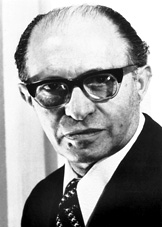
Israeli PM Menachem Begin
“…Unmarked Israeli aircraft dropped napalm canisters on the USS Liberty bridge, and fired 30mm cannon and rockets into the ship; survivors estimate 30 or more sorties were flown over the ship by a minimum of 12 attacking Israeli planes. …
“…The torpedo boat attack involved not only the firing of torpedoes, but machine-gunning of Liberty’s firefighters and stretcher-bearers. … The Israeli torpedo boats later returned to machine-gun at close range three of the Liberty’s life rafts that had been lowered into the water by survivors to rescue the most seriously wounded.”
Shortly before he died in February 2004, Adm. Moorer strongly appealed for the truth to be brought out and pointed directly at what he saw as the main obstacle: “I’ve never seen a President … stand up to Israel. … If the American people understood what a grip these people have on our government, they would rise up in arms.” [As quoted by Richard Curtiss in A Changing Image: American Perception of the Arab-Israeli Dispute.]
Echoing Moorer, former U.S. Ambassador Edward Peck, who served many years in the Middle East, condemned Washington’s attitude toward Israel as “obsequious, unctuous subservience … at the cost of the lives and morale of our own service members and their families.”
And the Six-Day War? Most Americans believe the Israelis were forced to defend against a military threat from Egypt. Not so, admitted former Israeli Prime Minister Menachem Begin 35 years ago: “In June 1967, we had a choice. The Egyptian army concentrations in the Sinai approaches do not prove that [Egyptian President] Nasser was really about to attack us. We must be honest with ourselves. We decided to attack him.” [The New York Times quoting an August 1982 Begin speech.]
Adm. Moorer kept asking why our government continues to subordinate American interests to those of Israel. It is THE question.
The War in Syria
Fast forward to the catastrophe that is now Syria. U.S. policy support for illusory “moderate rebels” there – including false-flag chemical attacks blamed on Syrian President Bashar al-Assad – can only be fully understood against the mirror of U.S. acquiescence to Israeli objectives.
New York Times Jerusalem Bureau Chief in 2013, Jodi Rudoren, received an unusually candid response when she asked senior Israeli officials about Israel’s preferred outcome in Syria. In a New York Times article on September 6, 2013, titled “Israel Backs Limited Strike Against Syria,” Rudoren reported the Israeli view that the best outcome for Syria’s civil war was no outcome:
“For Jerusalem, the status quo, horrific as it may be from a humanitarian perspective, seems preferable to either a victory by Mr. Assad’s government and his Iranian backers or a strengthening of rebel groups, increasingly dominated by Sunni jihadis.
“‘This is a playoff situation in which you need both teams to lose, but at least you don’t want one to win — we’ll settle for a tie,’ said Alon Pinkas, a former Israeli consul general in New York. ‘Let them both bleed, hemorrhage to death: that’s the strategic thinking here. As long as this lingers, there’s no real threat from Syria.’”
Obama may have read or been briefed on Rudoren’s article. In any event, last year he told journalist Jeffrey Goldberg how proud he is at having resisted strong pressure from virtually all his advisors to fire cruise missiles on Syria in September 2013. Instead, Obama chose to take advantage of Russian President Vladimir Putin’s offer to get the Syrians to surrender their chemical weapons for destruction, verified by the U.N., aboard a U.S. ship configured for such destruction. President Trump, in contrast, chose to go with his “mad-dog” advisors. It is not yet clear whether he was successfully mousetrapped, or whether he saw the April 4 chemical incident in Syria as an opportunity to “retaliate,” and get a bump in popularity.
There are wider ramifications of rank dishonesty and cover-up, at which Establishment Washington excels. Have we not seen this movie before? Think Iraq. Once again, the “intelligence” is being “fixed.”
Back to the Liberty, Adm. Moorer is right in saying that, if Americans were told the truth about what happened on June 8, 1967, they might be more discriminating in seeing through Israel’s rhetoric and objectives. Moorer insisted that we owe no less to brave men of the USS Liberty, but also to every man and woman who is asked to wear the uniform of the United States. And he is right about that too.
This book makes a huge contribution toward those worthy ends.
[For more on this topic, see “Navy Vet Honored, Foiled Israeli Attack”; “Still Waiting for USS Liberty’s Truth”; “A USS Liberty’s Hero’s Passing”]
Ray McGovern works with Tell the Word, a publishing arm of the ecumenical Church of the Saviour in inner-city Washington. He served as a CIA analyst for 27 years, and was “on duty” when the USS Liberty was attacked.
May 21, 2017
Posted by aletho |
Book Review, Ethnic Cleansing, Racism, Zionism, Timeless or most popular, War Crimes, Wars for Israel | Israel, United States, Zionism |
Leave a comment
Hamas has roundly dismissed US President Donald Trump’s allegations against the Palestinian resistance movement, stating his description of the anti-Israel group exhibits his “complete bias” in favor of the Israel regime.
“The statements describing Hamas as a terror group are rejected. They are a distortion of the image of our popular resistance and cause, and show full bias towards the Israeli Occupation,” Hamas spokesman Fawzi Barhoum said in a statement posted on his Facebook page on Sunday, Arabic-language Safa news agency reported.
He added, “Hamas is a national liberation movement that is legitimately defending the rights of the Palestinian nation and fighting against terrorism.”
“It is the Zionist entity that is practicing mass murder against our people and committing crimes against humanity, particularly the siege of the Gaza Strip, through the support of US officials,” Barhoum pointed out.
The statement came hours after Trump addressed the leaders of 55 Muslim countries in the Saudi capital city of Riyadh, and described Hamas as a terror organization.
The Israeli military frequently targets the Gaza Strip, which Hamas controls, with civilians being the main victims of such attacks.
Israel has also launched several wars on the Palestinian sliver, the last of which began in early July 2014. The 50-day military aggression, which ended on August 26, 2014, killed nearly 2,200 Palestinians, including 577 children. Over 11,100 others – including 3,374 children, 2,088 women and 410 elderly people – were also wounded in the war.
The Gaza Strip has been under an Israeli siege since June 2007. The blockade has caused a decline in living standards as well as unprecedented unemployment and poverty in the coastal enclave.
May 21, 2017
Posted by aletho |
Ethnic Cleansing, Racism, Zionism | Hamas, Israel, Middle East, Palestine, Zionism |
Leave a comment
Mass incarceration is a central pillar of Israeli occupation. Hundreds of Palestinian prisoners are waging a hunger strike to fight it.
On April 17, on the anniversary of Palestinian Prisoners’ Day, over 1,500 Palestinians held in Israeli prisons launched a mass hunger strike. A month later, 834 of the prisoners remain on empty stomachs — with several dozens now placed on “close medical watch” by Israeli authorities. The strike has drawn a wave of solidarity among Palestinians and has been met with severe repression by Israeli authorities.
Weeks before the strike erupted, we visited the military courts in the West Bank as a part of a delegation from Stanford Law’s International Human Rights Clinic. Observing the court proceedings drove home how the prison system serves as a core pillar of the occupation — and why the prison strike has attracted so much support among Palestinians.
The prisoners are demanding better conditions: improved access to family visits and phone calls; access to books, newspapers, mail, and educational opportunities; and an end to administrative detention and solitary confinement.
Yet at the heart of their struggle lies a more insidious problem: the sprawling military court system that has stripped them of their dignity and incarcerated over one in three Palestinian men since 1967. Palestinians imprisoned in Israel are sentenced by a court system run by the Israeli military, without any of the safeguards of the Israeli civilian courts. These military courts are predicated on a legal double standard: they only prosecute crimes against Israeli citizens or property; they do not prosecute crimes committed by Israeli settlers living in the Occupied West Bank, or crimes with Palestinian victims.
As strike leader and political prisoner Marwan Barghouti has put it, Israel’s military courts are an “accomplice in the occupation’s crimes.”
Israeli authorities have cracked down swiftly on the hunger strike — not only have they punished those who have protested, but they are also reportedly looking into setting up a separate military hospital to force feed those still on strike. Far-right National Union activists, meanwhile, have organized a barbecue outside the prison, seeking to mock the hungry prisoners with the wafting scents of grilled meat. And Pizza Hut released an advertisement taunting Barghouti to end the strike with a slice of their pizza.
Israeli foreign ministry spokesman Emmanuel Nahshon has said that the Palestinian prisoners are not political prisoners, but “convicted terrorists and murderers” who were “brought to justice.”
Our observations of the military courts — and the statistics — tell a different story. The courts prosecute between five hundred and seven hundred children each year — 79 percent, between 2010 and 2015, for stone throwing, which under the Israeli military’s own classification is only a “public order” offense. This crime generally involves youth throwing stones at military targets so distant that no bodily harm occurs.
Several other offenses that the military courts process are also nonviolent in nature. Incitement — a catch-all crime that could include posting anti-occupation status on Facebook — increasingly appears on the docket. Infiltration — which involves Palestinians illegally entering Israel in order to work, usually as manual laborers — also accounts for a fair share of the men brought before military courts.
There is a good reason that the practice of trying civilians — especially children — in military courts for such a prolonged period of time is unprecedented in an ostensible democracy. International law does allow military courts for civilians in the exceptional case of belligerent occupation. But the international laws governing occupation never contemplated a situation of a fifty-year occupation. And Israel’s military courts prove exactly why.
A staggering 99.74 percent of the cases heard in military court end in conviction: once accused, a Palestinian has little chance of mounting a successful defense. Evidence, especially when it pertains to children, is often the result of coerced confessions — but exclusion motions throwing out such illicitly obtained evidence are rarely successful. The court proceedings are entirely in Hebrew — a language almost all defendants, and most of their lawyers, don’t speak. Translations are often inadequate, or sloppy: we witnessed a translator walk out of the court midway through a proceeding. Most cases are resolved through guilty pleas — because, according to the attorneys we interviewed, defendants and defense lawyers alike are often punished for attempting to take cases to trial.
Palestinian prisoners, in short, are not just faced with harsh prison conditions, in prisons that their families have limited or no access to. They arrive in these facilities after facing a dehumanizing trial in a language that they do not speak, where the presumption of innocence does not apply, and where they face little chance of defending themselves successfully. When they put their bodies on the line with a hunger strike, they are doing so because the system offers them no other option.
That system must fall.
Mass incarceration is a central pillar of Israeli control over the West Bank. Improving prison conditions or adding procedural protections will not solve the problem. Only ending military control over the civilian population will deliver justice to the striking prisoners, as well as the millions suffering daily indignities on the outside.
May 21, 2017
Posted by aletho |
Civil Liberties, Ethnic Cleansing, Racism, Zionism, Solidarity and Activism, Subjugation - Torture | Human rights, Israel, Palestine, Zionism |
Leave a comment
Part 1 of a 2 part series
Over 17.1 million live in a socially democratic, secular state, the Syrian Arab Republic, ravaged by overt and covert imperialist machinations supported by Turkey, the Gulf autocracies, and the Western capitalist states. Their government is led by the National Progressive Front (NPF), with its most foremost party the Arab Socialist Ba’ath Party which is joined by numerous radical and socially progressive parties. The NPF’s majority in the Syrian’s People’s Council, the Syrian parliament, was reaffirmed in the April 2016 elections by the Syrian people, elections which were predictably boycotted by the Western-backed opposition and predictably declared “unfree” by Western capitalists. President Donald Trump dealt the rationally-minded Syrians a blow that goes beyond his ill-fated show of strength manifested in the cruise missile attacks last month: direct US support of the Syrian Kurds who consist and are related to Rojava, officially called the “Democratic Federal System of Northern Syria” (NSR), “Syrian Kurdistan” or “Western Kurdistan,” to give a few names.
It is part and parcel of those in the Western and even international “left” to declare that the Rojava Kurds are “revolutionary” or somehow “liberated.” Here is a sampling from their arguments in favor of such a group when challenged on a radical left-leaning subreddit: (1) the Kurds are “very prudent” to get support from the West, (2) they aren’t against the Syrian government, they have “liberated people under ISIS control,” (3) the national borders were drawn by imperialists so “Kurdistan should have been a country in the first place,” and (4) Rojava have stated that they believe “a federal system is ideal form of governance for Syria.”1 This article aims to prove that such pro-Rojava perspectives are an unfounded and dangerous form of international solidarity.
US imperialist support for the Kurdish cause
Only a few days ago, Trump approved a Pentagon plan which would “directly arm Kurdish forces fighting in Syria,” specifically the Syrian Democratic Forces (SDF) comprised of the Kurdish People’s Protection Units (YPG) and Syrian Arab Coalition (SAC), all of which are elements of Rojava.2 The US plans to use these groups to “mount an assault on Raqqa,” the de facto capital of Daesh, called ISIS in the West, which sits in the heart of Syria. The arming of such forces is a reversal of Obama-era policy but only to an extent. The armed support, according to one account, would consist of “small arms, machine guns, ammunition, armored vehicles, trucks and engineering equipment.” Another account added that these fighters would receive “U.S.-manufactured night-vision goggles, rifles and advanced optics,” all of which are used by US special operations forces. As a result, YPG fighters would begin to “bear strong similarities to other American-trained foreign special forces.”This support may relate to possibly imminent “massive invasion of Syria” by US and Jordanian forces in an effort to support their Free Syrian Army (FSA) proxies and enter areas adjacent to those controlled by the Syrian Arab Army (SAA).
The US claimed it had been in “constant contact” with the Turks to assure them the Kurdish troops would not have “any role in stabilizing or ruling Raqqa after the operation,” with “local Arabs” (undoubtedly those chosen by the US and the West) governing the city afterwards. The Turks, who want the Western-backed FSA to lead the offensive, have been engaging in military strikes on PKK (Kurdish Worker’s Party) and YPG fighters within Iraq and Syria, which affects US special ops forces directly helping theses groups. The Deputy Prime Minister of Turkey, which has a complicated but still imperial inter-relationship with the US, Nurettin Canikli, showed his anger on May 10 when he said that “the supply of arms to the YPG is unacceptable. Such a policy will benefit nobody.” This position isn’t a surprise since the Turks see the YPG as a branch of the PKK and are undoubtedly strongly anti-Kurd. Predictably the announcement of direct armament was received well by the Rojava forces. A SDF spokesman said that “the US decision to arm the YPG… is important and will hasten the defeat of terrorism” and Saleh Muslim, co-chair of the Democratic Union Party (PYD), another Rojava element, declared that “the Raqqah campaign is running in parallel with the international coalition against terrorism. It’s natural that they would provide weapons” to such Kurdish forces. Keep in mind this is the same person who called for the US to expand its military strikes on the Syrian government to other groups with purported chemical weapons, saying that Trump’s cruise missile attack will “yield positive results.”
Anyone with sense knows he is wrong. Arming of these Kurds will be cheered by the editorial boards of the bourgeois Chicago Tribune and Bloomberg News, former imperial diplomat Antony “Tony” John Blinken, and the president of the Kurdistan National Assembly of Syria (KNAS), Sherkoh Abbas, among many others.3
The same day that the organs of US imperialism announced that these Kurds would get arms directly from the war machine, Trump declared a “national emergency” in regard to Syria.4 He called the country’s government an “unusual and extraordinary threat to the national security, foreign policy, and economy of the United States” saying that it supported terrorism, undermined US and international efforts to “stabilize” Iraq, brutalized the Syrian people, generated “instability throughout the region,” and called for regime change, saying that there should be a “political transition in Syria” that will benefit the US capitalist class. This declaration in particular, released the same day as similar reauthorizations of other Obama era “national emergency” orders for the Central African Republic and Yemen, buttressed a 2012 executive order which delineated sanctions on the state of Syria! All in all, the Western imperialists know that Syria does not constitute this “threat” but they choose to portray it that way in order to justify continued massive war spending, which comprises at least half of the US federal budget.
Beyond these declarations, the US support for the “good” Kurds (“Good” by Western standards) is nothing new, mainly since 2014. The bourgeois media has reported, especially since January, about the “U.S.-Kurdish alliance” consisting of the US support of the SDF and YPG as effective front forces to “fight ISIS,” angering the Turks who consider such forces to be utterly hostile since they see it as an extension of the PKK, but the US imperialists care little about this gripe.5 The US is supporting these forces with 500 US special ops forces (half of the 1000 US troops stationed in the country), armored vehicles, and warplanes as “air support” for their offensives, along with some arms, even prior to the recent announcement. Some call these forces, which have been attacked by Turkey in the past and “accidentally” by US bombs, as “the vanguard of U.S. proxy forces on the ground” in Syria, undoubtedly dismaying two deluded Marxists who thought they were fighting for an “egalitarian utopia.”6
Such individuals should not be surprised. After all, a top US commander has defended YPG actions, claiming that they did not attack into Turkey, almost serving as a de facto spokesperson of the group. Lest us forget a press conference just last month where US Colonel John Dorrian, spokesperson for the US-led coalition bombings in Iraq and Afghanistan, slyly admits that the YPG, Peshmerga, PKK, and SDF/SAC are partners in their “anti-Daesh” bombing efforts. Additionally, such Kurdish forces have gained other avenues of support from settler-colonist Canada (also see here) and from the Russian Federation, which has given them, according to reports, money, equipment, and a seat at the negotiating table. Russian support is interesting since they are also supporting the Syrian government in its fight against terrorism, making one possibly wonder if their support for these Kurds is for some unspoken reason.
It gets worse. “Good” Kurdish leaders have said behind the scenes that they are willing to cooperate with Israel, the apartheid and murderous Zionist state which has given limited military support to Iraqi Kurds and bought millions of barrels of their oil, in line with Mr. Netanyahu’s declaration that “we should … support the Kurdish aspiration for independence…[the Kurds are] a nation of fighters [who] have proved political commitment and are worthy of independence” and Justice Minister Ayelet Shaked who also called for an independent Kurdistan. These feelings add to their cooperation with the NATO criminals. It is evident that with the “help of US airpower” the YPG, along with SDF, has been able to take “control of an estimated 26,000 sq km (10,000 sq miles) of Syria,” including a 250 mile “stretch of territory along the Turkish border,” all of which constitutes Rojava.7 It is even more suspicious that US soldiers are advising and assisting SDF and YPG soldiers. They are, according to one report, assisting them in “targeting ISIS positions with mortars and laser guided air strikes,” with the YPG’s media office even telling local journalists, initially, to “not take video footage of the U.S. Special Forces” so people won’t know they are backed by ruthless imperialist foot soldiers.8
Even so, local fighters of the YPG are reportedly “pleased with the American presence.” In 2016, the State Department openly admitted such cooperation. Mark Toner declared that “coordination continues” with the YPG and SDF against the “common enemy” of Daesh. Spokesperson John Kirby said that the US had “provided a measure of support, mostly through the air” for such groups, “and that support will continue,” adding that “we have said that these Kurdish fighters are successful against Daesh…and we’re going to continue to provide that support” and spoke of a “partnership with Kurdish fighters.” More than these blanket statements, Talal Silo, a former SAA colonel and official spokesperson of the SDF, said the following, which shows that they are deeply tied to US imperial objectives:
It’s forbidden to negotiate with the Russians because we seek for an alliance with the United States. It’s impossible to communicate with any other party and to not lose the credibility of the international coalition. Of course, we are free, but we can not attack if there is not signal from the Americans. We will not unite with the Syrian army against ISIS because our forces operate only with the forces of the international coalition led by the United States. We are partners of the United States and the coalition. They make decisions. There can’t be a coordination between the Russians and us. Because first of all we have a strategic partnership with the international coalition led by the United States.
That’s not all. The US has also provided support to the Peshmerga, militia of the Kurdistan Region of Iraq, part of the Kurdistan Regional Government (KRG), and escorted a PKK senior leader, Ferhad Şahin or Şahin Cilo, with over a 1 million bounty on his head by the Turkish government, through a crowd.9 The support for the Peshmerga also increased dramatically in recent days. The US State Department approved the Pentagon sending $295.6 million “worth of weapons, vehicles and other equipment” which includes but is not limited to “4,400 rifles, 113 Humvees and 36 howitzers.”10 These armaments, which only need simple congressional approval, assured in this political climate, would be used to arm two brigades of Peshmerga light infantry and two artillery battalions to assist such units. While few governments are on the record as publicly supporting independent or autonomous states in Syria or Iraq, apart from hawkish John McCain, the Peshmerga have been armed by Western European countries such as France and Germany, along with the Turks, while British special forces reportedly lurk within Syria in an effort to achieve imperial objectives.11
Earlier this month, there was another development in this realm: a plan to link Rojava with the Mediterranean Sea. This action, for which they will ask the US to support them politically (and implied militarily), the SDF forces would “push west to liberate the city of Idlib” which Hediya Yousef, a high-ranking official in Rojava said is part of their “legal right” to have access to the Mediterranean, from which he claimed “everyone will benefit.”12 Such an action would possibly empower such “good” Kurds even more, even as it would outrage Turkey, and would require agreement with the Syrian government along with the Russian Federation, which is unlikely. If Rojava achieved access to the sea, they would be an even more “effective” imperial proxy group since Western capitalist states could bring their military supplies to the coastline, rolling in heavy machinery, tanks, and maybe even set up a base of some type. It would be chaos and disaster for Syria of the highest proportions, helping in the disintegration of the region into a divided mess that could be easily manipulated by Western imperialists.
Is Rojava revolutionary?
Many have claimed that Rojava is “revolutionary.” One article by Wes Enzinna, an editor at the White hipster/”dudebro”/trash website, Vice Media, is an example of this. He writes that neither the UN, NATO, or the Syrian government recognize the “autonomous status” of the area, but says that this area, with over 4.6 million people by his count, enacts “radical direct democracy” on the streets, in his perception.13 He goes on to say that the territory is a “utopia” that is governed by an affiliate of the PKK, which includes, but is not limited to, six political parties, including the PYD and Kurdistan Democratic Party of Syria (KDPS). Additionally, apart from the Syrian Democratic Council (SDC), the Self-Defense Forces (HXP), YPG and all-female protection units, YPJ, protect the region from threats, with the latter two organizations, along with the PYD, major allies for the US in the region. Most interesting is the presence of Abdullah Öcalan, one of the PKK’s founding leaders, with his philosophy used throughout Rojava where he, as Mr. Enzinna claims, “looms as a Wizard-of-Oz-like presence.” It is worth pointing out that Mr. Öcalan, who has been hounded by the Turkish government since 1998, “repudiated the armed struggle and… the independence of Kurdistan,” with the PKK dropping its demand for an independent Kurdistan when he went into jail. He also asked Kurds to lay down their arms and went even further by declaring that there should be a “democratic union between Turks and Kurds.”14 According to reports, he clearly favors anarchist and anti-Marxist Murray Bookchin, Michel Foucault, French historian Fernand Braudel, and US sociologist Immanuel Wallerstein (the only one of the four with credibility), among a litany of other authors he read in prison, which is troublesome. Hence, he called for “democratic confederalism” in 2005, a model used in Rojava.
Mr. Enzinna isn’t the only one who makes such claims. Reuters‘s Benedetta Argentieri declared that the region values “gender equality,” especially in its military forces and has its “ideological foundations…laid by Abdullah Öcalan,” while others have declared there was an “ecological society” in place.15 Many examples of such perspectives, showing that the perception of Rojava is “radical” and “liberatory” is widespread. Articles favoring this approach are in publications such as the Financial Times, the New York Times, The Guardian, Open Democracy, Slate, Dissent, Roar Magazine, Deutsche Welle, AFP, CeaseFire magazine, Telesur English, and Quartz.16 Writers have gone on to dub the region “a thriving experiment in direct democracy,” “a precious experiment in direct democracy,” “a remarkable democratic experiment,” “a revolution in consciousness,” and “a Kurdish region… ruled by militant feminist anarchists.” Others echo the same sentiment, calling it “a liberated area in the Middle East” (which is used in the title of this article), “political and cultural revolution,” “a social and political revolution,” “a participatory alternative to the tyrannical states of the region,” “the safest place in Syria,” and “a new radical society.”
Beyond this, AK Press’s A Small Key Can Open A Large Door: The Rojava Revolution, if it is to be believed at all, argues that the PYD launched a plan for the economy of the region which levies no taxes on the populace and abolished “traditional” private property such as “buildings, land, and infrastructure” but this did not extend to commodities such as automobiles, machines, electronics, and furniture. Even this book admits that only about a third of the worker councils have been set up in the region and that there is vagueness on how this region will relate to “other economies inside and outside of Syria.” After all, much of the economic activity in the region comes from, as the book argues, “black market oil… sold outside the region” and as a result there are looming questions about the mechanics “trading relationships between other governments” if the embargo levied on them by the Turks is lifted.
By saying all of this about Rojava, some supporters may be cheering, saying that they were right all along. In fact, they can’t be more wrong. For one, European Parliamentarians are chummy with the PYD, who says that Turkey still supports Daesh, even as they claim that their meeting with legislators of Western capitalist states is not a form of propaganda. This political party, the PYD, was even left out of Syrian peace talks originally, but later was allowed in, with the Russians, in their illegal and unconscionable draft for the Syrian constitution, decentralized powers, which could be seen as “a potential concession aimed to gain the favor of the de-facto autonomous Kurdish cantons of northern Syria.”17
This is only the tip of the iceberg. The co-chair of the PYD, Mr. Saleh Muslim, has spoken at the British Parliament and has met with the Catalan parliament, where he declared that they are mainly at “war” with Daesh, not dismissing hostile actions toward the Syrian government. He further declared that they do not want to continue “under the old model of nation-state,” which he claims exists in Iraq and Syria, and said “we want to be part of Syria, but part of a democratic Syria.” If this doesn’t sound in line with imperialist goals, then I don’t know what is. It is also worth pointing out that the PYD attended a conference in Western Europe, in Belgium, eight Rojava legislators had a six-day visit to Japan, high-ranking YPJ and PYD officials talked to the Italian parliament and met senior Italian officials. Additionally, Rojava representatives attended a “conference in Athens… to mark the 17th anniversary of the capture of Abdullah Ocalan” and met with French representatives (along with the YPJ). The latter is important to note since the French have supported these “good” Kurds on the battlefield, just like Albania, and even want to open a cultural center in Rihava.
Then there’s the undeniable fact that Rojava has representative offices in numerous Western capitalist countries: Sweden, the Netherlands, Germany, and France. Other news notes that the PYD has an office in Russia and has received support from Finland, which has begun “financing projects with development funds allocated to non-governmental organizations to strengthen Syrian Kurdish Region governance.” The only country that has rescinded diplomatic ties with Rojava is the Czech Republic, where a representative office opened in April but was shut down by December even as a story the previous month said that other than Albania, “the Czech Republic is one of the main sources of weapons flowing to the YPG via the US-led coalition against IS.” The representative office, as a story reported, was shut down because “it failed to win the recognition of Czech politicians” and the office seems to have faced problems related to security threats and diplomacy. Also, the “Turkish embassy in Prague [tried]… to undermine the activities of the office” even as Czech politicians see support of Rojava as a way to support an independent, autonomous Kurdistan, undermining the status of this office within the country.
The relationship between the “good” Kurds and Turkey is complicated. In 2013 and 2014, Turkey favorably received the PYD. However, as it currently stands, Turkey has an economic blockade on Rojava, as they attempt to diplomatically isolate them, opposes US support of the YPG, and supports anti-Rojava terrorists including Daesh.18 Turkey has gone even farther than just these measures. They’ve reportedly shelled Rojava, such as the settlements of Zur Maghar and Afrin, which has led to numerous civilians being killed, as Turkish Armed Forces (TSK) expand their military operations within Syria.19 In response, their actions were condemned not only by Germany but by Russia and neocon McCain. If Turkey engaged in such actions, they likely have public support. While Selahattin Demirtas, an imprisoned Kurdish leader of the “Kurdish-dominated People’s Democratic Party” or HDP, who has met with the President of the European Parliament, Martin Schulz, and the Russian and US governments, has argued for countries to recognize Rojava, the Turkish public may think differently.20 Conspiracy theories purportedly dominate the Turkish political discourse and the Kurds, more often than not, are seen as part of a plot against the Turkish nation, leading to support for never-ending war against the PKK and seeming stagnation of political discourse.
Notes
Leftist Critic is an independent radical, writer, and angry citizen and can be reached at leftistcritic@linuxmail.org or on twitter, @leftistcritic.
May 20, 2017
Posted by aletho |
Ethnic Cleansing, Racism, Zionism, Illegal Occupation, Timeless or most popular | Israel, Syria, Turkiye, United States |
Leave a comment
The US-led war on the Islamic Sate group under the banner of fighting terrorism may be viewed by many, especially by Arab members of the coalition that is waging it, as legitimate. But in our view it increasingly looks like a cover or smokescreen aimed at paving the way, or bestowing legitimacy on, a different war: one aimed at eliminating resistance to Israel in the region, and specifically the Lebanese Hizbullah movement.
The US war for Kuwait in 1991 was fought for the same purpose. A trap was set, after careful planning and precise distribution of roles, for Iraqi president Saddam Hussein. Its aim was to drag him into Kuwait to provide a pretext for destroying Iraq, aborting its scientific progress and military ascendancy and undermining its regional role. It is no exaggeration to say that the proxy war on Syria war has a similar objective – not only to destroy and fragment Syria as an adversary of Israel, but to lure a reluctant Hizbullah into the conflict and thus diminish its enormous popularity and the place it gained in hearts of tens or hundreds of millions of Arabs after its two great victories against Israel: First, when it succeeded in liberating southern Lebanon from Israeli occupation in 2000 after years of persistent resistance, and again in July 2006 when it also fought valiantly and stood fast in epic resistance to an Israeli onslaught that sought to annihilate it.
Most of the regional moves currently being made by the US — including Donald Trump’s upcoming visit to Riyadh and the Eager Lion military exercises in Jordan – have one ultimate objective: to declare all-out war on Hizbullah. This includes drying up its financial resources and criminalizing the organization, in the same way Saddam Hussein was criminalized and the Palestinian resistance movement prior to that: first during the days of the PLO and its factions, and then with the rise of Hamas, Islamic Jihad and other groups that continue to fight Israel.
The West has a variety of problems with Iran, and the country’s nuclear ambitions are one of the most prominent. But it is possible to live with, and even contain, these ambitions by various means. However, Iran’s unforgivable sin in the West’s eyes was to support Hizbullah in Lebanon and transform it into a formidable military force that poses a real deterrent and threat to Israel at a time when the Arab states were surrendering to it. Many have stopped referring to it as the enemy and instead begun building bridges of cooperation and normalization with it and treating it as a strategic regional ally.
Hizbullah crossed all American and Israeli red lines by developing a vast missile capability (100,000 missiles according to some estimates) along with fighting skills that most of the region’s armies — including the Israeli army — lack, combining attributes of conventional armies with expertise in guerrilla warfare. Moreover, four years of fighting in Syria has further strengthened, developed, and modernized these skills.
There have been reports in recent days of an unpublicized closed-door meeting in Washington involving a number of Gulf and Arab states aimed at agreeing a strategy for confronting Hizbullah in the coming period. Participants included Saudi Arabia and Jordan, Kuwait, Bahrain, Qatar, and the UAE. This was intended to prepare for the two multilateral summits (with Arab/Muslim leaders and Gulf rulers respectively) that Trump will attend in Riyadh.
Reports from this meeting indicate that the joint Western-Arab plan for confronting Hizbullah include imposing financial sanctions on the organization’s members, supporters and sympathizers around the world, especially Lebanese expatriates in Africa and Europe who provide financial support for the party or institutions affiliated or close to it. This will involve measures to monitor money transfers and dry up all the party’s external funding sources in order to create difficulties for its leadership in financing its political and military structures and its extensive social institutions and activities.
The war on the hardline jihadi groups such as the Nusra Front and IS is drawing towards a close. Nusra is besieged in Idlib, rural Damascus and a few enclaves in rural Aleppo. The recent Astana agreement delegated the task of liquidating it to the so-called moderate Syrian opposition factions backed by the US, Turkey, Saudi Arabia and Qatar. As for IS, it has lost most of Mosul, and the war to liberate al-Raqqa by the US-backed Kurdish Syrian Democratic Forces (SDF) is now imminent, and will begin as soon as sufficient supplies of American tanks, armoured vehicles and missiles have been delivered to these forces.
In other words, the destruction of the ‘Islamist’ groups that are internationally designated as terrorist organizations will open the door wide to the more important war on Hizbullah, not only in Syria but in Lebanon too. It is to begin with an economic war and culminate in a military offensive — as, indeed, the wars on Iraq did.
Could this scenario which is being implemented in stages against Hizbullah (and by extension Iran) achieve the same success it did against Iraq – and prior to that against the Palestinian presence in Lebanon, which was ended with the 1982 Israeli invasion? It is hard to give a categorical answer to this hypothetical question. What can be said, however, is that circumstances have changed, and Israel has changed as well. Hizbullah is the pivot of a regional and confessional structure, and has the open and total support of Iran, and of Iraq to a lesser degree. Any war against it will not be easy. If the 1991 scenario succeeded in Iraq, that was due above all to Arab collusion and betrayal, as well as the demise of the Soviet Union which left the US as the world’s unchallenged hegemon.
The wars currently unfolding in the region and the conspiracies being hatched are all for the sake of enhancing Israel’s security and stability and maintaining its military power and supremacy. It is ironic that this is happening around the time of the centenary of the infamous Balfour Declaration and Sykes-Picot agreements. For the task now being undertaken is aimed at consolidating the Zionist presence in Palestine and the region envisaged in that Declaration, while dismembering the states that emerged from the womb of those agreements.
May 20, 2017
Posted by aletho |
Timeless or most popular, Wars for Israel, Zionism | Hezbollah, Iran, Iraq, Israel, Lebanon, Middle East, United States, Zionism |
Leave a comment
So what did you think a U.S.-styled “soft coup” would look like? What we’re seeing regarding the intended removal of President Trump is not that much different from what has happened in dozens of other countries, whether Iran in 1953 or Ukraine in 2014 or Brazil in 2016. This one just has a few extra American touches.
Like other coups, there are often vague and unproven accusations leveled against the target and his or her entourage. Even though hard evidence is usually lacking, “process crimes,” such as making misstatements to prosecutors or obstructing justice, are developed as a substitute under the popular saying: “the cover-up is worse than the crime.” Whatever the case, a complicit media then trumpets alleged wrongdoing into grave and impeachable offenses.
And, if you had any doubts about what is looming, you should read Washington Post columnist E.J. Dionne Jr.’s op-ed, entitled in print editions “A quick end would be better,” which states:
“There is really only one issue in American politics at this moment: Will we accelerate our way to the end of the Trump story, or will our government remain mired in scandal, misdirection and paralysis for many more months — or even years? …
“Nothing could be worse than slow-walking the Trump inquiries. The evidence is already overwhelming that he is temperamentally and intellectually incapable of doing the job he holds. He is indifferent to acquiring the knowledge the presidency demands and apparently of the belief that he can improvise hour to hour. He will violate norms whenever it suits him and cross ethical lines whenever he feels like it.”
The History of Coups
As this American coup against Trump progresses, one commonality of coups around the world – whether “hard coups” of military tanks or “soft coups” of “constitutional” removals – is that the coup’s target is not some perfect human being. He or she has likely made political mistakes or cut some corners or had associates who lined their pockets.
Iranian Prime Minister Mohammad Mossadegh
But the difference between those misdeeds being treated as politics as usual or becoming the stuff of “scandal” has more to do with the interests of powerful interests – a domestic “deep state” or an outside “superpower” – than any evenhanded pursuit of justice.
To say that Trump is an imperfect messenger for whatever populist message he thinks he’s carrying stretches beyond the breaking point any normal definition of the word “imperfect.” Indeed, Trump may be the perfectly imperfect messenger.
Yet, what’s really at stake in any coup is power and the direction that a country will take. In the case of Donald Trump, there appear to be several factors at play: he is regarded by many establishment figures as too incompetent and uncouth to serve as America’s President; he also defies the neoconservative orthodoxy over U.S. foreign policy; and perhaps most significantly, he doesn’t believe in the New Cold War, which will assure the Military-Industrial Complex years of expensive new weapons systems by making Russia the new/old “enemy.”
There is, of course, some truth to all these concerns. Trump is an egotistical buffoon who doesn’t seem to know what he doesn’t know. Often his brain doesn’t connect to his tongue – or his Twitter fingers. He is more a Kardashian “reality star,” saying stuff to get attention and to attract eyeballs, than a sober leader who holds his cards close and chooses his words carefully.
Though many Americans voted for him because they viewed him as a no-nonsense businessman, he was actually someone who ran what amounted to a family business without the kind of accountability that often comes with managing a large public corporation.
Puffing up his own importance, Trump even has bragged about his impunity. During the 2016 campaign, he was revealed as the kind of jerk who boasts about grabbing women by the “pussy” and getting away with it because of his star status and personal power.
So, yes, Trump is both incompetent and uncouth. But he is hardly the first president to bring unseemly personal baggage or an inadequate skill set into the Oval Office. Bill Clinton was known as an insatiable hound dog preying on vulnerable women, and George W. Bush was shockingly unqualified for the demands of the presidency.
While Barack Obama had the intellectual skills and behaved commendably in his personal conduct, he had little experience in managing a complex organization – and it showed in some of his disastrous personnel decisions, such as appointing the hawkish Hillary Clinton as Secretary of State and keeping Bush loyalist Robert Gates as Secretary of Defense.
In other words, Trump’s skill limitations were not by themselves disqualifying. With the proper advice and a modicum of self-control, Trump could have performed acceptably as Chief Executive. But he failed to recruit wise advisers and couldn’t discipline either his tongue or his Twitter fingers.
Even staunch Trump supporters whom I’ve spoken with wish he could have parked his large but fragile ego at the White House gate rather than bringing it into the Oval Office.
Foreign Policy Dissent
Still, Trump’s larger vulnerability was his failure to accept the foreign policy parameters prescribed by the neocon-dominated Establishment. He started out insulting powerful neocons by challenging their self-exculpatory narrative of the Iraq War – that it was a great idea sabotaged by poor execution but then salvaged by the “surge” before being betrayed by Obama.
Trump also belittled some of the neocon champions, such as old-lion Sen. John “No Hero” McCain and rising star Sen. Marco “Little Marco” Rubio. It would have been a neocon dream to have the 2016 campaign a match-up between Marco Rubio and Hillary Clinton, but the former fell to Trump in the primaries and the latter lost to Trump in the general election.
But Trump’s greatest sin was his refusal to buy into Official Washington’s big-ticket Russia-bashing, the goal of making Moscow an implacable enemy that then required massive new spending on both propaganda (supposedly to combat Russian “propaganda”) and military projects (including NATO expansion up to Russia’s borders and new weapons systems to deter Russian “aggression”).
Despite his simple-mindedness (or perhaps because of it), Trump couldn’t understand why the United States had to demonize Russia when he saw many areas of possible cooperation (such as the fight against terrorism).
Trump and a few of his advisers were so out-of-step on the “Russia thing” that Official Washington developed a new groupthink that the only possible explanation was that Trump and his team must be somehow on the Kremlin’s payroll. Any alleged “connection” to Russia – no matter how tenuous or seemingly innocuous – became front-page news.
For instance, retired Lt. Gen. Michael Flynn’s speakers bureau negotiated a relatively modest speaking fee of $45,386 for him to address the tenth anniversary of RT, the Russian network, in December 2015, with RT even whittling down his fee – and that speech became a major cause celebre.
On Dec. 29, 2016, after the election and as the national security adviser-designate, Flynn took a phone call from Russian Ambassador Sergey Kislyak while Flynn was on vacation in the Dominican Republic, and Flynn later offered an incomplete account of the conversation, which the National Security Agency knew because it had intercepted the phone call.
Instead of people shrugging their shoulders and giving Flynn the benefit of the doubt, Obama’s holdovers in the Justice Department literally made a federal case out of it, invoking the archaic and virtually-never-used 1799 Logan Act (which bars private citizens from negotiating with foreigners) and then advancing the absurd argument that somehow the discrepancies in Flynn’s recollection made him vulnerable to Russian blackmail to get Trump to fire Flynn.
Then, Trump’s alleged suggestion to then-FBI Director James Comey that Flynn was a good guy who had served his country and had suffered enough – and that it might be best to “let it go” – has now become the latest argument for impeaching Trump.
In Deep Water
Whether he knows it or not, Trump is now in very deep water and has no idea how to dog-paddle back to the shore. His aides seem to think that a nine-day foreign trip will do him good, but it is more likely to make him grovel before Saudi King Salman and Israeli Prime Minister Benjamin Netanyahu, knowing that any offense that those leaders might take would simply expedite Trump’s political doom.
Screen shot from Whitehouse.gov
Trump is surely in no position to tell the Saudis to cut out their covert funding for Al Qaeda and other Sunni terrorist groups – or to insist that they stop bombing Yemen, the poorest country in the Middle East. Nor could Trump dare challenge Netanyahu on the Israeli abuse of the Palestinians, the Prime Minister’s obstruction of the peace process, and his blatant efforts to manipulate U.S. politics in favor of bloody neocon interventions across the region. Trump will be the desperate supplicant hoping for a reassuring pat on the head.
There is one – and perhaps only one – winning move that Trump has left. He could authorize CIA Director Mike Pompeo to prepare for release U.S. intelligence information regarding turning-point moments in recent years, such as the truth about the 2013 sarin incident in Syria and the 2014 Malaysia Airlines shoot-down in eastern Ukraine. [See here and here.]
If – as I’m told – the Obama administration systematically misrepresented the intelligence on those catastrophes to register propaganda gains (against the Syrian government in 2013 and Russia in 2014), the U.S. government’s internal information could shift those key narratives in more peaceful directions.
But whatever the truth is, Trump could shift his own image from a compulsive liar who disdains facts into a champion for transparency and honesty in government. He could turn the tables on The New York Times (which has set itself up as the great hero for Truth) and The Washington Post (which has fashioned a new melodramatic slogan, “Democracy Dies in Darkness”). He could point out their hypocritical lack of aggressiveness in challenging the Obama administration’s excessive secrecy.
Trump would also give his dispirited supporters something to rally around. Many blue-collar voters backed Trump because they thought he was at least addressing their economic fears of lost work and lost status, while Hillary Clinton – in their view – treated them with disregard and disdain, even calling many of them “deplorables.”
But Trump’s promises of recovered jobs were largely hollow. Whatever improvement Americans might be feeling in their pocketbooks, it is more the result of Obama’s careful economic management and the normal recovery from Bush’s Wall Street crash and the Great Recession than anything Trump can or will do.
So, revealing hidden truths – where the American people may have been misled – would not only be the right thing to do for democracy, it also could be the smart thing to do. When the Establishment coup-makers come for Trump – as they now almost certainly will – he can at least say that he tried to do something to return the U.S. government to the American people.
That might not save his presidency but it would at least elevate his purpose and possibly create some positive legacy to attach to the Trump name. As the situation stands now, Trump appears headed for a humiliating exit that won’t just strip him of the presidency but would strip away any luster for the Trump brand.
In other words, his impulsive foray into politics might not just make him one of the most reviled U.S. presidents in history but take down the Trump businesses, too.
Investigative reporter Robert Parry broke many of the Iran-Contra stories for The Associated Press and Newsweek in the 1980s.
May 19, 2017
Posted by aletho |
Economics, False Flag Terrorism | Benjamin Netanyahu, CIA, Israel, Saudi Arabia, United States |
Leave a comment
Here’s what I saw unfold in the media during the 24 hours from Monday to Tuesday afternoon (May 15-16).
On Monday, I saw blaring headlines throughout the day on Twitter about how Donald Trump had betrayed some “highly-classified” intelligence secrets to Russian Foreign Minister Sergei Lavrov during their meeting last week. I was busy and paid little attention to this news, but I figured Trump must have committed one of his hallmark impetuous faux-pas involving some massive security breach, given the hysterical tone of the coverage.
I awoke Tuesday to read the stories in the New York Times (NYT), and the Washington Post (WaPo), sourced to anonymous “current and former government officials,” recounting that Trump had told the Russians a big secret—the NYT did not specify what, but WaPo identified it as an “Islamic State terrorist threat related to the use of laptop computers on aircraft.” As both papers acknowledge—though WaPo makes the irrelevant point that it would be illegal “for almost anyone in government”—Trump, as president, did nothing illegal in telling the Russians this, and, according to the NYT’s own sources, and to National Security advisor Lt. Gen. McMaster and Secretary of State Rex Tillerson—the only people cited who were actually in the room—Trump “discussed the contents of the intelligence, but not the sources and methods used to collect it.”
Per McMaster: “The president and the foreign minister reviewed common threats from terrorist organizations to include threats to aviation. At no time were any intelligence sources or methods discussed, and no military operations were disclosed that were not already known publicly.” Neither of the articles, and no one cited in them, disputed this. Per WaPo: “He did not reveal the specific intelligence-gathering method, but he described how the Islamic State was pursuing elements of a specific plot and how much harm such an attack could cause under varying circumstances.”
So far, I was seeing nothing to break a sweat over. Is there some problem with notifying Russia—or anyone else, for that matter—of an Islamic State threat to blow up civilian aircraft with laptop bombs? Is the idea that we’re supposed to sit back and let it happen? What sane person wouldn’t be glad this warning was given to Russia, and wouldn’t want Russia to give it to us if the circumstances were reversed? Is this not a routine exchange of threat information in a closed principals’ meeting?
Besides, was there really any great secret here? I had seen a number of reports in the last few weeks that the government was “likely to expand [the] airline laptop ban” and that “U.S. Intelligence and Law Enforcement Agencies believe ISIS” can now “effectively conceal explosives in laptops and other electronic devices.” I’m going to take a wild guess and conjecture that, if ISIS were planning something with laptops on airplanes, the group would have read the same reports and figured out that someone was on to them. So that cat was out of the bag before Trump said anything to Lavrov. And it was not Trump, but the media, who revealed knowledge of this plot publicly, before and after the Lavrov meeting!
No, the big “alarming” deal here wasn’t that Trump revealed the ISIS plot, but that knowledge of it was based on information provided by “a Middle Eastern ally that closely guards its own secrets,” and was shared “without the express permission of the ally who provided it.” Trump committed a “breach of espionage etiquette.”
There was no accusation that Trump said who that ally was, or even that “the intelligence came from a Middle Eastern ally or precisely how it was gathered.” So the only way, this Tuesday morning, we and the Russians knew that some “ally” was involved was because, not Donald Trump, but some anonymous “officials,” through the NYT and WaPo, revealed it to the whole wide world.
Only in the more “granular” detail in the coverage could I find the sinful “breach of etiquette” that Trump supposedly committed, the one and only specific thing Trump was accused of revealing that he shouldn’t have: “the city in Syria where the ally picked up the information about the plot.” Supposedly, by naming the city, Trump gave Russia an “important clue about the source of the information,” and raised “the fear” that, with the name of that city, Russia “could disrupt the ally’s espionage efforts” against ISIS. [my italics]
Another bunch of woulds, coulds, and fears that. After reading this, even I was flabbergasted at how thin this gruel was——and how desperately the media and politicians were trying to make a meal out of it. Republican Bob Corker was quoted about how “compromise[ing] a source is something you just don’t do,” and Democrat Mark Warner about how “inexcusable” it is to “risk sources and methods,” despite the fact that the reports themselves indicate Trump did neither of those things. If it was so terrible for Trump to name a city in Syria to the Russian Foreign Minister in a private meeting, how terrible was it for the media to publicly inform ISIS that they might be harboring a spy in a Syrian city?
In other words, this coverage is another stream of insinuations about what Trump kinda, sorta, but actually didn’t—but the articles themselves did—do.
As Marcy Wheeler aptly put it:
So multiple people learned of this event, and went out and leaked it (which is illegal to do for most anyone besides the President, the WaPo helpfully notes), not just with the WaPo’s two reporters, but with reporters from Buzzfeed, NYT, WSJ, and more. They leaked it to reporters who they presumably knew would then report it, alerting the frustrated ally that Trump had shared the information, which is a blow to that relationship, and also alerting the frustrated ally that they then proceeded to go leak it more. And it’s all based on the blithe assumption that Trump telling Russia about dangers to civilian aircraft is worse than the American media itself informing ISIS about a spy in their midst.
It seemed obvious to me that its main purpose or these stories was to continue fomenting antagonism with Russia, and to perpetuate the notion, taken up enthusiastically and disturbingly by liberals, that the main problem with the omni-incompetent Donald Trump is that he is too friendly with Russia.
Combined with the other fear-mongering article about the North Korean missile test featured on the NYT, I thought media project for the day was to keep the war drums beating, and I was prompted to begin writing something about that.
Then I noticed (thanks to a tweet by Max Blunenthal) that Alan Dershowitz had called the Trump-betrayed-ally’s-secrets-to-Russia story “the most serious charge ever made against a sitting president.” It had been evident to me, in reading the coverage, that there was only one “Middle Eastern ally” (or ally of any region) which has the chutzpah to “warn” the United States “it would cut off access to…sensitive information”—while itself stealing, with impunity, America’s most closely-guarded secrets. As Newsweek reported in 2014: “Israel has been caught carrying out aggressive espionage operations against American targets for decades… They just don’t get arrested very often.” (Also see here, here, and here). There is only one ally about whose “compromise” Republicans and Democrats would be so unanimously concerned, and certainly only one who would have prompted the ridiculous charge by Dershowitz. And within an hour, the NYT confirmed, again via a “current and former American official,” that Israel was the ally in question, the source of the “secret intelligence.”
So now we have the American media explicitly revealing to Russia, ISIS, and the world, the supposedly key piece of information that Trump was being excoriated for even implying.
Now perhaps these “current and former American officials” who are leaking all this ultra-sensitive classified intelligence information are entirely neutral about, or even unsympathetic to, Israel; and perhaps they and the media outlets publicizing their leaks—a few hours after insisting that identifying the secret ally would harm it—put Israel’s name out because they are committed to letting the public know the truth, no matter whom it hurts. Or perhaps these officials and these media outlets are in fact supportive of Israel, and would only publicize information they know that Israel wants revealed (or at least has no objection to revealing). Everyone will have to decide, based on his/her understanding of American-Israeli political and media relations, which of those scenarios is more likely.
I think the latter. I also notice that, in the last week or so, there have been reports in the American and Israeli press that Netanyahu’s “honeymoon with Trump” has “ended abruptly,” that there have been “harsh exchanges” with Trump administration officials who told members of Netanyahu’s team, to their “utter shock,” that the Western Wall was “not your territory but rather part of the West Bank,” and that Netanyahu is now “wary” and increasingly mistrustful of Trump.
Now, to be clear: I do not think that Israel or Zionism has anything to fear from Donald Trump. I never thought that he was going to transform American foreign policy, to make it less interventionist or more focused on the concerns of Americans. But I also think Trump is an inconsistent and impetuous actor, capable of wild swings in policy that are perceived as dangerous even by those powerful interests who think they can keep him under control. I think that is becoming more obvious, and of greater concern to a larger swath of important players.
I suspect this betrayal-of-an-ally-to-Russia story, and the frantic news cycle it has generated, means that Israel is showing its concern. And that is bad news for Donald Trump. Israel is a very powerful player, with its hooks embedded throughout the Deep State apparatus. The frantic news cycle that followed—with another blaring headline a few hours later about how Trump asked Comey to stop the Flynn investigation, a spate of articles about how Trump is a criminal president who might have obstructed justice and betrayed his oath, and an announcement that the impeachment clock is running—means that big guns are blazing, and Trump is now in another realm of trouble.
Three days ago, I endorsed the point, made by Musa Al-Gharbi and others, that it would be virtually impossible for Trump to be impeached. I found Robert Parry’s scenario of a “soft coup” by sectors of the intelligence apparatus very unlikely. Given the make-up of Congress, it would only happen if the Republicans turned against him en masse, and they would only do that if his inconsistency and incompetence were seriously undermining their agenda (as those faults well might). But, since their legislative agenda is going to be so unpopular, they must be able to portray any impeachment as a bi-partisan project of national urgency.
Russiagate has been cultivated by the Democrats and their confected #Resistance to provide a rationale for Republicans to install a more stable and predictable Republican president who will color within the established partisan lines, and with whom the Democrats can more effectively plan wars and Grand-Bargain away Social Security and Medicare. But Russiagate has not yet gained enough traction with Republican congresscritters, who would face a revolt of their Trump voters against any acquiescence to an impeachment driven by Nancy Pelosi, vagina-hatted protestors, and Steven Colbert. If, however, impeachment becomes driven by concern for our betrayed Middle Eastern ally; if Dershowitz is right that “The demographics are clear. Republicans now support Israel much more strongly than Democrats”; and if Mike Pence, Ted Cruz, and the Congressional Israel Victory Caucus take the outstretched hands of concerned constitution- and FBI-loving liberals, then the prospects improve dramatically. (Though you know this to be true, don’t forget: It’s Russia that interferes too much in American politics.)
The Democratic Party and the #Resistance are not going to impeach Donald Trump. The Democratic and Republican Parties can and will if they want to. And, as they never cease proclaiming, what Israel wants, they want.
Fast and furiously, in the course of a single news cycle, the game has changed: Donald Trump has been accused of betraying Israel. Impeachment is possible.
May 17, 2017
Posted by aletho |
Mainstream Media, Warmongering | Donald Trump, Israel, New York Times, United States, Washington Post |
Leave a comment
 Israeli housing Minister Yoav Galant has openly called for the assassination of Syrian President Bashar al-Assad. This is the first time an Israeli Minister has called for the killing of the Syrian President.
Responding to unsubstantiated claims that Syria cremates prisoners, Galant stated,
“We are crossing a red line, and in my view the time has come to assassinate Assad. And when we finish with the tail of the serpent, we will reach the head of the serpent which can be found in Tehran, and we will deal with it, too”.
The last part of the quote appears to be a call for war against Iran.
Such a crass and barbaric call to assassinate world leaders has no place in the 21st century.
It is imperative that the United Nations condemns Israel for these despicable remarks.
May 17, 2017
Posted by aletho |
Ethnic Cleansing, Racism, Zionism, War Crimes | Iran, Israel, Syria, United Nations, Zionism |
Leave a comment
A senior Iranian Foreign Ministry official says the international community must mount pressure on Israel to join the nuclear Non-Proliferation Treaty (NPT) unconditionally and put its nuclear activities under the surveillance of the International Atomic Energy Agency (IAEA).
Gholam-Hossein Dehqani, the director-general for political and international security affairs at Iran’s Foreign Ministry, made the remarks while addressing the first session of the Preparatory Committee for the 2020 Review Conference of the Parties to the Treaty on the Non-Proliferation of Nuclear Weapons in the Austrian capital city of Vienna on Wednesday.
The Iranian official expressed concern about Israel’s nuclear arsenal, saying the Tel Aviv regime’s nuclear weapons posed a threat to peace and security in the region and the world.
Israel, which pursues a policy of deliberate ambiguity about its nuclear weapons, is estimated to have 200 to 400 nuclear warheads in its arsenal. The regime has refused to allow inspections of its military nuclear facilities or sign the NPT.
Dehqani also criticized nuclear-armed countries for their failure to comply with their commitments to dismantle their nuclear arsenals.
The Iranian Foreign Ministry official described nuclear-armed countries’ refusal to “fulfill their nuclear disarmament commitments over the past 47 years” as “the main challenge to the implementation of the NPT.”
He underlined the need for countries to meet their obligations under Article VI of the NPT, saying the fulfillment of countries’ nuclear commitments was neither arbitrary nor conditional.
Under Article VI of the NPT, all parties to the treaty undertake to pursue good-faith negotiations on effective measures related to nuclear disarmament and the cessation of nuclear arms race.
The preparatory committee, which opened in Austria on May 2 and will conclude on May 12, is responsible for addressing substantive and procedural issues related to the NPT.
May 3, 2017
Posted by aletho |
Ethnic Cleansing, Racism, Zionism, Militarism | Iran, Israel, NPT, Zionism |
Leave a comment