Palestinians Lose Hope That Turkey Will Help to Solve Gaza’s Power Crisis
Sputnik | July 23, 2016
Ankara has pledged to help the Gaza Strip to tackle its decade-long electricity crisis as part of a deal to normalize ties with Israel that were severed six years ago, but Palestinians told Sputnik that they doubt that Turkish authorities will deliver on the promise.
Mustapha Al-Agha who lives in Gaza said that locals have lost their hope in Turkey after Ankara decided not to pressure Israel to lift the blockade which has been in place since 2007. Turkey’s “help is limited to humanitarian aid,” he said. “All promises given to the Gaza Strip have turned out to be a ‘downer pill’ meant to receive support for the agreement between Turkey and Israel.”
Itaf Mukhanna, a mother of seven, maintained that lifting the blockade was a priority, urging Arab nations to do something about it.
“Situation here is unbearable. Youth unemployment has worsened. Electricity, water and gas have become an everyday dream that each local is trying to fulfil,” she said.
On June 28, Turkey and Israel announced that they would restore diplomatic ties. Ankara has agreed to provide humanitarian aid to and build a power plant in Gaza as part of this deal. Two weeks later a Turkish delegation visited the region to discuss ways to resolve the crisis with Israeli and Hamas officials.
The delegation is expected to prepare a report that will be directed to Turkey’s Energy and Natural Resources Minister Berat Albayrak, the cabinet and President Recep Tayyip Erdogan. The government will then work on a roadmap to implement measures outlined in the report.
Last week Turkey delivered 11,000 tons of humanitarian aid meant for Gaza. The cargo was offloaded in the Israeli port city of Ashdod.
The Gaza Strip’s electricity crisis is acute. The region has a single power plant that has operated at less than 50 percent capacity since 2006 when Israel bombed the facility.
Gaza needs at least 450 megawatts per day, but it receives no more than 185 megawatts in the summer and 200 megawatts during the winter, Tare Lubbad, communications director at a Gazan electric company, told Sputnik.
“The energy crisis in the Gaza Strip has become worse since one of [four] generators at the power plant has not been working due to the lack of fuel,” he said.
The plant needs at least 500 tons of fuel per day to operate at its current full capacity, but the Palestinian Authority in Ramallah has imposed a tax on fuel purchased in Israel.
Latest on Tel Aviv-Riyadh Links: Saudi General Meets Officials in ‘Israel’
Press TV – July 23, 2016
A well-connected retired general in the Saudi military has traveled to Israel, in the latest indication of a growing link between Tel Aviv and Riyadh which has come to light in recent months.
Anwar Eshki made the visit earlier in the week, meeting with Israel’s foreign ministry director general Dore Gold Yoav Mordechai and a number of Knesset members, the daily Ha’aretz reported.
The daily called the visit “a highly unusual one,” as Eshki couldn’t have traveled to Israel without approval from the Saudi government.
Eshki and Gold raised an uproar first in June 2015 when they held a publicized joint event in Washington, after meeting privately several times over the preceding year.
Gold attended the event a few days before assuming the role of director general of the Israeli foreign ministry.
Israeli legislator Esawi Freige, who organized Eshki’s meeting with his fellow members of Knesset, shed some light on the trip. “The Saudis want to open up to Israel,” he said.
“This is a strategic step for them. They said they want to continue what former Egyptian President Anwar Sadat started. They want to get closer to Israel. This is clearly evident,” Fregie noted.
He was referring to the former Egyptian president’s negotiations with Israel, which culminated in the Egypt–Israel Peace Treaty in 1979 – the first between an Arab state and Tel Aviv at the time.
Haaretz said that during the meeting with the parliamentarians, Eshki encouraged dialog in Israel on Saudi Arabia’s Arab Peace Initiative.
The proposal was unveiled in 2002, offering normalized ties with Israel by 22 Arab countries in return for Tel Aviv’s withdrawal from the occupied West Bank.
During an interview with the Qatari news channel Al Jazeera in April, Eshki said Riyadh would open an embassy in Tel Aviv if Israel accepted the Saudi initiative. He also said the Saudis were not interested in “Israel becoming isolated in the region.”
Back in May, Israeli newspaper Arutz Sheva reported that Saudi Arabia and its Persian Gulf allies [sic], namely Jordan and Egypt, had been sending messages to Israel through various emissaries, including former British PM Tony Blair.
They had asked Tel Aviv to resume Middle East negotiations under new terms, which included changes to the Saudi initiative, the paper said.
Most Arab governments have no diplomatic relations with Israel. Even so, reports have indicated that several of them, including Saudi Arabia, have had secret relations with Tel Aviv.
Last November, the Associated Press reported that Israel was set to open a “permanent mission” in the UAE.
In May, the Middle East Eye news portal reported that Israel and some Arab countries, including the UAE, Egypt, and Jordan, were planning to overthrow Palestinian President Mahmoud Abbas and replace him with former leader of the Fatah movement Mohammad Dahlan.
Egyptian Foreign Minister Sameh Shoukry traveled to Jerusalem al-Quds for talks with Israeli leaders earlier this month.
The minister outraged many Egyptians for visiting Israeli Prime Minister Benjamin Netanyahu’s family, during which the two watched the Euro 2016 soccer final.
Saudi mouthpiece assails Turkey’s Erdogan
By M K Bhadrakumar | Indian Punchline | July 22, 2016
The influential Saudi daily Asharq Al-Awsat, which belongs to Prince Faisal bin Salman (son of King Salman), Governor of Madinah, tore into Turkish President Recep Erdogan with a series of vicious attacks that brings to the fore the cracks in the politics of the Muslim Middle East following the failed coup in Turkey last Friday. On successive days, three Op-Eds have appeared, authored by two of the most authoritative establishment talkers in the Saudi media – Abdulrahman Al-Rashed (currently general manager of Al-Arabiya television and formerly editor-in-chief of the daily) and Eyad Abu Shakra (incumbent managing editor of the daily).
The first Op-Ed entitled Will Turkey Boycott the West? by Al-Rashed appeared on Tuesday in the immediate aftermath of the coup attempt in Turkey. Its message to Erdogan was two-fold: a) Do not annoy the West (read US); and, b) There will be dire consequences if Erdogan pressed for the extradition of the Islamist cleric Fetullah Gulen from the US.
Evidently, Erdogan ignored Al-Rashed’s advice and doomsday predictions and went ahead to allege a likely US role in the coup attempt and warn that Washington will be making a “big mistake” if Gulen is not extradited. On Thursday, Shakra and Al-Rashed in separate articles followed up with a scathing attack on Erdogan personally and his politics.
Shakra in his article titled About Erdogan and Turkey’s Coup Attempt condemned Erdogan for the crackdown on ‘Gulenists’ and all but cited Gulen as a torch bearer of political Islam as much as Erdogan claims himself to be. The article hinted that Gulen casts an appeal within the ruling party AKP. Shakra pointedly brought in former president and AKP’s co-founder Abdullah Gul and former prime minister Ahmet Davutoglu). He virtually advised a patch-up between Erdogan and Gulen.
Al-Rashed in a second article alleged that Erdogan is grandstanding on the ‘Arab Street’ and his fate cannot be any different from that of Abdel Gamal Nasser and Sadam Hussein. Worse still, he drew comparison with Imam Khomeini. His article They All Walked This Path also seems to suggest Saudi displeasure that Erdogan draws support from parts of the Arab world. Qatar — whose Emir is close to Erdogan?
What is it that is frightening the Saudi royal family? Prima facie, the disclosures by the famous Saudi whistleblower Mutjahid (who many suspect to be a dissenter within the House of Saud) to the effect that Gulen has strong links with Saudi Arabia and that the powerful deputy crown prince and defence minister Mohammed bin Salman was in the know of the Turkish coup seems to have some basis. There is indeed a tone of panic in the Saudi media attack on Erdogan.
According to Mutjahid, Mohammed bin Salman apparently suspects that the Turkish intelligence knows about the Saudi-UAE role in the attempted coup against Erdogan. (Curiously, according to reports, Turkish military attaché in Kuwait tried to flee to an unnamed western country from the Saudi airport of Dammam before being detained for involvement in the coup attempt.) The Saudi talkers have probably gone on the offensive as the best form of defence, fearing a retaliation by Erdogan.
More importantly, Saudis must be feeling frightened about the manner in which the coup attempt in Turkey was countered by Erdogan, who invoked ‘people’s power’. Shades of ‘Arab Spring’! This is the spectre that always haunted the Saudis – masses pouring out into the streets in their tens of thousands as the final arbiters of political power in a Muslim country. Worse still, this political tactic also leaps out of the manifesto of the Muslim Brotherhood, which poses an existential threat to the Saudi regime.
The point is, from the Saudi viewpoint, the most dangerous thing about Erdogan is not his ‘neo-Ottomanism’ but his close links with the Brothers for whose sake he even sacrificed Turkey’s state-to-state relations with the Egyptian regime of President Abdel Fattah- el-Sisi (who came to power through a Saudi-backed military coup).
Finally, the Saudis are big losers – next only to Israel – in the rapprochement between Turkey and Iran that is getting under way in regional politics. Erdogan told Iranian President Hassan Rouhani during a phone conversation on Tuesday that he is ready to work with Iran and Russia to restore regional peace. The Iranian official news agency quoted Erdogan as saying,
- Today, we are determined more than ever before to contribute to the solution of regional problems hand in hand with Iran and Russia and in cooperation with them.
Of course, such a realignment in the Muslim Middle East would profoundly impact the balance of forces in regional politics, virtually isolating Saudi Arabia.
Turkey’s failed coup throws up surprises
By M K Bhadrakumar – India Punchline – July 21, 2016
What emerges on the sixth day of the failed coup attempt in Turkey is that three inflection points could be in play in the Turkish-American relations in the coming days and weeks. They are:
- The functioning of the Incirlik Air Base on the Syrian border;
- Extradition of Islamist cleric Fetullah Gulen from the US; and,
- The massive purge of ‘Gulenists’ that is under way in Turkey.
Each of them is going to be trickier to negotiate than the other two and, yet, all three are also inter-related.
The power supply for Incirlik has been suspended since Friday and a back-up generator is barely enabling the US facilities there to support flight operations and around 2700 stationed in that NATO base. It’s an untenable situation. The US Defence Secretary Ashton Carter telephoned his Turkish counterpart Fikri Isik on Tuesday evening to stress the importance of operations at the Incirlik to the counter-ISIS campaign.
But on his part, Isik regretted his inability to attend the counter-ISIS defence ministerial that Carter was hosting in Washington on Wednesday. Turkey was represented only at ambassadorial level at Wednesday’s conference which was attended by the defence ministers of some 30 countries, NATO, and top Pentagon officials to discuss “the next plays in the campaign that will culminate in the collapse of ISIL’s control over Mosul and Raqqa”. (Pentagon)
The detention of the commander at Incirlik Gen. Bekir Ercan Van and his subordinates underscores the sensitivities involved here. Gen. Van resisted arrest and had apparently sought political asylum in the US before being led away by the Turkish security.
Interestingly, in an interview with Al Jazeera on Wednesday, President Recep Erdogan said some of those who have been detained have started confessing and that there might have been foreign involvement. Erdogan warned that it would be a “big mistake” if the US decided not to extradite Gulen.
The official Turkish position will be that there is no linkage between continued access of US forces to Incirlik and Gulen’s extradition, but, clearly, that is not the state of play here. The Turks know that Incirlik provides the most efficient base for conducting the US operations in Syria.
However, Washington is not likely to extradite Gulen to Turkey, while Erdogan has staked his prestige on that issue. It seems as of now no wriggle room really exists here – unless some face-saving formula can be found such as the US revoking Gulen’s ‘green card’ and/or persuading him to leave for a third country.
The point is, Gulen has been a ‘strategic asset’ of the US intelligence for two or three decades and if Turkish security agencies interrogate him, that may cause even more damage to the Turkish-American relationship and even, perhaps, complicate the US’ relations with third countries where Gulen’s extensive network might have functioned or are still functioning as the CIA’s front organizations. (Sputnik )
Meanwhile, what role, if any, that Israel might have played in the coup attempt also remains a mystery. Israel is keeping pin-drop silence, but would certainly know that Gen. Akin Ozturk, former chief of air force, who has confessed his leadership role in the attempted coup, used to be the Turkish military attaché in Tel Aviv at one time. (Algemeiner )
By the way, these are the exact words Erdogan used in the interview on Wednesday with Al Jazeera:
- Other states could be behind this coup attempt. Gulenists have a ‘supreme intelligence,’ which could have plotted all this. The time will come for all these links to be revealed.
Erdogan explicitly hinted at the involvement of more than one country in the coup attempt.
Israel is mighty upset with Erdogan over his close ties with Hamas. Equally, Israel favors the creation of a Kurdistan state that could provide a base for its intelligence in a highly strategic region neighboring Iran. There is congruence on this issue between Israel and the US. The Turks have long suspected the US intentions in Iraq and Syria. (Read a fascinating interview with a retired Turkish admiral titled Goal Reached? Military Coup Attempt Disempowers Turkish Armed Forces.)
The plot really thickens if the opinion piece in the Saudi establishment daily Asharq Al-Awsat yesterday is read keeping in view the recent establishment of a Saudi consulate in Erbil in the Kurdish region of northern Iraq. (The daily, incidentally, is owned by Prince Faisal, son of King Salman.) The article all but warns Erdogan that he may be overthrown if he pushes for Gulen’s extradition from the US, and that he risks the West’s wrath if he proceeds with the crackdown on ‘Gulenists’. (Asharq al-Sharq )
Now, on whose side are the Saudis playing in this great game? For a quick answer, read a stunning statement by a top Israeli national security expert, here, recently.
Make no mistake, the US and its European allies are certain to pile pressure on Erdogan to fall in line. The standoff can become a showdown as time passes — and even take an ugly turn. The stakes are very very high for the western alliance system and the US’ regional strategies. This is where Erdogan’s crackdown on ‘Gulenists’ will be grabbed by the West as an alibi to isolate him.
Simply put, the US cannot let go of Turkey. Sans Turkey, NATO gets badly weakened in the entire southern tier – Balkans, Black Sea, Caucasus, Caspian, Southern Russia and Central Asia, Middle East and Eastern Mediterranean – and the US’ containment strategy against Russia will be doomed.
Beyond that, from the limited perspective of the Syrian conflict also, whatever chance the US and its allies (Israel, Saudi Arabia, etc) still would have to put in motion a viable ‘Plan B’ to counter the Russian-Iranian axis would critically depend on Turkey remaining a partner and willing to pursue an interventionist role.
Palestinian student Donya Musleh sentenced to 10 months in Israeli prison for posting on Facebook

Samidoun Palestinian Prisoner Solidarity Network – July 21, 2016
Palestinian student activist Donya Musleh was sentenced to 10 months in Israeli prison and a fine of NIS 2,000 (approximately $500) on charges of “incitement” for posting on Facebook about the Israeli occupation and Palestinian resistance.
Musleh, 19, a Palestinian refugee from Dheisheh camp near Bethlehem, is a student at Palestine National University and an activist with the leftist student organization, the Progressive Student Labor Front. She was arrested in a raid on her home in the camp on 16 November 2015.
Musleh is one of hundreds of Palestinians arrested, charged, or ordered to administrative detention for posting their political opinions and views about their occupied homeland on social media. Just days ago, journalist Samah Dweik was sentenced to six months and one day in prison for posting on Facebook. Astrophysicist Imad Barghouthi is currently being charged with Facebook “incitement,” after winning an end to his administrative detention with the support of hundreds of international scientists. Poet Dareen Tatour is held in house arrest after three months in prison, for posting her poetry on Youtube.
The PSLF is currently calling for a World Student Day of Solidarity with Bilal Kayed and Palestinian Prisoners on 25 July. Bilal Kayed, 35, is on hunger strike for the 37th day in protest of his administrative detention without charge or trial, imposed upon him after 14.5 years of Israeli imprisonment.
The detention of two more Palestinian women, Banan Mahmoud Mafarjah, 21, a medical student at Al-Quds University in Abu Dis, arrested at an Israeli occupation “flying checkpoint” west of Ramallah on 16 July; and Samaher Abdul Qader Musalma, of Beit Awwa near al-Khalil, arrested on 18 July while visiting her husband Nabil in the Negev desert prison; were extended until Sunday, 24 July. There are approximately 61 Palestinian women currently held in Israeli jails.
Israel bans travel of noted Jerusalemite figure abroad & to West Bank
Palestinian Information Center – July 21, 2016
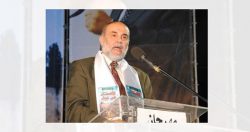 OCCUPIED JERUSALEM – The Israeli occupation police have handed professor Jamil Hamami, secretary-general of the higher Islamic commission in Occupied Jerusalem, a written order banning his travel abroad and to the West Bank.
According to this police order, Hamami will be prohibited from entering the West Bank for four months and the previous ban on his travel abroad will be extended for six months.
The police justified the measure against Hamami by saying that he is involved in banned activities and his departure for other countries will constitute a security threat to Israel.
For his part, Hamami, who works as a lecturer at al-Quds University, condemned Israel’s decision against him as “unjust and a violation of the Palestinians’ right to travel and movement”. He considered this Israeli step as “part of the Israeli campaign that targets the Palestinian dignitaries in Jerusalem.”
Legal centre slams Israeli parliament’s new Expulsion Law
MEMO |July 20, 2016
Adalah – The Legal Center for Arab Minority Rights in Israel has slammed a newly-passed Israeli law designed to facilitate the expulsion of publicly-elected Palestinian parliamentarians in the Knesset.
The law, approved overnight by a vote of 62 to 45, is described by Adalah as posing a “grave danger to basic democratic rights”, and intended to expel those Arab Knesset members “who ‘dare’ to stray beyond boundaries dictated to them by Israeli Jewish majority.”
As Adalah explains, under the new law, “a majority of 90 Knesset members may oust a serving Knesset member on two grounds, as enumerated in Section 7A of the Basic Law: The Knesset: 1) incitement to racism; and 2) support for armed struggle against Israel.”
In addition, “the law stipulates that when the Knesset decides on an expulsion, the statements of the ‘suspect’ Knesset member will also be examined and not only their aims or actions.”
The law also provides that: 1) a member’s expulsion lasts for the full period of the Knesset’s remaining term; 2) the commencement of expulsion proceedings requires the support of 70 Knesset members, including a minimum of 10 opposition members; and 3) suspension proceedings may not commence during an election campaign.
Described as “the latest attempt by the government to trample on the political rights of Palestinian citizens of Israel”, according to Adalah, “there are no existing laws in western democratic states comparable to Israel’s new Expulsion Law.”
The Expulsion Law is the latest expression in a disturbing national tendency over the past several years – including many attempts to disqualify Arab Members of Knesset and Arab party lists from participating in the elections, the government’s decision to outlaw the Islamic Movement in 2015, and the Knesset’s approval of a series of laws such as the ‘Electoral Threshold Law’, the ‘Nakba Law’, and the ‘Boycott Law’ – all intended, via varying means, to silence the Arab public.
Featured Video

Trump asks Iran not to retaliate after he strikes Pickaxe Mountain
or go to
Aletho News Archives – Video-Images
Book Review
‘Why Fauci Must Rot in Prison’: A Tale of Two Diaries
By Jill Erzen | The Defender | October 13, 2026
Dr. Anthony Fauci’s private diary reveals a “mind-numbing” contradiction between what the former top U.S. infectious disease official knew about COVID-19 and what he told the public, senior White House adviser Peter Navarro, Ph.D., said last week on “American Thought Leaders.”
In his new book, “Why Fauci Must Rot in Prison,” due out Oct. 20, Navarro compares Fauci’s private entries to his own pandemic-era diary, and uses what he calls “a tale of two diaries” to argue that Fauci should face criminal prosecution.
“I show, actually, how a prosecution can and should happen … at the state level, most likely,” Navarro said. “He should wind up in prison, and we’ve got the receipts in this book to put him there.”
Navarro said Fauci repeatedly acknowledged important facts in private, then publicly pursued policies that contradicted those facts — with devastating consequences.
“What he says many times privately in his diary is so at odds with both his public behavior and public statements that it’s mind-numbing,” Navarro said.
Navarro examines the lasting damage caused by lockdowns and other pandemic policies, and the ongoing toll of long COVID.
His book also addresses questions about vaccine safety, including why healthy young people faced COVID-19 vaccination mandates despite concerns about myocarditis, and why women were not warned about miscarriage risks linked to the shots. … continue
Blog Roll
 Aletho News
- Yemen denounces international community’s silence on Saudi aggression, siege
- UAE and Saudi Arabia move toward renewed coordination against Sanaa
- How Iran’s two-week retaliatory strikes exposed cracks in US military architecture in Persian Gulf
- The mother of all propaganda: Why the hype over US MOAB strike against Iran is nothing but theater
- Iran says it possesses technology behind US 14-ton GBU bunker-buster
- Trump asks Iran not to retaliate after he strikes Pickaxe Mountain – w/ Prof. Marandi
- Vice President J.D. Vance’s Deceptive ‘Antiwar’ Campaign Speech
- Iran: Palestinians’ rights must not be compromised in Gaza’s future; US, Israel to blame for Hormuz situation
- Ongoing tales of Syrian chemical weapons
- Moscow blasts UN for ignoring torture of Russian POWs
- If Americans Knew
- Israeli rabbi permits occupiers to steal Palestinian olive harvest in West Bank
- Netanyahu’s spin on latest settler attack is laughable – Daily Update
- Israeli soldiers debunk Israel’s talking points
- In West Bank, Israeli settlers are totally out of control – Daily Update
- NPR investigation finds evidence of widespread fraud at mall kiosks tied to Israeli skincare brand
- Tucker Carlson exposes Israeli Lies about the Oct 7th attack, Charlie Kirk, and the U.S.
- Israel has detained thousands of Palestinian children since Oct 7th – over half spent time in solitary, many uncharged
- Israeli Analysis: Is Netanyahu Planning an ‘October Surprise’ Attack Before Israel’s Election?
- Israeli settlers brutally attack Palestinians and Washington Post female photographer, 65
- Words Have Changed, Occupation Continues: The Reality of the Gaza Ceasefire
- No Tricks Zone
- Predictions Made By Renowned Climate Proifessor Over Past Decades Have Been Proven To Be Poor
- New Study Suggests Large Regions Of The Pacific Ocean Have Been Cooling For The Last 80 Years
- Germany’s Green Energy Debacle: High Energy Costs Force Kahla Porzellan to Close After 182 Years!
- New Study: 50 Years Of The Most Aggressive ‘Net Zero’ Policies Can Only Affect The Global Climate By 0.03°C
- US September “Heat” Was No Record…Many Records Set Decades Ago
- Latest European Green Energy Debacle; Portugal’s Largest Flagship Solar Park Insolvent!
- Green Energy Debacle: German Expert Professor Fritz Vahrenholt Warns Of Severe Economic And Social Consequences
- Two More Paleo Reconstructions Affirm Meters-Higher Sea Levels Across Ireland, Brazil 7000-6000 Years Ago
- New Study: Earth And Venus Surface Warmth Largely Explained By Convection And Lapse Rate, Not CO2 Or Radiation
- 2025 Nature Paper Claiming Worsening Global Drought Gets RETRACTED …Heavily Flawed

