Half of Jews in Israel are in favour of expelling Arabs
MEMO | March 9, 2016
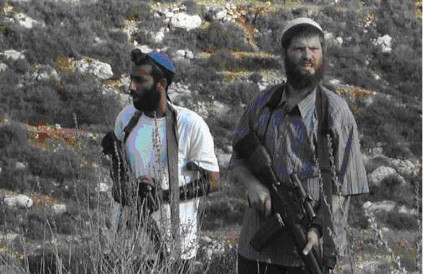 Over half the Jews in Israel support the expulsion of Arabs from the country, a new survey has revealed.
Conducted by the Pew Research Centre between October 2014 and May 2015, the study included 5,601 Israeli citizens, including Arabs, and showed that 48 per cent of Jews and 71 per cent of religious Jews support the expulsion of Arabs from the country. With regards to secular Jews, 58 per cent opposed the idea of expelling Arabs, with one-third in favour of the idea.
Seventy-nine per cent of Arabs asserted that there is “a lot of discrimination in Israeli society”, while 74 per cent of Jews claimed that they do not see such discrimination.
The vast majority of Jews said they saw Israel as both a Jewish and a democratic state, while 89 per cent of secular Jews said that there should be a preference for democratic principles over religious laws. But 89 per cent of ultra-Orthodox Haredi Jews believe religious laws should take precedence.
The majority of secular Jews said that they identify as Israelis first and as Jews second, while Haredi and religious people identify thought the opposite.
Lawyer Shireen Al-‘Eesawy Sentenced To 4 Years, Her Brother To 8

IMEMC News – March 8, 2016
The Israeli Central Court in occupied Jerusalem, sentenced on Monday lawyer Shireen al-Eesawy, to four years imprisonment, and her brother to eight.
Amjad Abu Assab, head of the Jerusalem Detainees Parents Committee, said the lawyer and her brother, were convicted of “communicating with the detainees,” and providing funds to them.”
Shireen was taken prisoner on March 7, 2014, as part of an Israeli arrest campaign targeting many Palestinian lawyers in occupied Jerusalem. Her brother Midhat al-Eesawy was kidnapped in March 13, 2014.
Shireen has been repeatedly kidnapped and imprisoned by Israel and was previously held under house arrests for several months.
Her brother has also been repeatedly imprisoned, spending more than 20 years in detention, in addition to being frequently placed under house arrest.
Shireen is also the sister of Samer al-‘Eesawy, who was kidnapped in June of 2014, just two years after his release under the “Shalit Prisoner Swap Agreement.”
In May of 2015, an Israeli judge reinstated Samer’s 30-year imprisonment term, for what he called “violating the terms of his release.”
Samer also went on hunger strike for nine months, demanding his release. On December 23, 2013, Israel released him, and the Israeli army rearrested him in June of 2014.
It is worth mentioning that al-‘Eesawy’s grandmother was killed by the Israeli army in the First Intifada of 1987 while their parents were repeatedly imprisoned by Israel in the 1970’s. In 1994, the army killed their brother during the uprising that followed the Ibrahimi Mosque massacre. Every member of the al-Eesawy family has previously been kidnapped and imprisoned by Israel.
Israeli court rules to displace Um al-Hiran Bedouins
Ma’an – March 7, 2016
NEGEV – An Israeli court on Sunday ruled that the Bedouin community of Um al-Hiran in the Negev in southern Israel is illegal, on the grounds that the community settled on state lands, Israeli media reported.
“The state is the owner of the lands in dispute,” Israeli daily Haaretz quoted Supreme Court Justice Elyakim Rubinstein as writing. “The residents have acquired no rights to the land but have settled them [without any authorization], which the state cancelled legally.”
Israeli planning authorities intend to build a “new town for Jewish residents in its place,” Haaretz reported.
On Monday, Israeli authorities reportedly entered farm lands used by Um al-Hiran residents with the intentions of destroying crops, but residents were able to prevent forces from beginning the demolition.
Raed Abu al-Qian, a well-known activist in the area, said the move “came to increase pressure on the residents and to make home demolitions easy in the village,” following the Israeli court ruling.
Said al-Khroumi, a member of the Higher Guidance Committee of Arab Residents of Negev, said Israeli forces’ presence at the village was “a heinous and barbarian aggression against the village and its residents.”
He also called for anyone able to travel to Um al-Hiran to visit the village “show solidarity.”
Bedouin member of the Israeli Knesset Talab Abu Arar accused Israeli Minister of Agriculture Uri Ariel of creating “a secret government committee” aimed at destroying the crops of Palestinian villages in Israel.
According to Abu Arar, the “secret committee” recommended that Palestinian villages in the Negev be emptied, and residents removed.
“This is a special Israeli form of ethnic cleansing,” Abu Arar continued.
Abu Arar highlighted that Israeli authorities destroyed crops in the villages of Attir, Hurah and Saawah during the past several days.
Residents of Um al-Hiran and nearby villages are among tens of thousands of Bedouins living in the Negev face ongoing displacement.
While a plan to forcibly resettle the area’s Bedouin population — the Prawer Plan — was shelved in 2014, Israel’s Habayit Hayehudi party joined Israeli Prime Minister Benjamin Netanyhau’s coalition last year on the condition the plan was reinstated.
The Um al-Hiran community — around 700 strong — was never recognized by the Israeli government and residents’ lands were claimed by the state in 2013 in order to make way for the expansion of the Beersheba metropolitan area.
What Is Israel Trying to Hide?
By Barbara Erickson | TimesWarp | March 7, 2016
A delegation of seven lawmakers from the European Parliament arrived in Israel last month to visit Gaza, but one day before they were due to enter the enclave, Israeli authorities refused to give them access. Officials gave no reason for this ban, and The New York Times was equally silent, making no mention of the event in its pages.
This past week a group of six Belgian members of parliament, representing a range of political parties, also traveled to Israel, planning to meet with representatives of non-governmental organizations in Gaza. Israeli authorities blocked their entry to the coastal strip, sparking an outraged reaction from the MPs. Once again, the Times had nothing to say.
Three days later, however, the Times ran a story on page 3, informing us that India has denied visas to a group monitoring religious conflicts. The story, “India Denies Visas to Group Monitoring Religious Freedom,” appears online and in print, and it tells us that the delegates had hoped to assess the state of religious liberties in India and were “deeply disappointed” in the outcome.
This isn’t the only time the newspaper has found such state actions newsworthy. When China refused entry to a delegation from the United Kingdom, for instance, the Times ran a story under the headline “China Says It Will Deny British Parliament Members Entry to Hong Kong.”
And then there was Iran and the matter of inspecting its nuclear facilities, all very much part of the lengthy negotiations that led to an historic agreement and the lifting of sanctions. The concern over inspections took up many column inches in the Times. Would Iran allow access? How much and when?
Meanwhile, the newspaper had nothing to say about Israel’s nuclear weapons program and its refusal to allow entry to inspectors. (See TimesWarp 6-2-15.)
With the India visa story last week, the newspaper reveals once again that such affairs are fit to print—if the offending state is not Israel—and that the Times continues to maintain a double standard. This policy has left its readers ignorant of Israel’s lengthy record of denying entry to monitoring groups and international officials.
Less than two weeks ago, Israeli officials refused to allow Kenyan President Uhuru Kenyatta to visit Palestinian leader Mahmoud Abbas in Ramallah. The request was made too late, the officials said. Kenyatta was on a three-day state visit, the first from a Kenyan president since 1994. No mention was made in the Times.
Sinn Fein leader Gerry Adams, also on a three-day visit to Israel in December of 2014, did manage to meet with Abbas, but he was denied entry to Gaza. Adams, who had been instrumental in reaching a peace agreement in Ireland, said the refusal to allow him access ran “contrary to the needs of the peace process.” Israel (and the Times) made no comment.
During and after the attacks on Gaza in the summer of 2014 Israel denied repeated requests from Amnesty International and Human Rights Watch to enter the enclave and investigate charges of war crimes against both sides. Two months later Israeli officials also denied representatives of the United Nations Human Rights Council the right to enter Gaza for the same purpose.
The Times failed to run stories on either of these occasions, but it was forced to reveal the fact that the UN Human Rights Council special rapporteur in the Palestinian territories, Makarim Wibisono, resigned over just this issue, saying that despite repeated requests, Israel denied him entry to the West Bank and Gaza.
The story, however, was relegated to the World Briefing section and the author, Isabel Kershner, took care to give the Israeli pretext for its refusal: that the UN Human Rights Council is “biased” and “hostile” to Israel’s interests.
The Times would rather not take up such stories, it seems. To do so might create doubts in the minds of readers, upsetting the carefully cultivated impression that Israel and Palestine are two equal parties at the negotiating table and on the ground.
Such news would make it uncomfortably clear that Israel is in full charge of the borders and that there is nothing equal about the conflict between Israel and Palestine. It also raises the question, which an Irish delegate raised in reacting to the recent ban on EU parliament members travel to Gaza: “What does the Israeli government aim to hide?”
The Times is willing to raise this question—even if by implication—in regards to India or China or Iran, but it has no interest in prompting such doubts when it comes to Israel. Readers, therefore, might want to ask the Times a similar question: In censoring numerous stories of Israeli bans on travel to the occupied territories, just what is the newspaper trying to conceal?
Tunisian FM doesn’t support blacklisting Hezbollah, unidentified gunmen raid Tunisian town killing civilians
Israelis Welcome GCC Statement on Hezbollah: Reflects Rapprochement with Saudis
Al-Manar | March 3, 2016
As soon as the Gulf Cooperation Council blacklisted the Lebanese party of Resistance – Hezbollah – on Wednesday, Zionist mass media welcomed the resolution, considering it “critical and serious,” reflecting a great relief among Israelis who have been seeking to fight Hezbollah from the Arab gate.
Former Zionist foreign minister Tzipi Livni hailed the GCC resolution as “an important step, while Zionist daily Maariv stated that “blacklisting Hezbollah is an achievement that serves Israel.” … Full article
Tunisia: Hezbollah Liberated Lebanese Territories, Supported Palestine
Al-Manar | March 6, 2016
The Tunisian Foreign Ministry clarified on Friday that the closing statement of the meeting of the Arab Interior Ministry did not include blacklisting Hezbollah as a terrorist group.
In a statement, the Tunisia Foreign Ministry reiterated that Tunis rejects to interfere in the domestic issues of the other countries, noting that Hezbollah has contributed to liberating the Lebanese territories, supported Palestine’s cause and fought ISIL.
“Tunisia attempted to take into account the Arab consensus during the meeting of the Arab Interior Ministers through approving the decision that is not compulsory.”
Tunisians Ask Gov’t to Withdraw from Saudi Coalition over Blacklisting Hezbollah
Al-Manar | March 6, 2016
The leader of En-Nahda Islamic movement in Tunisia Rached Ghannouchi asserted on Saturday that it is impossible to label Hezbollah as a terrorist group because of the his historic achievements in liberating Lebanon and protecting it from the Zionist aggressions.
Although Hezbollah’s role in Syria is controversial, we cannot generalize any label against the party, Ghannouchi added.
Meanwhile, a number of political parties in Tunisia demanded that the government withdraw from the Saudi-led coalition in the region over the decision to blacklist Hezbollah.
In Egypt, the founder of the Popular Current Hamdeen Sabahi greeted Hezbollah and his Secretary General Sayyed Hasan Nasrallah for confronting the Zionist occupation, noting that who has blacklisted the Resistance aims at stirring the Shiite-Sunnite sedition in the region.
25 killed in militant raid in Tunisia
Press TV | March 7, 2016
At least 25 people, including four civilians, have been killed in Tunisia in an exchange of gunfire between security personnel and unidentified gunmen near the Libyan border.
Tunisia’s Defense and Interior Ministries announced in a joint statement that a group of gunmen targeted a police station and military facilities in the eastern border town of Ben Guerdane, situated approximately 600 kilometers (372 miles) southeast of the capital, Tunis, early on Monday.
Army units repelled the attack, killing 21 militants and capturing six others. Four civilians also died in the crossfire.
The Tunisian military has dispatched reinforcement forces and helicopters to Ben Guerdane. Local residents have been ordered to stay indoors.
The militant attack came amid rising international concern about the growth of the Takfiri Daesh terrorist group in neighboring Libya, which has been struggling with instability since 2011. Back then, the country’s former dictator Muammar Gaddafi was overthrown, and armed groups as well as regional factions engaged in armed clashes in a battle for power.
The capital, Tripoli, is controlled by a political faction that calls itself Libya Dawn and is allied with powerful armed forces based in the city of Misrata. The faction has reinstated the old parliament, known as the General National Congress, in the capital.
The internationally-recognized government of Prime Minister Abdullah al-Thinni is on the other hand based in the northeastern city of Bayda, with its elected House of Representatives being based in Tobruk.
Last week, Tunisian security forces killed five heavily armed men who had sneaked into the North African country from Libya.
‘Human rights abusers’ invited to ‘non-lethal’ weapons show, condemned by activists
RT | March 7, 2016
Activists have denounced a Home Office sponsored security fair, warning that Britain is selling tear gas and other crowd control tools to some of the world’s most oppressive regimes.
Among the governments invited to take part in the fair in Farnborough, Hampshire, 30 miles southwest of London, are Bahrain, Saudi Arabia, Israel, United Arab Emirates (UAE), Egypt and Turkey, the Guardian reported on Saturday.
Police and security officials from 79 countries are expected to participate in the fair later this week, according to the list, which was released under a Freedom of Information request.
Since Prime Minister David Cameron took office in 2010, the UK has approved 126 licenses connected with the sale of tear gas and other irritants, according to the Campaign Against the Arms Trade (CAAT).
Also approved were 75 licenses for crowd control ammunition such as rubber bullets, 79 for “acoustic” crowd control – known as sound grenades – and 259 licenses for riot shields.
CAAT spokesman Andrew Smith told the paper: “There are serious questions to be asked about the impact of the so-called ‘non-lethal’ arms industry. These risks become even more important when these weapons are being sold to human rights abusers and dictatorships.”
“A number of the countries in attendance routinely practice torture, arbitrary detention and other appalling acts of violence. The UK should not be arming these regimes and selling them the means to oppress and kill.”
“[The event] undermines the UK’s claims to be promoting human rights while strengthening the position of repressive regimes.”
Defending the trade show, the Home Office said: “A thriving security industry is vital to help cut crime and protect the public and so it is important these products and services can be showcased and expertise shared.”
Described by organizers as “the perfect place to see the latest security equipment and technology in a secure environment,” the Security and Policy fair will be held behind closed doors, with all visitors “pre vetted to strict Home Office criteria.”
Ethnic cleansing of Shuhada Street in occupied al-Khalil (Hebron)
International Solidarity Movement | March 6, 2016
Hebron, occupied Palestine – Since the 1994 Ibrahimi Mosque Massacre, the majority of Shuhada Street – once the thriving Palestinian market and main thoroughfare connecting north and south al-Khalil (Hebron) – has been closed to Palestinians. They are completely barred from accessing it, except for a small stretch in the Tel Rumeida neighbourhood.

Photos of the same portion of Shuhada street – a thriving market before 1994, now an empty street where no Palestinians are allowed to enter (published by B’Tselem)
This tiny strip that is legally still accessible for Palestinians is restricted by the recently ‘renovated’ Shuhada checkpoint at the beginning of the street and ends where the street begins to border the illegal settlement of Beit Hadassah, beyond which Israeli forces assure that no Palestinians exist. Further down Shuhada street, clearly marked with yet another military post barring anyone who might attempt to enter the street, are even more Israeli settlements – all illegal under international law – located directly in the city center of al-Khalil.
The settlements on Shuhada Street are connected via a settler-only road to the much larger settlement of Kiryat Arba on the outskirts of al-Khalil; settlers can also reach the illegal Tel Rumeida settlement easily by traversing the tiny stretch of Shuhada Street still open to some Palestinians and the road leading up into Tel Rumeida from Shuhada checkpoint, now encompassed within the closed military zone. While Palestinians are allowed to walk on this part of Shuhada Street, Palestinian vehicles, including ambulances, are forbidden from driving there. Since Israeli authorities declared the area part of a closed military zone on 1st November 2015, the already barely existent access has been further restricted – Isreali forces only allow entry to Palestinians registered with them residents, while any Israeli settler, regardless of whether they are residents or not, can pass freely and without ever being harassed, stopped, detained, arrested, or threatened by the ever-present military forces.

Map of the city center of al-Khalil including Shuhada Street (the longest street marked in red) by B’Tselem
At the line demarcated by Daboya checkpoint (Checkpoint 55), where the illegal settlements on the street begin and Palestinians are no longer allowed, a steep flight of stairs leads up to Qurtuba school and into the Tel Rumeida neighbourhood. These stairs, the only way for Palestinians to continue traveling in the same direction above the street as they are not allowed to continue down Shuhada Street itself, have been closed by the Israeli forces with a metal gate since November 2015.

Stairs with the closed gate leading down to Shuhada Street
Even though this gate is currently not locked, Israeli forces deny any Palestinian, except for the students and teachers of Qurtuba school during school-time, to use these stairs. As a result Palestinian residents of this neighbourhood, once they have passed Shuhada checkpoint – an ordeal that can take several hours – have been denied to reach their homes by walking down Shuhada Street and the stairs leading up to Qurtuba school, forcing them instead to take a much longer detour around. With yet another way denied for Palestinans, navigating the maze of Israeli military-enforced checkpoints, complete bans on travel, roads where Palestinians cannot drive, settler-only roads, closed military zones and new arbitrary closures has become even more arduous.
Israeli forces are thereby also clearly working to minimise the number of Palestinians who will actually use this last portion of Shuhada Street – now a complete dead-end – as they bar Palestinians not only from going farther down the closed street but also declare the stairs, formerly an alternate route, yet another closed zone. This illustrates the Israeli attempts to rid Shuhada Street entirely of Palestinians. Ethnic cleansing in al-Khalil, and all across Israeli-occupied Palestinian lands is not a sudden, headline-grabbing event; it progresses gradually as Palestinians are restricted in certain areas, barred from driving there, prohibited from even being there, forced out to facilitate the expansion of the illegal settlements. Ethnic cleansing happens slowly, by erecting new and ‘fortifying’ existing checkpoints, advancing one more closure at a time.
Anti-truther witch hunt fizzles at Oberlin College

By Kevin Barrett | Veterans Today | March 3, 2016
A rabid little Fox is drooling and gnashing its teeth.
But that hasn’t stopped Oberlin College from respecting the academic freedom of Professor Joy Karega, who is being witch-hunted by the neocon-Zionist network for speaking honestly about 9/11 and the two 2015 Paris false flags.
According to the outraged Likudnik tabloid the New York Post:
Karega … wrote on numerous Facebook posts that she believes Israel was the mastermind behind numerous terrorist attacks around the world including 9/11 and the Charlie Hebdo slaughter in Paris.”
In a written statement, Oberlin President Marvin Krislov offered an obligatory denunciation of “anti-Semitic conspiracy theories,” while at the same time defending academic freedom:
“I am a practicing Jew, grandson of an Orthodox rabbi. Members of our family were murdered in the Holocaust. As someone who has studied history, I cannot comprehend how any person could or would question its existence, its horrors and the evil which caused it. I feel the same way about anti-Semitic conspiracy theories. Regardless of the reason for spreading these materials, they cause pain for many people — members of our community and beyond … I am also the son of a tenured faculty member at a large research university. My father instilled in me a strong belief in academic freedom. I believe, as the American Association of University Professors says, that academic freedom is ‘the indispensable quality of institutions of higher education’ because it encourages free inquiry, promotes the expansion of knowledge, and creates an environment in which learning and research can flourish.”
On Monday, I had emailed a debate challenge to the Oberlin student newspaper, Krislov and 17 other key Oberlin professors and administrators. Perhaps it had helped sway Krislov. Here it is:
To the administrators, faculty, staff and students of Oberlin College (emailed 2/29/2016)
It has come to my attention that a member of the Oberlin faculty, Professor Joy Karega, is being witch-hunted by the same forces that drove me out of the University of Wisconsin-Madison in 2006. Specifically, Professor Karega is being hounded for suggesting that the Charlie Hebdo attacks may have been a false flag event, and that Israel and its extremist Prime Minister may have helped orchestrate the crime.
Such views may sound odd or unusual to uncritical consumers of Western mainstream media. But in fact they are both widespread and well-supported by considerable evidence.
Globally, a substantial majority of Muslim intellectuals, as well as those non-Muslim intellectuals who follow alternative media, would tend to agree with Professor Karega. Their interpretation is supported by evidence presented in a book I edited, We Are NOT Charlie Hebdo: Free Thinkers Question the French 9/11.
In that book, which features 22 leading public intellectuals representing a wide variety of backgrounds and viewpoints, bestselling Israeli author and investigative journalist Barry Chamish – a right-wing Zionist himself – suggests that Netanyahu should be considered a key suspect in the apparent false flag attack on the Charlie Hebdo offices. Evidence for that interpretation is presented in several of the essays.
As the editor of We Are NOT Charlie Hebdo and its follow-up volume ANOTHER French False Flag? I would be happy to visit Oberlin to participate in a debate or symposium about these critically-important issues. Those who disagree with me (and with 40 leading public intellectuals represented in the two books) should be eager to defend their views using logic and evidence rather than ad hominems.
If Professor Karega’s critics are not willing to participate in a free and fair debate, their hysteria and name-calling ought to be of no concern to educated people, including the Oberlin College community.
Student groups interested in sponsoring such a debate or symposium may contact me by email at kbarrett(at)merr[dot]com.
Also, I would like to offer copies of We Are NOT Charlie Hebdo and ANOTHER French False Flag at half price to members of the Oberlin community. If you’d like a copy, simply email me at kbarrett(at)merr[dot]com from an Oberlin.edu address.
Sincerely
Dr. Kevin Barrett
As of Thursday, I had not heard back from any of the 19 Oberlin recipients. So I decided to compose another missive, this one directed to Marvin Krislov:
To Oberlin University President Marvin Krislov,
Thank you for standing up for academic freedom in your recent statement implicitly referring to the witch-hunt of Professor Joy Karega.
As a human being, and the son and grandson of human beings, who has studied history, I cannot comprehend how anyone could question the existence of that Holocaust known as World War II, in which more than sixty million of our fellow humans were murdered. Nor can I understand how anyone can question the evil which caused that war, namely British imperialism, with lesser contributions from other imperialisms. (All realist historians acknowledge that the two World Wars were essentially the same war, launched by the British to pre-emptively destroy a rising German empire.)
Nor can I understand why anyone would single out some World War II victims as more worthy of remembrance than others due to their ethnicity. And I certainly cannot understand why the debate over various details about World War II outlined in Thomas Dalton’s Debating the Holocaust has been criminalized in many European countries and rendered taboo in the American academy.
You write that you are similarly nonplussed by “anti-Semitic conspiracy theories.” Are you referring to the theory that 19 young Semites, led by an older Semite on dialysis in a cave in Afghanistan, blew up the World Trade Center by using box-cutters to kindle minor office fires?
I, too, am outraged by anti-Semitic conspiracy theories. Today virtually all of the world’s Semites are the speakers of Arabic. (“Semite” is a linguistic category, not a racial one.) And I am outraged by the way Arabic Semites have been falsely blamed for the controlled demolition of the World Trade Center, the murders of innocents by large white paramilitary professionals in Paris and San Bernadino, and many similar false flag incidents. These false flag public relations stunts have triggered the murder of more than 1.5 million people and the destruction of the homes and lives of tens of millions more. THIS is the real, indisputable and ongoing Holocaust; you and your colleagues are perpetrating it right now with your tax money, your silences and your lies. The blood of more than a million innocents is on your hands.
So while I appreciate your support for academic freedom, I respectfully request that you take the next step and sponsor a debate or symposium on false flags in general and 9/11 and the 2015 Paris attacks in particular. If you or anyone else believes they can defend the 9/11 Commission Report, or the official versions of the Paris attacks, in a debate, they should be not just willing but actually eager to put the “conspiracy theories” to rest.
I will be happy to travel to Oberlin at my own expense to participate in any such debate. Meanwhile, I am sending my three books Questioning the War on Terror, We Are NOT Charlie Hebdo, and ANOTHER French False Flag as a gift to the Oberlin College Library, where faculty and students can refer to them to understand the positions of Professor Karega and the hundreds of millions of people around the world who share her interpretations of current events.
Sincerely,
Kevin Barrett
OCHA condemns Israel for declaring W. Bank areas “firing zone”

Palestinian Information Center – March 5, 2016
OCCUPIED JERUSALEM – The UN Office for the Coordination of Humanitarian Affairs (OCHA) has strongly denounced Israel for declaring 18 percent of the West Bank territory, particularly in Area C, “a shooting zone.”
38 Palestinian communities are located in this area, where the Israeli army continually demolishes homes.
OCHA also warned that the expansion of this Israeli shooting zone would considerably affect the lives of marginalized and disadvantaged groups (Bedouins) in these areas.
The UN organization underlined that international law and humanitarian law prohibit such Israeli practices in the occupied Palestinian territories.
It noted that the Israeli army had demolished, since the start of 2016, 323 Palestinian homes and structures in different areas of the West Bank, most of them in Area C.
Those demolitions led to the displacement of about 440 Palestinians, more than half of them children, and rendered about 17,000 without any means of livelihood.
Copyright © The Palestinian Information Center
More on Israel’s combating BDS
By Miko Peled | American Herald Tribune | March 5, 2016
It is strange to see a newspaper in a country that considers itself a democracy, commit itself to silencing freedom of speech and the call for freedom from oppression. But here we see that Israel’s daily Yediot Aharonot and Ynet are persistent in their attempts to fight BDS. One would think that a newspaper would want to ensure that freedom of speech and opposition to oppression are protected and that members of society can make up their own minds about any given issue. But not this newspaper. Yediot Aharonot is dedicated to fighting BDS and has published a series of reports and articles under the headline “Fighting the Boycott.” They feature interviews with, the “people on the front line in the fight against the boycott movement” as Ynet describes them.
It is worth to take a minute and think about the use of the term “front line.” It is interesting to note that there are people who are considered as being on the “front line,” a term which suggests there is a war going on and certain people are sent to the front, and are in real danger. This terminology is no doubt part of the effort to paint BDS as violent movement. Israel, a society not unlike Sparta, which only understands war, is trying to paint BDS as a threat that it can kill. But even they admit that BDS is a campaign “without knives or missiles.” So who are the people in the “front line?” the answer, at least in part, is in this piece on Ynet.
“De-legitimization of Israel must be fought, and you are on the front lines.” Prime Minister Benjamin Netanyahu said this to attendees, in a letter read aloud at a BDS emergency summit organized by Sheldon Adelson in Las Vegas.” A conference at one of Adleson’s Las Vegas casinos, “Front line” indeed. The same story continues to tell us that “One hundred million Israeli Shekels are planned to be allocated to the Strategic Affairs and Information Minister Gilad Erdan, whose office’s purview includes fighting BDS.” That’s about twenty-five million dollars, “Erdan’s office will also receive ten new positions for employees who will deal solely with the boycott and de-legitimization activities against Israel […] Erdan estimated that the budget can double or triple to NIS 300 million with the help of Jewish and pro-Israel organizations.” Perhaps they can triple their money but to what purpose?
Nowhere in the articles and reports published by Ynet is there any real substantial argument to oppose BDS. Surely, I thought to myself, there must be some content with which Ynet and Adelson and all the others mean to utilize in this fight. If there is any content I couldn’t find it. In a piece in Hebrew, titled, “The Snakes Head – the Academic Boycott,” Tsahi Gavrieli writes that if Israel wants to discover how it ended up in the midst of a debate questioning its own legitimacy, the answer is to be found on US campuses. That would not be the first place I would look. Had I been charged with discovering the reasons behind the emergence and the growth of BDS as a movement and as an idea, I would visit Palestinian refugee camps. I would see the camps in Lebanon and Syria, Jordan and of course all over Palestine. I would look into the conditions in which thousands of Palestinian political prisoners are held by Israel. I would examine what takes place when Israeli jets attack Palestinian targets, I would look at the countless cases where thousands of unarmed Palestinian civilians were killed, maimed and made homeless by Israel. I would look at the Israeli Knesset which regularly spits out new laws that make the oppression and dispossession of Palestinians “legal.” I would look to the total disregard that Israeli society has toward the lives of Palestinians.
The most common question asked by those who want to “combat” BDS, is “Why Israel?” and there are several answers to that. First of all, why not? Then they ask, why not boycott all the other racist and brutal regimes around the world that are even worse than Israel. And the reply is – no reason we can’t do both. In fact, sanctions and boycotts have been used against many regimes and many states. Using BDS, or in other words, imposing boycotts, divesting and imposing sanctions is very common. It was used against Iraq, Iran, it was used against South Africa during apartheid, the Indian resistance under Gandhi used boycott as a tool, and now the US is leading sanctions against Russia and the list goes on.
Besides the obvious facts that point to Israel as a state and as a society that for seven decades continue to commit the crimes of ethnic cleansing, apartheid and genocide, and therefore deserve to be punished, there is one other answer. Palestinian civil society has told the world that this is how to best support the Palestinian cause. They have given the rest of the world a road map for supporting the Palestinian struggle. They have asked the world, and by doing so gave the world a gift, by guiding people of conscience as to how best they can support the people of Palestine in their struggle for freedom. That road map is BDS.
Another piece by Ynet uses the only image Israel understands, the military metaphor: “Those involved in this fight warn that these are critical moments in the war on BDS.” Actually there is no war. There is a legitimate, unarmed struggle to free Palestine from the Spartan regime Israel has imposed upon it. They go on to say that “A worldwide call to arms must be issued, as the battle will be conducted at all levels […] It is the hope that this conference will be the first shot in the war against the BDS movement, a war where there is no other option but to win.” Ynet clearly understands that BDS is posing a serious threat. It also seems to understand that Israel is unprepared and unequipped to deal with this threat, in fact Israel is doing everything to strengthen the struggle and garner more support for BDS. It seems to be the case that violent, racist regimes are also incredibly stupid, and that is quite often their downfall. Blinded by their own racism they are incapable of understanding their shortcomings. There is every reason to expect that Zionism in Palestine will fall for these same reasons.
Miko Peled is an Israeli writer and activist living in the US. He was born and raised in Jerusalem. His father was the late Israeli General Matti Peled. Driven by a personal family tragedy to explore Palestine, its people and their narrative. He has written a book about his journey from the sphere of the privileged Israeli to that of the oppressed Palestinians. His book is titled “The General’s Son, Journey of an Israeli in Palestine.” Peled speaks nationally and internationally on the issue of Palestine. Peled supports the creation of a single democratic state in all of Palestine, he is also a firm supporter of BDS.
Featured Video

Spain train disaster raises questions over Israeli-linked security contractors
or go to
Aletho News Archives – Video-Images
From the Archives
Are There 50,000 ‘Israeli-born’ Individuals Living in the UK?
By Professor David Miller | August 18, 2026
Recent disclosures by the Zionist regime show that some 2,069 British nationals were serving in the IDF as of March 2025, according to Freedom of Information (FoI) requests submitted to the occupation forces (1,686 dual British-Israeli, plus 383 multinational). We cannot tell from the figures how many of these were already settler colonists and intend to stay in the colony, and how many will return or have returned to the UK. Presumably, those returning to the UK will number far fewer than 2,000, since many are known to have become permanently residents of the colony.
Additionally, the IDF figures only provide a snapshot, and do not tell us how many have served in the Jewish supremacist military either before or after March 2025. One way into the question of how many genocidaires are living in Britain is to ask how many current British residents were born in the Zionist colony. There is data on that, as we shall see. … continue
Blog Roll
 Aletho News
- Are There 50,000 ‘Israeli-born’ Individuals Living in the UK?
- German CDU MPs Seek Climate “Misinformation” List
- The ‘Gaza Treatment’: How Media Headlines Obscure Who is Bombing Yemen
- Ro Khanna urges Democrats to strip Israel ‘integration’ provision from defense bill
- Why Iran designated British MI6, Royal Navy, and RAF as hostile, terrorist organizations
- Armenian opposition politician dies in custody
- US still trying to recycle failed hypersonic missile programs
- France’s ‘Cold War’: Paris blames Tehran for supermarket fridge hacks
- Psywar no more? 77th Brigade’s sudden death
- Ukraine Already Carved Up… Before Talks Begin? /Prof. Richard Sakwa
- If Americans Knew
- An error has occurred; the feed is probably down. Try again later.
- No Tricks Zone
- German Authorities Start Initiative To Evaluate Public Register For Climate “Disinformation” Spreaders!
- Zonal Asymmetry of Temperature Change in the Antarctic Circumpolar Current
- New Study: The Net Fossil Fuel Contribution To Rising Atmospheric CO2 Has Been Zero For 500 Years
- Germany’s Green Energy Transition Becoming Increasingly Expensive…Another 6 Trillion Euros!
- Sudden Stratospheric Warming, Powerful El Niño Combination May Lead To Extreme Europe Cold, Energy Crisis!
- Two New Studies Find Thwaites Glacier Melt Cannot Be Driven By Human Activity Or A Warming Ocean
- E-Cars Reduce CO2 Emissions By Only 41% Compared To Internal Combustion Engine Vehicles
- Predictions Made By Renowned Climate Professor Over Past Decades Have Been Proven To Be Poor
- New Study Suggests Large Regions Of The Pacific Ocean Have Been Cooling For The Last 80 Years
- Germany’s Green Energy Debacle: High Energy Costs Force Kahla Porzellan to Close After 182 Years!

