Did a Major US Union Overrule Members on Palestine Solidarity?
teleSUR | January 16, 2015
Members of a local Californian branch of United Auto Workers said Friday they were appealing a controversial decision by the larger union to overrule a pro-Palestine resolution backed by rank and file members.
The United Auto Workers Local 2865 (UAW 2865) made history in late 2014 when its members voted overwhelmingly to support a boycott of corporations accused of involvement in Israel’s occupation of Palestinian territories. The vote was one of the most well attended in UAW 2865’s history, and came after months of intense discussion among union members. The union’s boycott resolution was framed as part of the international Boycott, Divestment and Sanctions (BDS) movement, which has sought to use economic pressure to push Israel to end what human rights groups say are widespread human rights abuses in the occupied Palestinian territories. Supporters of the movement say their campaign is modeled on the 1980s anti-apartheid boycott of South Africa.
UAW 2865 was the first major union in the United States to endorse BDS through a vote put directly to ordinary members. Since then, the United Electrical Workers union has followed suit, endorsing BDS during its 2015 conference.
Internationally, BDS has also been backed by COSATU of South Africa and the Unite the Union in the U.K.
International UAW Steps In
However, in December 2015, UAW 2865’s parent union, International UAW surprised workers by nullifying the pro-Palestine vote, claiming the decision discriminated against Jewish union members.
Now, a group of UAW 2865 members have told teleSUR they have begun an appeals process against the International UAW board’s decision. The members said they are seeking to overturn the nullification through the union’s public review board, after filing an appeal Thursday.
They have argued the original UAW 2865’s BDS resolution was reached democratically by ordinary members, and said the larger union leadership should respect the demands of ordinary members.
teleSUR has obtained union documents that some members of UAW 2865 say indicate some of the fiercest supporters of BDS within UAW 2865 were rank and file members identifying as Jewish – calling into question the International UAW’s primary reason for overruling the vote. There is also evidence of at least one multinational firm weighing in on the union’s decision.
Speaking to teleSUR, UAW 2865 President Robert Cavooris said he firmly disagreed with the International UAW board’s decision to overrule the BDS resolution, stating, “Many Jewish members of our own local, like myself, took part in the campaign for BDS.”
He argued the board’s decision “conflates the state of Israel with a diverse global diaspora of Jewish people.”
Not all union members appear to agree. During the appeal hearing in December 2015, one union member alleged the BDS campaign was “rampant” with “anti-Semitism and active promotion of hate.”
In a complaint submitted to the International UAW’s board, another UAW 2865 member said, “The … local union (2865) pledged that it would not discriminate against members who are Israelis and stated that the academic boycott was aimed at ‘institutions’ and not individuals.”
“But this is a distinction without a difference: boycotting Israeli academic institutions can only be carried out by discriminating against individuals associated with those institutions,” the member argued.
However, internal union documents show the board was also contacted by a group of Jewish UAW 2865 members who firmly supported the BDS resolution.
“As an injustice anywhere is an injustice everywhere and none of us are free until all of us are free. As Jews, we understand from our own experiences with discrimination and our own history of resistance to oppression that standing on the right side of history necessitates standing in solidarity with Palestinians,” a petition in favor of BDS directed at the board stated.
The petition was signed by more than 40 UAW 2865 Jewish members who said, “We affirm our right and responsibility as Jews to oppose the state of Israel’s actions and policies that we believe to be unjust.”
The final International UAW’s decision also noted the UAW 2865 carried out its internal vote in a democratic matter, and “made an earnest effort” to engage all members in months of pre-vote discussions, but found the BDS resolution anti-Semitic nonetheless. The decision was based on the board’s conclusion that the BDS resolution unduly focused on Israeli policy and actions when discussing “atrocities against Palestinians.”
“Thus, the local union’s platform is apparent in its unfavorable stance against the state of Israel, Israelis and, invariably, Jewish union members,” the board said in its conclusion.
However, Cavooris said Israel hasn’t been singled out by his branch at all, pointing to an extrensive list of resolutions related to human rights issues from Mexico to China.
“For example, our local passed a resolution condemning the disappearance of 43 Mexican students at Ayotzinapa in 2014, and last fall we made a statement of support for South African students fighting against racism and for better university conditions. Just last week we signed a letter to condemn the repression of Chinese labor activists in Guandong,” he explained.
Cavooris continued, “We have also criticized political institutions in the U.S. for their repression of protests in Ferguson and elsewhere.”
“A brief scan of our political record shows that we are proud to stand against injustice against working people and others wherever it occurs,” he said.
Enter Caterpillar
Yet disagreements over the board’s decision to label the BDS resolution as anti-Semitic aren’t the only concerns raised by rank and file UAW 2865 members.
Also included in a collection of documents handed to teleSUR was a letter from industrial vehicle manufacturing giant Caterpillar. Caterpillar armored tractors have been used by Israeli forces to demolish Palestinian homes, sparking the ire of BDS activists and human rights advocates. Dated August 20, 2015, the letter from the firm’s labor relations head Jonathan Ginzel was addressed to International UAW Vice President Norwood Jewell. The letter denied allegations Caterpillar is “engaged in or complicit in human rights violations,” and warned BDS advocacy was viewed as an “attack on our business and our customers.”
“The actions taken by UAW Local 2865 are without merit and set a dangerous precedent in our relationship,” Ginzel wrote to Jewell.
The letter also included a paragraph supporting an appeal against UAW 2865’s resolution.
The International UAW’s final conclusion expressed similar concerns to those raised in Ginzel’s letter, stating the BDS resolution could have blow back on union members employed by companies like Caterpillar.
The UAW 2865’s rank and file BDS Caucus has accused the International UAW of effectively prioritizing the interests of companies like Caterpillar over the interests of union members.
“The (board of the International UAW) support for the profits of these companies – their prioritization of the so-called “flow of commerce” – trumps their support for other labor unions, such as the Palestinian labor unions that initiated the call for BDS, and their own members, like the 65 percent of affirmative voters from UAW 2865,” the caucus said.
The International UAW was invited to respond to these complaints, but didn’t respond by the time of publication.
The UAW 2865’s president, Cavooris described the International UAW board’s decision to “consider” Caterpillar’s input in internal union matters as “rather amazing.”
“When the (International UAW board) listens to executives at Caterpillar Inc. instead of workers in one of its locals, I think there is a clear breach of democracy and autonomy,” he said.
Cavooris continued, “This sort of deference to employers definitely raises the question: Who is the union supposed to represent? Are we an organization that fights for the rights of working people worldwide or are we an organization that makes sure our employers are happy?”
“When workers at Caterpillar demand a wage increase in their next contract, is the UAW (international board) going to ensure that this demand is okay with Caterpillar management as well? Because we held a democratic vote on BDS – and the (board) acknowledges that it was completely democratic – we know we are representing the views and interests of our members. I wonder if the (board) can say the same, given their deference to Caterpillar management,” he said.
Rank and file members of UAW 2865 that spoke to teleSUR likewise said they felt the International UAW was undermining local union democracy.
“I believe this decision not only calls into question the autonomy of local chapters, but it also exposes the contradictions that arise among labor unions that in theory are committed to social justice of those disenfranchised (ie: workers), but in practice are easily swayed by corporate interest and threats by oppressive powers,” said Jennifer Mogannam, UAW 2865 member and Ethnic Studies PhD candidate at University of California, San Diego.
“As stated, our efforts were transparent, honest and a two thirds vote in favor is telling of the commitment to justice that our generation of academic laborers upholds,” she said.
The dispute between UAW 2865 pro-BDS members and the International UAW leadership may not end anytime soon, with the appeals process only just beginning. Members that spoke to teleSUR said that irrelevant of the board’s decision, they will continue to push for greater support for Palestine solidarity.
“The struggle for Palestine is one symbol of struggle that we must continue to fight for and endure the repercussions of, alongside other struggles for true justice and liberation, because it is this commitment that may guide us to a new, just and better world,” Mogannam said.
Another rank and file UAW 2865 member, Beezer de Martelly, from the University of California Berkeley music department said, “The UAW 2865 BDS caucus will continue its work to educate students and union members about ongoing human rights violations, the intensifying climate of Islamophobia, and the Palestinian-led struggle for democracy.”
However, some members said the International’s decision could be a step backwards for workers’ and student rights.
“I am worried about the ramifications of this decision on the democratic spirit of Unionism, and this struggle is far from over,” said Irene Morrison, southern vice president of UAW 2865.
“It won’t end until Palestine is free,” she said.
Four shelters and one water tank destroyed in Tubas
Jordan Valley Solidarity | January 16th 2016
Tubas, Occupied Palestine – At 6 am on 14th January 2016 the Israeli occupation army entered Tubas area, with twelve jeeps and two bulldozers, destroying four shelters and a water tank.
In December 2015 the army gave the order for demolition of the shelters, obliging the owners to restore the land to the condition it was in before the construction, within the following 45 days.
While the court process was ongoing and the deadline has not expired yet, the army raided the area and destroyed the shelters. Two of the four shelters were owned by Ali ‘Amabusi and Mahmoud Alidib Mashamani, both of them living in Tubas.
Military forces claimed the area as closed military area, but by law they are not permitted to enter Tubas and give demolition orders as it is Area A under the Oslo accords, and therefore under full control of Palestinian Authority.
In the morning a water tank was also destroyed. It was supplying water to the village of Yarza. The demolition left 100 people without water and with them farms and plantations, which are the main economy of the families.
The water tank was built with the fund of the Italian Christian Solidarity and the volunteers of Jordan Valley Solidarity in 2013-2014. Its purpose was a development project for the area, allowing people to return and help the ones who don’t have access to the water to grow plants and animals.
The water was provided from the city of Tubas and the village of Alibkea, but the pipe going from the tank to the village of Yarza was previously confiscated by the occupation army 8 months ago.

Israeli forces raid area with bulldozers to demolish shelters and destroy water tank.
Netanyahu: Muslims cause “unbearable noise”
Palestine Information Center – January 15, 2016
 NAZARETH – Israeli Premier Benjamin Netanyahu said that Adhan (Islamic call to prayer) violates Israel’s interior laws as it causes “unbearable noise.”
During a meeting with the Likud bloc in the Knesset, Netanyahu claimed that “Arab towns must abide by the law of the land and fulfill their obligations to the state and society.”
This includes, Netanyahu continued, refraining from polygamy, which is practiced by Muslim-Arabs, stopping the noise caused by the Adhan, voiced five times a day by Muslim-Arab mosques, and halting construction without permit.
“I am not prepared to accept two States of Israel, a state of law for most of its citizens and a state within a state for some of them, in enclaves in which there is no law enforcement.”
There is no religious text that allows disturbing people by loudspeakers, according to his claims.
He also pointed to polygamy in Arab towns, claiming that “women’s rights organizations remain silent over this practice.”
Israeli plan for minorities slammed as bid to ‘divide and conquer’
By Chloe Benoist – Ma’an – January 15, 2016
BETHLEHEM – A plan approved by Israel’s cabinet last week to provide half a billion dollars worth of assistance to Israel’s Druze and Circassian minorities has been denounced by leaders of Israel’s Palestinian community as a “divide and conquer” tactic.
Israeli Prime Minister Benjamin Netanyahu announced the 2 billion shekel ($510 million) multi-year plan “for the development of the Druze and Circassian communities” at the start of the weekly cabinet meeting on Sunday.
The plans followed the earlier announcement of a 15 billion shekel ($3.8 billion) five-year plan to address the gaps in access to infrastructure and discrepancies in rights between Palestinians with Israeli citizenship and their Jewish counterparts.
While it was not initially clear whether the assistance to the Druze and Circassian communities was included in this larger plan, Netanyahu warned separately on Sunday that the larger plan for the development of other “Arab communities” was dependent on the implementation of a law enforcement plan alongside it.
“I want to make it clear that nothing that has been done in various areas — infrastructure, tourism, education, trade, economy — can move forward if we do not address the question of enforcing the laws of the state of Israel in the Arab sector,” the prime minister said.
The further security measures proposed by Netanyahu would target Palestinian citizens of Israel — who represent an estimated 20 percent of the Israeli population — but would, critics say, do so unequally.
Security measures for ‘good Arabs and bad Arabs’
Palestinian communities in Israel recently came under intense scrutiny from Israel’s security forces after a Palestinian with Israeli citizenship, Nashat Melhem, allegedly killed two Israelis at a Tel Aviv cafe on Jan. 1, before killing a Palestinian citizen of Israel as he fled the scene.
Melhem was killed in a shootout with Israeli forces on Jan. 8 in his hometown of Arara in northern Israel.
Jafar Farah, the director of the Mossawa Advocacy Center For Arab Citizens In Israel, told Ma’an at the time that there had been a high level of incitement against Palestinians with Israeli citizenship on the part of Israeli government officials.
“The atmosphere right now is very heavy and racist — there is a lot of incitement against Arabs,” Farah said. “We know that in these circumstances there is no authority willing to intervene in the media to do anything other than support the (crackdown).”
“This is a period where the extreme right wing is trying to prove that the occupation is not the problem, but the relationship between Jewish and Arab communities is.”
Farah’s sentiments were echoed by Aida Touma-Suleiman, a member of the Israeli’s Knesset representing the left-wing Hadash party of the Arab Joint List coalition, who sees the Israeli government’s recent funding plans as reflective of its discriminatory policy.
Touma-Suleiman slammed the government’s intention to tie development aid for Palestinian communities to law enforcement as an attempt “to create conditioned citizenship.”
This “conditioned citizenship,” she said, was being carried out by the Israeli government with the aim of creating divisions among Palestinians in Israel.
“This has been a tactic from different Israeli governments, even those who claim they are from the left,” she told Ma’an.
“They try to divide and conquer us, either based on geographical locations, religious affiliations, and now between good Arabs and bad Arabs. Those who obey the government, who serve in the military, will benefit from the plan, and those who refuse the government’s oppression will not.
“We are used to the attempted fragmentation of the community, and we’ll always stand against it,” she said.
‘Divide and conquer policy’
Israeli law differentiates between Jewish and Palestinian citizens of Israel, and forms further distinctions between various Palestinians minorities.
Druze and Circassians are subject to mandatory military service in the Israeli army, whereas Muslim or Christian Palestinian citizens of Israel are not. Israeli identification papers do not recognize Christians, Druze and Circassians as Arabs, unlike Muslims.
These legal distinctions have been criticized by many, including MK Abdullah Abu Maruf, as an attempt to divide the Palestinian population inside Israel.
Abu Maruf, a Palestinian citizen of Israel and, like Touma-Suleiman, a member of the Hadash party, told Ma’an that Israel’s plan — which he said would actually only amount to 1.2 billion shekels — was an attempt to sow divisions among Israel’s Palestinian minorities through preferential treatment.
“As an Arab citizen and a member of Knesset I never oppose allocation of money to the Arab citizens, but we are against a political process of discrimination,” the MK said.
“All members of the Joint List view this plan in the same way,” he added. “We consider it a ‘divide and conquer’ policy. It’s a continuation of the systematic Israeli government policy towards Arabs in Israel.”
Abu Maruf noted that a similar plan to allocate funds to the Druze and Circassian communities was approved by the Israeli cabinet in late 2014, although he pointed out that only 10 percent of the 185 million shekel project had been allocated so far.
A Druze himself, he further pointed to the small size of the Druze and Circassian communities in Israel, which total around 130,000 and 4,000 respectively.
“With all due respect, this is a small number and the Israelis are using this to talk about minorities and enact discriminatory policies,” Abu Maruf said.
‘The rights we deserve’
This is not the only initiative since the beginning of the year to explicitly benefit the two communities. On Jan. 5, less than a week earlier, the Israeli National Planning and Building Council approved an initiative presented by Netanyahu to “build a new Druze town” near the northern town of Tiberias, a press release from the Israeli Prime Minister’s office revealed at the time.
“I ascribe great importance to the establishment of a new Druze town that will advance the Druze sector,” Netanyahu said following the announcement. “The Druze community has bound its fate to the State of Israel.”
According to rights organization Adalah, there are at least 76 Israeli laws that discriminate between Jewish and Palestinian citizens of Israel.
A 2011 report by the organization stated that “Arab municipalities exercis[ed] jurisdiction over only 2.5 percent of the total area of the state,” adding that no new Palestinian towns had been built in Israel since 1948, compared to 600 Jewish municipalities. Infrastructure in Palestinian-majority towns is notoriously inadequately maintained, and access to public transportation is insufficient.
“This plan is not a favor from anybody, it is only a small part of the rights we deserve,” Touma-Suleiman said.
“We are also worried of the political use of this plan against us,” she added. “Netanyahu’s government needs this plan for international reasons, in order to build an image of Israel as a democratic state at a time when there is international criticism of Israeli policies.”
“Even if this plan is not implemented later on, it will still look like the government is looking after its Arab citizens.”
Israeli occupation authorities extend remand of journalist, slap travel ban on MP

Journalist Mujahed al-Saadi
Palestine Information Center – January 15, 2016
JENIN – The Israeli occupation authorities (IOA) on Thursday extended the detention of a Palestinian journalist for eight days and slapped a travel ban on the Second Deputy-Speaker of the Palestinian Legislative Council (PLC).
A PIC news reporter quoted local sources as stating that the Israeli court at the Jalama lock-up, in 1948 Occupied Palestine, extended the remand of journalist Mujahed al-Saadi for eight days pending further investigation.
Al-Saadi, working as a reporter and photojournalist for the Palestine Today TV Channel, was kidnapped by the Israeli occupation soldiers a couple of days ago from his own family home in the occupied West Bank province of Jenin.
Meanwhile, the IOA banned the PLC Second Deputy-Speaker, Hassan Khreisheh, from travelling to Turkey via the al-Karama border crossing.
Khreisheh was quoted by the Quds Press as saying that the IOA informed him of the ban after he had been detained for four hours at the al-Karama crossing and without specifying the reasons for the ban.
MP Khreisheh was on his way to Turkey to take part in a pro-Palestine event.
He said the IOA has renewed a travel ban to which he had been subjected to over the past seven years.
The MP said such arbitrary bans make part of Israeli attempts to quell anti-occupation voices overseas.
Khreisheh slammed the silence maintained by the Palestinian Authority (PA), chaired by Mahmoud Abbas, over Israeli bans on Palestinian MPs.
Netanyahu to downgrade diplomatic representation in Brazil
MEMO | January 14, 2016
 Israeli Prime Minister Benjamin Netanyahu yesterday decided to downgrade diplomatic representation in Brazil over the latter’s refusal to approve settler leader Dani Dayan as Israeli ambassador, local media reported.
The Jerusalem Post newspaper reported Netanyahu saying: “If Brazil won’t approve former settler leader Dani Dayan as its ambassador, Israel won’t offer another diplomat.”
The Israeli PM’s decision came one week after reports surfaced that Netanyahu would withdraw Dayan’s name as an ambassador to Brazil and give him another diplomatic position in the US.
Arabic news website Arab48.com reported officials from the Israeli foreign ministry accusing Brazil of a “personal boycott” of Dayan; however, a group of 40 retired Brazilian diplomats signed a statement against the appointment of Dayan.
Dayan has previously said: “To be an ambassador or not, it is not the question for me, but if this was not, will 700,000 Israeli [settlers] be banned from working in embassies?”
He added: “As it has objecting to the labelling of Israeli products, Israel must object to the labelling of people.”
‘Trump is blaming Bill Clinton for 9/11, that’s partly true, the full truth is that bin Laden was a US asset’
Press TV – January 13, 2016
American scholar Dr. Kevin Barrett says the full truth about the 9/11 Zionist coup d’état in the United States is probably too politically explosive for Donald Trump to ever tell since it would destabilize the US political system.
Dr. Barrett, a founding member of the Scientific Panel for the Investigation of 9/11, told Press TV on Wednesday that if the Republican presidential front-runner did that he would be immediately shut down and taken out physically or attacked quite brutally in the media.
The author of Questioning the War on Terror made the remarks when asked to comment on Trump’s recent statement in which he blamed former US President Bill Clinton for the September 11, 2001 attacks.
The New York billionaire said Clinton could have prevented the death of thousands of American people had he authorized Osama bin Laden’s assassination.
“Donald Trump started a big controversy in the Republican Party when he blamed George W. Bush for 9/11 – quite correctly. He didn’t go so far as to point out that the Bush administration itself was actually complicit in the attack on the World Trade Center and the Pentagon, which it was, but he implied that perhaps Bush allowed 9/11 to happen through incompetence,” Dr. Barrett said.
“Now he is blaming Bill Clinton for 9/11, and that’s partly true too. Of course, Trump is basically seeking political gains from these remarks. I don’t think that Donald trump is a truth teller by any means, but he is letting a little bit of truth to seep out as he seeks political gains,” he added.
“He did gain enormously by blaming Bush for 9/11. He essentially destroyed the candidacy of Bush’s brother, Jeb. And now he is doing what many Republicans and Conservatives have been telling him to do which is shift the blame toward Clinton. And that’s not entirely wrong.”
CIA had 10 opportunities to capture or kill bin Laden
Dr. Barrett said, “We do know that according to Michel Scheuer, the former chief of the CIA’s ‘Get bin Laden Unit’, that Scheuer and his unit had ten opportunities to capture or kill bin Laden during the run-up to 9/11, and every single one of them was nixed by higher-ups. So clearly bin Laden was a protected asset of the United States, or whoever is really in charge of the United States, from 1996 to 1999, when Scheuer was the head of that unit.”
“We also have a number of other indications suggesting that bin Laden was under protection not only during the Clinton administration but also during the early days of the Bush administration prior to 9/11, and perhaps even thereafter,” he stated.
Bin Laden was treated in American Hospital in Dubai
Dr. Barrett said that” bin Laden met with the CIA station chief when bin Laden was being treated in the American Hospital in Dubai in July 2001. He was treated there by Dr. Terry Callaway, an American kidney specialist. And of course bin Laden had fatal kidney disease.”
“He was apparently such a valuable asset that the CIA – the real CIA, not the division that Scheuer headed, because they apparently were not in the loop – was keeping bin Laden alive and protecting him for a reason, and that reason became clear on the night of 9/11 itself when bin Laden was under treatment once again for his fatal kidney disease in the military hospital in Rawalpindi, Pakistan, under the watchful eyes of the Pakistan military and intelligence people who themselves were very closely linked to American military intelligence,” he noted.
“So the upshot here is that Donald Trump is getting at little bits and pieces of truth, but the full truth probably is too politically explosive for Donald Trump to ever tell – not that it would help him politically to tell it, because he would be immediately shut down and taken out—whether physically, by being killed, which certainly could happen, or by being attacked quite brutally in the media.”
Full truth about 9/11
The American analyst said, “The full truth is that bin Laden was a US asset, an undeniable American asset, since the days he was recruited by the CIA and the Saudi leadership to fight the Russians in Afghanistan, and he continued to play that role right up until his death in 2001.”
“He almost certainly died in December 2001, but the American neoconservative faction that engineered the 9/11 Zionist coup d’état in America needed bin Laden to play the role of a pasty, the big bad wolf, the villain with which they were trying to scare the American people into submission to their plans for perpetual war for Israel and the shredding of their constitutional rights,” he argued.
“So they kept bin Laden, blew him up into a myth, and the myth of Osama bin Laden lived on. We have also these stories about how Obama finally killed him and threw him in the ocean according to Islamic custom, the story which had been completely proven ridiculous and false by none other than Seymour Hersh among others,” he stated.
“I don’t know that Donald Trump even would consider telling this full horrible truth, but it would be nice if somebody would, because the American people are being taken for a ride – we’re losing our rights, we’re losing our economy, and we’re dragged into this endless cycle of wars to destroy Middle Eastern countries for the benefit of Israel,” the scholar concluded.
Spanish council joins boycott of Israel
MEMO | January 12, 2016
Spain’s United Left party has adopted the call for the global boycott of Israel (BDS), with the support of the Spanish Socialist Workers’ Party, as members of the Castrillon City Council in the Asturias province voted in favour of the campaign.
Having reviewed the reasons for adopting the BDS campaign, the general coordinator of the Unified Left, Jose Luis Garrido, called on other Spanish cities to take the same action and to boycott Israel at all levels until it withdraws from the occupied territories and respects international law and the rights of the Palestinian people to independence and freedom.
In his speech before members of the municipal council he highlighted international laws and United Nations resolutions that Israel has not implemented. He also mentioned the illegality of the settlements and the Separation Wall, in addition to the issue of refugees, Israel’s racist policies and the suffering of the residents of the Gaza Strip.
This move comes in light of similar decisions to boycott Israeli which were made by other Spanish institutions, the most recent being the University of Barcelona.
Israel receives fifth German nuclear-capable submarine
Press TV – January 12, 2016
The Israeli regime has received of a fifth submarine from Germany, amid pressure on Berlin to halt the delivery of the state-of-the-art weaponry that is capable of being armed with nuclear warheads.
Israeli Prime Minister Benjamin Netanyahu on Tuesday welcomed the delivery of the advanced Dolphin-class submarine at the Haifa port north of the occupied Palestinian territories.
The submarine, said to be capable of remaining submerged for up to seven days, can be equipped with missiles armed with nuclear warheads.
The Tel Aviv regime pursues a ‘policy of ambiguity’ over its nuclear arsenal, which is widely believed to contain up to 400 nukes.
The new submarine has cost Israel about 500 million euros (USD 540 million), with the German government paying one third of the cost. Berlin is also to deliver a sixth submarine in two or three years.
Many have criticized Germany for the sales of the modern military equipment to Israel.
The administration of German Chancellor Angela Markel claims Germany has an obligation to guarantee the security of Israel.
German media say the delivery of the four previous Dolphin-class submarines have cost German taxpayers over 1 billion euros (USD 1.12 billion).
Israel’s ministry of military affairs announced in May 2015 that it had reached a deal with a German shipbuilding company to have four major warships built for the Tel Aviv regime. It said the government in Berlin would pay for one fourth of the deal, which was reported to be more than 400 million euros.
Health of Palestinian journalist on hunger strike in Israeli jail ‘deteriorating’
Press TV – January 11, 2016
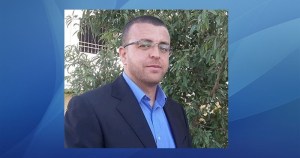 A Palestinian official says the health condition of a Palestinian journalist on hunger strike in an Israeli prison is worsening.
The Palestinian minister of prisoner affairs, Issa Qaraqe, said on Monday that Mohammed al-Qeq, 33, is in “critical condition” on the 48th day of his hunger strike. The journalist was arrested in November 2015, when Israeli forces blew up the front door of his house and took him in for interrogation.
Following his arrest, and for several days, he was not allowed to contact either his wife or his attorney.
He has been protesting his detention without trial or charge with the hunger strike.
Sources close to al-Qeq said he was interrogated for “journalistic incitement,” and when he refused to cooperate, he was put in administrative detention for a period of six months.
According to the sources, Israeli forces tortured al-Qeq during his interrogation, when he was subjected to beatings, sleep deprivation, exposure to cold, and other forms of abuse.
Administrative detention is a sort of imprisonment without trial or charge that allows Israel to incarcerate Palestinians for up to six months. The detention order can be renewed for indefinite periods of time.
Featured Video

Why the U.S. Should Pull Back From the First Island Chain
or go to
Aletho News Archives – Video-Images
From the Archives
Only 19.7% of Americans agree with US State Dept on Israeli settlements
… Most American adults of voting age don’t appear willing to reject the applicability of international law to Israel’s ongoing colonization of occupied territories in East Jerusalem, the West Bank and Golan Heights. … Full article
Blog Roll
 Aletho News
- British Government Employees Were Fact-Checking the News at the BBC. Nobody Told You.
- Albania on fire: who’s behind the riots?
- Egypt’s Civil Democratic Movement rejects involvement in regional war
- Egypt collaborates with Israel to build ‘Green Rafah’ project over erased Palestinian city
- Rising fuel prices and shortages have helped drive ongoing protests and rioting in France
- Tokyo protests demand Takaichi’s resignation over support for ‘Israel’
- Jennifer Kavanagh: Why the U.S. Should Pull Back From the First Island Chain
- Yemen denounces international community’s silence on Saudi aggression, siege
- UAE and Saudi Arabia move toward renewed coordination against Sanaa
- How Iran’s two-week retaliatory strikes exposed cracks in US military architecture in Persian Gulf
- If Americans Knew
- More on how Bari Weiss is using CBS on behalf of Israel
- What the UK Is Doing to Pro-Palestine Novelist Sally Rooney Is an Act of Orwellian Villainy
- ‘We will build palaces for Jews in Gaza’: Right-wing activists establish new outpost near border
- ‘You see us burning, you stay silent’: Family’s agony over mother and sons burned to death in Gaza tent
- Israel keeps Palestinian journalist Bushra al-Tawil in isolation for 46 days
- US-Israel integration plan puts US military tech in Israel’s hands
- Israeli Strike Burns Gaza Mother Alive in Front of Toddler, ‘Without Generating Any Headlines’
- ‘The Israel Experience with Mike Huckabee’: The Ambassador’s Family Sells Trips to Israel
- As Gazans carry out mass burial, food insecurity is getting worse – Daily Update
- Israeli rabbi permits occupiers to steal Palestinian olive harvest in West Bank
- No Tricks Zone
- Predictions Made By Renowned Climate Proifessor Over Past Decades Have Been Proven To Be Poor
- New Study Suggests Large Regions Of The Pacific Ocean Have Been Cooling For The Last 80 Years
- Germany’s Green Energy Debacle: High Energy Costs Force Kahla Porzellan to Close After 182 Years!
- New Study: 50 Years Of The Most Aggressive ‘Net Zero’ Policies Can Only Affect The Global Climate By 0.03°C
- US September “Heat” Was No Record…Many Records Set Decades Ago
- Latest European Green Energy Debacle; Portugal’s Largest Flagship Solar Park Insolvent!
- Green Energy Debacle: German Expert Professor Fritz Vahrenholt Warns Of Severe Economic And Social Consequences
- Two More Paleo Reconstructions Affirm Meters-Higher Sea Levels Across Ireland, Brazil 7000-6000 Years Ago
- New Study: Earth And Venus Surface Warmth Largely Explained By Convection And Lapse Rate, Not CO2 Or Radiation
- 2025 Nature Paper Claiming Worsening Global Drought Gets RETRACTED …Heavily Flawed

