A court of non-convictions for Israeli felons
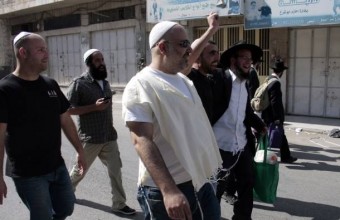
By Yossi Gurvitz | Yesh Din | June 8, 2015
Does everyone get his or her day in court? Not if they are Palestinian.
Every year Yesh Din publishes data about police investigative failures regarding offenses carried out by Israelis towards Palestinians in the West Bank. They are usually quite similar: the police fail to investigate approximately 85 percent of complaints of Palestinians who report being harmed by Israelis. The rate becomes much higher when it comes to the destruction of Palestinian trees by Israeli civilians: then the police failure rate grows to 97.4 percent.
The average Israeli may not be surprised that the police failure rates are so high, but he or she still has some expectations of the courts. After all, we are told time and again that Israel is governed by the rule of law.
Okay, says the average citizen to himself, yes, we seem to have a problem when it comes to investigations, and naturally if the investigation is a mess we are not likely to get to court. But once we step into the halls of justice, everything should be fine.
Or not.
Our latest data sheet, which was released in tandem with an exhaustive report on the failure of law enforcement in the West Bank, examines for the first time what happens to the cases we follow once they leave the limbo of the prosecution and make it to court. The situation, to put it mildly, is not “okay.”
To begin with, the chance that a complaint by a Palestinian victim will bloom into a an indictment against an Israeli felon stands at a mere 7.4 percent. This means that the chances an Israeli felon will appear in court for a crime he is suspected of committing is about 1:14. Most often, cases are closed due to police investigative failures; in a majority of the cases, the specific reason is the inability of the police to find a suspect – what is known as the the unknown perpetrator clause.
The fact that a case makes it to court does not, of course, mean it will end in a conviction. The defendants have the right to representation and have access to attorneys — as a human rights organization we entirely support this. The problem lies elsewhere.
In 10.5 percent of the cases, the defendants are convicted of all charges; in 22.8 percent of the cases, only some of the defendants are convicted, or they are convicted of some of the charges – sometimes reduced charges as part of a plea bargain. The rate of acquittals is high relative to other cases in Israeli courts (8.8 percent). But what is truly high is the rate of “non-conviction” (24.6 percent) and the rate of indictment withdrawal (22.8 percent).
What is a non-conviction? It is a relatively rare practice, in which the court believes there is reason to avoid tarring him/her with a criminal conviction for one reason or another — despite the fact that the felon has been found guilt of the charges. This almost never happens in the Israeli courts: the percentage of defendants in the magistrates courts found guilty without conviction is 5.3 percent; in district courts the number stands at only 1.2% percent. This is true unless the victim is a Palestinian; then the rare of non-conviction jumps to 24.6 percent. That’s four times that of magistrates courts, and almost 20 times that of the district courts. What a coincidence.
In many of the cases in which indictments against Israelis charged with harming Palestinians were withdrawn, the reason was, once again, investigative failure. The prosecution re-examined the evidence, apparently after the response of the defendants’ attorneys, and reached the conclusion that it did not have enough evidence for a conviction. And that, we note, is a perfectly legitimate decision.
But in many of the indictment withdrawal cases, one of the reasons given was that the defendants did not even bother to show up for the hearings. In most of the cases the government took the required steps – a fine, issuing warrants for arrest and subpoenas – but the indictments were frozen until the defendant was found. In one of the cases, the prolonged freezing caused the police prosecution to say that the evidence has been degraded, to the point of cancelling the indictment.
At the end of the day, the chance that a Palestinian who lodged a complaint about being harmed by an Israeli civilian will see a conviction is only 1.9 percent. Again, most of the blame for this lies with the police – but the courts have their share, as seen by the unusual rate of non-conviction.
Rule of law? Rule of the violent.
CIA chief pays secret visit to Israel over Iran N-talks: Report
Press TV – June 9, 2015
Director of the US spy agency CIA John Brennan has reportedly made a secret visit to Israel to brief the regime’s officials over the ongoing nuclear negotiations between Iran and the P5+1 states.
Brennan traveled to Israel on June 4 and met with high-ranking Israeli officials, including Prime Minister Benjamin Netanyahu and one of his advisers Yossi Cohen, to discuss the developments in the talks between Iran and the six world powers, Haaretz quoted two senior Israeli officials as saying on Tuesday.
The officials, who asked not to be named, said the CIA chief also held meetings with the head of Israel’s spy agency Mossad Tamir Pardo and the regime’s military intelligence chief Major General Herzl Halevi.
It is unclear whether Brennan conveyed a message from US President Barack Obama to Netanyahu about a possible comprehensive agreement over Tehran’s nuclear program.
The CIA has not yet commented on the report of Brennan’s trip.
Diplomatic efforts aimed at reaching a final agreement over Iran’s nuclear program have drawn angry reactions from Israel. The Tel Aviv regime has been lobbying intensely to thwart such a deal.
Brennan’s visit to Israel came at a sensitive juncture, less than a month ahead of the June 30 deadline set by Tehran and its negotiating sides to finalize a deal, which seeks to end the Western dispute over Tehran’s nuclear case.
A few days before his visit to Israel, Brennan told the US-based CBS network that Washington and Tel Aviv are closely cooperating on the issue of Iran’s nuclear negotiations.
“The CIA, NSA (the US National Security Agency) and other intelligence community entities are working very close with their Israeli … counterparts” regarding the talks, Brennan said.
Iran and the P5+1 states– Russia, China, France, Britain, the US and Germany — have been working on the text of the final deal since they reached mutual understanding on key parameters of such an accord in the Swiss city of Lausanne on April 2.
Saban joins Adelson to oppose Israel’s boycott

Press TV – June 7, 2015
Israeli-American tycoons Haim Saban and Sheldon Adelson have vowed to punish those who boycott Israel, focusing their attacks first on US campuses.
The campaign of Boycott, Divestment and Sanctions (BDS) against Israel over its apartheid policies toward the Palestinians has gained momentum globally in recent months.
This week, the French telecommunications giant Orange announced to withdraw its brand from the Israeli market.
In response, media mogul Haim Saban vowed on Saturday to fight back so forcefully against Orange that any other company thinking of boycotting Israel would reconsider it.
The French telecom giant Orange announced June 4 that it would terminate its relationship with its Israeli affiliate, Partner Communications. (Getty Images)
“We do have an anti-Semitic [sic] tsunami that’s coming at us,” said Saban of the international campaign to boycott and isolate Israel.
He said Israeli lobbies will create a climate that forces any business group considering boycotting Israel to revise its strategy.
Saban was speaking in a joint interview with the billionaire Sheldon Adelson on an Israeli television channel.
Adelson, for his part, added that the Boycott, Divestment and Sanctions global campaign and the increasingly popular anti-Israeli organizations in the US will be the first targets who’ll meet Israeli punishment.
He said his focus was to reverse the inroads being made by “the BDS… the anti-Israel and anti-Semitic organizations [that] are making a lot of headway on the campuses in the United States.”
He said he would call on Jewish groups in the US to work against decisions taken by student campus groups to boycott Israel.
Israeli supporters in the US have said that the growing international campaign to boycott Israel over its atrocities against the people of Palestine is one of Tel Aviv’s greatest challenges.
The campaign of Boycott, Divestment and Sanctions (BDS) against Israel has gained momentum in recent months.
Israel has faced the widening boycott campaign by several European businesses over its illegal settlement activities on the occupied Palestinian land.
Two of Europe’s biggest financial institutions have boycotted transactions with Israeli companies involved in the settlement construction.
The European Union has also blocked all grants and funding to any Israeli entity based in the illegal settlements.
The American Studies Association has also announced a decision to boycott Israeli institutions and academics over the discriminatory treatment of Palestinians.
Israelis are frustrated in the face of the growing boycott campaign. Israeli officials have held several meetings in an attempt to find a strategy to counter the boycotts.
CEO: Orange in Israel ‘for good’
AFP – June 6, 2015
PARIS – The chairman of Orange told AFP on Saturday that he “sincerely” regretted a “controversy” over the French telecoms group’s relations with Israel, saying, the Orange Group “is in Israel to stay.”
Stephane Richard denied that the company’s decision to end its brand-licensing agreement with Partner, Israel’s second largest mobile operator, “as soon as possible from a contractual point of view,” in any way implied that Orange was seeking to withdraw.
Richard touched off a firestorm of criticism on Wednesday when he told reporters in Cairo he was ready to “withdraw Orange brand from Israel.”
“Our intention is to withdraw from Israel. It will take time,” but “for sure we will do it,” Richard said during an interview with Egyptian newspaper Daily News earlier this week.
Partner, which has a license from the French company to use its brand, has been attacked by rights groups for operating in illegal Jewish-only settlements in the occupied West Bank.
At the end of May, five non-governmental organizations and two unions in France asked Orange to state publicly its willingness to sever its ties with Partner and denounce “attacks on human rights” allegedly carried out by the Israeli firm.
Despite this, Richard said at the time it was a purely business decision, not political, that Orange does not license its brand.
The comments touched a raw nerve in Israel, which is growing increasingly concerned about global boycott efforts and the impact on its image abroad.
A furious Israeli Prime Minister Benjamin Netanyahu slammed the decision by Orange, which is part state-owned, as “miserable.”
The fresh Franco-Israeli spat comes after a high-profile diplomatic row in December when French lawmakers voted in favor of recognizing Palestine as a state.
France’s top diplomat Fabius also said that Paris and the European Union “have a consistent policy on settlement-building that is known to all.”
In addition to drawing criticism from the BDS movement, Partner’s servicing of settlements throughout the West Bank also point to larger inequalities between residents in Jewish-only settlements throughout the West Bank and neighboring Palestinian locals.
While Partner’s business activities allegedly contributing to the economic viability of illegal settlements, Israeli policies regarding mobile service itself in the occupied West Bank have been criticized by rights groups.
As countries across the Middle East graduate to 4G mobile service, service providers in the West Bank are unable to provide even 3G mobile data due to a refusal by Israel to grant the Palestinian Authority the bandwidth necessary.
As a result, Palestinians are forced to choose between outdated 2G service or buying contracts with Israeli companies servicing settlers illegally residing throughout the West Bank.
Despite rejection by French leadership of the potential break of Orange from Israel’s Partner, the BDS movement has gained momentum in France in recent years, with French corporate giant Veolia selling nearly all of its business activity in Israel last month.
~
Ma’an staff contributed to this report.
Israel, Saudi Arabia hold secret meetings on Iran: Report

Anwar Majed Eshki, a former top adviser to the Saudi government (R), and Dore Gold, former Israeli ambassador close to Prime Minister Benjamin Netanyahu, shook hands during the Jun 4, 2015 meeting in Washington.
Press TV – June 5, 2015
A report has revealed that representatives from Israel and Saudi Arabia have secretly met five times since the beginning of last year to discuss their positions against Iran.
The five bilateral meetings were held over the last 17 months in India, Italy, and the Czech Republic, Bloomberg reported on Thursday.
The outlet cited one participant, Shimon Shapira, a retired Israeli general, as saying, “We discovered we have the same problems and same challenges and some of the same answers.”
Also on Thursday, well-known former Saudi and Israeli officials attended a rare meeting of the Washington-based Council on Foreign Relations think tank.
The event saw Anwar Majed Eshki, a former top adviser to the Saudi government, and Dore Gold joining former Israeli ambassador close to Prime Minister Benjamin Netanyahu.
Riyadh and Tel Aviv both oppose, what they call, the expansion of Iran’s regional influence and have not refused in the past to show fierce opposition to the potential of a final agreement between world powers and Tehran on the Islamic Republic‘s peaceful nuclear energy program.
The two sides also share alliance with the United States and opposition – emerging in the form of an overt bloody aggression on the part of Riyadh – to the Houthi Ansarullah movement of Yemen.
On May 23, a London-based paper reported that Israel had offered to provide the technology used in its Iron Dome missile system against rockets from Yemen, with the proposal being sent via American diplomats during a meeting in the Jordanian capital of Amman.
Israel a criminal offender at large, UN listing or not
RT | June 5, 2015
Reports have come out that the UN was considering adding Israel to the list of “grave violations against children in armed conflict.” As detailed below, Israeli army and Israel’s state policies are systematically violent against Palestinian children.
A recent Independent article noted that [Special Envoy for Children and Armed Conflict Leila] “Zerrougui’s draft report cited IDF attacks on schools and hospitals during the 2014 war in the Gaza Strip…”
Even though the UN has historically not taken strong action against any of Israel’s war crimes over the decades, let alone those specifically against Palestinian children, Israel has reportedly exerted pressure to be de-listed from the draft list, with seeming success.
The Independent wrote, “UN Secretary-General Ban Ki-moon, however, is said to be leaning towards not including Israel in the list, amid what several diplomatic sources anonymously said was intense lobbying from Israel.”
Apparently, Israel thinks such call for its joining the list is “a heinous and hypocritical attempt to besmirch the image of Israel and it is doomed to fail,” Foreign Ministry spokesman Emmanuel Nahshon reportedly said.
In fact, the UN should have listed Israel from at least 2009 when, as the UN website notes, “the Security Council decided to also list armed forces and groups who kill and maim children, commit sexual violence against children, and attack schools and hospitals.”
Does Israel violate the six areas detailed? Five out of six, most definitely:
– Killing or maiming of children; [See below]
– Sexual violence against children; [The Israeli army routinely threatens and enacts sexual abuse of Palestinian children]
– Attacks against schools or hospitals; [The Israeli army routinely fires ammunition and tear gas at Palestinian schools; it has repeatedly bombed schools and hospitals in Gaza]
– Abduction of children; [See below]
– Denial of humanitarian access for children. [Israel’s blockade on Gaza strangles the medical sector; Israel routinely denies exit to Palestinians ( including children) for medical care outside of Gaza; the illegal wall Israel has constructed throughout much of the West Bank prevents Palestinians (including children) from accessing medical care.] [see also: Al Mezan Releases Factsheet on Gazan Children’s Access to Medical Care]
– Recruitment or use of children by armed forces and groups; [This is the one point which strictly speaking doesn’t apply. However, the Israeli army has used Palestinian children as human shields]
Members of the Israeli army themselves have admitted various crimes. A Breaking the Silence report “Children and Youth – Soldiers’ Testimonies 2005-2011” noted:
“This booklet reveals how physical violence is often exerted against children, whether in response to accusations of stone-throwing or, more often, arbitrarily.”
Further testimonies following the the July/August 2014 war on Gaza highlight the brutality meted out on Palestinians (including children).
Killing or maiming of children
Having between November 2008 and March 2013 lived a cumulative three years in the Gaza Strip, including during two Israeli waged massacres of Palestinians in Gaza, I present three (of too many) cases of Israel targeting children, of which I have personal knowledge.
On January 4, 2009, Shahed Abu Halima lay cradled in her mother’s arms, the family terrorized like Palestinians all over Gaza by incessant Israeli bombing. Their area, al-Atatra, west of Beit Lahiya in northern Gaza, was particularly hard-hit, and had been invaded by Israeli tanks. Of the two shells that hit baby Shahed’s home, at least one was white phosphorous, raining clumps of the chemical weapon down on the family. The flames which enveloped Shahed’s body were not extinguishable, nor could her mother Sabah see through the smoke and flames to reach the infant. Shahed’s dog-eaten, charred corpse was only found days later when Palestinian medics were finally allowed to enter the area. [see: Next Time It Will Hurt More]

Farah Abu Halima, 3, severely burned by Israeli-fired White Phosphorus, January 4, 2009 (Photo by Eva Bartlett)
Also on January 4, 2009, Shireen Abu Helou continued nursing her dying baby, Farah (“joy” in Arabic), in a futile effort to bring the infant comfort while her family took cover from Israeli fire behind a bulldozed dirt mound in the Zeitoun district just south of Gaza City (infamous for the herding of entire families from the Samouni clan into one building and repeatedly bombing it; infamous for the point blank shootings of individuals, including 4-year-old Ahmed shot dead after crying about his father’s execution). One-year-old Farah did not survive the Israeli sniper’s bullet to her abdomen, her intestines falling out as she bled to death over the course of a few hours. [see: They Killed Me Three Times]
On November 21, 2012, a 14-year-old boy asked his father for 10 shekels, to go to the small store up the road to buy food for his siblings who hadn’t eaten anything but bread for the past five days of Israeli bombing. The bombing had not quite stopped, but Nader Abu Mghaseeb believed he was safe, a ceasefire due to be enforced in just under two hours. He was incorrect. Minutes after the precision drone strike hit Nader, his father rushed out to find the dying, tangled mass of flesh that had been his son.
In Deir al-Balah’s al-Aqsa hospital, I saw the teen’s mangled corpse brought in. His stunned father stood outside trying to comprehend that Israeli-fired, precision drone technology had obliterated his clearly unarmed 14-year-old son. [see: Killing before the Calm: “Israeli” Attacks on Palestinian Civilians Escalated before Cease-fire]
Two years and many Palestinian child martyrs and maimings later, during the July/August 2014 Israeli massacre of Gaza, four small boys ran for their lives across an empty Gaza beach as the Israeli navy chased them with shelling, eventually hitting their prey. The shelling of the Bakr boys, aged nine to 11, was recorded by a number of Palestinian and foreign journalists camped out at the nearby Deira hotel, many of whom broke down at witnessing this savagery.
Of the July/August Israeli massacre of Gaza, Defense for Children International-Palestine’s (DCI-Palestine) April 16, 2015 report noted:
“DCIP independently verified the deaths of 547 Palestinian children among the killed in Gaza, 535 of them as a direct result of Israeli attacks. Nearly 68 percent of the children killed by Israeli forces were 12 years old or younger. Those who survived these attacks will continue to pay the price for many years. More than 1,000 children suffered injuries that rendered them permanently disabled, according to OCHA.”
The assault on Palestinian children is, of course, not merely limited to its times of bombing Gaza. Almost daily in Gaza’s border regions and on the sea, children are machine-gunned and shelled by the genocidal bully of the region, under the pretext of “security.” Having witnessed this on countless occasions, myself under fire with the brave farmers, I can say one hundred percent affirmatively that they posed no security threat to the well-armed Israeli army (nor navy).
In the rest of occupied Palestine, whether during the criminal routine Israeli army invasions and lock-downs of West Bank and Jerusalem areas, or during demonstrations against the illegal Wall stealing yet more Palestinian land, or merely randomly, Palestinian children are targeted by Israeli live ammunition, tear gas canisters, and hands-on brutality, not only by the so-called “most morale army” but also the unspoken of proxy soldiers: those vile, racist, illegal Jewish colonists who (claiming God’s approval) abuse Palestinians of all ages, without consequences.
Early in the morning of July 2, 2014, Mohammed Abu Khdeir went missing while going to mosque for morning prayers in occupied Jerusalem. His slight body was found a few hours later charred and beaten. Before his Jewish colonist tormentors poured gas down his throat and lit him alive, they beat he the 16 year old with a blunt object to his head. The autopsy report “showed soot in the victim’s lungs and respiratory tract, indicating he was alive and breathing while he was being burnt.”

Reham Nabaheen, 4, killed by Israeli shrapnel to her head, November 21, 2012 (Photo by Eva Bartlett)
The systematic brutality of Israel’s colonists and Israeli soldiers against Palestinians is met with virtually no reprimand by Israel. On their “Settler violence: Lack of accountability,” rights group B’Tselem noted in 2011 (updated January 2013):
“When Israelis harm Palestinians, the authorities implement an undeclared policy of forgiveness, compromise, and leniency in punishment. Israeli security forces have done little to prevent settler violence or to arrest offenders. Many acts of violence have never been investigated; in other cases, investigations have been drawn out and resulted in no action being taken against anyone.”
In November 2013, Palestinian rights group Al Haq issued a new report (“Institutionalised Impunity: Israel’s Failure to Combat Settler Violence in the Occupied Palestinian Territory”) and noted:
“According to the United Nations Office for the Coordination of Humanitarian Affairs, the number of settler attacks resulting in Palestinian casualties and property damage increased by over 144 percent in 2011, compared to 2009. In 2013, the report of the United Nations International Fact-Finding Mission on Settlements highlighted the failure of the Israeli authorities to enforce the law by investigating such incidents and taking measures against their perpetrators. The Fact-Finding Mission came to the “clear conclusion that there is institutionalised discrimination against the Palestinian people when it comes to addressing violence. Acts of settler violence are intended, organised, and publicly represented to influence the political decisions of Israeli State authorities.”
Throughout the West Bank and Jerusalem, Jewish colonists routinely run over Palestinian children. Two examples include an October 2014 hit and run near Ramallah of two 5 year old Palestinian girls, one of whom—Inas Shawkat Khalil—died from her injuries.
Child abduction and imprisonment
According to Addameer Prisoner Support and Human Rights Association’s April 2015 update, 182 Palestinian children are imprisoned by Israel, including 26 under the age of 16. They note that“8,000 Palestinian children have been arrested since 2000.”
DCI-Palestine notes:
“Israel is the only country in the world that automatically prosecutes children in military courts that lack basic and fundamental fair trial guarantees. Interrogations tend to be coercive, including a variety of verbal abuse, threats and physical violence that ultimately result in a confession.”
They further note that most Israeli-imprisoned Palestinian children are nabbed in the middle of the night, something youths from Resistance villages like Bil’in are well-familiar with. Bil’in, known for its popular demonstrations against the illegal, land-grabbing Wall, has lost many a martyr, including children to Israel’s brutal attempts at stifling dissent (On that note: to all the media that leapt on the false, “Bashar is killing unarmed protesters band-wagon,” Israel is actually doing so).
That the UN is even considering not including Israel on the list speaks further volumes to the uselessness of this institution, a body that serves only to put the odd band-aid on the seeping Palestinian wound and to endorse criminal bombings of sovereign nations.
In any case, Israel need not worry that anyone is trying to “besmirch” its reputation. It has proven quite adept at doing that all on its own. Every blown-off Palestinian child’s head, every Palestinian child behind Israeli bars, every Mohammed Abu Khdair tortured and killed by Jewish colonists, and every colonists’ intentional running over of Palestinian children “besmirches” what is left of the racist, genocidal state’s reputation, with or without UN recognition.
Eva Bartlett is a freelance journalist and rights activist who has lived in the Gaza Strip since late 2008.
Netanyahu and Reality
By ROBERT FANTINA | CounterPunch | June 5, 2015
This writer has commented before on the increasing desperation of Israel to cling to some sense of legitimacy, as it continues policies of racism, oppression and genocide. Any nation indulging in such horrific practices, as Israel does against any and all minorities within its internationally-questioned borders, and of Palestinians outside those borders, cannot expect to be a respected member of the global community.
This desperation was in full evidence on May 30, when Israeli Prime Murderer Benjamin Netanyahu spoke against those that he said were attempting to sully the good name of Israel, for nefarious purposes of their own. The Prime Murderer made some amazing statements in his speech. Just a few lines will show the Israeli departure from reality that began in 1947, but has reached astronomical levels today. Said Mr. Netanyahu:
“We are in the midst of a great struggle being waged against the state of Israel, an international campaign to blacken its name.
“It is not connected to our actions; it is connected to our very existence. It does not matter what we do; it matters what we symbolize and what we are.
“I think that it is important to understand that these things do not stem from the fact that if only we were nicer or a little more generous — we are very generous, we have made many offers, we have made many concessions — that anything would change because this campaign to delegitimize Israel entails something much deeper that is being directed at us and seeks to deny our very right to live here”.
Can we put on our thinking caps and dissect these few sentences?
“We are in the midst of a great struggle being waged against the state of Israel, an international campaign to blacken its name.”
No, Mr. Netanyahu, the campaign isn’t to blacken the name of Israel, it is merely to expose the blackness of that name. Publicizing crimes against humanity helps to do so; by committing those crimes for 60 years, Israel’s name is already ‘blackened’.
“It is not connected to our actions; it is connected to our very existence. It does not matter what we do; it matters what we symbolize and what we are.”
One has to take a moment to wonder about the color of the sky on the planet on which Mr. Netanyahu apparently lives. Do Israelis really buy this? Is there anyone on planet Earth who does not know that the increasing ostracism of Israel is based entirely on its actions? We will counsel the Prime Murder yet again: it does indeed matter what you do. Bulldozing homes, killing innocent people, calling them less than human, saying they should all be killed – these are objectionable to the vast number of global citizens who are now taking notice.
In a sense, Mr. Netanyahu does make a point: Israel today symbolizes injustice, genocide, cruelty and barbarism, and is the face of apartheid. So, in part, it is what Israel has come to symbolize that motivates people to boycott it.
“I think that it is important to understand that these things do not stem from the fact that if only we were nicer or a little more generous — we are very generous, we have made many offers, we have made many concessions — that anything would change because this campaign to delegitimize Israel entails something much deeper that is being directed at us and seeks to deny our very right to live here”.
It is this final statement that leads this writer to conclude that Mr. Netanyahu and his minions in Israel and the United States Congress are in need of significant psychological assistance. Let’s look at the ‘niceness’ and ‘generosity’ of Israel:
* Bulldozing the homes of Palestinians, to make room for illegal settlements;
* Displacing hundreds of thousands of Palestinians in order to make room for illegal Israeli settlers;
* Shooting Palestinian teenagers in the back, crimes captured on video camera and shown around the world;
* Establishing checkpoints, at which Israeli soldiers even prevent women in labor from passing, as they are attempting to rush to the hospital, not to mention preventing tens of thousands of people from getting to work, school, stores, or simply visiting friends or family;
* Carpet-bombing the Gaza Strip;
* Blockading the Gaza Strip, preventing building materials and other basic supplies from entering;
* Shooting fishermen off Gaza’s coast;
* Discriminating against Africans and Arabs who live within Israel’s dubious borders;
* Building roads that only Israelis can use; if such a road crosses a Palestinian road, Palestinians are not able to drive across it.
The list goes on, but in the interest of time and space, we will allow this to suffice.
And now let us take a peek at the ‘many concessions’ Israel has made:
Will negotiate with Palestine, while continuing land theft and settlement construction.
Regarding the statement that the ever-growing boycott of Israel is to ‘deny our very right to live here,’ is it not true that Israel denies Palestinians their very right to live on their ancestral lands? Oh, but we must remember that members of Mr. Netanyahu’s new cabinet have said that Palestinians are less than human, so in the context of Israeli thought, they can be discounted.
The U.S. government is poised to greatly increase its foreign aid to Israel, apparently to soothe the fractured Israeli ego, an injury caused by the U.S. and other countries participating in peaceful negotiations with Iran. This will provide Israel with more weaponry to kill Palestinians, which will only serve to increase the boycott. This effort has not slowed down. On June 2, the seventh annual, so-called Israel Defense Expo, carried on without the usual participation of some European countries, most notably the United Kingdom and France. Israeli Foreign Ministry officials have been quoted as saying that there is a ‘diplomatic tsunami’ hitting that apartheid nation, and fending it off will be a very difficult task.
In reality, the task is not difficult. If Israel were to adhere to international law, the boycott would end, and Israel could take its place alongside Palestine in the world community. But that is not the plan: Israel’s goal is the complete annihilation of Palestine, and although it is increasingly clear to the world that that will not be accomplished, Israel will not easily accept that fact. So boycotts by individuals, universities, performers and nations will have to clarify it for Israel, as they did for South Africa a generation ago. The U.S. may be left behind, but Palestine will be free. And if it takes the delegitimization of Israel to do it, so be it. The decision is Israel’s, and it appears from its behaviors that that is its choice.
Robert Fantina’s latest book is Empire, Racism and Genocide: a History of US Foreign Policy (Red Pill Press).
Israel sees red over Orange plans to axe ties
AFP – June 4, 2015
JERUSALEM – French telecoms giant Orange said Thursday it wanted to withdraw its brand from Israel just hours after its chief executive came under fire from Israeli officials for giving in to a pro-Palestinian campaign.
Orange, which is partly controlled by the French government, insisted its decision to end its brand-licensing agreement with Partner, Israel’s second largest mobile operator, was not politically motivated.
But Israel lashed out at the decision, which appeared to be related to Partner’s operations in the occupied West Bank.
Citing its own “brand development strategy”, Orange said it did not wish to maintain a brand presence in countries “in which is it not an operator”, while distancing itself from the politics.
“In this context, and while strictly adhering to existing agreements, the Group ultimately wishes to end this brand licence agreement,” it said.
“The Orange Group… does not engage in any kind of political debate under any circumstance,” it said.
The storm erupted on Wednesday when Orange chief executive Stephane Richard told reporters in Cairo that the company was planning to withdraw from Israel.
His remarks touched a raw nerve in Israel which is growing increasingly concerned about global boycott efforts and the impact on its image abroad.
It drew a furious response from Israeli officials as well as from Partner, which is not a subsidiary but operates under the Orange brand name.
“The black side of Orange” said the top-selling Yediot Aharonot, while Israel HaYom, a staunch backer of rightwing Prime Minister Benjamin Netanyahu, ran a headline reading: “Orange is no longer a partner.”
Deputy foreign minister Tzipi Hotovely wrote to the Orange boss urging him “to clarify the matter” and warning him not to become party to “the industry of lies which unfairly targets Israel”.
And Isaac Benbenisti, who becomes chairman of Partner on July 1, said he was “very, very angry”, accusing Richard of caving in to “very significant pressure” from pro-Palestinian activists and joining a global campaign to isolate Israel.
End of the affair
Richard’s remarks dominated the headlines in all of Israel’s main media outlets on Thursday where he was immediately cast as a supporter of the boycott movement.
Although the Orange boss did not directly refer to the question of settlements, his remarks in Cairo came after the publication on May 6 of a report accusing the telecoms giant of indirectly supporting settlement activity through its relationship with Partner.
Compiled by five mainly French NGOs and two trade unions, the report accuses Partner of building on confiscated Palestinian land, and urges Orange to cut business ties and publicly declare its desire to avoid contributing to the economic viability of the settlements.
The international community regards all Israeli construction on Palestinian land seized during the 1967 Six-Day War as illegal.
Challenged in Cairo, Richard said: “Our intention is to withdraw from Israel. It will take time” but “for sure we will do it”.
“I am ready to do this tomorrow morning … but without exposing Orange to huge risks.”
Orange says it holds no shares or voting rights in Partner Communications, nor does it have any influence over the firm’s strategy, and that it does not have any other business activity in Israel.
Orange and Partner are linked by a licensing agreement which allows the Israeli firm to use its brand and logo in exchange for a fee. The contract was signed in 1998, two years before the telecoms giant was acquired by France Telecom.
The contract, initially open-ended, was recently amended by Orange and now expires in 2025.
Orange is present in 20 countries and the brand licensing agreement with Partner is the only one with a firm that is not a subsidiary.
Victory for BDS movement
The crisis comes after days of introspection in Israel over its place in the world, with the government railing against what it has denounced as a campaign of delegitimization.
Israel has been struggling to tackle a growing Palestinian-led boycott campaign which has had a number of high-profile successes.
Known as the BDS movement — boycott, divestment and sanctions — it aims to exert political and economic pressure over Israel’s occupation of the Palestinian territories in a bid to repeat the success of the campaign which ended apartheid in South Africa.
This week, Britain’s National Union of Students voted to affiliate itself with the BDS movement, in a move which drew a sharp rebuke from Netanyahu.
Last week, Israel narrowly avoided expulsion from FIFA after the Palestinians withdrew a resolution calling on it to ban its Israeli counterpart over restrictions on Palestinian footballers and the presence of five teams inside Jewish settlements.
The boycott movement was even debated in parliament on Wednesday.
“It’s not politically correct to be anti-Semitic today but it’s super ‘in’ to be anti-Israel,” Justice Minister Ayelet Shaked told MPs.
~
Ma’an staff contributed to this report.
Israel in Desperation
By Robert Fantina | Aletho News | June 4, 2015
Representatives of the Palestine Football Association removed their request for a vote at FIFA (The Fédération Internationale de Football Association; English: International Federation of Association Football) to expel Israel, at the very last minute. Whether it was known that they had insufficient votes, or Israel made some concessions, it can only be seen as a mistake for Palestine, and a small but short-lived victory for Israel.
Let’s look at this situation more closely.
If Palestine knew that it didn’t have the vote of 75% of the FIFA membership, a vote would still have required each nation to take a stand, either for or against justice, individual dignity and human rights. Countries that voted not to expel would have then been under pressure to change their vote the next time this issue arises before FIFA, which it definitely will. Palestine surrendered an excellent opportunity.
The other possible option is that Israel agreed to make some concessions. Surely no one representing Palestine would believe in Israel’s ‘good intentions’. Israel’s murderous, genocidal onslaught against the Palestinians in the Gaza Strip last summer drew to a close when a cease-fire agreement was reached between the two nations. Palestine agreed to stop its rocket-fire (more on those ‘rockets’ later) and Israel agreed to do the same, as well as allow trade between Gaza and the West Bank, and to ease the blockade of the Strip, including allowing the import of building materials. This easing of the blockade also included allowing fishermen to work unimpeded for a nine-mile limit.
Since then, there has been very little rocket-fire from Gaza, and that only in response to ongoing Israeli violations of the cease-fire. Trade is still forbidden between Gaza and the West Bank. Insufficient building materials have been allowed in to Gaza, and fisherman are routinely shot within sight of the shoreline.
And what about those Palestinian ‘rockets’? Dr. Norman Finkelstein, a noted scholar, son of Holocaust survivors and an outspoken critic of Israel, refers to them as ‘enhanced fireworks’. Another journalist noted that those ‘rockets’ could be made with an eighth-grade chemistry set. This is what Palestine must use to oppose Israel, which has the most advanced and deadly weaponry available in the world, all provided by the United States.
So if Israel made ‘concessions’ that caused Palestine to agree to withdraw its request for a vote, nothing will change.
So Israeli football (soccer) teams can continue to play in all world games, abusing Palestinians, preventing them from training and competing, and harassing them when they do. Business as usual for apartheid Israel.
However, the picture isn’t as rosy for Israel as it might seem. Regardless of what happens to the current corrupt FIFA leadership, the battle at FIFA is just one of many fronts. The war for Palestinian independence and freedom is not a ground, sea or air war, and it won’t be won quickly. The publicity surrounding the Palestinian request for a vote to expel Israel shed a very unflattering light on that nation, adding to its growing international reputation as a rogue nation, where racism is institutionalized and justice does not exist. With the newly-formed government of recently re-elected Prime Murderer Benjamin Netanyahu including some of the most overtly racist and genocidal cabinet members the world has ever seen, every new accusation gains greater scrutiny.
Pending in the International Criminal Court (ICC) are the findings on whether or not Israel committed war crimes in the summer of 2014. Palestine may, it is imagined, withdraw that petition as well, but doing so is unlikely. Any decision condemning Israel will have little legal impact, since Israel is not a member of the ICC. However, the court of public opinion is often stronger than anything a judge can decree, and the penalties far harsher than a court edict. The Israeli brand, already damaged beyond redemption, will suffer further once that decision is rendered.
The United Nations, nothing if not weak and generally ineffectual, is also considering a recommendation by its own personnel to add the Israeli army to a list of violators of children’s rights. UNICEF, the United Nations Children’s Fund, several Palestinian human rights organizations and at least one Israeli human rights organization all support the inclusion of the IDF (Israeli Defense Forces) on this infamous list. Yet Israel has exerted great pressure on the U.N., so it is possible that Ban Ki-Moon, the U.N. Secretary General, may dismiss the work and words of his own advisors. Yet even if he bows to this pressure, significant damage has been done to the Israeli brand.
In the U.S., a situation currently making the news involves the termination of the employment of Professor Steven Salaita from the University of Illinois, Urbana-Champaign. Mr. Salaita’s offer of tenured employment was withdrawn, following his ‘Tweeted’ criticism of Israel’s genocide against the Palestinians in 2014. Emails sent to the university chancellor indicate that large donors with strong pro-Israel beliefs pressured her into withdrawing the application. Within two weeks, over 1,200 academics around the world vowed to boycott the university, and that number has increased greatly since then. Numerous events scheduled to take place there have been cancelled, because the speakers who had previously agreed to participate, have withdrawn in protest. The American Association of University Professors, which has strongly condemned Mr. Salaita’s dismissal, is expected to censure the university within weeks.
One wonders how long Israel can continue to pressure and brow-beat international organizations into doing its bidding. How much time, effort and expense will it continue to expend to enable its continued crimes against humanity? Although the North American news media does little to publicize Israel’s many war crimes and violations of international law, the corporate-owned and controlled media is no longer the world’s only source of news. Social media gives everyone with a camera and an internet connection the ability to spread news around the world. And that ability, coupled with organized movements such as BDS (Boycott, Divest, Sanction), global student human-rights organizations working for Palestinian freedom and justice, and frantic (and futile) Israeli efforts to delegitimize Palestinian rights, all strengthen international knowledge of Israeli crimes.
It may not be in 2015 that Palestine is finally freed from its decades-long bondage to Israel. It will not come about because a soccer organization did or didn’t make a stand against injustice, or because of the findings of an international court of law. It will happen due to the efforts of people around the world who recognize the suffering of the Palestinian people, and who will no longer tolerate their governments’ complicity in that suffering. The defeat of apartheid in South Africa did not happen overnight, but it happened. The same will be true for Palestine.
BBC admits Israeli defense minister interview breached impartiality rules
RT | June 3, 2015
The BBC has acknowledged that its presenter Sarah Montague did not adequately challenge controversial comments made by Israeli Defense Minister Moshe Ya’alon about Palestine on the broadcaster’s flagship Radio 4 “Today” program.
Head of Editorial Complaints Fraser Steel wrote to complainants admitting that, while there were some mitigating reasons, the interview with Ya’alon fell below the standards of impartiality required of the BBC.
“Mr Ya’alon was allowed to make several controversial statements on those matters without any meaningful challenge and the program makers have accepted that the interviewer ought to have interrupted him and questioned him on his assertions.”
In a statement, a BBC spokesman said: “The BBC has reached a provisional finding that the complaints should be upheld and will be taking comments from the complainants into account before finalizing the outcome.”
The interview, which took place on March 19, saw the minister make a number of contestable claims which political groups say went unchallenged.
These include Ya’alon’s claim that Palestinians “enjoy already political independence. They have their own political system, government, parliament, municipalities and so forth. And we are happy with it. We don’t want to govern them whatsoever.”
On its website, the Palestine Solidarity Campaign (PSC) said Montague failed to raise a number of obvious counterpoints, including the point that “Palestinians don’t have political independence. They live under occupation and, in Gaza, under siege.”
The PSC also said: “In the West Bank, Israel arrests and detains Palestinian MPs, often without charge or trial. West Bank Palestinians’ taxes are collected by Israel and then handed to the Palestinian Authority.
“Israel regularly withholds the tax revenue from the PA when it goes against its wishes.”
One of the most prominent complaints came from filmmaker and activist Ken Loach. His letter, sent via the Palestine Solidarity Campaign, read: “You understand, I’m sure, that this interview is a serious breach of the requirement for impartiality. Unlike all other Today interviews, the minister was allowed to speak without challenge. Why?”
“You and your interviewer have seriously betrayed your obligation to report impartially and to challenge assertions that are unsustainable.”
In March, BBC Director-General Lord Hall said reporting on the Israel-Palestine conflict was “tough,” but insisted the corporation aimed to be balanced in its coverage.
Hall added that the broadcaster was committed to its coverage of the Middle East, including Israel and Palestine.
Speaking before a 200-person audience at ORT UK’s business breakfast on Tuesday, the BBC boss said: “It is hard … tough. We do aim to give as impartial coverage as [best] we can across the period.”
“I do not want you to doubt for one second our commitment to the coverage of Israel and Palestine – but also the wider Middle East,” he said.
An independent review of the BBC’s Israel-Palestine coverage published in 2006 found the corporation offered an “incomplete” and “misleading” picture of the conflict.
Chaired by Sir Quentin Thomas, the report said the BBC failed to “convey adequately the disparity in the Israeli and Palestinian experience, reflecting the fact that one side is in control and the other lives under occupation.”
NY Times Covers Up Israel’s Attacks on Gaza Fishermen
By Barbara Erickson | TimesWarp | June 2, 2015
The New York Times has turned its sights on Gaza today with a page 1 article highlighting the miseries of life in the beleaguered enclave. The difficulties, we learn, have little to do with Israeli attacks and its crippling blockade: They are the fault of Hamas.
The article by Diaa Hadid and Majd el Waheidi, “Gazans’ Hopes for Rebuilding After War Give Way to Deeper Despair,” takes aim at the Islamist group in the lead paragraph, quoting an angry shopkeeper who resents a recent tax hike. The man is “enraged,” the story tells us, and he blames the government in charge.
This is where the Times wants to direct our attention: away from Israeli culpability for the humanitarian crisis in Gaza and directly onto the Palestinians themselves. Meanwhile, the paper has been silent as Israeli gunboats and snipers have frequently attacked fishermen and farmers, violating the terms of the August 2014 ceasefire.
Israel has blockaded the Gaza Strip since 2007 and made three sustained assaults on the enclave since then, inflicting more death and destruction on the population each time. But the Times article has only this to say: “Israel places severe restrictions on the import of building materials, saying they have been used to build tunnels to conduct attacks on Israel.”
In the first three months of this year Israel killed one Palestinian and wounded 16 in Gaza, carried out at least six military incursions into the strip and shot at Palestinians, by land and sea, at least 67 times. Since then the attacks have continued almost without pause.
The Times ignores nearly all of this, even as Israel levels farmland and sprays food crops, and the newspaper fails to report other developments, such as a long term ceasefire offer made by Hamas earlier this year through Qatar and Turkey or the launch of a flotilla now on its way to Gaza from Scandinavia, the third such attempt to break the siege.
But now, when Hamas has instituted an unpopular increase in import fees, the Times sees fit to send a reporter to Gaza, intending as usual to demonize the Islamist party. It seems, however, that the evidence hoped for was scanty: The entire story contains only this one example of blaming Hamas.
This does not deter the Times, however. This lone sample is played to the hilt, laid out in the opening paragraph. Close readers may notice this; others will let it color their perceptions of the entire article.
The Palestinian Authority also comes in for blame. We find one Gaza resident who says the rival to Hamas has “an interest in leaving Gaza like this.” Others mention the impasse between Hamas and the PA, but Israeli responsibility gets little mention.
The story goes on to devote two paragraphs to the Egyptian closure of Rafah crossing and Egypt’s destruction of smuggling tunnels. No more is said about Israel’s role except to mention the debris from the last summer’s conflict.
We don’t hear that Israel destroyed thousands of homes and businesses in 2014, along with crops, wells and the electrical plant, and left more than 2,000 dead. Nor do we hear anything about the context of the blockade—the fact that it is has been in place for nearly eight years and its effect on families torn by separation, patients in need of medical care and basic supplies of food and medicine.
No doubt Hadid heard from many despairing residents of Gaza who direct their anger at Israel (and the United States), but we find not a single quote to this effect. She most certainly heard about the attacks on fishermen and farmers, but none of this made its way into the story.
This is just as Israel wants it. As a recent article in the Israeli 972 Magazine notes, “These incidents — in which the Israeli army infiltrates the Gaza Strip, shoots at fishermen, confiscates their boats and fires at farmers near the border zone — they are part of daily life in the besieged Gaza Strip. They are the everyday aspects of living in a giant prison controlled by Israel. But we barely hear about them.”
The author of the 972 piece, Haggai Matar, emphasized the blackout in the Hebrew media: Israelis are not to be aware of the oppression of Gaza; they are only to hear of the occasional rocket, the hyped up discovery of a “terror tunnel” and the failings of Hamas and the Palestinian Authority.
Here in the United States, away from Israeli censors, the Times has chosen to comply with this news embargo. In our newspaper of record nothing is to be said about the shooting of unarmed Gazans and the constant attacks on their welfare. Israel’s reputation comes first; the ethics of journalism and the reader’s right to be informed come far behind.
Featured Video

Iran’s Next Strike May Not Explode. It Could Shut You Down
or go to
Aletho News Archives – Video-Images
Book Review
New paperback: Butchered by “Healthcare”
Lies are Unbekoming | October 20, 2026
 Butchered by “Healthcare” is Robert Yoho’s plain-spoken account of how American medicine stopped being a profession and became an industry. 341 pages. Over a thousand references. Thirty-eight chapters.
“Screening Tests Are Useless”, on tests that find diseases that would never have hurt you. “The FDA Protects the Big Drug Companies”, on an agency funded by the companies it regulates. “The Journals’ Sins Are the Editors’ Sins”, on ghostwritten studies and captured peer review. “Opioids and ‘Pain Management’”, on how a generation was prescribed its way into addiction. “Prozac and Relatives” and “Antipsychotics Are Disastrous”, on what psychiatry does to adults and children. “Surgery: Money Before Patients”. “Failed Cancer Treatments”. “Futile CPR and Overprescribing”. “Billing Scams & Specialty Warfare”. “Hospitals Are Sharks”. Each with a Patient Tips section at the end on how to survive it.
If you have ever walked out of a doctor’s office with a prescription you didn’t ask for, or watched a parent put through a treatment that made them worse, this is the book you want on your shelf before the next appointment. … Full review
Butchered by “Healthcare” is available on Lulu now.
Blog Roll
 Aletho News
- Iran’s Next Strike May Not Explode. It Could Shut You Down /Col Doug Macgregor
- Iran: US political targets legitimate if assassinations return
- Iraq shuts key border crossing with Iran under US pressure: Report
- Undersea Internet cables could be targeted in retaliation for attacks on Iran: IRGC deputy chief
- EU sending ‘biased’ observers to interfere in Serbian election – president
- White House envoy declares kinetic action against Yemen ‘fruitless’
- Ukraine deployed thousands of microdrones in Iraqi Kurdistan: Tasnim
- Iran calls for emergency UNSC meeting over Trump’s ‘brazen’ bomb talk, Israeli threats
- Iranian sources reveal details of Russia-China Hormuz proposal
- Plan for more US-Israel integration puts our military tech at risk
- If Americans Knew
- Americans at National Conservatism Conference held in Israel this year criticize Israel
- Christiane Amanpour exits CNN with a legacy shaped by the debate over Israel
- Israel’s war on Iran is the final move in a decades-old strategy
- Israel Denies Entry to French Journalist, U.S. Researcher Amid Rise in Entry Denials
- Gaza’s hospitals are running out of life-saving fuel – Daily Update
- Mysterious bot accounts reportedly spread fake ‘man on the street’ videos for Michigan Senate candidate
- Israeli Defense Minister Katz Says Over 60 Lebanon Villages Have Been Destroyed
- Why Is Israel Running TV Ads in Iowa Ahead of the Midterms?
- Hind Rajab’s Alleged Killer Is in the United States. HRF Demands His Arrest.
- US Officials Face Fresh Pressure After Another American ‘Brutalized’ by Israeli Settlers in West Bank
- No Tricks Zone
- E-Cars Reduce CO2 Emissions By Only 41% Compared To Internal Combustion Engine Vehicles
- Predictions Made By Renowned Climate Professor Over Past Decades Have Been Proven To Be Poor
- New Study Suggests Large Regions Of The Pacific Ocean Have Been Cooling For The Last 80 Years
- Germany’s Green Energy Debacle: High Energy Costs Force Kahla Porzellan to Close After 182 Years!
- New Study: 50 Years Of The Most Aggressive ‘Net Zero’ Policies Can Only Affect The Global Climate By 0.03°C
- US September “Heat” Was No Record…Many Records Set Decades Ago
- Latest European Green Energy Debacle; Portugal’s Largest Flagship Solar Park Insolvent!
- Green Energy Debacle: German Expert Professor Fritz Vahrenholt Warns Of Severe Economic And Social Consequences
- Two More Paleo Reconstructions Affirm Meters-Higher Sea Levels Across Ireland, Brazil 7000-6000 Years Ago
- New Study: Earth And Venus Surface Warmth Largely Explained By Convection And Lapse Rate, Not CO2 Or Radiation

