Israeli forces briefly hold, threaten Ramallah governor
Ma’an – 28/03/2015
RAMALLAH – Israeli forces briefly detained the governor of the Ramallah and al-Bireh district, Laila Ghannam, at the entrance of Nabi Saleh village in the northern Ramallah district on Saturday.
Soldiers reportedly threatened the governor of “direct targeting” if she continues to participate in the weekly march organized by the popular committee against settlements and the separation wall in Nabi Saleh.
Ghannam said “we will not be frightened of detention even if we are directly targeted; we will take part in the weekly march and will not be prevented from exercising our rights on our land.”
Ghannam was detained in a similar incident in February last year while travelling from Jericho to Ramallah.
She said then that her detention was a political message from the Israeli government to PA leaders that Israel wants to impose its authority in every way possible.
 The people of Nabi Saleh have been protesting weekly for five years, demanding that land confiscated by Israeli authorities to build the separation wall be returned.
Earlier this month, a local activist committee reported that 11 Palestinians were injured during the weekly march when Israeli forces shot one Palestinian with live fire and beat ten others.
Three activists were also reportedly detained by Israeli forces during the march.
In 2004, the International Court of Justice called on Israel to stop construction of the separation wall within the occupied West Bank.
When completed, 85 percent of the wall will run inside the West Bank.
The internationally recognized Palestinian territories of which the West Bank and East Jerusalem form a part have been occupied by the Israeli military since 1967.
Photo of Nabi Saleh girl injured by Israeli occupation forces during weekly demonstration on March 21, 2015, by International Solidarity Movement.
Israeli forces conduct military training in Palestinian town
Ma’an – 28/03/2015
BETHLEHEM – Israeli forces conducted military training exercises in the Ramallah district earlier this week, according to Israeli media.
The Israeli force’s Territorial Brigade allegedly raided the town of Birzeit, just outside the central West Bank city of Ramallah, in what was reported by Israeli news source Haaretz as “preparation for a possible escalation on the ground.”
The forces engaged in a variety of potential scenarios including confronting violent mass demonstrations, shooting attacks, and use of live fire by members of Palestinian security forces.
While Haaretz reported the exercise was planned with the intention to cause “relatively little disruption to the routine of Palestinian life,” the account included a training exercise in the home of a Birzeit University college student, whose house was searched during the night while he stood in his pajamas with an Israeli soldier.
An Israeli army spokeswoman did not have any immediate information about the training, but told Ma’an she would look into recent military training activity in the area.
Birzeit is in Area A, falling under full control of the Palestinian Authority. Israeli forces repeatedly enter Area A despite their obligation by the Oslo Accords not to do so, most often in military raids launched on a near nightly basis to detain Palestinians.
Israeli human rights organization Yesh Din reported that Israeli forces have upheld the practice of using populated Palestinian areas for Israeli military drills since at least 2007.
The group filed a complaint against the Israeli Military Advocate General’s Corps in 2013, arguing that such military exercises “sow fear and panic and violate the security and dignity of the residents,” particularly because exercises are often not announced to Palestinian locals in advance, and thus it is not always clear to nearby residents that these are mere drills.
Legal Advisor for the West Bank declared in February 2014 that military training exercises were no longer authorized to be held in Palestinian villages without giving prior notification to the civilian population, however the rights group continues to criticize the practice.
Manipulating security narratives and the two-state paradigm

By Ramona Wadi | MEMO | March 27, 2015
The US obsession with manipulating security narratives for political purposes has recently been manifested in Obama’s Executive Order dated 9 March, 2015 in which he declared Venezuela to be “an unusual and extraordinary threat to the national security and foreign policy of the United States”. Alleged threats by socialist governments against the US have been regurgitated throughout the decades – a trend which, although within a different context, has also been absorbed within Israel’s colonial narrative against Palestinians.
While the political scenario is different, both Venezuela and Palestine have faced the application of human rights discourse in an attempt to divert attention away from resistance struggles. As Venezuela battles the US-funded opposition and violence against the Bolivarian Revolution established by Hugo Chavez, Palestine is relegated to oblivion through the US’s and Israel’s collective efforts to raise security concerns above the reality of colonial surveillance and the usurpation of territory.
A recent article in the Wall Street Journal discussed US foreign policy with regard to Israel and Netanyahu’s refusal to consider a hypothetical Palestinian state. The article quoted US President Barack Obama as stating that: “We [the US] can’t continue to premise our public diplomacy based on something that everybody knows is not going to happen at least in the next several years.”
Once again, Obama hailed the two-state “solution” as “the best path forward for Israel’s security, for Palestinian aspirations and for regional stability.” Prioritising Israel’s security was also amalgamated into the prospect of a possible nuclear deal with Iran: “I have confidence that if there’s an agreement, it’s going to be a good agreement that’s good for American security, and Israel’s security and the region’s security.”
Despite the alleged political differences between Obama and Netanyahu that have been cited in mainstream media, the agreement to consolidate Israel’s colonial presence in the region remains evident. The issue of “security” as narrated by both Israel and the US remains a global issue, while Palestinians struggle to make their own articulations of independence and resistance heard as their narrative is suffocated by the prioritisation of Israel’s alleged concerns; not to mention the PA’s willingness to collaborate in this endeavour.
Whatever differences might emerge between Obama and Netanyahu, it is clear that US support for a diminished Palestinian state will not veer away from the farcical Oslo Accords. Hence Obama’s insistence upon supporting an illusion of statehood that is based upon flawed notions of Palestinian independence and the further colonial entrenchment of Israel.
According to Haaretz, UN Middle East Envoy Robert Serry urged the Security Council to work upon a framework that would address Israel’s settlement expansion, as it “may kill the very possibility of reaching peace on the paradigm of two states for two peoples.”
The paradigm, however, is already flawed. Without decolonisation, Palestinians will be unable to achieve their self-determination and independence – issues that the international community is unwilling to collaborate upon due to intrinsic complicity in aiding Israel’s oppressive policies against Palestinians. It should be remembered that the PA’s repetitive efforts in presenting draft resolutions based upon compromise have been rejected by the UN Security Council. Therefore, it is unlikely that – beyond fuelling further futile rhetoric – the two-state hypothesis will serve any purpose other than providing a constant clause for Israel’s perpetual lament regarding “security concerns”.
US has to climb down on sanctions to reach Iran deal: Gareth Porter
Press TV – March 28, 2015
The United States has to make an “extraordinary climb-down” on the issue of sanctions in order to reach a comprehensive agreement with Iran over its nuclear energy program, an American investigative journalist says.
Gareth Porter, a historian, journalist, author and policy analyst specializing in US national security policy, made the remarks in his article, titled “Sanctions and the Fate of the Nuclear Talks,” published on Friday by Middle East Eye, an online news portal covering events in the Middle East.
“The Obama administration won’t get the signed agreement that it is seeking with the quantitative limits to which Iran has agreed if a detailed agreement on lifting sanctions is not reached as well,” said the author of the Manufactured Crisis: The Untold Story of the Iran Nuclear Scare.
“And that won’t happen unless the P5+1 makes an extraordinary climb-down from its starting position on the issue,” he added.
Iran and the P5+1 – the US, Britain, France, China, Russia and Germany – are engaged in intense negotiations to work out a comprehensive agreement aimed at ending the longstanding dispute over the Islamic Republic’s civilian nuclear work as a July 1 deadline draws closer.
Sources close to the Iranian negotiating team say the main stumbling block to resolving the Western dispute over Iran’s nuclear issue is the timetable for the lifting of anti-Iran sanctions.
Iran and the US have reported progress in the negotiations but have said that they are not rushing to reach the deal just for the sake of beating the self-imposed end-March deadline for a framework agreement.
Porter said that the fate of the talks hangs on closing the gap between the two sides on removing sanctions imposed against Iran.
He stated that the issues related to Iran’s civilian nuclear program have now been more or less resolved, but the issue of sanctions relief is still very much there.
Porter wrote that “all the evidence indicates that the two sides have not advanced beyond where they were last November, when they were very far apart.”
He said that the Obama administration wrongly believes that Iran is negotiating with the P5+1 because sanctions are seriously hurting its economy.
Porter wrote that Washington “fails to grasp the depth of Iranian commitment to removing the sanctions as a matter of national pride as well as to be able to achieve a higher level of economic development.”
He said the “myopic perspective” of the US and its allies is part of the problem, adding that they “intend to maintain the ‘sanctions architecture’ in place for many years after the implementation of the agreement has begun.”
In adopting such a policy, the investigative journalist said, “the Obama administration is following precisely the course outlined by Mark Dubowitz, the executive director of the Foundation for the Defense of Democracies (FDD), the neoconservative think tank whose outputs align completely with Israeli interests.”

Mark Dubowitz, the executive director of the Foundation for the Defense of Democracies
He revealed that Dubowitz designed the anti-Iran sanctions which were approved by Congress in late 2011 and he “strongly influenced the administration’s sanctions policy for the entire Joint Plan of Action period.”
For Once, Don’t Blame the Israelis
By Philip Giraldi | Ron Paul Institute | March 26, 2015

The recent revelation that the Israelis had obtained classified information relating to the P5+1 negotiations with Iran over the latter’s nuclear program should not really surprise anyone. Israel has invested a great deal of political capital in confronting Iran and convincing the American public that it poses a genuine threat. So, it would be a given that its intelligence service, Mossad, would be tasked with finding out what information is not being shared by the White House.
But the truly intriguing back-story to this development is, “how did the Israelis do it and with whom exactly did they share their information?” The information obtained was described by the White House as “eavesdropping,” which would suggest some sort of electronic interception. But as the meetings undoubtedly took place in a technically secured room, which means that it was electronically “swept” before, during, and after meetings, the conversations could not be picked up either from bugs planted inside — which would be detected — or from penetration techniques originating outside, which is possible but would require a major deployment of high-tech gear close to the target.
Eliminating a “sigint” source suggests that the intelligence was either obtained from careless conversations on unsecured phones (possible but unlikely given the tightened security in response to recent flaps over such use), or through a spy in the room feeding the information to the Israelis. A spy is, regrettably, more likely and one has to wonder if the leaker was/is part of the American delegation because the information appears to be of such a nature as to come from US sources. This would mean that the American negotiating team has been penetrated by the Israelis.
And the other issue is, of course, the question of who in Congress received the stolen information during the regular briefings that Israeli embassy staff, including intelligence officers, give to legislators on Capitol Hill. Did they know or suspect that what they were being told was obtained through Israeli espionage? Did it occur to them that the Israeli narrative on what was taking place differed in detail from what they were hearing from the White House, suggesting that something was afoot? Deference to Israeli interests is normal in many in Congress, perhaps all too normal, but a lack of awareness of the American interests at stake in the game constitutes malfeasance at a much higher level.
US making ‘no practical steps’ to ratify Nuclear Test Ban Treaty – Russia
RT | March 27, 2015
Moscow has slammed Washington for taking “no practical steps” to ratify the Comprehensive Nuclear Test Ban Treaty (CTBT) – despite countless promises to do so – and consequently preventing the important international treaty from going into force.
“The main load of responsibility that the CTBT has not entered into force so far lies on the eight remaining countries from the so-called ‘list of 44’ whose ratification documents are needed to launch the treaty,” Russia’s Foreign Ministry said in a statement.
The ministry stressed that “first of all, this refers to the US, a country that positions itself as a leader in the sphere of strengthening the regime of nuclear non-proliferation and disarmament.”
“Unfortunately, despite the repeated statements on the plans to ratify the Treaty, the US has yet taken no practical steps in this direction,” the statement said.
Moscow also praised Angola for ratifying the CTBT on March 20. The African nation was the 164th country to confirm the treaty.
“Such a decision of Luanda (Angola’s capital) certainly brings the CTBT closer to a universal status and contributes to its turning into a valid international-legal tool,” the ministry said.
The statement stressed that Russia’s “continuous commitment to the CTBT and the readiness to secure its speedy entry into legal force.”
“We once again call on all the states that have not yet signed or not ratified the Treaty to do it without delay or preconditions,” it said.
The Comprehensive Nuclear Test Ban Treaty is a multilateral agreement banning all nuclear explosions in all environments, for military or civilian purposes.
The CTBT was adopted by the United Nations General Assembly in September 1996. However, nearly two decades later, it has not entered into force due to non-ratification by eight countries.
The US, China, Egypt, Iran, Israel have signed the deal, but not ratified it. North Korea and Pakistan have yet to sign the treaty.
Hamas rejects Amnesty report on war crimes
Ma’an – 27/03/2015
GAZA CITY – The Hamas movement on Friday rejected a report by human rights group Amnesty International accusing the group of war crimes during last summer’s war with Israel.
While the report claims that Hamas killed both Israeli and Palestinian civilians using indiscriminate projectiles, Hamas criticized the findings as being unbalanced, adopting “the Israeli version of the story.”
In a statement, the group said that it is the right of Palestinians to defend themselves against both the ongoing Israeli occupation and Israeli military offenses.
“War crimes have clear specifications, according to the Rome Statute, that do not in any way apply to the Palestinian resistance, which was, is, and will defend its people.”
The report released by Amnesty International on Thursday said that Palestinian rocket fire during the 2014 summer war had killed more civilians inside the Gaza Strip than inside Israel.
The report said rocket attacks had killed six civilians inside Israel, including a child, but that other rockets aimed at Israel had fallen short inside Gaza, killing at least 13 civilians, 11 of them children.
It referred to one particular incident on July 28 in which 13 people were killed in deadly blast inside the beach-side Shati refugee camp in Gaza City.
Hamas took issue with Amnesty’s approach to the report, arguing that the rights group relied solely on Israeli information to compile the report, therefore missing a balanced review as Israel did not allow international investigation committees into Gaza.
Last summer’s war between Palestinian militant groups and Israel left more than 2,100 Palestinians dead, mostly civilians, according to Palestinian and UN officials. On the Israeli side, 66 soldiers and six civilians were killed. Over 100,000 Gazans lost their homes, and large swathes of the coastal territory were left in ruins.
Hamas said that Amnesty International’s report “purposely turned facts around to justify Israel’s crimes against humanity,” and called upon rights institutions to carry out impartial investigations into Israeli forces’ war crimes.
Saudi Arabia puppet of US, Israel: Houthi leader
Press TV – March 26, 2015
The leader of Yemen’s Houthi fighters has heaped scorn on Saudi Arabia for conducting unjust and heinous attacks on Yemeni people, saying the Arab kingdom is serving as a puppet for the United States and the Israeli regime.
Abdul-Malik al-Houthi made the remarks in a televised address on Thursday in reaction to Saudi Arabia’s “unjustified” deadly attacks targeting Yemeni people in the capital, Sana’a.
Saudi Arabia is a puppet at the disposal of superpowers, the Houthi leader said, adding that Riyadh is putting in action the US-Israeli conspiracy in Yemen.
He noted that the US-Israeli plot in Yemen aims to break up the chaotic country and deprive people of security and freedom.
Al-Houthi said the Saudi invasion of Yemen came after their agents, including al-Qaeda terrorists and the ISIL Takfiri terrorists, failed to execute their plots in Yemen.
He said the “criminal” attacks uncovered the “tyrannical” nature of the Saudi regime.
Al-Houthi warned that Saudi Arabia would face consequences should it push ahead with its aggression against Yemen, saying, “We will confront the criminal forces and their tools in the country.”
“You think you can kill Yemeni people, but this is because of your stupidity,” he said. “This unjustified aggression shows the hostility and arrogance of this regime. The attacks are reflecting the inhumanity of the aggressor.”
Al-Houthi said the “aggressors” should keep in mind that the Yemeni people are “committed to defending their country and revolution” by relying on God.
On Thursday, Saudi warplanes carried out fresh airstrikes against Yemen, hitting the northern cities of Sa’ada and Ta’izz in the south.
Airstrikes also targeted arms depots in the Malaheez region in Sa’ada near the border with Saudi Arabia.
Saudi warplanes started bombing the positions of the Ansarullah fighters and launched attacks against the Sana’a International Airport and the Dulaimi airbase early on Thursday.
Despite Riyadh’s claims that it is attacking Ansarullah positions, Saudi warplanes have flattened a number of homes near the Sana’a airport. Based on early reports, the Saudi airstrikes on Yemen have so far claimed the lives of 18 civilians with more deaths feared, Yemeni sources said.
The Saudi invasion of Yemen has drawn condemnation from many countries such as Iran, Russia, Iraq and Syria, as well as the Lebanese resistance movement, Hezbollah.
The blatant invasion of Yemen’s sovereignty by the Saudi government comes against a backdrop of total silence on the part of international bodies, especially the United Nations. The world body has so far failed to show any reaction whatsoever to the violation of the sovereignty of one of its members by Riyadh.
Israel, Palestine and ‘Greenwashing’
By Robert Fantina | Aletho News | March 26, 2015
The genocidal methods employed by Israel against the Palestinians know no boundaries. The degree to which apartheid Israel works to erase Palestine, its people, history and culture is truly extraordinary. One method in use that may not be commonly known is referred to as ‘greenwashing’.
 To fully understand this concept, it’s necessary first to understand and appreciate Palestinians’ devotion to, and reliance on, their lands in general, and olive trees in particular. For millennia, Palestinians have farmed the land and supported themselves and their families in this way. The olive tree has a central role in the lives and the very existence of Palestinians.
A newly-planted olive tree takes several years to bear fruit, but most will live for hundreds of years, producing fruit. It is not unusual for such trees to live for 2,000 years. The olives are used in a variety of ways, not only for oil, but in the making of soap, hair treatment and other products, and even to light their homes. Since many Palestinians live on lands that have been in their families for countless generations, there is a strong attachment to olive trees. Some families name their olive trees, indicating the importance the trees have to them.
Israel is not unaware of the significance of olive trees to the Palestinians. The Zionist Jewish National Fund (JNF) has long sponsored a program called ‘Plant a Tree in Israel’. For a small sum, they say, anyone in the world can have a European Pine tree planted in Israel, in memory of a loved one. Who can argue with such a thing? Can anything be more benign than planting a tree? However, there are multiple problems with this:
- The trees are planted in Palestine, not Israel;
- Olive trees are destroyed so that the new trees, European Pines, can be planted, and
- The new trees help to erase Palestinian history.
European Pines are, as the name indicates, common in European countries. They look far different than olive trees, and do not thrive in Palestine as olive trees do. These ‘memorial’ trees are planted not only on former olive tree orchards which have been destroyed to make way for them, but also on bulldozed villages. When orchards are destroyed, the owners are given no compensation; they have no opportunity to appeal the decision. They can only watch in despair as their livelihood, the same means that has sustained their family for generations untold, is destroyed.
Part of Israel’s genocidal practices involves obliterating Palestine history and culture; this is done, in part, by destroying entire villages, bulldozing every building in the village. Again, there is no compensation offered, and no opportunity to appeal. Palestinians must simply quickly remove whatever they can, before their homes, schools, mosques, hospitals, stores and farms are bulldozed. Once that is done, what better way to hide any remaining evidence that this area was once full of families, working, farming, going to school, etc., then to grow a forest on the site? European Pines grow quickly, hiding the tragedies on which they are planted.
In the past few decades, at least 280,000 olive trees have been intentionally destroyed in Palestine by Israel; an estimated 250,000,000 pine trees have been planted, some financed by well-meaning but uninformed people, but most by the Israeli government. It is likely that most of the people around the world who have sent money to have them planted are unaware of their real purpose; who is going to think of genocide, when planting a tree in memory of a loved one?
Israel has many methods of genocide against the Palestinians that are not generally known in the U.S.; reporting on these atrocities seems a bit better in much of the rest of the world. Greenwashing, like many others, is insidious, and must be stopped.
With the re-election of Israeli Prime Murderer Benjamin Netanyahu, the only change that can be expected in Israeli policy toward Palestine is an increase in illegal arrests, illegal settlement building, illegal land confiscation, and violence. However, a large crack in the fragile, glass jar of global support has appeared, put there by the campaign promises of Mr. Netanyahu. Even the United States, which for so long has been Israel’s willing puppet, is ‘reevaluating’ its policies toward that country, in view of Mr. Netanyahu’s assurance to Israelis that there will be no independent Palestine while he is Prime Murderer. Europe, long impatient with Israel’s continuing violation of international law, cannot be expected to sit quietly now.
What might this ‘reevaluation’ result in? The one aspect that is being whispered, almost in reverential awe, is the possibility that the U.S. may stop its blatantly unfair, constant and unjust defense of Israel at the United Nations. Any time that a resolution seeking to further the basic human rights of the Palestinians, rights that Israel deprives them of with the full support and financing of the United States, is proposed in the U.N., the U.S. vetoes it. Incredibly, it even vetoes it when it agrees with it! Consider then U.N. Ambassador Susan Rice’s astonishing comments when vetoing a resolution criticizing illegal settlements in 2011: She said that, while the U.S. sees “the folly and illegitimacy of continued Israeli settlement activity, we think it unwise for this council to attempt to resolve the core issues that divide Israelis and Palestinians”. Now, perhaps, the handcuffs which the U.S. so firmly locked in place on the U.N.’s ability to do its job will be released.
What can Palestinians expect in the near term? Unfortunately, nothing good. The wheels of diplomacy turn far more slowly than those on the bulldozers that destroy Palestinian homes and olive trees. Yet there was a turning point with Israel’s savage genocide in the summer of 2014; now that Mr. Netanyahu has stated clearly his intentions regarding Palestine, the age of pretense is over. The U.S., which has never helped Palestine, can no longer hide behind the farce of negotiations. The time to act is now.
Robert Fantina’s latest book is Empire, Racism and Genocide: a History of US Foreign Policy (Red Pill Press).
Photo credit – International Solidarity Movement
Senior UN officials slam Israeli human rights abuses
MEMO | March 24, 2015
Israel’s human rights abuses in the Occupied Palestinian Territory came under renewed attack by senior UN officials on Monday.
Addressing the Human Rights Council in Geneva, UN Special Rapporteur on the Situation of Human Rights in the Palestinian Territories Occupied since 1967 Makarim Wibisono heavily criticised Israel’s assault on Gaza last year.
“The ferocity of destruction and high proportion of civilian lives lost in Gaza cast serious doubts over Israel’s adherence to international humanitarian law principles of proportionality, distinction and precautions in attack.”
Wibisono described the “lack of respect for human rights” as having “permeated almost every aspect of the daily lives of Palestinians in the West Bank and Gaza”, touching upon Israel’s “excessive use of force”, as well as settlement construction, threats of “forcible transfer”, and more.
The UN official also noted that “treatment of Palestinians, including children in Israeli detention, was an issue of grave concern” and that Israel “had done too little to follow up on the report [two years ago] by the United Nations Children’s Fund” on the ill-treatment of children in military detention.
The Council was also presented with a report of the Secretary-General on Israeli settlements in the OPT and Syrian Golan, which he said continued to expand.
The Secretary-General described how “Israeli settlements and acts of violence committed by Israeli settlers against Palestinians continue to underpin a broad spectrum of human rights violations against Palestinians.”
The report urged Israel to “cease all settlement activity in the West Bank and East Jerusalem, as well as in the occupied Syrian Golan, and implement relevant United Nations resolutions.”
A second Secretary-General report on the broader human rights situation in the OPT, covering the period from May 2013 to October 2014, further noted that settlements “undermine Palestinian territorial integrity, contrary to international law, and Palestinians’ right to self-determination.”
Obstacles to peace and to Palestinians’ enjoyment of their human rights, including their right to self-determination, must be removed. That means the ending and reversal of all settlement activity in the West Bank, including East Jerusalem, the full lifting of the blockade on Gaza and the ending of the occupation of Palestinian land.
Mary McGowan Davis, Chairperson of the Commission of Inquiry on the 2014 Gaza Conflict, gave the Council an oral update on the progression of the Commission. Davis said that Israel had not responded to a request for access, and, that the written report would be presented in June.
Featured Video

Genocide-linked firm handles Britons’ NHS data
or go to
Aletho News Archives – Video-Images
New Documentary
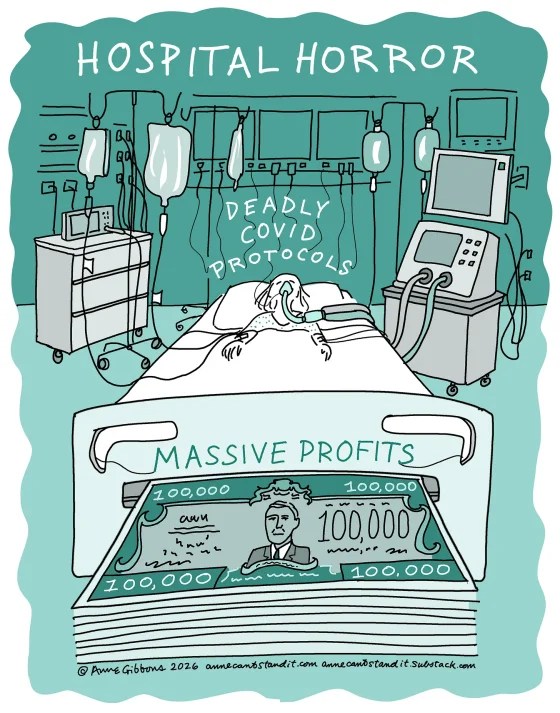
Hospital Horror
Documented in the film,“Bad Medicine”
Blog Roll
 Aletho News
- Israel Revives The ‘Iranian Assassination Threat Against Trump’ Deception In A Desperate Bid To Restart The War
- US rewrites history to dodge blame for illegal war on Iran: Foreign Ministry spokesperson
- TURBO CANCER DATA from Ontario, Canada (OHIP Insurance Billing Data)
- Iran warns France not to fall for Israeli false-flags operations
- Poland and Bulgaria put brakes on Ukraine weapons funding
- Russia Reaffirms Its Support for Sovereignty, Territorial Integrity of Lebanon – Russian MFA
- Araghchi: Failure to punish aggressors against Iran endangers all nations
- Iran tells UN Security Council to stop reversing roles of ‘aggressor and victim’
- Disgraced neocons Feith & Libby: stop whining about ‘endless war’
- CENTCOM rejects Israeli claims of preparations for new Iran attacks
- If Americans Knew
- An error has occurred; the feed is probably down. Try again later.
- No Tricks Zone
- New Study: Barents Sea Temperatures Were Warmer And Sea Ice Less Extensive In The 1700s Than Today
- German Authorities Start Initiative To Evaluate Public Register For Climate “Disinformation” Spreaders!
- Zonal Asymmetry of Temperature Change in the Antarctic Circumpolar Current
- New Study: The Net Fossil Fuel Contribution To Rising Atmospheric CO2 Has Been Zero For 500 Years
- Germany’s Green Energy Transition Becoming Increasingly Expensive…Another 6 Trillion Euros!
- Sudden Stratospheric Warming, Powerful El Niño Combination May Lead To Extreme Europe Cold, Energy Crisis!
- Two New Studies Find Thwaites Glacier Melt Cannot Be Driven By Human Activity Or A Warming Ocean
- E-Cars Reduce CO2 Emissions By Only 41% Compared To Internal Combustion Engine Vehicles
- Predictions Made By Renowned Climate Professor Over Past Decades Have Been Proven To Be Poor
- New Study Suggests Large Regions Of The Pacific Ocean Have Been Cooling For The Last 80 Years

