Israel lobby: Attendance mandatory at Netanyahu speech
Press TV – February 9, 2015
Several pro-Israel lobby groups in the United States have threatened to “publicly condemn” Democrats who plan to skip the Israeli prime minister’s speech about Iran before Congress next month.
Benjamin Netanyahu’s well-funded Jewish conservative backers say they may use their funds to draw attention in the districts and states of any Democratic lawmaker who is not at the US Capitol to listen to Netanyahu on March 3.
Netanyahu has been invited by House of Representatives Speaker John Boehner to address a joint session of Congress to speak about the “threat” of Iran’s nuclear energy program.
“This is, I think, a critical visit by the prime minister. If these Democrats would rather put partisan politics ahead of principle and walk out on the prime minister of Israel, then we have an obligation to make that known,” said Matt Brooks, the executive director of the Republican Jewish Coalition, a political lobbying group which promotes Jewish Republicans.
“We will commit whatever resources we need to make sure that people are aware of the facts,” Brooks said. He did not specify what methods this campaign would use, but promised that his group would do whatever it can.
Other Zionist organizations are sending similar messages. “We will, of course, be publicly condemning any Democrats who don’t show up for the speech, unless they have a doctor’s note,” said Mort Klein, president of the Zionist Organization of America, a prominent pro-Israel group with 30,000 members.
“It’s really an anti-American, anti-patriotic position to take,” Klein added.
AIPAC, the largest pro-Israel lobby in the US, is encouraging members of Congress to attend the speech, although the group also has reservations because it is turning into a partisan event.
Growing criticism over Netanyahu speech
Democrats are angry over the Boehner’s invitation of the Israeli premier, which was planned without the knowledge of the Obama administration.
The event will take place just two weeks before the Israeli elections, which is seen by the White House and senior Democrats as particularly manipulative. The White House has called the invitation a breach of protocol.
President Barack Obama would not meet with Netanyahu during his trip to Washington, according to the White House. Vice President Joe Biden’s office also confirmed on Friday that he would not be present during Netanyahu’s speech.
It seems Netanyahu plans to go ahead with the trip despite growing criticism both in Israel and the United States. The Israeli prime minister says he will address Congress to lobby against a “bad and dangerous” nuclear deal with Iran.
Iran and the P5+1 group – the US, France, Britain, Russia, China and Germany – are in talks to narrow their differences and pave the way for a final, long-term nuclear accord.
The Republican-controlled Congress, however, is pushing a new round of sanctions on Iran, despite the veto threat from the White House and warnings that additional sanctions at this juncture risked derailing the nuclear talks.
Iran argues that as a committed signatory to the nuclear Non-Proliferation Treaty (NPT) and a member of the International Atomic Energy Agency (IAEA), it has the right to use nuclear technology for peaceful purposes.
Chancellor Merkel’s Misguided Guilt Leads to Change in Balance of Power Over Europe
By Anthony Bellchambers | Dissident Voice | February 9, 2015
German-Israeli relations are currently at a low ebb as a result of Israel’s illegal settlement activity that continues to cause anger throughout the EU as it continues with its land grabs in the West Bank and authorises yet more building permits on Palestinian land in violation of international law.
German Chancellor, Angela Merkel, has a difficult relationship with Israel’s Prime Minister, Binyamin Netanyahu. However, this did not prevent her inexplicable decision to increase to six the supply of nuclear-powered, diesel-electric, AIP Dolphin Class submarines developed and constructed by Howaldtswerke-Deutsche Werft AG., for the Israeli Navy.
Israel has already modified those war vessels delivered, each now being armed with long-range, (SLCM) cruise missiles equipped with nuclear warheads, plus a maximum of 16 torpedoes: a naval task-force capable of destroying most of the Middle East and Southern Europe. It also gives the Israelis an offshore, second strike, nuclear capability.
Germany, itself, has no such offensive nuclear armament, neither has either France or Britain of such size and power, for Israel is estimated to also possess up to 400 nuclear warheads. All of which means that Merkel has effectively made Israel into the most powerful nuclear weapons state outside of the US and Russia!
The rationale for Merkel’s strategic error in altering the balance of power not only in the Middle East but also in Europe with consequences yet to be determined, is unknown.
It is too late, of course, to reverse her extraordinary decision to deliver a fleet of (now) SLCM-armed, nuclear-equipped, undersea naval vessels to the government of the most contentious piece of land on earth. The damage has been done and the repercussions will ensure dangerous instability – or worse – for decades after Chancellor Merkel has left office.
Anthony, a resident of London, UK, is a long-standing advocate/activist for human and civil rights.
Opportunity of nuclear talks may not come again: Zarif
Press TV – February 8, 2015
Iranian Foreign Minister Mohammad Javad Zarif has attached special significance to the ongoing talks on Iran’s nuclear program, saying the negotiations serve as an opportunity that may not be repeated.
“The only way to resolve the issue is through negotiations,” Zarif said on Sunday at a press conference on the sidelines of the Munich Security Conference in Germany.
“We have made quite a bit of success” during the negotiations to resolve remaining issues on Iran’s nuclear program “over the past many months,” Zarif said, adding that the talks are an “opportunity” to resolve the standoff between Iran and the West.
“This is the opportunity to do it and we need to seize this opportunity. It may not be repeated,” the Iranian foreign minister stated.
He said the first objective of the negotiations is to assure the opposite side that Iran’s nuclear program “remains exclusively peaceful,” adding, “It means that Iran should be able to exercise its right to nuclear technology for peaceful purposes because without exercising that right it is impossible to make sure that it is peaceful.”
The second objective, Zarif went on to say, is the removal of all “unacceptable” sanctions imposed on Iran.
“We are prepared to reassure the international community and some of the negotiating partners that Iran’s nuclear energy is peaceful, but at the same time it is important the restrictions that have been imposed on Iranian people be lifted,” he stated.
“It is important for everybody to realize that the only way to deal with Iran is through respect and negotiations and meeting on a non-zero sum game.”
The Iranian foreign minister said those who insisted on imposing sanctions on Iran should now realize that the restrictions “did not achieve their intended result.”
“When the sanctions were imposed on Iran, Iran had less than 200 centrifuges. If the objective was to prevent Iran from developing its nuclear technology, they (sanctions) utterly failed because now we have 20,000 centrifuges.”
Commenting on a possible extension to the nuclear talks, Zarif said, “I do not think another extension is in the interest of anyone, as I do not believe this extension was either necessary or useful.”
Zarif also responded to a question on the possible consequences if the nuclear talks fail, saying, “If we don’t have an agreement, it is not the end of the world.”
Iran and the P5+1 group of countries – Russia, China, France, Britain, the United States and Germany – are seeking to reach a high-level political agreement by the end of March and to confirm the full technical details of the accord by July 1.
Elsewhere in his remarks, the Iranian foreign minister slammed the Tel Aviv regime’s claims that Iran is after a nuclear weapon.
“We do not have a weapons program,” he said, adding that the Israelis cannot hide their acts of aggression against Palestinians and others in the region through their hypothetical allegations.
Iran slams UN Security Council indifference to Israel’s airstrike on Golan
Press TV – February 7, 2015
Iran has criticized the United Nations Security Council for failing to take action against the Israeli regime over its recent deadly airstrike on the occupied Golan Heights in Syria, Press TV reports.
“The Security Council remains indifferent in making any position on condemning the aggressor while it was a clear violation of international law,” Iran’s Ambassador to the UN Gholam Hossein Dehqani told Press TV.
“Once again the Security Council allowed that regime to get away with the crime it committed and failed to condemn the aggression which was done by Israel,” he added.
The Iranian envoy said the Israeli regime’s impunity does not serve peace and security in the world and would lead to the deaths of more innocent people.
Dehqani’s comments come in the wake of an Israeli airstrike in Syria on January 18 that claimed the lives of six Hezbollah members, including 25-year-old Jihad Mughniyeh, the son of slain top Hezbollah commander Imad Mughniyeh, and a general of Iran’s Islamic Revolution Guards Corps (IRGC).
Media reports that Israel carried out the terror attack in the strategic southwestern city of Quneitra in Golan Heights with the help of Takfiri terrorists, particularly the al-Nusra Front.
Israel has carried out numerous airstrikes in Syria over the past couple of years. The Syrian army has repeatedly seized huge quantities of Israeli-made weapons and advanced military equipment from the foreign-backed militants inside Syria.
However, the UN has so far failed to take any action over the attacks, which have been condemned by Damascus as violation of its sovereignty.
The Golan Heights have been under the Israeli occupation since the 1960s. The Tel Aviv regime captured the Syrian territory during the Six-Day War of 1967 and annexed the region in 1981.
Israel Aerospace Industries: a company profile
By Tom Anderson | Corporate Watch | February 5, 2015
Israel Aerospace Industries is one of Israel’s biggest arms companies. Founded in 1953 as Bedek, IAI has long been at the forefront of Israel’s arms production and export. It also develops systems for commercial aircraft. In 2013, 73% of IAI’s sales revenues came from exports.
IAI and Israel’s drone wars
IAI was one of the earliest developers of drone technology and launched its first surveillance drone, the IAI Scout, in 1979. Since then the company has launched a number of drone models (see below). Drone development is handled by IAIs MALAT divisions. IAI describes its unmanned aerial systems as ‘combat proven’ and writes on its website of its drones’ “unsurpassed track record of over 1,200,000 operational flight hours for over 50 users on five continents”. According to Drone Wars UK, IAI has exported their UAVs, sometimes through joint venture agreements, to various European countries as well as South America, Australia, Canada and India and the company has a growing market in Africa.
IAI and Gaza
Most of IAI’s unmanned aerial vehicle (UAVs) are surveillance drones, but the Heron 1 and Heron TP both have strike capabilities and have been used in Gaza. According to Human Rights Watch (HRW),i the Heron can fly up to 40 hours and can carry four Spike missiles. It is also used for surveillance and to identify targets on the ground.
Drone Wars UKii reports that Israel was deploying armed Heron 1 drones during the Operation Summer Rains attack in Gaza in 2006.
The IAI Heron TP is Israel’s biggest drone, with a wing span of 26 metres. It was first used during Operation Cast Lead in Gaza during 2008-2009.iii When the Heron TP is marketed as ‘combat proven’ it means that it has been tried out on the people of Gaza with fatal consequences.
Attacks on Lebanon:
IAI’s Searcher and Scout drones were both used for surveillance in Israel’s attacks on Lebanon in the 1990s and early 2000s. It is believed that armed Heron drones were used in the assault on Lebanon in 2006iv
IAI and the US:v
During the first Gulf War, IAI Pioneer drones were used by the US navy to guide shells fired from battleships.
Industry:
A ‘defence’ company which develops and produces a variety of products for both military and commercial markets in Israel and around the world, including unmanned aerial vehicles (UAVs), fighter jets and naval and ground defence systems. In 2013, military equipment accounted for 73% of the company’s sales, with only 27% going to commercial markets.vi
Traded on: TASE
Revenues/Assets/Sales: In 2013 the company reported an operating income of $84 million, the company recorded total assets of over $5 billion and net sales of over $3.5 billion – to view the company accounts click here.
Employees: 16,000
Subsidiaries:
ELTA Systems Ltd (Israel)
ELTA North America (based in Maryland, US)
European Advanced Technology (EAT)
Addresses:
Website: www.iai.co.il
Head quarters: Ben Gurion International Airport, 70100, Israel. Phone: 00972-3-9353111 Email: corpmkg@iai.co.il
Representatives: The company has representatives around the world, including in Asia, Australia, Brazil, Colombia, Korea, North America and Russia.
Ownership: IAI is fully owned by the Israeli state. It is the largest state owned defence and aerospace company in Israel.
Drones manufactured by IAIvii
IAI Scout, Bird Eye 400, Mini Panther, Mosquito 1, Mosquito 1.5, Panther, Harpy, Searcher I, I-View-150, Searcher II, Searcher III, B-Hunter, Heron 1 (Shoval), Heron TP (Eitan).
Countries IAI has exported to:viii
Angola, Australia, Azerbaijan, Belgium, Brazil, Canada, China, Ecuador, France, Germany, India, Indonesia, Russia, Singapore, South Korea, Spain, Sri Lanka, Taiwan, Thailand, Turkey, United States, UK.
Resistance:

In 2011 a Palestinian civil society call demanded a two way embargo on arms sales to and from the Israeli state and Israeli companies.
In October 2014, activists from London Palestine Action occupied the London offices of Airbus over its involvement with IAI. The two companies are working together on the Harfang drone for the French Air Force. The Harfang drone is based on the IAI Heron.
Background
The battlefields of Israel’s militarism and occupation have proved effective testing grounds for new types of weaponry. Israel’s constant state of warfare has ensured a reliable marketplace for Israeli arms manufacturers. According to Drone Wars UK, surveillance drones were first used in Egypt in the lead up to the Yom Kippur War. The first recorded use of an Israeli drone to help piloted warplanes bomb targets (target acquisition) was in 1982 in the run up to the Israeli invasion and occupation of Lebanon. According to the Al Mezan Centre for Human Rights, the first recorded use of an armed drone by Israel was in 2004. The experience gleaned during years of military repression has made Israel the largest exporter of drone technology in the world. Israeli arms companies have sold drones to over 50 countries.
According to Human Rights Watch (HRW): “the missile fired from a drone has its own cameras that allow the operator to observe the target from the moment of firing. The optics on both the drone and missiles include imaging infrared cameras that allow operators to see individuals at night as well as during the day. With these visual capabilities, drone operators should have been able to tell the difference between fighters and others directly participating in hostilities, who are legitimate targets, and civilians, who are immune from attack, and to hold fire if that determination could not be made. If a last-second doubt arises about a target, the drone operator can use the missile’s remote guidance system to divert the fired missile, steering the missile away from the target with a joystick.”
Despite this, the number of deaths (as a proportion of total deaths) caused by drone strikes has been increasing. During our 2013 visit to Gaza, Corporate Watch interviewed several survivors of Israeli drone attacks who had not involved in any fighting before they were targeted, many of those killed by drone attacks are children. The Gaza based Al Mezan Centre for Human Rights provided Corporate Watch with these shocking figures for the years 2000-2012:
| Year |
Total recorded number of people killed by Israeli attacks in Gaza |
Number of people killed by Israeli drones in Gaza (% of total) |
| 2000 |
123 |
0 (0%) |
| 2001 |
243 |
0 (0%) |
| 2002 |
472 |
0 (0%) |
| 2003 |
398 |
0 (0%) |
| 2004 |
646 |
2 (0.3%) |
| 2005 |
99 |
0 (0%) |
| 2006 |
534 |
91 (17%) |
| 2007 |
281 |
98 (34.9%) |
| 2008 |
769 |
172 (22.4%) |
| 2009 |
1058 |
461 (43.6%) |
| 2010 |
72 |
19 (26.4%) |
| 2011 |
112 |
58 (51.8%) |
| 2012 |
255 |
201 (78.8%) |
Israeli drone strikes are carried out from the Palmachin and Tel Nof air force bases.xxii
Endnotes:
i Human Rights Watch (2009), Section 4
iiDrone Wars UK (2014), page 10
iiiT. Goldenburg, Huffington Post, Israel Unveils New Drone Fleet that can reach Iran (2010)
ivDrone Wars UK (2014), page 10
vDrone Wars UK (2014), page 7
viIAI – http://www.iai.co.il/Shared/UserControls/Print/PopUp.aspx?lang=en&docid=45888
viiDrone Wars UK (2014), page 7
viiiDrone Wars UK (2014), page 19
Report: 500 Palestinians Are Currently Held Under Administrative Detention
By Saed Bannoura | IMEMC News | February 5, 2015
The Palestinian Prisoners Society (PPS) has reported that the current number of Palestinians, held by Israel under Administrative Detention orders without charges or trial, has arrived to 500.
The PPS said the Hebron district, in the southern part of the occupied West Bank, witnessed the highest number of arrests and Administrative detention Orders.
It added that twelve administrative detainees, including democratically elected legislators, have been held under such orders for many years.
The detained legislators are Mohammad Jamal Natsha, Hatem Qfeisha, Mohammad Bader, ‘Azzam Salhab, Nayef Rajoub, Basem az-Za’arir, Samir al-Qadi, all from Hebron, in addition to Abdul-Jabbar Foqaha and Hasan Yousef from Ramallah, Mohammad Abu Teir and Ibrahim Abu Salem from Jerusalem, in addition to Abdul-Rahman Zeidan from Tulkarem.
The PPS said 208 of the 500 administrative detainees are from Hebron, including Ahmad Shabana, who spent eighteen years in Israeli prisons, including 13 years under Administrative Detention orders.
His latest arrest was on February 2 2014, and has been held since then; he also participated in the June 2012 61-day hunger strike, along with all Administrative Detainees.
Furthermore, detainee ‘Omar al-Barghouthi, 61 years of age, from the central West Bank city of Ramallah, has been detained since June of last year,
His repeated arrests led to him spending more than 25 years in Israeli prisons, including twelve years under Administrative Detention orders.
Israel “justifies” the use of Administrative Detention by claiming to have “secrets files” against the detainees, that neither the detainees, nor their lawyer can have access to.
EU Parliament cancels visit of Israeli official who has ‘blood on his hands’
MEMO | February 5, 2015
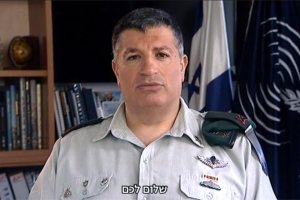
Left-wing politicians in the EU Parliament undermined a visit by Israeli Major General Yoav Mordechai because he has “blood on his hands” according to Northern Ireland MEP Martina Anderson.
Mordechai, who is one of the commanders of the Israeli elite force, is the coordinator for the Israeli government activities with the European Parliament regarding the Palestinian territories. His visit, which was due on Tuesday, was cancelled shortly before it was due to take place.
Portuguese parliamentarian Marisa Matias, from the European United Left–Nordic Green Left grouping, was quoted as saying that “giving him [Mordechai] a platform to host a lecture would legitimise his violations of international law and human rights”.
She pointed out: “Rather than giving a warm welcome to those, who stand for repression and apartheid, the EU institutions should pressure the Israeli government to abide by the rules of international law and UN resolutions.”
Calling for prosecuting him and his likes, she said: “We must bring to justice those responsible for human rights violations in the Occupied Palestinian Territories.”
Another member of the same political grouping, Northern Ireland MEP Martina, chairwoman of the Parliament’s Delegation for Relations with the Palestine Legislative Council, welcomed the cancellation, even though she said the reasons behind it were unclear.
However, she said: “We condemn the fact that it was set to go ahead in the first place. We cannot accept someone with such a track record being welcomed to the European Parliament. Put simply, this man has blood on his hands.”
Israeli war crime suspects may be able to run but they cannot hide
By Dr Daud Abdullah | MEMO | February 5, 2015
The resignation of William Schabas from his post as head of the UN commission to investigate possible war crimes during Israel’s 2014 onslaught on Gaza was always on the cards. From the time of his appointment in August last year, he has been subjected to a relentless campaign that questioned both his integrity and impartiality.
The manner and timing of his resignation, weeks before the commission presents its report to the UN Human Rights Council (UNHRC), recalls the case of Judge Richard Goldstone who was forced to disassociate himself from the findings of another UN enquiry into the 2008-09 war on Gaza. Instead of subjecting himself to similar humiliation, Schabas decided to throw in the towel sooner rather than later.
While Israeli officials may count this as a victory, it does not lift the spectre of war crimes charges against them. Nor will it alter Israel’s image as an international pariah. Whether Schabas stayed or resigned is, therefore, actually irrelevant. Israel has never, and never will, cooperate with an independent investigation into its wartime conduct. Hence, the claim that the UNHRC is innately biased must be seen for what it is — a rather pathetic attempt to evade accountability.
Lawyers acting on behalf of human rights organisations in Gaza point out that all the evidence presented to the UN suggests that there is a compelling a case for a formal investigation by the International Criminal Court (ICC). The character assassination of Schabas will not change the course of events.
What is at stake is whether or not Israel acted within the confines of the law that governs armed conflict. Prime Minister Benyamin Netanyahu’s claim that the UNHRC “is the same body that only in 2014 passed more resolutions against Israel than against Iran, Syria and North Korea combined” is immaterial; it’s simply an attempt to deflect world attention from the real issue.
Did the UNHRC set out deliberately to malign Israel as Netanyahu claims? On 23 July2014, Navi Pillay, the UN High Commissioner for Human Rights, reiterated the fact that war crimes and crimes against humanity are two of the most serious types of crimes in existence. She noted that in the case of Israel’s war on the Gaza Strip the “credible allegations that they have been committed must be properly investigated.”
A newly published survey by Chatham House — the Royal Institute of International Affairs — showed that 35 per cent of Britons said that they “feel especially unfavourable towards” Israel. The study, conducted in 2014, showed that the number of those viewing Israel unfavourably had actually increased by 18 points since 2012, presumably because of its military campaign in Gaza which led to thousands of casualties among Palestinian civilians.
Significantly, the categories of international crimes referred to by Pillay originated in the Nuremberg Tribunal of 1945-46. Though intended to deal with those responsible for the persecution of Jews in Europe, their writ was never confined to the Nazi leadership. Robert H Jackson, the former US Supreme Court Justice and prosecutor at Nuremberg, wanted to make it clear, “That if this law is first applied against German aggressors, the law includes, and if it is to serve a useful purpose it must condemn aggression by other nations, including those which sit here now in judgment.”
Given the circumstances which led to the tribunal it seems utterly mind-boggling that Israel should today seek to deny others the benefit and protection of the laws used at Nuremburg. As such, none of these laws will be worth the paper they are written on as long as Israeli officials continue to enjoy apparent impunity and evade accountability for their actions. The consequences of this selective approach to justice and the rule of law are already evident across the Middle East and beyond.
Moreover, not even the countries that support Israel have been spared the consequences of its disregard for the rule of law. Consider, for example, the 2010 assassination of a Hamas official, Mahmoud Al-Mabhouh, in a Dubai hotel. Several of the suspects involved used false passports of several European countries to carry out the operation. Apart from the expulsion of junior diplomats from Britain, Australia and Ireland, not one of the 29 Israeli suspects have been brought before a court of law.
More than anyone, Israelis who have hunted down Nazi war criminals for decades are well positioned to know that the pursuit and prosecution of those believed to have committed war crimes and crimes against humanity is relentless and not bound by time. Their perceived success in bringing down William Schabas will have absolutely no bearing on the Palestinian quest for justice. Israeli war crime suspects may be able to run but they cannot hide; they may continue to avoid arraignment at The Hague but they know for sure that they have already lost in the court of world opinion. In the grand scheme of things, it is perhaps this which matters most, for Israel must remain isolated and a pariah in the community of nations until justice is seen to be done.
Demonstrators face military violence for protesting Israeli President Rivlin’s visit
International Solidarity Movement | February 5, 2015
Hebron, Occupied Palestine – On Monday, February 2nd, Palestinian demonstrators faced military violence at the hands of Israeli forces in occupied Al-Khalil (Hebron). Protesters gathered in Bab Al-Zawiye, on the H1 (Palestinian administered) side of Shuhada checkpoint, to denounce Israeli president Reuven Rivlin’s visit to the illegal Israeli settlement of Beit Hadassah. Israeli sodliers and border police fired rounds of tear gas and numerous stun grenades, injuring at least two protesters.
The demonstration was organised by local Palestinian organisation Youth Against Settlements against the visit of the Israeli president to the settlement, which is illegal under international law and serves as a frequent source of oppression and violence against local Palestinians. Palestinians claimed their own rights, trampled by the military occupation, in the face of the visit’s attempt to legitimate the settler colonisation. Some signs called for opening the once vibrant and now closed Shuhada street, some for an end to the illegal settlements, some for President Rivlin to be brought before the International Criminal Court.
Around fifty Palestinians began the demonstration outside of Shuhada Checkpoint, holding signs and banners and hanging Palestinian flags on the fence. Israeli forces stopped them from passing through the checkpoint, preventing them from protesting on Shuhada street, near where the president was due to speak. As protesters continued to demonstrate, holding signs, waving flags and chanting for an end to occupation, a group of Israeli soldiers and border police exited the checkpoint and pushed protesters further back. Soldiers also occupied the roofs overlooking Bab Al-Zawiye “I just heard a soldier on a roof say ‘okay, enough’ and five minutes later they started throwing stun grenades and tear gas,” stated an ISM activist. “It was extremely sudden, and very scary.”
Israeli forces targetted Palestinian activists and organizers, hitting many in the legs with stun grenades and tear gas grenades. One man was hit directly with a stun grenade, which detonated right by his leg. “He screamed and fell down, rolling on the ground” one ISM activist recalled. Another man was also hit in the head with a stun grenade after the Israeli forces continued to use potentially lethal force against unarmed Palestinian protesters.
Demonstrators then attempted to continue the protest into the souq (Al-Khalil’s Old City market), but Israeli forces threatened them with stun grenades and prevented them from advancing. The protesters decided to go back after the army launched one stun grenade directly into the group of demonstrators. The protest eventually dispersed in Bab Al-Zawiye, after being targeted by a few more rounds of tear gas grenades.
Al-Qaeda, Saudi Arabia and Israel
By Robert Parry | Consortium News | February 4, 2015
The disclosure that convicted al-Qaeda operative Zacarias Moussaoui has identified leading members of the Saudi government as financers of the terrorist network potentially reshapes how Americans will perceive events in the Middle East and creates a risk for Israel’s Likud government which has forged an unlikely alliance with some of these same Saudis.
According to a story in the New York Times on Wednesday, Moussaoui said in a prison deposition that he was directed in 1998 or 1999 by Qaeda leaders in Afghanistan to create a digital database of the group’s donors and that the list included Prince Turki al-Faisal, then Saudi intelligence chief; Prince Bandar bin Sultan, longtime Saudi ambassador to the United States; Prince al-Waleed bin Talal, a prominent billionaire investor; and many leading clerics.
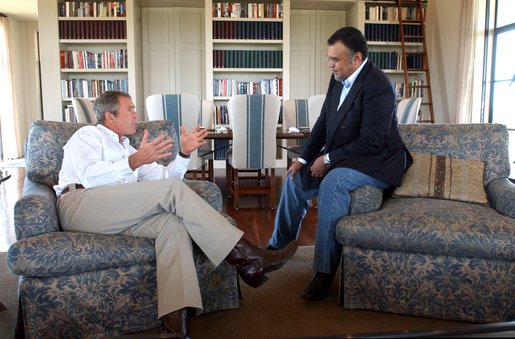
Prince Bandar bin Sultan, then Saudi ambassador to the United States, meeting with President George W. Bush in Crawford, Texas. (White House photo)
“Sheikh Osama wanted to keep a record who give money,” Moussaoui said in imperfect English — “who is to be listened to or who contributed to the jihad.”
Although Moussaoui’s credibility came under immediate attack from the Saudi kingdom, his assertions mesh with accounts from members of the U.S. Congress who have seen a secret portion of the 9/11 report that addresses alleged Saudi support for al-Qaeda.
Further complicating the predicament for Saudi Arabia is that, more recently, Saudi and other Persian Gulf oil sheikdoms have been identified as backers of Sunni militants fighting in Syria to overthrow the largely secular regime of President Bashar al-Assad. The major rebel force benefiting from this support is al-Nusra Front, al-Qaeda’s affiliate in Syria.
In other words, the Saudis appear to have continued a covert relationship with al-Qaeda-connected jihadists to the present day.
The Israeli Exposure
And, like the Saudis, the Israelis have sided with the Sunni militants in Syria because the Israelis share the Saudi view that Iran and the so-called “Shiite crescent” – reaching from Tehran and Baghdad to Damascus and Beirut – is the greatest threat to their interests in the Middle East.
That shared concern has pushed Israel and Saudi Arabia into a de facto alliance, though the collaboration between Jerusalem and Riyadh has been mostly kept out of the public eye. Still, it has occasionally peeked out from under the covers as the two governments deploy their complementary assets – Saudi oil and money and Israeli political and media clout – in areas where they have mutual interests.
In recent years, these historic enemies have cooperated in their joint disdain for the Muslim Brotherhood government in Egypt (which was overthrown in 2013), in seeking the ouster of the Assad regime in Syria, and in pressing for a more hostile U.S. posture toward Iran.
Israel and Saudi Arabia also have collaborated in efforts to put the squeeze on Russia’s President Vladimir Putin, who is deemed a key supporter of both Iran and Syria. The Saudis have used their power over oil production to drive down prices and hurt Russia’s economy, while U.S. neoconservatives – who share Israel’s geopolitical world view – were at the forefront of the coup that ousted Ukraine’s pro-Russian President Viktor Yanukovych in 2014.
The behind-the-scenes Israeli-Saudi alliance has put the two governments – uncomfortably at times – on the side of Sunni jihadists battling Shiite influence in Syria, Lebanon and even Iraq. On Jan. 18, 2015, for instance, Israel attacked Lebanese-Iranian advisers assisting Assad’s government in Syria, killing several members of Hezbollah and an Iranian general. These military advisors were engaged in operations against al-Qaeda’s Nusra Front.
Meanwhile, Israel has refrained from attacking Nusra Front militants who have seized Syrian territory near the Israeli-occupied Golan Heights. One source familiar with U.S. intelligence information on Syria told me that Israel has a “non-aggression pact” with these Nusra forces.
An Odd Alliance
Israel’s odd-couple alliances with Sunni interests have evolved over the past several years, as Israel and Saudi Arabia emerged as strange bedfellows in the geopolitical struggle against Shiite-ruled Iran and its allies in Iraq, Syria and southern Lebanon. In Syria, for instance, senior Israelis have made clear they would prefer Sunni extremists to prevail in the civil war rather than Assad, who is an Alawite, a branch of Shiite Islam.
In September 2013, Israel’s Ambassador to the United States Michael Oren, then a close adviser to Israeli Prime Minister Benjamin Netanyahu, told the Jerusalem Post that Israel favored the Sunni extremists over Assad.
“The greatest danger to Israel is by the strategic arc that extends from Tehran, to Damascus to Beirut. And we saw the Assad regime as the keystone in that arc,” Oren told the Jerusalem Post in an interview. “We always wanted Bashar Assad to go, we always preferred the bad guys who weren’t backed by Iran to the bad guys who were backed by Iran.” He said this was the case even if the “bad guys” were affiliated with al-Qaeda.
And, in June 2014, speaking as a former ambassador at an Aspen Institute conference, Oren expanded on his position, saying Israel would even prefer a victory by the brutal Islamic State over continuation of the Iranian-backed Assad in Syria. “From Israel’s perspective, if there’s got to be an evil that’s got to prevail, let the Sunni evil prevail,” Oren said.
Skepticism and Doubt
In August 2013, when I first reported on the growing relationship between Israel and Saudi Arabia in an article entitled “The Saudi-Israeli Superpower,” the story was met with much skepticism. But, increasingly, this secret alliance has gone public.
On Oct. 1, 2013, Israeli Prime Minister Netanyahu hinted at it in his United Nations General Assembly speech, which was largely devoted to excoriating Iran over its nuclear program and threatening a unilateral Israeli military strike.
Amid the bellicosity, Netanyahu dropped in a largely missed clue about the evolving power relationships in the Middle East, saying: “The dangers of a nuclear-armed Iran and the emergence of other threats in our region have led many of our Arab neighbors to recognize, finally recognize, that Israel is not their enemy. And this affords us the opportunity to overcome the historic animosities and build new relationships, new friendships, new hopes.”
The next day, Israel’s Channel 2 TV news reported that senior Israeli security officials had met with a high-level Gulf state counterpart in Jerusalem, believed to be Prince Bandar, the former Saudi ambassador to the United States who was then head of Saudi intelligence.
The reality of this unlikely alliance has now even reached the mainstream U.S. media. For instance, Time magazine correspondent Joe Klein described the new coziness in an article in the Jan. 19, 2015 issue.
He wrote: “On May 26, 2014, an unprecedented public conversation took place in Brussels. Two former high-ranking spymasters of Israel and Saudi Arabia – Amos Yadlin and Prince Turki al-Faisal – sat together for more than an hour, talking regional politics in a conversation moderated by the Washington Post’s David Ignatius.
“They disagreed on some things, like the exact nature of an Israel-Palestine peace settlement, and agreed on others: the severity of the Iranian nuclear threat, the need to support the new military government in Egypt, the demand for concerted international action in Syria. The most striking statement came from Prince Turki. He said the Arabs had ‘crossed the Rubicon’ and ‘don’t want to fight Israel anymore.’”
Though Klein detected only the bright side of this détente, there was a dark side as well, as referenced in Moussaoui’s deposition, which identified Prince Turki as one of al-Qaeda’s backers. Perhaps even more unsettling was his listing of Prince Bandar, who had long presented himself as a U.S. friend, so close to the Bush Family that he was nicknamed “Bandar Bush.”
Moussaoui claimed that he discussed a plan to shoot down Air Force One with a Stinger missile with a staff member at the Saudi Embassy in Washington, at a time when Bandar was the ambassador to the United States.
According to the New York Times article by Scott Shane, Moussaoui said he was assigned to “find a location where it may be suitable to launch a Stinger attack and then, after, be able to escape,” but that he was arrested on Aug. 16, 2001, before he could carry out the reconnaissance mission.
The thought of anyone in the Saudi embassy, then under the control of “Bandar Bush,” scheming with al-Qaeda to shoot down George W. Bush’s Air Force One is shocking, if true. The notion would have been considered unthinkable even after the 9/11 attacks, which involved 15 Saudis among the 19 hijackers.
After those terror attacks which killed nearly 3,000 Americans, Bandar went to the White House and persuaded Bush to arrange for the rapid extraction of bin Laden’s family members and other Saudis in the United States. Bush agreed to help get those Saudi nationals out on the first flights allowed back into the air.
Bandar’s intervention undercut the FBI’s chance to learn more about the ties between Osama bin Laden and the 9/11 perpetrators by giving FBI agents only time for cursory interviews with the departing Saudis.
Bandar himself was close to the bin Laden family and acknowledged having met Osama bin Laden in the context of bin Laden thanking Bandar for his help financing the jihad project in Afghanistan during the 1980s. “I was not impressed, to be honest with you,” Bandar told CNN’s Larry King about bin Laden. “I thought he was simple and very quiet guy.”
The Saudi government claimed to have broken ties with bin Laden in the early 1990s when he began targeting the United States because President George H.W. Bush had stationed U.S. troops in Saudi Arabia, but – if Moussaoui is telling the truth – al-Qaeda would have still counted Bandar among its supporters in the late 1990s.
Bandar and Putin
Bandar’s possible links to Sunni terrorism also emerged in 2013 during a confrontation between Bandar and Putin over what Putin viewed as Bandar’s crude threat to unleash Chechen terrorists against the Sochi Winter Olympics if Putin did not reduce his support for the Syrian government.
According to a leaked diplomatic account of a July 31, 2013 meeting in Moscow, Bandar informed Putin that Saudi Arabia had strong influence over Chechen extremists who had carried out numerous terrorist attacks against Russian targets and who had since deployed to join the fight against the Assad regime in Syria.
As Bandar called for a Russian shift toward the Saudi position on Syria, he reportedly offered guarantees of protection from Chechen terror attacks on the Olympics. “I can give you a guarantee to protect the Winter Olympics in the city of Sochi on the Black Sea next year,” Bandar reportedly said. “The Chechen groups that threaten the security of the games are controlled by us.”
Putin responded, “We know that you have supported the Chechen terrorist groups for a decade. And that support, which you have frankly talked about just now, is completely incompatible with the common objectives of fighting global terrorism.”
Bandar’s Mafia-like threat toward the Sochi games – a version of “nice Olympics you got here, it’d be a shame if something terrible happened to it” – failed to intimidate Putin, who continued to support Assad.
Less than a month later, an incident in Syria almost forced President Barack Obama’s hand in launching U.S. air strikes against Assad’s military, which would have possibly opened the path for the Nusra Front or the Islamic State to capture Damascus and take control of Syria. On Aug. 21, 2013, a mysterious sarin attack outside Damascus killed hundreds and, in the U.S. media, the incident was immediately blamed on the Assad regime.
American neocons and their allied “liberal interventionists” demanded that Obama launch retaliatory air strikes even though some U.S. intelligence analysts doubted that Assad’s forces were responsible and suspected that the attack was carried out by extremist rebels trying to pull the U.S. military into the civil war on their side.
Yet, pushed by the neocons and liberal war hawks, Obama nearly ordered a bombing campaign designed to “degrade” the Syrian military but called it off at the last minute. He then accepted Putin’s help in reaching a diplomatic solution in which Assad agreed to surrender his entire chemical weapons arsenal, while still denying any role in the sarin attack.
Later, the Assad-did-it case crumbled amid new evidence that Sunni extremists, supported by Saudi Arabia and Turkey, were the more likely perpetrators of the attack, a scenario that became increasingly persuasive as Americans learned more about the cruelty and ruthlessness of many Sunni jihadists fighting in Syria. [See Consortiumnews.com’s “The Mistaken Guns of Last August.”]
Targeting Putin
Putin’s cooperation with Obama to head off a U.S. military strike in Syria made the Russian president more of a target for the American neocons who thought they finally had reached the cusp of their long-desired “regime change” in Syria only to be blocked by Putin. By late September 2013, a leading neocon, National Endowment for Democracy President Carl Gershman, announced the goal of challenging Putin and recognizing his sore point in Ukraine.
Taking to the Washington Post’s op-ed page on Sept. 26, 2013, Gershman called Ukraine “the biggest prize” and an important step toward ultimately ousting Putin. Gershman wrote, “Ukraine’s choice to join Europe will accelerate the demise of the ideology of Russian imperialism that Putin represents. … Russians, too, face a choice, and Putin may find himself on the losing end not just in the near abroad but within Russia itself.” [See Consortiumnews.com’s “Neocons’ Ukraine-Syria-Iran Gambit.“]
However, in early 2014, Putin was obsessed with Bandar’s implicit threat of terrorism striking the Sochi Olympics, thus distracting him from the “regime change” – being pushed by NED and neocon Assistant Secretary of State for European Affairs Victoria Nuland – next door in Ukraine.
On Feb. 22, 2014, putschists, spearheaded by well-organized neo-Nazi militias, drove elected President Viktor Yanukovych and his government from power. Putin was caught off-guard and, in the resulting political chaos, agreed to requests from Crimean officials and voters to accept Crimea back into Russia, thus exploding his cooperative relationship with Obama.
With Putin the new pariah in Official Washington, the neocon hand also was strengthened in the Middle East where renewed pressure could be put on the “Shiite crescent” in Syria and Iran. However, in summer 2014, the Islamic State, which had splintered off from al-Qaeda and its Nusra Front, went on a rampage, invading Iraq where captured soldiers were beheaded. The Islamic State then engaged in gruesome videotaped decapitations of Western hostages inside Syria.
The Islamic State’s brutality and the threat it posed to the U.S.-backed, Shiite-dominated government of Iraq changed the political calculus. Obama felt compelled to launch airstrikes against Islamic State targets in both Iraq and Syria. American neocons tried to convince Obama to expand the Syrian strikes to hit Assad’s forces, too, but Obama realized such a plan would only benefit the Islamic State and al-Qaeda’s Nusra Front.
In effect, the neocons were showing their hand – much as Israeli Ambassador Oren had done – favoring the Sunni extremists allied with al-Qaeda over Assad’s secular regime because it was allied with Iran. Now, with Moussaoui’s deposition identifying senior Saudi officials as patrons of al-Qaeda, another veil seems to have dropped.
Complicating matters further, Moussaoui also claimed that he passed letters between Osama bin Laden and then Crown Prince Salman, who recently became king upon the death of his brother King Abdullah.
But Moussaoui’s disclosure perhaps cast the most unflattering light on Bandar, the erstwhile confidant of the Bush Family who — if Moussaoui is right — may have been playing a sinister double game.
Also facing potentially embarrassing questions is Israeli Prime Minister Netanyahu, especially if he goes through with his planned speech before a joint session of Congress next month, attacking Obama for being soft on Iran.
And, America’s neocons might have some explaining to do about why they have carried water not just for the Israelis but for Israel’s de facto allies in Saudi Arabia.
~
Investigative reporter Robert Parry broke many of the Iran-Contra stories for The Associated Press and Newsweek in the 1980s. You can buy his latest book, America’s Stolen Narrative, either in print here or as an e-book (from Amazon and barnesandnoble.com).
Featured Video

Genocide-linked firm handles Britons’ NHS data
or go to
Aletho News Archives – Video-Images
Book Review
Book review: Boiling Point, How America Brought War to Ukraine
By Tim Kirby | Strategic Culture Foundation | November 14, 2026
Did Vladimir Putin just wake up one day on the wrong side of the bed and decide to invade Ukraine in February of 2022 or is there a lot more to this single decision that has been reshaping the 21st century geopolitical landscape?
Obviously, from the way that I just posed the question you can see that I am on the side that views the causes for the war in Ukraine to be very deep, long-term, historical and consciously nefarious, and most importantly, not from within the halls of the Kremlin. So it was a pleasure to take a look at the book “Boiling Point, How America Brought War to Ukraine” by author Stephen Kinzer, who like myself, also believes that the real reasons behind military conflicts around the world are not what CNN and the BBC have been telling you. The main thesis of this book was stated clearly by its creator; the war “may have been illegal, but it was definitely not unprovoked.” … continue
Blog Roll
 Aletho News
- The 10 Disease Renamings That Rescued the Vaccine
- NATO cancels 2027 leaders’ summit
- IAEA’s politicized use of safeguards undermines its impartiality: Russian envoy
- UK must be ready to strike Russian Arctic – ex-PM
- Fico’s Two Red Lines: Russian Energy and the Next Ukraine Loan
- Thousands rally for banned NATO-skeptic presidential candidate
- Ukraine Settlement and New European Security Architecture Must Go Hand in Hand – Kremlin
- Book review: Boiling Point, How America Brought War to Ukraine
- Israel Revives The ‘Iranian Assassination Threat Against Trump’ Deception In A Desperate Bid To Restart The War
- US rewrites history to dodge blame for illegal war on Iran: Foreign Ministry spokesperson
- If Americans Knew
- An error has occurred; the feed is probably down. Try again later.
- No Tricks Zone
- New Study: Barents Sea Temperatures Were Warmer And Sea Ice Less Extensive In The 1700s Than Today
- German Authorities Start Initiative To Evaluate Public Register For Climate “Disinformation” Spreaders!
- Zonal Asymmetry of Temperature Change in the Antarctic Circumpolar Current
- New Study: The Net Fossil Fuel Contribution To Rising Atmospheric CO2 Has Been Zero For 500 Years
- Germany’s Green Energy Transition Becoming Increasingly Expensive…Another 6 Trillion Euros!
- Sudden Stratospheric Warming, Powerful El Niño Combination May Lead To Extreme Europe Cold, Energy Crisis!
- Two New Studies Find Thwaites Glacier Melt Cannot Be Driven By Human Activity Or A Warming Ocean
- E-Cars Reduce CO2 Emissions By Only 41% Compared To Internal Combustion Engine Vehicles
- Predictions Made By Renowned Climate Professor Over Past Decades Have Been Proven To Be Poor
- New Study Suggests Large Regions Of The Pacific Ocean Have Been Cooling For The Last 80 Years

