Hamas calls on Abbas to cancel participation in Israeli conference
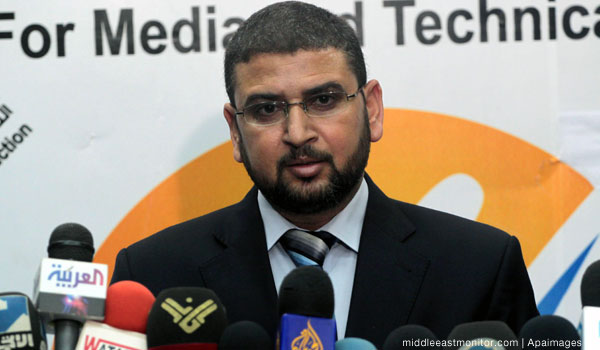
Hamas’ Sami Abu Zuhri
MEMO | July 6, 2014
Hamas has called on Palestinian President Mahmoud Abbas to withdraw from participation at the Israel Peace Conference scheduled for Tuesday in Tel Aviv.
In a press statement on Saturday, Hamas spokesman Sami Abu Zuhri said that Abbas’s participation “would constitute an insult to the feelings of the Palestinian people,” in the aftermath of the lynching of a Palestinian boy in occupied East Jerusalem last Tuesday, as well as the ruthless beating of his cousin two days later.
Abu Zuhri added that Abbas’s participation would give Israel a chance to “beautify its image” after international anger at its “heinous crimes.”
Haaretz has published the agenda of the conference, which includes a pre-recorded speech by Abbas.
Palestinian chief negotiator and senior Fatah official Saeb Erekat turned down an invitation to attend the same conference “out of respect for the feelings of Palestinians and their plight”.
The Israel Peace Conference is an annual event organised by Haaretz to discuss the Israeli-Palestinian conflict and how to bring about peace.
Israel and the Palestinians — It’s about Mind Over Matter
By Anthony Lawson | July 6, 2014
Ever since the three Israeli teenagers went missing, police and army units have besieged Palestinian towns and villages in the area; their houses and shops have been ransacked and atrocities have been committed; Gaza has been bombed, and the death toll is still rising, yet international leaders have remained largely silent, when they all know that such reprisals amount to collective-punishment which is a War Crime.
A young Palestinian boy, 16-year-old Mohamed Abu Khdeir, was abducted and killed in a suspected revenge attack by Israelis, on July 2nd. See how Britain’s prime minister reacted to his death.
An Eye for An Eye
By Missie Beattie | CounterPunch | July 4, 2014
A broad moral gulf separates us from our enemies. They sanctify death; we sanctify life. They sanctify cruelty, and we mercy and compassion. That is the secret of our strength. –Benjamin Netanyahu, at the funeral of three slain Israeli teenagers.
WTF?
Israel shows no morality, no mercy, and no compassion for Palestinians. Israel’s strength is not a mystery. Their power is dependent on their belief that they are God’s Chosen, on sophisticated weaponry, US tax dollars, and bipartisan Congressional support of Zionism that renders any “peace process” a charade.
During the funeral, right-wing protestors screamed for blood, “Death to Arabs.”
“There is no forgiveness for murderers of children,” said Israeli Economy Minister Naphtali Bennett. “Now is a time for actions, not words.” And action it was, has been for years, and is. Without due process, the Israeli military exploded family homes of two suspects—an uncivilized reaction that continues a cycle of retribution. Go door-to-door, terrorizing men, women, and children. Destroy homes. Bomb them. Strike Gaza. Don’t investigate to determine who’s responsible for the kidnapping and deaths of Eyal Yifrach, Naftali Fraenkel, and Gilad Shaar. And announce with chutzpa, as Israeli Defense Minister Moshe Avalon just did, that settlements will be built to memorialize the three slain teens. Yes, they’d have taken this measure regardless, any excuse, but now it’s exceedingly opportune—exploiting the deaths of the young as a sacrosanct right to seize more land.
Of course Barack Obama issued a statement:
As a father, I cannot imagine the indescribable pain that the parents of these teenage boys are experiencing. The United States condemns in the strongest possible terms this senseless act of terror against innocent youth.
Interesting. Seems Obama’s forgotten Abdulrahman al-Awlaki, the teenager and US citizen on his Kill List, incinerated in a CIA-led drone strike. Obama can’t imagine the indescribable pain that this young man’s parent (singular) feels. That’s singular because the boy’s father, Anwar al-Awlaki also was on Obama’s Kill List and droned two weeks before the death of his son. The attack in Yemen on Oct 14, 2011 that killed the young al-Awalaki also killed his teenage cousin and at least five other civilians as they sat in a restaurant. Abdulrahman al-Awlaki was 16, the same age as two of the Israelis, but the murder of al-Awlaki was, well, sensible, to Obama.
Earlier today, Tuesday, I was in the lobby of my building where a TV is tuned daily to CNN. I stopped to view the faces of the three Israeli teenagers.
In May, two Palestinian teenagers were shot and killed in separate incidents by Israeli troops. Later, film from a surveillance camera was examined, providing evidence that neither teen posed a threat. Did world leaders speak to this horror? Call for justice? Of course not. Never do we see the faces of Palestinian children kidnapped and killed by the IDF—at least not on mainstream news networks. Nor do we see the wretchedness, the inhumanity, of Gaza.
Identical to American exceptionalism’s sadism, Israel’s violent acts are legitimized by righteousness and a response to the aggressor’s (?) viciousness.
The message is hypocritically clear: Some lives are more valuable than others. We hear the cries of the Jewish parents, the family members, their friends, and we feel their suffering. But let us understand that mothers and fathers, whether they’re Palestinian, Iraqi, Afghan, Syrian, Yemini, in the lands ravaged by US greed, anywhere, love their children as much as we love ours. Let us love not only the children of those we call our allies and our own but all children. Let us value all life.
Let us value all life was supposed to be the closing sentence in this piece. I should start over, but I won’t. Instead, I’ll just add more paragraphs.
The death of 16-year-old Muhammad Abu Khdeir, a Palestinian, has been reported by US mainstream news venues. On Wednesday morning, the teenager was kidnapped, his burned body found a couple of hours later—apparently a reprisal killing. His cousin has demanded that the Israeli police and Israeli government do what they did in Hebron: “Demolish and blow the settler houses who have done this crime.”
Netanyahu, fearful of individual retaliations, this time has called for an investigation, issuing a statement that Israel is a country of laws and “Everyone is ordered to act according to the law”—despite the lawlessness unleashed after the kidnapping of the Israeli teens and further lawlessness after their bodies were discovered. Despite no inquiry to determine who killed them but instead a rampage of terror against the Palestinians.
Reading a New York Times article, I gasped that a Facebook group was created to promote revenge for the deaths of the Israeli teens. A photo was posted of two girls, holding a sign: “Hating Arabs is not racism, it’s values!”
This is eye for an eye. And everyone will be blind.
Four families grieve. One is under assault
By Jonathon Cook | The Blog From Nazareth | July 5, 2014
The families of the three Israeli teens killed by their abductors have been the focus of a huge outpouring of national sympathy.
But what about the family of 16-year-old Muhammad Abu Khdeir, who was burnt alive by his abductors? How have they been treated by Israel since the devastating news of Muhammad’s murder in Jerusalem last week?
Here, in short, is what has happened to them.
They have been subjected to a campaign, secretly waged by the Israeli police, to discredit them by suggesting that Muhammad was a closet gay and killed in a family feud.
The father and close relatives have been forced to submit to intense and distressing questioning in police cells from the Israeli security services, all in an attempt to give greater plausibility to their planted rumours with “confessions” from the family.
And now it emerges that a 15-year-old cousin of Muhammad’s, visiting for the summer from the US, was the victim in video footage of a savage beating by armed Israeli police. They kicked and punched him relentlessly after he was cuffed and lying on the ground. He is still under arrest, apparently without charge.

The US state department – so eloquent in denouncing the killing of the three Israeli teens – is apparently lost for words when it comes to the mistreatment of one of its citizens.
Here is the horrifying video of Tarek Abu Khdeir’s beating:
Is this what Netanyahu meant when he said of Israel’s response to the abductions: “The devil himself has not yet created vengeance for the blood of a small child”?
Farming under siege: Working the land in Gaza
By Tom Anderson and Therezia Cooper | Corporate Watch | July 5, 2014
Corporate Watch researchers visited the Gaza Strip during November and December 2013 and carried out interviews with farmers in Beit Hanoun, Al Zaytoun, Khaza’a, Al Maghazi and Rafah, as well as with representatives from Union of Agricultural Work Committees (UAWC), Palestine Crops and the Gaza Agricultural Co-operative in Beit Lahiya. This is the first of two articles highlighting what their experiences show: that Palestinians face significant and diverse difficulties when it comes to farming their land and harvesting and exporting their produce under siege, and that Israel enforces what amounts to a de facto boycott of produce from the Gaza Strip.
The land and the buffer zones
“There is a 300 meter ‘buffer zone’ in our area. It is common that people get shot at directly if they enter it. Within 500 meters people often get shot at. It is unsafe within 1500 metres of the fence”
Saber Al Zaneen from the Beit Hanoun Local Initiative

Since the withdrawal of settlers and the end of a permanent presence of ground troops from the Gaza Strip in 2005, Israel insists that the area is no longer under occupation. However, as well as still controlling Gaza’s air space, coastline and exports, Israel effectively occupies the area commonly referred to as the ‘buffer zone’, located all the way down the strip along the border with Israel. A buffer area has existed in Gaza since the signing of the Oslo accords in 1993, when 50 meters on the Gaza side of the border was designated a no-go area for Palestinians. Since then, Israel has unilaterally expanded this zone on numerous occasions, including to 150 metres during the Intifada in 2000 and to changeable and unclear parameters since 2009.
According to the United Nations Office for the Coordination of Human Affairs (OCHA) the buffer zone takes up 17% of Gaza’s total land, making up to 35% of available farmland unsafe for Palestinians to use, with the areas nearest the border fence being the most restricted. Calling the boundaries of the zone ‘vague, unpredictable’ and ‘uncertain’, OCHA has divided the the zone into two danger grades: ‘no-go’ areas where Palestinians risk their lives if they enter as they are considered free fire zones by Israel (within 500 metres of the fence) and ‘high-risk’ areas, where the restricted access still has a severe consequences for farmers and where property destruction and levelling of the land occurs on a regular basis (within 500 and up to 1500 meters of the fence). These areas are kept under heavy surveillance by Israel, through the use of military border patrols and equipment as well as surveillance balloons and drone technology. There are regular incursions by Israeli troops into the buffer zone, sometimes as often as a few times a week.
In the ceasefire agreement during Operation Pillar of Cloud in 2012, Israel agreed to ease restrictions on some Palestinian farmland and allow access up to 100 meters from the fence but this promise appears to have had limited impact on Palestinians. There has been no official announcement regarding the easing of the restrictions and as the Israeli human rights organisation Gisha (part of Legal Center for Freedom Of Movement) has pointed out, advice from Israeli sources is often contradictory, citing the no go areas as sometimes 100 meters, sometimes 300 meters with no way for farmers to be sure. What is clear, however, is that Palestinians keep getting shot at from a greater distance than 300 metres and that anyone going closer than 500 metres from the border is putting themselves in danger. It is also clear that with so much of their land being out of bounds, farmers have no choice but to continue to work, at least partly, in areas which are unsafe.
Since 2008 over 50 Palestinians have been killed in the buffer zone and, although things have calmed down slightly since the truce in 2012, four Palestinian civilians have been killed and over 60 wounded by Israeli forces in the buffer zone so far this year, with five killed and approximately 60 wounded in 2013 according to Human Rights Watch. Most of these deaths have occurred when farmers have been trying to reach their land within, or near to, the buffer zone, or during demonstrations where communities have tried to assert their right so reach their fields. One role of international solidarity activists in the Gaza Strip is to accompany farmers wanting to access and farm their land. Sa’ad Ziada from UAWC estimates that the number of agricultural workers in Gaza has decreased from 55.000 to 30.000 as a result of the siege, with many of the remaining farmers unable to earn enough to survive from their crops.
As well as threatening life, the buffer zone has had a disastrous impact on Palestinians’ ability to make a living in the Gaza Strip, with not only fields but also property and water resources heavily affected. The Diakonia International Humanitarian Law Resource Centre states that since Israel’s supposed disengagement in 2005 ’305 water wells, 197 chicken farms, 6,377 sheep farms, 996 complete houses, 371 partial houses, three mosques, three schools, and six factories have been destroyed within the “buffer zone”’, and a total of 24.4 square kilometres of cultivated land has been levelled.
Destroying livelihoods in Khuza’a
“We can see the Israelis farming the land, and we cannot farm our land”
Hassan, farmer from Khuza’a

Khuza’a is a village in the southern Gaza Strip, just east of Khan Younis. It is located only 500 metres from the border fence with Israel and 70% of the population are farmers. The town has suffered greatly from the Israeli Occupation Forces’ enforcement of the buffer zone and from repeated air attacks. During Operation Cast Lead in 2008-2009, the village was targeted with white phosphorous, leaving farmland temporarily contaminated. During Corporate Watch’s visit to Khuza’a we talked to farmers representing several generations: Osama, Ahmed, Mohammed, Jihad, Salam and Hassan.
Hassan is 51 years old and has been a farmer in Khuza’a for over 30 years. He owns three different pieces of land, two dunams next to the border fence, two and a half dunams 400 metres from the fence and four dunams 620 metres from the border. He used to have olive trees on the plot by the border, but the land was levelled during an expansion of the buffer zone in 2000. In 2008 his other two pieces of land were bulldozed, including his greenhouses. In 2009 his house was partially burned by white phosphorous, which also affected the land next to him. “The farmers are the victims here” Hassan told us, “when resistance fighters are targeted on the farmland it destroys everything”.
Hassan is now trying to grow tomatoes and olives on the two pieces of land furthest from the fence with the support of Unadikum and other international volunteers, who accompany farmers in in the hope that their presence will make the work less dangerous. However, all the Khuzra’a farmers reported that they frequently get shot at even when working on land over 500 metres away from the border. “We have no choice, when the Israelis shoot we have to leave the land”, Hassan said.
According to the men we talked to in Khuza’a the economic situation for farmers in the Gaza Strip is the hardest it has ever been -not only are none of them making any money, but the siege is slowly killing their ability to be agriculturally self sufficient. Hassan used to earn approximately $1000 a month from his fields before he lost his first bit of land in 2000. Now he has got debts of $60.000 instead and no way of making money. We were told that farmers generally get seeds to plant from the traders which they then pay for after harvest season, but harvests in the Gaza Strip are highly unpredictable: land anywhere near the buffer zones can become impossible to farm at any point and some years whole crops are destroyed during Israeli attacks.
None of the farmers in Khuza’a are currently able to export the produce they do succeed in growing. There has been a near total ban on exports from the Strip since the tightening of the siege in 2007 with only a minimal amount of agricultural produce being allowed for export through Israeli companies every year. No Gaza produce is allowed to be sold in Israel or the West Bank, which has traditionally been Gaza farmers’ biggest market. Salam told us that he used to be able to market his produce for sale in Europe but that it had to be done through Agrexco and Arava, Israeli agricultural export companies, and that the last time he managed to export anything was almost ten years ago.
“I have been farming here for 30 years and all the lands have been destroyed” Hassan said with a shrug. “I used to produce 20 tanks of olive oil from my trees every year, but now I have to buy oil even for myself. Should we have to constantly rebuild everything? What will the future for my sons be? I am always arguing with my sons. They want to go to Algeria to find work, and then I will lose my sons too”. All these farmers want is the chance to have a future on their land.

Standing in the middle of the fields of Khuza’a, looking past the barren Palestinian land next to the fence and past the military watch tower, you can clearly see healthy looking green crops on the Israeli side of the border. The Israeli fields are close enough for us to hear the low humming of their fertilising plane as we leave.
Uprooting families in Beit Hanoun
Beit Hanoun has been one of the towns hit the hardest by Israel’s enforcement of the buffer zone. Located in the far north east of the Gaza Strip, only six kilometres from the Israeli city of Sderot and close to the Beit Hanoun (Erez) border crossing to Israel, the population is exposed to frequent incursions by the Israeli Occupation Forces and it shows. Approaching the buffer zone you walk past a big crater in the ground, the result of a 2012 F16 strike, and house rubble can be seen in the distance. The area is under constant heavy surveillance by Israel and several surveillance ‘balloons’ monitor everything that goes on on the ground. According to Saber Al Zaneen from the Beit Hanoun Local Initiative Israel bulldozed 9000 dunums of Beit Hanoun’s land between 2001 and 2009 including 70 houses. Most of it was farmland. As a result over 350 people living in the area have been displaced from their land. The Beit Hanoun Local Initiative, set up in 2007, is a grassroots group working with, and supporting, marginalised families and farmers living close to the buffer zone with the aim of helping them remain on their land.

In the past farmers in the area used to grow olives, lemons and oranges close to the border but all the trees haven now been bulldozed. “Communities now grow potatoes, peppers, tomatoes and watermelons on the outskirts of the buffer zone” Saber told us. “You can not grow anything tall at all, no trees are allowed. If plants get higher than about 80 centimetres they will be levelled”. Shortly after we visited the area, the Local Initiative assisted the planting of some new wheat fields nearer the fence, challenging the restrictions in the buffer zone.
On top of the access restrictions and the personal danger involved, farmers working the land face the big challenge of being able to access water for their crops. Approximately 60 water wells in the vicinity of the Beit Hanoun buffer zone were bulldozed or bombed between 2001-2009 and finding enough water to grow healthy produce is now a constant struggle for the community. The area we visited had one small mobile water tank for the fields but locals told us that as it requires either electricity or fuel to run they were not always able to use it. Instead they relied on a makeshift pit dug in the field and lined with tarpaulin in order to collect rain water. Gaza suffers from a severe and drawn out fuel crisis which, during our visit at the end of 2013, resulted in mains electricity only being available around 12 hours a day on a six hour off/six hour on basis at best. As a result fuel for personal use is both expensive and hard to come by (for an expanded explanation of the fuel crisis in Gaza see Corporate Watch’s briefing Besieging Health Services in Gaza: A Profitable Business)

House demolitions in Al Zaytoun
“We plant our plants here to claim our rights to the land. We are not making a profit, we are working for nothing”
Ahmad from Al Zaytoun
We met the farmers Ali, Rafat, Nasser, Ahmad, Jawad and Ishmael outside Ahmad’s house next to the Malaka intersection area of eastern Al Zaytoun just south of Gaza City. There used to be a three storey family home on this plot, but there is now a much smaller house next door. This is the result of continuous targeting of the area by the Israeli Occupation Forces, who have a military base close by. Ahmad, who was born on this land, told us that his family’s house had been demolished three times: in 2004, 2005 and during Operation Cast Lead in 2008.
“In 2008 they destroyed everything around here”, Ahmed said, “they even destroyed my jars of olive oil. We did not have time to bring hardly any of our things. The Israelis came through a gate in the fence in the buffer zone with 14 tanks and four military bulldozers. They were shooting a lot to make us leave before they arrived. We have had to rebuild our home three times”.
As in other buffer zone communities, it is not only property which is frequently targeted by Israel -it is anyone who attempts to farm the land. All the farmers we talked to in Al Zaytoun had some land within 300 metres of the fence. The last shooting incident had occurred just four days before our visit. When there is instability happening in the area, everyday activities for farmers become even more precarious.

The story of the farmers in Al Zaytoun is a familiar one: before the tightening of the siege in 2007 they all used to be able to make a decent profit from their land, with some farmers getting close to $30.000 a year but now they make no profit at all. Some of them used to export part of their produce, albeit through Israeli companies, but now none of them are able to export anything and all their goods go to the local Gaza market. “No-one has any money so we hardly make anything” said Ahmed. “Sometimes we have to feed some of the vegetables to the animals”.
Mustapha told us that farmers in this area have had some help from Norwegian People’s Aid who provided them with an irrigation system for the fields, and they also have a tractor but even with equipment taking care of the land is a challenge under siege. Just like the farmers in Beit Hanoun, they rely on access to electricity for the water pump and petrol for the tractor and those things are often not available. “The water is so salty here that we can only plant very specific plants like aubergines olive trees, potatoes, cabbage and spinach. Cucumbers and tomatoes can’t be planted”, said Mustapha. The salty water is the result of the Gaza aquifer having been contaminated by sea and sewage water, partly through a decline in ground water levels and partly as a result of infrastructure damage during Israeli air attacks in 2009. According to the UN 90% of the water from the aquifer, Gaza’s only water resource, is not safe to drink.
After the ousting of the Muslim Brotherhood in Egypt in the middle of 2013, life for Gaza’s farmers has become even harder. The men in Al Zaytoun said that they used to be able to be able to buy cheap fertilizers which had come through the tunnels from Egypt at the local market. However, since the tunnels were destroyed this is no longer possible. Products are now both harder to get hold of and more expensive as they have to come through Israel which means that there are no cheap choices and that tax will be added.
Despite all the problems they face the people of Al Zaytoun continue to work their land, they have no other option. As we walked around their fields they showed us how they have started to re-cultivate land nearer and nearer the fence, moving the area of cultivation forward by around ten metres per week. In Gaza simply farming the land has turned into an act of resistance.
Uprooting history in Al Maghazi
“It is not the uprooting of the trees themselves that is the worst, it is the uprooting of our history”
Abu Mousab from Al Maghazi

For Palestinians, the buffer zones do not only create financial hardship and humanitarian crises, they also sever people’s connection with their history. In Al Maghazi, a primarily agricultural community in the central Gaza Strip, we met Abu Mousab, a farmer who also holds down a job as an iron wielder in order to make a living. Al Maghazi is a refugee camp established in 1949 and according to Mohammed Rasi el Betany from the Al Maghazi refugee council approximately 95% of the population are refugees. However, Abu Mousab’s family have lived on the same piece of land for generations. When we visited, his father, who is in his late 90′s and who used to work for the British Mandate before the creation of Israel, was asleep in the room next door.
Staying steadfast on the farmland has not been easy for Abu Mousab and his family. Their land is located approximately 300 metres from the border fence and, despite the fact that conditions have become a little bit safer since 2012, working the land is dangerous. “We have to play a kind of cat and mouse game with the soldiers” Abu Mousab said. “When the soldiers go away we turn on the water and quickly irrigate our plants, but as soon as they start shooting we have to leave”. Only a week before our visit Abu Mousab’s nephew Medhat had been shot at with live ammunition warning shots when he was trying to weed some crops on the part of the family’s farmland nearest the fence. Some years the family have been able to access their land so infrequently that the crops have failed, leaving them with no income from their land. During good years when they do manage to harvest their barley, wheat, almonds, citrus fruits, olives and apricots they sell their produce to the local market in the Gaza Strip.
However, many people do not feel able to risk their life to work on the land. One of them is Mousa Abu Jamal, another farmer from Al Maghazi. He used to have ten dunums of farmland planted with olive trees within the buffer zone, all of which have been uprooted by Israel. When he tried to go back to re-cultivate his land in the middle of 2012 he was shot at. He has not been back since.
“I was always told by my father that he who has been raised on his farmland must stick with his farmland until he dies and that is what we are doing” Abu Mousab said. His family are so determined not to give up their heritage that during the bombardment of the Gaza Strip in 2012 they made a decision not to leave the area for relative safety further away from the border. “Ten years ago the Israelis came with Caterpillar bulldozers and destroyed olive trees and several 200 year old sycamore trees on my land. Those were trees my grandfather used to sit under”, Abu Mousab said. “They had to use two of their bulldozers to uproot just one tree, they were so rooted in our history.”
Boycott Divestment and Sanctions
Israel’s siege of Gaza is slowly strangling life in the Strip. It affects farmers’ access to land, crops, water and electricity. It also limits people in Gaza’s ability to buy food grown in Gaza and makes people more reliant on imports of Israeli goods. The situation for exporters is even worse: only a tiny amount of agricultural produce gets exported each year, all of which has to go through Israeli companies. The ban on Gaza produce being sold in Israel and the West Bank amounts to a de facto boycott of Gaza’s export industry by Israel.
What can the solidarity movement do?
During Corporate Watch’s visit to the Gaza Strip the people we interviewed made their hopes very clear: they want boycott, divestment and sanctions of Israel, but they also want opportunities to trade and make a living. This presents a challenge to the BDS movement. As the tiny amount of Palestinian produce that is being exported from the Gaza Strip is currently exported through Israeli companies it means that any boycott of, for example Arava, will boycott Palestinian produce too. When asked about this implications of this, farmers were still supportive of a boycott, as they hoped the pressure would be more beneficial to them in the long term than the minuscule benefits the current export levels achieve. “What we need is people to stand with us against the occupation”, said Mustapha from Al Zaytoun. “By supporting BDS you support the farmers, both directly and indirectly and this is a good thing for people here in Gaza”.
Farmers all over the Gaza Strip were particularly keen on getting the right to label their produce as Palestinian, ideally with its own country code, even if they have to export through Israel. Country of origin labels for Gaza goods is something the solidarity movement could lobby for.
There was strong support amongst farmers for increased action against Israeli arms manufacturers, as they are often on the receiving end of their weapons.
Mohsen Aby Ramadan, from the Palestinian Non-Governmental Organizations Network suggested that one good way forward could be to engage farming unions across the world and get them to endorse the BDS call in solidarity with Palestinian farmers -an avenue that has not as yet been properly explored.
Part two of this series of articles will look at the problems faced by Gaza’s export industry.
Caught on camera: Israeli police beating 15yo cousin of murdered Palestinian teen
RT | July 5, 2014
 A shocking video, showing Israeli police officers savagely beating 15-year-old Palestinian-American Tarek Abu Khdeir – cousin of Mohammad Abu Khdeir who was burnt alive in East Jerusalem – has prompted outrage in the Palestinian community.
The video shows two officers striking the detainee, who was handcuffed and lying on the floor. One of the officers seems to be sitting on the Palestinian, while his colleague is kicking and punching him. The youth is eventually dragged away by the police.
The video of Tarek’s beating has surfaced as the funeral was held Friday for his cousin, Mohammad Abu Khdeir, who was kidnapped in the same area and burned alive.
The beating, shot from two different angles by people filming from their windows, took place on Thursday evening in Shuafat, a neighborhood in East Jerusalem.
One of the videos was broadcast on the Palestine Today television channel.
The second video posted on Facebook by Quds News Network shows the same incident.
Tariq has since been arrested and held without charge, according to his family and the rights group Addameer, as reports the Ma’an News Agency.
According to a police spokesman, the incident featured in the video occurred while six “masked rioters” were being arrested. Three of them were alleged to have been carrying knives.
“They resisted arrest and attacked the soldiers,” the spokesman said, adding that Molotov cocktails were hurled toward the police, an attack he described as “nearly fatal.”
Nevertheless, he said that the incident is being investigated. According to the spokesman, some 15 soldiers and police officers were wounded in the riots in East Jerusalem on Thursday.
Tensions rose after Mohammad Abu Khdeir’s body was found on Wednesday.
Since then, dozens were injured by rubber bullets, including six journalists, and three people suffered fractures after being assaulted by Israeli police officers, Ma’an reported.
According to the Palestinian Red Cross, 232 people have been injured in these clashes, six of them by live bullets, AFP reports.
Mohammad Abu Khdeir’s body was found on Wednesday in a West Jerusalem forest. A preliminary autopsy report shows that he was burned alive by his kidnappers, a senior Palestinian official said on Friday evening. Unrest has continued in East Jerusalem after the funeral.
Palestinians accuse right-wing Israelis of kidnapping and killing Abu Khdeir. The murder is thought to be a revenge attack in response to the killing of three Israeli teens, who were buried the day before.
Israeli police say the circumstances behind Mohammad Abu Khdeir’s killing remain unclear.
See also:
Kidnapped and slain Arab teen was burned alive – autopsy results
Understanding Israel’s Actions
By MAHMOUD ABU RAHMA | CounterPunch | July 4, 2014
It is essential that US citizens understand that this conflict should not continue to be viewed as a symmetrical one anymore. When they do not hear about it, there are vicious violations of international law against Palestinians every day; including closures/blockades, settlement activities (population transfer on account of our land and natural resources), displacement, killings, detention and torture.
We were all occupied by the developments in the past few days, and shocked to find out about killings. The Israeli government kept from us all that the three settler teenagers were killed from the first day because they wanted to carry out a large military operation in the occupied Palestinian territory. This operation saw hundreds of Palestinians arrested, tortured, killed and injured. Dozens of attacks were also directed at the besieged Gaza Strip. Incitement to violence and hatred went very high.
Since 12 June 2014, the day the teenage settlers went missing, Israel declared that its operation had two aims: find them and put pressure on Hamas and the Palestinian Authority to abandon a recent unity agreement and return to full separation between Gaza and the West Bank. Now we know that the Israeli government knew they were killed from the first day; however, the operation to destroy Palestinian unity and reinstate separation is ongoing. Separation and isolation, if successful, will allow Israel to annex large areas in the West Bank and divide Palestinians to keep them under control by military force; as opposed to a peace agreement that would end the occupation of the territory captured by Israel in 1967. This is a typical case of using violence to achieve political; not security, gains. In doing so, Israel has violated the human rights of Palestinian civilians in many ways, and has created an environment that allowed for kidnapping, murdering, and running over of Palestinian children by Jewish settlers in the West Bank.
Americans need to understand this situation. This conflict has not started on 12 June this year, but decades ago. The occupation of oPt [occupied Palestinian territories] in the manner Israel is doing it has been, and will continue to be, the reason behind such tragedies. They should expect to hear about more serious violations of human rights and international law, and they will hear all the security justifications for them. I hope they understand that buying such justifications will only help such violations to continue as Israel pursues fragmenting and destroying the Palestinian people for political reasons.
Mahmoud AbuRahma is communications and international relations director for the Al Mezan Centre for Human Rights in Gaza.
Israeli Police Beat 15-year-old Palestinian-American Cousin of Teen Murdered on Wednesday
IMEMC | July 4, 2014
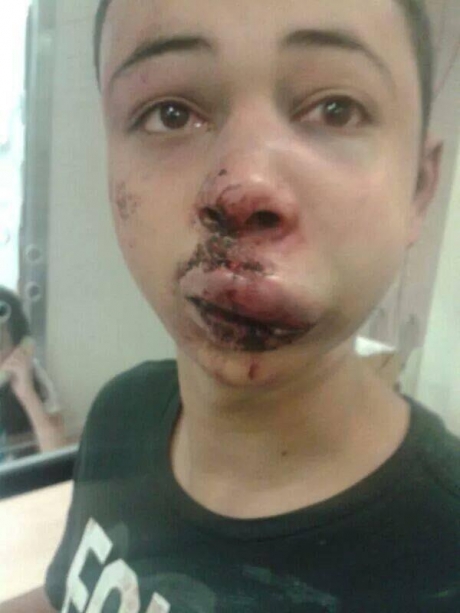 A Palestinian teenager identified by local sources as the cousin of the 16-year-old who was murdered on Wednesday was beaten and abducted by Israeli police on Thursday, and was refused medical treatment for his broken nose and other injuries while in custody.
The Palestinian Red Crescent Society has reported that over 170 Palestinians have been injured since Monday, when the bodies of three Israeli teenagers who had gone missing two weeks earlier were found.
15-year old Tariq was allegedly participating in one of several protests that took place in Shu’fat and nearby areas after Muhammad Abu Khdeir, 16, was abducted by Israelis, according to eyewitnesses, and later found burned to death on Wednesday.
Hundreds of Palestinians took part in the protests, which were met with tear gas, rubber-coated steel bullets and concussion grenades. At least three incidents have been reported of Israeli police and military using live ammunition against the demonstrators. Of the 170 injured since Monday, at least six are journalists.
Since his death Wednesday, the family of Muhammed Abu Khdeir has faced interrogations, DNA tests and a misinformation campaign started by the Israeli police to claim, based on no evidence, that the boy was killed in a family dispute — in addition to the Israeli police refusing to look at surveillance video showing the assailants, which would normally be a major part of an investigation.
The attack on the 15-year-old appears to be the latest affront to a family that is mourning the brutal death of a child. Tariq is a Palestinian-American who was staying with family in Jerusalem when he was beaten and abducted by Israeli police. The full extent of his injuries are still unknown.
Former Israeli Defence Minister calls on government to assassinate Hamas leaders
MEMO | July 3, 2014
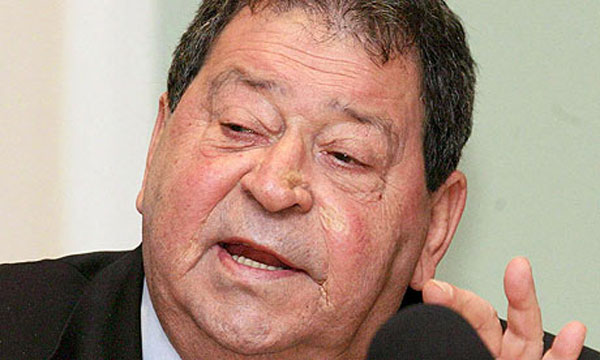 Israel’s former Defence Minister Benjamin Ben-Eliezer called for the Israeli government to immediately assassinate Hamas leaders, an Israeli news site has reported.
Ben-Eliezer is reported to have said: “The government must immediately return to the assassination policy, and let Hamas leaders understand that there is no security for them day and night and that there is no difference between political and army wing leaders.”
He said: “Hamas political leadership incites and inflames the atmosphere [against Israel] and encourages terrorism.”
Ben-Eliezer called on the Israeli government to strengthen Palestinian Authority President Mahmoud Abbas and to pressure him to remove Hamas from government and then work on the resumption of the peace process.
Israeli Soldiers Publish Dozens Of Pictures, Posts, Calling For Murdering Arabs
By Saed Bannoura | IMEMC & Agencies | July 3, 2014
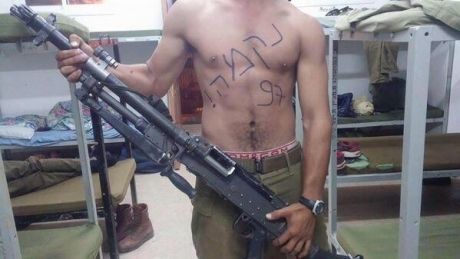
Israeli soldiers published dozens of pictures on social media networks calling for murdering the Arabs, and murderous acts of what they describe as “revenge” against any person who is an Arab.
Most of the pictures that spread widely in recent days are actually for soldiers on active military duty, carrying Israeli-issued weapons, and calling on their government and political leadership “to declare an open season” for killing the Arabs.
One of the soldiers even called for “exterminating all Arabs” in a picture he posted, the Arabs48 news website has reported.
Most of the pictures published by the fanatic soldiers are “selfies”, taken by the soldiers themselves, in addition to pictures of military uniforms, weapons, and chains, and many wrote on the pictures threatening words such as revenge, or “what we want is revenge”, and some even wrote “give us the chance to wipe them out”.
Even before fanatic Israeli settlers abducted, burnt and murdered a Palestinian teen in occupied Jerusalem, on Tuesday evening, Israeli security officials warned that Jewish extremists could be planning acts of abduction and execution of Palestinians.
The settlers also attacked, beat and injured several Palestinians, including children, and even tried to kidnap a number of children before they kidnapped and killed Mohammad Khdeir, 16, in occupied Jerusalem.
Hundreds of Israeli fanatics were tweeting slurs and threats such as “death to Arabs”, and acts of what they called revenge, and calling for more violence “to prevent the Palestinians from attacking Israelis”.
In addition, fanatic extremist settler, Baruch Merzel, who lives in an illegal settlement in occupied Hebron, called for using excessive force against the Palestinians, and for more of what he called “acts of revenge”.
Extremist Israeli Politician and former member of Knesset, Michael Ben Ari, also called for acts of revenge against the Palestinian people.
Many Twitter hashtags were created calling for revenge and acts of murder, some just stating “I want to murder”, and “I want weeping Palestinian mothers”, “I want Widows”, and “I Want Orphaned Palestinian Children”.
Some tweets include direct calls for murdering Arab Member of Knesset, Hanin Zoabi, although death threats against her, and various Arab members of Knesset and politicians, are not something new.
Other posts state, “the time has come to punish all Arab families, to let every Palestinian know that his wife and children, and he himself, are subject to punishment, their homes will be demolished and families will be imprisoned”.
Kerry threatens Iran with ‘tightened sanctions’
Press TV – July 1, 2014
US Secretary of State John Kerry has threatened Iran with tightened sanctions and deepened isolation as he says time is running out for a “comprehensive” nuclear agreement with Iran.
In an opinion piece published by The Washington Post on Monday, Kerry said failure to reach a comprehensive agreement over Iran’s nuclear energy program could not be blamed on the “excessive demands on our part” but on Iran because Tehran has to “back up its words with concrete and verifiable actions.”
Iran has always emphasized that its nuclear energy program is geared to civilian purposes only. The International Atomic Energy Agency has conducted numerous inspections of Iran’s nuclear facilities but has never found any evidence showing that Iran’s civilian nuclear energy program has been diverted to nuclear weapons production.
However, Kerry urges Iran to choose between “phased relief” from unilateral sanctions and sanctions that “will tighten.”
“Now Iran must choose,” writes Kerry in his op-ed, threatening that “international sanctions will tighten and Iran’s isolation will deepen” if Iranians choose to stand by “the positions they have articulated”.
What Iran has always insisted on is that as a committed signatory to the nuclear Non-Proliferation Treaty (NPT) and a member of the IAEA, it will never give up the right to use nuclear technology for peaceful purposes.
Iran and the five permanent members of the UN Security Council plus Germany reached an interim deal on November 24, 2013, in the Swiss city of Geneva. The six-month deal, which took effect on January 20 and will end on July 20, can be extended.
However, Kerry says Iran “must show a genuine willingness” to address the US and its allies’ “concerns” or “the United States and our partners will not consent to an extension.”
Kerry’s remarks came after Israel sent a high-ranking delegation to the United States to discuss a final deal between Iran and the P5+1.
The Israeli team headed by Israel’s Minister of Strategic Affairs Yuval Steinitz traveled to Washington on Sunday to meet with US Under-Secretary of State for Political Affairs Wendy Sherman, who is the country’s representative in the nuclear talks.
The Israeli lobby in the US has been working hard to sabotage Iran’s nuclear deal with the world powers.
Israeli Air Force Carries Out 34 Air Strikes Against Gaza Amidst Threats of ‘Vengeance’
By Saed Bannoura | IMEMC News | July 1, 2014
 The Israeli Air Force carried out, on Tuesday before dawn, at least 34 air strikes targeting different areas of the Gaza Strip, causing excessive property damage, and at least four injuries.
The WAFA news agency has reported that Israeli F-16 fighter jets fired missiles into different areas of the Gaza Strip, mainly in agricultural and open areas, in addition to several homes and civilian property.
WAFA reported that the army bombarded Gaza, Rafah, Khan Younis, the Central District and the Northern District of the besieged coastal region, adding that Israeli navy ships also participated in the attacks.
Local sources said dozens of Israeli drones remained in the Gaza skies all night, while Israeli helicopters also continue to fly over the Gaza Strip, firing rounds of live ammunition.
Medical sources said Israeli missiles struck agricultural greenhouses seriously wounding four Palestinians, in Khan Younis and Rafah, in southern Gaza.
The four, who worked as guards at the greenhouses, have been moved to Nasser Hospital in Khan Younis facing life-threatening conditions.
Israeli officials confirmed the strikes against Gaza, and said that resistance groups also fired shells into Israeli areas across the border.
The Israeli Prime Minister, Benjamin Netanyahu, said that Hamas would pay the price for the death of the three Israeli settlers, who were found dead, Monday, near the southern West Bank city of Hebron, after eighteen days of searches and invasions by the Israeli army.
On his Twitter account, the Israeli Prime Minister posted, “Vengeance for the blood of a small child, Satan has not yet created. Neither has vengeance for the blood of 3 pure youths who were on their way home to their parents who will not see them anymore. Hamas is responsible and Hamas will pay.”
The Israeli army has killed five Palestinians since the settlers went missing 18 days ago, and dozens have been injured by Israeli army fire. In addition, close to 300 Palestinians have been kidnapped and imprisoned in the 18-day period. Since the bodies were discovered Monday, Israeli attacks, invasions and threats have increased significantly, so these numbers have likely increased in the last 24 hours.
Despite the threats and calls for vengeance, the Israeli government has released no information linking Hamas or any Palestinian groups or individuals to the deaths of the three settlers.
Featured Video

Genocide-linked firm handles Britons’ NHS data
or go to
Aletho News Archives – Video-Images
Book Review
Book review: Boiling Point, How America Brought War to Ukraine
By Tim Kirby | Strategic Culture Foundation | November 14, 2026
Did Vladimir Putin just wake up one day on the wrong side of the bed and decide to invade Ukraine in February of 2022 or is there a lot more to this single decision that has been reshaping the 21st century geopolitical landscape?
Obviously, from the way that I just posed the question you can see that I am on the side that views the causes for the war in Ukraine to be very deep, long-term, historical and consciously nefarious, and most importantly, not from within the halls of the Kremlin. So it was a pleasure to take a look at the book “Boiling Point, How America Brought War to Ukraine” by author Stephen Kinzer, who like myself, also believes that the real reasons behind military conflicts around the world are not what CNN and the BBC have been telling you. The main thesis of this book was stated clearly by its creator; the war “may have been illegal, but it was definitely not unprovoked.” … continue
Blog Roll
 Aletho News
- The 10 Disease Renamings That Rescued the Vaccine
- NATO cancels 2027 leaders’ summit
- IAEA’s politicized use of safeguards undermines its impartiality: Russian envoy
- UK must be ready to strike Russian Arctic – ex-PM
- Fico’s Two Red Lines: Russian Energy and the Next Ukraine Loan
- Thousands rally for banned NATO-skeptic presidential candidate
- Ukraine Settlement and New European Security Architecture Must Go Hand in Hand – Kremlin
- Book review: Boiling Point, How America Brought War to Ukraine
- Israel Revives The ‘Iranian Assassination Threat Against Trump’ Deception In A Desperate Bid To Restart The War
- US rewrites history to dodge blame for illegal war on Iran: Foreign Ministry spokesperson
- If Americans Knew
- An error has occurred; the feed is probably down. Try again later.
- No Tricks Zone
- New Study: Barents Sea Temperatures Were Warmer And Sea Ice Less Extensive In The 1700s Than Today
- German Authorities Start Initiative To Evaluate Public Register For Climate “Disinformation” Spreaders!
- Zonal Asymmetry of Temperature Change in the Antarctic Circumpolar Current
- New Study: The Net Fossil Fuel Contribution To Rising Atmospheric CO2 Has Been Zero For 500 Years
- Germany’s Green Energy Transition Becoming Increasingly Expensive…Another 6 Trillion Euros!
- Sudden Stratospheric Warming, Powerful El Niño Combination May Lead To Extreme Europe Cold, Energy Crisis!
- Two New Studies Find Thwaites Glacier Melt Cannot Be Driven By Human Activity Or A Warming Ocean
- E-Cars Reduce CO2 Emissions By Only 41% Compared To Internal Combustion Engine Vehicles
- Predictions Made By Renowned Climate Professor Over Past Decades Have Been Proven To Be Poor
- New Study Suggests Large Regions Of The Pacific Ocean Have Been Cooling For The Last 80 Years

