Latin American States Denounce Any Possible Aggression against Syria
Al-Manar | September 8, 2013
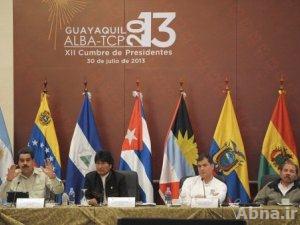 The nine Latin American states (ALBA) have condemned any possible aggression against Syria and announced the dispatching of humanitarian aid to the Syrian refugees in Lebanon.
“The Bolivarian alliance council in American denounces any possible strike against Syria,” ALBA Secretary General said in a statement from Venezuela.
“ALBA asks the U.S. to refrain from launching a military aggression against the Syrian people and government,” he added, accusing the US administration of resorting to the same strategies that it used in Iraq, Afghanistan and Egypt.
ALBA further decided to dispatch humanitarian aid, including foodstuffs, to the Syrian refugees in Lebanon.
Related articles
- At least one Syrian becomes a refugee every 15 seconds – expert (voiceofrussia.com)
- Lebanon opposes military attack against Syria: FM (theiranproject.com)
The Most Awkward G20 Summit Ever
By Dan Beeton | CEPR Americas Blog | September 5, 2013
President Obama is in St. Petersburg, Russia to participate in the G20 Summit today and tomorrow, amidst a time of heightened tensions between the U.S. and several G20 member nations. Looming over the summit are the Obama administration’s plans for a possible military attack on Syria, while Russian President Vladimir Putin has said that a U.S. military response without U.N. Security Council approval “can only be interpreted as an aggression” and UNASUR – which includes G20 members Argentina and Brazil, issued a statement that “condemns external interventions that are inconsistent with the Charter of the United Nations.”
New revelations of NSA spying on other G20 member nation presidents – Dilma Rousseff of Brazil and Enrique Peña Nieto of Mexico – leaked by NSA whistle-blower Edward Snowden and first reported in Brazil’s O Globo, have also created new frictions. Rousseff is reportedly considering canceling a state visit to Washington next month over the espionage and the Obama administration’s response to the revelations, and reportedly has canceled a scheduled trip to D.C. next week by an advance team that was to have done preparations for her visit. The Brazilian government has demanded an apology from the Obama administration. In an interview with Reuters on Wednesday, an anonymous senior Brazilian official underscored the gravity of the situation:
[T]he official, who declined to be identified due to the sensitivity of the episode, said Rousseff feels “patronized” by the U.S. response so far to the Globo report. She is prepared to cancel the visit as well as take punitive action, including ruling out the purchase of F-18 Super Hornet fighters from Chicago-based Boeing Co, the official said.
“She is completely furious,” the official said.
“This is a major, major crisis …. There needs to be an apology. It needs to be public. Without that, it’s basically impossible for her to go to Washington in October,” the official said.
Other media reports suggest that Brazil may implement measures to channel its Internet communications through non-U.S. companies. But when asked in a press briefing aboard Air Force One this morning, Deputy National Security Advisor for Strategic Communications Ben Rhodes did not suggest that such an apology would be forthcoming:
Q The Foreign Minister said he wanted an apology.
MR. RHODES: Well, I think — what we’re focused on is making sure the Brazilians understand exactly what the nature of our intelligence effort is. We carry out intelligence like just about every other country around the world. If there are concerns that we can address consistent with our national security requirements, we will aim to do so through our bilateral relationship.
Such responses are not likely to go far toward patching things up with Brazil. It is conspicuously dishonest to suggest that the U.S. government “carr[ies] out intelligence like just about every other country around the world,” as no other country is known to have the capacity for the level of global spying that the NSA and other agencies conduct, and few countries are likely to have the intelligence budgets enjoyed by U.S. agencies – currently totaling some $75.6 billion, according to documents leaked by Snowden and reported by the Washington Post.
There are also signs that the Washington foreign policy establishment is troubled by the Obama administration’s dismissive attitude toward Brazil’s understandable outrage. On Tuesday, McClatchy cited Peter Hakim of the Inter-American Dialogue – essentially the voice of the Latin America policy establishment in Washington:
Peter Hakim, the president emeritus of the Inter-American Dialogue, a Washington-based policy group, noted that Secretary of State John Kerry had visited Brasilia last month to patch things up after the initial NSA leaks but “really did not do a very good job. He just brushed it off.”
Hakim said he believed the O Globo report, and he added that “snooping at presidents is disrespectful and offensive.”
Rousseff and Pena Nieto had to issue strong statements, Hakim said. “Both have to show they are not pushovers, that they can stand up to the U.S.,” he said.
The ongoing revelations made by Snowden have affected U.S. relations with other countries as well. As the Pan-American Post points out, Peña Nieto may continue to reduce intelligence sharing with the U.S.; he also said yesterday that “he may discuss the issue with President Barack Obama at the summit.” U.S.-Russian relations, of course, have also recently become tense following Russia’s granting of temporary political asylum to Snowden.
The G20 Summit also comes just after the IMF, at the direction of the U.S. Treasury Department, changed its plan to support the Argentine government in its legal battle with “vulture funds” – meaning that U.S.-Argentine relations may also be relatively cool.
Related article
Colombia farmers’ uprising puts the spotlight on seeds
Against the grain | September 4, 2013
On 19 August, Colombian farmers’ organisations initiated a massive nationwide strike. They blocked roads, dumped milk on cars and basically stopped producing food for the cities. The problem? Farmers are being driven out of existence by the government’s policies.
The state provides almost no support for the small-scale farming sector.1 Instead, it embraces a social and economic model that serves the interests of a wealthy elite minority. Recent free trade agreements (FTAs) signed with the US and the EU are undercutting Colombian producers, who can’t compete with subsidised imports.2 The Colombian government has been actively promoting land grabbing by large corporations, many of them foreign (Monica Semillas from Brazil, Merhav from Israel, Cargill from the US), to promote export-oriented agribusiness at the expense of family farming oriented towards food sovereignty.
But the farming sector needs real support, especially in the form of access to land and lower costs of production, protestors argue. Otherwise, Colombian potato and coffee farmers, dairy and meat producers, not to mention small fishers, will not be able to keep up. They are being evicted and exterminated.
With their backs against the wall, a movement of mobilisation began in one part of the country in June and grew into a coordinated national action for August. The farmers’ strike was soon supported by other sectors: oil industry workers, miners, truckers, health sector professionals and others. On 29 August, ten days into the strike, more than 20,000 students joined the movement and shut down the capital city, Bogotá.
The response of the government was chaotic and contradictory. Police forces violently repressed and injured a lot of protestors, not to mention journalists. More than 250 people were arrested, including high-level union leader Hubert Jesús Ballesteros Gomez, mostly on trumped up charges.
A number of people on both sides lost their lives. At one moment the government recognised the farmers’ grievances as valid and offered some concessions. In another it claimed that the movement was infiltrated by the FARC. President Santos even went on TV and claimed that “the agrarian strike does not exist”. The following day, he was filmed from a helicopter, inspecting the skirmishes and tear gas which filled the streets of Bogotá.
The mobilisation has been extremely successful in opening up space for discussion, conscientisation, solidarity and resistance in Colombia. Students, for instance, were keen to support the farmers and back their demands. They rallied loudly against GMOs and for food sovereignty. But they also wanted to put forward their own demands for free public education, nudging the mobilisation beyond agrarian concerncs into a broader wave of social pressure to change current Colombian policies.
Law 970
Seeds emerged as one highly visible issue. Under the FTA signed with Washington, as well as that signed with Brussels, Bogotá is required to provide legal monopoly rights over seeds sold by US and European corporations as an incentive for them to invest in Colombia. Farmers who are caught selling farm-saved seeds of such varieties, or simply indigenous seeds which have not been formally registered, could face fines or even jail time.3 As is the case in many other countries throughout the world, this criminalisation of farmers’ and indigenous people’s rights to save, exchange and sell seeds puts the country’s biodiversity and cultural heritage at risk.
While it’s true that the Colombian government has been moving in this direction for many years, and agreeing to such policies as part of its membership in the Andean Community or the World Trade Organisation, many people point out that it is only since the signing of the US and EU FTAs that the government has begun seriously implementing them.
In 2011, the Colombian government authorities stormed the warehouses and trucks of rice farmers in Campoalegre, in the province of Huila, and violently destroyed 70 tonnes of rice that it said were not processed as per the law. This militarised intervention to destroy farmers’ seeds shocked many, and inspired one young Chilean activist, Victoria Solano, to make a film about it. The film is called “9.70” because that is the number of the law adopted in 2010 that articulates the state’s right to destroy farmers’ seeds if they don’t comply.4
Today, thanks to the force, tenacity and justness of the farmers’ protest, people from all walks of life in Colombia are discussing that film, as can be seen in the mass media, social networks and the streets, and asking why the government is pursuing such senseless policies.
Support the movement
There is no question that Colombian farmers can feed the country very well, in a way that provides jobs, dignity and a healthy environment. But the government is too firmly attached to an economic model that caters to crony interests and holds no place for small-scale family farming. We should all support the popular agrarian struggle in Colombia to turn that model around. It’s not too late.
As one small concrete action, the documentary film “9.70” — which you can watch online in Spanish at http://youtu.be/kZWAqS-El_g — is seeking funds to produce a version with English subtitles so that more people around the world can understand what the Colombians farmers are facing and support them to defeat such policies. The smallest contribution helps. Please go to http://idea.me/proyectos/9162/documental970 to participate. The deadline is 10 September!
As another meaningful action, the Latin American Coordination of La Via Campesina are seeking international solidarity initiatives to support the strike. Please go to http://goo.gl/9u6RXJ to learn more. Again, time is of the essence!
Beyond Colombia, the battle over similar seeds legislation is raging right now at very high political levels, and across the countryside, in Chile and Argentina as well. One concern is that some of the more aggressive elements adopted by the government of Colombia could infiltrate other Latin American countries as well. The need to scrap these laws is truly urgent indeed!
Going further:
- “La historia detrás del 970“, Semana, Bogotá, 24 August 2013
- Grupo Semillas, “Colombia: Las leyes que privatizan y controlan el uso de las semillas, criminalizan las semillas criollas“, Bogotá, 26 August 2013
- Julia Duranti, “A struggle for survival in Colombia’s countryside“, 30 August 2013
Visit the bilaterals.org website for more coverage (in English, French and Spanish) of the general agrarian strike and the fight over Law 970
For more information about the struggles around the seed laws in Colombia, please contact Grupo Semillas (“Seeds Group”) at semillas@semillas.org.co or visit their website http://semillas.org.co/
To learn more about the political battle currently taking place in Chile, please get in touch with Anamuri, the National Association of Rural and Indigenous Women, at secretariag@anamuri.cl
For information about what is happening in Argentina, please contact Diego Montón at the Latin American Coordination of La Vía Campesina, at secretaria.cloc.vc@gmail.com.
Notes
1 Almost one-third of the Colombian population lives in the countryside and nearly 60% of those in the rural areas live, to some extent, in hunger. See Paro Nacional Agrario y Popular, Pliego de peticiones.
2 The effects are just starting, but they are real. US agricultural exports to Colombia shot up 62% in the first year of the agreement, while Colombian farm exports to the US went down 15%. (See USTR, and Portafolio)
3 To be registered and certified, seeds need to meet criteria of genetic uniformity and stability, to suit agroindustrial processes. This excludes, by definition, peasant seeds — or criollo varieties, as they are called in Colombia — which tend to be diverse, adaptive and dynamic. Under the current rules in Colombia, if a farmer wants to plant criollo seeds, s/he has to get authorisation from the government, can only do it once, can only do it on five hectares or less and must consume the entire harvest at home (cannot sell it on the market).
4 See the film’s Facebook page and on Twitter look up #NoMas970. In the three years of Law 970 so far (2010-2012), the government rejected or destroyed nearly 4,000 tonnes of seeds.
Brazil to probe telecom companies implicated in NSA spying
RT | September 4, 2013
Brazil will probe telecommunications companies to see if they illegally shared data with the NSA after it was found the US had been spying on President Rousseff. Brazil’s government has accused the US of lying about the NSA’s activities in the country.
In response to the revelations, Brazilian President Dilma Rousseff called an emergency meeting of ministers. Following the meeting the government called on the National Telecommunications Agency (Anatel) to carry out checks on telecom companies based in Brazil to see if they collaborated with the NSA.
The Brazilian government denounced the NSA’s activities as “impermissible and unacceptable” and a violation of Brazilian sovereignty.
“[The US has] not given any reasonable explanations. In fact, all the explanations that have been given so far are false,” said Minister of Communications Paulo Bernardo.
The American ambassador to Brazil, Thomas Shannon, was summoned by the government to account for the reports of NSA snooping on Tuesday. He claimed the NSA does not monitor communications on Brazilian territory or collaborate with telecommunications companies.
Citing data leaked by Edward Snowden, Guardian journalist Glenn Greenwald revealed on Sunday that the NSA had been monitoring both the Brazilian and Mexican presidents.
“It is clear in several ways that [Rousseff’s] communications were intercepted, including the use of DNI Presenter, which is a program used by NSA to open and read emails and online chats,” Greenwald told AP in an email.
Brazilian-US relations on rocks
In the wake of the new scandal Brazilian media is speculating whether the spy revelations will lead to a knee-jerk reaction from the Brazilian government and the cancelation of Dilma’s October visit to the States.
Citing a presidential spokesperson, Globo reporter Gerson Camarotti wrote that if a “satisfactory explanation” is not given by the Americans then Dilma “will not rule out canceling the visit.”
“There has to be a convincing explanation. If this doesn’t happen, the situation will become extremely delicate,” said the spokesperson.
US relations with Brazil have worsened considerably as a result of Edward Snowden’s leaks regarding the NSA’s massive spy network. Back in August, UK authorities detained Brazilian citizen David Miranda in a London airport over suspicions he was carrying leaked NSA data on behalf of his partner Glen Greenwald. UK law enforcement held Miranda for nine hours under the terrorist act and confiscated electronic equipment.
Brazil called Miranda’s detention without charges unjustifiable and called on the UK authorities to account for the move. Meanwhile Brazilian lawmakers have called for police protection for Greenwald and his partner.
Related articles
- BRICS to discuss US spying on Rousseff: Brazil (thebricspost.com)
- Brazilian Senate to probe NSA spying reports (thebricspost.com)
- Brazilian lawmakers call for police protection of Glenn Greenwald and his partner (rt.com)
Colombia: With a “Mea Culpa,” the Arrogant Santos Government Relents
By Nazih Richani | Cuadernos Colombianos | August 27, 2013
The rural workers who have mounted Colombia’s national agrarian strike are staying the course after four peasants and one policeman were killed and scores more detained. Hundred of thousands of peasants and small farmers are participating in this historic mobilization whose scope and magnitude has not been seen for decades. But this is just a tactical triumph in a long struggle to address the current crisis in the rural economy. The crisis has been generated by a neoliberal model of development based on the extraction of raw materials and large bio-fuels agribusiness. It has been exacerbated by free trade agreements increasingly transforming Colombia into an importer of its basic food necessities. In August 19 when the strike started President Juan Manuel Santos ridiculed it by declaring that “el paro agrario no existe,” that is, “the agrarian strike does not exist.” Well, against his wishful thinking, the strike is still going strong after nine days (as of this writing, 27 August) and has expanded to include most of the country’s departments. It has put the agrarian crises on the social and political map and has highlighted its centrality in a country in which some 31.6% of the population still live and depend on the agrarian economy (according to the UNDP Report of 2011 on Colombia’s rural economy).
Finally Santos acknowledged the strike in a meeting that took place on Monday August 26, with peasants’ representatives in Tunja, an epicenter of the mobilization and the capital of the department of Boyacá. Speaking to peasant representatives, Santos openly apologized, saying “Mea Culpa” for his earlier dismissive comment on the strike and promised to continue his negotiations. Santos recognized the obvious, especially after the mobilization reached La Casa de Nariño, his presidential palace in Bogota, where 8,000 demonstrators in Bolivar Plaza raised their voices and their casseroles in solidarity with the peasants.
The fundamental question is whether this strong show of force by the peasants can translate into policy that takes Colombia in a different direction? That is a different matter. Can this strike open the door for a very serious discussion of the root cause: the economic model and the free trade agreements with the United States, Canada, and EU. How would this wide mobilization resonate in Havana where the Santos government is negotiating with the Armed Revolutionary Forces of Colombia (FARC)? The answers would depend on the resilience of the organizations that led the strike and the effectiveness of the democratic and revolutionary forces in pushing for an economic change that safeguards the subsistence peasant economy and the real producers of “bread, milk and butter” in Colombia.
Related article
- Social protest grows across Colombia as trade union leader arrested (colombiaresistance.wordpress.com)
Honduras: Congress Resurrects Military Police Force
Weekly News Update on the Americas | August 25, 2013
Honduras’ National Congress voted on Aug. 21 to approve a law creating the Military Police of Public Order (PMOP), a new 5,000-member police unit composed of army reservists under the control of the military. This will be in addition to a 4,500-member “community police” force that the government is forming, according to an Aug. 12 announcement by Security Minister Arturo Corrales. Although he called the move a “change of course,” Corrales failed to explain the difference between the community police, which is to be operative by September, and the existing national police force.
The government’s plan to raise the number of police agents by 9,500 is clearly meant to respond to the dramatic increase in crime in Honduras; according to the United Nations, the country now has an annual murder rate of 84 for every 100,000 people, the highest in the world. Police corruption is a major problem, and police agents have been convicted of high-profile crimes [see Update #1187]. The current police force had 14,472 agents on the payroll as of May, but in a new police scandal, only 9,350 agents could be found at work during July.
The police changes come as candidates prepare for Nov. 24 general elections, which will choose a new president, the 128 members of Congress, the 20 representatives to the Central American Parliament (PARLACEN), and local mayors [Update #1162]. The main force behind the new military police is Juan Orlando Hernández, who has resigned from his post as president of the National Congress to run as the presidential candidate of the center-right National Party (PN)—the party of current president Porfirio (“Pepe”) Lobo Sosa, who has governed Honduras since January 2010 without being able to contain the crime wave.
Human rights activists strongly oppose the proposed military police unit. “In no part of the world have the soldiers resolved security problems,” Omar Rivera, who directs the Alliance for Peace and Justice (APJ), a coalition of civil society, organizations, told the French wire service AFP. He added that a serious fight against crime would require a fight against impunity. Bertha Oliva, the coordinator of the Committee of Relatives of Disappeared Detainees in Honduras (COFADEH), called the creation of the new force “a step backwards in the demilitarization of society and the democratization of the country.” “The soldiers in the streets have only left more death and mourning, because they aren’t prepared for being guarantors of security,” she said. The national police were removed from the military and put under civilian control in 1997. Death squads operated by the military and the police were implicated in the killings of 184 government opponents in the 1980s.
Critics also asked how the government would be able to pay for two new police units that would double the current number of active agents. José Simón Azcona, a legislative deputy from the centrist Liberal Party (PL) who supported the measure, suggested that the US would pay. The US government “offered collaboration… under the previous administration” for the conversion of four military battalions into police units, he said. (It is unclear whether he was referring to a previous administration in Honduras or in the US.) (El Nuevo Diario (Nicaragua) 8/12/13 from ACAN-EFE; Honduras Culture and Politics 8/22/13; El Heraldo (Tegucigalpa) 8/22/13; La Nación (Costa Rica) 8/23/13 from AFP, EFE; Prensa Latina 8/24/13)
Related articles
- Honduras: Expanding Palm Oil Empires In The Name Of ‘Green Energy’ And “Sustainable Development” (alethonews.wordpress.com)
- Honduras: Army Kills Indigenous Leader at Dam Protest (alethonews.wordpress.com)
- Honduran Union Leader Faces Death Threats (alethonews.wordpress.com)
Venezuela, Palestine sign oil deal
Press TV – August 25, 2013
Venezuela and Palestine have signed agreements including deals under which Caracas is to sell oil at a ‘fair price’ to the Palestinians.
The accords were signed on Saturday following a meeting between Venezuelan Foreign Minister Elias Jaua and his Palestinian counterpart Riyad al-Maliki.
“It is an agreement of cooperation and solidarity with our oil industry… a sale of fuel at a fair price,” Jaua said.
The agreement also assures “favorable” repayment terms as well as training of Palestinians on handling and distribution of oil.
Maliki, who is on a Latin America tour, said he was “extremely satisfied” with the agreement.
On August 23, Maliki visited Ecuador, where he discussed with Minister for Foreign Affairs and Human Mobility Ricardo Patino. After the meeting, the two ministers expressed interest in opening embassies in both countries to strengthen ties.
A day earlier, Guyana’s President Donald Ramotar said after meeting the Palestinian foreign minister that his country is in the process of appointing an ambassador to Palestine and reiterated Guyana’s continued support to Palestine.
A group of Latin American and Caribbean countries, including Brazil, Argentina, Venezuela, Bolivia, Uruguay, Ecuador, Chile and Chile, recognize Palestine as an independent state.
On April 10, the Latin American nation of Guatemala became the 132nd nation in the world to formally recognize the state of Palestine.
Colombians Increasingly Joining Strike
Prensa Latina | August 24, 2013
Bogota – More and more sectors continue joining the nationwide strike in Colombia, expressing their unhappiness with government economic policies, amid strong tension in the wake of police repression, detentions and blockage in 33 roads in several departments.
The situation is worsening, with no solution in sight. The Executive has reiterated it is ready to talk, but not before the strike is ended and blocking of roads lifted.
President Juan Manuel Santos said yesterday that 30 persons have been brought to justice for blocking roads, “some of them charged with committing terrorism, facing over 20 year prison sentence.”
The day before the protests started, Santos had ordered police to act firmly against those blocking the roads.
Leaders of the protests have urged police to stop using force excessively and abusing power.
The first six days of protest left over 175 detainees and heavy damage worth some $25 million USD.
But protesters are determined to remain in the roads until their demands are heard by the government, whose policies against the workers and people in general limit their rights, privatize institutions and hand over the country’s resources to transnationals.
Boyaca remains the worst-hit department, with over 16 roads totally blocked.
Footage of police repression has been posted on the Internet.
The strike has also been strong in Bogota, and today more than 1,000 storekeepers of main wholesale chain Corabastos are expected to march toward Bolivar Square to support the protests, with people demanding to stop immediately the Free Trade Agreements that are hitting the people, mainly in rural areas.
“No More FTA, No More Riot Squadron (ESMAD), No More Privatized Seeds, No More Mega-Mining, No More Corruption,” ex Senator Piedad Cordoba wrote in a message on Twitter, where Colombians are massively backing the protests.
Brazil: 4,000 Cuban Doctors to be Hired
By Kahina Boudarène | The Argentina Independent | August 22, 2013
Brazil’s Health Minister, Alexander Padilha, yesterday declared that the country will receive 4,000 doctors from Cuba.
The decision is part of the “More Doctors” government programme, which was set out in June to increase the number of health workers in the country, currently lacking 15,460 doctors. The move has come after only 15% of the demand was satisfied during the first month of the initiative.
Padilha stated that Brazil will hire “doctors with standards that the Ministry of Health established”. In that sense, he said that doctors “with international experience, especially in Portuguese-speaking countries” would be sought.
A first group of 400 doctors will arrive in the country next weekend and will have to pass a three weeks evaluation. The other groups will come before the end of the year, to work in 701 municipalities in Northern and North-Eastern Brazil.
They will receive a US$4,200 monthly wage. In total, Brazil government will pay over US$212m to receive required Cuban doctors. This investment has been made possible by next week approval of the law to fund public services with oil revenue – 25% of these incomes is now dedicated to the health sector.
Brazil is not the only nation to enjoy Cuban doctors experience. In last may, Cuba had 38,868 health workers abroad. In total, 40 countries receive these services for free.
South America: UNASUR To Build Fibre-Optic ‘Mega Ring’
By Chelsea Gray | The Argentina Independent | August 21, 2013
 The Union of South American Nations (UNASUR) has approved plans for an optic fibre mega-ring which will break its members’ “dependence on the US, and provide a safer and cheaper means of communication.”
The fibre optic ring will become part of a ten-year plan to physically integrate all 12 UNASUR member states. The line, which will reach up to 10,000 kilometres long and will be managed by state enterprises from each country it crosses, is expected to interconnect South America through higher coverage and cheaper internet connections.
Industrial Minister of Uruguay, Roberto Kreimerman, explained that “it is about having a connection with great capacity that allows us to unite our countries together with the developed world.”
He continued to say, “We are considering that, at most, in a couple of years we will have one of these rings finalised.” He also added that ”I think the economy, security, and integration are the three important things we need in countries where Internet use is advancing exponentially.”
At the moment, up to 80% of Latin America’s communications go through the US. However, plans for an independent communication line comes shortly after the US was discovered to have been spying on Latin American data. The National Security Agency (NSA) were revealed to have been monitoring emails and intercepting telephone logs, spying on energy, military, politics, and terror activity across the continent.
UNASUR is made up of Argentina, Bolivia, Brazil, Chile, Colombia, Ecuador, Guyana, Paraguay, Peru, Suriname, Uruguay, and Venezuela.
Latin America Condemns US Espionage at United Nations Security Council

By Carla Stea | Global Research | August 17, 2013
“The United States appears to be destined by Providence to plague America with misery in the name of liberty.” Simon Bolivar
Throughout the day, on August 6, President Cristina Fernandez Kirchner of Argentina chaired a historic United Nations Security Council meeting that revealed a seismic shift in geopolitical consciousness and incipient strength.
The agenda of Security Council meeting 7015 was: “Cooperation Between the United Nations and Regional and Sub-regional Organizations in Maintaining International Peace and Security.”
The prelude to this meeting was held, the prior day, August 5, at a press stakeout given by Elias Jaua Milano, Foreign Minister of Venezuela, Hector Timerman, Foreign Minister of Argentina, Antonio de Aguiar Patriota, Foreign Minister of Brazil, Luis Almagro, Foreign Minister of Uruguay and David Choquehuanca Cespedes, Foreign Minister of Bolivia.
They spoke on behalf of Mercosur, the Southern Common Market, following their meeting with United Nations Secretary-General Ban Ki-moon. Their remarks focused on the expression of outrage contained in the “Annex to the note verbale dated 22 July from the Permanent Mission of the Bolivarian Republic of Venezuela to the United Nations addressed to the Secretary-General, which stated:
“Decision rejecting the acts of espionage conducted by the United States in the countries of the region.” “The President of the Argentine Republic, the President of the Plurinational State of Bolivia, the President of the Federative Republic of Brazil, the President of the Eastern Republic of Uruguay and the President of the Bolivarian Republic of Venezuela, having met in Montevideo, Eastern Republic of Uruguay, on 12 July, 2013, within the framework of the presidential summit of the Southern Common Market (MERCOSUR),
Condemning the acts of espionage carried out by intelligence agencies of the United States of America , which affect all countries in the region,
Strongly rejecting the interception of telecommunications and the acts of espionage carried out in our countries, which constitute a violation of the human rights, the right to privacy and the right to information of our citizens, and which also constitute unacceptable behavior that violates our sovereignty and is detrimental to the normal conduct of relations among nations,
Considering the advisability of promoting a coordinated approach to this issue at the regional level,
Decide to:
Work together to guarantee the cybersecurity of the States members to MERCOSUR, which is essential to defending the sovereignty of our countries,
Demand that those responsible immediately cease these activities and provide an explanation of the motives for and consequences of such activities,
Stress that the prevention of crime and the suppression of transnational crimes, including terrorism, must be carried out in line with the rule of law and in strict observance of international law.
Promote the adoption by the relevant multilateral institutions of standards for the regulation of the Internet which place a particular emphasis on cybersecurity issues, with a view to fostering the adoption of standards that guarantee the adequate protection of communications, in particular to safeguard the sovereignty of States and the privacy of individuals,
Express our full solidarity with all countries, within and outside our region that have been victims of such actions,
Promote the joint efforts of the Ministers for Foreign Affairs to inform the Secretary-General of the United Nations of these incidents and request prevention and sanction mechanisms on the issue at the multilateral level
Instruct the delegations of the Member States participating in the upcoming session of the United Nations General Assembly to jointly present a formal proposal to that end,
Request the Argentine Republic to submit this matter to the Security Council for consideration,
Agree to establish a working group to coordinate efforts, together with the South American Defence Council and the South American Infrastructure and Planning Council, aimed at carrying out activities that will render our telecommunications more secure and reduce our dependence on foreign technology.”
The morning session of the August 6 Security Council meeting consisted primarily of technical diplomatic presentations. Following Secretary-General Ban Ki-moon’s statement, Cuban Foreign Minister Rodriguez Parrella opened the meeting, as President of the Community of Latin American and Caribbean States (CELAC):
“The history of Latin American and the Caribbean has changed. Two hundred years after our independence, the ideas of ‘a Nation of Republics,’ and of ‘Our America’ envisaged by Bolivar and Marti, respectively, are taking shape. Thus, our Heads of State and Government decided in the Caracas Declaration that ‘in accordance with the original mandate of our liberators, CELAC must move forward in the process of political, economic, social and cultural integration – based on a wise equilibrium between the unity and diversity of our peoples … Upon founding CELAC, our Heads of State and Government reiterated our commitment to the building of a more just, equitable and harmonious international order based on respect for international law and the Charter of the United Nations. … They reaffirmed our commitment to the defense of sovereignty and the right of any state to establish its own political system, free from threats, aggression and unilateral coercive measures, and in an environment of peace, stability, justice, democracy and respect for human rights. CELAC reiterates that there can be no lasting peace without development and the eradication of poverty, hunger and inequality … CELAC has adopted a unanimous position with regard to some far-reaching topics on the international agenda, such as, for example, Argentina’s legitimate claim in the dispute concerning the sovereignty over the Malvinas Islands, and – today on the anniversary of the bombing of Hiroshima – on so-called nuclear disarmament.”
The representatives of other regional organizations, and the members of the Security Council delivered their statements throughout the morning session of the meeting
When the Security Council resumed for the afternoon session, in a courageous and brilliant tour de force, the Argentine Presidency of the Security Council availed itself of the opportunity to publicly denounce espionage in the service of the resurgence of neo-liberal capitalist imperialism. In an unusual gesture of solidarity and support (considering that Heads of State chairing Security Council meetings seldom remain beyond a perfunctory appearance at the morning session), President Cristina Fernandez Kirchner, Foreign Minister Hector Timerman and Ambassador Maria Cristina Perceval were present throughout the afternoon, as the succession of dazzling speeches, delivered by the Latin American Foreign Ministers of Brazil, Uruguay, Bolivia, Venezuela, Ecuador illuminated the global menace threatened by the United States National Security Agency programs of surveillance of phone records, e-mails, web-browsing, those very programs disclosed by former NSA contractor Edward Snowden.
The foreign ministers of Brazil, Venezuela, Uruguay, Bolivia and Ecuador fiercely condemned the United States plan for worldwide espionage, which posed a lethal threat to the democratically elected governments of these Latin American nations and jeopardized their survival.
It is not surprising that this expression of alarm was voiced by Latin America, from Argentina through Uruguay, Bolivia, Ecuador, Brazil, Venezuela – in other words from the Southernmost tip of the huge southern continent to the Caribbean, for this continent, viewed imperialistically as the “backyard” of the United States, was for many tragic decades, crushed by military dictatorships inflicting state terror with impunity, following the blueprint of destabilization and overthrow, by the CIA and multinational corporate controlled entities, of their own democratically elected leaders. The tragic destruction of Latin America’s democratically elected governments included President Arbenz in Guatemala, 1954; President Goulart in Brazil, 1964; President Juan Bosch in the Dominican Republic, 1965; President Torres in Bolivia, 1971; President Allende in Chile, 1973, and more recently the destabilizations of the democratically elected governments of Honduras and Paraguay (this is not a complete list)
This more than half-century violation of the will of the people of Latin America, engineered by agencies of “the Colossus of the North” was a shattering trauma seared deeply into the consciousness of these leaders, whose recent triumph over fascist military dictatorships which were installed and supported by the United States, is a testament to their moral and intellectual strength and their passion for dignity and control over their own destinies. The Latin American governments speaking at the August 6 Security Council are like the canary in the coal mine: intensely alert and sensitive to imminent or potential threats of repetition of that horrific period they had endured and so recently overcome, these governments denounced widespread evidence of perilous subversive activity, the lethal consequences of which are predictable and terrifying.
The August 6, 2013 afternoon session of the UN Security Council began with Mr. Antonio de Aguiar Patriota, Foreign Minister of Brazil, who stated, in English:
“You, Madam President made my task easier by referring to the interception of communications and acts of espionage. Such practices violate sovereignty, harm relations between nations and constitute a violation of human rights, inn particular the right to privacy and the right of our citizens to information. In that respect, you have complied with the decision of the States parties of the Common Market of the South (MERCOSUR) who met in Montevideo last month. Yesterday, the Foreign Minister of MERCOSUR conveyed to the Secretary-General the position of Argentina, Bolivia, Brazil, Uruguay and Venezuela with respect to and in compliance with, that decision. The matter will also be placed before various United Nations bodies, in accordance with the decision and the document circulated under the symbol A/67/946. This is a very serious issue with a profound impact on the international system. Brazil is coordinating with countries that share similar concerns for the benefit of an international order that respects human rights and the sovereignty of states.
I welcome the timely statement made on 12 July by the UN High Commissioner for Human Rights, Ms. Navi Pillay: ‘surveillance programmes without adequate safeguards to protect the right to privacy actually risk impacting negatively on the enjoyment of human rights and fundamental freedoms.’ Pillay also mentioned Article 12 of the Universal Declaration of Human Rights and Articles 17 and 18 of the International Covenant on Civil and Political Rights, which established, respectively, that ‘No one shall be subjected to arbitrary interference with his privacy, family, home or correspondence,’ and that ‘Everyone has the right to protection of the law against such interference or attacks.’
Brazil also associates itself with the repeated appeals by Ms. Pillay in various forums that efforts to combat terrorism must necessarily respect human rights and humanitarian law. Her position was incorporated into the decision of the Heads of State of MERCOSUR as well as the Presidential Statement (S/PRST/2013/12) adopted by the Council this morning… Mention should be made of the North Atlantic Treaty Organization (NATO)… .a defense alliance that does not seem to frame its activities clearly under Chapter VIII of the Charter of the United Nations and has made use of concepts and strategies that raise problematic and sensitive issues in terms of the articulation between the regional level and the United Nations system. We are concerned that, historically, leaders of NATO and member countries have considered that the organization does not necessarily require explicit authorization from the Security Council to resort to coercion.
We are also concerned that NATO has loosely interpreted mandates for action aimed at promoting international peace and security authorized by the Security Council. As Brazil has maintained, including through the Brazilian concept of ‘responsibility while protecting,’ (S/2011/701, annex), the Security Council should avail itself of the institutional means of monitoring the adequate fulfillment of its mandates.
We are concerned, as well that NATO has been searching to establish partnerships out of its area, far beyond the North Atlantic, including in regions of peace, democracy and social inclusion, and that rule out the presence of weapons of mass destruction in their territories. It would be extremely grave for the future of the articulation between regional and global efforts at promoting peace, as prescribed by the United Nations, if groups of countries started to unilaterally define their sphere of action beyond the territory of their own members.”
Next, Mr. David Choquehuanca Cespedes, Minister of Foreign Affairs of Bolivia spoke:
“Preserving peace is not and will not be the result of the existence of international policemen, but rather as a result of the promotion of social justice, equity, complementarity, solidarity and respect between states… I should like to express our rejection and condemnation of the practice of espionage on the part of the United States. I should also like to express the grief and indignation of my people and my Government over the act of aggression experienced by President Evo Morales Ayma, which has been described by the international community as offensive, humiliating, discriminatory, colonialistic, unfriendly and a violation of human rights and international standards. Given the grave nature of these facts, we ask the United Nations to clarify these events and to take measures to guarantee human rights and international law so that no one will have to suffer such violations again.”
Next, His Excellency, Mr. Elias Jaua Milano, Minister of the People’s Power for Foreign Affairs of the Bolivarian Republic of Venezuela and Pro-Tempore President of the Common Market of the South (MERCOSUR) stated:
“Today we join in the pleasure of the Bolivian people on its national holiday, and recall the commemoration of the 200 years of the triumphant entry of the liberator Simon Bolivar after having carried out a successful campaign that began in December of 1812 in New Grenada. We must always remember that, when united, we South Americans will achieve independence, equality and democracy for our peoples…. Peace cannot be achieved in the world without social justice and without eradicating once and for all hunger, poverty, illiteracy, malnutrition and the wide technological divides, in other words, without guaranteeing to all the resources necessary for their full development in equal conditions…. The instruments, declarations, decisions and resolutions of MERCOSUR have sought democracy and peace in the region, including by preventing coups and other attempts to frustrate the democratic will of our peoples, promoted by fascistic movements represented by political and economic leaders that are found particularly in media corporations. These movements attack democratic governments and peoples that have chosen the path of independence, social inclusion and the grass-roots democratization of our societies….
The timely and firm action of MERCOSUR along with other regional and sub-regional organizations, managed to stop attempted coups in Paraguay in 1996 and 1999, thereby guaranteeing democratic order. Similarly, in 2006 and 2007 MERCOSUR condemned and took action to prevent attempts to divide Bolivia as a way of weakening the democratic government of President Evo Morales. Likewise, the Foreign Ministers of the countries members of MERCOSUR condemned the attempted coup against President Rafael Correa in Ecuador on 30 September 2010, joining with other regional blocs to issue a joint warning to the world and prevent that crime from taking place. Although it could not be prevented, MERCOSUR acted decisively in the parliamentary coup against President Fernando Lugo of Paraguay in June, 2012. On that occasion the foreign ministers of MERCOSUR and UNASUR traveled to Asuncion with the intention of starting a dialogue and preventing the interruption of the constitutional order. That was not achieved, and the bloc had to temporarily suspend the Republic of Paraguay until its political, institutional and democratic situation was normalized through the holding of elections. More recently, MERCOSUR has been able to circumvent those situations with peaceful and democratic mechanisms, without economic blocades, military intervention, indiscriminate bombing or armed intervention of any kind. We believe that the only way to defeat violence is with greater democracy and peaceful means. Mercosur has also participated in issues that affect international peace and security, such as the coup in Honduras against President Zelaya…
Unfortunately in recent times we have been concerned to see that some countries have continued to assert their political, military and economic power and distorted the very essence of cooperation between the United Nations and regional and subregional organizations. They have gone so far as to use the Security Council as a platform to encourage armed interventions against sovereign states and peoples with a view to promoting the poorly named regime change, in contravention of all principles of International Law… as Foreign Minister of the Bolivarian Republic of Venezuela and as Pro-Tempore President of MERCOSUR I take this opportunity to reiterate our firm condemnation of the insult to the office of the President of the Plurinational State of Bolivia, President Evo Morales, when some European Governments did not permit the overflight or landing of the aircraft transporting him. That was not only a hostile, unfounded, discriminatory and arbitrary action, but also a flagrant violation of the precepts of international law.”
“Similarly, we reject the actions of global espionage carried out by the government of the United States , which undermine the sovereignty of States and which we have become familiar with through the revelations of the former security contractor, Edward Snowden. Given the seriousness of these reports of computer espionage on a global scale, recognized by the Secretary-General of the International Telecommunication Union himself, the United Nations must initiate a broad multilateral discussion that would make it possible to design agreements to safeguard the sovereignty and security of States in the light of such illegal practices. MERCOSUR has begun action to promote a discussion on this matter so that we can open an appropriate investigation within the United Nations and punish and condemn this violation of international law.”
“We reiterate our condemnation of actions that could undermine the power of States to fully implement the right of humanitarian asylum. In this respect, we reject any attempt to pressure, harass or criminalize a state or third party over the sovereign decision of any nation to grant asylum, which is enshrined in all international conventions. Likewise, we express our solidarity with the Governments of Bolivia and Nicaragua , which, like Venezuela, have offered asylum to Mr. Snowden, as expressed by the Heads of State of MERCOSUR in the decision concerning the universal recognition of the right of political asylum, issued in Montevideo on 12 July. These three matters were discussed yesterday with the Secretary-General of the United Nations”
In her remarkable work, entitled “The Shock Doctrine, The Rise of Disaster Capitalism,” (published in 2007) journalist Naomi Klein states, page 573:
“Though clearly drawing on a long militant history, Latin America ’s contemporary movements are not direct replicas of their predecessors. Of all the differences, the most striking is an acute awareness of the need for protection from the shocks of the past – the coups, the foreign shock therapists, the U.S. trained torturers, as well as the debt shocks and currency collapses of the eighties and nineties. Latin America’s mass movements, which have powered the wave of election victories for left-wing candidates, are learning how to build shock absorbers into their organizing models. …
Latin America’s new leaders are also taking bold measures to block any future U.S. backed coups that could attempt to undermine their democratic victories. The governments of Venezuela, Costa Rica, Argentina and Uruguay have all announced they will no longer send students to the School of Americas, the infamous police and military training center in Fort Benning, Georgia, where so many of the continent’s notorious killers learned the latest I “counterterrorism” (torture) techniques, then promptly directed them against farmers in El Salvador and auto workers in Argentina…. If the U.S. military does not have bases or training programs, its power to inflict shocks will be greatly eroded…
Latin America’s most significant protection from future shocks (and therefore the shock doctrine) flows from the continent’s emerging independence from Washington’s financial institutions, the result of greater integration among regional governments. The Bolivarian Alternative for the Americas (ALBA) is the continent’s retort to the Free Trade Area of the Americas, the now buried corporatist dream of a free-trade zone from Alaska to Tierra del Fuego….
Thanks to high oil prices, Venezuela has emerged as a major lender to other developing countries, allowing them to do an end run around Washington, and even Argentina, Washington’s former ‘model pupil’ has been part of the trend. In his 2007 State of the Union Address (the late) President Nestor Kirchner said that the country’s foreign creditors had told him, ‘You must have an agreement with the International Fund to be able to pay the debt. We say to them, ‘Sirs, we are sovereign. We want to pay the debt, but no way in hell are we going to make an agreement again with the IMF.’ As a result the IMF, supremely powerful in the eighties, is no longer a force on the continent. In 2005 Latin America made up 80 percent of the IMF’s total lending portfolio, in 2007 the continent represented just 1 percent – a sea change in only two years. ‘There is life after the IMF,’ Kirchner declared, ‘and it is a good life.’”
Having resisted foreign (and domestic) military control, and foreign (and neoliberal) economic control, the new peril confronting Latin America’s independent governments emanates from the United States’ National Security Agency’s electronic surveillance programs, an insidious new cyber-age method of total social control of the most private and intimate spaces of their lives – and identities, their minds, destroying their capacity to forge networks of solidarity and obtain the information crucial to their understanding and critical thinking, without which they are vulnerable to being reduced to the condition of the “zombies” (so popular in Hollywood’s movie narrative), rendering them confused, docile, easily herded, subjugated, ultimately exploited and enslaved. This surveillance is tantamount to imposing total individual and societal control, which is a stealthy form of isolation, a form of psychological and intellectual solitary confinement, one of the cruelest forms of torture, which ultimately leads to the disintegration of the human personality, within an invisible prison.
This condition is described by the American Civil Liberties Union, and quoted in Charles Savage’s August 8 report to The New York Times:
“Hints of the surveillance appeared in a set of rules, leaked by Mr. Snowden, for how the NSA may carry out the 2008 FISA law. One paragraph mentions that the agency ‘seeks to acquire communications about the target that are not to or from the target.’ The pages were posted online by the newspaper The Guardian on June 20, but the telltale paragraph, the only rule marked ‘Top Secret’ amid 18 pages of restrictions, went largely overlooked amid other disclosures…. While the paragraph hinting at the surveillance has attracted little attention, the American Civil Liberties Union did take note of the ‘about the target’ language in a June 21 post analyzing the larger set of rules, arguing that the language could be interpreted as allowing ‘bulk collection of international communications, including those of Americans’…. Jameel Jaffer, a senior lawyer at the ACLU said Wednesday that such ‘dragnet surveillance will be poisonous to the freedoms of inquiry and association’ because people who know that their communications will be searched will change their behavior. ‘They’ll hesitate before visiting controversial web sites, discussing controversial topics or investigating politically sensitive questions. Individually, these hesitations might appear to be inconsequential, but the accumulation of them over time will change citizens’ relationship to one another and to the government.’”
The infrastructure for de facto fascist police state and military control is being established under the guise of counterterrorism, (as, earlier, similar fascist states were established under the guise of fighting communism) a phenomena Latin America recognizes and knows from horrific historic experience. And their historic memory of this has not yet been expunged: indeed, many of the leaders of Latin America today were earlier imprisoned and tortured only a few decades ago under such fascist police and military states (established ostensibly in the name of anti-communism), including Chile’s former, and possibly future President Michelle Bachelet, Brazil’s President Dilma Roussef, Argentina’s late President Nestor Kirchner, and the world famous father of Argentina’s Foreign Minister Hector Timerman, the late Jacobo Timerman, imprisoned and tortured for two years during the Argentine military dictatorship’s “dirty war.” No doubt, Uruguay ’s President Jose Mujica well remembers those horrors, and Chile ’s former President Ricardo Lago spent considerable time in prison during the Pinochet dictatorship.
Patino Aroca, Foreign Minister of Ecuador, next delivered, at the August 6 Security Council meeting, one of the great speeches in United Nations history.
“During the recent summit of the Common Market of the South (MERCOSUR) that took place on 12 July in Montevideo, the States convened resolved to ‘request Argentina to submit the matter of the massive espionage case uncovered by Edward Snowden for consideration by the Security Council.’ They also resolved to ‘demand that those responsible for those actions immediately cease therefrom and provide explanations of their motivations and their consequences.’ In similar terms, the Bolivarian Alliance for the Peoples of Our America spoke at the last Guayaquil summit which was held just five days ago, when it was decided to ‘warn the international community about the seriousness of these actions, which imply a threat to the security and peaceful coexistence among our States”…
“Just a few weeks ago the world saw a sequence of events more akin to a Cold War spy novel than to modern times. On 5 June, leaks began to appear in publications in major global media outlets, leaks that were mixed with almost deathly intent and unspooled as a reality show before global public opinion. The leaks came from a former 29-year-old American analyst who sought to escape deportation to his country, where he would be tried for those leaks. After a journey that began in Hong Kong and was supposed to end in Latin America, today, it seems to have stopped, but it may not have completely run its course, despite the granting of asylum by Russia.”
“During those few days in June we saw the size and the discretional nature of a massive surveillance apparatus that suddenly brought all the inhabitants of the planet closer than ever to an Orwellian nightmare. Although at first it appeared to be a simple matter of wiretapping, it was later discovered that there was discretionary monitoring of e-mails. While it seemed initially that the apparatus was being used in operations against organized crime, later we learned that it was also being used to gain advantage in trade negotiations with other countries. If we once thought that they were simply looking at unaffected States, we now know that everyone — absolutely everyone, debtors and creditors, friends and enemies, South and North – is considered a usual suspect by the authorities of the United States of America. Now we know that our communications are permanently monitored by them.”
“No one knows yet if Mr. Snowden will once again manage to leak information that he claims to possess. Of course, it seems that he will not do it when he is in Russia. In any case, the wounds opened by those events should be assessed within the main multilateral forums. They deserve to be so because not only do they reflect an unacceptable imbalance in the global governance system, which in no case would help to build a climate of trust and cooperation between countries, and, in the final analysis, a climate of peace among nations. They deserve to be assessed because we have also moved dangerously close to the limits set out by the Universal Declaration of Human Rights.”
“The imbalances to which I refer are clear – the United States, like any other countries, has the need to deal with demands related to its national security, it goes without saying, but those legitimate demands must be dealt with in a way that does not affect the rights of individuals or indeed the sovereignty of other nations. That is to say, limits must be set. However, we are now faced with the fact that any limits there may have been have vanished. The national security of the United States has been placed above all universal moral values.”
“Such a drive has meant that the principles of equality and non-interference in the affairs of States, established in the Westphalia peace agreement, have now vanished into thin air. The 1948 Universal Declaration of Human Rights has been violated. The rights to the privacy of correspondence – article 12 – and to freedom of expression and opinion – article 19 – the rights of all citizens of the world, including United States citizens, have been trampled in the name of a greater goal, that is, national security – or rather, for the sake of the profits of the national security industry.”
“What are the limits, really? Has the time not come for the Council to take up this question again and discuss it? In the end, does this not pose a threat to global peace? What mutual trust could possibly exist among nations under such circumstances? We believe that the time has come for the United Nations to face up to this matter responsibly.”
“As we have seen with the disappearance of such limits, this situation threatens to build walls between our countries. If it has not done so already, it could also affect international cooperation against organized crime; strangely enough, there is even the possibility that trade negotiations could be disrupted. Paradoxically, even the very national security of the United States will suffer from the increase in global mistrust generated by massive espionage.”
“The events to which I have referred have also revealed other very disturbing realities. To start off with, it has re-ignited the debate on the right of asylum, which all human beings have, as enshrined in international law, as well as the ability of any sovereign state to grant it. This is a right that is granted to avoid fear of political persecution; its legitimacy can only be determined by the country granting it. Let us also remember its peaceful and humanitarian nature, which cannot in any case be described as unfriendly towards any other State, as established in General Assembly resolution 2312 (XXII) on territorial asylum. I should also quote Ms. Navi Pillay, United Nations High Commissioner for Human Rights, on the case at hand: ‘Snowden’s case has shown the need to protect persons disclosing information on matters that have implications for human rights, as well as the importance of ensuring respect for the right to privacy.’”
“Leaders who should be giving explanations and facing up to the debate on the limits of what we are discussing, have instead launched a crusade against the right to asylum – a full-on diplomatic offensive against countries that have taken to the global stage to show interest in such an important case. States in the Bolivarian Alliance for the Peoples of Our America (ALBA) have been under pressure, simply because they are considering a request for asylum. All those countries have signed the 1954 Caracas Convention on Territorial Asylum, which is perhaps one of the most important instruments of the Inter-American human rights system.”
“The day the United States signs that treaty – even the day it ratifies the San Jose pact, one of the foundations of the Inter-American system of human rights – we will be closer to seeing that country adhere to the Vienna Convention of the Law of Treaties, and it will become a part of a group of equal nations, committed to complying with international law.”
“Instead of joining this group, we find ourselves with a country that prefers to lunge forwards and blame the messenger in order to cloud the message. The final result was that a group of countries decided to endanger the life of the President of the Plurinational State of Bolivia, forcing him and his entourage to make an emergency landing in violation of international norms governing respectful relations among nations.”
“It is not the revelation of the offence that threatens the climate of understanding among nations, it is the offence itself. In a fragile world where armed conflicts are barely affected by international pressure, such actions do not help generate trust but tension.”
“I would like to conclude with two comments.”
“First, the Government of Ecuador fully supports the request of the Bolivian Government that the Office of the United Nations High Commissioner for Human Rights conduct an exhaustive investigation into the unjustifiable treatment suffered by President Evo Morales Ayma during his trip from Moscow to La Paz.”
“Secondly, massive global, discretionary and unlimited surveillance must stop. It is for the Security Council to urgently make that demand of one of its permanent members, since, theoretically, it is up to this body to maintain peace on our planet. That, too, is the demand of Latin America, a zone of peace that, through organizations such as MERCOSUR and ALBA, has demanded an end to those practices. It is also required by the spirit of coexistence, which inspired the drafting of the Charter of the United Nations. It is also the appeal of billions of people in the world who understand that any action that aims to ensure the security of a country has its limits, which are the human rights of everyone on the planet.”
The representative of the United States, Mr. DeLaurentis replied:
“Let me address an issue unrelated to our debate that was raised earlier today, namely, the United States efforts to prevent terrorism and the recent disclosure of classified information about techniques we use to do that. All Governments do things that are secret: it is a fact of modern governing and a necessity in the light of the threats all our citizens face. Our counter-Terrorism policy is ultimately about saving people’s lives, which is why the United States works with other countries to protect our citizens and those of other nations from many threats. All nations should be concerned about the damage these disclosures can cause to our ability to collectively defend against those threats.”
Contradicting this assertion, a senior United States intelligence official said, regarding the ‘about the target’ surveillance that it “was difficult to point to any particular terrorist plot that would have been carried out if the surveillance had not taken place.” He said it was one tool among many used to assemble a ‘mosaic’ of information in such investigations. “The surveillance was used for other types of foreign-intelligence collection, not just terrorism investigations,” the official said. This admission that this surveillance is not limited to preventing terrorism is the most damning indictment of the secrecy of the program.
The American people, whose taxes pay for these programs, have an inalienable right to know what are the “other” uses to which these surveillance programs are being put, in their name. Powerfully refuting any contention that these surveillance activities are for the purpose of preventing terrorism is the testimony of United States Senator, Patrick J. Leahy of Vermont, Chairman of the U.S. Senate Judiciary Committee, who said he had been shown a classified list of “terrorist events” detected through surveillance, and it did not show that ‘dozens or even several terrorist plots’ had been thwarted by the domestic program. “If this program if not effective, it has to end. So far I’m not convinced by what I’ve seen,” Senator Leahy said, denouncing ‘the massive privacy implications’ of keeping records of every American’s domestic calls.
What really is the purpose of this NSA program of global surveillance? Failing to significantly thwart terrorist activity, it must have an ultimate purpose. The possibilities are terrifying. The hysterical, desperate and deadly determination to arrest Snowden suggests that he may have uncovered something further, something so illegal that the authors of such crimes will not hesitate to endanger the very lives they claim to be protecting, in order to prevent exposure. The frantic orchestration of the actions endangering the life of the President of Bolivia makes this conclusion unavoidable.
The August 6 Security Council meeting under the Presidency of Argentina re-enforced the credibility of the United Nations. The Government of Argentina and her courageous sister nations of Latin America have thrown down the gauntlet on behalf of the majority of the citizens of this planet.
Related articles
- Argentine President Urges Re-think of UN Security Council (alethonews.wordpress.com)
- Mercosur complains to Ban Ki-moon on US global espionage and EU affront towards Bolivia’s Evo Morales (alethonews.wordpress.com)
Honduran Union Leader Faces Death Threats
By Eric Gottwald | Labor is Not a Commodity | August 15, 2013
Long-time Honduran union leader José María Martínez of FESTAGRO is facing serious and repeated death threats for speaking out for banana workers’ rights.
For the past 20 years, Martínez has hosted a daily radio show called “Trade Unionist on Air” where he shares labor rights, human rights, and citizenship information with Honduras’ agricultural workers and answers questions for callers concerned about rights violations. Since September of 2012, Martínez has been working closely with workers at the Tres Hermanas banana plantations, suppliers for Chiquita Bananas, who have been struggling to win a collective bargaining agreement in the face of harsh employer repression. Since May, the struggle of the Tres Hermanas workers has been a frequent topic on Martínez’s radio program.
On June 25, 2013, unidentified callers used an untraceable number to call Martínez, demanding he “stop talking sh*t on the radio or [they] will shut his mouth for him,” and to “prepare your burial clothes because we are going to kill you.” They repeated those threats the following day. The perpetrators also made repeated calls to his wife reiterating the death threats and citing the specific clothing Martinez wore each day as proof they were following him.
On July 5th, those threats escalated as an unmarked vehicle staked out Radio Progreso, home to “Trade Unionist on Air.” The vehicle circled Martínez’s place of work four times at the hour Martínez was getting off air. Martínez was forced to escape through a back exit, escorted by Father Ismael Moreno, the Catholic priest who serves as the director for Radio Progreso.
The local police force has warned Martínez to not leave his home without first notifying them for his own protection. Since the 2009 coup, 31 trade unionists, 52 rural workers, and 28 journalists have been murdered in Honduras.
FESTAGRO has asked for supporters to write to the US and Honduran governments to demand protection for José María Martínez and an investigation into these threats:
-
Honduras Attorney General’s Office: denuncias@mp.hn
- US Department of State, Ben Gedan, Honduras Desk: gedanbn@state.gov
You can also write to Chiquita Bananas (who buys from Tres Hermanas) and Jose Lorenzo Obregon, owner of the Tres Hermanas Plantation, to ask that they speak out against these threats and use their influence to end Tres Hermanas’ ongoing refusal to bargain with SITRAINBA, workers’ legally recognized bargaining representative.
-
Jose Lorenzo Obregon, Owner of the Tres Hermanas Plantation: jolobregon@gmail.com
- Chiquita Banana, Manuel Rodriguez, Vice President for Labor Relations: mrodriguez@Chiquita.com
Eric Gottwald is Senior Policy Analyst at the International Labor Rights Forum.
Related articles
- Guatemala urged to investigate trade unionist murders (theguardian.com)
- TUC protests to Colombia over threats (morningstaronline.co.uk)
- What it means to be a union member in Colombia and Chicago (alethonews.wordpress.com)
- Speak without fear in Honduras (unesco.org)
Featured Video
EUROPE FEARS RUSSIA’S NEXT MOVE / Ian Proud
or go to
Aletho News Archives – Video-Images
New Book
New Book: No Autoimmunity The Body Doesn’t Attack Itself
Lies are Unbekoming | September 24, 2026
 The label for Humira, once the best-selling drug in the world, lists its risks in plain print. One of them, in the label’s own words, is new “autoimmune” disease.
A drug prescribed for a condition labelled autoimmune carries a warning that it can cause a condition labelled autoimmune. That contradiction sits in every box, on a folded paper almost nobody reads.
My new book starts there.
No Autoimmunity: The Body Doesn’t Attack Itself
For seventy years, “your body is attacking itself, and we don’t know why” has ended the conversation for people diagnosed with multiple sclerosis, lupus, rheumatoid arthritis, Hashimoto’s, Type 1 diabetes, Crohn’s and psoriasis. More than eighty conditions now carry the autoimmune label. The diagnosis comes with a prescription for life. It almost never comes with a question about cause.
This book asks the question and answers it from the framework’s own records: its drug labels, its journals, its regulatory filings, and its own experiments. … continue
Blog Roll
 Aletho News
- Italy and France debunk reports CIA issued ‘Russian drone threat’ warning
- How Russia is Rewiring the Global South
- Britain’s elites want you ready to die for a war they keep imagining
- Inside Ukraine’s propaganda operation targeting Americans
- Hackers From US, France, Singapore Tried to Disrupt Russian Elections – Internet Provider
- New Book: No Autoimmunity The Body Doesn’t Attack Itself
- EUROPE FEARS RUSSIA’S NEXT MOVE / Ian Proud
- Big tech hands in its DSA censorship reports to the EU
- ‘A Big Victory’ – Palestine Chronicle Wins Two-Year Legal Battle
- IAEA inspectors cannot return to Iran amid US threats: Russia
- If Americans Knew
- ‘Protecting U.S. Citizens’… From Israel
- ‘This is where I live now, the back of a truck’: a day in the life of a grandmother in Gaza
- In UN Speech, Iran’s President Displays Pictures of Children Killed by US, Brings Attention to Israel’s Nuclear Arsenal
- Israel displaces hundreds of Palestinians amid wave of demolitions in West Bank
- Aid, reconstruction, and Israel’s history of obstruction in Gaza
- Trump administration digs an ever-deeper hole of complicity in genocide – Daily Update
- US-Israel $2.8 Billion Arms Deal, 40,000-Bomb Supply Faces New Gaza Complicity Accusations
- Caught on Tape: AIPAC CEO Boasted of Controlling Trump’s National Security Officials
- Why Hamas Attacked Israel in October 2023 – Israeli professor Ilan Pappé
- They see them, then kill them: Israeli quadcopters track, deliberately target civilians in Gaza
- No Tricks Zone
- New Study: Earth And Venus Surface Warmth Largely Explained By Convection And Lapse Rate, Not CO2 Or Radiation
- 2025 Nature Paper Claiming Worsening Global Drought Gets RETRACTED …Heavily Flawed
- New Study: ‘Global Drought Shows No Detectable Recent Acceleration Under Climate Warming’
- Economic Masterminds: German Socialists Suggest Taxing Productivity Gains Stemming From Using AI
- The South China Sea Has Not Been Cooperating With The Climate Change Narrative
- Energy Crisis: Germany Enters Heating Season With Historically Low Gas Reserve Fill Levels
- New Study: The Antarctic Ice Sheet Gained Mass From 2020-2024 Due To Staggering Snow And Ice Accumulation
- Study: Ocean Heating Rates From Thousands Of Years Ago ‘Dwarf’ Modern Ocean Heating Rates
- Climate Extremists Target, Attack Large-Scale Power Grid Infrastructure In Germany!
- New Study: Antarctic Ice Melt Has Contributed Less Than 1 Centimeter To Sea Level Rise In The Last 30 Years

