Israel’s Herzliya Center Sneaks Into Lebanon
By Sabah Ayoub | Al Akhbar | May 30, 2012
When a civil society activist in Tripoli (Lebanon) received an email invitation to participate in an all-expenses-paid Israeli-Arab dialogue in London, he was surprised to see that it came from a foreign journalist he had assisted as a fixer. One of the parties hosting the event is none other than the Israeli Interdisciplinary Center Herzliya.
Rami (not his real name) is an activist from Tripoli, who works in Palestinian camps and with civil society organizations in northern Lebanon. A few days ago, he received an email inviting him to participate in an “Arab-Israeli” dialogue on “understanding and peace.”
The dialogue, organized by the International Center for the Study of Radicalism and Political Violence (ICSR) in London, will span four months with all expenses paid.
Rami’s shock was twofold. He was initially provoked by the title and content of the invitation. But then he was surprised to see that it was forwarded to him from a foreign journalist he had worked with as a translator during the Bab el-Tabbaneh-Jabal Mohsen clashes a few months ago.
“It was strange because she knows me and knows my principles, my position against the occupation, and my support for the resistance and the Palestinians. We spoke about this several times,” he says, looking surprised.
The Dutch journalist tried to encourage Rami in the accompanying email. “She said she had worked in the host center and considers me a perfect candidate to participate in the activity,” he explains.
A few hours later, Rami received a call from another friend and civil society activist in Tripoli. His friend told him that he received a similar “strange” invitation to the same conference from the same journalist.
As many activists in Beirut, Tripoli, and other areas with media attention in Lebanon, Rami and his friend moonlight as translators and fixers for foreign journalists who travel to the country. These young men and women are providing a service for foreign correspondents and assisting them in performing their jobs.
But it seems that some correspondents are relaying “useful” information about their assistants and are “classifying” them according to several criteria, in order to contact them “as needed.” The “need” is neither “innocent” nor journalistic or personal. It is a purely political assignment, such as what happened with Rami and his friend.
After viewing the email sent by the Dutch journalist to the activist from Tripoli and the attached invitation, Al-Akhbar investigated the identity of the hosts and their objectives. Apparently, Israel and the lobby that serves its interests around the world have identified “human targets” for recruitment. They use some journalists, with or without their knowledge, to get to their “targets” in what could be identified as hard to reach areas for direct recruitment.
Based on ICSR’s invitation letter, the declared target audience are “young leaders – typically from government, business, academia, and the media – who occupy positions from which they can shape politics and public opinion in Israel and the Arab world.”
The “Arab-Israeli dialogue” is part of an ICSR fellowship supported by the Atkin Foundation. The duration is four months in King’s College London and participants will subsequently become members of the center’s team.
“For the forthcoming intake, in addition to Israelis, we are looking for applicants from Egypt, Israel, Jordan, Lebanon, Palestine, and Syria only,” the invitation says.
To apply for the fellowship, the candidate must answer the two following questions: “How will the fellowship impact your career and future personal development?” and, “In your opinion, what methods will have a positive impact on the Arab-Israeli conflict?”
Some might see this fellowship as a friendly opportunity to start a dialogue on peace and solving the Arab-Israeli conflict. Others, might innocently feel that they could send a positive signal to the Israeli “other” so they can perhaps build a better future together.
But a quick glance at ICSR’s partners and sponsors leaves no doubt about the identity of the center or the aims of its activities or scholarships, under a university-academic veil.
The London-based center claims to be a “unique partnership” including five equal stakeholders: King’s College London, Georgetown University (Washington, DC), University of Pennsylvania, the Regional Center for Conflict Prevention (Amman), and Israel’s Interdisciplinary Center Herzliya (IDC Herzliya), whose main principles and goals are rooted in Zionism. IDC Herzliya seeks “to train a future Israeli leadership…while maintaining a Zionist philosophy…and striving to strengthen the State of Israel” and organizes the annual Herzliya conference.
ICSR declares that its goals range between “conflict resolution,” “diplomacy,” “strategy,” “counter-terrorism,” and “security,” according to its website. The center considers the Atkin fellowship as one of its main activities through which it can contribute to “create networks of moderate leadership among young leaders on both sides of the [Arab-Israeli] conflict.”
The center’s staff includes Jordanians, Egyptians, Lebanese, and Israelis from various professional and scientific backgrounds. They are teachers, engineers, civil society activists, media workers, rights activists, and experts on Islamic movements and al-Qaeda.
One of them is a Lebanese activist called Sarah Kilany, a Lebanese American University (LAU) graduate. She is introduced as a civil society activist from Lebanon who previously worked with a women’s organization in Lebanon. She also participated in monitoring parliamentary elections with the Lebanese Association for Democratic Elections (LADE) before joining ICSR a few months ago.
Today, Sarah’s research focuses on “Palestinian refugees in Lebanon and the role of civil society in finding a solution to their socio-economic situation.”
The question remains how many Lebanese will take the bait and help IDC Herzliya and its big name partners build a Middle East with “a politically neutral environment” to “strengthen the State of Israel.”
Who’s Holding The Captured Lebanese?
By Wafiq Qanso | Al Akhbar | May 28, 2012
Conflicting reports dominated the story of the Lebanese pilgrims that were captured in Syria near the Turkish border. The event has transcended the captors and the abductees to become a foreign policy priority for many countries involved in the Middle Eastern crises.
The sequence of events surrounding the abduction of the Lebanese pilgrims last Tuesday in the vicinity of Aleppo, Syria goes as follows.
Lebanese Shia returning from a visit to religious sites in Iran were kidnapped by Syrian Sunnis fighting a regime that they view as allied to the hostages. The news reached Lebanon, which was seething with Syria-related tensions, from the “wars” in its north to the “conquests” of the Tariq al-Jdideh and Caracas neighborhoods of Beirut. Nothing could have been better designed to inflame passions and get the sectarian genie out of its bottle.
Shia in the southern suburbs of Beirut, South Lebanon and the Bekaa, took to and blocked streets, as Sunnis in the North, Beirut and the Bekaa had done the previous week. Some Syrian-owned shops in the suburbs were attacked, and some angry youths nabbed Syrian workers. Things could have developed further with tit-for-tat kidnappings or worse.
So the long-awaited Sunni-Shia fitna (strife) had finally arrived. The heat was turned up further by news from Iraq. The bombing of a busload of Lebanese Shia pilgrims killed three and injuring two.
This need not necessarily be what the kidnappers planned to begin with. But opportunities can be seized when they present themselves.
However, Hezbollah Secretary-General Hassan Nasrallah succeeded in averting an explosion. Shia supporters of Hezbollah and Amal heeded his call to come off the streets, as he promised to work on resolving the issue. Tempers cooled off a little, enabling a flurry of domestic and regional political contacts to be held.
Turkish intelligence then identified the location of the Lebanese pilgrims and their captors. The Turkish foreign ministry was informed that they “have the abductees.” Turkish chief diplomat Ahmet Davutoglu, eager for his country to regain the role of regional mediator, quickly made that public.
All of Lebanon – including its rival political camps – proceeded to voice its satisfaction, having earlier condemned the abduction. The country was swept by a wave of optimism and “love”. Al-Manar conveyed the greetings of the people of the southern suburbs to Sheikh Saad Hariri and their gratitude for his efforts, and Nasrallah did the same in his Bint Jbeil speech. Future Movement MPs strutted and swaggered on the resistance’s TV channel. Things looked like they were heading for a happier ending than the Lebanese could have hoped for.
Then something unexpected, and still unexplained, happened. The hostages were “lost” somewhere on the way between where they were being held in Syria and Adana airport in Turkey.
Informed sources offer two possible explanations for this.
The first is that the Turkish foreign ministry was over-hasty in announcing the release of the hostages. Davutoglu informed his Lebanese interlocutors that they “have the abducteees,” and that he expected them to be freed on Saturday night. But in intelligence parlance, “we have them” does not necessarily mean “they are in our custody,” especially given the profusion of armed Syrian opposition factions on the ground.
Davutoglu almost certainly spoke after the hostages had arrived at a point in Syria close to the Turkish border. There, something happened which held up the entire exercise, severely embarrassing the government in Ankara. Claims made about the hostages’ fate on various websites appeared implausible as Turkey had continued to reiterate the hostages’ well-being. Official Lebanese sources also told Al-Akhbar that “the hostages are all fine.”
The other explanation also relates to over-haste, but differently. After announcing the end of the affair, Ankara came under pressure from the US and Qatar. Why, they protested, should Nasrallah be given another victory and credibility boost? According to the sources, they saw it better to drag things out for a few days longer to make more use of the issue that could serve their interests on many levels.
First, it would help with eroding grassroots confidence in the Hezbollah leader. Nasrallah could also be blamed for any harm that may befall the hostages, after he included Bashar Assad in the list of people he thanked in his Bint Jbeil speech. One could refer in this regard to statements made yesterday by Syrian National Council (SNC) head Burhan Ghalioun and Syrian Liberal Party chief Ibrahim al-Zoabi.
Also, public anger would put an end to the recent easing of tensions in Lebanon, and keep the spotlight focused on the Shia masses – whose expressions of anger have hitherto been controlled – and away from the Salafi uprising in the north, the Tariq al-Jdideh incident, the accompanying emergence of armed manifestations, and all the talk of al-Qaeda sleeper cells and others in the process of waking up.
Following the same logic, a prolonged period of anxiety about the issue would cause a rift between the resistance’s mass base and both its leadership and the Syrians. When public anger and outrage boil over, Syrians cease to be “our dear brothers and guests living among us.” It is within this charged atmosphere that local officials in some areas with Shia majorities have been advising Syrian residents to take precautions for their safety.
Finally, the “national unity” displayed by Lebanese political rivals over the affair and their contacts with each other seemed to be establishing a basis which could be built on, amid renewed calls for national dialogue. That would relieve – and possibly refloat – Lebanon’s current government, with its policy of dissociation from developments in Syria, and lead to a general easing of tensions over developments there. That would not be to the advantage of the international campaign against the Syrian regime, in which Lebanon now has a pivotal role.
The facts remain unclear, and contacts are continuing to be held. Pending further developments, the Shia political leadership in Lebanon is acting with caution. Every effort is being made on the ground to contain the possible fallout, depending on how the affair concludes – especially if a decision has been taken somewhere to make things worse.
Related articles
- Nasrallah calls for restraint after Syria kidnapping (alethonews.wordpress.com)
The Elevation of Jeffrey Feltman
By VIJAY PRASHAD | CounterPunch | May 25, 2012
 A blog visited mainly by UN insiders announces that US Assistant Secretary of State for Near Eastern Affairs Jeffrey Feltman is up for a very important UN job. Former UN Assistant Secretary General for Public Information Samir Sanbar’s blog, UN Forum, notes that UN Secretary General Ban Ki-moon is set to replace B. Lynn Pascoe with Feltman in the post of UN Under-Secretary General for Political Affairs. The office was created in 1992 to help identify and resolve political conflicts around the world. Pascoe ran at least a dozen missions in Africa, Asia and the Middle East, notably in Burundi, Somalia, Iraq, Lebanon and Libya. The longest running mission is in Somalia (since 1995) and the most recent is in Libya (since September 2011). With a budget of $250 million and funds for special political missions that amount, this year, to $1 billion, the post allows its leader to intervene in political crises around the world.
When Secretary General Ban began his second term in January, he promised to reshuffle some of his senior staff. Pascoe’s replacement is part of this process.
Of the proposed new appointment Sanbar writes, “Designating someone with varied field experience, though controversial, and from a substantially senior post, may mean that more issues could be referred to the Security Council.” The UN Security Council’s Secretariat is handled by the Department of Political Affairs, which would be able to have some sway on its agenda. The post is central to the UN bureaucracy.
News of Feltman’s resignation from the State Department next week simply confirmed all the rumors. Another rumor suggests that the UN will announce the appointment on Monday, May 28.
Is Jeffrey Feltman the best person to run such an influential office in the UN? Why did Sanbar believe that this appointment is “controversial.”
Shibley Telhami, the Anwar Sadat Chair for Peace and Development at the University of Maryland and a Senior Fellow at the Brookings Institution, told me that Feltman is “an accomplished and respected American diplomat.” He has been involved in the Arab-Israeli conflict, Iran, Lebanon and Syria, and other hot spots. These bring up “inevitably controversial issues,” Telhami continued. “Feltman would have his share of detractors, including in the Middle East,” he said.
But why would Feltman have these “detractors” and how did he come off on the “controversial issues”?
On one issue Feltman is remarkably consistent. When it comes to the Middle East, Feltman has been outspoken about the threats posed by Iran in the region. Whether in Beirut or Manama, he has publically denounced Iranian “interference” outside its own boundaries. At the same time, Feltman has generously offered US assistance to these same regimes. In other words, US interference is quite acceptable, but Iranian interference is utterly unacceptable. This might be adequate behavior for the diplomat of a country, but it is hardly the temperament for a senior UN official. It raises doubts about Feltman’s ability to be even-handed in his deliberations as a steward of the world’s political dilemmas.
Feltman’s intemperate logic was not of the distant past. It was on display in March 2012 at a Lebanese American Organization’s meeting at the Cannon Office Building in Washington, DC. At this meeting, the former US Ambassador to Lebanon, instructed the Lebanese people as to what they must do in their next election, “The Lebanese people must join together to tell Hezbollah and its allies that the Lebanese state will no longer be hijacked for an Iranian-Syrian agenda.” The people must “use the 2013 parliamentary elections to defeat the remnants of the Syrian occupation, the pillar of which is Hezbollah.”
Indeed, interference by speeches is not the limit of Feltman’s ambitions. On May 3, 2012, he was back in Beirut, meeting former Prime Minister Fouad Siniora, former Finance Minister Mohamad Chatah, Future Movement leader Nader Hariri and others at Hariri’s residence. In the transcript of their meeting (leaked through Al-Akhbar), an older side of US policy making emerges. US Ambassador to Lebanon Maura Connelly is heard saying that the government is “Hezbollah dominated,” to which Feltman says to the Lebanese politicians in the room, “You can bring down the government if Walid [Jumblatt] is with you in the parliament or if Najib [Mikati, the PM] resigns right?” To Siniora, Feltman says, “Would it help if this government is brought down before the elections,” and then he mentions that he is seeing the Prime Minister Najib Mikati later that evening. “This place is very, very weird,” he notes, “weirder than when I left.” This is not a trivial statement. A glance at Feltman’s cables when he was ambassador to Lebanon reveals a fulsome appetite for the weird. The cables betray an obsession with the social lives of the Lebanese elite, their peccadillos and their foibles.
Feltman’s “non-interference” to prevent Iranian “interference” in Lebanon brings to mind another episode in his recent career. When the people’s protest broke out in Bahrain, US Secretary of State Hillary Clinton sent him there at least four, perhaps six, times. He was there on the eve of the Saudi-led invasion into Manama to smash the protests in March 2011. In a visit to Manama on March 3, 2011, just before the crackdown, Feltman praised the King for his “initiatives” and urged him to “include the full spectrum of Bahraini society, without exception.” In the Shia quarters, and amongst the al-Wefaq party activists, this sounded like Feltman was urging the King to take them seriously. In language similar to what he used in Lebanon, Feltman noted that the US wants a “Bahraini process” and urges others “to refrain, as we are, from interference or trying to impose a non-Bahraini solution from outside Bahrain.” The crucial phrase here is as we are, which implies that the US is not intervening in Bahrain. The fact of the 5th Fleet stationed in Manama and of the close cooperation between the Saudi monarch, the Bahraini King and Feltman’s bosses was to be ignored. “We are not naïve,” Feltman said, pointing across the waters at Iran. They cannot be permitted to intervene, but the US, a “critical partner” of the Kingdom, and the Gulf Arab monarchs, “will support Bahrain.”
When events heated up in Bahrain, Feltman and the chairman of the Joint Chiefs of Staff Admiral Mike Mullen went on a tour of the emirates’ capitals, declaring their unconditional support. The US stands for “universal human rights,” Feltman told the emirs, but of course since “every country is unique” these rights would emerge in their own way. Mullen was at hand to “reassure, discuss and understand what’s going on.” The key word here is reassure.
A clear-eyed assessment comes from Karim Makdisi, who teaches at the American University of Beirut. Makdisi recalls Feltman’s role as Ambassador in the area, where he made himself an extremely divisive figure. Feltman pushed for UN Resolution 1559 from 2004, to disarm the Lebanese resistance, he supported the Israeli invasion in 2006, and he provided assistance to the March 14 political party against Hezbollah. In other words, Feltman actively took sides in a divided political landscape. Feltman’s appointment “would be a disaster and send exactly the wrong signal for the UN” to the region. Having recognized its weakness, the US knows that it will be the UN that takes the lead in Syria and elsewhere for the foreseeable future. Makdisi believes that in “anticipating a larger role for the UN,” the US wishes Feltman to be well-placed to “ensure that US interests are maintained as much as possible.” Whatever credibility remains with the UN will whittle in the region with this appointment.
It is likely that Secretary General Ban Ki-moon picked Feltman for an unearned reputation. He is known around the Beltway for his work on the Arab Spring. But in the totality of the Arab world Feltman will not be seen as an open-minded professional. He has already thrown his hat into the camp of the Saudis and their satellites (the Gulf Arabs and the Hariri clan of Lebanon). This will limit Feltman’s ability to move an agenda in the region, least of all on the Arab-Israeli conflict where sober diplomacy is necessary from the UN. When I asked several people who watch the UN’s work in the Arab world carefully about this appointment, most offered me three words, “very bad news”. Not bad news for the Saudis or the US neoconservatives, but certainly bad for the people of the Arab world, whose Spring had them longing not so much for this kind of venal diplomacy but for honesty and good-will.
Nasrallah calls for restraint after Syria kidnapping
Press TV – May 22, 2012
Hezbollah Secretary General Seyyed Hassan Nasrallah has denounced the abduction of 13 Lebanese citizens by Syrian armed militants but also called for restraint and a measured response.
On Tuesday, Nasrallah said it is the duty of the Lebanese government to ensure that the abducted people are able to return home safely.
“We will work day and night until those beloved are back with us… The Lebanese state and government have a responsibility to work toward the release of those kidnapped,” he added.
Commenting on the situation and the recent violence in Lebanon, he asked the Lebanese people to exercise self-restraint and said that nobody should resort to violence.
“I call on everyone to show restraint… It is not acceptable for anyone to block roads or carry out violent acts,” Nasrallah added.
Anti-Syrian government armed militants kidnapped the 13 Lebanese people near the Syrian town of Aazaz, which is on the border with Turkey. The Lebanese were returning to Lebanon after visiting Shia shrines in Iran.
The armed militants reportedly hijacked their bus, then kidnapped the men and released the women.
There is no more information about the whereabouts of the abductees.
Syria has been experiencing unrest since mid-March 2011. While the West and the Syrian opposition say the government is responsible for the killings, Damascus blames “outlaws, saboteurs, and armed terrorist groups” for the unrest and insists that it is being orchestrated from abroad.
Al-Manar reports:
… In response to some people who threatened to kidnap Syrian nationals in Lebanon, Sayyed Nasrallah said that this act of revenge is forbidden and that the Syrian nationals are “our brothers, and nobody should make such unacceptable act personally.” …
The names of the kidnapped men according to media reports:
Abbas Shoaib, Hassan Mahmoud, Hussein al-Siblani, Ali Abbas, Abu Ali Saleh, Mahdi Ballout, Hussein Arzouni, Hussein Omar, Mustafa Yassine, Mohammad Monzer, Awad Ibrahim, Ali al-Ahmar, Ali Zgheib, Rabih Zgheib, Ali Termos and Ali Safa.
Lebanese army seizes weapons, explosives near Syria border
Press TV – May 18, 2012
The Lebanese army has seized a consignment of weapons and explosives near the Syrian border, apparently destined for armed gangs fighting against the Damascus government.
According to Lebanese sources, the weapons were seized after the army intercepted a pickup truck in the village of Joura in the border region of Masharih al-Qaa late on Thursday.
One gunman was killed and a Lebanese soldier was injured in the exchange of fire between the two sides.
Lebanese troops also discovered a car laden with explosives in the southern city of Sidon.
Several people have been arrested in connection with the incidents.
Syria, which has been experiencing unrest since last year, has repeatedly said that weapons used by armed groups fighting against the government of President Bashar al-Assad are being smuggled into the country from Turkey and Lebanon.
Syria has also accused Saudi Arabia and Qatar, of fueling unrest in the country by funding and arming the anti-Syria gunmen.
Last month, the Lebanese navy intercepted a Sierra Leone-registered ship, Lutfullah II, and confiscated a large consignment of arms and ammunition it was carrying. It is believed that the weapons were bound for armed groups in Syria.
The ship’s owner said it was due to unload in Tripoli in northern Lebanon.
Related articles
- Huge Weapons Cache Aboard Italian Ship in North Lebanon (alethonews.wordpress.com)
Huge Weapons Cache Aboard Italian Ship in North Lebanon
Al-Manar | May 8, 2012
Lebanese army intelligence seized a large quantity of weapons hidden inside cars aboard an Italian ship on Monday night at the port of Tripoli, in the north of Lebanon, Lebanese security sources told Al-Manar TV.
The security sources revealed the involvement of Lebanese parties in the smuggling of weapons seized in the port of Tripoli.
As Safir daily said the ship docked in the port of Tripoli coming from the Egyptian port of Alexandria en route from Germany, adding that the army moved the car to al-Qubbeh base and launched a probe. “The two Rapid cars were imported by the agent A. M,” it said.
The daily reported that one of the cars contained 15 boxes of ammunition each containing 1,000 bullets used for different kinds of machineguns. It added that the ammunition was for 9 mm and 12.7 mm machine guns and Kalashnikovs bullets.
This comes just days after Lebanese Army Marines confiscated the Lutfallah II arms shipment off the Lebanese port of Batoun while it was carrying 300,000 pounds of weapons within three containers. Reports said the cargo ship, which was flying the flag of Sierra-Leone, had left Libya and was bound for Syria.
Lebanese judicial authorities were continuing their investigations with the detainees to uncover the direction of the ship, and the party behind the load of weapons that were on board. An official arrest warrant was issued against one of the suspects.
Related articles
- The Lutfallah II Arms-Smuggling Scandal (alethonews.wordpress.com)
The Lutfallah II Arms-Smuggling Scandal
By FRANKLIN LAMB | CounterPunch | May 4, 2012
It would be an incautious stretch to suggest any sort of parity between Watergate and the unfolding Lutfallah II arms shipment-to-Syria drama, that each day brings more revelations. But some of what we are daily learning about the who, what and why of Lutfallah II reminds some of us of a Watergate, type atmosphere including “bit by bit, drip by drip” revelations, denials, setting up fall guys and remarkable examples of incompetence.
The still unfolding Lutfallah II weapons running misadventure, in which a claimed Syrian-owned vessel registered in Sierra Leone but apparently flying the Egyptian flag, was detained off the Lebanese port of Batoun, by the Lebanese Army Marines because it was sailing too high in the water, and appeared “suspicious,” and was then found to contain 300,000 pounds of weapons may erupt unpredictably with serious political consequences for the region.
“Deepthroat”, the FBI mole who met secretly with Woodward & Bernstein and leaked confidential US government information to the duo, as revenge against President Nixon for rejecting him as successor to the deceased FBI Director, J.Edgar Hoover, outed himself in 2005. “Deepthroat”, after a quarter century of hundreds of sleuths trying to divine, if he/she even existed, turned out to be none other than Deputy Director of the FBI, William Mark Felt, Sr. “Deepthroat” repeated advice to the Washington Post reporters was to “Follow the Money!”
They did. The rest is history.
If a ‘deep throat’ appears in Libya, Qatar of elsewhere, and offering advice to reporters who appear in Benghazi and Misrata in order to dig into what really happened, it might be that he will counsel: “Follow the weapons”.
Eyewitness Hassan Diab is a Libyan researcher who has been working with a group of American and International lawyers preparing a case against NATO to be filed with the International Criminal Court. Hassan and three of his friends actually saw the ship Lutfallah II being loaded in Benghazi, Libya. Hassan claims that it is well known at the docks that Qatar and Saudi Arabia control a total of five warehouses in the area of Benghazi & Misrata and supplied the weapons and money to hire the Lutfallah II container vessel.
Libyans in the area are reporting that the intercepted arms are from both Gadaffi stockpiles left over from NATO’s Libya campaign and some from the Qatar-Saudi six month weapons pipelines into Libya. When NATO declared a cessation of its bombing on Halloween night, October 31, 2011 the scramble for weapons began and Qatar stored and purchased whatever weapons came to its notice and from various militias who were willing to do business.
Libyans and foreign dock workers at Benghazi Port, who observed the Lutfallah II being loaded, saw three containers filled with 150 tons of weapons put on board, although the initial plan, according to the owner of the boat was to ship as many as 15 containers. It is estimated that they would have carried more than 2000 tons of weapons.
A Lebanese judicial source, who is a sitting judge based at Beirut’s La Maison des Avocates and advises the Lebanese government on procedural rules that ought to be followed in this case, confirmed to me and also to the Beirut Daily, As-Safir, that the Lutfallah II shipment was funded by two Syrian businessmen living in Saudi Arabia. In addition, the ship’s captain in Syria is the gentleman who claimed ownership of the shipment. All are affiliated with the Syrian opposition and all are seeking regime change in Syria.
According to a late breaking report, all have been arrested and remain in custody despite claims that they thought the cargo was general merchandise. Libya does not export anything much but its light crude oil and the Lutfallah II is clearly no oil tanker. Crew members of the container ship are facing trial on charges of illegal gun-running.
The owner reportedly told his interrogators, including Military Prosecutor Judge Saqr, that “It would be against Lebanese law and international maritime law for me to demand to examine the content of the containers.” Some international lawyers would argue that the law is exactly the opposite in both, and that international law establishes not just the owner’s right to inspect cargo being carried on his ships–for hazardous or contraband cargo etc– but that maritime law clearly mandates his responsibility to do so. Likewise, his insurance company.
Denials
The US-Saudi backed Future Movement was not involved in the arms shipment according to party official Mustafa Allouch. However, he later told Lebanon’s OTV that “The Syrian people have the right to find the appropriate means to defend themselves.” The Free Syrian Army has denied any links to the weapons-carrying vessel.
Hezbollah official Ammar Musawi praised the Lebanese army for its seizure of a Syria-bound illegal arms shipment and urged the authorities “to prevent Lebanon from turning into a conduit of destruction toward its neighbor”. “For the sake of Lebanon’s stability, I urge our authorities to exert greater effort to prevent Lebanon from turning into an arena through which the tools of crime cross into Syria, as the involvement of some Lebanese in fueling the situation in Syrian will have negative repercussions on Lebanon,” Hezbollah International Relations Director said.
On 5/2/12, Syria’s ambassador to Lebanon, Ali Abdel-Karim, following a meeting with Lebanese Foreign Minister Adnan Mansour, accused Gulf countries, including Qatar and Saudi Arabia, of being behind the Syria-bound arms shipments.
“The ship was bound for the Syrian opposition; this is sure given that the political and security leaderships in Qatar, Saudi Arabia and other countries are behind these acts, which undermine the security of Syria, Lebanon and the region.”
Many questions remain in need of answers. Any serious first year law student would ask the questions that presumably Lebanese investigating judges and the media will ask. A few of the more obvious ones would include:
Who funded the shipment discovered in the cargo bay of the Lutfallah II? Who had custody over the original 12 containers of what was planned, according to the jailed owner, as a shipment of over two million tons of “general merchandise”?
Who supplied the weapons and from which warehouse locations in Libya were they taken? Who controls the warehouses? Who made the decision to hold back 12 of the original contract and why? Where are the 12 containers? Who prepared the ships manifest? What was the involvement, if any, of the Syrian owner of the Lutfallah II? Why was the Lutfallah II not searched at the port of Alexandria as well as Turkey? It docked at both. Why was it given ‘green light passage’ by Israel and UNIFIL?
Eyewitnesses claim some activity on the Lutfallah II was evident while it was docked in Turkey? What was the activity? Which, if any, Lebanese politicians and political parties were involved. Who was to meet and take custody of the shipment once it arrived at the Tripoli, Lebanon dock?Which land routes into Syria were to be used following the offloading of the cargo at Tripoli Port?
It is not for this observer to offer advice to investigative journalists, whether free-lance or corporate, but as a fairly long-term US Congressional aid in the post-Watergate era who actually read the transcripts of US Senator Howard Baker’s Watergate Hearings, I would have thought that one or more might want to book a flight to Benghazi, Libya, toute de suite, with an inclination to: Follow the Money and follow the Weapons!
Franklin Lamb is doing research in Lebanon and is reachable c/o fplamb@gmail.com
Related articles
Israel’s Mental Illness
They Can’t Stop Building Walls
By FRANKLIN LAMB | CounterPunch | April 20, 2012
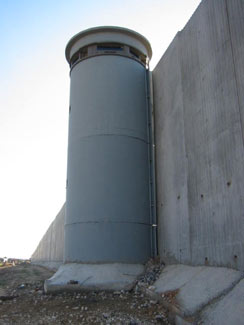 Beirut – It may be that researchers would want to examine as long ago as the period from the 3rd century BC until the beginning of the 17th century in order to find a regime so frenetically building walls and barriers in a hopeless quest to hold onto stolen lands as we in Lebanon may soon witness in the south of the country. It was back in 221 BC that in order to protect China from the land claims of the Xiongnu people from Mongolia, the Xiongnu tribe being China’s main enemy at that time who sought the return of lands they claimed the Chinese had stolen, that the emperor Qin Shi Huang ordered the construction of a wall to guard China’s territorial gains.
Lots of walls have been built throughout history to preserve occupied lands. The Romans built Hadrian’s Wall in England to keeep the Picts out and the East Germans built the Berlin wall to keep the people in. But no regime in history has built, in the span of six decades, the number of walls as the paranoid regime in Tel Aviv has erected. And it plans at least five more “anti-terrorist protective walls” including one slated to begin soon along the Lebanese-Palestine border at the Lebanese village of Kfar Kila. And that one may present a problem.
The decision to build a wall “to replace the existing Israeli technical fence” along the Blue Line near the town of Kfar Kila was announced last month by Tel Aviv. The announcement followed a meeting between the Israel military and UNIFIL and both are keeping fairly mum about what it knows about this latest wall but UNIFIL spokesman Neeraj Singh hinted to this observer that the first section will be about half a mile long and approximately 16 feet high.
Some south Lebanon residents are strongly objecting for among other reasons that the high wall will block the scenic views into Palestine. Others are ridiculing the reasons for the wall expressed by the US-Israeli lobby that will ask the American taxpayer to pay for it.
Israel firster, David Schenker, from the Washington Institute for Near East Policy, set up by AIPAC, told a Congressional hearing recently: “South Lebanon is obviously a very sensitive area [for Israel], being so close to Metula and the possibility of infiltration by Hezbollah and Palestinians is a legitimate concern. The Israeli government believes that this wall will prevent terrorists from launching direct line-of-sight firing of things like RPGs and mortars. Even the throwing of stones which some tourists visiting the area are in the habit of doing.”
Local observers, UNIFIL officials and experts like Timor Goksel, who worked as UNIFIL’s spokesman for 24 years along the blue line, expressed surprise at why Israel is claiming that Kfar Kila is a particularly dangerous area that needs a wall.
In point of fact the area has not been a particularly hazardous or “sensitive” one historically, even when the PLO controlled the area in the 1970’s. Goksel explained; “In my 24 years’ experience, there were never any attacks there because it’s adjacent to a Lebanese village, so any attack there will make life for the Lebanese difficult. I don’t think anybody has ever thought of doing anything there. Moreover, even if you cross into Israel at Kifa Kula there, you’re not going to come across an Israeli position for a long time, so it doesn’t make sense for anyone to attack from there. What are you going to attack? There’s no target.”
Some local observers are speculating that the real reason Israel wants the barrier in Kfar Kila might be to stop its troops from bargaining for drugs in exchange for weapons and classified military information, as the IDF’s drug problem among its “northern command” soldiers has escalated since the battering it took in the July 2006 war.
Israel’s newest frontier wall will follow the one being erected along the 150-mile boundary between the Sinai and Negev deserts. That wall building project is due to be completed by the end of this year of 2012. Once the Kfar Kila wall is finished, Israel will be almost completely enclosed by steel, barbed wire and concrete, leaving only the southern border with Jordan between the Dead and Red Seas without a physical barrier. But that too, may be walled in the future according to Shenker. He testified that the reason was due to the uncertainty in Jordan and its increasingly wobbly government.
Yet another wall, approximately seven miles from the Mediterranean along the southern border will meet the fence Israel has already been built around Gaza. This wall runs for 32 miles, with a buffer zone, which Palestinians are forbidden from entering, and extends close to 1,000 meters inside the narrow Gaza Strip, walling off more prime Palestinian agricultural land. This “security war” has caged Palestinians inside Gaza but did not prevent the cross-border capture of IDF soldier Gilad Shalit in 2006.
Along the Palestine-Lebanon border, a barrier built by Israel in the 1970s along the boundary was reconstructed, after Israel was forced out of Lebanon in 2000 following a 22-year occupation. This barrier did not prevent Hezbollah in a cross-border ambush in 2006, capturing two Israeli soldiers in order to negotiate a prisoner exchange. Nor did it prevent Hezbollah from firing of thousands of rockets during the ensuing 33-day war in retaliation for Israel bombing much of south Lebanon.
And the “protective walls” rise like mushrooms after a summer rain.
Further east from Lebanon, an Israeli barrier has been constructed on the ceasefire line drawn at the end of the 1973 Yom Kippur war, running between the Golan Heights, which Israel has illegally occupied for nearly 45 years, and Syria. It was here that hundreds of pro-Palestinian demonstrators entered occupied Palestine last May, in the Golan and along the Lebanese border. More than a dozen people were killed and scores injured when Zionist forces opened fire on the unarmed civilians.
A crossing at Quneitra, now operated by the UN, does allow some movement of UN personnel, truckloads of apples, a few Druze students and the occasional Syrian bride in white.
A few miles north of Quneitra is Shouting Hill, where Druze families in the Golan yell greetings across the barrier to relatives in Syria.
Moving south through heavily mined fields and hills, the 1973 ceasefire line is bordered by Israeli military bases and closed military zones, and shells of tanks from past battles, until it connects with the border with Jordan. It then joins with one of Israel’s first walls, constructed in the late 1960s, which now stretches almost from the Sea of Galilee down the Jordan Valley to the Dead Sea. Most of this line is not Israel’s border, but rather a barrier separating Jordan from the Israeli-occupied West Bank.
Around a third of the way down this stretch, the barrier joins the infamous huge steel-and-concrete West Bank wall. This runs along or inside the 1949 armistice line, swallowing up tracts of Palestinian agricultural land, slicing through communities and separating farmers from their fields and olive trees. As with its other 18 walls and barriers, the Zionist regime claims it is simply a security measure, but many believe it marks the boundaries of a future Palestinian state, consuming an additional 12 per cent of the West Bank. Approximately two-thirds of its 465-mile length is complete, mostly as a steel fence with wide exclusion zones on either side. According to the current route, 8.5 per cent of the West Bank territory and 27,520 Palestinians are on the “Israeli” side of the barrier. Another 3.4 percent of the area (with 247,800 inhabitants) is completely or partially surrounded by the barrier.
Two similar barriers, the Israeli Gaza Strip barrier and the Israeli-built 7-9 meter (23 – 30 ft) wall separating Gaza from Egypt (temporarily breached on January 23, 2008), which is currently under Egyptian control, are also widely condemned by the international community.
Returning to the subject of the latest wall project, increasingly the Zionist regime opposes discussions, hearings, visits, expressions of solidarity with Palestinians, and even the viewing its garrison state from south Lebanon. Cutting off a view that people throughout history have marveled at represents a continuation of its isolation and xenophobia.
Following the joint meeting at Kkar Kila noted above, UNIFIL Major-General Serra said: “The meeting was called to assist Israel in putting in place additional security measures along the Blue Line in the Kafr Kila area in order to minimize the scope for sporadic tensions or any misunderstandings that could lead to escalation of the situation.”
In fact, the opposite with likely happen. In a recent visit to Ahmad Jibril’s Palestinian camp in the Bekaa Valley, and in discussion with salafist groups in Saida, it’s plain the wall will likely become an object of target practice and further strain UNIFIL and Hezbollah efforts to keep the border calm.
In a scathing commentary in Yedioth Ahronoth, Israel’s biggest-selling newspaper, defense analyst Alex Fishman recently wrote: “We have become a nation that imprisons itself behind fences, which huddles terrified behind defensive shields.” It has become, he said, a “national mental illness”.
Franklin Lamb is doing research in Lebanon and is reachable c/o fplamb@gmail.com
Israel leading smear campaign against Hezbollah
Press TV – March 25, 2012
Lebanese resistance movement Hezbollah has rejected allegations made by right-wing Israeli and American activists accusing the movement of involvement in illegal activities, Press TV reports.
The US and Israeli activists have recently stepped up their propaganda campaign against the resistance movement and its finances, accusing Hezbollah of being involved in illegal activities, including drug trafficking and money laundering.
The Israeli daily Yediot Ahranot has recently claimed that Hezbollah is attempting to take control of Lebanon’s finance sector and banking system. This report was simultaneous with a high profile visit to Beirut by the US treasury undersecretary for terrorism and financial intelligence David Cohen.
”The US Zionist lobby has a big role to play in whipping up the congress and the US government with the power that they have in the government to send these officials to rattle the cage of the central bank, to send a message to the Lebanese that you’re vulnerable,” said Franklin Lamb with the Americans concerned for ME Peace.
High ranking Republican congressmen have also accused Hezbollah of involvement in a full range of criminal activities in the US to raise money. US Congressman Peter King, who last year accused the American Muslim community of a growing radicalization, described the Hezbollah movement as a violent murder gang, saying that it represents a growing threat to US national security.
”All of a sudden there is focus on the criminal aspect of drug dealing, money laundering, without specific facts to terrorism. Remember it was terrorism, terrorism, terrorism. It still is but that’s shopworn, that doesn’t have the credibility,” Lamb pointed out.
Hezbollah has, however, strongly denied any involvement in criminal activities, saying it is being targeted because of its stiff resistance against Israel and also because Tel Aviv failed to defeat the movement militarily in 2006.
Since that time Hezbollah appears to have grown both militarily and politically and is still seen by many as a legitimate resistance and liberating force.
Related articles
- Hezbollah: US Claims of Money Laundering Aim to Tarnish Resistance’s Image (alethonews.wordpress.com)
- Who was Behind the Delhi Bombing? (alethonews.wordpress.com)
- Hezbollah calls for political solution to Syrian crisis (altahrir.wordpress.com)
- Resistance will continue until liberation of al-Quds: Nasrallah (altahrir.wordpress.com)
Syrian Operations at Borders with Lebanon, French Officers Held in Homs
March 5, 2012
The Lebanese army on Sunday arrested a group of Syrian armed men who had entered Lebanese territory via the border town of al-Qaa, seizing a car and a large cache of weapons.
In addition, the Syrian forces started bombing the tunnel which connects the Syrian town Jose with the region of al-Qaa in the Lebanese territory.
“The tunnel was used, facilitated by “Future” party, to the smuggling of arms and fighters to Syria,” NNA reported.
In the same issue, al-Binaa newspaper reported that “39 armed Syrians were arrested by the Lebanese army in al-Qaa region.
In parallel, the Daily Star Lebanese paper reported Monday that “around 13 French officers are being held by Syrian authorities in central Homs city.”
“It was not clear why the officers were in Syria, when they had arrived or whether they were part of a larger contingent in the city,” the paper informed.
Stating that the “French Foreign Ministry spokeswoman said there was no confirmation of French armed forces being held in Syria,” the paper’s sources stressed that “Paris and Damascus were working to reach an agreement on what to do with the officers.”
Source: News agencies, Translated and Edited by moqawama.org
Featured Video
BRITAIN’S WARNING: PREPARE FOR WAR
or go to
Aletho News Archives – Video-Images
From the Archives
British weapons and personnel doing much of the killing in Yemen
Press TV – June 18, 2019
A detailed report published by the Guardian newspaper has shown how Britain is massively contributing to Saudi Arabia’s devastating war on Yemen as it suggests that London is not only supplying the bombs that fall on Yemenis, but it provides the personnel and expertise that keep the war going.
The comprehensive report by Arron Merat published on Tuesday showed that Britain was doing much of the killing in Yemen as the country continues to provide Saudi Arabia with everything it needs to turn its southern impoverished neighbor into a graveyard.
“Every day Yemen is hit by British bombs – dropped by British planes that are flown by British-trained pilots and maintained and prepared inside Saudi Arabia by thousands of British contractors,” said Merat in the report. … continue
Blog Roll
 Aletho News
- A West Bank War for Netanyahu’s Election Campaign, Could It Backfire?
- Yemen denounces European Parliament’s ‘hypocritical’ push to blacklist Ansarullah
- Qalibaf: UAE’s UN bid aims to ‘clear the runway’ for ‘Greater Israel’, whitewash genocide
- Pakistan reopens Iran border after boosting security: Report
- Why are so many Brazilians voting for Flávio Bolsonaro?
- Democrats Put Anti-Russia Agenda Ahead of American Workers
- Elijah Magnier: Yemen’s Strikes Are Shattering Saudi Arabia’s Long-Term Strategy
- Pentagon designates Chinese cultural centers national security threat
- Israel Demolishes Home Of Lebanese Journalist Whose Viral Film Exposed Pager Attack
- Record Oil, Empty Tanks: The UAE’s Miracle Recovery
- If Americans Knew
- An error has occurred; the feed is probably down. Try again later.
- No Tricks Zone
- Sudden Stratospheric Warming, Powerful El Niño Combination May Lead To Extreme Europe Cold, Energy Crisis!
- Two New Studies Find Thwaites Glacier Melt Cannot Be Driven By Human Activity Or A Warming Ocean
- E-Cars Reduce CO2 Emissions By Only 41% Compared To Internal Combustion Engine Vehicles
- Predictions Made By Renowned Climate Professor Over Past Decades Have Been Proven To Be Poor
- New Study Suggests Large Regions Of The Pacific Ocean Have Been Cooling For The Last 80 Years
- Germany’s Green Energy Debacle: High Energy Costs Force Kahla Porzellan to Close After 182 Years!
- New Study: 50 Years Of The Most Aggressive ‘Net Zero’ Policies Can Only Affect The Global Climate By 0.03°C
- US September “Heat” Was No Record…Many Records Set Decades Ago
- Latest European Green Energy Debacle; Portugal’s Largest Flagship Solar Park Insolvent!
- Green Energy Debacle: German Expert Professor Fritz Vahrenholt Warns Of Severe Economic And Social Consequences

