IMF: Mideast conflicts have erased development gains for whole generation
Press TV – September 16, 2016
The International Monetary Fund (IMF) says conflicts in the Middle East are not only devastating economies in countries such as Iraq, Libya, Syria and Yemen, but they have also erased “development gains for a whole generation.”
The fund issued a report titled the Economic Impact of Conflicts and the Refugee Crisis in MENA (Middle East and North Africa) on Friday, where it said conflicts were killing economies in the countries gripped by war and sapping growth in neighboring countries and those hosting millions of refugees.
Middle Eastern and North African countries battered by fighting have suffered average losses of 6-15 percentage points in the gross domestic product (GDP) in three years, compared to a 4-9 percentage-point average worldwide, according to the report.
The IMF report showed that the drops in economic output in Syria, Libya and Yemen in recent years have far exceeded the worldwide average.
Syria’s gross domestic product level is currently less than half the level it was five years ago before the start of the conflict, the IMF stated.
The report showed Yemen lost 25-35 percent of its GDP in 2015 alone, in the wake of the deadly Saudi campaign.
Oil-dependent Libya saw its GDP fall 24 percent in 2014, the IMF said.
Physical infrastructure damage, now estimated at $137.8 billion in Syria and more than $20 billion in Yemen, has reduced trade and output in neighboring countries, according to the report.
Countries bordering high-intensity conflict zone showed an average annual GDP decline of 1.4 percentage points worldwide, with a bigger drop of 1.9 percentage points in the Middle East and North Africa region.
Refugees’ plight
The fleeing of more than half of Syria’s 22 million population, 6.6 million internally and more than five million to other countries, has magnified economic losses, dramatically escalating poverty, unemployment and school dropouts in countries that were already struggling, the IMF said.
Many of the refugees seeking asylum in other countries are skilled workers and professionals forced by war and persecution to leave the conflict zones in hope of better lives.
However, according to the IMF, because refugees often have fewer rights than local populations, those landing in developing countries are often absorbed into already disadvantaged local communities forming a new underclass comprising refugees and the existing poor in the host country, which in turn leads to a detrimental effect on the host countries.
For those refugees that land in Europe, where the influx of refugees has only had a small impact on economy, there have been some positive effects on the host countries, according to the report.
More funds needed
The IMF report has revealed the huge scale of the refugee crisis and the pressure it put on several United Nations institutions, especially the United Nations High Commissioner for Refugees (UNHCR) and the World Food Programme.
The two UN organizations have been playing a leading role in the provision of humanitarian assistance, both to internally displaced people and refugees.
However, the IMF report says funding has not kept up with the sharp increase in needs.
For instance, the World Food Programme and the UNHCR have had to cut their services to refugees in Jordan due to funding constraints, which may have contributed to the acceleration of refugee flows to Europe from late 2014, according to the report.
The IMF report urged policymakers to scale up humanitarian aid in conflict zones and neighboring countries hosting refugees and prioritize fiscal spending to protect human life and serve basic public needs.
The report comes as the UN General Assembly is preparing to host a summit on refugees in New York next week.
The UN plans to use the summit as a platform to urge governments, private donors, and humanitarian agencies to support the organization in its efforts to ease suffering of the victims of world conflicts.
Analysts believe the MENA conflicts and the following refugee crisis are the outcome of the West’s policies in the Middle East and North Africa.
Hillary and the Clinton Foundation: Exemplars of America’s Political Rot
By Eric Draitser | CounterPunch | August 29, 2016
Hillary Clinton may be enjoying a comfortable lead in national polls, but she is far from enjoying a comfortable night’s sleep given the ever-widening maelstrom of scandals engulfing her presidential bid. And while Clinton delights in bloviating about a decades-long “vast, right wing conspiracy” against her, the fact is that it’s the Clinton political machine’s long and storied track record of criminality, duplicity, and corruption that haunts her like Lincoln’s ghost silently skulking through White House bedrooms.
The latest in a string of embarrassing scandals is centered on the powerful Clinton Foundation, and the obvious impropriety of its acceptance of large donations from foreign governments (and wealthy individuals connected to them), especially those governments universally recognized as oppressive dictatorships whose foreign policy orientation places them squarely in the US orbit.
Of particular note are the Gulf monarchies such as Saudi Arabia and Qatar whose massive donations belie the fact that their oppression of women runs contradictory to Clinton’s self-styled ‘feminism’ and belief “that the rights of women and girls is the unfinished business of the 21st Century.” Is collaborating with feudal monarchies whose subjugation of women is the stuff of infamy really Clinton’s idea of feminism? Or, is it rather that Clinton merely uses issues such as women’s rights as a dog whistle for loyal liberals while groveling before the high councilors of the imperial priesthood?
What the Clinton Foundation hullabaloo really demonstrates is that Clinton’s will to power is single-minded, entirely simpatico with the corruption of the military-industrial-financial-surveillance complex; that she is a handmaiden for, and member of, the ruling establishment; that Clinton represents the marriage of all the worst aspects of the political class. In short, Clinton is more than just corrupt, she is corruption personified.
Clinton’s Dirty Dealing and Even Dirtier Laundry
In a hilariously pig-headed, but rather telling, statement, former President Bill Clinton responded to allegations of impropriety with the Clinton Foundation by saying, “We’re trying to do good things… If there’s something wrong with creating jobs and saving lives, I don’t know what it is. The people who gave the money knew exactly what they were doing. I have nothing to say about it except that I’m really proud.”
Leaving aside the fact that such an arrogant comment demonstrates Bill Clinton’s complete contempt for ethics and the basic standards of proper conduct, the salient point is that the argument from the Clintons is that the foundation is inherently good, that it helps people around the world, and that, as such, it can’t possibly be corrupt and unethical. Where there’s smoke, there’s fire – except when it comes to the Clintons who stand proudly enveloped in billowing clouds of smoke swearing up and down that not only is there no fire, but anyone who mentions the existence of flames is both a sexist and Trump-loving Putin stooge.
But indeed there is a fire, and it is raging on the American political scene. And nowhere is the heat more palpable than in the deserts of the Middle East where wealthy benefactors write massive checks for access to America’s 21st Century Queen of Mean (apologies to Leona Helmsley).
Consider the 2011 sale of $29 billion worth of advanced fighter jets to Saudi Arabia, a gargantuan deal that made the feudal monarchy into an overnight air power. Were there any doubts as to the uses of the hardware, look no further than the humanitarian nightmare that is Yemen, a country under relentless air war carried out by the Saudis. And, lo and behold, the Saudis had been major contributors to the Clinton Foundation in the years leading up to the sale. And it should be equally unsurprising that just weeks before the deal was finalized, Boeing, the manufacturer of the F-15 jets that were the centerpiece of the massive arms deal, donated $900,000 to the Foundation.
Of course, according to Bubba and Hil, it’s all conspiracy theory to suggest that the Clinton Foundation is essentially a pay-for-play scheme in which large sums of money translate into access to the uppermost echelons of state power in the US. As the International Business Times noted:
The Saudi deal was one of dozens of arms sales approved by Hillary Clinton’s State Department that placed weapons in the hands of governments that had also donated money to the Clinton family philanthropic empire… Under Clinton’s leadership, the State Department approved $165 billion worth of commercial arms sales to 20 nations whose governments have given money to the Clinton Foundation… That figure — derived from the three full fiscal years of Clinton’s term as Secretary of State (from October 2010 to September 2012) — represented nearly double the value of American arms sales made to the those countries and approved by the State Department during the same period of President George W. Bush’s second term.
The Clinton-led State Department also authorized $151 billion of separate Pentagon-brokered deals for 16 of the countries that donated to the Clinton Foundation, resulting in a 143 percent increase in completed sales to those nations over the same time frame during the Bush administration. These extra sales were part of a broad increase in American military exports that accompanied Obama’s arrival in the White House. The 143 percent increase in U.S. arms sales to Clinton Foundation donors compares to an 80 percent increase in such sales to all countries over the same time period.
Additionally, as Glenn Greenwald explained earlier this year,
The Saudi regime by itself has donated between $10 million and $25 million to the Clinton Foundation, with donations coming as late as 2014, as she prepared her presidential run. A group called “Friends of Saudi Arabia,” co-founded “by a Saudi Prince,” gave an additional amount between $1 million and $5 million. The Clinton Foundation says that between $1 million and $5 million was also donated by “the State of Qatar,” the United Arab Emirates, and the government of Brunei. “The State of Kuwait” has donated between $5 million and $10 million.
The sheer dollar amounts are staggering. Perhaps then it comes as no surprise just why nearly every single influential figure in the military-industrial-financial-surveillance complex – from General John Allen to death squad coordinator extraordinaire John Negroponte, from neocon tapeworms such as Max Boot, Robert Kagan, and Eliot Cohen to billionaire barbarocrats like the Koch Brothers, George Soros, and Warren Buffett – is backing Hillary Clinton. Not only is she good for Empire, she’s good for business. And ultimately, that’s what this is all about, isn’t it?
But of course, Hillary’s devotion to the oil oligarchs of Saudi Arabia and the Gulf goes much deeper than simply an exchange of money for weapons. In fact, Hillary is deeply committed to the Saudi royal family’s foreign policy outlook and tactics, in particular the weaponization of terrorism as a means of achieving strategic objectives.
Libya provides perhaps the paragon of Clintonian-Saudi strategy: regime change by terrorism. Using terror groups linked to Al Qaeda and backed by Saudi Arabia, Clinton’s State Department and the Obama Administration managed to topple the government of Muammar Gaddafi, thereby throwing the former “jewel of Africa” into turmoil and political, economic, and social devastation. To be fair, it was not the Saudis alone involved in fomenting war in Libya, as Hillary’s brothers-from-other-mothers in Qatar and the United Arab Emirates were also directly involved in sowing the seeds of the current chaos in the country.
And of course, this strategic partnership between Clinton and the Gangsters of the Gulf extends far beyond Libya. In Syria, Clinton’s stated policies of regime change and war are aligned with those of Riyadh, Doha, and Abu Dhabi. And, of course, it was during Clinton’s tenure at the State Department that US intelligence was involved in funneling weapons and fighters into Syria in hopes of doing to Syria what had already been done to Libya.
Huma Abedin: Clinton’s Woman in Riyadh
Just in case all the political and financial ties between Clinton and the Gulf monarchies wasn’t enough to make people stop being #WithHer, perhaps the role of her closest adviser might do the trick. Huma Abedin, Clinton’s campaign chief of staff, has long-standing ties to Saudi Arabia, the country where Huma spent her childhood from the age of two. As a Vanity Fair exposé revealed earlier this year:
When Abedin was two years old, the family moved to Jidda, Saudi Arabia, where, with the backing of Abdullah Omar Nasseef, then the president of King Abdulaziz University, her father founded the Institute of Muslim Minority Affairs, a think tank, and became the first editor of its Journal of Muslim Minority Affairs… After [Abedin’s father] Syed died, in 1993, his wife succeeded him as director of the institute and editor of the Journal, positions she still holds… Abdullah Omar Nasseef, the man who set up the Abedins in Jidda… is a high-ranking insider in the Saudi government and sits on the king’s Shura Council, there are claims that Nasseef once had ties to Osama bin Laden and al-Qaeda—a charge that he has denied through a spokesman—and that he remains a “major” figure in the Muslim Brotherhood. In his early years as the patron of the Abedins’ journal, Nasseef was the secretary-general of the Muslim World League, which Andrew McCarthy, the former assistant U.S. attorney who prosecuted the “Blind Sheik,” Omar Abdel Rahman, in the wake of the 1993 World Trade Center bombing, claims “has long been the Muslim Brotherhood’s principal vehicle for the international propagation of Islamic supremacist ideology.”
Consider the implications of this information: Clinton’s closest adviser comes from a family connected at the highest levels with the Saudi royal family as well as the Muslim Brotherhood. While right wing pundits portray the Muslim Brotherhood as some sort of straightforward international terror organization, the reality is much more complex as the Brotherhood is more an international political movement whose tentacles stretch into nearly every corner of the Muslim world. Its vast reserves of cash and political influence, backed by Gulf monarchies such as Qatar, allows the Brotherhood to peddle influence throughout the West, while also being connected to more radical salafist elements. An obvious two-for-one for Clinton.
In effect then, Abedin represents a bridge connecting Hillary with both the ruling elites in Riyadh, as well as influential clerics, businesspeople, and political leaders throughout the Middle East. Perhaps then it makes sense why Abedin, in contravention of every standard of ethics, was employed by Teneo Holdings – a pro-Clinton consultancy founded by former Clinton aide Doug Band – while also working for the State Department. Such ethical violations are as instinctive for Hillary as breathing, or calling children superpredators.
Trump, Assange, Putin, and Clinton’s Sleight of Hand
Despite being embroiled in multiple scandals, any one of which being enough to sink the campaign of most other candidates, Clinton and her army of fawning corporate media sycophants, have attempted to deflect attention away from her own misdeeds, corruption, and nefarious ties by instead portraying everyone who opposes them as puppets, stooges, and useful idiots.
Let’s begin with Republican nominee and gasbag deluxe, Donald Trump, who Clinton trolls have attempted to portray as a stooge of Russian President Putin. While it’s indeed quite likely that the Kremlin sees Trump as far less of a threat to Russia’s interests than Clinton – just look at Clinton’s roster of neocon psychopath supporters to see that Putin has a point – the notion that Trump is somehow a creation of Putin, or at the very least is working for him is utterly absurd.
And the “evidence”? Trump’s connections with wealthy Russian oligarchs. I suppose those who have made their homes under rocks these last 25 years might not know this, but nearly every billionaire investor has gone to Russia in that time, forged ties with influential Russians, and attempted to make money by stripping clean the bones of what was once the Soviet Union. Sorry Naomi Klein, I guess the Clintonistas expect no one to have read Shock Doctrine which details the sort of disaster capitalism run amok that took place in Russia in the 1990s.
And then, of course, there’s that great confabulator Julian Assange who has also been smeared as a Putin puppet by the #ImWithHer media somnambulists. I guess the lords of corporate capital didn’t like the fact that Assange and WikiLeaks have managed to expose countless dirty deeds by Clinton’s Tammany Hall of the 21stCentury. From using the DNC as a political appendage of the Clinton campaign (as revealed by the WikiLeaks dump of DNC emails) to his recent promise to make public the “most interesting and serious” dirt on Hillary, Assange has become a thorn in the side – or thumb in the eye, as it were – for Hillary.
And what would a rundown of the specters haunting Clinton’s dreams be without mention of the rabid bear of Russia, big bad Vlad? Clinton recently referred to Putin as the “grand godfather of this global brand of extreme nationalism.” Leaving aside the asinine phraseology, Clinton’s attacks on Putin reveal the weakness of the Democratic nominee, the hollowness of her arguments, and the unmitigated gall of a hypocrite for whom casting stones in glass houses is second nature.
For, at the very moment that she takes rhetorical swipes at Putin, Clinton herself is implicated in a worldwide network of extremism that promotes terrorism, rains death and destruction on millions of innocent civilians, and moves the world closer to global conflict. If Putin represents the éminence grise of a “global brand of extreme nationalism,” then Clinton is the fairy godmother of global extremism and terror. It’s a good thing she has access to the best personal grooming products Goldman Sachs money can buy as it is not easy to wash decades-worth of blood off your hands.
And so, the quadrennial danse macabre that is the US presidential election has turned into an embarrassing sideshow of dull-witted infantilism. But amid the idiocy there is wanton criminality and corruption to be exposed before the world. For while Trump is undoubtedly the bearded lady of America’s freak show, Hillary is the carnival barker.
She knows the ring toss and other games are rigged, but she coaxes the feeble-minded to play nonetheless. She knows the carnies are drunk and reckless, but she urges the children to pay for another ride anyway. She understands that her job is to sell a rigged game, and to call security when someone challenges her lies. And, unfortunately, whether you want it or not, the Hillary Roadshow is coming to a town, or country, near you.
How the occupied mentality syndrome works
Saudi Arabia on the American chessboard – Part 3
By B. J. Sabri | American Herald Tribune | June 27, 2016
Read part 2: “The occupied mentality Syndrome“
Previously I argued whether Saudi Arabia’s repeated involvements in U.S. interventions and wars stem from free national will or in response to a specific condition. For starters, in Saudi Arabia there is no national will. In Saudi Arabia, the national will is the will of the Al Saud clan. Still, when a major Arab state allies itself with a superpower that committed unspeakable crimes against humanity in almost every Arab country, then something is wrong. This fact alone should compel us to examine the U.S.-Saudi relation for one exceptional reason. As a result of the U.S.-Saudi wars, hundreds of thousands of people in Afghanistan, Iraq, Iran, Libya, Syria, Yemen, and Somalia have lost their lives. Millions became displaced in their own homelands. And millions more rendered refugees.
Attributing the Saudi policies to the bonds of “partnership” with the U.S. is frivolous. There are no bonds between these two thugs except those of business, military deals, secret plots, and wars. Proving this point, bonds such as these have no space for the American and Saudi peoples to share significant cultural or societal exchanges. If partnership is not the reason for the Saudi contribution to the U.S. strategy of empire and imperialism, then another reason must exist.
This leads to three possibilities. (1) The Saudis are exercising their supreme national rights to do whatever they want. Or, (2), they are responding to inducement. Or, (3), they are complying with applied pressure. While the first possibility cannot be taken seriously, the remaining two possibilities are plausible. This means the Saudi participation in the U.S. wars—by proxy and directly—must have origins in factors other than the fluid concepts of alliance and partnership.
By the way, yielding to pressure is not new in international relations. In the age of today’s imperialism, the U.S. use of the UNSC to impose its policies is an example. If impositions fail, then the U.S. acts unilaterally. Examples: the imposition of the no-fly zone in Iraq 1991-2003 and the invasion in 2003. In the era of classical colonialism during 19th century, Britain’s gun boat diplomacy to force the opening of China to foreign trade is another example. Again, when a nation succumbs to another nation, that succumbence is never ordinary.
I also argued that succumbence to power is the result of protracted material, mental, and emotional processes performing as one element. From this premise I went on to coin the term: Occupied Mentality Syndrome (OMS) to describe such an element. Unlike other forms of mentalities (national, group, personal, and so on), the mentality I am debating is atypical. Driven by subjective factors but influenced by politically construed constraints—real or imagined—, this mentality has special traits. It competes with ideology, it conforms to pressure, it lays the blame on others, and it discards accountability.
Although such traits may not appear all at once, the presence of any one of them in a given situation is a reason to suspect that an OMS is lurking behind. Most interesting, those afflicted by this syndrome accept what comes next as a normal outcome of free deliberation. This is an anomaly. It is so because those who endorse it only calculate value versus detriment.
But calculations gutted from analysis, congruency of purpose, or the study of variables lead to contentious decisions. It is no mystery that decisions with far-reaching negative consequences impacting others could lead to tension or even open hostility. How does the Saudi regime get away from the impact of their decisions?
The usual act has been to reject any responsibility without discussion—as it happened with Iraq’s war against Iran. In doing so, the Saudi regime takes cues directly from Niccolò Machiavelli. Explanation: after converting the deliberation process into a justificatory procedure, the Saudi regime moves to the next phase: conferring legitimacy to already made decisions. Here is how they do it: make the decisions appear as if they were the result of (1) the collective national will—through the regime’s talking heads, preachers, and media,—and (2) purported adherence to the “Islamic Sharia”. The bogus legitimacy ruse that ensues is ludicrous. A tyrannical and obscurantist regime has now the authority to move forward with its decisions by calling on its citizens to observe a Quranic verse—taken out of context—calling on Muslims to obey their rulers.
To test the validity of the OMS concept, let me reprise my argument about how the Iranian Revolution and the Soviet invasion of Afghanistan shaped the mindset of the Saudi regime. Although the outcome of the 18-month long anti-Shah demonstrations was predictable, it, nevertheless, caught the U.S. and Saudi Arabia unprepared for his downfall. With the Shah gone, a psycho-political “drama” unfolded. The United States lost one of Nixon’s two pillars (the other is Saudi Arabia) in the Middle East; Israel lost its only ally in the Muslim world; Al Saud lost their inner confidence. The mere idea of a Khomeini-style revolution sweeping Saudi Arabia was enough to induce convulsive spasms in all those concerned with power, money, and oil.
Afghanistan was a different story. While the United States was mostly concerned with the Soviet power and on how to respond to the invasion, Saudi Arabia was literally terrified about the potential spread of “godless” Communism. . . . Thus was born the “special relationship” between U.S. ruling circles and a reactionary, absolutist clan.
What do we understand from the U.S.-Saudi relation?
Marked differences between the U.S. and Saudi polities make it intuitive that such a relation is no more than an opportunistic convergence between two regimes. Said differently, what we have here is a forum for massive business encounters and ideological boastings that both regimes struggle to call “alliance”. Generally, in the pre-9/11 period that relation had two sets of motives. While the American set is trite—empire-building, hegemony, oil, wars, and Israel—, the Saudi’s is issue-focused. (1) The clan must have the absolute primacy over Saudi life and society. (2) The clan defines its quest for security and survival in U.S. imperialistic context. That is, whatever the U.S. needs, the Saudi regime can supply in exchange for the clan’s needs.
It would be interesting to imagine the following scenario. The subject is Afghanistan. Was it ever possible for the Saudi regime to pursue a course independent from the objectives of the United States policy because they run against the legitimate interests of the Saudi people? To debate this point: was the spending of over $3.2 billion (indexed for that period) on the anti-Soviet Afghan war of any benefit to the Saudi society?
Let us make another supposition. Because Al Saud think of their clan as being the most powerful on earth, then a pressing question comes to mind. If they were that powerful, why did they not take alternative measures to counter U.S. pressure in the decades before 9/11? For instance, they could have purchased technology, weapons, and advanced commodities—and even “protection” from any industrial country other than the United States. [1] Or, with all the money they had, they could have started an autonomous national industrialization process like that of India, Iran, Turkey, China, South Korea, and others.
Ironically, even if the Saudi regime had the means to undertake that process, it would not have moved to implement it. Explanation: advanced statecraft mechanisms leading to independent decision making in any sector of the national life are unavailable because of the despotic nature of the regime. Not only that, but achieving sovereignty means also sovereignty for the people. This would surely curtail the power of the clan due to increased popular participation in the setting of national priorities.
Let us consider another point: the Saudis have always bragged that their “alliance” with the U.S. is unbreakable. This has an implication: the preventive imprisonment of their critical judgment and free will. Explanation: while the Saudis are unwilling to break with the U.S., the U.S. can discard them at will and play them at any given time—as happened recently with the story of the 28 pages never published from the 9/11 report. Tentative conclusion: from the clan’s perspective, it appears that whatever the U.S. wants can be addressed and accepted. Still, my earlier supposition that Saudi Arabia had the means and will to be independent from the United States has merit, It means, any U.S. pressure on the Saudis for burden sharing would be useless if the Saudis resist and go somewhere else for their needs.
If a counter-argument suggests that the Saudi spending in Afghanistan was worth it to deter a potential Russian aggression, then a reasoned rebuttal could be as follows. Fact 1: we know that the U.S.-Saudi relation revolves around deterring hypothetical “threats” against the kingdom. Fact 2: but we also know that neither the USSR, nor any other regional or international power has ever threatened to attack or invade Saudi Arabia. Amusingly, the only rumored threat of invasion came from Saudi Arabia’s “ally”, the United States (and from Britain) consequent to the Arab oil embargo in 1973. Conclusion: Al Saud had no impelling reasons to finance the U.S. imperialist enterprise in Afghanistan—even if they loathed the Soviets.
My argument: the Saudi regime has been concealing the primary motive feeding their “alliance” with the United States. Yet, it is not that difficult to guess what the clan thinks. Being a superpower with massive Zionist and Israeli influence, the United States offered the best guarantee for the survival of the regime on two fronts.
On the domestic front, the U.S. may help the regime survive if domestic unrest becomes unstoppable. The American-authorized French intervention to quell the Mecca uprising in 1979 is an example. As for The Zionist and Israeli component in American politics viewed from a Saudi angle, this is intuitive too. Like all Arab regimes, deluding themselves that the U.S. has a sovereign Arab policy, the Saudis thought of their U.S. relation as a buffer against America’s ally and protégée: Israel.
Furthermore, whereas Saudi motives are clan-based, those of the United States are system-based. This means, they are global, rationalized, and originate from how the ruling circles view the role of the United States in the world. Still, motives need forces to have effect. Consequently, the motives of a political state are the same motives of the ideological and material forces that drive it. For instance, in post-WWII United States, such forces worked as one construct to drive the purpose of U.S. hegemony. The economics, politics, and ideology of militarized capitalism, imperialism, colonialism, and Zionism are a few examples of such forces.
I mentioned colonialism as a force in the making of the United States. Does this apply to the United States of today? Here is how I see it. With military bases in over 160 countries, with bases count ranging from 761 to 900 plus, with military personnel in excess of 156,000, with a land mass of over 2,202,735 hectares (approx. 5,443,076 acres) occupied by the U.S. military, and with $150 billion annual budget, the United States is nothing but a global colonialist power whose bases are nothing less than outposts for a colonialist enterprise in progress. See deployment map in the article: These are all the countries where the US has a military presence. [2], [3], [4], [5], [6] [Note: I included several links to the issue of bases because some data differ from one source to another. Besides, the cited articles could offer an integrated view of the subject.]
Three motives define the course of U.S. power. These are (1) the determination to expand the spheres of U.S. influence, (2) the relentless intent to dominate geostrategic regions, and (3) wars as economic enterprises. How does the United States implement its domination project? The U.S. has an impressive array of tools and gadgets. Limited sampling: planned hostility, military interventions against countries resisting U.S. demands, wars against independent-minded countries that U.S. rulers love to call “rogue states”, seizure of foreign assets in the U.S., economic sanctions against “disobedient” states, applying U.S. laws on foreign states, dubbing adversaries as terrorists, harassment of big rival powers . . .
If examined in the context of classical colonialism, the U.S. domination of Saudi Arabia has all the signs of a colonialist dependency model. In this model, the periphery depends on the center in a way designed to consecrate the primacy of the center. But Saudi Arabia has never been a U.S. colony. This is true but irrelevant. The changing nature of modern dependency uses revamped practices. In one such practice, Washington makes the decisions and Riyadh implements them as if they were its own. The examples of Libya, Syria, and Yemen are instructive.
Keeping this in mind, I contend that many facts of the U.S.-Saudi relation point into the direction of multiple forms of dependency. The U.S. as a “protector” of the clan, massive Saudi purchase of U.S. arms, financial deals, and U.S. military presence in the kingdom are just the most prominent forms. One crucial aspect of the relation deserves stringent analysis. The U.S.-Saudi “alliance” goes beyond dependency, beyond petrodollar deposits, beyond investments in the U.S. economy, beyond the purchase of weapons, and beyond buying of treasury bonds. I am referring to a subject often overlooked: Saudi Arabia as a destructive interventionist tool in the hands of U.S. imperialists and Zionists.
To recap, stating that the U.S.-Saudi coupling is an alliance makes no sense. The alliance notion has different requirements, defining clauses, and formal obligations. Not even the claim of partnership is valid. Partnership takes its name from concepts such as equal sharing of burden, profits, and losses. This is not the case between the United States and Saudi Arabia. What we have here is an opportunistic platform between two different regimes pursuing separate agendas.
Again, prior to the collapse of the Soviet Union, U.S. aims included the opposition to Communism, containing Arab hostility to the U.S. and Israel, securing cheap oil, and providing basing rights for the U.S. military. On the Saudi side, preventing potential Iranian-style Islamic and progressive national revolutions in the region was the top concern. After the collapse of the Soviet Union, things changed. Generally, while the Saudis are obsessed with keeping the status quo in their regional milieu, the Americans are maneuvering their regional marionettes and intervening directly to alter the socio-structures and political assets of the entire region known as the Middle East.
Countless facts during the past 35 years attest that Saudi Arabia’s foreign policy coincided with or was in response to the U.S. world agenda. As a result, we can draw a preliminary conclusion. From 9/11 forward, the disoriented Saudi regime has been devotedly executing what the United States wants it to do in exchange for not complicating its life. With that, Saudi Arabia has become the material accessory and financing tool of the United States and Israel to remake (destroy) the Arab homeland according to the U.S. and Israeli plans. Iraq, Syria, and Libya are examples. [7], [8]
It is natural that an event such as 9/11 would have traumatized the clan and drove them to panic and despair. This is not only due to the nationality of some of the alleged attackers but also because Wahhabism, the creed of the Saudi state, has taken a post among the accused. For one, 9/11 worsened the socio-political instability of the clan and amplified their notorious arrogance. But 9/11 alone cannot explain the real reasons behind the intensified proclivity of the regime for violence toward the few remaining Arab states that still reject U.S. hegemony and Israeli settler colonialism.
However, in Saudi contest, the principal effect of 9/11 was “surgical”. It exposed the ugly face of Saudi barbarity by externalizing its warring enmity toward Iran and any Arab nation that opposes U.S. hegemony and the criminal practices of the Wahhabi state. That proclivity for violence and that foaming anti-Arab and anti-Iranian enmity were the means with which Al Saud thought they could placate post-9/11 United States and appease Israel in the process. Involving the Saudi ruling family in 9/11 was a master stroke of a strategy. With it, the United States has skillfully exploited the primal fear of the Saudi regime from losing power. And just like that, with one unsubstantiated accusation, the United States seized the grand moment—the prey was ready to be devoured.
It is beside the point to state that analyses meant to explain post-9/11 Saudi actions and policies must consider the determination of the Saudi regime to take whatever is needed to appease the United States. After 9/11 the Saudis thought they could silence the hyper-imperialist bully by withdrawing their recognition of Afghanistan under the Taliban rule. It did not work out. Then they moved, as requested by the United States, to cut off funding to religious organizations and Wahhabi-inspired schools in many countries. It did not work out either. Afterwards, they offered King Abdulla’s initiative to recognize Israel. Still, it did not work out. . . .
Here is what the crude mentality of Al Saud failed to comprehend. The appeasement the hyper-empire was thinking of was much wider, much deeper, and has no end—it is the unconditional Saudi willingness to play along with the U.S. plans and strategies.
I maintain, therefore, that explaining the Saudi post-9/11 wars and interventions against selected Arab states is ineffective without proper investigative tools. What we need are approaches that would enable us to see below, above, and around the appearances of events.
Another significant outcome of 9/11 was tangible: the transformation of Saudi Arabia from an American “ally” into a near hostage pliable for blackmail. For instance, the Saudi regime voiced concern and even some opposition to the planned U.S. invasion of Iraq in 2003. Still, they were unable to stop the U.S. from using their territory, airports, ports, and military facilities for that purpose. But when the invasion took its course, they mightily supported it. This is duplicity, of course; but I do not have to debate that such behavior says more than it could hide. Simply, it indicates fear from opposing U.S. moves.
I hold, therefore, that the radical change in Saudi Arabia’s post-9/11 regional conduct (the war against Libya, Syria, Yemen, Iraq; the harassment of Lebanon; the anti-Iran bellicosity; the tryst with Israel) was not in response to pressing Saudi needs, or to sudden wakening of the regime’s dormant “democratic values”. By extracting meanings out of statements, and by reading deeply into the cumulative consequences of the Saudi actions and their purpose, the answer should dispense with theoretical uncertainties. That is, those radical changes were in response to U.S. pressure or other forms of hard persuasion including implicit blackmail.
In which way did Iraq’s war against Iran confirm the U.S. scheme for the Middle East? What role did Al Saud play in that war? How does all this relate to and corroborate the occupied mentality syndrome?
Next: Part 4
Notes
- I should mention that Saudi Arabia has purchased missiles from China, as well as advanced weapons from Germany, Italy, Britain, Japan and other countries. Still, none of these deals would have been completed without the United States approving them first. The U.S. approval is motivated. First, U.S. military industry licenses the making of its weapons abroad and has deals to manufactures other weapons in partnership with many countries. Second, by submitting the weapons sale to its preventive approval, the United States establishes equal control on buyers and sellers. And this is how hegemony works. (Read: Why Did Saudi Arabia Buy Chinese Missiles? This is an imperialist view by the Foreign Policy Magazine. Pay attention to how Jeffrey Lewis explains the conditions that made the purchase possible. He writes, “Apparently with the approval of the George W. Bush administration.” [Italics mine]. Needless to say, the word “apparently” should have been omitted. . . .
- Gilbert Achcar, Greater Middle East: the US plan, Le Monde Diplomatique
- Mahdi Darius Nazemroaya, Plans for Redrawing the Middle East, Uruknet, 18 November 2006.
- David Vine, The United States has Probably More Foreign Military Bases than Any Other People, Nation, or Empire in History, The nation, 14 September, 2015
- David Vine, Where in the World Is the U.S. Military? Politico Magazine, July/August, 2015
- Julia Zorthian and Heather Jones, This Graphic Shows Where U.S. Troops Are Stationed Around the World, Time, 16 October 2015
- Tom Engelhardt, The US Has 761 Military Bases Across the Planet, and We Simply Never Talk About It, AlterNet, 7 September 2008
- Louis Jacobson, Ron Paul says U.S. has military personnel in 130 nations and 900 overseas bases, POLITIFACT, 14 September, 2011
Casuistry
By Thomas S. Harrington | CounterPunch | August 19, 2016
Casuistry, which one dictionary defines as “specious, deceptive, or oversubtle reasoning, especially in questions of morality” is, rightly or wrongly, inextricably linked to the history of Jesuit order of the Catholic Church. And the rise of the Jesuit order is deeply enmeshed with the Counter-Reformation, a set of measures designed to roll back the spread of Protestantism in Europe during the late 16th and early 17th centuries. The control center of the movement was Spain, the world-striding superpower of that historical moment.
Rightfully fearful that Protestantism’s rejection of long-standing modes of clerical privilege and the Church’s “right” to collect vast sums of money from parishioners would undermine their ability to bully and bribe Italian, French, Dutch and German potentates into compliance with their political demands, the Spanish Monarchy undertook an endless series of military adventures against “heretics” across the Continent in the years between 1530 and 1648. This military thrust was accompanied by a well-organized propaganda campaign in which the highly educated Jesuits priests played a crucial role.
Appearing morally and intellectually reasonable while serving as a convinced advocate for the systematic subjugation of other people and their animating ideals is not a simple task. In the long run it is, in fact, an impossible one. No amount of argument can convince a person or group of persons who see them selves as suffering under the boot of another that their bondage is a good and necessary thing. What such a rhetorical posture can do, for a time at least, is convince the subjects of the hegemonic country of, if not the inherent nobility of their bloody mission, its generally benign nature.
A key, if generally unstated, goal of the 16th and 17th century Jesuits was to insure that the highly problematic matter of Rome’s corruption, and the brutal Imperial designs of the Spanish monarchy that lay behind it, never be allowed to occupy the center zone of what then passed for “public” discourse.
When confronted by the emergent Protestant movements about the clear violations of Christian morality practiced by the Church of Rome, they responded with complex disquisitions on the largely circumstantial nature of all moral reasoning. By constantly parsing the intricacies of how overarching moral rules should, or should not, be applied in each particular circumstance (and teaching others to do the same), they very effectively prevented the emergence within the Church, and by extension in the leadership class of the Spanish Empire, of a frank discussion of the quite real and deeply-felt grievances of their many enemies.
I am reminded of all this when I read or watch the news after every so-called “terrorist” attack against a US or European target. Within minutes of the violence, mainstream journalists, begin intense speculation about what particular ethnic group the assailant came from, how he or she became “radicalized” (as if the desire to kill was akin to some sort of contagious moral flu) and whether the “West’s” latest stand-in for PURE EVIL™ (e.g. Al-Qaeda, ISIS, ISIL) was behind the act.
What will almost never be talked about are the many very good reasons a person from the vast region stretching from Morrocco in the west, to Pakistan in the east, have to be very angry at, and to feel highly vengeful toward, the US, its strategic puppeteer Israel, and their slavishly loyal European compadres like France, Germany and Great Britain.
There is never any talk of that group of august “democracies” long-standing penchant for implanting, then staunchly supporting, ruthless and deeply corrupt regimes in that region.
No talk of the very long Algerian experience of French colonialism, nor the US and French- backed coup of that country’s government in 1992 which led to a civil war that left 200,000 people dead.
No talk of the coup against the legally elected president of Egypt in 2013, nor the cold-blooded massacres carried out by his US-backed successor upon hundreds of that same president’s followers.
No talk of the decision of the US to back elements of ISIS in order to cynically extend a Syrian Civil War that was on its way to peace—albeit an imperfect one—by means of a Syrian government victory by late 2013.
No talk of the planned destruction of Libya in 2011 and its enormous effects on the stability of life in that once wealthy country as well as all of northern Africa.
No talk of the US-Israeli nullification of the results of the Palestinian elections of 2006, Israel’s coldly planned siege of Gaza nor the “shoot-fish-in-a barrel” assaults on that benighted enclave by Israel in 2006, 2008, 2012 and 2014.
No talk of the ongoing Saudi—and therefore US-approved—war on Yemen, nor the ruthless Saudi march on Bahrain in 2011 in which several dozen people died and thousands of democracy activists were tortured and/or carted off to prison.
No talk of the 18-year Israeli—and therefore, US-backed—occupation of Southern Lebanon nor Israel’s 1993, 1996 and 2006 assaults upon that same country.
Oops, I almost forgot. There is no talk of the small matter the calculated US destruction of Iraq, pre-invasion Libya’s rival as the Arab world’s most wealthy and socially progressive state.
But hey, why talk about all that off-putting stuff when you can boil it all down to neat tales of personal ideological contamination, Svengali-like recruiters lurking in mosques, and that old standby, the development of an urgent need to bang virgins in the hereafter.
It seems the media believes that the delicate imperial mind must be left free from understanding the effects of the actions for which it regularly cheers and prays.
The best way to insure this? Casuistry, as the old saying goes, “Pure casuistry”.
Thomas S. Harrington is a professor of Iberian Studies at Trinity College in Hartford, Connecticut and the author of the recently released Livin’ la Vida Barroca: American Culture in a Time of Imperial Orthodoxies.
‘What we saw in Syria goes against everything we read in the United States’
By Mark Taliano | American Herald Tribune | August 15, 2016
Patterns have long since emerged. We know that each illegal war of conquest is prefaced by a Public Relations campaign that demonizes the target country’s leader and its government as it lies about on-the-ground realities. Muammar Gaddafi, for example, was presented to Western media consumers as a lunatic and despot. The Western narratives, however, were contradicted by the fact that he earned broad-based support from Libyans, all of whom enjoyed public services such as free healthcare and schooling, and a high standard of living.
The same demonization campaign is being waged against the hugely popular Dr. Bashar al-Assad, the democratically –elected President of Syria.
Terrorist –embedded propagandists teach us that he is an evil dictator who kills his own people, and that “he must go”; however, credible evidence inverts this logic.
Henry Lowendorf, a member of the Executive Board of the U.S Peace Council’s Peace and Fact-Finding Delegation to Syria — recently returned from Syria — reports, that, “What we saw (in Syria) goes against everything we read in the United States.”
He repudiates the Western media’s demonization campaign against the government of President Assad and the Syrian Arab Army in these words:
“When you go to Syria, which I did last month, the popularity of the government and the Syrian Arab Army is rampant. It’s not out of some dream fantasy. It comes obviously from the government and the army being the only thing between living a secular life on the one hand and the hatred and violence of ISIS and the various other terrorist groups underwritten by the terrorist Saudis and US and their allies on the other. The refugees who don’t leave Syria do not flee to the terrorist side, they flee to the government side, in huge numbers. So would all of us in similar circumstances. Syrians do not want their country turned into Afghanistan, Iraq, Libya, Yemen, Sudan, Somalia, or any of the other countries the US has liberated.”
The reality is an inversion of the propaganda lies fed to Western audiences. In fact, President Assad must stay, for the sake of civilization, and for the sake of destroying Western-backed terrorism. Each time Empire succeeds in destroying another country, the problem of terrorism worsens – as might be expected. The destruction of Libya, for example, set the stage for the attempted destruction of Syria.
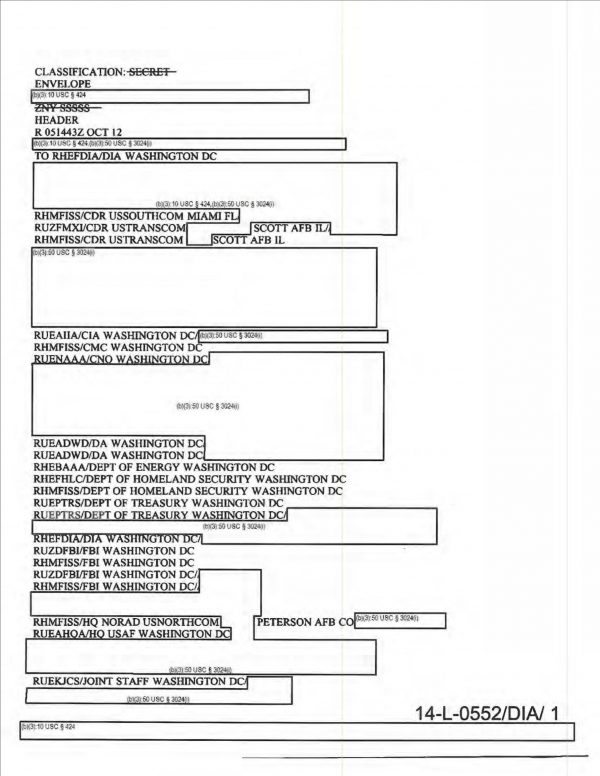
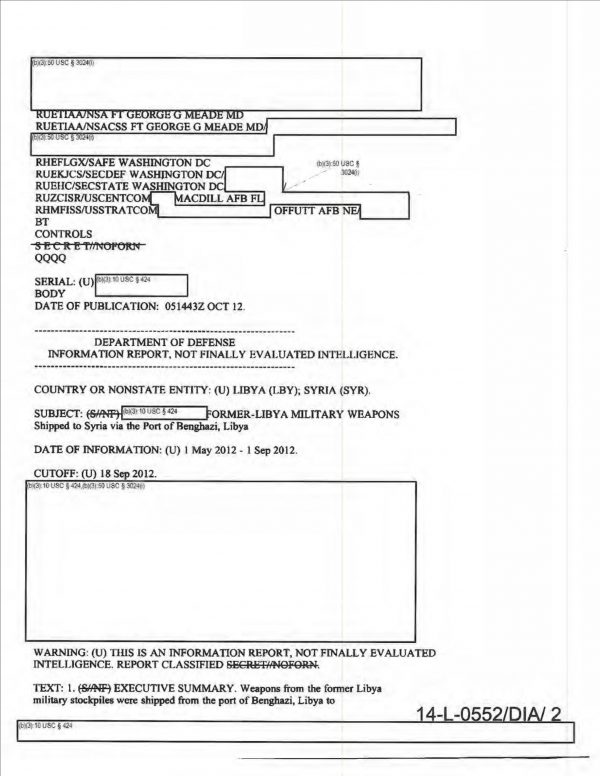
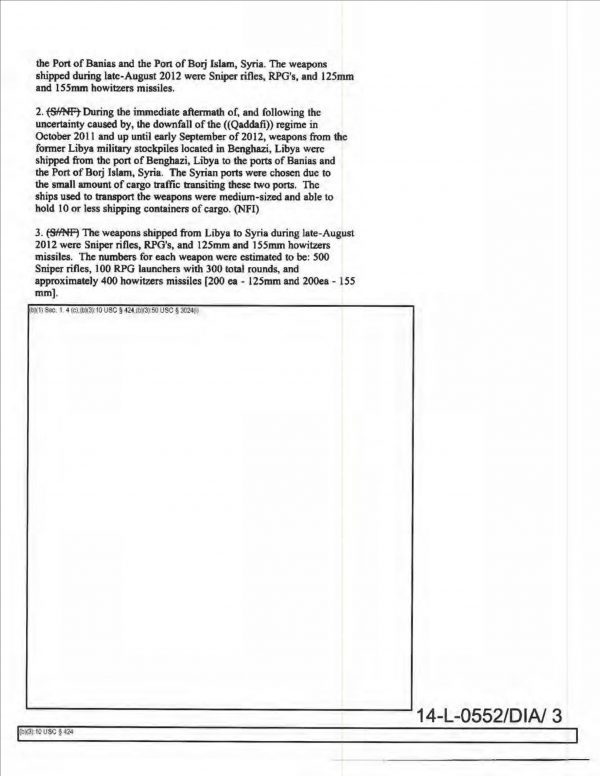
Weapons stolen from Libyan armouries, thanks to the invasion, were covertly shipped to Syria – all beneath the radar of the U.S Congress.
A recently declassified Department of Defense document indicates that,
“Weapons from the former Libya military stockpiles were shipped from the Port of Benghazi, Libya, to the Port of Banias and the Port of Borj Islam, Syria”
And none of this is accidental. Sustainable Western open-source documentation demonstrates that the growth of terrorism is willful, and according to Western plans.

The propaganda lies, the false flags, the terrorist-embedded NGOs , and the use of terrorist proxies to criminally destroy one country after another, is not only empowering terrorism world-wide, but it is also leading us to engineered conflict with nuclear-armed countries, in particular, Russia.
Whereas the propaganda lies further the causes of barbarity and ignorance, we need a redirection towards the polar opposite: towards trajectories that support civilization, progress, and the rule of law.
Prof. Chossudovsky explains in “America’s ‘Humanitarian War’ against the World” that
“What is consequently required is a massive redirection of science and technology towards the pursuit of broad societal objectives. In turn, this requires a major shift in what is euphemistically called ‘US Foreign Policy’, namely America’s global military agenda.”
We need to shift from Death Industries of the Military Industrial Complex, to Life Industries that serve, rather than destroy, humanity. We also need a strong anti-war movement based on a broad-based support of the truth, and a broad-based rejection of the “governing” lies.
Rockefeller, Ford Foundations Behind World Social Forum (WSF). The Corporate Funding of Social Activism
By Michel Chossudovsky | Global Research | August 10, 2016
This year the World Social Forum is being held in Montreal, regrouping committed social activists, anti-war collectives and prominent intellectuals.
Most of the participants are unaware that the WSF is funded by corporate foundations including Ford, Rockefeller, Tides, et al. Much of this funding is channelled to the WSF organizers under the helm of the WSF International Council.
This is an issue which has been raised on numerous occasions with progressive organizations and WSF activists: you cannot effectively confront neoliberalism and the New World Order elites and expect them to finance your activities.

The World Social Forum operating under the banner of “Another World is Possible” was founded in 2001 at its inaugural venue of Porto Alegre. Brazil.
From the outset in 2001, the WSF has been upheld as an international umbrella representing grassroots people’s organizations, committed to reversing the tide of globalization. Its stated intent is to challenge corporate capitalism and its dominant neoliberal economic agenda.
The World Social Forum at its inaugural meeting defined itself as a counter-offensive to the World Economic Forum (WEF) of business leaders and politicians which meets annually in Davos, Switzerland. The 2001 Porto Alegre WSF was held simultaneously with that of the WEF in Davos.
While there have been many important accomplishments of the WSF, largely as a result of the commitment of grassroots activists, the core leadership of WSF –rather than effectively confronting the New World Order elites– has (often unwittingly) have served their corporate interests. In this process, co-optation has been achieved through the corporate funding of the WSF.
Among the two major accomplishments are the participation of the WSF in the February 2003 Worldwide protest against the US led war on Iraq. The WSF has also supported progressive movements and governments, particularly in Latin America.
In contrast, at the Tunis 2013 WSF, the final declaration paid lip service to to the US sponsored “Syrian opposition”. Similarly the Al Qaeda affiliated Libya Islamic Fighting Group (LIFG) which allegedly led the “Arab Spring” against the government of Muammar Gaddafi was tacitly upheld as a revolutionary force. Several workshops on Libya applauded Western military intervention. A session entitled “Libya’s transition to democracy” focused on “whether Libya was better off without Muammar Gaddafi.”
Funding dissent
From the outset in 2001, the World Social Forum was funded by governments and corporate foundations, including the Ford Foundation which has ties to US intelligence.
The anti-globalization movement is opposed to Wall Street and the Texas oil giants controlled by Rockefeller, et al. Yet the foundations and charities of Ford, Rockefeller et al will generously fund progressive anti-capitalist networks as well as environmentalists (opposed to Wall Street and Big Oil), etc. with a view to ultimately overseeing and shaping their various activities.
The mechanisms of “manufacturing dissent” require a manipulative environment, a process of arm-twisting and subtle co-optation of a small number of key individuals within “progressive organizations”, including anti-war coalitions, environmentalists and the anti-globalization movement. Many leaders of these organizations have in a sense betrayed their grassroots.
The corporations are funding dissent with a view to controlling dissent.
The Ford Foundation (which has links to the CIA) provided funding under its “Strengthening Global Civil Society” program during the first three years of the WSF.
When the WSF was held in Mumbai in 2004, the Indian WSF host committee declined support from the Ford Foundation. This in itself did not modify the WSF’s relationship to the donors. While the Ford Foundation formally withdrew, other foundations positioned themselves.
The WSF (among several sources of funding is supported by a consortium of corporate foundations under the advisory umbrella of Engaged Donors for Global Equity (EDGE).
This organization, which previously went under the name of The Funders Network on Trade and Globalization (FTNG), has played a central role in the funding of successive WSF venues. From the outset in 2001, it had an observer status on the WSF International Council.
 In 2013, the Rockefeller Brothers representative Tom Kruse co-chaired EDGE’s program committee. At the Rockefeller Brothers Fund, Kruse was responsible for “Global Governance” under the “Democratic Practice” program. Rockefeller Brothers grants to NGOs are approved under the “Strengthening Democracy in Global Governance” program, which is broadly similar to that put forth by the US State Department.
A representative of the Open Society Initiative for Europe currently sits on EDGE’s Board of directors. The Wallace Global Fund is also on its Board of Directors. The Wallace Global Fund is specialized in providing support to “mainstream” NGOs and “alternative media”, including Amnesty International, Democracy Now (which supports Hillary Clinton’s candidacy for president of the US).
Several members of the EDGE BoD, however, are from non-corporative and family foundations with a social mandate. (see below).
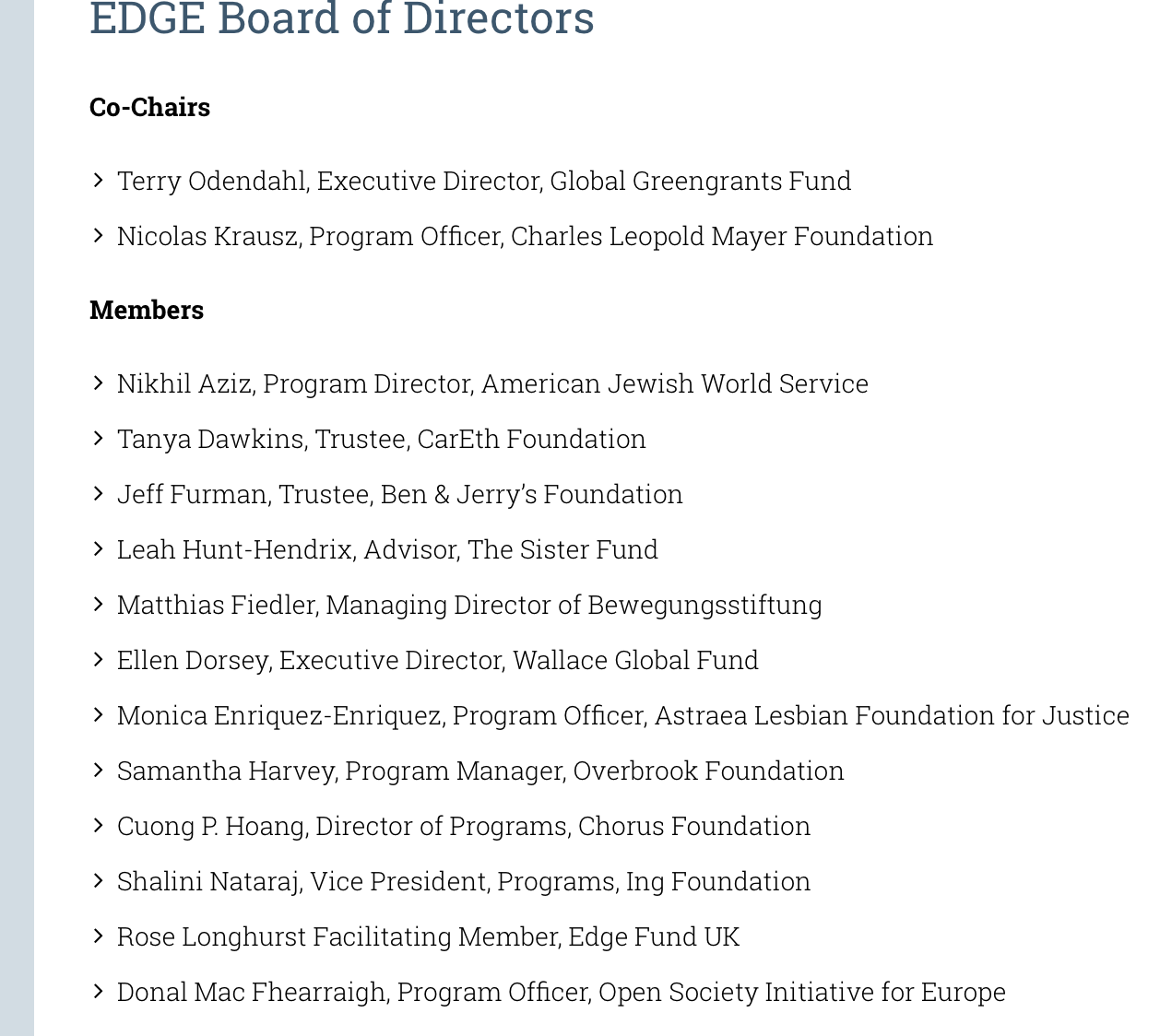
 In one of its key documents (2012), entitled Funders Network Alliance In Support of Grassroots Organizing and Movement-Building (link no longer available) EDGE acknowledged its support of social movements which challenge “neoliberal market fundamentalism.” including the World Social Forum, established in 2001:
“From the Zapatista uprising in Chiapas (1994) to the Battle in Seattle (1999) to the creation of the World Social Forum in Porto Alegre (2001), the TINA years of Reagan and Thatcher (There Is No Alternative) have been replaced with the growing conviction that “another world is possible.” Counter-summits, global campaigns and social forums have been crucial spaces to articulate local struggles, share experiences and analyses, develop expertise, and build concrete forms of international solidarity among progressive movements for social, economic and ecological justice.”
But at the same time, there is an obvious contradiction: another world is not possible when the campaign against neoliberalism is financed by an alliance of corporate donors firmly committed to neoliberalism and the US-NATO military agenda.
The following is the EDGE Montreal WSF Communique. The donors not only fund the activities, they also influence the structure of the WSF venue, which was determined in Puerto Alegre in 2001, namely the decentralized and dispersed mosaic of “do it yourself” workshops.
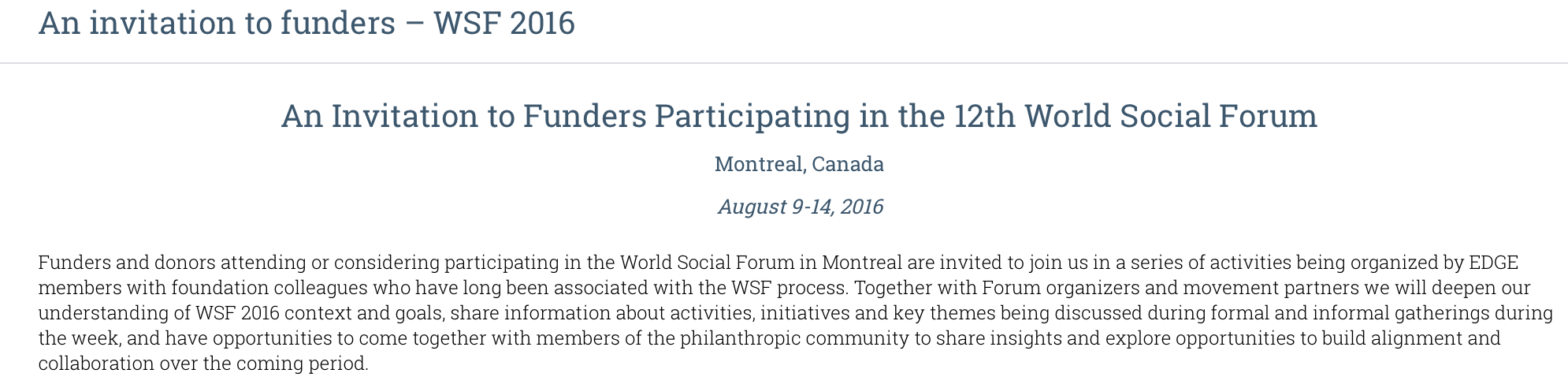

With regard to the Montreal WSF, the Consortium of Donors (EDGE) intent is:
“… to develop an intersectional space for funders and various movement partners – organizers thought leaders and practitioners – to build alignment by cultivating a shared understanding of the visions, values, principles and pathways of a “just transition.” (See http://edgefunders.org/wsf-activities/)
“Just Transition” implies that social activism has to conform to a “shared vision” with the corporate foundations, i.e. nothing which in a meaningful way might upset the elite structures of global capitalism.
From the standpoint of the corporate donors “investing in the WSF” constitutes a profitable (tax deductible) undertaking. It ensures that activism remains within the confines of ”constructive dialogue” and “critique” rather than confrontation. Any deviation immediately results in the curtailment of donor funding:
“Everything the [Ford] Foundation did could be regarded as “making the World safe for capitalism”, reducing social tensions by helping to comfort the afflicted, provide safety valves for the angry, and improve the functioning of government (McGeorge Bundy, National Security Advisor to Presidents John F. Kennedy and Lyndon Johnson (1961-1966), President of the Ford Foundation, (1966-1979))
The limits of social dissent are thereby determined by the “governance structure” of the WSF, which was tacitly agreed upon with the funding agencies at the outset in 2001.
“No Leaders”
The WSF has no leaders. All the events are “self-organized”. The structure of debate and activism is part of an an “open space” (See Francine Mestrum, The World Social Forum and its governance: a multi-headed monster, CADTM, 27 April 2013, http://cadtm.org/The-World-Social-Forum-and-its ).
This compartmentalized structure is an obstacle to the development of a meaningful and articulate mass movement.
How best to control grassroots dissent against global capitalism?
Make sure that their leaders can be easily co-opted and that the rank and file will not develop “forms of international solidarity among progressive movements” (to use EDGE’s own words), which in any meaningful way might undermine the interests of corporate capital.
The mosaic of separate WSF workshops, the relative absence of plenary sessions, the creation of divisions within and between social movements, not to mention the absence of a cohesive and unified platform against the Wall Street corporate elites, against the fake US sponsored “global war on terrorism”, which has been used to justify and US-NATO’s ‘humanitarian’ R2P interventions (Afghanistan, Syria, Iraq, Libya, Ukraine, etc).
The corporate agenda is to “manufacture dissent”.“The limits of dissent” are established by the foundations and governments which ultimately finance this multimillion dollar venue. The financing is twofold:
1. Core financing of the WSF Secretariat and the Costs of the WSF venue.
2. Many of the constituent NGOs which participate in the venue are recipients of donor and/or government support.
3. The WSF venue in Montreal also receives funding from the Government of Canada as well as from the Quebec provincial government.
What ultimately prevails is a ritual of dissent which does not threaten the New World Order. Those who attend the WSF from the grassroots are often misled by their leaders. Activists who do not share the WSF consensus will ultimately be excluded:
“By providing the funding and the policy framework to many concerned and dedicated people working within the non-profit sector, the ruling class is able to co-opt leadership from grassroots communities, … and is able to make the funding, accounting, and evaluation components of the work so time consuming and onerous that social justice work is virtually impossible under these conditions” (Paul Kivel, You Call this Democracy, Who Benefits, Who Pays and Who Really Decides, 2004, p. 122 )
“Another World is Possible” is nonetheless an important concept, which characterizes the struggle of the peoples movements against global capitalism as well as the commitment of thousands of committed activists who are currently participated in the Montreal 2016 WSF.
Activism is being manipulated: ”Another World is Possible” cannot, however, be achieved under the auspices of the WSF which from the outset was funded by global capitalism and organized in close liaison with its corporate and government donors.
The important question for activists in Montreal:
Is it possible to build “an Alternative” to global capitalism, which challenges the hegemony of the Rockefellers et al and then asks the Rockefellers et al to foot the bill?
We call upon participants of the Montreal World Social Forum (WSF) to raise and debate these issues: the campaign against neoliberalism is financed by corporate foundations (and governments) which are firmly committed not only to the tenets of neoliberalism but also to the US-NATO led military agenda.
Why would they fund organizations which are actively campaigning against war and globalization? The answer is obvious. …
Copyright © Prof Michel Chossudovsky, Global Research, 2016
With Libya, US Now Has Ground Forces In Four Wars

Photo by Ali Tweel on Flickr. Original: https://flic.kr/p/HWGom3
By Dan Wright | ShadowProof | August 11, 2016
While it is impossible to know all the dirty deeds of America’s sprawling global empire, news that US ground forces are now fighting in Libya means that US troops are involved in at least four active wars:
Afghanistan: A planned draw-down of troops in 2015 was curtailed by President Obama to leave more troops for combat and advisory missions. This week, US forces were forced to abandon military equipment that then fell into the hands of ISIS.
Iraq: After a removal of major combat forces in 2011, Iraq has become a battleground once again. President Obama has sent roughly 4,600 troops in for combat and advisory roles and built a new base in northern Iraq called “Firebase Bell.”
Syria: Though the US had been supporting Syrian rebel groups, including jihadists, since 2013, US troops have entered the fighting in the country. In January of this year, US special forces took control of a military base in northern Syria.
Libya: In 2011, the US assisted in the overthrow of the Gaddafi government in Libya. In the aftermath, Libya has fallen into total chaos, making it ripe for ISIS to establish a significant presence. Now, according to the Pentagon, US forces are fighting on the ground to drive ISIS out.
This excludes all of the off-the-books special operations in over 100 countries, and the major role the US is playing in supplying weapons for Saudi Arabia’s war on Yemen. Among those weapons are controversial cluster bombs, which are banned by many countries for their impact on civilians.
Preceding the Yemen civil war, the US had an active drone assassination program in the country, which included the targeted killing of American citizens. The drone assassination program continues throughout the greater Middle East.
According to the Obama Administration, these military operations are legally justified by the 2001 Authorization for Use of Military Force [PDF], which stated “the President is authorized to use all necessary and appropriate force against those nations, organizations, or persons he determines planned, authorized, committed, or aided the terrorist attacks that occurred on September 11, 2001, or harbored such organizations or persons, in order to prevent any future acts of international terrorism against the United States by such nations, organizations or persons.”
The bland, vague language apparently justifies any war in any part of the world. So, maybe the US will soon have troops in five active wars. Hell, make it six.
Fantastic progress of democracy: New York Times barely notice the new war in Libya!
By Adam H. Johnson | Defend Democracy Press | August 9, 2016
The Obama administration announced on Monday the beginning of US air strikes in Libya against ISIS targets, marking the fourth country the United States is currently bombing with the goal of “degrading and destroying” the terror group. A campaign that began two years ago this Sunday has now, 50,000 bombs and 25,000 dead ISIS fighters later, expanded to a whole new continent.
You’d hardly notice, however, if you followed US media. While the air strikes themselves were reported by most major outlets, they were done so in a matter-of-fact way, and only graced the front pages of major American newspapers for one day. The New York Times didn’t even find the news important enough to give it a front-page headline, instead relegating it to a quick blurb at the far-bottom corner of the page, next to a teaser about the G train “having a moment.”
Even many center-left outlets barely touched on the massive mission creep. To give some perspective, Slate, Mother Jones, and Buzzfeed News all ran more stories about Trump’s dust-up with an infant than they did on what was effectively the start of a new war. ABC World News Tonight mentioned the Libyan air strikes for only 20 seconds, 13 minutes into the show, and NBC Nightly News didn’t mention the air strikes at all. The president’s announcement that the United States is bombing a new country has become entirely banal.
This is by design. Obama’s “frog in boiling water” approach to war removes a clear deadline, thus stripping his use of military force of the urgency of, say, Bush’s “48 hours to get out of Baghdad” Gary Cooper approach.
Meanwhile, an anti-ISIS bombing campaign that began as “limited,” “targeted” air strikes in Iraq two years ago expanded to Syria six weeks later, to Afghanistan in January of this year, and to Libya this week. Combat troops and special forces have also crept into play, with US military personnel first appearing in Iraq and Syria in 2014, 2015, or 2016, depending on how one defines “boots” and “ground.”
All of this has unfolded with US media that almost never put these developments in a broader context. Instead, news outlets report each expansion as if it were obvious and inevitable. The war just is, and because it’s done piecemeal, there doesn’t seem much to get outraged over.
The question pundits should be asking themselves is this: Had Obama announced on August 7, 2014, that he planned on bombing four countries and deploying troops to two of them to fight a war with “no end point,” would the American public have gone along with it? Probably not.
To authorize his perma-campaign, Obama’s administration has dubiously invoked the 15-year-old, one-page Authorization for Use of Military Force, passed three days after 9/11. The president has to do this, the White House and friendly media claim, because Congress “refuses” to act to authorize the war (notice that’s a rubber-stamp question of when, not if). But such apologism largely rests on a tautology: Congress doesn’t have a sense of urgency to authorize the war because the public doesn’t, and the public doesn’t because the media have yawned with each new iteration.
What’s lacking is what screenwriters call “an inciting incident.” There’s no clear-cut moment the war is launched, it just gradually expands, and because media are driven by Hollywood narratives, they are victims to the absence of a clear first act. This was, to a lesser extent, the problem with the last bombing of Libya, in 2011. What was pitched to the American public then as a limited, UN-mandated no-fly zone to protect civilians (that even the likes of Noam Chomsky backed), which quickly morphed, unceremoniously, into all-out, NATO-led regime change three weeks later.
Then, as now, there was no public debate, no media coming-to-Jesus moment. Obama just asserted the escalation as the obvious next step, and almost everyone just sort of went along—an ethos summed up in Eric Posner’s hot take at Slate the day after Obama expanded the ISIS war to Syria: “Obama Can Bomb Pretty Much Anything He Wants To.”
Some, such as The Week’s Ryan Cooper and The Atlantic’s Conor Friedersdorf, have argued that the specter of a Donald Trump presidency could provide this inciting incident, that the fear of an apparently mentally unstable reality-show host taking over this sprawling, limitless war could compel us to examine the wisdom of this unilateral executive approach. But, thus far, this fear has done no such thing.
Obama’s mission creep, without public debate or congressional sanction, goes on without examination of what it may entail for future presidents, let alone the present one. This is the new normal, and it’s a new normal the press codifies every time it treats Obama’s ever-expanding war as dull and barely newsworthy.
Featured Video
“Historic Russia”: The Land Putin Will Not Give Back
or go to
Aletho News Archives – Video-Images
Book Review
Why the War on Conspiracy Theories Is Bad Public Policy
By Kevin Barrett • Unz Review • February 1, 2019
 A Review of Conspiracy Theories and Other Dangerous Ideas by Cass Sunstein (based on an earlier paper co-authored with Adrian Vermeule); In Defense of Troublemakers: The Power of Dissent in Life and Business by Charlan Nemeth; and Conspiracy Theories and the People Who Believe Them, edited by Joseph E. Uscinski
On January 25 2018 YouTube unleashed the latest salvo in the war on conspiracy theories, saying “we’ll begin reducing recommendations of borderline content and content that could misinform users in harmful ways—such as videos promoting a phony miracle cure for a serious illness, claiming the earth is flat, or making blatantly false claims about historic events like 9/11.”
At first glance that sounds reasonable. Nobody wants YouTube or anyone else to recommend bad information. And almost everyone agrees that phony miracle cures, flat earthism, and blatantly false claims about 9/11 and other historical events are undesirable.
But if we stop and seriously consider those words, we notice a couple of problems. First, the word “recommend” is not just misleading but mendacious. YouTube obviously doesn’t really recommend anything. When it says it does, it is lying. … continue
Blog Roll
 Aletho News
- BRITAIN’S WARNING: PREPARE FOR WAR
- “Historic Russia”: The Land Putin Will Not Give Back
- How the Cambridge Analytica scandal still haunts Mark Zuckerberg
- The Ongoing Cancellation Campaign Against a Dissenting Academic in Norway
- Yemen and ‘the Houthis’: Challenging Sami Hamdi’s Narrative
- No, Christians did not invent Zionism
- AIPAC-led lobbying network opens branches in Cypriot, Greek parliaments
- Araghchi blasts ‘parasitic’ alliance as US taxpayers pay for Israel’s war on Iran
- Easy fix for Europe’s chaos? Stop fueling war against Russia
- Putin’s key remarks on peace talks and Europe’s ‘schizophrenia’
- If Americans Knew
- An error has occurred; the feed is probably down. Try again later.
- No Tricks Zone
- Two New Studies Find Thwaites Glacier Melt Cannot Be Driven By Human Activity Or A Warming Ocean
- E-Cars Reduce CO2 Emissions By Only 41% Compared To Internal Combustion Engine Vehicles
- Predictions Made By Renowned Climate Professor Over Past Decades Have Been Proven To Be Poor
- New Study Suggests Large Regions Of The Pacific Ocean Have Been Cooling For The Last 80 Years
- Germany’s Green Energy Debacle: High Energy Costs Force Kahla Porzellan to Close After 182 Years!
- New Study: 50 Years Of The Most Aggressive ‘Net Zero’ Policies Can Only Affect The Global Climate By 0.03°C
- US September “Heat” Was No Record…Many Records Set Decades Ago
- Latest European Green Energy Debacle; Portugal’s Largest Flagship Solar Park Insolvent!
- Green Energy Debacle: German Expert Professor Fritz Vahrenholt Warns Of Severe Economic And Social Consequences
- Two More Paleo Reconstructions Affirm Meters-Higher Sea Levels Across Ireland, Brazil 7000-6000 Years Ago

