Requiem for a Martyr: The “Blind Sheik”, Omar Abdel Rahman, Innocent Victim of Seditious Conspiracy Trial

By Karin Brothers | Global Research | March 5, 2017
“[America’s treatment of me] is a crime that history will never forgive.” – Omar Abdel Rahman
Sheik Omar Abdel Rahman, the “blind sheik”, died on the morning of February 18, 2017, near the 24th anniversary of the 1993 WTC bombing. He was an innocent victim of the US agenda to create a new enemy by engineering events that would make terrorism virtually synonymous with “Islamic fundamentalism”.
Sheik Rahman attained national fame in Egypt while he was on trial for inciting the 1981 assassination of former Egyptian President Anwar Sadat. With a passionate moral integrity, he courageously attacked the government during his two days on the stand; the intensive trial media gave him a national platform that made him famous throughout the Muslim world. His sermons were taped and traded throughout Egypt.
While he was vindicated of the charges against him, President Mubarak’s government ominously refused to give the necessary certification of the verdict and eventually drove Sheik Rahman out of Egypt. The Sheik went to Afghanistan, where he helped the CIA recruit Arab fighters to serve with the US-backed mujahadeen (he would lose at least one of his own sons there), and the Sheik was reportedly on the CIA payroll.
Sheik Rahman came to the US in 1990, hoping to remain until he could safely return to Egypt. According to Benjamin Begin in a 1993 Israel Today newsletter, Rahman’s mosques were infiltrated by FBI and Mossad operatives and would be the source of recruitment for their operations.
The World Trade Center explosion occurred on Friday, February 26th, 1993. The Sheik was soon declared deportable when some of those charged were identified as members of his mosques. The sheik was in the FBI’s crosshairs; the FBI offered Egyptian intelligence agent Emad Salem over one million dollars to entrap him.
The cagey Salem, who had become a trusted member of the Sheik’s inner circle, was aware of the obligation that the Sheik had as spiritual leader to respond to congregants’ needs. Salem blindsided the sheik by going to his home after midnight on a Sunday, pretending to be in a spiritual crisis. He claimed that he felt guilty for his years in the Egyptian military and needed to atone for his actions by attacking a target in the US — such as the United Nations. The sheik tried to fob him off and talked him out of that terrorist target; he suggested that a US military target would be more appropriate, but he told Salem to “slow down” — to cool off. Salem went home happy.
The Joint Anti-Terror Task Force and the Justice Department were allegedly dubious about whether they had evidence that would convict Rahman. The Sheik had repeatedly and publicly denounced the bombing of the WTC and claimed that he had nothing to do with it. Those who heard Emad Salem’s recorded attempt to incriminate the Sheik didn’t think it was persuasive enough to stand up in court. The FBI had tapped the Sheik’s telephones from two weeks before the WTC explosion until June, 1993; there was no evidence of any wrongdoing. The INS said he was complying with the requirements of his deportation appeal. Authorities noted that incarcerating the Sheik would be expensive because of his diabetes. A detention until appeals were completed could have lasted for months — if not for years.
Attorney General Janet Reno, who had publicly been reluctant to charge the Sheik, finally succumbed to the political pressure: pressure that also came from the Egyptian government, which still felt threatened by the Sheik’s popularity. Egyptian officials, afraid that Rahman would be deported to Egypt, wanted him safely incarcerated in the US. On July 1st, 1993, the Justice Department, while avoiding making any criminal charge, decided to take the Sheik into custody – “indefinite administrative detention” — on immigration charges.
The Egyptian conundrum
Egyptian President Hosni Mubarak was afraid of Rahman’s popularity and influence; he appeared to be worried about suffering the same fate as the Shah of Iran, deposed by a popular religious leader. Mubarak banned tapes of Sheik Rahman’s sermons; those found with copies were subject to up to five years in jail. Three thousand copies of a newspaper Al-Hayat that featured a March interview with Rahman were confiscated, and Rahman’s mosque in Fayoum was empty, guarded by a police agent.
While the Egyptian government had initially asked the Clinton administration to hold the Sheik to make sure he was not deported to Egypt, they changed their minds when they were informed that under the immigration charges, the sheik could accept his deportation voluntarily and go to any country that would take him, which could make him even more of a threat to the Mubarak government. After intense discussions, the US agreed to accept Egypt’s official extradition request, which it claimed would take precedence over the deportation charge. The only hitch was that appeals might take as long as eight years.
Mubarak was livid. He reminded the U.S. that he had hosted an Arab summit before the 1991 US-led invasion of Iraq which brought most of the Arab world onside, providing important “optics” for the engineered invasion.
Egyptian authorities were also outraged that two employees of the US Embassy had met earlier that year with prominent members of the Islamic Group, which regarded Sheik Rahman as their spiritual leader. The US seemed to be hedging its bets on Egyptian leadership so that it would not be caught out in Egypt as it had been in Iran, when Khomeini was swept into power. To add insult to injury, there was even a Congressional effort to cut back on US aid to Egypt.
President Mubarak then demonstrated to the Clinton administration who was in charge of Egypt. On July 8th, the Egyptian government hanged seven followers of Sheik Rahman for attacks against foreign tourists and for conspiring to overthrow the Mubarak government. It was the largest number of executions for a political crime in more than four decades, and it would be the start of a brutal campaign against dissidents that would last until the 2011 Arab Spring.
After witnessing Mubarak’s treatment of the Muslim Brotherhood, it was evident that Rahman’s supporters were powerless; Rahman was expendable.
US rejects political asylum for Rahman but can’t extradite him to Egypt
Meanwhile there were unforeseen complications with U.S. efforts to extradite Rahman to Egypt. While the Board of Immigration Appeals rejected Rahman’s appeal for political asylum, it appeared that his appeals would eventually reach the Supreme Court. Also, State Department officials realized that the 100-year old extradition treaty between the US and Egypt did not permit extradition based on “any crime or offense of political character.” While one official claimed that US courts were not limited by treaties, another noted that the treaty strengthened Rahman’s case for political asylum.
The Egyptian plan to ensure that Sheik Rahman would be placed under their control hit another challenge at the end of July when Afghanistan’s Prime Minister Gulbuddin Hekmatyar offered his country as a refuge for the Sheik. The Sheik’s lawyers realized that deportation might be the only way for the sheik to regain his freedom, so they contacted the office of U.S. Attorney Mary Jo White to request his deportation.
White’s office sat on the sheik’s deportation request while trying to accommodate Egypt’s demand for permanent control of the sheik. The problem was that those who were deported were free to go to any country that would accept them, but Egypt did not want the sheik in Afghanistan, where he would be free to communicate with his followers.
The “seditious conspiracy” solution
The sheik’s lawyers were still waiting for a response when, a week later, on August 25th, 1993, Attorney General Janet Reno issued an indictment for Sheik Rahman along with 14 others for “seditious conspiracy”, an obscure charge employed against political dissidents.
The 20-count, 27-page indictment claimed that one terrorist organization [which started in 1989, the year before the sheik arrived in the U.S.] was behind all of the plots and that Sheik Rahman, while not directly involved with the acts, was the “mastermind” who explicitly gave the orders. The listed plots included: plans to attack American military installations; plans to murder F.B.I. agents; plans to seize hostages to help release jailed conspirators; the 1990 killing of Rabbi Meir Kahane; the 1991 killing of Alkifah Center President Mustafa Shalabi; the 1993 WTC bombing [ambiguously included, since there was currently a separate trial for that]; the June “landmarks bombing plot”; and the plot to assassinate President Hosni Mubarak. The New York Times featured a map of the presumed terrorist targets; it appeared that New York City was under a Muslim siege.
The “seditious conspiracy” charge, which had been created to target Confederates at the end of the Civil War, was defined as when two or more people “conspire to overthrow, put down, or destroy by force the Government of the United States, or to levy war against them.” Experts noted that the broad nature of the conspiracy indictment, which did not require connecting a defendant to any specific act of violence and allowed prosecutors to bring in evidence not related to terrorist acts, made it possible to convict people with little proof (let alone evidence) of guilt. Criminal defense experts claimed that the Government was framing the case as much on the defendants’ beliefs as on any acts they may have committed.
Defense lawyers were also disturbed by the Government’s piling up of charges on a socially-isolated and demonized group, especially reviving the Kahane case just two years after El Sayid Nosair had been acquitted. Claiming that the indictment was an attempt to “create an atmosphere of fear and intimidation“, defense lawyer Ronald Kuby noted that, “What they have done is take every allegation, every rumor, every loose end and created a vast mythical Islamic conspiracy. They have created a case that is so big and complicated that it is impossible to defend, impossible to understand, and impossible for any of these defendants to get a fair trial.”
Emad Salem’s tapes
Defense lawyers claimed that Emad Salem entrapped their clients by hiring them for his plots, then taped them making incriminating statements. Salem’s tapes, on which most of this trial would be based, would also include two FBI admissions of overseeing the provision of the WTC explosives. Ron Kuby requested that all of Salem’s tapes collected as evidence (which also showed the FBI’s unsavory ways of doing business) be released in their entirety to the public to expose the case as a conspiracy to frame the defendants. Judge Michael B. Mukasey, (who would be named Attorney General in 2007), refused to allow the tapes to be made public.
The seditious conspiracy trial would be delayed until January, 1995, and corresponded in time to the televised O.J. Simpson trial, which contributed to its lack of media coverage, despite being touted as the terror trial of the century. The year and a half between the defendants’ arrests and their trial gave the Government and courts time to strip the sheik and other defendants of Constitutional rights, including the Sixth Amendment right to counsel, the Fourth Amendment right against unwarranted search and seizure, and other basic freedoms. The homes of two of Rahman’s paralegals would be raided for information against him, and dissident reading material found in defendants’ homes that was deemed “anti-American” or showed “hatred of Jews” could be used as evidence against them.
The seditious conspiracy trial
As with the first World Trade bombing trial, there would be no change of venue, the jury would be unsequestered and — supposedly to protect them from Muslim terror threats — would be identified only by number; their names would never be made public. None of the jury was Muslim.
The media during the entirety of this trial would be filled with various terror stories. The seditious conspiracy trial had barely started when the “mastermind” of the WTC bombing, Ramzi Yousef, arrived in New York with huge media fanfare. Mukasey asked the jury on the day after Yousef’s arrival if their opinions were changed by this media coverage. He immediately determined that they weren’t, but ignored the subsequent barrage of prejudicial media exposure that lasted throughout this trial. Some of Yousef’s publicity should have helped the defendants because Yousef, who didn’t know sheik Rahman, made statements that should have exonerated Rahman and others. Unfortunately Yousef refused to testify at this trial and Judge Mukasey would not permit the defense counsel access to Yousef’s documents that the FBI had taken.
The Oklahoma City bombing, which occurred six weeks later in mid-April, was initially claimed to be similar to the WTC bomb, and due to Muslim terrorism. Mukasey “assumed” that the jury would not be affected by the anti-Muslim media, although the defendants received heightened physical protection in their detention center.
That June, the actual driver of the bomb-laden Ryder van came to media attention and in August, there was media fanfare with his extradition to the U.S.
Sheik Rahman’s (nonexistent) Constitutional rights
Prosecution attention turned to the Sheik’s sermons to show his attitude towards the U.S. as well as his leadership in the Muslim community. Many of the Sheik’s sermons, which encouraged the devout to fight enemies of Islam and God, were read out in an effort to criminalize what should have been his freedoms of speech and belief.
Mukasey barred witnesses that would have shown the role of politics behind the arrest of Sheik Rahman, that would have testified that Rahman was not the radical that the media had described, and that would have provided a clearer understanding of Muslim terms (such as jihad and fatwa) that were being used against the defendants. Mukasey’s rulings were devastating to the Sheik’s defense.
The defense lawyers tried to introduce sealed material from the previous WTC trial that would show the lengths to which the FBI had gone to implicate as well as convict the previous defendants in the World Trade Center trial. Although that material was not produced, FBI scientist Fredrick Whitehurst’s subsequent testimony about the FBI’s incompetence, perjury and obstruction of justice that facilitated the convictions of the four charged in the WTC bombing did tell part of that story.
The Government’s desperation to find damaging information on Sheik Rahman was evident in the arrest of his paralegal at the end of April. The authorities’ claim that Nasser Ahmed’s overstay on a student visa “just came to our attention”, was contradicted by an FBI agent’s message to Ahmed that if he did not cooperate with the FBI, he would be deported to Egypt. After being charged with “secret evidence” and spending three years in solitary confinement, Ahmed would not be released until 1999.
The verdicts
Since this trial showed that there was little evidence that any of the defendants were guilty of any untried crime that had taken place, the prosecution tried to criminalize Islam; it described the defendants as a frightening “jihad army”: foreigners of a mysterious, militant culture. Judge Mukasey assured the jurors they could find that there was a single conspiracy despite the differing defendants and plots, “so long as you find that some of the conspirators continued for the entire duration of the conspiracy to act for the purposes charged in the indictment.”
After deliberating for seven days, the jury returned on October 1, 1995 with guilty verdicts for 48 out of the 50 charges. Sheik Rahman’s lawyer Lynne Stewart broke down and cried.
The defense cries “foul” and calls for a mistrial
The defense counsel immediately called for a mistrial because they believed that the problems with the trial were so egregious. It was clear that the FBI made use of Egypt’s intelligence agent as an agent provocateur to carry out its own agenda. Some defendants claimed that exculpatory conversations were missing from the tapes; the FBI admitted that they had “briefly” returned the tapes to Salem after they had been entered as evidence.
Judge Mukasey told the defense lawyers that he would consider their request to hold a post-trial hearing on the issue of whether he should overturn the convictions. But on January 10, 1996, he rejected the defense motion to throw out the convictions of Sheik Omar Abdel Rahman and nine others, claiming that there was no proof that the evidence that Salem had destroyed would have helped exonerate the defendants. Mukasey ignored Salem’s obvious motive for destroying evidence and the FBI’s interest in wanting him to do it.
Mukasey was determined to make an example of these “terror” defendants. While the sentence for seditious conspiracy was 20 years, Mukasey used that as a starting point, and added the other charges on top of that. He used his discretionary powers to make each part of the sentences sequential rather than concurrent; the sentences ranged from 30 years to life.
Sheik Rahman was sentenced to life. Worse, the government silenced Rahman even further by new “Special Administration Measures” which allowed them to essentially isolate him totally. To facilitate that agenda, it taped what were supposed to be his private conversations with his lawyer Lynne Stewart, and would imprison her for trying to circumvent the restrictions.
The obscure conspiracy law came into its own
The prosecution congratulated itself on its use of the seditious conspiracy charge. The verdict showed that the conspiracy law provided them with an easy venue to obtain verdicts with little evidence and for which no crimes had occurred. The conspiracy charge would become the mechanism to convict Muslims in future terror trials because of the low standards required of any individual’s involvement.
The price
This trial demonstrated how the efforts of the government, the courts and the media — particularly the New York Times — ensured that the Muslim defendants could not obtain a fair trial. The New York Times enabled convictions in all of these related trials by maligning the defendants with anonymous government leaks, generally using biased and inflammatory language to describe them, and invariably assuming their guilt.
The injustice of these convictions and the fruitless appeals have been clear to those following the cases. While few Americans seem to be aware of the injustice, it has not been lost on the worldwide Muslim community. There were various actions designed to free Sheik Rahman, including the 2005 kidnapping of the four Christian Peacemaker Team members in Iraq: Tom Fox (who died), James Loney, Norman Kember and Harmeet Singh Sooden.
The world lost a passionate voice for moral integrity with the silencing of Sheik Omar Abdel Rahman, and his death before attaining justice was tragic. His passing should provide Americans the opportunity to understand how FBI-monitored acts were used to eliminate Constitutional rights to freedom of speech, freedom of belief, the right against unreasonable search and seizure, the right to counsel, and protection from cruel and unusual punishment. By ignoring the elimination of Muslim rights, Americans are laying the groundwork for the elimination of their own.
Karin Brothers is a freelance writer.
Copyright © Karin Brothers, Global Research, 2017
Drastic Changes in the Middle East Happen Unbelievably Fast
By Peter KORZUN | Strategic Culture Foundation | 04.03.2017
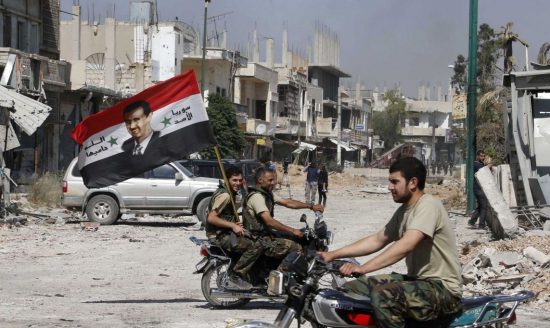
The situation in the Middle East is changing at an incredible speed. The things unbelievable yesterday, become reality today. Each of the events becomes part of a bigger picture, with the region gradually moving away from abyss to become a better place.
On March 1, Iraqi forces were reported to have taken control of the last major road out of western Mosul, preventing Islamic State (IS) militants from fleeing the city. The route leads to Tal Afar, another IS stronghold that is 40 km further west. They have since driven militants from the international airport, a military base, a power station and a number of residential areas. IS fighters began to flee. Total control over the city by Iraqi forces seems to be a matter of a few days, maybe hours.
Being almost defeated in Iraq, the IS has nowhere else to go but Syria – the country where they have just suffered a defeat, with Palmyra retaken by Syria’s government forces. Russia’s support has been crucial in the Syrian army’s push. Raqqa, the last remaining stronghold of the IS, will be the place of the final battle the extremist group is doomed to lose as many influential actors want it to be wiped away from the earth.
Turkey has announced its intent to launch an offensive to retake Raqqa but only after taking control of Manbij, the town held by the Kurds-dominated Syria Democratic Forces (SDF). The parties were in for a fight to benefit the IS and other terror groups. The US was at a loss as to how to prevent a clash between the NATO ally and the Kurds – the force it relies on in the fight against the IS. That’s when Moscow stepped in to avoid the worst, using its unique position as a mediator. It managed to do what nobody thought was possible. The military council in Manbij said on March 2 it will hand over areas west of the flashpoint town to Syrian government troops, after an agreement brokered by Russia.
Now the town is in Arab hands and Turkey has no reason to attack it. Syria and Turkey are not at war.
The United States had promised Turkey that Kurdish forces would withdraw from Manbij to the east of the Euphrates, but it never happened. Now Russia did what America had failed to do.
As a result of Russia’s effective mediation, Turkey can double down on its plans to advance to Raqqa, while Syria’s government has greatly strengthened its position. Turkey’s President Erdogan has just said he is ready to fight the IS together with Russia. He is coming to Moscow on March 9. It means no clash between Turkey and Syria will take place.
Many things are changing for the Syrian government and it has been going on for some time. It’s not a coincidence that voices get louder, calling for inviting Syrian President Assad to the March 29 Arab Summit in Amman – five years after Syria was expelled from the 22-member organization. Russia, Jordan and Egypt are applying efforts to reconcile the Arab community with the Syrian government. Last month, Egypt’s parliamentary committee for Arab affairs called for the return of Syria to the Arab League. This would signify the reconciliation between Saudi Arabia which backed the Syrian rebels – something unthinkable some time ago.
In 2015, then US President Obama predicted Russia would get stuck in Syria’s quagmire. He appears to have been wrong. Thanks to Russia’s involvement, one can see the light at the end of the tunnel to make the quagmire a thing of the past.
Moscow can facilitate the process of Iran joining with Arab states in the effort to reach agreement on Syria, bringing it to some mutual understanding with Saudi Arabia. Not much has been reported about some recent events of special significance. Iranian President Hassan Rouhani visited Kuwait and Oman on February 15. Saudi Arabian Foreign Minister Adel Al-Jubeir made a trip to Iraq on February 25, to be received by Iraqi Prime Minister Haider Al-Abadi. The trend is visible – Shia and Sunni are on speaking terms again and they are discussing something very important. It would have sounded incredible a short time ago but these are the facts.
All these events and emerging trends are taking place against the background of the ongoing UN-brokered Geneva talks on peaceful settlement in Syria. Here too we have an unexpected turn of events – the Syrian opposition seeks to meet with Russian officials!
According to Paul Vallely, a retired US Army Major General and senior military analyst for Fox News, Russia-US consultations on Syria are to start in two months after the presidents hold a summit. He said Russia is to play a key part in any scenario.
The recent days have literally shaken the Middle East. So many unexpected things happen to push things forward. Right in front of our eyes the impossible becomes possible.
As said before, Moscow is in a unique position to act as an intermediary and it plays its role aptly to achieve tangible results. If the current trend continues in the same direction, leading to the desired outcome, Russia’s effort will go down in history as an extraordinary achievement of military success combined with effective diplomacy.
A Paradigm Shift in the Middle East: Iran as the Solution, Not the Problem

Photo by Always Shooting | CC BY 2.0
By Behrooz Ghamari Tabrizi | CounterPunch | February 28, 2017
A well-orchestrated alliance emerged against Iran during last week’s Munich Security Conference. The stage was set by Mike Pence after he called Tehran “the leading state sponsor terrorism,” and accused the Islamic Republic of continuing to “destabilize the Middle East.” Further, to reiterate the Trump administration’s dissatisfaction with Obama’s policy toward Iran, he speculated that with “the end of nuclear-related sanctions, Iran now has additional resources to devote to these efforts.”
One after another, representatives of Saudi Arabia, Israel, and, surprisingly, Turkey added their warnings about the rise of the Iranian menace and called for a united front to combat Iranian regional and global ambitions. The Saudi Foreign Minister, Adel al-Jubeir told delegates at the conference “Iran remains the single main sponsor of terrorism in the world.” Iran is, he said, “determined to upend the order in the Middle East.” In an act more reminiscent of a scene from a theater of the absurd, the Israeli Defense Minister, Avigdor Lieberman, declared “Iran had an ultimate objective of undermining Saudi Arabia in the Middle East.” He called for a multilateral dialogue with Sunni Arab states to defeat Iran and its “radical” elements in the region. This was not the first time that the Saudi and Israeli positions on the Middle East security coincided, but the similarities in the way Lieberman and al-Jubeir articulated their grievances against Iran, using the exact same language in listing Iranian transgressions was unprecedented.
Rather bewildering was the Turkish foreign minister, Mevlüt Çavuşoğlu, who added his voice of discontent with Iran and joined in the same vein to call for a concerted international effort against what he termed “an Iranian sectarian policy to undermine Bahrain and Saudi Arabia.” He told a friendly audience in Munich that Turkey will not tolerate divisive religious or sectarian policies and, he continued, “we are now normalizing our relations with Israel.” Çavuşoğlu’s address was particularly baffling since it came following a complex series of negotiations and agreement that was reached earlier this month between Russia, Turkey and Iran for a cooperation to end Syrian bloody civil war.
The Trump administration and a significant number of lawmakers, Republican and Democrats, will almost certainly use the display of unity among regional powers against the Islamic Republic to justify new sanctions on Iran. But why, despite the clear evidence to the contrary, are the U.S. and its allies in the region holding Iran solely responsible for destabilizing the Middle East? There are two, one geo-political and the other pure economic, reasons for such a flagrant distortion of realities on the ground.
From the early days of the Iranian revolution in 1979, the main strategic interest of the U.S. and its corrupt Arab allies have been to fend off the Iranian ambition of exporting its revolution. At the time, it was the stated purpose of the Islamic Republic to spread the message of what they believed to be the Islam of the downtrodden abroad. Almost four decades later, surviving an eight-year war with Saddam Hussein, which he fought on behalf of the  concerned Arab nations (with the exception of Syria) and their Western supporters, consolidating power by eliminating most opposition forces inside the country, and managing a beleaguered economy plagued with ongoing regimes of sanctions, the Islamic Republic has been transformed. At the end of the war with Iraq, it became evident that the mantra that the regime in Tehran now followed, as Henry Precht, the former head of the State Department’s Iran desk, once said, was not dominion abroad, but economic and political independence at home. Rather than an irrational ideological fervor, the Islamic Republic’s policies are primarily motivated by domestic stability, security, and economic growth. Iran has always been more sympathetic to the Christian Armenia than to Muslim Azerbaijan in their border disputes, more interested in closer ties with India than Pakistan, and in order to protect their trade relations with China, remained silent when the Chinese violently suppressed the grievances of their Muslims.
Domestically, Iran has also changed significantly since the brutal years of the 1980s reign of terror. There exists a vibrant and growing civil society, more than fifteen independent newspapers are published in Tehran, meaningful presidential and parliamentary elections with real participation and rivalries happen, unlike the a commonplace perception, women participate in social life despite patriarchal laws and cultures, more than 60% of university students are women. I do not intend to draw a rosy picture of Iran, the Islamic Republic is not a democratic regime, but in all cases it is certainly more democratic than all our allies in the region.
Oil is not the only rationale that defines our economic interest in the Middle East. Since the end of the Cold War, the U.S. arms sales in the Middle East have been rising exponentially. As a recent report by Stockholm International Peace Research Institute shows, more than half of the total American arms export goes to the Middle East. During the last four years the sales of arms to the Middle East has doubled. Saudi Arabia’s arms import has increased 212 percent from 2012 to 2016. During the same period Qatar’s import of weapons surged 245 percent. Saudi Arabia spends 25 percent of its budget, $85 billion a year, more than that of Russia, on defense. Last year the Obama administration approved a $38 billion military aid package to Israel for the next ten years. One-third of the world’s arms deals happen in the Middle East. All this happens when Iran uses only 2.5 percent of its national budget on defense and relies mostly on domestic production of weapons rather than on a shopping spree in the global arms market.
A military industrial complex has taken American foreign policy hostage. It has colonized American foreign policy through a marketing strategy that perpetuates hostilities and generates animosity between different nations. It has promoted an arms race, particularly in the Middle East, that is draining the resources of nations around the world and is weighing heavily on the shoulders of American taxpayers. Military aid to our allies in the region is nothing but a transfer of wealth from ordinary Americans to defense contractors. None of these sales and aid packages would be justifiable if it were not for the existence of an enemy such as the Islamic Republic of Iran reproduced in Pence’s caricature, an irrational, ideological nemesis that does not respond to conventional deterrence and needs to be forced into submission to our demands.
Washington needs to transcend its old-age reliance on allies in the Middle East whose interests are increasingly becoming detrimental to peace and stability in the region. The problem in the Middle East is not about Sunni and Shi’ite rivalry, it is not even about Israeli and Palestinian existential animosity. What plagues the Middle East is the narrow-mindedness of its ruling elites, both elected and self-appointed, who have failed to represent and safeguard the interests of their own people. Since the end of WWII, Washington’s policy has been exclusively based on securing economic and geo-political interests of American energy and military industrial corporations. Time has come for the U.S. to rethink its alignment with old patriarchal powers and to look beyond its narrow economic interests in the rising arms race in the Middle East. Extending and expanding sanctions against Iran would be an irreversible step toward opening a new war front, one with broader and more catastrophic consequences around the world.
Check out Behrooz Ghamari-Tabrizi’s new books, Remembering Akbar and Foucault in Iran.
No Amount of Propaganda Qualifies as Humanitarian Aid
By Jean Perier – New Eastern Outlook – 26.02.2017
Last month, Helsinki hosted an international conference on the humanitarian situation in Syria, resulting in the launch of a regional refugee plan for the next two years, focused on assisting Syria’s neighboring states in dealing with the refuge crisis. In accordance with this plan, UN officials seek 4.6 billion dollars worth of humanitarian aid to provide relief both to the Syrian refugees and the communities that provide them shelter. A spokesman for UN Secretary General Stefan Dyuzharrik emphasized the fact that the funds are going to help some 4.7 million refugees from Syria and 4.4 million people who assist them in Turkey, Lebanon, Jordan, Iraq and Egypt. At the same time, as it’s been noted by Dyuzharrik, these funds are not meant to provide assistance to 13.5 million people in Syria itself.
So who is going provide those peaceful Syrians, who neither have the capacity nor the money to leave the country, with humanitarian aid?
According to UN estimates, out of more than 13.5 million Syrians that have found themselves in dire need of humanitarian assistance, some 6.3 million people are internally displaced persons, while another 5 million live in remote areas and destroyed cities with no infrastructure to support them.
Unfortunately, one is forced to admit that the absolute majority of Western countries are reluctant to provide any form of assistance to the Syrian population, who have witnessed their everyday life consumed by the the war. In particular, a full month has passed after the complete liberation of Aleppo, but no international humanitarian organization has made a single step to provide real assistance to the civilian population of the city.
The recent joint delivery of humanitarian aid organized by the International Committee of the Red Cross and the Syrian Arab Red Crescent and the United Nations failed when the convoy was ambushed in the rural areas of the Aleppo province. As a result, militants took a part of the humanitarian aid destined for the Syrian inhabitants of the city of Homs.
Against this background, the sole real supplier of humanitarian aid to Syria at this moment is Russia, since the aid provided by other countries is often too insignificant to make a difference, if there is any.
However, a number of European and American media sources are still trying to push the blame for the humanitarian catastrophe in Syria on Russia. By rehearsing the mantras repeated by organizations funded by George Soros and various Western governments, they choose to completely ignore that it was the United States and its NATO allies that have been trying to destroy the Middle East as a whole, by destabilizing regional players, destroying their infrastructure, and thus subjecting the population of the Middle East to unbearable hardship and starvation. It’s hardly a secret these days that Washington has been sponsoring ISIS and its affiliates from day one.
At the same time, some official UN staff choose to ignore the United Nations Charter that binds them to remain impartial observers, and have started repeating the delusional stories that Western media sources publish. A specific example of this deeply disturbing situation is the string of accusations against Russia that was made during the final stages of the liberation of the city of Aleppo. Allegedly, the assistance Russia provided to pro-government forces aggravated the humanitarian situation that inhabitants of this city found themselves in.
Yet, those same UN staff members chose to ignore the fact that Syrian forces discovered warehouses full of medicine and food in eastern Aleppo after the liberation of the city. This fact has been completely omitted in the report presented by the UN Secretary General about the humanitarian situation in the Syrian Arab Republic. Meanwhile, those warehouses had enough goods to support the entire civil population of the city for several months, but militants kept the supplies for themselves and only allowed locals to take food when they agreed to join militant groups.
Against this background, the hysteria that some senior members of the International Syria Support Group (ISSG) and the UN staff indulged in, by announcing that a humanitarian catastrophe was taking place in Aleppo, while urging Russia to immediately ensure the delivery of food and medicine to areas of the city occupied by militants can only be qualified as propaganda, since they were deliberately deceiving the international community.
It appears that these actions of UN staff should become the subject of a thorough investigation in and of itself. This investigation should also clarify why the UN Secretary General’s advisers chose not to feature the facts about militant warehouses in Aleppo in the above mentioned report.
British Foreign Policy and the UK Weapons Trade

By Matthew JAMISON | Strategic Culture Foundation | 24.02.2017
Back in the halcyon days of the election of the first Labour Government in Britain in over 18 years, the New Labour Foreign Secretary Robin Cook expounded a radical shift in British foreign policy making, declaring that the Labour Government of Tony Blair would put human rights at the heart of it’s foreign policy with an «ethical dimension». This was quickly christened by the British media as New Labour’s «ethical foreign policy». Questions were raised at the time how a country with such a large weapons export industry could conduct an ethical foreign policy and that question is as pertinent today as it was back in 1997. In his party conference speech, the first as British Foreign Secretary, Boris Johnson, paid ritual homage as many British Foreign Secretaries have before him, to his belief in human rights and reflected that: «After a long post-war period in which the world was broadly getting more peaceful the number of deaths in conflict has risen from 49,000 in 2010 to 167,000 last year».
Sadly, Britain has contributed to many of these deaths. According to a study carried out with official UK Government figures by the Independent newspaper, Britain is now the second largest exporter of arms around the world, and according to Freedom House since 2010 has sold weapons to 39 of the 51 countries ranked by Freedom House as «not free». What is even more disturbing is that out of the 30 countries ranked on the British Government’s own human rights watch list, the British Government authorizes the sale of weapons to 22 of those. Indeed, according to statistics from the UK Government’s own Trade and Investment body the UK has sold more weapons on average over the last ten years than Russia, China and France combined. All exports of British manufactured bombs, bullets, weapons and other munitions must be signed off and approved by UK Government Ministers with licenses granted.
Most of these arms are sold to Middle Eastern regimes, which have serious human rights issues, if one were to apply the standards the UK Government sets on human rights. In 2016 alone Britain sold over 3 billion pounds worth of weapons to Saudi Arabia. It is odd how the British Government which constantly lectures other countries on their human rights records can sell weapons of mass destruction to regimes like the Saudis who carry out routine be-headings and lashings of their own citizens as part of their penal code; subject women to severe restrictions such as forbidding them to drive; provide funding to Madrassas that indoctrinate and radicalise young Muslims in the ways of jihad etc. The list of human rights violations could go on. But the British Government, despite wrapping itself in the language of human rights, feels very comfortable within its own «ethical conscience» in allowing shipments of British manufactured BL-755 cluster munitions to be used by the Saudi Government in its war in Yemen. Unexploded remnants of cluster munitions have proved deadly for Yemenis, killing or injuring at least 85 civilians, including children.
Since March 2015, the UK Government has approved £3.3 billion in military sales to Saudi Arabia, yet in November, the UK Foreign and Commonwealth Office concluded, despite considerable evidence to the contrary, that there was no «clear risk» of serious Saudi breaches of international humanitarian law in Yemen. The British Government has continued to sell arms to Saudi Arabia despite the Saudi Government’s vastly different approach and record regarding human rights which is incompatible with the British Government’s professed commitment to «universal human rights» and the problems that emanate from Saudi Arabia regarding Islamist extremist terrorism and radicalisation such as the fact that fifteen of the nineteen 9/11 hijackers where from Saudi Arabia and the emerging information that certain sections of the Saudi Government may have been complicit in the funding and training of the 9/11 hijackers. Saudi Arabia is not the only regime that does not conform to the UK’s own professed beliefs and standards in human rights that the British supply dangerous and destructive weapons of death to.
The UK Government sells arms to Bahrain which has used British arms to quell internal dissent; Burundi, which is being investigated by the UN for human rights violations and The Maldives, which in 2015 jailed its former President, Mohamed Nasheed, for 13 years following what critics said was a politically motivated show trial. The UK Government has also authorised the sale of massive amounts of arms to Egypt despite the coup against the democratically elected President Mohammad Morsi and the violent crackdown on the Muslim Brotherhood that followed. The British Government approved licences for the sale of £7.7bn of arms in 2015 alone. Then there have been weapons scandals in the past involving the British Government and the UK arms industry. There was the shocking Arms-to-Iraq affair of the 1990s when it came to light that the British Government had endorsed and advised on the sale of arms by British companies to Iraq, then under the rule of Saddam Hussein. Ironically, some of these British made and exported weapons to Saddam Hussein’s Iraq had been used by the Iraqi regime during the first Gulf War of 1991.
All of this raises serious questions regarding how the British Government can profess to on the one hand be a force for human rights and run a foreign policy based on «universal human values», upholding democracy, human rights and the rule of law and yet on the other hand maintain a massive arms trade of deadly weapons around the world, arming regimes that are the exact opposite of what the British Government professes to believe in and defend when it comes to human rights. At the heart of the British Government’s position on «human rights» is hypocrisy when examined within context of UK arms sales. The British Government maintains a saintly image of itself and believes its own rhetoric that it is a great force for «universal human rights» around the world despite the contradictions in its policies and behaviour and that the British have higher standards and more noble beliefs than other cultures and countries when in reality this is not the truth. What the British Government hates above all else is to have its self-image shattered and exposed for the two-faced hypocrisy that it is. They are unable to effectively answer the inconsistencies and contradictions of their rhetorical image on the one hand and the reality of their behaviour, policies and practices on the other when confronted with reality. It is high time for the British Government, if is serious about its rhetoric on human rights, to scale back its domestic weapons export industry.
At US behest Turkey reboots Syrian war
By M K Bhadrakumar | Indian Punchline | February 23, 2017
Turkey has decided to pick up a quarrel with Iran. It all began with President Recep Erdogan’s sudden outburst on February 14 in the first leg of a regional tour of Gulf States – Bahrain, Saudi Arabia and Qatar — when he said, “Some people want both Iraq and Syria to be divided. There are some that are working hard to divide Iraq. There is a sectarian struggle, a Persian nationalism at work there. This Persian nationalism is trying to divide the country. We need to block this effort.”
Tehran hit back by accusing Turkey of supporting terrorist organizations “to destabilize neighbouring countries.” And there has been much back and forth in mutual recriminations since then. The spat makes a mockery of the “trilateral alliance” between Russia, Turkey and Iran that Moscow has been promoting at the recent Astana talks on Syria. The Russian Foreign Ministry had announced as recently as February 16 that Russia, Turkey and Iran have formed a tripartite operational group to stabilize the ceasefire in Syria. The most puzzling aspect is that this is happening just when the Syrian peace talks began in Geneva today under UN auspices.
But then, there is always a method in Erdogan’s madness. Succinctly put, Erdogan’s outburst reflects an overall frustration that Iran has greatly outstripped its traditional rival Turkey in expanding its influence in both Iraq and Syria. The Iranian militia played a big role in taking Aleppo city and vanquishing the rebel groups supported by Turkey.
Turkey had fancied that it would play a similar lead role in wresting control of Mosul from the hands of the ISIS. But to its great consternation and anger, Iran has wrested that role too. The latest reports show that Iraqi forces have stormed Mosul airport. Iraq (and Iran) opposed any role for Turkey in the liberation of Mosul.
Conceivably, with an eye on the new US administration’s reported plan to create an anti-Iran alliance in the region, Turkey is repositioning itself. There are several developments pointing in this direction. The US and Turkey have been holding a series of top-level meetings through the past fortnight since President Donald Trump made his first phone call with Turkish President Recep Erdogan on February 7. The American visitors to Ankara since then included CIA Director Mike Pompeo, Chairman of the Joint Chiefs of Staff General Joseph Dunford and US the senator who heads the Armed Services Committee John McCain.
Meanwhile, Erdogan has undertaken a tour of the GCC states, which aimed at harmonising the Turkish stance on Syria with that of Saudi Arabia and Qatar. (During Erdogan’s tour, Turkey and Saudi Arabia signed a defence agreement.) Ankara has noted that in the past fortnight there have been important visitors from the US to the Gulf region –CIA chief Pompeo, Senator John McCain and Defence Secretary James Mattis. Pompeo conferred on Saudi Crown Prince Mohammed bin Nayef bin Abdulaziz the CIA’s George Tenet Medal for his exceptional contributions in the fight against terrorism. It doesn’t take much ingenuity to figure out that the US is promoting a Saudi-Israeli alliance against Iran.
Equally, Ankara and Washington are edging toward a mutually satisfactory resolution of a discord that had set them apart in the recent past – the fate of Islamist preacher Fetullah Gulen who lives in exile in Pennsylvania. The Trump administration may act to curb Gulen’s activities, while Erdogan may no longer press for his outright extradition to Turkey.
However, one other contentious issue still remains unresolved – US military support for Syrian Kurds. This is a non-negotiable issue for Turkey, which considers the Syrian Kurdish militia to be an affiliate of the separatist Kurdish group PKK. Turkey and the US are actively discussing at the moment the modalities of a Turkish military operation aimed at liberating Raqqa, the ‘capital’ of the Islamic State. The Turkish Prime Minister Binaldi Yildirim discussed the Raqqa operation with the US Vice-President Mike Pence in the weekend at the Munich Security Conference. It will be a major military operation with tanks, armoured vehicles and artillery. Turkey seeks US Special Forces’ participation, which will also serve the purpose of deterring Russian intervention, apart from weakening the Syrian Kurds’ drive to create an entity in northern Syria.
Without doubt, the capture of Raqqa will be much more than a symbolic event. Raqqa determines how much of Syria will be under the control of the Syrian regime. Clearly, Erdogan hopes to project Turkish power right into Damascus and have a big say in Syria’s future. Yildirim sounded upbeat after meeting Pence. See a report in the pro-government Turkish daily Yeni Safak – PM Yildirim: Turkey, US turning over a new leaf.
Suffice to say, Erdogan seems confident that the Trump administration is viewing Ankara once again as a “strategic partner and a NATO ally” (as Trump indeed told him). Just another 5 days remain in the timeline given by the Trump administration to the Pentagon to prepare a comprehensive plan to defeat the Islamic State in Syria and Iraq. But Turkey is already acting as if it had a preview of the Pentagon plan.
A lengthy dispatch from Damascus by Xinhua underscores that Turkey’s journey back to its American ally also coincides with the “re-emergence of the Gulf states as the backers of the rebels” and with a growing probability of US putting boots on the ground in Syria — all in all a “remilitarization” of the Syrian conflict. Read the insightful report titled Spotlight: Gloomy outlook shadows Syrian talks in Geneva.
Saudi arms imports triple amid Yemen campaign, US & Europe top suppliers to Mid East – report
RT | February 20, 2017
Saudi Arabia, which is leading a military intervention in Yemen, is the world’s second-largest arms importer, according to a new report. Riyadh’s arms imports increased 212 percent compared with 2007–11, with the US remaining the world’s top weapons exporter.
Between 2007–2011 and 2012–2016 arms imports by states in the Middle East rose by 86 percent, the Stockholm International Peace Research Institute (SIPRI) said on Monday.
India was the world’s largest importer of major arms in 2012–2016, accounting for 13 percent of the global total, the study said.
“Over the past five years, most states in the Middle East have turned primarily to the USA and Europe in their accelerated pursuit of advanced military capabilities,” Pieter Wezeman, senior researcher with the SIPRI Arms and Military Expenditure Program, said.
“Despite low oil prices, countries in the region continued to order more weapons in 2016, perceiving them as crucial tools for dealing with conflicts and regional tensions,” he added.
With a one-third share of global arms exports, the USA was the top arms exporter in 2012– 16. Its arms exports increased by 21 percent compared with 2007–2011.
Almost half of US arms exports went to the Middle East, SIPRI said, adding that arms imports by Qatar went up by 245 percent.
“The USA supplies major arms to at least 100 countries around the world—significantly more than any other supplier state,” Dr. Aude Fleurant, director of the SIPRI Arms and Military Expenditure Program, said.
“Both advanced strike aircraft with cruise missiles and other precision-guided munitions and the latest generation air and missile defense systems account for a significant share of US arms exports.”
Saudi Arabia’s defense expenditure grew by 5.7 percent to $87.2 billion in 2015, making it the world’s third-largest spender at the time, according to a SIPRI report from April.
During Barack Obama’s two terms as president, the US offered Saudi Arabia $115 billion worth of arms in 42 separate deals, the Center for International Policy, a US-based anti-war think tank reported in September. It estimated that US arms offers to Saudi Arabia were more than any US administration in the history of the US-Saudi relationship.
In December, the White House blocked the transfer of some weaponry to Saudi Arabia, over concerns about the civilian death toll from the kingdom’s bombing campaign in Yemen.
“We have made clear that US security cooperation is not a blank check,” a senior administration official told AFP. “Consequently, we have decided to not move forward with some foreign military sales (FMS) cases for munitions.”
“This reflects our continued, strong concerns with the flaws in the coalition’s targeting practices and overall prosecution of the air campaign in Yemen,” he added.
Gareth Porter, an investigative journalist, told RT earlier in February that “the Obama administration has been essentially tied to the Saudi interests in Yemen, as they have been in Syria to a great extent of the past by the degree to which the permanent government in the US – the Pentagon, the CIA, the NSA – all have very, very close relations with their counterparts in Saudi Arabia.
“These war powers in the US are very unwilling to have any US policy that would criticize, much less take away, support for the Saudi war so that these arrangements can continue. I am very much afraid that the Trump administration will be subject to the same logic, the same political forces that have kept the Obama administration from taking any responsibility for what is going on in Yemen,” he said.
The death toll in the Yemeni conflict has surpassed 10,000 people, and almost 40,000 people have been wounded, a senior UN official said in January.
The British government refused to stop selling arms to Saudi Arabia in November, rejecting calls from two parliamentary committees and human rights groups. According to Campaign Against the Arms Trade (CAAT), Britain licensed £3.3 billion (US$4.1 billion) of arms sales to Riyadh during the first 12 months of the Yemen war.
Human Rights Watch (HRW) reported in October that since the start of the Saudi-led air campaign in Yemen, which began on March 26, 2015, the Saudi coalition, “with direct military support from the US and assistance from the UK,” conducted at least 58 “unlawful airstrikes,” with other human rights organizations and the UN having “documented dozens more.”
Since the beginning of the conflict, there have been multiple reports of Saudi jets targeting schools, hospitals, marketplaces and other civilian buildings.
Airstrikes carried out by the Saudi-led coalition of nine Arab states in Yemen are responsible for the majority of civilians killed in the ongoing conflict, the UN found in August, while calling for an international investigation into the coalition’s violations there.
Featured Video

Death Spikes & Rising Cancer In Our Youth Explained
or go to
Aletho News Archives – Video-Images
From the Archives
Politicians lie
By Mazin Qumsiyeh | Popular Resistance | August 18, 2013
There is no way to say this truth nicely: Politicians lie. That includes Japanese, American, Egyptian, Israeli, and Palestinian politicians! Is there something more common sense than that? Yet, so many citizens around the world believe their own politicians or wistfully acknowledge lies but think it is part of the job needed to run things. They believe even when politicians contradict themselves blatantly. This phenomenon is rather remarkable. It is a dissonance and disconnect from reality that many seem oblivious to. It is very dangerous because it can lead to accepting rationales for going to war. These can be deadly wars that lead to millions of lives lost as happened in what was called World War 1 and WW2. Even when incredible and declassified evidence abound, politicians continue to lie and old mythologies refuse to die. Here are just a few of the countless lies told to us over the past few decades… continue
Blog Roll
 Aletho News
- From Unipolar Universalism to Multipolar Civilizational Distinctiveness
- RSF military group defects, joins Sudanese army: State media
- Ireland goalkeeper refuses to play ‘Israel’ as squad weighs boycott
- China pushes back against US on Cuba, Iran
- Ukrainian Soldiers, Potential Mercenaries: Have Gun, Will Travel!
- Burnham’s UN debut… A masterclass in British disinformation
- Iran flights continue despite US aviation sanctions
- Global Tipping Points Lead the World Into a State of Entropy
- The day-after at the White House: USA and Xi Jinping
- The Geopolitical Balance in the Red Sea: The UAE Being Displaced by New Players
- If Americans Knew
- Deconstructing Netanyahu’s pants-on-fire UN rant – Daily Update
- Trump betrayed voters with his campaign lies and prioritized a foreign country once he took office
- Netanyahu calls Israel’s war in Gaza ‘opposite of genocide’ in UN speech to near-empty hall
- Settler Kidnappings: Torture, Sexual Abuse and Terrorisation of Palestinian Abductees as Israel Deepens Annexation of West Bank
- Gaza winter nears as 162,000 tents become unusable, raising fears of humanitarian crisis
- Netanyahu says, “It’s the opposite of genocide”; UN says Gaza economy is world’s ‘most severe crisis on record’ – Daily Update
- Israel’s US-Backed Assault on Gaza Has Created the ‘World’s Most Severe Economic Crisis on Record’: UN
- ‘Protecting U.S. Citizens’… From Israel
- ‘This is where I live now, the back of a truck’: a day in the life of a grandmother in Gaza
- In UN Speech, Iran’s President Displays Pictures of Children Killed by US, Brings Attention to Israel’s Nuclear Arsenal
- No Tricks Zone
- New Study: Earth And Venus Surface Warmth Largely Explained By Convection And Lapse Rate, Not CO2 Or Radiation
- 2025 Nature Paper Claiming Worsening Global Drought Gets RETRACTED …Heavily Flawed
- New Study: ‘Global Drought Shows No Detectable Recent Acceleration Under Climate Warming’
- Economic Masterminds: German Socialists Suggest Taxing Productivity Gains Stemming From Using AI
- The South China Sea Has Not Been Cooperating With The Climate Change Narrative
- Energy Crisis: Germany Enters Heating Season With Historically Low Gas Reserve Fill Levels
- New Study: The Antarctic Ice Sheet Gained Mass From 2020-2024 Due To Staggering Snow And Ice Accumulation
- Study: Ocean Heating Rates From Thousands Of Years Ago ‘Dwarf’ Modern Ocean Heating Rates
- Climate Extremists Target, Attack Large-Scale Power Grid Infrastructure In Germany!
- New Study: Antarctic Ice Melt Has Contributed Less Than 1 Centimeter To Sea Level Rise In The Last 30 Years

