Iran’s Foreign Minister Mohammad Javad Zarif has proposed the formation of a forum with the participation of Persian Gulf Arab states in order to build a common goal toward overcoming problems.
“Countries in the Persian Gulf region need to surmount the current state of division and tension and instead move in the direction of erecting realistic regional arrangements. It can perhaps start with a modest regional dialog forum,” he said on Sunday.
Zarif addressed the Munich Security Conference, an annual gathering of top diplomats and defense officials, urging Arab states to work with Iran to address “anxieties” and violence across the region.
Iranian President Hassan Rouhani last week traveled to Oman and Kuwait to try improve ties, his first visit to the Persian Gulf states since taking power in 2013.
“On regional dialog, I’m modest and I’m focusing on the Persian Gulf. We have enough problems in this region so we want to start a dialog with countries we call brothers in Islam,” Zarif said.
“We need to address common problems and perceptions that have given rise to anxieties and the level of violence in the region,” he added, when asked whether Tehran would also consider a region-wide dialog.
Zarif earlier criticized four-decades of well financed “Takfiri” ideology which has its roots in Saudi Arabia and is followed by extremist groups such as Daesh, al-Qaeda and al-Nusra Front.
Saudi Arabia unilaterally severed ties with Iran last January after protesters in Tehran and Mashhad attacked its diplomatic premises following the kingdom’s execution of prominent Shia cleric Sheikh Nimr al-Nimr. Some of Riyadh’s allies followed suit and cut or downgraded their ties with Iran.
It was choosing regional enmity, Zarif said, that had in part spawned such extremist outfits such as Daesh and al-Nusra Front.
“For nearly four decades, a well-financed global proliferation of Takfiri ideology based on division, hatred and rejection, which everybody would agree has nothing to do with Islam, has been sold as promoting a so-called ‘moderate Islam’ to confront an erroneously-framed ‘radical Iran,” he noted.
The other contributors to the rise of such groups were “the endemic problem of foreign occupation and invasion,” and their arming and financing by some states in the region, Zarif added.
‘War not the answer’
Addressing other crises in the Middle East, the top Iranian diplomat said conflicts in Iraq, Syria, Yemen, and Bahrain “do not have military solutions,” adding “each requires a political solution, where no genuine actor is excluded.”
As a case in point testifying to “the success of diplomacy over coercion” is the 2015 conclusion of a nuclear agreement between Iran and world powers, he said.
The accord, he said, held “an important political lesson: All parties concerned defined the problem in a mutually acceptable way so that they could find a solution in a mutually acceptable way.”
US threats
Zarif brushed aside new pressure from the United States, declaring that his country is “unmoved by threats” but responds well to respect.
President Donald Trump has adopted a harsh language towards Iran, threatening to “tear up” the nuclear deal, calling Iran “terrorist state number one,” and imposing new sanctions against the Islamic Republic.
Zarif said, “Iran doesn’t respond well to threats. We don’t respond well to coercion. We don’t respond well to sanctions, but we respond very well to mutual respect. We respond very well to arrangements to reach mutually acceptable scenarios.”
“Iran is unmoved by threats. Everybody tested us for many years — all threats and coercions were imposed on us,” Zarif added.
The minister once again dismissed any suggestions Iran would ever seek to develop nuclear weapons. He mocked “the concept of crippling sanctions,” which he said merely ended with Iran having acquired thousands more centrifuges, used for enriching uranium.
Iran has always said it has no interest in nuclear weapons. Asked how long it would take to make one if it did decide it wanted such weapons, Zarif replied: “We are not going to produce nuclear weapons, period. So it will take forever for Iran to produce nuclear weapons.”
The Munich event discusses such issues as the future of the US-led military alliance of NATO, world order and security, terrorism, extremism, and various regional matters.
There are currently three major flash points in the world, where a false step could rapidly lead to escalation and a major war from which human civilization would be the main loser. Those flashpoints are the Middle East, the South China Sea and Ukraine/Crimea. In each of them Australia has made major missteps, invariably at the request of the Americans, and where Australia’s national interest is either non-existent or the opposite of the actions that have been taken.
The recent upsurge in fighting in the Lugansk and Donetsk regions of eastern Ukraine, collectively referred to as Donbass, where Ukrainian forces have vastly increased the artillery barrage of civilian areas has sharpened the likelihood of a more serious war breaking out. In these circumstances the responsibility of the media to accurately report what is happening and why is high. Yet, as is so often the case, we are treated to a non-stop barrage of misinformation and outright propaganda.
The reincorporation of Crimea into the Russian Federation in March 2014 is invariably portrayed as the result of an “invasion” and “annexation” and that peace can only be restored with Crimea’s return to Ukraine.
This is not only a rewriting of history; it also ignores the crucial historical background of that region of the world and how that is relevant to the present day. A brief history is in order, if only because it is not something that the mainstream media will ever state, as wedded as they are to a narrative whose sole purpose is the demonization of Russia and of President Putin.
Ukraine itself has only had its modern borders since 1945. Prior to that time part had come under the sway of the Polish-Lithuanian Commonwealth, and another part had been incorporated into Tsarist Russia in 1667. Following the peasant revolt of 1768/69 there was a partitioning between the Austrian empire and the Russian empire. It has therefore to a greater or lesser extent been a part of the Russian empire for more than 300 years. To give that some perspective, it is a longer period than either the United States or Australia has been a nation state.
Following the Ukrainian War of Independence from 1917-1921 it was absorbed into the Union of Soviet Socialist Republics where it remained until the break up of the USSR in 1991.
Crimea has had a similarly chequered history. Prior to the Crimean War 1853-56 when Australian troops fought with the British and the Turks against Russia, Crimea had been part of the Russian Empire. Catherine the Great defeated the Ottomans in 1783 and thereafter Crimea was part of Russia. That war was fought on Crimean soil. Prior to the Ottomans, Crimea had for the previous 2000 years been variously parts of the Greek, Roman, Mongol and other empires. Then as now it occupied a strategic position on the Black Sea. The Crimean War had as a primary target the Russian naval base at Sevastopol. Which is further evidence that nothing really changes.
After the Russian Revolution Crimea became an autonomous Republic within the USSR and stayed there until 1954. In that year, following a resolution of the Presidium of the Supreme Soviet of the USSR it was transferred to Ukraine.
There are various theories as to why the transfer was made, one popular version being that it was a symbolic gesture marking the 300th anniversary of Ukraine becoming part of the Tsardom of Russia. The actual reasons do not matter so much as two other factors that were operative.
The first was that as an integral part of the USSR it did not make a great deal of political difference as to which State Crimea was nominally attached. The second factor was that neither the Russian people nor the Crimeans were consulted about the decision.
There things remained until February 2014 when a coup was mounted against the lawful government of Ukraine. The Australian media refuse to acknowledge that it was a coup, and that the coup was organized and paid for ($5 billion dollars) by the Americans, as the chief organizer, then Under Secretary of State Victoria Nuland freely acknowledged to a congressional committee.
The Crimeans, as indeed also the residents of the Donbass region, were extremely unhappy with the takeover in Kiev of a frankly fascist government. The people of eastern Ukraine, including Crimea, are overwhelmingly ethnic Russian, speak the Russian language as their first language, intermarry with Russians across the border, and culturally identify with Russia.
A referendum was hastily organized and held on 16 March 2014. The result was that there was an 83% turnout, and 96.77% of those who voted were in favour of being readmitted to the Russian Federation. That result was condemned by the US and Australia, among other nations. The main objections stated were that the vote was held after Russian troops had “invaded” Crimea, and that the Crimeans had no right to hold such a referendum.
In one form or another those objections have been repeated by the western media ever since. An added claim is that the “annexation” of Crimea is further evidence of “Russian aggression” in general and that of Mr Putin in particular.
The facts are rather different. First, let us look at the “invasion” claim. There were already 25,000 Russian troops in Crimea. They were there pursuant to a treaty with the Ukrainian government, mainly associated with the very important Russian naval base at Sevastopol. It will be recalled that that naval base was a major target of the British and allied forces in the Crimean War more than 150 years earlier.
There was absolutely no evidence that the presence of Russian troops prevented the free exercise of the vote by Crimeans in the referendum, except indirectly in that their presence certainly deterred Ukraine from military intervention.
Independent polls conducted after the referendum, for example by the German Gfk polling organisation showed that 82% of those polled supported the referendum result and only 4% opposed it. Other, including American, polling organisations, obtained similar results.
The second major claim is that the referendum was “unlawful” and as such not recognised by the western powers. This is a classic example of western hypocrisy. Western governments are perfectly willing to accept independence referenda when it suits their geopolitical purposes to do so. There are a number of recent examples.
In April 1993 Eritrea held a referendum to establish its independence from Ethiopia. Only Eritreans were able to vote. It passed overwhelmingly. There was no objection from the US or Australia.
On 17 February 2008 Kosovo declared its independence from Serbia. There was no referendum. Not only did the US not object, they bombed Serbia to encourage the government to accept the result. Australia protested neither the declaration of independence nor the illegal bombing.
The International Court of Justice gave an advisory opinion on Kosovo’s declaration of independence on 23 July 2010. The Court noted that previous declarations of independence being declared invalid had to be seen in their specific context. Importantly, the Court noted as a general principle that there was an absence of a general prohibition against unilateral declarations of independence under international law.
The important factual difference in Crimea’s case is the long history of the peninsula as a part of Russia; its ethnic and linguistic ties to Russia; and that there was a referendum with the overwhelming majority of citizens voting to leave Ukraine and rejoin Russia.
In September 2014 the people of Scotland voted in a referendum of whether or not they would remain a part of the United Kingdom or become a separate sovereign nation. In that case the referendum was narrowly lost although a mooted second referendum following the Brexit vote in the UK may well have a different result.
Again, neither the US nor Australia claimed that the Scots were not entitled to have a referendum, nor that they would refuse to recognise the result.
The final point to be made in this context is that in 1970 the United Nations General Assembly passed by acclamation (i.e. without dissent from either Australia or the United States) a Declaration on Principles of International Law .
In the section of the Resolution regarding “the principle of equal rights and self-determination of peoples” was the following passage:
By virtue of the principle of equal rights and self-determination of peoples enshrined in the Charter of the United Nations, all peoples have the right to freely determine, without external interference, their political status and to pursue their economic, social and cultural development, and every State has the duty to respect this right in accordance with the provisions of the Charter.
What the Crimeans have done is no more nor less than they are entitled to in accordance with this Declaration. It is Australia, the United States and others that condemn Crimea and the Russians who are in breach of their legal and moral obligations.
A further illustration of western hypocrisy over Crimea and the Donbass is the total silence over the ongoing military assault against the civilian population of Donbass. The Minsk 2 Accords, initiated by France and Germany, and agreed to by Russia and Ukraine, contained a number of provisions designed to recognise the legitimate aspirations of the people of Donbass.
The Minsk 2 Accord provided, inter alia, for a ceasefire; a pullback of Ukrainian troops; for the Ukrainian Rada to pass specific laws relating to the governance of Donbass; and to amend the Ukrainian constitution to incorporate decentralization as a key component.
All of these provisions have been ignored and violated. Instead of condemning the Ukrainian violations and failure to carry out its obligations, the US and its allies have continued to blame Russia. Immediately after the US election, Senators McCain and Graham travelled to Kiev and urged Ukraine to keep fighting, promising American support.
There is no evidence that they did so with the support of then President –elect Trump and their authority to do so is unclear. The immediate result of the US Senator’s visit was an upsurge in the bombardment of villages and towns in the Donbass region.
There is an equally stunning silence from the Australian authorities. They seem incapable of understanding history, incapable of recognizing the efforts made by the Russians to create an economic arrangement that would benefit Ukraine through open association with both the European Union and the Eurasian Economic Union; and of recognizing the grave potential for war posed by the reckless expansion of NATO to Russia’s borders.
Instead of recognizing the historical and geopolitical realities, including that Ukraine is now a failed state ruled by neo-fascists, they continue to parrot the tired cliché that the Russians are to blame.
Upon such fatal ignorance are wars often started.
James O’Neill, an Australian-based Barrister at Law.
Last week, Amnesty International published a report that was severely criticised for literally fabricating evidence to support implausible accusations against the Syrian government.[1] The report included a project of ‘Forensic Architecture’ that served in guiding the imagination as to the horrors that might be perpetrated in a building used for torture and execution. Computerised modelling of this kind may have its uses, but it clearly has limitations when it comes to determining who may have done what in a building. A computer can only simulate on the basis of inputs. The inputs come from elsewhere, and they may or may not be reliable or appropriately detailed.[2]
This week, Médecins Sans Frontières (MSF) announced that they too have been commissioning research in Forensic Architecture. This might seem a strange thing for an organisation of doctors to be doing. Still, their ostensible concern is that the bombing of hospitals – something contrary to the law of war and human morality – should not go unrecorded nor, ultimately, unpunished. An added difficulty is that ‘often, the only real redress available to MSF is to publicly denounce perpetrators of bombings in the hope that the damage to their image will incite them to modify their practices.’ Denunciations may have little enough effect, particularly when even the grounds for them is uncertain. Where there is a known threat of danger to the staff running a hospital, MSF prudently does not even attempt to operate. The organisation does sometimes offer support of some kind to medics who do work in war zones, however, like the province of Idlib in Syria.
Just over a year ago, the MSF-supported Ma’arat Al Numan hospital in Idlib province was hit by an airstrike. At the time, ‘Dr Mego Terzian, president of MSF’s French section, publicly accused the Russian-Syrian coalition of being responsible for the bombings – a conviction based on an analysis of the context, the military forces present and testimonies from Syrian civilians (some known to MSF for some time) who were at the scene.’ However, the accusation sparked ‘much heated debate within the MSF Movement. On what grounds is MSF accusing Russia and Syria? How reliable are the witness statements it is using to support its allegations?’ (See also my recent article on How We Were Misled About Syria by MSF.)
Now, MSF tells us, ‘The Forensic Architecture team has conducted an investigation based on videos and photographs circulating on social media, taken by medical personnel, activists and ordinary citizens.’
And?
‘While their investigation does not provide solid evidence, it does confirm MSF’s conviction as to the responsibility of Syrian and Russian forces in the bombing of the hospital in Ma’arat Al Numan.’
So, no evidence, and yet a confirmation of a ‘conviction’?
I think perhaps the research team promoting this new use of computerised modelling should make clear the limitations of its proper use. The recent case of Amnesty International appealing to the same source of non-evidence highlights an overreach that the researchers now risk seeming complicit in. The timing of the release of these dramatic pieces of non-evidence hardly looks accidental to any serious observer. Do the people at Forensic Architecture really want to be seen as partners in a continued drive to destabilise the Middle East?
As for MSF, and this goes for Amnesty International too, their publications on Syria sometimes read like the worst kind of tabloid journalism. Exaggerated headline claims backed up by no supporting evidence, and with crucial caveats, if included at all, tucked away where they are unlikely to register with any but the most cautious readers.
Is there something going on in the direction of those organisations that is not quite what ordinary supporters among the public believe?
[2] MSF say, ‘Investigations use amateur photographs and video footage to help reconstruct the “crime scene”‘. Specifically, they add, ‘Using cartography, image analysis, and legal and architectural expertise, research agency Forensic Architecture collects and analyses images taken of a crime committed by a State to establish the facts and ascertain who was responsible.’ An obvious question concerns the difference between establishing the facts of physical changes undergone by a structure and attributing responsibility for causing them, since the latter challenge necessarily involves input of extra-architectural data.
Beware ego, well two egos actually. Jared Kushner, President Trump’s son-in-law who seems to believe that he can solve the Palestinian-Israeli conflict and who is trying to persuade his father-in-law that “a foreign policy coup” can be his.
Behind the scenes, stand the dubious former British Prime Minister Tony Blair (lobbying via media baron Rupert Murdoch’s former wife Wendy Deng, who reportedly reconciled Kushner and Ivanka Trump after their 2008 split) and the equally dubious gambling magnate Sheldon Adelson, plus the Israeli Ambassador, Ron Dermer (who is a Bibi Netanyahu confidant, reportedly).
Trump would not be the first U.S. President to be glamour-struck by the prospect of being the one to solve the Palestinian conflict, if he should take the bait. He would be one of many. Yet it has proved to be a prize for none of these former Presidents, but rather has proved itself to be a poisoned chalice, time after time.
For Trump however, it would not be the standard hemlock imbibed by his predecessors, but more a case of welcoming into his Administration a Trojan Horse. It is, as journalist Robert Parry rightly asserts, a Trojan Horse carrying the neocons right back into the heart of foreign policy. It would result in “President Trump’s foreign policy sliding toward neoconservative orthodoxy on the Middle East …”.
What is “the bait” this time? Something very simple. Instead of Israel making peace with the Palestinians, leading to peace with the surrounding world, it would be the other way round: Israel would befriend the Arab world, which would then agree on some “solution” with Israel and impose it on the Palestinians.
This plan has been given a catchy sound-bite by Netanyahu: “Outside” (i.e. the Arab world), “in” (imposition on Palestinians), instead of “inside out.” The selling point is that the Palestinians are now so weak and divided, it is claimed, they have not the strength to object.
Leaving aside the fact that if the Israeli government had actually wanted a negotiated solution – the premise on which the 1993 Oslo Accords was founded (that it was in both parties’ interests to agree on a compromise) – there have been any number of occasions over the last quarter century, when Israel could have had one. History shows that Israel has always preferred continuing the (so-called) Peace Process to actually concluding peace. This understanding of the situation is common ground for both American and European officials, who have been part of “the process” over the years, (of which I was one).
The Wrong Starting Point
But for Trump, it is not the probability of failure in this venture that makes the Israeli initiative potentially so damaging, but rather that to launch his foreign policy from this platform may well prove lethal to his wider aims. Where you start matters. It matters a lot. It dictates the subsequent alignment of alliances.
Initially (and perhaps it still is so), Trump’s start point was détente with Russia. In terms of his aim to transform America’s foreign policy, that made sense. And one can understand why President Trump might be treading somewhat slowly on Russia, in the wake of the Deep State coup against Trump’s National Security Advisor Michael Flynn and the continuing attrition aimed against the President, but simply, were he to pursue his son-in-law’s plan, Trump will be handing over his foreign policy to the neocons.
Why? Because if Trump wants the Arab world (and Saudi Arabia in particular), to help Israel impose a settlement on the Palestinians, Trump will have to embrace Israel’s false narrative that Iran is the chief sponsor of terror in the Middle East. And, Trump equally will have to pay court to the equally false Israeli narrative of the threat of the Iranian “nuclear bomb.” He already has, at his meeting with Prime Minister Netanyahu. It has never been Iran’s non-existent “bomb” that has concerned Israeli security officials: It has been Iran’s conventional military power and even more so, its soft, revolutionary power.
It is precisely this back-to-front neocon world view that has so corrupted American foreign policy: America, for decades now, has aligned itself with Saudi Arabia and Gulf States who finance, arm and support terrorist movements (such as Al Qaeda), while labeling Iran, which actually fights and defeats these “jihadists,” as the chief sponsor of terror in the Middle East. One really cannot get it more back-to-front. This is now more widely understood by the American public, yet the neocons never pull back; they never desist in trying to tie America to the Saudi Arabia-Israeli axis and to promote phobia towards Iran.
Will President Trump see the danger? His vaunted “war” on radical Islam will be laughed off the stage in the Middle East – as was Obama’s – if he is seen to have aligned himself this way: with Israel, Saudi Arabia and Qatar. It will be viewed in the Middle East as another round of America “at war” with terrorism, and tucked up “in bed” with it, too.
Russian Doubts
And in Moscow, eyebrows too, will be raised at such a strategic alignment: Will Trump be any more serious than Obama in defeating radical jihadists, policy-makers in Russia may be asking? It will be yet another question mark to put beside the bigger question mark arising from President Trump’s acceptance of General Flynn’s resignation.
Journalist Pepe Escobar notes that “even before Flynn’s fall, Russian analysts had been avidly discussing whether President Trump is the new Victor Yanukovich – [the Ukrainian President] who failed to stop a color revolution on his doorstep.”
This has become a key question. Flynn’s conversation with the Russian Ambassador over an open telephone line (which he will have known to be routinely monitored by the security services), broke no rules: He spoke, as any diplomat about to assume office might. There was nothing improper in his conduct.
A British Shadow Foreign Secretary would be constantly in touch with foreign Ambassadors. It is expected, and required of him or her. If there were any breaking of rules, it would seem to have occurred elsewhere: in the intelligence services perhaps, or in the Department of Justice. The rules are that you do not intentionally tap your own officials (or about to be officials), and should this occur inadvertently, their identity and their contribution to the conversation should be minimized, i.e., redacted under privacy rules. Never should it leak.
And if there is a puzzle to this episode, it lies not so much in Flynn’s conduct, but in the response by the President. So, Vice President Mike Pence was miffed that General Flynn had been economical with his account of events to him. Why not call them both in: tell Flynn to apologize and Pence to accept the apology? End it there. Why give a scalp to Deep State opponents?
A puzzle it remains. Eli Lake on Bloomberg Viewdraws out the wider implications: “…unanswered questions. It’s possible that Flynn has more ties to Russia that he had kept from the public and his colleagues. It’s also possible that a group of national security bureaucrats and former Obama officials are selectively leaking highly sensitive law enforcement information to undermine the elected government.
“Flynn was a fat target for the national security state. He has cultivated a reputation as a reformer and a fierce critic of the intelligence community leaders he once served with when he was the director the Defense Intelligence Agency under President Barack Obama. Flynn was working to reform the intelligence-industrial complex, something that threatened the bureaucratic prerogatives of his rivals.
“He was also a fat target for Democrats. Remember Flynn’s breakout national moment last summer was when he joined the crowd at the Republican National Convention from the dais calling for Hillary Clinton to be jailed.
“In normal times, the idea that U.S. officials entrusted with our most sensitive secrets would selectively disclose them to undermine the White House would alarm those worried about creeping authoritarianism. Imagine if intercepts of a call between Obama’s incoming national security adviser and Iran’s foreign minister leaked to the press before the nuclear negotiations began? The howls of indignation would be deafening.
“In the end, it was Trump’s decision to cut Flynn loose. In doing this he caved in to his political and bureaucratic opposition. [Chairman of the House Intelligence Committee, Devin] Nunes told me Monday night, that this will not end well. ‘First it’s Flynn, next it will be Kellyanne Conway, then it will be Steve Bannon, then it will be Reince Priebus,’ he said. Put another way, Flynn is only the appetizer. Trump is the entrée.”
Neutering Trump
So this is the question: Has the Deep State already neutered Trump’s foreign policy? It is too early to tell, but there are straws in the wind suggesting that Trump’s policy might be sliding towards neocon orthodoxy on Russia (as well as on Palestine), as Moon of Alabama web site observed:
“[On Feb. 14] the White House spokesperson said: President Trump has made it very clear that he expects the Russian government to deescalate violence in the Ukraine and return Crimea.
“[On Feb. 15] Trump tweeted: Donald J. Trump Verified account @realDonaldTrump
Crimea was TAKEN by Russia during the Obama Administration. Was Obama too soft on Russia?
4:42 AM – 15 Feb 2017
“That is a position Trump had not previously taken. ‘Return Crimea’ is a no-no to any current and future Russian government. If Trump insists on this, the prospective détente is already dead.”
Flynn’s sacrifice does not allow a final judgment to be made. On the bigger chessboard, Trump has decided that “a pawn” can be sacrificed. The General had certain qualities (the ruthlessness perhaps necessary to wield an axe to the intelligence agencies), but also he had displayed a lack of political “nous” and basic understanding in Flynn’s book, The Field of Fight, (that unwisely he had co-authored with neocon Michael Leeden). Trump chose not to risk a more important piece to defend a pawn (especially as one more important “piece” (Bannon) reportedly was calling for this pawn to be sacrificed).
The question, finally, is about Trump’s character: Has he the “steel” to “drain the swamp”? Can he recruit tough-minded allies within the Deep State, ready to conduct a vicious internal war and to purge it thoroughly? Can he eliminate the sleeper cells from within his own administration? Tweets will not be enough. He will have to act soon.
Or else, will he “slide” (towards the neocons), and take the Netanyahu bait. And fall into the embrace of the neocon alignment with the Saudi-Israeli axis – and, having absorbed the basic hook of Iranophobia, go on to try to split President Putin from Iran (and China), in true neocon style?
This portends a vicious internal war within the U.S. – for even were the Deep State “color revolution” to succeed, it would not represent the end of the war, but perhaps the loss of a major battle within the wider war.
Alastair Crooke is a former British diplomat who was a senior figure in British intelligence and in European Union diplomacy. He is the founder and director of the Conflicts Forum.
We wrote a few months ago that the only good thing one could say about Trump was that he was unpredictable. Just a month in the Oval Office, President Trump is living up to his reputation. His meeting with Israeli Prime Minister Benjamin Netanyahu on the 16th of February was not particularly well received in Israel. In contrast to President Obama, Trump’s body language and rhetoric strongly suggested he, and not Netanyahu, was in charge.
Trump was questioned about recent accusations that he was a ‘holocaust denier’. The American president imperiously ignored the question. Then, he dropped a bomb: The president indicated that he would be happy with a one-state solution in Palestine. I have argued for years that the creation of one democratic state encompassing Palestinians and Jews is the only option for long-term peace and stability. Zionists, however, do not even want any talk of that possibility; they understand that a one state solution will ultimately bring an end to Jewish supremacy – both in Israel and throughout the world.
The demographic statistics in Palestine show that the Arab population is growing rapidly. A one-state scenario would enable the millions of Palestinian refugees to return to their lands, thus swelling the Arab population. Moreover, power-sharing in the Knesset (or whatever a future assembly would be called) would change the domestic and foreign policy of the formerly ‘Jewish State’ entirely. The Israeli liberal press is worried about Trump. Yet Trump is arguably the most pro-Israeli President in history; his daughter ‘converted’ to Judaism and his son-in-law Jared Kushner has been financing Jewish settlements in Palestine. But the danger of the Trump regime for the Jewish supremacists is Steve Bannon, Trump’s Chief Strategist.
Steve Bannon has been accused of anti-semitism in the past for criticising the lack of American patriotism among international financiers who happen to be Jewish. But Bannon’s reactionary Breitbart News is staunchly Zionist. There is no contradiction between being Zionist and ‘anti-semitic’. In 1933, National Socialist Germany signed the Haavara Accord with international Zionists, whereby Germany would facilitate Jewish emigration to Palestine. After the Second World War, the USSR showed captured German films to soviet cinema goers. Some of the films such as Harlan’s Jud Süß were banned due to their Zionist content.
Steve Bannon calls himself a “Leninist” who wants to ” destroy the state”. Trump’s shadowy éminence grise, Bannon is believed to be the brains of the Trump administration. He certainly seems to understand dialectical materialism. But how could this dialectical conundrum play out?
During his election campaign, Donald Trump threatened to ban Muslims from entering the United States. His comments provoked international outrage. Benjamin Netanyahu was among the leaders who publicly denounced Trump’s xenophobic statements. We all know that far-right Zionist Netanyahu doesn’t care a farthing about Muslims. So, why would he make such a statement? We might say that, Netanyahu was attempting to present himself as a friend of the Arabs and all Muslims. But there is another aspect to the policy of borders: it is a policy which threatens the New World Order. Open borders and mass immigration are a key agenda of globalisation. We have shown that globalisation is being driven by liberal leftism. The most powerful institutions of the ‘Youth Industry’, ‘Colour Revolutions’, and ‘world-without-borders’ ideology are overwhelmingly Jewish-led. The same can be said for much of the liberal leftist ‘alternative’ media.
A state without borders
Israel has no official borders because they are constantly in expansion. Israel and its agents in the international media and academia unceasingly promote multiculturalism, immigration and open borders for all states – except Israel.
The Trump regime could render Israel’s espionage and intelligence penetration of the United States problematic. Dozens of Israelis were arrested after the 9/11 attacks on suspicion of terrorism. Some had been caught with explosives. They were all released due to the intervention of Homeland Security chief Micheal Chertoff, an Israeli-American. When Israeli Mossad agents were spotted celebrating the 9/11 terrorist attacks, they were described as ‘Middle Eastern-looking’.
Mohammed Atta, the chief terrorist suspect in the 9/11 attacks was, according to French intelligence, a Mossad agent. The Israelis have always used Islamist patsies and dupes for false flag attacks against civilian populations. Israeli security companies such as ICTS have repeatedly allowed terrorists to enter the United States and other countries. Is it possible that Netanyahu understood the significance of Trump’s xenophobic border policies? Impossible to tell.
But it is important to consider the fact that the real source of Jewish power in the world is the liberal ‘left’ media. Trump is currently at war with that establishment. Takfiri terrorism is and always has been a tool of Zionism. From the King David Hotel bombing of 1946, the Lavon Affair of 1954, to 9/11, the ‘war on terrorism’ has been about the recruitment, training and funding of Jihadi forces to be used as false-flag terror patsies and to fight proxy wars on behalf of Zionism.
The Takfiri and Wahhabi ideology is promoted by Israel’s ugly sister Saudi Arabia. If global Islam is taken over by Wahhabism – including in Gaza – Israel begins to look good, while genuine Muslims suffer. If Trump were to genuinely fight Takfiri terrorism in the Middle East, allying with President Assad, Israel’s ‘New Middle East’ project would fail. By putting a US embassy in Jerusalem, Trump is saying that a one-state option is back on the table. An Assad victory in Syria and a one-state solution, involving a burgeoning Palestinian population, would be the beginning of the end for Zionist world domination.
Left liberalism’s ‘Fisk-al deficit’
One only has to read what left liberal disinformation agents are actually saying to see the significance of all this. Take Robert Fisk’s latest piece: ‘ Why Israel is in for a rough ride under Trump’. Fisk believes that Trump and Bannon’s anti-Iran rhetoric is a threat to Israel. But he ignores the fact that it has been Israel, far more than the United States, who has been calling for war on Iran. Fisk is trying to imply that Israel wants peace with Iran. That is clearly not the case. Israel’s ‘left liberals’ and Mr Fisk have been backing the war against Syria to the hilt. As the Jewish-owned Brooking’s Institution makes clear in their 2009 Analysis Paper: ‘Which Path to Persia’, the destruction of Syria is the first stage of the war against Iran. Robert Fisk is right to be worried about Israel; his entire career of lies and disinformation about the Middle East may be undermined by Bannon’s methodological madness – at least at the level of discourse.
In many respects, Adam Curtis is correct to point out that Steve Bannon seems to be playing a similar role to Vladislav Surkov in Russia. Surkov, an advisor to President Vladimir Putin, developed the ideology of sovereign democracy, which Curtis claims led to a bewildering social state of “destabilised perception.”
Bannon and Surkov are the grand strategists of a new abstract art of disinformation designed to defend the interests of the national bourgeoisie against degenerate cosmopolitan elites and the working class. However, it is only by seeing this contradiction and taking control of its fallout that working class interests can be advanced. The White nationalist and violent ‘leftist’ hoodie-utionaries ultimately serve the same class interests. Workers should not be influenced by the reactionary ideology of either.
They are, in many respects, two sides of a Surkovian psyops ruthlessly conceived to maintain class domination.
Time to play Chess
In the Nineteenth century British imperial policy in Ireland consisted of co-opting the Irish to British power by granting them privileges and protection. The policy became known as ‘Killing home-rule with kindness’. The United States cannot afford to wage another catastrophic war of destruction against an emerging regional power like Iran.
Israel’s ‘rough ride’ under Trump will be a good thing if the Islamic Republic of Iran is sufficiently creative in its negotiations with Washington. Iran will need to tighten its alliance with Russia and China and correct serious foreign policy errors such as support for Zionist/Wahhabi agendas in South East Asia.
Iran should look towards strengthening its relationship with countries such as Hungary. Relations at present between Hungary and the Islamic republic of Iran are good. A Hungarian delegation recently visited Tehran and said that they hoped to make Budapest into Iran’s portal in Europe. Strengthening its diplomatic ties with nationalist countries in Europe and Russia, as well as constructive engagement with the Trump administration could contribute to the weakening of Zionism, the phoney war on terrorism and the Talmudic New World Order. Such policies will not bring the contradictions of capitalism to an end, but rather accelerate them. For those contradictions are systemic to the capitalist mode of production itself. But there is the possibility of a realignment of forces away from total war and destruction towards constructive change.
Iran says Israel’s atomic weapons arsenal represents the biggest threat to world peace, dismissing new allegations by Israeli and US leaders against Iran’s nuclear program as “hollow” and “worthless”.
The reaction on Thursday came a day after US President Donald Trump called Iran’s nuclear program a threat to Israel during a news conference with Israeli Prime Minister Benjamin Netanyahu at the White House.
“The statements did not contain any new point except being a repetition of hollow and worthless allegations against Iran’s peaceful nuclear program,” Foreign Ministry spokesman Bahram Qassemi said.
Terming the nuclear deal with Iran as “the worst” agreement ever, Trump pledged to impose new sanctions on Iran to prevent the country from what he called developing a nuclear weapon.
Qassemi said, “Such claims are repeated while the International Atomic Energy Agency, in its reports, has time and again confirmed Iran’s nuclear program as peaceful – a fact which has been verified many times by different countries.”
“The bitter truth is that these remarks and inadmissible allegations are repeated by a regime which is not committed to any international law and convention and has hundreds of warheads in its atomic arsenal,” he said.
Israel, Qassemi said, “is viewed as the biggest threat to peace and security in the Middle East and the world and its ponderous file of endless atrocities and inhuman actions against the oppressed Palestinian people and other neighbors is recorded in numerous UN reports.”
In their joint news conference, Netanyahu applauded Trump for his harsh stand on Iran which was slapped with new sanctions by the new US administration in violation of the nuclear accord, known as the Joint Comprehensive Plan of Action (JCPOA).
On Tuesday, IAEA Director General Yukiya Amano confirmed that Iran was implementing the nuclear agreement under which Tehran has undertaken to scale back its nuclear program in return for lifting of the sanctions.
Qassemi said, “Nuclear weapons are haram (forbidden) from the religious standpoint, corresponding with the fatwa of the Eminent Leader of the Islamic Revolution (Ayatollah Seyyed Ali Khamenei) and have no place in Iran’s military doctrine.”
The Islamic Republic, he said, will seriously continue to pursue those components of its peaceful nuclear program which are validated by the United Nations Security Council within the framework of the JCPOA.
Under Resolution 2231, the Security Council has endorsed the nuclear deal, which went into effect in January 2016.
On his campaign trail, Trump threatened to annul the deal, which he has lambasted as “the worst accord ever negotiated” and “one of the dumbest” ones he has come cross.
Washington has taken a tougher line on Iran since Trump took office on January 20. Last month, the US said it had put Tehran “on notice” after the Islamic Republic tested a ballistic missile which is not prohibited by the nuclear deal.
We live in a political environment where nothing is any longer real. Allegedly apolitical Amnesty International issues a 48 page report stating that 13,000 political prisoners have been hanged in Syrian government prisons “a crime against humanity” and then it is revealed that the document was fabricated in London based on unconfirmed rebel sources and that its graphics were computer generated simulations. The mainstream media is uncritically promoting the allegations and the author of the report has been marketing the claims as if they are factual while beating the drum for military intervention and regime change in Syria.
The American government similarly should be regarded as a terra incognita if one is in search of the truth. If there is one thing I learned from more than twenty years of moving in and around the vast federal bureaucracy it is that one should never believe anything appearing in the media regarding elected officials or senior managers. If one were to accept uncritically everything being said about people at or aspiring to be at the top of the government one would have to believe that our country is led either by geniuses or idiots depending on your political point of view. Washington is either completely bad or completely good depending on one’s perspective and you should always triple check the sources.
In reality, even Vice Presidents and Secretaries of Defense brush their teeth every morning just like everyone else and they are commonly no more or less ethical or intelligent than most people in the general run of the population. To be sure, we have had our share of completely incompetent and politically corrupted senior staff under President Barack Obama, to include Eric Holder, Ash Carter, Loretta Lynch, Samantha Power, Arne Duncan and Susan Rice while the list of President George W. Bush and Bill Clinton appointees is so dreadful that it is best not to even try to recall who did what and to whom, though I do feel compelled to drop two names – Sandy Berger, best known for stuffing national archive documents down his trousers and Madeleine Albright who thought killing 500,000 Iraqi children through sanctions was “worth it.”
And if any readers out there are concerned lest the high-minded patriots that make up successive cabinets have been in some way held accountable for the damage they did to the country I am pleased to report that not one of them has suffered in any way. Those who are still alive all occupy well remunerated sinecures and pop up occasionally at presidential libraries where they can share their days of glory with the slick willies who hired them in the first place.
That all means that Donald Trump is not exactly unique in his attempt to satisfy all the GOP and national constituencies who are seeking to be validated by having “one of theirs” in a prominent position. We are now entering into the final stages of the transition process to name the last few political appointees who will take senior positions in the new Administration. A number of layabouts and scallywags have surfaced during the process and some have even made it to the top levels. That those like John Bolton did not make the final cut, apparently due to his moustache and the principled opposition to his candidacy mounted by Senator Rand Paul, has the entire world breathing a sigh of relief. Others, to include Michael Flynn the National Security Advisor and Nikki Haley as U.N. Ambassador unfortunately did manage to squeak through and will presumably be well placed to wreak havoc over the next four years.
But truly the most ghastly candidate who almost made it through the screening process , in this case to become number two at the Department of State, had to be Elliot Abrams. Abrams had the support of Secretary of State Rex Tillerson, Chief of Staff Reince Priebus and Principal Adviser Jared Kushner. Abrams was reportedly nixed by Trump himself due to his sharp criticism of the GOP candidate during the campaign against Hillary Clinton.
The American people and the rest of the world really dodged a bullet when Abrams was denied as he was the neoconservative candidate par excellence and might be regarded as the potential enabler of a neocon reentry into government. Predictably his buddies rallied around to praise him in defeat, with CNN quoting an unnamed “Republican source” who mourned “This is a loss for the State Department and the country and, for that matter, for the President.” Another said Abrams did not get the position because of “Donald Trump’s thin skin and nothing else,” which is manifestly a ridiculous comment as Rand Paul was clearly sending a signal that he would also work hard to block the appointment. Tillerson, however, reportedly pushed for Abrams “because he felt he needed his foreign policy experience…” Excuse me?
Abrams’ “foreign policy experience” is largely negative and some would even suggest criminal. He was an odd choice in any event, only explicable due to his still powerful neocon network pushing him forward. He had written an opinion piece in May in The Weekly Standard entitled “When You Can’t Stand Your Candidate” after Trump had obtained enough support to become the Republican nominee. The first line of the Abrams article reads “The party has nominated someone who cannot win and should not be president of the United States” in part because of his “complete ignorance of foreign policy” and it goes on to question Trump’s “character and fitness to be commander in chief.” He advocated purging the GOP of Trump supporters after the expected victory of Hillary Clinton. And this man actually expected to be appointed to high office by Donald Trump?
Abrams is a close associate of leading neocons Bill Kristol and Robert Kagan. He was a founding co-signer of their Project for a New American Century, led the charge to invade Iraq after calling for “regime change,” and has endorsed military interventions in Libya and Syria as well as Iran. He withheld information from Congress in the Iran-Contra scandal, was convicted, and later pardoned by George H. W. Bush.
Elliot Abrams has received considerable media coverage since his name surfaced as possible Deputy Secretary of State but none of it has focused on his close attachment to the state of Israel and his belief that Jews should not marry non-Jews. He is a regular speaker on the so-called “synagogue speaker circuit” and is cited frequently in the Jewish media both in the U.S. and in Israel. He called Chuck Hagel an “anti-Semite” when Hagel was up for confirmation as defense secretary because Hagel had been mildly critical of Israel and the Israeli Lobby while a Senator.
Abrams was and presumably still is opposed to U.S. pressuring the Netanyahu government to bring about a peace settlement with the Palestinians, telling Bill Kristol in an interview that “… tension… is growing between the U.S. and Israel over this. Because we are constantly asking in my view for Israeli concessions, to kind of oil this mechanism of peace. And the Israelis are getting tired of it. And they think, you know, this is not the way an ally should act.” His sagacious view is a clear misrepresentation of the actual facts to ignore real American interests and favor the Israeli point of view. It should have been a disqualifier for a senior post at State but for the established fact that only Israel Firsters need apply for any positions at Foggy Bottom that deal with the Middle East.
The other uninspiring appointee that unfortunately made it through the vetting process is Gina Haspel, who was named as Deputy Director of the Central Intelligence Agency on February 2nd. She was reportedly involved in the rendition and torture programs ca. 2003-4 and actually was senior officer in charge of one of the overseas prisons located in Thailand, which was the epicenter of the “enhanced interrogation” program and the site where al-Qaeda prisoner Abu Zubaydah was waterboarded 83 times, “tortured so brutally that at one point he appeared to be dead.” In 2005 she also ordered the destruction of the video tapes made of the interrogations to avoid providing evidence to any congressional inquiry into what had gone on.
The appointment of Haspel is a sign that torturing people can be career enhancing if one works for the United States government. Her promotion was endorsed by the usual suspects including Director of National Intelligence James Clapper and former Acting CIA Director Michael Morell, who has recently advocated assassinating Iranians and Russians to send a message that the United States is “serious.”
If one needs more evidence that many in the United States government at senior levels should be locked away somewhere to protect the rest of the world I would point both to Haspel and also to last week’s reaction to what was an eminently sensible comment by Donald Trump. Trump was asked by interviewer Bill O’Reilly why he respected a “killer” like Vladimir Putin and responded “You got a lot of killers. What, you think our country’s so innocent?” He added that Putin “is a leader of his country. I say it’s better to get along with Russia than not.”
For drawing what was described as a “moral equivalency” between Russia and the U.S., Trump was blasted by The New York Times, The Washington Post, a gaggle of Republican senators led by the lugubrious Mitch McConnell, sundry Democrats and late night television hosts. Yet Trump was, if anything, too nice. The United States has unleashed far more havoc on the world than Putin and yet it persists in describing itself as the “Leader of the Free World” and the planet’s greatest democracy. Abrams is intent on regime changing most of the Arab world to benefit Israel while Haspel does torture. Both are described as respected members of the foreign policy establishment and are lauded by the media and political chattering class for their service to their country.
Go figure. That people as morally repugnant as Haspel and Abrams should be considered for high level office in Washington is a travesty. All of the flag waving and boasting of American exceptionalism is a joke as the civilian death toll from drone and shadow warriors continues to mount in places like Afghanistan, Syria, and Yemen. Yes, it is indisputably far “better to get along with Putin” and with everyone else, but that appears to be something that many people in Washington find hard to accept.
Prime Minister Benjamin Netanyahu has urged Washington, London and their allies to create a “joint front” against Iran, citing Tehran’s supposedly aggressive behavior as the reason. Iranian analysts told Sputnik Persian that Israel “has no right” to come up with such initiatives since it is the main reason behind regional tensions.
“Israel is the main source of all conflicts in the Middle East,” Hossein Ruyvaran, an expert on the Middle East and the Arab world who teaches at the University of Tehran, said. “Since this state was established in 1948, the region has been plagued by many wars sparked by Israel – in 1948, 1956, 1973, 1982, 2006, 2008, 2012 and 2014. The Israeli regime is the main reason for regional tensions due to its ambitions. This regime has tried to change the geopolitical orientation in the region.”
These remarks came in response to Netanyahu calling on the United States and the United Kingdom to adopt a tough stance on Iran due to Tehran’s ostensibly “defiant aggression” and in light of the country’s “defiance against the international order.”
“Claims that Iran is the key threat [in the Middle East] and the main reason behind all troubles in the region are groundless,” Ruyvaran said. “Israel has tried to use these accusations to turn the West against Iran. Meanwhile, the UN Security Council has adopted Resolution 2234 which strongly condemns Israel’s unlawful settlements on occupied lands.”
Hassan Hanizadeh, Iranian political analyst and former chief editor of the Mehr News Agency, expressed similar sentiments. He referred to Netanyahu’s remarks as “anti-Iranian political propaganda.”
“Not many countries are ready to support Israel since everyone knows that Israel has occupied Arab lands, including the Golan Heights, Gaza and East Jerusalem,” he said. “This is why Israel has no right to accuse Iran of aggression since it itself is an aggressor. … Israel has no right to mention or urge to create a front against Iran. If a front against aggression must be created, then it should be targeted against Israel, not Iran.”Netanyahu’s comments came after Iran had tested a new ballistic missile last week. The United States imposed new sanctions on Tehran, with US President Donald Trump tweeting that the Islamic Republic has been “formally put on notice” for conducting the test. He added that Iran was “playing with fire.”
Tehran has repeatedly said that its missile program is defensive in nature and does not threaten other countries. On Monday, Iranian Foreign Ministry spokesman Bahram Qasemi said that the test was not intended “to send a message” to the new US administration.
We get a few people here saying some variant on “ISIS, al Qaeda etc are all the unlooked-for by-product of the criminal western policy in the Middle East.” It’s one of the would-be middle-of-the-road positions occupied as much through fear of what lies beyond it than for any inherent value it contains. It’s still possible to be considered relatively mainstream and hold this position. Sensible people like Robert Fisk and Noam Chomsky promote it. There’s only one problem with it really, namely that it is not true. Recent leaks/releases of government documents have put it beyond question that the US, its Gulf allies and NATO at very least willingly got behind the creation of extreme jihadist groups and have been funding such groups in their attempts to overthrow the legitimate Syrian government.
So we thought we’d address that claim very quickly with the help of this graphic originally made by professor Tim Anderson. It makes the point more clearly than many paragraphs of text.
That’s all you need.
Stop making that bogus and unhelpful claim here or anywhere else.
US Central Command has been misleading the public in its assessment of the overall progress in the war on terror by failing to account for thousands of airstrikes in Afghanistan, Iran, and Syria, a Military Times investigation reveals.
The investigation revealed that open source data of US Air Force strikes does not contain all the missiles fired. That incomplete data, however, continues to be used by the Pentagon on multiple occasions in official reports and media publications.
The publication says that in 2016 alone, American aircraft conducted at least 456 airstrikes in Afghanistan that were not recorded in the database maintained by the US Air Force.
The investigation also revealed discrepancies in Iraq and Syria where the Pentagon failed to account for nearly 6,000 strikes dating back to 2014, when the US-led coalition has launched its first airstrikes against Islamic State (IS, formerly ISIS,ISIL) terrorist targets.
According to the Air Force, coalition jets conducted 23,740 airstrikes through the end of 2016. The US Defense Department, however, puts the number at 17,861 until the end of January 2017.
“The Pentagon routinely cites these figures when updating the media on its operations against the Islamic State and al-Qaida affiliates in Iraq and Syria,” the publication says.
Military Times remains especially puzzled by a statement made by an Air Force official in December who assured the publication that its monthly summary of activity in Iraq and Syria “specifically” represents the entire American-led coalition “as a whole, which is all 20-nations and the US branches.”
“It’s unclear whether this statement was intentionally misleading, or simply indicative of widespread internal ignorance, confusion or indifference about what’s contained in this data,” Andrew deGrandpre, Military Times’ senior editor and Pentagon bureau chief, said in the article.
Military Times says that the “most alarming” aspects of the investigation are that the discrepancies in numbers go back as far as 2001, when the US, under George W. Bush’s administration, struck Afghanistan in response to the 9/11 attacks on American soil.
The publication reveals that the unaccounted-for airstrikes in all three war zones were allegedly conducted by US helicopters and armed drones which are overseen by US Central Command.
“The enormous data gap raises serious doubts about transparency in reported progress against the Islamic State, al-Qaida, and the Taliban, and calls into question the accuracy of other Defense Department disclosures documenting everything from costs to casualty counts,” deGrandpre wrote.
The Pentagon and Army did not immediately respond to requests for comment.
“Those other key metrics include American combat casualties, taxpayer expense and the military’s overall progress in degrading enemy capabilities,” the publication added, wondering whether the military wanted to mislead the American public.
By Douglas Edward Steil | Aletho News | February 5, 2017
One of President Trump’s most popular slogans in the context of key policy goals is “America First”, which necessarily implies that this ideal is not currently – and has not in the recent past – been the case. More importantly, in light of the facts, it signals a direct challenge toward the only foreign entity, together with its domestic supporters, that brazenly demands that its interests to be place ahead of America’s and has repeatedly gotten its way through its lobbying efforts: Israel. Political pundit Patrick Buchanan put it succinctly many years ago when he pointed out that Capitol Hill was Israeli-occupied territory.
By now nearly everyone knows that America’s many wars in the Middle East were not waged for the sake of “oil”, nor which currencies oil might be sold for, but simply to destabilize and ultimately destroy Israel’s perceived adversaries in the region in order to remain the strongest power and expand its territorial ambitions in accordance with the Oded Yinon Plan, formulated in 1982, to achieve the “Greater Israel” envisaged by Zionist fanatics, symbolized by the blue stripes of Israeli national flag, which represent the Nile and Euphrates rivers. Prior to the second US invasion of Iraq in 2003 anti-war demonstrators deceptively waved signs or chanted slogans that said “No War for Oil” even though the US Oil-Lobby publicly opposed the war while the Israel-Lobby, spearheaded by the then ascendant Neo-Con political movement, enthusiastically promoted it.
It is understood that this and subsequent wars, including the ongoing military conflict in Syria, have been a disaster for America and, by extension, Europe. Viewed from a Zionist perspective, however, they are continuing to achieve their intended goal. On the tenth anniversary of the ground incursion into Iraq from Kuwait by the US Army – almost exactly on the hour during the vernal equinox – Puppet Obama duly arrived at the airport near Tel Aviv amid widely televised fanfare, accompanying prime minister Netanyahu for an extended tour on the tarmac, where his entire cabinet of ministers were standing there on that windy and sunny day to personally greet and thank Obama for his servitude.
Nearly two years later, in March 2015, during what must surely have been, thus far, the lowest point in American history since 1776, Buchanan’s observation years before was proven correct in a grandiose way for all to see and hear. Netanyahu appeared before a joint session of Congress to give a rousing speech, which was interrupted by applause 39 times, of which 23 were standing ovations – more than a quarter of the time Netanyahu stood before the podium consisted of applause and jubilation by America’s “elected representatives”, conveying unambiguously that, as far as they are concerned, Israel comes first, not America.
A few days from now, on February 15, Netanyahu is scheduled for an official visit to the White House. There has been much speculation and chatter recently regarding the possible establishment of a US Embassy in Jerusalem. President Trump will have an opportunity to signal to Netanyahu what “America First” means. At the very least he should remain true to the same executive position since Harry Truman’s presidency, which recognizes, as does the United Nations, that no state has sovereignty over Jerusalem, given that the specifics pertaining to this issue remain subject to future negotiations between the parties involved in the dispute. This longstanding executive position was reaffirmed by the US Supreme Court on June 8, 2015 in Zivotofsky v. Kerry (“Jerusalem Passport Case”) and therefore constitutes “settled law”.
President Trump could surprise many by indeed proclaiming his intent to establish a US Embassy to Jerusalem in the heart of Jerusalem (inside the walled old town, ideally as close as possible to the key point where the Armenian Quarter, Christian Quarter, Jewish Quarter, and Muslim Quarter meet, perhaps at the LaHamin Market or St. Marks Road) while – of course – continuing to maintain the US Embassy to Israel in Tel Aviv. Additionally, so as to demonstrate even-handedness, he should announce plans to also establish a new US Embassy to Palestine in Ramallah, perhaps also a General Consular office in Gaza as well as the eastern part of the West Bank, if their Consular office in western part of Jerusalem were to remain in place. Such a public announcement could be crafted to fit within the 140 available characters of a “Tweet” message and could be timed for release just a few seconds before Trump and Netanyahu were to meet – so that Netanyahu would first learn about it from the press afterwards, on camera. This would be consistent with Israel’s regular announcements of new illegal settlements timed to greet US high officials in the past.
A new US Embassy to Jerusalem would formally extend the Supreme Court decision and thus formally recognize in a highly symbolic way the official “Corpus Separatum ” status of Jerusalem. Such an embassy would not even need to be manned inside; it could be as small as a big high definition screen and a server inside a thick storefront window, advertising an informational web site, but would include at least an armed Marine guard on duty. Presto – with rapid follow-through action after such an announcement Trump will have delivered “in style” on the promise for a new US Embassy in Jerusalem, as other countries will be scrambling to do likewise – after nearly seven long decades of stalling let the serious negotiations finally begin.
This editorial may be freely distributed only in its entirety, with an explicit reference “initially appeared at Aletho News” that includes a direct link or URL to this original site.
Upon entering public service, the need to sell oneself to the highest donors has a way of morphing politicians into private-interest puppets; therefore, few sights are as inspiring as a politician rediscovering his testicular fortitude at the end of his political career, free to do what he dared not do while his political career still mattered. President Barack Obama, in this instance at least, was one such politician. With only weeks to go before he left the White House, he managed to get his balls out of hock in time to deliver a stinging uppercut to Benjamin Netanyahu’s imperial glass jaw.
UNSC Resolution 2334 (2016) Adopted by the Security Council at its 7853rd meeting, on 23 December 2016 (excerpt)1. Reaffirms that the establishment by Israel of settlements in the Palestinian territory occupied since 1967, including East Jerusalem, has no legal validity and constitutes a flagrant violation under international law and a major obstacle to the achievement of the two-State solution and a just, lasting and comprehensive peace;2. Reiterates its demand that Israel immediately and completely cease all settlement activities in the occupied Palestinian territory, including East Jerusalem, and that it fully respect all of its legal obligations in this regard;3. Underlines that it will not recognize any changes to the 4 June 1967 lines, including with regard to Jerusalem, other than those agreed by the parties through negotiations ….
As I have shown, the United States has long been a client state of Israel, which means that the U.S. veto for Israel in the UN Security Council is taken for granted. In one of his last acts as Israel’s governor, though, Obama chosenot to do his imperial duty. He abstained on UNSC Resolution 2334, which condemned Israel’s continued colonization of Palestine as illegal. Doing the right thing in a zionist-dominated world is risky, but even a satrap can get pissed off if pushed too far.
The main reason for Obama’s decision was Emperor Netanyahu, himself, because of two acts of imperial hubris. The first came in March 2015 when Netanyahu was invited by Israel-firsters in Congress to come to speak against Obama’s Iran policy. The sight of a foreign politician receiving ovation after ovation from U.S. lawmakers for attacking U.S. policy was virtually treasonous and proof that the U.S. is owned by Israel.
The second act came last September. After the U.S. government announced a record $38 billion military “aid” package for Israel, Netanyahu quickly announced the construction of new illegal Jewish colonies (“settlements”) and made no secret that the “aid” money was being used for that purpose. The U.S. was forced to watch as its “aid” was openly used to bankroll a criminal act—the dispossession of Palestinians. It also showed that Israel’s military “aid” is just imperial tribute. The U.S. was played for a chump. UNSC Resolution 2334 gave Obama a rare chance to get back at the emperor and the treasonous Israel-firsters for their hubristic anti-Americanism.
Obama’s imperial defiance also was directly related to the U.S. election. He could not have acted as he did while the campaign was going on because to have placed U.S. policy over Israeli imperialism would have split the Democratic Party into pro-U.S. and pro-Israel factions, thus making Hillary Clinton’s chances of victory even slimmer than they already were. Even if Clinton had defeated Trump, though, Obama would still likely have abstained since he no longer had any reason to fear imperial retribution.
Finally, Obama wanted to give a parting kick to Donald Trump, who selected rabid settler apologist David Friedman to be his ambassador to Israel. Now, with the UN on recorded as refusing to normalize Israel’s illegal settlements, Trump will not have a free hand to involve the U.S. further in Israel’s criminality.
Abstention Dissension
Obama’s abstention should have been greeted with relief in the U.S. Since 1967, successive governments have had to pay at least lip service to the fiction of a two-state solution both to feign respect for Palestinian rights and to pretend to be in charge of foreign policy. Nevertheless, Israel-firsters inside and outside the U.S. government reached for their hysterical hasbara hymn books and intoned the ritualistic imprecations: Obama’s vote was a betrayal of the imperial homeland! The U.S. stabbed its friend in the back! Obama showed himself to be a Jew-hating anti-Semite! We must work to rebuild our alliance [sic!] with Israel!
Israel’s loyalists dutifully gave the anti-Obama/poor-wounded-Israel propaganda campaign wide dissemination, and leading the way has been Israel’s newly elected governor Donald Trump. It still has not dawned on His Donaldness that the UN vote was both consistent with U.S. policy and necessary under international law.
It would have been expedient, logical and patriotic for Trump, Congress and the media at least to feign respect for Obama’s abstention on Resolution 2334. Every time the U.S. runs interference for Israel in the UN Security Council—at least 41 times to date—it further isolates itself from civilization.
As a candidate who ran against the political establishment and its warmongering swamp critters, Trump sounded like a president who would finally put America’s interests first, but by regurgitating the stale “Israel is a friend and ally” schtick Trump is sending mixed signals:
Did he run a disingenuous campaign?
Was he forced to chug the Kosher Kool-Aid®?
Is his cheerleading for Israel a reflexive impulse that can be corrected?
Because Trump was never steeped in corporatist neo-fascism that permeates the political establishment he ran against, it is possible for him to be taught to distinguish right from Zionism. First, though, he has to be taught to act like a president. So far, the disconnect between Trump and reality is nearly total, and he acts less like a president than as the producer/writer/star of his own reality show in which reality is what he says it is.
Trump puts the ‘twit’ in Twitter
A president is supposed to make policy statements after proper consideration and analysis, especially in areas where he has little or no expertise. Trump the amateur, though, spouts whatever half-baked impulse crosses his mind on Twitter, essentially an unfiltered gossip medium. After the UN vote, he proceeded to put his impulsive vacuity on display for the whole world to see.
What did he mean, for example, when he tweeted: “As to the UN, things will be different after Jan. 20”? The U.S. will go back to sabotaging the will of the international community? The U.S. will go back to being an accomplice in the Zionist genocide of Palestine after committing one act of decency? On what rational basis could Trump object to the U.S. abstention on a resolution that demands Israel cease building illegal “settlements” on Palestinian land?
The next day, on Dec. 24, Trump posted this gem: “The big loss for Israel in the United Nations will make it much harder to negotiate peace. Too bad, but we’ll get it done anyway.”
Trump apparently believes that peace would be easier to negotiate if the U.S. had vetoed UNSC Resolution 2334. In other words, he believes that Israel’s creeping, violent theft of Palestine is a benefit to peaceful negotiations. What Trump claims is a “big loss for Israel” is really a great victory for the law and Palestinian rights. By reflexively pandering to Israel, Trump has begun his presidency by disgracing his country and declaring himself to be an outlaw.
Bibi Goes Bughouse!
The star of the other half of this farcical double-bill is Benjamin Netanyahu. As the mad emperor of Isramerica and other subject nations, he does not handle disobedience well. Emperors seldom do. When the Security Council voted its conscience, such as it is, Netanyahu threw a tantrum—there is no other word for it. It was a spectacular blend of hubris, petulance and impotence.
After the vote, the emperor summoned ambassadors from the 14 “offending” countries for an official rebuke. These even included Malaysia and Venezuela, which don’t have diplomatic relations with Israel. Netanyahu also recalled its own ambassadors to New Zealand and Senegal and even cut all aid to the African state. Despite the U.K.’s long history of abject Zionist subservience, Netanyahu cancelled a meeting with his governor in London, Theresa May, who reportedly was reduced to tears.
Writing in late December on mondoweiss, editor Phillip Weiss depicted how Netanyahu’s tantrum epitomized the waning influence and credibility of Israel:
[By abstaining on Resolution 2334, Obama] has nudged Israel, and the media, toward recognition of [Israel’s] new status, as a rogue state; he has split the Israel lobby right down the middle, or down the side anyway; and he has given huge impetus to the Boycott, Divestment and Sanctions movement (BDS). That is why Israeli leaders are going crazy this weekend, flinging accusations against the president on the cable networks and national news too because what Obama did is so meaningful.
Israel’s supporters long claimed that Israel only makes progress if you embrace it and tell Israel you love it. (Dennis Ross says this all the time.) Obama heeded that advice for years and got nothing. Now he has made one gesture against Israel, and the progress in a few days is amazing.
The hysteria against the resolution from Israeli leaders is a reminder to even-moderately well-informed Americans of ideas that were once heresies but are now hardening into public attitudes here: We give these people tens of billions of dollars and they act like spoiled brats.
Asking for trouble
For a political entity built on a fraudulent history, drawing attention to the historical record is not recommended, but Isramerica’s hubris-intoxicated emperor was beyond thinking rationally. In the wake of the vote, he declared that Israel would re-evaluate its relationship with the UN. If he meant that as a threat, he was sorely mistaken.
Contrary to popular myth, Israel is not now, nor has it ever been, a legitimate member of the world body. It lied to gain conditional admission, but the world has lacked the courage to do anything about it. Now, Netanyahu has made Israel’s illegitimacy a topic political discussion. Nearly eight years ago on the 60th anniversary of Israel’s illegitimate admission, I ran “a speech” by former Secretary-General Ban Ki–Moon in which he called for Israel’s expulsion for this very reason:
Few people know that Israel is the only state to be given a conditional admission. Under General Assembly Resolution 273, Israel was admitted on the condition that it grant all Palestinians the right to return to their homes and receive compensation for lost or damaged property, according to General Assembly Resolution 194, paragraph 11. Suffice to say, Israel has never lived up to these terms, and never intended to. For 60 years Israel has violated its terms of admission, and for 60 years the UN has done nothing about it. It has watched as Israel heaped misery upon misery on Palestine, and violated international law with impunity.… Therefore, I will ask the General Assembly to meet in special session at the earliest possible time to strip Israel of its membership.
Regrettably, the Zionist interloper is still around, but now the world has the perfect opportunity to be rid of it, thanks to Netanyahu. As if his tantrum weren’t enough, he virtually asked to be expelled by spitting on the UN’s authority: “Israel rejects this shameful anti-Israel resolution at the UN and will not abide by its terms.” Interestingly, this is not the first time a spokesman has declared Israel to be an outlaw nation. Within two weeks of the end of the 1967 War, Abba Eban said:
If the General Assembly were to vote by 121 votes to 1 in favor of ‘Israel’ returning to the armistice lines [pre June 1967 borders] ‘Israel’ would refuse to comply with the decision.” (New York Times, June 19, 1967.)
If only one state demands that the General Assembly enforce the terms of UNGA Resolution 273, Netanyahu won’t have a relationship to re-evaluate.
Those who see nothing but doom and gloom from Trumpian America can take solace in one historical analogy. When he was elected in 1980, Ronald Reagan was a moralistic loose cannon with a profound ignorance of foreign policy and government in general. He was a staunch Cold Warrior who called the Soviet Union “the focus of evil in the modern world” and declared that anyone who did not believe in God and the afterlife could not be trusted. For this former actor who built his own reality, the presidency was just another role, and accordingly he treated speeches as ends in themselves. By the end of his second term, Reagan had put aside his prejudices to work with Soviet Premier Mikhail Gorbachev to put and end to the Cold War.
Despite Trump’s early bouts of stupidity, he may also be forced to grow into his position. His nominee for defense secretary, Gen. James Mattis (Ret.), has reaffirmed that the capital of Israel is Tel Aviv, thereby contradicting Trump’s amateurish and unnecessary ambition to move the U.S. embassy to Jerusalem.
The world has spoken in unison that it will no longer tacitly accept Israeli cruelty and criminality in the name of Zionist determinism. Trump can either accept reality and join the civilized world in asserting an honourable, non-Zionist Middle East policy, or he can continue to isolate the U.S. by acting as Israel’s bitch.
Reagan was an inept president who managed to rise above his limitations on one crucial issue. Let’s hope Trump can overcome his prejudices to recognize Israel as an existential threat to the U.S.
By Mazin Qumsiyeh | Popular Resistance | August 18, 2013
There is no way to say this truth nicely: Politicians lie. That includes Japanese, American, Egyptian, Israeli, and Palestinian politicians! Is there something more common sense than that? Yet, so many citizens around the world believe their own politicians or wistfully acknowledge lies but think it is part of the job needed to run things. They believe even when politicians contradict themselves blatantly. This phenomenon is rather remarkable. It is a dissonance and disconnect from reality that many seem oblivious to. It is very dangerous because it can lead to accepting rationales for going to war. These can be deadly wars that lead to millions of lives lost as happened in what was called World War 1 and WW2. Even when incredible and declassified evidence abound, politicians continue to lie and old mythologies refuse to die. Here are just a few of the countless lies told to us over the past few decades… continue
This site is provided as a research and reference tool. Although we make every reasonable effort to ensure that the information and data provided at this site are useful, accurate, and current, we cannot guarantee that the information and data provided here will be error-free. By using this site, you assume all responsibility for and risk arising from your use of and reliance upon the contents of this site.
This site and the information available through it do not, and are not intended to constitute legal advice. Should you require legal advice, you should consult your own attorney.
Nothing within this site or linked to by this site constitutes investment advice or medical advice.
Materials accessible from or added to this site by third parties, such as comments posted, are strictly the responsibility of the third party who added such materials or made them accessible and we neither endorse nor undertake to control, monitor, edit or assume responsibility for any such third-party material.
The posting of stories, commentaries, reports, documents and links (embedded or otherwise) on this site does not in any way, shape or form, implied or otherwise, necessarily express or suggest endorsement or support of any of such posted material or parts therein.
The word “alleged” is deemed to occur before the word “fraud.” Since the rule of law still applies. To peasants, at least.
Fair Use
This site contains copyrighted material the use of which has not always been specifically authorized by the copyright owner. We are making such material available in our efforts to advance understanding of environmental, political, human rights, economic, democracy, scientific, and social justice issues, etc. We believe this constitutes a ‘fair use’ of any such copyrighted material as provided for in section 107 of the US Copyright Law. In accordance with Title 17 U.S.C. Section 107, the material on this site is distributed without profit to those who have expressed a prior interest in receiving the included information for research and educational purposes. For more info go to: http://www.law.cornell.edu/uscode/17/107.shtml. If you wish to use copyrighted material from this site for purposes of your own that go beyond ‘fair use’, you must obtain permission from the copyright owner.
DMCA Contact
This is information for anyone that wishes to challenge our “fair use” of copyrighted material.
If you are a legal copyright holder or a designated agent for such and you believe that content residing on or accessible through our website infringes a copyright and falls outside the boundaries of “Fair Use”, please send a notice of infringement by contacting atheonews@gmail.com.
We will respond and take necessary action immediately.
If notice is given of an alleged copyright violation we will act expeditiously to remove or disable access to the material(s) in question.
All 3rd party material posted on this website is copyright the respective owners / authors. Aletho News makes no claim of copyright on such material.
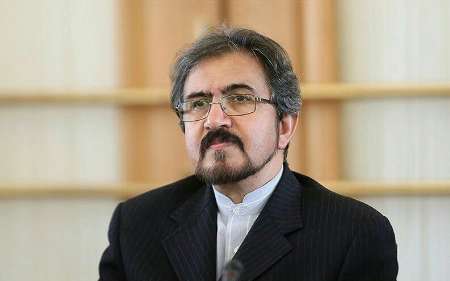
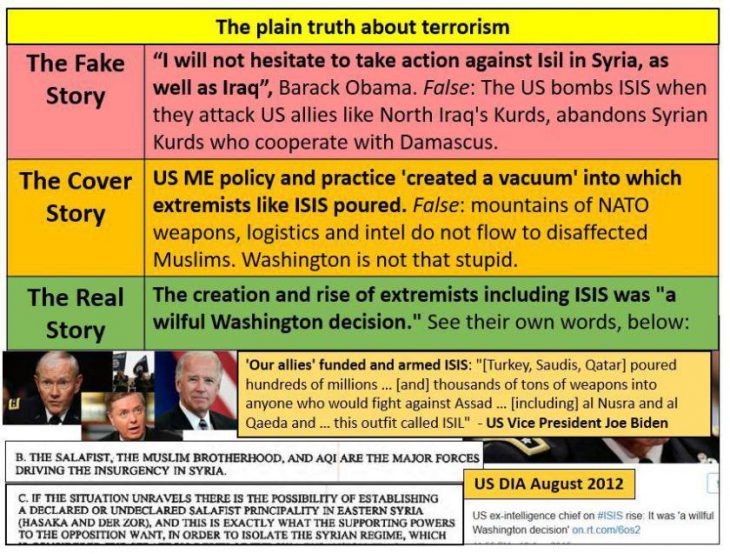
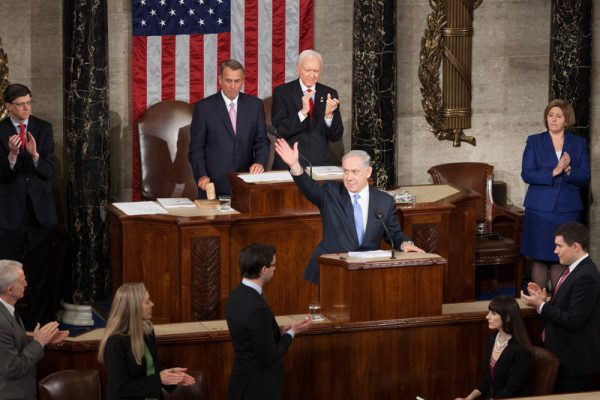

 Aletho News
