Everything Israel does is part of a plan, not a forced ‘response’ to ‘terrorism’
MEMO | May 15, 2016
 On the 68th anniversary of the Nakba (Catastrophe), when the Zionist State of Israel was created on Palestinian land, it is worth reflecting on the propaganda that the world has been fed ever since. Arguably the most pervasive is the perennial claim that Israel only ever “responds” to Palestinian “terrorism” every time it sends its tanks, jets and drones over the border into the Gaza Strip, or its troops into the West Bank and East Jerusalem to destroy Palestinian homes and lives.
Let’s put aside for one moment the fact that the Palestinians have a legal right – some would say obligation – to resist Israel’s brutal military occupation of their land with all means at their disposal. Their legitimate resistance is neither “terrorism” nor mindless violence; it is focused and with a clear purpose in mind: the liberation of Palestine. This is a fact that is ignored by media and politicians alike when they back Israel’s offensives against Palestinian civilians with the claim that Israel has a “right to defend itself”. It certainly does if it is attacked by a belligerent state, but not, in law, to defend itself against the people living under its military occupation. Statements by Western politicians dismiss the Palestinians’ legal rights at a stroke, exposing their blatant support for Zionism in the process.
Scrutiny of how Israel’s offensives have been launched against the people of Gaza over the past few years demonstrates that the Zionist state is the prime cause of the violence through its vicious occupation policies in the occupied West Bank and the blockade of the Gaza Strip; indeed, its polices before, during and since the Nakba. Rockets fired from the territory and other acts of resistance have to be viewed within that context if there is to be a genuine attempt to decipher the reality of the situation. The same is true of the three major Palestinian uprisings in 1987-1991, 2000-2005 and 2015-present. All were in response to Israeli oppression and occupation, rather than the over-simplistic “violence against Israelis” that some claim.
When Israel’s “Declaration of Independence” was read out by David Ben-Gurion in 1948, the pro-Israel narrative insists that “Arab armies” immediately invaded the nascent state to strangle it at birth, ignoring very conveniently that, apart from anything else, a deal had been struck by the Zionists with the then King Abdullah of Jordan (the current monarch’s grandfather), who also had his eyes on Palestinian territory. The context of the ethnic cleansing and massacres committed as part of “Jewish terror tactics” (Guerrilla Warfare, Robin Corbett, 1986) in the run-up to May 1948 is not mentioned, nor is the steadily-rising levels of Jewish immigration to British Mandate Palestine during the 1920s and 1930s; nor, indeed, is the Zionist lobbying that went on to squeeze the infamous Balfour Declaration out of the British government in 1917, when Britain had no right whatsoever to promise to give Palestine, or parts thereof, to “the Jewish people”. In short, the narrative, which has been picked up and disseminated by pro-Israel politicians and media in the West for decades, was and remains that Israel – “the only democracy in the Middle East” – is always being attacked by “the Arabs” and so must be supported with endless military, political and economic assistance. Context is everything, and it is missing from this narrative, as is the fact that Israel has nuclear and possibly chemical weapons.
If there is an iota of sincerity in Israel’s claims that its legitimacy was provided by either Balfour (which mentioned a “national home” not a state) or the 1947 UN Partition Plan (passed without consulting the indigenous people of Palestine), then let its government pull back to the land designated under the UN plan and place Jerusalem under international control; end the occupation of the West Bank and Jerusalem, and the Gaza Strip, and around 25 per cent of what is now part of Israel. This will never happen, of course, for the simple reason that the aim of Zionism is to establish “Greater Israel”, from the sea to the River Jordan, at the very least. This was described by Joseph Weitz, the head of the Jewish National Fund (which buys land in Palestine for settlement by Jews) in 1940 as “… the Western Israel”. Some argue that it goes further (as Weitz implied), and includes southern Lebanon (which was occupied by Israel from 1982 to 2000), the Sinai Peninsula (occupied from 1967 to 1982, apart from Taba, 1989), across to the Euphrates and south into what is now Saudi Arabia. Israel remains to this day the only member state of the United Nations which has never declared what its borders are.
This is all consistent with what prominent Zionist Israelis have expressed over the years. In 1954, for example, Ben-Gurion wrote, “To maintain the status quo will not do. We have to set up a dynamic state, bent upon creation and reform, building and expansion.” (Rebirth and Destiny of Israel, 1954, p419).
A year later, ex-prime minister Menachim Begin, who was wanted in Britain until the day he died for his role in massacres carried out by the Zionist terror group Irgun in the 1940s, told the Knesset (Israeli parliament): “I deeply believe in launching preventive war against the Arab states without further hesitation. By doing so, we will achieve two targets: firstly, the annihilation of Arab power; and secondly, the expansion of our territory.”
Begin’s “preventive war” came about in 1956, with the British-French-Israeli assault on the Suez Canal, and in 1967 when, again contrary to the pro-Israel narrative, Israel attacked and destroyed the Egyptian air force in a pre-emptive strike to launch the “Six-Day War”. Former minister Mordechai Ben-Tov denounced the claim that Israel’s existence had “hung upon a thread” in the run-up to the war: “The entire story of the danger of extermination was invented in every detail and exaggerated a posteriori, to justify the annexation of new Arab territory.” Furthermore, General Ezer Weizmann was quoted in Maariv, also in 1972, as saying “There was never a danger of extermination [prior to the Six-Day War in 1967].”
In 1972, Yitzhak Rabin, a general and then Prime Minister of Israel, who was assassinated by a Zionist fanatic in 1995, told France’s Le Monde, “I do not believe that Nasser [Egypt’s president] wanted war. The two divisions which he sent into Sinai on 14 May [1967] would not have been enough to unleash an offensive against Israel. He knew it and we knew it.”
Numerous Israeli politicians have, over the years, expressed their intentions with regards to the land of Palestine, and what should be done to the Palestinians. Before his first term as prime minister, the then Deputy Foreign Minister Benjamin Netanyahu told students at Bar Ilan University in 1989, “Israel should have exploited the repression of the demonstrations in China [Tiananmen Square], when world attention focused on that country, to carry out mass expulsions among the Arabs of the [occupied Palestinian] territories.”
According to the late Ariel Sharon in 1998, “It is the duty of Israeli leaders to explain to public opinion, clearly and courageously, a certain number of facts that are forgotten with time. The first of these is that there is no Zionism, colonisation, or Jewish State without the eviction of the Arabs and the expropriation of their lands.”
With this in mind, it is worth remembering that Israel has wiped off the map more than 500 Palestinian towns and villages since 1948 in a deliberate effort to destroy all evidence that Palestine was ever an Arab land. “Jewish villages were built in the place of Arab villages,” said former General Moshe Dayan in Haaretz in April 1969. “You do not even know the names of these Arab villages, and I do not blame you because geography books no longer exist. Not only do the books not exist, the Arab villages are not there either. Nahlal arose in the place of Mahlul; Kibbutz Gvat in the place of Jibta; Kibbutz Sarid in the place of Huneifis; and Kefar Yehushua in the place of Tal al-Shuman. There is not a single place built in this country that did not have a former Arab population.” (Quoted by Edward Said in, Zionism from the Standpoint of Its Victims, Social Text, Volume 1, 1979, 7-58)
It should be obvious, therefore, that Israel does not “respond” to Palestinian violence, but the Palestinians are defending themselves against the existential threat that is the State of Israel and its expansionist policies. The ethnic cleansing that began prior to the creation of the Zionist State in 1948 has been ongoing for 68 years and shows no sign of abating.
That is the lesson that we must learn from the Nakba: everything that Israel does is part of a well-thought out plan; it is not prone to spontaneous “responses” to Palestinian resistance, but it is very good at being the aggressor and blaming the victims. We – and the Palestinians – forget that at our peril.
Trump Slams US Wars in the Middle East
By Yves Smith | naked capitalism | May 13, 2016
There are good reasons to harbor serious reservations about The Donald, given that he changes his position as frequently as most people change their clothes. But so far, he has been consistent in making an argument that is sorely underrepresented in the media and in policy circles: that our war-making in the Middle East has been a costly disaster with no upside to the US. Trump even cites, without naming him, Joe Stiglitz’s estimate that our wars have cost at least $4 trillion.
As Lambert put it, “I hate it when Trump is right.”
If you think Trump is overstating his case on Hillary’s trigger-happiness, read this New York Times story, How Hillary Clinton Became a Hawk.
And on Clinton’s role in Libya, which Obama has since called the worst decision of his presidency:
Mrs. Clinton’s account of a unified European-Arab front powerfully influenced Mr. Obama. “Because the president would never have done this thing on our own,” said Benjamin J. Rhodes, the deputy national security adviser.
Mr. Gates, among others, thought Mrs. Clinton’s backing decisive. Mr. Obama later told him privately in the Oval Office, he said, that the Libya decision was “51-49.”
“I’ve always thought that Hillary’s support for the broader mission in Libya put the president on the 51 side of the line for a more aggressive approach,” Mr. Gates said. Had the secretaries of state and defense both opposed the war, he and others said, the president’s decision might have been politically impossible.
And yes, that’s this Ben Rhodes.
Leaked Memo: Jordan’s King Reveals UK SAS Forces On The Ground In Syria, Israel Supports Nusra
By Brandon Turbeville | Activist Post | May 10, 2016
According to a leaked memo obtained by the Guardian in late March, 2016 King Abdullah of Jordan apparently briefed US officials on the fact that Jordanian Special Forces would be deployed to Libya to work alongside the British SAS. In that same briefing, Abdullah also allegedly stated that British SAS had been active in Libya since early 2016.
As Randeep Ramesh wrote for the Guardian at the time,
According to the notes of the meeting in the week of 11 January, seen by the Guardian, King Abdullah confirmed his country’s own special forces “will be imbedded [sic] with British SAS” in Libya.
According to the memo, the monarch met with US congressional leaders – including John McCain, the chairman of the Senate armed services committee, and Bob Corker, the chairman of the Senate foreign relations committee. Also present was the House of Representatives speaker, Paul Ryan.
King Abdullah said UK special forces needed his soldiers’ assistance when operating on the ground in north Africa, explaining “Jordanian slang is similar to Libyan slang”.
Abdullah also allegedly pointed out that the British had been instrumental in setting up a “mechanized battalion” in Southern Syria made up of “local tribal fighters” (aka terrorists) and lead by a “local commander” for the purposes of fighting against the Syrian government forces.
The Jordanian king also stated that his troops were ready to fight side by side with the British and Kenyans for the purposes of invading Somalia.
According to the Guardian,
The full passage of the briefing notes says: “On Libya His Majesty said he expects a spike in a couple of weeks and Jordanians will be imbedded [sic] with British SAS, as Jordanian slang is similar to Libyan slang.”
The monarch’s apparent openness with the US lawmakers is an indication of just how important an ally Jordan is to the US in the region. Since the 1950s Washington has provided it with more than $15bn (£10.5bn) in economic and military aid.
However, the Jordanians had become frustrated over perceived US inaction over the Middle East in recent months. Five years of fighting in Syria have dramatically impacted on Jordan, which has absorbed more than 630,000 Syrian refugees, and the king has repeatedly called for decisive action to end the conflict.
Interestingly enough, the King also allegedly admitted that Turkey and specifically Recep Erdogan is hoping for the victory of “radical Islamists” in Syria and that Israel is tacitly supporting al-Qaeda/al-Nusra in Syria.
Ramesh summarizes the King’s alleged statements by writing:
- The Turkish president, Recep Tayyip Erdoğan, “believes in a radical Islamic solution to the problems in the region” and the “fact that terrorists are going to Europe is part of Turkish policy, and Turkey keeps getting a slap on the hand, but they get off the hook”.
- Intelligence agencies want to keep terrorist websites “open so they can use them to track extremists” and Google had told the Jordanian monarch “they have 500 people working on this”.
- Israel “looks the other way” at the al-Qaida affiliate Jabhat al-Nusra on its border with Syria because “they regard them as an opposition to Hezbollah”.
In March, Stratfor analysts reported that UK Special Forces were already in Libya and that they were “escorting MI6 teams to meet with Libyan officials about supplying weapons and training to the Syrian army and to militias against the Islamic State. The British air force bases Sentinel aircraft in Cyprus for surveillance missions around [the Isis Libyan stronghold] Sirte as well.”
The presence of Western/NATO Special Forces in Syria is by no means a revelation at this point. These forces have been present in the embattled Middle Eastern country for some time.
In October, 2015, it was announced by the White House that 50 Special Forces troops would be sent to Syria. This announcement came days after it was reported that U.S. Special Forces commandoes were working with Kurdish forces to “free prisoners of the Islamic State” in Syria. Later, the presence of U.S. Special Forces in Syria was tacitly acknowledged in 2015 when the U.S. took credit for the killing of Abu Sayyaf.
Reports circulated in October, 2014 that U.S. soldiers and Special Forces troops were fighting alongside Kurdish battalions in Kobane. An article by Christof Lehmann published in March 20, 2015 stated,
Evidence about the presence of U.S. special forces in the Syrian town Ayn al-Arab a.k.a. Kobani emerged. Troops are guiding U.S. airstrikes as part of U.S support for the Kurdish separatist group PYD and the long-established plan to establish a Kurdish corridor.
A photo taken in Ayn al-Arab shows three U.S. soldiers. One of them “Peter” is carrying a Bushnell laser rangefinder, an instrument designed to mark targets for U.S. jets, reports Ceyhun Bozkurt for Aydinlik Daily.
The photo substantiated previous BBC interviews with U.S. soldiers who are fighting alongside the Kurdish separatist group PYD in Syria.
The photo of the three U.S. troopers also substantiates a statement by PYD spokesman Polat Can from October 14, 2014, reports Aydinlik Daily. Can admitted that a special unit in Kobani provides Kurdish fighters with the coordinates of targets which then would be relayed to “coalition forces”.
The first public U.S. Special Forces raid in Syria took place in July, 2014 when Delta Force personnel allegedly attempted to rescue several Americans being held by ISIS near Raqqa. Allegedly, the soldiers stormed the facility but the terrorists had already moved the hostages. While the raid would provide evidence that U.S. Special Forces were operating in Syria in 2014, many researchers believe the story is simply fabricated by the White House to provide legitimacy to the stories of murdered hostages and thus the subsequent pro-war propaganda that ensued as well as to promote the gradual acceptance of U.S. troops on the ground in Syria.
In 2012, an article published in the Daily Star by Deborah Sherwood revealed that SAS Special Forces and MI6 agents were operating inside Syria shortly after the destabilization campaign began in earnest. Sherwood writes,
Special Forces will help protect the refugees in Syria along the borders.
Last week as the president ignored an international ceasefire, plans were being finalised to rescue thousands of Syrians.SAS troops and MI6 agents are in the country ready to help rebels if civil war breaks out as expected this weekend.
They also have hi-tech satellite computers and radios that can instantly send back photos and details of refugees and Assad’s forces as the situation develops.
Whitehall sources say it is vital they can see what is happening on the ground for themselves so Assad cannot deny atrocities or battles.
And if civil war breaks out the crack troops are on hand to help with fighting, said the insider.
. . . . .
“Safe havens would be an invasion of Syria but a chance to save lives,” said a senior Whitehall source.
“The SAS will throw an armed screen round these areas that can be set up within hours.
“There are guys in the communications unit who are signallers that can go right up front and get involved in close-quarter fighting.”
In addition, in March 2012, it was reported by Lebanon’s Daily Star that 13 French intelligence agents had been captured by the Syrian government, proving not only that Western Special Ops presence in Syria did, in fact, exist but also that it existed essentially from the start.
Brandon Turbeville – article archive here – is the author of seven books, Codex Alimentarius — The End of Health Freedom, 7 Real Conspiracies, Five Sense Solutions and Dispatches From a Dissident, volume 1 andvolume 2, The Road to Damascus: The Anglo-American Assault on Syria, and The Difference it Makes: 36 Reasons Why Hillary Clinton Should Never Be President.
The Donald’s Foreign Policy
It sure trumps Hillary
By Philip Giraldi • Unz Review • May 10, 2016
Coming off a string of victories in the so-called Acela state primaries two weeks ago, GOP presidential candidate presumptive Donald J. Trump made what he described as a major foreign policy speech. Critics have blasted the effort as being short on details and long on generalities but, as ever, one’s perspective pretty much depends on what one expects or wants to hear. I admire Trump for two reasons. First is his uncompromising stance on illegal immigrants, which I fully support, and second is his willingness to challenge Republican orthodoxy on foreign policy by condemning the Iraq War and opposing nation building and military intervention overseas.
I wanted to hear two things on foreign policy: that Donald Trump is indeed committed to military non-intervention in other countries except in those rare instances where vital national interests are at stake and also that the United States would pursue a course of positive engagement with Vladimir Putin and Russia. I was not disappointed.
Trump actually used the words “peace” and “peaceful” a number of times, something that has been missing from GOP rhetoric for many years. He said that he would “view the world through the clear lens of American interests,” something that he went on to describe as “America First,” adding “Our goal is peace and prosperity, not war and destruction… war and aggression will not be my first instinct.” Paraphrasing John Quincy Adams, Trump concluded that “The world must know that we do not go abroad in search of enemies, that we are always happy when old enemies become friends, and when old friends become allies.”
Trump observed that there has been a fixation with policies that are both “foolish and arrogant” that have “led to one foreign policy disaster after another” in places like Iraq, Syria, and Egypt. “It all began with the dangerous idea that we could make western democracies out of countries that had no experience or interest in becoming a western democracy. We tore up what institutions they had and then were surprised at what we unleashed: civil war.”
This is all good common sense, lambasting the twin plagues of military intervention and democracy promotion, the two false idols that have respectively driven the foreign policies of the GOP and the Democrats. Trump’s comments in those specific areas could have been made by Ron Paul.
Trump went on to observe that “our actions in Iraq, Libya and Syria have helped unleash ISIS.” I would have added that the power vacuums that we have created actually gave birth to ISIS. Regarding Russia and China, he said “We desire to live peacefully and in friendship with Russia and China. We have serious differences with these two nations and must regard them with open eyes. But we are not bound to be adversaries. We should seek common ground based on shared interests…I believe an easing of tensions and improved relations with Russia…is possible.”
On the negative side, Trump took obligatory swipes at Iran and the nuclear agreement negotiated by the Obama Administration, but he did not say that he would seek to terminate the arrangement and the only line he drew was that “Iran cannot be allowed to have a nuclear weapon,” far less vitriolic than the neocon and conventional Republican demand that Tehran not have the “capability” to do so, which is a threshold that has already been passed and which many have viewed as a carte blanche justification of an immediate attack by the U.S.
Regarding Israel, Trump engaged in the usual American politician speak regarding “the one true democracy in the Middle East” that also serves as a “force for justice and peace.” He also has stated that he would be “neutral” in negotiating peace between the Israelis and Palestinians and turned around to endorse continued expansion of Israeli settlements on Arab land. Hopefully he knows better about what is going on in the Middle East or will have advisers who know better and are not afraid to speak the truth. At least he didn’t invite Israeli Prime Minister Benjamin Netanyahu to move in down the hall in the White House on Inauguration Day, which Hillary Clinton has de facto done.
And speaking of Hillary, comparing her record and promises with the Trump speech demonstrates the differences between the two. David Stockman has noted that Hillary “wants to use government to make government great again” while The Donald wants “to use government to make America great again.” Hillary is indeed the favorite candidate of the Welfare-Warfare State Leviathan, a monster that seeks to dominate overseas while simultaneously stripping Americans of their liberties at home.
Hillary’s record is one of unmitigated belligerency. She enthusiastically supported her President-husband’s devastation of the Balkans in the 1990s, a “police action” in which she repeatedly lied about being “under fire” when she arrived on a visit. And she also signed on to the invasions of Afghanistan in 2001 and Iraq in 2003 carried out by the George W. Bush Administration.
As Secretary of State, Hillary was the driving force behind “surges” of U.S. forces in Afghanistan, in demanding the attacks on Libya and the overthrow of its leader and in the arming of jihadis in Syria to bring about regime change. Bombing Libya was indeed a Hillary project, initiated at her insistence in spite of misgivings by President Barack Obama. The Libyan fiasco led to government arsenals being looted with the weapons making their way to arm local militias and also to Islamic militants in Central Africa. It is widely believed that the four Americans killed in Benghazi in 2012 were killed while arranging for weapons transfers to the “moderate rebels” in Syria. If success as a diplomat is measured by the ability to destabilize entire regions, Hillary certainly takes center stage as the finest Secretary of State since Madeleine Albright, who famously declared that killing half a million Iraqi children through sanctions was “worth it.” Albright is currently regarded as Hillary’s closest foreign policy adviser.
Like several of the other women who have surrounded the president as top level advisers, Hillary is an enthusiastic advocate of the “R2P” doctrine, “responsibility to protect.” That means that the Washington can intervene in a foreign country even if that nation’s government in no way threatens the United States. The intervention is based on humanitarian grounds, allegedly to protect the local citizens against their own leaders, but it ironically and inevitably winds up killing mostly civilians in far greater numbers than would have otherwise been the case if there had been no military action. Libya and Syria are perfect examples of R2P on steroids.
Hillary has a team of strongly pro-Israel foreign policy advisers and she has frequently expressed her hostility towards Iran, which she has threatened to “obliterate.” One of her campaign videos includes “Iran seeks the destruction of Israel, Iran is a leading sponsor of terror in the region, Iran is flouting international law with its ballistic missile tests and its threats against our allies and partners.” None of the assertions are actually true.
Regarding the threat from Russia, Hillary has inevitably likened President Vladimir Putin to Adolph Hitler. She and her neocon acolyte Victoria Nuland were the driving forces behind cranking up the unrest in Ukraine, which eventually exploded into yet another pastel revolution that quickly became mired in corruption before dissolving into something approaching anarchy, which prevails to this day. She nevertheless wants to provide lethal arms to Kiev and also wants to expedite both Ukraine and Georgia joining NATO, even though it is a given that such action would provoke a major crisis with a nuclear armed and militarily quite capable Russia.
Hillary sees the conflict in Syria as an additional opportunity to confront Moscow, just like in the heady days of the Cold War, so she advocates a no-fly zone as a way for American and Russian flyboys to go head to head and is firm in her demand to replace Bashar al-Assad no matter what. She is one tough lady and she wants to make sure than everyone knows it. And of course her role model is Benjamin Netanyahu, who, she has promised, will be invited to join her in Washington as soon as her administration begins work in January.
So if one is concerned with foreign policy the choice between Donald and Hillary is no choice at all. Hillary may have the resume but it is essentially a bad one. If Trump does even a little of what he pledges to do he is a much better deal for the American people, as well as for most of the world, than is Hillary Clinton.
An American Original: John Kerry – From His Remarkable Recent Commencement Address At Northwestern University To The Remarkable Career That Made It Possible
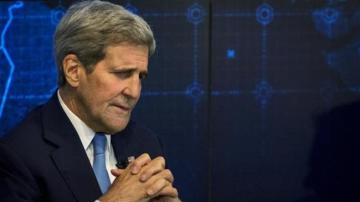
By John Chuckman | Aletho News | May 9, 2016
John Kerry is, besides many other unpleasant things, a rather ridiculous man, and he has managed to prove that proposition time and time again.
He used his recent commencement address at Northwestern University to attack Donald Trump. It is difficult to understand why young graduates at one of America’s better universities would want to hear political boiler plate from a key member of a failed and dying administration, rather than the usual vaguely inspiring stuff about the future, but that is what the graduating class got for their student fees.
I suppose, as so often is the case in America, the empty prestige of having someone with a big job speak, even when they have nothing to say, mattered. After all, Hillary Clinton has collected countless millions doing exactly the same thing for audiences at investment banker and defense contractor banquets in recent years.
Well, the part of Trump on which Kerry focused was his proposal for a wall with Mexico.
I don’t like walls myself, and it is my belief that even if elected Trump, for many reasons, will not succeed in emulating the Emperor Hadrian. Still, you might expect from the point of view of a Secretary of State, supposedly gazing upon the world’s countries with an impartial, god-like eye, that if it is okay for Israel to keep building walls, and it has several new ones underway right now, all built on other people’s property, why can’t others? The reasoning in both cases, and in all other cases such as those in Kerry’s contemporary Europe where new walls of various forms are frantically being built, is the same: we need to stop unwanted people crossing the border.
Can anyone even imagine Kerry – this man who, once not long ago, reminisced over Champagne toasts about some distant relative or another of his who was allegedly part-Jewish (truly, has grovelling by a Secretary of State reached such levels before? I would have expected his entire audience either to choke or throw up) – ever saying a single word to Israel about its walls, walls which go far beyond serving Israel’s border fears to literally chopping up and destroying the land which supports millions of other people? It would be as though Trump were demanding a series of walls inside Mexico to balkanize the entire country and then set about building them himself with America’s armed forces. Now that would be utterly ridiculous, not to say criminal, but Israel’s doing just that is never called ridiculous or criminal, and it certainly is never questioned by Kerry.
And then, as though in an effort to reclaim the stature of his address from just political campaign boiler plate, Kerry’s rhetoric drifted off to the subject of a future borderless world.
Now that is an old idea that appeals greatly to me, but I know very well that Kerry is being dishonest here. The world in fact, not all that long ago, pretty much was borderless. It was precisely the rise of the modern nation state in the 19th century which killed off that amiable concept requiring no passports or visa or permissions for moving about. Of course, we are talking about precisely the kind of modern nation state which Kerry has lovingly served in expanding its power and influence over others for his entire adult life.
Kerry’s dishonesty extends into what he even means by a “borderless world.” Now, I have always believed the Apostle Paul in emphasizing deeds rather than words, so If we are to judge by Kerry’s actual acts and those of predecessor Secretaries of State such as Hillary Clinton or Madeleine Albright or Henry Kissinger, and not by the State Department’s regularly-broadcast, doubtful advertising claims, John Kerry’s concept of a “borderless world’ is one in which the United States runs everyone’s affairs, rendering the borders of individual countries meaningless.
Now, that is a concept which very much does not appeal to me, nor does it appeal, I suspect, to a great many of the world’s seven billion people and their governments.
Just recently, this dishonest and generally unpleasant man has put an ultimatum to the government of Syria, making threats that if he doesn’t see what he wants by the beginning of August, there will be serious consequences. That certainly sounds to me like a Mafia Don speaking, demanding payment of protection money from some business, or else.
John Kerry has no business telling the government of Syria to do anything, much less to dissolve itself. It is, and has been, a reasonably popular government, one which receives the support of a majority of Syrians in polls and elections. Among other reasons for its popularity is President Assad’s defence of religious minorities. Syria’s citizens form an elaborate quilt of various religions, and they know their rights to worship as they please are protected in a region of the world where that is not common. Some of Mr. Kerry’s closest working associates in the region cannot say the same thing, and indeed they include associates who are quite violent towards people of differing faiths.
The proxy forces which Kerry and his predecessor, Hillary Clinton, have supported for five years in tearing Syria apart consist literally of various gangs of intolerant extremists and cut-throats. Boy, when it comes to double-speak, John Kerry is your man.
By what right does he do this? None, except that might makes right. America has supported terror in Syria, supplying weapons, platoons of cut-throats, and training while supporting the thugs of Turkey and Saudi Arabia in their logistics of destruction, all while pretending in State Department advertisement after advertisement that it opposes terror. And we’ve only just learned that Hillary Clinton supported the transfer of supplies of deadly Sarin nerve gas from Gadhafi’s stockpiles in wrecked Libya (another stunning State Department achievement) through a secret pipeline (read: Turkey) to the cut-throats in Syria where it was promptly used to kill civilians in the hope of blaming Assad and creating a casus belli for the United States (or, as Obama put it in his elliptical language, responding to Assad crossing a red line).
But John Kerry still hasn’t got what he wants in Syria, so now we have a new threat. Why is Kerry so determined to topple the government of Syria? Because Assad is an independent-minded leader, one who does not immediately say “yes, sir,” to every whim of Washington’s, and if there is anything which recent history teaches us, it is that the outfit Kerry serves has no tolerance for the independent-minded. So as to emphasize the point, Washington has left behind a trail of death and destruction in the region – perhaps a million dead and millions made refugees – all of it aimed at getting rid of inconvenient independent leaders.
This intolerance by Washington of independent-mindedness is strongly supported – supported is actually much too feeble a word, demanded being more apt, and demanded regularly over heated phone lines – by the government of America’s colony in the region, the same government to whom Kerry fears even saying so much as a word about its many walls criss-crossing other people’s land.
Quite a disgusting business I think which somehow manages to be converted by our press into “foreign policy,” just as one of its authors, John Kerry, manages to be converted into a “diplomat.’
Kerry was a rich boy who, after graduating university, started his political ascent by spending four months in Vietnam, busying himself with shooting peasants in the back from an armored speedboat racing up and down rivers. He wanted to gain some war “creds” for an anticipated political career. Apart from his killings in Vietnam, he made such a muck of things, leaving behind colleagues who had only contempt for his false heroics and self-promotion. Then our man Kerry, having returned home and seeing how badly the Vietnam War was regarded by people, decided to add some new “creds” to his resume, anti-war ones. So, no matter how the political winds turned in the future, John-boy was covered. He appeared with some anti-war demonstrators, once throwing his filthily-earned medals into a bin, from which they were later quietly retrieved for him.
As to Kerry’s actual attitude towards America’s dirty colonial wars, we have the testimony of his whole career in the Senate, as a Presidential candidate, and finally as Secretary of State, faithfully serving and supporting them.
Kerry’s campaign, in running for President in 2004, was so unbelievably dreary and empty of all meaning, that the American people actually re-elected the most disliked president in the country’s history, George Bush. That feat stands as a remarkable testimonial to John Kerry’s talents.
The only big thing Kerry seems ever to have done that was genuinely successful was marrying the woman who inherited the Heinz Ketchup and Pickle Fortune. That made him wealthy beyond his dreams, perhaps planting in his brain fanciful thoughts of an ambitious young George Washington marrying the widow, Martha Custis, said to have been the wealthiest woman in the American colonies.
When John Kerry says anything on any topic, his listeners would be wise to consider the source, for even though he walks around in the appointed robes of America’s Secretary of State, he is pretty much a life-long, ambitious, and dishonest failure.
US not to sell F-35 fighter jets to Arab countries: Report
Press TV – May 4, 2016
The US has given Israel categorical assurances that it will not deliver F-35 stealth multirole fighter jets to Arab states to beef up their aerial power, a report says.
According to the Hebrew-language daily Maariv, Washington had confirmed to Tel Aviv that this type of aircraft “will be exclusively allocated for Israel in the Middle East.”
The newspaper further said Israeli authorities are wary of the fact the sale of F-35 military aircraft to Arab countries would chip away at the “technological superiority of Israel in the region.”
There are reports that Washington is mulling the sale of fifth-generation F-35 aircraft to Qatar and Kuwait. US military officials have already announced that they will maintain a quality gap in favor of Israel in such a case.
The Hebrew-language newspaper Yisrael Hume reported recently that the Israeli Air Force is due to receive the first the first batch of F-35 fighter jets at the end of the current year.
It will receive a further seven warplanes next year. An airbase is going to be constructed in Israel’s southern desert region of Negev for the new aircraft.
US military aid to Israel negotiations stalled: Report
Officials, meanwhile, say negotiations meant to enshrine US military aid for Israel over the next decade have snagged on disputes about the size, scope and fine print of a new multibillion-dollar package.
Israel is trying to garner $10 billion more than the current 10-year package, and billions more than the US administration is currently offering through guaranteed funding for missile projects.
US President Barack Obama, however, wants the funds to be spent entirely on US-made weapons, and not spent even partly on Israeli arms, several US and Israeli officials told Reuters.
Under the current agreement signed in 2007 and due to expire in 2018, Israel has received a total sum of about $30 billion or an average of $3 billion per annum from the US.
The current deal allows Israel to spend 26.3 percent of US funds on its own military industries. Washington is seeking to phase out this provision, and ensure that all of the money is spent on US-built munitions.
Tel Aviv says such a measure would give a devastating blow to its arms firms, which make some $800 million a year.
The United States also wants to put an end to a provision which allows Israel to spend around $400 million in annual funds on military fuels.
Israel has long been a major recipient of US aid, most in the form of military assistance.
Tel Aviv also wants the US administration to support missile defense projects that have so far relied on ad hoc assistance by the U.S. Congress.
The Obama administration has reportedly balked at Israel’s request to stipulate a separate funding track in the military deal for missile projects.
In recent years, US legislators have given up to $600 million to Israel in the form of annual discretionary funds for missile systems. The figure is four-fold the $150 million requested by the Obama administration.
How Britain’s ex-diplomats are profiting from global conflict zones
RT | May 3, 2016
Former UK diplomats are cashing in on their contacts and experience and advising despots, venture capitalists and Gulf regimes, according to a new investigation.
Britain’s ex-ambassadors to Afghanistan, Saudi Arabia and Iraq, as well as former MPs, are legally profiting from conflict zones and poor countries in the Global South, according to the Daily Mail.
It has led to concerns that former diplomats are using their years of exposure to state secrets and their enviable contact lists to win lucrative paydays with big corporations.
One of the most high-profile figures involved is a former ambassador to Afghanistan, and one-time critic of the war and occupation, Sir Sherard Cowper-Coles.
Cowper-Coles took a job working for British arms firm BAE in 2010 after taking early retirement from the Foreign and Commonwealth Office (FCO).
Critics have connected him with halting a major investigation into the UK/Saudi arms trade in 2006.
He left BAE in 2013 to take up a role with HSBC. Both appointments were approved by the Advisory Committee on Business Appointments (ACOBA), which examines if any conflicts of interest arise from such appointments.
Another former diplomat named in the investigation is Sir Dominic Asquith, who served as ambassador to Libya between 2011 and 2012 – the period immediately after the UK’s disastrous intervention to remove the Gaddafi regime.
Asquith now advises the Libya Holdings Group, which seeks out investment opportunities in the war-torn North African state.
Former ambassador to Nigeria Sir Andrew Lloyd later became a vice president of Statoil, under the proviso from ACOBA that he not deal with the firm’s Nigerian operations.
The highly experienced Sir William Patey – a former UK representative to Iraq, Sudan, Afghanistan and Saudi Arabia – later became an advisor for private security firm Global Risks.
Elected politicians have also been involved in similar venture capital schemes in the developing world.
Former Tory Africa minister Sir Henry Bellingham once sang the praises of UK mining firm Pathfinder Minerals to the government of Mozambique when the company was involved in a legal dispute. He now chairs the firm.
Blairite ex-Foreign Secretary David Miliband is reported to have earned up to £1 million from his advisory jobs within two years of leaving office. That includes £15,000 for one day of advising a Pakistan venture capitalist and £65,000 for sitting on a foreign ministerial forum in the United Arab Emirates.
Recently a number of retired British military generals have been seen to be involved in similar activities.
On April 27, ex-general Simon Mayall, former Ministry of Defence advisor to the Gulf, told a parliamentary committee on the arms trade that its inquiries were “unwelcome and self-defeating.”
After leaving the military in 2015, he took up a role at Greenhill & Co, a major investment bank with global reach and Middle East energy interests.
On April 18, former general and ex-head of mercenary firm Aegis James Ellery was interviewed by the Guardian over allegations the company was using former Sierra Leonean child soldiers as private guards in Iraq.
Ellery, who left Aegis in 2015, lamented the state of the mercenary market, saying: “I’m afraid all we can afford now is Africans.”
Ellery’s previous jobs include demobilizing Sierra Leone child soldiers as part of a UN program.
UK Labour leader refuses to denounce Hamas, Hezbollah
Press TV – May 2, 2016
Britain’s Labour Party Leader Jeremy Corbyn has refused to give in to calls from Israeli officials and British Jewish figures to denounce Islamic resistance movements Hamas and Hezbollah, vowing to continue talking to the two groups.
The leader of the opposition has come under pressure from a number of Labour lawmakers, Israeli Ambassador to London Mark Regev and Jewish leaders in the UK to distance himself from Labour politicians’ recent remarks condemning Israeli crimes against Palestinians, as well as groups fighting against the Tel Aviv regime’s occupation of the Palestinian lands.
Labour MP Naz Shah resigned as an aide to the party’s shadow chancellor last week after being forced to apologize for backing calls for Israel to “relocate” to the United States.
Also last week, the Labour Party suspended former London Mayor Ken Livingston after he defended Naz Shah in BBC interview and criticized the British media for ignoring Israeli war crimes against the Palestinian people. Livingston also said that Nazi leader Adolf Hitler had been a Zionist early in his political career.
Following these developments, Israeli figures accused the Labour Party leader of being soft on “anti-Semitism” in the party, which was forced to launch an inquiry into how to tackle the issue.
On Monday, Israel’s opposition leader Tzipi Livni said that Britain should condemn “anti-Semitism for the sake of its own core values.”
Israeli Ambassador Regev called on Corbyn to denounce Hamas and Hezbollah and pay a visit to Tel Aviv to build bridges.
Regev referred to Corbyn’s earlier support for the Islamic resistance movements, which were labeled as terrorist organizations by Britain.
A number of British Jews also urged Corbyn to display clarity about having relations with the two groups.
In response to the ongoing calls to reject Hamas and Hezbollah, Corbyn’s spokesman issued a statement on Sunday, saying, “Jeremy Corbyn has been a longstanding supporter of Palestinian rights and the pursuit of peace and justice in the Middle East through dialogue and negotiation.”
“He has met many people with whom he profoundly disagrees in order to promote peace and reconciliation processes, including in South Africa, Latin American, Ireland and the Middle East,” the statement added, noting that it is essential to talk to people “with whom he profoundly disagrees in order to promote peace and reconciliation processes, including in South Africa, Latin American, Ireland and the Middle East.”
“Simply talking to people who agree with you won’t help achieve justice or peace,” it added.
Corbyn has in the past called for the participation of Hamas and Hezbollah for a settlement of the conflict in the Middle East and highlighted the role of Iran in the regional issues. He has also referred to the two movements as “friends.”
US presidential elections: A view from the Middle East
By Sharmine Narwani | RT | April 30, 2016
Although the era of US global hegemony is coming to a close, the Middle East – more than most regions – is still reeling from the nasty last jabs of that Empire in decline.
It is little wonder, then, that the US presidential election season is scrutinized carefully in all corners of the Mideast.
Over here, the debate over the likely victor is less about economic, political and social projects than it is about which candidate is least likely to launch wars against us.
Anecdotally, there seems to be a consensus that Hillary Clinton would be the worst for the region, though of course – like in the United States – that perception changes dramatically when the conversation is with regional elites and ‘liberals.’
And just like their American counterparts, Middle Easterners get bogged down in arguments about Donald Trump’s ‘racism,’ Bernie Sanders’ ‘viability’ and Clinton’s ‘hawkishness.’ Media, after all, has never been more uniform in its pronouncements – we all, universally, receive the same talking points.
But US Presidential Election 2016 means a lot more than US polls in decades past. From the Levant to the Persian Gulf to North Africa, borders have never been so frayed, terrorism so pervasive, security and resources so threatened.
The Middle East is a wretched mess. And at the heart of each and every one of these quagmires stands the United States, imposing itself, its military ‘expertise’ and its humanitarian ‘do-gooding’ into our suffering. Ironically, perhaps, there are few problems in the Mideast that have not been caused or exacerbated by the destructive hand of US foreign policy.
The last playground
The Middle East is the last global playground where the US can act with impunity. Part of the reason for this is that most of the two dozen states that make up the region are still headed by US-backed dictators and monarchs – American proxies that prioritize Washington’s interests over those of its citizenry. The US plays hard in this region because it wishes to maintain this remarkably favorable status quo, which it has lost virtually everywhere else.
Even as the Cold War was drawing to a close – vanquishing the old Soviet bloc proxy leaders in the Mideast and replacing them with US-friendly ones – the 1979 Iranian Revolution flipped the region once more, ushering in a new framework for independence from the ‘Anglo imperialist.’
In the aftermath of Iraq’s war with Iran, which had placed Iranian aspirations on hold for eight long, destructive years, Tehran began to forge regional relationships that formed the underpinnings of a new Axis of Resistance to US and Western hegemonic ambitions.
The US expanded its military role in the Middle East mainly to eradicate this ‘Shia’ thorn in its side – but it has not only failed to do so with each consecutive US administration, it has willfully unleashed the well-contained demons of sectarianism to achieve this goal.
Hello, Sunni Wahhabi fundamentalism. Hello, Al Qaeda. Hello, ISIS.
Why even get into this recent history? It’s important for one main reason. Even as the US now turns its guns on the Frankenstein monster it created from its invasions of Afghanistan, Iraq, Libya and now its intervention in Syria… Washington also has its guns aimed at Iran, Syria, Hezbollah and other entities that are fighting this very terrorism.
When Trump debuted his foreign policy vision earlier this week, he pointed out that current US policy was “reckless, rudderless and aimless” – “one that has blazed the path of destruction in its wake.”
It’s all we’ve heard in recent years – certainly since the start of the Arab ‘uprisings’ – with pundits and commentators alike scratching their heads in confusion over US goals in the region.
American policy is not confused – it is very deliberate. Get your head around this: Washington seeks to thwart the Iranian-led axis by unleashing sectarian, Wahhabi-influenced extremists into parts of the region viewed as Iran’s strategic depth, AND it seeks to counter the proliferation of these extremists by reaching out to Iran, tactically – hence the sudden P5+1 nuclear deal in the midst of all this conflict.
This is what I call America’s “strategic dissonance” – playing both sides to engineer protracted conflict in an effort to gradually drive the two sides into extinction.
Only problem is the unpredictability of it all – and the ensuing chaos, destruction and terrorism that has now poured over these borders into Europe and beyond.
Mr. America versus Ms. Beltway
It is clear that this strategic dissonance has once more led to an American “unintended consequence.” It is equally clear that it will take nothing less than a sledgehammer to alter the destructive bent of US foreign policy.
What’s interesting about this election year is that voters have put their backs behind unlikely candidates Bernie Sanders and Donald Trump, mostly, it seems, to buck the establishment.
The two long-shot candidates have delivered scathing reviews of Beltway politicos and the ‘interest groups’ that prop them up – foreign and domestic, both.
By contrast, Hillary Clinton – the ‘deserving’ establishment candidate who was a shoo-in until a few short months ago – has had to fight for every vote in her contests with Democratic Party newcomer Sanders.
And the easiest blows against Clinton have been in the foreign policy arena, where the Beltway hawk has a long record of backing the wrong plan – in Iraq, in Libya, in Syria.
In the Mideast, Clinton’s militaristic leanings scuttle any goodwill one would otherwise have for a Democratic Party candidate. Egyptians lobbed tomatoes, shoes and water bottles at her motorcade when the then-secretary of state made an appearance after the ousting of longtime US ally President Hosni Mubarak.
It was under her stewardship at the Department of State when “foreign hands” began to make their marks on the Arab uprisings – none to the benefit of the Arab masses.
Her support for the ill-conceived US invasion of Iraq, which led to the establishment of Al Qaeda in that country, is a constant refrain here in the Mideast – much as it is in the United States. And her refusal to acknowledge the disastrous consequences of US military intervention in Libya remain proof that she never learned from Iraq.
Like him or not, Clinton’s maniacal laughter over Libyan leader Muammar Gaddafi’s violent death as she sanguinely declared “We came, we saw, he died,” has been forever imprinted on our collective memories.
We have since learned that US President Barack Obama’s decision to militarily intervene in Libya came down to her vote. Libyan blood cannot be washed off those hands.
And now Clinton wants to escalate in Syria by carving out a “safe zone” – which is how her Libyan adventure started.
If Clinton suffers from a likeability problem in the US, she is downright reviled in the Mideast – except among the usual suspects which include dictators, monarchs and other super-wealthy elites who have either contributed to the Clinton Foundation or are desperate to maintain their cushy positions within a US-dominated region.
Then there’s Trump
The highly controversial billionaire businessman Donald Trump has been roundly bashed in this region for his prejudicial comments against Muslims, but there’s a quiet parade of thinkers in the Mideast – from Arab nationalists to progressives to intellectuals – who have been casting coy second glances his way.
“Trump can turn the system upside down,” says a leading Lebanon-based Arab nationalist. “He’s his own man, he will not be dragged into the trappings of the deep state,” says an influential writer.
“Who else is willing to put the brakes on NATO, disengage from lousy alliances, hook up with Putin and others to fight terrorism the right way, prioritize diplomacy over military options? Not Clinton, no way,” a college student rants.
There is that.
Unlike Clinton, there’s not much we know about Trump. He has no foreign policy record, except of course his non-stop reminder that he opposed the US invasion of Iraq and warned that it would be a “disaster.”
But if you’re going to take a chance on a candidate – if you’re going to try to read between the lines of campaign promises – I suggest taking the unconventional, risky declarations more seriously than predictable, voter-friendly platitudes like “I support the state of Israel unconditionally.”
And Trump has some doozies.
On key US ally Saudi Arabia, arguably ground zero for the militant extremism rampant in the region – and a country that former Defense Secretary Robert Gates says was prepared to “fight the Iranians to the last American” – Trump warns that he might halt purchases of Saudi oil unless Riyadh commits ground troops to the ISIS fight. His comments mirror those of Gates – as disclosed in a 2010 Wikileaks cable – who said of the Saudis that it “is time for them to get in the game.”
“If Saudi Arabia was without the cloak of American protection, I don’t think it would be around,” suggests Trump, quite correctly.
On Russia, Syria and US support of rebels: “Putin does not want ISIS. The rebel groups… we have no idea who these people are. We’re training people, we don’t know who they are… we’re giving them billions of dollars to fight Assad… If you look at Libya, look what we did there, it’s a mess. If you look at Saddam Hussein, with Iraq, look at what we did there, it’s a mess…”
In what seemed like a swipe at US support of questionable militants in Syria and elsewhere, Trump says: “We need to be clear sighted about the groups that will never be anything other than enemies. And believe me, we have groups that no matter what you do, they will be the enemy. We have to be smart enough to recognize who those groups are, who those people are, and not help them.”
Asked if the Mideast would be more secure if Saddam and Gaddafi were still around and Assad were stronger, Trump boldly declares: “It’s not even a contest… Of course it would be.”
And this: “I like that Putin is bombing the hell out of ISIS. Putin has to get rid of ISIS because Putin doesn’t want ISIS coming into Russia.”
In short…
Trump is an unknown quantity, but he is delivering some home truths to restive voters in an unconventional election year.
Clinton is the quintessential establishment candidate, the sure-thing that voters wish they could like, who is running for president at the wrong time for a beltway insider.
Trump has defied all the odds thus far, and there is no reason he can’t continue to do that all the way to the White House. Whether or not he can keep surprising once he is there is anyone’s guess. Will he become co-opted by the system? Will he strike down entrenched Washington dogmas with his trademark arrogance? Nobody knows.
If Trump runs against Clinton, his campaign mantra has to be “Clinton: tons of experience, no judgment.” It’s pretty much the only way he can compete with a seasoned politician who is sure to throw his inexperience back in his face at every opportunity.
For the Mideast, this is not the time to pick the ‘devil we know.’ We know how that story ends every single time: destabilization, chaos, terrorism.
Trump is definitely the lesser evil, whichever way one looks at it. He simply cannot be worse than her.
But there is one solitary upside to a Clinton presidency. If Hillary Clinton is the next president of the United States… we will see the world shift decisively into a new multi-polar order. The battle over Syria became a red line for the Russians, Chinese and Iranians, and they placed protective arms around key states, in turn forging closer relations with each other – some of these, military dimensions – and with a number of other ‘middle powers’ that threatened to up-end US hegemonic ambitions once and for all.
Imagine then, the reactions of Russia, China, Iran, Brazil, South Africa and other states irked by US-backed destabilizing campaigns, if a hawk like Clinton is ensconced in the White House.
We’ll slip into a new world order faster than you can say ‘Goldman Sachs.’
Follow Sharmine Narwani on Twitter at @snarwani
Read more:
‘Neocon Clinton courts regime change, isolationist Trump wants less US meddling abroad’
President Obama: The Race for the Imperial Legacy
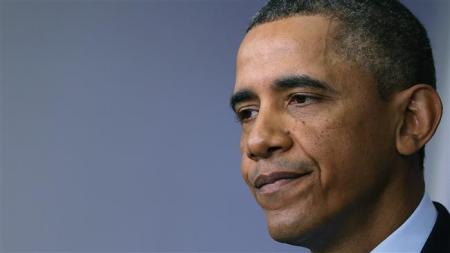
By James Petras :: 04.29.2016
President Obama is racing forward to establish his imperial legacy throughout Russia, Asia and Latin America. In the last two years he has accelerated the buildup of his military nuclear arsenal on the frontiers of Russia. The Pentagon has designed a high tech anti-missile system to undermine Russian defenses.
In Latin America, Obama has shed his shallow pretense of tolerating the center–left electoral regimes. Instead he is has joined with rabid authoritarian neo-liberals in Argentina; met with the judges and politicians engineering the overthrow of the current Brazilian government; and encouraged the emerging far-rightwing regimes in Peru under Keiko Fujimori and Colombia under President Santos.
In Asia, Obama has clearly escalated a military build-up threatening China’s principle waterways in the South China Sea. Obama encouraged aggressive and violent separatist groupings in Hong Kong, Tibet, Xinjian and Taiwan. Obama invites Beijing billionaires to relocate a trillion dollars in assets to the ‘laundry machines’ of North America, Europe and Asia. Meanwhile he has actively blocked China’s long-planned commercial ’silk route’ across Myanmar and west Asia.
In the Middle East, President Obama joined with Saudi Arabia as Riyadh escalated its brutal war and blockade in Yemen. He directed Kenya and other African predator states to attack Somalia. He has continued to back mercenary armies invading Syria while collaborating with the Turkish dictator, Erdogan, as Turkish troops bomb Kurdish, Syrian and Iraqi fighters who are engaged on the front lines against Islamist terrorism.
President Obama and his minions have consistently groveled before the Jewish State and its US Fifth Column, massively increasing US ‘tribute’ to Tel Aviv. Meanwhile, Israel continues to seize thousands of acres of Palestinian land murdering and arresting thousands of Palestinians, from young children to aged grandparents.
The Obama regime is desperate to overcome the consequences of his political, military and economic failures of the past six years and establish the US as the uncontested global economic and military power.
At this stage, Obama’s supreme goal is to leave an enduring legacy, where he will have: (1) surrounded and weakened Russia and China; (2) re-converted Latin America into an authoritarian free-trade backyard for US plunder; (3) turned the Middle East and North Africa into a bloody playpen for Arab and Jewish dictators bent on brutalizing whole nations and turning millions into refugees to flood Europe and elsewhere.
Once this ‘legacy’ is established, our ‘Historic Black President’ can boast that he has dragged our ‘great nation’ into more wars for longer periods of time, costing more diverse human lives and creating more desperate refugees than any previous US President, all the while polarizing and impoverishing the great mass of working Americans. He will, indeed, set a ‘high bar’ for his incumbent replacement, Madame Hilary Clinton to leap over and even expand.
To examine the promise of an Obama legacy and avoid premature judgements, it is best to briefly recall the failures of his first 6 years and reflect on his current inspired quest for a ‘place in history’.
Fear, Loathing and Retreat
Obama’s shameless bailout of Wall Street contrasted sharply with the desires and sentiments of the vast majority of Americans who had elected him. This was a historic moment of great fear and loathing where scores of millions of Americans demanded the federal government reign in the financial criminals, stop the downward spiral of household bankruptcies and home foreclosures and recover America’s working economy. After a brief honeymoon following his ‘historic election’, the ‘historic’ President Obama turned his back on the wishes of the people and transferred trillions of public money to ‘bailout’ the banks and financial centers on Wall Street.
Not satisfied with betraying the American workers and the beleaguered middle class, Obama reneged on his campaign promises to end the war(s) in the Middle East by increasing the US troop presence and expanding his drone-assassination warfare against Afghanistan, Iraq, Yemen, Libya, Somalia and Syria.
US troops re-invaded Afghanistan, fought and retreated in defeat. The Taliban advanced. The US expanded its training of the puppet Iraqi army, which collapsed on its first encounters with the Islamic State. Washington retreated again. Regime change in Libya, Egypt and Somalia created predator-mercenary states without any semblance of US control and dominance.
Obama had become both a master of military defeats and financial swindles.
In the Western Hemisphere, a continent of independent Latin American governments had emerged to challenge US supremacy. The ‘Historic President’ Obama was dismissed as a clueless hack of the US Empire who lacked any rapport with governments south of the Panama Canal. While trade and investment flourished between Latin America and Asia; Washington fell behind. Regional political and economic agreements expanded, but Obama was left without allies.
Obama’s clumsy attempts at US-backed ‘regime change’ were defeated in Venezuela and elsewhere. Only the small, corrupt narco-state of Honduras fell into Obama’s orbit with the Hillary Clinton-engineered overthrow of its elected populist-nationalist president.
China and Russia expanded and flourished as commodities boomed, wealth expanded and demand for Chinese manufactures exploded.
By 2013 Obama had no legacy.
The Recovery: Obama’s Lost Legacy
Obama began the road to establishing his ‘legacy’ with the US-financed coup in Ukraine, spearheaded by the first bona fide Nazi militia since WWII. After celebrating the violent ‘regime change’ against Ukraine’s elected government, Obama’s new oligarch-puppet regime and its ethno-nationalist army have been a disaster, losing control of the industrialized Donbas region to ethnic Russian rebels and completely losing the strategic Crimea when the population overwhelmingly voted to re-join Russia after 50 years. Meanwhile, the oligarch-’president’ Poroshenko and his fellow puppets have pilfered several billion dollars in ‘aid’ from the EU… all in pursuit of the Obama legacy’.
Obama then slapped devastating economic sanctions against Russia for its role in the Crimean referendum and its support for the millions of Russian speakers in Donbas, and in the process forced the European Union to make major trade sacrifices. For their role in creating a real “American legacy” for Mr. Obama, the Germans, French and the other twenty-eight countries have sacrificed billions of Euros in trade and investments – alienating large sectors of their own agricultural and manufacturing economy.
The Obama regime placed nuclear weapons on the Polish border with Russia, pointed at the Russian heartland. Estonians, Lithuanians and Latvians joined Obama’s military exercises stationing US ships and attack aircraft in the Baltic Sea threatening Russia’s security.
Obama’s Legacy in Latin America
The Obama regime intensified its efforts to re-establish supremacy with the demise of the center-left regimes following elections in late 2013 to the present.
Obama’s ‘legacy’ in Latin America is based on the return to power of neo-liberal elites in the region. Their successful elections were the result of several factors, including: (1) the rise of rightwing economic power in Latin America; (2) the decay and corruption of political power within the Left; 3) incapacity of the Left to develop its own independent mass media to challenge the media monopoly of the right; and (4) the failure of center-left regimes to diversify their economy and develop growth outside the boundaries defined by the dominant capitalist sectors.
The Obama regime worked closely with the political-business elite, organizing the political campaigns and controlling key economic policies even during the center-Left governments. The Left regimes had financed, subsidized and rewarded right-wing business interests in agro-mineral industries, banking, and the media as well as in manufacturing and imports.
As long as worldwide demand for primary materials was strong, the Center-Left governments had plenty of room to adjust their social spending for workers while accommodating business interests. When demand and prices fell, budget deficits forced the Center-Left to cut back on social spending for the masses as well as subsidies for the business elite. In response, the business sector organized a full-scale attack on the government – in defense of elite power. The Center-Left failed to counter the growing power and position of their business elite adversaries.
The business elite launched a full-scale propaganda war via its captive mass media – focusing on real or imagined corruption scandals discrediting Center-Left politicians. The Left lacked its own effective mass media to answer the Right’s accusations, having failed to democratize the corporate media monopolies.
The Center-Left parties adopted the elite’s technique of financing political campaigns – namely, through bribes, contract concessions, patronage other deal making with billionaire private and state contractors. The center-Left imagined it could compete with the free-market rightwing in financing campaigns and candidates via swindlers – and not through class struggle. This was a game they could never master.
The Right, however, mobilized their allies within police, judicial and public institutions to prosecute and disqualify the Center-Left for committing the same crimes the Right had evaded.
The Center-Left did not mobilize the workers and employees to establish even minimal controls over the elite and assume some managerial power. They thought they could compete with the Right on its own terms, through shady business and chicanery.
The Center-Left relied on financing its administration and policies through the commodity boom in demand for its natural resources – overlooking the fundamental instability and volatility of the global commodity market. While the Right openly condemned the ‘weakness of the Center-Left’ – in private, it pursued policies even more dependent on overseas speculators and narrow elites.
In Argentina, as the economy declined, the leadership of the rightwing, led by Mauricio Marci, launched a successful presidential campaign involving the mass media, banks, middle class voters and agro-mining elites. Immediately upon taking power, the Macri regime cut social services for workers and the lower middle class, slashing their living standards and lay off thousands of government employees. Obama saw Macri as his kind of legacy savior and viewed Argentina as the new center of US power in Latin America – with plans for more regime change in Brazil, Venezuela and throughout the region.
In Brazil, the Center-Left Workers’ Party (PT) faced a massive attack on its power base by the extreme rightwing parties. Corruption scandals rocked the entire spectrum of the political class, but the PT was most heavily implicated by massive fraud in Brazil’s huge national oil company, Petrobras. The PT regime’s troubles intensified as the country entered a recession with the drop in demand for its agro-mining exports. Growing fiscal deficits compounded the regime’s problems. The Brazilian hard Right mobilized its entire apparatus of elite power – the courts, judges, police and intelligence agencies – in a bid to overthrow the PT government and impose an authoritarian neo-liberal regime seizing all financial, business and productive assets.
The Center-Left had never been very left, if at all. Under Presidents Lula and Rousseff (2003-2016), the powerful mining and agricultural elites flourished; banking, investment and multi-national enterprises prospered. The Center-Left made some paternalistic concessions to the lowest income classes, and increased wages for labor and farm workers. But the PT relegated labor to the background while it signed business agreements and granted tax concessions to capital. It failed to engage Brazilian workers in class struggle.
The Right was never engaged in any struggle with a genuine leftist government pressing business for structural changes. Nevertheless, the Right sought to eliminate even the most superficial reforms. It would accept nothing short of total control, including: the privatization of the major national oil company, the reduction of wages, pensions and transport subsidies and a slashing of social programs. The Brazilian Rightwing coup – a fake impeachment organized by indicted crooks – is designed to vastly re-concentrate wealth, and re-establish the power of business, while plunging millions into poverty and repressing the principal organized mass movements. In Brazil, the elite-controlled media, courts and politicians act as judge, jury and jailers – against a center-left regime which had never taken control over the major institutions of elite power.
Obama and the Axis of his Legacy
Political rightists join police to control the multitudes and seize power, re-establishing deep ties among Brazil, Washington and Argentina. They will then move toward the neo-liberal re-conquest of all Latin America. Against this new wave, it must be understood that Obama’s Latin American legacy is too recent, too hasty and too disjointed – the new Right exhibits the same or even worse features of the recently deceased Left.
Argentina’s Marci borrows $15 billion at 8% interest, when the economy is fracturing, employment is collapsing, exports and worldwide demand is declining. At the same time, President Mauricio Marci’s cabinet is plagued by major financial scandals ‘a la Panama Papers’. The entire political party-trade union-employed working class is profoundly disenchanted with Marci’s minority rule.
Argentina may not turn out to be Obama’s enduring Latin Legacy: While Macri may open the door for a brief Washington take-over, the results will be catastrophic and the future, given Argentina’s recent history of popular street uprisings, is uncertain.
Likewise in Brazil, the impeachment/coup will result in new and more numerous investigations with trials of post-impeachment politicians and a deepening economic crisis. Brazil’s Vice-President, who turned against Rouseff, now faces corruption charges, as do his supporters. The prolonged confrontation precludes any basic continuity. The rightwing regime’s policy of slashing wages, pensions and poverty ‘baskets’ will detonate large-scale confrontations with the polarized population. Obama’s ‘legacy’ will be a brief episode – celebrating the ouster of the Workers’ Party President followed by a long period of instability and disorder.
Rightist regimes in Venezuela, Colombia and Peru will be part of Obama’s ‘legacy’ but to what lasting end?
The Venezuelan rightwing congress – dubbed the MUD – seeks to overthrow the elected president. It demands the release of several right-wing assassins from prison, the privatization of the oil industry, and a deep cut in social programs (health and education). They would reduce employees’ wages and eliminate food subsidies. The MUD has no competent plan or capacity to grow the oil economy and overcome chronic food shortages. The MUD would merely replace the Left’s subsidized economy with massive price increases for basic commodities — reducing domestic consumption to a fraction of its current level. In other words, the right-wing offensive may defeat the Chavista left but it will not stabilize Venezuela or develop a viable neo-liberal alternative. Any new rightwing regime will deteriorate rapidly and the chronic problem of criminal violence will exceed the current levels. The alliance between Washington and Venezuela’s far right will hardly support Obama’s claim to a historic legacy. More likely, it will serve as another example of a failed right wing state unable to replace a weakening left regime.
Similar circumstances can be found among other ‘emerging’ rightist regimes.
In Colombia, the current rightwing President Santos talks to the FARC guerrillas, but also accommodates the paramilitary death squads. His talks of peace settlements and social reform are linked to the genocidal right, led by the former President Uribe. Meanwhile, the economy stagnates with oil and metal prices collapsing on the world market. Colombian living standards have declined and the promise of a rightwing revival grows dim. The US-Colombian alliance may undercut the FARC but the rightwing does not offer any prospect for modernizing the economy or stabilizing the society.
Similarly in Peru, the rightwing wins votes and embraces free markets, but growth declines, investments and profits dry up and mass disenchantment grows among the poor promising street conflicts.
The Obama ‘legacy’ in Latin America has followed a series of brutal victories, which have no capacity to re-impose a stable ‘new order’ of free markets and free elections. The initial wave of favorable investments and lucrative concessions will fail to revive and recalibrate a new growth dynamics.
More ominously, Obama relied on mass murder to replace an elected leftist-nationalist president in Honduras and imposed a regime of terror against the poor and indigenous population. Meanwhile, illicit offshore handouts reward speculators in Argentina.
Obama’s legacy in Latin America reflects an entire spectrum from illicit-rightwing coups to oust the elected governments in Brazil and Venezuela, to elected authoritarian presidents in Peru and Colombia with historic links to death squads and multi-million dollar overseas accounts.
Obama’s contemporary ‘Latin American legacy’ reeks of gross electoral manipulation preparing the ground for bloody class wars.
Obama’s Legacy in the Ukraine, Yemen and Syria
The Obama regime thought it could manage widespread conflicts, uprisings and wars to advance its global supremacy.
To that end, Obama spent billions of dollars in weapons and propaganda arming Neo-Nazi para-military troops to seize power in Ukraine. A grotesque, brutal gang of oligarchs (and disgraced, foreign fugitives – like the ousted Georgian leader, Mikhail Saakashvili) served Washington in the puppet Kiev regime. Critics, journalists, jurists and citizens are being assassinated. The economy has collapsed; prices skyrocket; incomes declined by half; unemployment tripled and millions have sought refuge abroad. Wars raged between Russian ethnic citizen armies in the Donbas and the puppet Kiev regime. The people of Crimea voted to rejoin Russia. Meanwhile, economic sanctions against trade with Russia have exacerbated shortages for the people of Ukraine.
Under Obama’s stewardship the Ukraine became a world-class… basket case: so much for his European legacy. He can rightly claim credit for imposing a thoroughly retrograde regime of Klepto-capitalism with no redeeming feature.
Obama embraced Saudi Arabia’s war against Yemen – destroying the life and cities of the poorest nation in the Middle East. Obama’s ‘legacy’ in Yemen stands for the systematic obliteration of a sovereign people: Obama performs his tricks for billionaire Saudi despots while savaging the innocent. To the Israelis in Palestine and the Saudis in Yemen, Obama pays homage to the criminals responsible for millions of shattered lives.
What of the Obama ‘legacy’ in Syria and Libya? How many million Africans and Arabs have been murdered or fled on rotten boats in destitution. Only the rankest gang of corrupt media pundits in the US media can pretend this gangster President should evade a war crimes tribunal.
Conclusion
The Obama regime has pursued wars of unremitting destruction. It has forged partnerships with terrorists and death squads as it seeks short-term imperial victories, which end in dismal failures.
The imperial legacy of this ‘historic’ president is a mirage of pillage, squalor and destruction. The effect of his political lies has even begun register here among the American public: Who trusts the US Congress and the President? And in Europe, who trusts Obama’s European partners as they eagerly pushed for wars in the Middle East and North Africa and now fear and loathe the millions of their victims–refugees fleeing to the cities of Europe, with the drowned corpses of uprooted communities spoiling their beaches?
Obama pushed for wars and the Europeans receive the victims – with fear and disgust.
Obama’s victories are temporary, blighted and reversed.
Obama bombed Afghanistan yesterday and now flees renewed resistance.
Obama’s allies are again plundering Latin America but face imminent ouster via popular uprisings.
Obama terrorized and fragmented Syria yesterday but lost elections the day after.
Obama threatens China’s economy while eagerly buying China’s products.
The Obama legacy began as a failed military and economic offensive accompanying a profound social crisis. During his final year in office, Obama tries to forge alliances with the dregs of the hard right to save his legacy. His brief advance into this sordid world of neo-liberals, neo-Nazis and Saudi despots is a prelude to more retreat and chaos.
Obama’s public celebration of the right turn in Asia, Latin America, Europe and the Middle East applauds the most retrograde alignment of forces in modern times: Saudis and Israelis; Egyptian generals and Libyan jihadis; neo-Ottoman Turks with Ukrainian gangster-oligarchs. Regime changes in Argentina and Brazil encourage Obama to claim vindication of his imperial legacy.
His ‘moment’ of imperial truth is brief, all too brief. Everywhere, we witness the rapid rise of imperial success followed by a series of debacles.
Throughout Latin America capitalist profiteers plunge into wild financial adventures, theft and chaos. In the Middle East, the US stands on the crumbling palaces of a moribund Saudi regime. The much-proclaimed imperial advances are based on grand theft everywhere, from Egypt and Turkey to the Ukraine.
Simply stated: the US formula for a successful legacy is failing at the precise moment that it claims success! Obama and the Right have created a world of chaos and disintegration. Obama and his legions, the US and Europe have no future in peace or war, election or defeats.
There is no imperial legacy for the ‘historic’ President Obama!
Donald Trump’s Foreign Policy Plans ‘Don’t Make A Lot of Sense’
Sputnik – 29.04.2016
Following Republican presidential frontrunner Donald Trump’s exploratory foreign policy speech on Wednesday, political analyst Daniel McAdams speaks with Radio Sputnik’s Loud & Clear to discuss what, exactly, the candidate’s worldview encompasses.
“It is clear that in Washington he has aligned himself with foreign policy advisors that are not the usual neocons. So that’s good news, to a degree. That’s why you have so much gnashing of the teeth in Washington,” McAdams, of the Ron Paul Institute for Peace and Prosperity, tells Loud & Clear, referring to billionaire Donald Trump.
“On the other hand, the people that he does have around him are realists, to a degree, but that is not super satisfying to a non-interventionist and an anti-war person because realists… lack the philosophy… of avoiding war and avoiding entangling alliance.”
“… The specific plans that he outlined a) were not very well hashed out, and b) they don’t make a lot of sense,” says McAdams.
While Trump does recognize the failure of Washington’s insistence on pursuing a Cold War-era strategy, the candidate does not see American imperialism as part of the problem.
One example is his opposition to the Iran nuclear agreement.
“This groveling to Israel, this blind condemnation of the Iran nuclear deal… I don’t get his beef and I don’t think he gets his beef. It just makes him sound good, it makes him sound tough.”
On the issue of the Iraq and Syria, the Republican frontrunner seemed to offer contradictory positions.
“This is where I think he’s either very clever or fairly goofy,” McAdams says.
“On the one hand he says something that sounds good to non-interventionists… On the other hand he says something like ‘Obama went in there and bombed Libya and just walked away.'”
“That’s the whole point,” states McAdams. “Not walking away means staying in and doing nation building. So he doesn’t understand what caused the problem. He also promises to use military force to contain radical Islam, and he talks about ‘Why are we not bombing Libya right now?'”
Trump also spoke of restoring the military superiority of America, the country with the largest military budget in the world, shortly after stating that he would pursue peace.
“Rebuild our military from what? We spend more than most of the rest of the world combined. We have an enormous military, we’re involved in over 120 countries,” McAdams says.
“What he means by ‘rebuild’ the military is keep Washington and its environs extraordinarily rich,” he adds, describing the military-industrial complex, which Trump appears to support.
He did, however, offer a surprisingly insightful take on US-Russia relations.
“Here’s what he said exactly. ‘We should seek common ground based on shared interest with Russia.’ He said he’d, ‘Make a deal that’s good for us and good for Russia.’ That sounds terrific. If he follows through with that I think we should be very optimistic.”
Featured Video

AIDS Inc. by Gary Null (2007)
or go to
Aletho News Archives – Video-Images
From the Archives
Clash of Civilization, Iran Part II
By Jamal Kanj – Intifada-Palestine.com – January 14, 2011
Israel’s survival kit is: perpetuate conflict, insecurity to rationalize collective hate and finally playing victim.
Devoid of conflict, Israel implodes internally; without hate, Zionism loses its justification; and playing eternal victim to continue blackmailing the West. Absence of this holy trinity, Israel ceases to exist.
From its inception, the house of Zion has mastered exploiting adversarial powers to advance Israel’s cause. For instance, their influence over the Democratic Party in the US began with President Truman’s bid for 2nd term election in 1948.
Responding to strong opposition from Secretary of State General George Marshall and Department experts urging against recognition of Israel, President Truman replied: “I’m sorry gentlemen but I have to answer to hundreds of thousands [Jewish voters] who are anxious for the success of Zionism. I do not have hundreds of thousands of [voting] Arabs among my constituents”
Zionists influence over liberal American politics was matched with the doctrinal school of Conservative theoreticians aligning the Republican Party’s platform with Israel’s objectives. The Neoconservative Zionists, coined Zioncons, invented the “Clash of Civilization” concept to fight Israel’s wars. … continue
Blog Roll
 Aletho News
- Pro-Palestine protesters arrested outside UK’s ruling Labour Conference in Liverpool
- Mauritius denies landing permit to flight from Israel, forcing cancellation: Tour operator
- Israeli finance minister calls for genocidal war on West Bank, annexation of south Lebanon
- 12 Things Your Psychiatrist Was Trained Not to Tell You
- From Unipolar Universalism to Multipolar Civilizational Distinctiveness
- RSF military group defects, joins Sudanese army: State media
- Ireland goalkeeper refuses to play ‘Israel’ as squad weighs boycott
- China pushes back against US on Cuba, Iran
- Ukrainian Soldiers, Potential Mercenaries: Have Gun, Will Travel!
- Burnham’s UN debut… A masterclass in British disinformation
- If Americans Knew
- Israel forces Gazans to live in constant peril – Daily Update
- Deconstructing Netanyahu’s pants-on-fire UN rant – Daily Update
- Trump betrayed voters with his campaign lies and prioritized a foreign country once he took office
- Netanyahu calls Israel’s war in Gaza ‘opposite of genocide’ in UN speech to near-empty hall
- Settler Kidnappings: Torture, Sexual Abuse and Terrorisation of Palestinian Abductees as Israel Deepens Annexation of West Bank
- Gaza winter nears as 162,000 tents become unusable, raising fears of humanitarian crisis
- Netanyahu says, “It’s the opposite of genocide”; UN says Gaza economy is world’s ‘most severe crisis on record’ – Daily Update
- Israel’s US-Backed Assault on Gaza Has Created the ‘World’s Most Severe Economic Crisis on Record’: UN
- ‘Protecting U.S. Citizens’… From Israel
- ‘This is where I live now, the back of a truck’: a day in the life of a grandmother in Gaza
- No Tricks Zone
- New Study: Earth And Venus Surface Warmth Largely Explained By Convection And Lapse Rate, Not CO2 Or Radiation
- 2025 Nature Paper Claiming Worsening Global Drought Gets RETRACTED …Heavily Flawed
- New Study: ‘Global Drought Shows No Detectable Recent Acceleration Under Climate Warming’
- Economic Masterminds: German Socialists Suggest Taxing Productivity Gains Stemming From Using AI
- The South China Sea Has Not Been Cooperating With The Climate Change Narrative
- Energy Crisis: Germany Enters Heating Season With Historically Low Gas Reserve Fill Levels
- New Study: The Antarctic Ice Sheet Gained Mass From 2020-2024 Due To Staggering Snow And Ice Accumulation
- Study: Ocean Heating Rates From Thousands Of Years Ago ‘Dwarf’ Modern Ocean Heating Rates
- Climate Extremists Target, Attack Large-Scale Power Grid Infrastructure In Germany!
- New Study: Antarctic Ice Melt Has Contributed Less Than 1 Centimeter To Sea Level Rise In The Last 30 Years

