NAM slams nuclear meeting cancellation, urges Israel to join NPT
Press TV – December 1, 2012
 The Non-Aligned Movement (NAM) has criticized the cancellation of a conference on banning nuclear weapons in the Middle East.
In a statement issued on Friday, NAM strongly condemned the opposition of the US, Russia, Britain and the UN Secretary General Ban Ki-moon to the conference that was originally scheduled to be held in Finland’s capital, Helsinki, in December, upon an agreement reached during the 2010 NPT Review Conference.
The movement emphasized that the conference should be held before the end of 2012, voicing the NAM member states’ full support for the establishment of a Middle East region free of nuclear weapons.
It also urged the Israeli regime, the only non-signatory to the NPT in the Middle East, to destroy its nuclear weapons, place its nuclear facilities under the International Atomic Energy Agency’s (IAEA) supervision and carry out all its atomic activities in accordance with international non-proliferation regulations.
On November 23, the US announced that the Helsinki conference cannot be convened at this point due to the special conditions in the Middle East.
The major event has reportedly been cancelled on US worries that its long-time ally in the region, the Israeli regime, would come under fire as the only possessor of nuclear weapons in the Middle East.
Israel is widely known to possess between 200 and 400 nuclear warheads.
Meanwhile, Iran’s Ambassador to the United Nations Mohammad Khazaei called on Friday for joint efforts to pursue the idea of creating a Middle East region free of weapons of mass destruction.
He said that the nuclear weapons of Israel, which has a dark background in state terrorism and resorting to aggression, threat and bullying against other countries, are a real threat to regional and international peace.
“It is necessary that the international community swiftly and firmly counter this threat,” the Iranian envoy pointed out.
The Israeli regime rejects all the regulatory international nuclear agreements – the NPT in particular – and refuses to allow its nuclear facilities to come under international regulatory inspections.
Related articles
- Iran Urges Israel to Join NPT (en.rian.ru)
- NAM calls for total nuclear disarmament (alethonews.wordpress.com)
- US cancels ME nuclear conference to protect “Israel” & over 100 NAM states support Iran’s program (realisticbird.wordpress.com)
What do they want from Syria?
By Finian Cunningham | Press TV | November 29, 2012
“What do they want from Jaramana? The town brings together people from all over Syria and welcomes everybody.” These were the anguished words of one distraught resident in the Syrian town of Jaramana that was devastated by multiple deadly explosions this week.
The death toll has yet to be confirmed. Early reports on the blasts said 34 were killed. Later, the toll was put at more than 50, with over 120 injured, many critical. All of the victims were civilian.
Over the past 20 months, Syria has witnessed dozens of massacres and horrific car bombings in its capital Damascus and in other cities and countless villages across the country. But the latest atrocity in Jaramana, located close to the capital, is distinguishable perhaps because it most clearly shows the vile Machiavellian mentality of the perpetrators in their broader strategy towards the Middle Eastern country.
As the words of the shell-shocked resident above indicate, Jaramana can be seen as an exemplar of the pluralist nature of the Syrian society, “welcoming everybody”. The town is particularly known for its Christian and Druze Muslim communities, who by all accounts have coexisted peacefully for centuries. The populace is also largely supportive of the Syrian government of President Bashar al-Assad.
This Wednesday morning, as workers, mothers and school children were going about their usual daily routine, two massive no-warning explosions ripped through the heart of Jaramana. The second blast was detonated minutes after the first one when bystanders were rushing to the scene to aid the wounded. The heinous calculation of the perpetrators was to maximise the killing and suffering.
“What do they want from Jaramana?” The answer is revealed in the resident’s subsequent words: “The town brings together people from all over Syria and welcomes everybody.”
The terrorist war on Syria, which the Western media trumpet as a “pro-democracy uprising”, is aimed at precisely the opposite of pluralist coexistence. What the terrorists want is to tear the tolerant soul out of the country and plunge its people into an internecine, hate-filled sectarian bloodbath.
The targeting of Jaramana is a deliberate, brutal calculation to precipitate such a bloodbath. The town has been inflicted with several similar, although less deadly, bombings in recent months. On 29 October, a car bomb killed 11 people.
There are no military or state security installations in Jaramana. As noted, it is a urban district known for its tolerance towards mixed religions and cultural heritage. But, for the terrorists and their fiendish mentality, that civic virtue made Jaramana a prime target.
The armed militants in Syria are driven by Sunni extremists of Wahhabist or Salafist tendencies, who see pluralist coexistence of Sunni, Shia, Alawite, Druze, Christian, Jews and non-believers as anathema to their demented puritanical ideology.
Other elements within the Syrian armed militant groups would appear to be simply “soldiers of fortune” – mercenaries and criminal opportunists who have no particular religious affiliation.
However, taken together, these various militant factions are united by one criminal goal: to smash Syria, ruthlessly and recklessly.
The Syrian society, as it currently exists with its emphasis on secular pluralism, must be destroyed at all costs by these extremists and criminal opportunists. The most effective way to sabotage Syria is to unleash a sectarian bloodbath and to pit communities at each other’s throats. That will ensure the collapse of the central government and the splintering of society into sects. In this intended milieu of violence, chaos and fear, Syria will then be at the mercy of those who want to dominate this proud, historic country.
The enemies are well known. Western governments have had their knives out for Syria over many years, seeing it as a strategic obstacle of popular resistance to Western imperialism and Zionism in the Middle East. The Sunni regimes of Saudi Arabia, Qatar, Turkey and latterly Egypt under Mohammed Morsi want to see Syria roped into their camp, with the added appeal of undermining Iran’s regional influence.
Saudi Arabia’s autocrats are particularly obsessed with defeating what they perceive jealously as the Shia Crescent represented by Iran, Syria and Lebanon’s Hezbollah. Both of these agenda converge on the objective of isolating Iran and setting up the Islamic Republic for an all-out military assault.
Syria is therefore a crucial geopolitical prize for the West and its regional allies. The supposed advocacy of democratic reforms by Western governments and their corporate media mouthpieces is of course a cynical cover for their criminal imperialist agenda. That particular ridiculous lie is exposed by the West’s collusion with the most repressive dictatorial regimes on the planet – the Persian Gulf monarchies – in “liberating” Syria.
Also, if Saudi Arabia and Qatar are so concerned about the welfare of their Arab Muslim brothers in Syria, why aren’t these supposedly chivalrous monarchs sending weapons and fighters to help the besieged Palestinian people of Gaza?
A measure of the Syrian prize is the criminal lengths to which the enemies of Syria are willing to go in order to vanquish the country and install their self-styled regime.
The massacres of families and children in villages like Houla and Qubair; the cold-blooded execution of civilians forced to kneel before their killers; and the callous bombing of civilians as seen this week in Jaramana are techniques of terror that the Western governments and their allies have perfected elsewhere over several decades. The Americans used such demonic scientific terrorism in Central America; the French in North Africa; and the British in East Africa and more recently in Northern Ireland.
Syria is witnessing the worst of all possible criminal assaults – the evolution and amalgamation of Western state terrorism fueled with the petrodollars of mindless Arab despots.
Adding to the abomination, many of the crimes in Syria have been filmed by the perpetrators and subsequently released claiming that they were the action of government forces. One incident was the explosive demolition of a mosque by the mercenaries in Aleppo, who were filmed laughing at their war crime. Western media claimed it was the Syrian national army, only for it to emerge that it was actually the members of the so-called Free Syrian Army.
Recent claims that the Syrian armed forces are using cluster bombs to kill children have been given the usual Western media prominence. But given the track record of the Western-backed mercenaries and the Western propaganda machine, the weight of suspicion surely lies on them.
Within hours of the mass murder of the innocents in Jaramana, the United Nations General Assembly in New York adopted a draft resolution condemning the Syrian government for what it called “widespread human rights abuses”.
The condemnation was co-sponsored by the United States, Britain, France, Saudi Arabia, Qatar and Turkey – the very sponsors of Western state terrorism plunging the Syrian people into a bloodbath. The UN stands as an institution that is not just a debased propaganda tool, it is a propaganda tool splattered with the blood of innocents.
~
Originally from Belfast, Ireland, Finian Cunningham (born 1963) is a prominent expert in international affairs. The author and media commentator was expelled from Bahrain in June 2011 for his critical journalism in which he highlighted human rights violations by the Western-backed regime. For many years, he worked as an editor and writer in the mainstream news media, including The Mirror, Irish Times and Independent. He is now based in East Africa where he is writing a book on Bahrain and the Arab Spring. He co-hosts a weekly current affairs programme, Sunday at 3pm GMT on Bandung Radio.
More Press TV articles by Finian Cunningham
Related articles
How a Group of Christians Smearing Muslims Benefits the Zionist State
By Maidhc Ó Cathail | Washington Report on Middle East Affairs | November/December 2012
In the course of his much-ridiculed albeit deadly serious ACME bomb speech to the U.N. General Assembly, Israeli Prime Minister Binyamin Netanyahu asserted that “the medieval forces of radical Islam” stand in the way of Israel’s desire for “a Middle East of progress and peace.” As evidence of these freedom-hating, anti-modern forces supposedly “bent on world conquest,” Netanyahu cited the Sept. 11 besieging of U.S. embassies throughout the region.
The Israeli prime minister was repeating a theme he had been given the opportunity to develop earlier in an interview on prime-time American television. Addressed by NBC’s “Meet the Press” host David Gregory as “the leader of the Jewish people” (Gregory himself is Jewish), Netanyahu was asked whether he thought a “containment strategy” would work on Iran, as it had with the Soviet Union. Iran was different, Netanyahu responded, because its “rationality” could not be relied upon since it is “guided by a leadership with an unbelievable fanaticism.” To emphasize the purported threat of nuclear-armed mullahs in Tehran, the Israeli leader drew a terrifying mental picture for his American audience: “It’s the same fanaticism that you see storming your embassies today. You want these fanatics to have nuclear weapons?”
While there is much controversy about the reasons for the assaults on U.S. diplomatic missions on the 11th anniversary of the 9/11 attacks, widespread Muslim outrage over a YouTube video insulting the Prophet Muhammad was clearly a factor in triggering at least some of the ensuing anti-American riots. In light of Netanyahu’s subsequent emphasis on these vivid examples of “fanaticism” to advance the narrative of an Iranian “nuclear threat” in an increasingly unstable region in which Tel Aviv remains Washington’s “one reliable ally,” it’s certainly worth exploring whether the deliberately offensive anti-Islam video may have been the work of pro-Israel provocateurs. As former national security adviser Zbigniew Brzezinski said on NBC’s “Morning Joe” regarding what position America should take toward the Muslim world, “If there are evil forces at work trying to provoke violence between us and you, we have the obligation to investigate and to crack down.”
In what appears to have been an artfully contrived red herring, initial reports did indeed point to an Israeli source of the provocative video. The Wall Street Journal and Associated Press—two media outlets often accused of pro-Israel bias—were suspiciously credulous of someone claiming to be an Israeli-American real estate developer who said he was the writer and director of “Innocence of Muslims.” This “Sam Bacile” gratuitously added that the production had been funded by “about 100 Jewish donors.” Almost immediately, the dubious story was debunked by The Atlantic’s Jeffrey Goldberg—a former prison guard in the Israel Defense Forces whose reporting has at key junctures served to advance Tel Aviv’s interests—when a self-described “militant Christian activist” named Steve Klein assured him that “the State of Israel is not involved.” Absolving the Jewish state of any culpability, Klein eagerly pointed the finger at Egyptian Copts and American evangelicals. A self-satisfied Goldberg summed up the story in a tweet: “A group of Christians smearing Muslims libels Jews.”
Notwithstanding Goldberg’s terse dismissal of an Israeli connection, the Jew-libeling Christians actually turned out to have close ties to the pro-Israel Islamophobia network led by Pamela Geller and Robert Spencer. Spencer’s Jihad Watch group has been indirectly funded by Aubrey Chernick, a Los Angeles-based software security entrepreneur and former trustee of the Washington Institute for Near East Policy, the influential think tank created in 1985 by the American Israel Public Affairs Committee (AIPAC). Spencer’s provocative writings on Islam are also publicized by The Gatestone Institute, whose founder and director Nina Rosenwald has held leadership positions in AIPAC and other mainstream pro-Israel organizations. In a July 2012 profile in The Nation magazine, Max Blumenthal dubbed the heiress to the Sears Roebuck fortune “The Sugar Mama of Anti-Islam Hate.”
This past February, in a post on her Atlas Shrugs blog entitled “A Movie about Muhammad: An Idea whose Time Has Come,” Geller solicited funds for a film that would show “Muhammad’s raids, plunders, massacres, rapes, assassinations and other crimes.” According to the controversial pro-Israel provocateur, it was “a brilliant idea” by Ali Sina, whom she introduced as a “renowned ex-Muslim author, founder of FaithFreedom.org and SION Board member.” SION, whose similarity to Zion is hardly coincidental, stands for “Stop Islamization of Nations,” a group co-founded by Geller and Spencer which held its inaugural International World Freedom Congress in New York on Sept. 11 “to combat the Islamic supremacist war against free speech.” Ali Sina’s solicitation for funds assured readers of Geller’s blog that “given the subject matter” it could become “one of the most seen motion pictures ever.” Revealingly, he asked them, “Recall Danish cartoons?”—an earlier media-catalyzed provocation in which pro-Israel, anti-Islam propagandists such as Daniel Pipes cited freedom of speech as they incited Muslim outrage against the West.
Two years earlier, on the ninth anniversary of 9/11, Geller and her partners-in-provocation held a rally to protest the construction of an Islamic community center a few blocks from the site of the demolished World Trade Center. Among those who took part were a couple of extremist Coptic Christian activists who would later be involved in the making and distribution of “Innocence of Muslims.” Meanwhile, in the nation’s capital, another Egyptian-American named Morris Sadek was filmed with a crucifix in one hand and in the other a Bible with the American flag sticking out of it, shouting “Islam is evil!”
As McClatchey reported on Sept. 15, it was Sadek who had triggered the anti-American outrage in the Muslim world with a timely phone call to an Egyptian reporter. On Sept. 4, the Washington, DC-based provocateur phoned Gamel Girgis, who covers Christian emigrants for the al Youm al Sabaa daily newspaper, to tell him about a movie he had produced. According to Girgis, Sadek wanted to screen it on Sept. 11 “to reveal what was behind the terrorists’ actions that day—Islam.”
As with most of the mainstream media’s coverage of the post-Bacile story, the McClatchey report made no mention of Morris Sadek’s ties to the Geller-Spencer Islamophobia network or his extreme pro-Israel views. On his blog dedicated to the “National American Coptic Assembly”—of which he describes himself as “a president”—Sadek provides an erratically punctuated outline of what he claims should be “The Coptic Position on Israel”:
We recognize the sacred right of the state of Israel and the Israeli people to the land of historic Israel.
“The right of Return” of the Jewish people to the land of their foremothers and forefathers is a sacred right. It has no statute of limitation. The return must continue to enrich the Middle East.
We recognize Jerusalem as simply a Jewish city, It must never be divided. She is, and shall always be, the united capital of Israel.
The future of the Palestinians lies with the Arab states. A Palestinian state in Judea and Samaria constitute an imminent danger to world peace.
The Chantilly, Virginia-based National American Coptic Assembly, Inc., a private company with a staff of two, has an estimated annual revenue of $97,000. Considering the fawning pro-Israel statements of its principal—not to mention his priceless contribution to Netanyahu’s relentless campaign to induce a U.S. attack on the “fanatics” in Tehran—it’s not too difficult to speculate as to the most likely source of that income.
Maidhc Ó Cathail is an investigative journalist and Middle East analyst. He is also the creator and editor of The Passionate Attachment blog, which focuses primarily on the U.S.-Israeli relationship.
A letter to David Cameron
A letter to British Prime Minister David Cameron, following his speech at the Annual dinner of United Jewish Israel Appeal
By Anne Candlin | Uprooted Palestinians | October 26, 2012
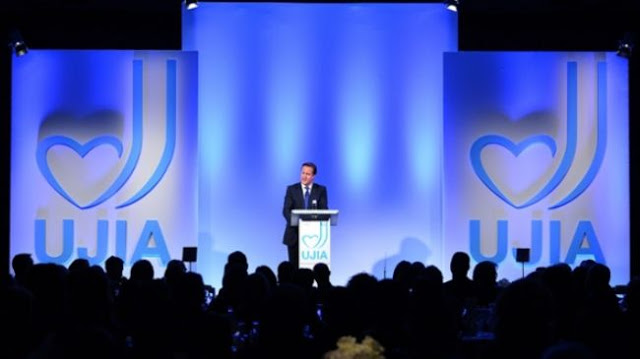
Dear Mr Cameron, How self-interested and partisan was your speech last week to the Jewish Israel Appeal. Carefully pre-scripted, it said everything the Jewish Zionists in your audience wished to hear. Your final quips about settlement- building and house- demolitions were moral soundbites for the Media, to give the appearance of being fair minded and caring about the Law. Your audience knew full well, as indeed you do, that the government has not the slightest intention of lifting a finger to help the displaced victims of settlement-building and house demolitions. I happened to be in E.Jerusalem when the Al Khurd family were dragged out of their home by Jewish settlers and thrown, with all their belongings and children, onto the streets. The father of the family, who was disabled and in a wheelchair, died soon after this event. The family were left to live in a tent on a patch of land in front of their former home, able to see the comings and goings of the two young Jewish families who now inhabited their home. I’m puzzled by your allusion to a Jewish philanthropic spirit when I see such things. I was shocked to see the Israeli soldiers, “the most moral army in the world,” beating up a young Palestinian Christian farmer in Al Khadre near Bethlehem, whose land had been illegally annexed for the building of a military terminal. Shocked to see them breaking his arm by stamping on it and then trying to prevent the ambulance from taking him to hospital. Shocked to see them beating up courageous Israeli Jewish activists who had come to support the farmer. Shocked to learn that Palestinian women gave birth at checkpoints and sometimes lost their babies because the Jewish soldiers would not let them go through to reach the Maternity Hospital. Your audience must be flattered and bemused by the rosy view you have of such people. We, each of us, must individually choose to embrace a humane way of living and stand or fall by our own actions. It is not enough to lazily shelter under the supposed morality of any given inherited tradition.
May I remind you that you have Muslim and Christian citizens in this country. There are Moslems, Christians, Jews and Secular people both here and in Palestine who do not necessarily share your rosy view of Israel or of it’s Jewish or non-Jewish supporters. Many of us remember that when the UK helped bring Iraq to it’s knees through sanctions, a million innocent little children died as a result. Was the celebrated Jewish sense of justice offended by that? clearly your own conscience was not moved. Sanctions produced nothing good for the Iraqi people and did not prevent war. Quite the contrary: sanctions were, and continue to be, a hypocritical and cruel devise used by western powers to conceal their already well-laid plans for the invasion, destruction and de-development of Muslim, oil-rich countries.
Not satisfied with so many deaths in Iraq, Israel and it’s economic cohorts eagerly await the death of thousands more innocent people in Iran, another oil-rich Muslim country. Sanctions first to soften the people through impoverishment and death, to alienate their leaders, then, on the eve of invasion you will wring your hands in front of the world’s media and say “look, we tried peaceful measures first, didn’t we…” But starving a population, reducing them to poverty, is as violent and genocidal as other acts of war. It is particularly deplorable that you reveled in the implementation of plans to starve thousands of others while you were feasting and dining to your heart’s content in London. One is reminded of the rich man who, while feasting at his own table, refused Lazarus a crumb of bread.
Who has been the prime aggressor in the Middle East, invading Lebanon, Syria, Sinai, Gaza? Who has defied more UN Resolutions than any other country in the world? Who threatens daily the existence of Palestinians? who assassinates Palestine’s spiritual and political leaders? Who has imprisoned the Palestinian population behind walls? Who illegally imprisons and frequently tortures 7,000 Palestinian children annually? Who has made a Palestinian state impossible through it’s theft of land and refusal to acknowledge the right of Palestinian refugees to return to their legal lands? Who has dozens of discriminatory laws against it’s minority Arab population? You know the answer yet you are proud to have such friends.
You threaten invasion against a country for even thinking about developing a nuclear weapon, but befriend Israel which has more nuclear weapons than France and the UK together. What possible rationale can you have for such uneven-handedness apart from self-interested economic and financial advantage? Will you ever publicly or privately ask the Jewish community to face Israel’s iniquities? So you believe that the interests of thieves, child-abductors, torturers, criminals, racists and warmongers are written into the DNA of the Conservative Party. What a disquieting boast. But please do not presume to confer on all the British people such a questionable genetic makeup. I am British, Caucasian, educated, middle class, a pensioner. Boringly, boringly mainstream. Hardly a candidate for Muslim extremist. I neither share Israel’s “cultural DNA” nor embrace such an unscientific and foolish notion.
Related articles
- Cameron warns UK students against boycotting Israel (foa.org.uk)
US extends $4bn Israel loan program
Al Akhbar | October 25, 2012
The United States agreed on Wednesday to extend its $4 billion loan guarantee program to Israel until 2016, a gesture that shows continued commitment to the Jewish state less than two weeks before the American presidential elections.
The move allows the United States to provide up to $3.8 billion in future loan guarantees, as part of a $9 billion commitment made by the US in 2003.
The program was meant to expire this year.
The American Secretary of the Treasury Timothy Geithner and Doron Cohen, the director general of the Israeli finance ministry, signed the agreement during a US-Israel Joint Economic Development Group meeting in Washington, according to Israeli newspaper Haaretz.
“The loan guarantees agreement attests to the special economic relationship between Israel and US,” said Yuval Steinitz, Israel’s finance minister.
“I welcome the growing cooperation between the two countries, especially their treasuries,” Steinitz added while thanking Geithner.
The loan guarantees are independent of $10 billion in annual US military assistance to Israel and joint US-Israel missile defense projects. In 2007, US President George W. Bush agreed to a 10-year military aid package costing $30 billion.
According to a March 2012 report by the Congressional Research Service, Israel is “the largest cumulative recipient of US foreign assistance since World War II.” The report alleges that Israel had received $115 billion from the United States to date, most of it in the form of military assistance.
The report also stated that US financial assistance to Israel is typically delivered within the first 30 days of the fiscal year, whereas most other recipients receive aid in installments.
Scandal surfaced in Washington earlier this month after 15 church leaders sent a letter to Congress asking for an investigation to ensure American military aid to Israel was not used to commit human rights violations against Palestinians.
The Jewish Council for Public Affairs responded by canceling a long-planned interfaith meeting and by issuing an outraged public statement, in which JCPA President Rabbi Steve Gutow accused the enquiry of being part of “relentless attacks on the Jewish state” and a sign of “vicious anti-Zionism that has gone virtually unchecked in several of these denominations.”
Presidential incumbent Obama and his contender Mitt Romney have competed in displays of loyalty to the Jewish state over the course of the election campaigns, mentioning Israel dozens of times during the last presidential debate on Monday, which centered on foreign policy. The debate was devoid of criticism of Israel’s repeated human rights abuses against Palestinians.
Obama has hailed Israel as “a true friend and our greatest ally in the region,” later adding that he “will stand with Israel if they are attacked.” Meanwhile, Romney has expressed similar sentiments, his website going so far as to call Israel “a beacon of democracy and freedom in the [Middle East].”
Related articles
New Flame-linked malware detected
RT | October 16, 2012
A new cyber espionage program linked to the notorious Flame and Gauss malware has been detected by Russia’s Kaspersky Lab. The anti-virus giant’s chief warns that global cyber warfare is in “full swing” and will probably escalate in 2013.
The virus, dubbed miniFlame, and also known as SPE, has already infected computers in Iran, Lebanon, France, the United States and Lithuania. It was discovered in July 2012 and is described as “a small and highly flexible malicious program designed to steal data and control infected systems during targeted cyber espionage operations,” Kaspersky Lab said in a statement posted on its website.
The malware was originally identified as an appendage of Flame – the program used for targeted cyber espionage in the Middle East and acknowledged to be part of joint US-Israeli efforts to undermine Iran’s nuclear program.
But later, Kaspersky Lab analysts discovered that miniFlame is an “interoperable tool that could be used as an independent malicious program, or concurrently as a plug-in for both the Flame and Gauss malware.”
The analysis also showed new evidence of cooperation between the creators of Flame and Gauss, as both viruses can use miniFlame for their operations.
“MiniFlame’s ability to be used as a plug-in by either Flame or Gauss clearly connects the collaboration between the development teams of both Flame and Gauss. Since the connection between Flame and Stuxnet/Duqu has already been revealed, it can be concluded that all these advanced threats come from the same ‘cyber warfare’ factory,” Kaspersky Lab said.
High-precision attack tool
So far just 50 to 60 cases of infection have been detected worldwide, according to Kaspersky Lab. But unlike Flame and Gauss, miniFlame in meant for installation on machines already infected by those viruses.
“MiniFlame is a high-precision attack tool. Most likely it is a targeted cyber weapon used in what can be defined as the second wave of a cyber attack,” Kaspersky’s Chief Security Expert Alexander Gostev explained.
“First, Flame or Gauss are used to infect as many victims as possible to collect large quantities of information. After data is collected and reviewed, a potentially interesting victim is defined and identified, and miniFlame is installed in order to conduct more in-depth surveillance and cyber-espionage.”
The newly-discovered malware can also take screenshots of an infected computer while it is running a specific program or application such as a web browser, Microsoft Office program, Adobe Reader, instant messenger service or FTP client.
Kaspersky Lab believes miniFlame’s developers have probably created dozens of different modifications of the program. “At this time, we have only found six of these, dated 2010-2011,” the firm said.
‘Cyber warfare in full swing’
Meanwhile, Kaspersky Lab’s co-founder and CEO Eugene Kaspersky warned that global cyber warfare tactics are becoming more sophisticated while also becoming more threatening. He urged governments to work together to fight cyber warfare and cyber-terrorism, Xinhua news agency reports.
Speaking at an International Telecommunication Union Telecom World conference in Dubai, the anti-virus tycoon said, “cyber warfare is in full swing and we expect it to escalate in 2013.”
“The latest malicious virus attack on the world’s largest oil and gas company, Saudi Aramco, last August shows how dependent we are today on the Internet and information technology in general, and how vulnerable we are,” Kaspersky said.
He stopped short of blaming any particular player behind the massive cyber attacks across the Middle East, pointing out that “our job is not to identity hackers or cyber-terrorists. Our firm is like an X-ray machine, meaning we can scan and identify a problem, but we cannot say who or what is behind it.”
Iran, who confirmed that it suffered an attack by Flame malware that caused severe data loss, blames the United States and Israel for unleashing the cyber attacks.
Related articles
- Stuxnet, Flame…Gauss: New spy virus found in Middle East (alethonews.wordpress.com)
Humanitarian Buffer Zones in Syria — How misinformation obscures the Israel lobby’s influence on U.S. foreign policy
By Maidhc Ó Cathail | The Passionate Attachment | October 15, 2012
A recent Russia Today report offers an insight into how misinformation on the internet helps to obscure the influence of the Israel lobby on U.S. foreign policy. In an October 11 report on the widening Syria conflict, the Russian television channel’s website cited an interview with an independent journalist regarding news of the establishment of so-called humanitarian buffer zones on Syrian territory. According to the RT report, citing Nile Bowie, the idea originated with “US hawks”:
“The US think-tank – the Brookings Institute – in March 2012 published a report entitled ‘Assessing Regime Change Options in Syria,’ where they specifically cite the creation of a buffer zone or a humanitarian corridor as a means to base certain rebel groups in the region [and] to project force towards the Syrian government in an attempt to topple it. So that appears to be what is playing out at the moment.”
The facts above are basically correct. There is, however, a crucial omission. The report in question — actually entitled “Saving Syria: Assessing Options for Regime Change” — was the work of the Saban Center for Middle East Policy. The Saban Center was established in 2002 when Israeli-American media mogul Haim Saban pledged nearly $13 million to the Brookings Institution. As Saban told an Israeli conference in 2010, establishing think tanks — along with making donations to political parties and controlling media outlets — is one of “three ways to be influential in American politics.” The billionaire’s sole motivation for wanting to influence policy in Washington is no secret. “I’m a one-issue guy,” Saban famously told the New York Times, “and my issue is Israel.”
It’s also worth noting that at least one of the co-authors of “Saving Syria” appears to share Haim Saban’s overriding concern for Israel. In 2006, Kenneth Pollack, currently director of the Saban Center, was mentioned in the indictment against Steven J. Rosen and Keith Weissman as one of the government officials who provided classified information on Iran to the then AIPAC employees charged with espionage.
Nile Bowie’s omission of the Israeli source of the regime change proposals for Syria appears to have been unintentional though. As recently as September 24, the Kuala Lumpur-based American journalist wrote about the pro-Israel connections of U.S. groups supporting the Malaysian opposition. So how did he miss the equally blatant Israeli connection behind the Saban Center’s blueprint for regime change in Damascus?
Bowie most likely learned of the Brookings report from “an alternative news blog based in Bangkok, Thailand covering geopolitics.” Run by a former U.S. marine by the name of Tony Cartalucci, the Land Destroyer blog (the second of ten sites linked to by Bowie’s blog) has written about “Assessing Options for Regime Change” perhaps more often than any other source. One of those pieces posted on October 3 entitled “Turkey Attempts to Trigger War Vs. Syria” even features an image of the Saban Center’s “Saving Syria.” The caption underneath the image, however, reads:
The Brookings Institution, Middle East Memo #21 “Assessing Options for Regime Change (.pdf),” makes no secret that the humanitarian “responsibility to protect” is but a pretext for long-planned regime change.
Apart from the Saban Center logo in the image, there is no mention of the pro-Israel think tank in the piece. While a site search for “Brookings” yields eight pages of results, there appears to be only one post that refers to the “Saban Center.” A search for “Haim Saban” yields no results.
In short, as long as people continue to trust dubious “alternative” sources of news such as Land Destroyer Report, the key role of the Israel lobby in pushing regime change from Damascus to Kuala Lumpur will remain obscure.
Maidhc Ó Cathail is an investigative journalist and Middle East analyst. He is also the creator and editor of The Passionate Attachment blog, which focuses primarily on the U.S.-Israeli relationship.
Norman Finkelstein and Neocon Denial
By Stephen J. Sniegoski | The Passionate Attachment | October 7, 2012
While a number of mainstream media pundits have acknowledged that the neocons played a major role in bringing about the war on Iraq (though usually without mentioning their connection to Israel or their predominantly Jewish ethnicity), there are stringent critics of Israel and US policy in the Middle East who totally reject this interpretation. One of the most notable of these is Norman Finkelstein, who expounds on his view in his latest book, “Knowing Too Much.” Because I must limit the length of this article, my argumentation must be kept to a minimum. My book, “The Transparent Cabal: The Neoconservative Agenda, War in the Middle East, and the National Interest of Israel,” provides a detailed and extensively-documented account of all the issues covered here. It should be added that Finkelstein has labeled my book as conspiratorial—which is just the opposite of what the word “transparent” in the title conveys and what is explicitly stated in the book—and he denies that there is any evidence for my contentions. It does not appear that Finkelstein has actually read my book; he probably considers it not worth reading.
Despite denying that the neocons had an effect on US Middle East policy, Finkelstein does grant that the “Jewish neocons pushed long and hard for an attack on Iraq.” (p. 75, “Knowing Too Much”) Contrary to Finkelstein, the very fact that for many years the neocons had been the major exponents of an attack on Iraq, which did become US policy, is at least prima facie evidence for their vital role in bringing about the war. Finkelstein, however, firmly holds that the neocon agenda was irrelevant to US policy, and that what was achieved was done by others and would have occurred even if the neocons had not existed.
Finkelstein does accurately point out that “Every reconstruction of the 2003 war places Cheney and Rumsfeld at the helm of the decision-making process.” (p. 76, “Knowing Too Much”) Then he devotes some space to refuting John J. Mearsheimer and Stephen M. Walt’s alleged insinuation that the two officials were “duped” by the neoconservatives. (The two academic scholars wrote the bombshell essay, “The Israel Lobby and U.S. Foreign Policy,” later expanded into a book. And I should add that it is not apparent from my reading of their book that Mearsheimer and Walt necessarily imply that Cheney and Rumsfeld were “duped.”) Finkelstein maintains that “Cheney and Rumsfeld did not only partake of the ‘belief’ of Jewish neoconservatives that Saddam posed a mortal danger. Their own ‘American nationalist’ strategic vision also largely coincided with the neoconservative agenda.” In essence, they “shared basic assumptions.” (p. 78, “Knowing Too Much”) From these claims, which I would qualify but not fundamentally differ with, Finkelstein manages to derive the idea that Cheney and Rumsfeld were not influenced by the neocons, but somehow came up with the same war agenda independently. Evidence would indicate that this is highly unlikely to have been the case.
Undoubtedly, Cheney and Rumsfeld, rather than being tricked by the neocons, were in league with them, but it also seems almost certain that they were actually influenced by the neocon agenda. For Rumsfeld and, even more so, Cheney were personally close to the neocons. Prior to the start of the George W. Bush administration, Cheney, for example, was involved in a number of key neoconservative organizations: the board of advisors of the Jewish Institute for National Security Affairs (JINSA); the board of trustees of the American Enterprise Institute (AEI); and the Project for a New American Century (PNAC). It would seem reasonable to believe that, instead of independently fashioning their own “strategic vision” that harmonized completely with that of the neocons, Cheney and Rumsfeld were influenced by the neocons’ well-developed positions, including specific strategies for action, which meshed with their own more general foreign policy attitudes—e.g., a proclivity for unilateral, aggressive action.
Although Cheney had for years identified with a tough-minded, militaristic foreign policy, he had, as Secretary of Defense, loyally adhered to the George H.W. Bush administration policy in 1991 of eschewing an occupation of Iraq, and continued to identify with that position after the end of the administration. As late as a 1996 interview for a documentary on the 1991 Gulf War for PBS’s “Frontline” program, Cheney declared: “Now you can say well you should have gone to Baghdad and gotten Saddam, I don’t think so [rather] I think if we had done that we would have been bogged down there for a very long period of time with the real possibility we might not have succeeded.”
In short, it seems reasonable to conclude that during the latter 1990s, Cheney was persuaded by neocon claims backed by numerous facts and factoids that Saddam was dangerous—though whether he really believed that Saddam was a “mortal danger” is questionable—and that his removal would be good thing for the United States that would outweigh the costs of a war. Although Cheney undoubtedly must have realized that the neocons had cherry-picked and exaggerated the intelligence claims, his involvement in the highest levels of government and partisan politics for many years had habituated him to having the truth twisted to advance policy goals.
Furthermore, Cheney was known to pick up newer views expressed in conservative circles that entailed marked changes in his actual policy prescriptions, though leaving his overall conservative attitude unaffected. For example, in regard to economic policy, he moved from being a budget-balancer to a supply-sider willing to tolerate large budget deficits. (Barton Gellman, “Angler: The Cheney Vice Presidency,” 2008, pp. 257-259) And, as Vice President, Cheney specifically relied on advice from the eminent historian of the Middle East, Bernard Lewis, a right-wing Zionist and one of the neocons’ foremost gurus, who strongly advocated war against Iraq and other Middle Eastern states. (Gellman, “Angler,” p. 231) So while the neocon Middle East war agenda did resonate with Cheney’s general militant stance on foreign policy, there is little reason to think that he would have come up with the specifics of the policy, including even the identification of Iraq as the target, if it had not been for neocon influence.
The influence of ideas per se was not the only factor that likely motivated Cheney. The fact that Cheney and his wife, Lynne, who was with the American Enterprise Institute (known as “neocon central”), had close personal and professional relations with the neocons also would have predisposed him to give his support to the neoconservatives and their agenda.
There is certainly no inherent reason why “American nationalists” (as Finkelstein styles Cheney and Rumsfeld) qua “American nationalists” would identify with Israeli interests and pursue wars in the Middle East against the Islamic states. If global power were the American nationalist goal, one could easily argue that supporting the Islamic world would best serve its advancement. For by pursuing such an alternative policy, the United States would have the support of the major oil-producing region of the world. And if the more than one billion Muslims were friendly to the United States, they could be used, if such a weapon were necessary, to undermine America’s most powerful military adversaries—Russia and China—since both have restive Muslim populations.
It should be noted that representatives of the “realist” camp of foreign policy, which focuses on concrete national interests rather than ideals—and includes such luminaries as Brent Scowcroft, National Security Advisor for George H. W. Bush; James Baker, Secretary of State for George H. W. Bush; and Zbigniew Brzezinski, National Security Advisor to Jimmy Carter—did not push for the war on Iraq, and Brzezinski and Scowcroft openly opposed it.
Furthermore, large numbers of nationalist conservatives, such as Pat Buchanan and other traditional conservatives, have opposed globalist American intervention and believed from the outset that wars in the Middle East were not in America’s interest. These conservative nationalists had supported a hard-line Cold War policy long before the neoconservatives came onto the scene—though while opposing Communism they were wary of American global involvement, especially nation-building, perceiving the global policy against Communism as a something of a necessary evil. During most of the Cold War, they had been the dominant face of American conservatism, but the neocons, by the end of the 1980s, would achieve a leading position in the conservative movement. They quickly purged or marginalized those who dissented from their positions, especially in regard to Israel, and mainstream conservatism itself was transformed in a neoconservative direction, a change which has been lauded by the neocons and lamented by those purged and marginalized conservatives and their followers, now called paleoconservatives. The upshot of all of this is that being an “American nationalist” did not ipso facto make one a supporter of the neoconservative Middle East agenda, as Finkelstein would imply.
Being in charge of the incoming Bush administration transition team, Cheney used that position to staff national security positions in the government with his neocon associates. While the neocons could not actually make the ultimate decisions in the Bush administration, they were in sufficiently authoritative positions inside the administration to influence the decisions that would be made. And the anger and fear resulting from the 9/11 terror attacks enabled the neocons, with their already existing war agenda, to markedly increase their influence in the administration. Significantly, the administration’s neocons were not only providing what was regarded by President Bush as expert advice but, as mentioned above, they also cherry-picked the spurious intelligence that depicted Saddam Hussein as a threat to the United States.
The formidable power of the neoconservatives in the Bush administration derived from the fact that they worked in unison to advance their war agenda and override and marginalize all opposition. Not only was there no consensus for war in the foreign policy and national security components of the executive branch, but crucial aspects of the neocon war agenda were opposed by significant elements of the military brass, the State Department, and the CIA.
Bob Woodward in his “Plan of Attack” (p. 292) notes that Secretary of State Colin Powell saw a “separate little government,” consisting of “Wolfowitz, Libby, Feith,” and what Powell privately called Feith’s “Gestapo office.” According to Colonel Lawrence Wilkerson, who served as Powell’s chief of staff, “There were several remarkable things about the vice president’s staff. One was how empowered they were, and one was how in sync they were. In fact, we used to say about both [Rumsfeld’s office] and the vice president’s office that they were going to win nine out of ten battles, because they are ruthless, because they have a strategy, and because they never, ever deviate from that strategy . . . . They make a decision, and they make it in secret, and they make [it] in a different way than the rest of the bureaucracy makes it, and then suddenly foist it on the government – and the rest of the government is all confused.”
Regarding the concomitant loss of power by the State Department, Wilkerson remarked: “I’m not sure the State Department even exists anymore.”
Also of vital importance was a cohesive neocon network outside the Bush administration, which helped to mobilize crucial public support for the war. Social anthropologist Janine R. Wedel in her book, “The Shadow Elite: How the World’s New Power Brokers Undermine Democracy, Government, and the Free Market,” provides a detailed description of the neoconservatives as an example of an interlocking network of organizations, agencies, and think tanks united behind a shared agenda that was capable of driving government policy.
It seems apparent that without all-out support from the neocon network, Cheney and Rumsfeld could not have brought about the attack on Iraq, even if that had been their goal. For the neocon network had to overcome significant opposition to achieve the implementation of their war agenda, as well as generate public and congressional support for war. For example, the neocons had championed Ahmed Chalabi and enabled much of his spurious intelligence to receive the imprimatur of the US government—though the established intelligence community regarded him as a con man.
Although Cheney and Rumsfeld could not have brought off the war without the neocon network, those two were not indispensable to the neocons, who could have likely achieved war with other individuals at the helm. For example, the hawkish pro-Israel John McCain was the favorite Republican candidate for numerous neocons in 2000 (and, of course, was the Republican presidential nominee in 2008). Given McCain’s penchant for neoconservative foreign policy advisors, his advocacy of forcible regime change in Iraq prior to 2001, and his staunch support for the attack on Iraq during the war build-up (and his later hawkishness on Iran), there is no reason to think that a President McCain, surrounded by neocon advisers, would have avoided a war on Iraq.
Nothing of what I have written is intended to imply that the neoconservatives were the sole cause for the war on Iraq or that they single-handedly drove the country to war. While neoconservatives spearheaded the war on Iraq, and without the neoconservatives the war would have been highly improbable, they obviously needed auxiliary support, in which category I would include Cheney and Rumsfeld. Most significantly, the 9/11 terror attacks created the ideal milieu to generate government and popular support for such a military endeavor, as those attacks certainly enabled the neocons’ Iraq war agenda to move to the forefront in the Bush administration. Without the popular fear and anger generated by the 9/11 attacks, it is unlikely that the neocons would have been able to successfully promote a war on Iraq. Nonetheless, the neoconservatives were the primary actors. It was they who created the war agenda, and it was they who played a key role in its implementation.
Ending the Violence in Syria
By Jeremy Salt | Palestine Chronicle | October 3, 2012
Ankara – It would seem to be quite simple. All that has to happen for the fighting to end in Syria is for those with guns in their hands to put them down. So why isn’t it happening?
Again the answer is simple and not just seemingly. Outside governments supporting the armed groups do not want them to put their weapons down. It has been deliberately locked into a cycle of violence which its enemies hope will end in its destruction. This strategy is the prime cause of the death and devastation over which the sponsors of this violence have been wringing their hands before the UN General Assembly.
Agendas vary slightly but the prime goal of Qatar, Saudi Arabia and the governments of the US, Britain and France is not political reform but the destruction of Iran’s best friend in the region. Syria is the central arch in a strategic relationship between Hezbollah, Syria and Iran. The fall of that central arch would give western governments one of their greatest strategic victories in the modern history of the Middle East.
Syria is frequently described as collapsing or bleeding or plunging into ‘civil war’. None is correct. Syria is being collapsed, being bled and being plunged into devastation as the direct consequence of decisions taken outside Syria. The collective calling itself ‘The Friends of the Syrian People’ has deliberately brought Syria to where it is now. There are no small mercies in this situation but it could have been even worse, if these ‘friends’ had been able to launch an aerial assault under the aegis of the Security Council. Had Russia and China not blocked them, Syria would be now be a total ruin, with an infinitely greater number of dead than the 20,000 or so already killed. Their fallback position was the war of attrition being waged by their armed protégés.
Few countries could withstand the battering Syria has taken in the past 18 months. In the name of ‘regime change’ horror has followed horror. Aleppo has been turned into a replica of Beirut at the height of the civil war, with a large part of the medieval souk now burnt to the ground. Yet the government has not collapsed and neither has the army disintegrated. The message from this is that Syria has a government and not a ‘regime’ and an army – in which the ordinary soldiers are mostly Sunni Muslim – and not ‘Assad loyalists’.
Military defections have been few. So have defections from the ranks of government despite the large amounts of money on offer. Foreign Minister Walid Muallim was offered $100 million by the ruler of Qatar if he would defect but turned it down and went public with the bribe. One of the last known of cases was the $20,000 a month for the next 20 years and a home in Doha offered to the Syrian consul in Mauritania. He also refused. Bashar al Assad was totally correct when he said a few days ago that the rulers of Saudi Arabia and Qatar think they can buy anyone. If there is anywhere where ‘regime change’ is needed it is surely in these gulf states.
One of the last defectors was the head of security in Aleppo. Before his departure and untimely end (he was assassinated a few kilometers short of the Turkish border by persons unknown) he had arranged for the infiltration of thousands of jihadis into the city. Many are not even Syrian. They have come to fight the jihad from all corners of the Muslim world. There are Chechens, Afghans, Pakistanis, Tajiks, Tunisians, Egyptians, Libyans (lots of Libyans), Saudis and Iraqis. Aleppo has been targeted because it is close to the Turkish border, and the hope is that it can be turned into a ‘rebel’ capital in a ‘liberated’ zone stretching up to the Turkish border. This could be done only over the dead bodies and against the wishes of the people of the city.
Whether inside the cells fighting in the name of the so-called Free Syrian Army (FSA) or operating independently, the salafi jihadis inside Syria are tactically cooperating against the common enemy. The FSA is little more than a convenient trademark. Most of the armed groups have their own command structure and take no notice of the FSA. Recently Riad al Assad crossed the border from Turkey to direct the struggle from inside Syria, only to stay a day and a night before going back because there was no point in him staying. The political arm of the FSA is the so-called Syrian National Council, touted as an alternative government but dysfunctional from the start and now recognized as such even by its sponsors. Put these two hard realities together and you have the formula for complete chaos. There is no alternative government in sight. There is no rational end in sight. The armed groups cannot overthrow the government without the direct intervention of their outside sponsors and that possibility seems to be receding although Qatar is still trying to talk it up. All that lies ahead of Syria unless the violence can be ended and negotiations begun is more chaos, more destruction and more loss of life.
Not that chaos is to be discarded as an end in itself. It will take Syria decades to recover from the damage already done whoever governs in Damascus. If the decision is finally taken to attack Iran, Syria would probably be too stricken to come to its aid even if the government has not been overthrown; if Syria cannot help, then Hezbollah might have to stay on the sidelines as well, releasing Israel from the fear of a second front opening in the north. This is how the governments orchestrating the campaign against Syria want the dominoes to fall. The implications for the Palestinians are clear. Any gain for Israel is a loss for them and the overthrow of the Syrian government, followed by the collapse of the strategic relationship between Hezbollah, Syria and Iran, would be an enormous gain for Israel, releasing pressure on one front and giving it more time to complete its absorption of Jerusalem and the West Bank.
What most Syrians want is to be left alone to sort out their own affairs. They want change but not at any cost. They don’t want the west sticking its nose in their affairs and they don’t want armed gangs running amok in their country. The west might have forgotten its own bloody record in the Middle East dating back to the beginning of the 19th century but Syrians have not. They know how disastrously western intervention always ends in the Middle East. Heads of governments who have been fueling the armed opposition have been lining up at the UN General Assembly to call for an end to the violence. If they mean what they say, they would be throwing their weight behind the attempts of the non-violent domestic opposition to bring a mediated end to this conflict. But they don’t and therefore must be seen for what they are – hypocrites who are pushing their own agenda at massive cost to Syria and its people.
– Jeremy Salt is an associate professor of Middle Eastern history and politics at Bilkent University in Ankara, Turkey.
Related articles
- ‘West wants end of Syria as a functioning independent state’ (alethonews.wordpress.com)
Featured Video

Dan Dicks with James Corbett on Solutions Watch
or go to
Aletho News Archives – Video-Images
From the Archives
Secret document reveals plans for civil war in Lebanon, Israeli false flags, and invasion
By Randi Nord | Geopolitics Alert | April 5, 2019
Beirut – During his visit with US Secretary of State, Mike Pompeo, Lebanese President Michael Aoun reportedly received a US-Israeli document detailing plans for creating a civil war in Lebanon with covert false flag operations and possible Israeli invasion.
Although the source of the document is Israeli and created in partnership with Washington, no one knows who presented it to Aoun. The Lebanese TV station, Al-Jadeed, initially reported the document on Lebanese TV and a video on its website. Geopolitics Alert translated the report for this article. … continue
Blog Roll
 Aletho News
- Sheikh al-Asadi warns of Iraqi government compliance with US demands
- How to MAKE THE CONSPIRATORS PAY for their crimes! Dan Dicks with James Corbett on Solutions Watch
- There’s a drought in academia: A drought in honest research on the subject of drought and other weather extremes
- Department of War Awards $20.7 Billion Contract to Raytheon for Air-to-Air Missiles
- ‘Distance yourselves from Israel’: IRGC urges US population to question govt policies
- America’s Greenland deal has a radioactive backstory
- The RAF Fairford ‘terror plot’: Unpacking escalation in the UK echo-chamber
- EU Council Advances Chat Control 2.0 Scanning Proposal
- Ex-Greek MEP files complaint against Israeli spyware firm over alleged Pegasus surveillance
- Troubling ideas throughout the Torah, Talmud, Mishneh Torah and Tanya
- If Americans Knew
- New Report: “Scholasticide and Genocide in Gaza: Assessment, Testimonies and Legal Analysis”
- Ex-Biden officials are desperate for a Gaza scapegoat
- Israeli “settlers” Invade Al-Aqsa; Pour Boiling Water on 75-Year-Old
- Israel Has Kidnapped Another American Teenager
- US arms sales to Israel worth $21.6 billion in 20 months
- Three Palestinians Killed in Israeli Attacks on Gaza
- Revealed: German “Anti-Semitism Expert” Driving Crackdown on Palestine Solidarity is Former Israeli Spy
- Egypt’s Warning to Israel Before Oct 7
- Israel’s siege signals another cruel winter for 1.8 million Gazans – Daily Update
- Netanyahu Asked UAE Leader to Deny Report on Oct. 7 Warning in Secret Visit, Sources Say
- No Tricks Zone
- Two More Paleo Reconstructions Affirm Meters-Higher Sea Levels Across Ireland, Brazil 7000-6000 Years Ago
- New Study: Earth And Venus Surface Warmth Largely Explained By Convection And Lapse Rate, Not CO2 Or Radiation
- 2025 Nature Paper Claiming Worsening Global Drought Gets RETRACTED …Heavily Flawed
- New Study: ‘Global Drought Shows No Detectable Recent Acceleration Under Climate Warming’
- Economic Masterminds: German Socialists Suggest Taxing Productivity Gains Stemming From Using AI
- The South China Sea Has Not Been Cooperating With The Climate Change Narrative
- Energy Crisis: Germany Enters Heating Season With Historically Low Gas Reserve Fill Levels
- New Study: The Antarctic Ice Sheet Gained Mass From 2020-2024 Due To Staggering Snow And Ice Accumulation
- Study: Ocean Heating Rates From Thousands Of Years Ago ‘Dwarf’ Modern Ocean Heating Rates
- Climate Extremists Target, Attack Large-Scale Power Grid Infrastructure In Germany!

