Iran never pursued war, regional insecurity: Pezeshkian
Al Mayadeen | July 19, 2025
Iran does not pursue conflict or instability and has consistently contributed to promoting peace and security in the region, said Iranian President Masoud Pezeshkian on Saturday.
During a phone conversation with Armenian Prime Minister Nikol Pashinyan, Pezeshkian affirmed that Iran, in line with its fundamental principles, has consistently backed initiatives aimed at promoting peace and security.
“Throughout history, Iran has never sought war and insecurity and has always played an important and effective role in establishing peace and stability in the region,” Pezeshkian stated, adding that despite ongoing talks and negotiations, the Israeli entity launched an attack in violation of international norms and laws, after which the US, acting in complete coordination with the regime, carried out airstrikes on Iran’s lawful nuclear facilities.
Pezeshkian further condemned the hypocritical stance of certain nations regarding the Israeli entity’s acts of warmongering, violence, and unprovoked aggression.
“What is happening to the oppressed and defenseless people of Gaza today such as the killing of women and children and genocide and the cutting access to water, food and medicine, is not compatible with any of the international legal, moral, and humanitarian standards,” he said.
The Iranian president went on to characterize the longstanding ties between Iran and Armenia as historically rooted, amicable, and mutually beneficial, while reaffirming Tehran’s commitment to fostering positive engagement with all regional neighbors based on the principle of respecting territorial sovereignty. He stressed the importance of enhancing bilateral cooperation and dialogue between the two nations.
Pashinyan, likewise, highlighted Armenia’s strong desire to deepen ties with Iran, expressing eagerness for the Iranian president’s upcoming visit to Yerevan as an opportunity to hold discussions on strengthening bilateral cooperation and exploring new avenues for enhanced partnership between the two nations.
We reject ‘Israeli protection’: Druze spiritual leader
Press TV – July 18, 2025
The spiritual leader of the Druze ethnic minority in Lebanon says the community rejects the Israeli regime’s request to supposedly “protect” the minority.
Sheikh Sami Abi al-Muna made the remarks at a gathering of Druze officials in the Lebanese capital Beirut on Friday.
He was referring to the regime’s repeated deadly and destructive violations of the Syrian territory, which it has undertaken under the supposed pretext of “protecting” the Druze, who also form a minority in Syria.
The request on the part of Tel Aviv “is harmful to our history and identity,” al-Muna added.
Observers rated the remarks as a warning to the regime against its trying to associate itself with the minority in order to advance its expansionist regional goals.
‘Don’t provide Israel with an excuse’
The spiritual leader, meanwhile, addressed the recent clashes in southern Syria between members of the Druze community and Bedouin tribes that had so far claimed the lives of hundreds of people.
He cautioned that the sectarian clashes “give an excuse for Israeli intervention and for blowing up the situation in the region.”
The regime has intensified its assaults on Syria since last year, claiming it seeks to prevent an outpouring of violence from the Arab country into the occupied territories.
On Wednesday, the escalation took a significantly more violent turn, when the regime hit various parts of Syria, including the capital Damascus, with intense airstrikes.
The attacks came amid the deadly fighting between the Druze and the Bedouins, fueling fears that the Israeli involvement under the pretext of supporting the Druze was aimed at intensifying the confrontations and further destabilizing Syria.
Amid the situation, al-Muna called for all parties to rather resort to national dialogue to address the issues among different communities in Syria.
Lebanese Druze leader Walid Joumblatt addressed the same gathering, calling for formation of an investigative committee to probe violations against both Druze and Bedouins in the Arab country.
A day earlier, he had also warned in remarks to France’s RFI radio station that “Israel is using the Druze to tear Syria apart.”
He said “Israel’s intent to divide the country” was visible from the clashes that had erupted between the dual communities in Syria.
Seyed M. Marandi: Israel Attacks Syria – Prelude to Balkanization
Glenn Diesen | July 18, 2025
Seyed Mohammad Marandi is a professor at Tehran University and a former advisor to Iran’s Nuclear Negotiation Team. Prof. Marandi discusses Israel’s efforts to Balkanise Syria. Follow Prof. Glenn Diesen: Substack: https://glenndiesen.substack.com/
X/Twitter: https://x.com/Glenn_DiesenPatreon:  / glenndiesen
Support the channel: PayPal: https://www.paypal.com/paypalme/glenn…
Buy me a Coffee: buymeacoffee.com/gdieseng
Go Fund Me: https://gofund.me/09ea012f
China Ready to Work With SCO Countries to Restore Peace in Middle East
Sputnik – 17.07.2025
China is ready to cooperate with the Shanghai Cooperation Organization (SCO) member countries and the international community to promote a political settlement and the speedy restoration of peace in the Middle East, the Chinese Foreign Ministry told Sputnik on Thursday.
On Tuesday, Iranian Foreign Minister Abbas Araghchi asked the SCO to promptly consider the situation with Israel’s aggression against the Islamic Republic, as well as to provide Tehran with political support in light of the June conflict with the Jewish state.
“The peoples of China and Iran are bound by traditional friendship. China is committed to maintaining friendly cooperation with Iran in order to benefit the peoples of both countries and bring positive factors to maintaining peace and stability in the Middle East,” the ministry said when asked to comment on Iran’s request to the SCO.
The ministry noted that “the situation in the region currently remains complex and sensitive.”
“China is ready to cooperate with members of the Shanghai Cooperation Organization and the international community to uphold peace, promote a political settlement and quickly restore peace and stability in the Middle East, which meets the common interests of the countries in the region and the international community,” the ministry added.
Tucker escalates war with neocons over Iran
By Jack Hunter | Responsible Statecraft | June 6, 2025
Five months into President Donald Trump’s second term, spring is looking like winter for the neoconservatives.
This might be best gauged right now looking at the back and forth war between conservative media giants, Tucker Carlson and Mark Levin.
When Trump’s special envoy to the Middle East Steve Witkoff said in an interview in May that, “the neocon element believes that war is the only way to solve things,” Levin took offense. The reliably neoconservative talk host blasted Witkoff and added, “By the way, neocon is a pejorative for Jew. Unbelievable.”
Carlson was perplexed by this statement. In an interview with comedian and libertarian activist Dave Smith, Carlson said, “So you have Mark Levin calling Steve Witkoff an anti-Semite. We’ve reached peak crazy, I mean, I think Witkoff is Jewish, right?”
That made Levin even more mad. On Thursday, Carlson shared a lengthy post on X that read, “Mark Levin was at the White House today, lobbying for war with Iran. To be clear, Levin has no plans to fight in this or any other war. He’s demanding that American troops do it. We need to stop Iran from building nuclear weapons, he and likeminded ideologues in Washington are now arguing. They’re just weeks away.”
Carlson reminded his audience what a farce this was.
“If this sounds familiar, it’s because the same people have been making the same claim since at least the 1990s. It’s a lie,” Carlson wrote. “In fact, there is zero credible intelligence that suggests Iran is anywhere near building a bomb, or has plans to. None. Anyone who claims otherwise is ignorant or dishonest.”
A ten paragraph essay followed, dismantling some of the usual arguments neoconservatives make to push for war with Iran, with Carlson using Levin in particular to make his points.
On enrichment, Carlson observed, “[M]any Americans would die during a war with Iran. People like Mark Levin don’t seem to care about this. It’s not relevant to them. Instead they insist that Iran give up all uranium enrichment, regardless of its purpose. They know perfectly well that Iran will never accept that demand. They’ll fight first. And of course that’s the whole point of pushing for it: to box the Trump administration into a regime change war in Iran.”
The Quincy Institute’s Executive Vice President Trita Parsi shared Carlson’s post and echoed the importance of his enrichment comments.
“The most crucial part of Tucker’s tweet is on enrichment,” Parsi noted. “He doesn’t just issue a generic warning against war. He addresses the impasse of the talks: The neocon red line of zero enrichment.”
Parsi added, “At a crucial moment, Tucker wisely advises Trump to drop this deal-killing demand. Huge!”
Democratic Congressman Ro Khanna (Calif.) also shared Carlson’s X post, writing, “No war with Iran. The war in Iraq was the biggest foreign policy blunder of the 21st century. Americans — right and left — do not want more dumb wars.”
Former Republican congressman Matt Gaetz (Fla.) shared Carlson’s post, adding a 100 percent emoji.
Senior Editor of The American Conservative Andrew Day shared and highlighted the dangerousness of having Levin around Trump at this moment. Carlson said from the beginning of his post that he believed Levin was at the White House to agitate for war.
“Mark Levin is the last person who should be whispering in Trump’s ear at this stage of negotiations,” Day wrote. “I hope Vance and Gabbard are actively exerting a counter-influence.”
Vice President JD Vance and Director of National Intelligence Tulsi Gabbard have been against a U.S. war with Iran.
Carlson finished his post, writing, “The one thing that people like Mark Levin don’t want is a peaceful solution to the problem of Iran, despite the obvious benefits to the United States. They denounce anyone who advocates for a deal as a traitor and a bigot. They tell us with a straight face that Long Island native Steve Witkoff is a secret tool of Islamic monarchies. They’ll say or do whatever it takes. They have no limits”
“These are scary people,” he concluded. “Pray that Donald Trump ignores them.”
I noted in an essay in late May that established neoconservative media voices on the right were beginning to be outshined by new conservative, libertarian and independent influencers, almost all of them antiwar.
Carlson is the largest figure on the American right this side of Donald Trump right now and he has been consistently against America’s involvement in any new wars, the mirror opposite of Levin.
As of this writing, Carlson’s Levin-Iran X post has over 5.4 million views.
Mark Levin has used his large platforms on talk radio and Fox News to promote neoconservative foreign policy for many years. Now Tucker Carlson appears to be using his arguably even larger platform on social media to shut that down.
Good.
Turkiye backs extremists in Lebanon as ‘blackmail’ over Cyprus ties
The Cradle | July 14, 2025
Turkiye has expressed “deep concern” over Lebanese President Joseph Aoun’s recent visit to Cyprus and has plans to “blackmail” Beirut if it chooses to counter Ankara’s influence in the Mediterranean, a senior Lebanese source told The Cradle on 14 July.
“Ankara expressed deep concern over Aoun’s visit to the Cypriot capital, Nicosia, and viewed it as a worrying sign of Beirut’s potential openness to Mediterranean and European partnerships that are inconsistent with its agenda in the Eastern Mediterranean,” the source said.
“Northern Lebanon is witnessing a worrying increase in the number of displaced Syrians with complex security backgrounds,” the source added, noting an increase in cross-border [weapons] smuggling operations which are taking place “under the direct sponsorship and cover of Syrian and Turkish security agencies.”
According to the Lebanese source, Aoun’s visit to Cyprus “revealed files of political and security blackmail prepared by Turkiye for use later if Beirut decides to pursue strategic options that conflict with Ankara’s interests in Lebanon and the region.”
The source went on to say that Ankara “considers northern Lebanon as its traditional area of influence and will not tolerate any new official positioning by Beirut that threatens its geopolitical position in the Mediterranean.”
Turkiye invaded Cyprus in 1974 and controls the northern part of the island. Ankara views Greek Cyprus as a main regional and geopolitical rival.
The Cradle’s Malik Khoury wrote that Ankara is unlikely to take kindly to an improvement of Lebanese–Cypriot ties, and has strong ambitions for northern Lebanon.
“Turkiye has long-standing historical ties to northern Lebanon,” he said. Citing Lebanese sources, he noted Ankara’s “interest in the port of Tripoli.” Geographically and maritime-wise, this is the largest port in the Mediterranean in terms of potential. “If rehabilitated, it could rival the Israeli port of Haifa. Ankara also has its eye on the Qlayaat Airport, near the Syrian border, as well as large areas of the Akkar Plain, rich in minerals and natural resources,” he added.
Thousands of extremist Islamist prisoners, including Syrians linked to the groups now affiliated with authorities in Damascus, are held in Lebanon’s Roumieh prison.
Reports from after the fall of former Syrian president Bashar al-Assad’s government said that Syria was planning to request their repatriation.
A day after Aoun’s visit to Cyprus last week, a source quoted by Syria TV threatened to revive the issue of Syrian prisoners in Lebanon, while hinting at the potential closure of the Syrian–Lebanese border. The report said Damascus is unhappy with Beirut’s “handling” of the situation and is planning a political and diplomatic escalation if the issue is not resolved.
“If you want to breathe air via Cyprus, you will suffocate by land from Damascus,” the source said.
The information provided by the Lebanese source to The Cradle comes as there has been growing concern about potential ambitions by Syria’s extremist-dominated military to take over swathes of northern Lebanon.
There have been reports recently that extremist fighters from Syria have been infiltrating Lebanon.
The Lebanese Armed Forces (LAF) denied these reports on Sunday and said they are working to ensure the security of the border.
Ten people, including two foreign nationals, were detained during an LAF operation in the town of Btebyat in Metn in the Mount Lebanon governorate, according to an army statement Sunday evening. The suspects’ nationalities were not specified.
Initial findings indicated that the individuals were not linked to any extremist organizations. The army’s statement did not acknowledge circulating reports of attempts to stockpile weapons across the country in preparation for attacks.
A report by Israel’s i24 in early July claimed Syria is demanding control over the northern Lebanese city of Tripoli during ongoing talks between Damascus and Tel Aviv.
The concern caused by this report and others like it was compounded on Friday, when US envoy Tom Barrack warned that Lebanon is “going to be Bilad al-Sham (historical name for Greater Syria) again” if Hezbollah does not surrender its arms.
“Syrians say Lebanon is our beach resort,” Barrack added.
The threat of extremist factions, which now make up the bulk of the Syrian state, is not new to Lebanon.
The Syrian army is predominantly made up of what used to be known as Hayat Tahrir al-Sham (HTS), an extremist Al-Qaeda-linked organization which was headed by Syria’s new President Ahmad al-Sharaa (known back then as Abu Mohammad al-Julani).
HTS was formerly known as the Nusra Front – Al-Qaeda’s official branch in Syria. The organization, responsible for deadly suicide attacks inside Lebanon, took over large swathes of the Syrian–Lebanese border in the first few years of the war in Syria, including the barrens of Arsal and Ras Baalbek.
The organization was eventually fully repelled by Hezbollah and the Lebanese army in 2017 in what is referred to as “The Second Liberation.”
HTS and the other groups, which have been incorporated into the Syrian Defense Ministry, have long operated under the direct tutelage of Turkish intelligence.
‘Global War on Terror’ is Over. Terror Won.
By Daniel McAdams | Ron Paul Institute | July 10, 2025
On Sept. 16, 2001, five days after the attacks on New York and Washington, DC, President George W. Bush declared, “This crusade – this war on terrorism – is going to take a while. And the American people must be patient. I’m going to be patient. But I can assure the American people I am determined.”
Four days after that, President Bush declared the “war on terror” to be primarily against al-Qaeda. “Our war on terror begins with al Qaeda,” he said in an address to Congress and the nation, “but it does not end there. It will not end until every terrorist group of global reach has been found, stopped and defeated.”
He described the enemy thus:
This group and its leader — a person named Osama bin Laden — are linked to many other organizations in different countries, including the Egyptian Islamic Jihad and the Islamic Movement of Uzbekistan. There are thousands of these terrorists in more than 60 countries.
Bush was correct in his assessment of the group.
One of those countries into which al-Qaeda jihadists implanted themselves was Syria, where from 2011 – with the support of the Obama Administration – they attempted to overthrow the secular leader, Bashar al-Assad, using terrorist tactics they had been well-trained in.
They soon changed their name – but not their stripes – and became the Al-Nusra Front, headed up by an experienced jihadist who fought against US troops in Iraq by the name of Abu Mohammad al-Jolani. His group was known for chopping off heads. Perhaps even American heads.
Last December Jolani’s jihadists – with support from the US, Turkey, and Israel – finally brought down the Assad government and quicker than you can say “Washington PR makeover” he clipped his beard, switched out his tactical military watch for a $90,000 Patek Philippe World Time Chronograph, and declared himself president.
The “civilized world” cheered the re-emergence of democracy in Syria!
At their first meeting earlier this year in Saudi Arabia, President Trump praised jihadist Jolani as “a young, attractive fellow” and “a tough guy, a fighter, with a very strong background. He has a lot of potential, he’s a real leader.”
This was a US-designated global terrorist with a $10 million bounty placed on his head by the US authorities. His “wanted” poster STILL remains on the X account of the US Embassy in Syria!
This week, President Trump “removed sanctions on Jolani’s Syria at (Israeli Prime Minister) Netanyahu’s request,” and just yesterday Secretary of State removed Jolani’s old al-Qaeda affiliate (which had gone from al-Nusra to HTS over the years) from the US terrorist list.
As one observer on X quipped:
The history of the GWOT (Global War on Terror) began in 2001 with the US invading Afghanistan to dig out Al Qaeda. It ends twenty-four years later with the US recognizing an AQ affiliate as the new ruler of Syria.
According to Brown University’s Cost of War Project, the “Global War on Terror” cost the American people at least eight trillion dollars. It also took the lives of perhaps a million people.
And what did we get for all this blood and treasure? In Afghanistan, the Taliban were after 20 years of US military action replaced by the Taliban, and in Syria a fierce opponent of al-Qaeda was replaced by…al-Qaeda!
As Jake Sullivan, then right hand to Secretary of State Hillary Clinton, wrote to the Secretary in 2012, “al-Qaeda is on our side in Syria.” He wasn’t joking!
That was the shot…here’s the chaser:
In the same week the United States removed sanctions on al-Qaeda ruled Syria, it placed sanctions on…UN Special Rapporteur on the occupied Palestinian territories Francesca Albanese!
Who is Albanese? She is the fearless defender of human life in a Gaza where it is slowly being extinguished by Israel with the backing (and weapons) of the US government.
In hitting UN human rights defender Albanese with sanctions, US Secretary of State Marco Rubio wrote:
Today I am imposing sanctions on UN Human Rights Council Special Rapporteur Francesca Albanese for her illegitimate and shameful efforts to prompt @IntlCrimCourt action against U.S. and Israeli officials, companies, and executives.
Albanese’s campaign of political and economic warfare against the United States and Israel will no longer be tolerated. We will always stand by our partners in their right to self-defense.
The United States will continue to take whatever actions we deem necessary to respond to lawfare and protect our sovereignty and that of our allies. (emphasis added)
What might those “whatever actions” be? Clearly it is a physical threat against Albanese for speaking out against a mass murder happening in real time, observable for all who wish to do so on our own computer screens.
So that is it. The “Global War on Terror” is over. Terrorists have been elevated by the US government to be heads of state and those who speak out against state terrorism are threatened with “whatever actions we deem necessary” to shut them up.
US Will Spend Over $1 Billion Building Military Bases for Israel
By Kyle Anzalone | The Libertarian Institute | July 7, 2025
The US is spending hundreds of millions of dollars to upgrade and build new military bases for Israel. The total cost of the facilities could exceed $1 billion.
Haaretz reports, “The US military aid construction program for Israel includes ongoing projects valued at more than $250 million, with future projects expected to exceed $1 billion.” The new bases will accommodate refueling aircraft and helicopters.
An additional project is building a new headquarters for an Israeli naval commando unit.
Washington provides Tel Aviv with a massive amount of military assistance. The US government has an agreement to send Israel $3.8 billion in security aid every year. Since October 7, 2023, Washington has provided Tel Aviv with an additional $18 billion in assistance.
The US military has also spent billions on operations to benefit Israel. The US fought a war against Ansar Allah in Yemen in an attempt to break the Red Sea blockade on Israeli-linked shipping. Washington has also spent billions of dollars on interceptors to shoot down Iranian missiles.
The military support for Israel has given Tel Aviv a blank check for genocide, multiple invasions, and provoking aggressive wars. Washington’s weapons, diplomatic support at the UN, and the US military shooting down Iranian missiles have insulated Israel from almost all conquest of its attacks on Gaza, the West Bank, Syria, Lebanon, Yemen, and Iran.
Riyadh realigns: Tehran over Tel Aviv
The Cradle | July 8, 2025
The recent confrontation between Iran and Israel marked a decisive shift in regional power equations, particularly in the Persian Gulf. Iran’s direct and calibrated military response – executed through the Islamic Revolutionary Guard Corps (IRGC) – exposed the strategic vulnerabilities of Tel Aviv and forced Gulf capitals, chiefly Riyadh, to reassess long-standing assumptions about regional security.
The Saudi-led recalibration did not emerge in isolation. Years of cumulative political, military, and diplomatic failures under the umbrella of US-Israeli tutelage have pushed Persian Gulf states to seek more viable, non-confrontational security arrangements. What we are witnessing is the slow dismantling of obsolete alliances and the opening of pragmatic, interest-driven channels with Tehran.
Iran’s war strategy resets Gulf expectations
Tehran’s handling of the latest military clash – with its reliance on precision strikes, regional alliances, and calibrated escalation – demonstrated a new level of deterrence. Using its regional networks, missile bases, and sophisticated drones, Tehran managed the confrontation very carefully, avoiding being drawn into all-out war, but at the same time sending clear messages to the enemy about its ability to deter and expand engagement if necessary.
The message to the Gulf was clear: Iran is neither isolated nor vulnerable. It is capable of shaping outcomes across multiple fronts without falling into full-scale war.
Speaking to The Cradle, a well-informed Arab diplomat says:
“This war was a turning point in the Saudi thinking. Riyadh now understands Iran is a mature military power, immune to coercion. Traditional pressure no longer works. Saudi security now depends on direct engagement with Iran – not on Israel, and certainly not under the receding American security umbrella.”
At the heart of Saudi discontent lies Tel Aviv’s escalating aggression against the Palestinians and its outright dismissal of Arab peace initiatives, including the Riyadh-led 2002 Arab Peace Initiative. Israeli Prime Minister Benjamin Netanyahu’s intransigence – particularly the aggressive expansion of settlements in Jerusalem and the occupied West Bank – has alarmed the Saudis.
These provocations not only sabotage diplomatic efforts but strike at the kingdom’s pan-Islamic legitimacy, forcing a reassessment of Israel’s utility as a strategic partner. As the diplomatic source notes:
“This Israeli political stalemate pushes Saudi Arabia to reconsider its regional bets and view Iran as a regional power factor that cannot be ignored.”
Riyadh turns to Tehran: containment over confrontation
Behind closed doors, Saudi Arabia is advancing a strategy of “positive containment” with Iran. This marks a clear departure from the era of proxy wars and ideological hostility. Riyadh is no longer seeking confrontation – it is seeking coordination, particularly on issues of regional security and energy.
Diplomatic sources inform The Cradle that the reopening of embassies and stepped-up security coordination are not mere side effects of Chinese mediation. They reflect a deeper Saudi conviction: that normalization with Israel yields no meaningful security dividends, especially after Tel Aviv’s exposed vulnerabilities in the last war.
Riyadh’s new path also signals its growing appetite for regional solutions away from Washington – a position increasingly shared by other Persian Gulf states.
For its part, the Islamic Republic is moving swiftly to convert military leverage into political capital. Beyond showcasing its missile and drone capabilities, Iran is now actively courting Arab states of the Persian Gulf with proposals for economic cooperation, regional integration, and the construction of an indigenous security architecture.
Informed sources reveal to The Cradle that Iran is pursuing comprehensive engagement with Saudi Arabia, the UAE, Qatar, and Oman. This includes economic partnerships and alignment on key regional files, from Yemen to Syria and Iraq.
Tehran’s position is consistent with its long-stated view: The Persian Gulf’s security must be decided by its littoral states and peoples – not by foreign agendas.
A new Gulf alliance is taking shape
This is no longer a Saudi story alone. The UAE is expanding economic cooperation with Tehran, while maintaining open security channels. Qatar sustains a solid diplomatic line with Iran, using its credibility to broker key regional talks. Oman remains the region’s trusted bridge and discreet mediator.
An Arab diplomat briefed on recent developments tells The Cradle :
“Upcoming Gulf–Iran meetings will address navigation in the Strait of Hormuz, energy coordination, and broader regional files. There is consensus building that understanding with Iran [will] open the door to a more stable phase in the Gulf.”
Amid these realignments, Israel finds itself regionally sidelined – its project to forge an anti-Iran axis has crumbled. The US-brokered Abraham Accords – once trumpeted as a strategic triumph – now elicit little more than polite disinterest across the Gulf, with even existing Arab signatories walking back their engagement.
Riyadh’s political elite now openly question the utility of normalization. As Tel Aviv continues its war on Gaza, Gulf populations grow more vocal and Saudi leaders more cautious.
The Saudi position is unspoken but unmistakable: Tel Aviv can no longer guarantee security, nor can it be viewed as the gatekeeper to regional stability any longer.
Pragmatism trumps ideology
This Saudi–Iranian thaw is not ideological – it is hard-nosed realpolitik. As another senior Arab diplomat tells The Cradle :
“Riyadh is discarding illusions. Dialogue with neighbors – not alliance with Washington and Tel Aviv – is now the route to safeguarding Saudi interests. This is now about facts, not old loyalties. Iran is now a fixed component of the Gulf’s security equation.”
The binary of “Gulf versus Iran” is fading. The last war accelerated a trend long in motion: the collapse of Pax Americana and the emergence of multipolar regionalism. The Gulf is charting a new course – one less beholden to US-Israeli diktats.
Today, Saudi Arabia sees Tehran not as a threat to be neutralized, but as a power to be engaged. Regional security frameworks are being built from within. Israel, meanwhile, despite its many pontifications about a Tel Aviv-led, Arab-aligned “Middle East,” is struggling to stay relevant.
If these dynamics hold, we are on the cusp of a historic transition – one that may finally allow the Persian Gulf to define its own security and sovereignty, on its own terms.
This is not an ideal future. But it is a strategic upgrade from decades of subservience. Saudi Arabia is turning toward Iran – not out of love, but out of logic.
US must rebuild trust for diplomacy to resume, says Iran’s FM
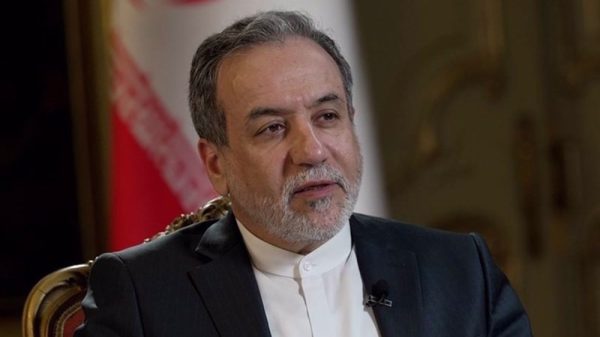
Iranian Foreign Minister Abbas Araghchi
Press TV – July 8, 2025
Iran’s foreign minister has issued a call for the United States to revive diplomacy following a breakdown in indirect talks, warning that further engagement will only be possible if Washington demonstrates a genuine commitment to a fair resolution.
“Iran remains interested in diplomacy, but we have good reason to have doubts about further dialogue,” Abbas Araghchi wrote in an article published by the Financial Times. “If there is a desire to resolve this amicably, the US should show genuine readiness for an equitable accord.”
The foreign minister referred to his five rounds of talks with US special envoy Steve Witkoff, saying that the two sides had made progress in those meetings.
According to Araghchi, discussions covered sensitive issues, including Iran’s uranium enrichment program and a potential end to US sanctions, with proposals from both sides and mediation by Oman.
The talks, he suggested, could have laid the foundation for an economic partnership potentially worth trillions, offering Iran development opportunities while addressing US President Donald Trump’s ambitions to revive struggling US industries.
But, Araghchi said, hopes for a breakthrough were shattered when Israel launched an unprovoked assault on Iran just 48 hours before a planned sixth round of talks in a move to derail diplomatic progress.
“Israel prefers conflict over resolution,” he wrote, arguing that the bombardment was not about stopping Iran from developing nuclear weapons but about sabotaging dialogue.
Araghchi reaffirmed that Iran remains committed to the Nuclear Non-Proliferation Treaty (NPT) and operates under UN monitoring.
He warned that while Iran seeks to prevent a wider regional war, its restraint should not be mistaken for weakness.
“We will defeat any future attack on our people,” he said, cautioning that Iran would reveal its true defensive capabilities if provoked again.
Araghchi placed the blame for the collapse of the talks on “an ostensible ally of America” and on Washington for its “fateful decision” to join in the strikes, thereby violating international law and the NPT framework.
While noting recent messages from US intermediaries suggesting a possible return to the table, Araghchi questioned whether Tehran could trust any future American overtures, citing the US withdrawal from the 2015 nuclear deal and Iran’s experience of being attacked during active negotiations.
“Negotiations held under the shadow of war are inherently unstable, and dialogue pursued amid threats is never genuine,” he wrote.
Still, Araghchi stopped short of closing the door entirely.
Iran, he insisted, remains interested in diplomacy, but only if it is based on mutual respect and free from external sabotage.
The top diplomat warned that Washington’s continued alignment with Israel risks dragging the US into another costly and avoidable conflict in the region.
“The American people deserve to know that their country is being pushed towards a wholly avoidable and unwarranted war by a foreign regime that does not share their interests,” Araghchi wrote, in reference to Israeli influence in Washington.
He ended with a stark choice for the United States: “Will the US finally choose diplomacy? Or will it remain ensnared in someone else’s war?”
Benjamin Netanyahu Is Coming to Town Again
Will Donald Trump surrender or will Bibi resort to a false flag?
By Philip Giraldi • Unz Review • July 4, 2025
Benjamin Netanyahu is on his way for his third visit to Washington during the first six months of the second term of President Donald Trump. Bibi requested the visit because he clearly wants something and he never likes to hear anyone tell him “No!” The American Jewish community and the state of Israel working together are already mustering their substantial resources to give the Prime Minister anything he wants, whatever that might be. If necessary, the so-called Israel Lobby, which controls many aspects of what is referred to colloquially as the United States Government, has a unique ability to lay down a serious guilt trip on anyone who tries to interfere with their prerogatives. Their ability to persuade is frequently based on repeated invocations of a semi-mythical event called the “holocaust,” which has been and will continue to be a burden on all the rest of humanity forever.
Many Jews have consequently successfully turned themselves into something like caricatures, where they are always the victims of an irrational hatred and therefore are entitled to extraordinary measures to protect themselves. Indeed, it all means that whatever happens that involves either Jews or Israel will ipso facto grant a “license to kill” in response to ensure that there will be “never again.” South African journalist Ilana Mercer describes the current process succinctly: “Israel’s ‘strategic perspective’ requires everywhere and always an enemy. This designated enemy will be tarnished by a blood libel, an abstraction: he, she or they will be said to be antisemitic, baying for Jewish blood. This blood libel ignores the truth, because when facts and reality are scrutinized, it’s Arabs that are being exterminated daily en masse, with western grants of government privilege, not Israelis. You have to hand it to Israel. It has positioned itself as the world’s cross, a curse that every individual not Jewish-Israeli is born into and must carry like an albatross.”
It is too bad that Netanyahu will be landing in Washington, where his arrival will no doubt be protected by the battalions of soldiers brought into the Capital two weeks ago to march down Constitution Avenue in their celebration of Vietnam War draft dodger Donald Trump’s birthday. If Bibi were to land in New York he just might be arrested on the warrant issued by the International Criminal Court. The Democratic candidate for New York mayor Zohran Mamdani has the Israeli Lobby and assorted Jewish identity groups hounding him relentlessly in part because he is a Muslim but also because he declared that if he is elected mayor he would arrest Netanyahu if/when he showed up in the city. The declaration had me and others cheering but we also wished that there were some mechanism for also arresting Genocide Joe Biden and Antony Blinken. Presumably Donald Trump, another genocide enabler, is untouchable except by impeachment as he is in office, which is a shame as he and his own batch of war criminals to match those around Biden richly deserve a bit of hard time.
Some journalists are speculating that while at the White House, Trump will pressure Netanyahu to agree to a new sixty day truce in Gaza, but Bibi is unlikely to have asked for the meeting if he thought he might be trapped into stopping the killing of Palestinians. I have my own theory about why Netanyahu will be in Washington and apart from the part where he has his butt kissed by Trump and four hundred bought-and-paid-for congressmen, it won’t be pretty. You see, Bibi wants to establish Israeli hegemony “from the rivers to the sea,” which means from the Euphrates, Litani and Nile rivers and all along the seafront with the Mediterranean. That will require regime change in Iran eliminating that nation as an adversary but the recent short war against the Iranians has made it clear that Israel cannot do it alone unless it goes nuclear, which would do possibly fatal damage to Tel Aviv’s ability to deal with the rest of the world and could easily mean the de facto end of the Jewish state. So he has to convince a gullible Donald Trump to do it for him and is prepared to lie effusively about the threat posed by Iran to make that happen.
Obviously, the problem confronting Netanyahu is that Iran really does not pose any threat to the United States or, indeed, even to Israel if the Israelis were willing to cease their quest for dominance and regional expansion. So he will have to make something up, which admittedly he has a great deal of experience in doing. But what will happen if Trump does not take the bait, whatever that will turn out to be? Will Trump Riviera Resort Gaza be enough to sway the New York Real Estate man who is pretending to be the President of the United States? I rather think that Netanyahu will have several possible schemes in reserve if he runs into a wall in Washington, including false flag operations plausibly blamed on Iran that will kill a lot of Americans to get across the message that the Iranians pose a real danger to the United States.
To be sure, Israel has demonstrated that it is not shy and will not hesitate to kill Americans when its own interests suggest a need for extreme measures, witness the deliberate killing of 34 US Navy sailors on the USS Liberty in 1967 and the recent deaths of US citizens in Gaza which the American government has done nothing about. Israel knows it can get away with murder, both figuratively and literally, and even though the American people might be sick of the slaughter of Palestinians the Israel Lobby knows that it has the support of both Congress and the media no matter what it does.
I rather think that what Israel will do will rely on the White House’s apparent belief that renewing war with Iran will result in attacks on some of the many US bases in the Persian Gulf region. As Iran is not likely to want to carry out that kind of escalation, Israel might decide to do the job itself but leaving evidence behind that it was Iran or an Iranian proxy that carried it out. Israel has many active agents run by Mossad throughout the region, as was evident in the assassinations of senior Iranian government officials and scientists together with their entire families back when the first phase of the so-called “twelve day war” began with an Israeli attack back a month ago. So Israel will blow up an American base or two and then loudly proclaim that the deed was done by Iran to get revenge for the US bombing of the Natanz, Isfahan and Fordow nuclear facilities.
Or if one really wants to explore options on the dark side, Israel might decide to really float the false flag, so it just might use one of its own nukes to do the job, embellishing the tale by pointing out that the blast was clear evidence of the claim that Iran had and still has a secret nuclear weapons program. Clowns in congress like Lindsey Graham, Tom Cotton and Ted Cruz will immediately take up the cry and loudly call for revenge. Trump will be unable to resist, or at least that is what Netanyahu will be thinking, and if a nuke was used on an American base the willingness to reciprocate in kind will be overwhelming in Washington. As both Bibi and the Donald have several times recommended that the 10 million plus folks living in Iran’s capital Tehran should evacuate their homes, it is, in my opinion, quite possible that both Israel and the US have in any event been thinking of going nuke for some time. So, if all goes well for Bibi they will get what they want, i.e. regime change in a devastated Iran and the end of the Iranian challenge to Israel. Let us hope that instead of that outcome, Trump will be listening to his better angel, if he has one, and Netanyahu will be rebuffed and will go home with his tail between his legs next week!
Philip M. Giraldi, Ph.D., is Executive Director of the Council for the National Interest, a 501(c)3 tax deductible educational foundation (Federal ID Number #52-1739023) that seeks a more interests-based U.S. foreign policy in the Middle East. Website is councilforthenationalinterest.org, address is P.O. Box 2157, Purcellville VA 20134 and its email is inform@cnionline.org.
Featured Video

Macgregor: We Haven’t Seen the Worst of the Iran War Yet
or go to
Aletho News Archives – Video-Images
From the Archives
15 Saudi ‘hijackers’ were CIA agents working for US: Scholar
Press TV – April 13, 2016
Fifteen of the 9/11 “hijackers” from Saudi Arabia were CIA agents working for the United States government, which was seeking to destroy the Middle East for Israel and to double the American military budget, says Dr. Kevin Barrett, an American academic who has been studying the events of 9/11 since late 2003…. continue
Blog Roll
 Aletho News
- Breast Cancer: Before You Consent
- Iran’s Plan to Shut Down AI in the Persian Gulf
- Israel seeks ‘compensation’ from Washington over Saudi F-35 sale
- Saudi crown prince seeks dialogue with Ansarullah after Yemeni blows: Report
- Damascus rejects Saudi request for Syrian fighters to counter Yemen: Report
- South Korea says will not send troops to join terrorist US war on Iran
- Russia Just Struck the Eyes of NATO’s War Machine in Ukraine
- Russia summons UK charge d’affaires over Kiev drone support
- NATO member warns bloc seeking pretext for war with Russia
- Macgregor: We Haven’t Seen the Worst of the Iran War Yet
- If Americans Knew
- Debunking The Claim That Macklemore Has A “History Of Antisemitism”
- CPJ demands release of arrested Palestinian-US journalist near Bethlehem
- Robert Kraft: The Billionaire Friend of Netanyahu Pulling The Strings Behind the Macklemore/Ed Sheeran Blow Up
- Columbia Administered Fund Gives Big Money to Pro-Israel Groups
- Deportation Case of Palestinian Activist Salah Sarsour Tests First Amendment
- ‘We Will Not Forget’: Palestinians Mark 44 Years since Sabra and Shatila
- Why do we let Zionists decide what we can and can’t say?
- US welcomes Israeli, Iranian delegations to UN, but not Palestinians – Daily Update
- Biden’s Genocide Accomplices Targeted by New Accountability Campaign
- AIPAC’s Network Has Already Spent $67.2 Million to Shape the Midterm Elections
- No Tricks Zone
- New Study: ‘Global Drought Shows No Detectable Recent Acceleration Under Climate Warming’
- Economic Masterminds: German Socialists Suggest Taxing Productivity Gains Stemming From Using AI
- The South China Sea Has Not Been Cooperating With The Climate Change Narrative
- Energy Crisis: Germany Enters Heating Season With Historically Low Gas Reserve Fill Levels
- New Study: The Antarctic Ice Sheet Gained Mass From 2020-2024 Due To Staggering Snow And Ice Accumulation
- Study: Ocean Heating Rates From Thousands Of Years Ago ‘Dwarf’ Modern Ocean Heating Rates
- Climate Extremists Target, Attack Large-Scale Power Grid Infrastructure In Germany!
- New Study: Antarctic Ice Melt Has Contributed Less Than 1 Centimeter To Sea Level Rise In The Last 30 Years
- Fear Of Debate: Alarmist German Climate Scientist Calls On Mainstream Media To Discredit Skeptic Voices
- End-Of-August Arctic Sea Ice Extent Hasn’t Fallen In 20 Years, Official Data Show!
 Aletho News