36,000 troops, 200 aircraft & 60 vessels: NATO launches biggest war games in 13 years
RT | October 3, 2015
NATO has started its biggest exercise since 2002 with 36,000 international troops from 30 states, including non-NATO nations, participating in the drills which are taking place at sea, in the air and across the territory of three European states.
The alliance has kicked off its massive “Trident Juncture 2015” exercises which will last until November 16. Along with the NATO member states, seven more partner nations are participating in the drills: Australia, Austria, Bosnia and Herzegovina, Finland, the Former Yugoslav Republic of Macedonia, Sweden and Ukraine.
Some 36,000 troops as well as more than 60 warships and about 200 aircraft will participate in the drills which makes it the biggest since 2002 when about 40,000 troops took part in NATO’s “Strong Resolve” military exercise.
“The purpose of the exercise is to train and test the NATO Response Force, a highly ready and technologically advanced multinational force made up of land, air, maritime and Special Forces components,” said General Hans Lothar Domrose, the Commander of Joint Force Command Brunssum.
“Enhancing our response forces is a key part of NATO’s overall effort to adapt to emerging security challenges. TRJE15 [Trident Juncture 2015] has been designed to ensure that our concepts and procedures will work in the event of a real crisis because our job is to always be prepared to defend the people, territory, and values of this Alliance,” he added.
The drills will consist of two parts: the Command Post Exercise (CPX) for Strategic and Operational level staff, and the Live Exercise (LIVEX) for tactical level troop engagements.
The CPX, which will last until October 16, will include “training, evaluation and certification activities” of the command structure of the NATO Response Force. The European Union and the African Union are also going to participate in the CPX.
LIVEX will be held in Italy, Portugal and Spain between October 21 and November 6. NATO air forces, land forces as well as maritime forces will conduct a number of exercises – for example, responding to a simultaneous, wide-scale attack of a group of 20 enemy ships, numerous aircraft and four submarines.
In late August-September NATO conducted the greatest airborne drills in Europe since the end of the Cold War. About 5,000 soldiers from 11 NATO member states participated in the “simultaneous multinational airborne operations.”
NATO has significantly stepped up its military presence and activity along the Russian border, including in the Baltic states and eastern Europe, since Russia’s reunification with Crimea and the outbreak of conflict in eastern Ukraine, which the alliance blames on Moscow.
Russia views NATO’s ongoing expansion and constant military activity as hostile and destabilizing, repeatedly warning that Moscow will respond to NATO approaching Russian borders “accordingly.”
MSF demands independent probe into hospital airstrike in Afghanistan
RT | October 4, 2015
Medecins Sans Frontieres (MSF) has demanded an independent international body investigate the suspected US airstrike that killed 22 people at a hospital in Kunduz, Afghanistan. The charity’s official said MSF cannot trust the US military probe.
“Under the clear presumption that a war crime has been committed, MSF demands that a full and transparent investigation into the event be conducted by an independent international body,” MSF General Director Christopher Stokes said in a statement on Sunday.
“Relying only on an internal investigation by a party to the conflict would be wholly insufficient,” he added.
The US military launched a probe into the incident on Saturday.
He said MSF condemns the attack, which constitutes a grave violation of International Humanitarian Law.
“We reiterate that the main hospital building, where medical personnel were caring for patients, was repeatedly and very precisely hit during each aerial raid, while the rest of the compound was left mostly untouched,” he added.
“The hospital was full of MSF staff, patients and their caretakers. It is 12 MSF staff members and 10 patients, including three children, who were killed in the attack.”
The US military launched a probe into the incident on Saturday. The US military has confirmed its air forces conducted a strike “in the vicinity” of a Medecins Sans Frontieres hospital in Kunduz near the time the facility was hit.
MSF said on Saturday that “all indications” suggest US-led forces carried out the bombing and demanded a transparent account from the Coalition regarding its activities in Kunduz.
On Sunday, NATO said that its preliminary multi-national investigation to determine whether it conducted the airstrike should be wrapped up in a matter of days.
At ‘socialist’ conference in UK, invited speaker makes pitch for U.S./NATO arms to Kyiv regime
Pro-NATO, pro-U.S. ‘socialist’ scholar invited to speak at ‘Socialist Resistance’ conference in London.
New Cold War | October 2, 2015
The political group ‘Socialist Resistance’ in England held an education conference in London on Sept 26, 2015 featuring a Ukrainian diaspora scholar, Marko Bojcun, who delivered a strong message that the rightist, neo-conservative regime in Kyiv should be supported and that the United States and NATO should be pressured to provide more and heavier arms to it. His talk was titled ‘Russian imperialism today‘. The conference theme was ‘Imperialism, globalisation and climate change’.
Bojcun is Director of the Ukraine Centre, London Metropolitan University. He is a PhD university graduate in Canada. In April 2015, he co-signed an open letter appealing to President Petro Poroshenko not to sign into law anti-communist, thought-control measures which had been approved by the Ukrainian Rada. Poroshenko approved the laws. The result has been a harsh crackdown on political, press and other forms of expression in Ukraine as well as the banning of political parties. Among the parties banned by the Ministry of Justice of Ukraine have been the large Communist Party of Ukraine and two smaller parties calling themselves communist.
In his speech to the conference, Bojcun reviewed the current situation in the countries bordering, or close to, Russia. He reported favorably on the efforts of the U.S. and EU to “aid” these countries in the face of alleged Russian economic ‘pressure’ and ‘aggression’ against them. At the 23′ mark, he reports on the efforts of Western powers to help Azerbaijan “break out” of its economic ties to Russia. (Those trade and other ties, actually, are an important lifeline for the people of that country heavily dependent on oil revenues. Many Azeris live and work in Russia and send home their earnings.)
Bojcun dismissed the argument that NATO is engaged in a military buildup in eastern Europe and a threatening stance against Russia and he argued that NATO should be supplying many more weapons and other military aid to Kyiv. Referring to the NATO summit meeting in August 2014, he lamented that “Poroshenko came away with absolutely nothing that he asked for. He was not going to be armed.
“I know there are American advisers in Ukraine and there are some who are training [Ukrainian] forces there. But neither the U.S. nor NATO are supplying Ukraine with lethal weapons. Some NATO countries, very small countries such as Lithuania, have promised to. But this is really not serious.”
“NATO is concerned, first of all, with securing its own member states. It doesn’t have the capacity to do that, to my way of thinking, should Russia decide to make a move northward [??] to the Baltic states. That is a cause of great concern.”
Bojcun then argued it is Russia which is engaged in a military buildup in eastern Europe. “Russia, on the other hand, has military bases in eight of the former Soviet republics. Eight of them. And it has been building them since 2003…
“So, the Russian capacity to strike in the neighbourhood of Ukraine is far superior than the NATO one, and it is growing. One needs to take that into account.
“Looking into this long argument that has been made about NATO expansion into east-central Europe, I agree, NATO made an expansion into east-central Europe. But, that happened. We are into a period since the 2008 financial crisis and the Russo-Georgian War [2008] where the U.S. is really a reactive force and is not [reacting] in kind to the Russian military buildup.”
Also speaking on Ukraine at the same conference was Catherine Samary, a pro-Maidan French intellectual and leader of the Nouveau Parti Anticapitaliste (NPA) of France. Her talk was titled ‘Socialists’ attitudes to Russian expansionism’.
Socialist Resistance calls itself “An ecosocialist organisation opposed to imperialist wars and capitalism.”
The recordings of the two speeches are posted to the website of the rather mis-named ‘Ukraine Solidarity Campaign’ based in the UK. There is no broadcast of discussion by conference participants following the speech by Bojcun to know what, if any, disagreement with the speech was expressed by conference participants or by his conference co-speaker.
Marko Bojcun spoke in London on May 27, 2014. The talk took place two days after the presidential election in Ukraine. In his speech, Bojcun welcomed the election of Petro Poroshenko. He shared the platform with Gabriel Levy (pseudonym), a pro-Maidan writer who publishes People and Nature.
NATO Admits US May Have Hit MSF Hospital in Kunduz
Sputnik | 03.10.2015
NATO does not rule out the possibility that a hospital of Doctors Without Borders in Afghan city of Kunduz was bombed by US air forces.
A Doctors Without Borders (Medecins Sans Frontieres, or MSF) hospital in the Afghan city of Kunduz was bombed early on Saturday, leading to the death of at least three people, with dozens missing, the international aid agency said in a statement.
There were around 200 people in the hospital building when it was bombed, according to MSF.
NATO said in a statement that US forces conducted an airstrike in Kunduz at around the same time — just after 02:00 am on Saturday (after 22:00 GMT Sunday).
The medical team is working around the clock to do everything possible for the safety of patients and hospital staff.
‘We are deeply shocked by the attack, the killing of our staff and patients and the heavy toll it has inflicted on healthcare in Kunduz,” Bart Janssens, MSF Director of Operations commented on the bombing.
“We do not yet have the final casualty figures, but our medical team are providing first aid and treating the injured patients and MSF personnel and accounting for the deceased. We urge all parties to respect the safety of health facilities and staff.”
According to MSF, at the time of the aerial attack 105 patients and their caretakers were in the hospital and over 80 MSF international and national staff.
MSF’s hospital is the only facility of its kind in the Northeast of Afghanistan, providing free life- and limb-saving trauma care.
Kunduz, a city of 300,000 in northern Afghanistan, was recaptured by Afghan government forces on Thursday.
Putin Trumps Obama at the U.N.
By Margaret Kimberley | Black Agenda Report | September 30, 2015
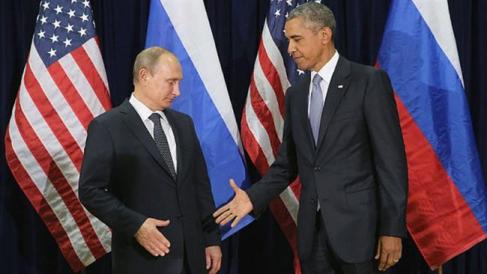
If the peevish expression on Barack Obama’s face was any indication, Vladimir Putin is a force in the world who cannot be ignored. Ever since Russia annexed Crimea in response to the United States – and NATO – backed coup in Ukraine, Obama and the corporate media have falsely declared that Putin is isolated from the rest of the world. They claim he is a monster, a despot and an irrelevance on the world stage.
While the G8 member nations turned themselves into the G7 in order to snub Russia, president Putin was making friends elsewhere. He may have been isolated from the United States and its clique, but not from China and the other BRICS nations or Syria or Iran or Iraq. While western nations use the Islamic State (ISIS) as a ruse to exact regime change in Syria, Putin has formed an alliance to carry out the task of eradicating that danger which was created by western intervention.
Presidents Obama and Putin both made their respective cases before the United Nations General Assembly at its annual meeting. Obama’s speech was an apologia for imperialism and American aggression. He repeated the lies which no one except uninformed Americans believe. If he calls a leader a tyrant he claims the right to destroy a nation and kill and displace its people. Despite the living hell that the United States made out of Libya, Obama continues to defend his crime. He blandly adds that “our coalition could have and should have done more to fill a vacuum left behind.” Apparently he hopes that no one is paying attention to the horrors inflicted on Libya or the ripple effect which created numerous other humanitarian crises.
Not content to defend the indefensible, the president made it clear that the Obama doctrine of regime change and terror is alive and well. “I lead the strongest military that the world has ever known, and I will never hesitate to protect my country or our allies, unilaterally and by force where necessary.”
In contrast, the man labeled a dictator acknowledged the importance of respecting every nation’s sovereignty. “Rather than bringing about reforms, an aggressive foreign interference has resulted in a brazen destruction of national institutions and life itself. Instead of the triumph of democracy and progress, we got violence, poverty and social disaster. Nobody cares a bit about human rights, including the right to life.” Making good use of his time in the spotlight, he made clear that he wasn’t fooled or cowed by the United States. “I cannot help asking those who have caused the situation, do you realize now what you’ve done? But I am afraid no one is going to answer that. Indeed, policies based on self-conceit and belief in one’s exceptionality and impunity have never been abandoned.”
Obviously Putin has self-interest in supporting his allies in Syria and for fighting ISIS. He acknowledged that his country is at risk from some of its own citizens who have sworn an allegiance to that group. Nonetheless, it is important that at least one nation in the world is capable of standing up to American state sponsored destruction and is willing to take action in that effort. Before the United Nations proceedings took place, Russia announced that it would share intelligence with Iran, Iraq and Syria in order to combat ISIS. If the United States were true to its word, that alliance would be welcomed instead of scorned.
Not since the late Hugo Chavez declared that George W. Bush left a “smell of sulfur” has an American president been so openly confronted at the United Nations. Putin’s presence makes it clear that Obama can no longer expect to carry out his international dirty work without effective opposition.
While the corporate media noted the tense photo opportunity between the two presidents they neglected to mention the real issues behind the bad feelings. At a press conference after his address Putin was asked about French president Hollande’s insistence that Assad leave the Syrian presidency. “I relate to my colleagues the American and French presidents with great respect but they aren’t citizens of Syria and so should not be involved in choosing the leadership of another country.”
That simple statement explains the totality of American enmity towards Russia. The NATO nations claim a right to choose leaders, create and support their own terrorist groups and destroy anyone who doesn’t do what they want. Putin is making a case for non-interference and that makes him persona non grata in the eyes of the supposedly more democratic West.
The world ought to fear pax Americana, not a Russian military presence in Syria. There cannot be true peace and stability unless nations and peoples are left to their own devices. The helping hand of United States democracy is anything but. It is a recipe for disaster and requires forceful opposition. If Russia can be a reliable counterforce the whole world will benefit, even if Barack Obama frowns before the cameras.
Margaret Kimberley can be reached via e-Mail at Margaret.Kimberley(at)BlackAgendaReport.com.
Georgia Joins NATO Rapid Response Force
Sputnik — 29.09.2015
TBILISI – Georgia has become the fourth nonmember state to be a member of the NATO Response Force (NRF), Georgian Prime Minister Irakli Garibashvili said Tuesday.
The NRF is a technologically-advanced high-readiness unit comprising land, air, and maritime forces within the alliance. The initiative was launched in 2002, and members created an operational group in 2014, as a response to changing security needs. Finland, Sweden and Ukraine also participate in the NRF program.
“We will be the fourth non-member country in the NFR, which indicates the high level of cooperation between the Georgian Armed Forces and the Alliance,” Garibashvili said as cited by the Georgian news portal Agenda.ge.
He added that the Georgian contribution to the NRF includes 130 soldiers.
Institutional cooperation between Georgia and NATO began in 1994, when Georgia became a member of NATO’s Partnership for Peace program. The country’s cooperation with the organization intensified in 2004 after a Rose Revolution which led to the forced resignation of President Eduard Shevardnadze.
Can Washington Get a New Military Base in Central Asia?
By Vladimir Odintsov – New Eastern Outlook – 30.09.2015
The special attention that the United States has been paying to Central Asia, while actively seeking ways to implement a strategy of global leadership in the region that is now fully recognized as the center of Eurasia, has been covered in numerous articles, including those published in NEO.
According to the geopolitical concept of the recognized American political scientist Zbigniew Brzezinski: Those who control Eurasia control the world. Therefore, Washington’s steps to strengthen American influence in the region in the long run are completely predictable. The pivotal role in this policy is played by the US military bases in the region and military cooperation ties. After all, according to the globalist logic of the White House, American influence in any region must be supported by the “adequate” military force. The 9/11 events in the US and the consequent anti-terrorist intervention in Afghanistan have become a pretext for a major military deployment of American and NATO troops in Central Asia.
By the way, the ongoing engagement of US troops in Afghanistan confirms the notion that the presence of US and NATO forces in this country has little to do with the “struggle for democracy”. The true purpose of the military intervention in Afghanistan was the creation of powerful military bases, as the geographical position of this country is pretty unique in terms of the strategic freedom it provides. From this area Washington can launch a massive attack against Russia’s Urals and Siberia, different facilities in Central Asia, Iran, Pakistan, India and China. For this reason from the very start of the US invasion of Afghanistan, Shindand and Bagram Air Bases were transformed into massive construction sites where a large number of surface and underground facilities being built.
It happens so that for Pentagon Central Asia serves as a base for applying pressure on Russia, China, Iran and the entire Eurasian continent, it also plays a pivotal role in the post-conflict settlement in Afghanistan, since it may form a joint military alliance under the banner of opposition to the Islamic state.
In an effort to strengthen its positions in Central Asia under the above mentioned pretext, the United States has sent invitations to join the anti-ISIL military coalition to both Uzbekistan and Tajikistan. To add some momentum to the matter the Deputy Assistant Secretary for Central Asia at the U.S. Department of State Daniel Rosenblum has recently visited Tashkent, while the commander of United States Central Command general John Lloyd James Austin III made a trip to Dushanbe. In the course of their visits American emissaries discussed the situation in Afghanistan, regional security, and the advantages of cooperation with the United States “in the fight against international extremism” with regional authorities. Of course, a particular emphasis was made on the “need” to stay away from integration with Russia.
It is clear that in dealing with Uzbekistan and Turkmenistan “messengers of Washington” tried to make active use of the fact that those states today are free from obligations of the Collective Security Treaty Organization, which is headed by Russia, and therefore they are free to pursue military cooperation with the US. Therefore, Washington and Tashkent signed a document that provides the latter with free shipments of military equipment in the next five years. American equipment, trucks, military vehicles for a total worth of 6.2 million dollars will be just granted to this Central Asian state. This year, the United States has handed over to Uzbekistan armored class M-ATV, as well as armored repair and recovery equipment to support them, 308 cars and 20 repairs trucks with a total cost of at least 150 million dollars.
In dealing with Uzbek authorities American envoys had to mind the fact that the country entered the international counter-terrorism coalition immediately after September 11, 2001, while establishing special relations with a number of Western countries. As a result, the territory of the Republic at the time was housing a US military base, while the German Air Force had the opportunity to use the airfield in Termez, near the border with Afghanistan. Cooperation with Germany has been prolonged recently for a couple more years, though Tashkent is stressing the fact that the airfield in Termez is not a foreign military base. There’s little wonder to this fact, since the presence of foreign military bases was prohibited by law in Uzbekistan after the Andijan events, therefore in 2005 at the request of the Uzbek authorities American soldiers had to pack and leave.
Uzbekistan, is seeking ways to retain non-aligned status, and has no plans to allow any foreign military bases on its territory, on top of that it remains reluctant to send Uzbek troops abroad. This was pretty much the answer that the President of Uzbekistan Islam Karimov has given to Washington’s offer to join a coalition against the Islamic state.
However, Washington’s attempts to strengthen its military and political influence in Central Asia are far from over. Such efforts will certainly continue, despite the apparent reluctance of regional players to burden themselves with military obligations to the United States. America has severely damaged its reputation, therefore nobody believes in its peacemaking aspirations anymore, since the wars it has been waging are only leading to the suffering and misery of the civilian population of the countries it invades.
Putin interview to Charlie Rose in the run-up to his address at the UN General Assembly’s 70th session
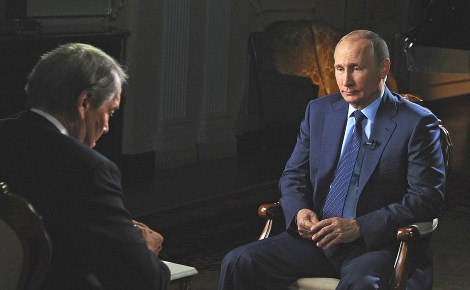
Full text of the interview will be published on September 29.
* * *
CHARLIE ROSE: You will speak to the United Nations in a much-anticipated address on Monday. It will be the first time you have been there in a number of years. What will you say to the UN, to America, to the world?
VLADIMIR PUTIN: Since this interview will be aired prior to my speech, I do not think it reasonable to go into much detail about everything I am going to speak about, but, broadly, I will certainly mention some facts from the history of the United Nations. Now I can already tell you that the decision to establish the United Nations was taken in our country at the Yalta Conference. It was in the Soviet Union that this decision was made. The Soviet Union, and Russia as the successor state to the Soviet Union, is a founding member state of the United Nations and a permanent member of its Security Council.
Of course, I will have to say a few words about the present day, about the evolving international situation, about the fact that the United Nations remains the sole universal international organisation designed to maintain global peace. And in this sense it has no alternative today. It is also apparent that it should adapt to the ever-changing world, which we discuss all the time: how it should evolve and at what rate, which components should undergo qualitative changes. Of course, I will have to or rather should use this international platform to explain Russia’s vision of today’s international relations, as well as the future of this organisation and the global community.
CHARLIE ROSE: We are expecting you to speak about the threat of the Islamic State and your presence in Syria that is related to that. What is the purpose of your presence in Syria and how does that relate to the challenge of ISIS?
VLADIMIR PUTIN: I believe, I am pretty certain that virtually everyone speaking from the United Nations platform is going to talk about the fight, about the need to fight terrorism, and I cannot avoid this issue, either. This is quite understandable because it is a serious common threat to all of us; it is a common challenge to all of us. Today, terrorism threatens a great number of states, a great number of people – hundreds of thousands, millions of people suffer from its criminal activity. And we all face the task of joining our efforts in the fight against this common evil.
Concerning our, as you put it, presence in Syria, as of today it has taken the form of weapons supplies to the Syrian government, personnel training and humanitarian aid to the Syrian people. We act based on the United Nations Charter, i.e. the fundamental principles of modern international law, according to which this or that type of aid, including military assistance, can and must be provided exclusively to legitimate government of one country or another, upon its consent or request, or upon the decision of the United Nations Security Council. In this particular case, we act based on the request from the Syrian government to provide military and technical assistance, which we deliver under entirely legal international contracts.
CHARLIE ROSE: The Secretary of State John Kerry said that the United States welcomed your assistance in the fight against the Islamic State. Others have taken note of the fact that these are combat planes and manpad systems that are being used against the conventional army, not extremists.
VLADIMIR PUTIN: There is only one regular army there. That is the army of Syrian President al-Assad. And he is confronted with what some of our international partners interpret as an opposition. In reality, al-Assad’s army is fighting against terrorist organisations. You should know better than me about the hearings that have just taken place in the United States Senate, where the military and Pentagon representatives, if I am not mistaken, reported to the senators about what the United States had done to train the combat part of the opposition forces. The initial aim was to train between 5,000 and 6,000 fighters, and then 12,000 more. It turns out that only 60 of these fighters have been properly trained, and as few as 4 or 5 people actually carry weapons, while the rest of them have deserted with the American weapons to join ISIS. That is the first point.
Secondly, in my opinion, provision of military support to illegal structures runs counter to the principles of modern international law and the United Nations Charter. We have been providing assistance to legitimate government entities only.
In this connection, we have proposed cooperation to the countries in the region, we are trying to establish some kind of coordination framework. I personally informed the President of Turkey, the King of Jordan, as well as the Saudi Arabia of that, we informed the United States too, and Mr Kerry, whom you have mentioned, had an in-depth conversation with our Foreign Minister Sergei Lavrov on this matter; besides, our military stay in touch and discuss this issue. We would welcome a common platform for collective action against the terrorists.
<…>
CHARLIE ROSE: Are you ready to join forces with the United States against ISIS and is it why you are in Syria? Others believe that it might be part of your goal, that you are trying to save President al-Assad’s administration because they have been losing ground and the war has not been going well for them, and you are there to rescue them.
VLADIMIR PUTIN: That’s right, that’s how it is. We provide assistance to legitimate Syrian authorities. Moreover, I strongly believe that by acting otherwise, acting to destroy the legitimate bodies of power we would create a situation that we are witnessing today in other countries of the region or in other regions of the world, for instance, in Libya, where all state institutions have completely disintegrated.
Unfortunately, we are witnessing a similar situation in Iraq. There is no other way to settle the Syrian conflict other than by strengthening the existing legitimate government agencies, support them in their fight against terrorism and, of course, at the same time encourage them to start a positive dialogue with the “healthy” part of the opposition and launch political transformations.
CHARLIE ROSE: As you know, some coalition partners want al-Assad to go before they can support the government.
VLADIMIR PUTIN: I would like to advise or recommend them to forward this suggestion to the Syrian people. It is only up to the Syrian people living in Syria to determine who, how and based on what principles should rule their country.
CHARLIE ROSE: Do you support what President al-Assad is doing in Syria and what is happening to those Syrians, to those millions of refugees, to hundreds of thousands of people who have been killed and many – by his own force?
VLADIMIR PUTIN: And do you think that those who support the armed opposition and, mainly, terrorist organisations just in order to overthrow al-Assad without thinking of what awaits the country after the complete destruction of state institutions are doing the right thing?
Time and again, with perseverance worthy of a better cause, you are talking about the Syrian army fighting against its people. But take a look at those who control 60 percent of Syrian territory. Where is that civilised opposition? 60 percent of Syria is controlled either by ISIS, Jabhat al-Nusra or other terrorist organisations, organisations that have been recognised as terrorist by the United States, as well as other countries and the UN.
CHARLIE ROSE: Would Russia deploy its combat troops in Syria if it is necessary to defeat ISIS?
VLADIMIR PUTIN: Russia will not take part in any field operations on the territory of Syria or in other states; at least, we do not plan it for now. But we are thinking of how to intensify our work both with President al-Assad and our partners in other countries.
CHARLIE ROSE: As we come back to the problem of many people considering that al-Assad is helping ISIS, that his terrible attitude towards the Syrian people and the use of barrel bombs and other actions are helping ISIS, and if he is removed, the transition period would be better at some point for the purposes of fighting ISIS.
VLADIMIR PUTIN: In secret services’ parlance, I can say that such an assessment is a blatant act by al-Assad’s enemies. It is anti-Syrian propaganda.
CHARLIE ROSE: This wording is very broad, among other things, it can mean new efforts by Russia to take up the leadership role in the Middle East and it can mean that it represents your new strategy. Is it really a new strategy?
VLADIMIR PUTIN: No. There are more than 2,000 militants in Syria from the former Soviet Union. So instead of waiting for them to return back home we should help President al-Assad fight them there, in Syria. This is the main incentive that impels us to help President al-Assad.
In general, we want the situation in the region to stabilize.
CHARLIE ROSE: You are proud of Russia and it means that you want Russia to play a more significant role in the world. This is just one of the examples.
VLADIMIR PUTIN: This is not an end in itself. I am proud of Russia. We have much to be proud of. But we have no obsession that Russia must be a super power in the international arena.
CHARLIE ROSE: But you are a major power because of the nuclear weapons you possess. You are a force to be reckoned with.
VLADIMIR PUTIN: I hope so (laughing), otherwise what are these weapons for?
The Ukrainian issue is a separate huge issue for us, I will tell you why. Ukraine is the closest country to us. We have always said that Ukraine is our sister country and it is true. It is not just a Slavic people, it is the closest people to Russia: we have similar languages, culture, common history, religion etc.
Here is what I believe is completely unacceptable for us. Addressing issues, including controversial ones, as well as domestic issues of the former Soviet Republics through the so-called coloured revolutions, through coups and unconstitutional means of toppling the current government. That is absolutely unacceptable. Our partners in the United States are not trying to hide the fact that they supported those opposed to President Yanukovych.
CHARLIE ROSE: You believe the United States had something to do with the ousting of Yanukovych, when he had to flee to Russia?
VLADIMIR PUTIN.: I know this for sure.
CHARLIE ROSE: How can you know for sure?
VLADIMIR PUTIN: It is very simple. We have thousands of contacts and thousands of connections with people who live in Ukraine. And we know who had meetings and worked with people who overthrew Viktor Yanukovych, as well as when and where they did it; we know the ways the assistance was provided, we know how much they paid them, we know which territories and countries hosted trainings and how it was done, we know who the instructors were. We know everything. Well, actually, our US partners are not keeping it a secret.
CHARLIE ROSE: Do you respect the sovereignty of Ukraine?
VLADIMIR PUTIN: Certainly. However, we would like other countries to respect the sovereignty of other states, including Ukraine, too. Respecting the sovereignty means preventing coups, unconstitutional actions and illegitimate overthrowing of the legitimate government.
CHARLIE ROSE: How does the renewal of the legitimate power take place in your judgment? How will that come about? And what role will Russia play?
VLADIMIR PUTIN: At no time in the past, now or in the future has or will Russia take any part in actions aimed at overthrowing the legitimate government.
CHARLIE ROSE: Did you have to use the military force to accomplish that objective?
VLADIMIR PUTIN: Of course, no.
CHARLIE ROSE: Russia has military presence on the borders with Ukraine, and some argue that there have been Russian troops in Ukraine itself.
VLADIMIR PUTIN: Do you have a military presence in Europe?
CHARLIE ROSE: Yes.
VLADIMIR PUTIN: The U.S. tactical nuclear weapons are in Europe, let us not forget this. Does it mean that the U.S. has occupied Germany or that the U.S. never stopped the occupation after World War II and only transformed the occupation troops into the NATO forces? And if we keep our troops on our territory on the border with some state, you see it is a crime?
CHARLIE ROSE: As you know, you are very much talked about in America.
VLADIMIR PUTIN: Do they not have anything else to do? ( Laughs.)
CHARLIE ROSE: Or maybe they are curious people? Or maybe you are an interesting character, maybe that is what it is? They know that you were the KGB agent, who retired and got into politics. In St. Petersburg you became deputy mayor, then moved to Moscow. And the interesting thing is that they see these images of you, bare-chested man on horseback, and they say there is a man who carefully cultivates his image of strength.
You enjoy the work, you enjoy representing Russia, and I know you have been an intelligence officer. Intelligence officer knows how to read other people; that’s part of the job, right?
VLADIMIR PUTIN: It used to be my job. Now I have a different job and for quite a while already.
CHARLIE ROSE: Someone in Russia told me, “There is no such thing as a former KGB man. Once a KGB man, always a KGB man.”
VLADIMIR PUTIN: You know every stage of your life has an impact on you. Whatever we do, all the knowledge, the experience, they stay with us, we carry them on, use them in one way or another. In this sense, yes, you are right.
CHARLIE ROSE: Once, somebody from the CIA told me that the training you have is important, that you learn to be liked as well. Because you have to charm people, you have to seduce them.
VLADIMIR PUTIN: Well, if the CIA told you so, then it must be true. They are experts on that. (Laughing)
CHARLIE ROSE: The popularity rating you have in Russia, I believe, makes every politician in the world envious. Why are you so popular?
VLADIMIR PUTIN: There is something that unites me and other citizens of Russia. It is love for our Motherland.
CHARLIE ROSE: It was an emotional moment at the time of the [World War II Memory], because of the sacrifices Russia had made. And you were staying with a picture of your father with tears in your eyes.
VLADIMIR PUTIN: Yes, my family and my relatives as a whole suffered heavy losses during the Second World War. That is true. In my father’s family there were five brothers and four of them were killed, I believe. On my mother’s side the situation is much the same. In general, Russia suffered heavily. No doubt, we cannot forget that and we must not forget, not to accuse anyone but to ensure that nothing of the kind ever happens again.
CHARLIE ROSE: You also said that the worst thing that happened in the last century was the disintegration of the Soviet Union, the Soviet empire. There are those who look at Ukraine and Georgia and think that you do not want to recreate the Soviet empire, but you do want to recreate a sphere of influence, which, you think, Russia deserves because of the relationship that has existed. Why are you smiling?
VLADIMIR PUTIN: (Laughing) Your questions make me happy. Somebody is always suspecting Russia of having some ambitions, there are always those who are trying to misinterpret us or keep something back. I did say that I see the collapse of the Soviet Union as a great tragedy of the XX century. Do you know why? First of all, because 25 million of Russian people suddenly turned out to be outside the borders of the Russian Federation. They used to live in one state; the Soviet Union has traditionally been called Russia, the Soviet Russia, and it was the great Russia. They used to live in one country and suddenly found themselves abroad. Can you imagine how many problems came out?
First, there were everyday issues, the separation of families, the economic and social problems. The list is endless. Do you think it is normal that 25 million people, Russian people, suddenly found themselves abroad? The Russians have turned out to be the largest divided nation in the world nowadays. Is that not a problem? It is not a problem for you as it is for me.
CHARLIE ROSE: As far as we know, you are very popular, but, forgive me, there are many people who are very critical towards you in Russia. As you know, they say it is more autocratic than democratic. They say that political opponents and journalists had been killed and imprisoned in Russia. They say your power is unchallenged. And they say that power, an absolute power corrupts absolutely. What would you say to those people who worry about the climate, the atmosphere in Russia?
VLADIMIR PUTIN: There can be no democracy without observing the law and everyone must observe it – that is the most basic and important thing that we all should remember.
As for those tragic incidents as losses of lives, including those of the journalists, unfortunately, it happens in all countries around the world. But if it occurs in Russia, we take every step possible to ensure that the perpetrators are found, identified and punished. We will work on all issues in the same way.
But the most important thing is that we will continue improving our political system so that people and every citizen will feel that they can influence the life of state and society, they can influence the authorities, and so that the authorities will be aware of their responsibility before those people who gave their confidence to the representatives of the authorities in the elections.
CHARLIE ROSE: If you as the leader of this country insist that the rule of law be observed, if you insist that justice be done, if you because of your power do that, then it could go a long way eliminating that perception.
VLADIMIR PUTIN: A lot can be done, but not everyone immediately succeeds in everything. How long has it taken the democratic process to develop in the United States? Since it was founded. So, do you think that as regards democracy everything is settled now in America? If this were so, there would be no Ferguson issue, right? There would be no other issues of similar kind, there would be no police abuse.
Our goal is to see all these issues and respond to them timely and properly. The same applies to Russia. We also have a lot of problems.
CHARLIE ROSE: Are you curious about America more than simply another nation that you have to deal with?
VLADIMIR PUTIN: It is interesting for us to know what is happening in the US. America has a strong influence on the situation in the world in general.
CHARLIE ROSE: What do you like most about America?
VLADIMIR PUTIN: America’s creative approach to solving the problems the country is faced with, its openness and open-mindedness which make it possible to unleash the potential of the people. I believe that largely due to these qualities America has made such tremendous strides in its development.
CHARLIE ROSE: What do you think of President Obama? What is your evaluation of him?
VLADIMIR PUTIN: I do not think I am entitled to assess the President of the United States. This is up to the American people.
CHARLIE ROSE: Do you think his activities in foreign affairs reflect a weakness?
VLADIMIR PUTIN: Why? I do not think so at all. The point is that in any country, including the United States, may be in the United States even more often than in any other country, foreign policy is used for internal political struggle. An election campaign will soon start in the United States. They always play either Russian card or any other.
CHARLIE ROSE: Let me ask you this question: Do you think he listens to you?
VLADIMIR PUTIN: I think that we all listen to each other when it does not contradict our own ideas of what we should and should not do.
CHARLIE ROSE: You said Russia is not a super power. Do you think he considers Russia an equal? Considers you an equal? Which is the way you want to be treated?
VLADIMIR PUTIN: (Laughing) Ask him, he is your President! How can I know what he thinks?
CHARLIE ROSE: Are you watching the Republican political debates?
VLADIMIR PUTIN: If you ask me whether I watch them on a daily basis – I would say no.
CHARLIE ROSE: Marco Rubio is running for a Republican nomination and he said you were a gangster.
VLADIMIR PUTIN: How can I be a gangster, if I worked for the KGB? It is absolutely ridiculous.
CHARLIE ROSE: Are people in Russia fearful of you?
VLADIMIR PUTIN: I do not think so. I assume most people trust me, if they vote for me in elections. And it is the most important thing. It places great responsibility on me, immense responsibility. I am grateful to the people for that trust, but I surely feel great responsibility for what I do and for the result of my work.
<…>
On the Trail of Turkey’s Terrorist Grey Wolves
By Martin A. Lee | Consortium News | 1997
In broad daylight on May 2, 1997, 50 armed men set upon a television station in Istanbul with gunfire. The attackers unleashed a fusillade of bullets and shouted slogans supporting Turkey’s Deputy Prime Minister Tansu Ciller. The gunmen were outraged over the station’s broadcast of a TV report critical of Ciller, a close U.S. ally who had come under criticism for stonewalling investigations into collusion between state security forces and Turkish criminal elements.
Miraculously, no one was injured in the attack, but the headquarters of Independent Flash TV were left pock-marked with bullet-holes and smashed windows. The gunfire also sent an unmistakable message to Turkish journalists and legislators: don’t challenge Ciller and other high-level Turkish officials when they cover up state secrets.

Former Turkish Prime Minister Tansu Ciller
For several months, Turkey had been awash in dramatic disclosures connecting high Turkish officials to the right-wing Grey Wolves, the terrorist band which has preyed on the region for years. In 1981, a terrorist from the Grey Wolves attempted to assassinate Pope John Paul II in Vatican City.
But at the center of the mushrooming Turkish scandal is whether Turkey, a strategically placed NATO country, allowed mafiosi and right-wing extremists to operate death squads and to smuggle drugs with impunity. A Turkish parliamentary commission is investigating these new charges.
The rupture of state secrets in Turkey also could release clues to other major Cold War mysteries. Besides the attempted papal assassination, the Turkish disclosures could shed light on the collapse of the Vatican bank in 1982 and the operation of a clandestine pipeline that pumped sophisticated military hardware into the Middle East — apparently from NATO stockpiles in Europe — in exchange for heroin sold by the Mafia in the United States.
The official Turkish inquiry was triggered by what could have been the opening scene of a spy novel: a dramatic car crash on a remote highway near the village of Susurluk, 100 miles southwest of Istanbul. On Nov. 3, 1996, three people were crushed to death when their speeding black Mercedes hit a tractor.
The crash killed Husseyin Kocadag, a top police official who commanded Turkish counter-insurgency units. But it was Kocadag’s company that stunned the nation. The two other dead were Abdullah Catli, a convicted fugitive who was wanted for drug trafficking and murder, and Catli’s girlfriend, Gonca Us, a Turkish beauty queen turned mafia hit-woman.
A fourth occupant, who survived the crash, was Kurdish warlord Sedat Bucak, whose militia had been armed and financed by the Turkish government to fight Kurdish separatists. At first, Turkish officials claimed that the police were transporting two captured criminals.
But evidence seized at the crash site indicated that Abdullah Catli, the fugitive gangster, had been given special diplomatic credentials by Turkish authorities. Catli was carrying a government-approved weapons permit and six ID cards, each with a different name. Catli also possessed several handguns, silencers and a cache of narcotics, not the picture of a subdued criminal.
When it became obvious that Catli was a police collaborator, not a captive, the Turkish Interior Minister resigned. Several high-ranking law enforcement officers, including Istanbul’s police chief, were suspended. But the red-hot scandal soon threatened to jump that bureaucratic firebreak and endanger the careers of other senior government officials.
Grey Wolves Terror
The news of Catli’s secret police ties were all the more scandalous given his well-known role as a key leader of the Grey Wolves, a neo-fascist terrorist group that has stalked Turkey since the late 1960s.
A young tough who wore black leather pants and looked like Turkey’s answer to Elvis Presley, Catli graduated from street gang violence to become a brutal enforcer for the Grey Wolves. He rose quickly within their ranks, emerging as second-in-command in 1978. That year, Turkish police linked him to the murder of seven trade-union activists and Catli went underground.
Three years later, the Grey Wolves gained international notoriety when Mehmet Ali Agca, one of Catli’s closest collaborators, shot and nearly killed Pope John Paul II in St. Peter’s Square on May 13, 1981. Catli was the leader of a fugitive terrorist cell that included Agca and a handful of other Turkish neo-fascists.
Testifying in September 1985 as a witness at the trial of three Bulgarians and four Turks charged with complicity in the papal shooting in Rome, Catli (who was not a defendant) disclosed that he gave Agca the pistol that wounded the pontiff. Catli had previously helped Agca escape from a Turkish jail, where Agca was serving time for killing a national newspaper editor.
In addition to harboring Agca, Catli supplied him with fake IDs and directed Agca’s movements in West Germany, Switzerland, and Austria for several months prior to the papal attack. Catli enjoyed close links to Turkish drug mafiosi, too. His Grey Wolves henchmen worked as couriers for the Turkish mob boss Abuzer Ugurlu.
At Ugurlu’s behest, Catli’s thugs criss-crossed the infamous smugglers’ route passing through Bulgaria. Those routes were the ones favored by smugglers who reportedly carried NATO military equipment to the Middle East and returned with loads of heroin. Judge Carlo Palermo, an Italian magistrate based in Trento, discovered these smuggling operations while investigating arms-and-drug trafficking from Eastern Europe to Sicily.
Palermo disclosed that large quantities of sophisticated NATO weaponry — including machine guns, Leopard tanks and U.S.-built Cobra assault helicopters — were smuggled from Western Europe to countries in the Middle East during the 1970s and early 1980s. According to Palermo’s investigation, the weapon delivers were often made in exchange for consignments of heroin that filtered back, courtesy of the Grey Wolves and other smugglers, through Bulgaria to northern Italy.
There, the drugs were received by Mafia middlemen and transported to North America. Turkish morphine base supplied much of the Sicilian-run “Pizza connection,” which flooded the U.S. and Europe with high-grade heroin for several years.
[While it is still not clear how the NATO supplies entered the pipeline, other investigations have provided some clues. Witnesses in the October Surprise inquiry into an alleged Republican-Iranian hostage deal in 1980 claimed that they were allowed to select weapons from NATO stockpiles in Europe for shipment to Iran. [Iranian arms dealer Houshang Lavi claimed that he selected spare parts for Hawk anti-aircraft batteries from NATO bases along the Belgian-German border. Another witness, American arms broker William Herrmann, corroborated Lavi’s account of NATO supplies going to Iran. [Even former NATO commander Alexander Haig confirmed that NATO supplies could have gone to Iran in the early 1980s while he was secretary of state. “It wouldn’t be preposterous if a nation, Germany, for example, decided to let some of their NATO stockpiles be diverted to Iran,” Haig said in an interview. For more details, see Robert Parry’s Trick or Treason. ]A Vatican Mystery
Italian magistrates described the network they had uncovered as the “world’s biggest illegal arms trafficking organization.” They linked it to Middle Eastern drug empires and to prestigious banking circles in Italy and Europe.
At the center of this operation, it appeared, was an obscure import-export firm in Milan called Stibam International Transport. The head of Stibam, a Syrian businessman named Henri Arsan, also functioned as an informant for the U.S. Drug Enforcement Administration, according to several Italian news outlets.
With satellite offices in New York, London, Zurich, and Sofia, Bulgaria, Stibam officials recycled their profits through Banco Ambrosiano, Italy’s largest private bank which had close ties to the Vatican until its sensational collapse in 1982. The collapse of Banco Ambrosiano came on the heels of the still unsolved death of its furtive president, Roberto Calvi, whose body was found hanging underneath Blackfriar’s Bridge in London in June 1982.
While running Ambrosiano, Calvi, nicknamed “God’s banker,” served as advisor to the Vatican’s extensive fiscal portfolio. At the same time in the mid- and late 1970s, Calvi’s bank handled most of Stibam’s foreign currency transactions and owned the building that housed Stibam’s Milanese headquarters.
In effect, the Vatican Bank — by virtue of its interlocking relationship with Banco Ambrosiano — was fronting for a gigantic contraband operation that specialized in guns and heroin. The bristling contraband operation that traversed Bulgaria was a magnet for secret service agents on both sides of the Cold War divide.
Crucial, in this regard, was the role of Kintex, a Sofia-based, state-controlled import-export firm that worked in tandem with Stibam and figured prominently in the arms trade. Kintex was riddled with Bulgarian and Soviet spies — a fact which encouraged speculation that the KGB and its Bulgarian proxies were behind the plot against the pope.
But Western intelligence also had its hooks into the Bulgarian smuggling scene, as evidenced by the CIA’s use of Kintex to channel weapons to the Nicaraguan Contra rebels in the early 1980s. The Reagan administration jumped on the papal assassination attempt as a propaganda opportunity, rather than helping to unravel the larger mystery.
Although the CIA’s link to the arms-for-drugs traffic in Bulgaria was widely known in espionage circles, hard-line U.S. and Western European officials promoted instead a bogus conspiracy theory that blamed the papal shooting on a communist plot.
The so-called “Bulgarian connection” became one of the more effective disinformation schemes hatched during the Reagan era. It reinforced the notion of the Soviet Union as an evil empire. But the apparent hoax also diverted attention from extensive — and potentially embarrassing — ties between U.S. intelligence and the Turkey’s narco-trafficking ultra-right.
Fabrication of the conspiracy theory might have even involved suborning perjury. During his September 1985 court testimony in Rome, Catli asserted that he had been approached by the West German BND spy organization, which allegedly promised him a large sum of money if he implicated the Bulgarian secret service and the KGB in the attempt on the pope’s life.
Five years later, ex-CIA analyst Melvin A. Goodman disclosed that his colleagues, under pressure from CIA higher-ups, skewed their reports to try to lend credence to the contention that the Soviets were involved. “The CIA had no evidence linking the KGB to the plot,” Goodman told the Senate Intelligence Committee.
Friends of the Wolves
Duane “Dewey” Clarridge, the CIA station chief in Rome at the time of the papal shooting, had previously been posted in Ankara. Clarridge was the CIA’s man-on-the-spot in Turkey in the 1970s when armed bands of Grey Wolves unleashed a wave of bomb attacks and shootings that killed thousands of people, including public officials, journalists, students, lawyers, labor organizers, social democrats, left-wing activists and ethnic Kurds. [In his 1997 memoirs, A Spy for All Seasons, Clarridge makes no reference to the Turkish unrest or to the pope shooting.]
During those violent 1970s, the Grey Wolves operated with the encouragement and protection of the Counter-Guerrilla Organization, a section of the Turkish Army’s Special Warfare Department. Headquartered in the U.S. Military Aid Mission building in Ankara, the Special Warfare Department received funds and training from U.S. advisors to create “stay behind” squads comprised of civilian irregulars.
They were supposed to go underground and engage in acts of sabotage if the Soviets invaded. Similar Cold War paramilitary units were established in every NATO member state, covering all non-Communist Europe like a spider web that would entangle Soviet invaders. But instead of preparing for foreign enemies, U.S.-sponsored stay-behind operatives in Turkey and several European countries used their skills to attack domestic opponents and foment violent disorders.
Some of those attacks were intended to spark right-wing military coups. In the late 1970s, former military prosecutor and Turkish Supreme Court Justice Emin Deger documented collaboration between the Grey Wolves and the government’s counter-guerrilla forces as well as the close ties of the latter to the CIA.
Turkey’s Counter-Guerrilla Organization handed out weapons to the Grey Wolves and other right-wing terrorist groups. These shadowy operations mainly engaged in the surveillance, persecution and torture of Turkish leftists, according to retired army commander Talat Turhan, the author of three books on counter-guerrilla activities in Turkey.
But the extremists launched one wave of political violence which provoked a 1980 coup by state security forces that deposed Prime Minister Bulent Ecevit. The Turkish security forces cited the need to restore order which had been shattered by rightist terrorist groups secretly sponsored by those same state security forces.
Cold War Roots
Since the earliest days of the Cold War, Turkey’s strategic importance derived from its geographic position as the West’s easternmost bulwark against Soviet communism. In an effort to weaken the Soviet state, the CIA also used pan-Turkish militants to incite anti-Soviet passions among Muslim Turkish minorities inside the Soviet Union, a strategy that strengthened ties between U.S. intelligence and Turkey’s ultra-nationalists.
Though many of Turkish ultra-nationalists were anti-Western as well as anti-Soviet, the Cold War realpolitik compelled them to support a discrete alliance with NATO and U.S. intelligence. Among the Turkish extremists collaborating in this anti-Soviet strategy were the National Action Party and its paramilitary youth group, the Grey Wolves.
Led by Colonel Alpaslan Turkes, the National Action Party espoused a fanatical pan-Turkish ideology that called for reclaiming large sections of the Soviet Union under the flag of a reborn Turkish empire. Turkes and his revanchist cohorts had been enthusiastic supporters of Hitler during World War II.
“The Turkish race above all others” was their Nazi-like credo. In a similar vein, Grey Wolf literature warned of a vast Jewish-Masonic-Communist conspiracy and its newspapers carried ads for Turkish translations of Nazi texts.
The pan-Turkish dream and its anti-Soviet component also fueled ties between the Grey Wolves and the Anti-Bolshevik Bloc of Nations (ABN), a CIA-backed coalition led by erstwhile fascist collaborators from East Europe.
Ruzi Nazar, a leading figure in the Munich-based ABN, had a long-standing relationship with the CIA and the Turkish ultra-nationalists. In the 1950s and 1960s, Nazar was employed by Radio Free Europe, a CIA-founded propaganda effort.
When the Soviet Union collapsed in 1991, the shifting geopolitical terrain created new opportunities — political and financial — for Colonel Turkes and his pan-Turkish crusaders. After serving a truncated prison term in the 1980s for his role in masterminding the political violence that convulsed Turkey, Turkes and several of his pan-Turkish colleagues were permitted to resume their political activities.
In 1992, the colonel visited his long lost Turkish brothers in newly independent Azerbaijan and received a hero’s welcome. In Baku, Turkes endorsed the candidacy of Grey Wolf sympathizer Abulfex Elcibey, who was subsequently elected president of Azerbaijan and appointed a close Grey Wolf ally as his Interior Minister.
The Gang Returns
By this time, Abdullah Catli was also back in circulation after several years of incarceration in France and Switzerland for heroin trafficking. In 1990, he escaped from a Swiss jail cell and rejoined the neo-fascist underground in Turkey.
Despite his documented links to the papal shooting and other terrorist attacks, Catli was pressed into service as a death squad organizer for the Turkish government’s dirty war against the Kurds who have long struggled for independence inside both Turkey and Iraq.
Turkish Army spokesmen acknowledged that the Counter-Guerrilla Organization (renamed the Special Forces Command in 1992) was involved in the escalating anti-Kurdish campaign. Turkey got a wink and a nod from Washington as a quid pro quo for cooperating with the United States during the Gulf War.
Turkish jets bombed Kurdish bases inside Iraqi territory. Meanwhile, on the ground, anti-Kurdish death squads were assassinating more than 1,000 non-combatants in southeastern Turkey. Hundreds of other Kurds “disappeared” while in police custody. Human Rights Watch, Amnesty International and the European Parliament all condemned the Turkish security forces for these abuses.
Still, there was no hard evidence that Turkey’s security forces had recruited criminal elements as foot soldiers. That evidence surfaced only on Nov. 3, 1996, when Catli died in the fateful auto accident near Susurluk.
Strewn amidst the roadside wreckage was proof of what many journalists and human rights activists had long suspected — that successive Turkish governments had protected narco-traffickers, sheltered terrorists and sponsored gangs of killers to suppress Turkish dissidents and Kurdish rebels.
Colonel Turkes confirmed that Catli had performed clandestine duties for Turkey’s police and military. “On the basis of my state experience, I admit that Catli has been used by the state,” said Turkes. Catli had been cooperating “in the framework of a secret service working for the good of the state,” Turkes insisted.
U.S.-backed Turkish officials, including Tansu Ciller, Prime Minister from 1993-1996, also defended Catli after the car crash. “I don’t know whether he is guilty or not,” Ciller stated, “but we will always respectfully remember those who fire bullets or suffer wounds in the name of this country, this nation and this state.”
Eighty members of the Turkish parliament urged the federal prosecutor to file charges of criminal misconduct against Ciller, who was serving as Turkey’s Foreign Minister, as well as Deputy Prime Minister. They asserted that the Susurluk incident provided Turkey “with a historic opportunity to expose unsolved murders and the drugs and arms smuggling that have been going on in our country for years.”
The scandal momentarily reinvigorated the Turkish press, which unearthed revelations about criminals and police officials involved in the heroin trade. But journalists also were victims of death squads in those years. The violent attack on Independent Flash TV was a reminder. Prosecutors have faced pressure, too, from superiors who are not eager to delve into state secrets. [Ultimately, the corruption case against Ciller was covered up.]
Across the Atlantic in Washington, the U.S. government did not acknowledge any responsibility for the Turkish Frankenstein that U.S. Cold War strategy helped to create. When asked about the Susurluk affair, a State Department spokesperson said it was “an internal Turkish matter.” He declined further comment.
Polish MPs approve ‘technical agreement’ on US anti-missile base
RT | September 25, 2015
Poland’s lower house of parliament has given the green light to the country’s president to ratify a technical agreement on establishing a US anti-missile base in Redzikowo. Under the NATO-backed plan, the facility should be operational by 2018.
A total of 422 members of the Polish Sejm voted in favor of the bill, with three MPs against and five abstaining.
The agreement in question is a part of a much-debated NATO-backed plan that was first agreed on by the US and Poland in 2008. At that time, it was claimed that the base was necessary to counter the risk of a possible missile attack from Iran or North Korea.
The document outlines technical conditions for the US anti-missile base’s operation on Polish soil, such as restrictions on the height of the buildings that can be built around the base, the use of devices emitting electromagnetic waves, and flights of military aircraft over and around the future facility.
Washington wants to expand the European anti-missile defense (AMD) by putting land- and sea-based radar and interceptors in the village of Redzikowo near the northern Polish town of Slupsk.
The same agreement to host anti-missile bases for of AMD has already been signed with Romania.
The deal stipulates that both countries will host some 24 vertical-launch SM-3 missiles each. The construction of AMD components in Poland is set to start next year and be completed by 2018.
Washington’s plans to install anti-missile systems in Eastern Europe have been one of the biggest stumbling blocks in US-Russia relations.
In 2009, a year after Warsaw and Washington signed the agreement, President Barack Obama assured that the deal would be canceled if the issue with Iran over its nuclear program was sorted out.
However, despite the agreement with Tehran, which curbed its controversial nuclear program in exchange for the easing of international sanctions, the NATO-backed Europe AMD plan is set to go forward.
“The deal with Tehran doesn’t include missiles, therefore the threat remains,” John A. Heffern, US Deputy Secretary of State for Europe and Eurasia, told the Polish Rzeczpospolita newspaper in July.
The Polish government has repeatedly requested that NATO establish military bases in the country, claiming that it is necessary to counter what it calls “a Russian threat.”
Since Crimea’s reunion with Russia in March 2014 and the start of the military conflict in eastern Ukraine last spring, NATO forces have significantly stepped up their military exercises along the Russian border, and frequently carried out drills in the Baltic States and Eastern Europe.
Tactical retreat: NATO for the first time criticizes Ukraine’s government
German Economic News | 22.09.15
New sounds are being heard at NATO: for the first time, NATO criticizes not the arch-enemy Russia, but the Government in Kiev, which is funded by the EU, telling them to adhere to the Minsk agreements.
Whether Kiev can be trusted to adhere to anything, is another question: The country’s extreme right have imposed a blockade of Crimea [contrary to Minsk] — without the government obstructing them at all.
NATO Secretary General Jens Stoltenberg has called upon Ukraine to implement the peace plan for the war zone in Donbass. “It is extremely important that Ukraine continue to implement all aspects of the Minsk agreements,” he said on Tuesday in Kiev. No other solution to the conflict exists. Stoltenberg was attending a meeting of the Ukrainian Security Council, the first NATO chief to do so. He then signed an agreement on a planned NATO representative in Kiev.
Ukraine’s President Petro Poroshenko confirmed plans for a referendum on a possible NATO membership for the former Soviet republic. “De jure we are not a member of NATO, but de facto we are more than just partners,” stressed Poroshenko.
Since early September in eastern Ukraine, a ceasefire between government forces and the rebels is holding reasonably well. In fact, that is why the OSCE is concerned that the Donbass civilian population could be exposed to extreme cold during the winter, without being able to protect themselves. The water system has been destroyed virtually throughout the region, many areas are mined. The OSCE called on Ukraine a few days ago to withdraw their army, so that the residents in rebel-controlled areas with the worst damage can do at least makeshift repairs.
There is disagreement, however, over [two aspects of the Mink agreement] a desired weapons withdrawal from the front, as well as local elections according to Ukrainian law in the breakaway regions. The rebels showed a willingness to compromise, possibly to postpone their planned October 18 and November 1 elections till the end of February. In the Belarusian capital Minsk, the Ukraine Contact Group wanted to discuss on Tuesday the peace plan.
Already former Federal Foreign Minister Frank-Walter Steinmeier had shown himself to be unusually confident that the war in Ukraine can be contained for the time being. Americans and Russians seem to have reached initial agreement, to co-operate in Syria. And neither of the two great powers can win much right now in Ukraine. Furthermore, EU taxpayers have taken on the financing of Ukraine, providing breathing-room for the conflict there between the U.S. and Russia.
The NATO communication is a tactical measure, as shown, above all, by the announcement that a NATO Embassy will be established in Ukraine. Furthermore, the United States have just started the deployment of new nuclear weapons in Germany, which is regarded by the Russians as a provocation. The Bundestag had expressly rejected this development some time ago. But German Chancellor Angela Merkel considers it right — thus also needlessly complicating a possible mediating role for Germany in the Ukrainian conflict.
The biggest unknown, however, in the short term, is the unstable political situation within Ukraine. A few days ago a senior right-wing extremist was killed in an explosion. The right-wing extremists are plotting revenge. The civil war might shift to the Western Ukraine.
The regional power of the right-wing is also likely to escalate the conflict with Russia again: Right-wing extremists, whom the government of Ukraine allows to move freely even in the war-zone, refuse to comply with Ukrainian law, and have blocked the highways connecting Crimea to the East of Ukraine. This blockade, which is supported by anti-Crimean Tatars outside of Crimea, could cause supply problems before winter (see the video at the beginning of the article [It’s in English!]).
Translation by Eric Zuesse
Investigative historian Eric Zuesse is the author, most recently, of They’re Not Even Close: The Democratic vs. Republican Economic Records, 1910-2010, and of CHRIST’S VENTRILOQUISTS: The Event that Created Christianity.
Featured Video
The American Retreat from Vietnam
or go to
Aletho News Archives – Video-Images
From the Archives
Secret document reveals plans for civil war in Lebanon, Israeli false flags, and invasion
By Randi Nord | Geopolitics Alert | April 5, 2019
Beirut – During his visit with US Secretary of State, Mike Pompeo, Lebanese President Michael Aoun reportedly received a US-Israeli document detailing plans for creating a civil war in Lebanon with covert false flag operations and possible Israeli invasion.
Although the source of the document is Israeli and created in partnership with Washington, no one knows who presented it to Aoun. The Lebanese TV station, Al-Jadeed, initially reported the document on Lebanese TV and a video on its website. Geopolitics Alert translated the report for this article. … continue
Blog Roll
 Aletho News
- Department of War Awards $20.7 Billion Contract to Raytheon for Air-to-Air Missiles
- ‘Distance yourselves from Israel’: IRGC urges US population to question govt policies
- America’s Greenland deal has a radioactive backstory
- The RAF Fairford ‘terror plot’: Unpacking escalation in the UK echo-chamber
- EU Council Advances Chat Control 2.0 Scanning Proposal
- Ex-Greek MEP files complaint against Israeli spyware firm over alleged Pegasus surveillance
- Troubling ideas throughout the Torah, Talmud, Mishneh Torah and Tanya
- ‘Grave, alarming’: Iran mission on Trump’s UNGA ‘annihilation’ threats
- Najaf airport to reopen to Iranian flights within 24 hours: Ambassador
- From ‘How Will This End For Iran’ to ‘When America Walks Away’: A tale of two Economist covers
- If Americans Knew
- New Report: “Scholasticide and Genocide in Gaza: Assessment, Testimonies and Legal Analysis”
- Ex-Biden officials are desperate for a Gaza scapegoat
- Israeli “settlers” Invade Al-Aqsa; Pour Boiling Water on 75-Year-Old
- Israel Has Kidnapped Another American Teenager
- US arms sales to Israel worth $21.6 billion in 20 months
- Three Palestinians Killed in Israeli Attacks on Gaza
- Revealed: German “Anti-Semitism Expert” Driving Crackdown on Palestine Solidarity is Former Israeli Spy
- Egypt’s Warning to Israel Before Oct 7
- Israel’s siege signals another cruel winter for 1.8 million Gazans – Daily Update
- Netanyahu Asked UAE Leader to Deny Report on Oct. 7 Warning in Secret Visit, Sources Say
- No Tricks Zone
- New Study: Earth And Venus Surface Warmth Largely Explained By Convection And Lapse Rate, Not CO2 Or Radiation
- 2025 Nature Paper Claiming Worsening Global Drought Gets RETRACTED …Heavily Flawed
- New Study: ‘Global Drought Shows No Detectable Recent Acceleration Under Climate Warming’
- Economic Masterminds: German Socialists Suggest Taxing Productivity Gains Stemming From Using AI
- The South China Sea Has Not Been Cooperating With The Climate Change Narrative
- Energy Crisis: Germany Enters Heating Season With Historically Low Gas Reserve Fill Levels
- New Study: The Antarctic Ice Sheet Gained Mass From 2020-2024 Due To Staggering Snow And Ice Accumulation
- Study: Ocean Heating Rates From Thousands Of Years Ago ‘Dwarf’ Modern Ocean Heating Rates
- Climate Extremists Target, Attack Large-Scale Power Grid Infrastructure In Germany!
- New Study: Antarctic Ice Melt Has Contributed Less Than 1 Centimeter To Sea Level Rise In The Last 30 Years

